




Abstract
To improve the friction and wear behavior of hydrogenated nitrile butadiene rubber (HNBR) composites, graphite and silane-treated Silicon carbon (SiC) were incorporated. The tribological properties of the resulting composites were investigated systematically on a model ball-on-block test rig. The friction and wear mechanisms of the composites were studied through analyzing the worn surfaces by a scanning electron microscopy. Experimental results showed that the friction and wear behavior of the filled composites were improved greatest when graphite and silane-treated SiC were added together, indicating that there was a synergistic effect between them.
Introduction
Fundamental studies have already addressed the tribology of rubbers some decades ago. Although these pioneering works contributed to our state-of-knowledge on this field markedly, many questions related to the friction and wear of rubbers remained open. Nowadays, a renewed interest can be noticed for rubber tribology. This interest is fueled by the following aspects. The property requirements for rubbers in engineering applications are very demanding. This necessitates exploring on how the requested performance can be met by the formulation of the rubber. This is the reason of tribological works on rubbers containing novel reinforcements. 1,2
Elastomer-ablative materials with a rubber matrix are widely used in heat shields. Thermal insulation by ablation is achieved through the degradation of the material itself and the formation of a refractory char on the material surface, thereby hindering the transfer of heat into the interior of material. Because of its low thermal conductivity, high thermal stability and low density, hydrogenated nitrile butadiene rubber (HNBR) 3 is conventionally used as a matrix for elastomer-ablative materials. HNBR 4 with excellent hot air resistance and thermal stability is obtained by the hydrogenation of nitrile rubber. HNBR can be bonded to other materials readily because of the existence of many strong polar nitrile groups. However, to the best of our knowledge, there has been no report on elastomer-ablative materials based on HNBR. Rubber itself cannot survive the severe environments of high temperature and pressure and high-speed flow erosion. Therefore, some inorganic filler must be incorporated into the rubber to improve the ablative performance.
Filler particles (e.g. silica, a very useful filler) mostly comprise the primary particles, but some particles can be strongly bonded to other primary particles to form aggregates and agglomerates, which is an undesired behavior. 5 –8 The dispersion of silica particles, especially very fine ones is a difficult task. Forces holding individual particles together are sufficiently strong to resist even very intensive grinding or mixing. Agglomeration processes are very complex in nature, but their prevention is necessary for the optimum design of reinforced rubber. Numerous efforts have been made in order to obtain homogenous dispersion of primary particles in a polymer matrix. In many applications fillers, such as silica, carbon black and zinc oxide, cross-linking agents, dispersants and anti-degradants are used as additives. 9 –12 The separation of the filler particles especially on the order of molecular dimensions may have consequences for the matrix behavior.
HNBR was selected as a rubber component owing to its polarity and high temperature resistance. 13 The aim of this study was to determine the impact and tribological properties of the HNBR composites filled with graphite and silane-treated SiC. It can be widely applied in many rubber products such as gloves.
Experimental
Materials
HNBR with 37 wt% acrylonitrile and 95% saturation was purchased from Zeon Corporation (Tokyo, Japan).
Silica fillers were synthesized in situ from N-(2-aminoethyl)-3-aminopropyltrimethoxysilane (Unisil) in a carboxylated acrylonitrile–butadiene rubber containing 6.4% of carboxyl groups and 26.3% of acrylonitrile mers randomly distributed along polymer chains. Then the product was washed in distilled water and dried for 3 h at 80°C in vacuum condition. The silane was added during the preparation of rubber mixes, which acted as a cross-linking agent also (Table 1).
The feature of SiC used.
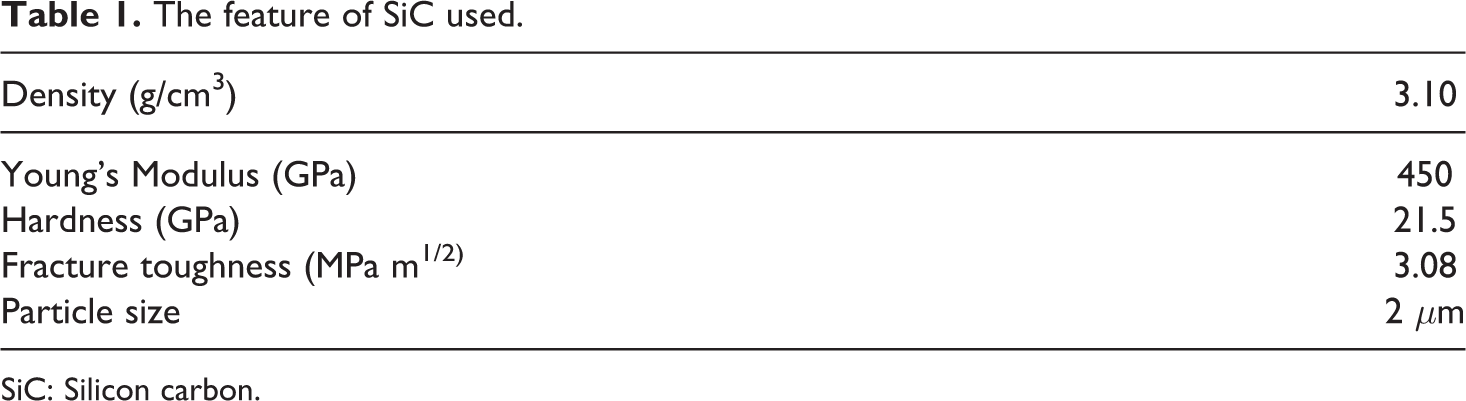
SiC: Silicon carbon.
Specimen preparation
All the ingredients were mixed into HNBR uniformly on a 6-inch two-roll mill at a speed ratio of 1:1.1. Cylindrical composite samples with diameter of 26 mm and thickness of 10 mm were obtained by molding the mixing compound at 170°C under the pressure of 10 MPa for the optimum curing time.
Impact tests
In this study, Instron-Dynatup 9250 HV impact testing machine was used for impact testing. This testing machine consists of a dropping cross-head with its accessories, a pneumatic clamping fixture, a pneumatic rebound brake and impulse data acquisition system.
Friction and wear tests
The experiments were performed on the ball-on-disk apparatus consisting of rotating disk sliding on stationary ball (Figure 1) at sliding speeds of 0.2 m/s and a normal load of 0.2 N and the rubbing surfaces were submerged in air with 20–30% of relative humidity. All the tests were carried out at 22–25°C. The contact point was 7.5 mm from the center of disk. The friction forces were detected by a strain gauge. The load cell voltage signals were recorded through A/D converter using a compatible PC.
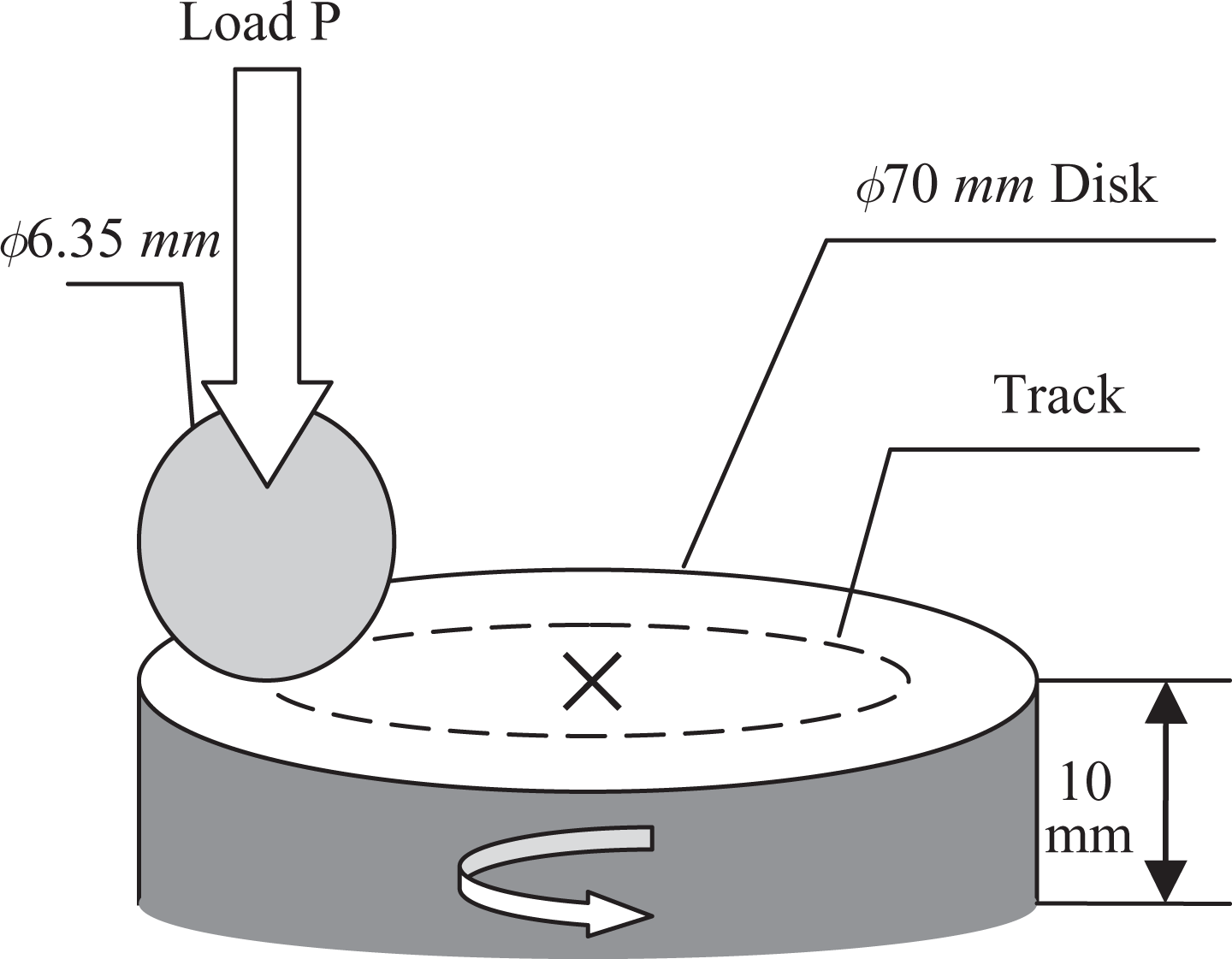
Sketch of ball-on-disk apparatus.
Results and discussion
Impact properties
Figure 2 shows the impact strength of SiC/HNBR composites for 1–11 wt% SiC loading. The impact strength value increases as the SiC loading increases. However, compatibilized composites show substantial improvement in the impact strength values. For 7% and 9% SiC content, impact strength values are 130% and 250% of that of uncompatibilized, respectively. For 11% SiC loading, the impact strength value decreases 10% on compatibilization but is only 250% of that of uncompatibilized one. In all the cases, an optimal compatibilizer loading is observed. This may be due to the saturation of the interface and that the compatiblizer gets trapped in one of the phases.
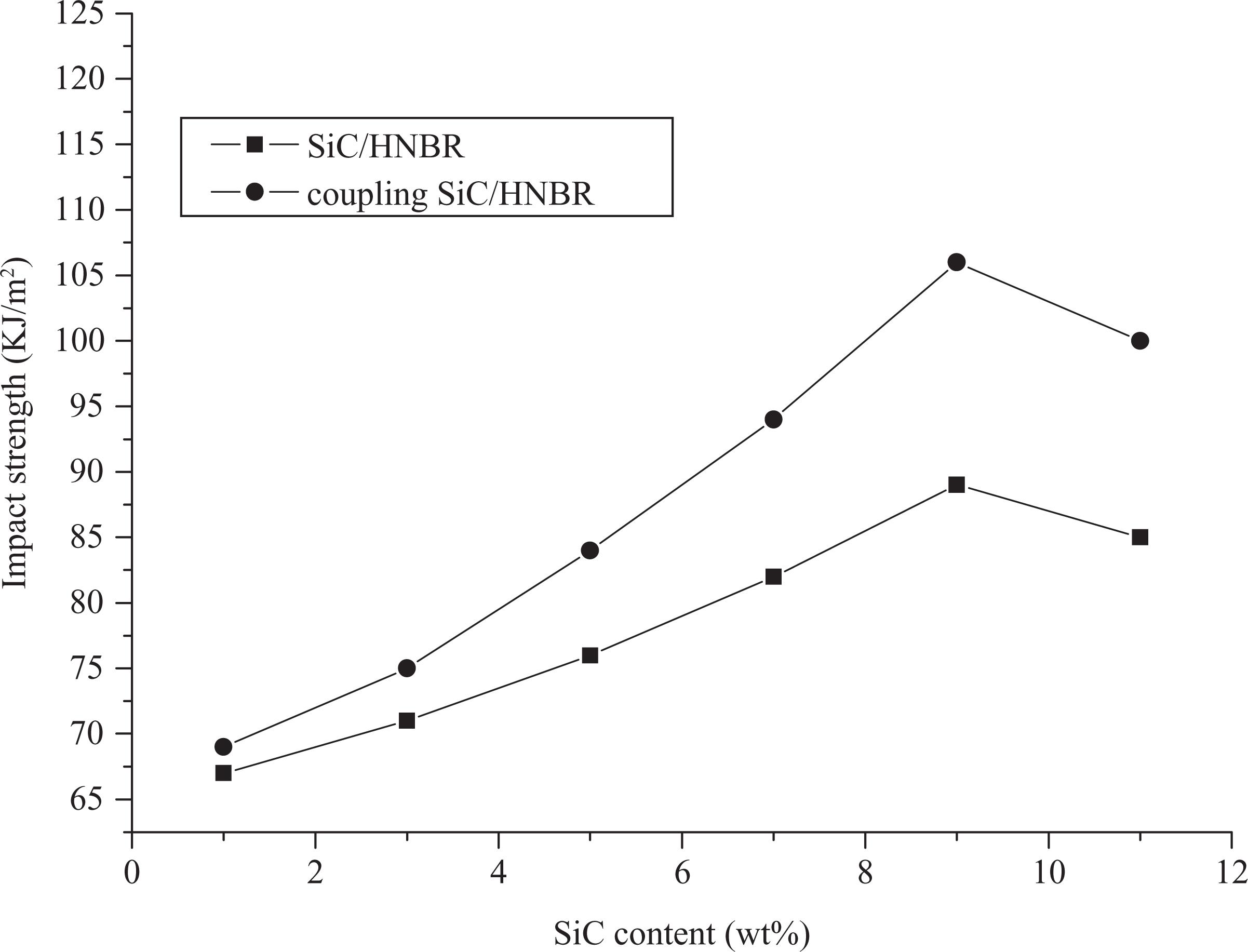
The impact strength of SiC/HNBR composite with and without silane treatment. SiC: Silicon carbon; HNBR: hydrogenated nitrile butadiene rubber.
Figure 3 shows the impact fracture morphology of uncompatibilized and compatibilized composites with SiC loading of 3% and 7%, respectively. For 3% and 11% uncompatibilized composite, the scanning electron microscopy (SEM) micrograph (Figure 3(a) and (e)) exhibits both plastic deformation of the matrix accompanied by pockets of brittleness. Large holes are also observed due to the removal of agglomerates during fracture. The compatibilized composite (Figure 3(b)) shows crazing with the presence of both large and small holes along with the debonding of particles by cavitation. For 7% SiC loading without compatibilizer, the SEM micrograph is typical of brittle fracture (Figure 3(c)). The compatibilized fracture micrograph (Figure 3(d)) exhibits a highly deformed matrix with small voids owing to improved interfacial adhesion. Silane-treated SiC imparts greater chain flexibility and improves compatibility with the HNBR. This in turn improves stress transfer from the matrix to the dispersed phase leading to improved impact strength.
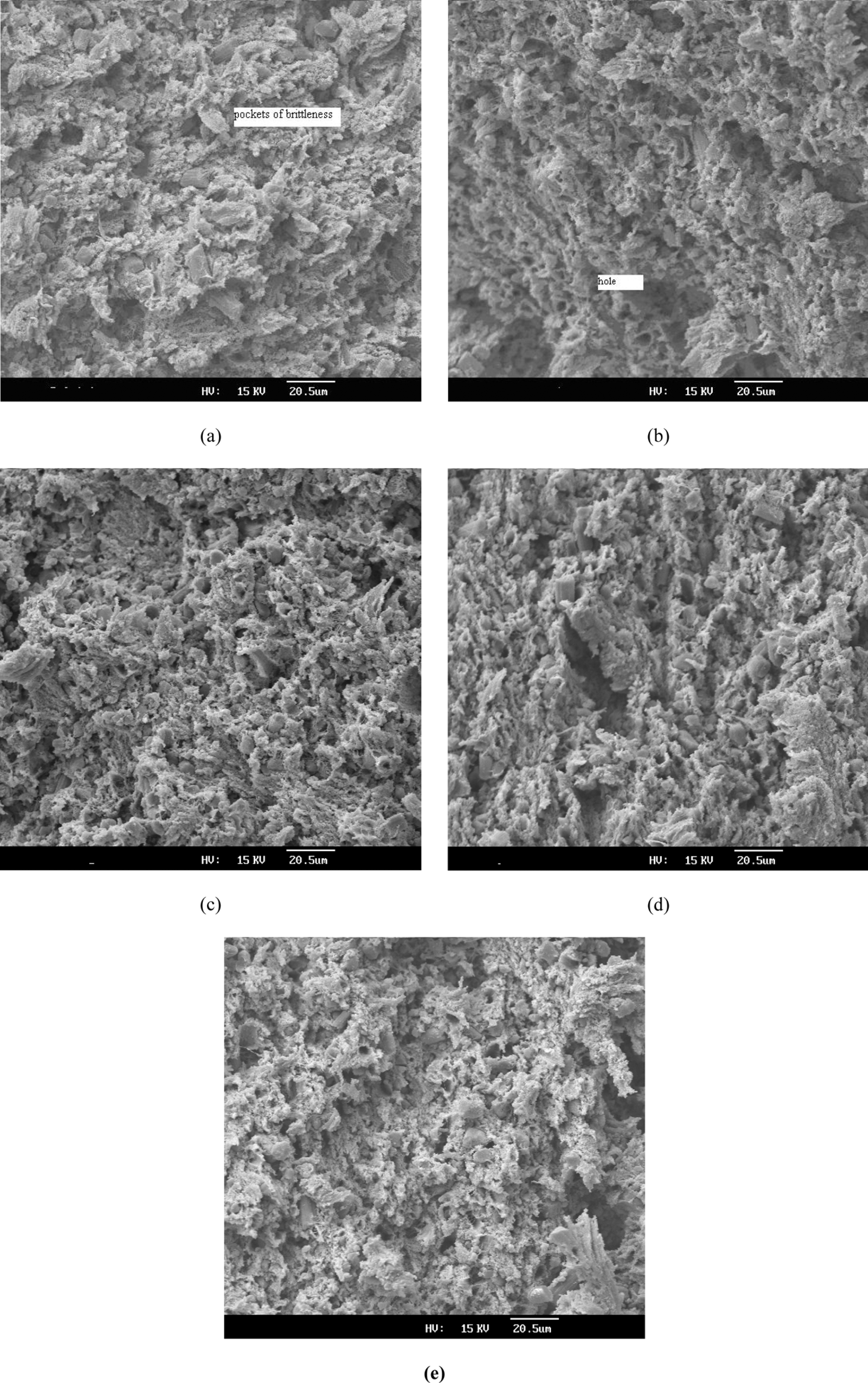
The impact fracture morphology of uncompatibilized and compatibilized composites.
Friction and wear properties
The friction coefficient and wear of the pure and filled HNBR composites sliding against GCr15 stainless rings are comparatively shown in Figure 4. It can be seen that the friction coefficient and wear of the filled HNBR composites decreased compared with the unfilled one. Both the friction coefficient and wear of the composite are in the following order: coupling SiC/HNBR/graphite < coupling SiC/HNB < SiC/HNBR/graphite < SiC/HNBR < pure HNBR. It is clear that silane was more beneficial than graphite in decreasing the friction coefficient, and graphite was more dominant in increasing the wear resistance of the composites when they were incorporated singly. Besides, it is worth noting that the further addition of graphite and silane-treated SiC can enhance the friction–reduction and antiwear properties of the HNBR composites to a greater extent, which may be ascribed to the positive contribution of graphite to the development of a thin and uniform transfer film and the formation of better adhered transfer film on the counterpart steel ring during sliding. Based on the above results, conclusions can be made that the simultaneous addition of graphite and silane-treated SiC effectively improved the friction–reduction and antiwear abilities of HNBR composites owing to the synergistic effects between them.
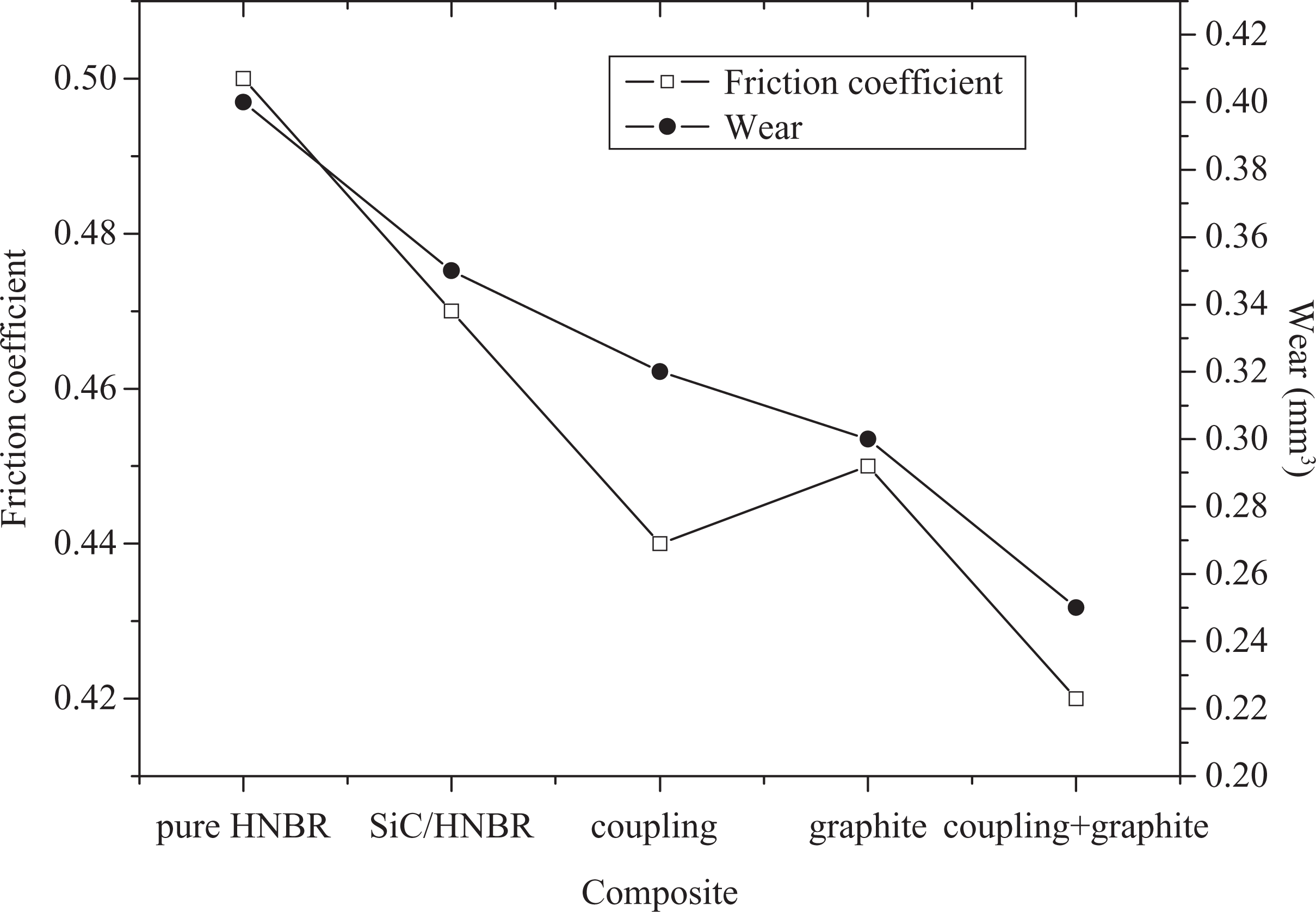
The friction coefficient and wear of HNBR composites. SiC: Silicon carbon; HNBR: hydrogenated nitrile butadiene rubber.
Variations of the friction and wear behavior of the silane-treated SiC/HNBR/graphite composites with load are shown in Figure 5. The friction coefficient of the composites decreased owing to the micro-melting and mechanical deterioration caused by friction heat under a higher load, then increased with increasing load up to 15 N. With the increase in load, more SiC particles dropped out from the HNBR matrix during the friction process, which led to a severe abrasive wear and resulted in a higher friction coefficient. The wear of the composites increased from 2.5 N to 15 N. With the increase in load, the adhesion between the fiber and the matrix deteriorated resulting from the increased flash temperature, which rendered the SiC particles pulled out or peeled off easily and the wear resistance of the composites decreased. The transfer films on the counterpart surface may be of higher quality at lower load compared with that formed at higher load. With the formation of higher quality transfer films, the plowing and scuffing will be abated, and the tribological behavior was improved.
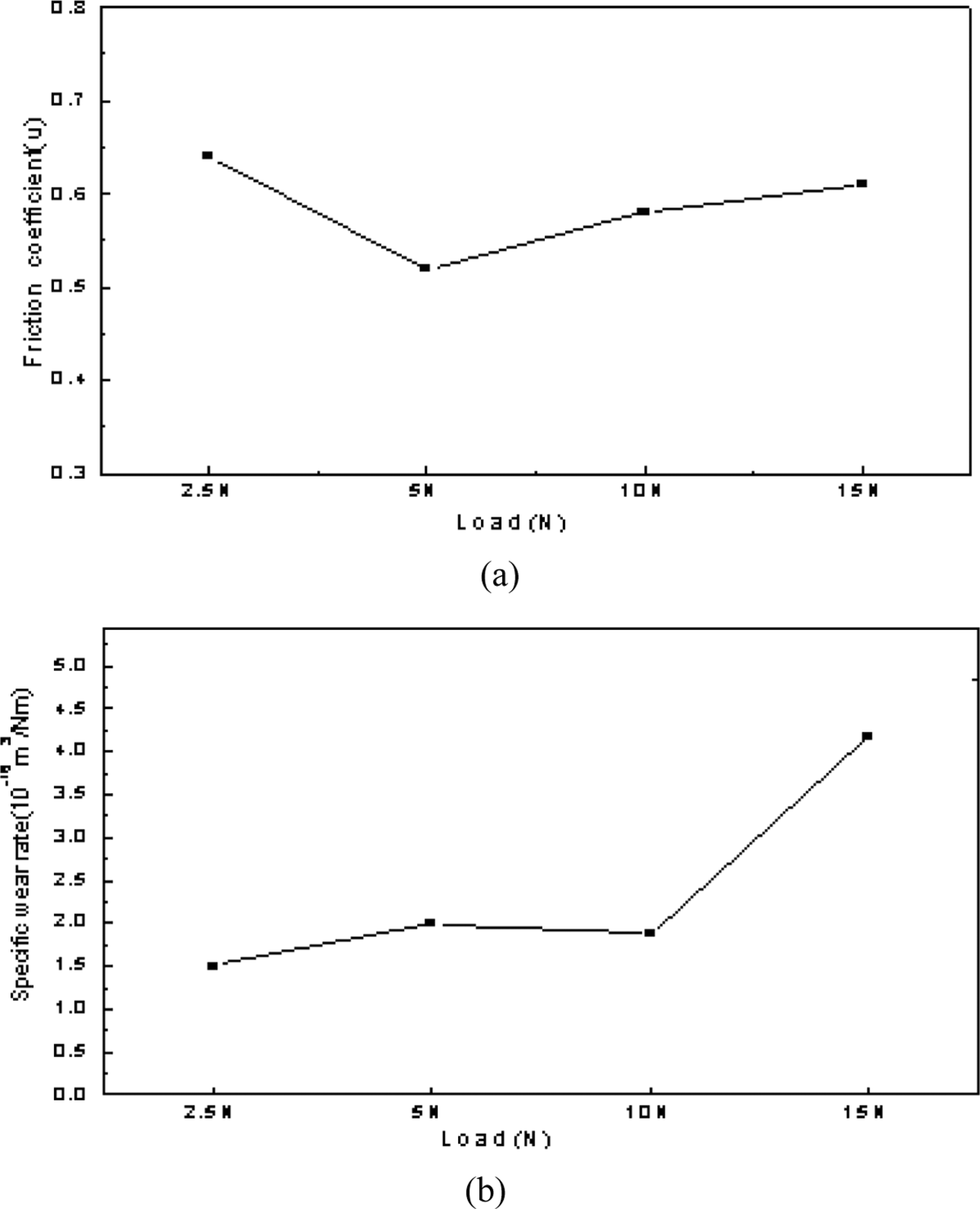
The change of friction coefficient and wear with load.
Figure 6 shows the characteristic features of the worn surfaces when sliding took place and subjected to load of 10 N at constant speed and sliding distance. The SEM micrograph of the worn surface shows micro-cracks in the matrix. In addition to these, there is fine HNBR wear debris formation adjacent to the fillers that mask the status of interfacial adhesion. The material removal under these sliding conditions seemed to be mainly due to micro-cutting in the matrix and partially due to contact shearing along the cross-sections.
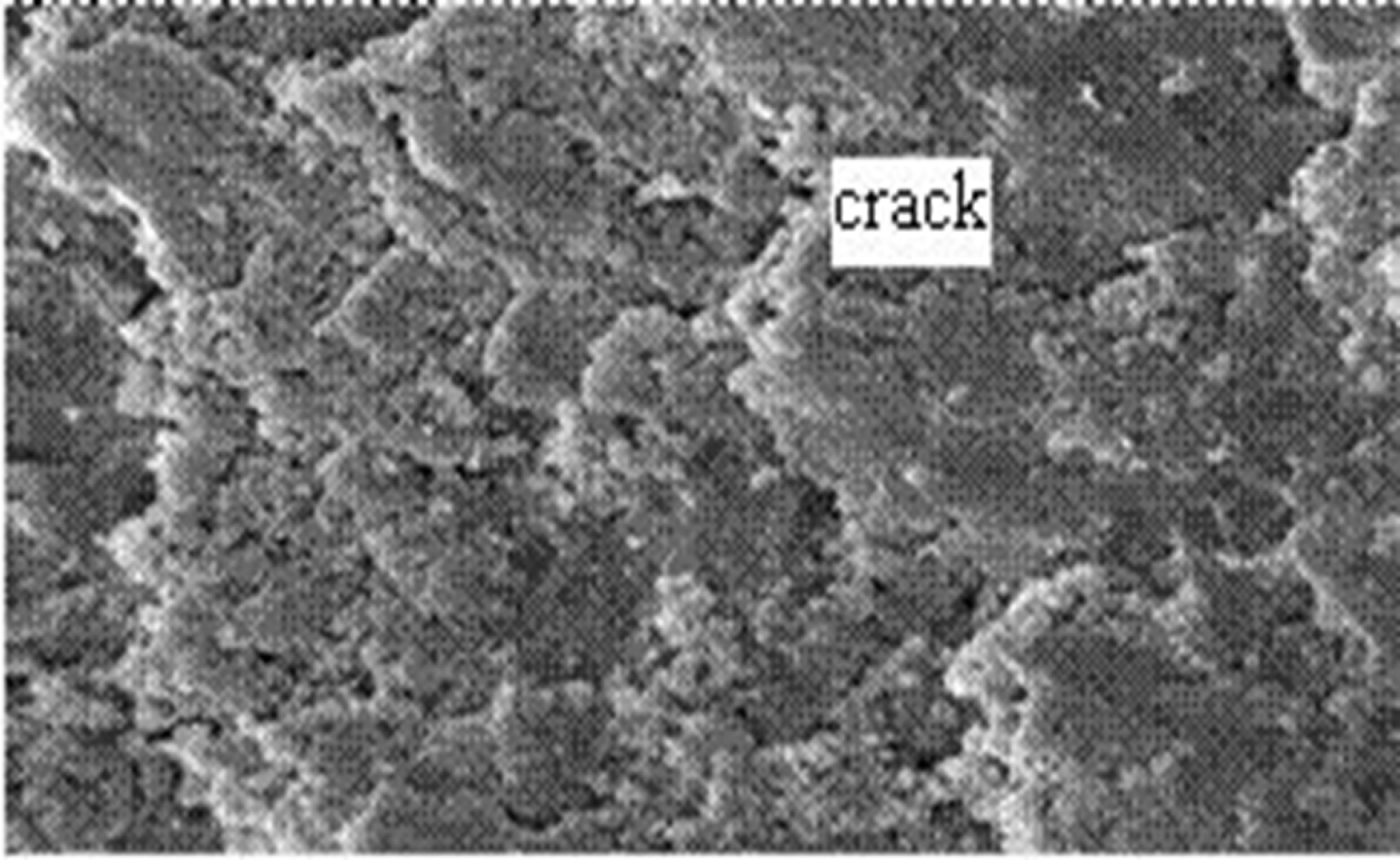
SEM micrographs of the worn surface of the silane treated SiC/HNBR/graphite composites. SiC: Silicon carbon; HNBR: hydrogenated nitrile butadiene rubber; SEM: scanning electron microscopy.
Conclusions
The impact and tribological properties of HNBR composites filled with graphite and silane-treated SiC were evaluated. The compatibilized composites show substantial improvement in impact strength values. The simultaneous addition of graphite and silane-treated SiC effectively improved the friction–reduction and antiwear abilities of HNBR composites owing to the synergistic effects between them. Based on these studies, it can be said that the graphite and silane-treated SiC in the HNBR matrix play an important role in enhancing the wear behavior of the resulting composites.
Footnotes
Funding
This work was financially supported by the Department of Education Science Foundation of Yunnan Province (2012Y541) and the National Natural Science Foundation (51165013).