




Abstract
The tribological properties of high temperature resistant thermoplastic composites, polyetherimide (PEI), reinforced with graphite and short carbon fiber (SCF), were investigated in dry sliding conditions. Friction and wear experiments were conducted on a pin-on-disc apparatus, using composite pins against polished steel counterparts. It was found that SCF could effectively enhance both the wear resistance and the load-carrying capacity of the base polymers. With the addition of SCF, the frictional coefficient and wear rate of the composites were further reduced especially. On the basis of microscopic observation of worn surfaces, dominant wear mechanisms are discussed.
Keywords
Introduction
Polymers and polymer-based composites offer the combinations of properties which cannot be attained with metal or ceramic materials. Due to the low friction nature, many kinds of polymers are used in dry sliding conditions when lubrication cannot be used. The widespread use of polymers has led to intensive researching on the basic friction and wear mechanisms of polymers. 1 –5
Specialty engineering thermoplastics are used as matrices for advanced composites because of their additional advantages such as higher specific strength, thermal stability, resistance to fatigue and crack, recyclability, unlimited shelf life, and so on. In such composites, its role is to stabilize the fibers in compression (providing lateral support), translate the fiber properties into the laminate, minimize damage due to impact by exhibiting plastic deformation, and provide out-of-plane properties to the laminate. High-temperature specialty thermoplastics such as polyetheretherketone (PEEK), polyethersulfone (PES), polyetherimide (PEI), and so on have proved superior in all these aspects. Among various reinforcements, fabric reinforcement is the most promising for fiber-reinforced composites (FRCs). Fabrics are unique in their ability to provide mechanical strength in both longitudinal and transverse directions. Fabrics are easy to handle for compression molding of the composites. Besides, the unique advantage of fabrics as reinforcement lies in their ability to conform to curved surfaces without wrinkling. The friction between polymers can be attributed to two main mechanisms, deformation and adhesion. In this case, the deformation mechanism involves complete dissipation of energy in the contact area, while the adhesion component is responsible for the friction of polymer and is a result of breaking of weak bonding forces between polymer chains in the bulk of the material. 6 The friction of polymer composites could be attributed to two main mechanisms: adhesion and deformation. 7 –9 The adhesion component was responsible for the friction of polymer, which was a result of breaking weak bonding forces between polymer chains in the materials bulk. 8 The deformation mechanism involved complete energy dissipation in the contact area. It was found that the friction and wear properties were decisively connected with intrinsic properties of polymers. Although adhesion was the major parameter in polymer–polymer friction, mechanical properties of polymers also had important influence on the frictional behaviors. 9
PEI is a high-performance amorphous thermoplastic, possessing excellent mechanical properties even at elevated temperatures due to its high glass transition temperature (around 217°C). Its outstanding features also favor PEI as a potential candidate for tribological applications, where high service temperature is a critical issue. Neat PEI exhibits a relatively low coefficient of friction, however, the wear resistance is less favorable. Thus, it is necessary to explore ways to improve the wear resistance. 10,11
Over the past decades, injection-moulded thermoplastic composites have been increasingly used for numerous tribological purposes such as seals, gears and bearings, providing lightweight alternatives to metallic components. The feature that makes polymer composites so promising in industrial applications is the possibility of tailoring their properties with special fillers. It has been found that short fiber reinforcements, for example carbon, glass and steel fibers, can generally improve the creep resistance and compressive strength of the polymer composites and result in enhanced wear resistance. 12 Solid lubricants, for example polytetrafluoroethylene (PTFE) and graphite, have been proved very helpful in developing a transfer film between the two counterparts and can drastically reduce the wear rate of the composites. 12,13 Recently, fine inorganic particles of submicro- or nano-scale have come under discussion, with distinct suggestions that this method is also promising for the development of new wear-resistant materials even with very low filler content for example 5 vol%. 14 However, the mechanisms by which nanoparticles modify tribological performance in polymer composites are not fully understood.
Integration of various functional fillers is an important route in the design of wear-resistant polymer composites. And a good understanding of the role of fillers, especially additional fine particles, in modifying the wear behavior of polymer composites is essential. Such understanding will facilitate the formulation of optimal criteria for the selection of materials subject to specific tribological applications. Carbon fibre (CF) is a graphitized carbon with the hexagonal planes of its crystals aligned perpendicular to the fiber axis. The lubricating function of graphitized carbon is thought to be responsible for the reduction of friction coefficient and wear rate as its composites slide against steel. Besides the lubricating function, CF also enhances the thermal conductivity and the mechanical properties of the polymeric matrix, which is believed to be beneficial to the wear resistance as well.
Compared with glass and aramid fibers, carbon-filled polymer composites have an intermediated frictional coefficient and an intermediate wear factor while the wear of their metallic counterparts is low. Besides the lubricating function, CF also enhances the thermal conductivity and the mechanical properties of the polymeric matrix, which is believed to be beneficial to the wear resistance as well.
In this article, PEI polymers filled with carbon fiber and graphite were selected as samples, and the tribological behaviors of similar and dissimilar polymers were investigated under dry friction using a pin-on-disc type tribometer. The main objective of this study is to clarify the effects of CF on the friction and wear properties for polymer–metal combinations. The results can also provide the basis for optimum materials selection and design in cases involving industrially polymer–metal combinations.
Experimental
Materials and specimens
Commercially available PEI (density (g/cm3), 1.27; tensile strength (MPa), 105) polymers were used as matrix materials. Pitch-based short carbon fiber (SCF; 20 vol%; density (g/cm3), 1.414; tensile strength (MPa), 2900) and graphite flakes (5 vol%; density (g/cm3), 2.25; tensile strength (MPa), 4.9) were selected as conventional fillers. The average diameter of the SCF was approximately 7 µm, with an average fiber length of about 75 µm. The size of the graphite flakes was about 20 µm. The compounding of polymer matrix was achieved by a twin-screw extruder. Thereafter, the wear specimens were produced using an Arburg all-rounder injection-moulding machine.
Friction and wear tests
The friction and wear tests were conducted on a pin-on-disc type tribometer. Figure 1 provided the schematic diagram of the tribometer. Adisc (Ø50 mm × 5 mm) rotating at a selected speed slid against a pin (Ø2.5 mm × 5 mm). The friction track diameter of pin on disc was 8 mm. Before each test, a polymer pin was fixed on the tester and rubbed against a metallographic abrasive paper placed on the rotating disc. GCr15 bearing steel disc, whose composition is C 0.95–1.05 wt%, Si 0.15–0.35 wt%, Mn 0.20–0.40 wt%, Cr 1.30–1.65 wt%, and Fe balance, with a bulk hardness of HRC65 ± 5. The surfaces of the counterpart steel wheel were abraded with No. 1000 water-abrasive sandpaper, and the surface roughness, Ra, of about 0.1 µm is obtained. This pre-rubbing process ensured a full contact of the pin and disc surfaces. Polymer discs were polished with metallographic abrasive papers. All the specimens were ultrasonically cleaned in acetone and then thoroughly dried. The friction and wear tests were preformed at room temperature (20°C ± 5°C) in atmosphere (relative humidity: 50% ± 10%). The applied load was 2 N, and the total sliding time was 1800 s.
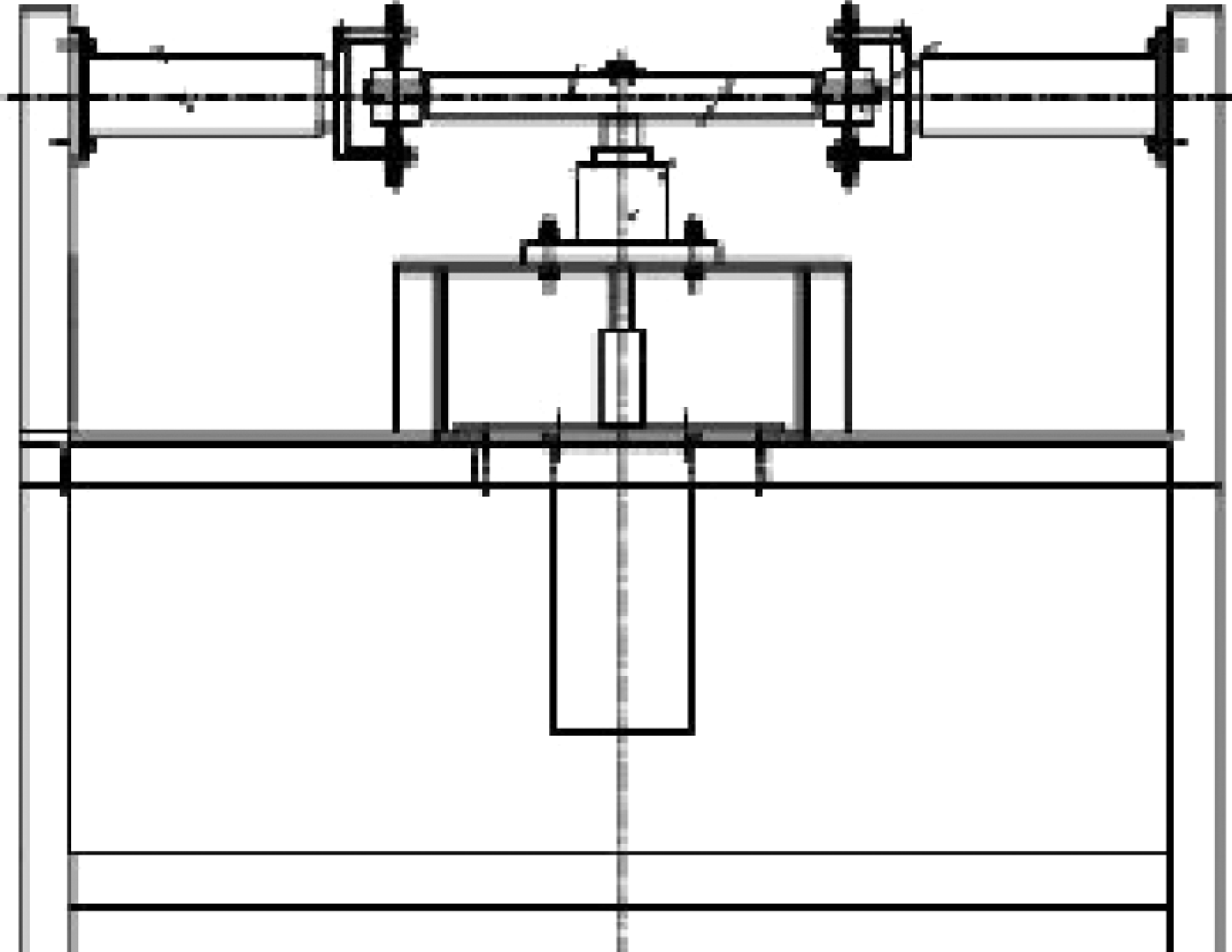
Sketch of the tribometer.
The friction coefficient was obtained through the calculation of friction torque measured with a loaded cell sensor. The wear was measured by the weight loss of pin and disc using an analytical scale (precision: 0.1 mg). The specific wear rate (K, mm3/N m) reported in this study was calculated according to the following equation:
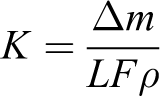
where
In this work, three replicate sliding tests were carried out for minimizing data scattering; the friction coefficient and specific wear rate were average values of the three replicate test results.
SEM observation
After the sliding tests, the worn surfaces were observed using a scanning electronic microscopy (SEM, JSM-5600LV) in order to elucidate the friction and wear mechanisms. The worn surfaces were plated with gold coating to render the electric conductivity before the SEM observation.
Results and discussion
Friction and wear properties
Figure 2 shows the variation in frictional coefficient of specimens against sliding time for the neat PEI and carbon fiber-filled PEI composites without fine particles. The friction coefficients are observed to decrease slightly to a stationary value with the increasing sliding time for pure PEI. However, the friction coefficient values are quite different for carbon fiber-filled PEI composites. At first, the friction coefficient increase in the seizure period, then it decreases until a stable stage is reached.
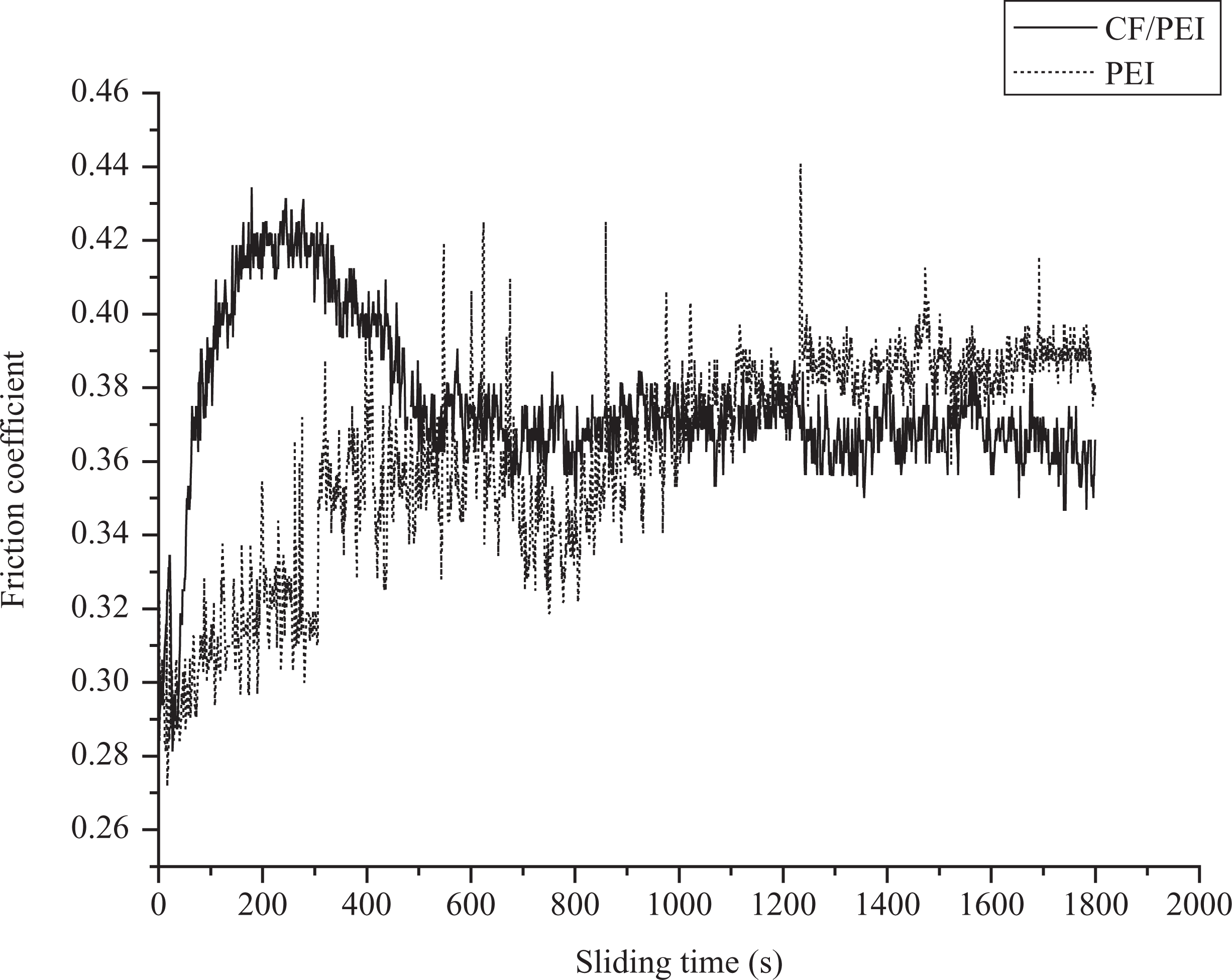
Variation in friction coefficient with sliding time (sliding distance 1800 m; sliding velocity 1 m/s).
The friction coefficients and the specific wear rates of the polymer pins in steady stage are shown in Figure 3. From Figure 3(a) high friction coefficients are observed for pure PEI pin mated with steel disk. Nevertheless, low friction coefficients are found for CF/PEI due to the lubrication effect of graphite. It is noted from Figure 3(b) that the specific wear rates of PEI pins are the highest among all these polymer pins.
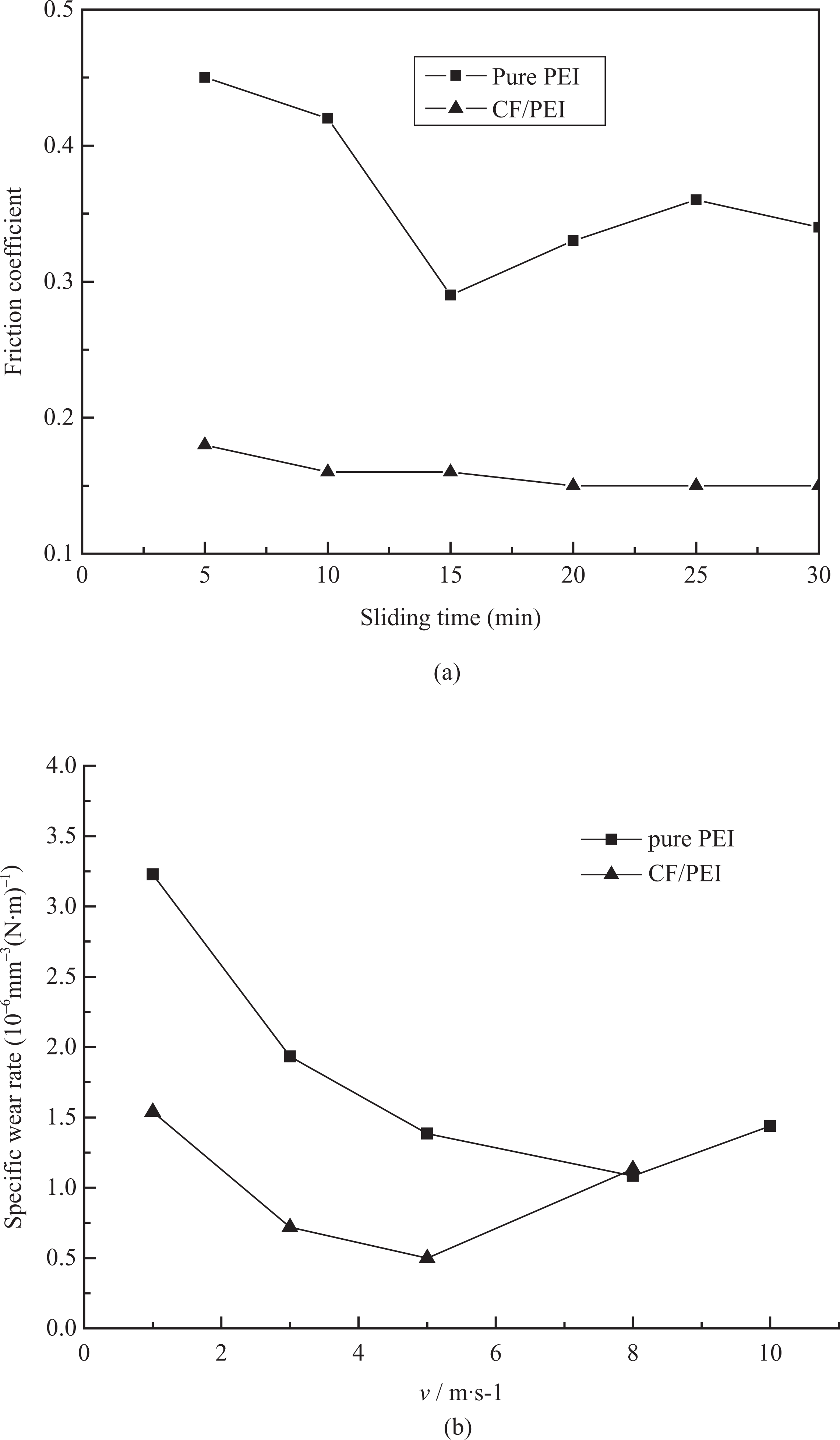
The friction coefficients and the specific wear rates of the polymer pins.
It is clear that the wear resistance of PEI is greatly enhanced by the addition of fillers. The worn surfaces of specimens are shown in Figure 4. It can be seen that the worn surface of neat PEI appears smooth, with patches of large debris attached (Figure 4(a)). Without reinforcements, the base polymer was easily removed by hard asperities of the metallic counterpart, resulting in high wear loss.
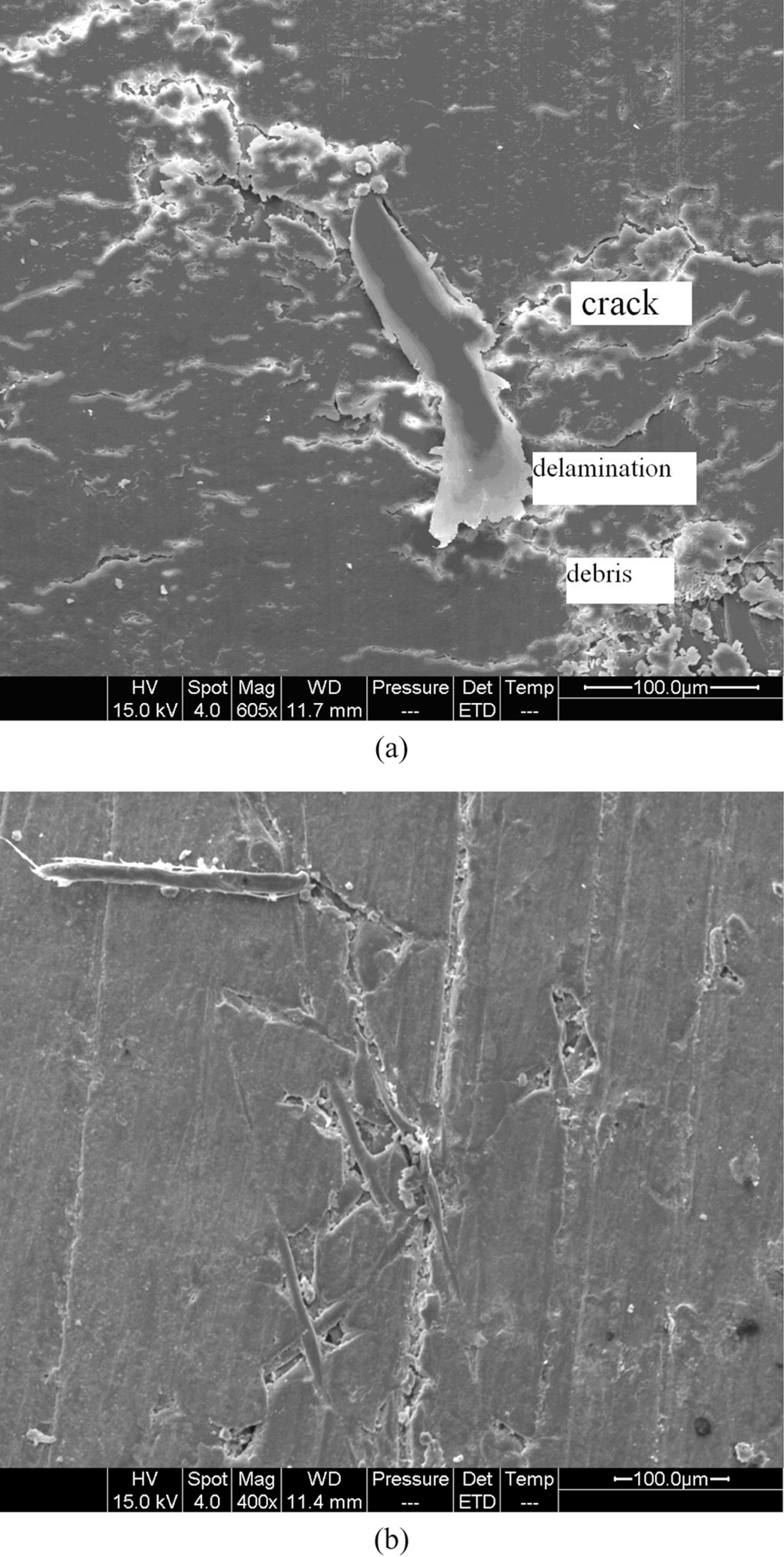
Scanning electrom microscope (SEM) photographs of the worn surfaces (sliding distance 1800 m; sliding velocity 1 m/s).
The worn surface of the PEI composite without fine particles is shown in Figure 4(a). When PEI is modified with SCF, a polymeric film can be transferred to the steel counterpart, resulting in a new countersurface producing primarily an adhesive wear mechanism. Due to the fatigue wear of adhesive contact, breakage of the PEI matrix occurs in the interfacial region between fiber and matrix, and micro-cracks are clearly observed. Figure 4(b) shows the worn surface of the PEI-based composite with carbon fiber. Microgrooves are evident, parallel to the sliding direction. These grooves were possibly caused by agglomerated hard particles, which engendered a three-body abrasive wear mechanism. The wear rate of the composite was in general slightly increased with the addition of CF.
Conclusions
The tribological properties of PEI composites filled with SCF were systematically studied under different sliding conditions at room temperatures. From the results, the following conclusions are drawn. When filled with conventional filler SCF, the wear resistance and load-carrying capacity of PEI are significantly enhanced. The friction coefficients are observed to decrease slightly to a stationary value with the increasing sliding time for pure PEI. However, the friction coefficient values are quite different for carbon fiber-filled PEI composites. At first, the friction coefficient increase in the seizure period, then it decreases to a stable stage. It is clear that the wear resistance of PEI is greatly enhanced by the addition of fillers.
Footnotes
Funding
This research received no specific grant from any funding agency in the public, commercial, or not-for-profit sectors.