




Abstract
Conductive polymer composites are at the forefront of composites science research because of the huge number of applications that have been developed around their interesting and unique properties. The present article is focused on the fabrication of natural rubber/polyaniline (NR/PANI) compounds for electromagnetic wave shielding applications at microwave frequency. Their microstructures were examined by means of scanning electron microscopy and thermogravimetric analyses. The as-fabricated NR/PANI composite was mechanically characterized to investigate the effect of dispersion of PANI on NR matrix composite. The dielectric spectroscopy, absorption loss, and reflection loss of NR/PANI composite in the frequency range from 1 to 12 GHz have been performed. The total electromagnetic interference shielding effectiveness by absorption and reflection loss depends on PANI content in the composite. Results show that the NR/PANI composite represents a new class of conducting lightweight material that makes the NR/PANI with good electromagnetic shielding effectiveness that is suitable for use in industrial application such as electronic conducting composite in polymer package and for radar absorbing materials.
Keywords
Introduction
Conducting polymer composites continue to attract much interest in the research field due to their interesting physical properties and many commercial potential applications in various areas such as electrodes in rechargeable batteries, anticorrosion coatings, electromagnetic interference (EMI) shielding, gas sensors, membranes, light emitting diodes, transparent electrodes, thermistors, and others. 1 –5 In particular, the electromagnetic wave transport properties in disordered solids are a topic of considerable interest in condensed matter physics and for engineering purposes, for example, EMI shielding effectiveness, wave absorption, electronic packaging, self-regulator heater, and so on. 1 –5 With fast development of wireless communications, EMI is becoming seriously increasing. There is an increasing need to reduce EMI thus reducing noise or errors in electronics devices, where the EMI is caused by undesirable electromagnetic wave radiation. 5 –8 Electromagnetic microwave absorbers of composites are a critical part of electronic systems in application such as electromagnetic shielding for air vehicles and wireless communications. 9 –11 However, most of the shielding materials consist of metal. Typical metals and their composites have several drawbacks, such as heavy weight, easy corrosion, less durable, and effective only over fixed frequency bands. 12 –14 Hence, high conducting polymers and their composites have been developed to replace or supplement typical metals for EMI shielding applications, which have merits such as light weight, physical flexibility, and easy control of electrical properties. 15 –18 Polyaniline (PANI) is an important member in the class of electrically conducting polymers due to the easy doping–dedoping process, low monomer (aniline) cost, high value of conductivity, high stability of both doped and dedoped states in the air with sensor, optical, catalytical, and other properties. 19 –23 Particularly, composite of PANI is a potential filler for the modification of the mechanical and conducting properties of insulating polymer matrices. 11 PANI takes a special place among other polymers because PANI is a conjugated polymer with an electrical conductivity value similar to that in semiconductors. 24 PANI is a metallic luster, and the conjugation of its molecule chain is so strong that in a long time it had been considered as a polymer with low solubility, accordingly its application in technology was limited. 13,14 To overcome the above shortness, in this article, a new type of elastomer composites based on natural rubber (NR) and PANI was developed. The inter-relations among mechanical and electrical properties were investigated in detail. Finally, the applicability of NR/PANI composites as a microwave absorber was examined in the frequency range of 1–12 GHz.
Experimental procedure
Preparation of PANI
In our investigation, PANI is prepared by chemical redox polymerization of aniline using ammonium persulphate (APS), (NH4)2SO8, as an oxidant. 24,25 Aniline (6 ml) was dissolved in 100 ml of 2 M HCl aqueous solution at 20°C. The solution was stirred on a magnetic stirrer for 45 min to make a homogenous solution and the temperature was maintained at 20°C. Another solution containing 50 g of APS in 100 ml of distilled water was prepared. It was then added drop by drop with constant stirring on magnetic stirrer at 20°C to the aniline solution. After the addition of the APS solution, the reaction mixture was stirred for further 10 h. The resultant PANI–HCl powder was collected under vacuum filtration then washed with the distilled water and acetone to remove any impurities. The obtained powder was dried under dynamic vacuum at 60°C for 10 h. At the end of reaction, green color particles were yielded. The emeraldine base powder was prepared by the alkaline dedoping of the PANI–HCl emeraldine salt. This was accomplished by stirring the emeraldine salt in a 10% NH4OH aqueous solution for 20 h. The powder was then washed followed by drying under vacuum for 24 h and stored in a refrigerator for later use. Thus, the obtained dedoped PANI powder was redoped by stirring for 10 h in 3 M water solution of phosphoric acid, producing PANI–acid complex. Finally, the doped powders were dried under dynamic vacuum at 50°C for 24 h.
Fabrication of NR/PANI composite
NR of the type smoked sheets, a product of Malaysia, was used in the present research. Zinc oxide (ZnO) with particle size of 20 nm, a product of Bayer Company (Leverkosen, Germany), was used as accelerator for rubber vulcanizates. The other compounding rubber ingredients were of pure grade used in industry. Typical formulations of NR composite compounds are presented in Table 1. The PANI conducting filler mixing with NR polymer matrix was accomplished with an open two-roll mill under identical conditions of time, temperature, and nip gap, with the same sequence of mixing all compounding ingredients, in order to avoid the effect of processing on the properties. Several batches with different weight of PANI 100/0, 90/10, 80/20, and 70/30 abbreviated as NRP0, NRP10, NRP20, and NRP30, respectively, were prepared. The vulcanization process of the NR-based compounds was carried out in an electrically heated hydraulic press using a special homemade mold at temperature 145°C and under pressure 300 KN/m2 for 60 min.
Composite formulations used in this work.
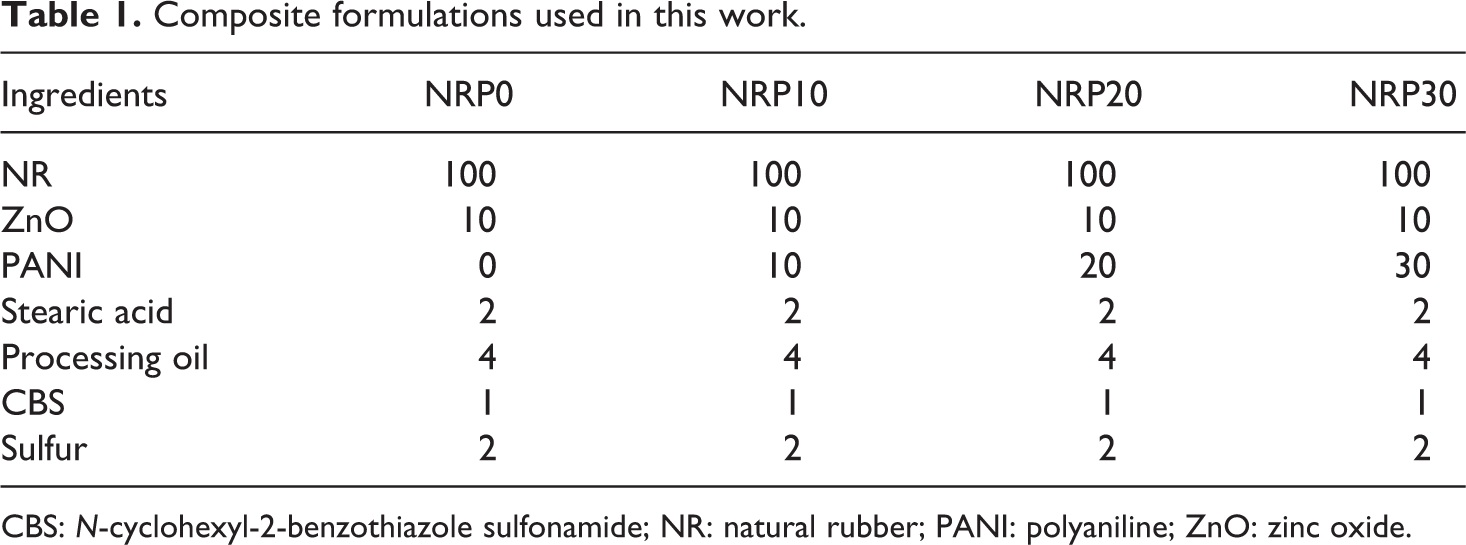
CBS: N-cyclohexyl-2-benzothiazole sulfonamide; NR: natural rubber; PANI: polyaniline; ZnO: zinc oxide.
Characterization and testing of the composite
The morphology of composites was analyzed using a scanning electron microscopy (SEM, JSM-5310 LVB, JEOL). The specimens were coated with carbon to avoid charging using a vacuum evaporator (JEOL, GEE 500) and the voltage used was 15 kV. Thermogravimetric analysis (TGA) was carried on a Shimadzu TGA-50H thermogravimeter analyzer and the sample was heated from room temperature to 600°C at a rate of 10°C/min in a steady flow of nitrogen. The mechanical properties, tensile strength (TS), and elongation at break (EB) of samples were determined at room temperature (20°C) with an Instron universal testing machine HTE-10 KN load cell and calibration done as per the ASTM procedure D-638 at a cross head speed of 40 mm/min. The dimensions of specimens were 150 × 20 × 5 mm. For each TS reported, at least three sample measurements were averaged. Hardness shore A (H) has been determined using a universal testing machine (ASTM D 2240-78). For direct current electrical conductivity measurements, the samples were made in the form of discs with 2 mm thick and 1 cm diameter. Silver paste was painted to the parallel faces of samples to ensure a good contact of the sample surface with copper electrodes. In electrical measurements, a digital electrometer (642 Keithly) was used. A regulated non-inductive furnace cell connected to a temperature controller (Digi-Sense, Illinois, USA ) was used to vary sample temperature from 30 to 150°C with constant rate of 2°C/min. Dielectric properties such as real and imaginary permittivities of the composites were measured at various frequencies range of 1–12 GHz using RLC Bridge (3541 Y-Hitester, Hioki, Japan). The electromagnetic properties were determined by a Hewlett–Packard (Palo Alto, California, USA) waveguide line containing spectroanalyzer, power meter, coefficient of reflection meter, and coefficient of attenuation meter. 26 –28 The measurements were carried out in the frequency range 1.0–12.0 GHz. Samples were in a disc form with the diameter 120 mm and thickness 1 mm. The attenuation under transmission and that under reflection were measured. The former is equivalent to the shielding effectiveness.
Results and discussion
Network structure and mechanical properties studies
The microstructure of synthesized PANI and NR/PANI composites were examined by SEM. Typical SEM image of synthesized PANI is shown in Figure 1(a). It is observed that the PANI molecules has the homogeneous morphology of aggregated spherical particles with spong-like structure. Typical SEM images of NR 10 and 30 wt% conducting PANI (i.e. NRP10 and NRP30 samples) were presented in Figure 1(b) and (c), respectively. It can be seen from Figure 1(b) and (c) that the PANI has good dispersibility in the NR matrix and contributed to increase in the interfacial adhesion among filler and matrix of the blend. Furthermore, PANI particles are located in the NR phase and were almost well coated by the NR matrix. In addition, the PANI macromolecules are more entangled and build networks in the NR matrix, which in turn will lead to an ensured thermal stability, mechanical, and electrical properties, and this result was researched in the following part.
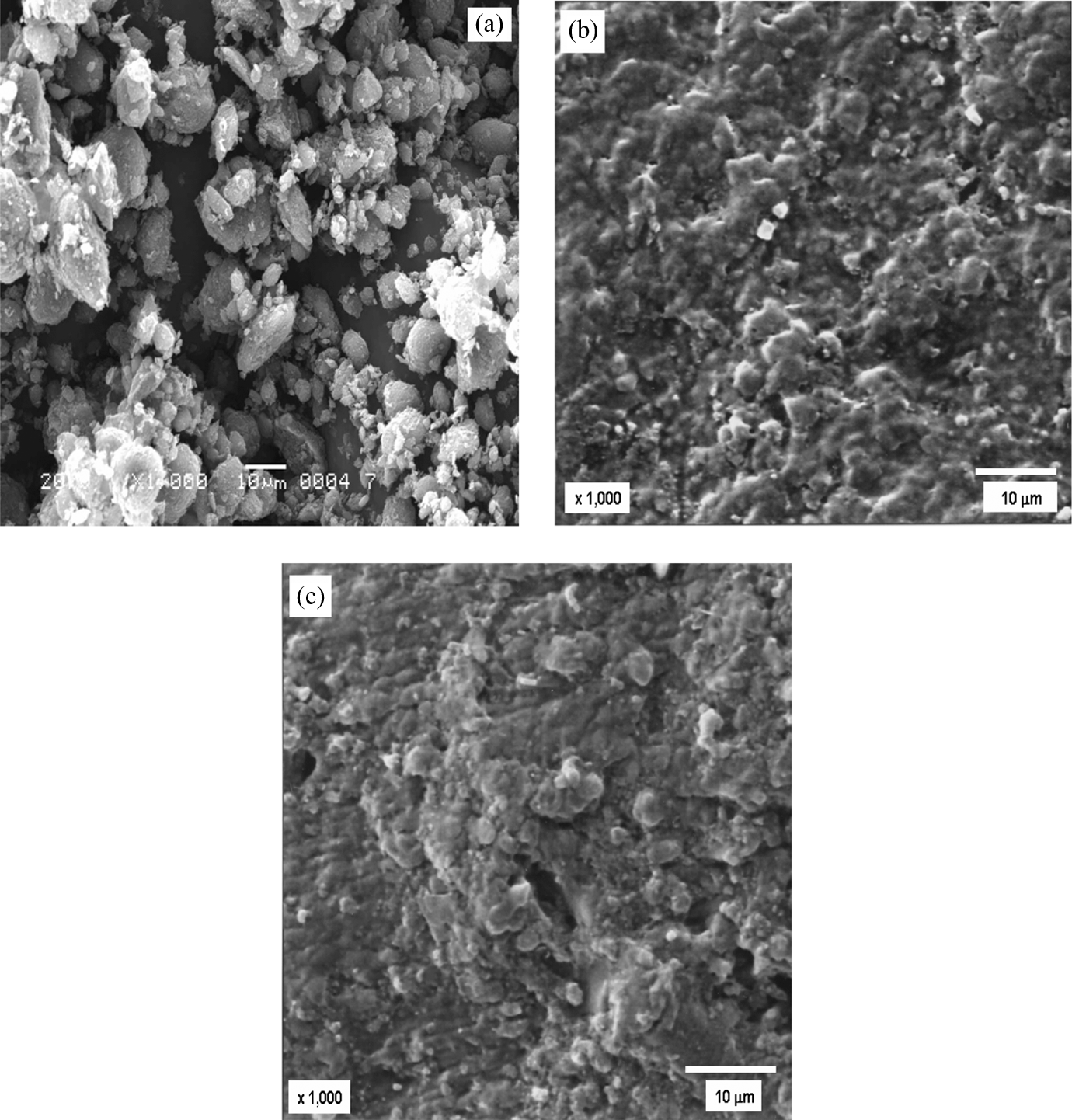
Scanning electron micrographs of (a) as-synthesized PANI, (b) NR containing 10 wt% PANI (NRP10 sample), and (c) NR containing 30 wt% PANI (NRP30 sample). NR: natural rubber; PANI: polyaniline.
TGA of the NR/PANI composite was performed in order to understand thermal stability, identify thermal transitions, and specially to find application at high temperature. The TGA curves of NR/PANI composites are shown in Figure 2. From the TGA curve in Figure 2, the pure PANI shows two steps weight loss that started around 190°C, attributed to the combustion of PANI. 8 The second weight loss took place between 260 and 480°C was due to the degradation of PANI. It can be seen that PANI has been decomposed completely before 600°C. From Figure 2, the thermal weight loss temperature of PANI was 190°C, but for NRP10, NRP20, and NRP30 samples were 200, 212, 224°C, respectively, indicating the enhanced thermal stability of composites. The loading of PANI particles improved the thermal stability. The increase in decomposition temperature was attributed to the structure of composites, where strong interaction between the NR matrix and the PANI particles limited the segmental movement of the NR chains and formed the barrier character for the degradation of NR elastomer matrix. 21 Therefore, NRP30 has the highest thermal stability, which is in good agreement with the SEM image measurements and mechanical properties.
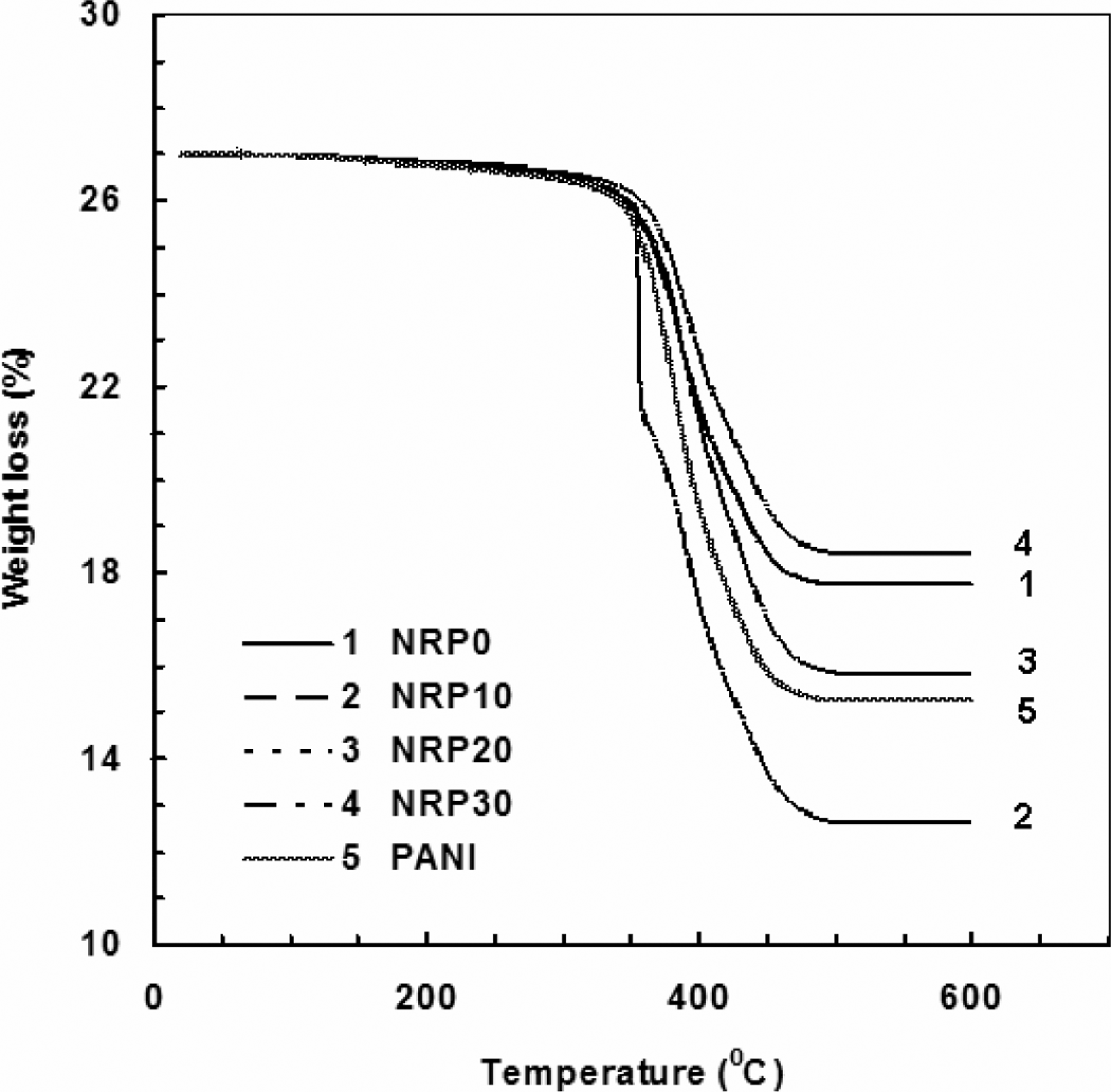
TGA spectra of the NR/PANI composites. NR: natural rubber; PANI: polyaniline; TGA: thermogravimetric analyses.
Again, in order to further assess the influence of PANI particles on the network structure of NR composites, TS, EB, and hardness (H) were all measured. The TS and EB of NR/PANI as a function of PANI content is depicted in Figure 3. The perusal of Figure 3 indicates that the TS increases with the increase in PANI content in the NR/PANI composites. This fact is associated with the higher interfacial adhesion and crosslinking density among PANI macromolecules and NR matrix with increase in PANI loadings. The improvement in the TS may be caused by strong interactions in NR elastomer matrix and PANI, which lead to a good dispersion of PANI in the composites. 1,2 These well-dispersed PANI may have an effect of physical crosslinking points, thus increase the TS. When the PANI content was increased, the EB values decreased, as expected. There are two reasons evoked on decrease in EB with increase in PANI content. First, the inclusion of PANI in the elastomer matrix acts as a reinforcing agent, leading to the formation of sites of stress concentration into composites. The other reason is due to the crosslinking networks (chemical bonding) between flexible NR matrix and stiff PANI and/or the elastomer matrix intermolecular chain. 3,4 In Figure 3, there is a pronounced increase in the hardness with increasing PANI content in the NR/PANI composites. This is due to the fact that, the PANI included into the NR matrix behaves like physical crosslinking points and hence restrict the movement of elastomer chains. 19 In addition, the good dispersion and strong interface adhesion of PANI particles in the entire NR matrix was the main reason for enhancing the hardness in composites. 5
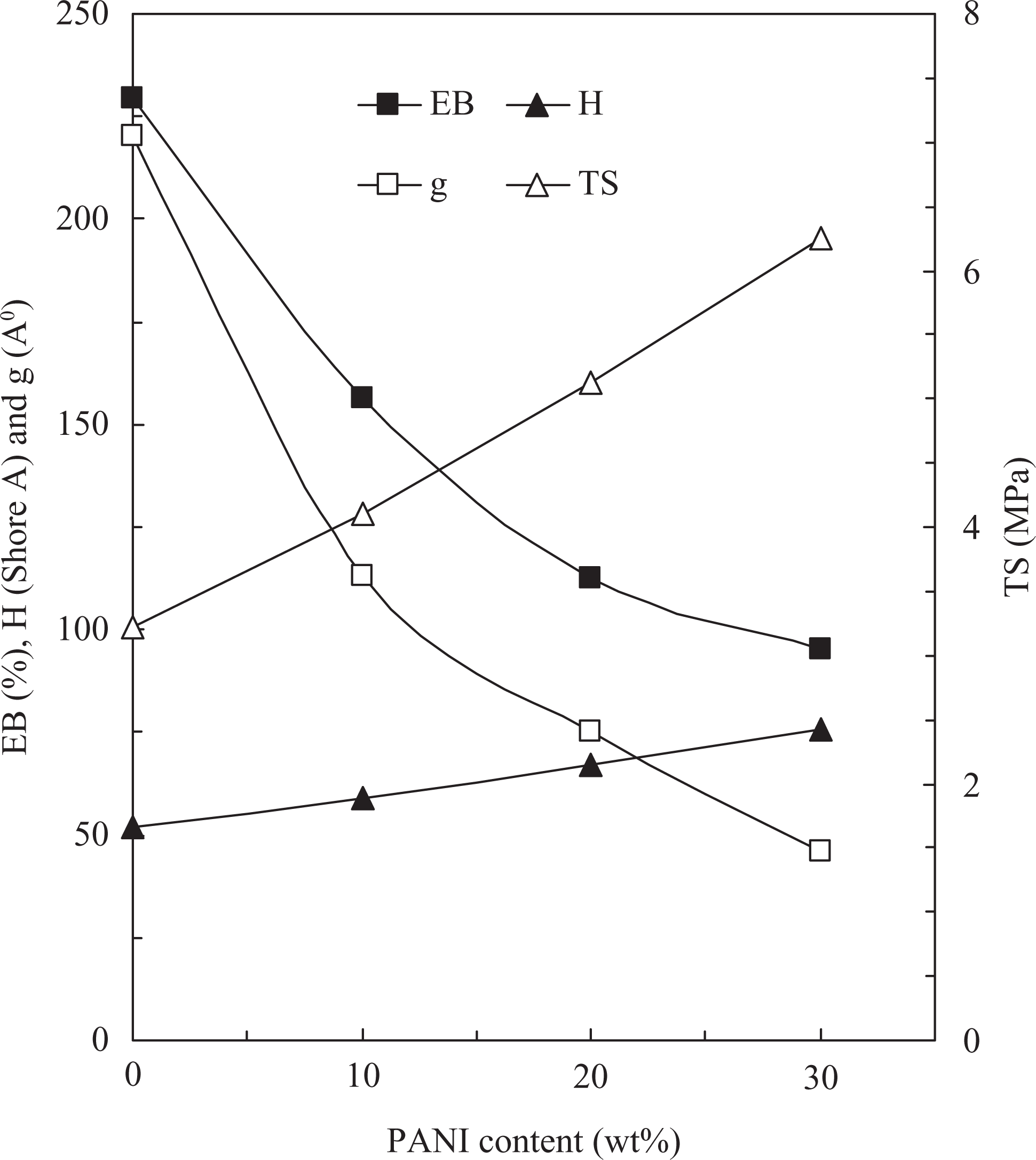
The tensile strength (TS), elongation at break (EB), hardness (H), and interparticle distance among conductive sites (g) of NR/PANI composites. NR: natural rubber; PANI: polyaniline.
To further confirm the above facts, the distance among conductive filler particles (g) is calculated using the formula
19

where
The computed values of
Electrical conductivity studies
The electrical conductivity of NR/PANI composites as a function of temperature is depicted in Figure 4. It is observed that the electrical conductivity at room temperature increases with increasing PANI content into composites. It is interesting to mention that the composites exhibited high electrical conductivity comparing with synthesized PANI.
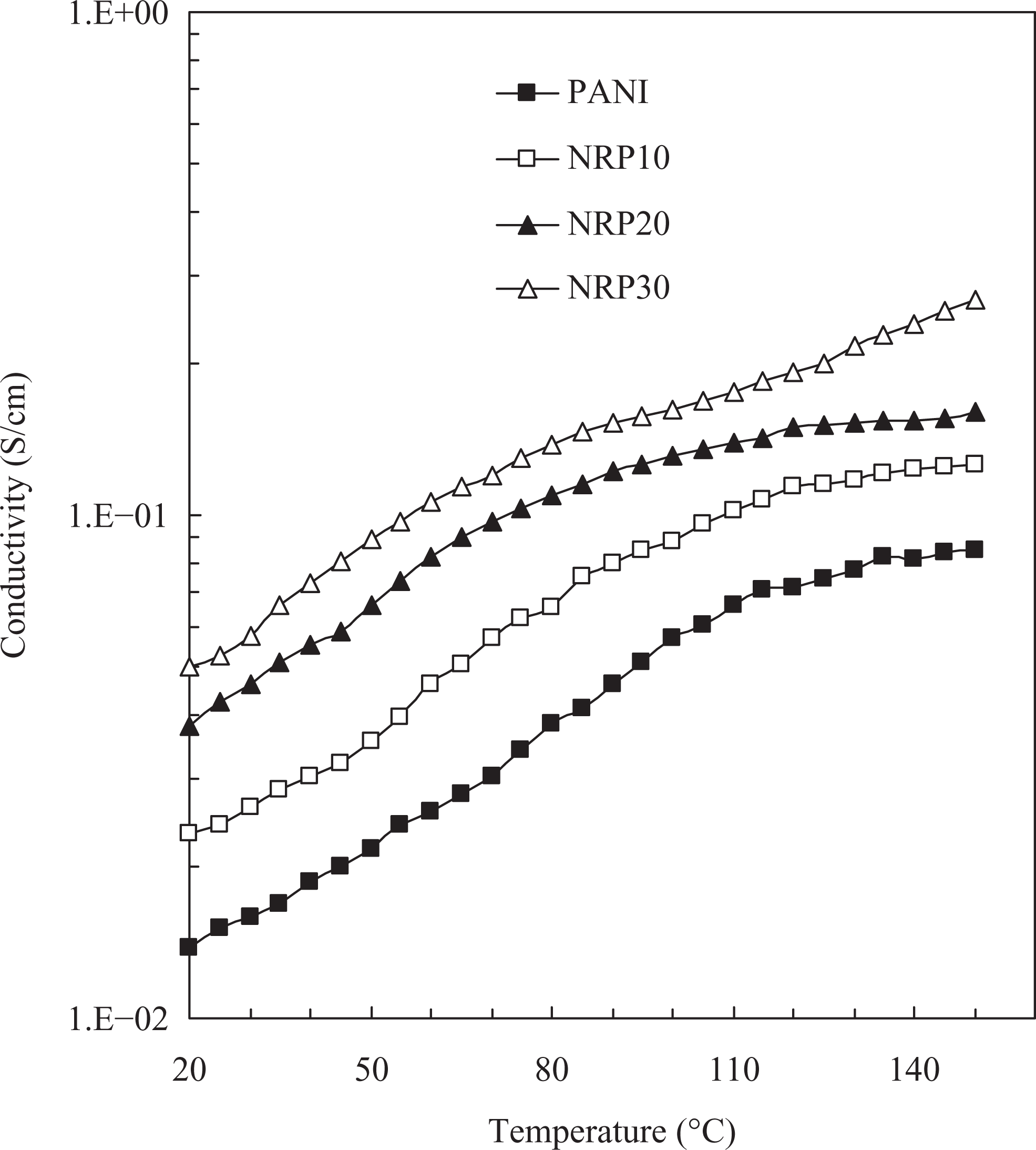
Temperature dependence of electrical conductivity of NR/PANI composites. NR: natural rubber; PANI: polyaniline.
In fact, there are several reasons for the increase in conductivity. First, the stronger interface adhesion between NR elastomer matrix and the PANI macromolecules and the finer dispersion of the PANI in the entire NR matrix cause the higher electrical conductivity. Second, the higher expanded coil-like conformation (interchain) and crystallinity (intrachain) of PANI chains might allow for the formation of conductive networks in the NR matrix and therefore assist the charge carriers to hop from conducting clusters to neighbors. 7,8 Third, the existence of interaction between PANI and ZnO particles will lead to the reduction in the conjugated lengths in the PANI chains, thereof conductivity increases. Based on the above, we can conclude that we had successfully fabricated high-conductivity NR/PANI composites.
In Figure 4 the conductivity–temperature characteristics of the NR/PANI composites appear metallic in nature. The conductivity increases with increasing temperature and appear metallic in nature. 19 When the band gap between the valence and the conductance bands disappears, the two bands overlap leading to metallic conduction.
To more and deeper understanding of the conduction mechanism of NR/PANI disorder composites, the diffusion of charge carriers takes place due to the electron hopping between localized electron states due to random electric field instead of band conduction.
16
Therefore, the conductivity–temperature dependence can be described by Mott variable range hopping conduction and is given by
17

where 
where
The range of hopping 
The hopping energy 
The temperature variation of electrical conductivity is given by the Arrhenius equation
18

Our conductivity data fit the straight line only when
This result means that the mechanism of conductivity was three-dimensional hopping of electrons inside the NR elastomer matrix. The activation energies in the studied range of temperature are calculated from the slopes of
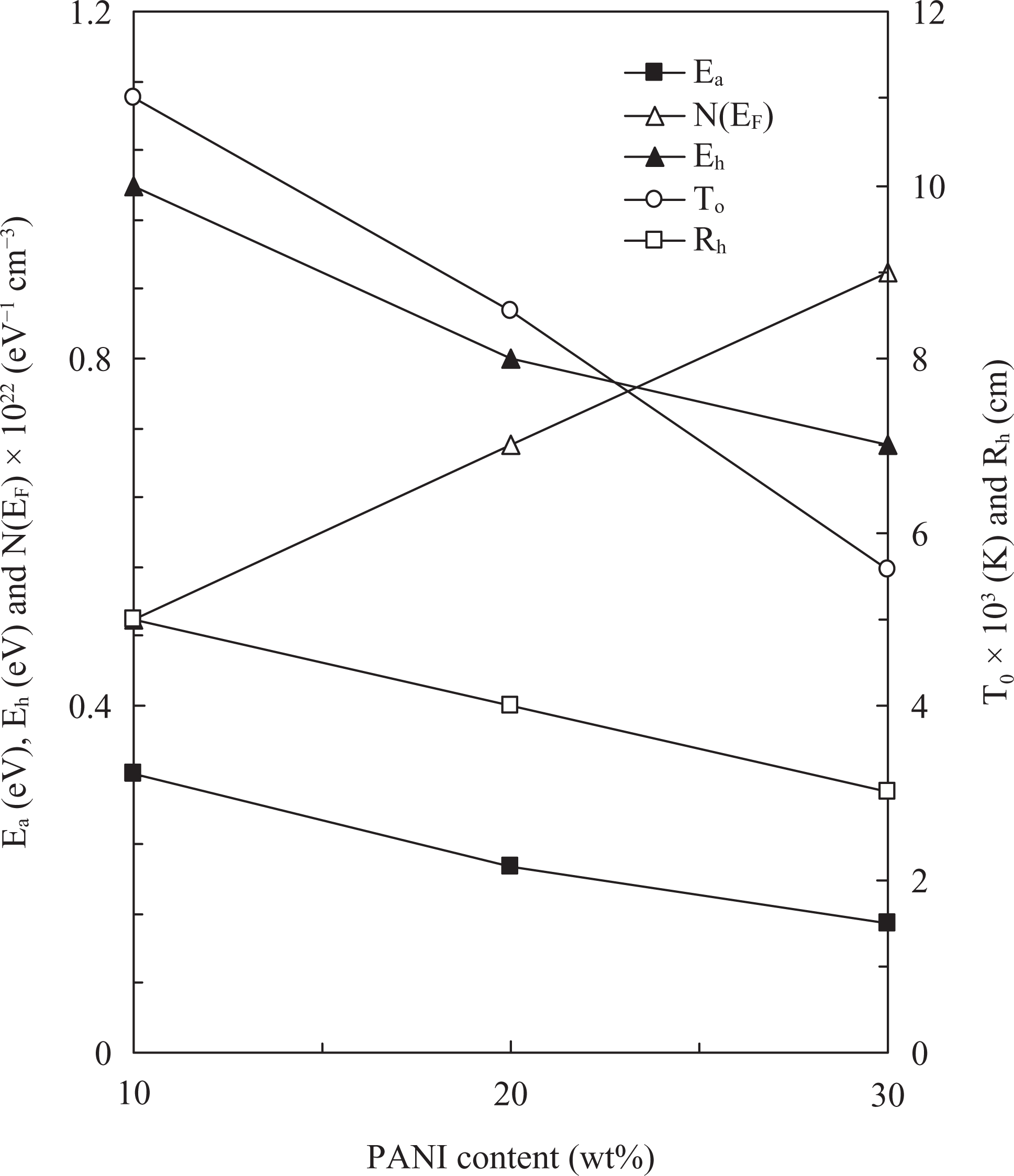
The computed values of
Electromagnetic wave shielding effectiveness studies
The knowledge of the frequency dependence of dielectric properties such as real and imaginary permittivity is a very useful technique to investigate alternating current behavior of composite materials. The real permittivity and imaginary permittivity for NR/PANI composites were measured at room temperature (20°C) over a frequency range of 1–12 GHz and the data obtained are illustrated graphically in Figures 6 and 7, respectively. The microwave dielectric measurements show that the real permittivity increases from 0.3, 4, 18, and 33 at 12 GHz for PANI, NRP10, NRP20, and NRP30, respectively, of composites at room temperature. It is seen that the real permittivity of NR/PANI composite increases remarkably with increasing PANI loading level. There are two main reasons for increasing real permittivity with increasing PANI loadings into composites.
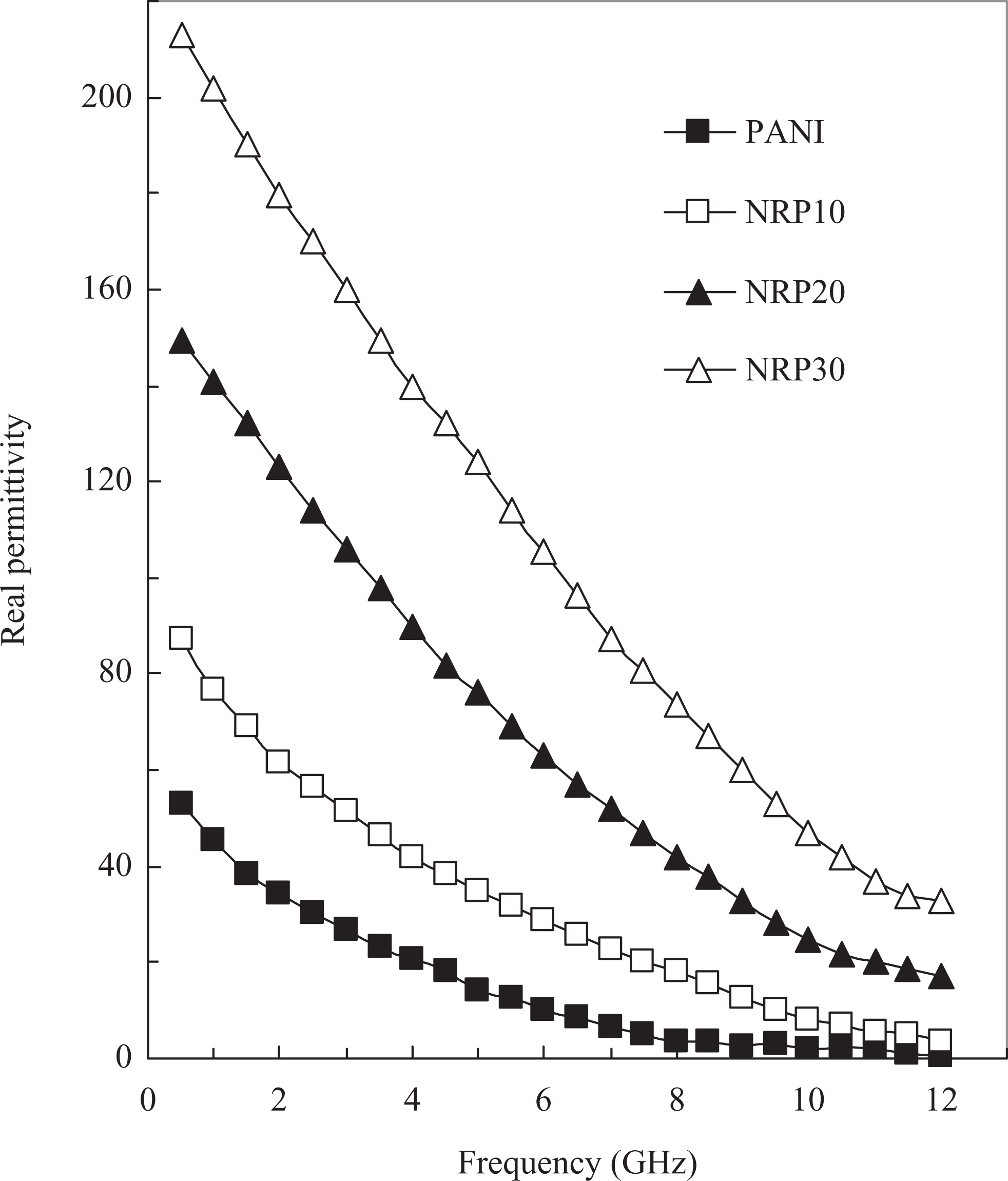
Real permittivity versus frequency of NR/PANI composites. NR: natural rubber; PANI: polyaniline.
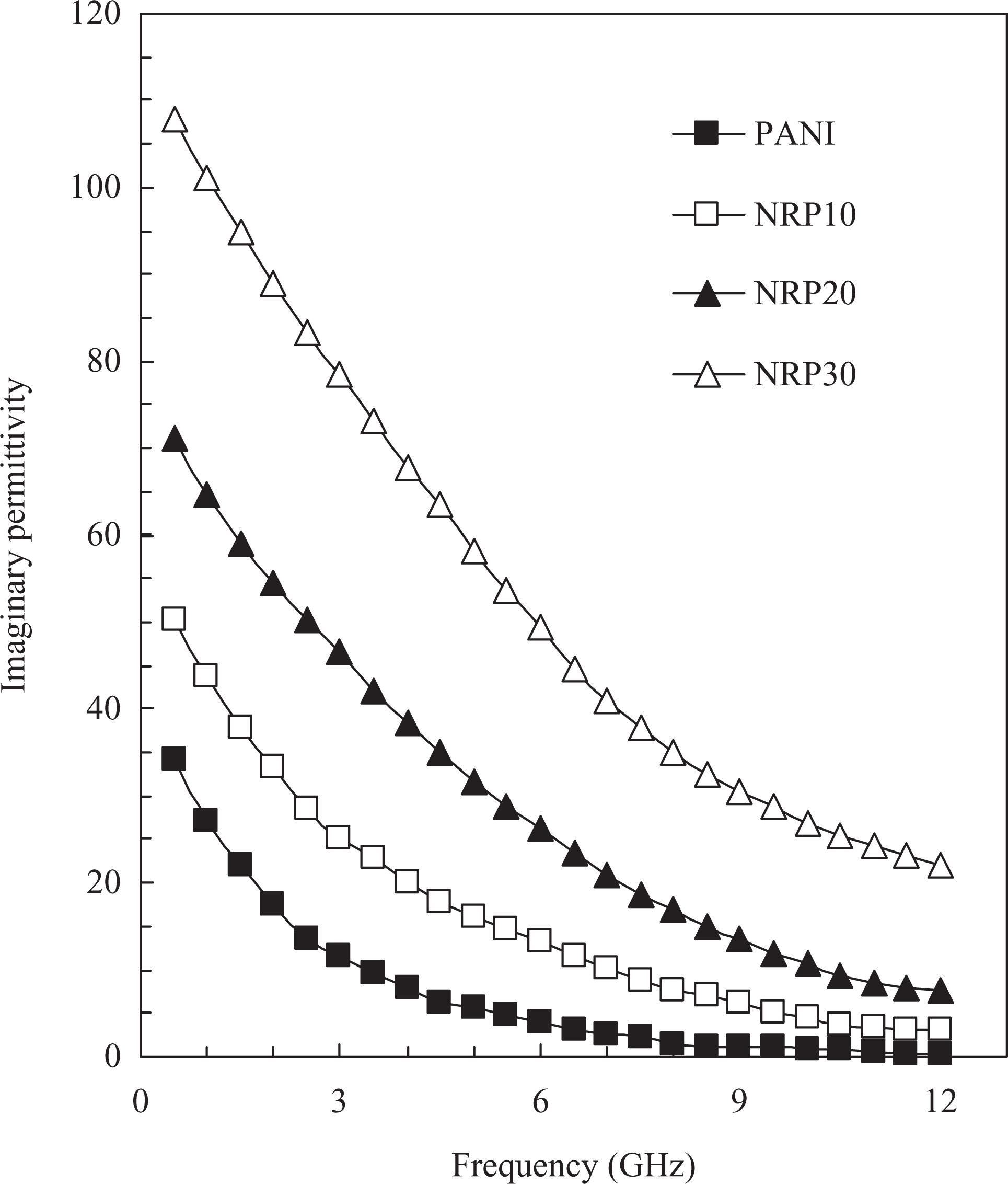
Imaginary permittivity versus frequency of NR/PANI composites. NR: natural rubber; PANI: polyaniline.
First, the conducting path and/or network is formed when the conducting PANI particles contact each other and link with NR chains causing increase in average polarizability and real permittivity of composites. Second, with the inclusion of PANI into NR matrix, the dipole moments density increases, which leads to an increase in the orientation polarization and interfacial polarization in composites. 12,13 This implies that both factors contribute toward higher real permittivity with increase in PANI contents into NR composites. In Figure 7, it is observed that the imaginary permittivity decreases with increasing applied frequency. This is attributed to the appearance of relaxation polarization that represents the interaction among the NR elastomer matrix and PANI containing delocalized electrons. In addition, the thinner the grain boundary, the higher the imaginary permittivity value is. The observed decrease in imaginary permittivity with increasing the frequency can be attributed to the fact that the carriers exchange between PANI and NR matrix ions cannot follow the change of the external applied field beyond a certain frequency. 22 Such composites could be suitable candidate for applications in microwave applications such as radar absorbing and evasion devices.
Electromagnetic shielding means that the energy of electromagnetic radiation is attenuated by reflection or absorption, which is one of the effective methods to realize electromagnetic compatibility.
13
When the plan wave is incident on shielding material, the phenomena such as reflection, transmission, absorption, and multiple reflections are observed. The total electromagnetic wave shielding effectiveness (SE) is described as:
13

where 
where
The measured SE, electrical conductivity, real permittivity, and skin depth as a function of PANI content of NR/PANI composites are all shown in Figure 8. It is observed that the SE of NTP0 sample (i.e. green NR composite) is almost zero, that is, the green NR without PANI conducting fillers are transparent to electromagnetic frequency due to its poor conductibility. 1,2 The SE and real permittivity values increase with the increase in PANI content into composites. This is ascribed to the good interface adhesion and network connectivity among PANI particles and NR matrix. It is clearly shown that there is a direct interrelation between SE and electrical conductivity of the composites as well. With the loading of PANI increasing and the electrical conductivity increasing, the SE increases obviously. This suggests that the absorption dominates the shielding mechanism. 3 As the conductivity increasing, electromagnetic impedance of the composite becomes larger and larger. The level of impedance mismatch to the air becomes smaller and smaller. Therefore, the absorption loss of the electromagnetic wave is strengthened and the SE increased. In addition, the SE of the composites depends on resistance loss and interfacial polarization loss as well. This fact is attributed to the regime of conducting phases among PANI filler and NR matrix increases, which contribute to the stronger interfacial polarization of electromagnetic wave and larger electromagnetic loss. 18,19 It is noteworthy that the skin depth decreased with increasing PANI content into NR composites that attributed to a high cross-linking density would lead to a low skin depth owing to lower porosity of NR composites. 1
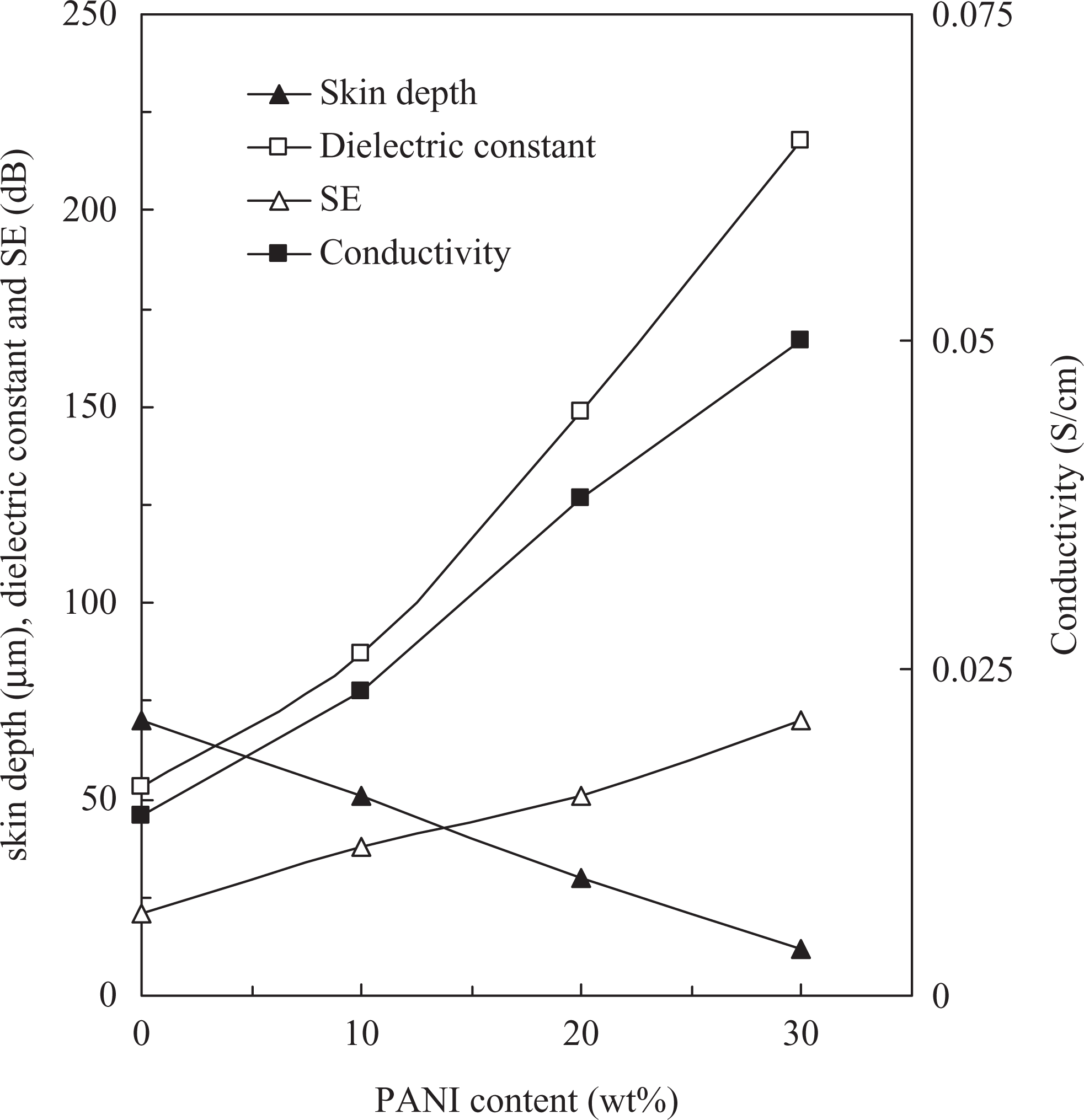
Total shielding effectiveness (SE), electrical conductivity
In Figure 8, the high values of real permittivity can be explained on the basis of the Maxwell–Wagner model and Koops’ phenomenological theory. 1,2 According to these models, the dielectric material with a heterogeneous structure can be imagined as a structure consists of well-conducting grains separated by highly resistive thin layers (grain boundaries). In this case, the applied voltage on the sample drops mainly across the grain boundaries and a space charge polarization is built up at the grain boundaries. The space charge polarization is governed by the available free charges on the grain boundary and the conductivity of the sample.
The attenuation loss and reflection loss as a function of frequency of NR/PANI composites are depicted in Figures 9 and 10, respectively. It is seen that both the attenuation and the reflection increases with increasing frequency up to 12 GHz. Also, it is clearly seen that NRP10 sample shows a SE of 30 dB, whereas a NRP20 one gives a SE of 50 dB at the frequency of 12 GHz. Finally, the highest SE value observed is 60 dB for NRP30 sample at a frequency of 12 GHz.
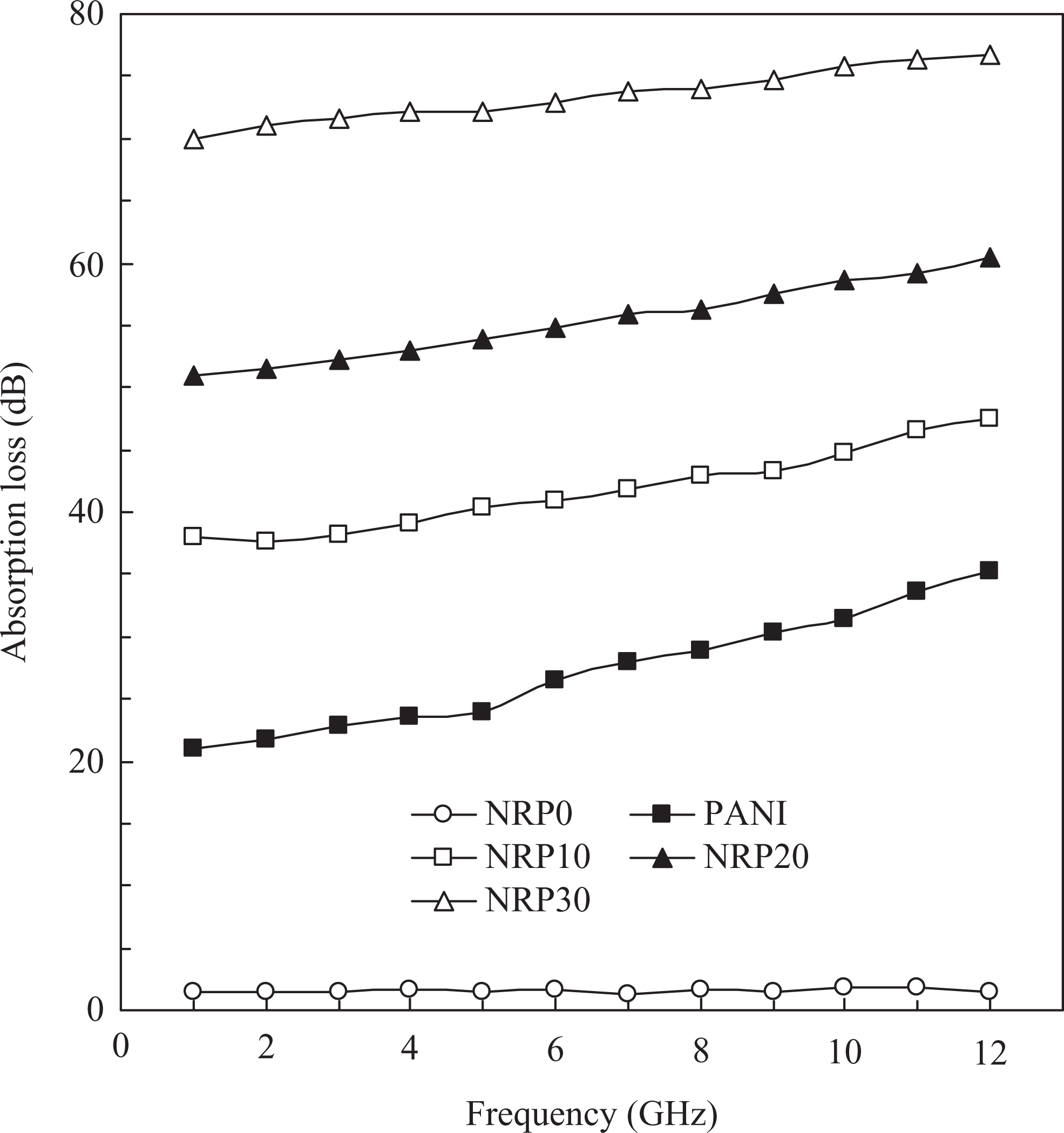
Absorption loss as a function of frequency of NR/PANI composites. NR: natural rubber; PANI: polyaniline.
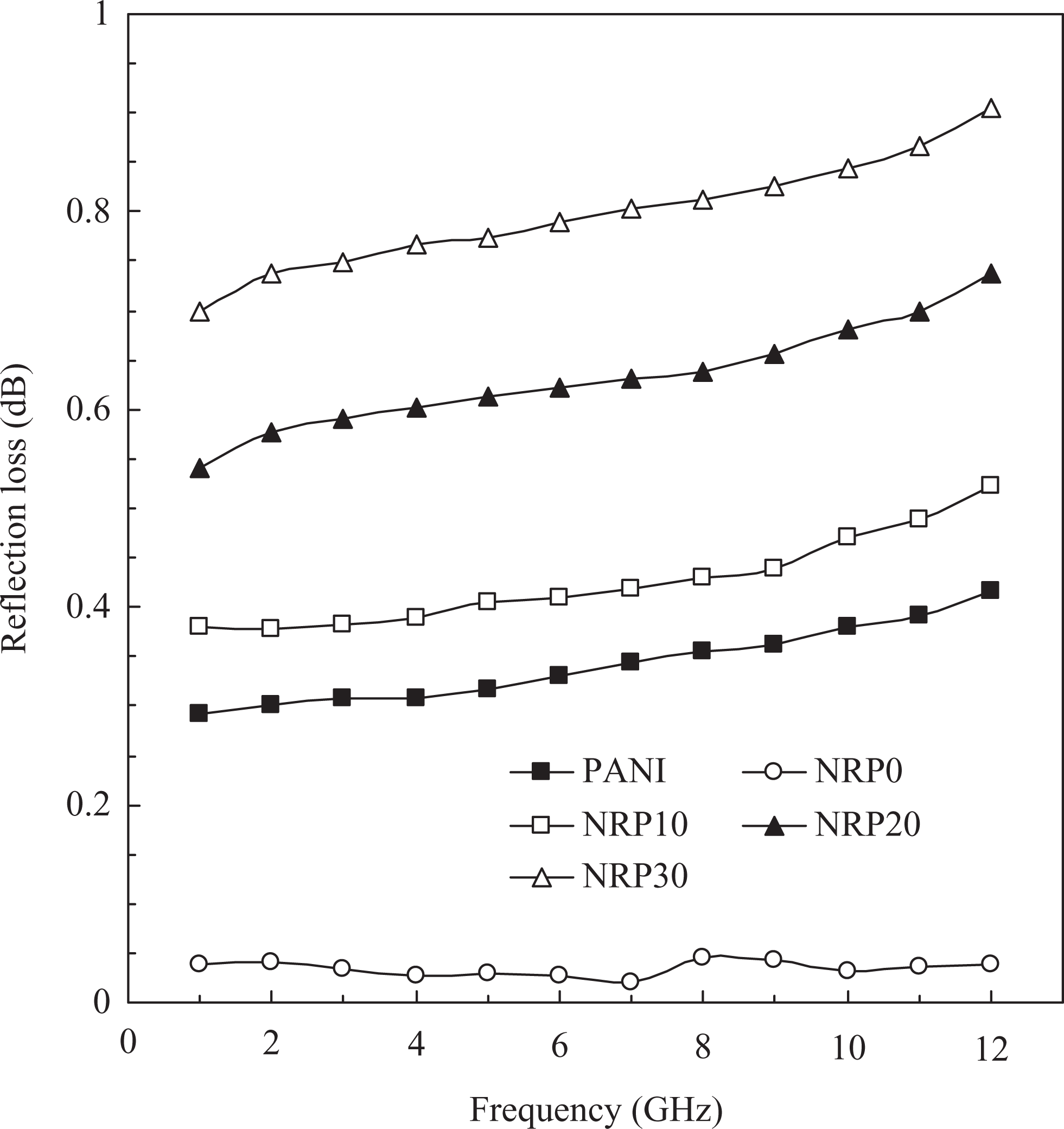
Reflection loss as a function of frequency of NR/PANI composites. NR: natural rubber; PANI: polyaniline.
Finally, the highest SE value observed is 60 dB for NRP30 sample at frequency of 12 GHz. This makes the proposed NR/PANI composites very useful for microwave absorbing materials application up to 12 GHz with good thermal stability. In Figure 10, it is observed that the reflection loss increases with increasing frequency and PANI content into composites. The reflection loss is small, which means that the dominant electromagnetic wave shielding is controlled by absorbing rather than reflection. 2,5
Conclusions
The conducting PANI-reinforced NR composites for electromagnetic shielding effectiveness at microwave frequency was investigated. The present study can be summarized as follows:
The molecular structure and thermal stability of NR/PANI composites are highly enhanced with inclusion of PANI macromolecules into NR matrix.
Mechanical properties such as TS and hardness (H) become enhanced with increasing PANI loading level into NR/PANI composites.
The electrical conductivity increases with increasing PANI loading level into NR elastomer matrix. The conduction mechanism of conductivity of NR/PANI composites is controlled by polaron hopping.
By the increase in PANI loading and the increases in the bulk conductivity, total shielding effectiveness increases rapidly, this depends not only on the conductivity but also on resistance loss and interfacial polarization loss as well.
The attenuation loss and real permittivity increase with the PANI content increasing into composites. The composite containing 30 wt% PANI was shown to exhibit attenuation up to 77 at 12 GHz dB and a real permittivity value up to 33.
Footnotes
Acknowledgements
The present research is a result of an international collaboration program between University of Tabuk, Tabuk, Saudi Arabia, and the University of Chemical Technology and Metallurgy, Sofia, Bulgaria.
Funding
This work received the financial support from the University of Tabuk, Tabuk, Saudi Arabia.