



Abstract
Two types of nanosilica-based urea–formaldehyde (UF) hybrid materials with formaldehyde to urea (F/U) ratio (0.8) were synthesized without (UF + SiO2) and with coumarin (4-chloro-3-nitro-2H-chromen-2-one). Obtained composites have been irradiated (50 kGy) and their radiation stability was evaluated on the basis of thermal behavior before and after irradiation. The thermal properties of materials were studied by nonisothermal thermogravimetric analysis, differential thermal gravimetry, differential thermal analysis and differential scanning calorimetry supported by data from infrared spectroscopy. The free formaldehyde percentage was determined for all prepared samples. The shift of temperature values for selected mass loss to a high temperature indicates the increase in thermal stability of materials with coumarin after γ-irradiation. The free formaldehyde percentage was reduced after irradiation from 15% to 3% for sample without coumarin and from 7% to 4% for sample with coumarin. The asymmetric stretching vibrations of –N–CH2–N– absorption band and νas(Si–O) of siloxane or silicone in FTIR spectra of irradiated coumarin compound are shifted to higher wave number values and confirmed its higher thermal stability.
Introduction
Urea–formaldehyde (UF) resins offer unique potential technical advantages in a variety of applications, in abundance unmatched in the competing product. Among those advantages are the abovementioned low price, the nontoxicity of resin and resin products and the environmental compatibility of resin-bonded products, such as particleboard. However, they lack in water resistance of the hardened resin owing to the reversibility of the amino ethylene bond and hence the susceptibility to hydrolysis. As a typical amino resin, UF resin adhesive possesses some advantages, such as fast curing, good performance in the panel, water solubility and lower price. 1 The formaldehyde emission from the panel used interior applications, which was one of the factors affecting sick building syndrome in an indoor environment. Therefore, the formaldehyde emission into the air from UF resin-bonded wood product is a major problem in the particleboard and plywood industry. 2,3 The release of formaldehyde is predominantly determined by the mole ratio of formaldehyde to urea in the adhesive system. The lower mole ratio and the lower postproduction formaldehyde emission are out of the produced board.
Fillers have a modifying effect on the properties of UF resin. But the fillers formerly used are all particles with sizes above micron grade, which have only small modifying effect. Nanocomposites are a class of composite materials in which the dimensions of the dispersed phase are nanometric. In some cases, nanocomposites exhibit greatly improved properties with respect to conventional microcomposites loaded with the same amount of reinforcing phase, thus allowing for a potential weight-saving design of many plastic products. Today, attention has been focused on the nanocomposites, especially those obtained from layered silicates 4,5 in thermoplastic or thermosetting matrices, 6 since they demonstrated a noticeable improvement in thermal and mechanical properties with respect to microcomposites. 7
Chemical activities of nanoparticles are excellent. 3 For example, when used as composite fillers, silica materials (quartz, fumed silica, precipitated silica, colloidal silica, etc.) drastically improved the mechanical, thermal and rheological properties of the polymer matrix composites. These new materials, called nanocomposites or organic–inorganic hybrids, afford to combine both the advantages of the organic material as lightweight, flexibility and good moldability, and of inorganic materials such as high strength, heat-stable and chemical resistance. 8,9 Hybrid organic–inorganic nanocomposite offers a variety of advantageous properties in various applications. These materials have been fabricated into membranes, sheets and fibers, and they are usually applied in such a field as optical, mechanical, electronic and biomedical applications. 10,11
Coumarins (4-chloro-3-nitro-2H-chromen-2-one) are used in the fields of biology, medicine and polymer science. Coumarin polymers possessing antimicrobial activity have not received considerable attention in the literature. However, the reported coumarin polymers possess variety of functions and appear to be interesting. Although there are a huge number of reports on monomeric coumarin derivatives, there are only few reports on coumarin polymers. Vinylated coumarins are used as polymerizable fluorescent brightening agents and, when copolymerized with acrylonitrile and methyl acrylate, they faded more slowly than copolymers of acrylonitrile and methylacrylate. 12
High-energy radiation is a well-known technique for the modification of polymers. However, little work concerning the effects of γ-irradiation on the thermal properties of modified UF resins has been done. Radiochemical studies on crosslinking or degradation of polymers are important for designing new materials. The goal of this work was to determine the radiation stability synthesizing nanosilica-based UF composite materials concerning their thermal behavior. The thermal behavior of two types of nanosilica-based UF composite materials (original and irradiated) was investigated using nonisothermal thermogravimetric analysis (TGA), differential thermal gravimetry (DTG), differential thermal analysis (DTA) and differential scanning calorimetry (DSC) supported by data from infrared spectroscopy.
Experimental
Materials
The following materials were employed in the study reported here: urea (NH2)2CO (Alkaloid-Skopje, FYR of Macedonia); 35% formaldehyde CH2O (Unis-Goražde, Bosnia and Herzegovina); 4-hydroxycoumarin (Merck, Germany) and nano-silica (Merck, Germany) with specific surface area 200 ± 25 m2 g−1. All other materials and solvents used for analytical methods were of analytical grade.
Synthesis of coumarin
4-Hydroxycoumarin was nitrated using 72% nitric acid (HNO3) in glacial acetic acid (AcOH) according to a published procedure, 13 to afford 4-hydroxy-3-nitrocoumarin. The starting compound, 4-chloro-3-nitrocoumarin, was prepared from 4-hydroxy-3-nitrocoumarin following the modified method of Kaljaj et al. 14 The preparation was carried out in the following manner: N, N-dimethylformamide (DMF, 2 cm3) was cooled to 10°C in an ice bath. With stirring, phosphoryl chloride (POCl3; 4 g, 0.026 M) was added dropwise, and the obtained mixture was stirred for an additional 15 min. Then, the ice bath was removed and the reaction was left to proceed at room temperature for a further 15 min. Finally, the solution of 4-hydroxy-3-nitrocoumarin (5.4 g; 0.026 M) in DMF (12.5 cm3) was added dropwise. After 15 min of stirring, the reaction was stopped by adding cold water (15 cm3). The precipitated solid was collected by filtration and washed with saturated sodium-bicarbonate solution and water. Recrystallization from the mixture of benzene-n-hexane (1:1 volume ratio) yielded yellow crystals of coumarin (5.1 g; 0.0226 M) with a melting point of 162–163°C. Obtained yield was 87%. Structure of coumarin is shown in Figure 1.
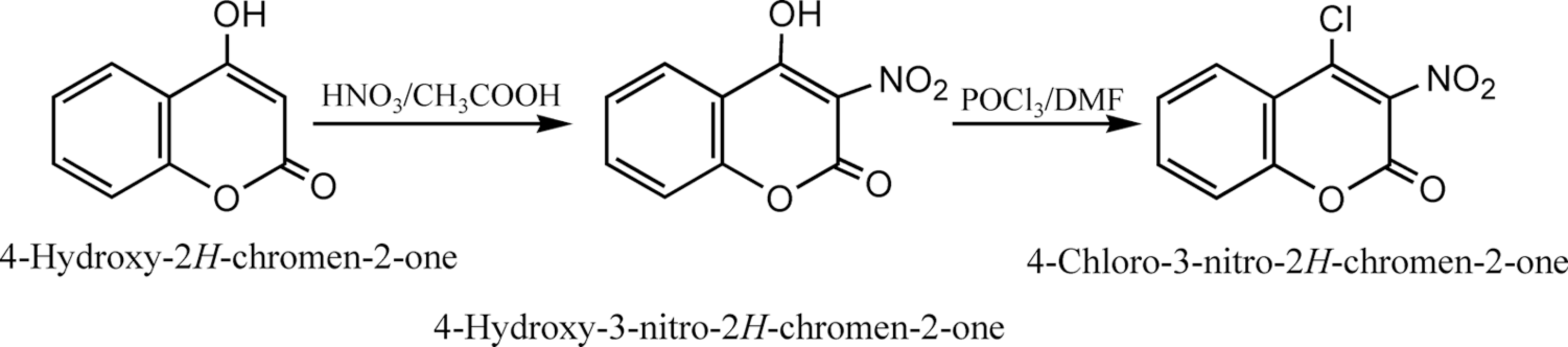
General reaction scheme for the synthesis of coumarin (4-chloro-3-nitro-2H-chromen-2-one).
Synthesis of composites
Two types of nanosilica-based UF hybrid composite materials with formaldehyde to urea (F/U) ratio (0.8) were synthesized (UF with SiO2: noticed as resin 1; UF + SiO2 + coumarin: noticed as resin 2) using the same procedure. Synthesis procedure was as follows: 60 cm3 of distilled water and 0.1 M of urea are mixed into reaction vessel with magnetic stirrer. Then, 0.015 M of coumarin (resin 2) is added. Other components such as 7.25 g SiO2, 0.12 M 35% formaldehyde and 0.6 cm3 of concentrated sulfuric acid (H2SO4) were added into the reaction mixture according to following order. The pH value is lowest of 6. Reaction mixture is mixed for 3 h. Sodium hydroxide (NaOH) of 0.22 M was dissolved in 6 cm3 of distilled water and added to the reaction mixture before the stirring was done. The modified UF resin was cured at 110°C for 3 h in a convective drying oven. The pH value of cured resin was: 8 for resin 1 and 4.5 for resin 2. The contents of dry solid were: 26.5% for resin 1 (10.17 g) and 32.0% (14.11 g) for resin 2. Contents of coumarin in resin 2 were 12%.
γ-Irradiation aging
Irradiations of prepared samples were performed in air in the cobalt-60 (Co-60) radiation sterilization unit at the Vinca Institute of Nuclear Sciences. The Radiation Unit of the Vinca Institute has been described in more detail elsewhere; 15 the facility core is Co-60 γ-irradiator with wet storage working in batch mode (CEA, France). The samples were irradiated by γ-rays at room temperature with the dose rate of 10 kGy h−1 and total absorbed dose of 50 kGy.
Free formaldehyde content analysis
Pure sodium sulfite solution (1 M) of 50 mL of was prepared in 500 cm3 flask. Three drops of thymol phthalein indicator were added. The mixture was carefully neutralized by titration with 1 M hydrochloric acid (HCl) until the blue color of the indicator disappeared. The resin sample of 0.5 g was added to the 25 cm3 of distilled water and 15 cm3 of 0.5 M sodium sulfate solution. A few drops of thymol phthalein indicator were added and the resulting mixture was titrated with 0.5 M HCl until complete decolorization was obtained. The experiment was carried out once at the end of the condensation reaction of urea and formaldehyde.
The free formaldehyde CH2O (%) content was calculated from the equation (1) given below

where V is the volume of HCl (cm3), c is the concentration of HCl (M dm−3), E is equivalent weight of formaldehyde and a is weight of the samples (g).
Thermal properties assessment
The thermal stability was investigated by nonisothermal TGA and DTA using a Setaram Setsys Evolution 1750 instrument (France). The measurements were conducted at a heating rate of 10°C min−1 in a dynamic argon atmosphere (flow rate was 20 cm3 min−1).
DSC measurements were performed using Setaram 151R (softver SETSOFT 2000 from Setaram, France) instrument in the temperature range from 30 to 500°C (heating rate was 20°C min−1).
FTIR spectroscopy
FTIR spectra of the powdered samples, dispersed in KBr (1%) and compressed into pellets, were recorded using a Nicolet spectrophotometer (Model 380, Thermo Nicolet Corporation, Madison, Wisconsin, USA) at 4 cm−1 resolution, in the range of 400–4000 cm−1.
Results and discussion
Free formaldehyde content analysis
During UF resin manufacturing, the final reaction products between urea and formaldehyde can range from the simple monomethylolurea to very complicated crosslinked structures. The formation of linear condensation products in cure process begins at lower temperature if the resin contains greater amount of reactive methylol groups. Depending on different synthesis conditions and technology, generally we used two-step reaction of urea and formaldehyde produces resins with a broad variety of both linear and branched chains. 16 Formaldehyde can be bound with sorbents compatible with UF polymer, in particular, with nanosilica having large specific surface area. Bonding between organic molecules and surface of silica is resulting in the replacement of most of the strongly hydrophilic silanol functionality with a material exhibiting modified, and usually predictable, new or improved properties. 17 The amount of free formaldehyde contained in the UF resin is reduced by its sorption by nano-SiO2 particles. 18 Sorption of formaldehyde on the nanoparticle surface is accompanied by hydrophobic–hydrophilic effect caused by the interaction between the surface and formaldehyde oligomers. The stability of the resulting structure is determined by the balance of these forces.
Lower levels of formaldehyde in resin 2 (7%) compared with resin 1 (15%) can be attributed to the presence of –C=O and –NO2 groups in coumarin moiety, which acts as a scavenger for liberated formaldehyde. Also, it can be seen that the free formaldehyde percentage reduced after irradiation from 15% to 3% and from 7% to 4% for resins 1 and 2, respectively. The decrease free formaldehyde percentage could be the explanation for the additional networking of the resin, which is confirmed by thermal analysis.
Thermal behavior analysis
The thermal stability of polymer materials are usually defined as the temperature beginning of decomposition of the sample at a programmed heating rate, but as a characteristic values can be taken and the temperature for example 5% or 10% supplied by a source mass loss. 19,20 The thermal stability of a material is defined as the specific temperature or temperature–time limit in which the material can be used without excessive mass loss. 21
The thermal behavior of modified UF resins unirradiated and irradiated samples occurs in four and two main stages for resins 1 and 2, respectively (Figures 2 and 3). The percentage mass loss at different temperatures is summarized in Table 1 for all unirradiated and irradiated resins.
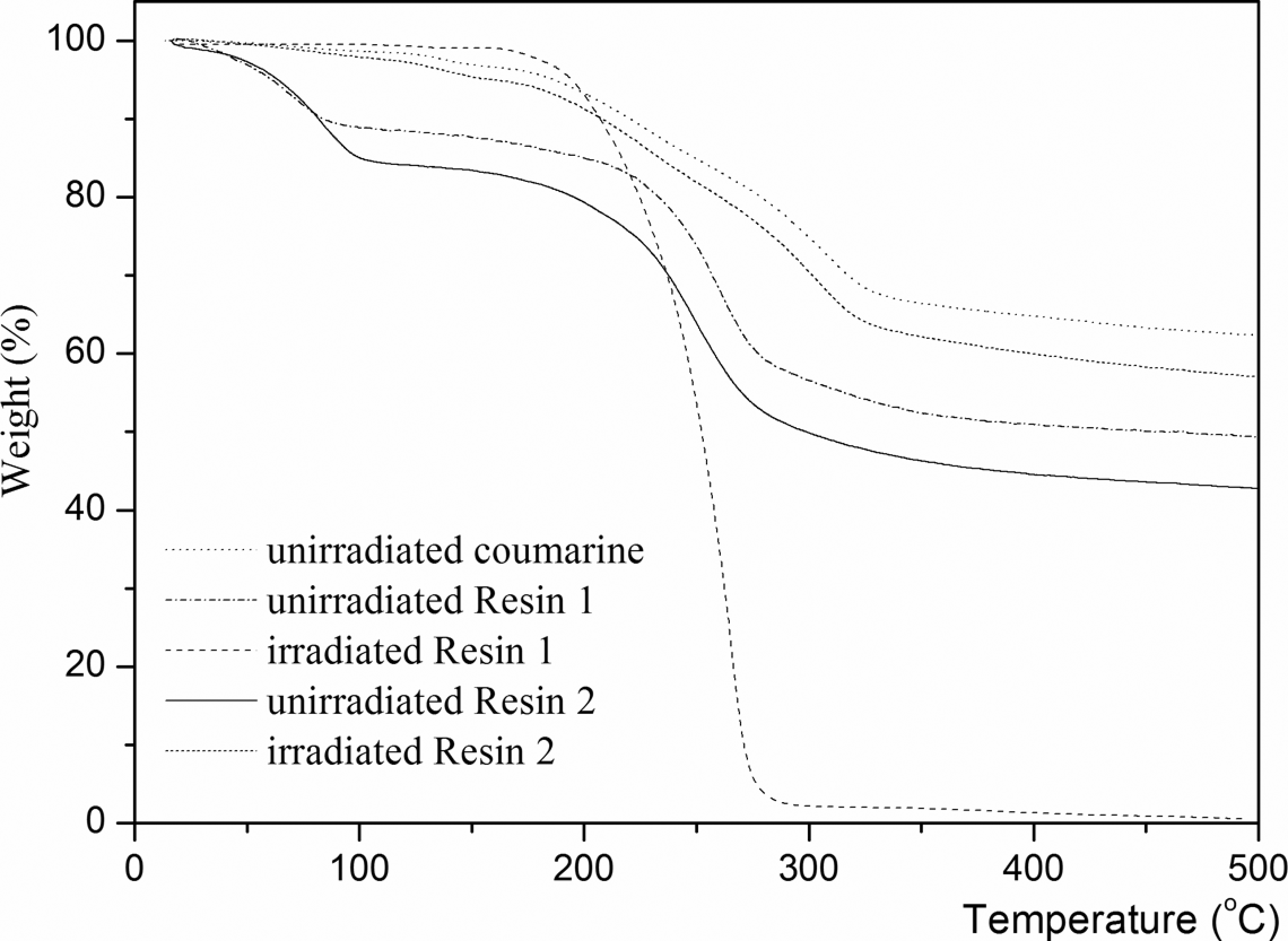
TGA curves unirradiated and irradiated nanosilica-based UF composites and coumarin. TGA: thermogravimetric analysis; UF: urea–formaldehyde; coumarin: 4-chloro-3-nitro-2H-chromen-2-one.
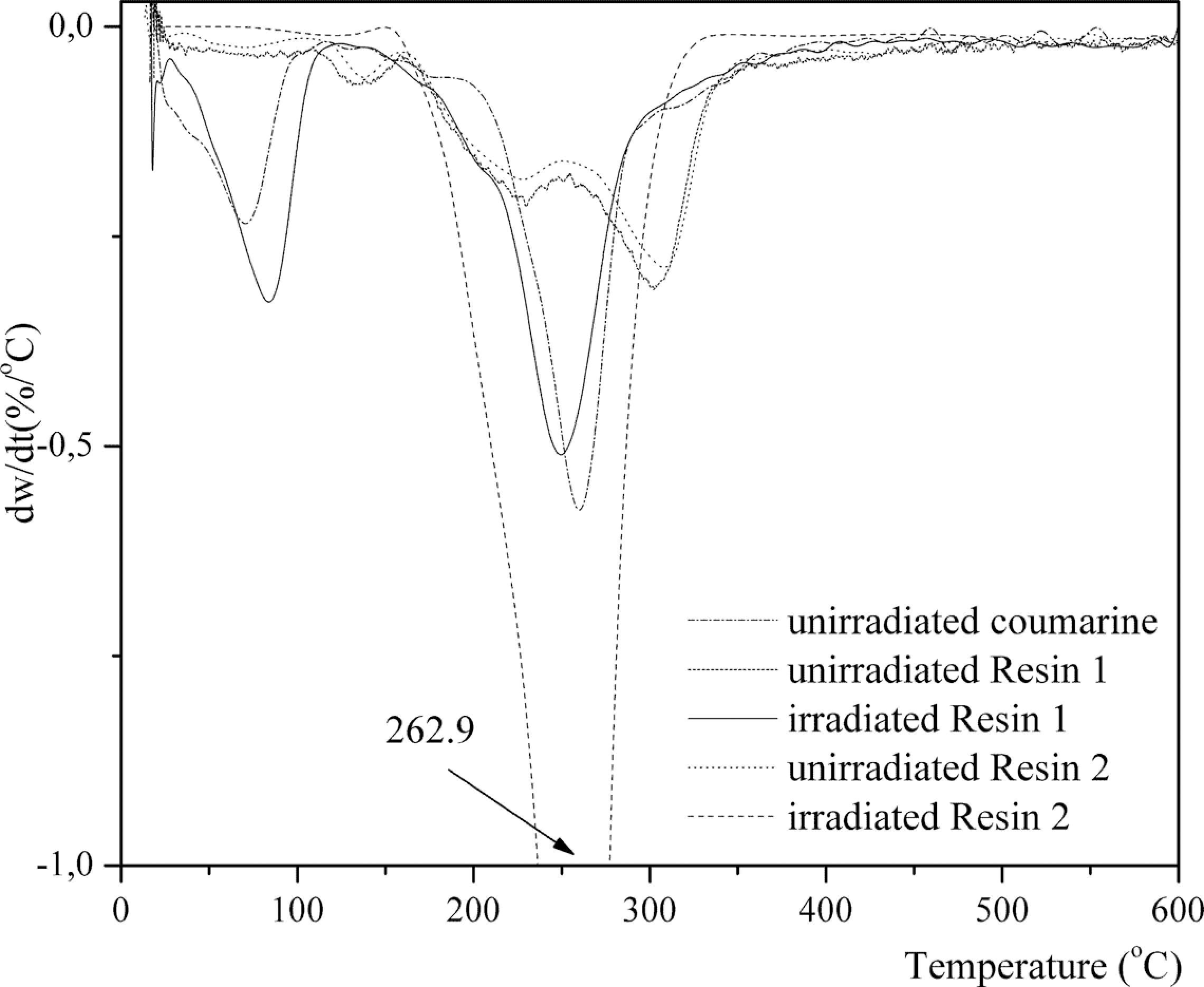
DTG curves unirradiated and irradiated nanosilica-based UF composites and coumarin. DTG: differential thermal gravimetry; UF: urea–formaldehyde; coumarin: 4-chloro-3-nitro-2H-chromen-2-one.
DTG, DTA and DSC data of peak values, and mass loss from unirradiated and irradiated nanosilica-based UF hybrid composites and coumarin.
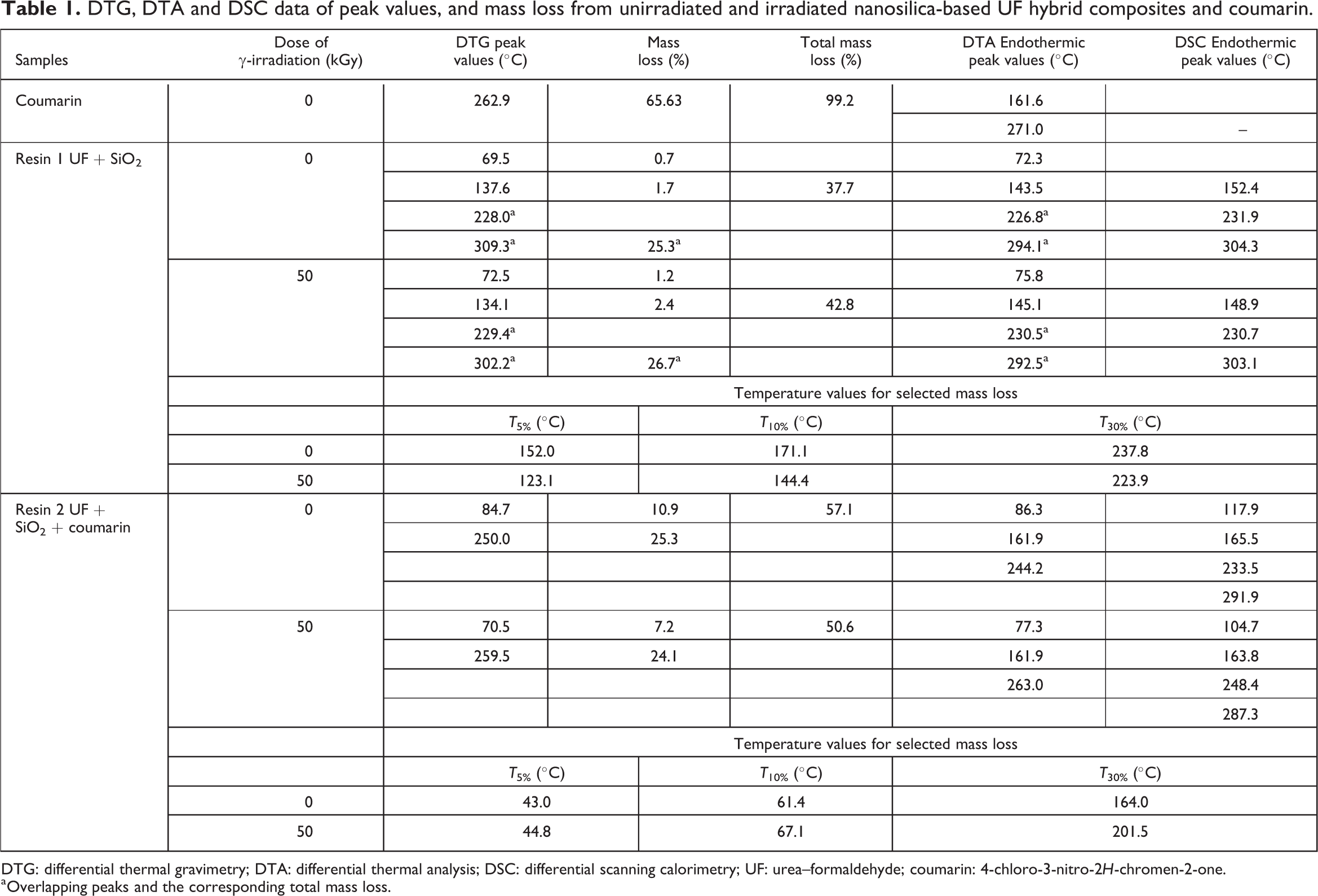
DTG: differential thermal gravimetry; DTA: differential thermal analysis; DSC: differential scanning calorimetry; UF: urea–formaldehyde; coumarin: 4-chloro-3-nitro-2H-chromen-2-one.
aOverlapping peaks and the corresponding total mass loss.
The thermal degradation of samples up to 500°C without coumarin compound (Figures 2 and 3) occurs in four successive steps, but it is noted that the third and four degradation regions are overlapped. In each step, partial volatilization takes place, while the polymer undergoes chemical modification to give progressively more stable structures. 14 From the TGA, DTG and DTA curves shown in Figures 2 to 4, the first slight weight loss below 200°C can be attributed to the water evaporation and the slow free formaldehyde emission, accompanied by a small and wide endothermic peak before 100°C (Figure 4). Above 200°C, the main degradation step is initiated when chain scissions begin and the radicals formed induce the formation of cyclic structures in the polymer chain. This process results in the extensive polymer fragmentation. Degradation of cured resins begins with the release of formaldehyde from dimethylene ether groups, 22 and the maximum degradation rate happens when the stable methylene ether linkages deconstruct. 23
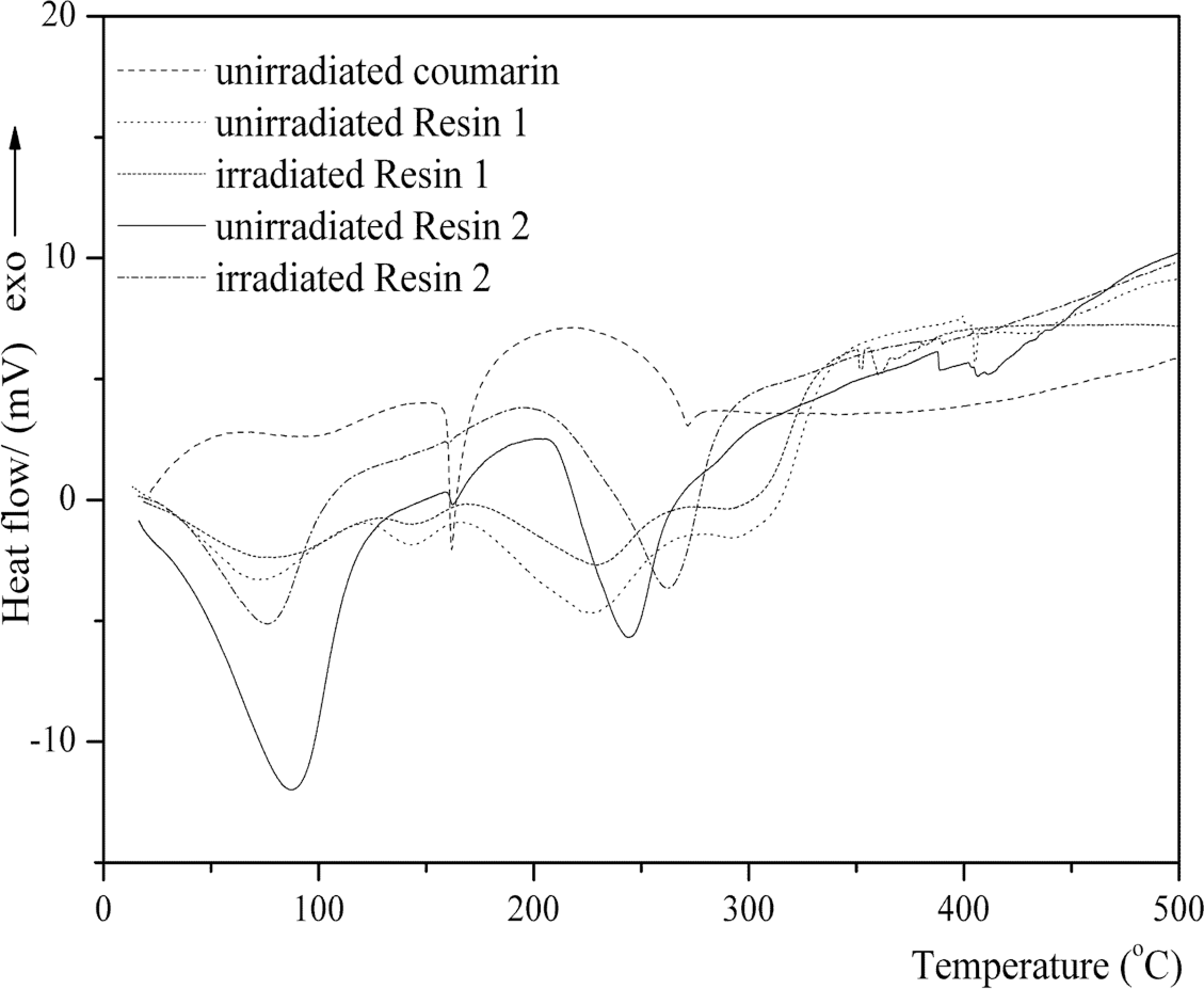
DTA curves unirradiated and irradiated nanosilica-based UF composites. DTA: differential thermal analysis; UF: urea–formaldehyde.
The first-step degradation occurs in the temperature region at 49.8–88.3°C; and 27.4–124.7°C with a DTG peaks observed at 69.5 and 84.7°C for resins 1 and 2, respectively. The mass loss is ranged to 0.7% for resin 1, indicating water and formaldehyde evaporation; and 10.9% for resin 2 indicating water, formaldehyde and amine evaporation and was the result of the Mannich base cleavage. 24 –26 The large endothermic peaks (Figure 4) are minimum at 72.3 and 86.3°C for resins 1 and 2, respectively, indicating water evaporation from the initial water’s resin.
The second-step degradation starts at 111.7 and 126.9°C and ends at 159.8 and 383.1°C with a DTG peaks observed a 137.6 and 250°C for resins 1 and 2, respectively. The percentage of mass loss at second-step degradation is 1.7 for resin 1 and can be attributed to the entrapped water release from cured polymer resin. The corresponding DTA peak is at 143.5°C. The endothermic peak refers to different states of water, which from resin synthesis and condensation water arises during postcure. 27 The water comes up either by the quantity added during the synthesis of the resin, or results from the condensation reaction. 28 For resin 2, the percentage of mass loss at second-step degradation is 25.3 and indicates the polymer degradation. The second major mass loss corresponds to the decomposition of the phenol and coumarin decomposition in resin 2. 29
In Figure 3, it is noted that the third and fourth degradation regions are overlapped for resin 1, which leads to two simultaneously occurring processes degradation with a total mass loss of 25.3%. There are two peaks: the maximum rate of mass loss is indicated by the DTG peak at 309.3°C, while the temperature at secondary peak is 228°C. Jiang et al. 30 reported that the main compounds emitted in this temperature are identified as carbon dioxide (CO2), isocyanid acid (HNCO), ammonia (NH3), hydrocyanic acid (HCN) and carbon monoxide (CO). In the DTA measurements (Figure 4), the endothermic peak with a minimum at 226.8 and 244.2°C is attributed to the degradation of methylene ether bridges into methylene bridges and crosslinking reactions in the resins network. 23 Degradation of cured resin begins the liberation of formaldehyde from dimethylene ether groups. This kind of destruction can be regarded as postcuring of resin, as released formaldehyde participates in further reaction, finally giving more stable methylene group. The endothermic peak with a minimum at 294.1°C for resin 1 belongs to decomposition of the most stable units in the UF resin-methylenediurea (Figure 4). These figure show that the minimum of the endothermic peak attributed to water evaporation, which comes to lower temperatures for resins 1 than 2. Noticeable degradation of cured resins is at 226.8 and 244.2°C for resins 1 and 2, respectively.
Thermal aromatization and crosslinking during degradation ultimately lead to greater mass loss (57.1%) for resin 2 compared with a resin 1 (37.7%). 24 DTG, DTA and DSC data of peak values and mass loss from unirradiated and irradiated nanosilica-based UF hybrid composites are shown in Table 1.
A higher level of formaldehyde and a lower mass loss in the resin 1 compared with resin 2 can be interpreted with the high contents of unstable dimethylene ether structures (–CH2–O–CH2– bonds) in resin’s structure. Greater mass loss of resin 2 is due to the presence of coumarin, which is crushed from UF resin chains during degradation. A smaller percentage of formaldehyde in resin 2 is attributed to the resin and the presence of coumarin, that is the presence of –NO2 and >C=O groups, which is the scavenger of formaldehyde.
If the pH of resin is lower, the stable –CH2– group contained is higher and the percentage of free formaldehyde is less. These results might be related to the molecular structure of cured UF resin. 31
The rate of thermal decomposition reaction of all resins, whether unirradiated or irradiated, showed more than one maximum with increasing temperature. This behavior indicates that the thermal decomposition of these polymers passes through multiple stages, depending on the state of decomposition and not on the components. 32
Degradation process of coumarin (Figures 2 and 3) takes place in one step in the temperature range of 128.8–290.4°C and with a mass loss of 65.6%. Total mass loss is 99.2%.
The large endothermic peak (Figure 4) of water evaporation with minimum temperature at 72.3 and 86.3°C for resins 1 and 2, respectively, is derived from the initial resin water and that from condensation reaction. The endothermic peak with minimum temperature at 226.8 and 244.2°C is attributed to the degradation of methylene ether bridges into methylene bridges and crosslinking reactions in the resins network. 23 Degradation of cured resin begins the liberation of formaldehyde from dimethylene ether groups. This kind of destruction can be regarded as postcuring of resin, as released formaldehyde participates in further reaction, finally giving more stable methylene group. The endothermic peak with a minimum temperature at 294.1°C for resin 1 belongs to decomposition of the most stable units in the UF resin-methylenediurea (Figure 4). These figure show that the minimum of the endothermic peak attributed to water evaporation which comes to lower temperatures for resin 1 than resins 2. Noticeable degradation of cured resins is at 226.8 and 244.2°C for resins 1 and 2, respectively.
Figure 5 shows DSC curves before and after γ-irradiations and the obtained peak values are summarized in Table 1. Preliminary detailed analysis of all DSC traces suggests that the observed overlapping endotherms are composed of multiple thermal events (thermal relaxation process closely followed by the decomposition). In this respect, comparison between the temperatures of DSC endothermic curves with the first derivative of the TGA thermograms shows that in all cases the DSC endotherms were higher by about 20–40°C than those displayed by the first derivative of the TGA decomposition curves. This observation clearly indicates that a thermal relaxation process have occurred just before the decomposition processes start. 33
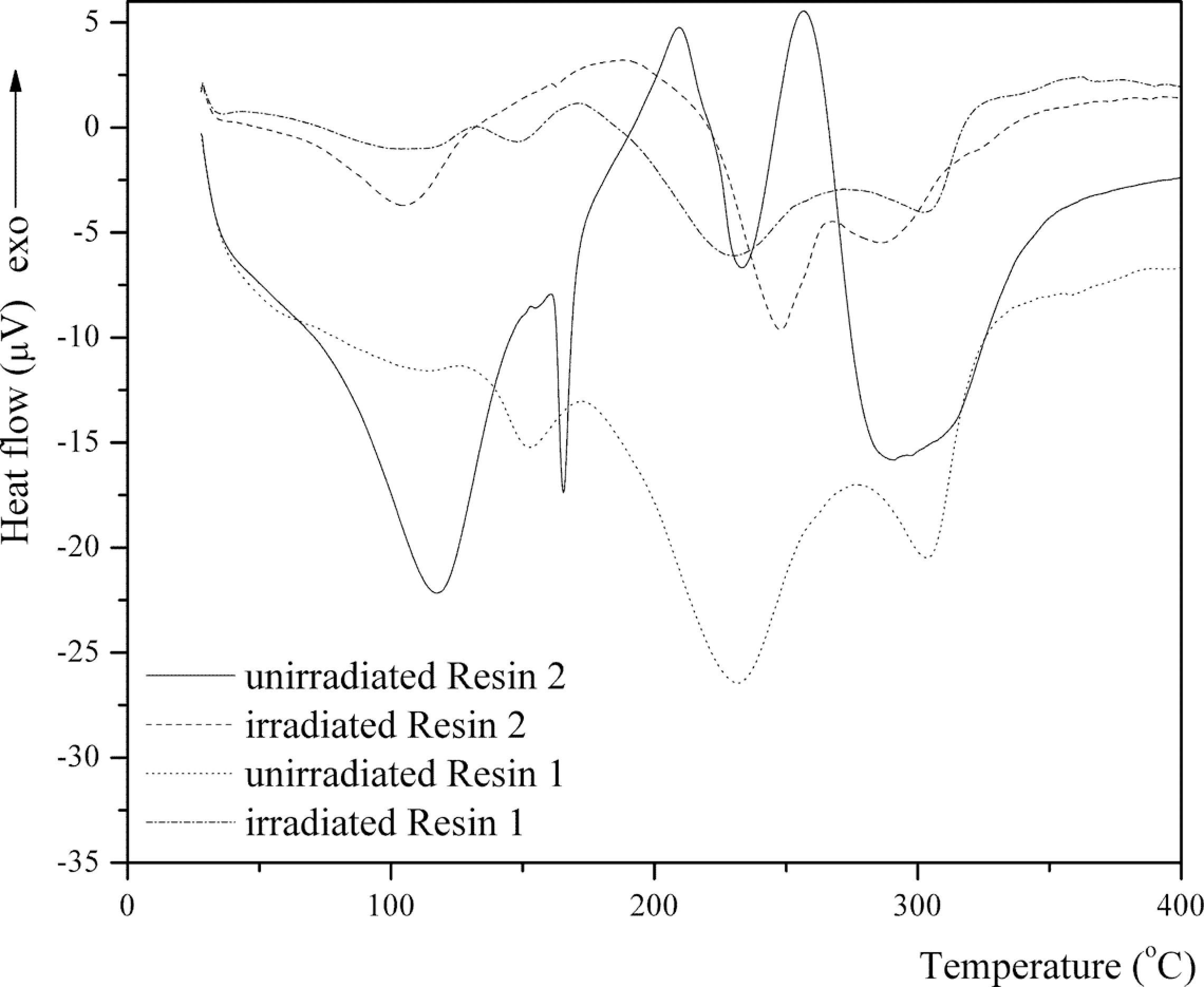
DSC curves unirradiated and irradiated nanosilica-based UF composites. DSC: differential scanning calorimetry; UF: urea–formaldehyde.
The endothermic peaks between 104.8 and 152.5°C can be attributed to the release of entrapped water from the cured polymer. Also, endothermic peaks, above 200°C, indicated thermal degradation of the methylene ether bridges –CH2–O–CH2–. 22,34 The endothermic peak at 304.3°C belongs to the rupture of methylene bridges, which were the most stable unit in the urea–formaldehyde resin. 35
The DSC curves of unirradiated and irradiated nanosilica-based UF hybrid materials (resins 1 and 2) are consist of two and three well-resolved endothermic peak at 231.9, 304.3 and 165.5°C and at 233.5 and 291.9°C for resins 1 and 2, respectively. The endothermic peak at 165.5°C belonged to the melting of coumarin’s crystals.
Table 1 shows temperature values for a selected mass loss such as T 5%, T 10% and T 30%. The unirradiated resin 1 displayed higher thermal stability with less mass loss (37.7%) than irradiated resin 1 (42.8%). Resin 2, after irradiation, is thermally more stable than before radiation (mass loss is decrease from 57.1% to 50.6%), which is consistent with the temperatures for selected mass loss and the total mass loss.
The shift of temperature values for selected mass loss to a high temperature indicates the increase in thermal stability of Resin 2 after irradiation.
Upon exposure to radiations, the energy absorbed by the polymeric material produces some active species such as radicals, thereby initiating various chemical reactions. There are two fundamental processes resulting simultaneously from these reactions: crosslinking, in which polymer chains are joined and a network is formed, and degradation, in which the molecular weight of the polymer is reduced through chain scission. The balance of crosslinking and scission reactions in polyolefin chains, exposed to high-energy radiation processes that produce free radicals, may result in good properties and new applications. These processes have the advantages of being clean and continuous with very good controllability. 36 Chain scission and crosslink’s can be revealed, together with the presence of new functional groups (such as carbonyls, carboxyl’s, esters, hydroxyls and vinyl). Usually, all these phenomena (chain scission, chain branching and/or crosslinking) coexist, in which the prevalence of each depends on many factors. Among them, a key role can be played by the irradiation parameters, such as the total absorbed dose and the irradiation dose rate, because they affect the concentration of the reactive species formed and consequently the kinetics of the reactions involved. Ionizing radiation induces chemical reactions in polymers, which result in changing both the molecular structure and the macroscopic properties. The energy transfer from the radiation to the polymer does not take place selectively relative to the mixed components in a blend. The probability of the generation of free radicals depends on the strength of the interatomic bonds. When the bond’s energy is lower, its scission is easier.
Resin 2 contains a large number of benzene rings derived from coumarin, which are known to have a ‘protective’ action in many radiation–chemical processes. It has been reported that γ-irradiation generates carbon–carbon double bonds and there are two modes of action to be considered in this connection: (a) unsaturated groups can scavenge free radicals generated by main-chain scission and thus inhibit or retard depolymerization and (b) the presence of unsaturated groups in the polymer can bring about thermally induced crosslinking reactions that otherwise would not occur. 37,38
TGA investigations indicate increase in the thermal stability of the γ-irradiated resin 2, probably due to chain scission reactions and subsequent networking. For resin 1, crosslinking reactions are less than chain scission reactions. The result is decrease in the thermal stability after γ-irradiation.
Analysis of composites structure by FTIR spectroscopy
FTIR spectra and characteristic bands of original and irradiated samples are shown in Figure 6 and Table 2. The absorption frequencies of resin spectra are broad. Broadening may also be observed due to the presence of byproducts in the resin, such as water and excess formaldehyde, which allow hydrogen bonding with the reactive functional groups like CH2OH, NH2 and NH present in resin samples. 39,40
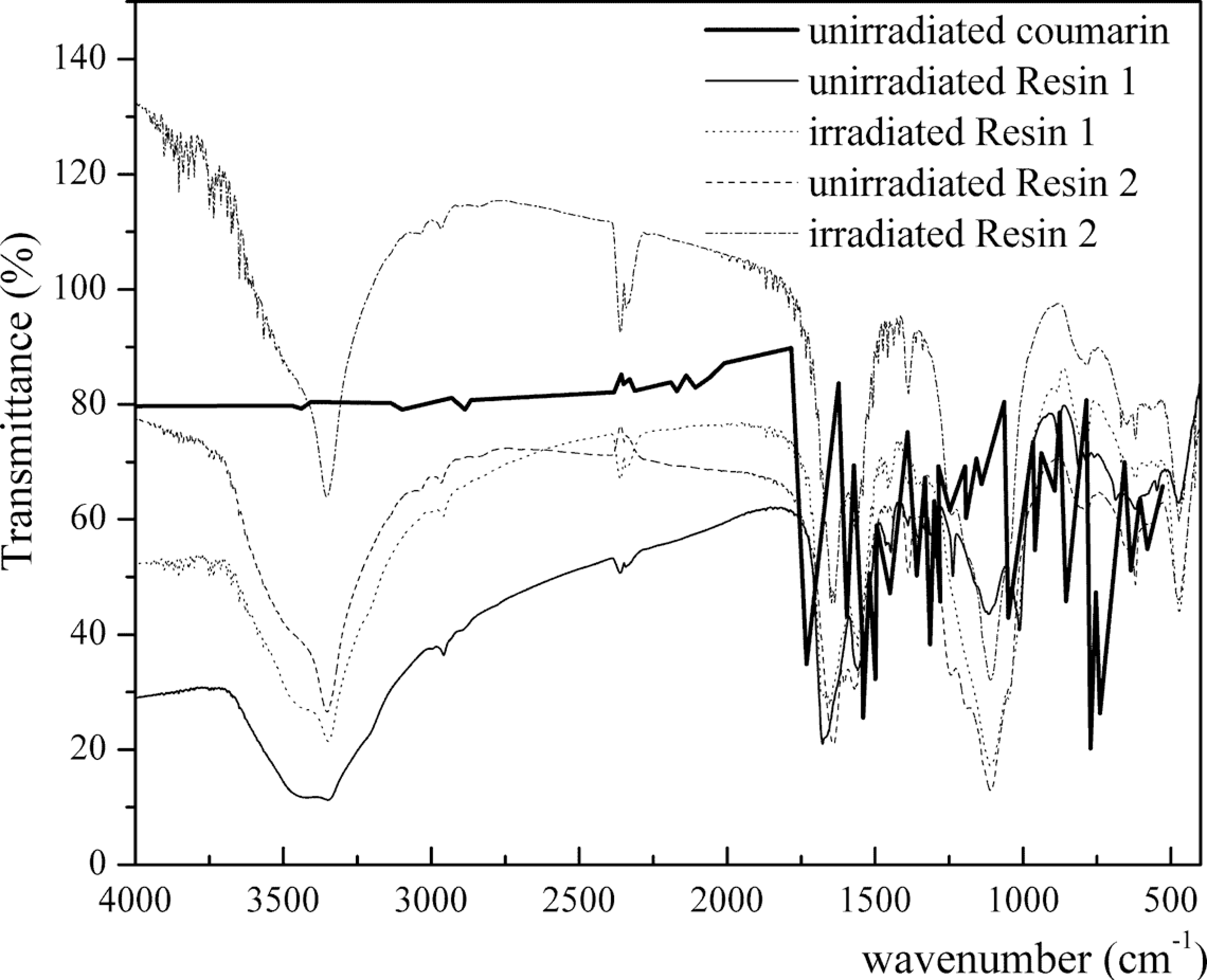
FTIR spectra unirradiated and irradiated nanosilica-based UF composites and coumarin. FTIR: Fourier transform infrared; UF: urea–formaldehyde; coumarin: 4-chloro-3-nitro-2H-chromen-2-one.
Important infrared-characteristic bands observed for unirradiated and irradiated nanosilica-based UF hybrid composites and coumarin.
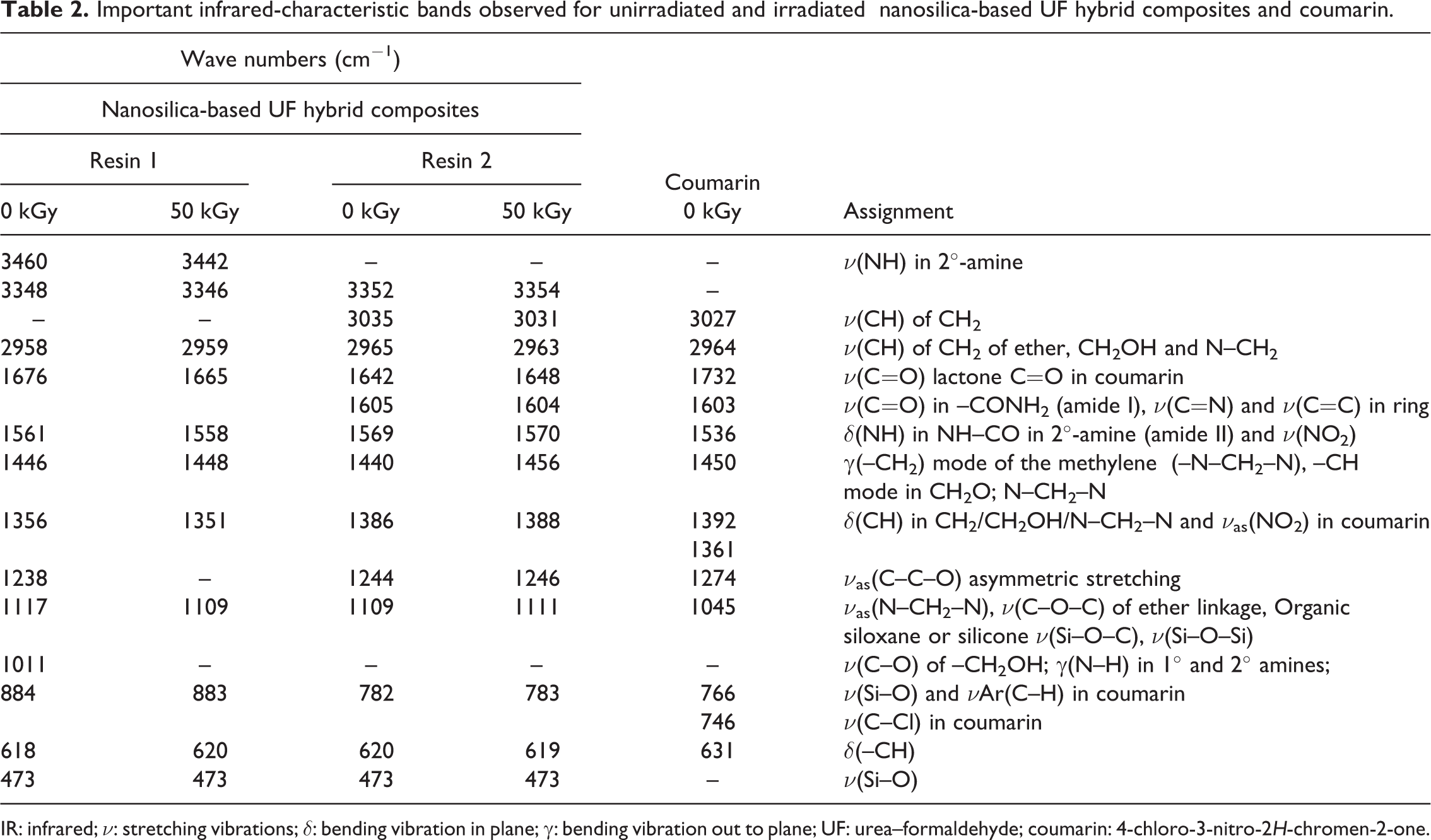
IR: infrared; ν: stretching vibrations; δ: bending vibration in plane; γ: bending vibration out to plane; UF: urea–formaldehyde; coumarin: 4-chloro-3-nitro-2H-chromen-2-one.
However, spectra of cured resins showed characteristic absorption peaks in this region. In resin 1, a medium absorption peak is observed at 3460 and 3348 cm−1, which is the characteristic absorption of the NH-stretching mode for NH2 group. Also, it is important to mention that the free –NH2 group has a characteristic peak at 3442 cm−1, but –NH group has at 3346 cm−1. In the spectrum of resin 2, the peak at 3356 cm−1 can be noticed and indicates that the amount of bonded –NH is higher when compared with the free –NH2. Similar absorption bands for resin 2 were recorded in the same region. The sharpness of these bands indicated a reduction in the extent of hydrogen-bonded interaction, which is expected as the structure becomes more crosslinked due to methylenization reaction. 28 A medium absorption band in all resin spectra appears in the range of 2969–2958 cm−1, which is ascribed to the symmetrical C–H stretching mode of CH2 of ether, CH2OH and N–CH2. A very strong absorption multiple and some overlapped peaks is observed around ∼1660 cm−1 in all spectra, which may be assigned to the C=O stretching vibration (amide-I) of CONH2 group and amide II, as well as the –N–H scissors of amide I. The strong and overlapped peaks at the area of 1500–1600 cm−1 are attributed to –N–H bending vibrations of amide II and NO2 stretching vibration in coumarin. The crosslinking between two methylol groups provides ether linkages (–CH2–O–CH2) to which –NH is attached to both sides. The weak multiple peaks at 1436–1450 cm−1 may be attributed to C–H bending vibrations of –CH2O and –CH2–N group, while the small peaks at the area of 1350–1460 cm−1 can be assigned to stretching C–N vibrations of amides I and II. The weak absorption bands at around 1390–1351 cm−1 for all polymer samples may be ascribed to C–H bending mode in –CH2/–CH2OH/N–CH2–N.
The medium absorption band in the region of 1110–1120 cm−1 may be assigned to asymmetric stretching vibrations of –N–CH2–N–, ν(C–O–C) of ether linkage and ν(Si–O–C) and νas(Si–O–Si) of siloxane or silicone. 3,10,41 These peaks (–N–CH2–N– and –C–O–C–) show the crosslinking in the resin via N atoms. Moreover, –C–O–C– peaks in the both resins show polyether product. 42 The suggested structures of the resin considering FTIR spectra were shown in Figure 7. The absence of absorption band around 1050 cm−1, which comes from the –OH group, indicates that the hydroxymethyl is quite rare in resin. In a reaction system, the formaldehyde is overdosed and the resultant of the first step is dihydroxymethyl, the lack of hydroxymethyl shows that the structure is crosslinked. 43
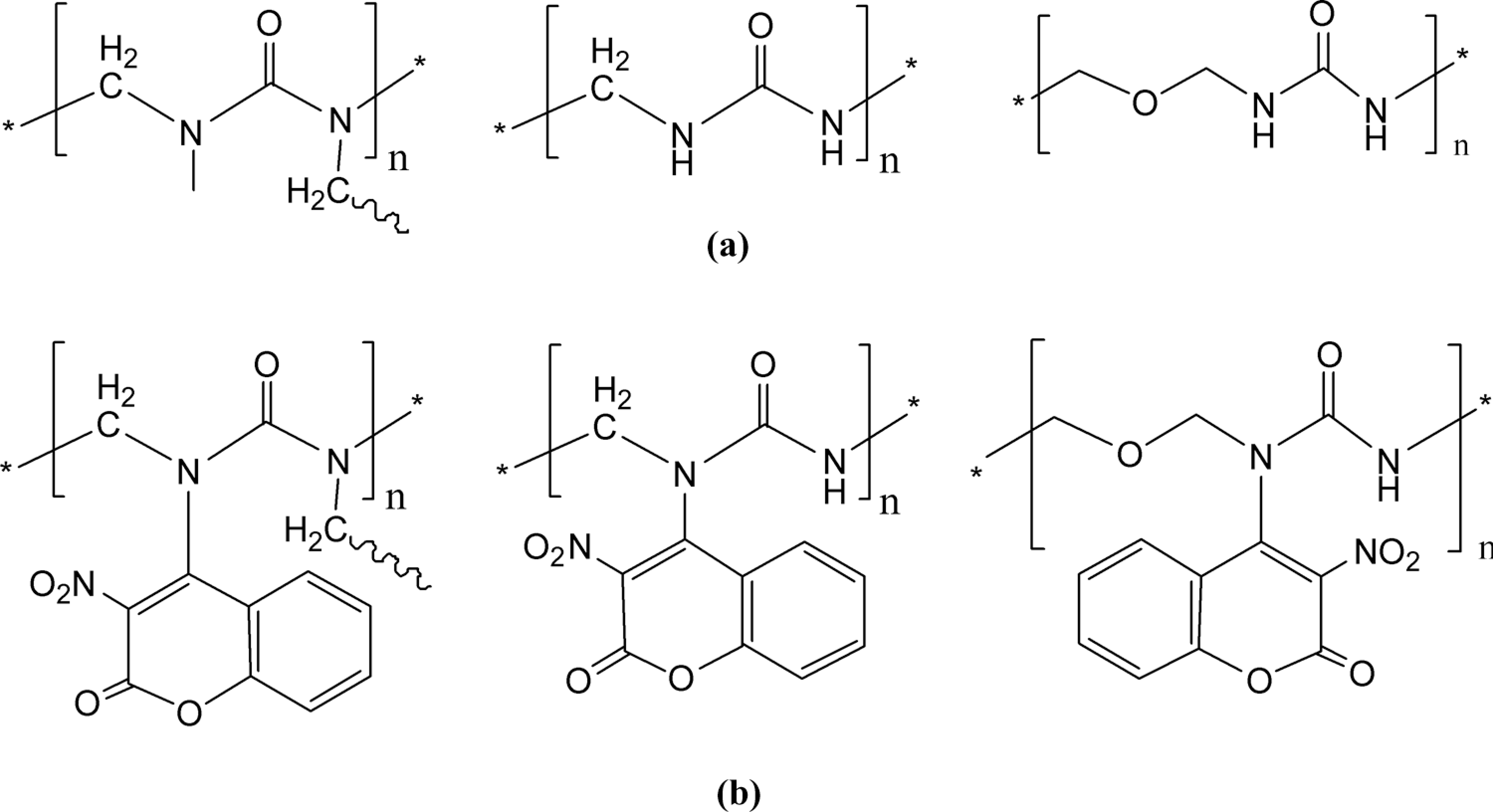
The suggested structure of nanosilica-based urea–formaldehyde composites: (a) resin 1 and (b) resin 2.
Crosslinking between organic molecules and surface of SiO2 results in the replacement of the most strongly hydrophilic silanol functionality with a material exhibiting modified. The most used process of attachment of an organic moiety to silica surface involves formation of Si–O–Si or Si–O–C bonds which confirms the existence of absorption band in this region. The band at ∼750–885 cm−1 may be assigned to asymmetric stretching vibrations of –C–O– in –CH2OH group, –N–H wagging vibrations in 1° and 2° amines and valentino vibrations of Si–O group at 473 cm−1, respectively. Bending vibrations of CH are appeared at 620–630 cm−1.
Conclusion
In this work, radiation stability of two types of nanosilica-based UF composite materials (with and without coumarin) with formaldehyde to urea (F/U) ratio (0.8) were synthesized. Based on experimental data analysis, the following statements are obvious. The shift of temperature values for selected mass losses to a high temperature indicates the increase in thermal stability of samples based on UF resin modified with coumarin, after γ-irradiation. Thermal stability of γ-irradiated UF resin modified with coumarin is increasing, probably due to chain scission reactions and subsequent networking. After γ-irradiation, crosslinking reactions are less important than chain scission, and decrease in thermal stability is resulting for UF resin without coumarin (resin 1). The asymmetric stretching vibrations of –N–CH2–N– absorption band and asymmetric valentino vibrations νas(Si–O) absorption band in FTIR spectra of irradiated UF resin modified with coumarin (resin 2) are shifted to higher wave number values and confirmed its higher thermal stability. The percentage of free formaldehyde for composite modified with coumarin is less than for unmodified. The percentage of formaldehyde for both the resins is significantly reduced after γ-irradiation.
Footnotes
Funding
Financial support for this study was granted by the Ministry of Science and Technological Development of the Republic of Serbia (Projects Numbers 45022 and 45020).