




Abstract
This article is concerned with the effects of the silane surface treatment of SiO2 on the tribological properties of the SiO2-reinforced poly(methyl methacrylate) (SiO2/PMMA) composites filled with graphite. Silane treatment and graphite bring positive effect on the improvement of friction reducing and antiwear of SiO2/PMMA composites. Fourier transform infrared spectroscopy analysis shows that the SiO2 has been oxidized and etched by the silane treatment. The presence of active groups increases the polarity of SiO2, and hence the bond property between the particle and matrix is improved.
Keywords
Introduction
Poly(methyl methacrylate) (PMMA) is one of the well-known brittle materials. In order to enhance the physical and mechanical properties of PMMA, numerical studies on the improvement methods have been extensively carried out in the past three decades. 1 –3 The most common method for promoting the toughness of PMMA is blending with the rubber modifier. Earlier studies of the rubber-toughened PMMA concentrated on the use of aqueous suspension polymerization to produce composite beads consisting of both PMMA and rubbery phase.
During the last decade, considerable attention was paid to inorganic–organic hybrid materials because their solid state properties could be tailored in relation to the nature and relative content of their constitutive components. Low-volume additions (1–5 wt.%) of highly anisotropic nanoparticles, such as layered silicates, provide property enhancement with respect to the neat polymer that are comparable to those achieved by conventional loadings (15–40 wt.%) of traditional fillers. Besides, unique value-added properties not normally found in traditional fillers are also observed, such as enhanced strength, electrical conductivity, electrostatic discharge, remote-actuated shape recovery and ablation resistance. 4 –6
Matrix deformation and microcracking, interfacial debonding, lamina splitting, delamination, particle breakage and particle pullout are the possible modes of failure in composites subjected to impact loading. Even though fiber breakage is the ultimate failure mode, the damage would initiate in the form of matrix cracking/lamina splitting and would lead to delamination. Damage-free composites are necessary for their effective use. 7,8
In other publications, fracture toughness was improved by adding spherical nanoparticles in which quality nanodispersion is easier to achieve. 9 Filler/matrix interaction and achieving quality dispersion seem to be the key factors for fracture toughness enhancement for nanoscale fillers.
It is desirable for a restorative dental material to have bioactive and bonding properties at the interface between the material and the tissue to prevent microleakage and ingress of bacteria. Polymeric materials have been used in medical and surgical applications for a number of years. 10 The requirement of specific material differs according to the nature of the application, and there are different techniques in modifying and fabricating different compositions to achieve exact requirements for clinical use. 11
The aim of the present work is to not only study the effect of silane treatment on the surfaces of SiO2 but also investigate the effect of SiO2 on the wear resistance of the composites.
Experimental
Materials
SiO2 was purchased from the Great Lakes Company (Shanghai, China). Poly(methyl methacrylate) (GUJPOL-P, 876G), with melt flow index (MFI) of 6 g/10 min, density of 1.19 g/cm3, and polyurethane (density 1.109 g/cm3) were supplied by M/S. Gujarat State Fertilizers Company Ltd, India and M/s. Exxon Mobil Chemicals Ltd, USA, respectively.
Specimen preparation
The silane (KH550) was dissolved in ethanol before use. The particles of nano-SiO2 were dispersed in ethanol and subjected to ultrasonic agitation for 15 min, the silane solution was then introduced and the ultrasonic treatment continued for 1 h.
Preparation of blends
The polymers were predried in an air-circulating oven at 80° C for 4 h and mixed physically for 2 min prior to blending. Blending of the polymers in different proportions viz., 95/05, 90/10, 85/15, and 80/20 wt.% of PMMA/TPU was carried out using 17.5 mm diameter twin-screw co-rotating extruder (HAAKE Rheocord, Model No. 9000, Germany) having length/diameter (L/D) ratio of 1:18 in the temperature range of 150–200°C at 80 r/min just after the physical premixing by tumbling action. The resulting blends were subjected again to predrying conditions before molding into the appropriate specimens for tensile and abrasive test specimens per standard specifications by injection molding in Engel, Austria (Type: ES330/80 HLS) computerized injection molding machine, set at 80t.
The PMMA used in the study was Diakon™ CMG302 supplied by Distrupol, Ireland, and produced by Lucite International Inc. with an MFI = 4.4 g/10 min (International Organization for Standardization (ISO) 1133), average molecular weight (M w) 85,000 g/mol gel permeation chromatog (GPC) and q = 1.18 g/cm3 (ISO 1183). It is a general purpose molding and extrusion grade PMMA with high heat resistance used mainly in the production of optical parts, display items, and for tube and profile extrusion.
Hardness measurements
Hardness testing was carried out on a Brinell Hardness Testing Machine using a 62.5 kgf load and 5 mm steel ball to determine the hardness variation as a function of braking pad compositions.
FTIR analysis
The chemical changes in the SiO2 after silane treatment were determined by Fourier transform infrared spectroscopy (FTIR).
Friction and wear test
The friction and wear behavior of the composites were evaluated on a MM-200 tester. The SiO2-filled PMMA block samples were loaded against 316-L stainless steel rings. The diameter and width of the rings were 40 and 10 mm, respectively, with a sliding velocity of 0.42 m/s. The test was carried out under dry sliding conditions with 50, 100, 150, 200 and 250 N normal load for 2 h.
Results and discussions
FTIR analysis
So as to investigate the possible change in chemical composition of the SiO2 bombarded with silane at 50 W for 15 min, FTIR spectroscopy measurements in the mid-infrared (4000–400 cm−1) were performed. FTIR spectra were recorded on powder samples, which were obtained from the SiO2, dispersed in dry KBr using Bruker IFS/66v. As shown in Figure 1, the stretching vibrations at 1550 and 2300 cm−1 in silane-treated SiO2 decreased in comparison with the untreated fiber. It proved that the sizing agent on the original SiO2 had been cleaned as it was bombarded with silane. At the same time, the stretching vibration at 1091 and 163 cm−1 had a higher intensity in silane-treated SiO2 than that of the untreated one, which indicated that the SiO2 had been etched by the silane treatment. As a result, we can infer that the SiO2 has been cleaned and oxidized by silane treatment, that caused many active chemical groups produced on the surface of SiO2. The presence of active groups made the polarity of the fiber increase, and hence the bond property between the particle and matrix is improved.
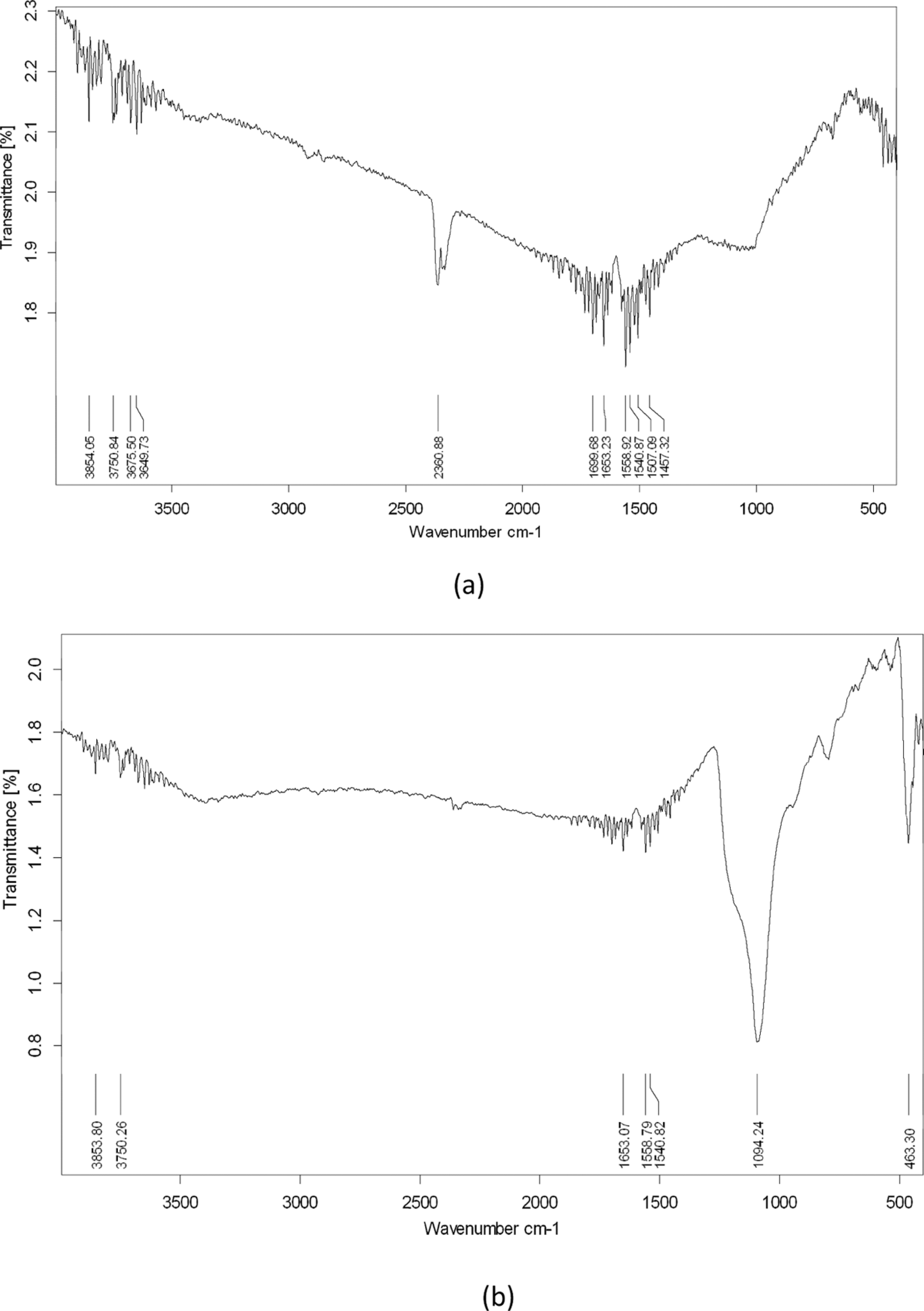
Fourier transform infrared spectroscopy (FTIR) spectra of SiO2.
As showed in Figure 2, the hardness with SiO2 rose slowly from 1 to 9 wt.%. It was obvious that the hardness of PMMA composite with graphite content was considerable comparing with that of SiO2 and the maximum hardness was measured in 13.75 (HsD) where the graphite content reached 1 wt.%. A decline in the hardness also appeared on further increasing the graphite content. In most previous literatures, it had been indicated that adding a small amount of graphite into polymer-based materials could potentially enhance their strength, like hardness of the current samples with the graphite content less than 3 wt%. However, it was also reasonable to believe that it should have a necessary limit since the physical properties between these nanostructural materials and matrix were different. By consulting the relevant scientific materials, we could draw a conclusion that the time required for solidification was also longer as well as the surface of the sample was relatively soft compared with other samples of low graphite contents. While understanding the knowledge of chemical properties of graphite, we suspect that the large amount of graphite content might retard the chemical reaction and caused incomplete curing process of the composites. The addition of SiO2 has a positive effect on the improvement of the hardness, for the SiO2 has no change in other factors with the increase in content. From the trend presented in Figure 2, it is essential to study the physical mechanism in detail by more experiments that governed this contrary effect in hardness of the composites.
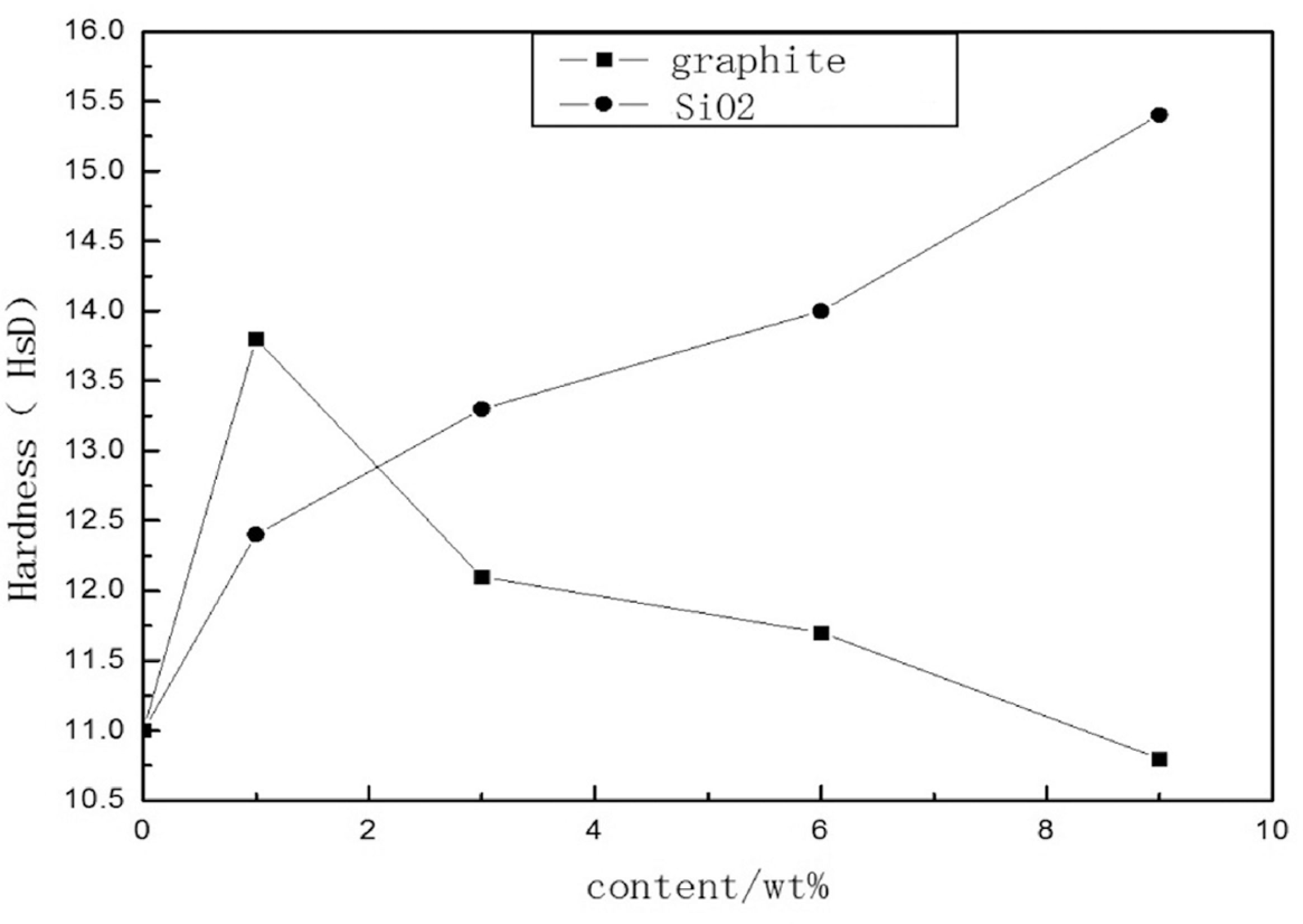
Effect of SiO2 and graphite content on hardness of poly(methyl methacrylate) (PMMA) composite.
Figure 3 showed the friction coefficient of composites as a function of SiO2 content and graphite. It was clearly seen that the friction coefficient of composites decreased sharply by increasing the content of SiO2 from 1 to 6 wt.%. Suddenly, when the content of SiO2 exceeded 6 wt.%, the friction coefficient of composites increased until the friction coefficient reached a value of 0.24. On the other hand, the addition of graphite reduced the friction coefficient significantly at the same condition.
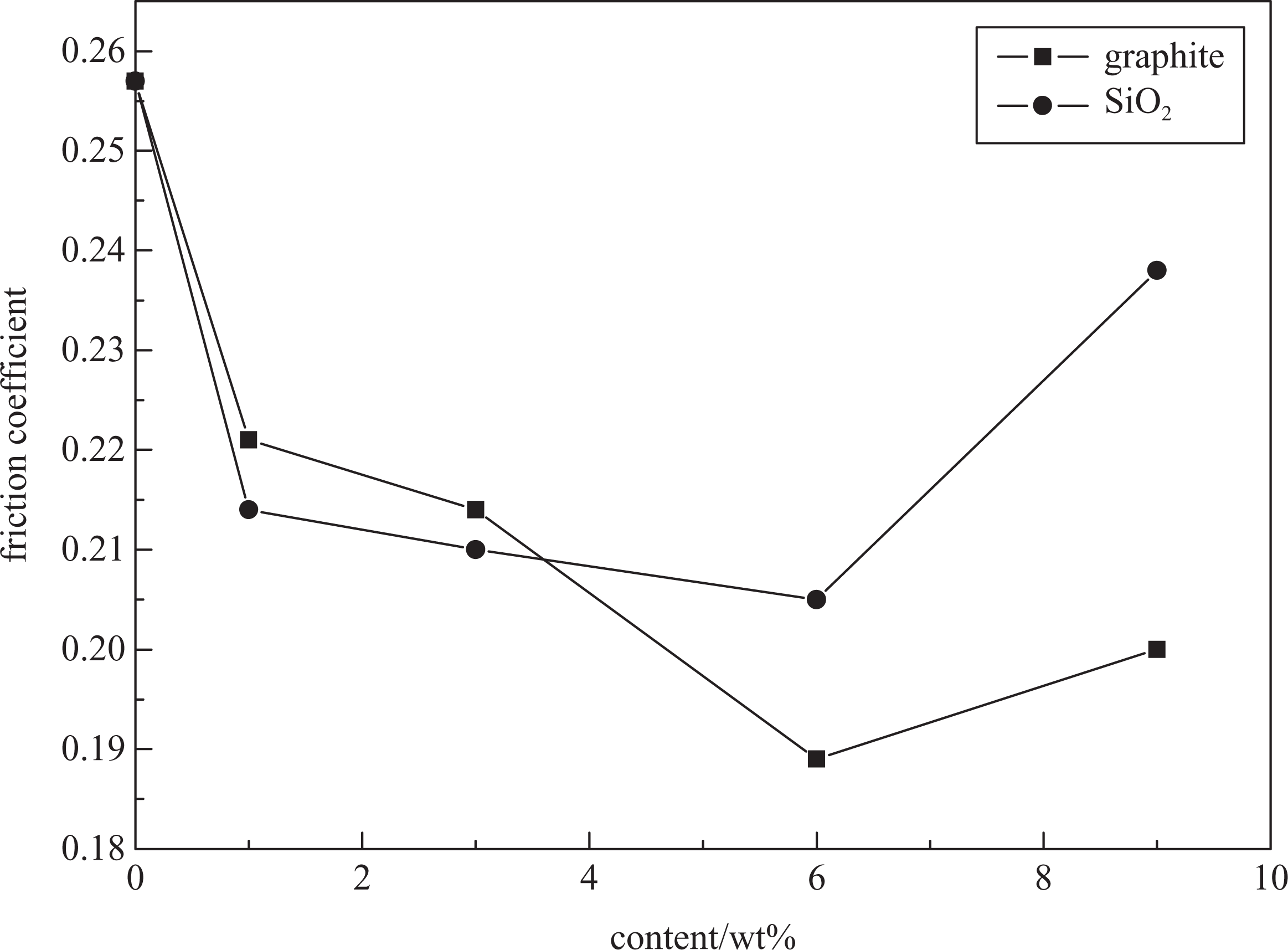
The friction coefficient of composites as function of SiO2 content and graphite.
As mentioned above, graphite has good lubrication, so it greatly improves the friction coefficient of composites.
The effect of load on friction coefficient of the PMMA composite under dry sliding is shown in Figure 4. With the increase in composite loadings, the friction coefficient appeared to decrease in all kinds of PMMA composites due to chemical reactions, resulting in surface softening. At the same load of 200 N, the silane had an effect on the PMMA composites filled with graphite, which showed the lowest friction coefficient. However, to some extent, the influence of graphite and silane in reducing the friction coefficient gradually began to abate. Further research is necessary to understand the suitable load for effective friction coefficient of composites.
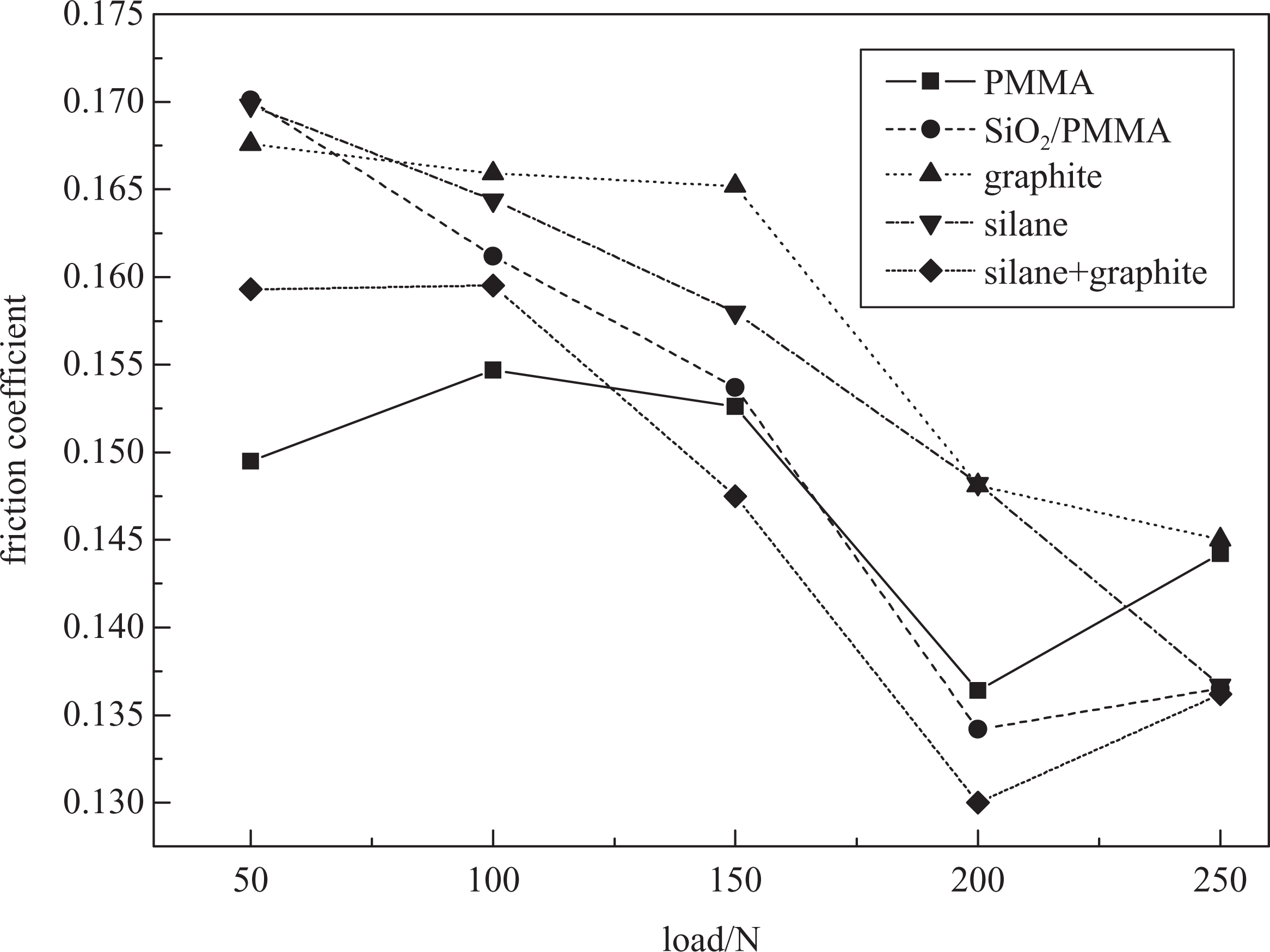
The effect of load on friction coefficient of the poly(methyl methacrylate) (PMMA) composite.
Figure 5 illustrates the wear rate of the different PMMA samples. The wear rate of the pure PMMA was the highest in dry sliding conditions. On the contrary, the graphite powder spread on PMMA surface and resulted in low specific wear rate. It is observed that the wear rate of silane-treated SiO2/PMMA composite was reduced by about an order of magnitude by incorporating graphite.
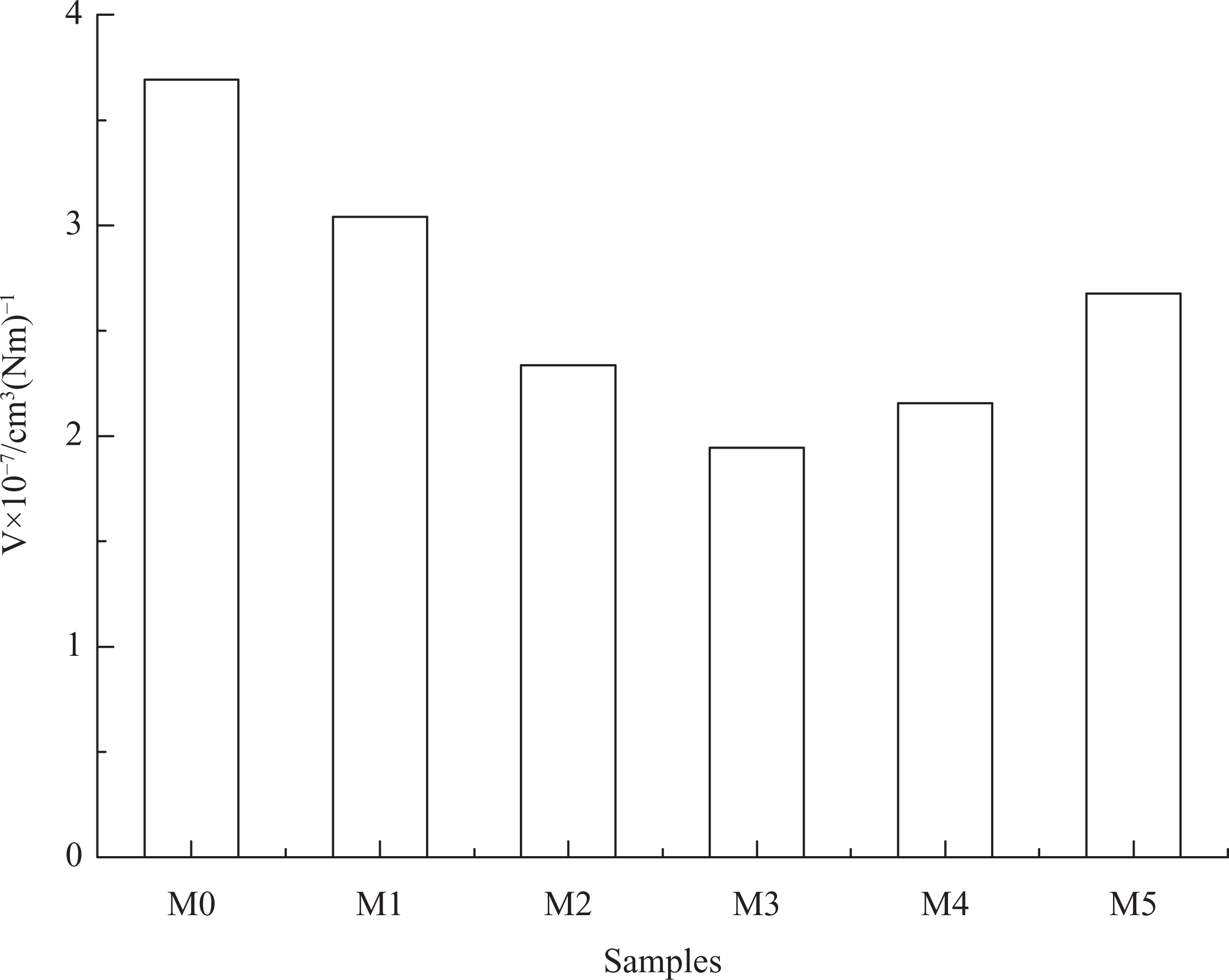
Wear rate of the different poly(methyl methacrylate) (PMMA) samples (M0–M5: PMMA; SiO2/PMMA; silane-treated SiO2/PMMA; silane-treated SiO2/PMMA/graphite; graphite/PMMA; SiO2/PMMA/graphite).
Figure 6 shows the SEM morphologies of the worn surfaces of SiO2 composites with untreated and silane-treated SiO2. It was observed that after sliding the PMMA was characterized by pullout and exposure of the SiO2 (Figure 6(a)), which indicated the PMMA experiences severe damage. With the silane-treated SiO2 composites (Figure 6(b)), there were relatively fewer SiO2 pulled out and cut from the composites in the worn surface. This indirectly indicated that the silane treatment could strengthen the interface adhesion between the SiO2 and adhesive and hence improve the friction reduction and antiwear ability of the composites.
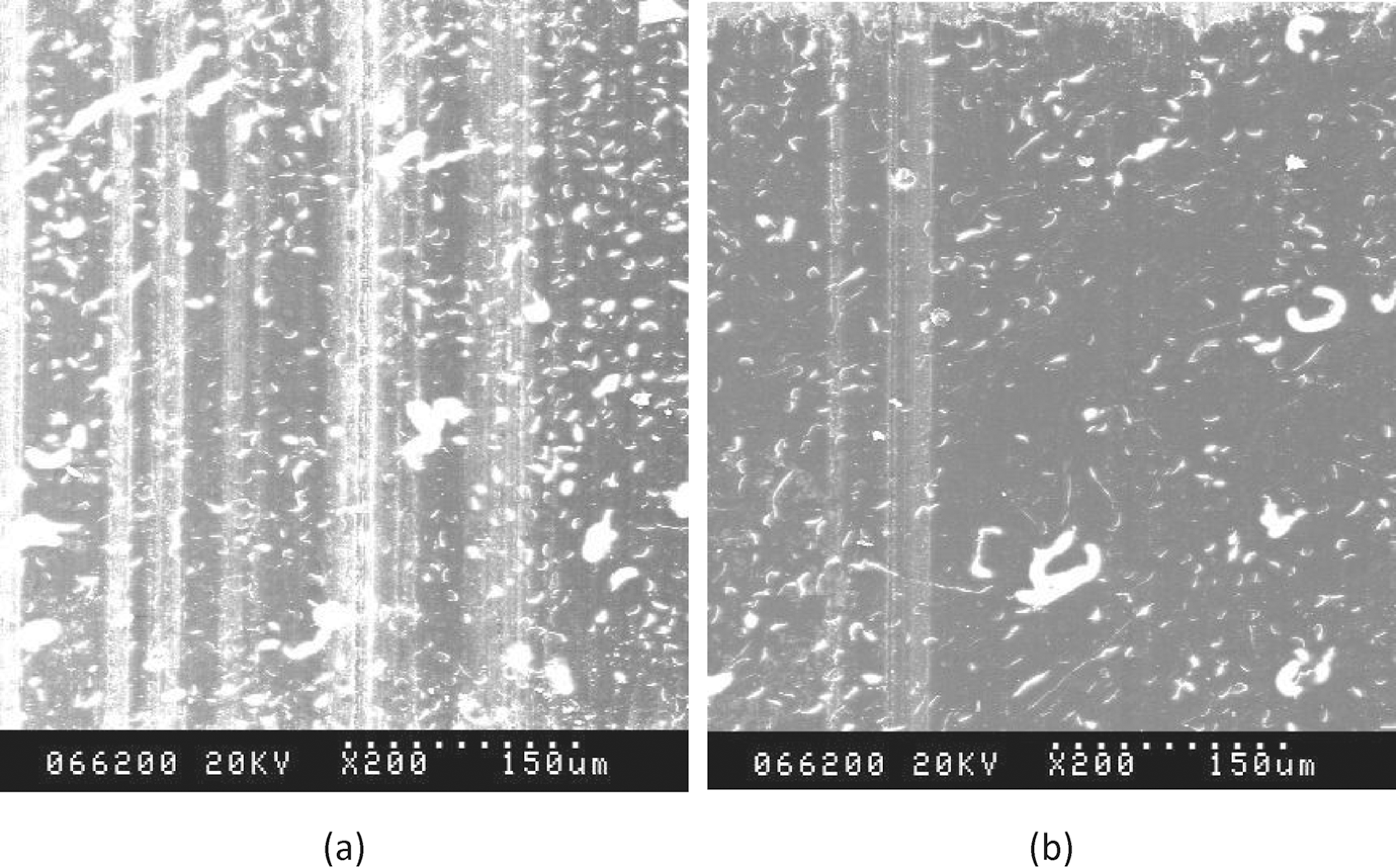
Worn surface morphology of SiO2/PMMA composite. PMMA: poly(methyl methacrylate).
Besides chemical interactions, the SiO2 interfacial behavior results from morphological changes in the filler brought about by silane treatment. A clear increase in surface roughness could be observed after the silane treatment (Figure 6(b)), with some small globular-like microstructures substituting the smooth surfaces on the fresh filler (Figure 6(a)). This enhances the mechanical interlocking of the resin on the fillers’ surface.
The worn surface morphologies as shown in Figure 6 exhibited sharp contrast between the composites with and without treatment. The compositions and surface properties of the SiO2 after being bombarded with silane had been changed. Some active groups were introduced on the surface of the SiO2, coupled with an increase in the surface roughness, which enhanced the adhesion between the SiO2 and PMMA. As a result, the modified composite adherence improved significantly after the SiO2 were bombarded with silane under a certain condition.
Conclusions
The hardness of the SiO2-reinforced PMMA composites increases with SiO2 content, while the hardness was dropped if the amount of the graphite was beyond 6 wt%.
The friction coefficients of the SiO2-reinforced PMMA composites are all higher and more stable than that of the pure PMMA under dry sliding. And the friction coefficients of the composites are all very much lower than that of pure PMMA. The silane-treated SiO2/PMMA composite filled with graphite show the lowest friction coefficient.
Footnotes
Funding
This research received no specific grant from any funding agency in the public, commercial, or not-for-profit sectors.