




Abstract
The structural and tribological behaviors sliding under different conditions of the novel polyamide (PA)-based composites blended by thermoplastic polyurethane (TPU) were investigated in this article. With a compatible structure shown by the fractured morphology and crystalline structure results, the toughness of the PA6-TPU composites was improved apparently. The friction coefficient of PA6-TPU composites would stabilize quickly at relatively low value, while their wear rate increased. Under a higher applied load condition, the friction coefficient and wear rate of the PA6-TPU composites increased apparently, attributing to lots of complex reasons. However, high sliding speed would be useful in the formation of thin and stable TPU transfer film, such that both the friction coefficient and wear rate of the PA6-TPU composites decreased at higher sliding speed. Morphology of worn surface of PA6-TPU composites revealed that the primary wear mechanism was adhesive wear and fatigue wear under the dry sliding condition. It is expected to provide some practical guidance for the application of polymer materials in the tribological field.
Introduction
Tribological behaviors of thermoplastics have absorbed wide concern in the tribological fields because of their relatively simple fabrication process, low manufacturing cost, strong demand for weight reduction, and low coefficient of friction compared with traditional metal materials. 1 –3 Polyamide (PA) is an attractive class of engineering thermoplastics because of its excellent combination of the mechanical, thermal, and tribological properties as well as the processibility and cost. So it is used widely for many engineering parts undergoing friction and wear, such as bearing and gear. However, it is highly notch sensitive, that is, it is often ductile in the unnotched state, but fails in a brittle manner when notched. It tends to brittle at low temperature or under severe loading condition. Besides, because of the presence of amide groups in the molecular chain, it easily absorbs water, which deteriorates its dimensional stability and mechanical properties. Therefore, with these adverse effects above, the applications of PA is limited in many engineering fields, particularly in the humid environment. 4 –7
It is well known that rubber is an organic macromolecule elastic compound possessing favorable fatigue and wear resistance. Available investigation indicated that soft rubber particles dispersed in polymer matrix were very effective to improve the wear resistance of polymers. 8,9 Combining the mechanical properties of vulcanized rubber with the process ability of thermoplastic polymer, thermoplastic polyurethane (TPU) elastomers have attracted wide attentions in many fields. TPU can be repeatedly melted and processed due to the absence of the chemical networks that existed normally in rubber. Moreover, because of the excellent mechanical properties of high elasticity, great flexibility and toughness, high resistance to tear, oxidation, and humidity, TPU is used instead of older polymers and other elastomers. 10 –12 Therefore, TPU would be effective in improving the performance of impact and wear resistance of PA. High-performance PA-based composites would be obtained through the method of blend modification by TPU.
Some researchers have already studied the mechanical, thermal, rheological, and compatibility of PA-TPU composites, while its tribological properties are very limited. 13–15 As the friction and the wear properties in practical application are very complex that it depends not only on the intrinsic property of materials itself but also on the friction condition, such as counterface, load or contact pressure, speed, sliding distance, and so on. So it is desirable to know the effect of the individual factors and their interactions on the friction and wear behavior of PA-TPU composites for the potential applications. 16,17
In this article, we investigated the structural and tribological properties of PA6 and TPU elastomer polyblend prepared using a Mini-twin-screw extruder (HAAKE MiniLab, Germany) and Minjet (HAAKE MiniJet, Germany). Effects of TPU on the mechanical and tribological properties of PA6, especially the friction and wear behaviors of the PA6-TPU composites under different sliding distances, applied pressure, and sliding speed, were carefully investigated in order to provide some practical guidance for the use of this PA-TPU composites.
Experimental
Materials
PA6 was supplied by Yuyao Gaoke Modified Plastic Co. (Zhejiang, China). Density and melting temperature (T m) for PA6 was 1.14 g/ml and 220°C, respectively. TPU was a polycaprolactone copolyester-based TPU elastomer, which was supplied by Bayer China Co. Ltd in the form of translucent pellets. PA6 and PPS were vacuum dried at 100°C for 12 h prior to use.
Preparation process
PA6 and TPU composites with the TPU mass content including 0 wt%, 5 wt%, 10 wt%, and 15 wt% were blended using Mini-twin-screw extruder (HAAKE MiniLab, Germany) at 230°C with the rotating speed of 100 r/min for 10 min. After that, the meting composites were constantly injected into the MiniJet (HAAKE MiniJet, Germany) at the injection temperature of 250°C. Under the injection pressure of 700 ba for 15 s, the test specimens conforming to ISO standards were obtained in the mold at a temperature of 80°C.
Characterization
Fractured morphology of the composites was observed on an S-3000N scanning electron microscope (SEM; Hitachi, Japan) operated at 20 kV. Prior to the observations, samples were coated with a thin layer of gold.
X-Ray diffraction (XRD) measurements were performed on a D/max-250 X-ray diffractometer (Rigaku Denki, Japan) with Cu Kα1 radiation (λ = 0.15406 nm) in a range of 2θ = 5°–60° using a fixed time mode with a step interval of 0.02°.
Crystallinity and T m of PA6 in the composites was determined by differential scanning calorimetry (DSC). DSC was performed using a 10 mg nominal sample, at a scanning rate of 10°C/min from 20°C to 300°C under nitrogen atmosphere. The crystallinity of PA6 in the composites was calculated as

where
The tensile strength (σ b), elongation at break (∊ b), tensile modulus (E), blending strength, and blending modulus of the ASTM standard specimens were measured on a universal electronic testing machine (JDL-5000 N, Yangzhou Tianfa Test Machine Co., Ltd, China). The impact strength and rockwell hardness (HRM) were measured on the cylinder support beam impact testing machine (TF-2054, Jiangdu Tianfa testing machine factory, China) and motor-driven plastic rockwell hardness (XHRD-150, Laizhou Huayin Testing Instrument Co., Ltd, China), respectively. Before test, all the samples were dried in the vacuum oven at 40°C for 8 h. An average value of five replicates of each sample was taken.
The friction and wear test were conducted on a HT1000 high-temperature friction and wear tester at room temperature. The composite specimen was 25 mm × 2 mm and the counterface was a 6-mm chromium steel ball. The test was performed under the loads of 5 N and 10 N sliding at the rotating speeds of 500 r/min and 1000 r/min. The test durations ranged from 0 to 40 min. The average values of friction coefficient at the last 30 min were used as the friction coefficient of samples. Weight loss measurements were made using an analytical balance having an accuracy count of 10−4 g. Specific wear rate was calculated using the following equation

where
Microstructures of the fracture and worn surfaces of samples sputtered with gold were inspected using an SEM operated at 20 kV. The aim is to study the structural characteristic of the PA6/TPU composites and to analyze their wear mechanism.
Results and discussion
Fractured morphology and crystalline structure
Figure 1 shows the tensile fractured surface of PA6 and PA6-TPU composites. It can be seen that the fractured surface of PA6 is coarse with much fractured crack and corrugation. With the blending of TPU, compared with the fractured surface of PA6, more and more smooth fractured regions can be found and very few fractured crack and corrugation can be seen. As both PA and TPU have polar groups, the smooth fractured regions could prove that PA-TPU composites are compatible. With a compatible structure, this composite would integrate the advantages of PA with TPU showing good mechanical and tribological properties.
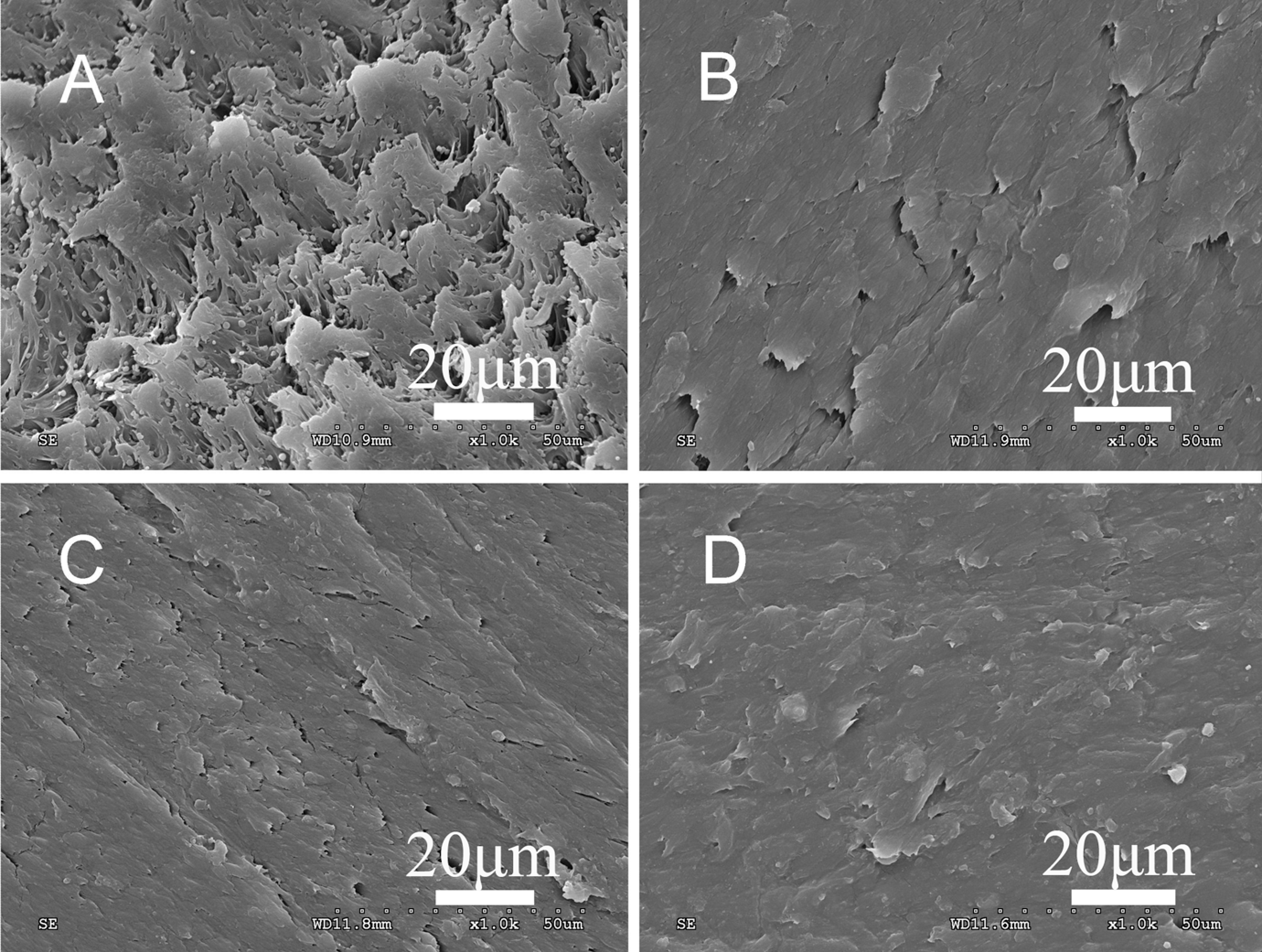
Tensile fractured surface of PA6 and PA6-TPU composites: (a) PA6, (b) PA6-TPU 5%, (c) PA6-TPU 10%, and (d) PA6-TPU 15%. PA6: polyamide 6; TPU: thermoplastic polyurethane.
From the XRD results shown in Figure 2, the peaks at 2θ = 20.8° (200) and 22.7° (202, 002) represent the peaks corresponding to the characteristic peaks of PA6. With the TPU content increasing in the PA6-TPU composites, the intensity of PA6 characteristic peaks decreases. It can be explained that the addition of TPU in the PA6-TPU composites would destroy the crystallinity of PA6 to some extent. DSC cures of PA6 and PA6-TPU composites are shown in Figure 3. It can be seen that the composite shows the melting peaks at 220°C corresponded to the melting points of PA6. DSC data of PA6 in the composites were listed in Table 1, from which it can be seen that the enthalpies and crystallinity of PA6 in the composites are lower than the pure polymers, but the T m is higher than PA6 to some extent. It means the crystallinity of PA6 was destroyed with the addition of TPU in the composites, and the molecular chains of PA6 and TPU would interact with each other, which will form a compatible structure during the preparation process resulting in the increasing of T m in the composites.
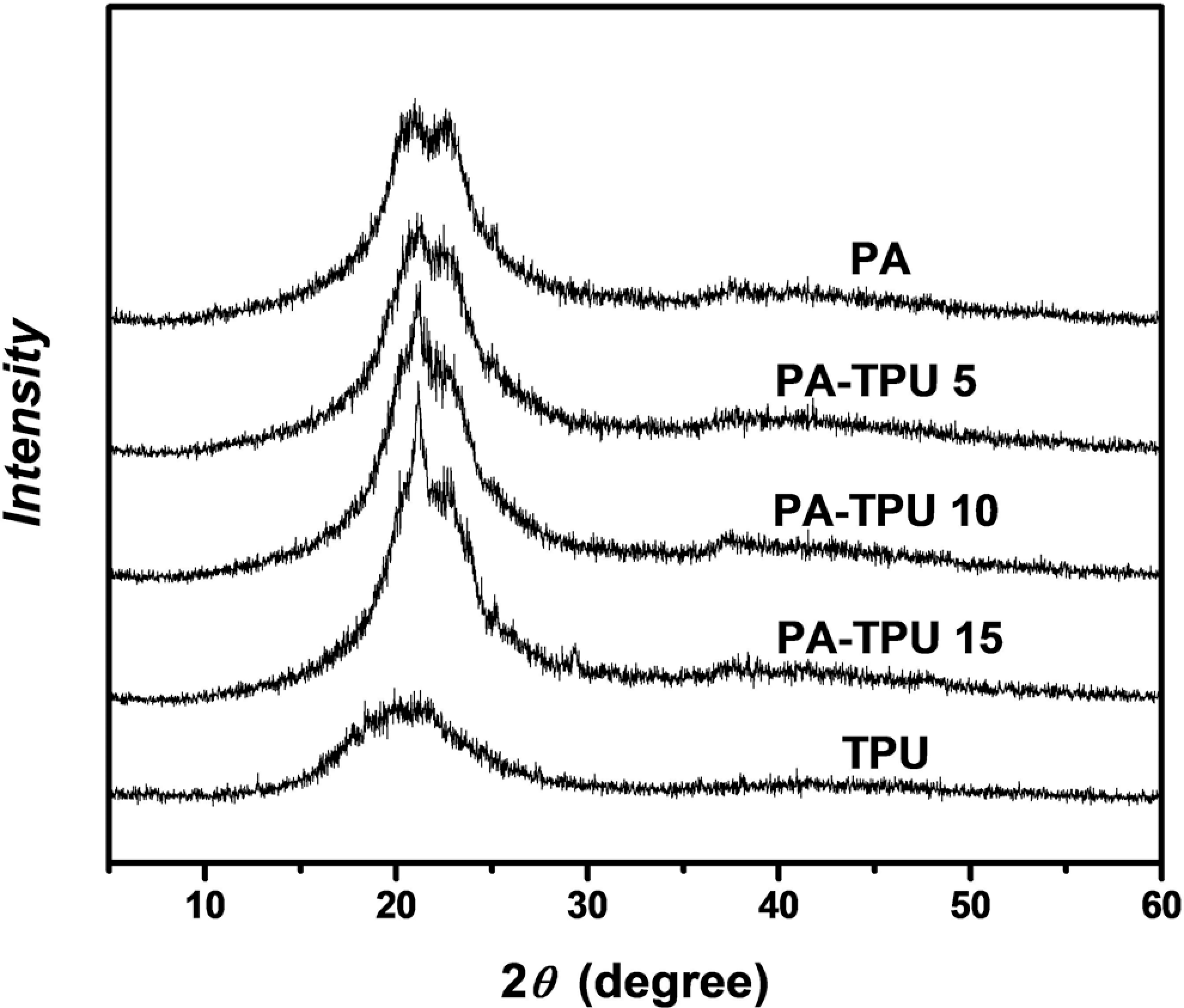
XRD patterns of PA6 and PA6-TPU composites. XRD: X-ray diffraction; PA6: polyamide 6; TPU: thermoplastic polyurethane.
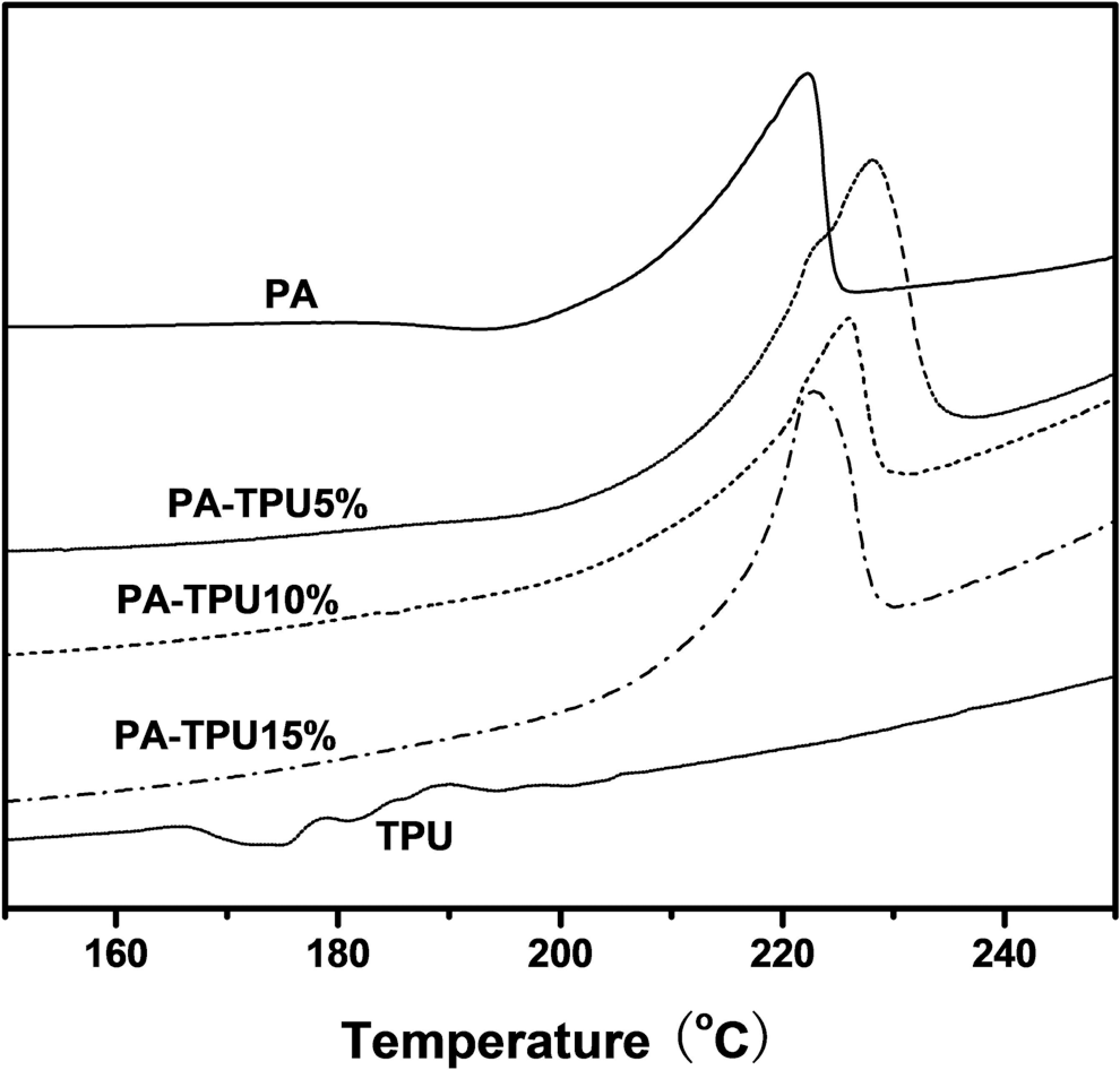
DSC traces of PA6, TPU and PA6-TPU composites. DSC: differential scanning calorimetry; PA6: polyamide 6; TPU: thermoplastic polyurethane.
DSC data of the PA6 and PA6-TPU composites.
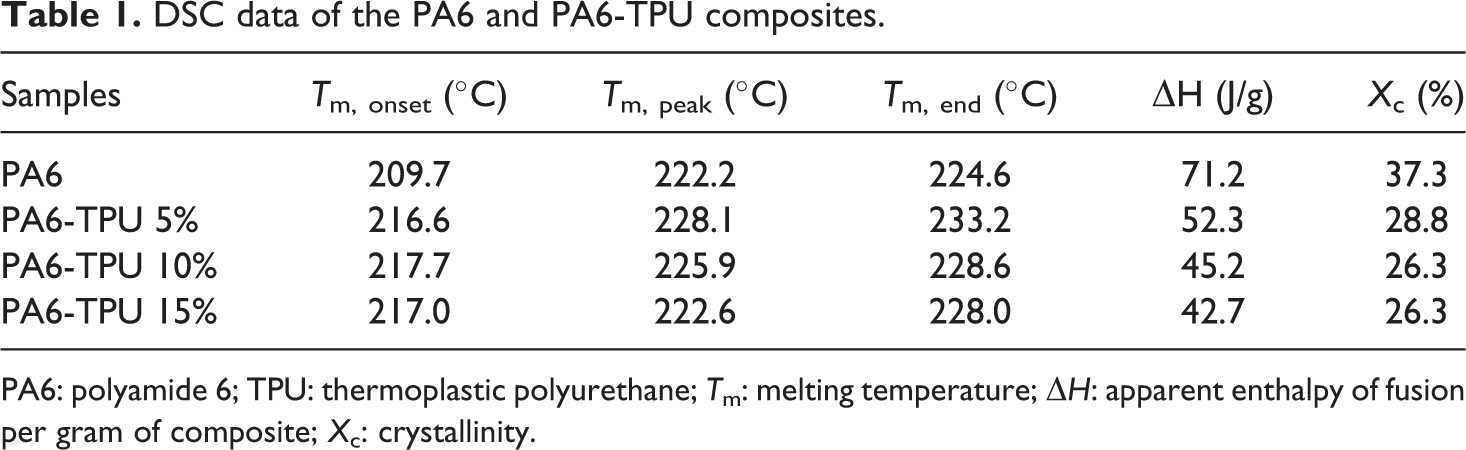
PA6: polyamide 6; TPU: thermoplastic polyurethane; T m: melting temperature; ▵H: apparent enthalpy of fusion per gram of composite; X c: crystallinity.
Mechanical properties
Figure 4 shows the tensile properties of the PA6-TPU composites. It can be seen that the breaking elongation improved apparently with the addition of TPU in the composites. When the TPU content is 5 wt%, the breaking elongation of PA6-TPU reaches the peak value of 28.3%, which is much higher than the pure PA6 of 11.1%. Therefore, these TPU elastomers are effective in improving the toughness of PA6. It can be reasoned that the TPU is an elastomer having high elongation and the elastic molecular chain of TPU would interact with PA6 resulting in a compatible structure, which also can be corresponded with the DSC results where T m increases at some extent than PA6. As shown in Figure 4, both the tensile strength and the Young’s modulus decrease with the increasing TPU content in the composites. Its tensile strength decreased from 72.0 to 54.4 MPa (decreased by 14.8%) and young’s module decreased from 7234.9 to 4792.3 MPa (decreased by 33.8%). It can be explained that the TPU is an elastomer having low tensile stress when compared with pure PA6 and the crystal structure of PA6 would be destroyed with the addition of TPU in the PA6-TPU composites, which corresponds to the decrease in crystallinity for PA6 shown by the DSC data. From the bending properties of the PA6-TPU composites shown in Figure 5, we found a decreasing trend in bending strength and bending module with the addition of TPU to the composites. As elastomers are flexible and soft by definition, TPU neither have flexural stress nor have flexural modulus. When PA is introduced into the elastomers, the PA6-TPU composite shows a decrease in flexural stress and modulus, it can also be attributed to the addition of low-strength components and destroying of crystal structure for PA6. The impact strength and hardness of PA6-TPU composites are shown in Figure 6; it can be found that the impact strength of PA6-TPU composites was improved apparently when compared with pure PA6, and the highest impact strength of 43 kJ/mm2 was obtained as the TPU content is 10%. The hardness of PA6-TPU composites also decreases because of the soft elastomers added into the composites (as shown in Figure 6). When the TPU content increases to 10%, its hardness decreases from 117.5 HRC of pure PA6 to 98.5 HRC (decreased by 16.2%).
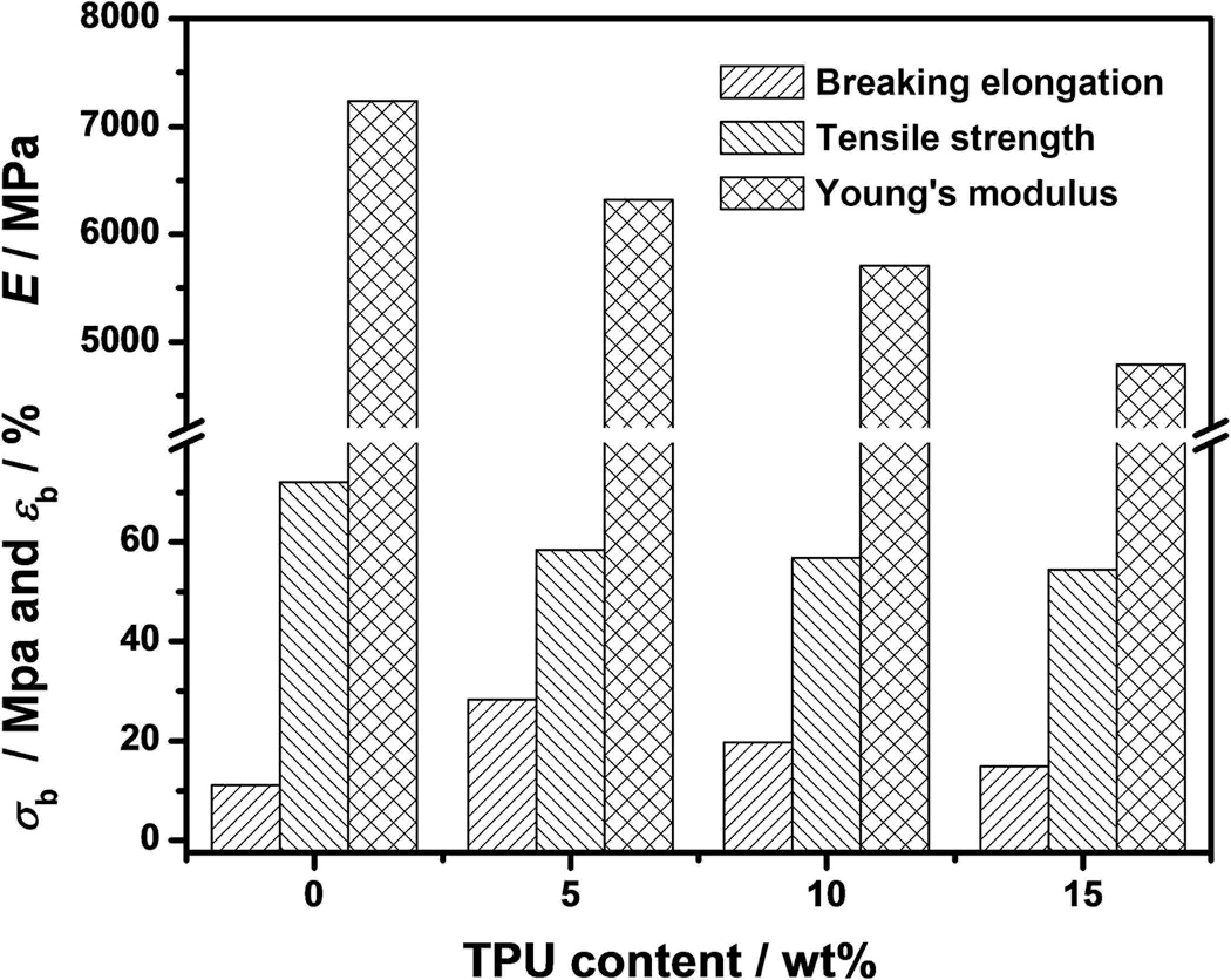
Tensile properties of PA6 and PA6-TPU composites. Mechanical properties of PA6 and PA6-TPU composites. PA6: polyamide 6; TPU: thermoplastic polyurethane.
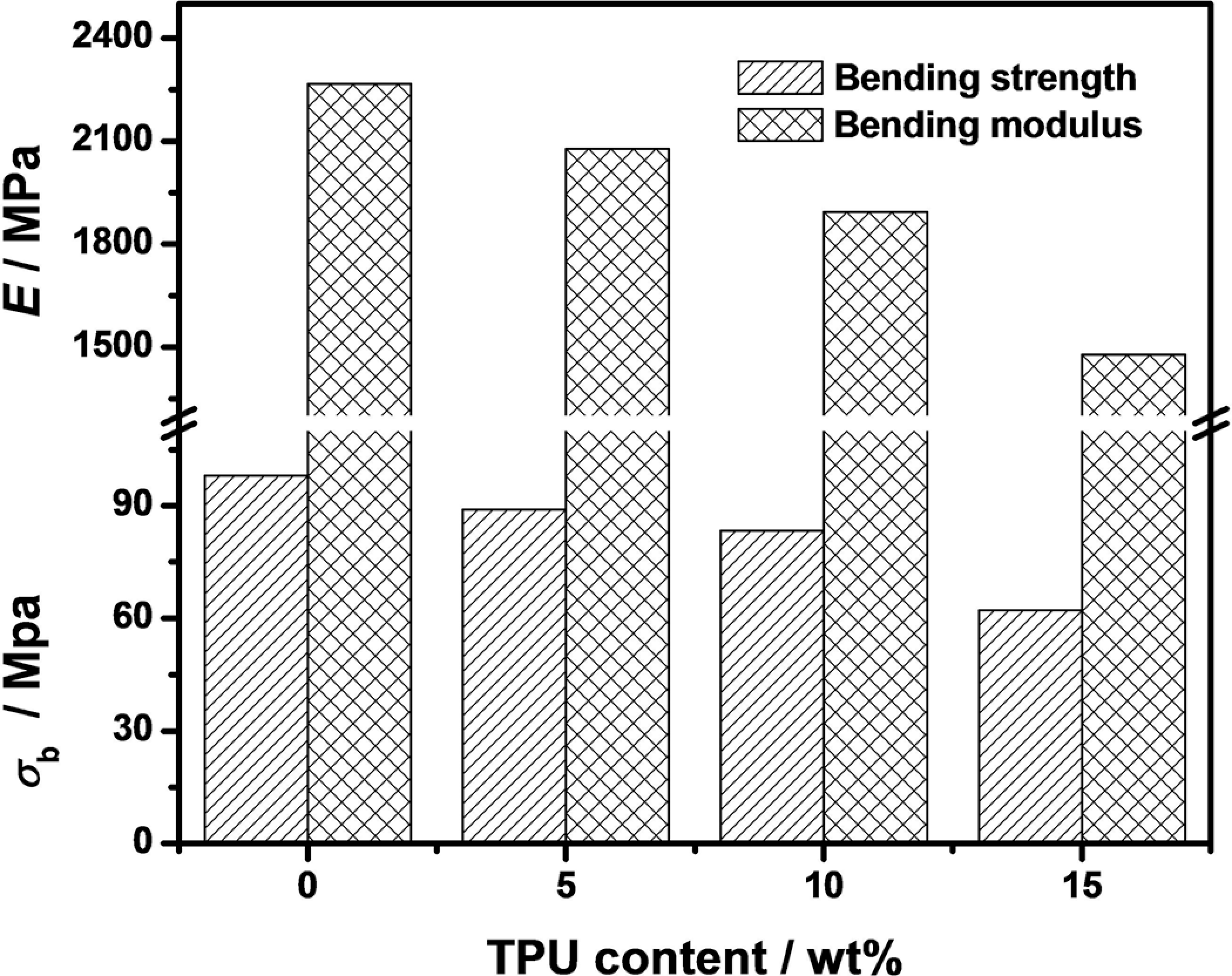
Bending properties of PA6 and PA6-TPU composites. PA6: polyamide 6; TPU: thermoplastic polyurethane.
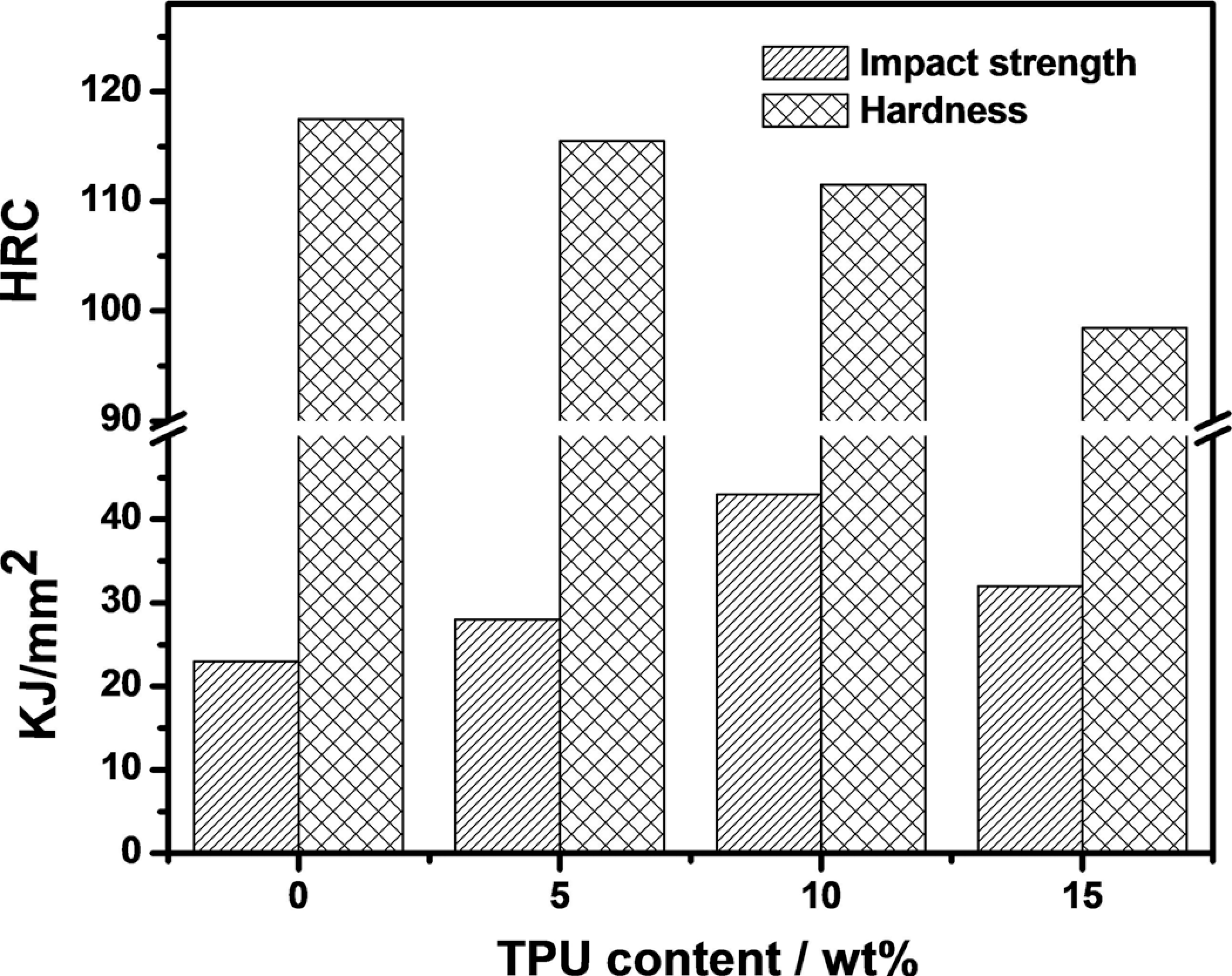
Impact strength and hardness of PA6 and PA6-TPU composites. PA6: polyamide 6; TPU: thermoplastic polyurethane.
Tribological properties
Friction and wear behaviors under different sliding time
Figure 7 shows the variation in friction coefficient with sliding time at a normal load of 5 N and sliding speed of 500 r/min for PA6 and PA6-TPU composites. It can be seen that the friction behavior of PA-TPU composites greatly depends on the TPU content. The tendency of the variation in friction coefficient with sliding time for PA6-TPU 6% is almost the same, that is, the friction coefficient rapidly increases in the early stage of sliding and tends to be stable during the test period. Reasons for the rapidly increasing friction coefficient in the early stage of sliding are the counterface surface of the metal ball that was not very smooth and the bulge on the surface of the ball caused large ploughed function in the friction test. When the TPU content increases to 10% and 15%, the friction coefficient increases to a steady period within few seconds, which is much shorter than PA6 and PA6-TPU 5%; this is because, with a higher strength and hardness, the increase in the contact between PA6 and counterface with sliding time is slower than TPU. Therefore, its increasing rate of friction coefficient in the early stage is slower. As the friction test goes on, the friction process gradually reaches a stable state and a stable transfer in the film of PA6 can be formed at this stage, so the friction coefficient of PA6 and PA6-TPU composites tends to be stable. Compared with the friction coefficient of PA6 and PA6-TPU composites in the steady state, we can find that the friction coefficient tends to decrease with the increase in TPU content in the composites. As we know, TPU is a kind of elastomer with the characteristics of softness and flexibility and low-shear-strength interfacial layer, which can be easily formed at the sliding surface by the transient friction heat. This low-shear-strength interfacial layer would play a role in lubrication, which is useful for the reduction of the friction coefficient of the PA6-TPU composites. Therefore, as the TPU content increases in the composites, its friction coefficient tends to decrease.
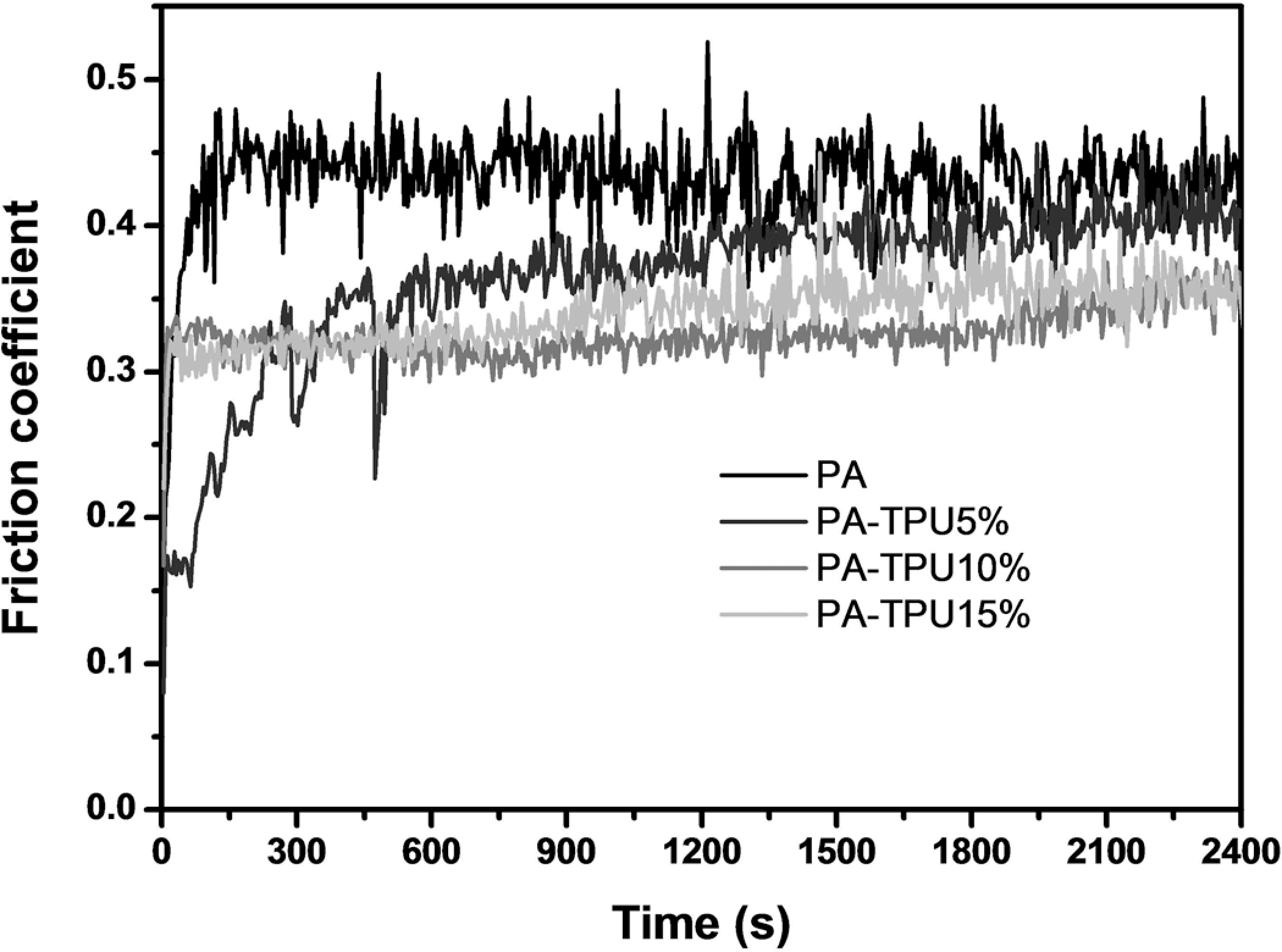
Variation in the friction coefficient with sliding time at a normal load of 5 N and sliding speed of 500 r/min for PA6 and PA6-TPU composites. PA6: polyamide 6; TPU: thermoplastic polyurethane.
Friction and wear behaviors under different TPU content
The average friction coefficient and wear rate of PA6 and PA6-TPU composites at a normal load of 5 N and sliding speed of 500 r/min are shown in Figure 8. It is seen that PA6-TPU composites have lower friction coefficient than PA6. In the normal friction condition, PA6 shows the highest friction coefficient of 0.43, while 0.39, 0.33, and 0.35 corresponds to PA6-TPU5%, PA6-TPU5%, and PA6-TPU5%, respectively. The decreasing phenomenon can be explained by a thermal control of friction model. 18,19 In this model, friction heat is not easily conducted from the interface because the polymers often have a low thermal conductivity. When sliding conditions are quite severe, a limiting condition will occur, beyond which friction is actually the dominant factor. That is to say, when the T m of the polymer is reached during sliding, the friction coefficient varies with the sliding speed or load so that the temperature within the contact remains constant at the melting point. As it is known, with the melting point of 220°C, PA6 can form adhesive transfer film during sliding, which prevents direct contact between the polymer surface and the hard counterface. TPU is a kind of elastomer with the characteristics of softness and flexibility, which can easily melt at a very low temperature. According to the thermal control of friction model, any additional frictional heat released during sliding tends to melt additional polymer rather than causing the temperature of the already molten polymer to rise. So the temperature on the sliding surface did not increase when TPU in the composites begins melting. Molten TPU forms a low-shear-strength interfacial layer at the sliding surface, which behaves as a lubricant. This shearing strength of the interfacial layer determines the friction coefficient of the PA6-TPU composites. For the PA6-TPU composites, with the increase in TPU content, more low-shear-strength interfacial layer can be formed, so its friction coefficient trends to decrease.
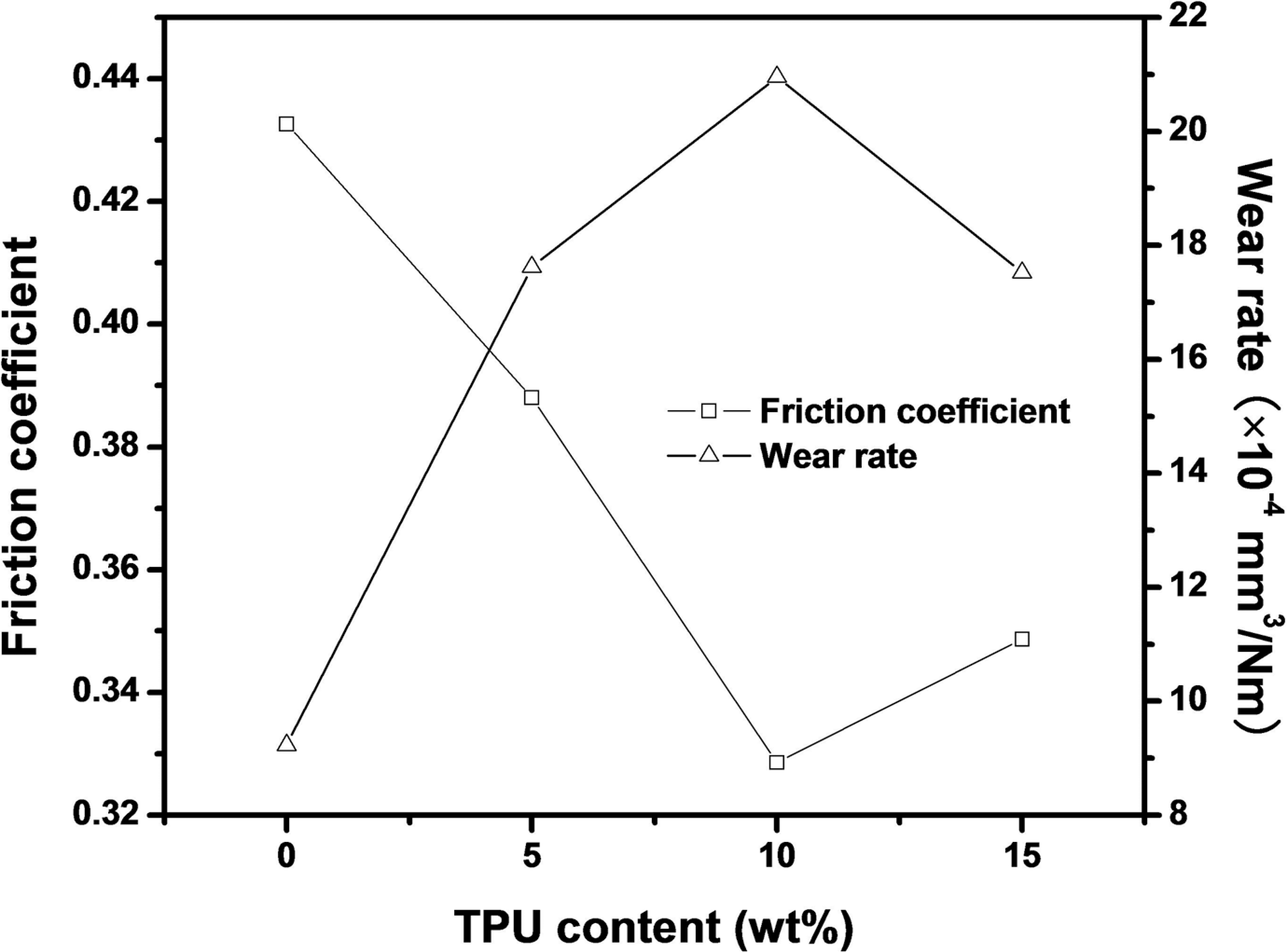
Friction coefficient and wear rate of PA6 and PA6-TPU composites at a normal load of 5 N and sliding speed of 500 r/min. PA6: polyamide 6; TPU: thermoplastic polyurethane.
The wear rate increases as the TPU content increases in PA6 and PA6-TPU composites. For the pure PA6, its wear rate value is 9.2 × 10− 4 mm3/Nm under the friction condition at a normal load of 5 N and sliding speed of 500 r/min. The wear rate value of PA6-TPU 5%, PA6-TPU 10%, and PA6-TPU 15% is 17.6 × 10− 4 mm3/Nm, 21.0 × 10− 4 mm3/Nm, and 17.5 × 10− 4 m3/Nm, respectively, which shows that the addition of TPU in PA6 would increase the wear rate of PA6. It is well known that the wear resistance of polymers depends largely on their ability to form thin, uniform, and adherent transfer film on the counterface. PA6 can form adhesive transfer film during sliding, which prevents direct contact between the polymer surface and the hard counterface. It can reduce abrasive action, resulting in lower wear volume. 19,20 TPU tends to melt and form low-shear-strength interfacial layer at the sliding surface during the sliding process. With the increase in friction heat, the interfacial layer became thicker and thicker and trends to form a transfer film. But this interfacial layer would be peeled off from the contact surface because of its low shear strength, and large amounts of wear debris are produced. Besides, with the characteristics of low surface strength and low hardness, the molecular chain of TPU would be destroyed during the friction process, resulting in the decrease in surface strength and hardness of PA6-TPU composites as TPU content increases, which also can arouse the increase in wear rate for the TPU composites.
Friction and wear behaviors under different load
The variations in friction coefficient of PA6 and PA6-TPU composites under different loads are shown in Figure 9. Compared with the friction coefficient of PA6 and PA6-TPU composites under the load of 5 N and 10 N at the same sliding speed of 1000 r/min, it can be found that TPU is more susceptible to load than PA6. The friction coefficient of pure PA6 at 10 N is lower than 5 N, while it increases apparently when the load changed from 5 N to 10 N with the addition of TPU in the PA6-TPU composites. It can be illustrated by the increasing area of contact between the metal counterface and the composites, which induces higher flash temperature, heat generation, and the viscous-elastic property in the response of material stress, adhesion, and transferring behaviors is influenced. When the applied load increases during the friction process, the increase in contact area between PA6 and PA6-TPU composites would produce different results because of their different structural characteristics and melting properties. As the applied load increases, the friction heat increases quickly and more stable transfer film can be produced by the melting PA6. This transfer film would act as a solid lubricant, so friction coefficient of PA6 decreased when load increased from 5 N to 10 N. As to the PA6-TPU composites, the melting TPU would be transferred away from the contact surface with the increase in friction heat, because as a kind of thermoplastic elastomers, TPU can melt at a relatively low temperature. But the viscosity and shearing strength of the melting TPU are very low, so stable TPU transfer film would not be formed. Besides, with a low T m and mechanical intensity, the friction-induced thermal and mechanical effects may increase the actual contact area between the TPU and counterface, as the load increased. For the above reasons, the friction coefficient of PA6-TPU composites increased apparently when the load increased from 5 N to 10 N, with the content of TPU increasing in the composites.
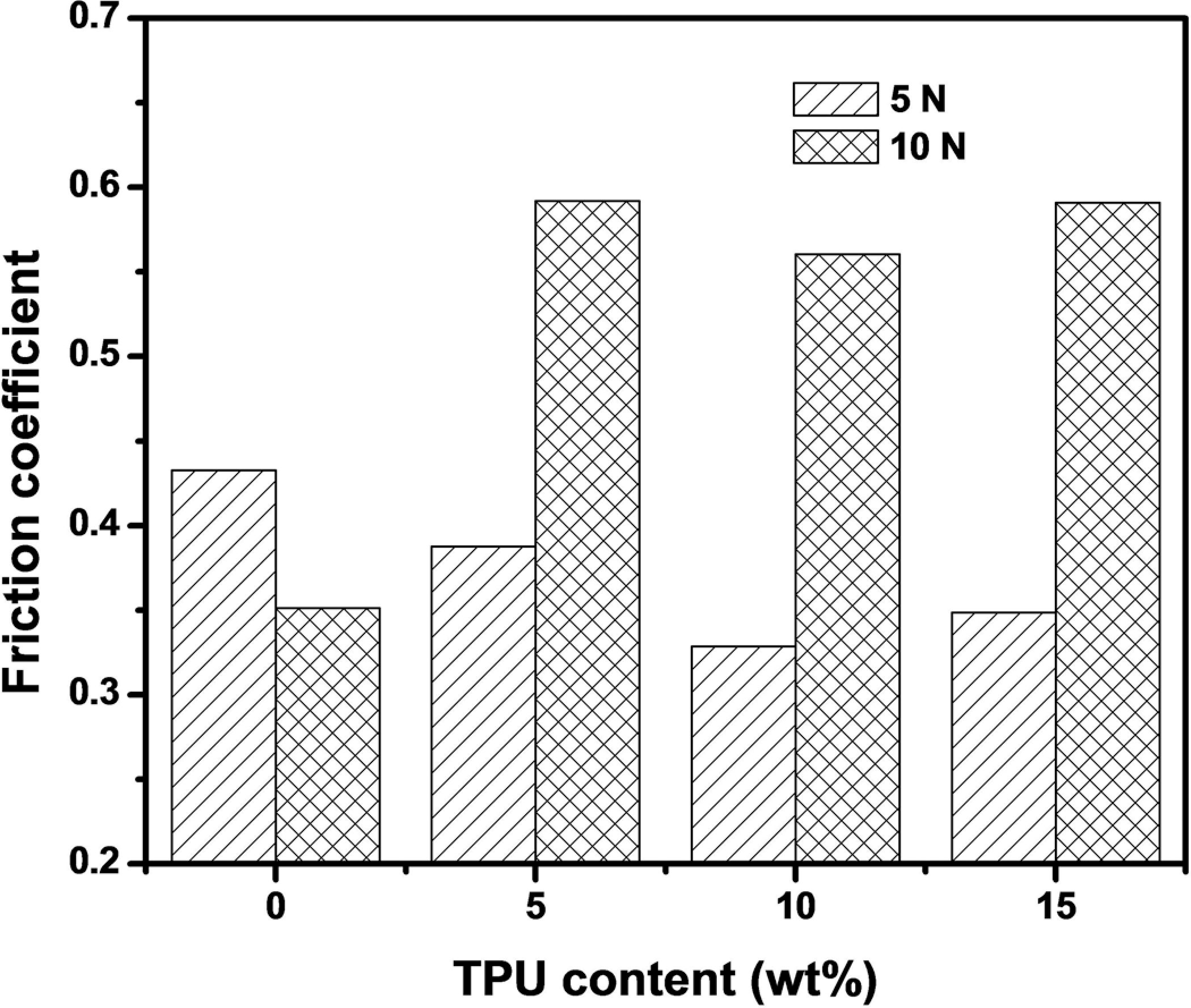
Friction coefficient of PA6 and PA6-TPU composites under 5 N and 10 N (sliding speed of 500 r/min). PA6: polyamide 6; TPU: thermoplastic polyurethane.
Figure 10 shows that the wear rate value of PA6 and PA6-TPU composites increases with the increase in applied load. As the load increases, the friction heat produced on the contact surface will accumulate at a faster speed and the transient temperature becomes higher. As a result, the thermoplastic PA6 and TPU would melt and adhere to the surface of the counterface. So the wear rate of PA6 and PA6-TPU composites increases as load increased from 5 N to 10 N. On the other hand, as the TPU content increases, the wear rate of PA6 and PA6-TPU composites tends to increase. It can be reasoned by the low soft temperature and low shearing strength of TPU. When the applied load increases, the increase in friction heat would induce more TPU to be melted and transferred away from the friction surface. Besides, with the trait of low hardness and mechanical strength, TPU may be destroyed causing the fatigue deformation as applied load increased to some degree.
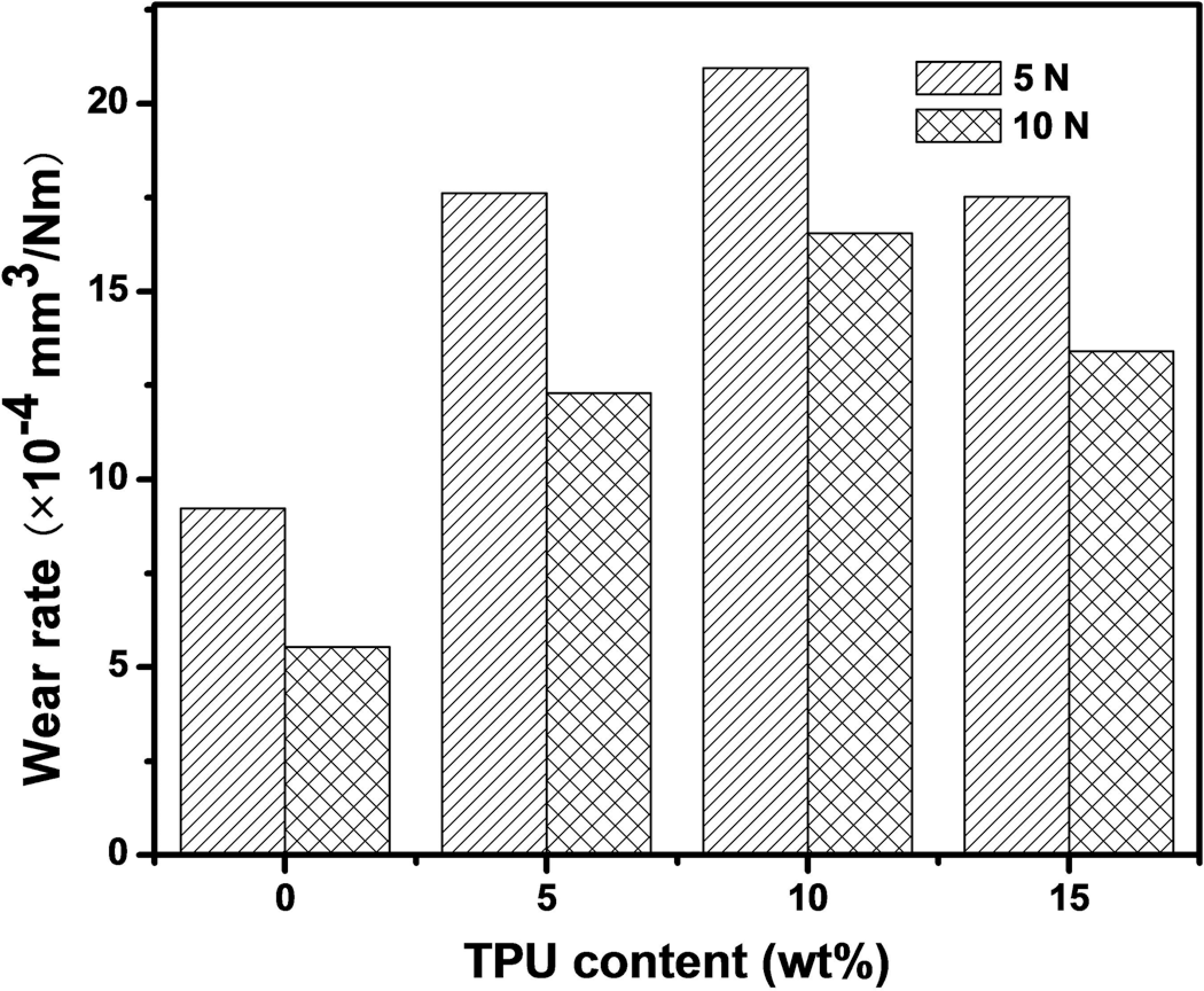
Wear rate of PA6 and PA6-TPU composites under 5 N and 10 N (sliding speed of 500 r/min). PA6: polyamide 6; TPU: thermoplastic polyurethane.
Friction and wear behaviors under different sliding speed
Friction coefficient and wear rate of the PA6 and PA6-TPU composites at different sliding speeds are shown in Figures 11 and 12, respectively. With increase in sliding speed, friction coefficient of the PA6 and PA6-TPU composites decreases. This can be explained by the change in temperature on the surface of the PA6 and PA6-TPU composites. With increase in the sliding speed, the friction heat may accumulate more quickly in the friction interface, causing more PA6 and TPU to be softened and spread. As a result, much more thin and stable transfer film would be produced by the high shearing force at the friction condition of high sliding speed. This thin and stable transfer film would act as a solid lubricant, so the friction coefficient of PA6 and PA6-TPU composites tends to decrease as the sliding speed increases.
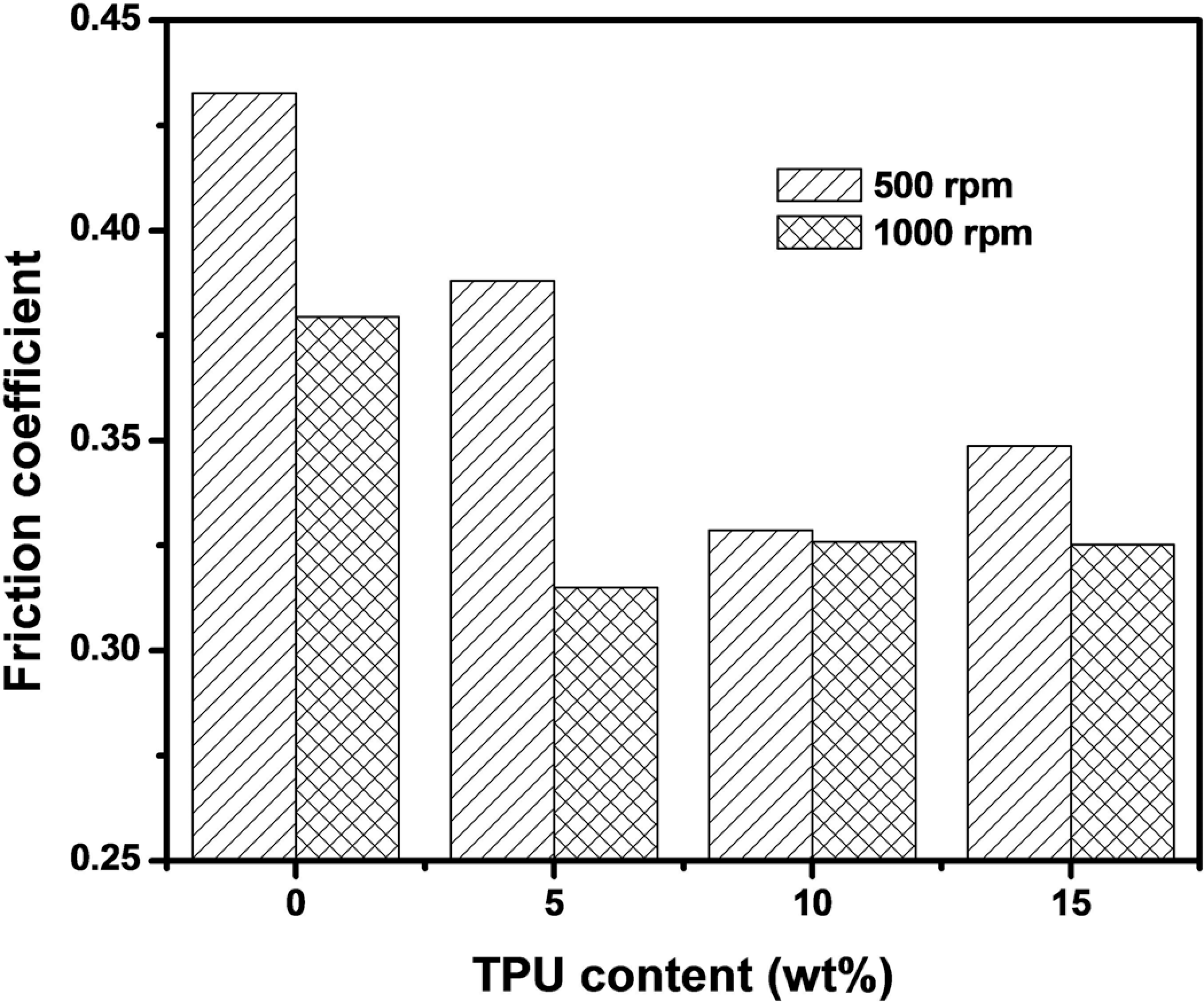
Friction coefficient of PA6 and PA6-TPU composites under 500 r/min and 1000 r/min (load of 5 N). PA6: polyamide 6; TPU: thermoplastic polyurethane.
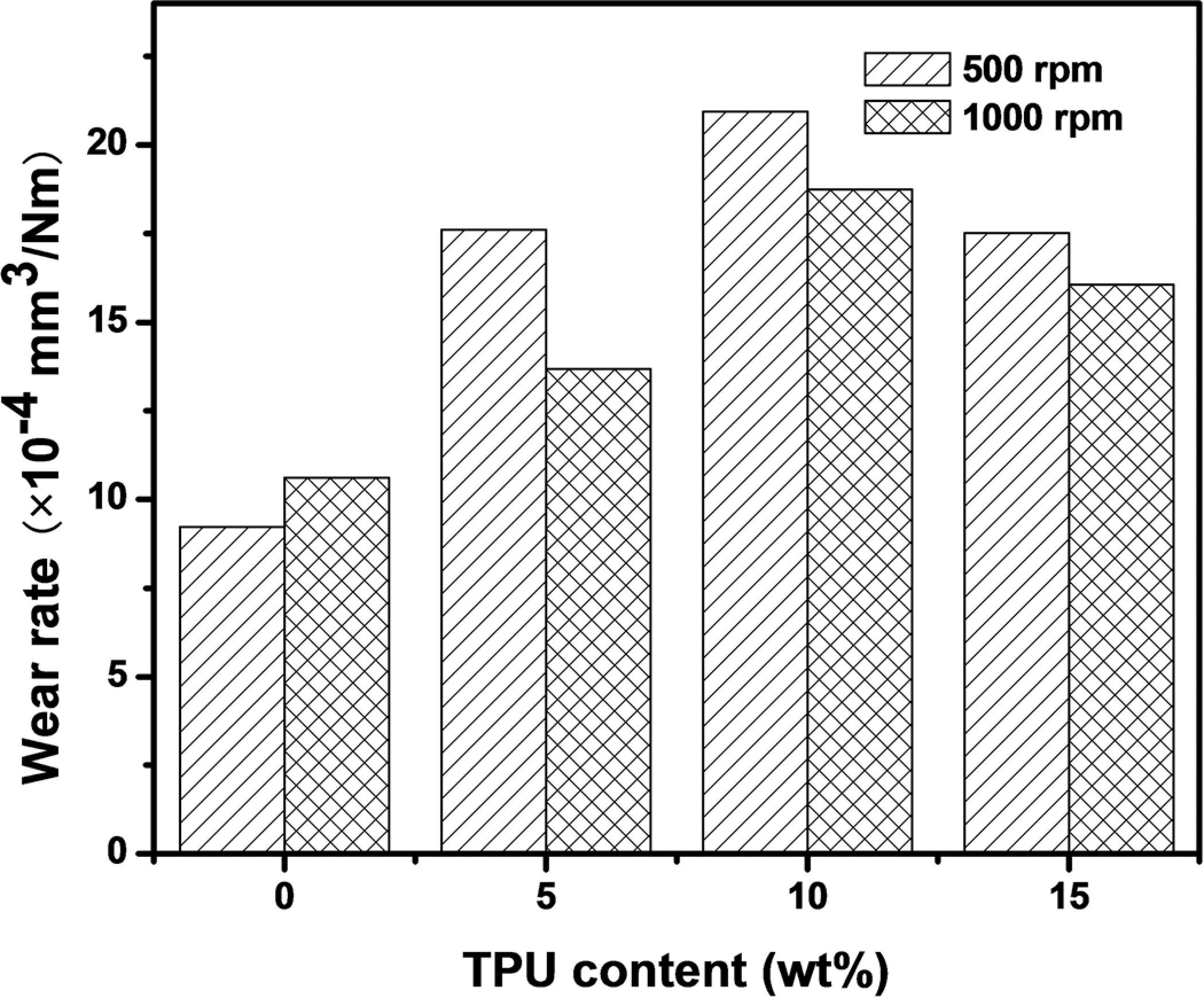
Wear rate of PA6 and PA6-TPU composites under 500 r/min and 1000 r/min (load of 5 N). PA6: polyamide 6; TPU: thermoplastic polyurethane.
Figure 12 shows the variation in wear rate value of PA6 and PA6-TPU composites at the sliding speed of 500 r/min and 1000 r/min, respectively. When the sliding speed increases, it can be seen that the wear rate of PA6 increases slightly, while PA6-TPU composites decreases to some extent. As to the hemicrystalline PA6, its hard segment in the crystalline region will not easily be melted and spread in time, causing the destruction in chain segment and tearing in the PA6 surface by the adhesive effect. So the wear rate of PA6 increases, accompanied by the change in physical and mechanical properties. Decrease in wear rate for PA6-TPU composites can be explained by TPU, which can form thin and stable transfer film by the high shearing force under the condition of high sliding speed. Transfer film is useful for preventing fatigue deformation and reducing plough effect for the polymer composites. Under the friction condition of higher sliding speed, temperature of the composites will increase remarkably as more friction energy is concentrated on the surface of PA6-TPU, thus more content of TPU will be melted to form a stable transfer film. As a result, the wear rate of PA6-TPU composites decreases to some extent at the higher sliding speed.
Wear surface morphology
SEM morphologies of the worn surface of the neat PA6 and PA6-TPU composites under the sliding condition of 5 N and 500 r/min are shown in Figure 13. Some abrasive flakes or crumb appeared on the smooth wear scar of PA6 (Figure 13(a)). It may be melted and spread by the effects of friction heat and mechanical shearing. It indicates that adhesive wear plays important role in explaining its wear mechanism. With the addition of TPU, large shearing crack and melting faults appeared on the worn surfaces of PA6-TPU 5% (Figure 13(b)) and PA6-TPU 10% (Figure 13(c)) composites; this shows that adhesive wear and fatigue wear were the primary wear mechanisms for them. As to the PA6-TPU 15% (Figure 13(d)) composites, fatigue deformation and large abrasive flakes are also seen easily; so fatigue wear and adhesive wear are the primary wear mechanisms for it. Compared with the worn surface of pure PA6 and PA6-TPU composites, we can see that the molten phenomenon appeared in both of them, while fatigue deformation began to appear with the addition of TPU. It may be reasoned by the characteristics of low mechanical strength and low softening temperature for the thermoplastic elastomers.
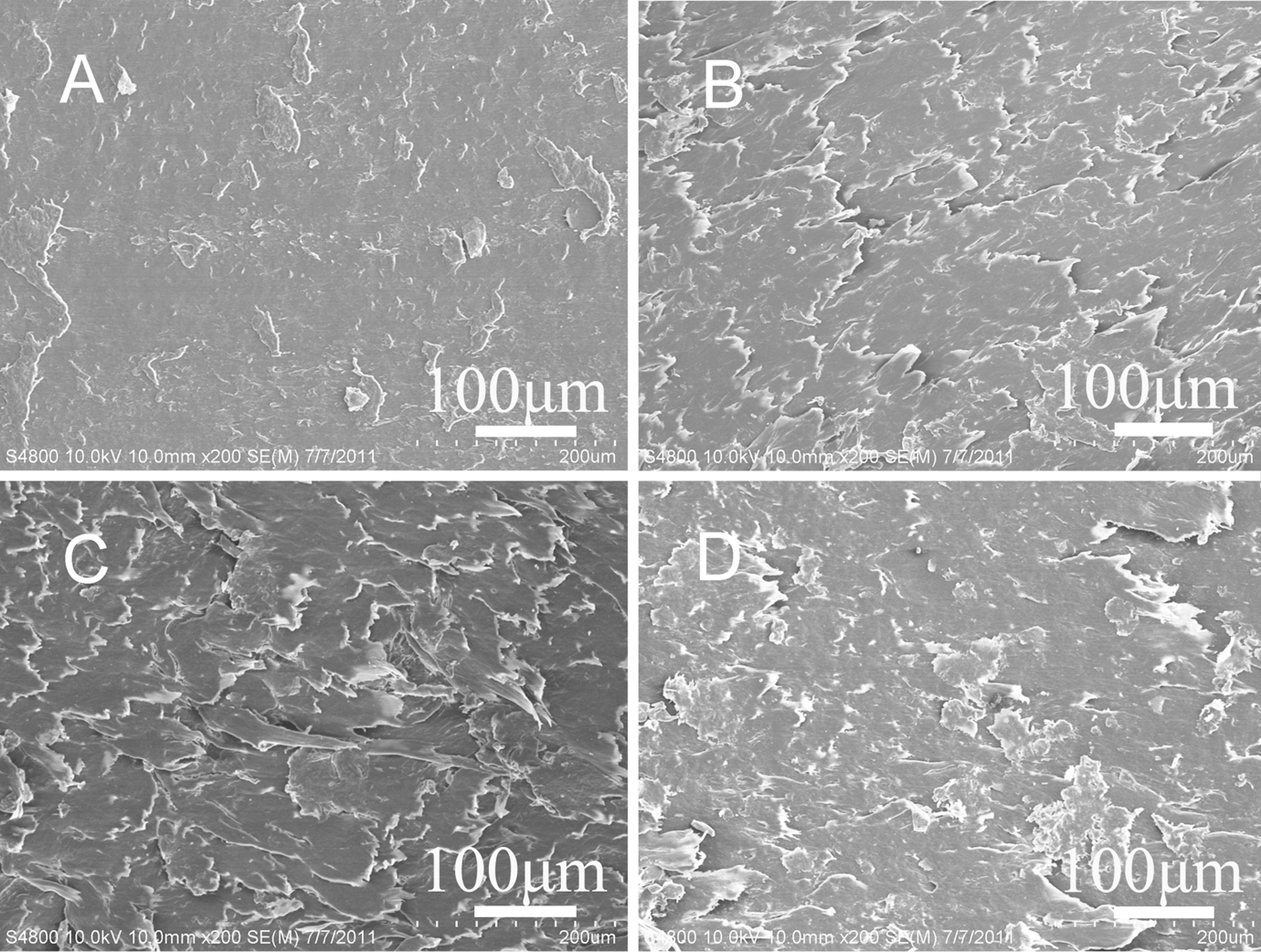
SEM morphologies of the worn surface of PA6 and PA6-TPU composites at a normal load of 5 N and a sliding speed of 500 r/min. (a) PA6, (b) PA6-TPU 5%, (c) PA6-TPU 10%, and (d) PA6-TPU 15%. SEM: scanning electron microscope; PA6: polyamide 6; TPU: thermoplastic polyurethane.
Conclusions
Blended by the polyimide-TPU, the polyimide-based polyblend showed a compatible structure during the preparation process through the fractured morphology and crystalline structure results. With the addition of thermoplastic elastomers, the toughness of PA6 was improved apparently. With the friction test, the friction coefficient of PA6-TPU composites would stabilize quickly at relatively low value compared with PA6, while their wear rate increased with the increasing TPU content. Under a higher applied load condition, the friction coefficient and wear rate of PA6-TPU composites increased apparently attributing to lots of complex reasons. However, high-sliding speed would be useful in the formation of thin and stable TPU transfer film, so that both the friction coefficient and wear rate of PA6-TPU composites decreased at higher sliding speeds. Besides, SEM of worn surface morphology revealed that the primary wear mechanism for the PA6-TPU composites was adhesive wear and fatigue wear under the dry sliding condition. Obviously, the above conclusions of fractured morphology, crystalline structure, mechanical properties, and tribological behaviors of PA6-TPU composites are useful for providing some practical guidance for the application of polymer materials in the tribological field.
Footnotes
Funding
This work was supported by Fundamental Research Funds for the Central Universities (Self-Determined and Innovative Research Funds of WUT 2010-II-022) and Supporting Project of New Century Excellent Talents of Ministry of Education of China.