




Abstract
The incorporation of zinc hydroxy stannate (ZHS), calcium borates (CBs), and NP-100 as flame-retardant fillers in polypropylene (PP) ethylene propylene diene monomer (EPDM) blends was investigated. The composites were prepared using an internal mixer and were molded using a compression mold to form test samples. Studies on the effect of filler loading (15, 30, 45, and 60 vol%) on the flame-retardant, thermal stability, and tensile properties were reviewed. A study on flame retardancy and thermal stability of ZHS, CB, and NP-100 fillers found that NP-100 has better flame retardancy compared with ZHS and CB even though NP-100 exhibits lower thermal stability compared with ZHS and CB. The mechanical properties of ZHS are the highest, followed by CB. NP-100 has the lowest mechanical properties. Tensile strength, Young’s modulus, and strain at break of 30 vol% ZHS are slightly higher compared with other loadings. In addition, 30 vol% CB has the highest mechanical properties for PP/EPDM/CB system but has slightly lower mechanical properties compared with 30 vol% ZHS-filled PP/EPDM composites.
Introduction
Polymers are known for their relatively high flammability. In many aspects, the combustion of polymers is similar to the combustion of many other solid materials. However, the tendency of polymers to spread flame away from a fire source is critical because many polymers melt and tend to produce flammable drips or flows. Therefore, testing the combustibility of polymeric products under conditions close to those of the final application or even when assembled with other materials is always important. 1 The use of EPDM/polypropylene (PP) blends has been continuously growing in various industrial domains for several decades. Inasmuch as mixing EPDM and PP in any ratio is possible, a wide spectrum of materials, from elastified PP to EPDM rubber reinforced with thermoplastics, 2 –4 are obtained. In some cases, however, these materials exhibit poor thermal resistance. Nonetheless, thermal resistance can be reinforced conveniently by a number of approaches, including the addition of fillers, such as flame retardants. 5,6 Obviously, flame retardants are an important part of polymer formulation for applications, in which polymers have a significant chance of being exposed to an ignition source (electrical and electronic goods), where polymers are easily ignited (upholstered furniture) or where a fire spreads quickly and causes serious problems (associated with building materials and transportation) when evacuating people.
Previous research was conducted by Zhou et al. 5 in their study on the flammability of PP/EPDM filled with melamine phosphate (MP) and pentaerythritol phosphate (PEPA). They found out that adding PEPA to the system increases the limiting oxygen index (LOI) value of the PP/EPDM composites compared with MP. However, composites containing a combination of PEPA and MP fillers in PP/EPDM composites have better flame retardancy, where the LOI of the samples can rise to 32.5%. Pal and Rastogi, 7 in their studies on EPDM and isotactic PP, found that intumescent polymer blend systems offer good flame retardancy with optimum comparable physiomechanical, electrical, and fluid-resistance properties, including low smoke emission when burning, an additional advantage of intumescent flame-retardant additives. To reduce its flammability, three types of fillers, namely, zinc hydroxy stannate (ZHS), calcium borates (CBs), and a nonhalogenated flame retardant based on phosphorus/nitrogen synergism, with trade name of NP-100, were added into the formulation. ZHS, with a formula ZnSn(OH)6, provides good synergists for the replacement of antimony trioxide as a flame-retardant additive. It is nontoxic, cost effective, and offers technically superior alternatives, including outstanding smoke suppression, nontoxicity, lower heat release rates, dual-phase action, and synergy with inorganic fillers, which can be effectively used in polymer blends. 8,9 CB is a type of hydrated mineral-based flame retardant with a formulation of 2CaO·3B2O3·5H2O. It has been reported to improve substantially the flame retardancy of a polymer. 10 –12 NP-100 has high nitrogen content that will increase the effectiveness of phosphorus-based flame retardant. It is reported that phosphorus-based flame retardant reacts with hydrogen during the combustion and forms water, which reduces the combustion rate. 12 Effects of ZHS, CB, and NP-100 loadings on tensile properties, flame retardancy, and thermal properties were investigated in the present study.
Experimental
Materials
The homopolymer PP (Titanpro 6431) is a commercial product from Titan Polymer (M) Sdn. Bhd. (Kuala Lumpur, Wilayah Persekutuan, Malaysia), with a melt index of 7 g/10 min and a density of 0.9 g/cm3. Ethylene propylene diene monomer (EPDM)-grade Buna 3950 (Mooney viscosity: 24 ± 5 MU, ML (1 + 4) 125°C; density: 0.86), containing 69 wt% ethylene and 11.5 ethylidene norbornene, was supplied by Bayer (M) Sdn. Bhd. (Petaling Jaya, Selangor, Malaysia). Calcium borates (CBs) were supplied by Nanjing Rising Chemical Industry Co. Ltd (Zhongyang Road, Nanjing, China). Zinc hydroxy stannates (ZHSs) were supplied by MHC Industrial Co. Ltd (Xiamen, Fujian, China), and NP-100 was supplied by Topchem Technology Co. Ltd (Jiangmen City, Guangdong Province, China). Both ZHS and NP-100 were supplied in a white powder form. CB was supplied in a brown powder form. Dicumyl peroxide (DCP) was obtained from Bayer (M) Sdn. Bhd. All materials are commercially available and used without further purification.
Composite preparation
The PP/EPDM blends were prepared by mixing the polymer and the filler powders in an internal mixer, followed by compression molding. The temperature and the rotor speed of the internal mixer were set at 180°C and 50 r/min, respectively. The ratio of PP/EPDM was fixed at 50/50 and the blending sequence was started with PP, EPDM, fillers, and DCP for 10 min. After the compounding process, the filled PP/EPDM composites were compression molded to form a plate with thicknesses of 1 and 3 mm in an electrically heated hydraulic press at 185°C. The samples were preheated for 6 min and held under a pressure of 1500 psi for 2 min. Next, cooling was carried out under the same pressure for 3 min.
Characterization measurement
Particle size distributions of flame-retardant fillers were measured by HELOS Particle Size Analysis, based on the laser diffraction method. The curves of particle size distribution for flame-retardant fillers were plotted by cumulative distribution as a function of particle size. Thermogravimetric analysis (TGA) was carried out using a Perkin-Elmer Pyris 6 TGA analyzer to confirm the filler content and to determine the thermal stability of the composites. Samples of 10 mg were prepared for the test. The samples were heated from 30 to 600°C at 10°C/min in a nitrogen atmosphere. The rate of burning was subjected to a flammability test, in accordance with the ASTM D 635 method. The composite sheet was cut into bar-shaped test specimens, with a 125 × 13 × 3 mm3 dimension. At least 10 specimens were prepared for each composition and the composite system. Gauge length was fixed to 25 mm and average rate of burning was reported in millimeters per minute. Tensile properties of the composites were determined using an INSTRON Series IX Testing Machine according to ASTM D638. The same cross-head speed of 50 mm/min was used on all samples, together with a load of 5 kN. All tests were performed at room temperature. Five dumbbell-shaped samples for each blend composition were tested and the average values were reported. The fracture surface morphology of selected PP/EPDM composites was analyzed using a scanning electron microscope (SEM; model ZEISS SUPRA 35 VP). The fracture surface of the sample was coated with a gold-palladium layer using a Sputter Coater Polaron SC 515 to avoid electrostatic charging during observation. The dispersion of the filler throughout the composite and the filler agglomeration were characterized using SEM.
Results and discussion
Particle size analysis
Particle size and particle size distributions of ZHS, CB, and NP-100 are depicted in Figure 1. All flame-retardant fillers examined showed differences in mean particle size and particle size distribution. ZHS, CB, and NP-100 have a mean particle size of 0.73, 2.02, and 1.31 µm, respectively. Particle size has a pronounced influence on the composite properties. Large particles drastically alter, usually deteriorate, the deformation and the failure characteristics of composite materials. 13
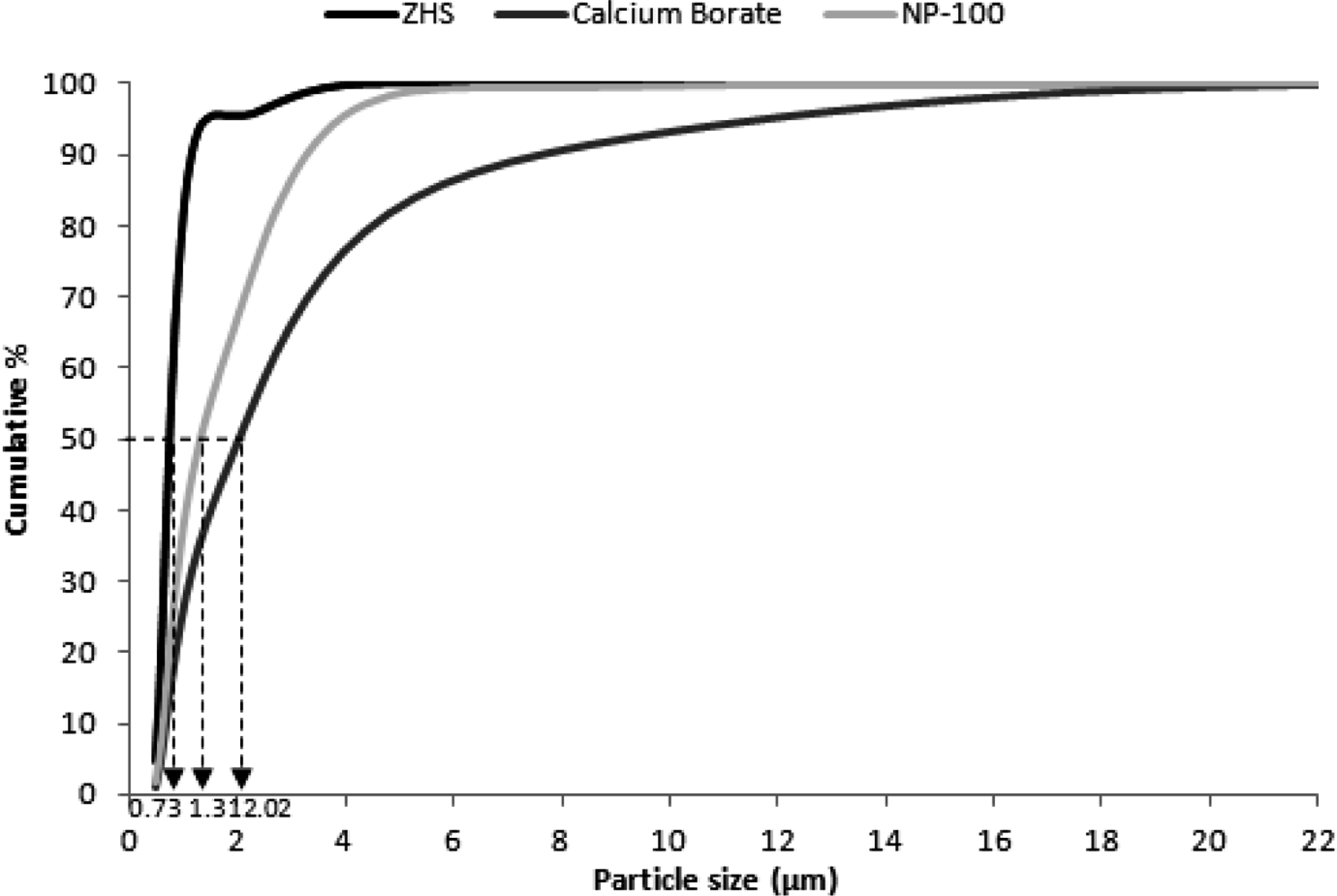
The particle size distribution of ZHS, CB, and NP-100 particles. ZHS: zinc hydroxy stannate; CB: calcium borate.
The data values for the span factor and the mean particle size of ZHS, CB, and NP-100 are shown in Table 1. A small span factor exhibited by ZHS indicates a narrower particle size distribution, which means that ZHS shows more uniform particle size distribution. Meanwhile, CB shows slightly higher span factor values; therefore, it is considered to have the broadest particle size distribution among the three particles.
The relative span factor and particle shape of ZHS, CB, and NP-100 particles.
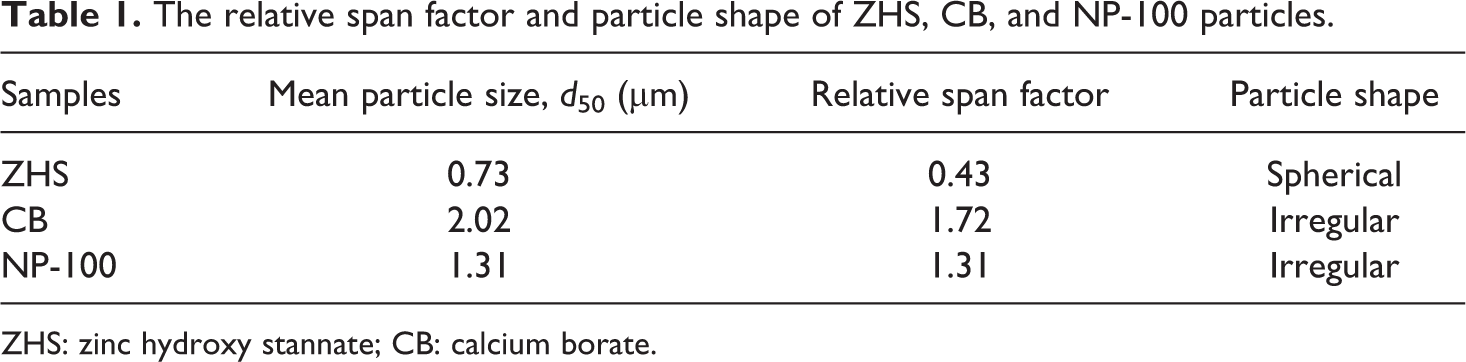
ZHS: zinc hydroxy stannate; CB: calcium borate.
Thermogravimetric analysis
TGA results of ZHS-, CB-, and NP-100-filled PP/EPDM composites with various filler loadings are shown in Figure 2. Initial degradation temperature, T 5%, maximum degradation temperature, T d%, and total weight loss of composites derived from thermogravimetic curves are shown in Table 2. With the addition of 15 vol% of flame-retardant fillers, ZHS and CB show higher thermal stability compared with unfilled and NP-100 PP/EPDM composites. Based on Table 1, with the same filler loading, 15 vol% CB shows a slightly higher thermal stability than ZHS. The enlarged figure refers to TGA curves of the same samples. This improvement in the thermal stability of ZHS- and CB-filled PP/EPDM composites can be explained by the restriction in the mobility of polymer chains because of the presence of inorganic fillers, in which the filler surface is known to have a marked effect on molecular mobility in a filled polymer. 14,15 Moreover, for CB-filled PP/EPDM composites, the improvement in thermal stability is also caused by the radical trapping effect of mineral fillers. 15 NP-100-filled PP/EPDM composites undergo two stages of thermal degradation as shown in Figure 3. The first step is caused by the degradation of NP-100 fillers because NP-100 decomposes at temperatures ranging between 330 and 400°C, as shown by the degradation of filler in Figure 4. The second step is between 400 and 490°C and is probably attributed to the degradation of the PP/EPDM matrix. 16,17 The degradation of ZHS and CB are shown in Figure 4. It is observed that ZHS decompose slowly and at lower rate when compared to NP-100 and left a residue of 89% at 600°C. CB exhibits the lowest thermal stability at temperature below 400°C and left a residue of 75% at 600°C. It was reported that water has been released by CB above 100°C. 18
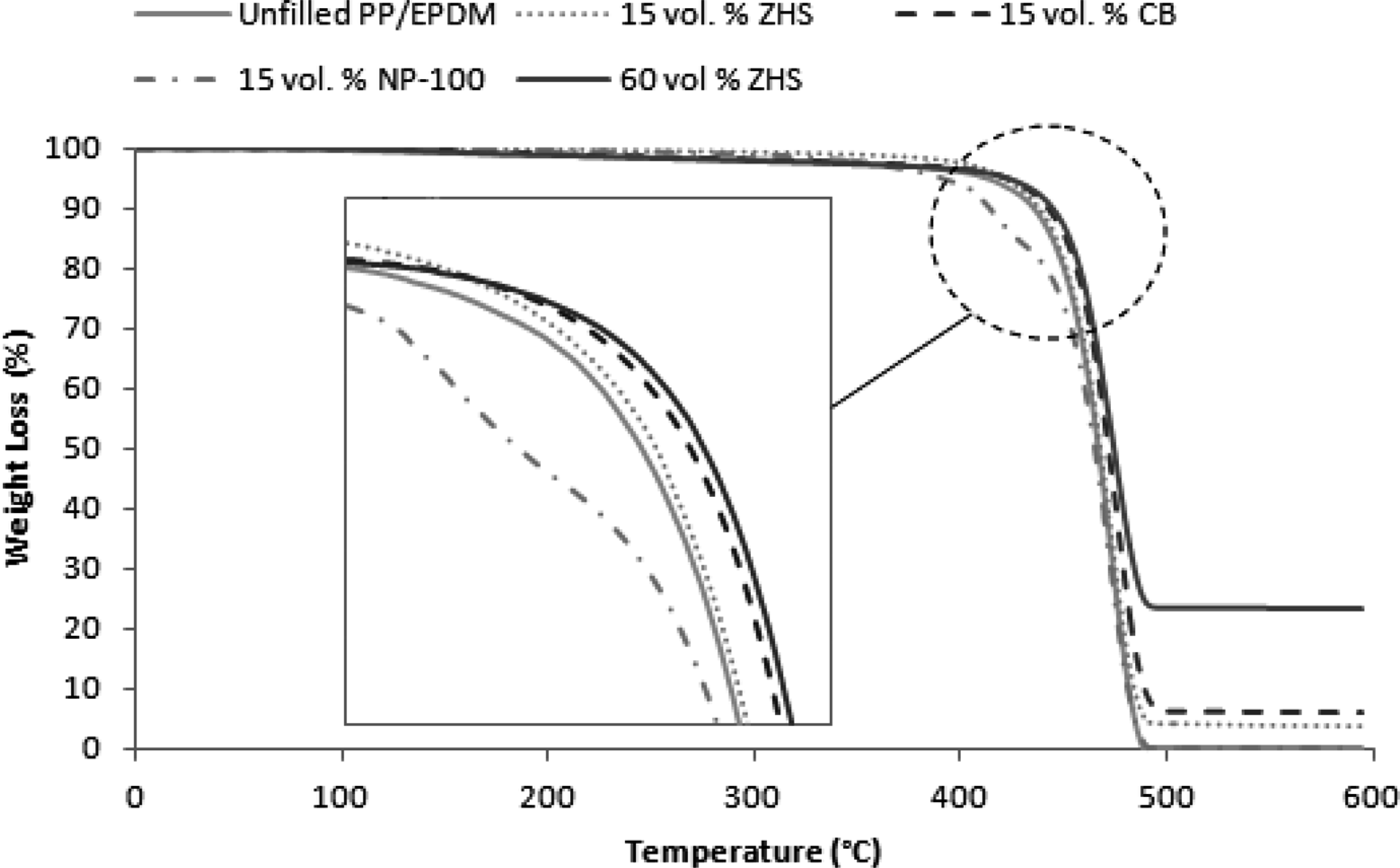
TGA curves of unfilled PP/EPDM blends, 15 vol% ZHS-, CB-, NP-100-, and 60 vol% ZHS-filled PP/EPDM composites. TGA: thermogravimetric analysis; ZHS: zinc hydroxy stannate; CB: calcium borate; PP: polypropylene; EPDM: ethylene propylene diene monomer.
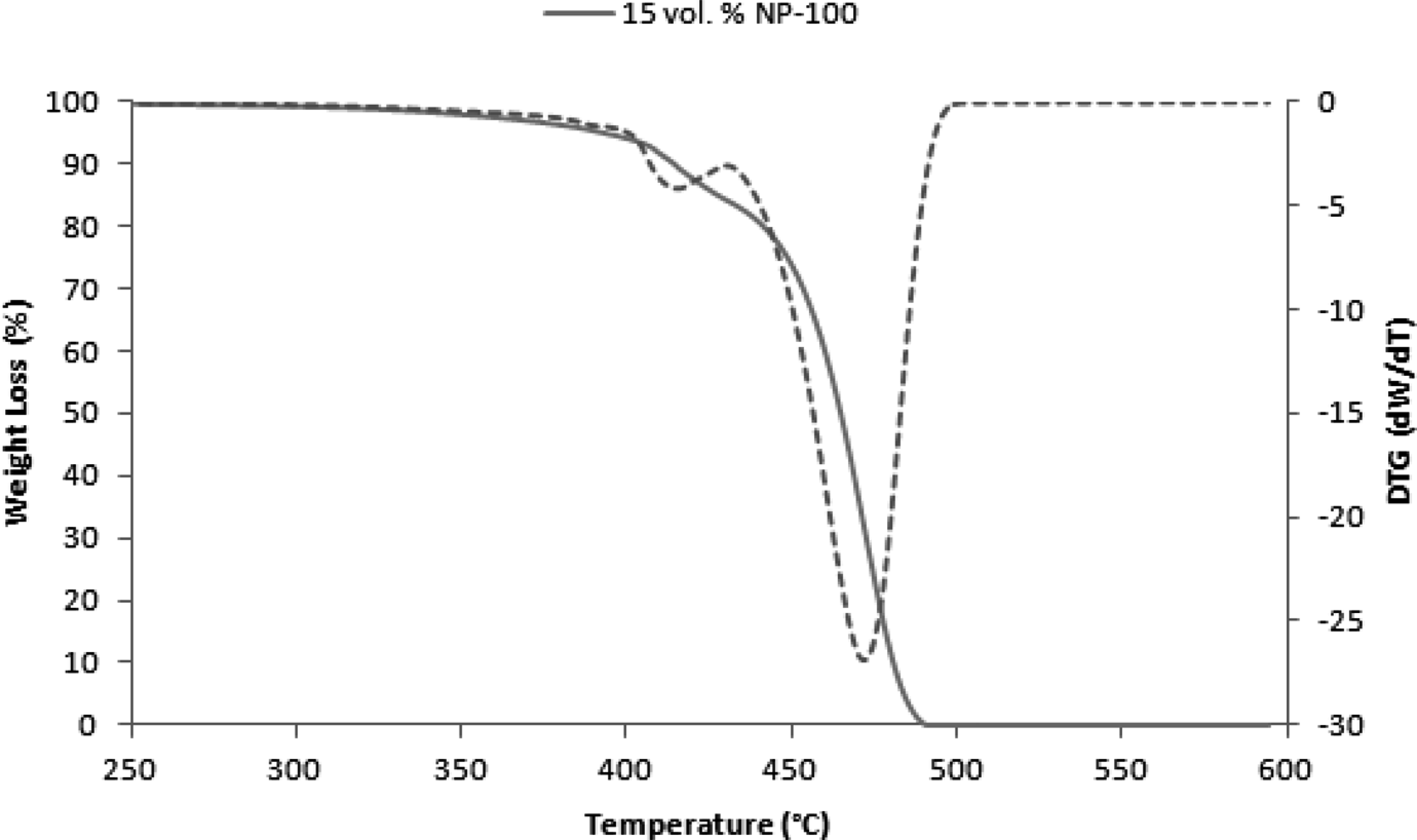
Two degradation steps of NP-100-filled PP/EPDM composites. PP: polypropylene; EPDM: ethylene propylene diene monomer.
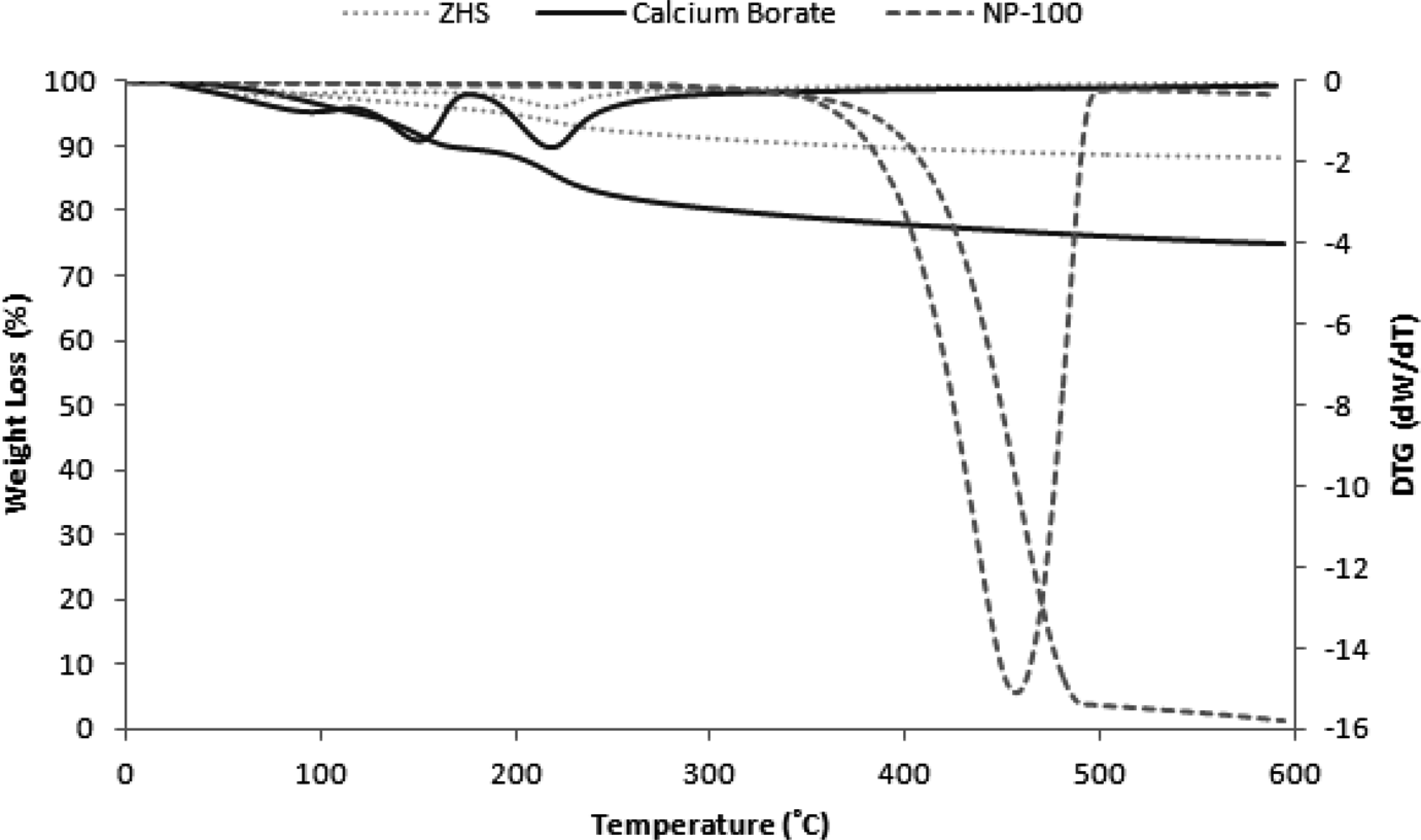
TGA derivative curves of ZHS, CB, and NP-100 fillers. TGA: thermogravimetric analysis; ZHS: zinc hydroxy stannate; CB: calcium borate.
Thermal properties of unfilled PP/EPDM and ZHS-, CB-, and NP-100-filled PP/EPDM composites.
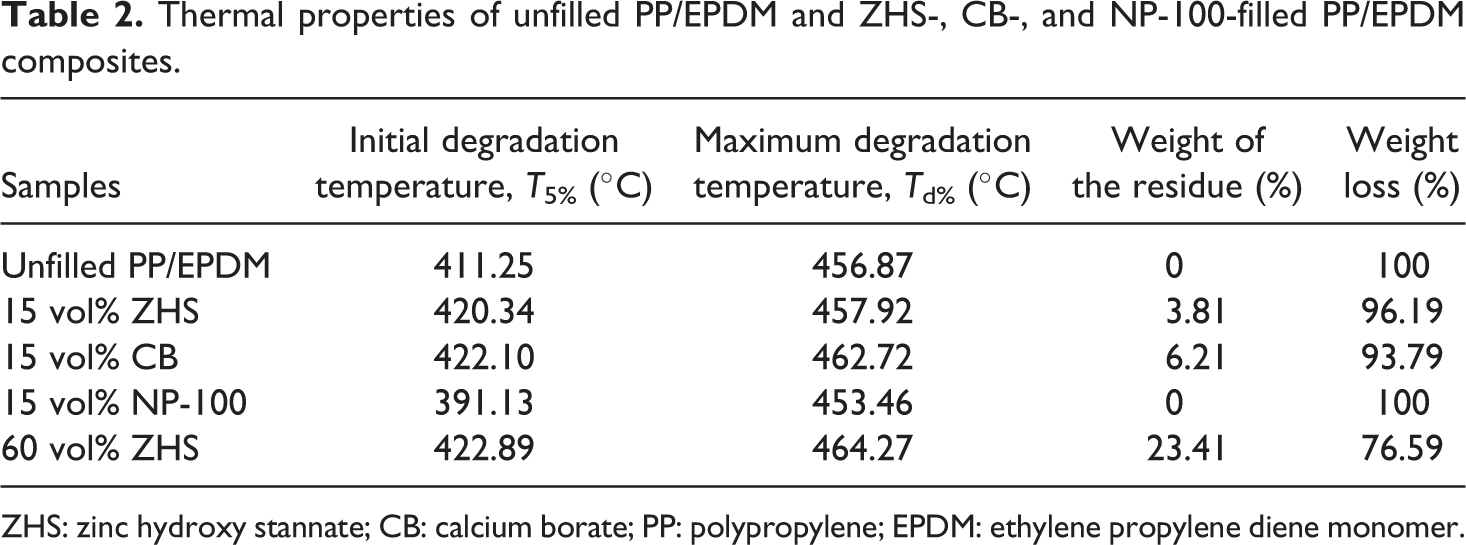
ZHS: zinc hydroxy stannate; CB: calcium borate; PP: polypropylene; EPDM: ethylene propylene diene monomer.
Linear rate of burning
Results of the flammability analysis assessed by linear rate of burning are presented in Figure 5. Apparently, the addition of ZHS, CB, and NP-100 flame-retardant fillers has significant impacts on the flammability of the PP/EPDM composites. These results show that burning rate is reduced after the addition of ZHS, CB, and NP-100 compared with the unfilled PP/EPDM composites. Unfilled PP/EPDM composites exhibit a rate of burning of 21.53 mm/min, with melting and dripping characteristics.
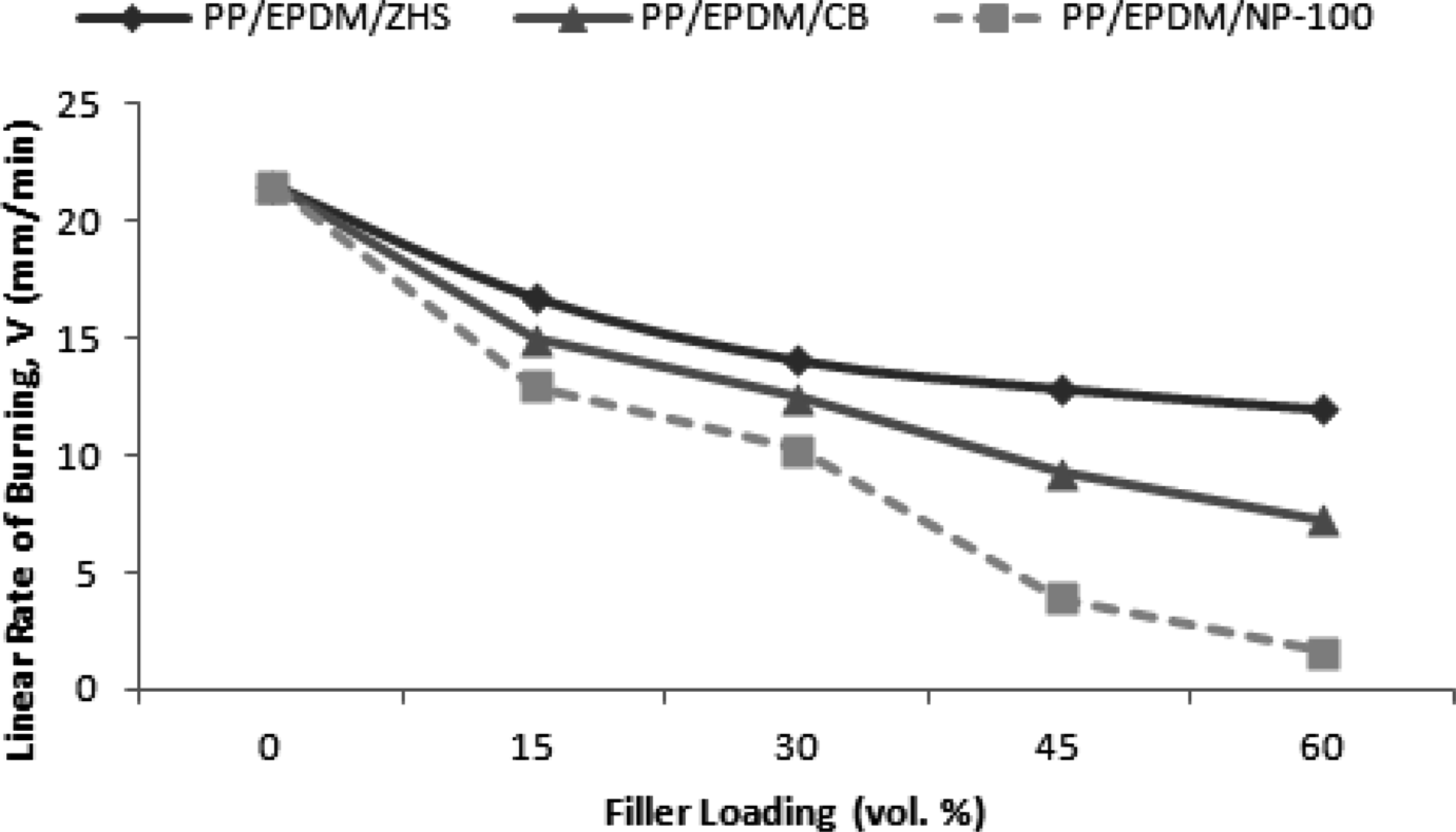
Effect of filler loading on linear burning rate of ZHS-, CB-, and NP-100-filled PP/EPDM composites. ZHS: zinc hydroxy stannate; CB: calcium borate; PP: polypropylene; EPDM: ethylene propylene diene monomer.
Based on Figure 5, clearly, at all filler loadings, PP/EPDM/NP-100 composites have the lowest linear burning rate, V, whereas PP/EPDM/ZHS composites have the highest value. At 60 vol% filler loading, ZHS, CB, and NP-100 show the lowest V values in their system, which are 12.00, 7.26, and 1.61 mm/min, respectively. The increase in ZHS, CB, and NP-100 loadings increases the flame retardancy of the PP/EPDM composites. This is strongly supported by a reduction in the burning rate of all three PP/EPDM composites. Incorporation of ZHS in the PP/EPDM system reduces smoke formation during the combustion process, which occurs in the condensed phase. 19 CB-filled PP/EPDM composites have the second lowest burning rate because they contain some crystal water within their chemical structure. 11 Water molecules are retained inside CB structures by hydrogen bonds. When temperature increases, these are broken. Afterward, when the pressure in the mineral is high enough, the mineral structure collapses, leading to the formation of an amorphous borate and release of water. 18 PP/EPDM/NP-100 composites reduce their burning rate by the formation of char, which protects the polymer from ambient oxygen, thereby reducing the rate of burning of the system. 20 Second, char formation is often accompanied by water release, which dilutes the combustible vapors. Moreover, char can often protect the underlying polymer. The char-forming reactions are sometimes endothermic. 21
Tensile properties
Tensile properties of PP/EPDM filled with ZHS and NP-100 are shown in Figures 6 to 8. Generally, fillers, in the form of rigid particles, affect the strength of particulate-filled polymer composites in two ways. One is the weakening effect because of the stress concentration they cause. Another is the reinforcing effect because they can serve as barriers to crack growth. 22 In Figure 6, compared with unfilled PP/EPDM, the tensile strength of PP/EPDM filled with flame-retardant fillers decreases as filler content increases.
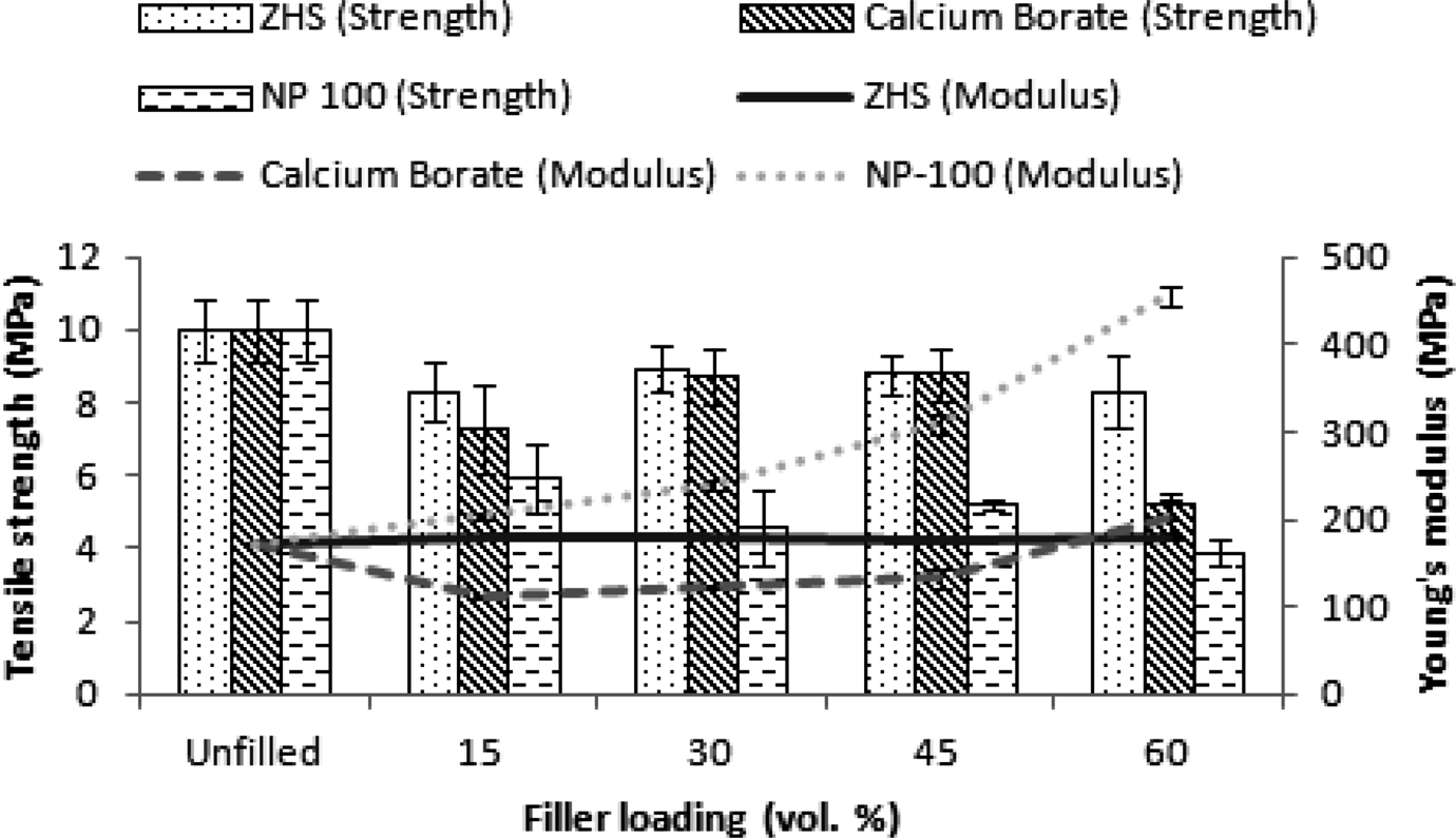
Effect of filler loading on the tensile strength and Young’s modulus of unfilled and ZHS-, CB-, and NP-100-filled PP/EPDM composites. ZHS: zinc hydroxy stannate; CB: calcium borate; PP: polypropylene; EPDM: ethylene propylene diene monomer.
ZHS, which has small particulate fillers (shown by small d 50) and small span factor, shows high tensile properties compared with CB and NP-100. The use of smaller particle size results in higher tensile strength of the composite system. Span factor which indicates the width of the particle distribution of fillers might also influence the properties of the composites. More surface area exists in a system with small filler size; hence, the possibility of adhesion existing between matrix and filler increases. 23 Larger particles act as microscopic stress concentrators. This lowers the strength of the polymer composites. Agglomeration of fillers in the system reduces the tensile properties of the materials. However, theoretically there are other factors that might influence tensile properties such as shape of particles, filler dispersion and filler–matrix adhesion. 24 –28 The shape of the filler particle also may affect the properties of the composites. It is reported that spherical filler reinforced composite has higher tensile strength while the composite reinforced with irregular filler showed lower tensile strength. 29,30
In Figure 7(a) to (e), scanning electron micrographs of tensile fracture surfaces of unfilled and filled PP/EPDM composites are displayed. Agglomerations and voids exist mostly in 60 vol% filler loadings (Figure 7(c) and (e)) due to the large amount of filler loadings to the PP/EPDM ratio. However, a fractured surface of 60 vol% NP-100 (Figure 7(g)) shows a brittle fracture mode. A tendency toward the formation of agglomerates as ZHS content increases shows good agreement with literature. 2,31 As is apparent from the tensile strength properties, the tendency to decrease in tensile strength and to strain at a break of 60 vol% filler can be related to the filler distribution in the matrix.
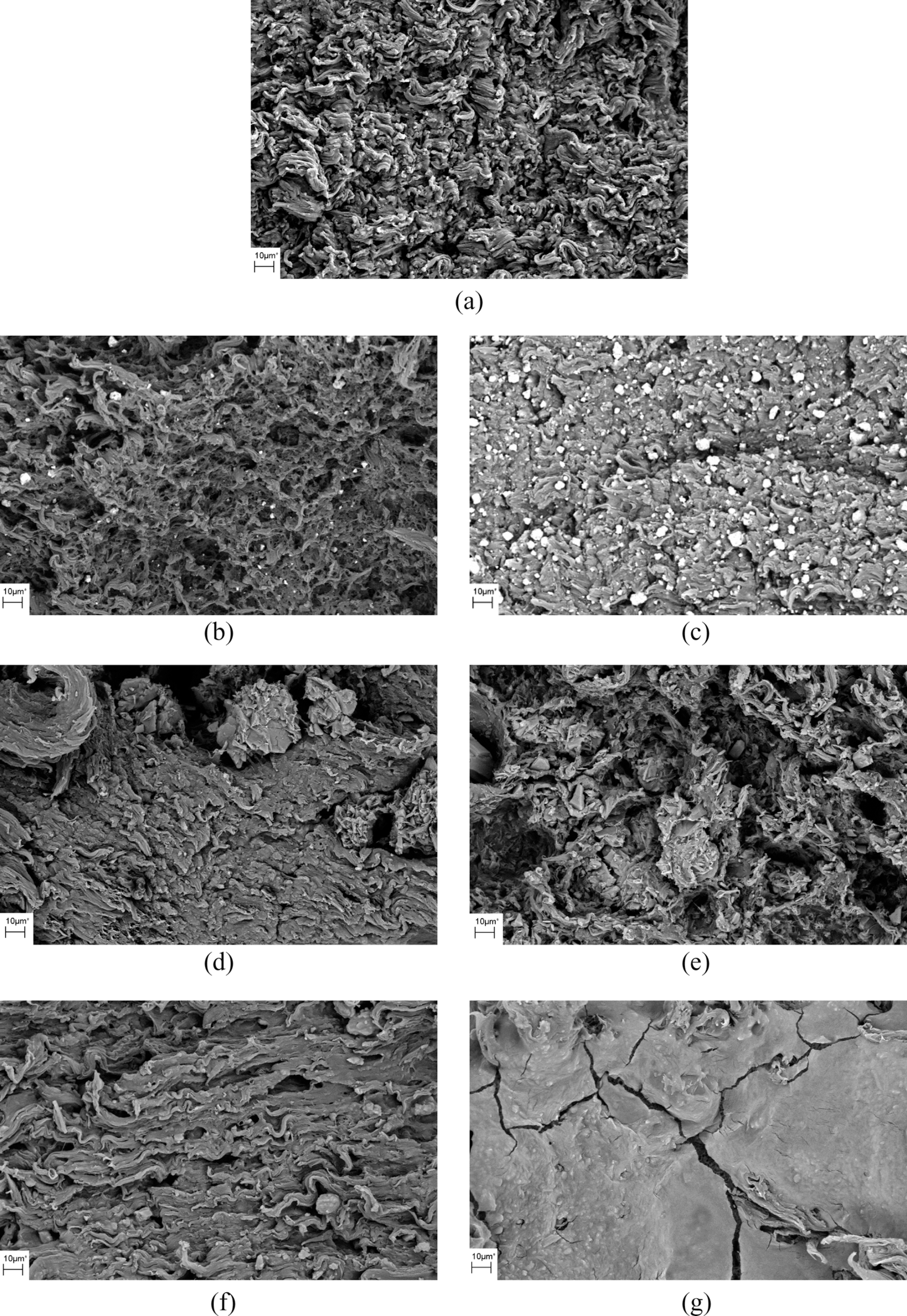
Scanning electron micrograph showing the fracture surface morphology of (a) unfilled, (b) 15 vol% ZHS-, (c) 60 vol% ZHS-, (d) 15 vol% CB-, (e) 60 vol% CB-, (f) 15 vol% NP-100-, and (g) 60 vol% NP-100-filled PP/EPDM composites (at ×500 magnification). ZHS: zinc hydroxy stannate; CB: calcium borate; PP: polypropylene; EPDM: ethylene propylene diene monomer.
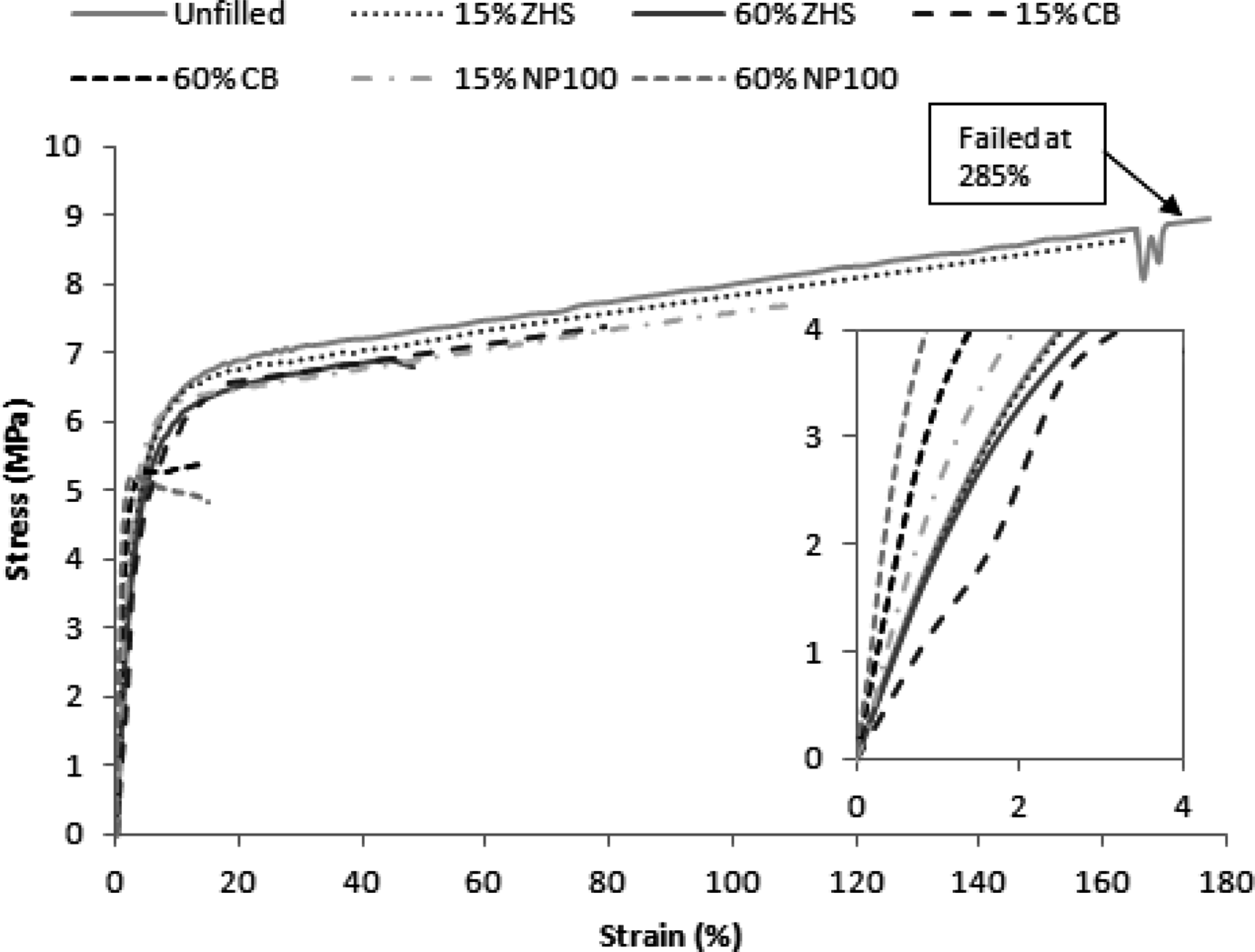
The representative stress–strain curves of unfilled PP/EPDM, 15 vol%, and 60 vol% of ZHS-, CB-, and NP-100-filled PP/EPDM composites. The strain at break of unfilled PP/EPDM is 285%. ZHS: zinc hydroxy stannate; CB: calcium borate; PP: polypropylene; EPDM: ethylene propylene diene monomer.
The modulus of NP-100-filled PP/EPDM composites shows a gradual increase as the filler loading increases by up to 60 vol%. This implies that incorporation of 60 vol% NP-100 into PP/EPDM composites imparts stiffness on the composites as the filler is stiffer compared with that of the unfilled PP/EPDM system. However, the addition of ZHS and CB into the PP/EPDM composites does not affect and reduced Young’s modulus, respectively, much as the filler loading increases. This trend generally deviates from the rule of mixture. This might be attributed to the agglomerations that exist in PP/EPDM/ZHS systems, as shown in Figure 7. Correlation between Young’s modulus and agglomeration has been reported in previous works. 32 Filler surface treatment is able to improve the dispersion of fillers and hence increase the properties. 33 –35
The stress–strain curves of the strain at break on ZHS, CB, and NP-100 contents are shown in Figure 8. Strain at a break of unfilled PP/EPDM is 285%. As shown in the graph, the composites experience a significant drop in strain at break with the addition of fillers. The lower value of strain at the break of PP/EPDM composites might be related to large particles of CB and NP-100 that create discontinuities in the composite structure, thus resulting in high stress concentrations. Inconsistent trend of PP/EPDM/CB composites might be caused by higher filler size distribution because CB has a wide range of smallest and largest particle sizes, which are 0.67 and 7.65 µm, respectively. A decrease in the strain at the break of polymers, which are filled with inorganic fillers, is obvious and in agreement with previous works. 36,37 The addition of fillers into the PP/EPDM matrix appears to change the matrix deformation from ductile to brittle. This is shown by the area under the stress–strain curves, which indicates the toughness of the systems.
Figure 8 also compares the stress–strain curves of unfilled PP/EPDM and PP/EPDM composites filled with the lowest and highest amounts of ZHS, CB, and NP-100 (15 and 60 vol%). In Figure 6, unfilled PP/EPDM composites show longer deformation, followed by 15 vol% of ZHS, CB, and NP-100. As the filler content increases, an increase in brittleness and a reduction in the toughness of the system are observed.
Conclusions
The addition of ZHS and CB into PP/EPDM blends increases the thermal stability of the PP/EPDM composites. However, the addition of NP-100 reduces the composites’ thermal stability. PP/EPDM/NP-100 system exhibits the lowest burning rate compared with PP/EPDM/ZHS and PP/EPDM/CB systems. NP-100 is better in flame retardancy compared with ZHS and CB. Among other PP/EPDM composites, PP/EPDM/ZHS shows higher thermal stability, whereas PP/EPDM/NP-100 shows higher tensile modulus. As expected, increasing ZHS, CB, and NP-100 loadings reduces the strain at break. The addition of fillers in PP/EPDM composites shifts the ductile behavior of the matrix to brittle. NP-100 shows better flame retardancy and tensile modulus compared with other types of fillers. On the other hand, ZHS exhibits higher tensile strength and thermal stability.
Footnotes
Funding
This work was supported by Universiti Sains Malaysia for the short-term grant (grant number: 60311035).