




Abstract
This article deals with the confined crystallization behavior of nanobiocomposites consisting of acetylated bacterial cellulose (BC) and poly(lactic acid) (PLA). PLA/acetylated BC nanobiocomposites were prepared by compressed molding. Nonisothermal crystallization, melting behavior and isothermal crystallization kinetics within confined spaces were investigated by differential scanning calorimetry (DSC). The results indicated that acetylated BC was favorable to the crystallization of PLA at higher temperatures. On one hand, due to better compatibility between acetylated BC and PLA, crystal nucleation and growth of PLA took place while crystallization process of PLA was restricted. Acetylated BC had an effect of heterogeneous nucleation on PLA crystallization. On the other hand, crystal growth of PLA molecular chain was confined within the nanometer gaps between the microfibrils of acetylated BC. The interaction between microfibrils of acetylated BC and PLA also had an effect on the crystal growth of PLA, which resulted in the growth of confined crystallization. As the time course of acetylation became longer and longer, the compatibility of acetylated BC and PLA was enhanced and the crystallization of PLA became more difficult. This result was in accordance with the observation of polarized optical microscope (POM) pictures. Activation energy of crystallization and free energy surface of PLA were reduced in PLA and acetylated BC composites.
Keywords
Introduction
Poly (lactic acid) (PLA), a type of commercial biodegradable thermoplastics made from 100% renewable resources like corn, sugar beets, wheat and other starch-rich products, have been widely used due to their high mechanical strength and easy processability compared to other biopolymers. 1–3 Although PLA is a kind of successful engineering plastic, it has low impact strength and low crystallization rate. 4,5 In order to increase the range of applications for this material, it is necessary to modify its properties as well as reduce its cost. So far, lot of PLA modifications has been done by domestic and overseas scholars to overcome the above-mentioned drawbacks. Based on currently published literature and patents, copolymerization, 6,7 blending 8,9 and filling 10,11 are the most frequently used modification methods to improve the toughness and resistance to bending deformation as well as increase the thermal stability. Among the three methods mentioned above, filling is an easy and valid choice.
Due to the biocompatible and biodegradable properties, PLA is usually used as the material in the aspects of human bone transplantation, bone connecting pins and so on. However, reinforcing fillers are often needed due to the fact that the strength of PLA cannot meet the requirements for practical use. The hydroxyapatite (HA) has good biological activity and biocompatibility, and therefore, the elastic modulus of HA is close to that of a natural bone, which is commonly used in the modification of PLA. 12,13 Ignjatovic and Uskokovic 13 have reported that HA/PLA composite biomaterial blocks have a compressive strength of up to 140 MPa and elasticity module of up to 10 GPa by hot pressing. Besides HA, carbon fiber (CF) with good hard, soft tissue compatibility and blood compatibility is also commonly used to enhance the production of lactic acid, 14 thus, it is adopted as the irreplaceable material for weight-bearing bone fracture treatment.
By embedding natural reinforcing fibers into a biopolymeric matrix, a new type of fiber-reinforced materials called biocomposites was created and is still being developed. In biocomposites, biodegradable polymer works as the matrix material, while biofiber works as the reinforcing element. Since both components are biodegradable, the composite working as the integral part is also expected to be biodegradable, which could be used in the fields of packaging and biomedicine materials.
Bacterial cellulose (BC), that is the cellulose derived from bacteria such as the Acetobacter species, 15 has the advantage of being free from wax, lignin, hemicellulose and pectin compared to plant cellulose. Moreover, it is specifically characterized by high mechanical strength as well as an extremely fine and pure fiber network structure, as is shown in Figure 1. This network structure is in the form of a pellicle made up of fibrils which are in a random arrangement. The fibrils are less than 100 nm wide and 2–4 nm in diameter. It is reported that the estimated values of Young’s modulus of BC filaments are 78 ± 17 GPa 16 and 114 GPa, 17 indicating the great potential of BC filaments as composite materials.
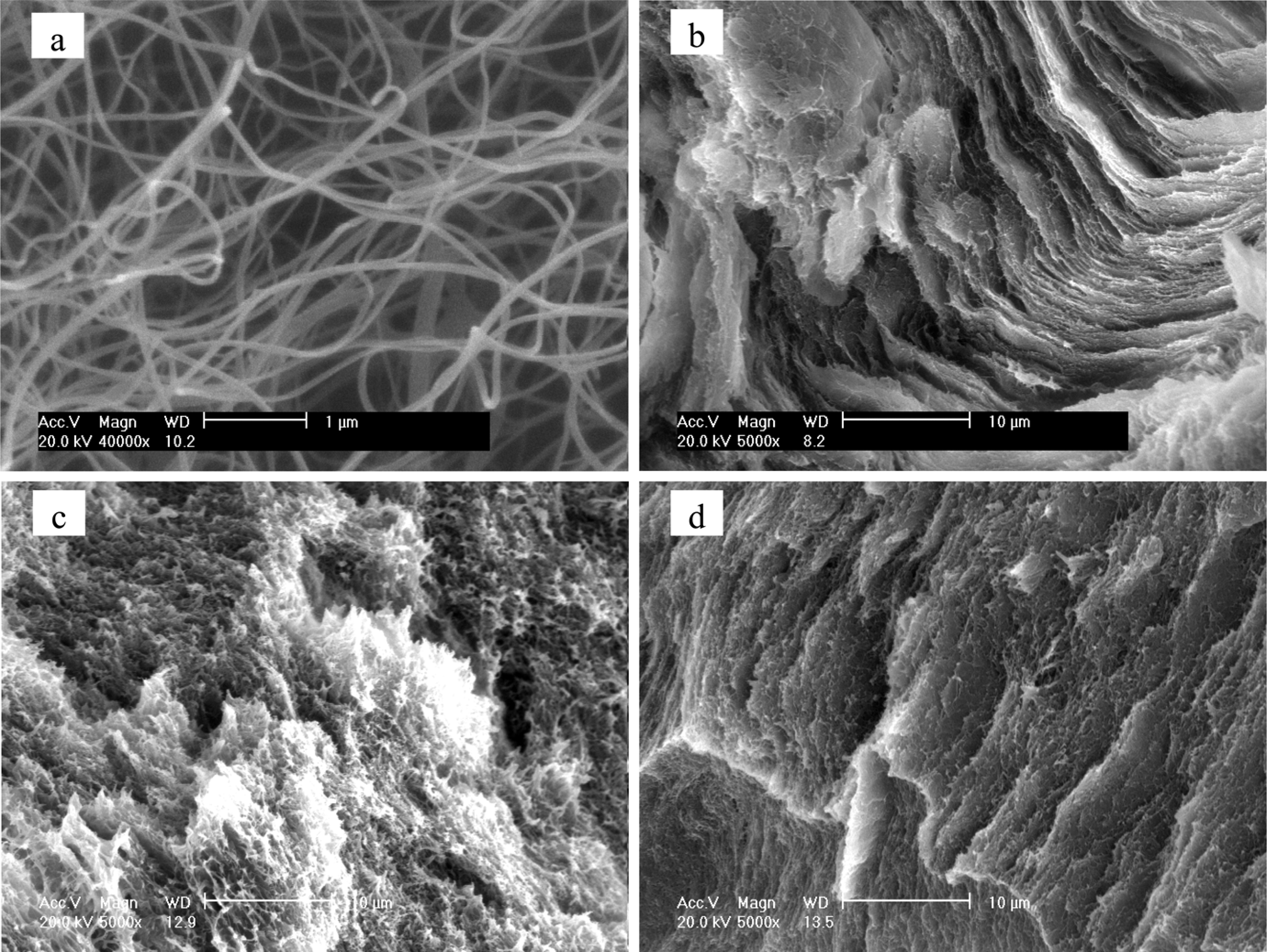
Scanning electron microscopic (SEM) image of pure bacterial cellulose (BC) membrane and acetylated BC/poly(lactic acid) (PLA) composites. (a) Pure BC, (b) PLA/BC acetylated for 4 h (BC-4), (c) PLA/BC-12 and (d) PLA/BC-24.
There are still very few reports on blending PLA with BC for composite applications. Recently, there have been two research reports on this issue. One is about the transparency of films generated from these materials, 18,19 and the other one is about enhancing the interface between a conventional cellulose fiber and a resin material. 20,21 Using cellulose fibers as reinforcing materials in thermoplastics requires strong adhesion between the fiber and the polymer matrix. Cellulose has a strong hydrophilic character because of the presence of three hydroxyl groups in each monomeric unit, while PLA is generally hydrophobic. In order to enhance the compatibility between PLA and BC, researchers use acetylation to reduce the hydrophilic character of BC nanocomposites effectively by replacing the hydrophilic hydroxyl groups on the nanofiber surface with the less hydrophilic acetyl groups. Further improvement in the hydrophilic character is expected by further acetylation. The relationship between mechanical properties and acetylation degree of BC is still not clear. However, the ultimate mechanical properties of crystalline polymer composites are partly determined by the crystallization behavior and crystallization kinetics within the confined space between microfibrils of acetylated BC. Phase structure and phase behavior of confined polymer are different from that of nonlimited polymers. Since the confined locations, types and extent are different from each other, conformational entropy is decreased in the thermodynamics. On the other hand, varying degrees of obstruction and restricted movement of the chain section in the dynamics will inevitably lead to the differences in phase behavior and phase structure of such a constrained polymer.
It is vital to understand the crystallization kinetics because it helps a lot to design materials with desirable properties. The main aim of this article is to investigate how the acetylated BC affects the confined crystallization, melting behavior and isothermal crystallization kinetics of PLA and acetylated BC nanobiocomposites.
Experimental
Materials
PLA was supplied by Shenzhen Brightchina Industrial Co., Ltd. BC was obtained from Guangzhou Yide Chemical Industry Co., Ltd. Chloroform of analytical grade was obtained from Tianjin Fuyu Fine Chemical Industry Co., Ltd. Acetone, methanol, acetic acid, toluene, perchloric acid and acetic anhydride were purchased from Guangzhou Chemical Reagents Factory of China in AR grade.
Synthesis
Acetylation of bacterial cellulose
BC pellicles were cut into about 10 × 10 × 1 cm thick pieces and then were boiled in 2% NaOH for 2 h to remove the bacterial cell debris. The residue was washed thoroughly under running tap water for 2 days and then was compressed to 1 mm thickness by pressing at 2 MPa and 20°C for 2 min to roughly remove the bulk water. The compressed BC pellicles were soaked in acetone. The water in the sample was replaced repeatedly by acetone. Subsequently, the sample was placed in a beaker containing a mixture of 40 mL of acetic acid, 50 mL of toluene and 0.2 mL of 60% perchloric acid. Then, the desired amount of acetic anhydride was added with stirring. The mixture was allowed to stand for 1 h at room temperature. After acetylation, the BC sample piece was washed thoroughly with methanol and then was hot pressed at 2 MPa and 80°C for 4 min to obtain a dried sheet.
Preparation of PLA/acetylated BC membranes
Acetylated BC sheets with the size of 4 cm × 3 cm were impregnated with neat PLA solution in chloroform and were stirred for 24 h. The obtained composites were compressed with flat vulcanizing machine under a pressure of 2 MPa. Thus, PLA/acetylated BC composite sheets of about 0.1-mm thick were obtained. The mass content of acetylated BC in the PLA composite was 5%. According to the time courses of acetylated BC which are 4 h, 12 h and 24 h, the composites were named as PLA/BC-4, PLA/BC-12 and PLA/BC-24, respectively.
Microstructure analysis
The surfaces of the composite membranes were sputter coated with gold before subjecting them to scanning electron microscopic (SEM) analysis. The surface morphology of the composites was observed by a Philips XL-30 ESEM SEM at an acceleration voltage of 15 kV.
X-ray diffraction spectroscopy
X-ray diffraction patterns were collected on an X-ray diffractometer (model D/MAX-1200, RIGAKU, Japan), working in reflection mode, from 2θ = 5° to 2θ = 60°. Cu Kα radiation (λ = 0.154056 nm), was generated at a voltage of 36 kV and a current of 20 mA.
Differential scanning calorimeter characterization
A Q200 differential scanning calorimeter (DSC) obtained from TA Instruments was used to study the thermal behavior of the PLA and acetylated BC composites and was calibrated using the melting temperature and enthalpy of a pure indium standard. About 8–9 mg of the sample was accurately weighed for DSC testing, and all measurements were performed in nitrogen atmosphere. Each sample of the same specimen was analyzed only once.
In nonisothermal crystallization and melting behavior characterization, a composite sample was rapidly heated to 190°C and held for 5 min. Subsequently, it was cooled to 60°C at a cooling rate of 20°C/min to study the crystallization behavior. And then, it was reheated to 190°C at 20°C/min for the study of melting behavior. Each sample of the same specimen was analyzed only once during one new DSC span.
In the study of isothermal crystallization kinetics, a composite sample was rapidly heated to 190°C and held for 5 min. Subsequently, it was cooled to isothermal crystallization temperature at a cooling rate of 100°C/min. Isothermal temperatures ranged from 121°C to 125°C at 1°C intervals and the sample was held at each isothermal temperature for 25 min, allowing complete crystallization. To observe the melting behavior, the isothermally crystallized samples were reheated to 190°C at a rate of 20°C/min.
Crystalline structure characterization
The cold crystallization morphology of PLA and PLA/acetylated BC composite film samples was studied using a polarized optical microscope (POM, Zeiss, Germany) equipped with Linklam LTM350 hot stage from England. The crystallization process was recorded in the second heating scan at a rate of 0.5°C/min.
Results and discussion
SEM observation of acetylated BC/PLA composites
Photographs of a pure BC membrane and acetylated BC/PLA composites with different acetylated time are shown in Figure 1. The BC with ultrafine nanonetwork structure can be clearly observed in Figure 1a. The fiber diameter was about 20 nm. Single fiber surfaces were smooth without any attachments, and the gaps between the fibers were large. As shown in Figure 1b-d, a large number of PLA were loaded onto the surface of BC fiber, and the laminated structure could also be observed. With the increase of acetylated time, the microstructure of composite membrane was more uniform, which indicated that the compatibility between PLA and BC was improved. This is due to the fact that the esterification reaction introduced hydrophobic groups onto the surface of BC.
XRD of acetylated BC/PLA composites
The X-ray diffraction (XRD) spectra of pure PLA, BC membranes and acetylated BC/PLA composites with different acetylated time are shown in Figure 2. Diffraction peaks at 15 and 22.5° are assigned to cellulose 1α and 1β phases. This characteristic mode of acetylation should affect the surface properties of microfibrils. With the increase of acetylated time, the peak shape broadened, which indicated more content of PLA was incorporated in the surface and gap of BC microfibril.
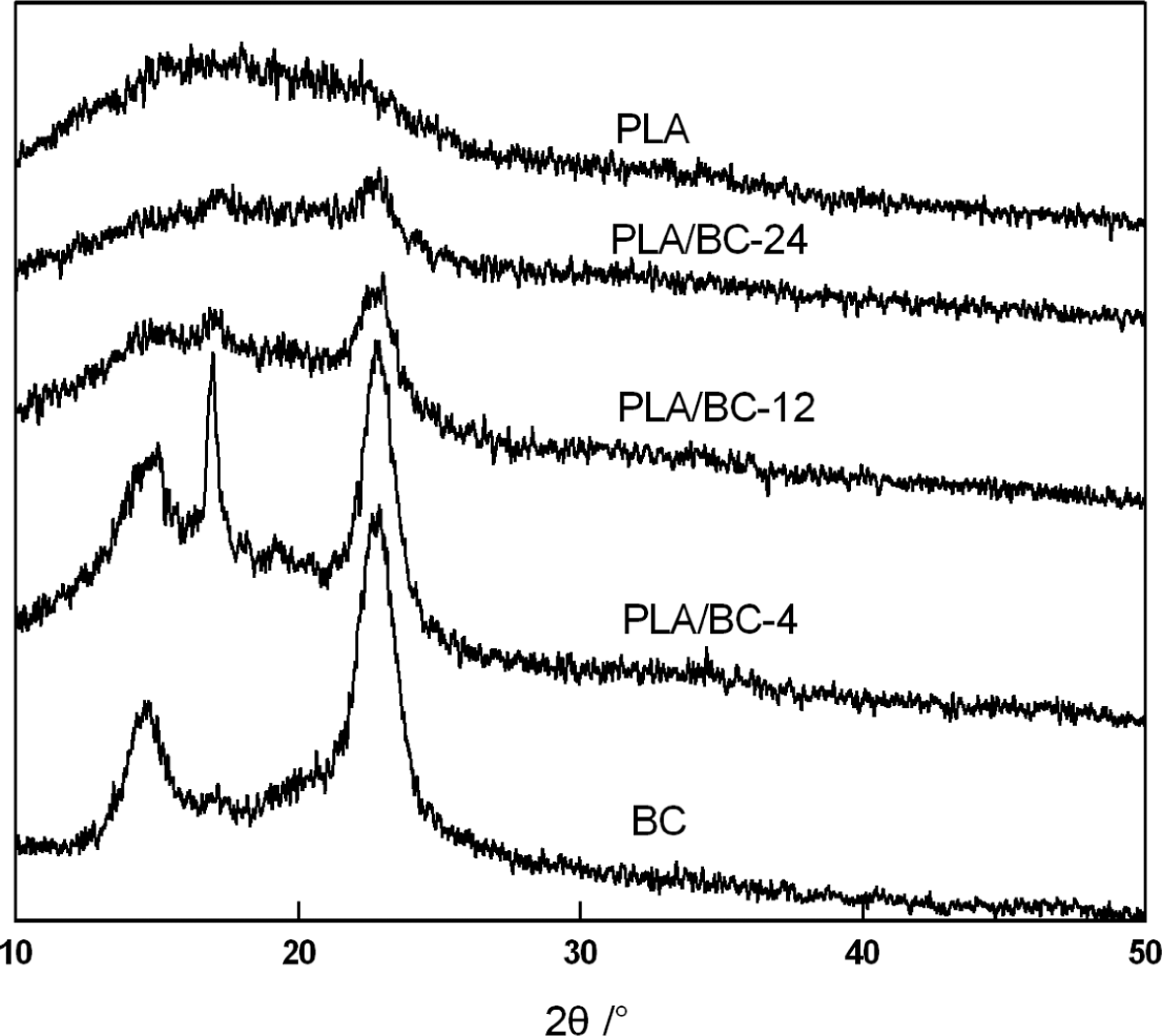
X-ray diffraction (XRD) of pure bacterial cellulose (BC), poly(lactic acid) (PLA) and acetylated BC/PLA composites.
Nonisothermal crystallization and melting behavior
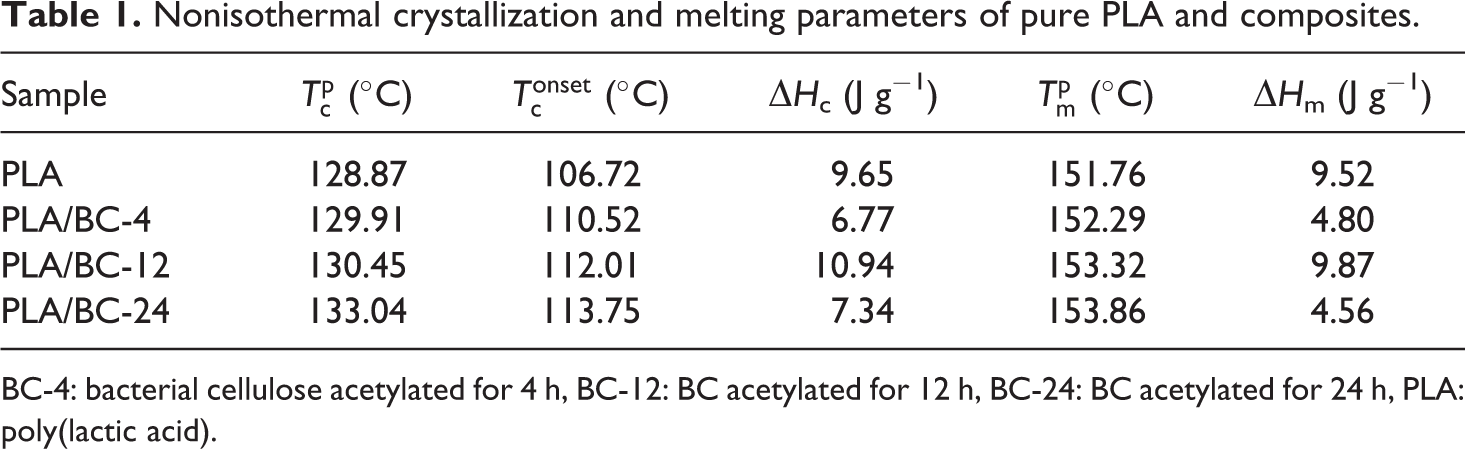
Figure 3 illustrates the DSC crystallization and melting curves of pure PLA and composites, and the corresponding data are listed in Table 1, in which the crystallization enthalpy (▵H
c) and melting enthalpy (▵H
m) were normalized by the weight percentage of PLA. It can be seen that the crystallization temperatures (
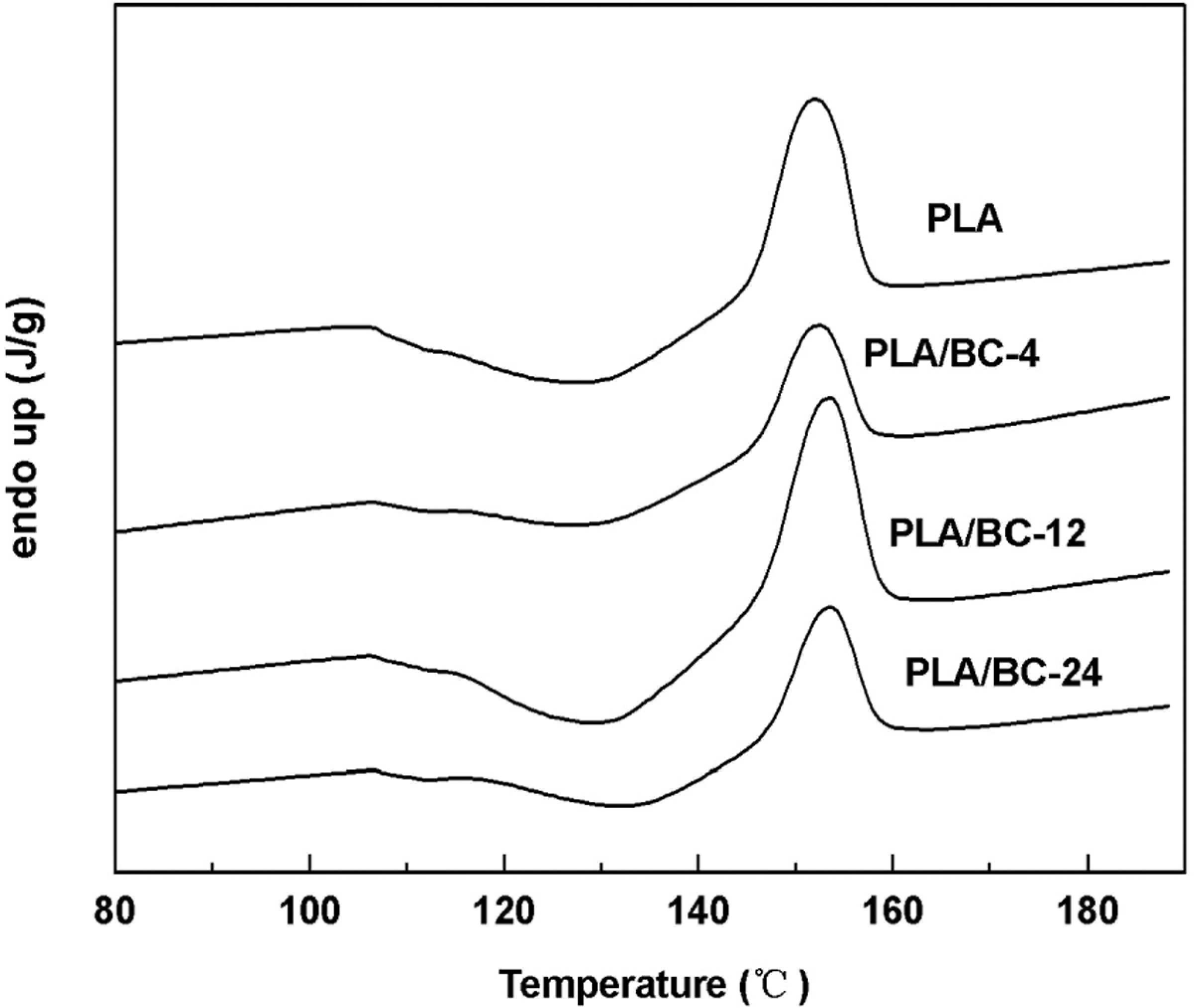
Differential scanning calorimetry (DSC) crystallization and melting thermographs of poly(lactic acid) (PLA) and its composites.
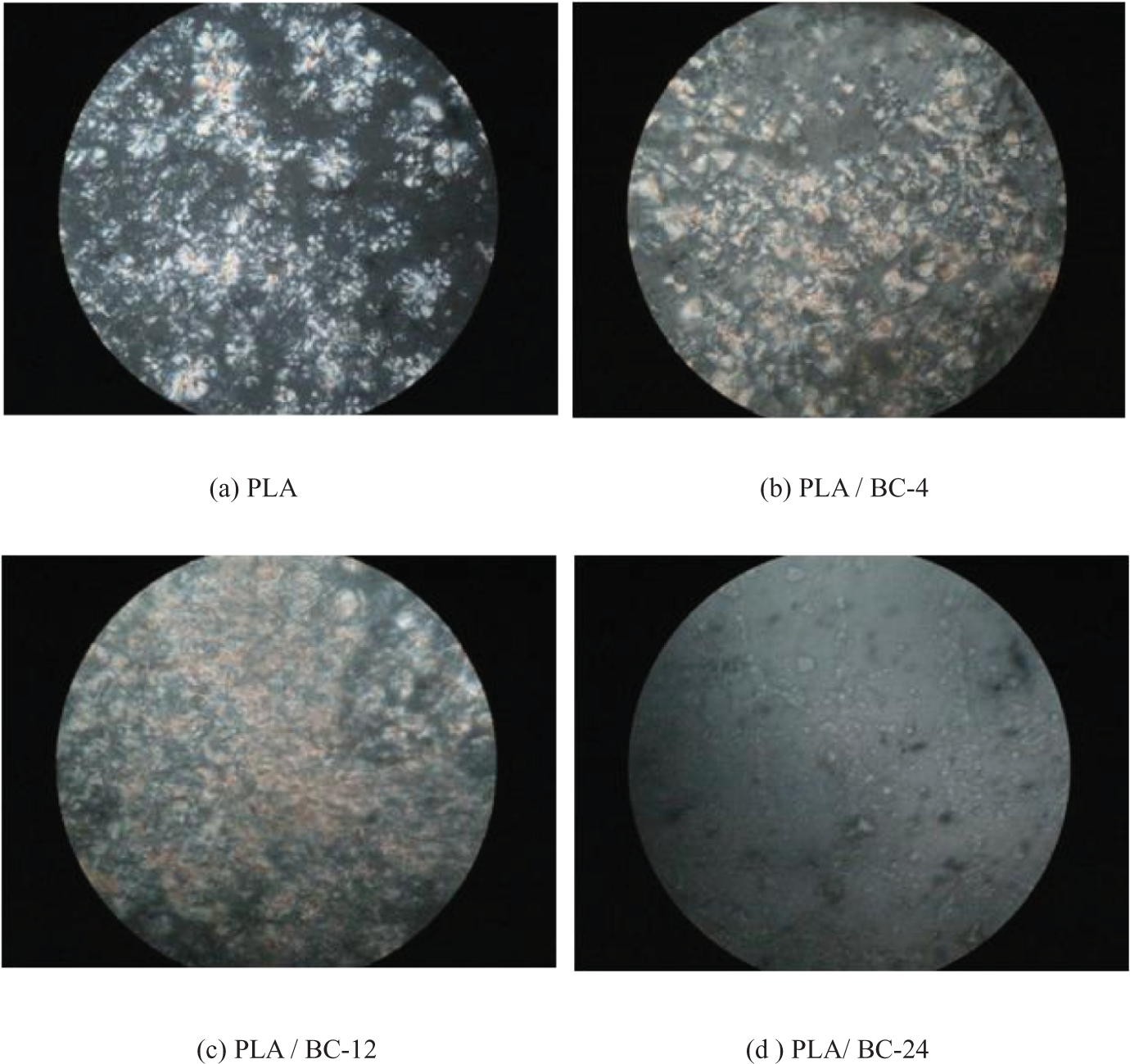
The polarized optical microscope (POM) pictures of poly(lactic acid) (PLA) and its composites. (a) PLA, (b) PLA/bacterial cellulose acetylated for 4 h (BC-4), (c) PLA/BC-12 and (d) PLA/BC-24.
Nonisothermal crystallization and melting parameters of pure PLA and composites.
BC-4: bacterial cellulose acetylated for 4 h, BC-12: BC acetylated for 12 h, BC-24: BC acetylated for 24 h, PLA: poly(lactic acid).
Isothermal crystallization kinetics
The Avrami equation 22 below is widely used to describe the isothermal crystallization processes in polymers:

Where Xt is the volume crystallinity at time t, K is the overall kinetic rate constant and n is the Avrami exponent which depends on the nucleation and growth mechanism of the crystal.
In general, the Avrami equation is often converted into the traditional linear form:

In our experiment, the so-called Avrami plots log [−ln(1 − Xt )]. versus log t were computed to attain the values of K and n.
According to Hoffman model, 23 spherulite growth rate G can be expressed as follows:

The spherulite growth rate G can be taken as 1/t 1/2 and the logarithmic form of Hoffman equation can be expressed as follows:

Where U* is the activation energy for transportation of segments to the crystallization site and is equal to 6280 J mol−1 for PLA
24
; Kg is the nucleation constant; R is the gas constant and is equal to 8.314 J K mol; T
∞ is the hypothetical temperature where all motions associated with viscous flow ceases and is equal to T
g − 30 K = 300 K for PLA; ▵T is undercooling
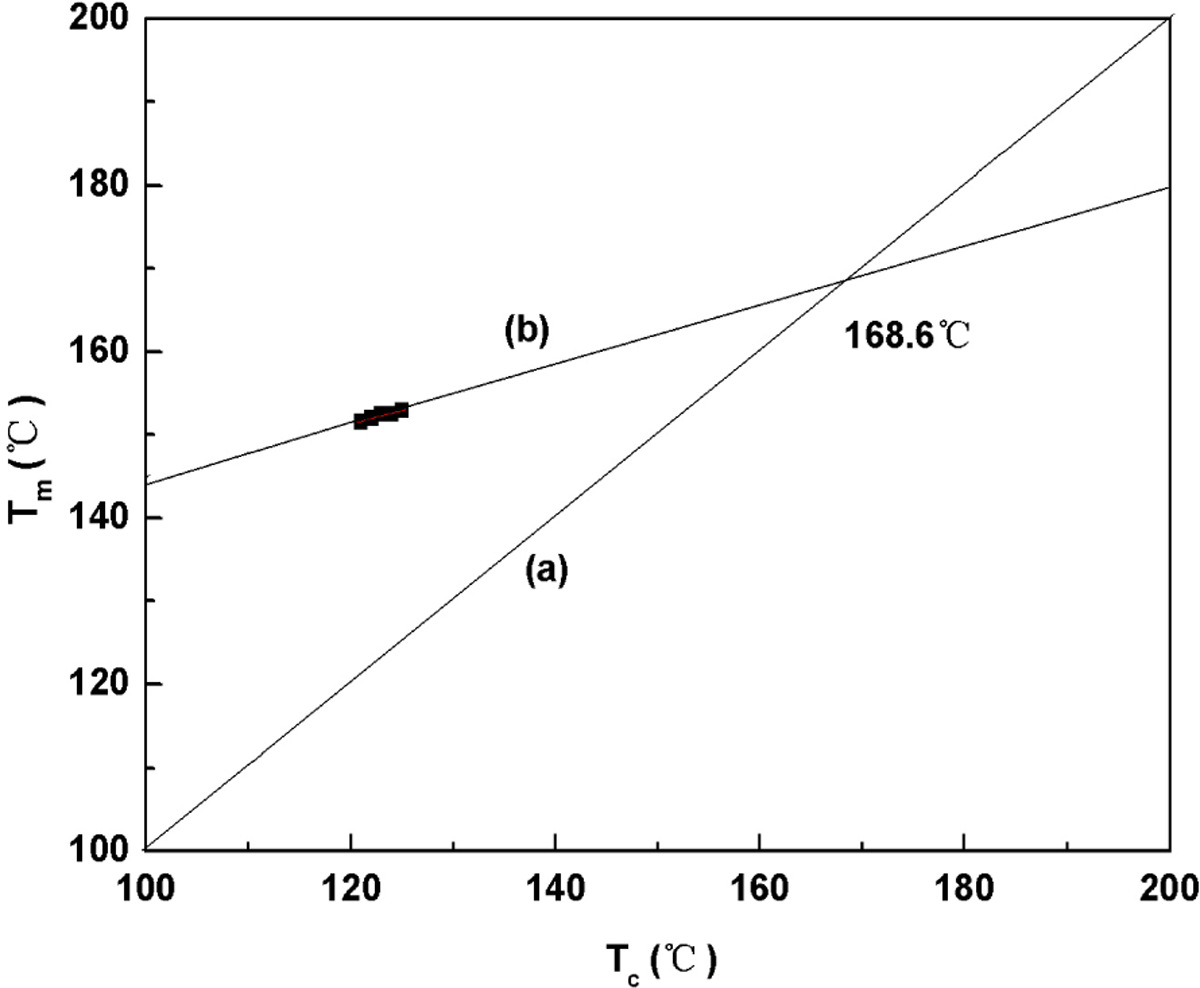
Determination of equilibrium melting point by Hoffman-Weeks equation (a) curve of T m = T c; (b) linear fit curve of T m corresponding to each T c.
The folding free energy can be obtained according to the following equation:


where b 0 is the layer thickness and is equal to 5.17 × 10⁻¹⁰ m for PLA, 25 σ is the lateral surface free energy and is equal to 1.2 × 10⁻² J m−2 for PLA, 26 σ e is the folding surface free energy, ▵H is the enthalpy of fusion and is equal to 1.11 × 10⁸ J m−3 for PLA, 27 and k is the Boltzmann constant and is equal to 1.38 × 10⁻²³ J K−1.
Kg value was obtained as the curve slope of ln(t 1/2)−1 + U*/R(T c − T ∞) versus 1/T c ΔTf .
According to the theoretical consideration by Hoffman and Weeks, the equilibrium melting point temperature can be obtained by the intersection of the resulting straight line with the line T m = T c, and the dependence of T m on T c is given by

Where
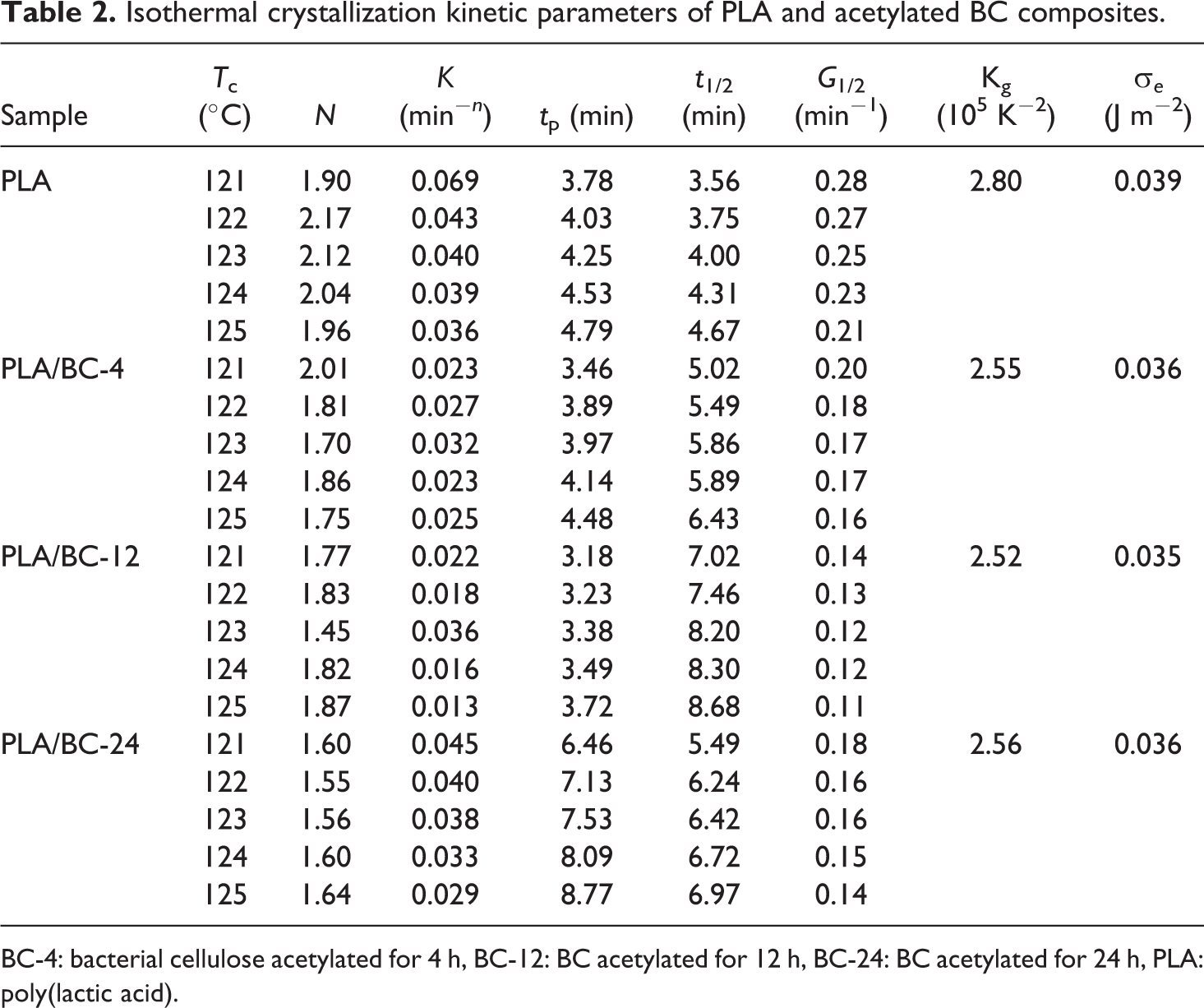
From equations 1–4, the isothermal crystallization kinetic plots of PLA and acetylated BC composites (seen in Figure 6 –9) were obtained. Moreover, a linearity was shown using Avrami and Hoffman method, suggesting that the above two methods may provide a satisfactory description of the composites in this study. The isothermal crystallization kinetic parameters of all specimens were listed in Table 2. It can be seen that pure PLA gave a value of about 1.90 < n < 2.17, suggesting a two-dimensional, circular, diffusion-controlled growth of nucleation at these temperature range. The n values of PLA/BC-4, PLA/BC-12 and PLA/BC-24 composites also ranged from 1.45 to 2.01, which indicate that acetylated BC would influence the nucleation form and the crystalline growth form of PLA to some extent at the isothermal crystallization condition. The decrease in Avrami exponent n indicated that the crystal growth of PLA was from two-dimension to one-dimension. With the increase in isothermal crystallization temperatures, the overall crystallization rate K reduced and half crystallization time t 1/2 increased in all specimens. This may be due to the fact that at high crystallization temperatures, the thermal motion of macromolecular segments became intense, which was against the formation of nuclei and the growth of crystalline. At the same crystallization temperature, the K values are listed as follows from high to low: PLA > PLA/BC-24 > PLA/BC-4 > PLA/BC-12, while the crystallization peak time t p is listed as follows from high to low: PLA/BC-24 > PLA > PLA/BC-4 > PLA/BC-12, indicating that acetylated time of 12 h was favorable for the formation of nuclei and the growth of crystalline as well as accelerated the crystallization rate of PLA. The heterogeneous nucleation effect of PLA matrix composites at isothermal crystallization condition could be embodied by the nucleation constant Kg and the folding surface free energy σ e . The Kg of all specimens was ranked as PLA > PLA/BC-24 > PLA/BC-4 > PLA/BC-12, and the σ e was also ranked in the same order. The smaller the Kg and σ e , the easier the nuclei formation would be. Acetylated BC reduced the crystallization folding surface free energy of PLA composites; hence, it was beneficial to the isothermal crystallization of PLA. Nuclei did not form due to the rapid cooling during isothermal cold crystallization process. Isothermal crystallization process was controlled by crystal nucleation and growth. Crystal nucleation played a crucial part in the first stage of isothermal crystallization process. Acetylated BC was quite helpful in the formation of orderly PLA nucleus so that the nucleation constant Kg and the folding surface free energy σ e all decreased compared with the pure PLA. However, crystallization process was controlled by crystal growth at the later stage. Crystal growth was confined to the nanometer region and surface functional groups of acetylated BC, which resulted in the increase of half crystallization time t 1/2. For the PLA/BC-24 sample, due to a higher degree of acetylation, more functional groups had serious limits on the formation of nuclei. Crystallization peak time t p and half crystallization time t 1/2 increased at the same time. Figure 7, Figure 8.
Isothermal crystallization kinetic parameters of PLA and acetylated BC composites.
BC-4: bacterial cellulose acetylated for 4 h, BC-12: BC acetylated for 12 h, BC-24: BC acetylated for 24 h, PLA: poly(lactic acid).
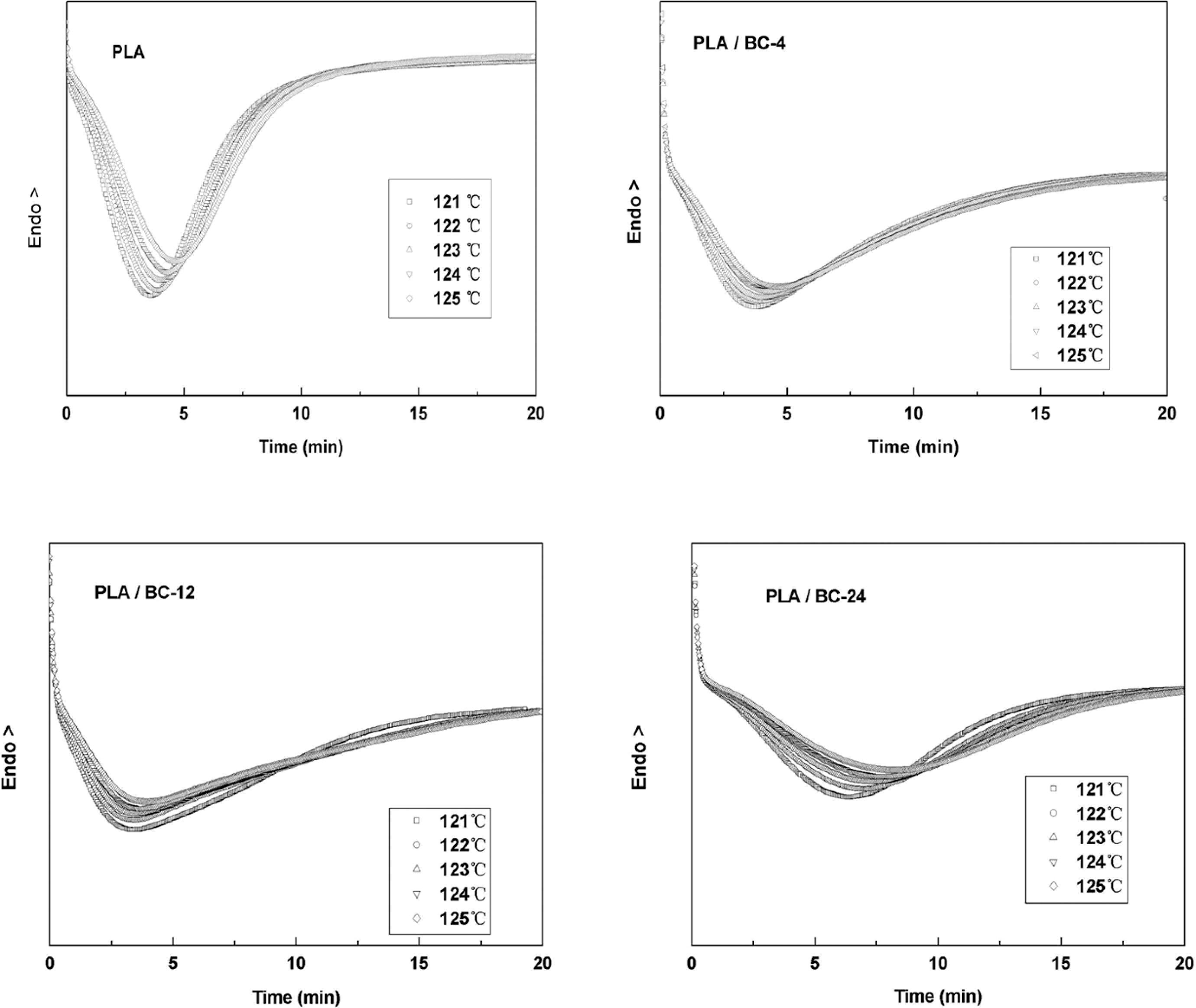
Thermal flow curves of poly(lactic acid) (PLA) and acetylated bacterial cellulose (BC) composites of isothermal crystallization under different crystallization temperature.
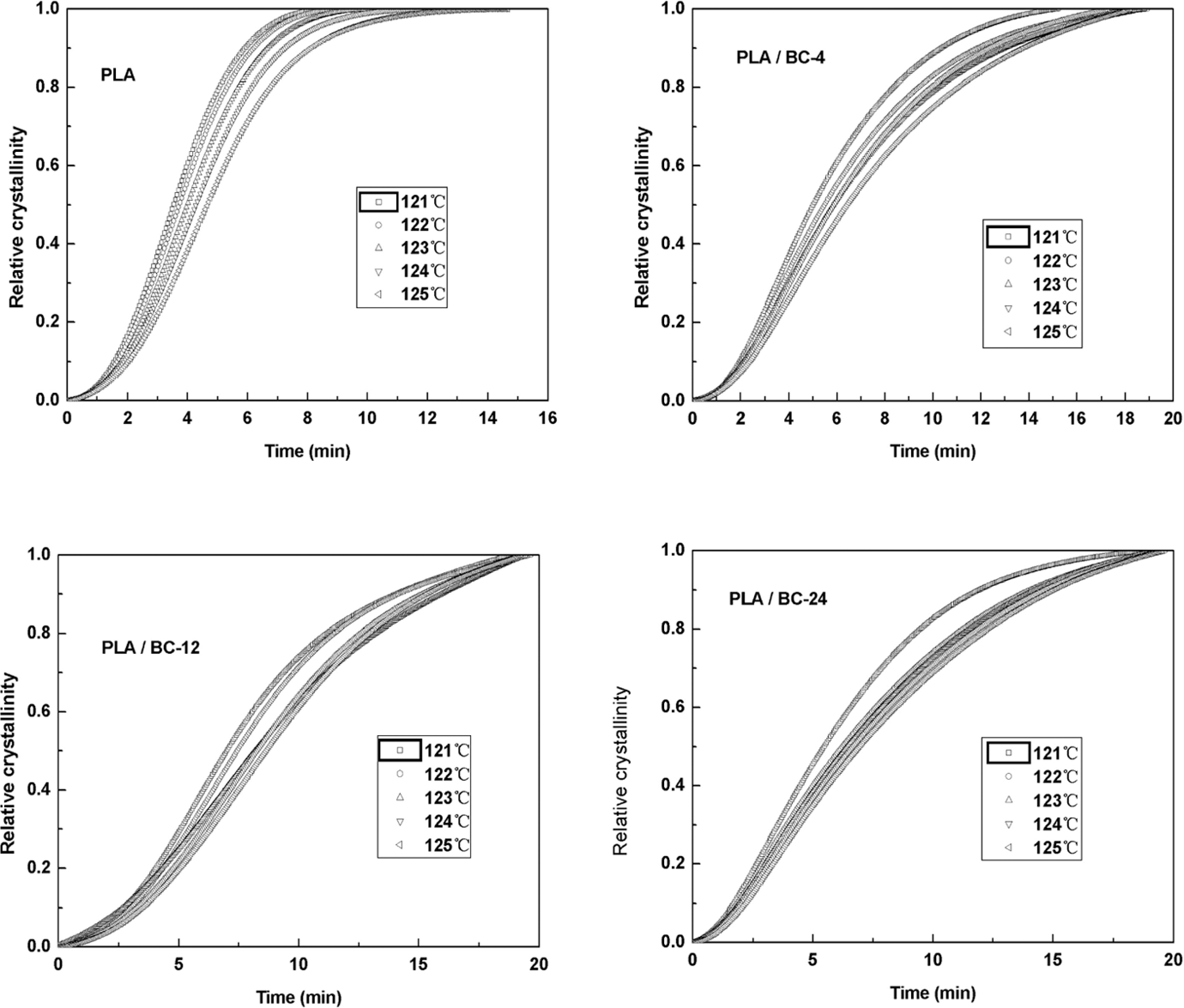
Relative crystallinity versus crystallization time curves of poly(lactic acid) (PLA) and acetylated bacterial cellulose (BC) composites of isothermal crystallization under different crystallization temperature.
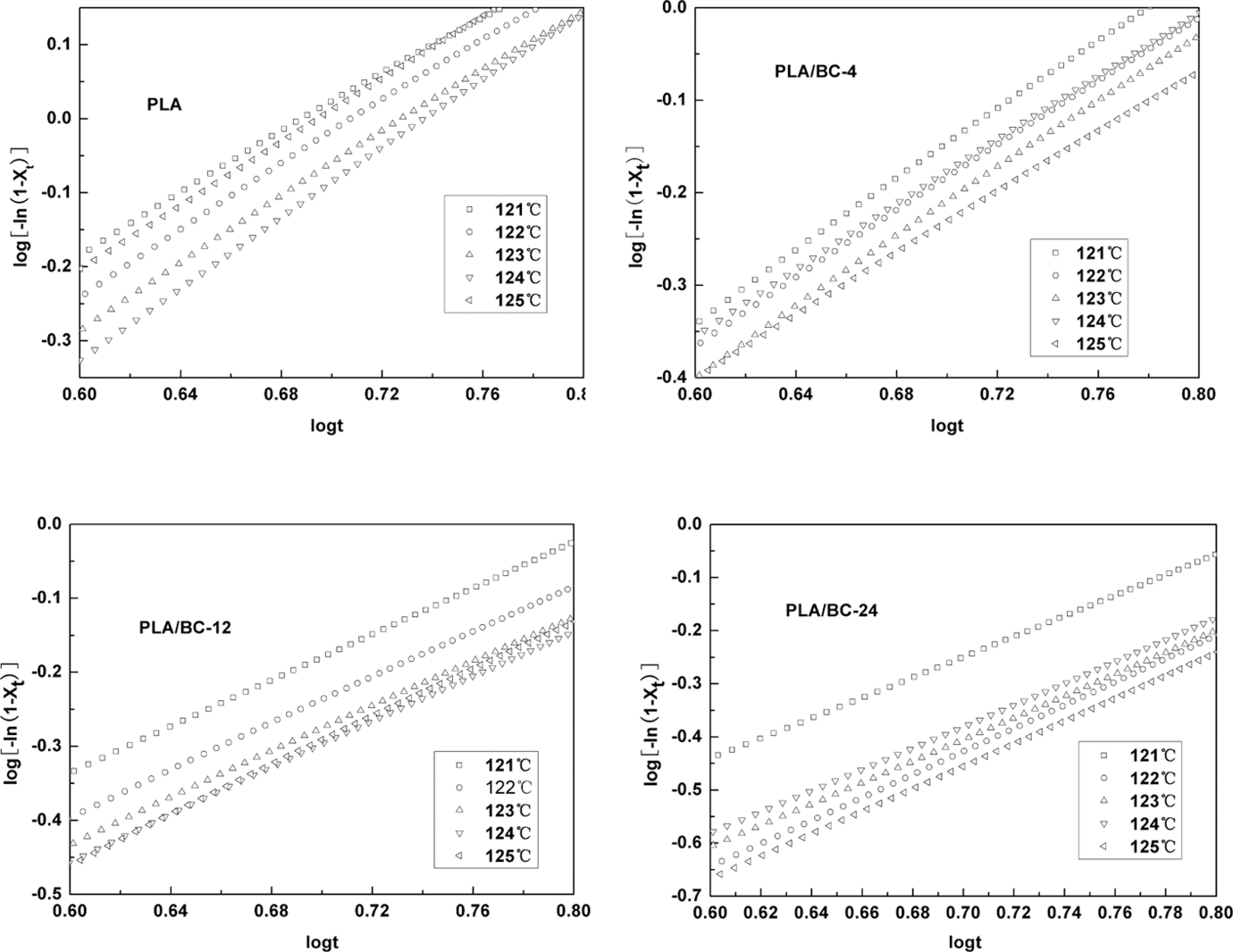
Plots of log[−ln(1 − X t)] versus log t for isothermal crystallization.
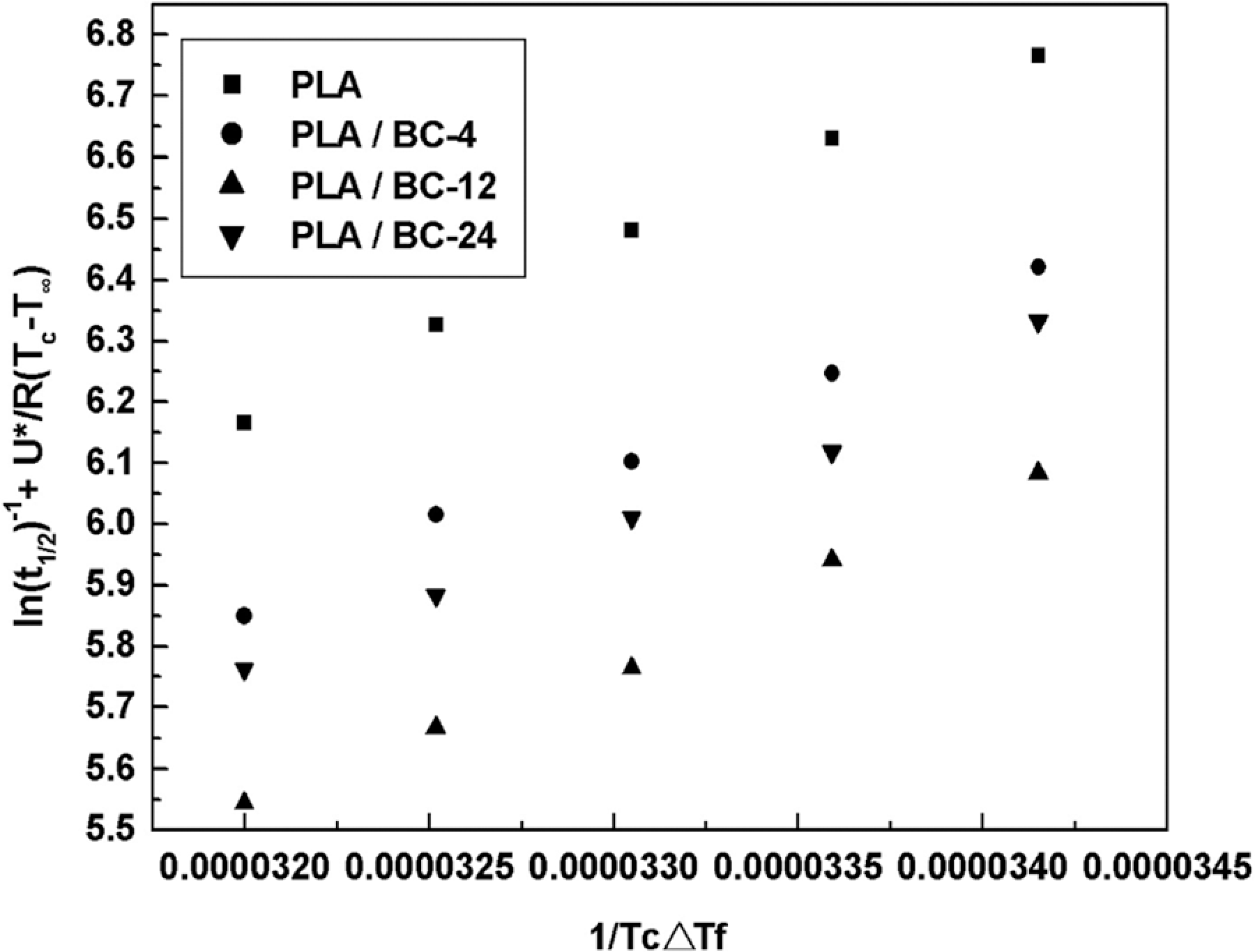
Plots of ln(t 1/2)−1 + U*/R(T c − T ∞) versus 1/T c▵Tf for different composites.
Polarization microscope observation
Figure 4 shows the polarized optical micrographs of PLA and PLA/acetylated BC composite film samples, which were prepared by cooling of the melted state and annealing at 50°C for a 3-h period under cross-polarizing filters. It can be clearly observed that the amount of spherulites increased gradually in the nonisothermal annealing process. However, the size of spherulites is very small in contrast to that of the samples after isothermal melt-crystallization reported by Okamoto and coworkers. 28 The polarized optical micrograph of PLA showed a Maltese cross pattern (Figure 4a), while granular crystals were observed for PLA/BC-4 (Figure 4b) and PLA/BC-12 (Figure 4c). The confined crystallization of acetylated BC in PLA/acetylated BC composite might cause small granular spherulites. When the acetylated time became longer the crystal size decreased. So the sperulites of PLA were not clearly observed at the acetylated time of 24 h due to its confined crystal nuclei and growth.
Conclusions
The isothermal crystallization kinetics of PLA and acetylated BC were studied by DSC. Three acetylated time of BC were blended with PLA. Acetylated BC had hindering crystallization effect on PLA by increasing the crystallization temperatures in the PLA and acetylated BC composites. The overall crystallization rate followed the Avrami equation with the exponent n around 2. The nucleation parameter was determined by Lauritzen-Hoffman equation. It can be concluded that activation energy and folding surface free energy of PLA were reduced in PLA and acetylated BC composites. The results of POM pictures were in accordance with the crystallization and melting behavior. Crystal size is decreased when the acetylated time is increased. As the time course of acetylation extends, the crystallization process of PLA was confined due to the better compatibility between PLA and acetylated BC.
Footnotes
Funding
This work was supported by China Guangdong scientific and technological project (No 2010B080701060) and Guangdong natural science fund (No. 8451063201000041).