



Abstract
This work is based on studying the alternating current (AC) electrical properties of poly (ethylene oxide) (PEO) films doped with ultrafine calcium carbonate (CaCO3). The composite films with 80 μm thickness were prepared by casting method using the solution containing PEO resin, CaCO3, and water, forming a polymeric fluid system. The impedance was measured in the frequency range from 1 to 50 kHz at different temperatures. The concentrations of CaCO3 are 0, 1, 4, 6, and 10% by weight. From impedance results, it was found that the AC conductivity decreases with increasing dopant concentration and increases with increasing temperature. The values of the dielectric constant and the dielectric loss decrease with increasing frequency. The calculated activation energy and the relaxation time showed dependence on frequency and temperature. The determined values of the refractive index decrease with increasing frequency and CaCO3 concentration and increase with increasing temperature. The observed decreases in the AC-electrical quantities of the prepared thin films (fluid system) are attributed to the presence of water traces that enhance the polarization effects. The decreases in values of dielectric constants and conductivity indicate that the doped PEO system does not behave as a solid polymer electrolyte with enhanced ionic conduction.
Introduction
The properties of particulate polymer composites are strongly influenced by the nature of the interface between inorganic fillers and polymer matrices. A strong interfacial interaction between the inorganic microparticles and the polymer matrix can give rise to some unusual properties in these materials. Polymer composites have a lot of important applications and their physicochemical properties not only are desired in industrial sectors but are also very attractive for basic academic research. 1–3
Due to its low cost and easy production, poly (ethylene oxide) (PEO) polymer is often used for commercial purposes. It can also be effectively applied in the fluid transport through pipes where it helps reduce the frictional resistance. Moreover, because of its safety (PEO being nontoxic and nonionic), it can be used in cosmetic products. Many studies have shown that the physical behavior of PEO polymer depends on many factors including the filler type or structure and the method of composite preparation. Understanding the chemical and physical nature of these structural factors greatly helps to evaluate and interpret the physical processes taking place in the composite bulk. Space charge limited current can be suggested to explain the charge transfer in polymers in addition to ionic conduction. The PEO is an electrolyte polymer characterized with ionic conduction by forming molecular complexes and charge transfer between the polymer chains. 4–7
Calcium carbonate is a compound with the chemical formula CaCO3. It is a common substance found as rocks in all parts of the world and is the main component of eggshells and shells of marine organisms and snails. CaCO3 is the active ingredient in agricultural lime. It is commonly used medically as a calcium supplement or as an antacid, but its high consumption can be hazardous. CaCO3 and other layered silicates in microsize dimension have been commonly used in the preparation of high-performance microcomposites with large specific surface areas. The micrometer-sized CaCO3 is commercially available and has been used merely to reduce the cost of expensive resins. However, the improvement in the mechanical and dielectric properties of micrometer-size CaCO3-filled composites can be achieved by increasing the amount of polymer–filler interaction. 8,9
The objective of this research is to investigate the electrical and dielectrical behavior of a hybrid system composed using PEO polymer, CaCO3, and water traces, that is a fluid system. Our previous studies 5,10,11 on doping of the PEO polymer showed enhancement of the ionic conductivity and dielectric constants due to the formation of doped PEO complexes. Now the question is whether ionic conductivity enhancement can take place in this doped fluid system. The impedance spectroscopy was used in the present study to measure the alternating current (AC) conductivity, dielectric constants, and refractive index of the prepared hybrid system at low CaCO3 concentration. Impedance measurements were taken at different applied field frequency, temperature, and CaCO3 concentration.
Experimental work
Materials and doped films preparation
Composite films of PEO/CaCO3 were prepared by casting method using solutions containing PEO (average molecular weight is 300,000 g/mol) and ultrafine CaCO3 of average particle size of few microns. PEO resin and CaCO3 (dopant) were mixed and dissolved in methanol and water to form a fluid system. The solution was then stirred continuously by a rotary magnet at room temperature for few days until the mixture gives a homogeneous viscous molten appearance. The mixture was immediately casted as thin films on a glass mould (plate) and left undisturbed for few days to let the methanol and water evaporate under atmospheric pressure. The films were dried in an oven at 40°C for 2 days. The average thickness of the prepared films is about 80 μm and the filler concentrations are 0, 1, 4, 6, and 10% by weight.
Impedance measurements
LF Hewlett-Packard (HP) 4192A Impedance analyzer (USA) was used to measure the phase angle and impedance of the prepared doped films. A disk specimen was cut from each composite film and was inserted in the space of a parallel plate capacitor. A thermocouple was kept close to the test specimen and measurements were taken at 25, 35, 45, 55°C at the frequency range of 1–50 kHz). Since the melting temperature (T m) for PEO is about 60°C, no measurements were conducted at higher temperatures. 10,12
Results and discussion
Impedance and the phase angle difference between the applied voltage and current were measured at different temperatures for each doped film. Impedance (Z) values measured at different frequencies and CaCO3 concentrations at room temperature are shown in Figure 1. Generally, it can be seen that for all composite specimens, the impedance value decreases with increasing applied frequency. At lower frequencies, the impedance has high values and decreases rapidly with increasing frequency. The observed high impedance values at low frequency are mainly due to space charge and electrode polarization effects, which mean more resistive behavior of the composites. 13,14
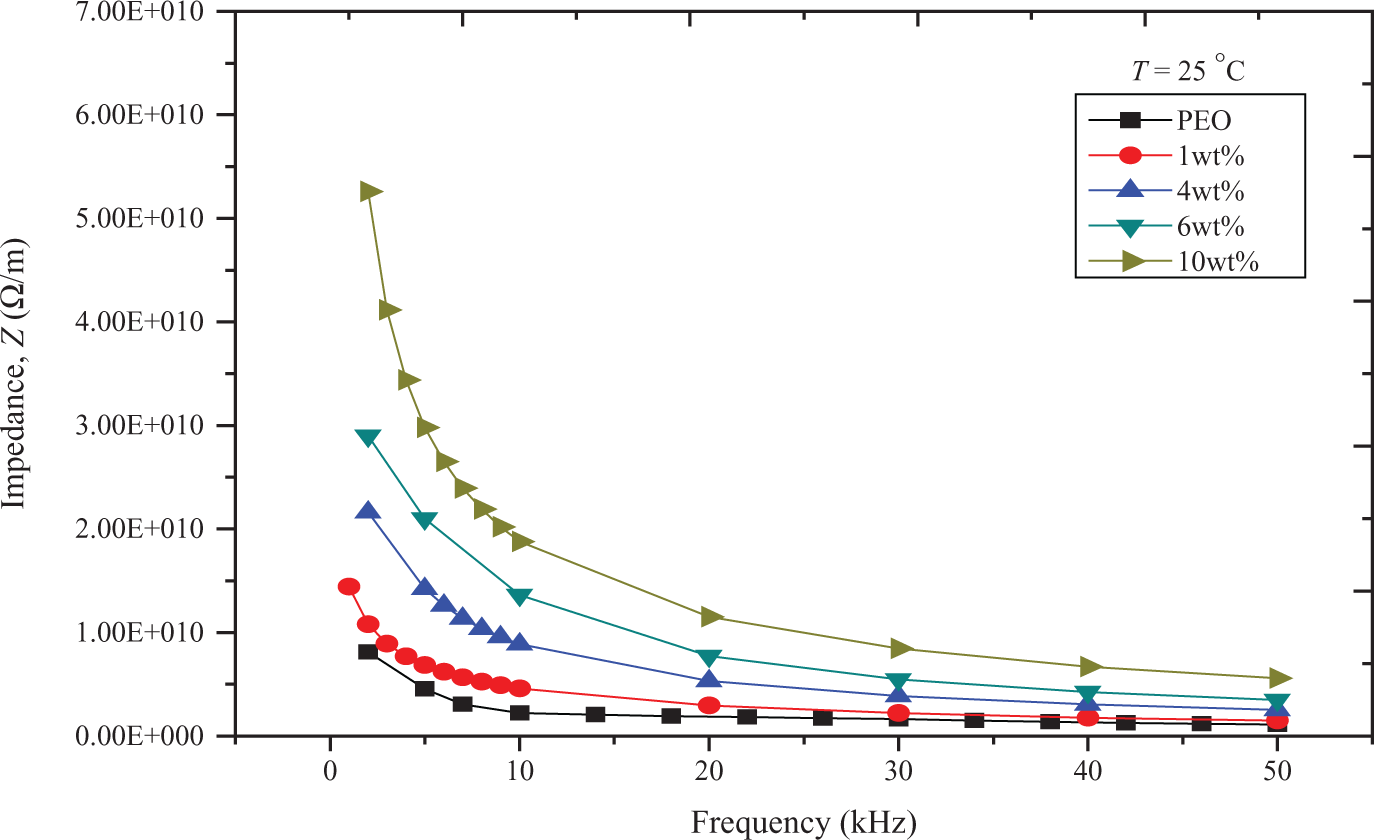
Variation in the impedance with frequency.
Cole-Cole plots are usually used as a successful tool to analyze the impedance and dielectric data of dielectric materials. 13 The constructed plots are used to characterize the dielectric behavior of the PEO-CaCO3 composites. Figure 2 represents the variation in the imaginary part of the impedance (Z i) with the real part (Z r) for films of different CaCO3 concentrations at 25°C. The Cole-Cole plots (in Figure 2) represent distorted semicircles with spikes in the low-frequency region.
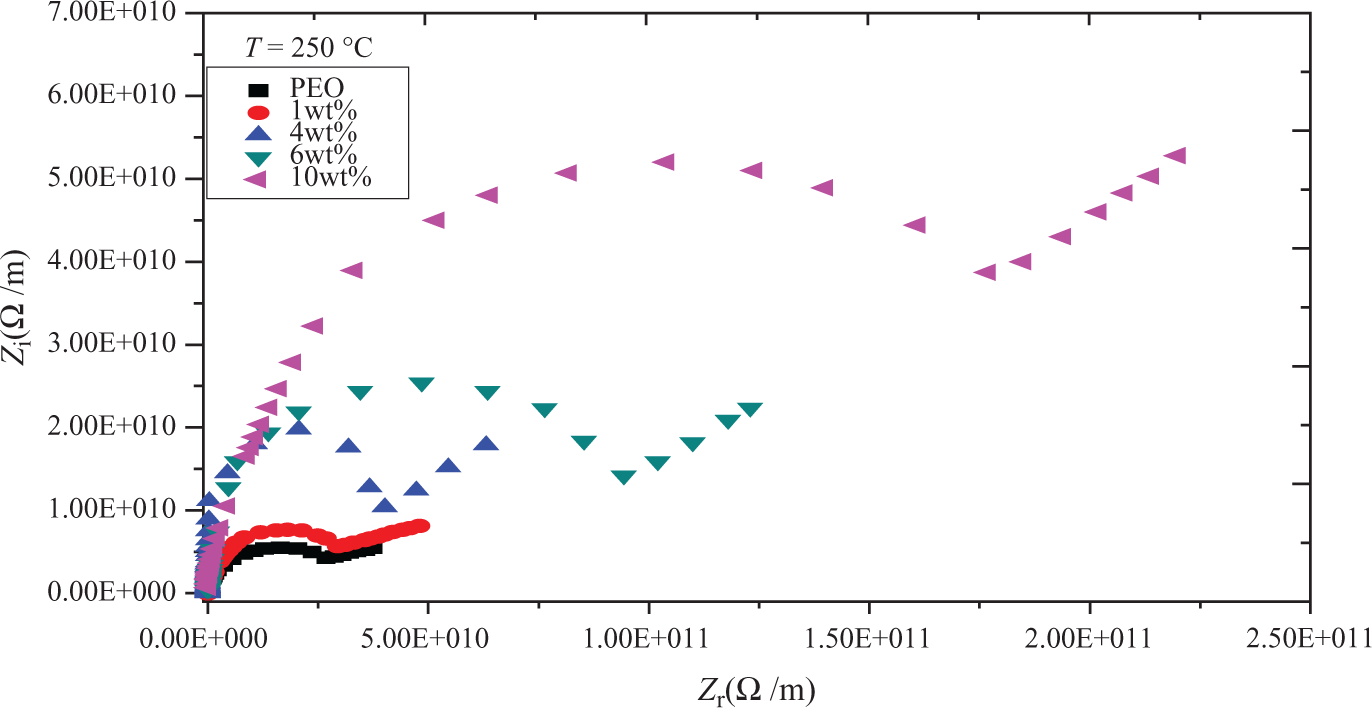
Complex impedance plots for the composites.
The ability of the polymer dipoles (permanent and induced) to orient themselves in the direction of each reversal of the alternating field affects the relaxation behavior of the composites. The dipole orientational polarization 15 which is effective at low frequencies results in high values in the dielectric constant ∊′. While at high frequencies, the polarization caused by induced dipole orientation is damped out and leads to small values of ∊′ and ∊″ as shown in Figure 3a.
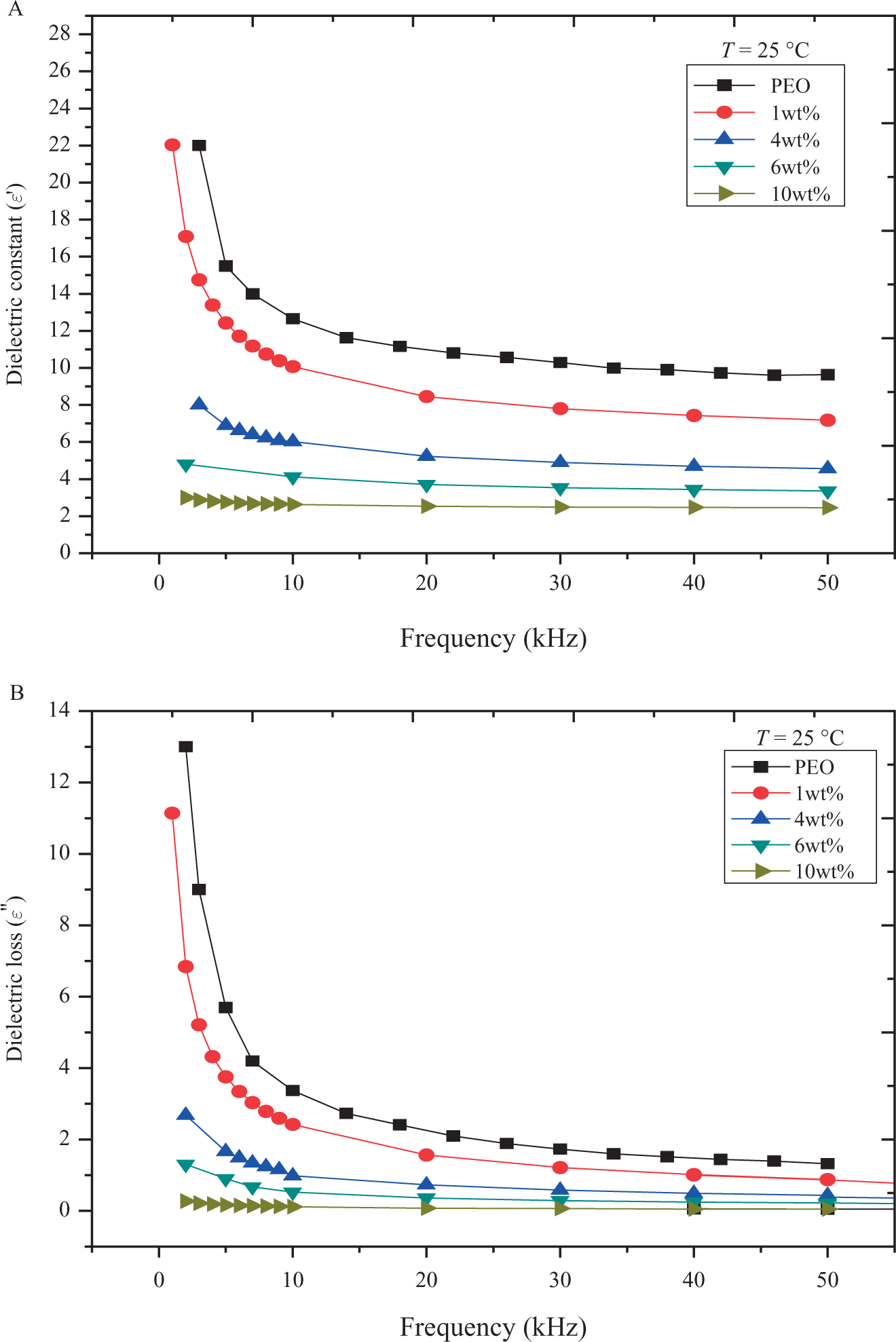
(a) Dielectric constant variation with frequency. (b) Dielectric loss variation with frequency.
The variations in the dielectric loss (∊″) with frequency for different CaCO3 concentrations are shown in Figure 3b. At low frequencies, the dispersion event is attributed to more charge carriers that lead to large losses in electrical energy. But with increasing frequency a slight decrease was observed. From the behavior of ∊′ and ∊″, one can observe a strong frequency dependence especially at low frequencies, which reflects the behavior of the polar materials. Figure 4a shows the behavior of the dielectric constant (∊′) with CaCO3 concentration at different frequencies, where the dielectric constant decreases as the filler concentration increases, that is the films tend to be more capacitive by increasing the concentration of CaCO3. 16 This behavior can be explained by considering the structural features of the prepared PEO/CaCO3 films. Lange 17 studied the behavior of the dielectric constant (∊′) for geological (sedimentry) material containing fluids such as water, methanol, and oil. Lange observed that ∊′ value is reduced by presence of particles such as quartz, silica, and sandstones, and attributed the influence of the fluid on ∊′ to some factors such as geometric effect of the filled structure, relation between volume/surface area, and interaction between the composite components. The prepared composites in this study represent a fluid system consisting of structural components: PEO matrix (∊′ = 3), CaCO3 (∊′ = 8), methanol (∊′ = 3), and water (∊′ = 78). The observed dielectric constant values of the PEO/CaCO3 composites decrease with increased concentration of CaCO3 as shown in Figure 4a. The reduction in ∊' is due to a decrease in water volume or structural component interactions. By increasing the CaCO3 concentration in the PEO matrix the surface areas of the doping particles increase, and hence the water volume decreases, which in turn reduces the value of ∊′. Also, the interactions between the fluid components hinder the electrical current transport, which lowers the dielectric constant. Similar decrease is observed in the dielectric loss (∊″) as shown in Figure 4b. 18 The presence of water and the interaction between the fluid components enhance the polarization effects which cause reduction in values of the dielectric quantities.
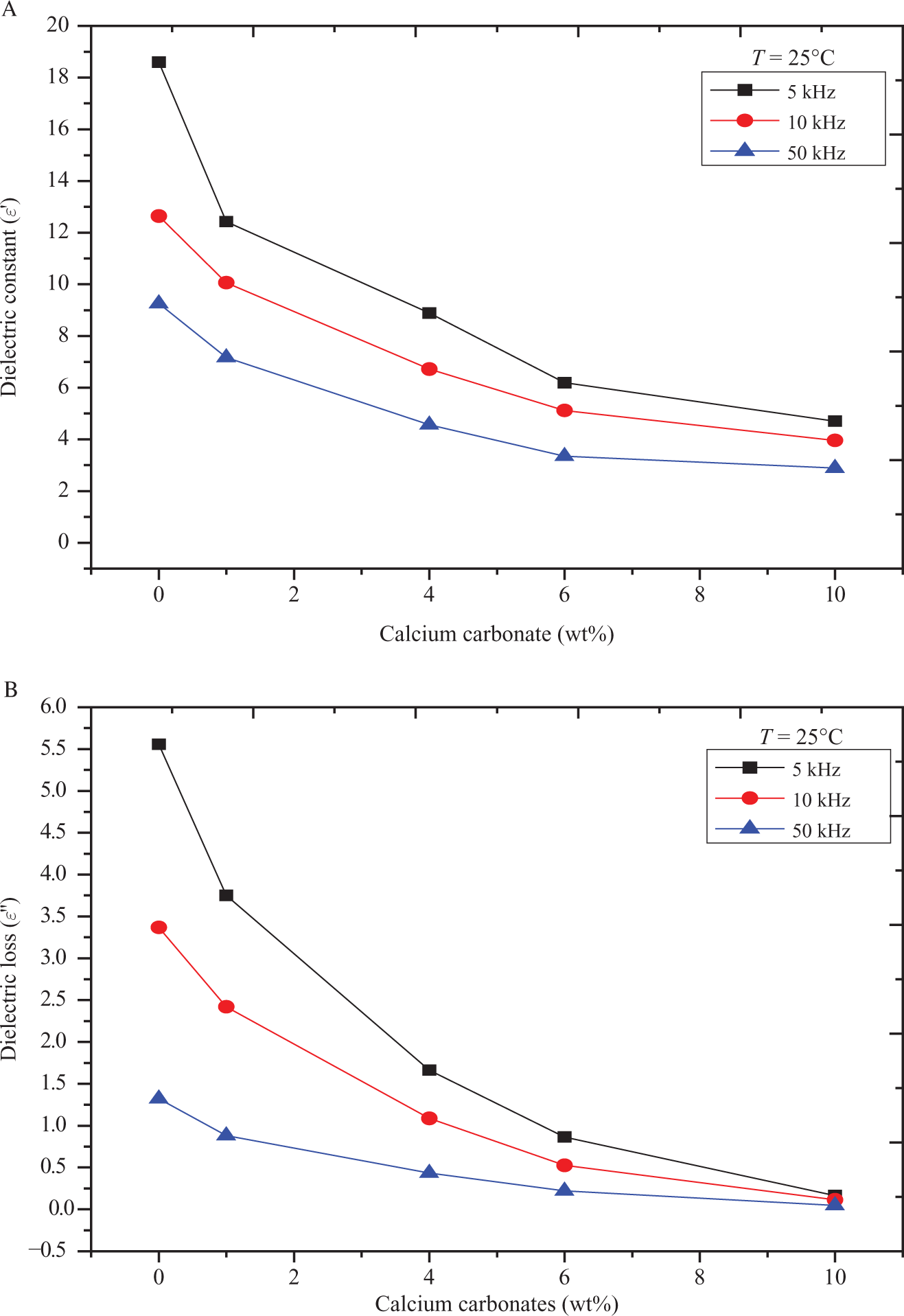
(a) Dielectric constant variation against calcium carbonate concentration. (b) Dielectric loss variation against calcium carbonate concentration.
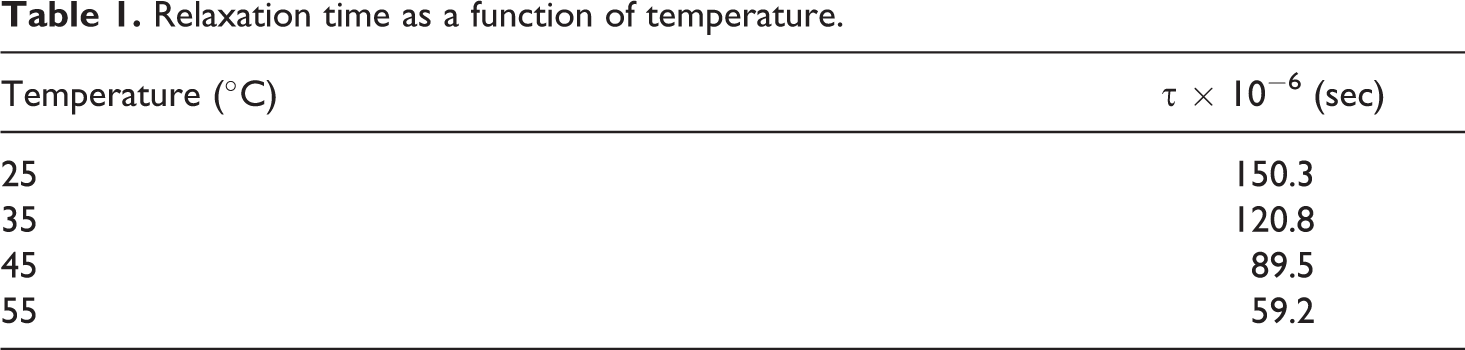
The AC conductivity values were calculated from the relation σAC = 2π∊o∊″). Figure 5 shows that the AC conductivity of the PEO doped thin films decreases continuously with increasing CaCO3 concentration. This observed decrease in σAC value may be attributed to those interactions which lead to space charge polarization in the fluid system. The temperature dependence of the dielectric constant (∊′) for 10% (by weight) CaCO3 film measured at different frequencies is given in Figure 6. The dielectric constant increases but with faster rate only at higher temperatures. This may be attributed to the ionic mobility that increases as the temperature increases and to facilitate PEO complexes when temperature rises. Table 1 shows that the relaxation time (τ), calculated from the intersection of curves at ∊′ and ∊″ as a function of frequency, decreases with increasing temperature. 10
Relaxation time as a function of temperature.
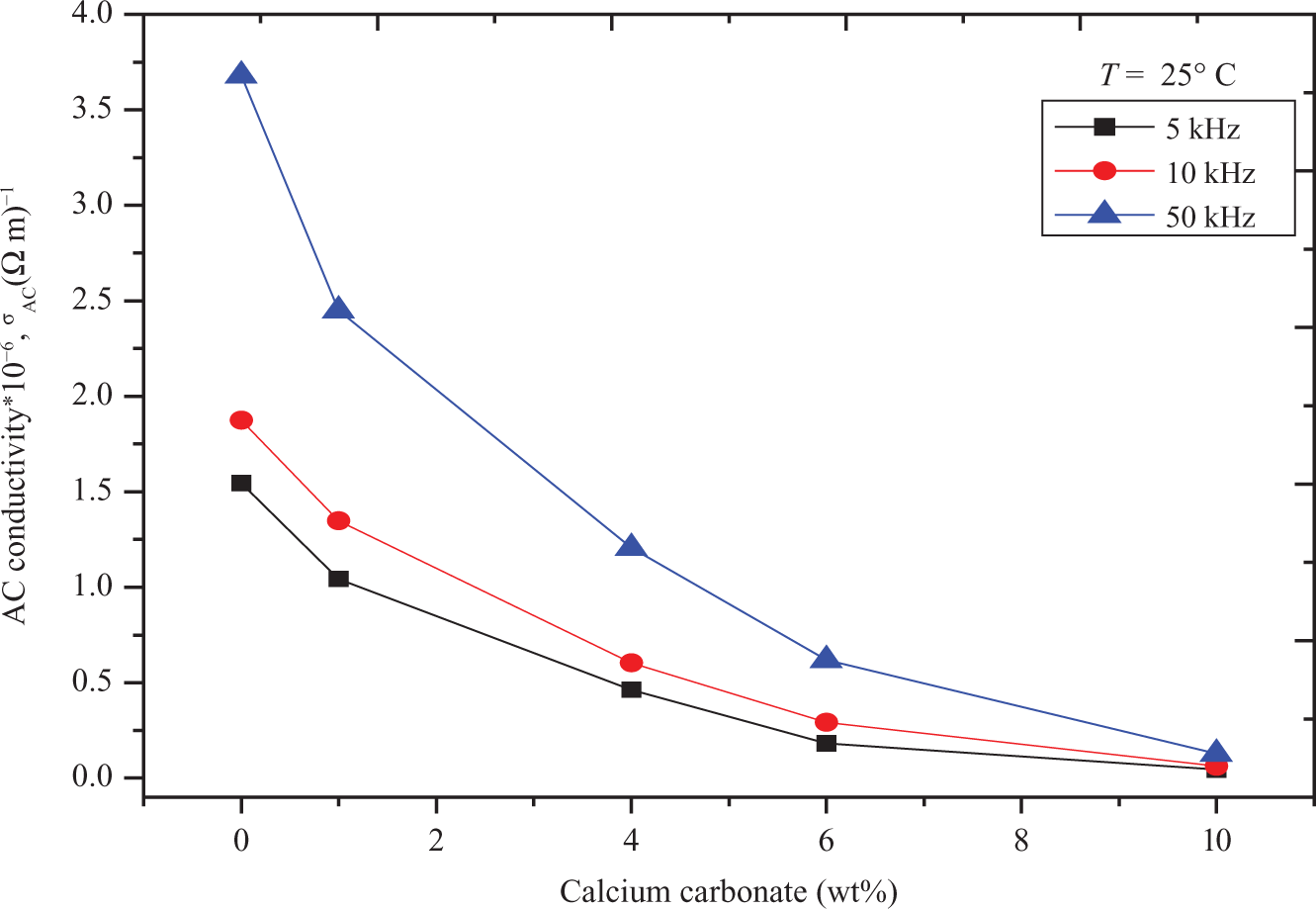
The alternating current (AC) conductivity variation with calcium carbonate concentration.
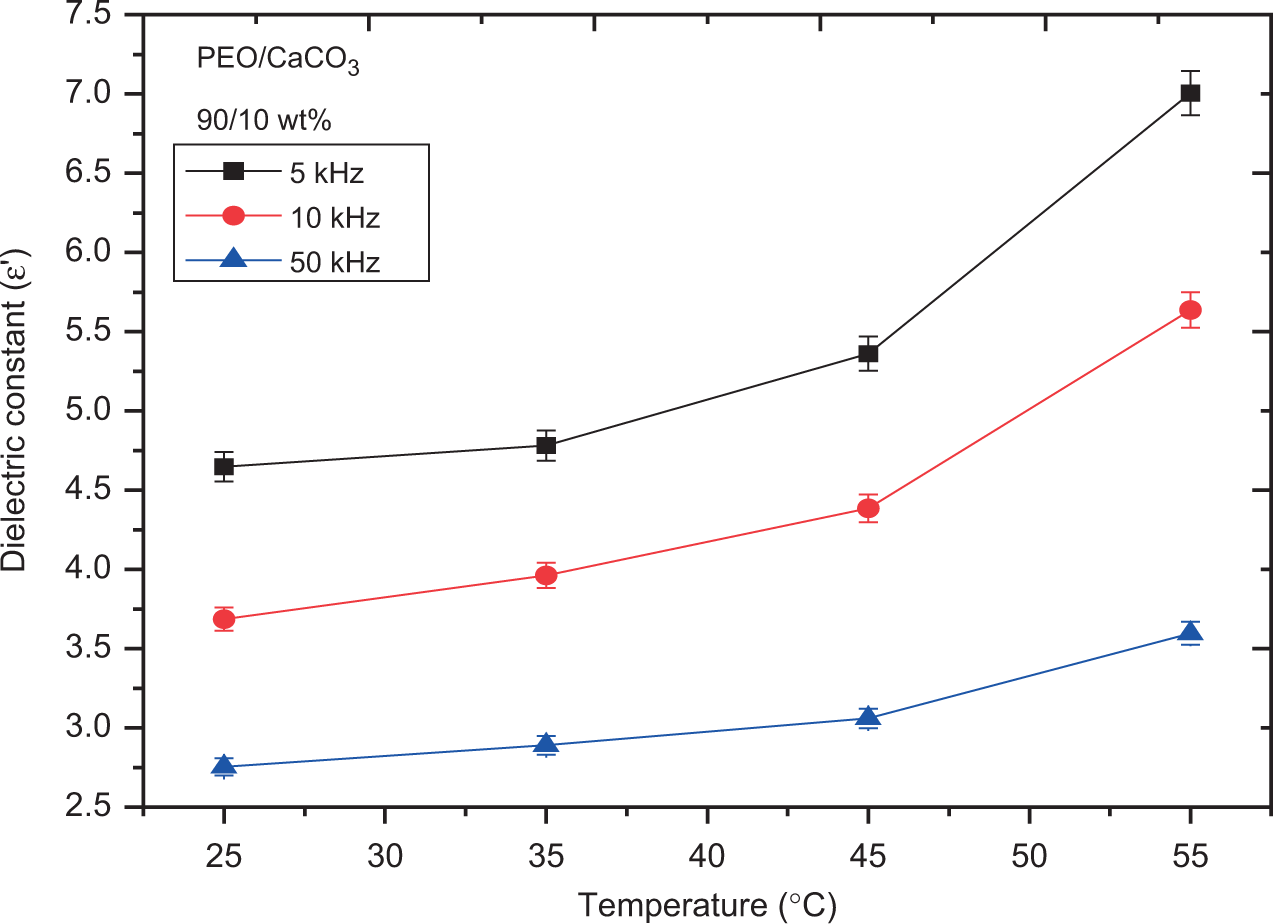
Variation in the dielectric constant with temperature.
Figure 7 shows the dependence of AC conductivity (σAC) on temperature at different frequencies. It was found that the conductivity increases with increasing temperature, and this is due to the activation of electrons and impurities that increases with increasing temperature, and ionic and molecular mobility of PEO stimulated at high temperatures, that is the flow of electrons or charged ions is established with high relative motion between the polymer chains, thus leading to higher electrical conduction.
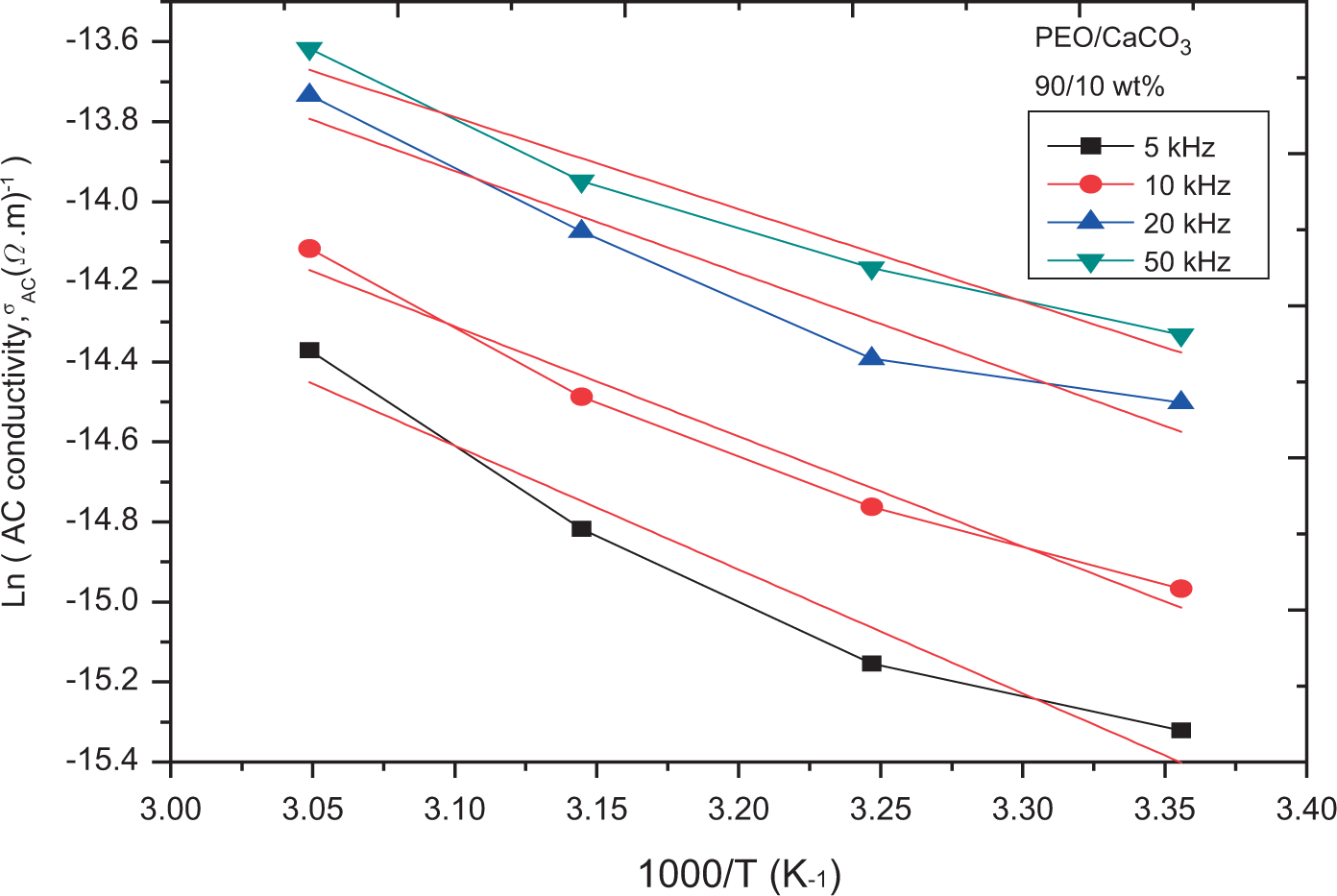
Natural logarithm of the alternating current (AC) conductivity versus (1000/T) for different frequencies.
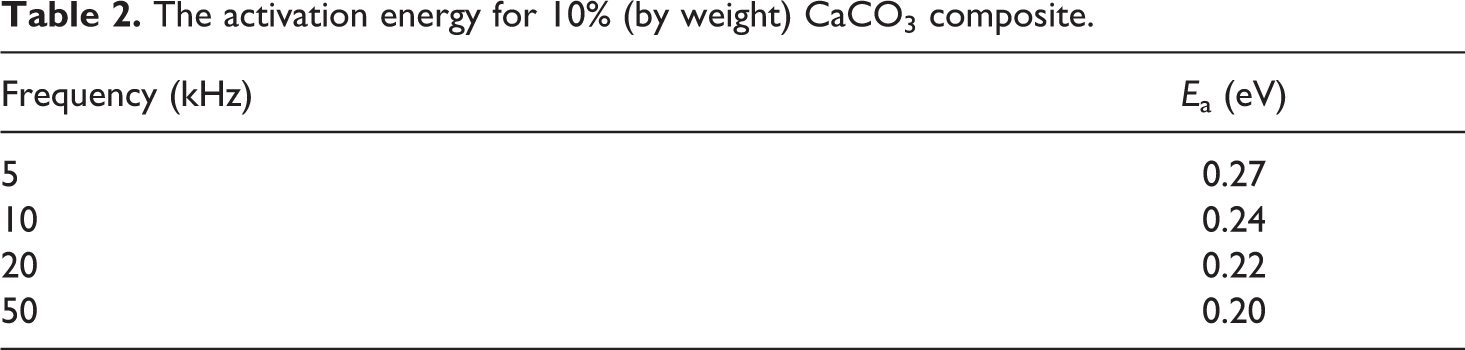
The values of the activation energy of a thermally activated process (E a) were calculated from the slopes of the approximated lines obtained by plotting the natural logarithm of the conductivity versus (1000/T) as shown in Figure 7 at different frequencies. Using the Arrhenius type equation (σ = σ0 exp(−E a/kT), E a values were determined from the slopes of Figure 7. Table 2 shows that E a decreases with increasing frequency, which indicates that the composite becomes more conductive with increasing temperature.
The activation energy for 10% (by weight) CaCO3 composite.
The relationship between the electrical and optical quantities of a dielectric material can be used to calculate the refractive index of the doped films at different frequencies and temperatures using Maxwell’s equations 19,20 :

where, k is the extinction coefficient and n is the refractive index of the material.
Figure 8 shows the dispersion behavior of the refractive index (n) as a function of applied field frequency, where n decreases rapidly at low frequencies. The refractive index decreases from 4 for pure PEO to 1.7 for the 10% (by weight) composite, observed at frequency 5 kHz. Figure 9 shows that the refractive index increases as the temperature increases. Figure 10 shows the variation in the extinction coefficient (k) with frequency at different CaCO3 concentration, where it decreases with the applied frequency and the dopant content.
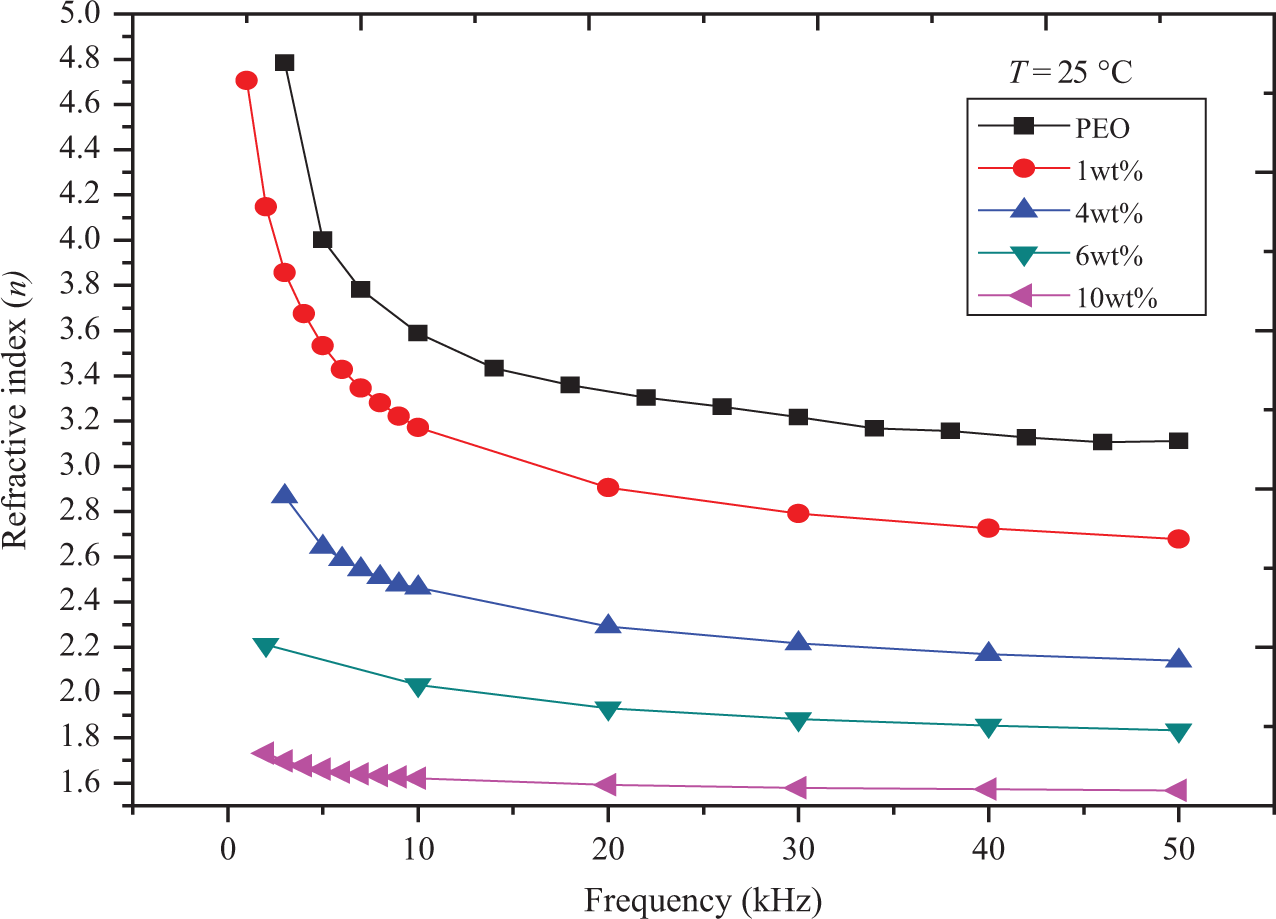
Dispersion of the refractive index with frequency.
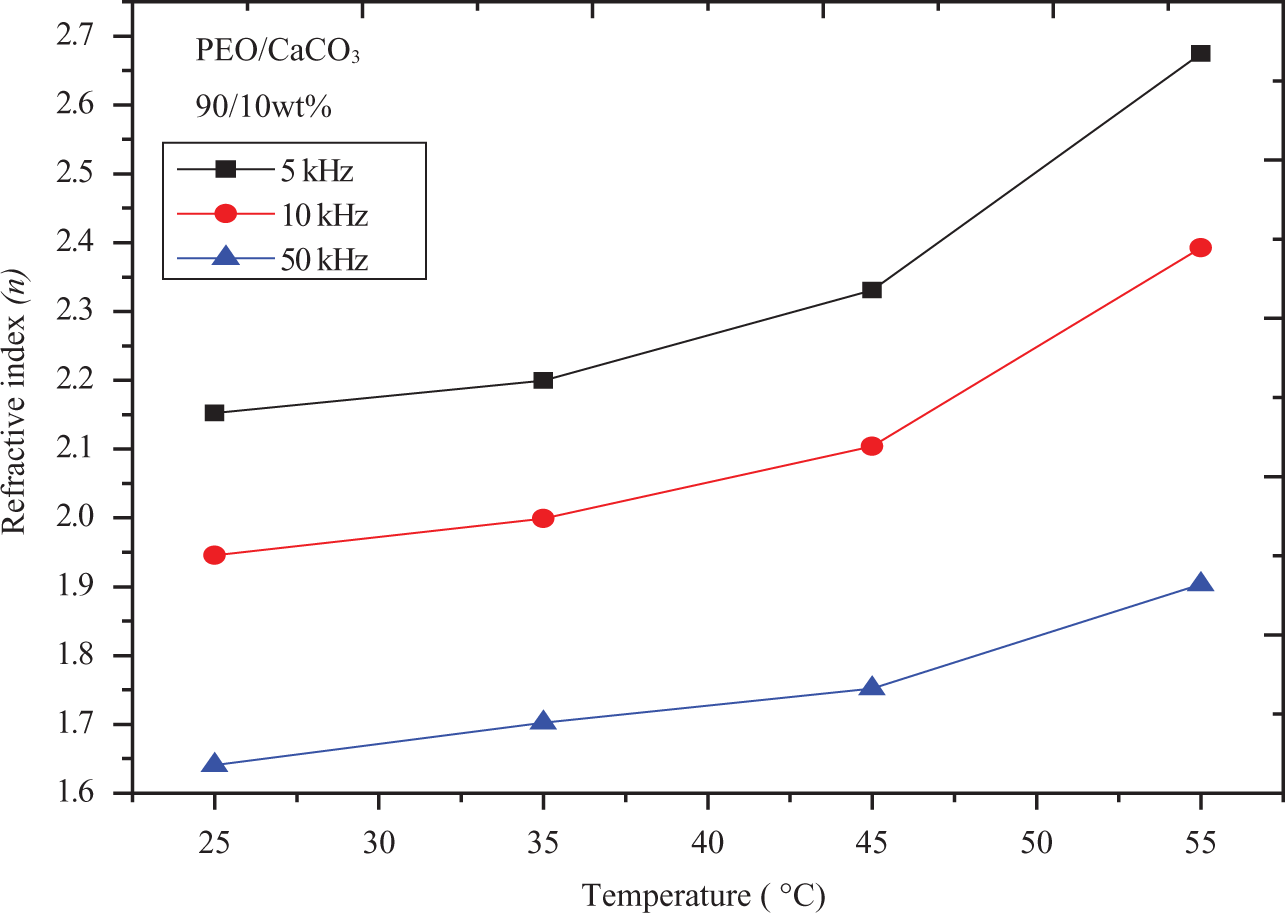
Variation in the refractive index with temperature.
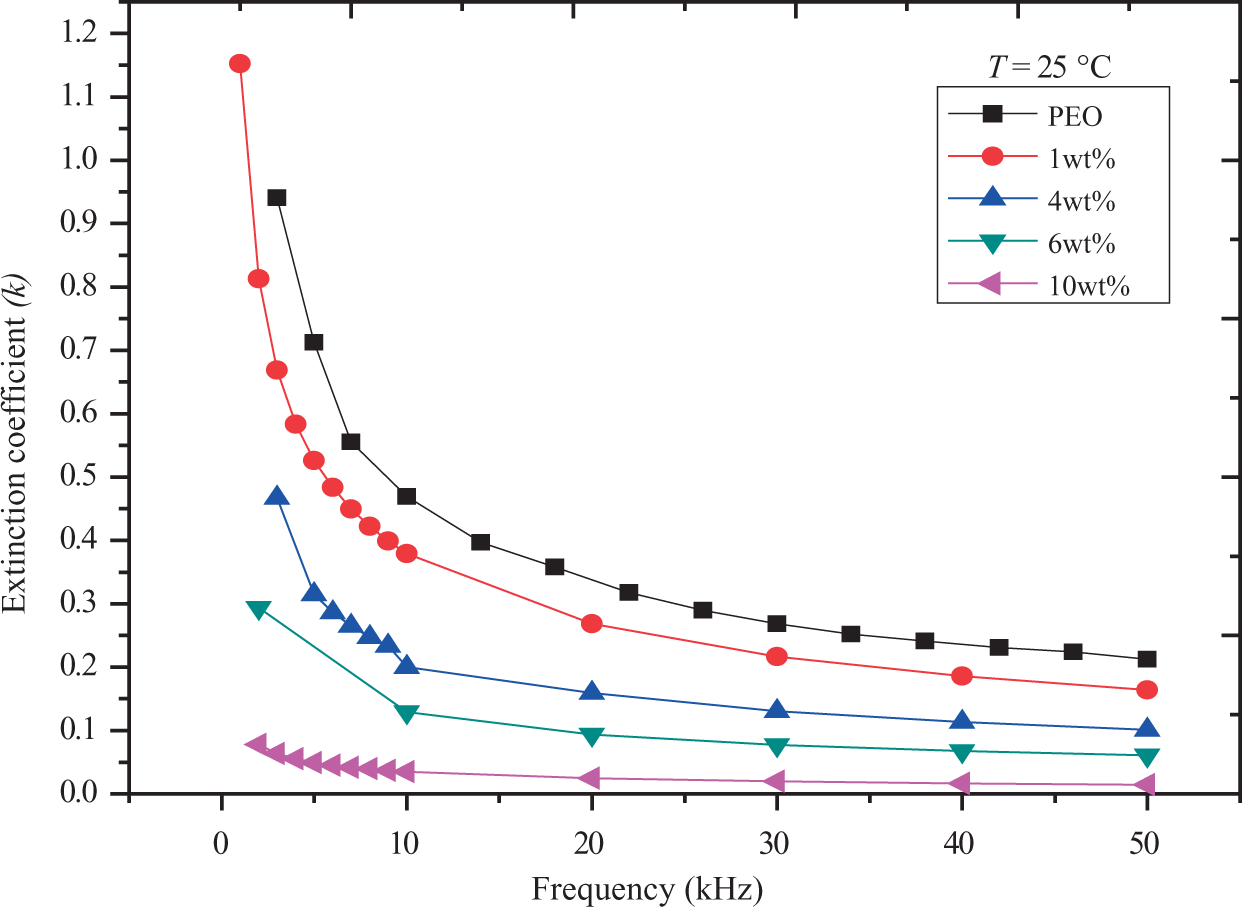
Variation in extinction coefficient with frequency.
Conclusion
Casting method was used to prepare a hybrid fluid polymeric system in the form of thin films composed of PEO, CaCO3, and water traces through impedance spectroscopy. From the measured impedance values, the AC conductivity, dielectric constant, dielectric lost, activation energy, and refractive index of composite films were determined as a function of temperature, frequency, and CaCO3 concentration.
It was found that impedance value decreases with increasing temperature and frequency but increases with increasing CaCO3 concentration. The AC conductivity decreases with increasing filler concentration but increases with temperature. The dielectric constant and the dielectric loss decrease with increasing frequency and CaCO3 concentration. The calculated activation energy, relaxation time, and refractive index showed dependence on frequency, temperature, and CaCO3 concentration.
The decrease in both the dielectric constant and AC conductivity of the prepared doped films was argued through the water volume effect and the interactions between the constituents of the prepared hybrid fluid system. These effects enhance the polarization and makes the system not to behave as a solid polymer electrolyte, with enhanced conductivity. 11,21
Footnotes
Funding
This research received no specific grant from any funding agency in the public, commercial, or not-for-profit sectors.