




Abstract
A series of PP-MA-g-PP/MA-g-EPR – clay/alumina – titanate nanocomposites with varied proportions of clay and alumina composition, maintaining the matrix modifier and coupling agent composition constant, were prepared by melt blending. Two different modifiers, maleic anhydride (MA)-grafted polypropylene (PP) and MA-grafted EPR, along with coupling agent are used in order to improve the dispersibility of reinforcing filler. The resultant nanocomposites in presence and absence of matrix modifiers and coupling agent were compared for their dynamic mechanical and thermal properties. The morphology of nanocomposites was studied by X-ray diffraction and high-resolution scanning electron microscopy. Most of the cases, the combination of intercalated and exfoliated nanocomposites was obtained. Particularly for the sets with titanate, coupling agent showed better dispersion of reinforcing filler. The resultant nanocomposites showed an increase in storage modulus and tan δ values in presence of coupling agents. This reflected as an improvement in load-bearing capacity and stiffness of nanocomposite in dynamic mechanical analysis studies. The matrix modifiers and coupling agent very effectively influenced the thermal transition of nanocomposites. Blending of matrix modifier and addition of reinforcing filler reduced the melting temperature of nanocomposites because of reduction of crystallinity matrix in presence of filler and modifier, whereas incorporation of coupling agent brought the melting temperature back the almost original value of virgin PP. The thermal stability of PP improved 16–37°C by incorporation of reinforcing filler along with coupling agent.
Introduction
Nanoparticle-filled polymer composites have led to the development of newer materials for better applications, from nanowires in electronics to nanocomposites for automotive and other applications. In the past decade, interest has been in the use of montmorillonite (MMT), which is a layered silicate. It has been used after modifying its surface with organic surfactants. 1 Polypropylene (PP) is an excellent thermoplastic due to its high crystallinity and excellent moisture barrier. Intense work has been carried out on development of PP nanocomposites. 2 The MMT is known for its low-cost, high specific area (700 m2/g) and aspect ratio 100. Incorporation of MMT can enhance thermal stability and mechanical properties of a polymer. It has been reported in the literature that the clay layers either intercalate or exfoliate in a polymer. Generally, in intercalated nanocomposites, polymer chains enter in between the nanoclay gallery and produce an ordered stack with fixed interlayer spacing. In exfoliation, nanocomposites are formed by dispersing individual clay layers randomly in the polymer matrix. 3 Smectite clays such as MMT, which belong to the structural family called 2:1 phyllosilicates, have been the main choice in the past for making nanocomposite due to their rich intercalation, which allowed them to be chemically modified and made compatible with polymers for dispersion at a nanometer scale. Interfacial bonding between the hydrophilic fillers and the hydrophobic matrix (PP) has been a subject of investigation because it decides the mechanical and thermal properties of a nanocomposite. In order to improve the adhesion between the nanofiller and polymer, two different approaches have been adopted in the past: one was modification of the filler surface by using coupling agents such as silanes and the other was of adding molecular coupling agents. Second approach was the modification of the polymer by grafting some small molecules with different chemical group to polyolefin chains such as acrylic esters, acrylic acid, and maleic anhydride (MA). 4 Addition of small quantity, i.e. 1–5 weight % of nano-layered silicates in plastics, has offered improvements in the mechanical properties. These materials are also called polymeric nanocomposites and offered unique structure and properties. 5 The effect of coupling agents on the properties of alumina-filled PP has been studied by Jung et al. 6 They used separately several types of coupling agents such as saline Z-6020 ((aminoethylaminopropyl) trimethoxysilane), (3-(glycidyloxypropyl) trimethoxysilane) (3-GPS), and titanium dioxide (TiO2) powder either during compounding or before compounding. The silane coupling agent was first diluted into ethanol in appropriate ratio and subsequently dried before compounding. In the case of titanate, the powder was directly mixed with alumina–PP compound during mixing using Brabender mixer. 7 Compatibilizers (MAH-g-PP and MAH-g-EPR) are often added to facilitate intercalation/exfoliation of the nanoclay and maximize its interfacial contact with the polymer matrix polymer. 8 However, there is no literature on combined effect of nanoclay and alumina addition on structure, thermogravimetric analysis (TGA), and dynamic mechanical analysis (DMA) characteristics of PP nanocomposites. This work focuses on the investigation of combined effect of nanoclay and alumina on the thermal, mechanical, and dynamic mechanical properties in presence of two different compatibilizers.
Experimental
Materials
The random PP copolymer (R120MK) is provided by Reliance Industries Limited, Gujrat (India). The melt flow index and density of PP are 12 g/10 min (at 230°C and 2.16 kg load) and 0.91 g/cm, respectively. The MAH-g-PP (OPTIM P-408) is supplied by the PLUSS Polymer Private Limited (Delhi, India).The melt flow index and density of MAH-g-PP are 40 g/10 min (at 190°C and 2.16 kg load) and 0.91 g/cm, respectively. Titanate coupling agent (grade-EB 1019 A) is supplied by Industrial Product Manufacturing Company (Pune, India). Nanoclay (Nanomer I 30E; Sigma Aldrich) is supplied by the Sigma Aldrich Private Limited (Delhi), and Alumina (Nanotech, Nanophase Company) is supplied by PD Scientific (Lucknow, India).
Composites preparation
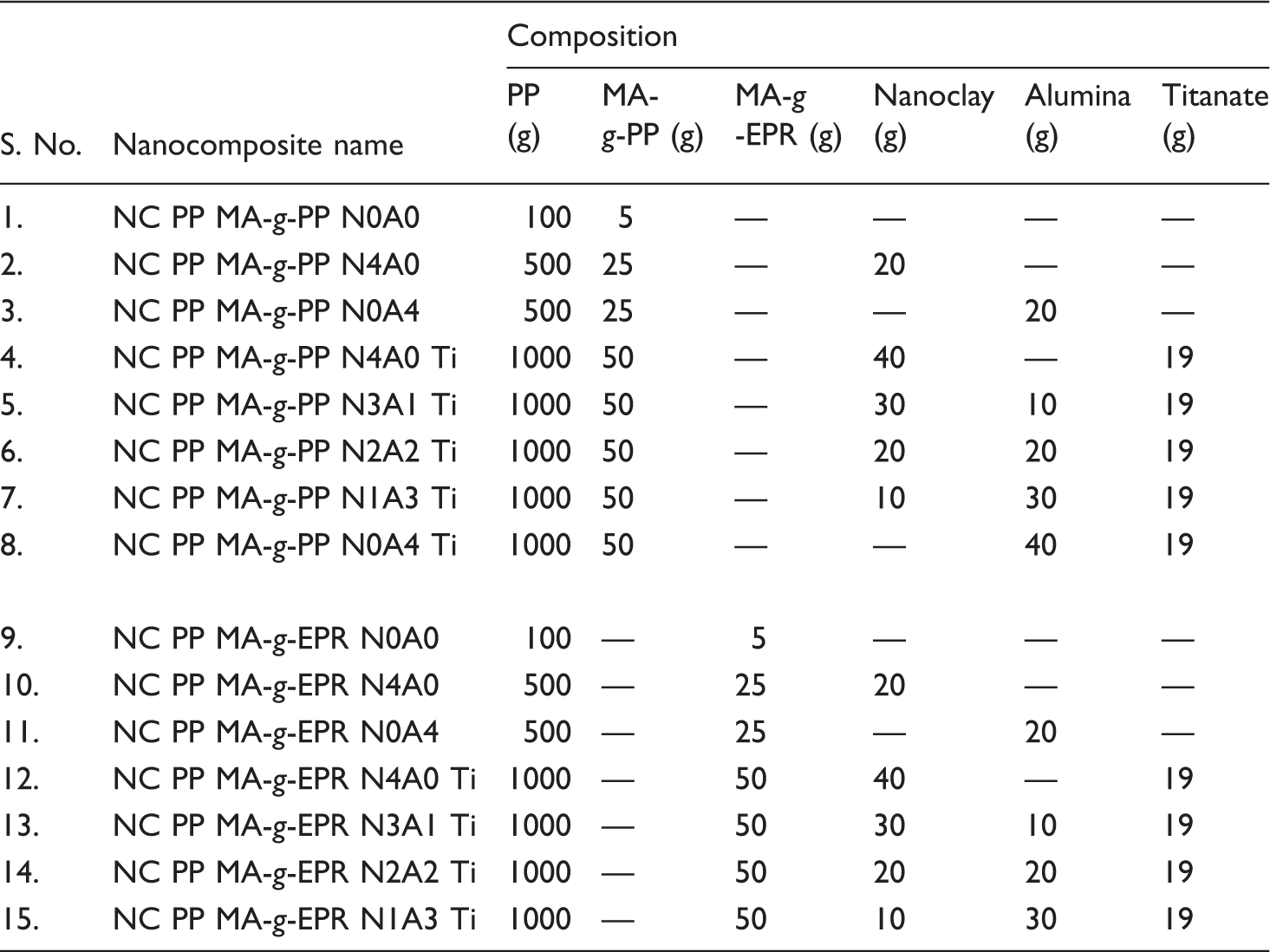
Ingredients used in the preparation of nanocomposites.
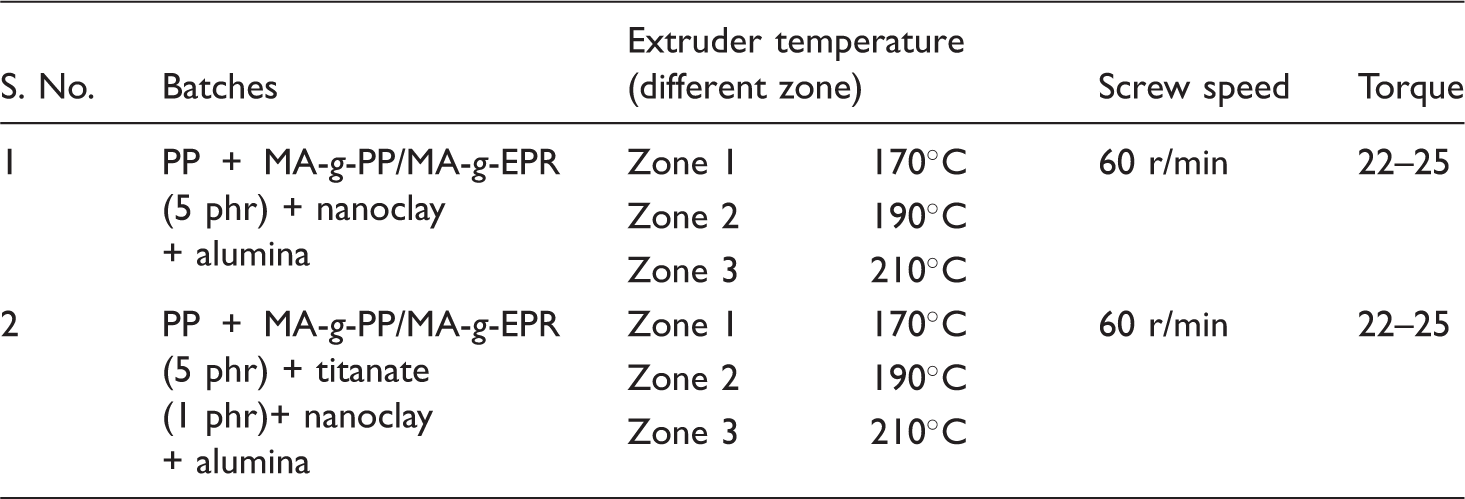
Processing parameters used in the preparation of PP nanocomposites.
Testing
Scanning electron microscope
The morphology of the composites was examined by using a LEO (Cambridge, United Kingdom) model 403 scanning electron microscope (SEM). The samples were coated with gold prior to examination under the electron beam. An operating voltage of 30 keV and 245× magnification were used. The obtained scanning electrons micrographs were used to analyze the nanoclay and alumina particles and their distribution.
X-ray diffraction
X-ray diffraction (XRD) studies were carried out on ‘SIETRONICS X-ray diffractometer’ in order to see how better the clay platelets were delaminated. An acceleration voltage of 40 kV and a current of 22.5 mA were applied using Ni-filtered Cu Kα radiation. The samples were scanned from 2θ = 2.5° to 45° at the step scan mode (step size 0.017°, preset time 2 s).
Thermogravimetric analysis
The thermal stability of PP nanocomposites was investigated in the form of weight % loss and decomposition temperature by using a Pyris 1 TGA instrument, USA. The experiment was carried out from room temperature to 600°C at 20°C/min in N2 atmosphere.
Differential scanning calorimetry
Melting temperature (Tm) and enthalpy of PP nanocomposites were determined by a differential scanning calorimeter (DSC; Perkin Elmer Diamond DSC, USA). The experiment was carried out from room temperature to 210°C at 10°C/min in N2 atmosphere. The same conditions were maintained for heating and cooling cycles.
Dynamic mechanical analysis
DMA was carried out from −50°C to 100°C at a frequency of 1 Hz and 3°C/min by using DMA Q 800 (TA instruments, USA). The obtained results, modulus, and tan δ, were used to analyze the nanocomposites.
Results and discussion
A series of PP-clay-alumina nanocomposites, with 4% of clay and alumina composition, 5% of two different compatibilizers, and 1% of coupling agent, were prepared by melt blending.
Morphology of PP nanocomposites
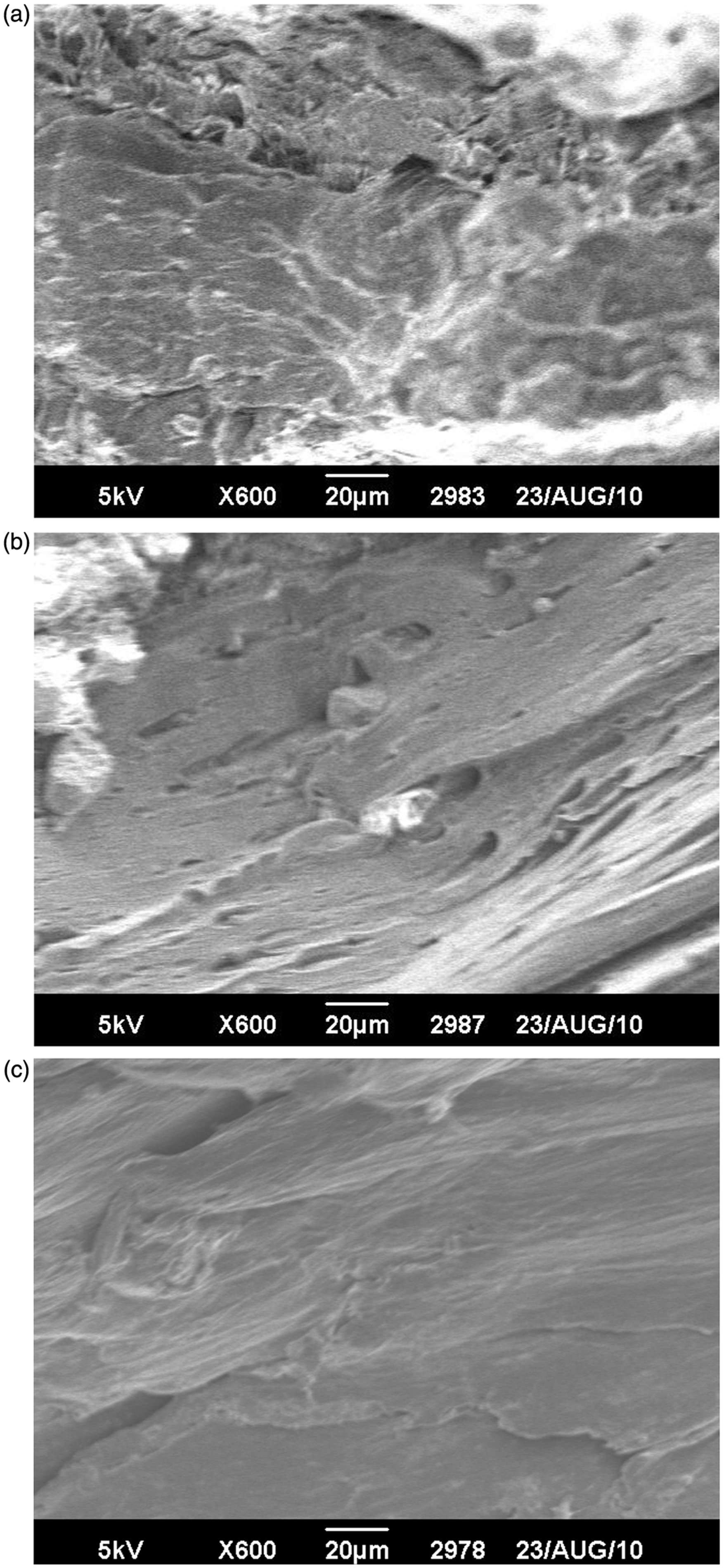
It is well known that the properties of nanocomposites are decided by the dispersion of reinforcing filler in the matrix. Adding compatibilizer such as MAH-g-PP and MAH-g-EPR to the hydrophobic matrix like PP is one of the easiest way of improving the dispersibility. Apart from compatibilizer, coupling agents such as ‘titanate’ further improves the dispersibility. As expected, addition of compatibilizer and coupling agent improved the dispersibility of reinforcing filler in PP matrix, which was confirmed by high-resolution SEM and XRD. Drastic reduction in peak intensity followed by shift in d-spacing to higher valve compared with the highly intense peak around 7° (2θ) of clay before preparation of nanocomposite indicates the formation of intercalated PP nanocomposite. The results of XRD (Fig 1) were further confirmed by the high-resolution SEM (Fig 2).
XRD of nanocomposite NC PP MA-g-EPR with 4% of clay. Scanning electron micrographs of nanocomposites (a) MAH-g-EPR (N2-A2), (b) MAH-g-PP (N2-A2), and (c) MAH-g-EPR (N4-A0) with magnification 600×.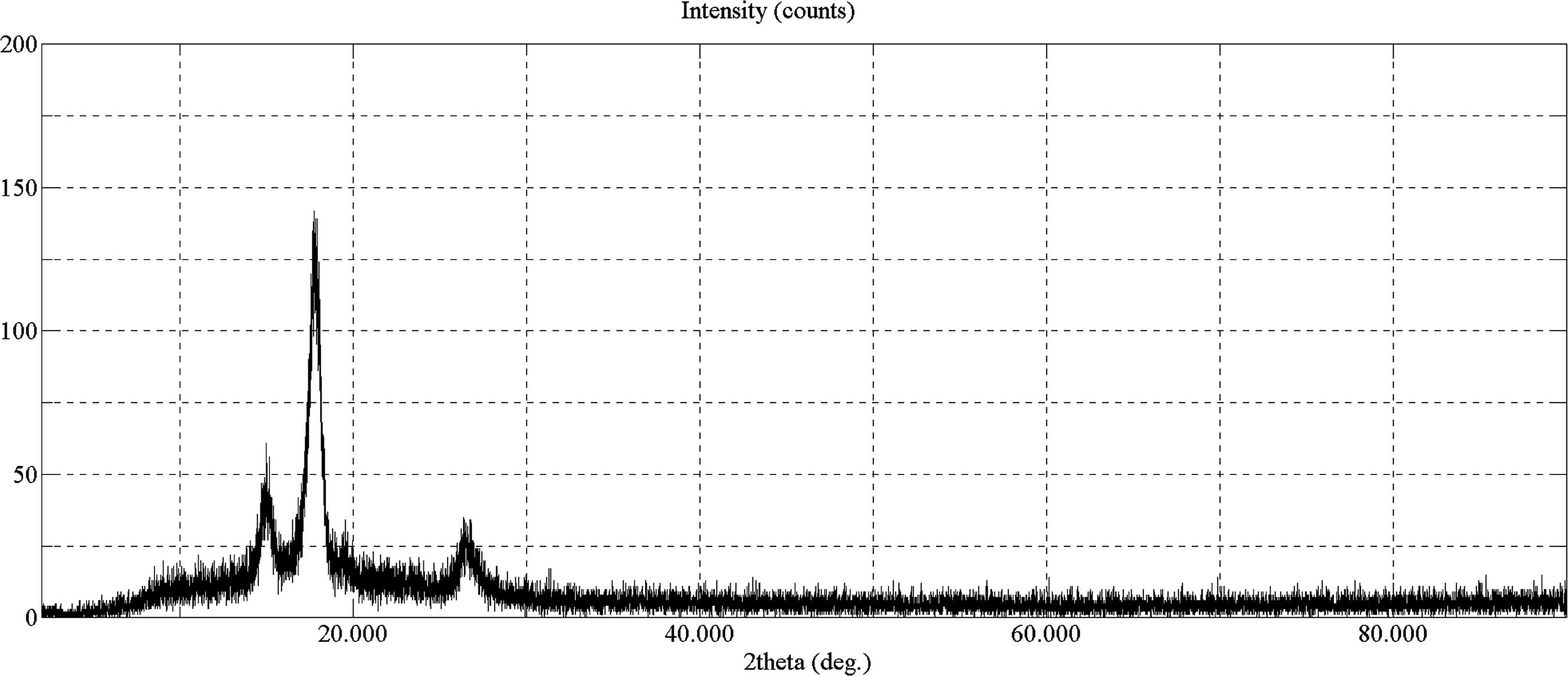
Dynamic mechanical analysis of nanocomposite
DMA results of PP nanocomposites.
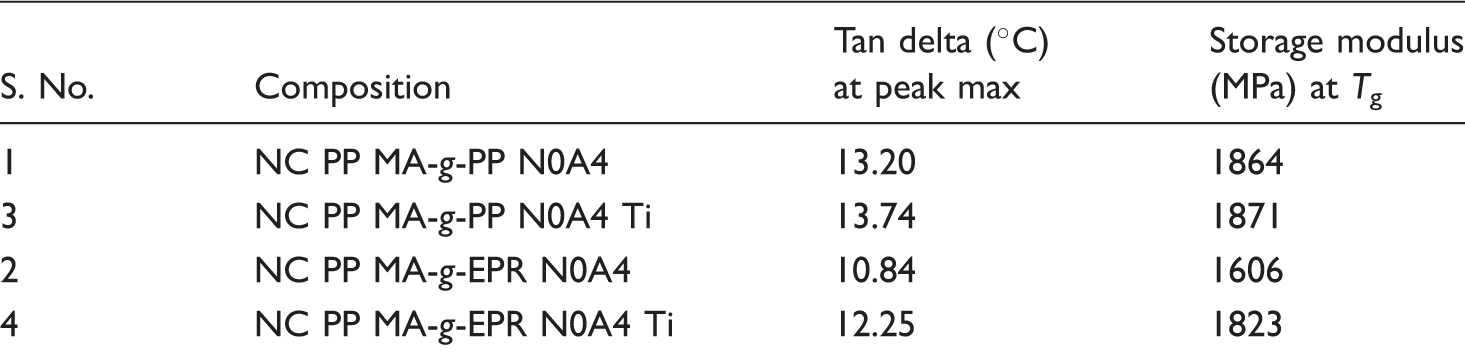
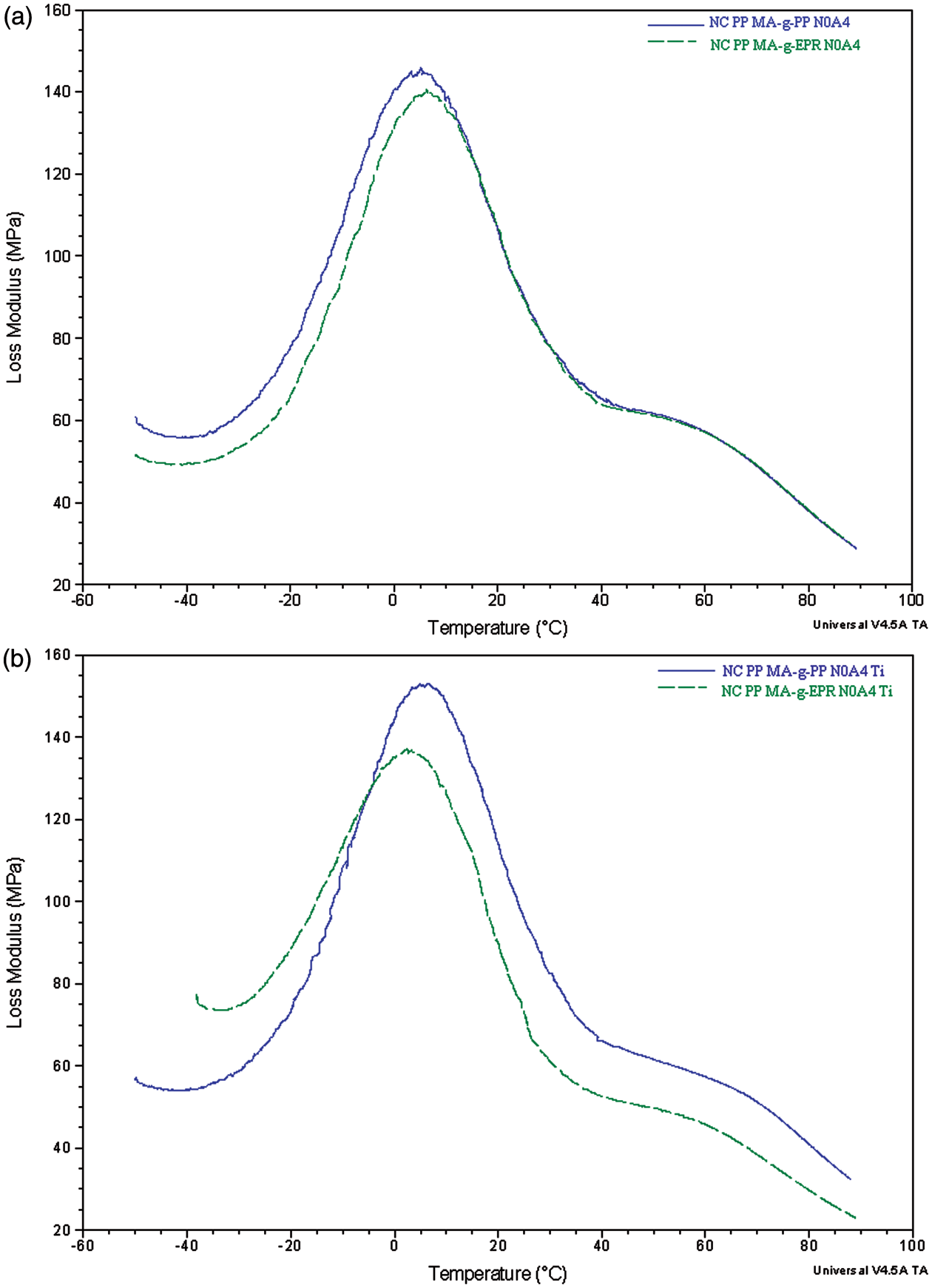
Loss modules of PP nanocomposites (a) with titanate and (b) without titanate.
Thermal transitions of nanocomposite
Effect of filler and matrix modifiers on melting temperature and enthalpy of PP nanocomposites.
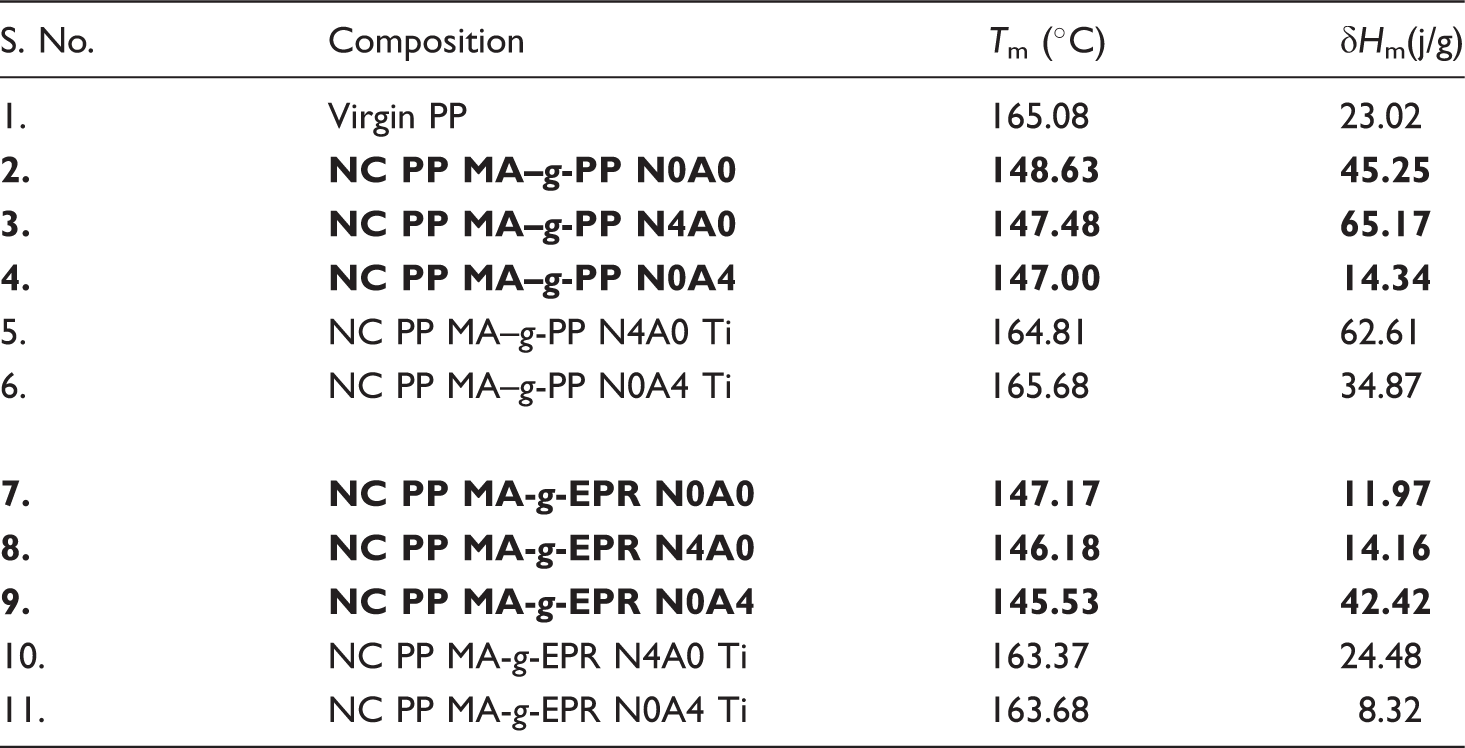
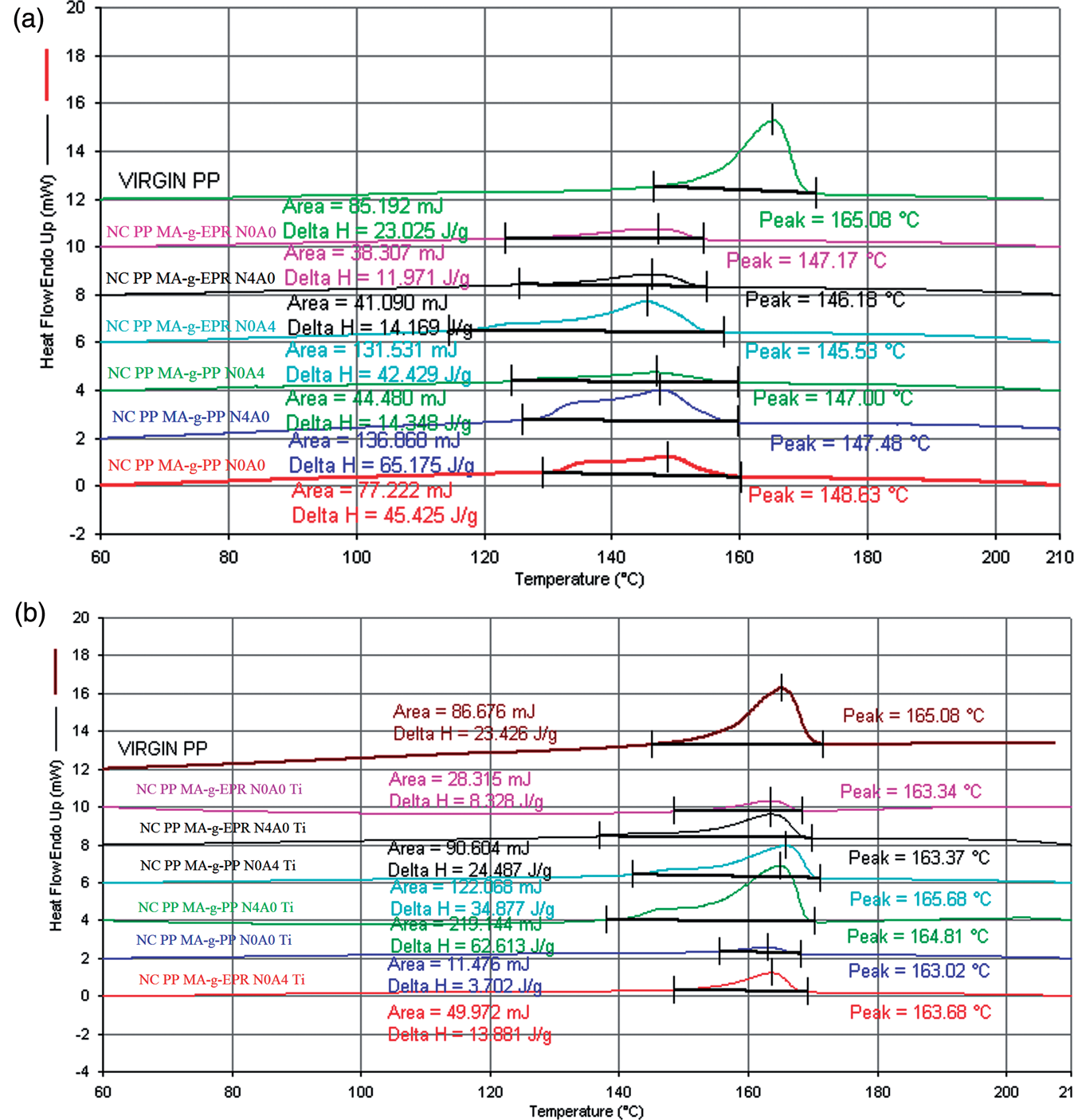
DSC thermograms of nanocomposites (a) without titanate and (b) with titanate.
Thermal stability of nanocomposites
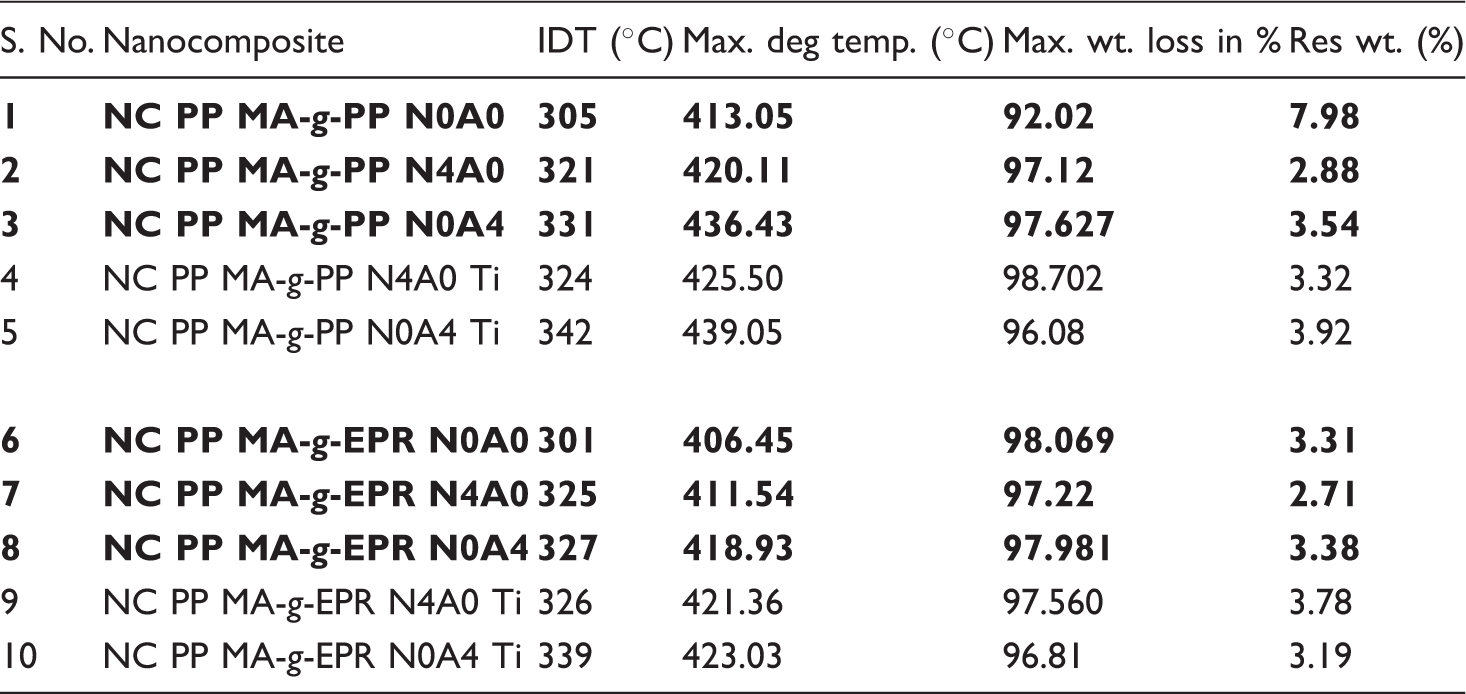
Effect of filler and matrix modifiers on thermal stability of PP nanocomposites.
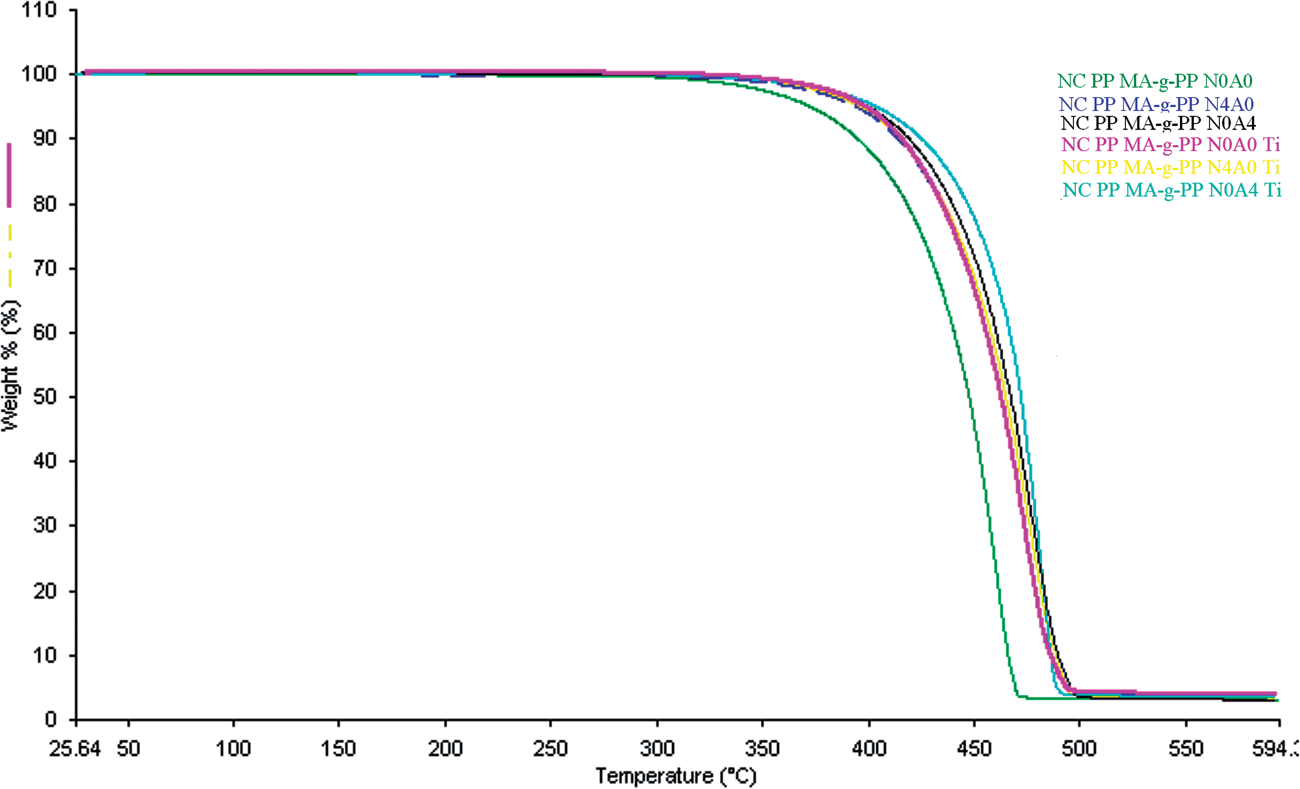
TGA of PP nanocomposites.
Conclusions
Combination of exfoliated and intercalated PP nanocomposites was successfully prepared by melt blending technique. The said morphology was confirmed by XRD and high-resolution SEM. The resultant nanocomposites in presence and absence of matrix modifiers and coupling agent were compared for their dynamic mechanical and thermal properties. Particularly for the sets with titanate coupling agent showed better dispersion of reinforcing filler. The resultant nanocomposites showed an increase in storage modulus and tan δ values in the presence of coupling agents. This reflected as an improvement in load-bearing capacity and stiffness of nanocomposite in DMA studies. The matrix modifiers and coupling agent very effectively influenced the thermal transition of nanocomposites. Blending of matrix modifier and addition of reinforcing filler reduced the melting temperature of nanocomposites because of reduction of crystallinity of PP in the presence of filler and modifier, whereas incorporation of coupling agent brought the melting temperature back to almost original value of virgin PP. The thermal stability of PP improved 16–37°C by incorporation of reinforcing filler along with coupling agent.
Footnotes
Acknowledgements
This research received no specific grant from any funding agency in the public, commercial, or not-for-profit sectors.