




Abstract
The mechanisms of change underlying the effectiveness of personality change interventions are largely unclear. In this study, we used data from a three-month digital intervention with an intensive longitudinal design to test whether a greater realization of general change factors is partly responsible for personality change. Participants (N = 679, 53.0% female; age: M = 25.3 years, SD = 7.1) seeking to increase either Emotional Stability, Conscientiousness, or Extraversion provided self-ratings on their weekly personality states and the three generic change factors of strengths, insights, and behavioral practice. We found a single-factor structure of change factors within and between individuals. Results showed within-person increases in Emotional Stability, Extraversion, and Conscientiousness states as well as increases in change factors across the intervention. Changes in personality states were coupled with changes in generic change factors. Finally, the results provide initial support for the hypothesis that the realization of general change factors is partly responsible for the effects of the intervention. Within-person increases in the change factors were associated with subsequent increases in Extraversion and Emotional Stability states during the following week. The present findings highlight the need to better understand how and why people change in personality as a result of interventions.
Plain language summary
Recent studies have shown that it is possible to change personality traits through psychological interventions. However, the mechanisms of change are largely unclear. The present study therefore examined whether targeting supportive (strengths), learning (insight) and action (behavioral practice) factors through intervention contributes to personality change. Our results provide initial evidence that these general change mechanisms are partly responsible for personality changes.
Keywords
Personality traits are typically defined as relatively stable patterns of behavior and experience (Baumert et al., 2017). Recent conceptual work challenges this relative stability and discusses conceptual approaches to trait change through interventions (e.g., Allemand & Flückiger, 2017; Rebele et al., 2021; Roberts, Hill, & Davis, 2017). Moreover, recent findings from intervention studies suggest that trait change through interventions is possible and that traits can be changed relatively quickly over a short period of time through clinical and non-clinical interventions (e.g., Jackson et al., 2021; Roberts, Luo, et al., 2017; Stieger et al., 2021; Stieger, Wepfer, et al., 2020). These initial conceptual accounts and empirical results are promising and highlight the potential for intervention efforts. So far, however, it is largely unclear which mechanisms are responsible for the change. One conceptual framework—the generic change factors (GCF) model (Allemand & Flückiger, 2017, 2022)—suggests that realizing general factors such as strengths, insight, and behavioral practice maximizes intervention effects. So far, this assumption has not been explicitly tested. The present study therefore examined whether individual changes in weekly Big Five personality-related behaviors, thoughts, and feelings, referred to as weekly personality states, during a personality intervention are concurrently and prospectively associated with the strength of general change factors.
Conceptual models for personality change interventions
Existing conceptual work discusses various intervention models in terms of specific change processes and intervention approaches. For example, one framework focuses on behavioral activation to increase Conscientiousness (Magidson et al., 2014; Roberts, Hill, & Davis, 2017). The main goal is to increase engagement in goal-directed activities that are considered important, enjoyable, and in accordance with individual values and goals across numerous domains of life. In terms of an intervention to change personality traits, this means that the intervention primarily requires individuals to increase the expression of traits by regularly practicing new personality-related behaviors and experiences, which then form new habits and eventually solidify into more permanent trait change. This idea is consistent with recent theoretical models of personality development that emphasize bottom-up processes that can accumulate into long-term personality changes (Allemand & Flückiger, 2017; Chapman et al., 2014; Wrzus & Roberts, 2017). Other conceptual accounts suggest behavioral and cognitive-behavioral interventional pathways to increase Conscientiousness (Javaras et al., 2019) or decrease Negative Emotionality (Sauer-Zavala et al., 2017). For example, cognitive-behavioral techniques, such as mindfulness techniques, can be used to help people respond more flexibly to stressful situations and events that trigger neurotic thoughts and feelings, rather than automatically responding to stressful situations with avoidance responses (Armstrong & Rimes, 2016).
Other researchers focus on self-regulation processes as potential intervention targets (Hennecke et al., 2014; Nevins, 2021; Rebele et al., 2021), and suggest intervening on short-term (e.g., goal activation and selection or modification of situational features) and long-term self-regulation processes (e.g., behavior repetition for habit formation). Finally, one of the first conceptual work on intentional personality change proposes a stepwise process model of coaching that includes 10 specific steps (Martin et al., 2014): Assess personality and clients values; discover the present self; explore gaps between actual self and desired self; choose personality facet change goals; assess attitudes toward change; design and implement coaching plan; re-assess personality and review progress; implement remaining coaching sessions; re-assess, review and maintain; follow-up, review and refinement. This conceptual framework is closely related to behavioral and cognitive-behavioral models from the coaching literature (Eldridge & Dembkowski, 2013; Palmer & Williams, 2013), and provides concrete guidelines for intervention techniques and activities for each step of the model.
Strengths, insight, and behavioral practice as generic change factors
The generic change factors (GCF) model (Allemand & Flückiger, 2017), inspired by the clinical and psychotherapy process-outcome literature (Grawe, 2004; Lambert & Ogles, 2004; Norcross & Goldfried, 2019; Wampold & Imel, 2015; see also Castonguay et al., 2015; Lutz et al., 2021 for critical reviews), takes a different conceptual approach. Although personality change interventions may involve a number of specific intervention goals, techniques, and activities, the GCF model assumes that the intervention should be largely collaborative and based on general factors or principles. In fact, several general factors are discussed in the psychotherapy literature (e.g., working alliance; e.g., Wampold & Flückiger, 2023), which can be grouped into three broad categories of support, learning, and action (see Cuijpers et al., 2019; Lambert & Ogles, 2004 for details). Supportive factors are believed to facilitate learning experiences and explorative behaviors. Learning factors refer to self-reflection processes that are triggered and maintained by interventions. Action factors include exploration and the repeated performance of (new) behaviors. The GCF model was adapted from a framework consisting of four empirically derived general change mechanisms based on a comprehensive meta-analytic review of results from controlled psychotherapy studies and naturalistic process-outcome studies (Grawe, 2004; Grawe et al., 1994; Orlinsky et al., 1994). The adaptation was primarily motivated by the goal of providing some heuristic principles for the development and implementation of personality change interventions in normal populations that do not particularly suffer from mental disorders (Allemand & Flückiger, 2017). Specifically, the GCF model suggests that personality change can be achieved through the realization of four general change factors: Discrepancy awareness, strengths, insight, and behavioral practice (Allemand & Flückiger, 2017, 2022).
First, actuating discrepancy awareness is a support factor. By exploring possible differences between desired and actual personalities and by explicitly activating discrepancy awareness during interventions, individuals may be more motivated to invest in change efforts. This is broadly consistent with the third step of the stepwise process model (Martin et al., 2014), which proposes that after the assessment and discovery of the actual personality, the gaps between the actual and desired personalities should be explored. Discrepancy awareness is also consistent with the cybernetic model of self-regulation (Carver & Scheier, 1998), according to which one has to realize a difference between the current self and a “standard” or “ideal self” in order to initiate self-regulation. It also addresses one important condition for self-regulated personality development (Hennecke et al., 2014), namely, the desirability of change. Activating a discrepancy awareness can lead to perceiving change as desirable.
Second, activating people’s strengths and resources can serve as a support factor for initiating and maintaining change processes. This can be done by capitalizing on existing personality traits, motivations, skills, interests, and social relationships as strengths and resources (Flückiger et al., 2023). It is believed that activating strengths initiates and maintains positive feedback loops and expectations, thus having a beneficial effect on change efforts. This support factor addresses another important condition for self-regulated personality development (Hennecke et al., 2014), namely, the feasibility of change. Activating strengths can promote perceptions of feasibility and shift the focus from difficulties and challenges to feasibility.
Third, promoting insight is an important learning factor. It focuses on change processes through self-reflection on behaviors and experiences. Interventions should therefore target reflective processes that help people to better understand their assumptions, expectations, and motivations and to make new connections about themselves, others, and experiences. This learning factor reflects one comprehensive pathway in which repeated short-term situational processes can manifest into long-term personality development, as proposed by the TESSERA (Triggering situations, Expectancy, States/State Expressions, and ReActions) framework (Wrzus & Roberts, 2017). According to the TESSERA framework, one specific pathway in which short-term processes can lead to personality change is through reflective processes that involve consciously thinking and talking about past experiences, behaviors, thoughts, and feelings.
Fourth, promoting behavioral practice is an action factor. It refers to learning and practicing (new or modified) behaviors and skills (e.g., compensatory and coping skills), and exploring behavioral expressions in new social roles. Interventions should therefore target behaviors to help people explore and practice new behaviors and gradually increase their engagement in new activities and behaviors outside their “comfort zone.” This action factor addresses the third requirement for self-regulated personality development (Hennecke et al., 2014), namely, that change should become habitual. Through constant practice, behaviors can become habits and eventually solidify into a more enduring trait change. Another comprehensive pathway in the TESSERA framework (Wrzus & Roberts, 2017), which is partly similar to the action factor, involves associative processes. These processes include habit formation/change as implicit learning from repeated behavior, reinforcement learning through pleasant or unpleasant reactions from others, or model learning through imitation of other behaviors and experiences.
Because the field of personality change interventions is still in its infancy and the mechanisms of change are largely unclear, the GCF model provides useful heuristic principles for intervention research. For example, depending on this model, different intervention routes and conditions can be contrasted, such as learning-related versus action-related intervention strategies (Allemand & Flückiger, 2020; Gómez-Penedo et al., 2023; Grosse Holtforth & Flückiger, 2012), or strengths-related versus problem-related intervention strategies (Allemand et al., 2022; Cheavens et al., 2012; Flückiger et al., 2021), to examine the unique effects of intervention routes based on individual general factors. Moreover, a key assumption of the GCF model is that realizing all factors should maximize intervention effects (Allemand & Flückiger, 2017, 2022). This assumption guided the development and implementation of interventions targeting personality facets such as self-discipline or openness to action (Stieger, Wepfer, et al., 2020) or the Big Five personality traits (Stieger et al., 2021). Although these studies have implicitly assumed that the realization of change mechanisms is partly responsible for the effect of personality change interventions, this assumption has not yet been explicitly tested.
Current evidence from personality change interventions
Numerous developmental studies have shown that despite the relative stability of personality traits, they are malleable and continue to change in adulthood and old age (e.g., Bleidorn et al., 2022; Graham et al., 2020; Olaru & Allemand, 2022; Roberts et al., 2006). However, compared to the large body of developmental research on personality traits across the lifespan, relatively little is known about intentional or volitional change through interventions. In fact, intervention research is rather new to personality science, as personality traits are rarely considered as targets of interventions. However, there is a growing body of evidence from clinical and psychotherapeutic research showing that clinical interventions in which (nonpathological) personality traits were not the direct target of the interventions may also promote personality change (e.g., De Fruyt et al., 2006; Sauer-Zavala et al., 2021; Stieger et al., 2022; Tang et al., 2009). For example, a meta-analytic review of 207 clinical intervention studies found decreases in Neuroticism (Negative Emotionality) and increases in Extraversion (Roberts, Luo, et al., 2017). Interestingly, remarkable trait changes were already evident from an intervention duration of more than 4 weeks.
Preliminary evidence for personality trait changes through intervention also comes from a few studies in non-clinical populations. Those studies used a variety of approaches, including goal setting and action planning (Hudson et al., 2020), behavioral activation (Massey-Abernathy & Robinson, 2021), engagement in behavioral activities and challenges (Hudson, 2023; Hudson et al., 2019), social skills training (Allemand et al., 2022), cognitive training (Jackson, Hill, et al., 2012), arts education (Grosz et al., 2022), structured coaching programs (Allan et al., 2018), and digital coaching interventions (Allemand & Flückiger, 2022; Allemand & Stieger, 2024). For example, recent intervention research using the GCF model explored whether Self-discipline, a facet of Conscientiousness, or Openness to action, a facet of Openness to experience, can be changed with the help of an intensive two-week digital coaching intervention with text messaging (Stieger, Wepfer, et al., 2020). Results of two studies (total N = 255) showed that it is possible to initiate change processes with short but intensive interventions. People who chose the Self-discipline intervention showed greater increases in Self-discipline, and people who chose the Openness to action intervention showed greater increases in Openness to action compared with the other group.
The personality coaching intervention
A recent personality trait change intervention based on the GCF model (Stieger et al., 2021) used a digital coaching approach for intervention efforts. The digital coaching intervention was thought to guide and encourage people in their self-change efforts to increase or decrease one of the Big Five traits. The intervention was conducted using the smartphone application PEACH (Android and iOS), a digital coach that automatically supports people in achieving their personality change goals (Stieger et al., 2018). During the three months of coaching individuals interacted with a chatbot twice a day and receive education, behavioral tasks, feedback, encouragement, and support. The PEACH app automatically delivers small interventions—simple techniques that help people change their thoughts, feelings, and behaviors in everyday life and trigger change processes (see also Allemand & Stieger, 2024).
The effectiveness of the digital coaching intervention was tested in a randomized controlled trial in a large sample of adults (N = 1523) (Stieger et al., 2021). The most frequently selected change goals were decreases in Negative Emotionality (26.7%), increases in Conscientiousness (26.1%), and increases in Extraversion (24.6%) (Stieger, Eck, et al., 2020). Outcome results based on data from the pretest, posttest, and three-month follow-up showed that participants who received the coaching reported greater changes in the particular trait they wanted to change than those in the control group (who waited one month before the coaching began) (Stieger et al., 2021). The changes were in line with the self-chosen goals for personality change and changed accordingly in the desired direction. Observers, such as friends, family members, or intimate partners, also detected significant, albeit smaller changes in participants desiring an increase but not in those desiring a decrease on a Big Five trait. A secondary data analysis examined the effects of the digital intervention at the levels of facets and nuances and found considerable heterogeneity in the intervention-related personality trait changes, most notably relatively stronger increases in Sociability (Extraversion) and weaker increases in Responsibility (Conscientiousness) related to other facets of Extraversion and Conscientiousness (Olaru et al., 2022). Finally, a recent one-year follow-up study provided initial evidence that the changes achieved by the intervention were sustained or even continued, but also highlighted the problem of attrition, which is particularly common in digital intervention studies without face-to-face contact with participants (Stieger, Flückiger, & Allemand, 2023).
To summarize, the results of the few available intervention studies suggest that personality traits can be changed, or at least processes of change can be initiated, through a variety of intervention approaches. However, the mechanisms of change are largely unclear.
The present study
The main goal of this intensive longitudinal process study was to test the assumption that the realization of generic change factors predicts subsequent personality change (Allemand & Flückiger, 2017, 2022). Specifically, we explored whether a greater realization of strengths, insight, and behavioral practice through an intervention would be concurrently and prospectively associated with stronger changes in weekly personality states. We used process data from an existing personality coaching intervention (Stieger et al., 2021) and focused on participants with the goal of increasing Emotional Stability (i.e., reducing Negative Emotionality), Extraversion, or Conscientiousness (Stieger, Eck, et al., 2020). We also focused on the GCF of strengths, insight, and behavioral practice, as discrepancy awareness was not included in the measure of generic change factors.
We had four specific research goals: First, we examined the factor structure of the GCF measure, both at the between- and within-person level. The goal was to examine whether individuals would focus on different GCF separately or simultaneously. Second, we examined the within-person change trajectories of weekly personality states and the GCF across the intervention. In accordance with the outcome-related research on personality trait change based on pretest, posttest, and 3-month follow-up results (Stieger et al., 2021), we expected an increase in the states of Emotional Stability, Conscientiousness and Extraversion in the corresponding change goal group. Third, we examined the concurrent within-person associations between changes in the weekly personality states and the GCF. We expected that stronger increases in the change factors are associated with stronger increases in personality states. Fourth, we sought to explore bidirectional prospective associations between the weekly personality states and GCF. We expected that increases in the GCF were associated with increases in the personality state level in the following week, and vice versa.
Method
We used intensive longitudinal process data from a digital personality coaching intervention (Stieger et al., 2021) 1 . The analyses were exploratory and not pre-registered. Data, analysis code, and research materials can be found on the Open Science Framework (https://osf.io/kf6sr). The original study obtained ethical approval by the Ethics Committee of the Philosophical Faculty of the University of Zurich (No. 17.8.4; Date of approval: August 31, 2017).
Procedure
German-speaking adults from Switzerland were recruited. To be eligible for the study, participants had to be: 18 years or older; able to read German; owner of a smartphone (Android or iOS) with mobile Internet connection; motivated to change one personality trait; not in a psychotherapeutic or psychiatric treatment; and pass an online mental health screening, as the intervention focused explicitly on healthy adults. 2 University mailings and social media advertisements were used for the recruitment process. Additionally, potential participants responded to flyers or word-of-mouth recruitment. Interested people were directed to either the website of the project or to the Apple Store/Google Play Store to receive detailed information about the study aims, interventions, assessments, reimbursement, and data protection and to download the mobile application.
At the beginning of the study, participants were asked to choose one out of nine change goals (i.e., a combination of the Big Five trait domains and increase vs. decrease; except for decrease in Emotional Stability) from a list describing each change goal (see Stieger, Eck, et al., 2020 for details). Participants were asked to provide responses to the outcome measures (i.e., personality states and generic change factors) at the end of each week from the 1st to the 11th week of the intervention (i.e., the week before the end of the intervention).
Participants
Number of participants per group, wave, and number of repeated measures.
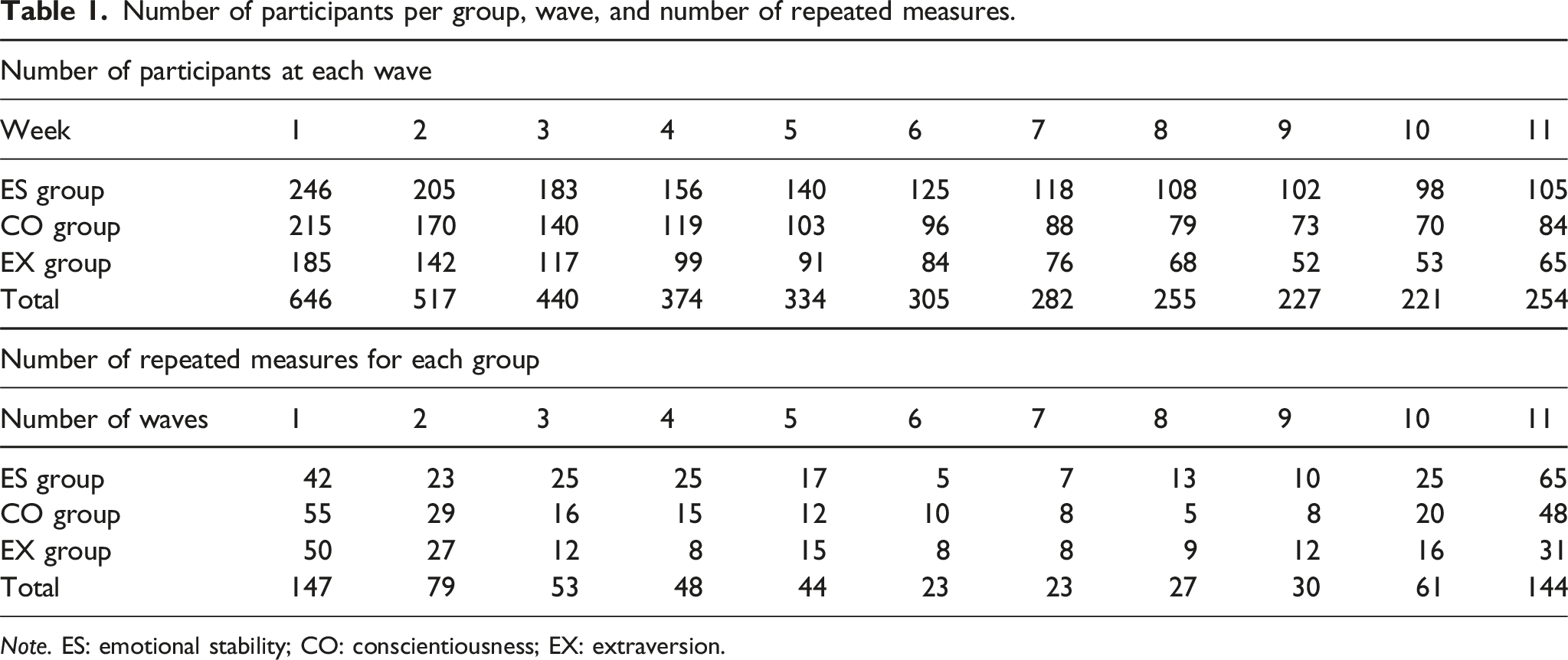
Note. ES: emotional stability; CO: conscientiousness; EX: extraversion.
With respect to the highest level of education participants, most participants from the three largest intervention groups had a general qualification for university entrance (46.5%), 21.2% had a Bachelor’s degree, 16.8% a Master’s degree, 6.2% completed vocational training and education, 3.7% were secondary school graduates, and 1.8% had a PhD. We did not assess income in this study, but 54.3% of the participants were students, 20.9% working full-time, 22.1% working part-time, 0.1% home-maker, 0.4% retired, and 2.1% were currently not working. With respect to relationship status, 55.2% were currently in a relationship or married, 41.1% were single, 0.8% were separated or divorced, and 2.8% did not want to answer this question. Of the sample, 36.1% lived with their parents, 30.2% lived in a shared apartment, 21.4% lived with their partner, 11.9% lived alone, and 0.4% lived with their children but without a partner. Most participants did not have any children (93.2%). We did not assess ethnicity in our study, but 90.9% of participants indicated that their mother tongue was German, 82.3% that their nationality was Swiss, and 11.2% that their nationality was German (6.4% reported other nationalities).
Measures
Weakly Big Five states
At the end of each week, participants were asked to fill out the German Big Five Inventory-2 short version (BFI-2S; Danner et al., 2019; Soto & John, 2017a, 2017b). The BFI-2S is a 30-item measure of the Big Five personality traits. To focus on participants’ personality states during the last week, we adjusted the instruction (i.e., “Please rate the extent to which the following statements apply to yourself in the last week”) and items (e.g., “I was rather quiet”). Participants responded to the items on a 5-point Likert scale ranging from 1 = strongly disagree to 5 = strongly agree. We focused on the three domains Emotional Stability (i.e., reverse coded Negative Emotionality), Extraversion, and Conscientiousness in line with the three intervention groups. The average Cronbach’s alpha across the 11 measurement occasions was α = .84 for Emotional Stability, α = .77 for Conscientiousness, and α = .68 for Extraversion.
Generic change factors
Items of the measure of generic change factors.
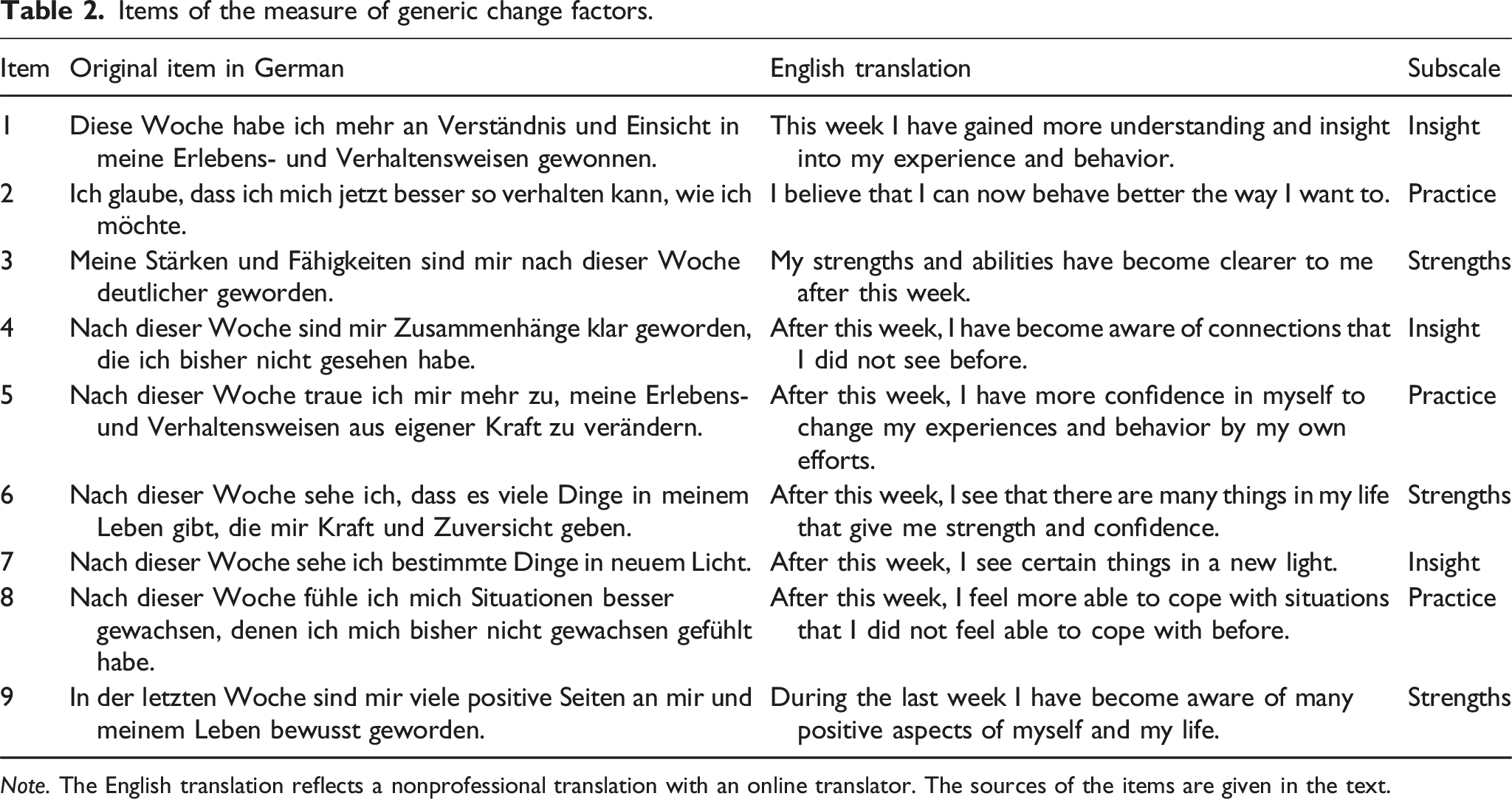
Note. The English translation reflects a nonprofessional translation with an online translator. The sources of the items are given in the text.
Statistical analyses
The multi-level confirmatory factor analysis was run in Mplus 8.0 (Muthen & Muthen, 2016). All other analyses were run in R version 4.1.3 (R Core Team, 2022) with the R packages ggplot2 (Wickham, 2016), haven (Wickham & Miller, 2020), lavaan (Rosseel; 2012), and psych (Revelle, 2020).
Multi-level confirmatory factor analysis
To answer the first research question (i.e., what is the structure of the GCF?) we used a multi-level confirmatory factor analysis. We compared a model with the assumed 3-factor structure with the factors of strengths, insight, and behavioral practice at both the between- and within-person level to an alternative model with only one factor at both levels. Model fit was assessed using three approximate fit indices in line with previous guidelines (Bentler, 1990; Hu & Bentler, 1999): the comparative fit index (CFI; >.90 acceptable, >.95 good), root mean square error approximation, and standardized root mean square residual (RMSEA, SRMR; <.08 acceptable, <.05 good). We then compared the models based on model fit (i.e., AIC, BIC, CFI, RMSEA, and SRMR) and factor loadings and correlations. Models were estimated with full information maximum likelihood estimation (FIML) to account for missing values.
Latent growth curve model
To answer the second research question (i.e., do personality state and GCF levels change across the course of the intervention?) we used a latent growth curve model. We specified a level (or intercept) factor loading on each weekly state or generic change factors score with λ = 1, and a linear change (or slope) factor loading on each weekly state or GCF score with increasing loadings across time (i.e., λ = 0 to 10). To test whether change would be better described by a curve-linear function, we also tested a model with an additional quadratic slope factor centered around week 6 (i.e., λ = 25, 16, 9, 4, 1, 0, 1, 4, 9, 16, 25 from week 1 to 11). We used the same model fit cut-offs mentioned above.
Random intercept cross-lagged panel model
To answer the third and fourth research question (i.e., are personality states and GCF associated within and across time?), we used a random intercept cross-lagged panel model (RI-CLPM; see Figure 1; Hamaker et al., 2015; Mund & Nestler, 2019). We chose this model as we were interested in the reciprocal associations between the weekly states and GCF. Specifically, we wanted to examine whether a stronger engagement in trait-consistent states would be associated with more strengths, insight, or behavioral practice in the same week (path rw in Figure 1), as well as the week after (path c in Figure 1). Similarly, we wanted to examine whether weeks in which these GCF were particularly strong would be associated with an increase in the personality-consistent states in the week after (path d in Figure 1). Compared to a traditional cross-lagged panel model (CLPM), the random intercept model accounts for stable between-person differences in the constructs across time. Whereas a CLPM would examine whether someone with stronger insight than other participants would show higher Extraversion states than other participants in the same week or the week after (or vice versa), the RI-CLPM focuses on within-person associations: For example, is a week in which a participant experiences more insight—compared to the other 10 weeks—associated with stronger Extraversion states that week and the week after (again compared to the other 10 weeks)? While we were primarily interested in the cross-lags and occasion-specific correlations, the RI-CLPM also includes autoregressive effects (path a and b in Figure 1). In a RI-CLPM these represent carry-over effects, or in other words how strongly the weekly states and GCF fluctuate around the stable level. For example, if the participants would engage with the intervention activities for several subsequent weeks, followed by several weeks of less engagement, the autoregressive effects should be higher. If the engagement or weekly states change from week to week, then the autoregressive effects should be lower. Random intercept cross-lagged panel model. Note. PS: personality state; GCF: generic change factor; W1–W11: week 1–week 11; a/b: autoregressive effects; c/d: cross-lagged effects; rb: between-person (random-intercept) correlation; rw: within-person (occasion-specific) correlation. Squares denote observed variables (i.e., scale scores at each measurement wave) and ellipses represent latent factors (i.e., random intercepts and wave-specific deviations).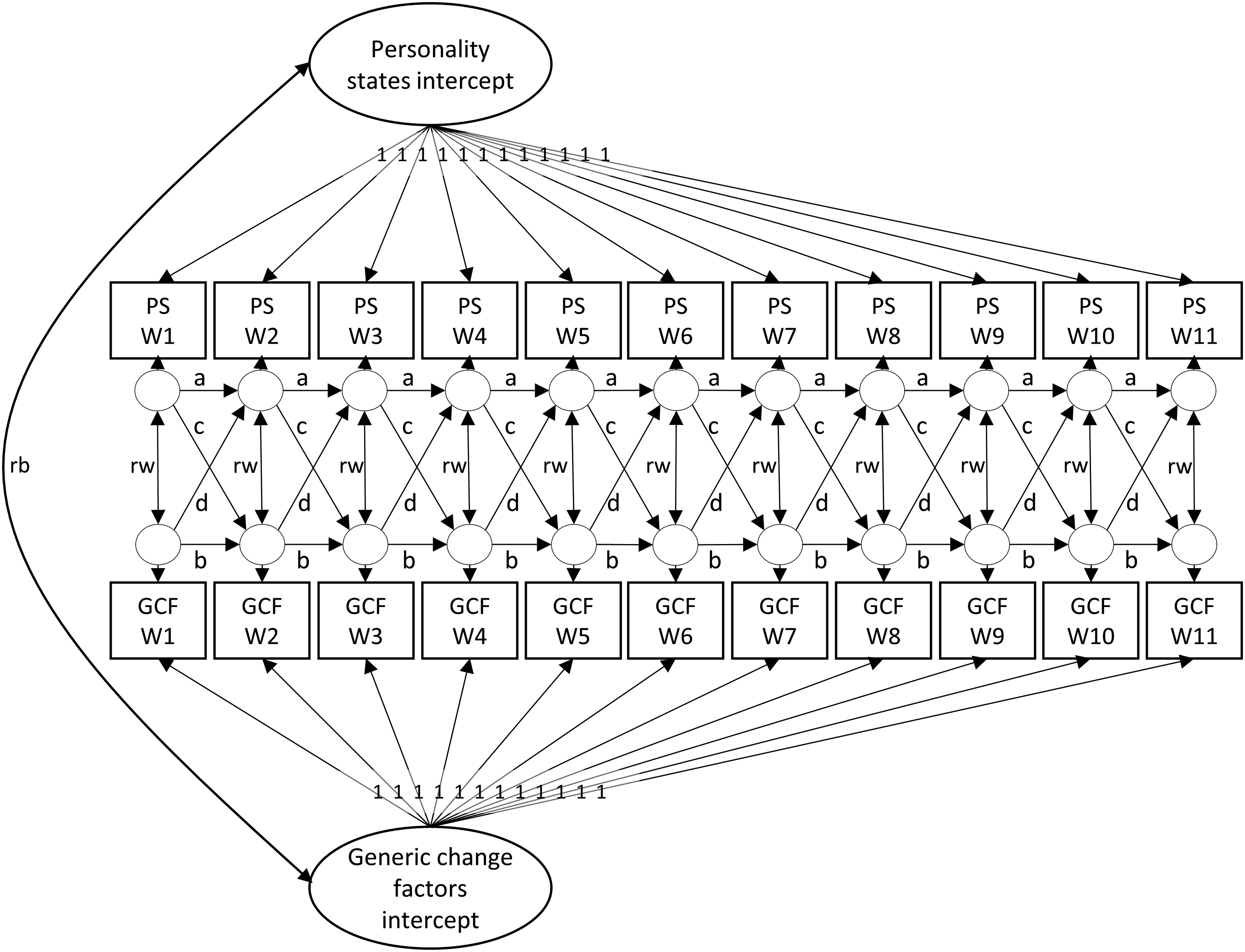
RI-CLPM model fit with time and group equality constraints.
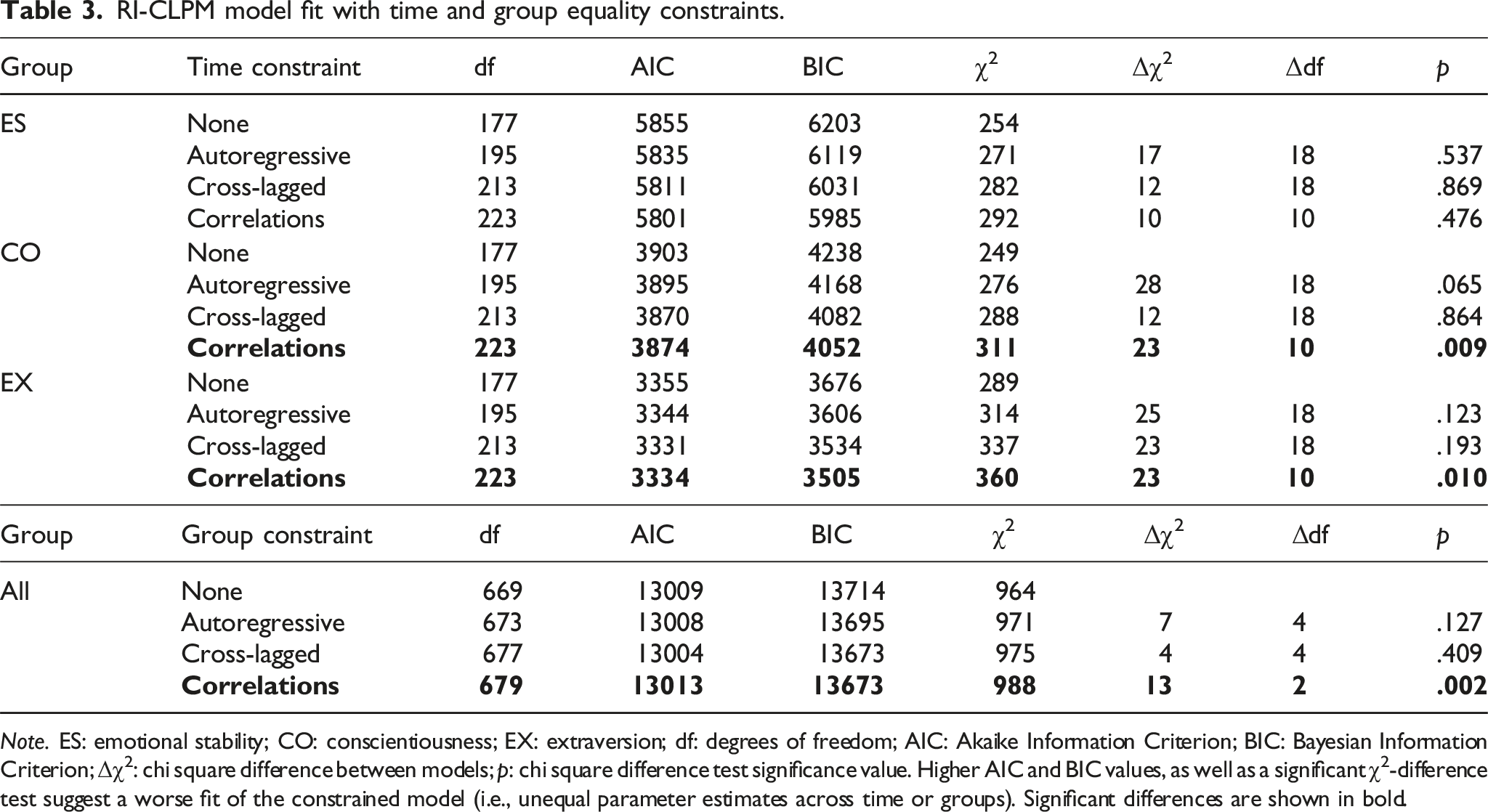
Note. ES: emotional stability; CO: conscientiousness; EX: extraversion; df: degrees of freedom; AIC: Akaike Information Criterion; BIC: Bayesian Information Criterion; Δχ2: chi square difference between models; p: chi square difference test significance value. Higher AIC and BIC values, as well as a significant χ2-difference test suggest a worse fit of the constrained model (i.e., unequal parameter estimates across time or groups). Significant differences are shown in bold.
Equality constraints across time and groups
Model parameters of the random intercept cross-lagged panel model can be constrained to equality across time to improve statistical power, estimation precision, and interpretability of the results (Orth et al., 2021). For each model, we thus tested sequentially if (a) autoregressive effects, (b) cross-lagged effects, and (c) within-time correlations could be constrained to equality across time. And finally, we also tested whether the associations were equivalent across intervention groups. Model fit of the unconstrained and constrained models are presented in Table 3. The Bayesian Information Criteria (BIC) consistently favored the constrained models. However, the Akaike Information Criterion (AIC) and χ2 difference test suggested unequal occasion-specific correlations across time in the Conscientiousness and Extraversion group, as well as between groups. We thus present the findings for the constrained models, followed by an examination of the differences in within-person occasion-specific correlations.
Model fit was acceptable for all RI-CLPMs with all the aforementioned equality constraints across time (ES: df = 223; χ2 = 292; CFI = .956; RMSEA = .035; SRMR = .085; CO: df = 223; χ2 = 311; CFI = .942; RMSEA = .042; SRMR = .095; multi-group model with additional group constraints: df = 681; χ2 = 989; CFI = .930; RMSEA = .045; SRMR = .094). The only exception was the Extraversion model (EX: df = 223; χ2 = 360; CFI = .895; RMSEA = .056; SRMR = .100), for which a larger number of small and unsystematic residual correlations caused the model fit issues (i.e., all modification indices were smaller than Δχ2 = 10). As such, we decided against modifying the model by incorporating these residual correlations but advise caution when examining the results.
Power analysis
Cross-lags power analysis.
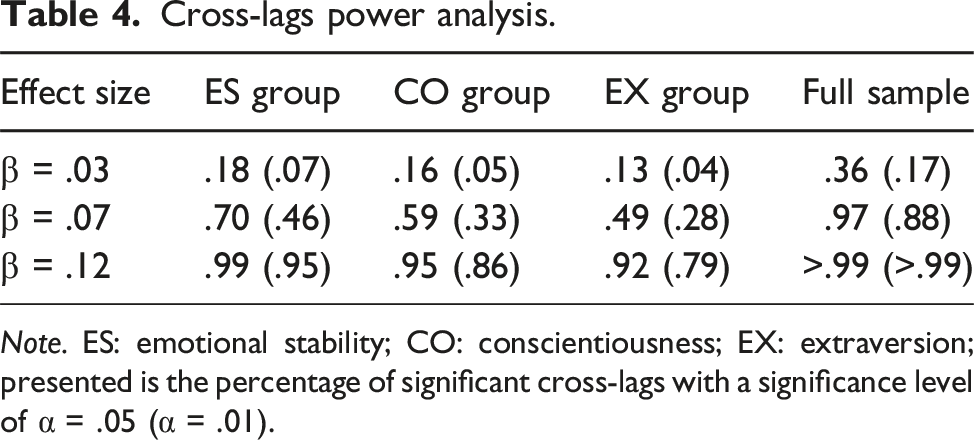
Note. ES: emotional stability; CO: conscientiousness; EX: extraversion; presented is the percentage of significant cross-lags with a significance level of α = .05 (α = .01).
Results
Factor structure of the generic change factors scale
Generic change factors (GCF): Factor loadings and correlations.
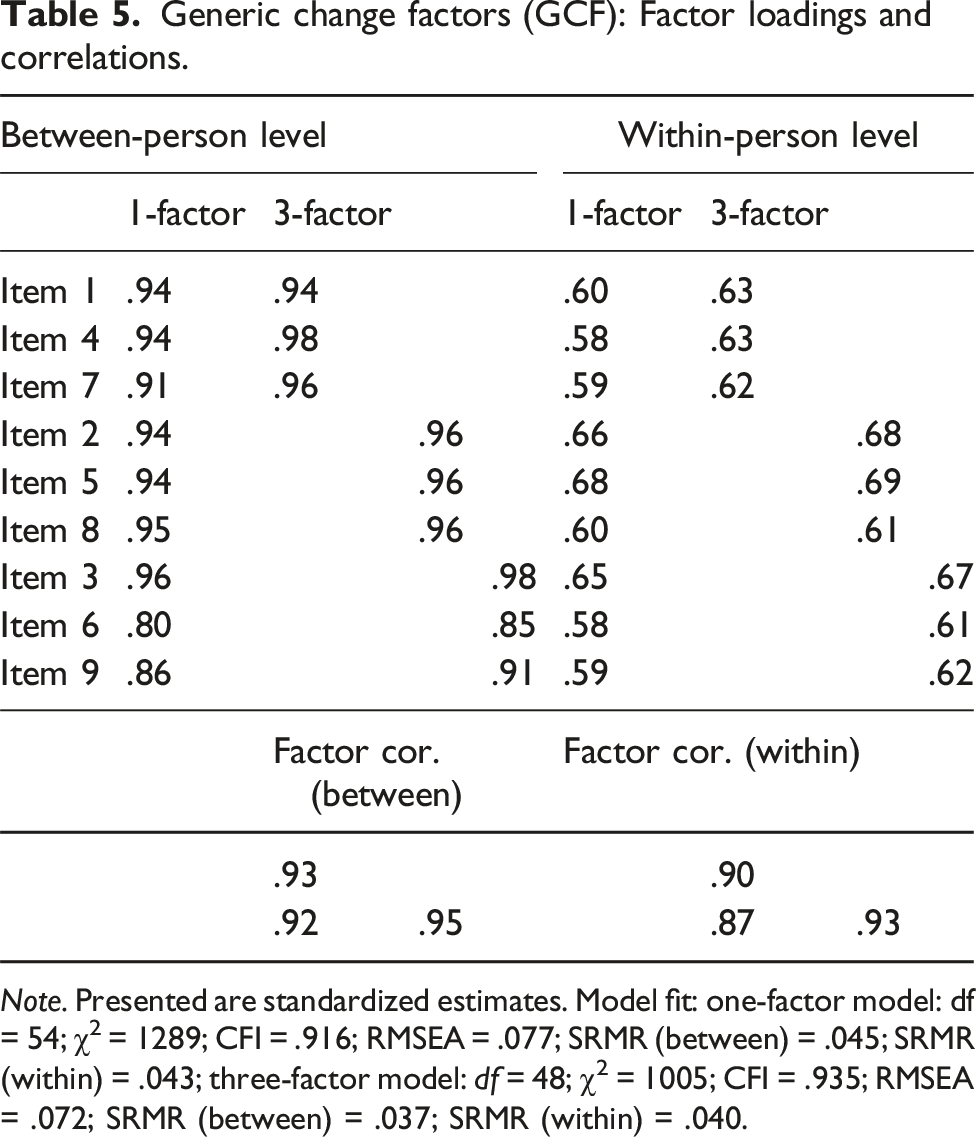
Note. Presented are standardized estimates. Model fit: one-factor model: df = 54; χ2 = 1289; CFI = .916; RMSEA = .077; SRMR (between) = .045; SRMR (within) = .043; three-factor model: df = 48; χ2 = 1005; CFI = .935; RMSEA = .072; SRMR (between) = .037; SRMR (within) = .040.
To check whether a potential alternative structure might describe the data better, we also ran a multi-level exploratory factor analysis ranging from one to three factors in both levels (see OSF Table S1 for results). This did not suggest a different structure from the one tested in the confirmatory factor analysis though. Finally, we checked whether the factor structure of the GCF differed with respect to the change goals groups and ran a multi-level confirmatory factor analysis with the assumed three-factor structure and an alternative one-factor structure separately for each group. The results show that the structure is the same for all groups (see OSF Table S2 for results). Because of the strong factor correlations of around .90 between the three GCF, we focused on a single-factor solution in the following analyses. However, we also ran the analyses separately for the three GCF (see OSF Figures S1 and S2). Nearly all results were the same as for the single-factor solution, except for one deviation in the RI-CLPM within-person correlations. We describe this in more detail in the corresponding section.
Retest correlations and mean-level changes in weekly personality states and generic change factors
The average one-week retest correlations in the entire dataset/corresponding change goal group were r = .59/.52 for Emotional Stability, r = .63/.64 for Conscientiousness, and r = .57/.53 for Extraversion (all p < .001). The average GCF retest correlation was r = .69 in the entire dataset, r = .62 in the ES group, r = .71 in the CO group, and r = .74 in the EX group (all p < .001). Overall, this suggests a substantial stability in the weekly states but most notably in the GCF as well. This implies that those people who reported benefiting from the intervention in one week also continued to do so in subsequent weeks.
Descriptive statistics of weekly personality states and generic change factors across weeks and groups.
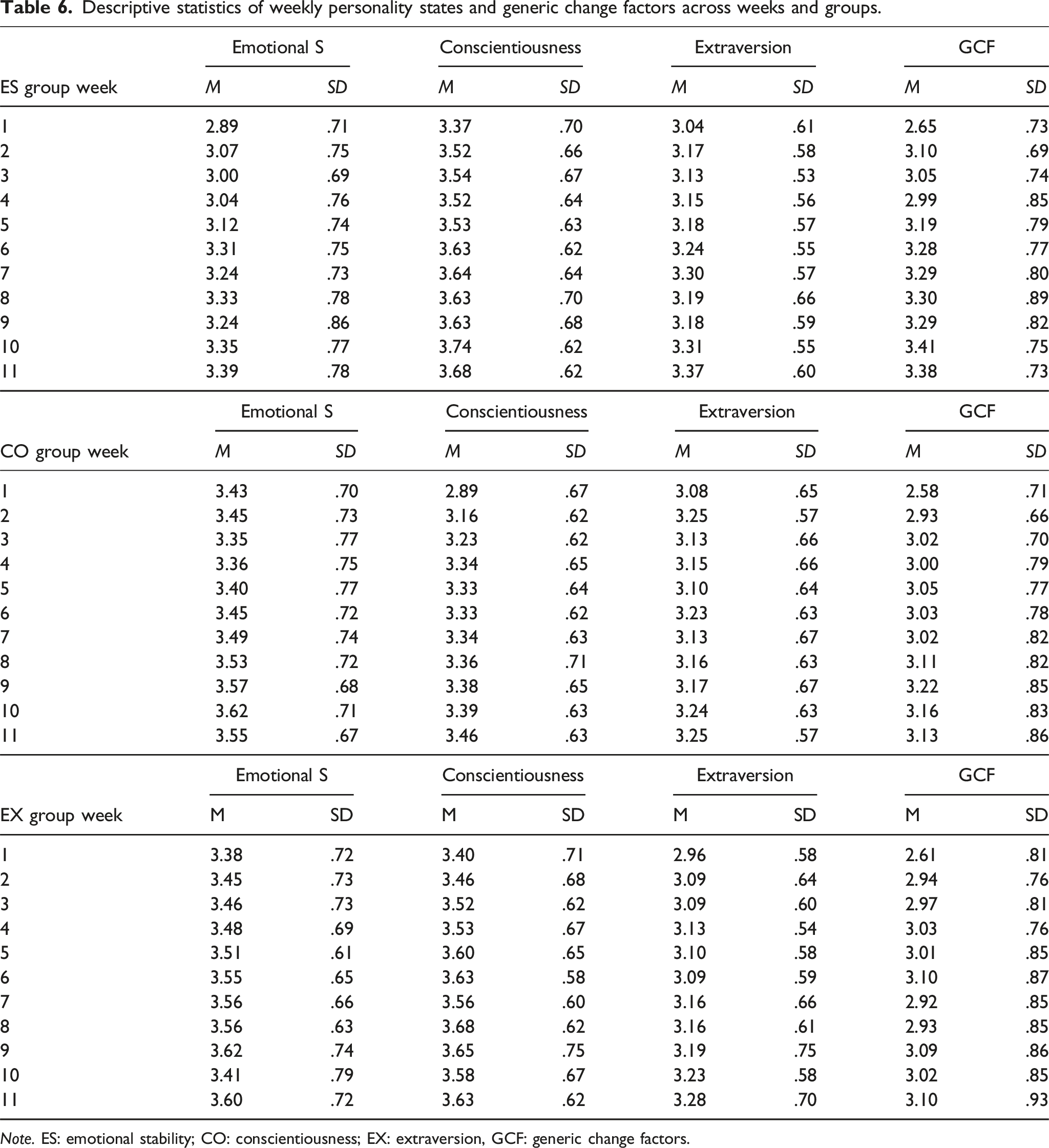
Note. ES: emotional stability; CO: conscientiousness; EX: extraversion, GCF: generic change factors.
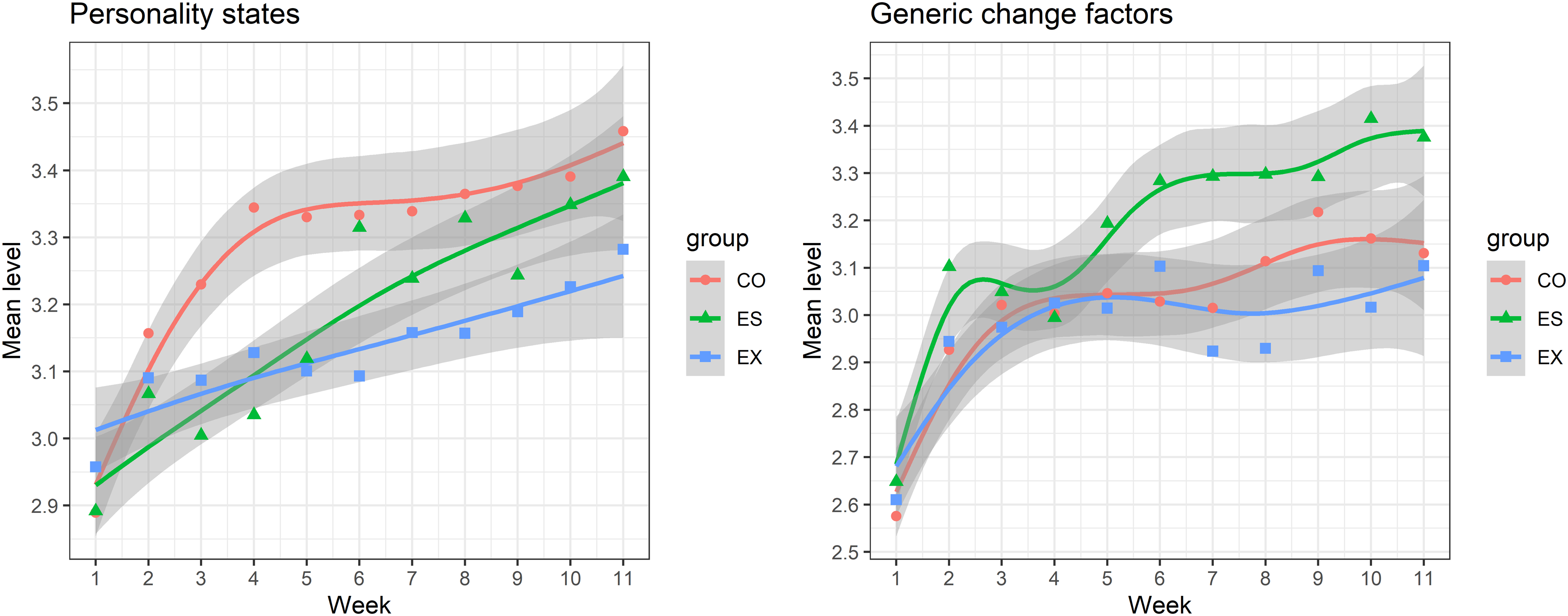
Means of weekly personality states and generic change factors across weeks. Note. ES: emotional stability; CO: conscientiousness; EX: extraversion; points represent the score mean in each week, lines a loess-smoothed approximation of the trend across weeks. Gray areas represent the 95% confidence intervals around the smoothed trend. For the findings for each generic change factor separately, see OSF Figure S1.
The linear slopes indicated a weekly increase in the targeted states of on average 0.05 in the ES group, 0.04 in the CO group, and 0.03 in the EX group (all p < .001; values reflect unstandardized weekly changes on the 1 to 5 scale). In other words, the participants in the associated group increased by an average of 0.54 (ES), 0.42 (CO), or 0.30 (EX) across the 11 weeks covered, corresponding to a large standardized increase of d = 1.19 (ES), d = 1.03 (CO) or d = 0.82 (EX) (standardized based on the intercept/level factor variance). However, the significant negative quadratic effect for Conscientiousness suggested that the increase was faster at the beginning and slower towards the end of the intervention (M = −0.01; p < .001). For Emotional Stability and Extraversion, we found no significant quadratic slope. Participants differed in the rate of (linear) change, with a slope factor SD = 0.03 for Emotional Stability (p < .001), 0.04 for Conscientiousness (p < .001), and 0.03 for Extraversion (p = .002). The large majority of participants reported increases in the weekly states according to their change goal. We only found decreases in the weekly states across the intervention period for 3.5% of the ES group participants, 10.6% of the CO group, and 10.7% of the EX group.
The GCF levels increased over the duration of the intervention as well. We found an average weekly increase of 0.04 in the E–S group (p < .001), 0.03 in the CO group (p < .001), and 0.02 in the EX group (p = .007; values reflect unstandardized weekly changes on the 1 to 5 scale). As such, the participants showed an average increase in their insight, strengths activation, or behavioral practice by 0.45 (ES group), 0.32 (CO group), or 0.25 (EX group) across the 11 weeks covered. These increases were moderate to large in size, with standardized increases of d = 0.86 (ES group), d = 0.71 (CO group) or d = 0.46 (EX group) (standardized based on the intercept/level factor variance). In all three groups the curve-linear slope suggested an initially faster but subsequently slower increase (M = −0.01; p ≤ .002). Participants also differed in the rate of the (linear) change in GCF, with a linear slope SD = 0.02 for the ES group (p < .001), 0.03 for the CO group (p < .001), and 0.02 for the EX group (p = .018). Over the course of the intervention, majority of people reported increases in the GCF. We only found decreases for 5.4% of the ES group participants, 10.6% of the CO group, and 9.2% of the EX group.
We additionally tested whether the changes in weekly states and GCF differed across groups (e.g., whether people in the ES group showed the strongest state and intervention process changes). To do so, we compared a multi-group model with equality constraints to the slope means to a model in which they were freely estimated across groups. The AIC, BIC, and χ2-difference test suggested similar rates of change in the GCF across groups (see OSF Table S4). Results for the weekly states were mixed, with the AIC and χ2-difference test indicating significant differences (ΔAIC = 3.6; p = .021) in the slopes, suggesting that the Emotional Stability states increased more rapidly than the Extraversion states. However, the BIC results were in favor of the restricted model (ΔBIC = −14.5), indicating similar rates of change between change goal groups.
Bidirectional associations between weekly personality states and generic change factors
To examine the bidirectional associations between personality states and GCF across time (i.e., third and fourth research question), we ran a RI-CLPM in the full dataset and each of the intervention groups based on the combination of the targeted weekly states and change factors scores. All relevant standardized parameter estimates from the RI-CLPM analyses are presented in Figure 3 (see OSF Table S5 for exact values; estimates were standardized with the standardizedSolution function in lavaan). Unrelated to our research questions, we also present the within-person autoregressive or carry-over effects across weeks (Figure 3(a)). These indicated some within-person stability in the weekly states (average β = .25; all p < .001) and GCF (average β = .26; all p < .001). Because these reflect similarities in the state and GCF deviations after controlling for the stable level (i.e., between-person differences over the course of the 11 weeks), these are substantially lower than the weekly retest correlations of r = .59 for the states and r = .63 for the GCF. The within-person carry-over effects indicate that stronger deviations in the states or GCF in one week were preceded or followed by stronger deviations in the previous or subsequent weeks, indicating some form of inertia in the states and GCF across weeks. Standardized associations between weekly personality states and generic change factors. (a) Autoregressive, (b) correlations, and (c) cross-lagged. Note. ES: emotional stability; CO: conscientiousness; EX: extraversion; All: results from a multi-group model across all three intervention groups with equality constraints on the model parameters; Between person: random intercept correlations; Within person: occasion-specific correlations; GCF: generic change factors (i.e., strengths activation, self-insight, and behavioral practice). Presented are standardized effects with 95% confidence intervals. Gray lines indicate p > .05; dashed lines p ≤ .05; solid black lines p ≤ .01. For the findings for each generic change factor separately, see OSF Figure S2.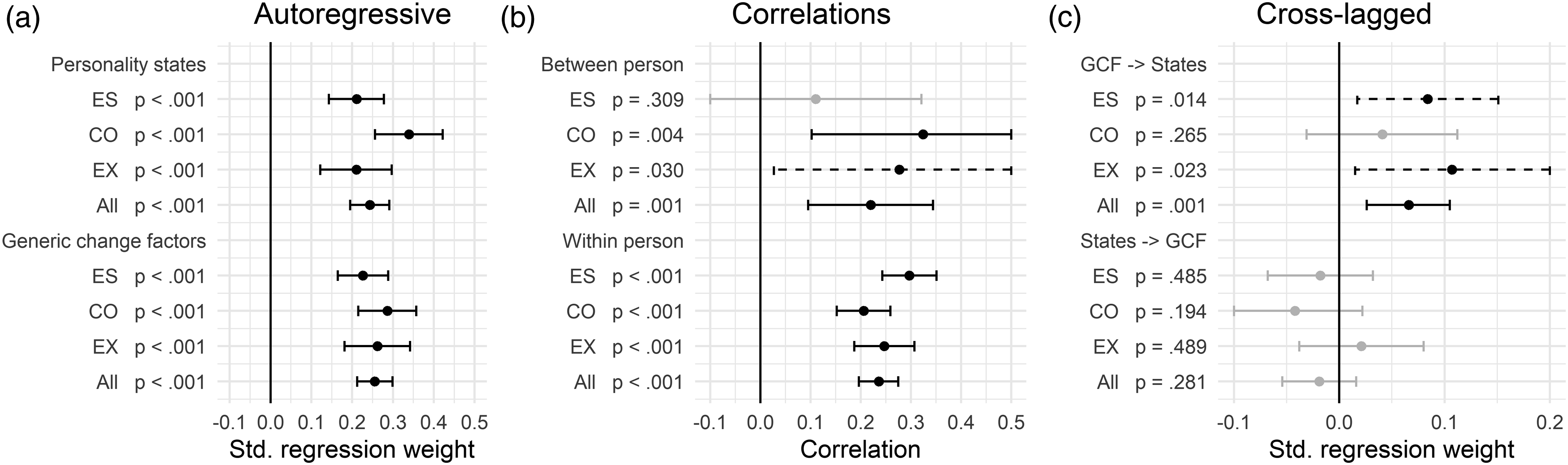
We first wanted to examine whether those weeks in which participants reported stronger realization of GCF than usual were characterized by higher personality states in the same week (i.e., third research question). This is indicated in the occasion-specific correlations in the RI-CLPM (path rw in Figure 1). Results are presented in Figure 3(b). In line with our assumptions, we found that within-person changes in the weekly states were positively associated with changes in the GCF reported the same week (across all groups: r = .22; ES group: r = .30; CO group: r = .21; EX group: r = .25; all p < .001).
As mentioned earlier, the results using a three-factor model of GCF were very similar to the results of the single-factor model. However, there was a notable deviation in the RI-CLPM within-person correlations across all groups (see OSF Figure S2 for detailed results). Self-insight was only correlated by r = .15 (p < .001) with the weekly states, whereas behavioral practice and strengths activation correlated by r = .27 and .28 with the states, respectively (both p < .001).
Interestingly, the overall state and GCF levels across the 11 weeks (i.e., the random intercepts) were also positively associated (across all groups: r = .22; p = .001; no significant association for the ES group: r = .11, p = .309; CO group: r = .32; p = .004; EX group: r = .28; p = .030). Again, self-insight showed the weaker associations (not significant: r = .11; p = .109) compared to behavioral practice (r = .24; p < .001) and strengths activation (r = .28; p < .001; see OSF Figure S2).
And finally, we wanted to examine whether stronger realization of GCF in one week would be associated with higher personality states in the subsequent week, and vice versa (i.e., fourth research question). This is indicated in the cross-lagged effects in the RI-CLPM. The results are presented in Figure 3(c). In line with our assumptions, we found that stronger realization of GCF were associated with higher state deviations the week after (across all groups: β = .07; p = .001; ES group: β = .08; p = .014; EX group: β = .11; p = .015). Based on typically found effect sizes for cross-lags in such models, the effects can be considered moderate in strength (i.e., β ≥ .07; Orth et al., 2022). However, we found no significant association in the Conscientiousness group (β = .041; p = .265). We were also interested in whether participants reported stronger GCF the week after they reported higher personality states. Contrary to our assumptions, none of the cross-lagged associations from the weekly personality states to later GCF were significant. Overall, the RI-CLPM findings suggested that participants showed higher state levels in the same week and the week after they reported stronger realization of GCF.
As constraining the within-person occasion-specific correlations (Figure 3(b)) to equality across time increased model misfit for the Conscientiousness and Extraversion group (see Table 3), we also examined whether these correlations differed significantly across time. The correlations at each week are presented in Figure 4. As suggested by the equality constraints, the associations were stable across time in the ES group. The variations in the CO group were unsystematic across time. For the EX group, the associations seemed to be stronger in the latter half of the covered time span. A linear regression with the correlation as independent variable and week as dependent variable suggested an average increase of Δr = .04 per week (p = .018). Within-person occasion-specific correlations across weeks and groups. (a) Emotional stability, (b) conscientiousness, and (c) extraversion. Note. Presented are the occasion-specific correlations in each week with 95% confidence intervals. Gray lines indicate p > .05; dashed lines p ≤ .05; solid black lines p ≤ .010.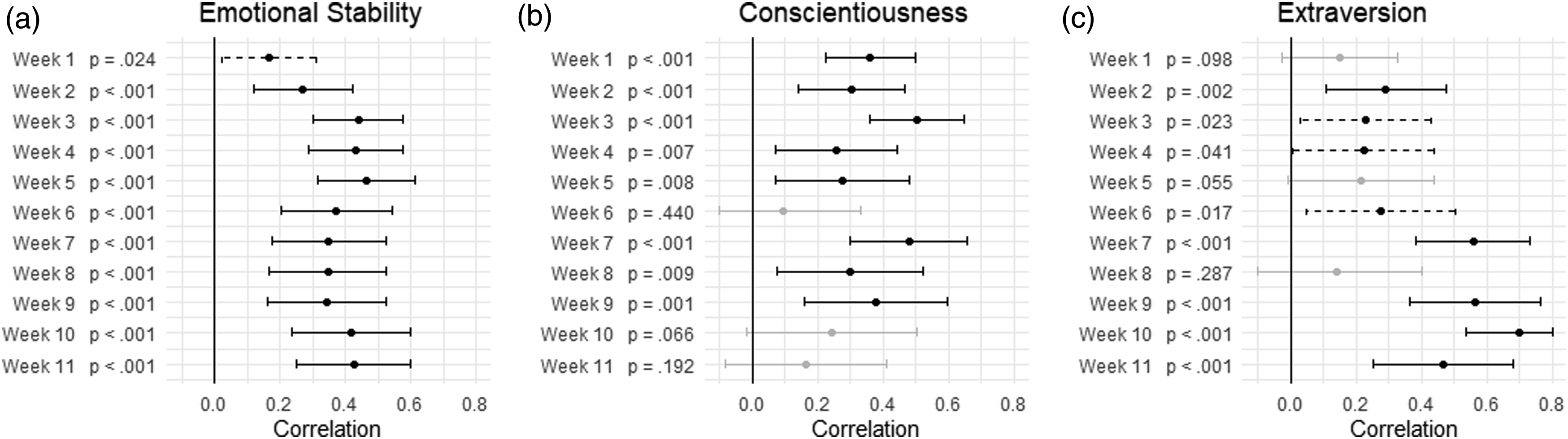
Discussion
The main goal of this study was to examine whether a greater realization of the generic change factors (GCF) of strengths, insight, and behavioral practice through a digital intervention is associated with greater changes in weekly personality states. The present results provide multiple insights into potential mechanisms of change in personality change interventions. First, the measurement of the GCF showed a single-factor structure, both at the between-person and within-person levels. This suggests that individuals focused on the GCF simultaneously rather than separately. Second, the weekly states of Emotional Stability, Conscientiousness, Extraversion and levels of GCF increased during the intervention. This is consistent with previously reported increases at the trait level between the beginning and end of the intervention (Stieger et al., 2021) and further indicates that participants also gained more self-insight, the ability to modify behaviors, or access strengths and resources. Third, stronger increases in the generic change factors were associated with stronger increases in personality states during the same week. This finding is initial evidence of within-person coupled change between intervention implementation of GCF and personality states. Fourth, stronger increases in GCF were associated with stronger personality state change in the following week for Emotional Stability and Extraversion—but not for Conscientiousness. In contrast, personality state changes were not associated with an increase in the GCF in the following week. In summary, the present study provides novel findings for the within-person dynamics of personality change during a personality intervention.
Strengths, insight, and behavioral practice merge into one generic change factor
We examined the factor structure of GCF at both the between-person and within-person levels, as we wanted to examine if people would focus on strengths, insight, and behavioral practice to different degrees, both in comparison to others (e.g., difference in main intervention processes between groups) and across time (e.g., one change factor prioritized per week). This is consistent with recent calls for future research on GCF to focus not only on differences between individuals but also on variability within individuals so that GCF can be linked to outcome processes (Cuijpers et al., 2019).
Despite a better model fit of the three-factor model of GCF compared to the one-factor model, the strong between- and within-person factor loadings and correlations supported one general factor at both levels. This suggests that the intervention simultaneously promoted strengths, insight, and behavioral practice, not only over the entire duration of the intervention, but also on a weekly basis. One obvious reason for this finding might be that the intervention addressed all factors simultaneously, using multiple activities and tasks to maximize the intervention effect (Stieger et al., 2018, 2021). Due to this broad and comprehensive intervention approach, it might have been difficult to differentiate between the different generic change factors. Indeed, previous work from psychotherapy literature suggests similar findings regarding the structure of GCF (Flückiger et al., 2010), indicating that the various retrospectively assessed, patient-evaluated change factors are highly interrelated (e.g., Finsrud et al., 2022; Wampold & Flückiger, 2023). It could also be because, due to the short measurement with three items per subscale, the scale does not differentiate between GCF as could be the case with longer scales.
The present results on the structure of the GCF raise interesting questions for future research. First, are people able to differentiate between different change factors? Measures that address key aspects of the interventional process in face-to-face sessions, such as realization of strengths, typically assess the realization of GCF immediately after a therapy session to check what has been implemented in that particular session (Flückiger et al., 2010; Krampen & Wald, 2001; Trösken, 2006). However, in the present study, the temporal focus of the assessment referred to the last week. Therefore, it is possible that temporal effects were confounded due to daily intervention activities and tasks (e.g., more behavioral practice on one day and more insight on another day). Second, are the items (Table 2) measuring the GCF too similar because they all relate to some degree to (self-) perception or self-knowledge? Although the face validity of the items suggests different concepts, it is possible that processes of self-perception and self-knowledge have contributed to the single-factor structure of GCF.
Changes in weekly personality states and generic change factors
We found within-person increases in the states of Emotional Stability, Conscientiousness, and Extraversion in the corresponding change goal group with similar rates of change. Those who wanted to become more emotionally stable or extraverted on average showed a steady increase in Emotional Stability and Extraversion states from one week to the next, while the Conscientiousness group tended to show a faster increase at the beginning of the intervention and a slower increase toward the end of the intervention. Overall, these results provide important additional evidence for the effectiveness of the personality coaching intervention (Stieger et al., 2021), and for intervention efforts to change personality traits in general (e.g., Jackson et al., 2021; Roberts, Luo, et al., 2017; Stieger, Wepfer, et al., 2020).
We also found evidence of an average within-person increase in the measure of generic change factors across time, with the increase being initially faster but then slower in all three groups. The rates of change in the GCF seemed to be similar in all groups. This increase in GCF is important because it suggests that increasingly more supportive, learning, and action-related change factors were realized over the course of the digital intervention, at least in participants’ perceptions of learning more about themselves, exhibiting more (or new) behaviors, and experiencing more support from others and from the digital coach.
Despite an average increase in within-person change trajectories for personality states and GCF, we observed considerable variability in these trajectories, as not every individual changed in a similar way or direction. Indeed, one of the most fundamental observation in intervention science is that people often differ in how they respond to and change due to interventions (e.g., Barkham et al., 2021). The same treatment can have different effects on people in the way change processes occur within people. Evidence of variability in personality state change and change factors was therefore an important prerequisite for linking change processes to personality states.
The realization of generic change factors promotes weekly personality state change
We tested the assumption that the realization of GCF is partly responsible for the effects of personality change during the time of the intervention in two different ways. First, we examined whether and how within-person changes in the change factors and in personality states are coupled both within and across individuals. On the within-person level, we found significant within-time associations for Conscientiousness, Extraversion, and Emotional Stability. According to effect size interpretation for psychological research (Funder & Ozer, 2019), these effects reflect medium to large effects. The findings indicate that in those weeks in which people showed the strongest state change, they also experienced the strongest change in GCF. The directionality could be that stronger activation of GCF triggered a stronger state change that week, but also that exploring more behaviors, thoughts, or feelings triggered more awareness of own capabilities and strengths. So far, these results provide initial evidence for within-person coupled change of change factors with increases in personality states.
On the between-person level, we found medium to strong correlations of Conscientiousness and Extraversion with the GCF. On one hand, these results could be an indication that generally more conscientious (i.e., the tendency to be self-controlled, responsible to others, hardworking, orderly, and rule abiding; Roberts et al., 2014) or extraverted (i.e., sensitivity to potential rewards in social situations; Lucas et al., 2000; and tendency to experience frequent positive affect; Fleeson et al., 2002) individuals engaged more with the intervention and thus achieved higher GCF levels overall. On the other hand, it might also be that the Extraversion and Conscientiousness state levels were highest for those persons who achieved the strongest GCF levels during the intervention. However, this assumption is not supported by the Emotional Stability findings, for which we did not find a statistically significant between-person association. As expected, weeks in which participants increased in their Emotional Stability were also characterized by higher evaluated GCF. But participants with the highest Emotional Stability level during the intervention did not show highest evaluations on the change factors overall. One interpretation of this finding could be that individuals with high Emotional Stability tend to avoid strong emotional states in both directions (positive and negative), which could also manifest in more balanced, less euphoric ratings of the change factors (e.g., Ringwald et al., 2023). Alternatively, our result may suggest that coupling with Emotional Stability primarily reflects a within-person process or is simply a random finding. Research is needed to replicate this finding.
Second, we examined cross-lagged effects of GCF and personality states from one week to the next to investigate the directionality of the coupled change processes. Perhaps most intriguing about the present results is that within-person increases in the GCF were moderately associated with subsequent increases in Extraversion and Emotional Stability during the following week. We did not find this for Conscientiousness. However, the cross-lags could be constrained to equality across groups, suggesting that the effects of the GCF on states in the next week might be generalizable across groups. This suggests that, in addition to moderate to strong within-time correlations, the GCF appear to trigger further state changes beyond the current week. In contrast, we did not find effects of within-person increases in the state levels on subsequent change factors the week after. It may not be surprising that state changes do not affect subsequent GCF changes, but the impact may be more immediate (i.e., in the same week). In addition, it could be that the better the goals are achieved during the course of the intervention, the less pressure there is to engage in self-change efforts.
Although cross-lagged effects do not provide evidence for causal processes in a strict sense, as is the case with experiments, the present results provide initial support (with the exception of Conscientiousness) for the notion that the realization of GCF is partly responsible for the effects of the personality change intervention (Allemand & Flückiger, 2017, 2022). Overall, the present findings contribute to a better understanding of the dynamic processes underlying personality development as discussed in conceptual accounts of personality development (e.g., Wrzus & Roberts, 2017). Based on the TESSERA framework (Wrzus & Roberts, 2017) and the present findings, we therefore assume that the intervention with all its activities and tasks triggered both reflective and associative processes that contributed to the observed changes in personality states.
Implications, limitations, and future directions
The present findings have major implications. While intervention theories focus in part on describing specific pathways of change, the present study may indicate that a critical point in interventional change is that the various GCF are aligned to each other. That is, insight, practiced behaviors, and support may be most effective when they are coordinated (e.g., Flückiger et al., 2022). Another practical implication of this finding might be that individuals are more likely to assess their engagement in the intervention from a holistic perspective and that this assessment corresponds to a more optimistic expectation of the intervention (Gallagher et al., 2020; Wampold & Imel, 2015). Overall, the realization of change factors may increase the likelihood of subsequent change in personality states, especially for individuals who wish to cultivate affective traits, that is, Emotional Stability and Extraversion.
The present study has some limitations that may inform future directions. First, the measure of GCF was intended to capture strengths, insight, and behavioral practice as generic change factors. However, the empirical data in this study support a single-factor model that includes all items of the three postulated factors. Since support, learning, and action-related general change factors cannot be reduced to just the three factors studied, but include many additional factors (Cuijpers et al., 2019; Lambert & Ogles, 2004), it would be valuable to study additional GCF as potential mechanisms of change. For instance, discrepancy awareness is an important candidate that was not included in the measure of change factors. Future research is needed to examine discrepancy awareness over time. Awareness of discrepancy as a support factor may be temporally before the other change factors, and the magnitude of discrepancy should decrease as the intervention becomes more effective. Moreover, another candidate is working alliance (i.e., the collaborative quality between clients and professionals). Meta-analytic work reports a robust positive association between working alliance and treatment outcomes of psychotherapy and coaching (Flückiger et al., 2018; Grassmann et al., 2020). There is also preliminary evidence that individuals can develop an affective bond with chatbots (Nißen et al., 2022). Consequently, digital personality change interventions with chatbots may consider working alliance as a change factor.
Second, the process assessments of personality states and GCF were based only on self-reports. It would be valuable to supplement the self-reports with other assessment methods, such as observer reports, as was done for the outcome assessment of the personality change intervention (Olaru et al., 2022; Stieger et al., 2021). Measures that address GCF in clinical and psychotherapeutic settings typically supplement self-reports with reports from therapists (Flückiger et al., 2010; Krampen & Wald, 2001). However, this was not possible in the present study because a chatbot-based digital coach was used. In addition to the demanding nature of requesting weekly observer reports from informants such as friends and family members, it is unlikely that they will be able to observe participants for a sufficient length of time over the course of a week to provide reliable measures of personality states. Future research, however, could combine digital interventions with face-to-face interventions and include observer reports from the coaches or psychologists, or alternatively include some naturalistic behavioral observations through mobile sensing approaches (e.g., Beierle et al., 2024; Mehl, 2017; Rüegger et al., 2020).
Third, a criticism related to self-reported changes is that participants may have reported changes based on expectations regarding the intervention goals or wishful thinking. The impact of demand effects is not limited to personality change interventions, but is a challenge commonly faced in psychotherapy, counseling, and coaching. It is difficult to completely eliminate these effects. However, it is important that future studies of personality change interventions consider the potential impact of demand characteristics and explicitly control for them in the research design (e.g., double-blind design and implicit measures).
Fourth, a valuable addition to future personality intervention research is to examine whether the changes achieved during an intervention can be achieved over long-term periods. A recent one-year follow-up of the PEACH intervention has shown that the achieved personality changes remained stable (for those who wanted to increase in extraversion and conscientiousness) or even changed further (for those who wanted to decrease in neuroticism) (Stieger, Flückiger, & Allemand, 2023). However, it is important to consider attrition effects, as participants who completed the one-year follow-up were more open to experience, less neurotic, more agreeable, and conscientious than those who did not complete the one-year follow-up.
Fifth, another valuable addition to future personality intervention research is to evaluate potential consequences of the changes in behaviors and change factors. Initial work suggests that reaching personality change goals can improve, or at least be associated with subjective well-being (Hudson & Fraley, 2016) or physical activity (Stieger, Allemand, & Lachman, 2023). A recent study showed that the present personality intervention resulted in an increase in life satisfaction directly after intervention and in the 3-month follow-up (Olaru et al., 2023). An open question is whether these changes can already be observed during the first weeks of the intervention or take more time to manifest. Studies asking participants to behave more extraverted during short durations of time (e.g., one week) generally also found improvements in positive affect (Margolis & Lyubomirsky, 2020; van Allen et al., 2021), but also increases in negative affect and tiredness for more introverted participants (Jacques-Hamilton et al., 2019). One assumption could be that potential negative side-effects of “acting out-of-character” (Kuijpers et al., 2022) dissipate as behaviors become more habitual during the course of the intervention.
Finally, while the sample size is impressive for an intervention study, it is a relatively culturally homogeneous sample of rather younger Swiss adults recruited primarily in educational settings; thus, work is needed to understand the generalizability of the findings in more heterogeneous contexts and using additional cohorts.
Conclusion
The present research makes four important contributions to the study of personality trait change through psychological interventions. First, it shows that the potential generic change mechanisms of strengths, insight, and behavioral practice tend to merge into a single-factor model of change factors within and between individuals. Second, it provides further evidence for the effectiveness of a digital intervention (Stieger et al., 2021) by showing within-person increases in weekly personality states, and in generic change factors during the intervention. Third, it shows that within-person changes in personality states and change factors are coupled over time. Finally, it provides initial support for the claim that the realization of strengths, insight, and behavioral practice partly explain the effects of the personality change intervention. Most interestingly, within-person increases in generic change factors were prospectively associated with subsequent increases in Extraversion and Emotional Stability during the following week.
Footnotes
Acknowledgments
The authors thank Dominik Rüegger and Tobias Kowatsch for their help in programming the application. The authors thank Sara Aeschlimann, Chantal Gerl, Lara Keller, Marcel Lauber, Elias Laimer, Marcia Nissen, Fabienne Thierstein, Moritz Truninger, and Nadia Wohlwend for their help in preparing study materials and collecting data.
Declaration of conflicting interests
The author(s) declared no potential conflicts of interest with respect to the research, authorship, and/or publication of this article.
Funding
The author(s) disclosed receipt of the following financial support for the research, authorship, and/or publication of this article: This article is based on data from an interdisciplinary trial funded by a grant from the Schweizerischer Nationalfonds zur Förderung der Wissenschaftlichen Forschung (No. 162724; PI: Allemand).
