




Abstract
Objective
This systematic literature review’s purpose was to examine the social factors (e.g., social network, social support, social interaction, loneliness, and social environmental factors) associated with PA among older adults.
Data Source
Electronic databases (PsycINFO, MEDLINE, Scopus, and Web of Science) were used in this study.
Study Inclusion and Exclusion Criteria
Studies published in English focusing on individuals aged 65+ that assess social and intrapersonal factors influencing PA, with quantitative data on these relationships, were included, regardless of the PA measurement method.
Data Extraction
Two independent reviewers extracted data using a standardized form, capturing study design, sample size, participant characteristics, social factors assessed, and their relationship to PA behavior.
Data Synthesis
A descriptive summary of study characteristics and methodological quality was conducted.
Results
1560 articles were identified and 34 were included. Wider social networks, social support, social cohesion, social norms towards PA, and positive social interactions were positively associated with PA among older adults, whereas obstructive factors (e.g., loneliness and social isolation) of the social environment were negatively associated with PA.
Conclusions
The findings indicate that the social environment plays a strong role in determining PA levels among older adults. Interventions targeting PA enhancement in this population should prioritize strengthening social support and networks related to PA. Future research should focus on elucidating the mechanisms through which social factors impact PA in older adults.
Key Point
Interventions aimed at promoting PA within the aging population should prioritize strategies such as enhancing social support and social network towards PA, so improving the obstructive factors are important considerations.
Introduction
Engaging in regular physical activity (PA) has a wide range of health advantages, such as decreasing the likelihood of chronic ailments, enhancing mental well-being, and elevating overall quality of life. 1 Several studies have demonstrated that increased PA and reduced sedentary behavior among older adults are associated with notable enhancements in their quality of life and substantial reductions in medical expenditures.2,3 Unfortunately, a substantial proportion of individuals aged 65 years and older fail to engage in sufficient PA to attain these health benefits. According to the Centers for Disease Control and Prevention (CDC), 28% of older adults in the United States adhere to the recommended guidelines for PA, which entail at least 150 minutes of moderate-intensity aerobic activity or 75 minutes of vigorous-intensity aerobic activity per week, or a combination of both. 4 This is concerning because physical inactivity has been linked to increased risk of chronic diseases such as cardiovascular disease, stroke, and type 2 diabetes.5,6
Numerous scholars in the field of health behavior emphasize the need for an integrated observation of social components (eg, social network, social support, social environment, social connection, and social norms) to enhance their understanding of social connections and social structures in health behavior.7,8 Social and interpersonal factors have been found to be important predictors of PA.9,10 Social or interpersonal factors are those that are related to an individual’s social environment, including their relationships with family, friends, and community members, as well as their social support networks and social norms. 11 These factors have been found to be particularly relevant to PA behavior among older adults, as social interactions and support, have been shown to be important motivators for PA participation. 12 In addition, one scholar reported that social connectivity and social support can increase exercise adherence in older adults, 13 and in this way PA participation in their leisure time can strengthen social leisure and interconnection and provide value-added benefits in old age. Further, PA increases social activities like lunch clubs and community center visits where social interaction might have been a reason for the attendance of the older adults, and these social activities are related to their health and happiness. 14 Since social activities strengthen the positive association between PA and well-being and affect older adults’ behavior, 15 their enhanced social activities are associated with a decrease in mortality compared to other leisure activities, and provide stress relief. 16 Although the terms ‘social’ and ‘interpersonal’ are often used interchangeably in previous studies, in the scope of this study, the term social is used to encompass both social and interpersonal factors for consistency and clarity. The term includes social norms, interaction, network, support, and environmental factors that are consistent with how the social environment has been conceptualized in previous studies, as well as factors such as an individual’s relationships with family, friends, and community members.11,17
Previous systematic reviews/frameworks about this subject have either concentrated on specific social factors such as social support or social norms,18,19 or have encompassed a broader range of factors influencing PA behavior across all age groups. 20 Prochnow and Patterson 21 reviewed 28 articles systematically to investigate the association between social network and PA behaviors in adults aged 18 to 64 years old, so they demonstrated that social connection is an important key way for adults’ PA and PA behaviors were associated with social network’s size, composition, and strength. Another study by Smith and colleagues reported a systematic literature review of the association between PA and social determinants in older adults, but it is difficult to explain whether the overall social factors are related to PA because they also examined only specific factors (social support and loneliness). 22 Theories and models, such as the social-ecological framework, serve as frameworks for examining the determinants of PA behavior, and the assessment of participants’ social networks frequently involved not only social connection and social support but also measuring social cohesion and social norms for their PA engagement. 23 Therefore, this systematic literature review will comprehensively examine the social factors (eg, social network, social support, social interaction, loneliness, and social environmental factors) associated with PA among older adults. The findings from this review have the potential to contribute to the development of more effective interventions that address the distinct social obstacles faced by older adults. By enhancing their levels of PA, these interventions can lead to enhanced health outcomes and an improved quality of life for this population.
Methods
Data Sources
The present study used a systematic approach to identify relevant studies published in peer-reviewed journals. Based on electronic databases (PsycINFO, MEDLINE, Scopus, and Web of Science), previous articles were searched by using a combination of keywords related to PA, social factors, and older adults.
Inclusion and Exclusion Criteria
Studies were included if they met the following criteria: (1) published in English language peer-reviewed journals; (2) only included participants aged 65 years and older; (3) included participants who do not have specific diseases or conditions; (4) assessed social factors related to PA behavior; (5) measured PA either in self-report or device measured; and (6) reported quantitative data on the relationship between social factors and PA behavior. Data extraction was conducted using a standardized form, including study design, sample size, participant characteristics, social factors assessed, and the relationship between these factors and PA behavior.
Data Synthesis
Search terms for this search were as follows: (“physical activity” OR “exercise” OR “workout” OR “aerobic” OR “walking”) AND (“social network analysis” OR “social network” OR “social support” OR “social norm” OR “friend*” OR “peer” OR “social influence” OR “social environment” OR “interpersonal” OR “social interaction” OR “social connect*” OR “social isolation” OR “loneliness” OR “psychosocial”) AND (“older adult” OR “elder” OR “senior citizen” OR “retire” OR “geriatric”). Records were imported into Covidence for review management. 24 It is important to note that this review was not registered prior to conducting the search. While registration of systematic reviews promotes transparency, the absence of registration does not affect the validity of our findings, as the review followed standardized systematic review procedures, including strict adherence to PRISMA guidelines, ensuring a transparent and replicable approach.
The studies were screened and selected based on predetermined inclusion and exclusion criteria by two independent reviewers. In this systematic review, we included both Randomized Controlled Trials (RCTs) and cross-sectional studies to assess the association between PA and social variables among older adults. Only baseline data from RCTs were included and treated similarly to cross-sectional studies to maintain consistency in exploring the associations between social factors and PA. The initial search revealed 1560 articles, but duplicate articles were removed prior to abstract review (n = 532). Subsequently, the inclusion criteria were applied to review the titles and abstracts, resulting in the exclusion of 813 articles. The remaining articles (n = 215) were reviewed independently by two authors. The reviewers demonstrated an agreement rate of 85% during the full-text review stage. Discrepancies between the two reviewers were resolved through discussion and consensus or by a third reviewer. A total of 181 articles were excluded during the full-text assessment stage for the following reasons: involved adults who were not over 65 years old (n = 78); did not conduct an analysis between PA and social variables (n = 39); did not measure PA (n = 18); or did not measure the social factors (n = 24). Additionally, articles were removed if they were commentaries or editorials (n = 2), reported only qualitative results (n = 17), or narrowly focused on special populations (n = 3). Consequently, the final sample consisted of 34 articles, which were then subjected to data extraction. For detailed information and a visual representation, Figure 1 shows the complete Preferred Reporting Items for Systematic Reviews and Meta-Analyses (PRISMA) data and diagram. PRISMA flow diagram. PA indicates physical activity.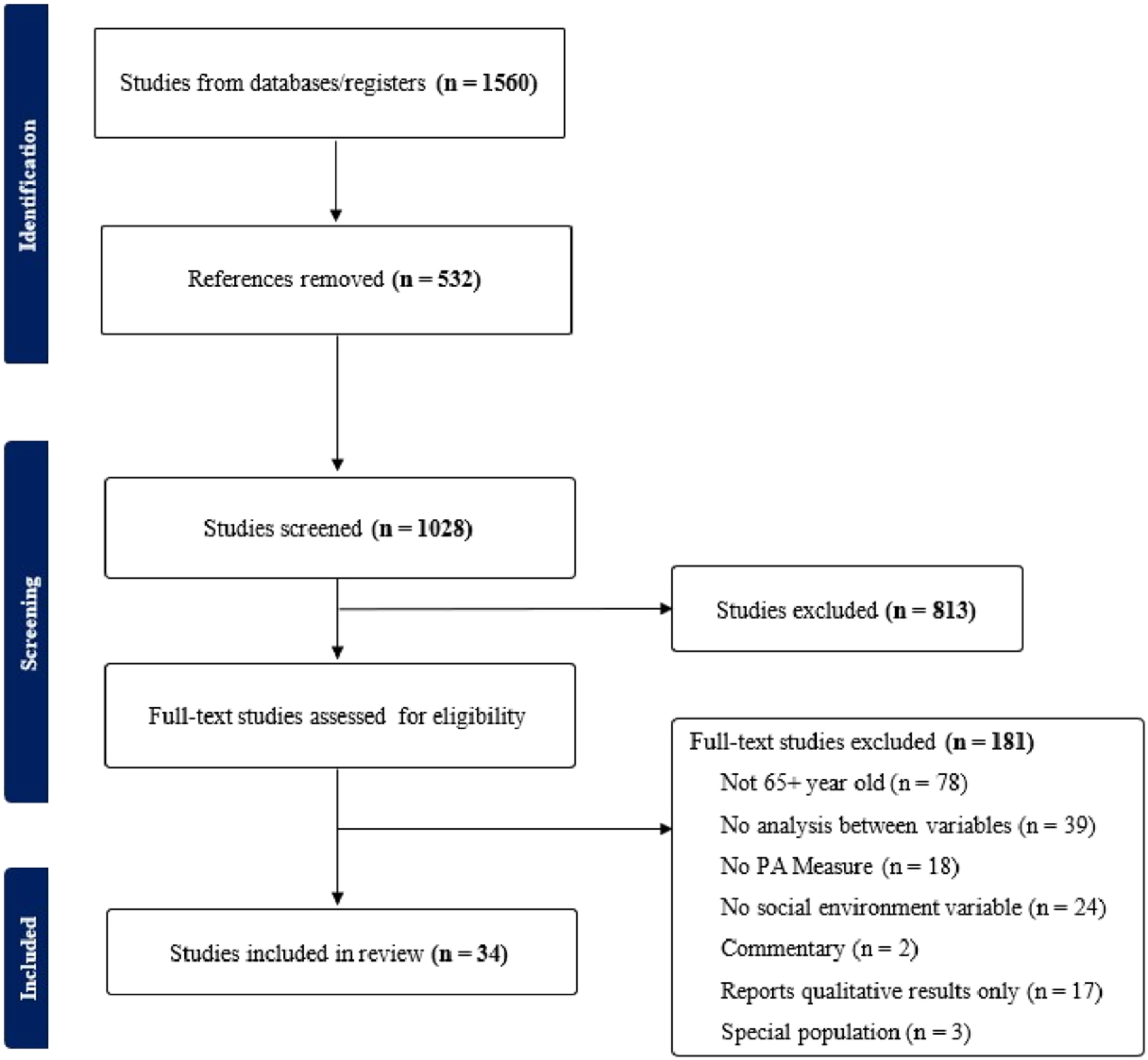
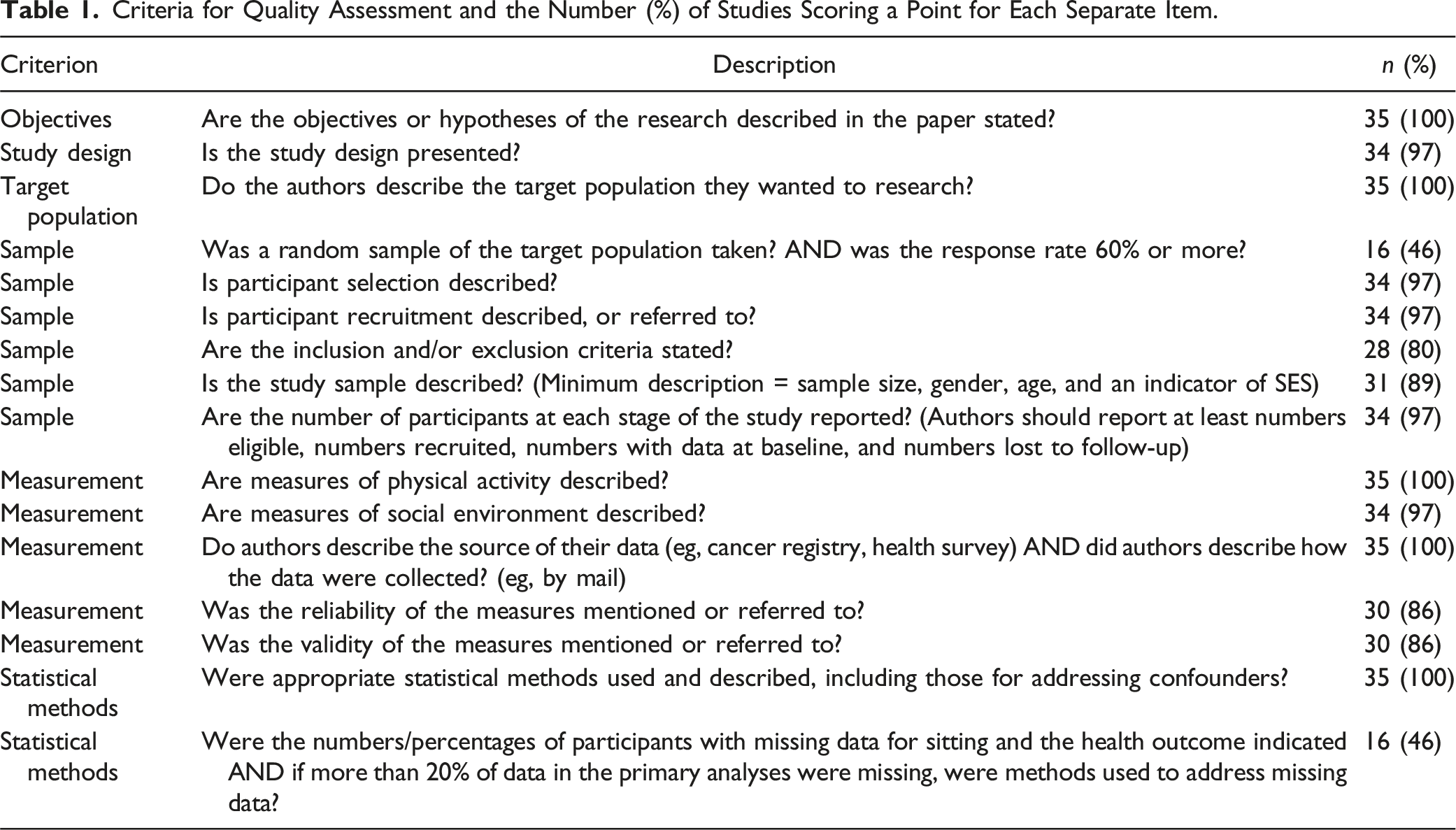
Criteria for Quality Assessment and the Number (%) of Studies Scoring a Point for Each Separate Item.
Results
Study Description
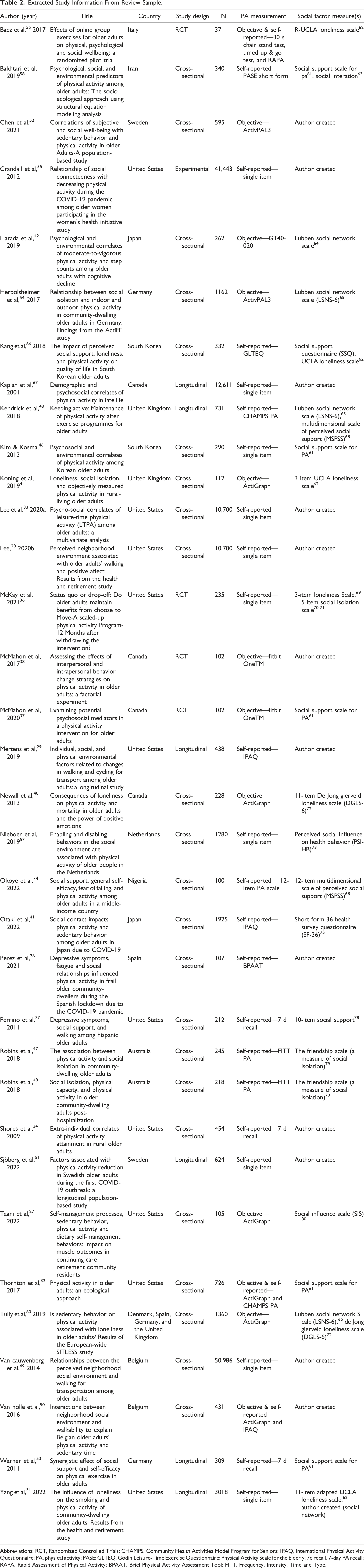
The articles included in this study presented a range of sample sizes, ranging from 37 to 50,986 participants (mean = 4195, SD = 11,184, and median = 386). Within this sample, approximately one-third of studies were conducted in the United States (n = 10, 29.4%).27-36 The remaining studies were conducted in Canada (n = 4, 11.8%),37-40 Japan (n = 2, 5.9%),41,42 the United Kingdom (n = 2, 5.9%),43,44 Korea (n = 2, 5.9%),45,46 Australia (n = 2, 5.9%),47,48 Belgium (n = 2, 5.9%),49,50 Sweden (n = 2, 5.9%),51,52 and Germany (n = 2, 5.9%).53,54 Furthermore, five other countries, namely Italy, 55 Spain, 56 the Netherlands, 57 Iran, 58 and Nigeria 59 were each represented by a single article. One article (2.9%) encompassed results from multiple countries, specifically Denmark, Spain, Germany, and the United Kingdom. 60 Further details regarding the sampled articles are reported in Table 1.
Study Design
Cross-sectional studies accounted for over half of the studies (n = 22, 64.7%),27,28,30,32-34,40-42,44-47,49,50,52,54,56-60 followed by longitudinal studies (n = 7, 20.6%).29,31,39,43,48,51,53 Randomized Controlled Trials (RCTs)36-38,55 and experimental studies 35 constituted 11.8% (n = 4) and 2.9% (n = 1) of the studies, respectively.
Physical Activity (PA) measures
In the majority of articles, PA was assessed through self-surveys or questionnaires (n = 22, 64.7%).28-31,33-36,39,41,43,45-49,51,53,56-59 Nine articles utilized accelerometers (eg, Actigraph, ActiPAL3, and Fitbit OneTM) that had been validated in prior studies (26.5%).27,37,38,40,42,44,52,54,60 Additionally, three articles used a combination of accelerometers and self-reported measures (8.8%).32,50,55
Social factors measures
Extracted Study Information From Review Sample.
Abbreviations: RCT, Randomized Controlled Trials; CHAMPS, Community Health Activities Model Program for Seniors; IPAQ, International Physical Activity Questionnaire; PA, physical activity; PASE; GLTEQ, Godin Leisure-Time Exercise Questionnaire; Physical Activity Scale for the Elderly; 7d recall, 7-day PA recall; RAPA. Rapid Assessment of Physical Activity; BPAAT, Brief Physical Activity Assessment Tool; FITT, Frequency, Intensity, Time and Type.
Main Findings
Summary of Association Between Physical Activity and Social Constructs.
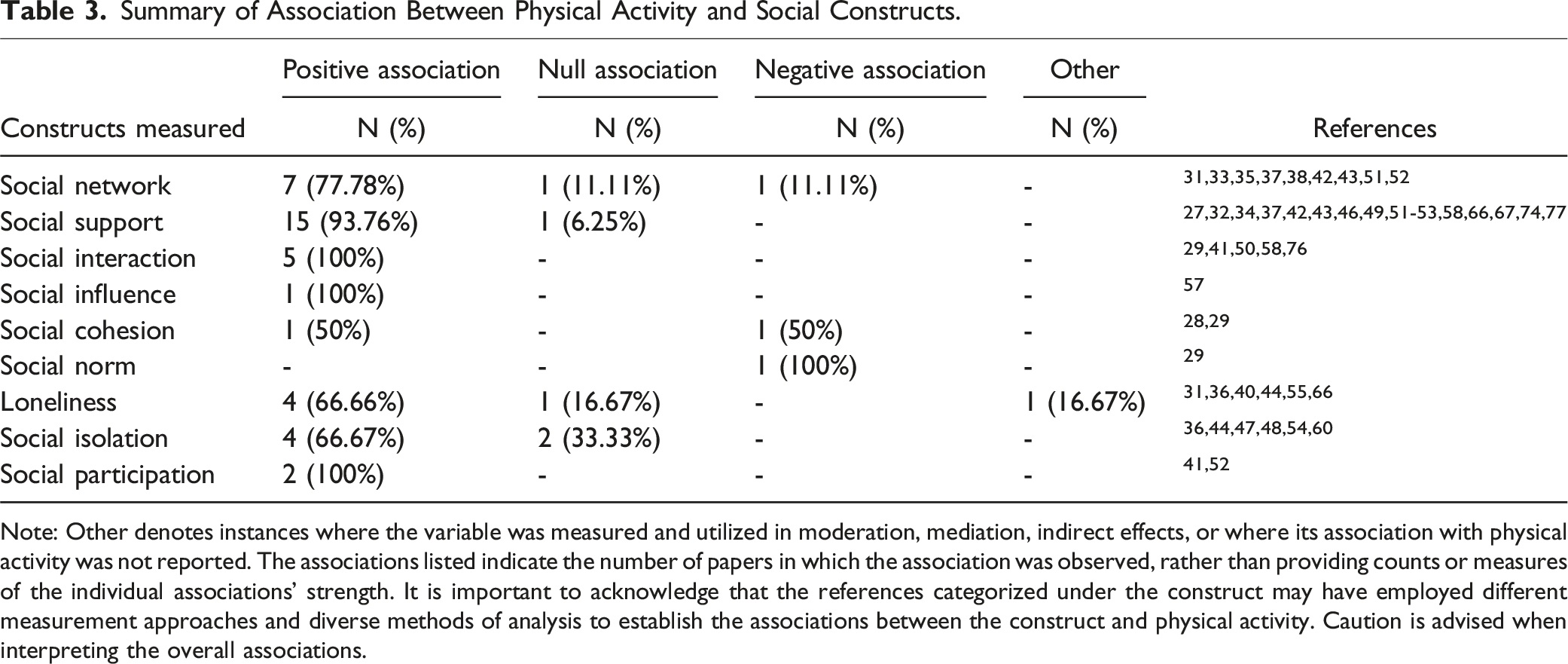
Note: Other denotes instances where the variable was measured and utilized in moderation, mediation, indirect effects, or where its association with physical activity was not reported. The associations listed indicate the number of papers in which the association was observed, rather than providing counts or measures of the individual associations’ strength. It is important to acknowledge that the references categorized under the construct may have employed different measurement approaches and diverse methods of analysis to establish the associations between the construct and physical activity. Caution is advised when interpreting the overall associations.
Social Network
Most investigated studies found that wider social networks are associated with higher PA levels. Chen and colleagues 52 found that high levels of social network and social participation were associated with low sedentary time and high PA. In addition, a study by Crandall found that socially connected participants were less likely to decrease PA than those who were not, indicating that high social connection was associated with PA levels and participation. 35 However, based on multiple regression analysis, Harada and colleagues 42 found that social and environmental factors such as social network, self-efficacy, and self-regulation were not correlated with PA variables in older adults. One previous study found that those with wider social networks were more likely to achieve target moderate to vigorous physical activity (MVPA). 43 Lee and colleagues 33 indicated that psychosocial indicators such as self-efficacy, intrinsic motivation, spiritual engagement, perceived social relationships, and neighborhood safety were significantly associated with the PA of older adults aged 65 or older in the United States. McMahon’s two studies both revealed that older adults who received an element of social networks, had increased average total PA hours per week37,38 and Sjöberg and colleagues 51 revealed that poor social networks are associated with reduced high intensity PA. However, in Yang’s study, social networks were used as control variables, but they did not present the specific values of the results. 31
Social Support
Studies found that social support has a positive effect on PA.32,34,37,43,46,49,51-53,58,66,67,74,77 Social support includes support from participants’ families, friends, and community members to participate in their enhanced PA. Kendrick and colleagues found that those who had higher levels of social support were more likely to achieve the target MVPA level, 43 and the other study also found that perceived social support had a significantly positive effect on PA and quality of life while decreasing loneliness. 66 Perrino and colleagues 77 showed that depressive symptoms were associated with lower likelihood and amount of walking among participants receiving high levels of instrumental social support. One study by McMahon found that participants who received interventions with social behavior change strategies provided significantly higher ratings of social support for PA from family post-intervention. 37 Van Cauwenberg and colleagues 49 found that frequency of contact with neighbors, neighbors’ social support, neighborhood involvement, participation, and volunteering had a significant positive relationship with PA levels. However, Harada’s study analyzed the correlation between social environmental factors including social support and PA variables in 262 older adults in Japan and found that there was no significant correlation between social support and PA variables because the absolute values of Pearson’s correlation coefficients indicated less than 0.20.
Social Interaction
The five articles analyzed in our study found a positive association between PA and social interaction.29,41,50,58,76 Specifically, Bakhtari and colleagues demonstrated that all social predictor factors were positively and significantly correlated with PA, suggesting their potential role in enhancing social interactions and preventing isolation and loneliness, thereby contributing to improved health outcomes. 58 Otaki and colleagues 41 found that PA was positively associated with in-person contact indicators: interaction with friends and social participation. Additionally, sedentary time was negatively associated with the social contact variable of interaction with friends.
Social Influence
One article, classified as social influences, examined the effects of the social environment on health behavior in older adults in the Netherlands and found that perceived social influence was involved in the likelihood of PA in older adults. In particular, the study found that men were more sensitive to social influence on health behaviors than women. 57
Social Cohesion
We found conflicting results in two articles analyzing social cohesion.28,29 According to a study by Lee and colleagues, the relationship between social cohesion and walking was significant (r = .073, P < .01), suggesting that older adults who reported high social cohesion walked more than their neighbors. In addition, the study showed that social cohesion has a positive effect on walking frequency. 28 However, Mertens’ study found that older adults who perceived higher neighborhood social trust and cohesion had 2.13 times lower odds (95% CI = 0.27, 0.83) of engaging in walking for transport and cycling for transport at follow-up. 29
Social Norm
One study found that social norms have a negative impact on PA levels. Mertens and colleagues 29 found that older adults perceiving a higher social norm towards PA from family and friends had 2.08 times lower odds (95% CI = 0.34, 0.68) of engaging in cycling for transport at follow-up.
Loneliness
Four of the six articles that evaluated the relationship between PA and loneliness identified a positive effect.31,36,40,55 One scholar reported in an eight-week online training program that online exercise had a positive effect on physical, psychological, and social well-being, and that it was correlated with decreased loneliness in both the experimental and control groups participating in online training programs. 55 In addition, McKay and colleagues reported that social isolation and loneliness in older adults aged 75 or older were reduced by providing activity coaches during the six-month intervention period. 36 The results of a regression analysis conducted in a study by Newall also showed that loneliness longitudinally predicts perceived PA and mortality. However, studies by De Koning and colleagues 44 revealed that the single-question loneliness scale and UCLA loneliness scale were independent of physical activity, and consistently, in a controlled regression model, no PA variable reduced the likelihood of loneliness variables (P < .003). Also, Kang found no association with PA, as loneliness in active older adults in South Korea mediated the relationship between perceived social support and PA and quality of life. 66
Social Isolation
Four studies reported a positive association between social isolation and PA.36,47,48,54 Specifically, a study by Herbolsheimer reported that socially isolated older adults participated in 7.8 minutes per day less in PA than non-isolated people (P = .007), and families and socially isolated people were more likely to participate in sedentary behavior for 4.5 minutes more per day. Furthermore, two studies by Robin suggested that home-based PA is related to the social isolation of the older adults living in the community.47,48 These two studies reported that improvement in physical ability was associated with reduced social isolation (−0.65, CI = −1.21, −0.09), and that home-based PA (0.03, CI = 0.001, 0.06) was associated with more contact with relatives.47,48 In contrast, two studies argue that PA is not necessarily associated with social isolation in older adults.44,60 For example, Tully and colleagues 60 demonstrated that PA was not associated with social isolation and was not a statistically significant predictor of social isolation in 2660 older adults in four European countries (Denmark, Spain, Germany, and the United Kingdom).
Social Participation
Both studies that examined the relationship between PA and social participation reported a positive correlation.41,52 A study by Chen surveyed 595 older adults living in Denmark over the age of 66 and reported that high levels of social participation were associated with more time spent on low-intensity PA. 52 The Otaki’s study also surveyed 1925 senior citizens aged 65 or older living in Japan and revealed that PA is significantly related to social participation (B = −0.209; 95% CI: −0.248, −0.79; P < 0.001), indicating that continuous monitoring and support of social activities of older adults is essential. 41
Discussion
The results of this systematic literature review reaffirm that social factors are important determinants of PA among older adults. Specifically, factors such as expansive social networks, supportive family environments, social support, neighborhood communities regarding PA, and favorable social interactions were positively associated with PA among older adults. Conversely, insufficient social support and obstructive factors (eg, loneliness and social isolation) within the social environment exhibited negative associations with PA.
Our results indicate that social support and social networks have the strongest evidence base for their associations with PA. The review found that two key social factors—social support and social networks—had a relatively larger body of evidence demonstrating their association with PA in older adults. In contrast, the associations of other social factors, such as social cohesion and loneliness, were less consistently observed across studies. For example, some interventions that focused on increasing social support for PA trained older adults’ family members and friends to provide social support, and other social network interventions aimed to enhance the size and strength of social networks. These findings are consistent with previous research that has emphasized the significance of social support and social networks in relation to PA among older adults. 81 A meta-analysis conducted by Rebar and colleagues 82 identified social support as one of the most consistent predictors of PA in older adults. Our study extends these prior reviews by pinpointing specific social factors associated with PA among older adults and reinforces this important theme about the significance of social support and interaction to promote PA among older adults.
Our assessment identified that additional studies on the relationship between social cohesion/social norms and PA are needed in the future. Social norms were observed from one article in this study, but contrary to our expectations and previous findings, older adults who perceived high social norms towards PA were less likely to participate in ride cycling for transport. 29 However, according to Van Holle and colleagues’ review study, a positive association was observed between social norms towards PA and PA engagement among older adults, 83 and this result contradicts our finding. Therefore, future studies should repeatedly investigate the social norms and PA participation of older adults, prioritizing the use of validated instruments like the Lubben Social Network Scale 65 to address the challenges in standardizing the assessment of social networks due to variability in measurement tools. Additionally, two articles that studied social cohesion showed conflicting results. Lee’s study reported that neighborhood social cohesion positively affected walking engagement in 10,700 US older adults aged over 65 years old, 28 while Mertens and colleagues, 29 study showed that social cohesion was less likely to engage in walking for transport in 438 Belgian older adults. Most of the previous studies about social cohesion and PA have reported positive results between social cohesion and PA as cross-sectional studies,49,84,85 but Mertens’s research had a difference from previous studies as longitudinal studies. Therefore, further longitudinal studies related to social cohesion and PA should be conducted to demonstrate the relationship.
Among the literature reviewed in this study, previous studies related to loneliness and social isolation showed that they had a negative relationship with PA. Most participants shared information and their experiences with others, learned from their peers, shared familiar experiences, and contributed to the feeling of social connection through activities or interventions, including PA. These findings are consistent with the findings of Fabian who conducted a systematic literature analysis to study the relationship between loneliness and PA among older adults. 86 They analyzed 37 studies and found a negative correlation between loneliness and PA in 24 cross-sectional studies and reported that five PA intervention studies reduced loneliness. Considering practical implications, our findings suggest that PA promotion or exercise intervention programs can buffer negative emotions, such as social isolation and loneliness, among older adults. Regularly participating in aerobic and/or anaerobic PA may be used to alleviate mild and moderate symptoms of loneliness and social isolation based on psychosocial mechanisms such as distraction from aversive stimuli, fostering efficacy, and instilling beliefs of control. 87 Conversely, although there is only one study, it reported no significant association between loneliness and physical activity, highlighting the need to consider individual variability and contextual factors that may influence these dynamics. The heterogeneity in findings also underscores the importance of distinguishing between loneliness (a subjective feeling) and social isolation (an objective state) and exploring how each uniquely affects physical activity behaviors.
Our findings have important implications for future research on PA among older adults. First, future studies should focus on identifying the specific mechanisms through which social support, social networks, and social norms influence PA among older adults. Second, future studies should concentrate on developing and testing interventions that target specific social factors to promote PA among older adults. Finally, future studies should prioritize identifying the most effective ways to tailor interventions to the unique needs and preferences of older adults, considering individual and social factors that influence PA within the aging population.
One major theme that emerges is the need for more research to explore factors that influence long-term PA maintenance among older adults. This encompasses a need for more studies to assess the predictive value of these factors for individual-level PA maintenance and guide the design of exercise programs for older adults. In our review, maintenance of PA could be particularly valuable for promoting active transportation, which exhibited positive associations with neighborhood aesthetics and the social environment, and healthcare systems may also want to prioritize interventions for populations that are less likely to maintain PA levels beyond the end of their programs. Additionally, since exercise self-efficacy and social support for exercise have been identified as significant predictors of physical exercise frequency among older adults with multiple illnesses, 53 these factors should be taken into consideration to change health behaviors.
Limitations
The study utilized multiple databases, reviewers, and Covidence academic search software to meticulously collect articles that fulfilled the specified inclusion criteria. Nonetheless, there remains a possibility that some articles meeting the inclusion criteria may have been unintentionally omitted, which is a limitation that can be encountered in all systematic literature reviews. Furthermore, the study’s sample size may have been limited due to its exclusive reliance on articles published in English. Future investigations have the potential to enhance the quality assessment tools employed, leading to a more substantial contribution to the overall quality of the examined studies. Additionally, one of the primary limitations is the variability in measurement tools used across studies. This review identified a total of 12 author-created measures for assessing socialization-related variables, which raises concerns regarding the validity and reliability of these instruments. While some studies reported acceptable levels of internal consistency (eg, Cronbach’s alpha>0.70), many author-created measures may lack the extensive validation processes that standardized instruments undergo. This limitation implies that some findings regarding the association between socialization-related variables and PA could be influenced by measurement bias, which can affect the strength and direction of observed associations. Lastly, while there is sufficient evidence to make statements regarding the associations between social support and social network and PA, other variables such as social participation, social isolation, and social influence were investigated in fewer studies, limiting the ability to generalize their effects. Future research should aim to explore these variables more extensively to develop a comprehensive understanding of how they individually impact PA among older adults.
Conclusions
Our findings suggest that the social environment plays a strong role in determining PA levels among older adults. Interventions aimed at promoting PA within the aging population could prioritize strategies such as enhancing social support and social networks towards PA. It is important to acknowledge sex differences and tailor interventions accordingly to ensure their effectiveness. Future research should concentrate on identifying the specific mechanisms through which social factors influence PA among older adults. Additionally, there is a need for the development and testing of interventions that specifically target these social factors. By further exploring these areas, we can gain a deeper understanding of how to effectively promote PA among older adults and inform the development of evidence-based interventions. Numerous studies have underscored the importance of PA for older adults in maintaining health and well-being. However, a significant portion of this demographic fails to meet recommended PA guidelines, which can lead to various chronic illnesses and decreased quality of life. This article presents a systematic literature review focusing on social factors influencing PA among older adults. It synthesizes findings from various studies, emphasizing the role of social support, social networks, social norms, loneliness, and social interaction in PA engagement among older adults. The review emphasizes the impact of social support, networks, norms, loneliness, and interaction on PA engagement. It suggests tailored interventions focusing on enhancing social support and addressing specific social barriers. Furthermore, it urges researchers to explore how social factors affect PA and to consider sex differences in interventions. Future research should investigate long-term PA maintenance factors and prioritize interventions promoting active transportation.So What?
Footnotes
Declaration of conflicting interests
The author(s) declared no potential conflicts of interest with respect to the research, authorship, and/or publication of this article.
Funding
The author(s) received no financial support for the research, authorship, and/or publication of this article.
