




Abstract
Purpose
Genetic wellness programs (GWPs) are a highly innovative workforce wellness product. Recently marketed to U.S. employers by at least 16 vendors, GWPs take advantage of low-cost DNA sequencing to detect genetic risk factors for an increasing array of diseases. The purpose of this research is to understand perceptions, concerns, and barriers related to GWPs, among employees from Black, White, and Asian backgrounds and different income levels.
Approach
Qualitative study with 3 focus groups (FGs).
Setting
Employees of large high-technology companies (deemed likely early GWP adopters).
Respondents
21 individuals recruited online through User Interviews.
Method
FG guide developed via literature review and landscape analysis, and pre-tested. FGs led by a trained moderator and audio-recorded. Transcripts content analyzed for key themes.
Results
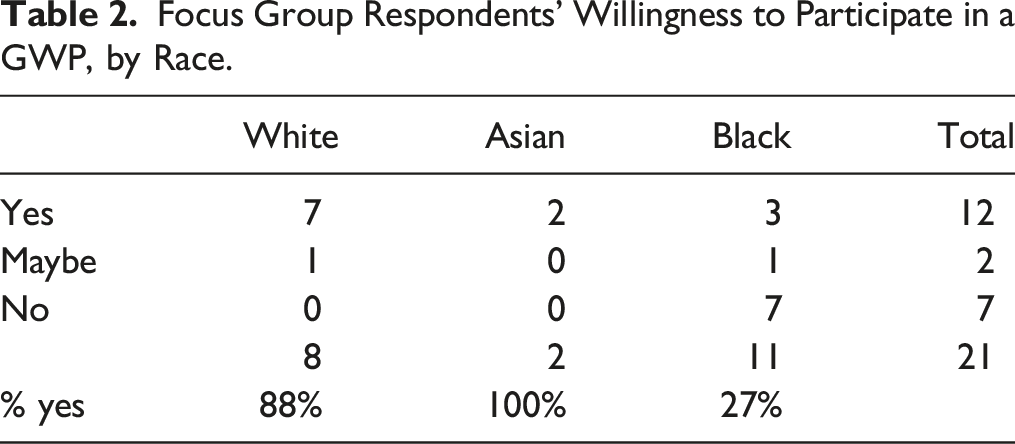
Nearly all respondents saw potential benefits to GWP participation for themselves or their families. However, there were profound differences in perceptions of risks to GWP participation between Black and White/Asian respondents. These differences surfaced in three broad areas: privacy and discrimination risks; family impact risks; and feelings about the employer. Willingness to participate in a GWP also varied between Black employee respondents and White and Asian employee respondents (including low-income White employees). Only 27% of Black employees would participate in GWP, compared to 90% of the other employees.
Conclusion
Most employees appear likely to support employer adoption of GWPs. However, Black employees report significant concerns regarding participation. Addressing these concerns through program design would benefit all employees, and could increase trust and uptake of GWPs.
Keywords
Purpose
Amidst widespread adoption and updating of workforce wellness programs, particularly among large employers,1-3 a new form is emerging. Genetic wellness programs (GWPs) are one of the most innovative workplace wellness products to be offered in recent decades. GWPs take advantage of new low-cost DNA sequencing and analysis technologies, to detect genetic risk factors for an increasing number of diseases and conditions.
In a typical GWP, employees who choose to participate have their genetic data generated and analyzed, and then they receive a personalized report generated from that data. Reports include personal information about future risks for developing diseases such as hereditary cancers and heart conditions. Reports may also include drug-metabolism information used to tailor medications, as well as personalized lifestyle recommendations. GWP participants are often encouraged to enroll in fitness, nutrition, or other programs. Some GWPs give employees access to genetic counselors to discuss their reports, while other encourage employees to discuss them with their existing health care providers.4-7
In some respects, GWPs appear similar to other types of workforce wellness programs. GWP proponents believe they can contribute toward workforce health promotion, helping to control employer and employee health care costs, and helping employers attract, retain, and engage talented employees who appreciate access to cutting-edge benefits. Relative to biometric screenings or other traditional health risk assessments, GWPs require little time or effort for participants, who can simply mail in a saliva sample and receive their report via the internet— similar to consumer genetic tests like 23andMe. After an employer adopts a GWP benefit, employees then opt-in to participate, sometimes with incentives for doing so. In addition, the employer typically covers part or all of the program costs for enrolled participants.4,5
In other respects, GWPs appear distinct from traditional workforce wellness programs. The technology that enables GWPs is relatively new, and the science used to generate genetic reports is complex and rapidly evolving. As a premium and high-technology employee benefit, GWPs may be more likely to be offered by large employers that need to recruit and retain professional workers in competitive labor markets (such as firms in the information technology, finance & insurance, life sciences, and health care industries).4-6 Self-insured employers, and organizations with health-conscious workforces, may also be more likely to consider offering a GWP. 5 The design of GWPs varies widely, as they offer different types of information and additional services to participants, and they have different policies for handling and using participant data.4-6 They are also currently regulated in the U.S. under a shifting patchwork of federal and state laws.8-10
As more employers add GWP benefit offerings, research is needed to understand how employees perceive them and what factors will influence acceptance and participation. If GWPs turn out to play a valuable role in promoting workforce health, then it will be important to assess participation across different employee populations. For example, if racial or ethnic minorities or lower-income employees participate in GWPs at lower rates, this could contribute to additional disparities in health status across the workforce. However, little information on GWP participate rates is available; one unpublished Vanderbilt survey of 5 employers offering GWPs reported a 25% employee participation rate. 6
Employees are likely to make decisions about GWP participation based on their perceptions of the benefits and risks—perceptions which may vary across different employee populations. We know of only one study to date reporting on employee perceptions of GWPs. While that study found that most employees would participate in a GWP if it provided confidentiality and privacy protections, the study’s conclusions were limited because all respondents were the employees of a single genomic testing organization, and the sample included few minority or low-income respondents. 11 Accordingly, the purpose of this research is to begin to investigate perceptions of GWPs, and potential barriers to participation in them, among Black, White, and Asian employees, and employees of different income levels.
Approach
This description of the study approach follows the Consolidated Criteria for Reporting Qualitative Research (COREQ) guidelines.
Design, Setting and Samples
A qualitative study was conducted with 21 employees, recruited to three separate focus groups. In the remainder of this article, we use the term “respondent” to refer to the members of these focus group, rather than the term “participant,” such that in this article the term participation only refers to GWP participation.
We sought and obtained a purposive sample of current U.S.-based employees of large high-technology companies. These companies were deemed to be the most likely early GWP adopters, based on our initial research into GWP vendors and their employer customers. 4 Individuals were recruited through the User Interviews platform. This platform allowed us to pre-screen candidates who expressed an initial interest in the study (based on a short summary of the topic and time and compensation information), using these criteria: employment status (currently employed) and specific industry (high-technology). Pre-screening yielded a pool of eligible candidates for the first focus group, from which 8 were selected for gender and racial balance (see below for details of subsequent focus groups). The User Interviews platform also provided a streamlined process for compensating individuals.
A focus group guide was developed using a literature review and landscape analysis identifying the key features of this new wellness product. Because GWPs are new, we incorporated presentation of basic educational information about GWPs into the focus group guide. The focus group guide was then revised based on pre-testing focus groups conducted with university students. The focus group guide is shown in the Appendix.
The final employee focus groups were guided by a trained facilitator (A. Borgoin, Ph.D.), who introduced herself, as well as a second trained observer, to respondents at the start of each focus group. Focus groups were all conducted and audio-recorded on the Zoom video conferencing platform. They lasted 75 to 90 minutes, for which respondents were each compensated $90. Field notes were made after each focus group, and audio recordings were later transcribed.
Analysis and Adjustment
After completing the first focus group, the author team met to discuss emerging themes. One striking theme was a clear difference in the comments of the one Black respondent, compared with the general pattern of responses from the White and Asian respondents. This led us to design the second and third focus groups to include more racial diversity in them. Specifically, the second focus group was entirely composed of Black respondents, and the third focus group was composed of a mix of Black, White, and Asian respondents from lower income backgrounds (but still working for high-technology companies). The resulting set of three transcripts provided a window into overlapping and diverging perceptions among different racial groups.
The final transcripts were analyzed using the content analysis approach to identify key themes. Transcript coding was conducted by three of the study authors, during the months following completion of the focus groups. Emergent themes were identified for each separate focus group, and the study team then discussed those themes. Themes were then merged and integrated across the three focus groups, and representative quotes were selected to represent each theme. Special attention was paid to areas of overlap and divergence between Black and White respondents (two Asian respondents tended to have responses that were similar to those of the White respondents, so they were not separated in the analysis below).
Results
Respondent Characteristics
Focus Group Respondent Demographics. a
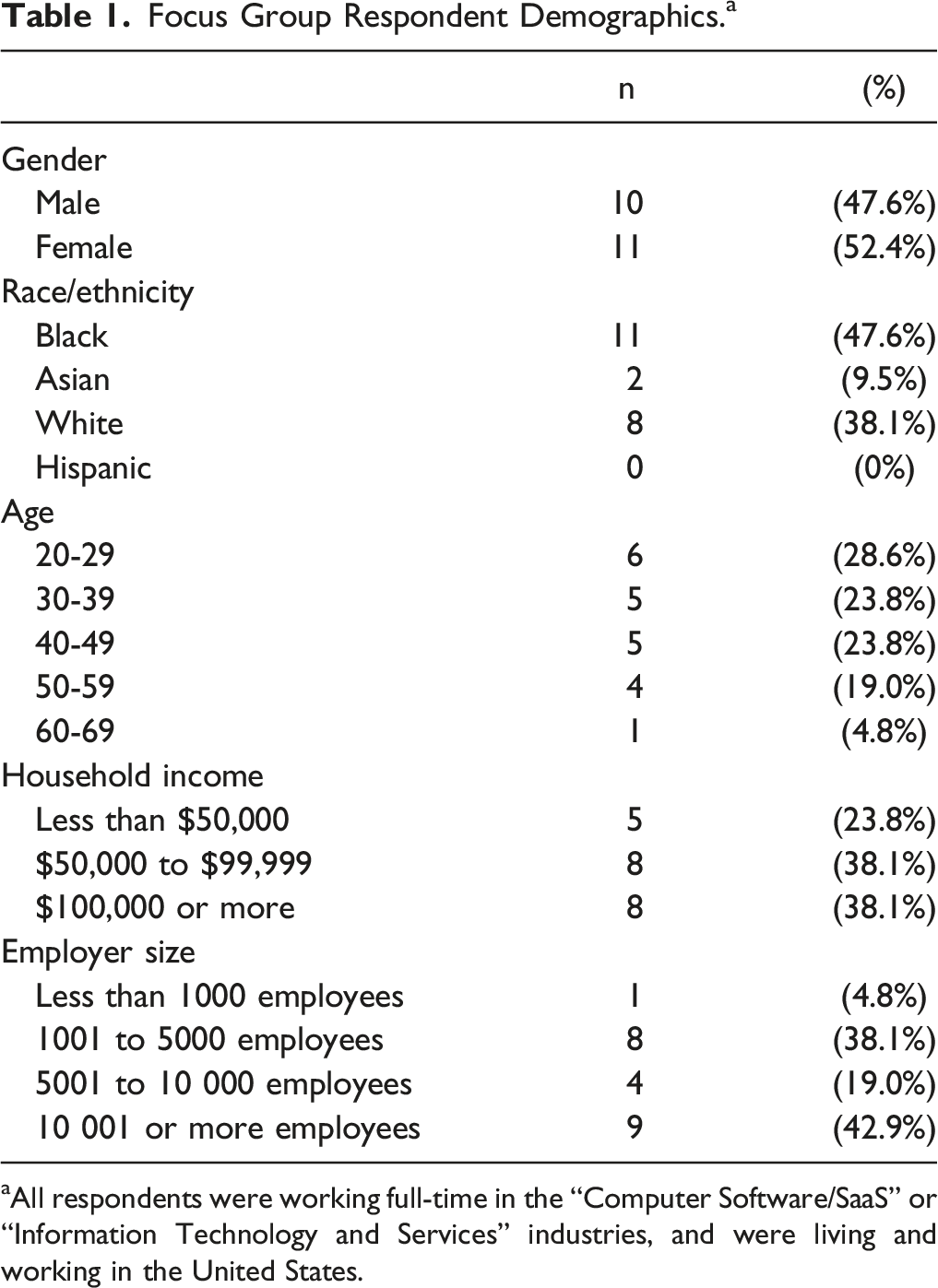
aAll respondents were working full-time in the “Computer Software/SaaS” or “Information Technology and Services” industries, and were living and working in the United States.
Willingness to Participate in a Genetic Wellness Program
After providing basic information about GWPs, we asked respondents whether they would participate in a GWP if it were offered by their current employer. Overall, if their employer were to offer a GWP, 57% of respondents said they would participate while 33% said they would not (10% were undecided).
Focus Group Respondents’ Willingness to Participate in a GWP, by Race.
Focus Group Respondents’ Willingness to Participate in a GWP, by Income Level.

Perceived Benefits of a Genetic Wellness Program
Perceptions of Benefits.
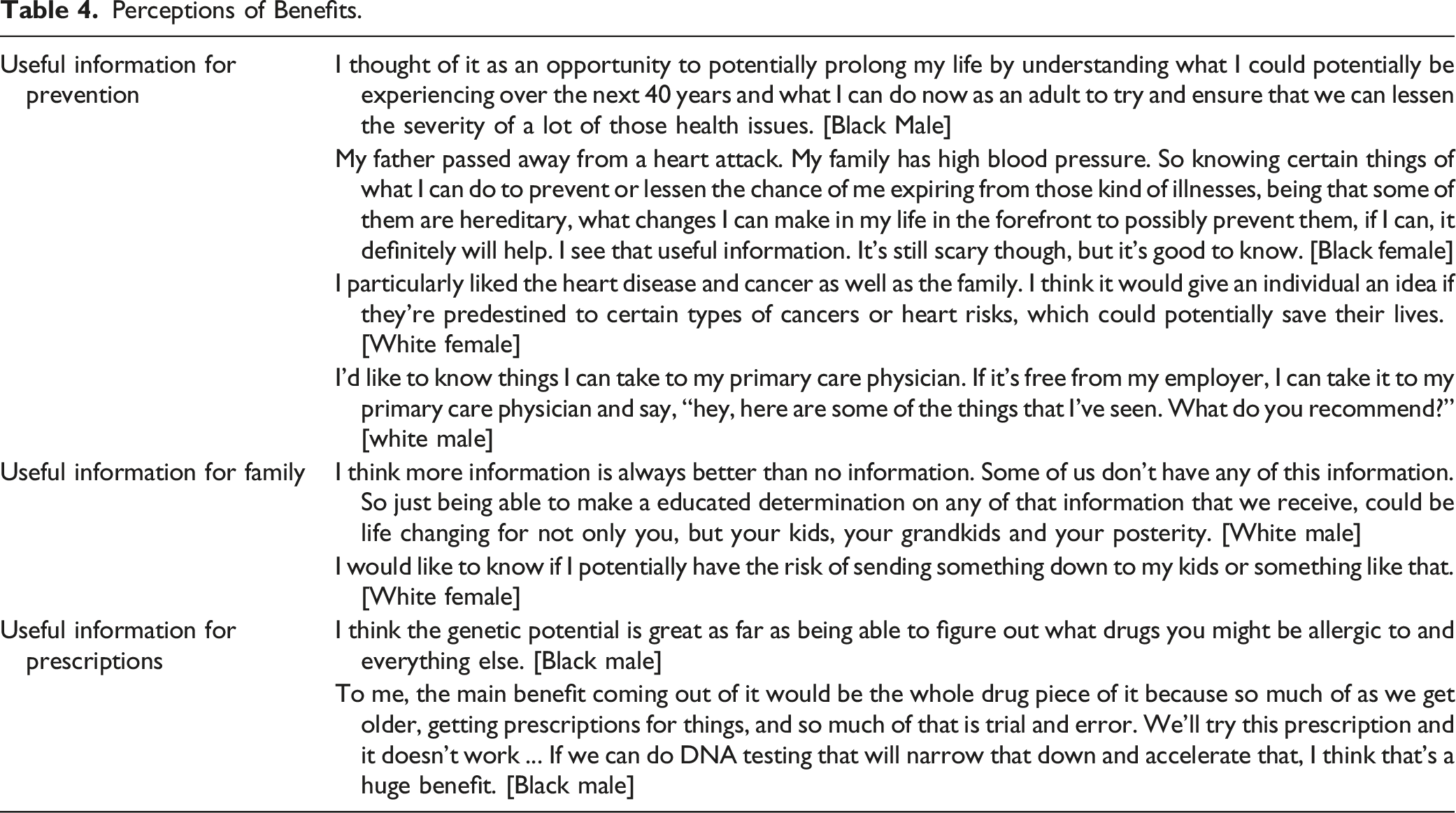
For
For
Perceived Risks of a Genetic Wellness Program
Perceptions of Risks.
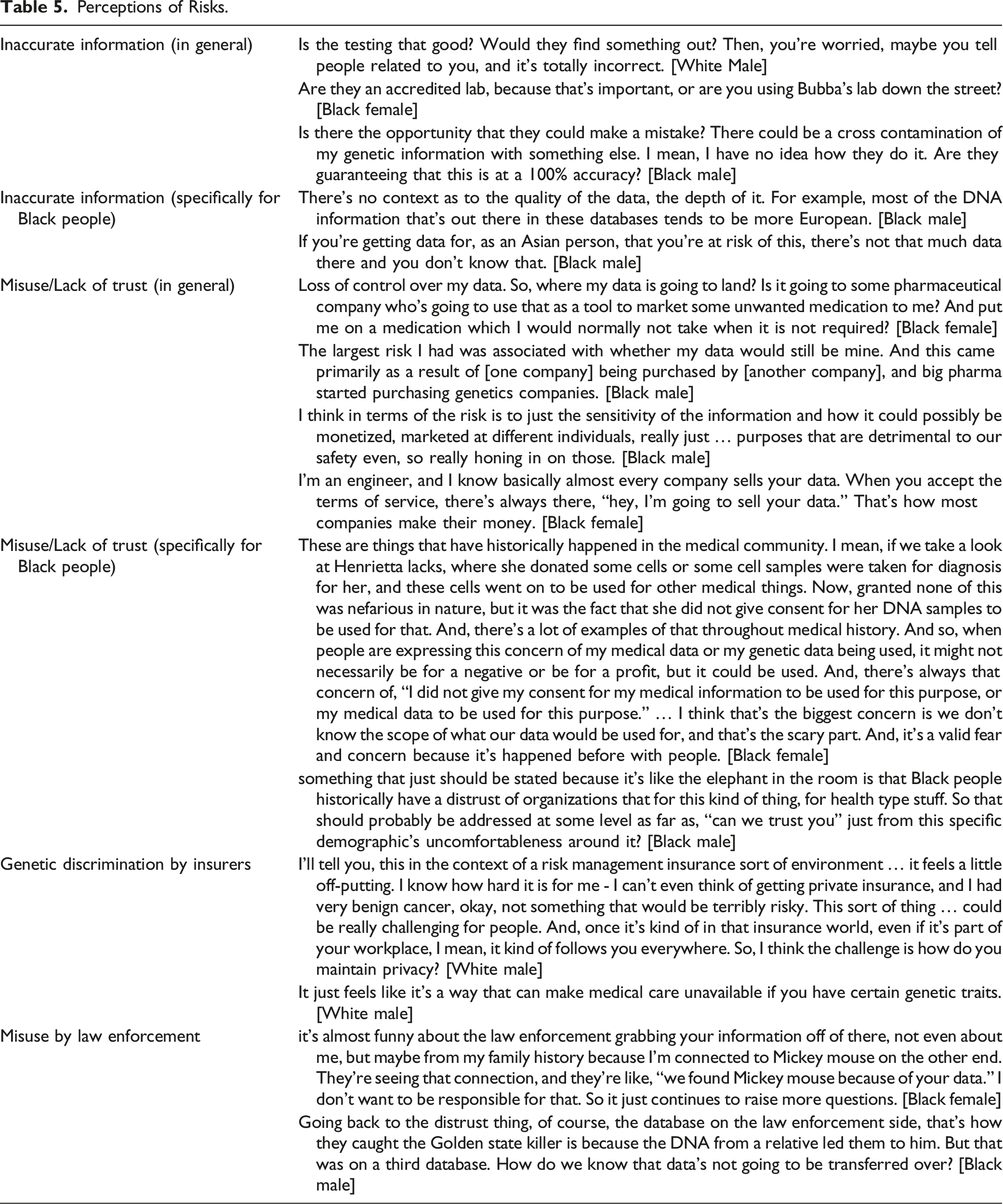
Respondents were concerned about
Concerns about inaccurate information were stronger among Black respondents, some of whom recognized that testing accuracy depended on genetic databases that lacked diversity. One respondent also said this was essentially a concern for all non-White racial and ethnic groups, stating “There’s no context as to the quality of the data, the depth of it. For example, most of the DNA information that’s out there in these databases tends to be more European.” [Black Male].
Concerns about
Concerns about misuse of information were also stronger among Black respondents, some of whom pointed out that a lack of trust in how they would be treated by health organizations was rooted in the long history of Black communities and families being abused by medical researchers. One respondent discussed the specific experience of Henrietta Lacks’ family.
Concerns about
Concerns about
Another distinct type of risk was also raised by several Black respondents: a concern that information about possible future diseases would
This concern over the production of anxiety from using a GWPs stemmed in part from the probabilistic nature of genetic testing information: “Are they saying, ‘we’re only 50% accurate’ like ‘Hey, you might have cancer in five years, or maybe not!” Well, we all know that maybe anything, maybe. Give me something that gives me more surety that we are 90% accurate …. You’re going to get people in fear. Like, [she] was talking about that, ‘hey, you told me I might have cancer tomorrow,’ and now she’s freaked out every day. She’s actually hurting herself because she’s scared to death. So that can impact your health. Fear impacts your health, whether you know it or not.” [Black Female]
While this reflection on the relationship between probabilistic information, fear and anxiety, and health was shared among a subset of Black respondents, it is also worth noting that it was also mentioned by one White respondent, at least in general terms: “Sometimes it’s better to not know. The old saying ‘ignorance is bliss’ is very true.” [White Female]
Finally, a different stance on the risks of GWP participation was voiced by one respondent who believed that GWPs would naturally safeguard employee data from misuse since it was in the GWPs’ long-term interests to maintain employee trust: “if there’s any chance my data would be leveraged for nefarious purposes, I wouldn’t use that company or service. But, it’s very doubtful that would be the case, because that’s what the entire business or model is built on, right, consumer trust on not leaking out your genetic info and data... I think some of the fears are overblown in my opinion.” [White Male] However, this perspective did not receive obvious support from other respondents in their focus group.
Additional Themes
When respondents were then asked how they would react if their employer included a
Respondents were also asked how they would feel about a GWP that generated genetic information about
Effect of Genetic Wellness Program on Positive Feelings About Employer
How GWPs Affect Positive Feelings About Employers.
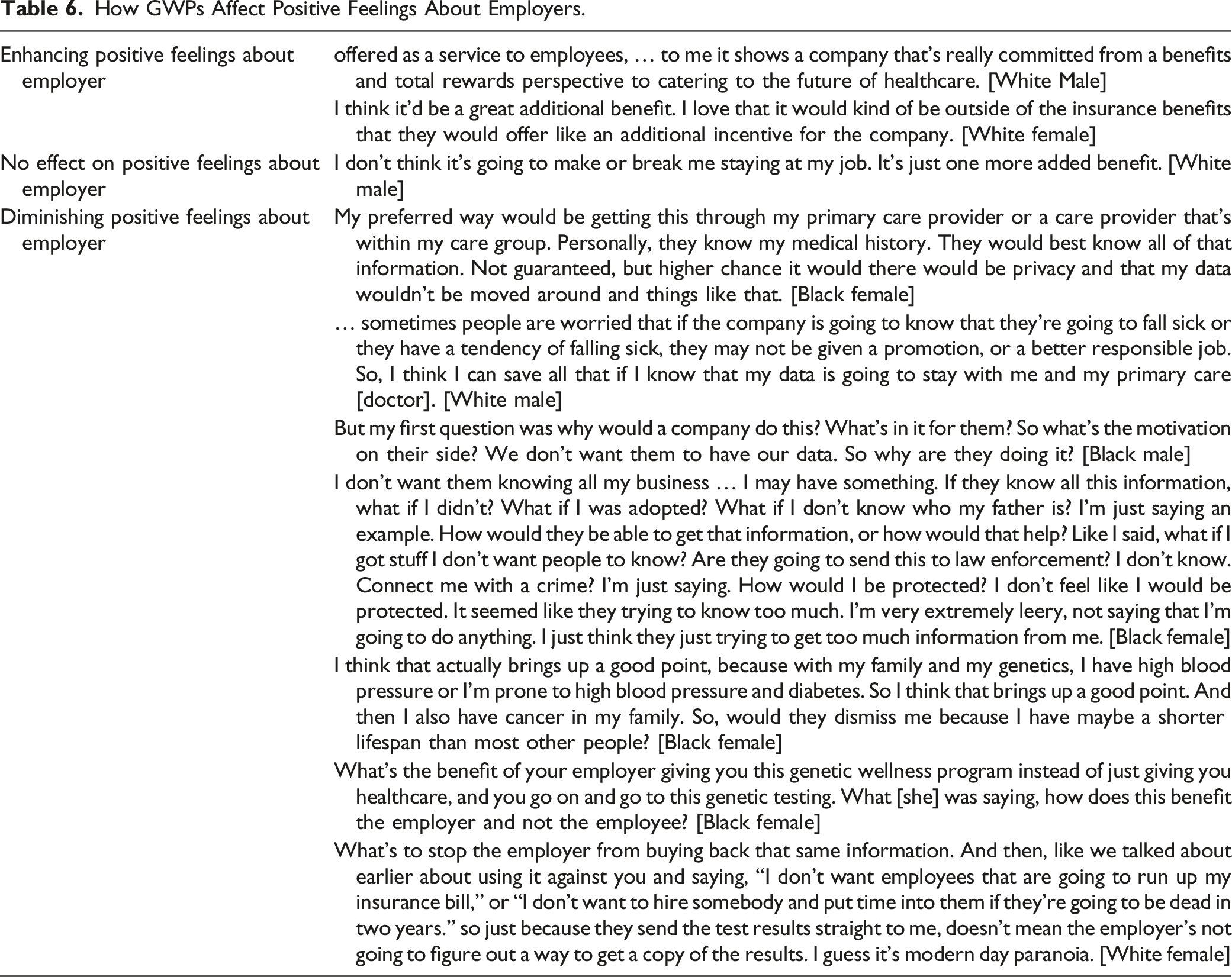
For those who reported that a GWP would
For those who reported that a GWP would
Finally, one Black respondent also specifically connected their diminished feelings for their employer due to offering a GWP to their African American identity: “I am African American. To me, I feel like I’m already going to be a target in the company. I don’t want my employer knowing. I feel like I want to keep something to myself. I would go on the outside if it’s something I want to do outside of the company to find out” [Black Female]. This respondent’s comment captures the possibility that many Black employees will respond to GWPs with extra concern, due to a generalized lack of trust in employer intentions and institutions.
Discussion
This is one of the first studies to investigate how employees perceive GWPs, an important innovation in employer wellness programs. The vast majority of large employers already offer wellness programs, and this significant innovation could be offered in place or as a supplement to their existing programs. Employee attitudes may influence corporate adoption of GWP programs and employee participation where offered.
Findings indicate that nearly all respondents see potential benefits to GWP participation for themselves or their families. However, there are profound difference in perceptions of risks to GWP participation between Black and White/Asian respondents. These differences surfaced in three broad areas: privacy and discrimination risks; family impact risks; and feelings about the employer.
Perceived privacy and discrimination risks—which also exist in traditional wellness program biometric screenings and health assessments.13-15—appear magnified for GWPs. This may be due to the additional features of genetic data, which can reveal sensitive medical and non-medical attributes of individuals and their family members, and which are difficult or impossible to anonymize.9,16-18 Importantly, our research suggests that while these concerns were not a major barrier for White and Asian employees who were members of these focus groups, they were a major barrier for Black employees. Concerns about inaccurate information, misuse of information, genetic discrimination, and misuse by law enforcement were consistently raised by Black respondents. Some of these concerns were also explained as issues rooted in racial identity. African American distrust in medical institutions due to historical mistreatment has a well-documented impact on decisions to participate in biomedical research and seek medical care.19-22
Respondents also considered impacts on family members in their assessments of GWPs. Racial differences emerged here as well, particularly with concerns about how genetic information could be used by law enforcement in ways that harm family members. While these issues were raised by respondents from different races, they were expressed as participation barriers primarily by Black respondents, consistent with an awareness of historical racism in policing 23 and racial implications of expanded police searching of DNA databases. 24
Finally, Black respondents more often predicted that GWP adoption would diminish their positive feelings about their employer, whereas White and Asian respondents usually predicted the opposite effect. Black respondents explained this was in part due to concerns about employer genetic discrimination that persist despite existing some basic legal protections. 12 This suggests GWPs could experience an even greater uptake-rate gap for Black employees than has been documented for traditional wellness programs.25-28 This finding is particularly salient in light of ongoing efforts by large employers to expand workforce diversity and improve racial inclusion. 29
Limitations and Future Research
This study’s findings are limited due to its reliance on a small sample of technology industry employees. While the present research surfaced and reported on differences between racial groups, we did not detect differences by gender. It is possible that such differences would have surfaced had we organized the focus groups along gender lines. Further, while we did not observe differences between White and Asian respondents, or between lower-income White respondents and other White respondents, future research is needed with larger samples of representative Black, White and Asian employees, as well as employees from other diverse demographic and industry backgrounds. Our focus group recruitment tool did not source many candidates of Asian or Latin American descent, even when we requested racial and ethnic diversity. Regarding Latin American candidates, this might reflect lower demographic representation in the high-technology industry where we focused our research recruitment. Based on our experience, future studies need to be designed in such a way as to enable recruiting and representation of these important demographic groups. In sum, future research with larger samples should examine differences by gender, more race/ethnicity categories, and intersectionality.
Conclusion and Implications
The research reported here suggests an urgent need for attention to racial participation barriers for the new class of GWPs. There is recent recognition that other types of wellness programs could be better designed to address participation barriers for racial and ethnic minority employees and lower-income employees.30,31 If this opportunity were taken seriously for GWPs, they could play a positive role in helping employers achieve their racial equity goals and better align their broader workforce equity and wellbeing initiatives.
Taken together, our findings suggest the following specific implications for the design and regulation of GWPs:
• Addressing the concerns of Black employees appears critical for securing their participation in GWPs--and therefore also for avoiding unintentional furthering of employer-based racial disparities during GWP adoption. • A first step toward addressing these concerns at the employer level could be to involve diverse employee stakeholder groups, such as employee resource groups or diversity councils, in GWP selection and/or design.
32
• Given the nature of these concerns, however, addressing them fully will require that program participants retain controls over their genetic and health information, including how it gets shared and used. Such controls could constrain GWP business models that rely on monetizing participant data.
18
• Crucially, addressing these concerns could also benefit all employees, and could increase trust and uptake of GWPs more broadly across the workforce.
So What?
What is already known on this topic?
Genetic Wellness Programs are a new form of employer wellness benefit that gives employees access to genetic testing. Only one published study reports employee attitudes about GWPs (and it was conducted using the employees of a genetic testing company).
What does this article add?
Our study provides important information about how employee perceive the benefits and risks of GWPs, and how a GWP would influence their feelings about their employer. In addition to overall results, we discovered distinct concerns and mistrust among Black employees, correlating with a much lower willingness to participate in GWPs.
What are the implications for health promotion practice or research?
Companies can expect most employees to support and likely participate in GWPs – but Black employees report concerns that represent barriers to participation. GWPs could contribute to health disparities unless redesigned to take these concerns into account.
Footnotes
Author Contributions/Roles Statement
FB and IA conceived of this work and led design; AB and JM acquired and analyzed data; FB led interpretation; All authors contributed to writing.
Declaration of Conflicting Interests
The author(s) declared no potential conflicts of interest with respect to the research, authorship, and/or publication of this article.
Funding
The author(s) disclosed receipt of the following financial support for the research, authorship, and/or publication of this article: This work was supported by the Robert Wood Johnson Foundation (Grant #76781).
Ethics Statement
This research received an Exempt Determination by the Pennsylvania State University Office of Research Protections (ORP) (Study ID #13550). “The Office for Research Protections determined that the proposed activity, as described in the above-referenced submission, does not require formal IRB review because the research met the criteria for exempt research according to the policies of this institution and the provisions of applicable federal regulations.”
