




Abstract
Sexual violence is a major threat to women living in the urban slums of India, where structural limitations often render traditional interventions ineffective. This study evaluated the effectiveness of a low-cost community-based alarm intervention in preventing sexual victimization in informal urban settlements. A single-blind cluster randomized controlled trial was conducted across 20 blocks of slums in Delhi. Five hundred adult women were randomized by block into the intervention (nine blocks; n = 239) and control (11 blocks; n = 261) groups. The intervention included the distribution of personal safety alarms and community-based training workshops. Data on sexual victimization and interpersonal trust were collected before and after the 6-month intervention. Of the 500 participants, 485 (intervention group, n = 226; control group, n = 259) completed both assessments. The rates of lifetime sexual victimization were high at baseline: stalking (n = 413, 84.9%), verbal harassment (n = 338, 69.7%), and non-consensual physical contact (n = 304, 62.7%). Significant group-by-time interaction effects were observed for reductions in underwear theft (odds ratio [OR] = 0.207, 95% CI [0.062, 0.694]) and non-consensual physical contact (OR = 0.199 [0.059, 0.670]). Other types of victimization declined over time in both groups. A significant main effect of time on interpersonal trust was also observed (F[1, 966] = 40.47, partial η2 = .040, p < .001). This context-sensitive intervention effectively reduced opportunistic sexual violence and improved interpersonal trust among participants. The community self-defense method offers a pragmatic and scalable harm reduction approach for high-risk settings in the absence of a formal protection infrastructure.
Keywords
Introduction
Sexual violence is a pervasive public health and human rights concern. Approximately one in three women (736 million) globally have experienced some form of sex-based violence in their lifetime (World Health Organization, 2021), and those living in informal settlements and marginalized communities in low- and middle-income countries bear a disproportionate burden (García-Moreno et al., 2015). The number of reported rape cases in India increased from 59,945 in 2001 to 133,836 in 2018 (National Crime Records Bureau, 2020; UN Women, 2020). Caste-based inequalities exacerbate vulnerability to sexual violence, with Dalit women, who constitute a significant portion of the urban poor, having a heightened risk of sexual victimization. Empirical studies have consistently reported the higher incidence and greater severity of sexual violence against Dalit women.Such sexual violences are often committed by upper-caste men, especially when institutional redress is minimal or absent (Brueck, 2012; Kumar, 2021).
Urban slums in India are characterized by structural vulnerabilities, including overcrowded housing, poor sanitation, lack of street lighting, and minimal police presence. These environmental conditions increase the risk of opportunistic crimes, including sexual offenses (Kumar, 2021). Traditional criminal justice responses, such as increased policing or punitive legislation, have limited effectiveness in these contexts, where law enforcement may be inaccessible, unresponsive, or even complicit. Existing intervention models often emphasize individual behavioral changes or legal recourse without addressing the situational and community-level determinants of risk.
Public health research has increasingly recognized the value of environmental and community interventions in preventing violence against women (Mair & Mair, 2003). Theoretical frameworks, such as the situational crime prevention (SCP) model and collective efficacy theory, provide a compelling rationale for designing context-specific interventions. These frameworks support the use of low-resource strategies that deter criminal behavior by increasing the perceived risk and effort associated with offending. The SCP model posits that criminal behavior is often opportunistic and can be prevented by modifying the physical and social environments in which it occurs (Clarke, 1995). Collective efficacy is the combination of social cohesion among neighbors and the shared willingness of residents to intervene for the common good. It functions as an informal mechanism through which community members maintain neighborhood safety (Sampson et al., 1997). This differs from official or externally imposed actions such as increased policing by public authorities. Interventions that enhance informal surveillance, facilitate collective action, and empower residents to respond rapidly to threats have been successful in diverse global contexts. Several studies have emphasized the importance of community and collective interventions in preventing sexual and sex-based violence. Effective responses often emerge from a shared sense of responsibility within a community rather than from individual protective actions (Law, 2011; UN Women, 2021). Community-led interventions, such as the SASA! program in Uganda (Abramsky et al., 2014) and community mobilization campaigns in India (Chatterji et al., 2020; Nair et al., 2020) have demonstrated promising outcomes in terms of reducing the incidence and social acceptability of sex-based violence by engaging local residents, peer educators, and informal leaders. Participatory programs have been found to empower women by fostering collective efficacy and enhancing safety in areas where protection is absent (Jewkes et al., 2015).
We developed and tested a contextually grounded intervention called the community self-defense (CSD) method. This approach combines the distribution of low-cost personal safety alarms with structured community mobilization activities to increase situational guardianship and collective efficacy. The intervention was designed to interrupt specific acts of sexual aggression and promote a broader sense of safety, solidarity, and trust among community members. This study reports the findings of a cluster randomized controlled trial (RCT) of the CSD method in urban slum communities in Delhi. The primary objective of this study was to evaluate the effectiveness of the intervention in reducing self-reported sexual victimization. The secondary outcome was interpersonal trust, a key psychological construct reflecting collective efficacy and perceived safety.
Methods
Study Design
We conducted a single-blind cluster RCT in six slum settlements in Delhi. The RCT protocol complied with the Standard Protocol Items: Recommendations for Interventional Trials (SPIRIT) guidelines (Chan et al., 2013).
Participants
This study targeted individuals assigned female at birth. The eligible participants were women aged 18 years or older who resided in the study area and provided informed consent. One participant per household was recruited to prevent clustering effects within families. Those who could not communicate in English or Hindi, and those with severe mental conditions, were excluded. The sample size was determined based on the expected prevalence of sexual victimization and the effect size required to detect a 30% reduction with 80% power and at an α level of .05. The calculations accounted for intraclass correlation within clusters and attrition. A total of 500 participants were enrolled across all sites. Recruitment was conducted by trained female field staff through door-to-door enumeration.
Randomization and Masking
Twenty blocks across six camps were carefully selected by the local staff to ensure that they were sufficiently distant from each other. This was necessary to prevent the alarm from being heard in other blocks, regardless of the blocks assigned to the intervention groups. The first author, based in Japan, created a computer-generated randomization table, and the local staff allocated the eligible blocks to the groups based on the table. A total of 239 participants residing in 9 blocks were allocated to the intervention group, and 261 participants residing in 11 other blocks were allocated to the control group. The participants could not be masked to group allocation; however, the local staff responsible for data collection were masked to group and participant allocation.
Intervention
The CSD intervention consisted of two core components: (1) distribution of personal safety alarms designed to emit a loud sound when activated and (2) structured community mobilization workshops focused on collective response strategies (Figure 1).
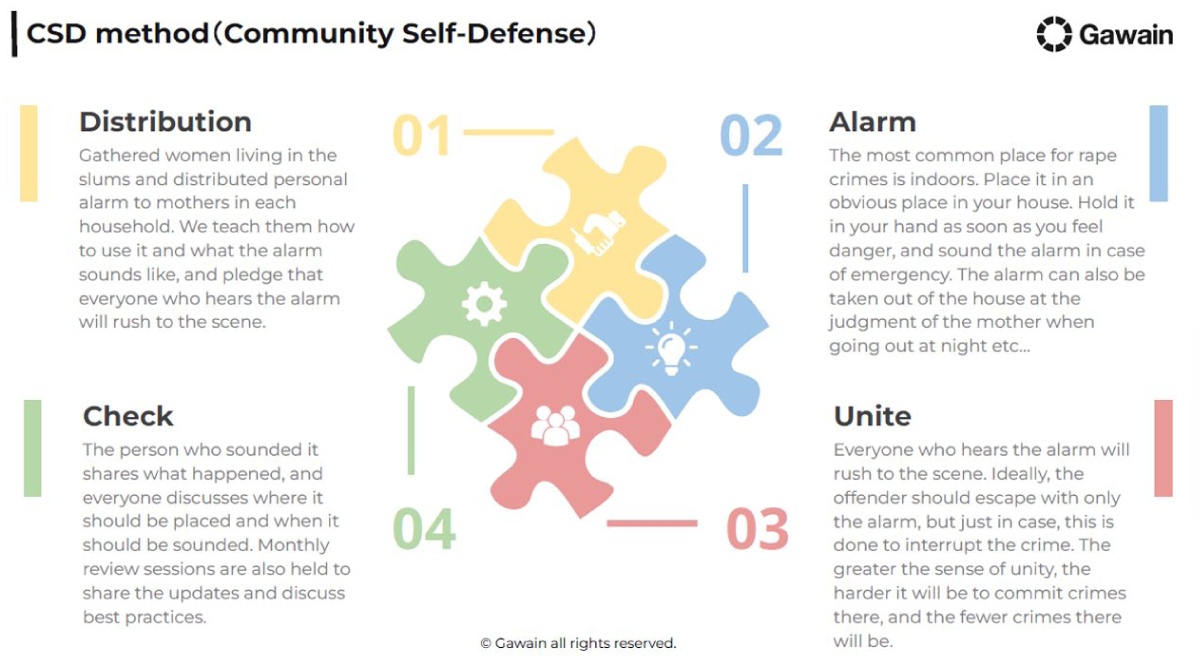
Community Self-Defense method.
The personal safety alarm was a handheld, battery-operated device capable of emitting a high-decibel sound when activated by pulling a pin. Participants were instructed to carry the alarm when outside the home and to activate it immediately in situations of perceived threat, harassment, or suspicious approaches. The alarm was explicitly framed as a signaling and deterrence tool rather than a physical self-defense device, with the goal of rapidly attracting attention and increasing the perceived risk of detection for potential offenders.
Community mobilization workshops were conducted once at the initial stage of the study in each intervention block. Workshops were facilitated by trained female field staff using a standardized manual. Sessions focused on situational awareness, coordinated community response to alarm activation, and reinforcement of collective efficacy. Community members were encouraged to respond collectively when an alarm sounded by approaching the location, providing visible guardianship, and interrupting potential incidents through presence rather than confrontation.
Due to safety, literacy, and infrastructural constraints, formal quantitative logs of alarm activations and responder attendance were not systematically collected. The control group did not receive any intervention during the study period.
Outcome Measures
Demographic variables, including age, education, literacy, occupation, marital status, household income, and family structure, were collected. The primary outcome was sexual victimization (self-reported or reported by family members), including: stalking, verbal sexual harassment, underwear theft, voyeuristic behavior, indecent exposure, non-consensual physical contact, sexual assault, attempted rape by strangers or acquaintances, and rape by strangers or acquaintances. At baseline, participants were asked to report both lifetime experiences of sexual victimization and incidents that occurred within 6 months preceding the assessment. For the purpose of the longitudinal analysis, only incidents reported for the 6 months prior to baseline and the 6 months prior to follow-up were used. Accordingly, baseline measures captured victimization in the 6 months before the intervention, whereas follow-up measures captured victimization in the 6 months after the intervention. The secondary outcome was the sense of interpersonal trust, measured using the Adult Trust Scale (Amagai, 1997). Data were collected at baseline (pre-intervention) and at follow-up (after the 6-month intervention).
Data Collection and Statistical Analysis
Trained enumerators, who were blinded to the participants’ allocation, administered structured interviews. Participants who dropped out of the intervention were asked to cooperate as much as possible in the outcome evaluations for the intention-to-treat analysis. Group-by-time interaction effects were assessed using logistic regression models for binary outcomes and repeated measures analysis of variance (ANOVA) for continuous outcomes. All models were controlled for baseline covariates, including age, education, marital status, and victimization history. Statistical analyses were performed using Stata 17.
Ethical Considerations
This study was approved by the Ethics Review Board. Written informed consent was obtained from all study participants prior to their participation. The study investigated sensitive issues such as experiences of sexual victimization; therefore, it was made clear that participation was voluntary. The participants were also informed that their consent could be withdrawn at any time without any disadvantages. Additionally, because the local staff involved in the study routinely provided support to victims of sexual violence, immediate access to professional trauma care services was possible if trauma was triggered. The funders did not play any role in the study.
Results
Participants and Baseline Characteristics
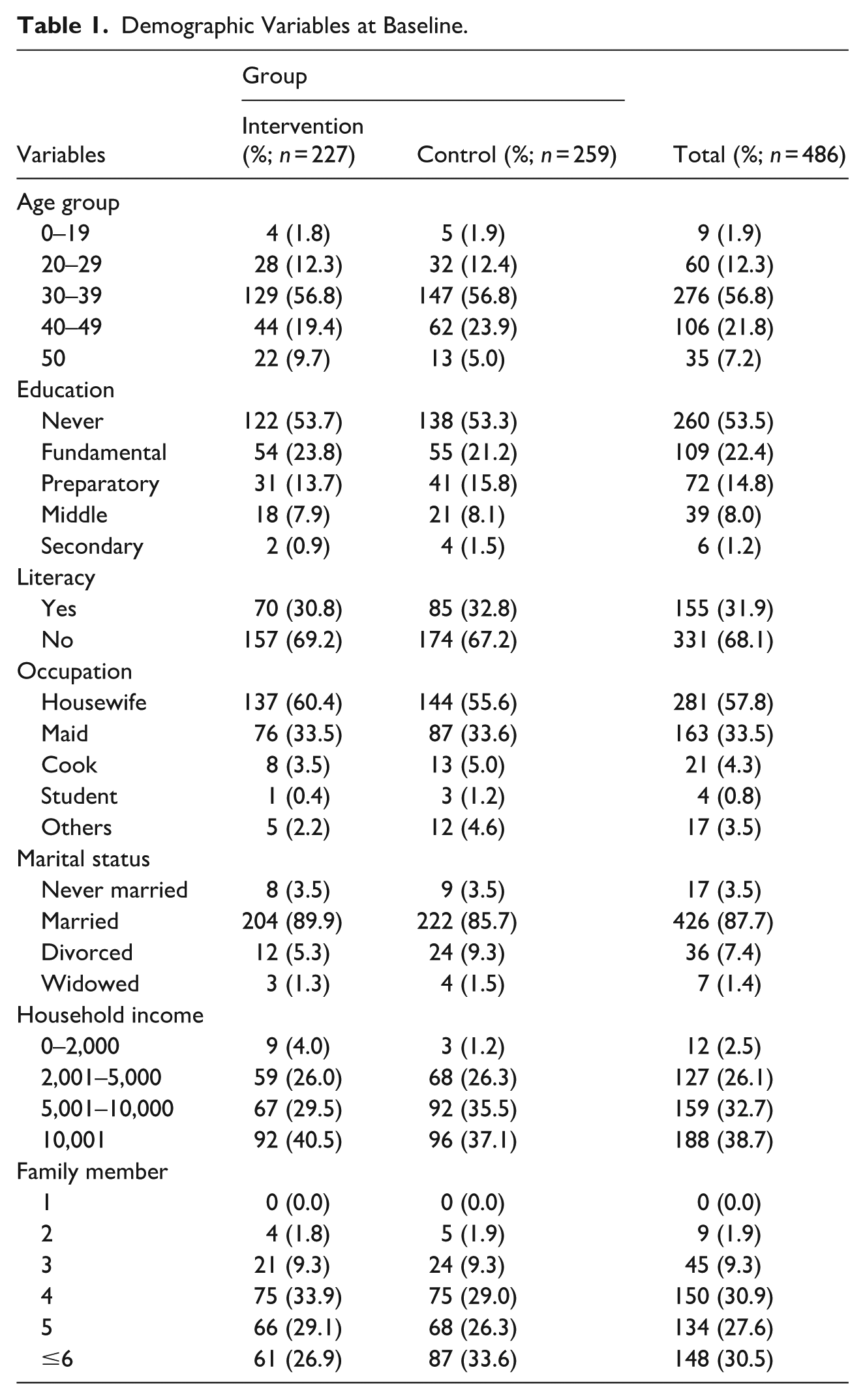
The participant flow diagram is provided in Figure 2. The overall follow-up rate at 6 months was 97.0%, with minimal attrition in both groups. The baseline participant characteristics are provided in Table 1. Most participants were in their 30s (n = 276, 56.9%), had not completed secondary education (n = 472, 97.3%), and were married (n = 425, 87.6%). The literacy rate was 32.3% (n = 75), and most participants (n = 298, 61.4%) reported household incomes below the national average.
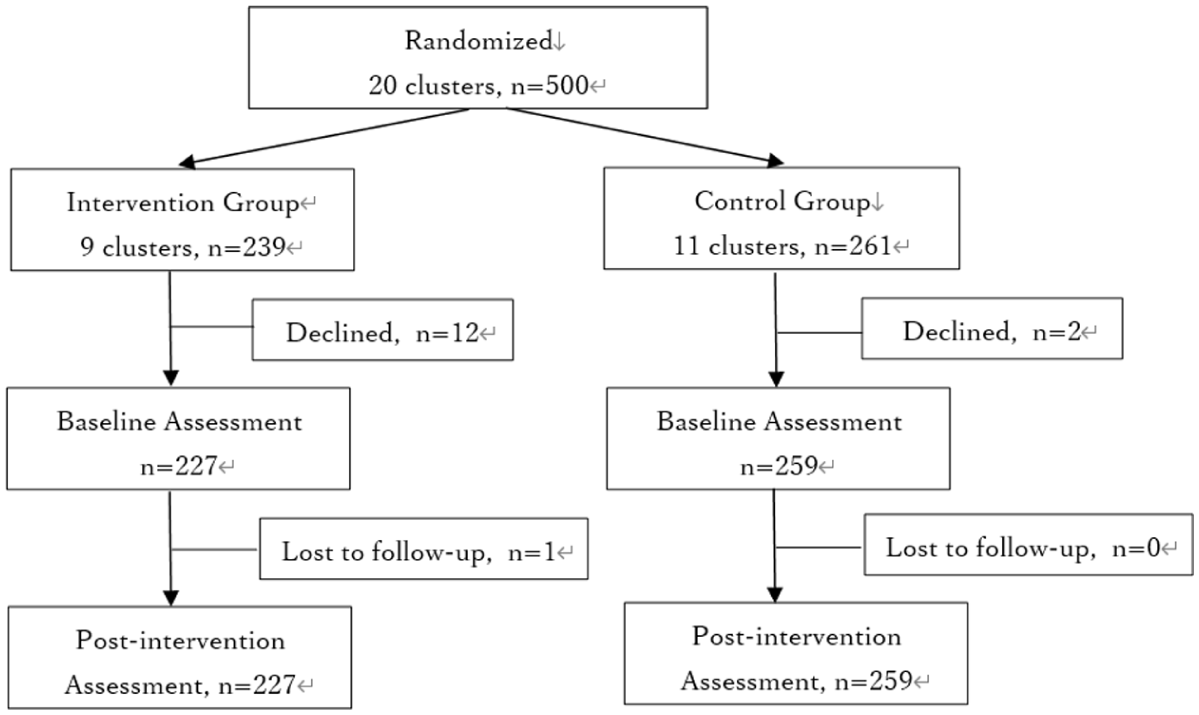
Flow of clusters from recruitment to analysis (CONSORT diagram).
Demographic Variables at Baseline.
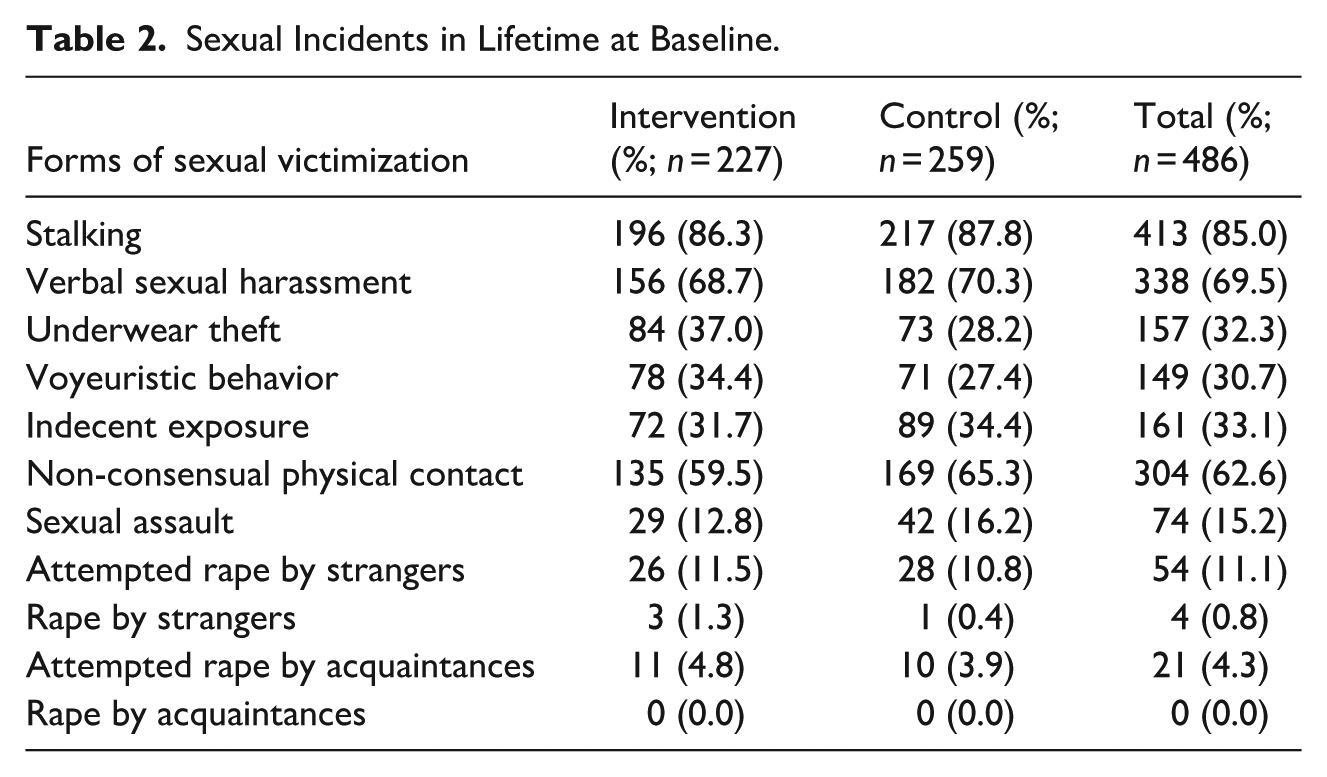
The participants were asked about their lifetime experiences of various forms of sexual victimization. None reported having been raped by a known perpetrator, but many reported other types of victimization. The most frequently reported were stalking (n = 413, 84.9%), verbal sexual harassment (n = 338, 69.7%), and nonconsensual physical contact (n = 304, 62.7%). More severe forms of victimization were reported, including attempted rape by strangers (n = 54, 11.1%), rape by strangers (n = 4, 0.8%), and attempted rape by acquaintances (n = 21, 4.3%; Table 2).
Sexual Incidents in Lifetime at Baseline.
Outcome Variables
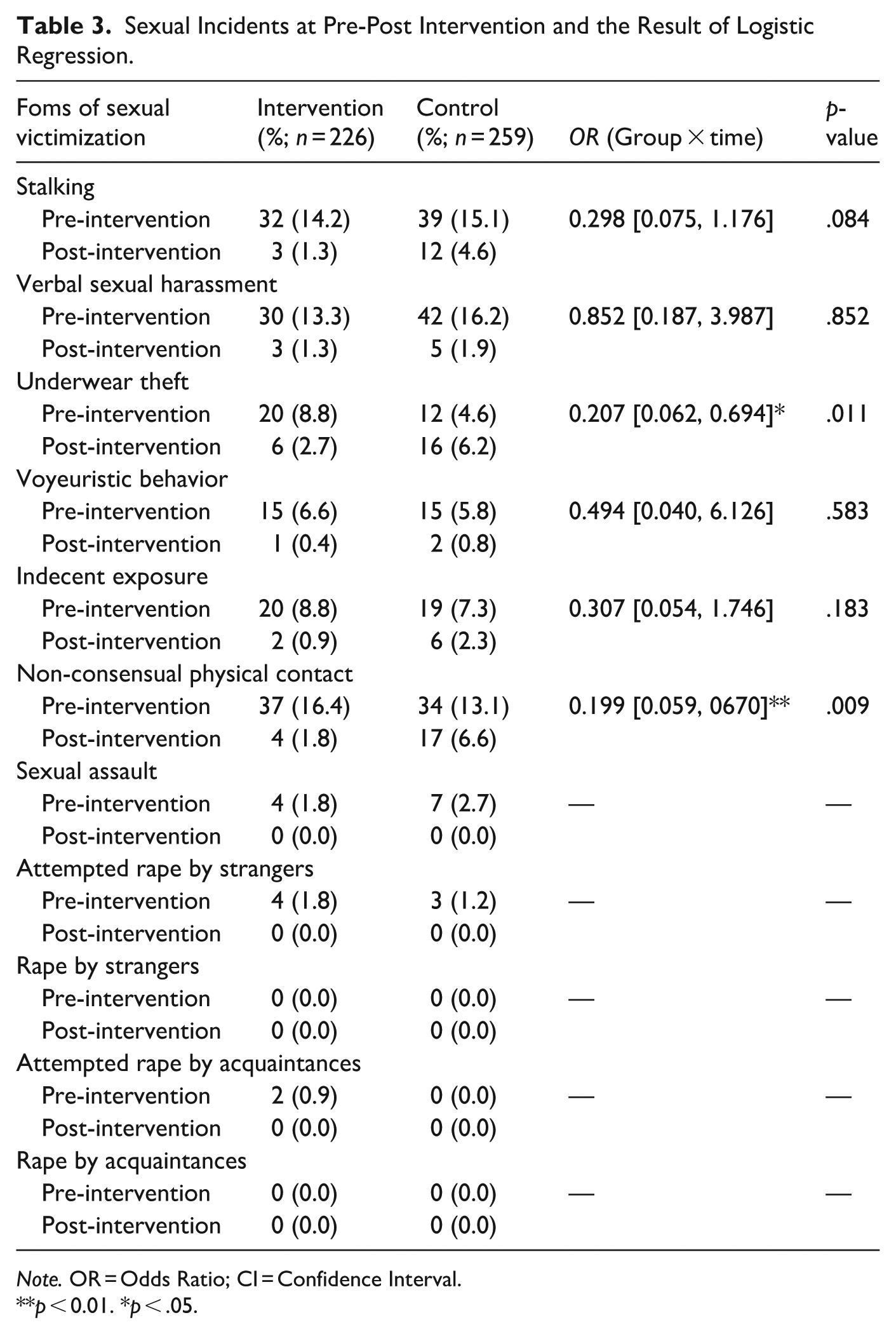
The primary outcome was the extent of sexual victimization experienced by the participants during the 6 months of the study. The baseline and post-intervention findings are provided in Table 3.
Sexual Incidents at Pre-Post Intervention and the Result of Logistic Regression.
Note. OR = Odds Ratio; CI = Confidence Interval.
p < 0.01. *p < .05.
Logistic regression analyses were conducted for the six binary behavioral outcomes (stalking, verbal harassment, underwear theft, non-consensual physical contact, voyeuristic behavior, and indecent exposure) using a difference-in-differences framework. The models included the main effects of the group and time, and their interactions. The key parameter of interest was the group-by-time interaction, which reflected the differential effects of the intervention over time. Significant interaction effects were found for underwear theft (odds ratio [OR] = 0.21, 95% CI [0.062, 0.694], p = .011; Figure 3) and non-consensual physical contact (OR = 0.20 [0.059, 0.670], p = .009; Figure 4). The intervention group had a significantly lower rate of underwear theft and non-consensual physical contact than the control group during the intervention.
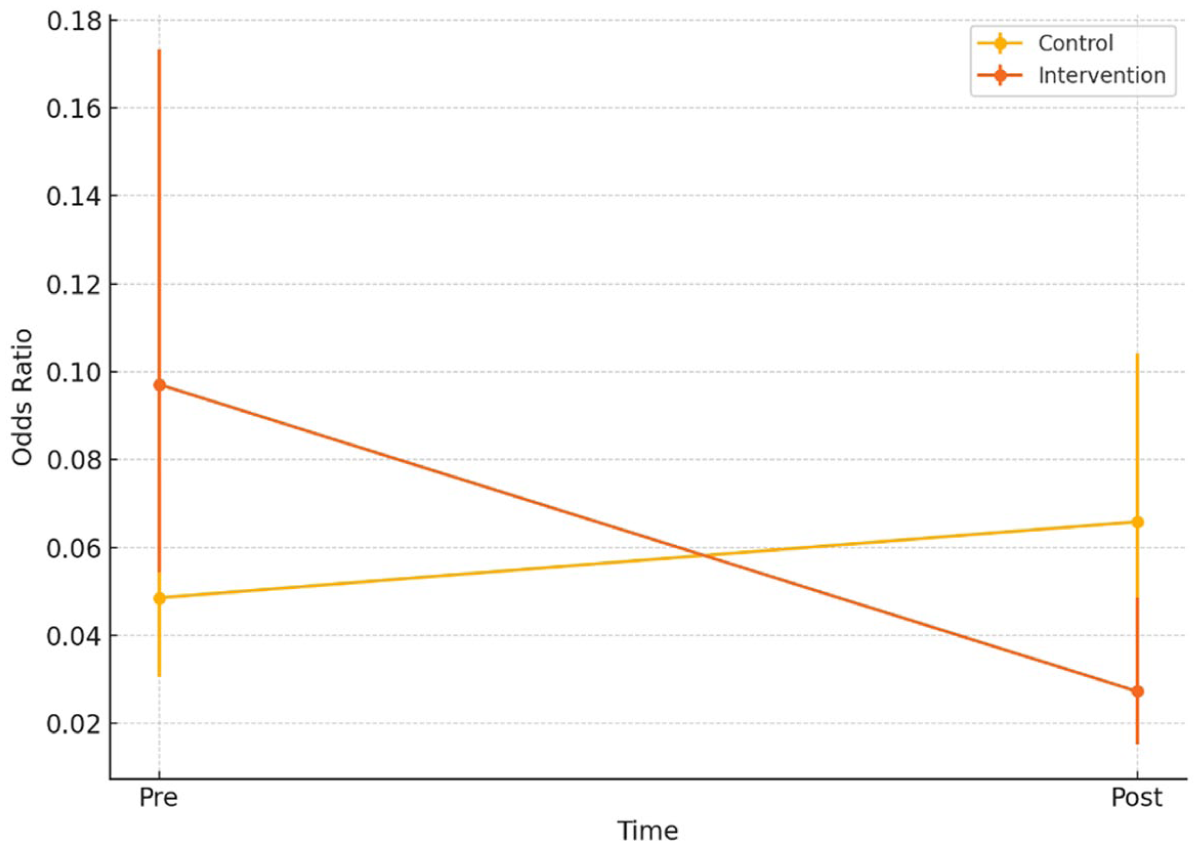
Interaction effect of intervention and time on underwear theft.
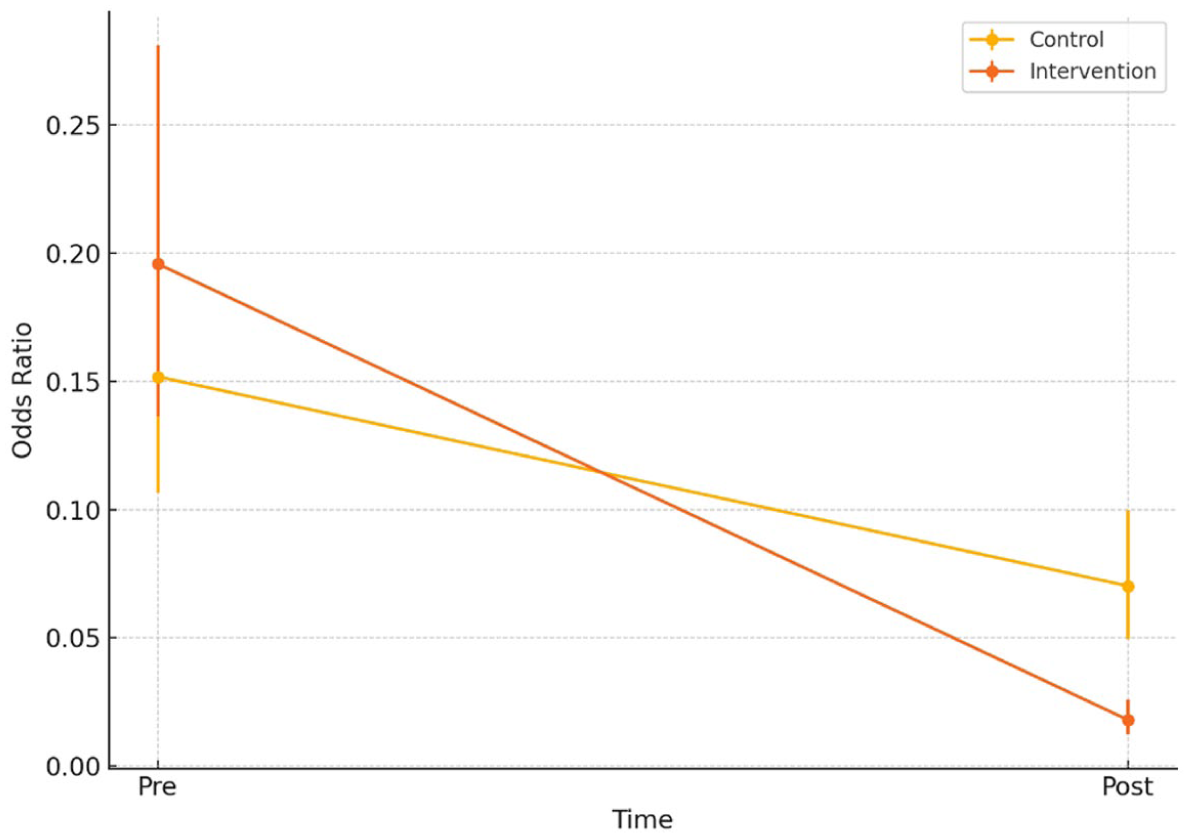
Interaction effect of intervention and time on non-consensual physical contact.
No significant interaction effects were found for stalking (OR = 0.30, 95% CI [0.075, 1.176], p = .082), verbal harassment (OR = 0.86 [0.187, 3.987], p = .852), voyeuristic behavior (OR = 0.49 [0.040, 6.126], p = .583), and indecent exposure (OR = 0.31 [0.054, 1.746], p = .183). The directions of the effects were generally consistent with an intervention benefit, but only underwear theft and nonconsensual physical contact were statistically significant.
Significant main effects of time were observed for stalking (OR = 0.274, 95% CI [0.140, 0.537], p < .001), verbal harassment (OR = 0.102 [0.040, 0.262], p < .001), voyeuristic behavior (OR = 0.127 [0.029, 0.559], p < .01), and indecent exposure (OR = 0.300 [0.118, 0.763], p < .01). These results indicate a general reduction in these behaviors over time, regardless of group. No cases of sexual assault, attempted rape by strangers, or rape by strangers were reported during the intervention period.
Interpersonal trust was assessed as a secondary outcome. Two-way ANOVA revealed a significant main effect of time on interpersonal trust scores (F[1, 966] = 40.47, partial η2 = .040, 95% CI [0.024, 0.060], p < .001), indicating increased trust across both groups over the study period. However, there was no significant main effect of group (F[1, 966] = 0.42, p = .515) or significant group-by-time interaction effect (F[1, 966] = 0.28, p = .600).
Discussion
This study demonstrates that a low-cost community-based intervention combining personal safety alarms with community mobilization can significantly reduce specific opportunistic forms of sexual victimization among women living in high-risk, low-resource urban settlements. Significant reductions in incidents of underwear theft and non-consensual physical contact were observed in the intervention group. These behaviors are often situational, visible, and susceptible to increased guardianship. These findings indicate that situational deterrents and enhanced collective efficacy may play critical roles in mitigating sex-based violence in resource-limited contexts. From a theoretical standpoint, the results are consistent with the principles of SCP, which emphasize increasing the perceived effort and risk associated with committing an offense. Safety alarms, though simple in design, likely increase the risk of detection of potential offenders. The training sessions fostered collective efficacy in community protection and provided practical strategies for women and bystanders to respond to threats, thereby contributing to a shared sense of accountability and vigilance.
In contrast, no significant effect was observed for more severe offenses such as rape or attempted rape. This may reflect the lower base rates of such crimes, which reduce the statistical power to detect changes over a relatively short intervention period. The mechanisms through which CSD influences situational deterrence and community responses may be less effective for premeditated or concealed forms of sexual violence.
A significant main effect of time was observed across multiple categories, including stalking, verbal harassment, voyeuristic behavior, indecent exposure, and sexual assault. In addition, a significant increase in interpersonal trust was observed in both groups. Trust, a key dimension of social capital, is particularly important in settings where formal security systems are absent or distrusted (Algan, 2018).
There are several possible explanations for these findings. One explanation is the mere measurement effect: the process of repeatedly asking participants about their victimization may itself have increased awareness and caution, leading to changes in everyday behavior, even in the absence of formal intervention (Godin et al., 2008). Another potential explanation is the spillover or contamination effects. Group allocation was randomized at the block level, but slum environments are densely interconnected, and information on intervention or behavioral norms may have diffused across the intervention and control areas. Moreover, the presence of researchers and ongoing engagement may have produced Hawthorne effects, influencing behavior beyond formal intervention.
At the same time, although intervention effects were observed, this intervention is not intended to address the structural and cultural roots of gender-based violence, including misogynistic norms, entrenched gender inequality, or perpetrator motivations. Rather, it should be understood as a situational harm reduction strategy designed to mitigate immediate risk in contexts where formal policing, legal recourse, and long-term gender-transformative interventions are limited or inaccessible. In this context, the observed increases in interpersonal trust and social cohesion should be interpreted cautiously, as perceived safety does not necessarily correspond to comprehensive reductions in objective victimization risk (Casteel & Peek-Asa, 2000; Lee & Hilinski-Rosick, 2012; Lorenc et al., 2013).
This study has some limitations. First, the follow-up duration was relatively short, limiting the ability to detect changes in rare but severe forms of sexual violence and to assess the sustainability of the observed effects. Second, outcomes relied on self-reported data, which may have been influenced by recall or social desirability biases. However, official police statistics were not included due to severe underreporting, mistrust of law enforcement, and a mismatch with informal victimization experiences. Third, quantitative measures of intervention fidelity, such as frequency of alarm activation or number of community responders, were not systematically collected owing to contextual constraints. Fourth, some diffusion of intervention effects to the control areas may have occurred because of geographic proximity, as described above. This diffusion may have attenuated between-group differences.
Despite these limitations, the present study provides empirical evidence that community-based, low-cost situational interventions can produce measurable reductions in specific forms of sexual victimization in severely resource-constrained urban settings. These findings underscore the potential of scalable participatory approaches to enhance both individual agency and collective guardianship, where formal protective systems are limited. Given the global prevalence of sexual harassment and assault in urban slums, this model offers a pragmatic and contextually grounded option for violence prevention efforts in similar low-resource settings.
Future research should examine the long-term implications of the CSD approach, including its sustainability, cost-effectiveness, and applicability across diverse contexts. In addition, future studies should explicitly address ethical considerations associated with prevention strategies that emphasize individual self-protection and collective vigilance. Although such approaches may reduce immediate risks and enhance community responsiveness, they may also carry the unintended consequence of shifting responsibility toward individuals who have experienced victimization, thereby reinforcing victim-blaming narratives. In this regard, future prevention efforts would benefit from integrating situational interventions such as the CSD method with complementary approaches that explicitly target harmful social norms, gendered power relations, and perpetrator behaviors. Examining how these multi-level strategies interact may help identify pathways toward more durable and ethically grounded reductions in sexual victimization.
In conclusion, this trial demonstrates that empowering communities with simple tools and collective strategies can effectively reduce sexual victimization and foster social cohesion. The CSD method is a promising and contextually grounded solution for addressing everyday forms of sex-based violence among some of the world’s most vulnerable populations.
Footnotes
Acknowledgements
We are grateful to all individuals who contributed at various stages of this study. The local members and volunteers of GAWAIN made invaluable contributions to the implementation of the workshops and data collection. We gratefully acknowledge the financial support provided by LUSH Japan and Raymay Fujii Co., Ltd. We also thank Editage ( ) for English language editing.
Ethical Considerations
This study was approved by the Ethics Review Board of the University of Tsukuba, Tokyo Campus (Approval Np. Tou2021-123). As the study addressed sensitive issues, including experiences of sexual victimization, it was emphasized that participation was entirely voluntary. Participants were informed that they could withdraw their consent at any time without incurring any disadvantage. In addition, because the local staff involved in the study routinely provided support to victims of sexual violence, immediate referral to professional trauma care services was available in cases where participation triggered distress.
Consent to Participate
Written informed consent was obtained from all study participants prior to their study participation.
Funding
The authors disclosed receipt of the following financial support for the research and/or authorship of this article: The authors disclosed receipt of the following financial support for the research, authorship, and/or publication of this article: This work was supported by a grant from LUSH Japan and Raymay Fujii Co. Ltd. The Raymay Fujii Co., Ltd. donated personal safety alarms for the study.
Declaration of Conflicting Interests
The authors declared no potential conflicts of interests with respect to the authorship and/or publication of this article.