




Abstract
Sexual violence (SV) against women is common in higher education settings, causing serious harm to the health, well-being, and academic outcomes of victim/survivors. There have been numerous systematic reviews of the quantitative evidence on this topic, highlighting the prevalence, health impacts, and barriers and facilitators to help-seeking after SV. To date, however, qualitative research exploring the lived experience of women higher education students has not been synthesized. This scoping review and thematic synthesis of qualitative studies aims to map the global evidence on women higher education students’ experiences of SV and explore how they understand and make sense of their experiences. We searched five databases (CinAHL, Academic Search Complete, Medline, PsychInfo, and SocIndex) in January 2023 for relevant articles. Eligible articles needed to be published in English and describe qualitative or mixed-methods primary research on the lived experiences of women higher education students who were victim/survivors of SV. In all, 34 articles describing 32 studies met these inclusion criteria. Thematic analysis of data extracted from the included studies suggests that, for women higher education students, the experience of SV is characterized by profound shame, with often-irreversible impacts on hopes and plans for the future. Yet, at the same time, SV is normalized and expected as a part of the “student experience.” Furthermore, an imagined “specter” of “real violence” is held up as a constant comparison that serves to minimize and trivialize their experiences. These findings have important implications for higher education providers seeking to improve programs to address SV.
Introduction
Sexual violence (SV) against women has been identified as a major social and public health problem around the world (García-Moreno et al., 2013). Defined as any non-consensual sexual act (Dartnall & Jewkes, 2013; García-Moreno et al., 2013), it includes a broad range of behaviors such as sexual harassment, sex obtained using coercion or blackmail, alcohol or substance-facilitated sexual assault, and image-based sexual abuse, in addition to rape and sexual assault with physical force. All forms of SV are overwhelmingly (although by no means exclusively) perpetrated by men—most commonly a male intimate partner (García-Moreno et al., 2013). SV is associated with significant impacts, not only on the health and well-being of the individual victim/survivor, but also their broad social networks and communities (Council of Europe, 2011).
Research has highlighted institutions of higher education as particularly problematic spaces for SV (Cantor et al., 2015; Phipps & Smith, 2012; Rosenberg et al., 2019). The higher education context can be one of the increased risks, often coinciding with moving out of home, reduced supervision, increased consumption of alcohol, and exposure to negative peer pressure (Bonar et al., 2022). Furthermore, students can experience other vulnerabilities such as poor mental health, financial difficulties, or housing insecurity (Sanci et al., 2022) that can place them at elevated risk of SV. A large body of research, primarily from college settings in the United States and Canada, highlights the high prevalence of sexual harassment, stalking, sexual coercion, sexual assault, and rape perpetrated against female students either by a stranger or by a partner (Fedina et al., 2018, 2020; Jeffrey & Barata, 2021; Snaychuk & O’Neill, 2020; Stoner & Cramer, 2019). A recent systematic review suggested that as many as 25% of female college students in the United States may have experienced some form of SV (Rosenberg et al., 2019), although this is still highly likely to be an under-representation of the true prevalence (Caron & Mitchell, 2021). Research in other countries such as Australia (Heywood et al., 2022; Sanci et al., 2022), Ethiopia (Abubeker et al., 2021), the UK (Steele et al., 2021), and New Zealand (Beres et al., 2020) suggests that SV is also a significant problem in higher education institutions worldwide. This violence is associated consistently with poor health and academic outcomes (Brewer et al., 2018; Molstad et al., 2021; Wood et al., 2020) and long-term harms for victim/survivors (Potter et al., 2018; Rothman et al., 2021).
In light of these negative impacts, prevention of SV in higher education settings has rightly been recognized as a priority in policy and practice (Bonar et al., 2022). Correspondingly, research has tended to focus on prevalence, risk factors and health impacts of SV, concentrating on quantitative data that can help to determine whether prevention efforts are working. Numerous reviews have been undertaken summarizing the findings of these studies (Fedina et al., 2018; Rosenberg et al., 2019; Stoner & Cramer, 2019). Yet, there is also a body of qualitative work that describes the context of women’s experiences of SV in higher education settings, their decisions about whether or not to disclose or seek help, their experiences accessing services and supports, and the impacts of SV beyond those defined by clinical measurement tools (Peterson & Muehlenhard, 2004; Sinko et al., 2020). These studies—although they emphasize different aspects of the experience of SV—contain data around the meanings women attach to SV and how they understand it. This information is also vitally important since it can help to guide service provision, ensure that support is targeted to the needs of victim/survivors, and that interventions to encourage help-seeking adequately address any barriers. To date, however, this qualitative evidence has not been synthesized.
In this article, we attempt to address this gap by reporting the findings of a scoping review of qualitative studies on the SV experiences of female higher education students. We acknowledge that male students and those who identify as gender diverse or non-binary also experience SV (Martin-Storey et al., 2018). However, the lived experiences of these students are likely to be contextually different and thus, we have chosen to restrict this review to higher education students who identified as female. Our review aims were to (1) map the qualitative literature on SV against women attending higher education settings and (2) undertake a thematic synthesis of qualitative findings to help understand how women higher education students experience SV. Our goal was to examine the patterns and commonalities across the individual included studies to gain a broader picture of the meanings of SV for female higher education students that could guide future research, policy, prevention, and practice.
Methods
We chose to utilize a scoping review methodology drawing on guidelines developed by Arksey and O’Malley (2005) and Levac et al. (2010). According to these authors, an effective scoping review can identify the different types of evidence available in a given field; clarify key concepts and definitions in the literature; investigate how research on a specific topic is conducted; identify key characteristics or factors relating to concepts; and identify knowledge gaps (Levac et al., 2010). As an iterative and flexible way to approach a literature review, scoping studies are appropriate for building knowledge in emerging areas in qualitative research (Munn et al., 2018).
Search Strategy
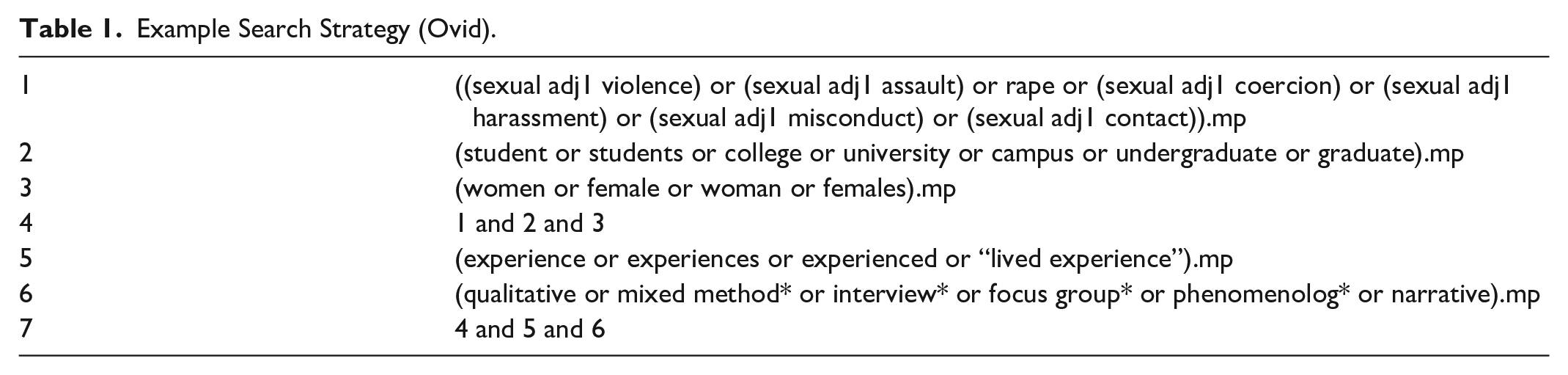
Five key databases were searched for this review in January 2023: CINAHL complete, SocINDEX with full text and Academic Search Complete (through EBSCO); and MEDLINE and PsychInfo (through Ovid). Various Boolean search terms were employed specific to the parameters of each database to identify qualitative studies looking at the SV experiences of women attending higher education settings. The reference lists of all included studies were scanned for any additional articles not identified through electronic database searches. An example of the search strategy utilized is shown in Table 1.
Example Search Strategy (Ovid).
Inclusion Criteria
We included primary studies that utilized a qualitative study design and focused on participants’ lived experiences of SV. Both data collection and analysis needed to involve qualitative methods in order for the study to be included. Mixed-methods studies were considered providing there was a clear and substantial qualitative component that could be separately examined for the review. Studies needed to be published in English, but no date restrictions were applied. As a scoping review, we included a broad range of publication types, including peer-reviewed journal articles, theses, dissertations, and case studies. Study participants needed to (1) be over the age of 18 at the time of data collection; (2) identify as women; (3) be current students or graduates of a higher education institution (e.g. college, university); and (4) have experienced a form of SV while enrolled at a higher education institution. The SV experiences did not need to have occurred on campus for the study to be included.
Studies were excluded if the sample contained both male and female participants and data were unable to be disaggregated, or, similarly, if participants were a mix of victim/survivors and non-survivors and the study did not stipulate which quotes came from the survivor participants. We also excluded studies focusing solely on experiences accessing services or support after SV, and studies that described the circumstances of SV perpetrated against students without exploring the meanings students attached to these experiences.
Study Selection and Data Extraction
The software program Covidence was used to assist with study selection. Authors A, B, and C independently screened titles and abstracts against the inclusion criteria. The same reviewers then screened the full-text articles for possible inclusion. Any disagreements were resolved by another member of the research team. Data from the included articles were extracted by Authors A and B into a customized form and included participant details, study location, methodology, and qualitative themes/findings. Electronic database and hand searches yielded 2,986 articles after duplicates were removed (see Figure 1). Screening of titles and abstracts left 69 articles for full-text review against the inclusion criteria. In all, 35 of these were excluded after reviewing, primarily because the focus of the articles was not on the lived experience of SV, or because the population was not composed of victim/survivors.
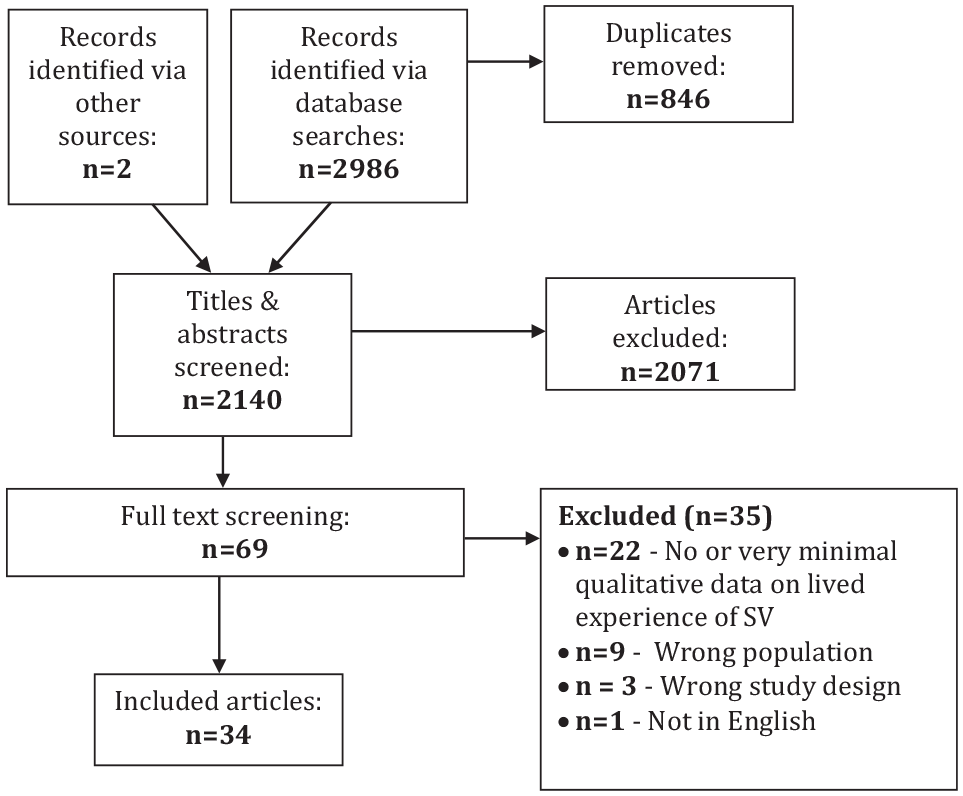
Study selection.
We chose not to undertake a formal quality appraisal of the included articles. Although we appreciate that quality appraisal can give some sense of the robustness of a body of evidence, there is a strong emerging critique of the process from qualitative experts (Braun & Clarke, 2021; Williams et al., 2020). Williams et al. (2020), for instance, argue that currently available critical appraisal tools are too positivist, use inappropriate criteria to assess “quality” and treat “qualitative research” as an homogeneous methodology.
Data Analysis
We drew on Thomas and Harden’s (2008) thematic synthesis approach to analyze the data from the included articles. Thematic synthesis utilizes the tools and processes of thematic analysis typically used in primary studies but translates them for use in reviews. As with thematic analysis, the basic principle is to search for commonalities across the dataset and to provide an interpretation of these patterns that is a true representation of participants’ experiences or perceptions. Themes are inductively created by closely examining the data and undertaking several levels of coding, moving from the descriptive to the analytical (Thomas & Harden, 2008).
In line with these aims, Authors A and B read and re-read the included articles multiple times, familiarizing themselves with the data and writing down initial impressions and notes. Relevant portions of text were then coded at the descriptive level by Author B. Descriptive codes that were similar were grouped together under headings describing their shared meanings. This process of interpretation began to uncover the ideas underpinning the data segments. These steps were repeated to develop three overarching themes that reflect women’s experiences of SV in higher education settings. Once a first draft of this coding framework had been developed by Author B, it was discussed at length with Authors A and D and some themes were re-evaluated and revised. This consultation process increased the robustness and rigor of the analysis and avoided mundane or “common sense” interpretations that did not reveal a deeper meaning (Yardley, 2000). Author A then reviewed the coding framework again and developed the final version.
Results
In total, 34 articles describing 32 studies met the eligibility criteria for inclusion in this scoping review. Characteristics of the included articles are shown in Table 2. In all, 20 studies were conducted in the United States (Babaria et al., 2012; Bonomi, Nichols, Kammes, Chugani, et al., 2018; Bonomi, Nichols, Kammes, & Green, 2018; Caron & Mitchell, 2021; DeLoveh & Cattaneo, 2017; Dogan, 2001; Gameon et al., 2021; Guerette & Caron, 2007; Harned, 2005; Holland & Cortina, 2017; Jeffrey & Barata, 2017; Kopacz, 2022; Lorenzo, 2020; Mastel, 2020; Monahan-Kreishman, 2012; Papp & McClelland, 2020; Peterson & Muehlenhard, 2011; Rolbiecki et al., 2016; Sinko et al., 2020, 2021; Stewart, 2021), three in the UK (Anitha et al., 2021; Atkinson, 2021; Clarke, 2012), two in South Africa (Akintola et al., 2012; Eagle & Kwele, 2019), two in Nigeria (Aborisade, 2021; Ogunwale & Oshiname, 2017), and one each in South Korea (Mijong et al., 2018), Nepal (Neupane & Chesney-Lind, 2014), Iran (Rostami, 2021), China (Qiu & Cheng, 2022), and Canada (Johnstone, 2014, 2016). Sample sizes of participants in each study ranged from 5 to 284, with a participant age range of 18–47 years, though the vast majority of participants were aged 18–25. Methods of data collection included in-depth interviews, focus groups, and open-ended survey questions, as well as more innovative methods involving photo-elicitation work and arts-based narrative methods. Articles were published between 2001 and 2022, but the vast majority within the last 5 years, highlighting the nascent nature of this avenue of academic inquiry into the lives of students.
Characteristics of Included Articles.
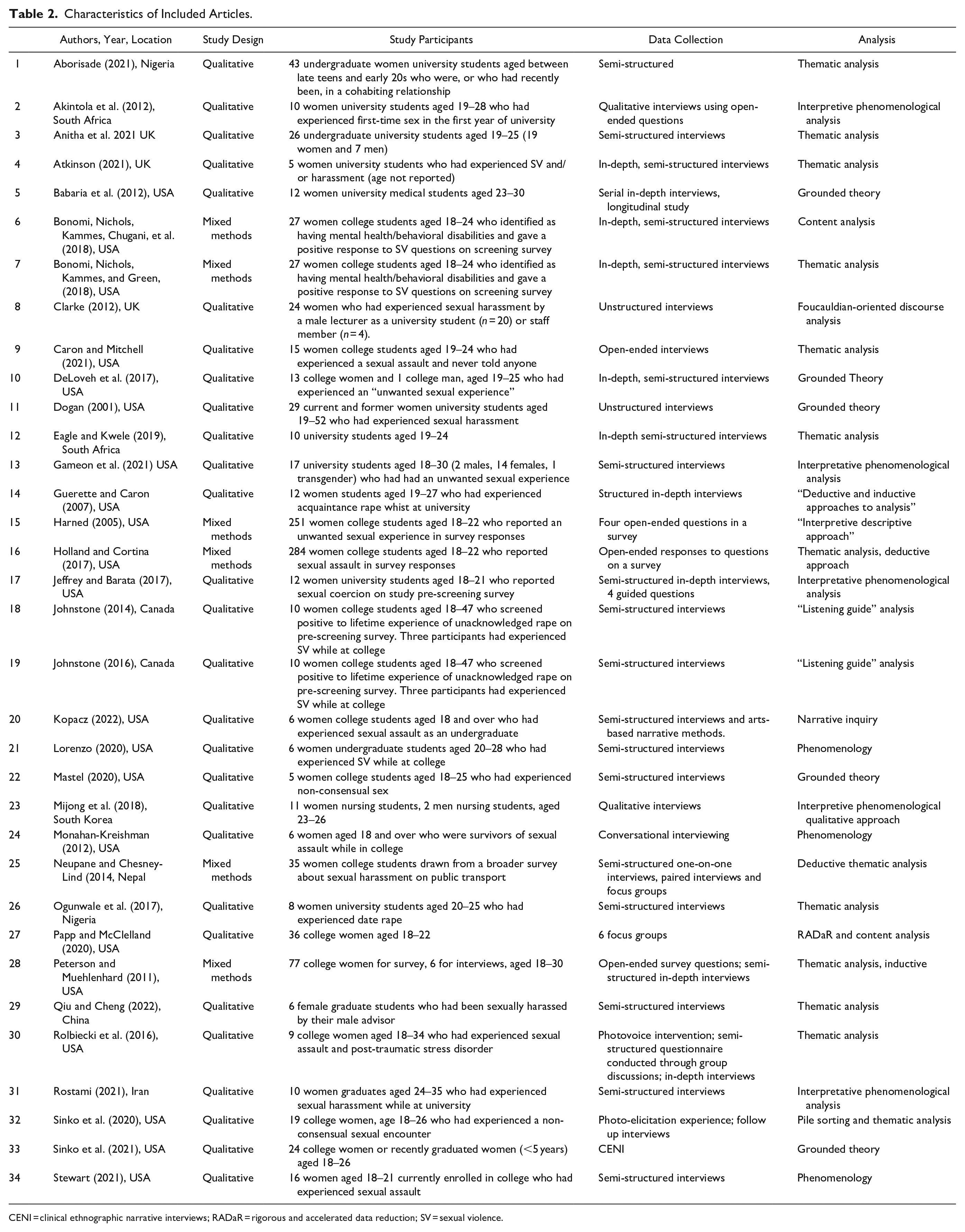
CENI = clinical ethnographic narrative interviews; RADaR = rigorous and accelerated data reduction; SV = sexual violence.
Although we did not undertake formal critical appraisal, our own assessment of the articles included in this review is that the majority were of moderate to high quality, based on (1) consistent reporting of ethical approval; (2) clear description of study sample and recruitment; (3) well-described methods of data collection and analysis; (4) analytical themes that demonstrated interpretation of data rather than basic descriptive categories (Braun & Clarke, 2019); and (5) limitations properly acknowledged.
Key Themes
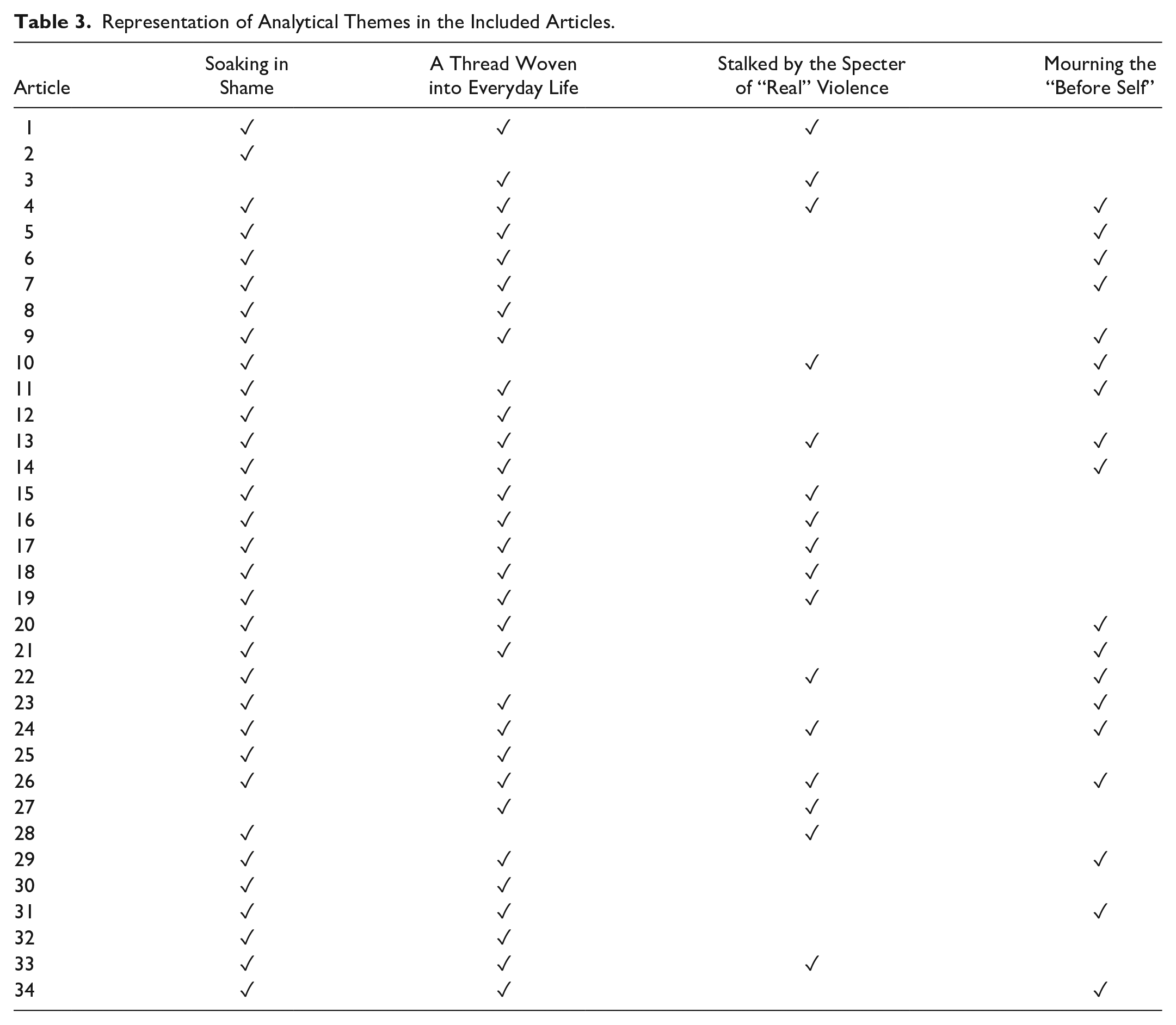
Four major themes were developed from our analysis of the included articles: Soaking in shame; A thread woven into everyday life; Stalked by the specter of “real” violence; and Mourning the “before self.” These themes are outlined below in detail, with references directly from the study participants themselves. Table 3 shows how the themes were represented across the included articles.
Representation of Analytical Themes in the Included Articles.
Summary of Critical Findings.
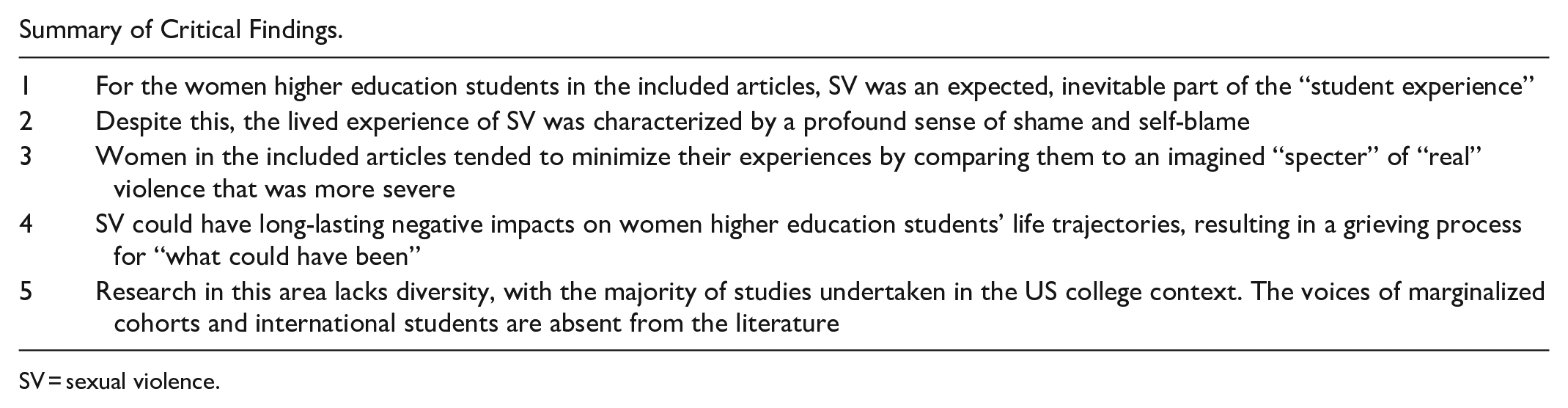
SV = sexual violence.
Implications for Practice, Policy, and Research.
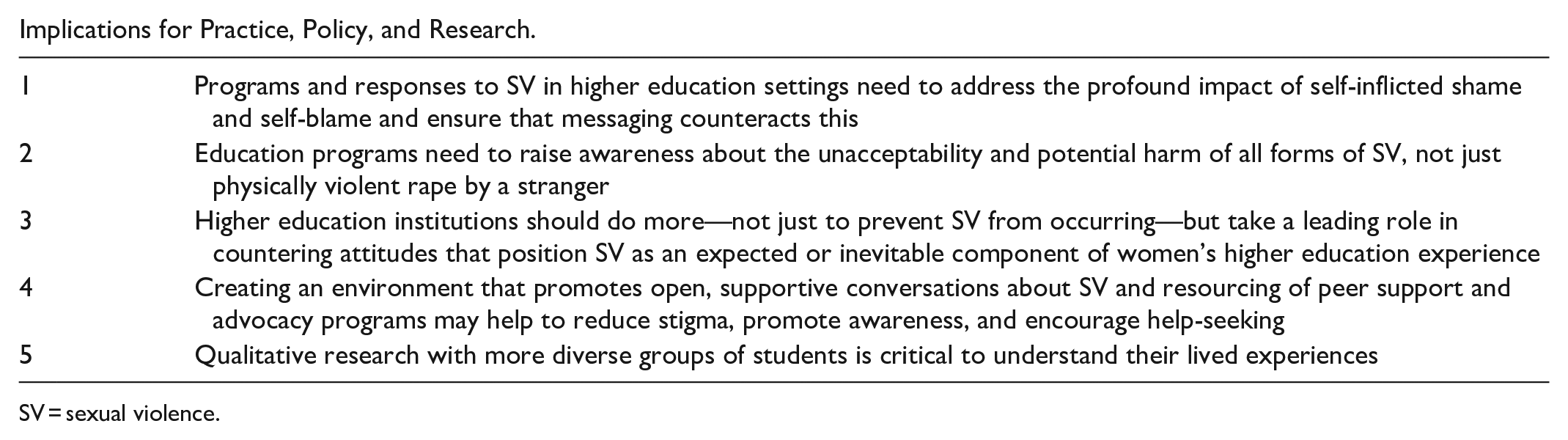
SV = sexual violence.
Theme 1: Soaking in shame
A key finding of this scoping review was the centrality of shame in the lived experiences of female students in higher education settings who had experienced SV. Shame—its deeply felt impacts and reverberations in the aftermath of violence—was described by participants in 32 of the 34 articles (Aborisade, 2021; Akintola et al., 2012; Atkinson, 2021; Babaria et al., 2012; Bonomi, Nichols, Kammes, Chugani, et al., 2018; Bonomi, Nichols, Kammes, & Green, 2018; Caron & Mitchell, 2021; Clarke, 2012; DeLoveh & Cattaneo, 2017; Dogan, 2001; Eagle & Kwele, 2019; Gameon et al., 2021; Guerette & Caron, 2007; Harned, 2005; Holland & Cortina, 2017; Jeffrey & Barata, 2017; Johnstone, 2014, 2016; Kopacz, 2022; Lorenzo, 2020; Mastel, 2020; Mijong et al., 2018; Monahan-Kreishman, 2012; Neupane & Chesney-Lind, 2014; Ogunwale & Oshiname, 2017; Peterson & Muehlenhard, 2011; Qiu & Cheng, 2022; Rolbiecki et al., 2016; Rostami, 2021; Sinko et al., 2020, 2021; Stewart, 2021). Throughout these articles, participants linked these feelings of shame with profound depth of negative affect, intense and denigrating transformations in self-image, and a sense of “ongoing-ness”—that is, shame was continually felt and re-felt in the aftermath of SV. Shame was coded interpretively through a variety of words and phrases which focused on participants’ views of themselves as being tarnished in some way, producing deeply negative feelings about their identities. The participant photo shown in Figure 2, from a photo-elicitation study by Sinko et al. (2020), visually represents this idea of “soaking in shame.” The three quotes below further exemplify how shame was experienced by the participants: When it first happened, I told no one. I felt ashamed and like a whore. (Peterson & Muehlenhard, 2011, p. 565) I hated myself, I felt dirty. (Akintola et al., 2012, p. 149) I felt violated. Like he had taken away who I am and left me with this degraded, used woman. I couldn’t bear to look at myself in the mirror. . . I felt like I was losing my identity. That I was unclean and couldn’t wash away the traces of his grubby hands. (Clarke, 2012, p. 207)
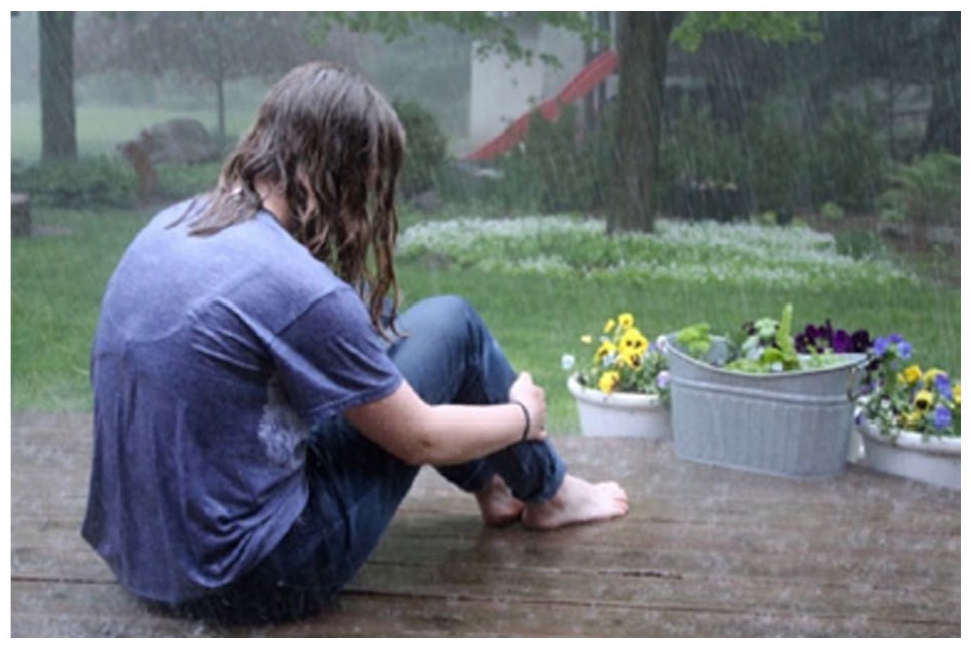
Participant photo entitled “Inside Out” (Sinko et al., 2020).
As these quotes demonstrate, the experience of soaking in shame led the participants to feel tarnished at the very core of their being, their identities transforming into “dirtied” and “whorish” personas.
Central to these feelings of shame was participants’ sense of their own culpability. Many participants described situations where they considered themselves at least partially responsible for the SV. For instance, women university students in a Nigerian study (Aborisade, 2021) justified their partners’ violence by admitting that they engaged in too many arguments, refused to do as they were told, denied their partner sex, or nagged them too much. While one could argue that these beliefs reflect a particular cultural context, other study participants in Western settings described similar attitudes of self-blame: I’m putting it on myself, that the situation occurred. . .If I wasn’t drinking and if I didn’t go out with people that. . .I don’t know, then I’m sure this wouldn’t have happened (Johnstone, 2014, p. 102). I just started thinking, my God what kind of messages did I give him for him [professor] to think that this was okay? I started thinking. . .what did I do to make him think that this was an option even? (Dogan, 2001, p. 249). Why did I let myself get there with him? Why did I let him in my room and in my bed? And, why on earth did I take my underwear off??? (Monahan-Kreishman, 2012, p. 248)
An array of other negative emotions often traveled closely with shame in participants’ accounts; indeed, one of the prominent features of shame as it is experienced by this cohort is that it is often entangled with feelings such as anxiety and fear (Kopacz, 2022; Monahan-Kreishman, 2012; Sinko et al., 2020), sadness and anger (Clarke, 2012; Dogan, 2001; Monahan-Kreishman, 2012).
Despite the centrality of shame in the participants’ accounts, several studies included descriptions of participants being able to release themselves from feelings of shame. This was most prominent in the photo-elicitation studies (Rolbiecki et al., 2016; Sinko et al., 2020), which generally focused on the domain of healing within the broader lived experience of SV, as well as studies conducted post #MeToo (Gameon et al., 2021; Kopacz, 2022; Stewart, 2021). Releasing shame was linked in these studies to students’ abilities to access and take up alternative interpretations of SV which shifted blame for the violence away from the victim, thus severing the connection between victimization and denigrated selfhood: I read a lot more books about feminism and sexual assault. . . just realizing that it is a culture that we live in. (Sinko et al., 2021, p. 576) The fact that this happened to me doesn’t say anything about me as a person. What I did with what happened says everything. I tried to remove a rapist from our campus, and while I didn’t succeed, what I did was brave. I didn’t know how strong I was until being strong was the only choice I had. (Rolbiecki et al., 2016, p. 246) [The SV] has allowed me to grow a lot afterwards. I realized how strong I really can be and what I can make it through. I made it through that, it was the worst thing I can think of happening, but I made it and so here I am. (Stewart, 2021, p. 53)
Added to this, a common idea was that talking to others about the violence was conducive to healing from shame.
The more women speak out, it can only help. I was raped, and I’m not ashamed (Guerette & Caron, 2007, p. 39). By saying it out loud, it released the shame I have carried for so long . . . a shame that I never should have owned to begin with (Caron & Mitchell, 2021, p. 20). Because everyone is talking about it, it’s something I can say without being ashamed. (Stewart, 2021, p. 65)
Some of the things cited by participants that assisted with releasing shame were seeing therapists or campus counsellors (Gameon et al., 2021; Lorenzo, 2020; Monahan-Kreishman, 2012), engaging in advocacy work (DeLoveh & Cattaneo, 2017; Gameon et al., 2021; Stewart, 2021), receiving validating responses from others (Guerette & Caron, 2007), and having peer support networks (Mijong et al., 2018; Stewart, 2021). Yet, the fact that healing from shame was largely very resource-intensive further supports the imagery of shame as an emotion that becomes deeply “soaked-in” and difficult to shift.
Theme 2: A thread woven into everyday life
This theme was coded in 29 of the 34 articles (Aborisade, 2021; Anitha et al., 2021; Atkinson, 2021; Babaria et al., 2012; Bonomi, Nichols, Kammes, Chugani, et al., 2018; Bonomi, Nichols, Kammes, & Green, 2018; Clarke, 2012; Dogan, 2001; Eagle & Kwele, 2019; Gameon et al., 2021; Guerette & Caron, 2007; Harned, 2005; Holland & Cortina, 2017; Jeffrey & Barata, 2017; Johnstone, 2014, 2016; Kopacz, 2022; Lorenzo, 2020; Mijong et al., 2018; Monahan-Kreishman, 2012; Neupane & Chesney-Lind, 2014; Ogunwale & Oshiname, 2017; Papp & McClelland, 2020; Qiu & Cheng, 2022; Rolbiecki et al., 2016; Rostami, 2021; Sinko et al., 2020, 2021; Stewart, 2021). It speaks to the way that SV can become normalized within the higher education context and interwoven with the everyday reality of student life.
Participants commonly described SV as being a “normal” part of their everyday lived experiences as female students. They articulated the high frequency and ubiquity of SV: it happened all the time, to everyone, and everywhere. In Eagle and Kwele’s study (2019) examining the experiences of women university students who commute to campus in South Africa, every single one of the ten participants experienced sexual harassment from male strangers they were compelled to interact with daily while commuting. This high frequency of sexual harassment was also experienced by college students in the United States and the UK: It happens all the time, if people reported all instances of sexual harassment that take place at fraternities, the university would never be finished investigating. (Holland & Cortina, 2017, p. 56) I have six close female friends, and out of six, five of them have been sexually assaulted or raped whilst at university. (Atkinson, 2021, p. 190)
Not only was SV described as ubiquitous, but participants also understood it as being an expected part of their everyday lives as higher education students. Participants in many of the studies were simply resigned to the fact that being a female student meant that they would inevitably experience SV at some point, either in the context of a dating relationship, from a member of staff, or in a public setting.
He was horny, I was tired. Typical boy-girl relations. (Harned, 2005, p. 401). [describing a sexual assault in a public place] This is what it’s like to be a girl on campus. (Papp & McClelland, 2020, p. 494) . . .Like, everyone experiences this [SV] their freshman year, I’m not special. (Bonomi, Nichols, Kammes, Chugani, et al., 2018, p. 1320) She [friend] told me that it was okay, everyone who came here had to endure [the professor’s] advances; it was best to think of it as him teaching us our first lesson about life in the real world. (Qiu & Cheng, 2022, p. 10)
Institutional responses to and attitudes toward SV further served to normalize the behavior. In one study by Babaria et al. (2012), for example, participants on clinical placements were casually informed about a particular doctor’s tendency to sexually harass female students: We were warned actually by [program administrator]. He said, “Doctor [Y] sort of has a reputation for being inappropriate. It's part of his personality. We try to keep him in line, every now and then he slips back out of line. . .Just let him know if he's going out of bounds.” (Babaria et al., 2012, p. 1017)
Other students spoke of their disappointment when their institutions failed to respond to reports of SV or dismissed or minimized the perpetrator’s behavior. Several studies referred to the patriarchal nature of higher education institutions, referring to them as “boy’s clubs” (Clarke, 2012) or as havens for “lad culture” (Atkinson, 2021) in which such behaviors were tolerated or even encouraged: There has been a lot of cases in my campus where women, and some of my friends have been raped or assaulted, and the school doesn’t take it seriously, especially if they are in a fraternity, and that is usually where they make excuses. (Sinko et al., 2021, p. 8) [The lecturer] had sexually harassed some of his students, his female students, and there had even been some complaints gone in about him, although nothing was ever done about it. (Clarke, 2012, p. 168)
Further to its appearance as a “normal” part of everyday life, SV was woven into the lives of the participants in their interactions on campus and in public spaces. That is, their experiences of being a victim/survivor of SV and their “student experience” more generally were deeply intertwined. This was apparent in their discussions of how they navigated the physical space of a higher education campus in the aftermath of SV. For example, women students in the included studies often avoided certain areas and traveled with companions or changed their routines and behavior. Many felt deeply uncomfortable and unsafe on campus for the remainder of their studies: When I’m walking on the university campus there’s always young men, there’s always groups of men and I don’t feel comfortable or safe around them ever. . . I alter my behaviour. . . I just, like, walk faster or I’ll be, like, hyper aware. (Atkinson, 2021, p. 165) I was [so] traumatized. . .I was afraid of campus. And at that point I was personifying campus, the entire campus [was the professor who sexually harassed me.]. . .The buildings were malicious. (Dogan, 2001, p. 128)
Some students were forced to continue to attend classes with the person who had perpetrated the SV against them; this affected their ability to focus and concentrate.
I had to see him at school and would try to avoid any eye contact. But he would just stare at me. I was scared of him. (Caron & Mitchell, 2021, p. 15) The worst part was class because I had a lot of classes with him. . .I was told like I have the left side of the room and he had the right side of the room, but then that’s like the hypervigilance sets in and I can’t pay attention because I’m always keeping an eye on him. (Bonomi, Nichols, Kammes, & Green, 2018, p. 366)
For some students, the SV had occurred within their own private dormitory or residence. Having their “safe” space on campus turned into a continual reminder of their SV experience was incredibly traumatizing. Chloe, a participant in a phenomenological study by Monahan-Kreishman (2012) who was raped by her ex-boyfriend, described her feelings about having to remain in the same room in which she was assaulted for the remainder of her senior year: I had pictures of friends hanging on the wall as well as some posters of bands and sorority memorabilia. It felt like everything in my room somehow reminded me of [the perpetrator]. The pictures of friends that he was also friends with. The posters of bands that we had gone to see in a group together. The memorabilia from my sorority to which I had taken him to many functions. It constantly felt like I was playing six degrees of separation [from him]. (Monahan-Kreishman, 2012, p. 245)
As these quotes demonstrate, students’ “lifeworlds” (van Manen, 1990) during and after SV were clearly populated with objects, places, and people specific to their educational contexts. Academic staff, fellow students, faculty responses to violence on campus, classrooms, commutes to school, sporting events, even a distinct sense of time related to the passing of semesters and exams, all featured in their lived experiences of violence. This intersection of SV and the lifeworld of being a student were particularly obvious in the photo-elicitation studies (Rolbiecki et al., 2016; Sinko et al., 2020). For example, one participant in a study by Rolbiecki et al. (2016) took a photo of a chair in a room and entitled it “3 hours of hell,” reflecting on her experiences of the university’s conduct hearing against her attacker. Her use of an everyday object to express how the university’s processes became a site of secondary, symbolic violence demonstrates the transformative power of SV, where even a mundane piece of furniture can become a significant site of trauma.
Theme 3: Stalked by the specter of “real” violence
This theme explores how female students compared their lived experiences of SV against an imaginary violence which they viewed as being more valid, or “real” than their own. Participants in 16 of the articles (Aborisade, 2021; Anitha et al., 2021; Atkinson, 2021; Caron & Mitchell, 2021; DeLoveh & Cattaneo, 2017; Gameon et al., 2021; Harned, 2005; Holland & Cortina, 2017; Jeffrey & Barata, 2017; Johnstone, 2014, 2016; Mastel, 2020; Monahan-Kreishman, 2012; Ogunwale & Oshiname, 2017; Papp & McClelland, 2020; Peterson & Muehlenhard, 2011; Sinko et al., 2021) expressed various iterations of this theme. These articulations drew upon a restrictive set of ideas about where, when, and how SV happens, who it happens to, and who perpetrates it. Drawing upon these ideas, participants constructed a dark, shadowed outline of a version of events which represented “real” violence, and then measured their own experiences as falling short of it. This “specter” then stalked them in the weeks, months, and years which followed their experiences, continually invalidating their own experiences, and blocking them from accessing supports. Studies referred variously to this phenomenon as “rape scripts” (Peterson & Muehlenhard, 2011), a “rubric of violence” (Johnstone, 2016), and “rape myths” (Sinko et al., 2021). Our analytical theme of being stalked by a specter is similar, yet it speaks to the way that ideas about “real” violence are not just passive tropes but harmful concepts that continue to undermine women’s agency and self-belief (Tarzia, 2020).
One way that participants invoked the specter of “real” violence to minimize their own experiences was by defining “violence” as involving extreme physical harm or external signs of injury. These views were, unsurprisingly, most prevalent among studies where recruitment focused on “unwanted sexual experiences” or “non-consensual sex”: I don’t really consider it rape because when I think of rape, I think of like this random guy that beats you up and rapes you . . . I mean, he was nice about it. He wasn’t beating me or anything . . . Like, if he had dragged me back to the room or something . . . then I would consider it rape, probably. (Peterson & Muehlenhard, 2011, p. 562) It’s not like he hit me or did anything physical. (Jeffrey & Barata, 2017, p. 919) I feel like rape is such a heavy word that I almost associate with being beaten almost, you know you die from it or there’s some. . . I think it’s much worse than what I experienced. (DeLoveh & Cattaneo, 2017, p. 71)
This emphasis on physically violent sexual assault was also extended to students’ conceptualizations of “victim resistance.” Participants were stalked by a specter of “real” violence in which the only form of resistance that mattered involved physically “fighting back” accompanied by loud yells and screams for help. Without this, victim/survivors were more likely to reframe or label the experience as “bad sex,” “unwanted sex” or “being taken advantage of” (Mastel, 2020) rather than “rape” or “sexual assault”: I was drunk and didn’t put up a fight and gave in. (Harned, 2005, p. 396) I want to call it rape but I feel like since during the intercourse, I didn’t put up a big fight, it’s not. (Peterson & Muehlenhard, 2011, p. 563) I’m sure he wouldn’t have done it if I, like, pushed him away. (Jeffrey & Barata, 2017, p. 922)
Following on from this notion of physicality, the specter of real violence in students’ accounts all drew on a normative view of who perpetrates SV: I guess the weird thing about considering it rape would be I would have to consider him the person who did it, and that’s really weird. . . He’s a normal horny college guy, a next door neighbour, funny, not that intelligent [. . .] He just seems like a lot of guys I’ve met. [. . .] someone I’d want to hang out with. And if he can do that, if he’s a rapist . . . then that makes me start going, ‘What about that guy, and what about that guy, and what about that guy?’ (Peterson & Muehlenhard, 2011, p. 563)
The specter haunting this participant’s account casts doubts over the match between the normative vision of “rapist” and the person who perpetrated rape against her, whom she refers to as “a normal horny college guy.” A similar finding was reported by Clarke (2012), who argues that the “trustworthy lecturer” discourse—whereby students are unable to reconcile the idea of a trusted staff member perpetrating SV—presents a barrier to recognizing and naming sexual harassment. Thus, it appears that stereotypical understandings of violence had extremely strong explanatory power as a meaning-making framework for women victim/survivors in the included studies.
Finally, in this theme, apart from invalidating their experiences, the specter of real violence had material impacts. Often, the feelings that their lived experiences did not “count” or were inauthentic prevented students from accessing resources, including legal responses, health services, and academic support: The situation wasn’t very serious. I was dancing and he pulled his penis out of his pants and rubbed up against me. I thought he was disgusting and capable of doing other things but. . . I don’t think that his actions are serious enough to report. . . I felt that others were going through worse things than me and they needed help more. (Holland & Cortina, 2017, p. 56) . . .it’s like, “oh, he only touched a bum or he only put his arms around you, so what’s the big deal?” . . . Because you just think, oh, well, did I really get harmed? (Anitha et al., 2021, p. 2053) I did want to report it [sexual harassment by a professor] but what the hell was I going to do? How do you report getting a good grade? I mean, it sounds a bit odd, doesn’t it? (Clarke, 2012, p. 145)
Theme 4: Mourning the “before self.”
This theme, present in 18 of the included articles, describes the way that SV could irreversibly disrupt and derail the lifeworld of women in higher education settings in the longer term. Participants placed a clear delineation in their accounts between the person they were before the SV, and the person they became afterwards. With the exception of some participants in Stewart’s (2021) study about the impact of the #MeToo movement, women across almost all of the articles lamented the loss of their “before self,” a person who possessed strong career aspirations, a happy or carefree nature, and was trusting of others. Although many participants had found ways to heal and cope with the SV over time, this process of repair was overwhelmingly framed as making the best of a bad situation, a forced response to a situation which they did not choose or want.
One way in which women mourned their “before self” was in terms of their academic performance. Women articulated wide-ranging impacts of SV on their education, including falling grades, failing classes, transferring to other educational institutions, and in extreme cases, dropping out of higher education altogether: I had extreme academic trouble. . .withdrew from classes. . .and I’m still in the process of trying to get a medical withdrawal. (Bonomi, Nichols, Kammes, & Green, 2018, p. 366) One of my classmates straight up texted me asking if I had died, because I hadn’t attended classes in 2, 3 weeks. (Lorenzo, 2020, p. 65) I was. . .a straight A student and, you know, classes were easy. [After the SV] my grades went down. . . I was struggling to hand in work. I was struggling to stay focused. I wasn’t going to class which was also affecting my grades. . .It was just overall hard for me to stay on task when I was just too busy being overwhelmed with the assault. (Kopacz, 2022, p. 65)
Dogan (2001), in a Grounded Theory study of college women’s experiences of sexual harassment, describes SV as being fundamentally disruptive to the “career mission” of victim/survivors. Indeed, women students across many of the included studies reported feeling disillusioned, disappointed, and demotivated after experiencing SV. Many were forced to accept less ambitious life goals than what they had originally planned: It's sad when I think about it. . .my academic career (sniffle) is over. . .We’ll never know how it might have been. We’ll never know. (Dogan, 2001, p. 122) I lost my confidence, my self-esteem. . . thought about quitting my career goals. Once an academic job seemed to be so elegant to me, and I used to think that I had outstanding talents in academics, but now I feel that being a woman scholar is a disgrace if I have to be a sex object. (Qiu & Cheng, 2022, p. 11) I really have never gotten back to that freshman year self who just wanted to be on top of everything and wanted to care about everything and wanted to give my best. That person just never really returned. I’ve adapted to who I am now. . .[but] I would say that she never came back after it happened. (Lorenzo, 2020, p. 80) The [sexual harassment] ruined my life. . .If I go back to that educational setting, the bad memories, especially the night I lost my virginity, [bother] me, and I cannot be a successful student. (Rostami, 2021, p. 6)
On a personal level, participants in several studies felt that something had been stolen from them or that their identity had been irreversibly changed after experiencing SV. Women spoke about feeling more cynical about the world and wary of others. Many women reported having difficulties with intimacy and trust in relationships. For one participant in a US college study by Mastel (2020), even kissing “hurt my stomach to think about again” (p.65). Others described the various ways that SV had changed them: I know you’re supposed to be stronger, but it didn’t make me stronger. It was just one more thing I had to go through. And maybe I would have liked the person I would have become without going through that. (Guerette & Caron, 2007, p. 44) I 100% believe that my innocence was taken away, stolen in fact. I was a freshman in college, very much sheltered by my parents, naïve to so many things in the world, and this guy stole my innocence away. (Monahan-Kreishman, 2012, p. 229) It really dampened my view of the world and I think I’m still kind of dealing with that. I think I do have a fair amount of cynicism about the world in general. (Stewart, 2021, p. 74)
For some participants, being forced to let go of their “before self” brought with it feelings of resentment and anger toward the perpetrator and the higher education system: It pisses me off that I have to suffer for so long, and he doesn’t. I feel like it’s a spot on his radar, and it’s a huge part of my life. That makes me really angry. (Guerette & Caron, 2007, p. 44) He has suffered not one consequence as far as I see. . ..In a lot of ways I’m very angry about it but at this point I feel like I’m not going to get any help from anybody else because there, there does not seem to be anything they can do. Or that they’re willing to do. (Dogan, 2001, p. 242)
Summary of findings: The four themes described above illustrate the essence of the lived experience of SV for women higher education students as described by participants in the 34 included articles. Our findings suggest that the experience of SV can lead to profound feelings of shame and self-blame. While overcoming these feelings and healing from SV is possible, it takes enormous work on the part of the victim/survivor and requires a supportive environment. Second, we found that SV permeates the entire student “lifeworld” and is viewed as a common and almost expected part of the student experience for women in higher education settings. SV could recast the educational experience and even the physical campus space as fundamentally unsafe and threatening. Third, the “specter” of “real” violence haunted the participants, causing them to constantly question whether their experiences “counted” or were “bad enough” to report or take action. Finally, the impacts of SV in the longer term led to often-irreversible changes in how participants saw themselves, creating a chasm between the self before and after SV.
Discussion
This scoping review is the first to synthesize the qualitative literature on SV against women attending higher education settings. Through thematic synthesis of 34 articles describing 32 studies, it provides insight into the experiences of female students that compliments existing reviews of quantitative evidence on prevalence and health outcomes (Rosenberg et al., 2019; Stoner & Cramer, 2019). Individual qualitative studies in the higher education setting have primarily set out to explore topics such as why women choose not to disclose SV; barriers to accessing services; or what prevents women from recognizing or naming non-consensual sexual experiences as “rape” or “violence.” Our review brings together disparate findings from these primary studies to provide a higher-level overview of how women in higher education settings understand the experience of SV.
A key finding of our review is the profound and all-encompassing impact of SV on women higher education students’ sense of self-worth. Shame was a central aspect of the lived experiences of the victim/survivors across the included studies. While the strong presence of shame after SV is certainly consistent with research among general populations of victim/survivors (Bhuptani & Messman-Moore, 2019; Kennedy & Prock, 2016; Moor & Farchi, 2011; Vidal & Petrak, 2007), our review findings illuminate the nature of shame for women victim/survivors in higher education settings in their own words. Participants in the included studies described shame as something “soaked-in,” a feeling of deep negative affect that corrupted their sense of self-worth and left them feeling “dirty” or “whorish.” Interestingly, although research often focuses on external negative judgement or victim blaming as causes of shame, the participants across the included studies in this review largely described their sense of shame as something internalized and self-inflicted. Certainly, many of them also worried that they would be judged negatively by others—particularly if the perpetrator was a professor or lecturer—however, their own sense of failure came through far more strongly within the data. As educated, capable women, many described their self-loathing at “letting this happen to them” (DeLoveh & Cattaneo, 2017) or for giving the “wrong signals” (Dogan, 2001).
On a positive note, participants in some studies did describe managing to overcome and heal from shame, disrupting the connection between victimization and a damaged sense of self. This was particularly evident in the more recent studies published after the emergence of the #MeToo movement (Gameon et al., 2021; Stewart, 2021). Participants in these studies spoke to the benefits of student advocacy work and the power of sharing narratives about SV as a way of reducing shame.
Our review also highlights that, despite decades of feminist activism and research, students still rely upon false assumptions and stereotypical understandings of SV to provide a meaning-making framework around their experiences. The descriptions used by students in the included studies match those found in foundational rape research by Liz Kelly from almost 40 years prior (Kelly, 1987), where participants associated rape with “strangers, dark, night and struggle” (p.57). Many of the women in the included studies defined SV in terms of the presence of physical injury, violence, or even death. Although recent studies suggest that “rape myth acceptance” among college students may be decreasing (Beshers & DiVita, 2021), it is evident that these still myths remain salient for many of the participants when thinking about their own experiences. The specter of this “real” violence was constantly used as a benchmark that diminished and minimized the participants’ actual experiences. If we consider that most SV against higher education students is perpetrated by a dating partner or someone they know (Heywood et al., 2022), it is highly likely that many women’s experiences do not involve physical violence. Furthermore, many studies (Papp & McClelland, 2020) refer to the thousands of “mild” incidents of SV and sexual harassment that are perpetrated on college and university campuses, few of which are likely to cause physical harm or injury. For women students in higher education settings, then, we suggest that—unlike some other cohorts of victim/survivors—the problem is not necessarily that they are not aware that they have been violated, but that they constantly compare their experiences to an imagined benchmark and find them lacking. In other words, they recognize that their experiences are “bad,” but convince themselves that they are not “bad enough,” and consequently, decide not to report or seek help (Holland & Cortina, 2017).
A third key finding of our review is that SV is perceived by women higher education students as an experience that is woven through everyday life. Female students across the included studies described how SV could impact upon their everyday interactions on campus, changing their behavior and how they experienced their student “lifeworld.” Our findings also suggest that there is also a horrifying “normality” to female students’ experiences of SV—almost an expectation that being sexually violated is an unavoidable component of student life (Bonar et al., 2022; Fedina et al., 2018; Rosenberg et al., 2019; Stoner & Cramer, 2019). This highlights a paradox that has been the subject of scholarship on violence against women for nearly 40 years (Anitha et al., 2021; Kelly, 1988). On the one hand, participants in the included studies variously referred to SV as something that happens to everyone, part of being a female student on campus, or something that had to be tolerated in order to achieve a good education. Yet, despite knowing that SV is extremely common, participants still experienced strong feelings of self-inflicted shame and isolation, suggestive of an experience that remains highly stigmatized. This highlights the importance of institutions creating open, supportive environments for students to have conversations about SV. Stewart’s (2021) phenomenological study, for example, illustrated how increased discussions about SV post-#MeToo in higher education campuses could reduce feelings of shame and isolation, increase awareness about abusive behaviors, and encourage disclosure.
Finally, our findings are suggestive of long-lasting and profound impacts of SV on women students’ life trajectories, both professionally and personally. Many reported severe academic struggles after experiencing SV. Although a body of quantitative research similarly points to the negative impact of SV on short-term academic outcomes (Molstad et al., 2021), there are fewer addressing how these academic disruptions can affect students in the longer term (Potter et al., 2018). For the participants in our review, having to reframe and often downgrade their career goals—either because they were no longer able to maintain the same academic standards or because they were disillusioned with the higher education context—brought up feelings of sadness and resentment. Thus, while our findings are consistent with the limited qualitative research on the career impacts of SV (Loya, 2015; Potter et al., 2018), they further expand the knowledge base by highlighting how women higher education students experienced these academic and career shifts. For many, it was a process of grieving “what might have been.”
Similarly, on a personal level, the participants in our review mourned the carefree, trusting version of themselves that they remembered prior to experiencing SV, with many feeling that the positive higher education experience they had hoped for had been unfairly stolen from them. This had flow-on impacts for their ongoing health, happiness, and relationship satisfaction.
Implications for research, policy, and practice
Our findings have clear implications for higher education settings, particularly in terms of campus service provision and development of education campaigns around SV. First, it is vital that engagement work with female students who have experienced SV addresses the impact of shame and self-blame and raises awareness about the unacceptability and potential harm of all forms of SV (not just physically violent rape perpetrated by a stranger). Creating an environment that promotes open, supportive conversations about SV may help to reduce stigma, promote awareness, and encourage help-seeking, particularly in the wake of the #MeToo movement. Allocating resources and funds to programs such as peer-support networks and advocacy programs may also be helpful. Second, based on the findings of our review, we suggest that higher education institutions should take a leading role in countering attitudes that position SV as an expected or inevitable component of women’s higher education experience. This needs to be demonstrated not just through rhetoric and words, but by taking decisive action when SV is reported and ensuring that victim/survivors are believed and supported.
In terms of research, our review identified a number of gaps in the knowledge that ought to be addressed by future studies. In particular, qualitative research with more diverse groups of students (and in countries other than the United States) is critical to understand their lived experiences. The intersectional experiences of women who belong to other marginalized groups (e.g., LGBTQ, disabled, racialized) and differing cultural contexts in non-Western countries are likely to impact upon how they understand and make sense of SV victimization; yet, there was little consideration of this in the included studies (although some did include students from racialized backgrounds and one study focused on students with self-identified disabilities). Similarly, the experience of SV as an international student may be different to those of domestic students, since they are away from their usual support networks and may face language or cultural barriers to disclosure. Yet, few studies have included their perspectives thus far.
Strengths and limitations
Our study has numerous strengths including a robust systematic search strategy, a team with a mix of both research and clinical/practice expertise in SV, and the use of thematic synthesis to develop novel interpretations of the existing data that go beyond simple categories. However, there are also some limitations that ought to be taken into account. First, there was a lack of contextual diversity among the included studies, with the vast majority of research being undertaken in the US college setting. Since higher education settings in other countries can be quite different (e.g., students do not necessarily reside on campus), this may have impacted on the findings. Second, qualitative research on SV tends to be quite disparate, with content on the lived experience of SV appearing in a range of diverse articles. Thus, although our search strategy was robust it is possible that some articles have been missed. Finally, since we did not restrict our review to peer-reviewed articles and elected not to undertake a quality-assurance process of the included articles, we are unable to give a robust assessment of the strength of the evidence.
Conclusion
This scoping review examined 34 articles covering 32 qualitative studies into women higher education students’ lived experiences of SV. Using thematic synthesis, the review found that these lived experiences were characterized by a deep and profound sense of shame that persisted long after the violence itself, the continued influence of “specters” of “real” and more authentic violence, by the ability of violence to weave itself into the normal, everyday lifeworlds of students and by long-term feelings of grief and loss of the person who existed before the SV. These findings have implications for programs in higher education settings, suggesting they need to emphasize the unacceptability of SV behaviors by the (primarily) men who perpetrate them, the seriousness of any unwanted sexual encounter (whether or not physical force is involved) and attempt to promote resources and support to ameliorate shame in the aftermath of SV. The hidden epidemic of SV continues to be a major problem in higher education settings worldwide; it is critical that institutions do more—not just to prevent SV from occurring on campuses—but to take a leading role in shifting problematic attitudes that contribute to a climate where SV against women is normalized and expected.
Supplemental Material
sj-pdf-1-tva-10.1177_15248380231162976 – Supplemental material for Women Higher Education Students’ Experiences of Sexual Violence: A Scoping Review and Thematic Synthesis of Qualitative Studies
Supplemental material, sj-pdf-1-tva-10.1177_15248380231162976 for Women Higher Education Students’ Experiences of Sexual Violence: A Scoping Review and Thematic Synthesis of Qualitative Studies by Laura Tarzia, Katrina Henderson-Brooks, Surriya Baloch and Kelsey Hegarty in Trauma, Violence, & Abuse
Footnotes
Declaration of Conflicting Interests
The author(s) declared no potential conflicts of interest with respect to the research, authorship, and/or publication of this article.
Funding
The author(s) disclosed the following financial support for the research, authorship, and/or publication of this article: This paper was partially supported by an Australian Government Research Training Scholarship awarded to the second author.

Author Biographies
References
Supplementary Material
Please find the following supplemental material available below.
For Open Access articles published under a Creative Commons License, all supplemental material carries the same license as the article it is associated with.
For non-Open Access articles published, all supplemental material carries a non-exclusive license, and permission requests for re-use of supplemental material or any part of supplemental material shall be sent directly to the copyright owner as specified in the copyright notice associated with the article.
