




Abstract
Violence against women and girls (VAWGs) is a social and health problem of pandemic proportions. Prevention programs have become an increasingly important part of the strategies to address this violence and include effective approaches for this prevention such as bystander programs. In this sense, it is important to have reliable and validated measures of bystander behaviors. There are different tools designed for this purpose, some of which were designed specifically in a Spanish-speaking context. The main objective of this research is to deepen the analysis of the structure and the categories of bystander responses of the Questionnaire of Intention to Help in VAW Cases (QIHVC) that measures the willingness to perform these responses in three forms of VAWG (intimate partner violence against women, sexual harassment, and street sexual harassment). An opportunity sample of 1,563 Spanish people (M = 33.38 years, SD = 14.69; range: 18–77) took part in this study. The results obtained identify a three-component solution of bystander responses measured by the QIHVC: active helping responses, passive non-intervention responses, and hostile or revictimization responses. This structure is basically similar in men and women and for the different VAWG scenarios studied, except for the response involving confrontation with the aggressor. In fact, confronting the perpetrator generally appears as an active response to help in cases of VAWG only among men. These results indicate that the QIHVC constitutes a promising measure to evaluate bystander responses among the Spanish population in the three types of VAWG studied, with a structure of responses coherent with previous knowledge in the field and with a good, and, in some cases, excellent internal consistency.
Introduction
Violence against women and girls (VAWGs) is a social and health problem of pandemic proportions experienced by almost a third of all women worldwide (Sardinha et al., 2022). However, VAWG is not an inevitable problem, but rather preventable, which is why prevention programs have become an increasingly important part of the strategies to address these violences (Jewkes et al., 2021; Peacock, 2022; UNWomen-WHO, 2020).
The effective preventive strategies for VAWG comprise different approaches, including bystander programs such as those that “strengthen individual skills and knowledge to take positive or ‘pro-social’ action in relation to attitudes and behaviors supporting violence (e.g., the belief that women deserve violence) and precursors to violence (e.g., sexist attitudes), typically implemented as part of a broader program of community/organizational mobilization” (UNWomen, 2015, p. 19).
In the field of crime prevention and VAWG, bystanders 1 are non-professional adult individuals (e.g., family members, friends, colleagues, neighbors, acquaintances) involved in offensive or violent acts but neither as victim nor as perpetrator (Banyard et al., 2005; European Institute for Gender Equality [EIGE], 2020; Fenton et al., 2016). They observe, suspect, are aware or have knowledge of the violence or the conditions that perpetuate it, immediately, prior, during or after the violent incident, and they have the chance to intervene by either helping the victim, perpetuating the violence or doing nothing at all (Banyard et al., 2005; Hamby et al., 2016; McDonald et al., 2016; McMahon et al., 2014; Powell, 2014).
In this context, measuring bystander responses becomes relevant. This study analyzes if a questionnaire designed to measure the bystanders’ willingness to intervene in different forms of VAWG (the Questionnaire of Intention to Help in VAW Cases [QIHVC], Ferrer-Perez et al., 2023) is an appropriate instrument for this.
Bystander Responses
As bystander responses can be diverse, they have been classified in different ways. For example, a distinction is usually made between passive bystanders, that is, those who know of or observe a violent incident but do nothing about it, and active bystanders, that is, those who engage in some type of action or response to the observed situation (Fenton et al., 2016; Gracia et al., 2018; McDonald et al., 2016; Powell, 2014; Sylaska & Edwards, 2014). These active responses may contribute toward the prevention of VAWG or its consequences and can be manifested in different ways and degrees (EIGE, 2020; McMahon & Banyard, 2012; Powell, 2014; Rothman et al., 2019). For instance, some authors (e.g., Powell, 2014) distinguish between intervention responses, which put an end to violent situations, and prevention responses, which are focused on primary, secondary, or tertiary prevention. In sexual violence, bystander responses have been classified as reactive acts, that is, responses carried out prior to, during or after a high-risk situation for the victim, or proactive acts, that is, responses performed at any moment (where no risk of harm is perceived to the victim) to modify social norms and attitudes that perpetuate violence and to promote healthy and non-violent relationships (McMahon & Banyard, 2012; McMahon et al., 2014; Rothman et al., 2019). In this context, bystander intervention programs (such as Green Dot) proposed various categories of bystander action referred to as the 3 Ds (Bush et al., 2019; The 3 Ds of Sexual Assault Prevention, 2011): distract (derailing the violent incident interrupting it), delegate (asking a third party for help) and direct (talking to the victims and/or confronting the aggressor). Subsequently, two more actions were included: delay (even if bystander is unable to act in the moment, he/she can speak to the victims after the incident, support them, speak with him/her), and document (recording or taking notes on an instance of violence). In intimate partner violence against women (IPVAW), the EIGE (2020) distinguishes between mediation responses (e.g., help, support or understanding to the victim; intervening in the violent situation; or confronting the aggressor) and reporting responses (e.g., reporting the case to the police or authorities).
However, it should be noted that bystanders’ responses are not always helpful to the victims, and in some cases, bystanders can even have negative reactions toward the victims, such as disbelieving, minimizing the violence, or blaming the victim (Davies et al., 2023; Pagliaro et al., 2021; Penone & Spaccatini, 2019; Sylaska & Edwards, 2014).
In short, we can conclude that bystander behaviors can be either positive and helpful (e.g., helping the victim or asking for help), contributing in some way to supporting or protecting the VAWG victim, or passive and non-helpful if they do not support the victim (e.g., do nothing), or if they facilitate or permit in any way the occurrence of the VAWG, including cases where the behavior can be directly negative if it recriminates the victim (e.g., blaming the victim). However, as Moschella and Banyard (2020) point out, “less is known about the type of action that bystanders take” (p. 587).
To better understand which are the most used bystander responses, and also to analyze the effect of bystander intervention approaches, measuring bystander actions continues to be a key challenge which is why it is important to have reliable and validated means of measuring of them (Bush et al., 2019; McMahon et al., 2014). In fact, this has been an emerging focus of interest in the last decades (Mennicke et al. 2023).
Measuring Bystander Responses
As Bush et al. (2019) pointed out, given the nature of settings in which bystanders might both observe and act to reduce the potential risk of interpersonal violence, the individuals who may accurately report on bystander actions are bystanders, the potential victim, or the perpetrator. Thus, the best tools to evaluate these actions are bystander self-reports and observations by others (victims, perpetrators or other bystanders). However, given that the observations by others may have some sources of invalidity (e.g., insufficient information about the bystander comprehension of the situation), self-report emerges as the best standard for bystander behavior reports. Consequently, one of the most commonly used techniques for measuring these behaviors is self-report questionnaires (Bush et al., 2019).
In a systematic review to identify validated measures of bystander behavior in the United States, Mennicke et al. (2023) identified 24 different scales, 16 of them related to interpersonal violence. Most address behavior up to the “take action” and “assume responsibility” steps of Darley’s and Latane’s situational model of bystander intervention. These measures are focused both on measuring the actual behaviors of bystanders (e.g., the Bystander Behavior Scale, a 16-item modified version of Banyard’s Bystander Scale [Banyard et al., 2005]) and on measuring the intention to perform a particular behavior or the willingness to intervene (e.g., the Bystander Intention to Help Scale, [Banyard & Moynihan, 2011]), with most of them measuring the willingness or likelihood to act.
Among the reasons for using measures that evaluate the individual’s willingness, intention, or probability to perform a bystander behavior when the opportunity to help is presented is the fact that, as the theory of planned behavior (Ajzen, 1985; Fishbein & Ajzen, 2010) pointed out, intention constitutes a valuable predictor of behavior. Additionally, these measures have some practical advantages, such as that people can respond to it even if they have not directly experienced this situation in real life (Mennicke et al., 2023). Moreover, some evidence about their usefulness in recent research (e.g., Krauss et al., 2023) shows how likelihood scores have demonstrated added value in quantifying bystander behavior over other scoring methods.
In some cases, and particularly because of their self-report nature and their retrospectivity, there are some constraints about these questionnaires (Jouriles et al., 2016), such as the effects of social desirability or the difficulties to correctly understand and interpret the characteristics of the VAWG situation about which they are asked (e.g., the seriousness, or the danger involved). Due to these limitations, other types of instruments that place respondents in the situation and offer a more accurate measurement to their responses as potential bystanders. They include film clips, virtual reality, or the design of vignettes or case scenarios that present the participants with a particular situation after which they are asked questions (Jouriles et al., 2016).
For example, in Spain, the Willingness to Intervene in Cases of Intimate Partner Violence (WI-IPVAW) scale was developed by Gracia et al. (2018) to assess the likelihood of performing a particular bystander behavior. It includes 28 items (with 2 shorter versions with only 9 and 6 items, respectively) that are grouped into general non-specific factors related to the willingness to intervene in cases of IPVAW, and three specific factors related to different intervention preferences: law enforcement (“calling the cops”), personal intervention (“personal involvement”), and non-intervention (“not my business”). These items present hypothetical scenarios that could be witnessed by the respondent, or disclosed to him/her by the victim, describing IPVAW behaviors (e.g., physical aggression, insults, threats, etc.), occurring in different places (e.g., next door apartment, staircase or communal areas in buildings, street, etc.) and including different types of potential responses or involvement (e.g., calling the police, scolding or reprehending the aggressor, protecting the victim, ignoring the situation, doing nothing, etc.).
Also, in a Spanish context, the QIHVC (Ferrer-Perez et al., 2023) was designed to widen the measurement of the bystanders’ willingness to intervene in different forms of VAWG, in line with the suggestions of Hamby et al. (2016). Specifically, the QIHVC presents hypothetical scenarios of three forms of VAWG: IPVAW, Sexual harassment in the workplace (SH), and Street sexual harassment (SSH), defined as “the harassment of women in public places by men who are strangers to them” (Bowman, 1993, p. 519). It seems to constitute an adequate and sensible tool to capture differences between the characterization of bystanders’ responses in different forms of VAWG (Ferrer-Perez et al., 2023).
Thus, this questionnaire can contribute to the measurement of the effectiveness of bystander programs to increase participants’ willingness to intervene in different VAWG situations. However, further analysis of this tool is needed. Precisely, the aim of this research is to deep on these analyses.
Gender Effect on Bystander Responses
Additionally, it could be noted that most studies that analyze the role of key variables in facilitating or inhibiting bystander intervention have focused on the role of individual variables, in particular the bystanders’ gender (Mainwaring et al., 2023). In general, this research finds that women are more likely to intervene than men (e.g., Franklin et al., 2020; Katz et al., 2015; McDonald et al., 2016; Nicksa, 2014; Serrano-Montilla et al., 2020; Suzuki & Bonner, 2017). However, not all studies report these differences (e.g., Banyard et al., 2020; Cinquegrana et al., 2018; Katz & Nguyen, 2016; Palmer et al., 2018) and, in some cases, this “gender effect” can be influenced by the type of bystander response being considered (Franklin et al., 2017, 2020; Holland et al., 2016; Hoxmeier et al., 2015; Moschella et al., 2018). In fact, available research suggest that men tend to actively intervene by confronting the perpetrator, interrupting an assault, or choosing an indirect strategy such as finding someone else to help the victim (e.g. Brewster & Tucker, 2016; Franklin et al., 2017; Holland et al., 2016; Palmer et al., 2018); and women tend to intervene by helping the victims during the incident (Holland et al., 2016; Moschella et al., 2018), or supporting them after the assault (Franklin et al., 2020; Hoxmeier et al., 2015). Other research suggests that this “gender effect” can be influenced by the form of VAWG analyzed. For instance, in sexual violence, Burn (2009) hypothesized that aggressions may be more salient for women given their greater risk for victimization, enhancing their awareness of situations when action is needed and their motivation to intervene. But, at the same time, their risk for victimization may also make women more concerned for their safety if they intervene. In contrast, men supporting rape myths or accepting IPVAW may have a lower sense of responsibility to act on behalf of a potential victim (Spencer et al., 2021). However, they may be more likely to help in some cases due to the potential activation of traditional gender masculine norms (Levine & Crowther, 2008). In their study, Lyons et al. (2022) found that women reported more difficulties to intervene as a bystander in sexual harassment (SH) cases. Given these results, it seems that gender may introduce some relevant differences in bystander categories of responses toward VAWG.
Current Study
According to preliminary results (presented by Ferrer-Perez et al., 2023), the QIHVC seems to be an adequate instrument to analyze bystander responses in Spanish-speaking contexts. Particularly, it seems to be valid and sensitive enough to capture differences between the responses to different forms of VAWG (IPVAW, SH, and SSH). However, the results available until now come only from a small pilot sample (see Ferrer-Perez et al., 2023). For this reason, and to determine whether the QHIVC actually constitutes an appropriate instrument to evaluate bystander responses to different forms of VAWG in a Spanish-speaking context, this paper provides a more in-depth analysis of the QIHVC’s structure with a broader sample in order to identify categories of responses.
Also, given that, as noted above, there seems to be a gender effect on the bystanders’ responses toward VAWG, we have deemed it necessary to additionally carry out a differentiated analysis to determine whether the structure and the categories of the bystanders’ responses measured by the QIHVC are or are not similar among men and women for IPVAW, SH, and SSH. This is relevant to determine whether the same categories of analysis of the responses are applicable for both men and women samples.
Method
Participants
An opportunity sample of 1,568 Spanish people with an average age of 33.38 years (SD = 14.69; range: 18–77) took part in this study, of which 20.54% (n = 322) were men and 79.15% were women (n = 1.241). It could be noted that 0.31% of the respondents (5 people) identified themselves as outside of the men/women gender binary. Due to the insufficient sample size, they were not included in this study. The majority of the participants had university studies (53.0%), followed by those with only secondary studies (29.8%).
Measures
The following questionnaires were used:
Brief questionnaire with sociodemographic questions. Participants were asked for their age, gender (self-categorized by participants in an open-ended item), and completed studies.
The QIHVC (Ferrer-Perez et al., 2023) was designed in a Spanish context and includes three vignettes describing hypothetical scenarios of three forms of VAWG (IPVAW, SH, and SSH). 2 Participants were asked about general questions of each scenario, such as the perceived severity of the situation, the victim’s perceived responsibility, the aggressor’ s responsibility, and participant’s responsibility to intervene as bystander (results related to these questions are not included in this article). They were also asked about the probability (on a 7-point scale, from Not probable to Highly probable) of performing different bystander responses in case of being VAWG witness. The bystander responses were: reproach the victim for her actions (BB-1); confront the perpetrator (BB-2); call the police/notify to the authorities (BB-3); help the victim (BB-4); ask other people for help (BB-5); not know what to do, get blocked (BB-6); do nothing because it’s not my business (BB-7); and do nothing out of fear (BB-8).
Procedure
A non-probability convenience sample was used. Participation was voluntary and anonymous, and no incentives were offered to the participants. The sociodemographic questionnaire and the QIHVC were included on the Lime Survey platform and disseminated through the researcher’s team and the social network sites of their collaborators. Participants were provided with a link to the webpage where the questionnaire could be found. An introductory text about the objectives and conditions of the study was included, and access to the answer sheet implied prior agreement by the participants to take part in the study. The research protocol for this study was approved by the Bioethics Committee of the University of the Balearic Islands (Ref. 123CER19, November 19, 2019). The scenarios or vignettes were presented in random order for each participant (using the randomization feature from the Lime Survey platform).
Data Analysis
To identify QIHVC categories of responses, principal component analysis (PCA) and factor analysis are the two most available and widely used dimensionality reduction techniques. Of the two, we selected the PCA with the intention of breaking down the data into the smallest number of components possible but using all the variance (not searching latent or factors as Factor analysis search), in order to find possible linear combinations of variables that combine the maximum possible variance. We did not fix an a priori number of components, which allowed the eight bystander responses to group freely. Next, we applied a Varimax rotation assuming an absence of correlation between components. Each bystander response was included in a single dimension, according to its factor loading, establishing .40 as the minimum saturation criterion.
Firstly, to identify these categories, a PCA with Varimax rotation was performed with the whole sample for each VAWG form studied (IPVAW, SH, and SSH).
Secondly, and given the gender effect identified in some previous research (e.g., Mainwaring et al., 2023), a PCA with Varimax rotation was performed separately for men and women and for each VAW form studied (IPVAW, SH, and SSH) with the aim of identifying whether bystander categories of responses obtained for the whole sample were also obtained separately for men and women.
It could be noted that Kaiser–Meyer–Olkin (KMO) test and Bartlett’s test were both used to measure sampling adequacy. In all cases, KMO was > .700 and Bartlett’s was significant (p < .001). This means that the variables are correlated very sufficiently to provide a convenient basis for a PCA analysis (Barrett & Morgan, 2005).
For each component identified in the PCA, internal consistency was calculated, which is a direct measure of reliability and an indirect measure of construct validity, since it is an estimate of the correlation between items (Campo-Arias & Oviedo, 2008). In psychological research, internal consistency is usually calculated using Cronbach’s (1951) alpha. However, one of the limitations of this coefficient is that it is affected by the number of items, the number of response alternatives, and the proportion of test variance (Frias-Navarro, 2023; Ventura-León & Caycho-Rodríguez, 2017). Thus, it is advisable to have at least three items in the scale or measurement instrument to be able to estimate the value of Cronbach’s alpha coefficient, whereby the higher the number of items, the greater the reliability of the scale.
For these reasons, some authors (e.g., Peters, 2014; Ventura-León & Caycho-Rodríguez, 2017) recommend using McDonald’s Omega (McDonald, 1999) in psychological research as a more robust alternative to ensure the reliability of the measurement. This coefficient works with factor loadings and does not depend on the number of items (Ventura-León & Caycho-Rodríguez, 2017). However, it is also not without limitations given that, although it is more robust and does not require that the errors are uncorrelated, it depends on the sample size (Oyanedel et al., 2017).
In general, the cut-off value of 0.70 or more in Cronbach’s alpha or McDonald’s Omega is considered an optimal internal consistency (Frias-Navarro, 2023). But it is important to note that a reliability that is too high does not ensure the sensitivity, specificity, and incremental predictive validity of the instrument (Oyanedel et al., 2017). Therefore, coefficients between .70 and .90 would be considered an acceptable value (Campo-Arias & Oviedo, 2008; Ventura-León & Caycho-Rodríguez, 2017), although an internal consistency value of .60 can be considered acceptable for exploratory research (Nunnally, 1967; Schmitt, 1996) or on scales with fewer than 10 items (Lowenthal, 1996). In this sense, Nunnally (1067) considers that “reliabilities of .60 or .50 will be sufficient” (p. 226), and Hogan (2003) states that “the reliability of groups of items, say three or four items, is notoriously low, at best it is usually between 0.30 and 0.40” (p. 156).
Data analysis was performed using the IBM SPSS Statistics (version 27).
Results
In this section, we present the PCA results differentiated by VAWG form (IPVAW, SH, and SSH). For each of them, we first present the results for the whole sample, and then the results differentiated for men and women.
Intimate Partner Violence Against Women
In Table 1, we present the results obtained for the whole sample in IPVAW.
Intimate Partner Violence Against Women (IPVAW). PCA With Varimax Rotation Matrix.
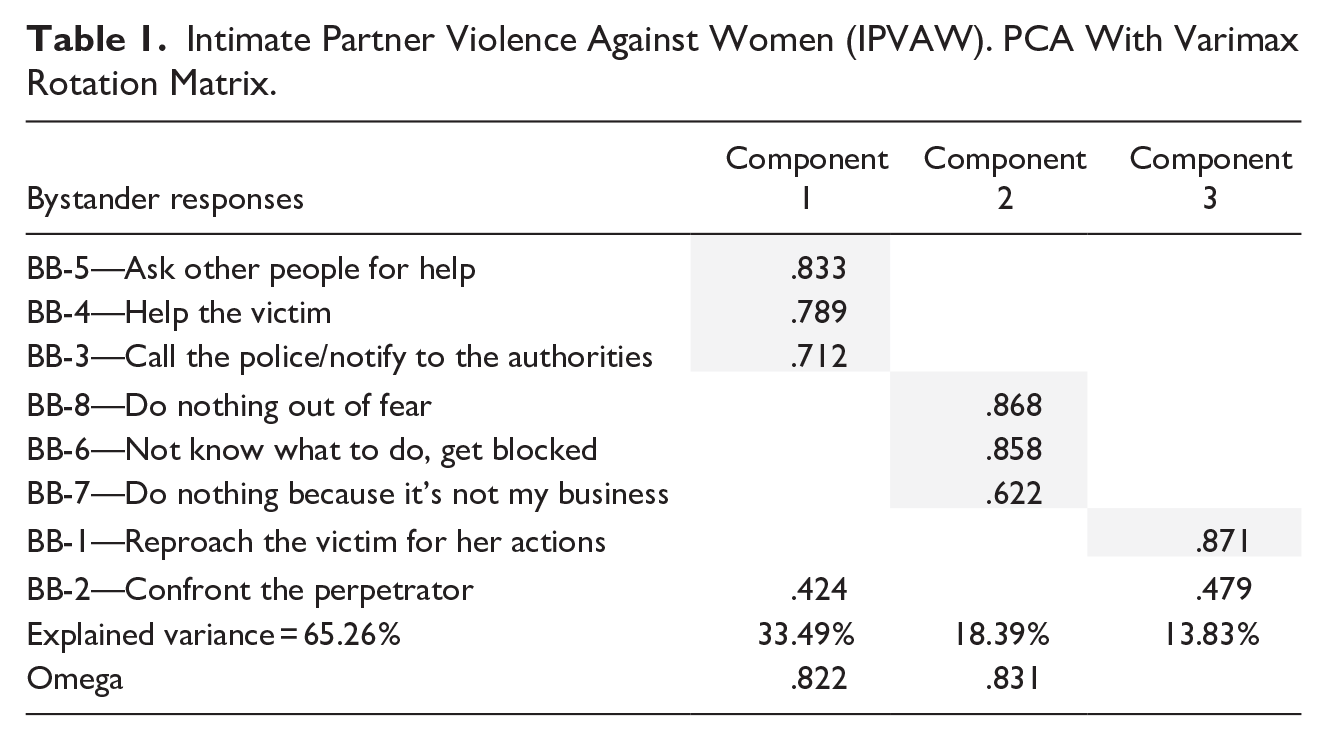
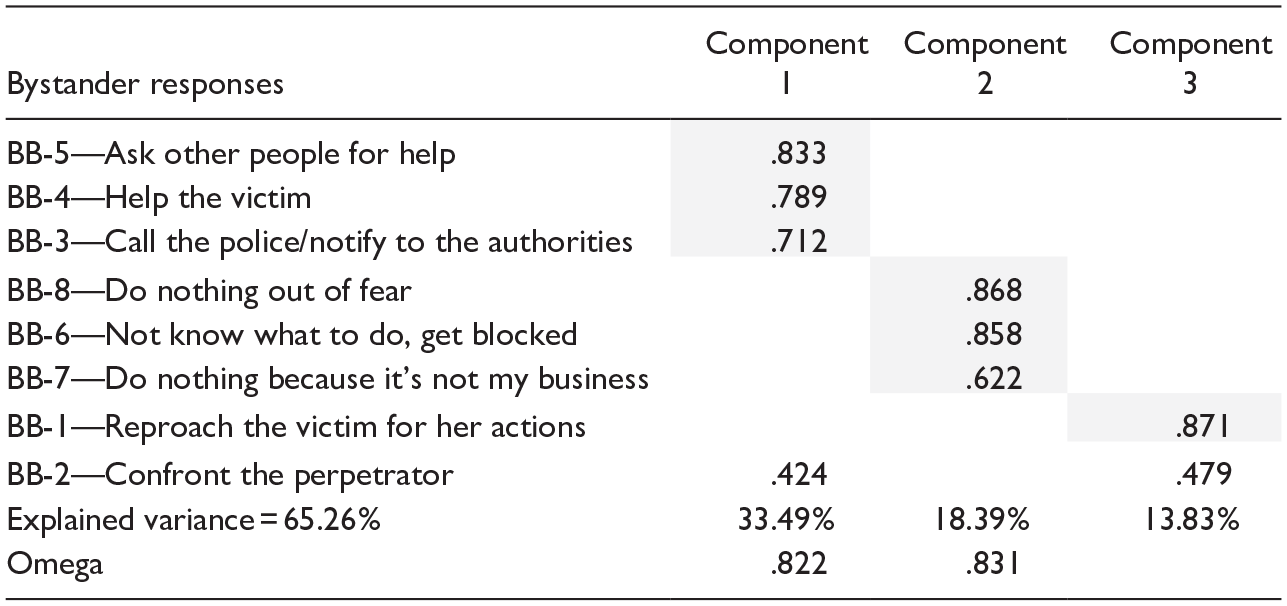
As can be seen in Table 1, three components are identified in the IPVAW hypothetical scenario for the sample as a whole. The first two (C1 and C2) are clearly differentiated and the high Omega value (>.80) demonstrates an excellent internal consistency. The first component (C1) includes three active helping responses (asking for help, helping the victim, and calling the police or authorities). The second one (C2) includes three passive non-intervention responses (doing nothing for different reasons). The third component (C3) is related to the hostile or revictimization responses and clearly includes one bystander response, reproaching the victim. In this case, the component consists of only one item, and the high loading obtained in the PCA (.871) confirms that this item is very representative of a particular and different bystander response.
Confronting the aggressor appears as an ambiguous bystander response, with a lower and very similar saturation in C3 (hostile responses) and C2 (active helping responses).
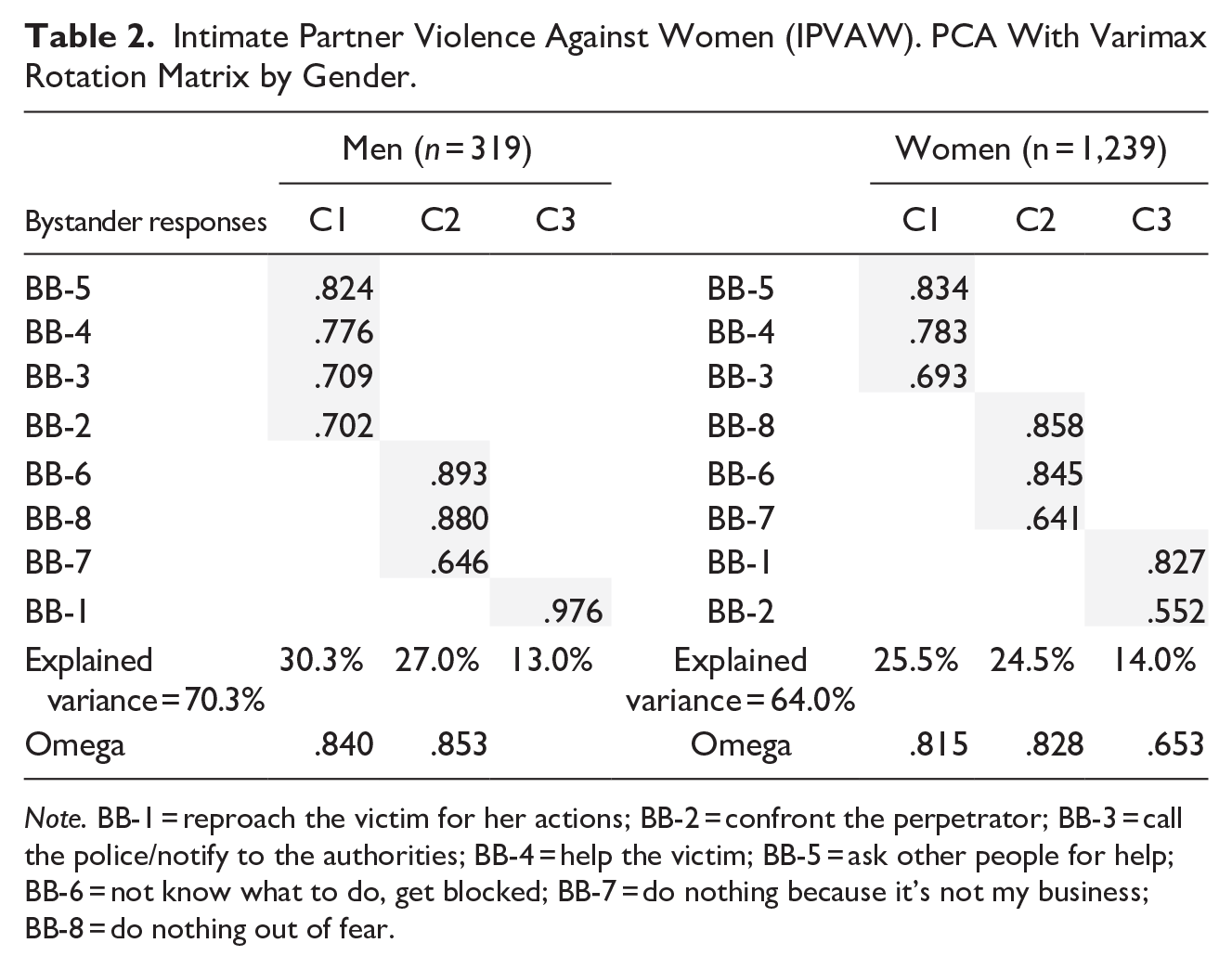
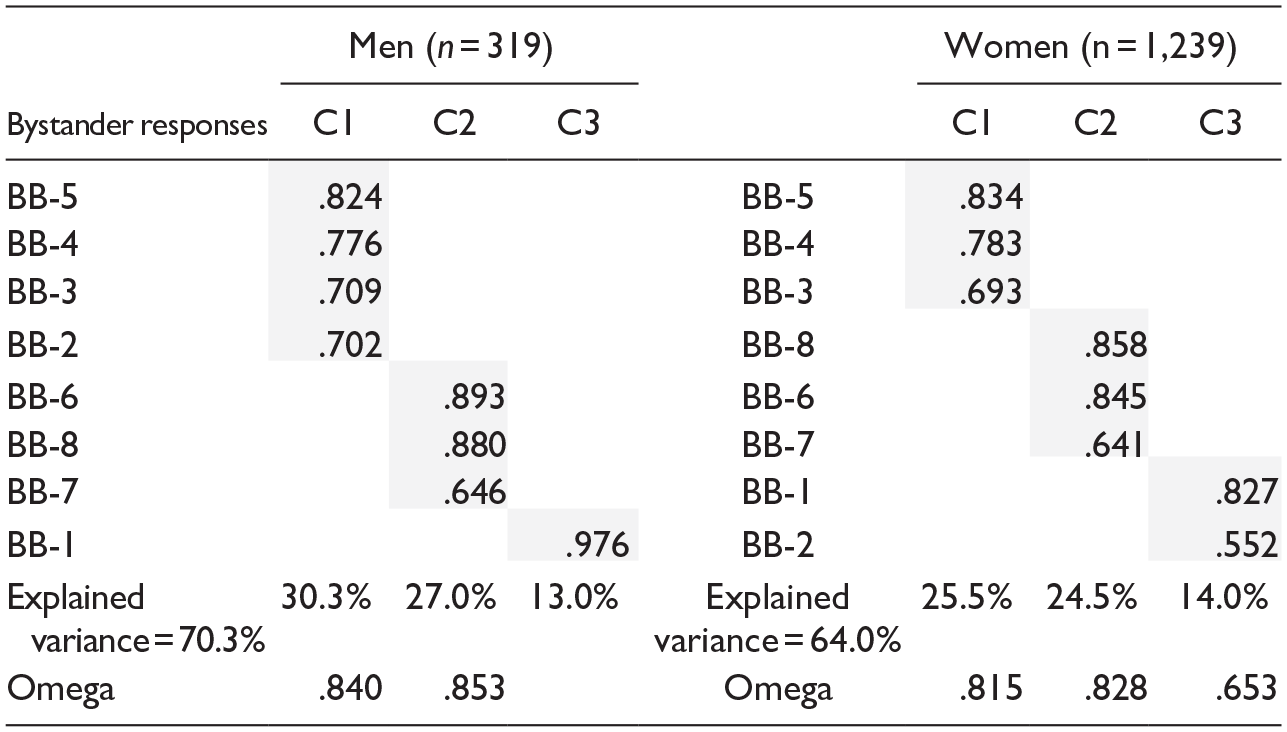
However, when we performed the PCA differentiating between women and men (Table 2), we observed some differences. The first component (C1) demonstrates an excellent internal consistency (>.80) and includes three active helping responses (asking for help, helping the victim, and calling the police or authorities) for both men and women, but in the men subsample the bystander response confronting the aggressor is included. The second component (C2), related to passive non-intervention responses, is similar between men and women and the high Omega value (>.80) demonstrates an excellent internal consistency. The hostile or revictimizing component (C3) includes only one bystander response in the men subsample (reproach the victim for her actions) and adds the bystander response confronting the aggressor in the women subsample, but only with an acceptable internal consistency (>.65).
Intimate Partner Violence Against Women (IPVAW). PCA With Varimax Rotation Matrix by Gender.
Note. BB-1 = reproach the victim for her actions; BB-2 = confront the perpetrator; BB-3 = call the police/notify to the authorities; BB-4 = help the victim; BB-5 = ask other people for help; BB-6 = not know what to do, get blocked; BB-7 = do nothing because it’s not my business; BB-8 = do nothing out of fear.
In summary, these results show three categories of bystander responses with good levels of internal consistency for IPVAW: active helping responses (including asking for help, helping the victim, and calling the police or authorities), passive non-intervention responses (including do nothing because I do not know what to do, because it’s not my business, or out of fear), and hostility or victimization responses (reproach the victim for her actions). The bystander response confronting the aggressor is classified into a different category for women than for men.
Sexual Harassment
This section presents the results obtained for the entire sample in SH (Table 3).
Sexual Harassment (SH). PCA With Varimax Rotation Matrix.
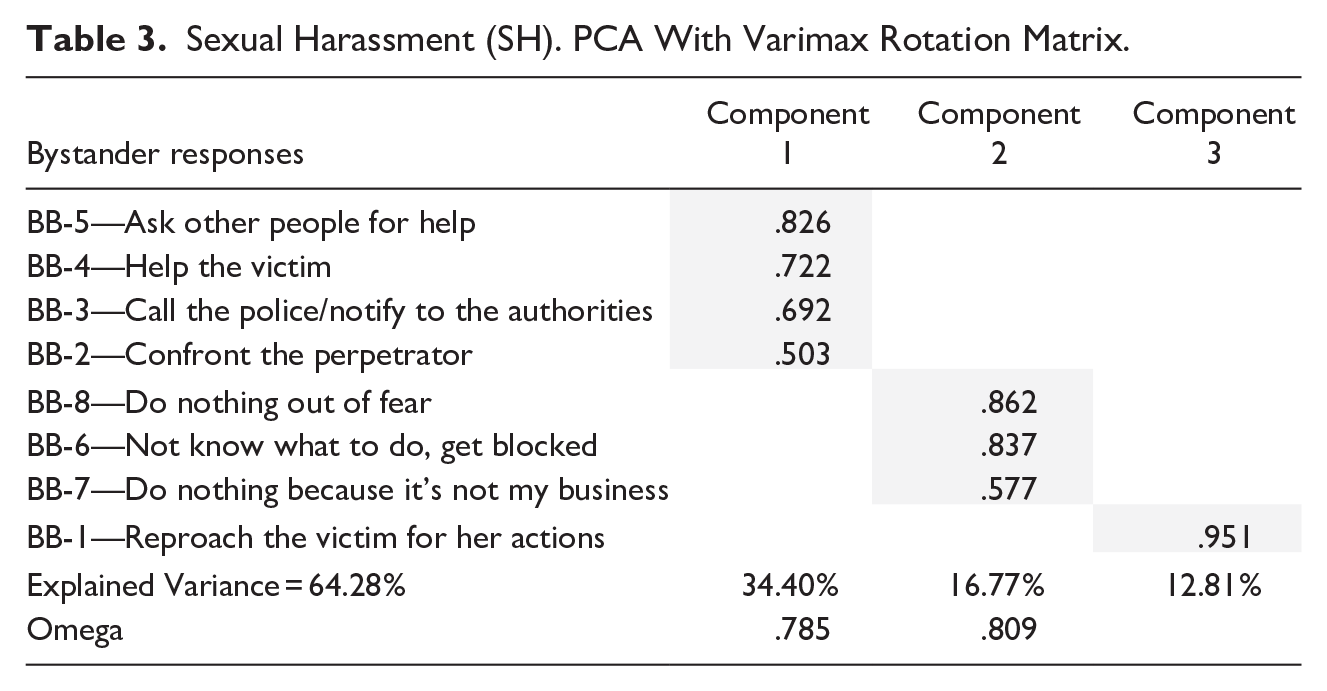
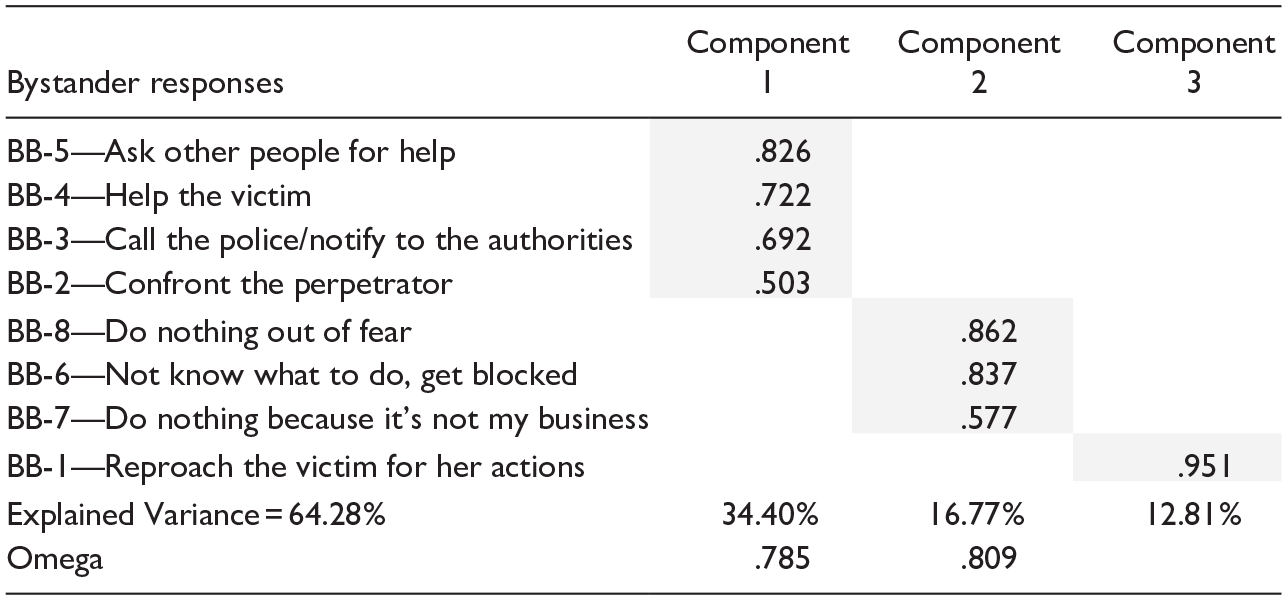
Three components are identified in the SH hypothetical scenario for the sample as a whole (Table 3). The first one (C1) includes the same three active helping responses that are included in the IPVAW scenario case (asking for help, helping the victim, and calling the police or authorities) and adds the bystander response confronting the aggressor. The second one (C2) includes the same three passive non-intervention responses that are in the IPVAW scenario case (doing nothing for different reasons). The third component (C3) is related to the hostile or revictimization responses and includes only one bystander response: reproach the victim. The Omega value demonstrates a good internal consistency (>.70) for the first component and an excellent consistency for the second one (>.80). The high value obtained in the PCA (.951) confirms that this component is very representative of a particular and different bystander response.
Secondly, when we compare the results obtained in the subsamples differentiated by gender (Table 4), we observed that PCA components are practically identical between men and women. Thus, the same bystander responses are included in the same components for both. The only difference has to do with the percentage of explained variance. In fact, the active helping responses plus confronting aggressor category is C1 among men and C2 among women, and the passive bystander responses category is C2 among men and C1 among women.
Sexual Harassment (SH). PCA With Varimax Rotation Matrix by Gender.
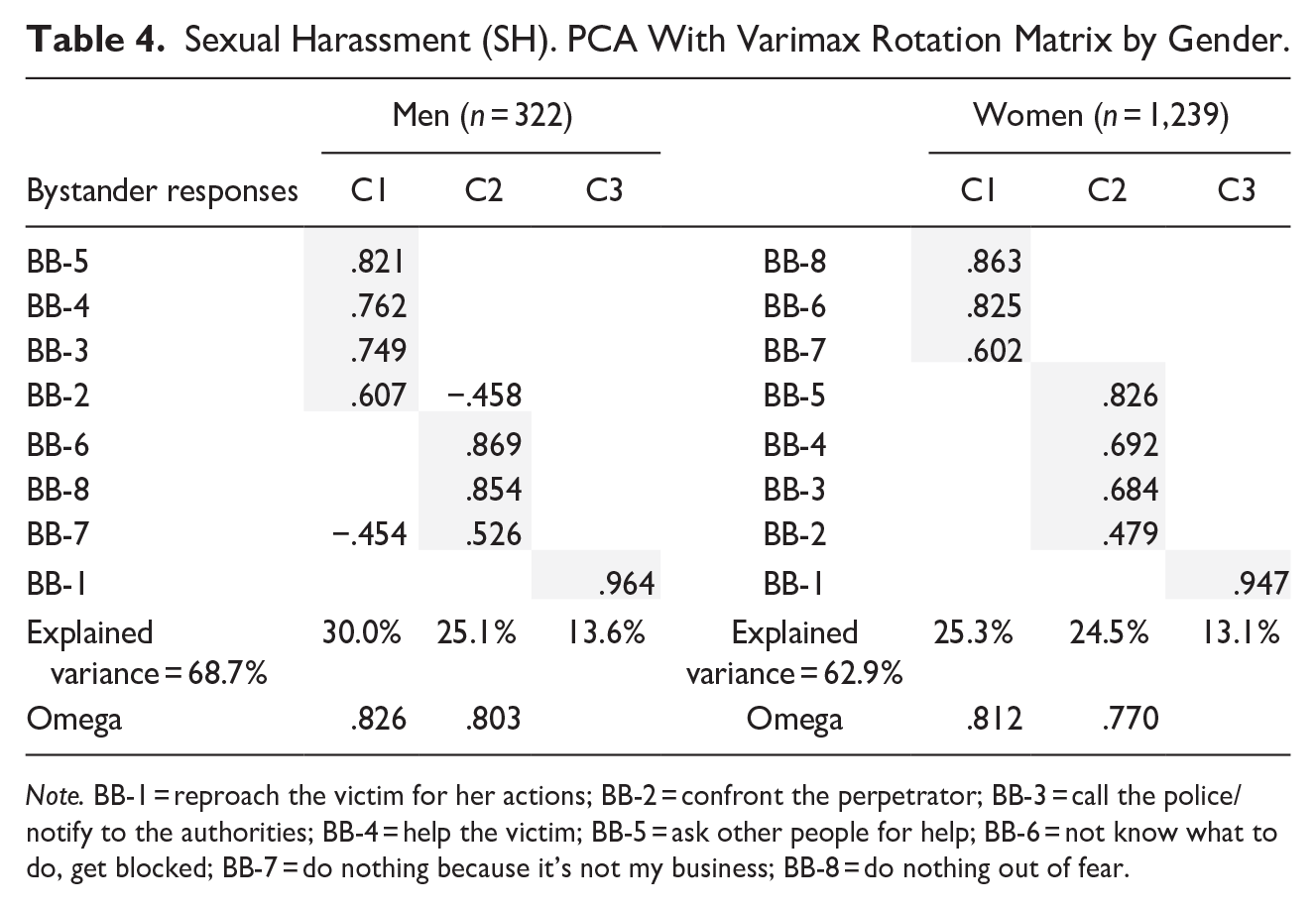
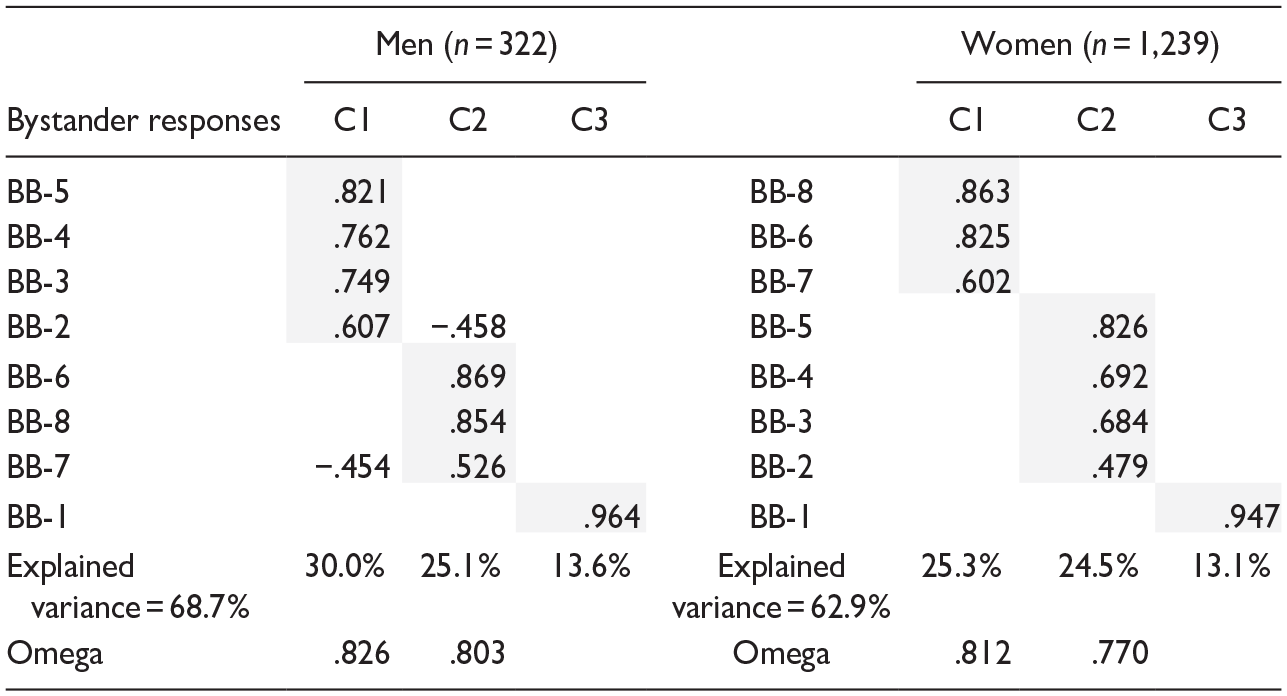
Note. BB-1 = reproach the victim for her actions; BB-2 = confront the perpetrator; BB-3 = call the police/notify to the authorities; BB-4 = help the victim; BB-5 = ask other people for help; BB-6 = not know what to do, get blocked; BB-7 = do nothing because it’s not my business; BB-8 = do nothing out of fear.
In summary, these results show three categories of bystander responses with good levels of internal consistency for SH among men and women: active helping responses (including asking for help, helping the victim, and calling the police or authorities, and adding the confrontation with the aggressor), passive non-intervention responses (including do nothing because I do not know what to do, because it’s not my business, or out of fear), and hostility or victimization responses (reproach the victim for her actions).
Street Sexual Harassment
This section presents the results obtained for the entire sample in SSH (Table 5).
Street Sexual Harassment (SSH). PCA With Varimax Rotation Matrix.
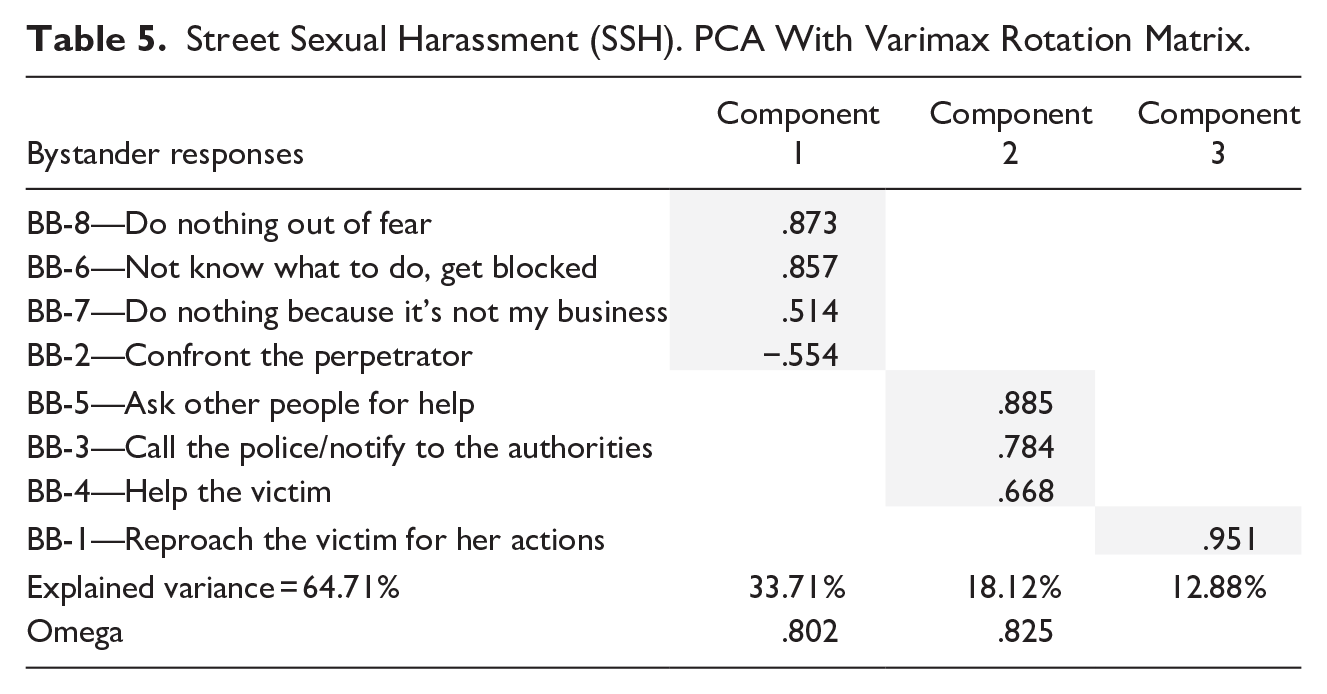
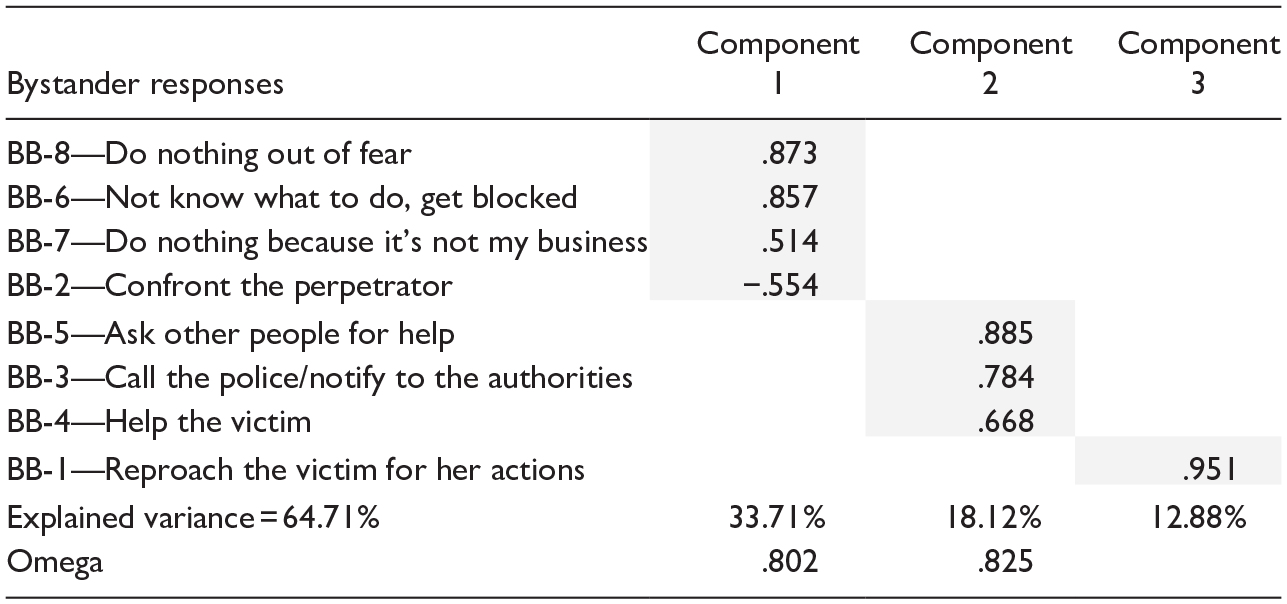
Additionally, three components are identified in the SSH hypothetical scenario for the sample as a whole (Table 5). In this case, the higher percentage of explained variance corresponds to the passive non-intervention responses component (C1), which includes doing nothing for different reasons and confronting the aggressor, but with negative saturation (so, with the sense of non-confrontation) with a high Omega value (>.80); the second (C2) component is related to active helping responses (including asking for help, helping the victim, and calling the police or authorities), also with a high Omega value (>.80); and the third one (C3) is related to the hostile or revictimization /responses with only one bystander response, the reproach to the victim, but with a high value obtained in the PCA (.951), confirming that this item is very representative of a particular and different bystander response.
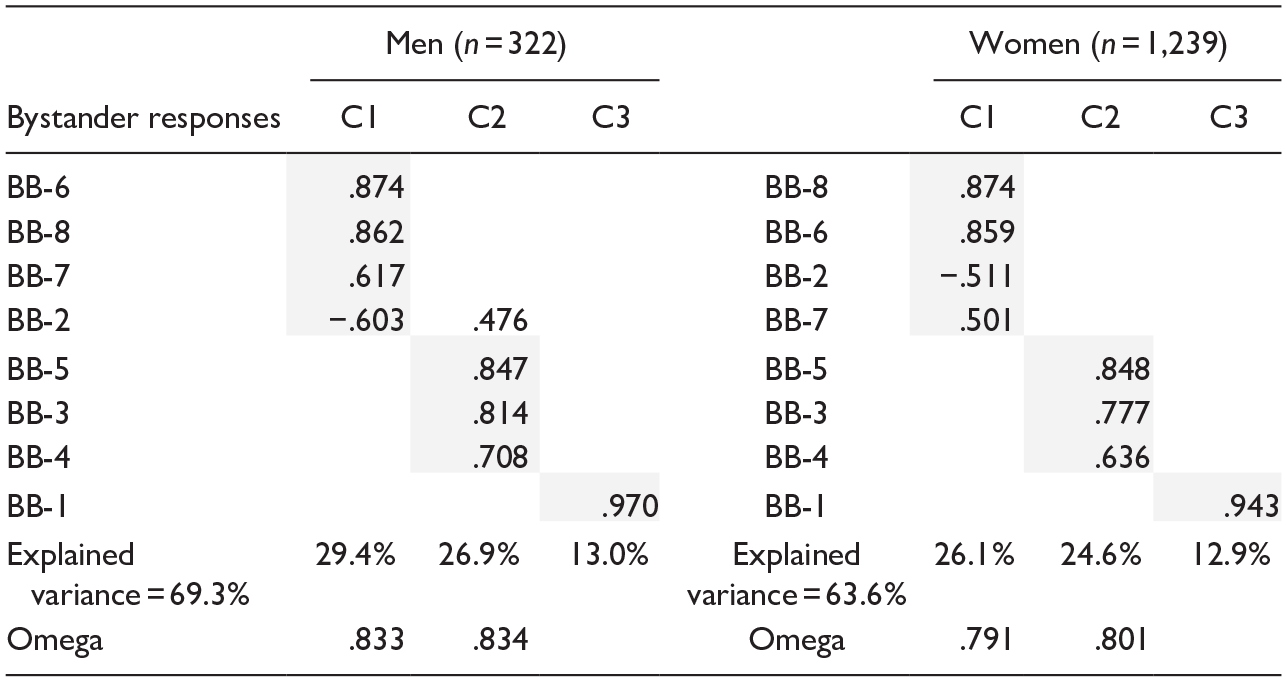
When we compare the results obtained in the subsamples differentiated by gender (Table 6), we observed that PCA components are basically identical between men and women. Specifically, the same bystander responses are included in the same components for both, and their internal consistency is also similar.
Street Sexual Harassment (SSH). PCA With Varimax Rotation Matrix by Gender.
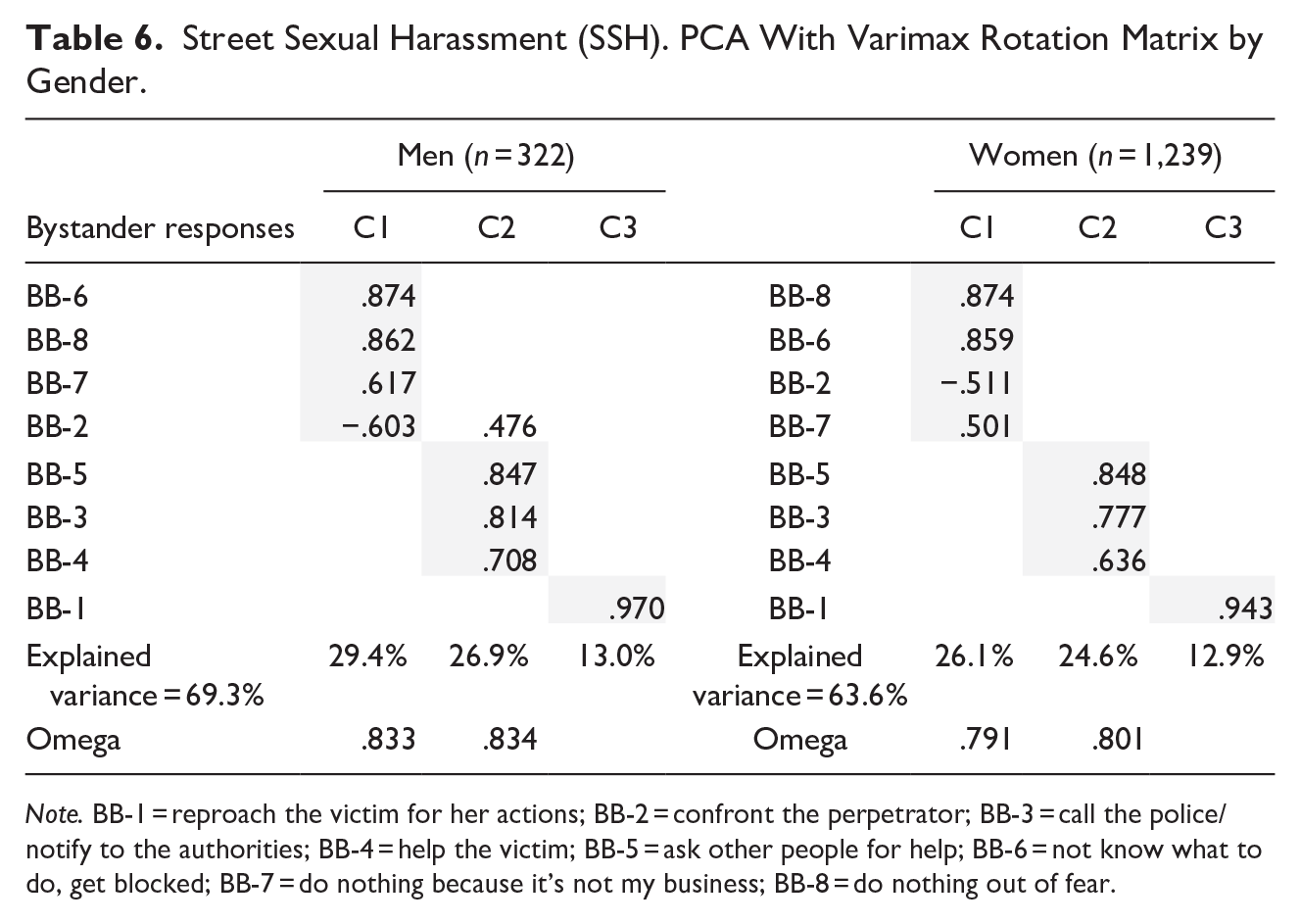
Note. BB-1 = reproach the victim for her actions; BB-2 = confront the perpetrator; BB-3 = call the police/notify to the authorities; BB-4 = help the victim; BB-5 = ask other people for help; BB-6 = not know what to do, get blocked; BB-7 = do nothing because it’s not my business; BB-8 = do nothing out of fear.
In summary, these results show three categories of bystander responses with good levels of internal consistency for SSH among men and women: active helping responses (including asking for help, helping the victim, and calling the police or authorities with positive loadings, and the confrontation with the aggressor with a negative saturation), passive non-intervention responses (including do nothing because I do not know what to do, because it’s not my business, or out of fear), and hostility or victimization responses (reproach the victim for her actions).
Discussion
The results obtained clearly identify QIHVC’s three-component solution of bystander responses. They also point out that, despite possible gender differences in its use (e.g., Mainwaring et al., 2023) and between different types of violence (e.g., Hamby et al., 2016), the structure and the categories of bystander responses measured by this questionnaire are basically similar in men and women for the different VAWG scenarios studied, except for the response involving confrontation with the aggressor. Thus, in the three forms of VAWG studied (IPVAW, SH, and SSH) and for both men and women three categories of response emerge: (1) the willingness to ask for help, to help the victim and to inform the police or the authorities are grouped into an active helping dimension (Fischer et al., 2011; Rebollo-Catalan & Mayor-Buzon, 2020); (2) the intention to do nothing either because the bystander does not know what to do and is blocked, because he/she is afraid, or because he/she considers that the observed VAWG is not his/her own business is grouped into a passive dimension of non-intervention (Bush et al., 2019; Fenton et al., 2016; Gracia et al., 2018; McDonald et al., 2016; Powell, 2014; Sylaska & Edwards, 2014); and 3) the intention to reproach the victim for his/her behavior would evoke a different, negative or hostile dimension of revictimization, related to victim-blaming (Davies et al., 2023; Pagliaro et al., 2021; Penone & Spaccatini, 2019; Sylaska & Edwards, 2014).
Although this structure in three categories appears very consistently in our results, it is interesting to note that the three bystander responses grouped into the active helping responses category have a central meaning similar in all cases: helping, either using one’s own means (“help the victim”) or asking for the collaboration of other people (“ask other people for help,” or “call the police / notify to the authorities”). By contrast, in the case of the passive dimension of non-intervention, although the effect is the same in all cases (doing nothing), the reasons or motivations for this behavior may be different among the three bystander responses included in this category. Thus, while “doing nothing out of fear” and “not know what to do, get blocked” have a personal component (an emotion in the first case, and a failure to intervene due to skills deficit –in terms pointed out by Burn (2009)—in the second one), “doing nothing because it is not my business” implies a negative or not supportive attitude toward VAWG (McMahon et al., 2014). Therefore, it is necessary to further study the real meaning of the components of this category and on their role as barriers for bystander behavior in different subsamples.
It should be noted that confronting the aggressor is the only bystander response analyzed that is classified differently according to the different forms of VAWG and also for men and women. Thus, for the IPVAW scenario among men and for the SH scenario among men and women, this bystander response is integrated in the active helping dimension; for the IPVAW scenario among women, it is integrated in the negative or hostile dimension of revictimization; and for the SSH scenario among women and men, it is integrated in the passive dimension of non-intervention, but with a negative saturation, so that it seems to be perceived more as the opposite of doing nothing than as an action to help the victim.
Consequently, these principal component analysis results show that, among men, confronting the perpetrator generally appears as an active response to help in cases of VAWG. Although it is necessary to delve deeper into the motivations or explanatory mechanisms underlying these men bystander responses, in the absence of other external measures to correlate or of other information on the explanatory mechanism underlying this response, we can only formulate some hypotheses. It could be hypothesized that this categorization arises from the fact that men confront other men because they are equals in status or social position. This hypothesis is coherent with previous research showing that bystanders feel it is more appropriate to address perpetrators of their own gender (e.g., Arbeit, 2018). In this sense, given that QIHVC’s VAWG scenarios involve a male perpetrator and a female victim, this may explain the distinct bystander response structure taken by male and female bystanders. Additionally, it could be hypothesized that men categorize confrontation along with active helping responses because this is a normalized response for them in accordance with the traditional male gender mandate. If so, this man’s response may imply not help but rather paternalism (i.e., men may confront aggressor because gender masculine mandates point out that “protecting” women is a part of their duty traditional male role). Thus, as Yule et al. (2022) summarize, benevolent sexism might be expected to promote a chivalrous or paternalistic desire to protect women from harm and higher levels of bystander intervention and, maybe, a categorization of the confrontation as a form of helping (as occurs among men in our research) could be expected in people who sustain this type of sexism. Likewise, it could be noted that the social role theory of gender differences (Eagly & Wood, 2012) pointed out that gender roles influence behavior, and men are more likely to engage in some specific and active behaviors while women gravitate toward other, generally more passive behaviors. And, related to this, we can hypothesize that these gender roles influence not only behaviors but also their categorization (as occurs in our research). However, additional evidence is needed to determine whether these hypotheses hold. In fact, the Yule et al. (2022) results show counterintuitive results, and participants higher in benevolent sexist attitudes (who view women as virtuous and in need of protection) were less likely to intervene in post-assault situations, reported more barriers to intervening in pre- and mid-assault situations, and were more likely to report not intervening because it was not their responsibility to do so. Therefore, we cannot rule out that these counterintuitive results may also appear in subsequent studies on the QIHVC structure.
As Mainwaring et al. (2023) point out, these structural differences among categories of response may contribute to explain why some studies fail to find a difference in male and female bystander behaviors. Specifically, they consider that “if outcome measures are constructed using a variety of different types of intervention behavior, then the differences between men and women may cancel each other out when carrying out statistical analyses with a single outcome variable which is made up of different intervention behaviors” (p. 1733).
In short, the results obtained indicate that the QIHVC constitutes a promising measure to evaluate the bystander responses among the Spanish population in the three types of VAWG studied (IPVAW, SH, and SSH) with a structure of responses coherent with previous knowledge in the field and with a good, or, in some cases, excellent internal consistency. And, although it raises some questions about the meaning that confrontation with the perpetrator has for men and women who witness VAWG, in general, the results obtained show that the structure and categories of response obtained for the QIHVC work equally for men and women and for IPVAW, SH, and SSH.
However, both this study and the instrument analyzed are not without limitations.
Limitations and Future Directions
First at all, this research has some limitations related to the type of questionnaire used and its characteristics. On the one hand, as Jouriles et al. (2016) noted, self-report measures of bystander responses may be unable to evaluate the quality of these responses. Particularly, they point out that some of these measures ask participants whether they would confront perpetrators and whether they would try to intervene in high-risk situations such as VAWG scenarios. But there can be a lot of variability in the way that a person confronts or tries to intervene. Something similar occurs in the QIHVC asking for possible bystanders’ responses (including confrontation) but without specifying what exactly this behavior consists of, which can lead to different interpretations by different respondents. On the other hand, despite the theoretical assumptions related to the role of intention as a valuable predictor of behavior (Ajzen, 1985; Fishbein & Ajzen, 2010), and the advantages offered by the possibility of measuring the intention to intervene, even in cases where people have not yet faced VAWG (Krauss et al., 2023; Mennicke et al., 2023), it may be possible that people have a strong intention to help a victim but may not take action if they perceive low control (Nardi & Paredes, 2022). And, obviously, the QIHVC, as with other questionnaires to measure sensible topics, could easily activate social desirability in the responses (Ferrer-Perez et al., 2023). It would be necessary to control this possible tainted factor in future studies in an attempt to minimize the risk of over-estimation in bystander response for more socially acceptable answers, and the underestimation for those that would generate greater social rejection. For all these reasons, it is a priority to delve not only into the properties of specific questionnaires, such as the QIHVC, but also, in a more general way, into the usefulness of response intentions measures and their relationship with the responses of individuals in real VAWG situations.
Secondly, the sample analyzed was composed mainly of women and people with high-level studies. As Lyons et al. (2022) or Mennicke et al. (2023) point out, gender imbalance is unfortunately a common feature in psychology studies, due to convenience sampling methods used. Certainly, the convenience/snowball sampling methods somewhat limit the diversity of participants (in fact, in our sample there is a predominance of women, as well as young and university students). And conducting research online may attract participants that are interested in the topic of the research (in this case, mainly women and only some men; Kistler et al., 2022). Consequently, the findings are limited, and they should not be generalized to the population at large. Additional work is needed to engage men in studies on VAWG and on bystander responses in cases of VAWG and to validate the QIHVC among diverse samples with a lower level of education and also with broader age ranges. However, although this is a limitation, the results obtained are relevant to improve knowledge about the functioning of the QIHVC. In summary, and despite the limitations described, the results obtained indicate that the QIHVC constitutes a promising measure to evaluate bystander responses among the Spanish-speaking populations in the three types of VAWG scenarios studied, with a structure of responses coherent with previous knowledge in the field and with a good, or, in some cases, excellent internal consistency.
Conclusion
This research identifies the structure of the bystander responses measured with the QIHVC. This represents progress in the sense that it confirms that this is an adequate questionnaire that can be appropriate for use in the Spanish context, and in other Spanish-speaking contexts (with the necessary adjustments).
But beyond the suitability of the QIHVC as a case scenarios measure of the bystander responses toward three forms of VAWG, these results reinforce the scientific literature about the types or categories of bystander responses, clearly showing the existence of active helping responses, passive non-intervention responses and negative or hostile responses of revictimization.
Categorizing bystander responses and having instruments to measure them effectively is relevant not only to improve research and identify the most common responses but also to study the factors that facilitate and the barriers that hinder these responses. Moreover, it is also relevant for the assessment of bystander prevention strategies since the accurate measure of these responses allows us to advance in the knowledge of what works (or not) in institutional or governmental campaigns and programs to improve behavior to help victims of VAWG, and, ultimately, it allows us to move toward the development of evidence-based VAWG prevention programs.
Additionally, authors such as Kuskoff and Parsell (2024) observe that helping behaviors are not useful “per se” but rather depending on the type of VAWG and the context in which it occurs. This implies that for each type of violence and context intervention programs should work on specific helping responses. In this sense, the QIHVC constitutes a useful tool as it would allow measuring the achievement or not of changes after an intervention for each form of VAWG.
Footnotes
Declaration of Conflicting Interests
The author(s) declared no potential conflicts of interests with respect to the authorship and/or publication of this article.
Funding
The author(s) disclosed receipt of the following financial support for the research and/or authorship of this article: This work is part of the R&D project PID2019-104006RB-I00 funded by MICIU/AEI/10.13039/501100011033.
