




Abstract
As social workers, we value social justice and strive to uphold equal rights and opportunities for all. Nevertheless, harassment and discrimination still occur at social work academic conferences, impeding a person's ability to safely and equitably conduct their job. In response to an incident of harassment that occurred at the 2022 Council on Social Work Education Annual Program Meeting, we conducted a rapid response methodological approach utilizing feminist theoretical frameworks. We received N = 290 responses to an anonymous, online survey distributed at social work conferences and through national social work organization mailing lists. The survey included quantitative questions on the prevalence and nature of harassment and discrimination experienced at social work conferences, how experiences vary based on identity, as well as an open-ended qualitative question to better understand the experiences of harassment and discrimination. To our knowledge, this study marks the first investigation into experiences of harassment and discrimination at social work conferences. Based on our findings, we provide recommendations for academic organizations, social work programs, and individual academics for dismantling the structures and culture that support harassment and discrimination at social work conferences.
Despite the actions of Anita Hill and the #MeToo movement to shed light on issues of harassment (Hill, 2021; Me Too Movement, n.d.), there has been slow progress towards preventing and eliminating varying types of harassment and discrimination in the workforce. A study by the International Labor Organization (2022) found that more than one in five people experience violence (i.e., physical, psychological, and sexual) and harassment in the workplace over their working life. Research demonstrates that concerning rates of discrimination and harassment in academia exist, with people from systematically marginalized populations disproportionately impacted (Björklund & Jensen, 2025; Jagsi et al., 2023; National Academies of Sciences, Engineering and Medicine [NASEM], 2020). Critical feminism seeks to address inequities and acknowledge power imbalances as they relate to intersecting identities (Collins & Bilge, 2016; Goodkind et al., 2021), especially as they pertain to patriarchal structures within the academy that are meant to subjugate and disempower systematically marginalized groups (Crenshaw, 1989). These systems of oppression will continue to be perpetuated if considerations are not made towards issues of power.
Acknowledging the various power imbalances and the continued experiences of harassment and discrimination within academia, we utilized a feminist praxis approach that draws on critical feminism and rapid assessment procedures to investigate experiences of harassment and discrimination at social work conferences. Scant literature exists on harassment and discrimination in the context of academic conferences, and to our knowledge, the current investigation into harassment and discrimination is the first to focus on social work conferences. Based on our findings, we provide actionable recommendations for academic organizations, social work programs, and individual academics. Our goal is to produce scholarship that drives tangible change—informing policy reforms within the Council on social Work Education (CSWE), the Society for Social Work and Research (SSWR), and establishing a sustained research agenda to monitor harassment and discrimination over time.
Harassment and Academic Conferences
Harassment and discrimination at conferences have long stood in the way of creating truly equitable workspaces. In addition to power imbalances based on marginalized identities, there also exists power imbalances based on academic position (e.g., tenured faculty vs. non-tenured faculty), with students particularly vulnerable. Especially muddying the waters are the power imbalances between the conference host and various member institutions (Jackson, 2019). Interviews for those on the job market also frequently occur during conferences, with some interviews taking place in private, in suites or hotel rooms. These imbalances cause significant safety issues for all participants as they enter professional spaces that should have safety in mind (Anderson & Khoury, 2021; Flores, 2020). It should be noted that harassment is a violation of Title VII of the Civil Rights Act of 1964 (EEOC, n.d.), which is defined as “unwelcome conduct that is based on race, color, religion, sex (including sexual orientation, gender identity, or pregnancy), national origin, older age, disability”. Harassment impedes a person's ability to conduct their jobs, creates unsafe situations, and perpetuates power imbalances (Hooper, 2023).
Experiences in the literature suggest that harassment comes in many forms, but specifically, women report issues surrounding suggestive comments, unwanted physical touch, aggressive come-ons, and physical and sexual assault (National Academies of Science Engineering and Medicine [NASEM], 2018; Office of Women's Health, n.d.; Schooley, 2023). Women across academic disciplines attending conferences report being stalked by male academics (NASEM, 2018), having male colleagues suggest they wear lingerie so that their presentations will be better attended (Baker, 2015), and being touched for too long on hips, bottoms, and backs (NASEM, 2018).
A report by the Select Task Force on the Study of Harassment in the Workplace suggests that of the claims filed (n = 90,000), 45% experienced harassment on the basis of sex, 34% on the basis of race, 19% on disability, 15% on age, 13% on national origin and 5% on religion (Feldblum & Lipnic, 2016). Often, conferencegoers who are members of the LGBTQ+ community and/or who are nonbinary and/or transgender face teasing, harassment, and bullying due to not aligning with heteronormative standards (Williams Institute, 2024). In one case, a conferencegoer was bullied relentlessly by colleagues and students, labeled as a lesbian witch, and had to endure images from a website that was designed to mock her (Williams Institute, 2024). Research suggests that people of color are less likely to report harassment (American Association of University Women [AAUW], 2019). Reasons that these events are under reported relate to unclear reporting procedures, mistrust of authority, and the fear of not being believed (Vargas et al., 2022). Unfortunately, it is well established that graduate students are affected by harassment within their academic homes (Mennicke et al., 2021) and at conferences (Flores, 2020).
The National Academies of Sciences, Engineering and Medicine (2018) issued a report defining the role of professional societies at academic conferences in an effort to eliminate harassment. The report noted strategies and policies to serve as a guidepost for the academy, including improving transparency and accountability, diffusing power structures, and ensuring a healthy respect for diversity and inclusion (NAESM, 2018). A study by the American Association for Dental Research (Heaton et al., 2020) aligned with previous studies that women tend to be the target of gender-based harassment at conferences. This research concluded that policies surrounding clarity around language for intolerance of harassment are critical. This language included a message from the president at the opening ceremony, consenting to policy at registration, and slides about harassment around the conference and in session rooms (Heaton et al., 2020).
Harassment and Social Work
There is a paucity of research surrounding participants’ experiences at social work conferences. Recent harassment incident(s) at the 2022 Council on Social Work Education Annual Program Meeting brought light to a subject that has persisted even within the confines of social work education (Hooper, 2023). These harassment claims were noted by both faculty and graduate students, claims which left social work educators reeling about educators not feeling safe to speak up about their experiences (Heller, 2022). These allegations extend to other conferences as well and extend to varying social positions within social work education.
Professional development is integral for researcher development. Educators and researchers should have an expectation that they can participate fully in the development process without fear of harassment and misconduct. Conferences are very specific spaces that create opportunities to disseminate knowledge and network, which is especially helpful for underrepresented groups (Foxx et al., 2019). Unfortunately, conferences are often not designed to protect underrepresented groups (Foxx et al., 2019). As a result, as a profession, we must consider power differentials and dynamics, especially since social work continues to be led by cisgender males (Hicks, 2015).
In general, research suggests that harassment and unwanted advances with social work students are most common in field placements; most alarming is that these situations occur most often with people who are already marginalized based on their gender, race, sexuality, and ethnicity, and who are younger (Cantor et al., 2015; Hill & Silva, 2006; Mennicke et al., 2021; Yoon et al., 2010). Studies surrounding social work students and harassment and discrimination at conferences are scant.
Federal Policy and Its Impact on Women's Experiences at Social Work Conferences
Federal policies such as Title VII of the Civil Rights Act of 1964 and Title IX of 1972 were enacted to protect vulnerable populations in the workforce and actively prevent discrimination and harassment (EEOC, n.d.). Despite these policies in place, the issue remains persistent in that over 50% of faculty and staff and nearly 50% of students have reported transgressions (NASEM, 2018). Consequences of harassment and discrimination include declined mental and physical health as well as changes to professional behavior like seeking out development opportunities, leadership, and ultimately walking away from research opportunities (Karami et al., 2019).
Specifically, Title IX prohibits sex-based discrimination in federally funded education programs, including institutions that host social work conferences (U.S. Department of Education, 2020). Since 1972, Title IX has played a pivotal and substantial role in fostering gender equity in academic and professional spaces (Runyan, 2019). However, recent policy shifts and the issuing of executive orders has led to uncertainty and ambiguity regarding protections, and for the purpose of this study, in the context of professional events such as social work conferences. The recent shifts in Title IX policy serve as a basis of how systems can be used to privilege specific interpretations of gender and sex, often at the expense of marginalized groups. In April 2024, the Biden administration attempted to expand Title IX protections by redefining the term “sex” to include gender identity (American Council on Education, 2024). The purpose of this expansion was to provide greater protections for transgender and nonbinary individuals. However, this new interpretation was met with legal challenges from multiple states as well as private organizations, leading to a federal court ruling in Kentucky on January 9, 2025, which deemed the rule unlawful and unenforceable (Holland & Knight, 2025). As a result, the federal government reverted to enforcing the 2020 Title IX rule, which strictly prohibits discrimination on the basis of biological sex (U.S. Department of Education, 2025). The Department of Education reaffirmed this stance through a Dear Colleague Letter (guidance published to provide insight into how an Administration views a law and intends to enforce it), emphasizing that federally funded institutions, like those hosting academic conferences, must adhere to this interpretation (U.S. Department of Education, 2025).
The narrowing of Title IX protections limits institutional responsibilities in addressing issues such as sexual harassment, gender disparities in professional opportunities, and inclusive conference policies (Davis & Robinson, 2023). Social work, as a discipline rooted in social justice and dignity and worth, must give consideration to how these policies affect the accessibility and safety of professional spaces. The rollback of the 2024 (expanding protections) rule raises concerns about the inclusivity of these spaces, particularly for transgender and nonbinary individuals, who may face barriers to full participation (Quilantan, 2024). A critical feminist lens highlights the systemic power imbalances that have sustained these policy changes and their effective enforcement. Feminist scholars have long argued that legal frameworks often reflect and reinforce patriarchal structures, rather than dismantling them (Collins, 2020).
Guiding Framework
Our team adopted a feminist praxis approach that integrates elements of Rapid Assessment Process (Palinkas & Zatzick, 2019) with feminist scholarship (Goodkind et al., 2021). RAP is typically used in response to disruptive events like public health crises or natural disasters, prioritizing timeliness, insider perspectives, and practical solutions. Although rarely applied to social disruptions within academia, we recognized the need for a rapid, insider-informed response to address harm experienced during the conference. We quickly convened as scholars with diverse positionalities to design a study that could offer timely, actionable recommendations to academic societies such as CSWE.
Rooted in a commitment to political, economic, and social equality, feminist research challenges the status quo, centers gender analysis, refuses to normalize inequality, and emphasizes the researcher's own positionality (Hoffman, 2001). This approach also values subjectivity and action-oriented inquiry, departing from traditional positivist paradigms. Critical feminist theory includes a focus on the systems of power and privilege, like those in place within academia and specifically within the context of social work academic conferences.
By merging RAP with our feminist frameworks, we engaged in feminist praxis (Ardovini, 2015)—a framework that connects critical reflection, intersectionality, and community-empowered action. This approach guided our research questions, methods, and analyses as we examined power structures and social norms that perpetuate harm within academic spaces. We examine prevalence and identity as it pertains to harassment and discrimination as a way to demonstrate how individual experiences of oppression are connected to the social and political structures in place within academia (Gutierrez & Lewis, 1999). As a part of our study, we also ask participants to share their stories of harassment or discrimination in their own words, as inclusion of participant voices was critical to centering those who have been marginalized and silenced. Through our feminist lens, we aimed not only to document experiences of discrimination and harassment but also to advocate for structural change within social work academia.
The Current Study
The current study provides insight into experiences of harassment and discrimination at social work conferences, and our desire is to share this insight to address harassment and discrimination through policy change and advocacy efforts, creating safer spaces for conference participants. The following research questions drove our efforts:
RQ1: What is the prevalence and nature of harassment and discrimination experienced by participants at social work academic conferences?
RQ2: How do experiences of harassment and discrimination vary across different aspects of identity?
RQ3: What were participants lived experiences of harassment and discrimination at social work academic conferences?
Methods
Positionality
Our research team came together in response to reports of sexual harassment at the 2022 CSWE Annual Program Meeting. We are five women professors in social work education who occupy different professional roles within academia. Four of us identify as heterosexual cisgender women, and one identifies as lesbian cisgender. Four identify as White and one identifies as White/Latina. Four are married, one single, with our ages ranging between our 30s (1), 40s (1), and 50s (3). Our professional roles include two tenure-track assistant professors, a full tenured professor, a full tenured professor and dean, and a non-tenure-track clinical full professor/assistant dean.
Each of us were drawn to this study through different but interconnected experiences. One member shared that she had been socialized during her doctoral training to avoid specific individuals known for harassing women and students, revealing how such behavior had been normalized. Another described how her research on gender-based violence was influenced by her earlier work in domestic violence shelters and rape crisis centers, as well as her own vigilance around personal safety as a woman. A third member brought to this project her experience as a dean and as a lesbian feminist who has both endured and witnessed harassment and bias over three decades in academia, and who felt a sense of responsibility for the well-being of faculty and students under her supervision. Another recounted her growing frustration with academia's tolerance of “everyday” inappropriate behavior and the way such experiences have become a rite of passage for many women. Finally, one member served as co-chair of CSWE's Role and Status of Women in Social Work Council, and noted that she felt unprepared to act appropriately, due to a lack of clear reporting mechanisms and accountability structures at academic conferences. In light of the #MeToo movement and the pursuit of gender equity in academia, this work extends these lines of thought to academic conferences, highlighting the importance of accountability and transparency.
Together, we were motivated by a shared sense of urgency to better understand and document the experiences of harassment within the social work conference setting. Our goal was to utilize data to drive change toward safer and more inclusive professional environments. Across the team, we share feminist and social-justice values that emphasize accountability, advocacy, and the protection of participants in academic spaces. Research questions for this project were developed collaboratively after reading social media posts and statements from conference organizers. The group decided upon a critical feminist rapid response method for this research in alignment with our theoretical lens and vision for the study. While our professional experiences differ, we all bring awareness of how power and privilege shape academic life. Some of us have institutional authority that can be used to advocate for policy change; others have the proximity of lived experience that informs our interpretation of the data. We have acknowledged that our social locations, professional positions, and commitments to feminist praxis shape our perspectives. Data were discussed as a group, and after some time had passed to allow for a space between the incident and the discussion, which helped ensure greater reflexivity. There were no noted institutional barriers to data collection. The group discussed determining the authorship order. The group discussed the current political climate and the unintended consequences that might result from the study on pre-tenure faculty. All senior faculty members were supportive of pre-tenure faculty, including taking the time to make informed decisions about the level of involvement they would prefer to have on the project.
Although this topic may cause discomfort within our academic community, we believe that the ethical responsibility to confront systemic harm outweighs that discomfort and will hopefully mitigate future harm. By examining harassment and discrimination within our own discipline, we acknowledge the profession's unfinished work toward equity and safety. This study, therefore, represents an act of collective accountability. We view our work as reparative, contributing to a culture change within social work and dignity for all members of our community.
Participants and Recruitment
We recruited a sample of N = 290 participants. Participants were recruited between September 2023 and January 2024 through flyer distribution at social work academic conferences, national social work organization mailing lists, and social work academic listservs. Participants were required to provide consent before they could participate in the online, anonymous Qualtrics survey. The survey was open to faculty, staff, and students and asked about experiences of harassment and discrimination at any academic social work conference. Participants were not required to have attended any specific social work conference or attend any social work conference within a certain time period but they were asked to reflect on their experiences at social work conferences specifically. All procedures were approved by the Institutional Review Board at the University of Tennessee, Knoxville.
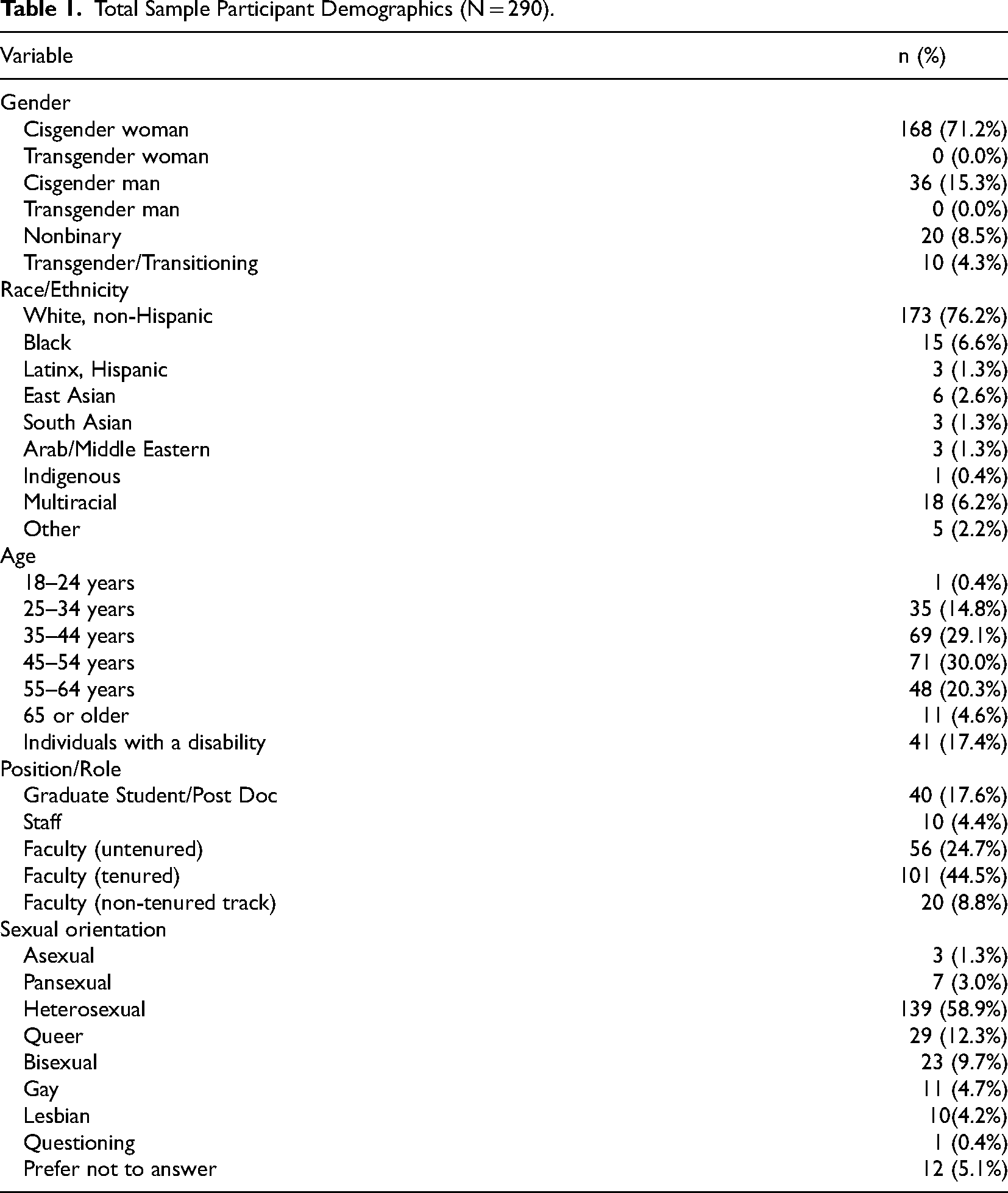
The majority of participants were cisgender women (71.2%), White non-Hispanic (76.2%), and heterosexual (58.9%). Regarding age, 30.0% of participants were between 45 and 54 years old and an additional 29.1% were between 35 and 44 years old. In terms of their professional role, 78% were faculty: 44.5% tenured, 24.7% untenured, and 8.8% non-tenure track. Approximately 17.4% of participants reported having a disability. Additional sexualities included queer (12.3%), bisexual (9.7%), gay (4.7%), lesbian (4.2%), pansexual (3.0%), and asexual (1.3%) participants. Participants were asked about their gender, and a separate question asked whether they were “transgender or transitioning,” with 4.3% of participants reported they were transgender or transitioning. See Table 1 for a full list of sample demographics.
Total Sample Participant Demographics (N = 290).
Survey
We developed a survey that was informed by previous research into experiences of harassment and discrimination at academic conferences in other disciplines (e.g., dental research, law, geography, political science, engineering, and math; Cuomo et al., 2020; Gottfried, 2020; Heaton et al., 2020; and NASEM, 2018). We also ensured the survey had context specific to the social work discipline. The survey was comprised of multiple categorical and Likert scale questions, as well as an open-ended question inviting respondents to share personal stories or reflections regarding harassment and discrimination. A total of 187 participants (over 60% of respondents) provided qualitative responses.
Data Analysis
Researchers used SPSS v29 to analyze the quantitative data through descriptive statistics. Frequencies, means, and standard deviations were used to answer the first and second research questions reporting on the prevalence of harassment and discrimination and how these vary across aspects of identity.
The third research question examining the lived experience of harassment and discrimination was answered using the qualitative data generated from the open-ended survey question. These data were extracted from the survey database and imported into a Word document. The qualitative data were analyzed using Braun and Clarke's (2006) thematic analysis framework to iteratively patterns and themes within the responses. Two team members independently conducted open and axial coding, with emergent themes validated through group discussion to ensure consistency and trustworthiness. The team maintained an audit trail, intentionally sought divergent stories, and continually refined thematic synthesis to ensure transparent and valid interpretations (Lincoln & Guba, 1985).
Results
Prevalence and Nature of Experiences
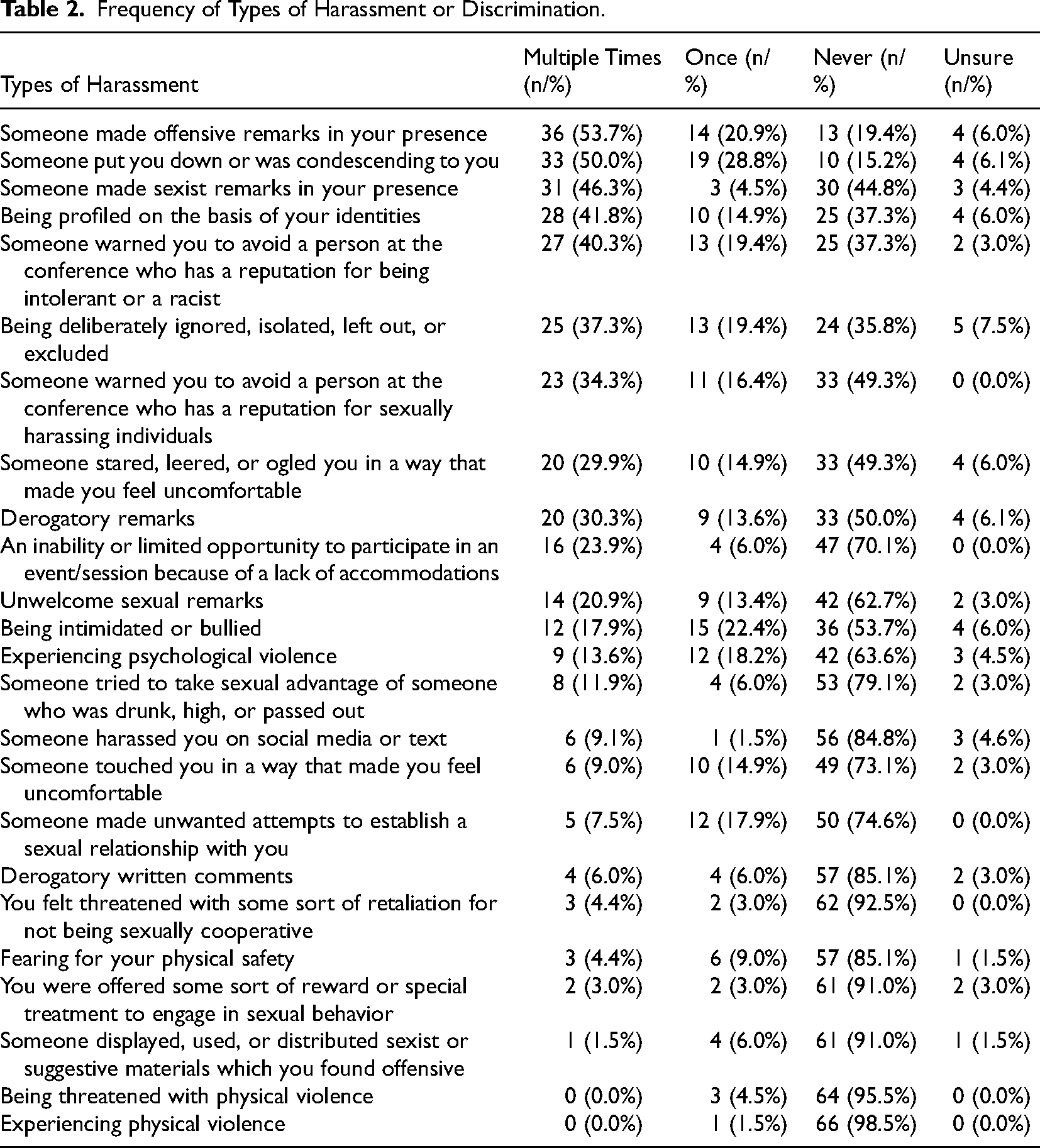
Approximately 26.2% (n = 68) of our sample reported experiencing harassment or discrimination at a social work conference. Participants also reported on the frequency of specific types of harassment or discrimination that they directly experienced, see Table 2. The more frequent types of harassment or discrimination experienced included condescending comments (78.8%), offensive remarks (74.6%), and sexist remarks (50.8%). Among participants who had experienced harassment or discrimination, 41.8% reported being profiled on the basis of their identity multiple times, 31.8% reported experiencing psychological violence, and 17.9% reported witnessing someone attempting to take sexual advantage of someone who was incapacitated.
Frequency of Types of Harassment or Discrimination.
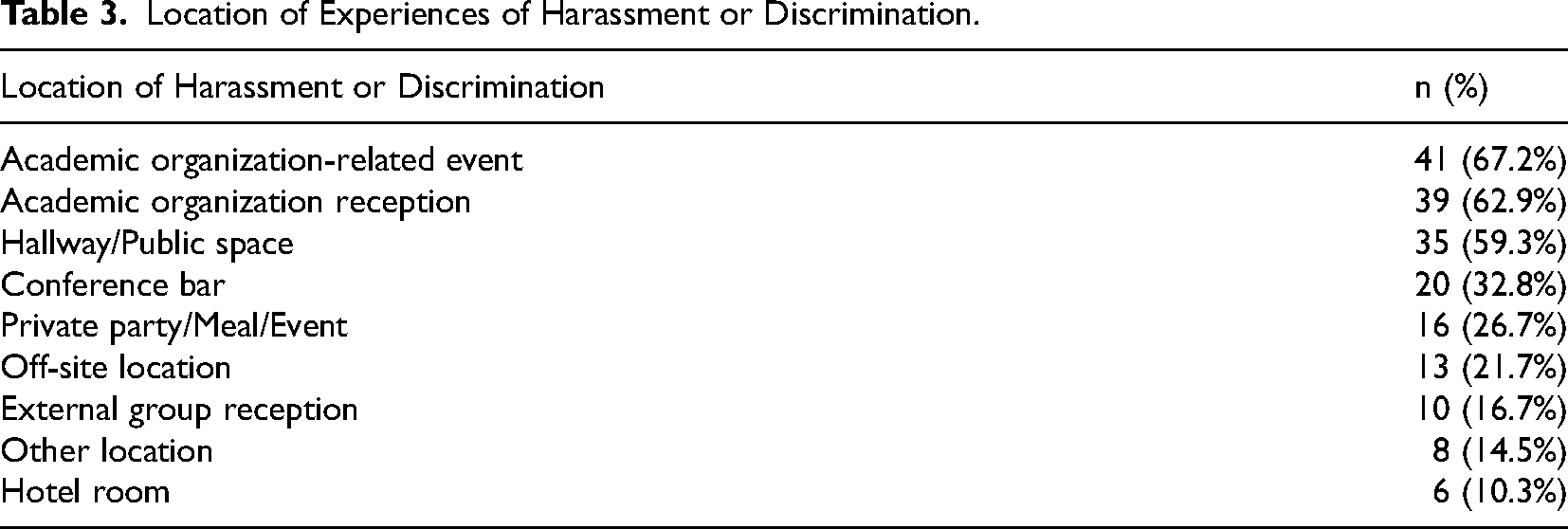
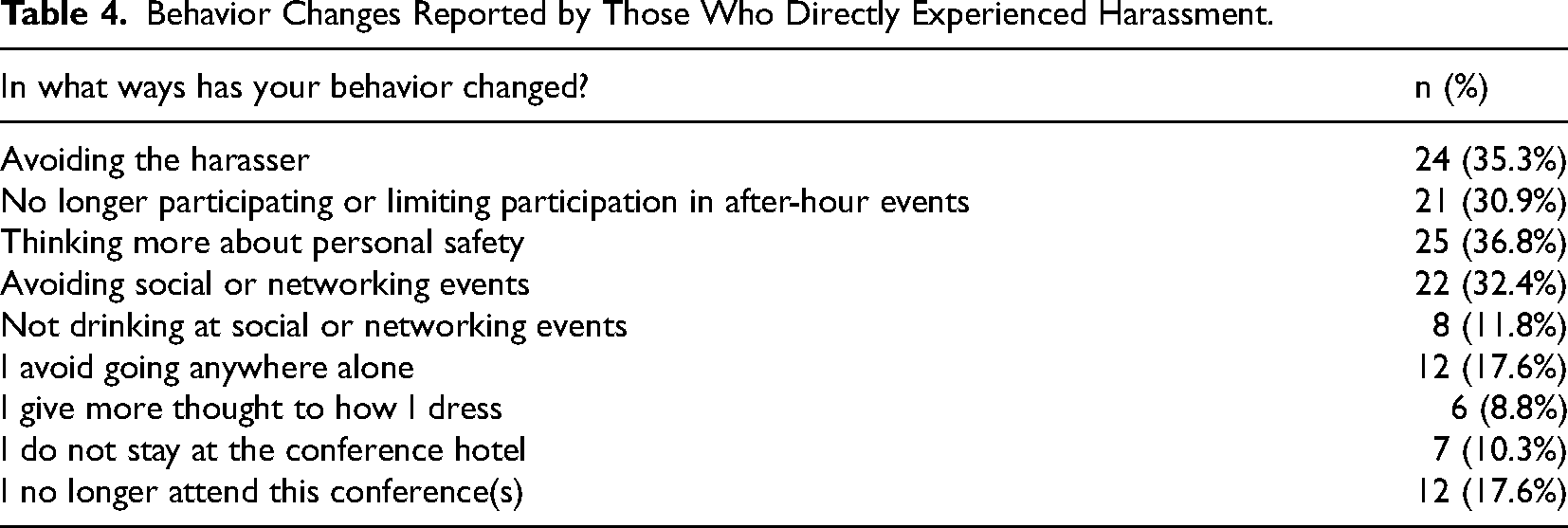
In terms of where incidents of harassment or discrimination occurred, the majority occurred in public spaces, with academic organization-related events (67.2%) and academic organization receptions (62.9%) the most common places (see Table 3 for the full list). Of those participants who experienced harassment or discrimination, 82% never made an official report or filed a formal complaint, 8.2% officially reported the incident, and 9.8% reported the incident multiple times. In addition, participants reported changing their behavior at conferences as a result of their experiences of harassment or discrimination, see Table 4. Approximately 32% reported avoiding social/networking events, 18% reported no longer attending the conference, and 18% avoided going anywhere alone.
Location of Experiences of Harassment or Discrimination.
Behavior Changes Reported by Those Who Directly Experienced Harassment.
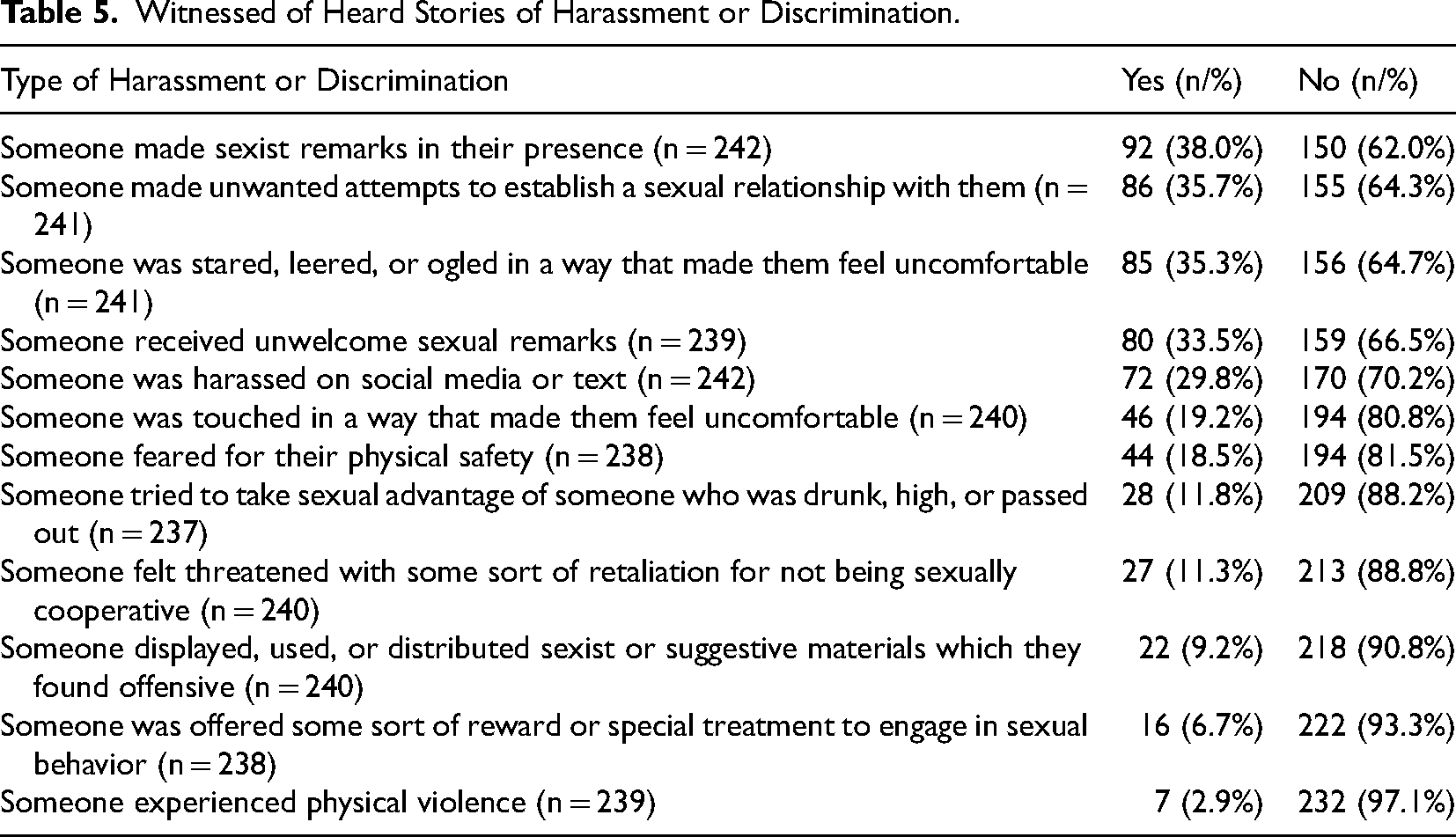
Participants also reported on experiences of harassment and discrimination that they witnessed or heard from others, see Table 5. Among the entire sample, 35.7% of participants reported witnessing or hearing from others that someone made unwanted attempts to establish a sexual relationship with them, 29.8% reported witnessing or hearing about someone being harassed on social media or via text, and 18.5% reported hearing that someone feared for their physical safety.
Witnessed of Heard Stories of Harassment or Discrimination.
Harassment and Discrimination as It Relates to Identity
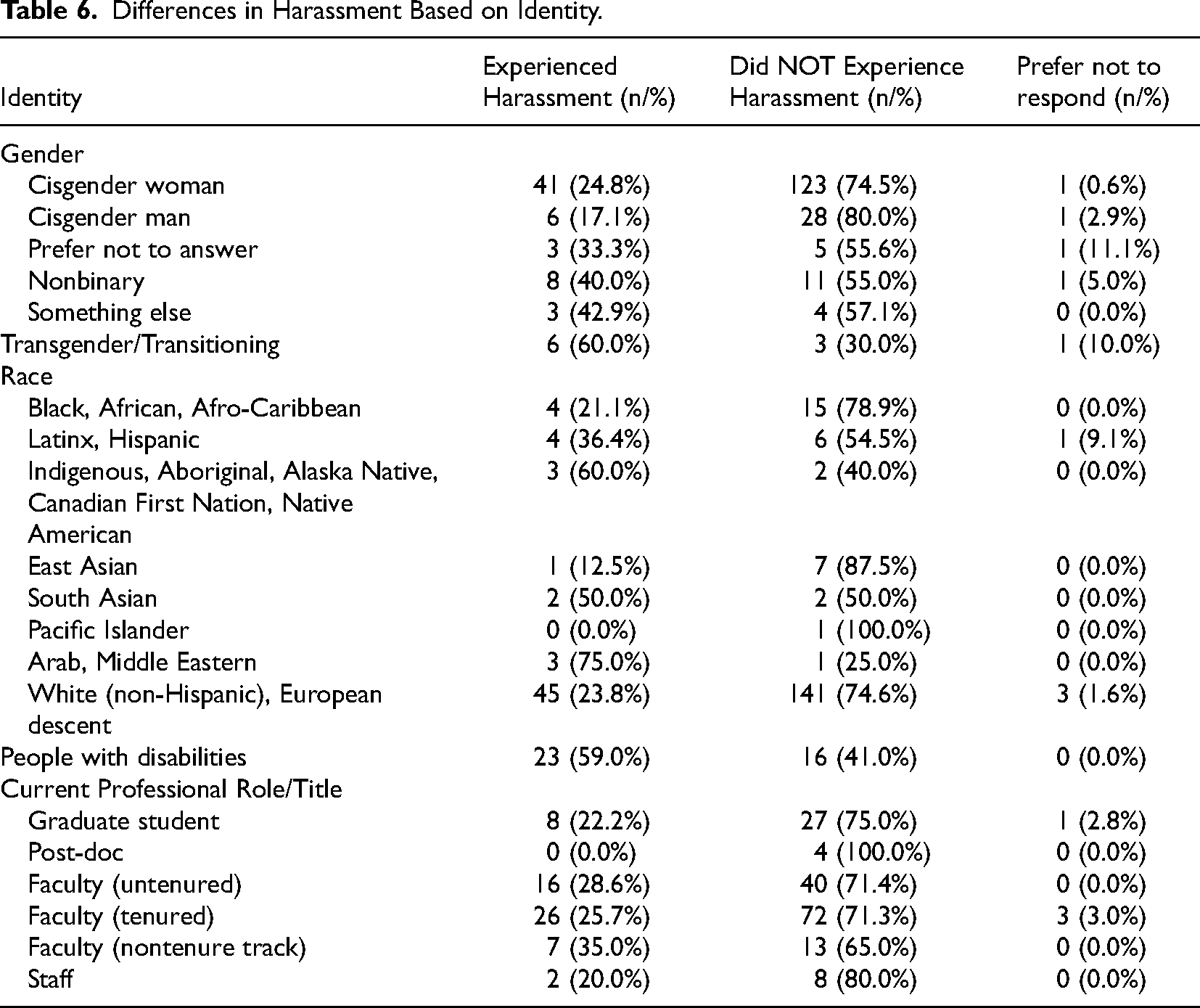
Due to the small sample sizes of several identities, statistical comparison of experiences of harassment or discrimination based on different aspects of identity was not conducted as we did not want to combine multiple groups together. Instead, Table 6 displays the frequencies of harassment and discrimination based on gender, race, disability, and professional role. Regarding gender, gender diverse communities had the highest rates of harassment or discrimination (i.e., transgender 60%, nonbinary 40%) with cisgender men reporting the lowest rate at 17.1%. While the number of Arab/Middle Eastern participants was small (n = 4), they reported the highest rate of harassment or discrimination (75.0%) when examining race/ethnicity, followed by participants who are Indigenous/Aboriginal (60.0%), South Asian (50.0%), Latinx/Hispanic (36.4%), White non-Hispanic (23.8%), Black (21.1%), and East Asian (12.5%). People with disabilities reported a rate of 59.0% experiencing harassment or discrimination. Lastly, differences based on professional role were relatively modest with nontenure track faculty reporting the highest rate (35.0%), followed by untenured faculty (28.6%), and tenured faculty (25.7%).
Differences in Harassment Based on Identity.
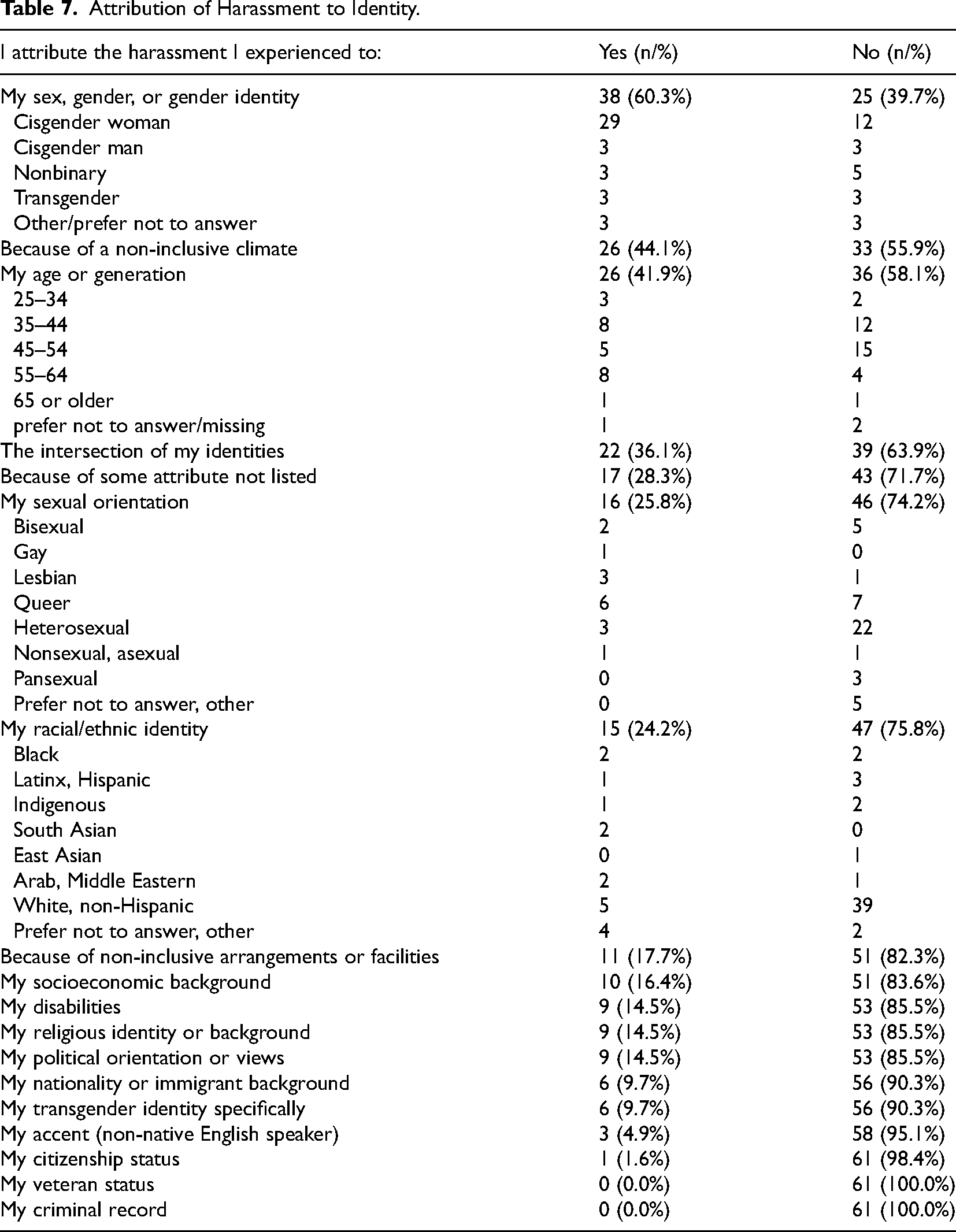
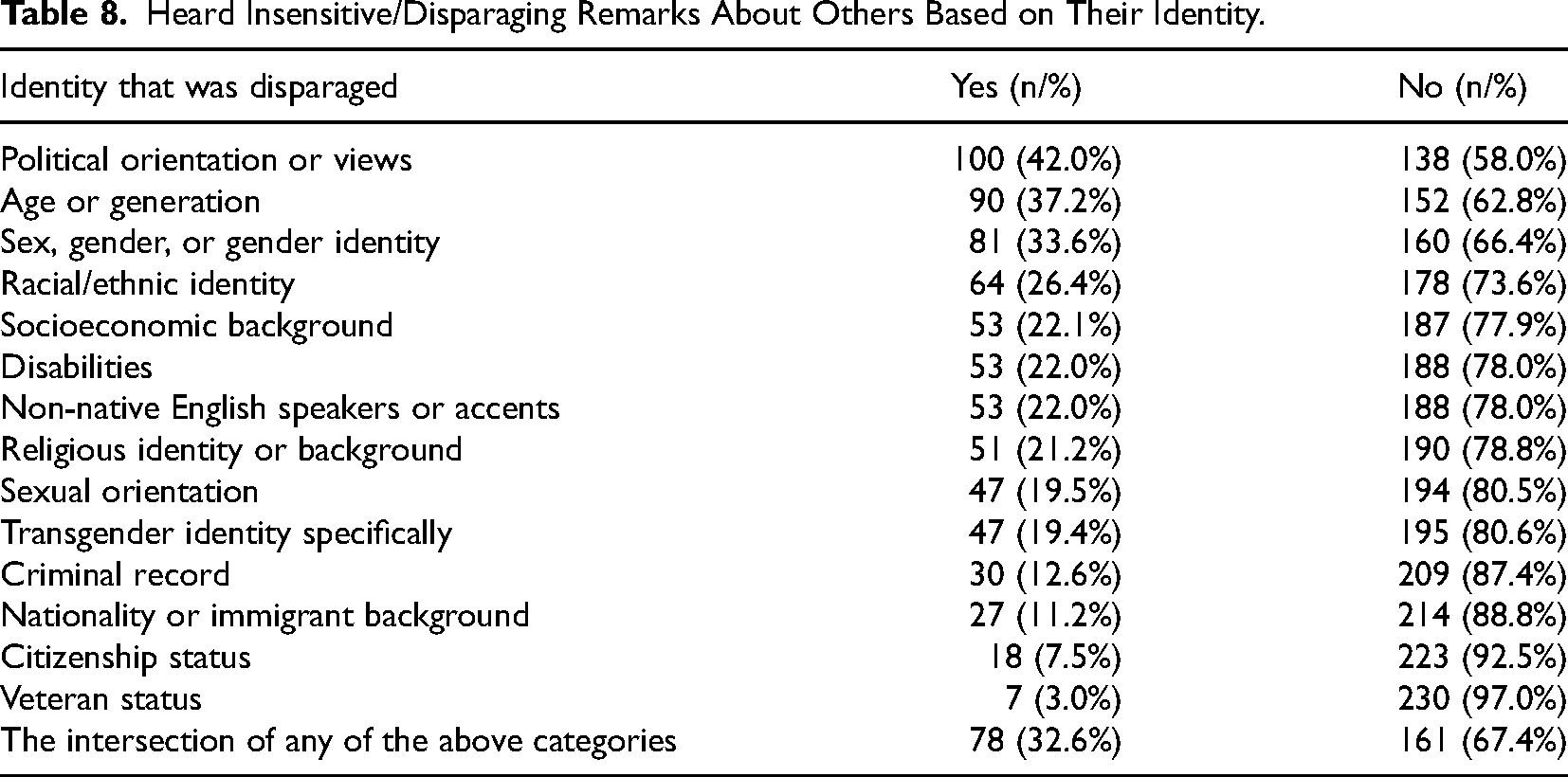
Participants were also asked if they experienced harassment that they attributed to their identity, see Table 7. Of the sixty-eight participants that experienced harassment or discrimination, 60.3% attributed the harassment to their sex or gender, and 9.7% of the subsample reported that they attributed the harassment to their transgender identity specifically. Participants also attributed their harassment to their age (41.9%), sexual orientation (25.8%), and race/ethnic identity (24.2%). Approximately 44.1% of participants attributed their harassment to the non-inclusive climate of the conference. Lastly, participants were asked if they have heard people make insensitive or disparaging remarks about other people based on different aspects of identity, see Table 8. The three most common aspects of identity that participants heard disparaging comments about were political orientation (42%), age/generation (37.2%), and sex/gender (33.6%).
Attribution of Harassment to Identity.
Heard Insensitive/Disparaging Remarks About Others Based on Their Identity.
Lived Experiences of Harassment and Discrimination
Thematic analysis of the open-ended responses revealed a central theme: the normalization of harassment, with three distinct subthemes that expose the various ways harassment and discrimination are perpetuated and tolerated within academic conference settings.
Sub Theme 1: “It's Out of Control” –Normalization of Harassment and Its Relationship to Power
Some participants described academia as a bullying culture where harassment is commonplace. Senior faculty members, particularly older male faculty, were reported as frequent perpetrators, often targeting graduate students and early-career scholars at conferences. Examples of harassment included unwanted sexual advances, dismissive behavior toward women and marginalized scholars, and an acceptance of predatory behaviors as an open secret. One participant recounted a circumstance around the offer of buying a sundress in relation to a quid pro quo circumstance: I have been [sic] sexually harassed at [conference] when I was on the job market. The offender used a job offer as a tease for sexual activity with him. He offered to come up to my room, texted me inappropriately, and offered to buy me a sundress.
Another participant noted: “Everyone I know has been targeted by a senior faculty member.” Another participant described an incident of inappropriate behavior by a senior faculty member: The head of my PhD program made an unwanted sexual advance toward me in front of my peers. My mentor suggested that I simply tell her “no” next time she asked me to kiss her on the cheek. I later learned that she had made unwanted advances towards others before, yet nothing was done.
Collectively, these narratives underscore that proximity to power often creates environments in which the risk of harassment is more likely to occur and be ignored.
Sub Theme 2: “Switching Teams”- Normalization of Harassment and Positionality
Respondents clearly linked their experiences of harassment and discrimination to their social identities and positionalities, with those from marginalized groups disproportionately affected across the data. In terms of harassment, one responded stated: At the time I was a junior faculty member and was untenured. He knew I was a lesbian but asked if I'd consider “switching teams” with him and told me how attractive I was to him. He put his hand on my leg in an inappropriate way and I had to move away from him. I reported the incident to my home institution but don't think anything happened.
In terms of bias, respondents reported exclusionary conference practices that marginalized individuals based on gender identity, race, disability, and other positionalities. A lack of all-gender restrooms, dismissive attitudes from staff, and the absence of accessibility accommodations created barriers for participation. One respondent shared: “I have experienced multiple incidences where there are no all-gender restrooms available. When I asked about accommodations, the conference staff made dismissive comments. As a consequence, I missed portions of the conference trying to find an accommodating restroom off-site.” Another participant described barriers to physical accessibility: “The planning of the event did not allow time between sessions for people with mobility issues to get from one session to the next unless they were in the same or an adjacent space.” A different respondent shared their experience witnessing ableism: “I’ve witnessed board members actively discriminate and complain about having to accommodate a deaf attendee.”
Sub Theme 3: “Their Colleagues look Away”- Normalization and Alcohol as a Facilitator of Harassment
Several respondents pointed to alcohol consumption at conferences as a factor exacerbating bullying and harassment behaviors. A second reference to the offer to buy a sundress by a different participant surfaced in relation to a reception: I was sexually harassed at a conference reception for minority fellows. The offender was an alum as well. He sent me sexually suggestive texts, asked to come up to my hotel room, and told me that he wanted to buy me a sundress!
One participant noted: “Every year at [anonymous], I see the same older faculty members buying drinks and hitting on young doc students. And I see their colleagues simply looking away while they do it.” Other respondents reflected on the role of alcohol in enabling predatory behavior: “Senior faculty members regularly target graduate students at social events, often with the complicity or passive acceptance of their colleagues,” and: I was invited to a “gathering” of high-ranking faculty members where I was offered alcohol multiple times. I was a junior faculty member … I was told there would be professional value in my attending - networking, connecting with people doing research in my area, etc. - needless to say this did not happen and the conversations at this gathering were extremely uncomfortable.
Another participant who experienced repeated harassment stated: “I had to avoid the conference social events altogether because I knew there were certain faculty members who would drink too much and make inappropriate advances.”
These stories, though hard to digest, reflect a normalization of harassment and discrimination and stand in direct opposition to the NASW Code of Ethics as well as federal protections under Title IX and Title IV (National Association of Social Workers, 2021). Yet, these issues persist within social work education. The absence of clear reporting protocols and the failure to enforce consequences for harmful behavior have likely contributed to a culture in which such conduct is overlooked or accepted. This context underscores the urgency and significance of our research.
Discussion
Findings from this study support what was already anecdotally known: the widespread nature of harassment and discrimination at social work academic conferences. Over one in four respondents reported direct experiences of harassment or discrimination, with condescending, offensive, and sexist remarks most common. Additionally, 62.4% of respondents reported witnessing or hearing about experiences of harassment or discrimination. Qualitative accounts expand quantitative findings, illuminating a culture where harassment and discrimination are normalized and power dynamics are at play.
From a critical feminist perspective, these experiences reflect broader systems of power and marginalization. Transgender and nonbinary individuals reported higher rates of harassment and discrimination than their cisgender colleagues, highlighting how those outside cisgender binary gender norms face heightened exclusion or violence. People with disabilities and people who belong to marginalized racial and ethnic communities experienced some of the highest rates of harassment and discrimination. The majority of respondents attributed their experiences of harassment to their identity and almost half attributed their experience to a non-inclusive climate. These findings demonstrate how normative regimes continue to shape professional spaces even in the social work field, protecting those who conform while putting others at greater risk. The dominant theme from the thematic analysis of normalization aligns with feminist critiques of how oppression operates through the mundane and the routine (Hill Collins, 2000). Participants described environments where harassment is expected, and resistance is met with silence or subtle punishment. These dynamics are not accidental; they are reinforced by the absence of accountability and consequences for violations.
The lack of accountability and consequences may be one reason for the overwhelming lack of formal reporting revealed by our findings, which is in line with previous research (Aguilar & Baek, 2020; Vargas et al., 2022). Critical feminists may view this silence as a survival strategy, a rational and learned response to systems that are not designed to protect the most vulnerable. Moreover, the behavioral changes reported by participants (e.g., avoiding events, limiting engagement, or no longer attending conferences) may be additional strategies which result in a loss of professional opportunity. Institutional mechanisms that claim neutrality often reinforce dominant power structures by failing to name or address gender and racial harm.
Implications
The findings reveal a disconnect between the field's core values of dignity and justice and the lived experiences of those navigating harm within professional settings. This research calls for a proactive approach to challenge the status quo. Surface-level efforts like policy statements or registration checked boxes are not enough without deeper changes to how power and accountability are handled. Conferences and university programs must commit to anti-oppression by providing clear, trauma-informed reporting processes, real consequences for harm, and strong support for those affected. Leaders must also reflect on their role in maintaining these systems of oppression and take responsibility for sharing power and lifting up marginalized voices. Given our core values, social work education should model inclusive, anti-oppressive environments. We believe this work may necessitate both a top-down and bottom-up approach.
Recommendations to Leadership to Improve Conference Culture
As critical feminism situates the problem and the solution in institutions and structures (Goodkind et al., 2021), policy and procedural reform from leadership are essential. Professional associations and academic institutions should revisit their procedures related to harassment, reporting, and accountability, especially in the context of academic conferences. Current mechanisms are vague, inconsistently applied, or overly protective of institutional image (Bhattacharya & Casey, 2024; Foxx et al., 2019). Codes of conduct should be highly visible in various formats online and onsite and should include language that explicitly prohibits any discrimination or harassment, with clear consequences for violations (Foxx et al., 2019). Attendees should also be required to acknowledge the code of conduct related to harassment and discrimination (NASEM, 2018). Conference communications (e.g., websites, emails, programs) should include explicit language about how to report incidents of harassment and discrimination, with both anonymous formal and informal reporting channels and protections in place for those who speak out.
We recommend the establishment of a designated Title IX Coordinator for all academic conferences, tasked with receiving and documenting complaints, reporting them to relevant home institutions, and measuring the conference climate in relation to harassment and discrimination to assess progress (NASEM, 2018). This step not only complies with federal Title IX and Title IV guidance but also aligns with the 2022 CSWE EPAS competencies, which emphasize institutional responsibility for fostering equitable and safe learning environments. In addition, fear of professional consequences or further harassment may deter those with less power or those with marginalized identities from speaking up (Hereth, 2021). Any policy reforms or conduct review panels should include diverse perspectives and input in the reform process. More importantly, when a home department is aware of a faculty member's ongoing inappropriate behavior, leadership has a responsibility to clearly communicate that such conduct—at academic conferences or elsewhere—will have consequences, and to follow through when necessary.
Recommendations to Attendees to Improve Conference Culture
However, beyond institutional leadership there exists an opportunity for conference attendees to drive transformative change as well. Our findings suggest that the vast majority of experiences of harassment and discrimination occurred in public spaces with others present, such as at academic receptions, in hallways, and at meals. Moreover, qualitative accounts support this data with reports of the experiences being “on full display,” “in front of my peers,” and while “colleagues look away.” If experiences of harassment and discrimination occur in public spaces, then there exist opportunities for intervention by other attendees. As social workers, we are ethically bound to engage in difficult conversations, even when they are uncomfortable, even when we are off the clock, even when the setting is informal. Our commitment to justice does not pause at state lines or social settings. For those who feel unprepared to intervene, bystander intervention training offers practical, evidence-based tools to take meaningful action. Silence is complicity, and the responsibility to act belongs to all of us. Additionally, it is important to critically examine the social structures that cause us to remain silent. Social change work must be collaborative, cyclical and through consciousness-raising, we can connect our experiences with others who have shared these experiences (Carr, 2003).
Recommendations to the Profession
At the macro level, social workers and social work associations have the opportunity to advocate for more inclusive state and federal policies. A critical feminist perspective asks us to view policy changes, such as the federal rollback to the 2020 Title IX rule, not as bystanders simply interpreting the law but as a reflection of margins of society that seek to curtail the rights of already marginalized groups of people (hooks, 2015). Social work associations can release statements or calls to action in support of inclusive policies or in opposition to policies that are discriminatory or harmful (Fenwick, 2018).
Limitations
While there were several strengths to this study, results should be interpreted in the context of the limitations. As participants self-selected into the study, this may have resulted in self-selection bias and overrepresentation of more motivated individuals. Additionally, participants were asked about experiences of harassment and discrimination in the same questions instead of two separate questions. This resulted in the inability to separate experiences of harassment from experiences of discrimination and better understand participant responses. Lastly, our sample size was relatively small given the large number of faculty, staff, and students that attend social work conferences. One reason for the low participation may be due to the fear of reporting, as we discussed earlier in the literature review. As this survey is the first of its kind in the social work field, we believe findings are informative even given the small sample size and also hope that this research can lead to larger scale studies in the future.
Conclusion
In a time when diversity, equity, and inclusion efforts are being aggressively undermined, dismantled, and unfunded, the social work discipline needs to adopt a more robust approach to buttress and advance these values. However, in addition to calling attention to the abhorrent actions of others, we must also recognize and address our own failings. Findings from this study highlight the pervasive and normalized nature of discrimination and harassment of social workers by other social workers and likely come as little surprise to many readers. We hope that this paper invites further action towards improving policies, additional research in this area, and discussion on how to improve our collective response to increase safety and inclusion at academic social work conferences.
Footnotes
Declaration of Conflicting Interests
The authors declared no potential conflicts of interest with respect to the research, authorship, and/or publication of this article.
Funding
The authors received no financial support for the research, authorship, and/or publication of this article.
