




Abstract
This study explores the post-divorce experiences of Syrian refugee women living in Türkiye, employing a feminist social work lens with an emphasis on intersectionality. It examines the multidimensional challenges these women face, the coping mechanisms they adopt, and the empowerment strategies they develop in response. Guided by two central research questions—(1) What challenges do Syrian women encounter after divorce, and how do they cope? (2) What empowerment strategies emerge from these experiences?—the study frames participants as simultaneously navigating identities as women, refugees, and divorcees.* Based on qualitative data from semi-structured in-depth interviews with 16 divorced Syrian women, the findings highlight intersecting legal, socio-cultural, and economic barriers shaped by gendered and displacement-related inequalities. The findings indicate that these women face intersectional challenges across legal, socio-cultural, and economic spheres due to their gender and refugee status. Additionally, the analysis reveals that the existing social services provided by both public and non-governmental organizations focus primarily on economic assistance rather than empowerment, highlighting the need for feminist social work and intersectional approaches to guide more transformative and rights-based interventions.
Introduction
Since the 1990s, both voluntary and forced migration among women have significantly increased. Castles and Miller (1998) conceptualized this trend as the “feminization of migration”, highlighting the growing proportion of female migrants. During this period, portrayals of women as passive victims of migration—obscuring their agency—faced growing criticism (Hajdukowski-Ahmed, 2008; Pessar & Mahler, 2003). The second-wave feminist movement played a particularly significant role in challenging this portrayal (Akis, 2018). Within migration studies, gender has emerged as a key analytical tool, particularly through feminist approaches. These perspectives emphasized gendered differences in migration experiences, especially in relation to challenges and post-migration adaptation (Freedman et al., 2017; Hondagneu-Sotelo, 2003).
Gender, shaped by historical and cultural forces, influences women's interactions with the social context in both origin and host countries (Pessar & Mahler, 2003). In Syria and other Middle Eastern societies, women's subordinate status is deeply embedded (Maktabi, 2010). Pre-war research shows that patriarchal ideologies and traditional gender roles dominated Syria's socio-political landscape (Haj-Yahia, 1997). Despite some transformations in family structures, Arab societies still operate within a “neopatriarchal” framework (Barakat, 2005; Moghadam, 2003). According to the 2023 Gender Inequality Index (GII), Syria ranked 127th out of 193 countries, while Türkiye ranked 59th (UNDP, 2025). In contrast to the Syrian context, Türkiye has adopted legislation promoting women's rights—largely due to the efforts of the women's movement. However, patriarchal norms and conservative family ideologies continue to dominate social life (Güneş, 2021; Sallan Gül, 2013). Legislative achievements such as Law No. 6284 and the now-repealed Istanbul Convention once reflected progress. However, Türkiye's withdrawal from the Convention in 2021 signals a broader shift toward conservative policies. This trend is reflected in the persistence of gender-based violence and femicide (Erükçü Akbaş & Karataş, 2022; We Will Stop Femicide Platform, 2025).
As of 2025, official figures from the Presidency of Migration Management (PMM) indicate that 2,814,402 Syrians are under temporary protection in Türkiye, nearly half of whom are women (PMM, 2025). This population includes many women who are widowed or separated, often due to the loss or absence of their spouses (CARE, 2016). Syrian women in Türkiye face additional barriers stemming from limited awareness of their legal rights, limited knowledge about relevant laws, and restricted language proficiency when navigating legal procedures. These challenges are compounded by the economic hardships associated with refugee life and by persistent traditional family expectations. Together, these intersecting factors render the divorce process especially complex, stigmatizing, and emotionally burdensome for Syrian women. In spite of these challenges, divorce emerges as a defiant act of resistance for many women. Although existing research in Türkiye addresses either Turkish women's divorce experiences (Coşkun & Sarlak, 2020; Kelebek-Küçükarslan & Atasü-Topcuoğlu, 2024) or refugee women's gendered migration experiences (Freedman et al., 2017; Özgür Baklacıoğlu & Kıvılcım, 2015), little attention has been paid to the intersection of divorce and forced migration. This study seeks to fill this imporant gap by examining the post-divorce experiences of Syrian refugee women in Türkiye.
Focusing on the experiences of Syrian women who divorced after migrating to Türkiye, this study explores: (1) What challenges do Syrian women face after divorce, and how do they cope? (2) What empowerment strategies arise from these coping mechanisms?
The Burden of Divorce in a Patriarchal System: Syrian Women in Türkiye
In both Syrian and Turkish societies, marriage and divorce are profoundly shaped by sociocultural dynamics. Although divorce is legally permitted in Türkiye, it remains socially stigmatized—especially for women—as a deviation from the traditional family model (Kavas & Gündüz-Hoşgör, 2011; Kelebek-Küçükarslan & Atasü-Topcuoğlu, 2024). The state's approach frames divorce negatively and emphasizes family preservation. Türkiye's withdrawal from the Istanbul Convention (Bayar, 2024; Güneş & Ezikoğlu, 2023) and its 2025 declaration of the “Year of the Family” (Hürriyet Daily News, 2025) reflect this ideological stance. In Syria, both legal and social constraints complicate the situation for women. Family law prioritizes male guardianship, and marriages are governed by Sharia law (Maktabi, 2010). Under Syrian law, there are three recognized methods for annulling a marriage: the husband's unilateral declaration of talāq (divorce), divorce in exchange for compensation, and judicial divorce on the grounds of incompatibility (Carlisle, 2007). These mechanisms severely restrict women's ability to initiate divorce. Divorce is generally seen as an undesirable phenomenon in Muslim societies, despite being religiously permissible. This sentiment is particularly pronounced when the divorcing party is a woman. The discourse surrounding divorce is often tied to the concept of honor (Bourdieu, 2018; Kogacioglu, 2004). From a Bourdieusian perspective, in patriarchal societies, divorce can be perceived as an act that undermines the symbolic capital of the family (Bourdieu, 2018). As a result, many women are reluctant to leave deteriorating marriages due to the social stigma associated with divorce (Meryaniwal & Talwasa, 2021).
This hesitation is not only emotional but also rooted in structural challenges. In patriarchal societies, divorced women struggle in three critical areas: legal, social, and economic. Legally, they encounter difficulties with custody, financial burdens, and navigating the judicial system (Kelebek-Küçükarslan & Atasü-Topcuoğlu, 2024). Socially, they face stigmatization and exclusion (Konstam et al., 2016). Economically, many are forced to provide for themselves and their children under dire conditions (Nashwan & Alzouabi, 2024). These hardships are amplified by the intersectionality of refugee women's identities, underscoring the need for nuanced analysis beyond monolithic categories (Anthias, 2012). In the case of Syrian women, identity markers such as ‘woman,’ ‘refugee,’ and ‘divorcee’ are intertwined, reinforcing inequality, particularly in the legal sphere due to the prevalence of imam marriage.
Marriage in Syria is largely governed by religious doctrine, and legal marriage is not a prerequisite for social recognition (Berger, 1997). As Shanneik (2021) notes, imam marriage remains widespread in Syria due to factors such as the requirement to obtain legal marriage permission before military service, the minimum age requirement, and restrictions on marrying non-Syrian nationals. The collapse of public services following the outbreak of civil war in 2011 further contributed to the rise in imam marriages. Consequently, most marriages contracted in Syria after the war occurred outside the legal system, leaving many individuals without official marriage certificates. Moreover, many Syrians fled under emergency and hazardous conditions, often without their family law documents, resulting in their loss (Refugees Association, 2024). This situation was further complicated during the temporary protection registration process in Türkiye, where individuals were frequently registered based on declarations made by a single family member—typically a man—further complicating women's legal status (Bayraktaroğlu-Özçelik, 2024). These procedural complexities have profound implications for Syrian women, further intensifying the challenges they encounter during and after the dissolution of their marriages. Although Syrian women in imam marriages may not face the same legal proceedings as Turkish women, they are subject to distinct bureaucratic and legal obstacles stemming from their refugee status. Chief among these is the inability to update their marital status on temporary protection identity documents. As a result, Syrian refugee women face a wide range of legal, socio-cultural, and economic difficulties throughout and beyond the divorce process (Ajlan, 2022; Nashwan & Alzouabi, 2024).
Despite the extensive migration literature, recent studies rarely focus specifically on divorced or widowed Syrian refugee women. Some research conducted in Türkiye has examined their experiences and challenges. One study emphasized how some Syrian women have been able to reconstruct their lives and pursue new social trajectories post-divorce (Muhanna-Matar, 2022). In a similar vein, Ozkaleli (2021) explored how religious Syrian widows reconfigured their socio-cultural and economic roles alongside their gender and religious identities. In contrast, other studies have examined polygynous marriages between Turkish men and Syrian women, highlighting the gendered dynamics and divorce-related challenges in these unions (Certel & Atasü-Topcuoğlu, 2024; Kaya, 2018). Studies conducted in Jordan (Nashwan & Alzouabi, 2024) and Germany (Ajlan, 2022) offer valuable comparative insights into refugee policies and the structure of social services. These contextual differences help situate the role of Türkiye's own refugee policy and service provision in shaping the experiences of divorced Syrian women.
The large size of the refugee population in Türkiye, coupled with the global dimension of the issue, has prompted the expansion of social services supported by major humanitarian organizations and international donors. These services are predominantly delivered by local and international non-governmental organizations (NGOs), rather than public institutions. However, many NGOs prioritize economic relief over the advancement of refugee rights (Mackreath & Sağnıç, 2017). This trend reflects the broader shift in Türkiye's social policy landscape, which since the early 2000s has embraced neoliberal, market-driven models that emphasize civil society—particularly religious philanthropy—and family-oriented approaches (Göçmen, 2014). NGOs can be categorized by the nature of their services and intervention strategies as needs-based or rights-based. Needs-based NGOs are especially prevalent, distinguished by their resources and scale, and often motivated by religious, political, or philanthropic ideologies (Mackreath & Sağnıç, 2017). As such, the services they provide are shaped by their own interpretations of women's issues and are frequently limited to short-term, palliative assistance. In Gaziantep province, both needs-based and rights-based NGOs offer support to Syrian women, including cash assistance, food and hygiene packages, psychological and health services, legal aid, language courses, and vocational training. Nevertheless, rights-based and feminist organizations that promote long-term empowerment remain relatively scarce (Özgür Keysan & Senturk, 2021).
In this context, the study aims to explore the challenges faced by divorced Syrian women within the framework of Türkiye's refugee policies and existing social service infrastructure. Drawing on a feminist social work perspective informed by intersectionality, the research critically analyzes women's lived experiences and offers recommendations for strengthening services provided by both public institutions and NGOs. Feminist social work centers women's subjective experiences, making visible the forms of oppression and domination they encounter due to their positioning within specific social and cultural contexts (Dominelli, 2002). However, a comprehensive analysis also requires attention to other social identities including ethnicity, religion, refugee status, and class which shape individuals’ experiences in conjunction with gender. Intersectionality provides a conceptual lens through which these multiple and interlocking identities can be examined, emphasizing the points at which various axes of power intersect and are co-constructed (Anthias, 2012). As such, intersectionality has been employed to enrich and broaden the analytical scope of feminist social work (see Mehrotra, 2010). This framework supports the promotion of gender-sensitive and empowerment-oriented approaches that more effectively respond to the complex and intersecting needs of refugee women. By foregrounding women's voices and tracing the structural roots of inequality, it enables a more nuanced understanding of Syrian women's post-divorce experiences. Moreover, this approach illuminates how overlapping forms of oppression operate across legal, social, and economic spheres, while also identifying pathways toward sustainable empowerment and structural transformation.
Methodology
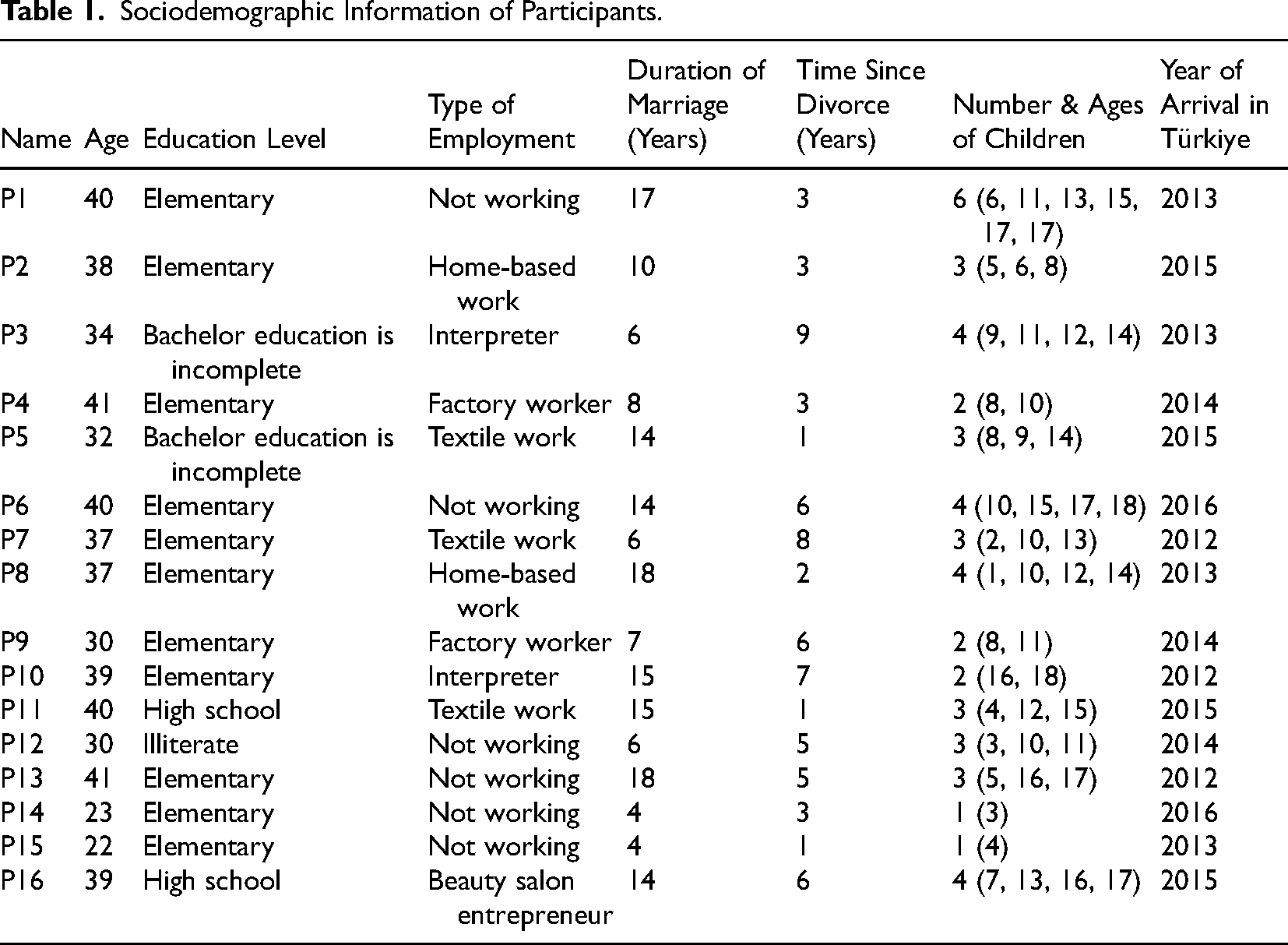
This study investigates the challenges faced by Syrian refugee women in Türkiye during and after divorce, along with their empowerment strategies for rebuilding their lives. A qualitative research design was employed, using purposive sampling and in-depth interviews. Hermeneutic analysis guided the data interpretation (Patton, 2002). The selection of Gaziantep province was based on two key factors: the large Syrian refugee population and the first researcher's prior professional experience working in the region. This experience as a social worker at an NGO in Gaziantep (2017–2022) facilitated access to the research community. Through these networks, eight participants were recruited, while eight additional participants were identified using snowball sampling (Patton, 2002). The socio-demographic characteristics of participants are presented in Table 1. The study focused on divorced Syrian women, all of whom had children.
Sociodemographic Information of Participants.
Ethical approval for this study was granted by the Hacettepe University Ethics Commission on December 14, 2021. Due to pandemic-related restrictions, all interviews were conducted online via platforms such as WhatsApp and Zoom. Prior to participation, all respondents provided written informed consent. Interviews were conducted between January and May 2022 using a semi-structured interview guide designed to address the study's core questions, such as: “What challenges do you face as a refugee and divorced woman?” and “How do you cope with these difficulties?” Once recurring themes and categories began to emerge, data saturation was considered achieved, and the interview process was concluded (Patton, 2002). The interview language depended on participants’ proficiency in Turkish. For 12 participants, Arabic–Turkish interpreters were used, while the remaining four were interviewed directly in Turkish. Interview durations ranged from 96 to 148 min. A Syrian female interpreter with expertise in migration issues supported the process, helping participants express their experiences while ensuring their comfort and cultural sensitivity throughout.
The 258 pages of interview transcripts were thoroughly reviewed and analyzed through open, axial, and selective coding (Corbin & Strauss, 1990), followed by thematic analysis. In the open coding stage, the data were segmented into meaningful units and labeled with conceptual categories. Axial coding involved identifying analytical connections between categories and subcategories using the coding paradigm, which includes conditions, context, strategies, and outcomes. During the selective coding phase, all categories were integrated around a central concept. The initial coding was conducted by the primary researcher and subsequently reviewed by the second researcher to ensure consistency and reliability. Additionally, feedback on codes, categories, and themes was obtained from a social work scholar to further ensure validity. The analysis was supported by MAXQDA qualitative software. One of the core concepts that emerged was ‘honor,’ which served as a central code reflecting the stigma associated with divorce. The major themes derived from the participants’ post-divorce experiences included coping strategies, empowerment practices, and bureaucratic victimization. To promote transparency, the study followed the COREQ checklist (Tong et al., 2007), addressing reflexivity, study design, and data analysis. Several strategies were employed to enhance validity and reliability, including data triangulation and researcher reflexivity. Triangulation involved using diverse sources—interviews, previous studies, and reports from public institutions and NGOs. Reliability was further reinforced by maintaining a comprehensive audit trail documenting each stage of data collection and analysis.
The study had some limitations. Despite our experience of working with interpreters, we were aware of the potential loss of meaning and information during the translation process. One key limitation was that the research was conducted online due to the pandemic. Face-to-face interviews are often regarded as the gold standard and more beneficial than online interviews for building rapport and creating a more intimate environment. However, recent studies highlight that online interviews can still produce valuable data, especially for sensitive participants who are unwilling to engage in face-to-face interactions (Howlett, 2022; Jenner & Myers, 2019). In our study, we observed that video interviews may have played a significant role in reducing gender and social status-based communication barriers. Specifically, we noted that concerns related to participants’ conservative and religious values – such as the discomfort of meeting face-to-face with a man – were alleviated.
Findings
The research findings were categorised according to four themes: (i) social and cultural barriers to divorce; (ii) divorce as a catalyst for emancipation; (iii) post-divorce challenges, coping mechanisms, and empowerment strategies; and (iv) victimization through bureaucracy—the gap between women's needs and available social services.
Social and Cultural Barriers to Divorce
Refugees often retain the social and cultural norms of their country of origin when integrating into a new environment. Depending on the host context, they may either rigidly adhere to these norms or negotiate and reconstruct them. This process significantly shapes their lives in the new environment. Studies show that Syrian refugees in Türkiye maintain strong kinship and neighborhood ties as a key survival strategy, thereby preserving many aspects of Syrian socio-cultural dynamics (İncetahtacı, 2020). This section explores how such structures pose obstacles for Syrian women seeking divorce.
The Difficulty of Divorce under Sharia Law. As with marriage, significant legal disparities exist between Syrian women and men regarding divorce. All participants in this study had both entered into and dissolved their marriages through imam marriage. The gender-biased structure of Sharia law emerged as a major obstacle to women's ability to initiate divorce, as it grants them limited rights in this regard. Sharia-based divorce mechanisms in Syria—such as talāq, khulʿ, and judicial divorce—predominantly serve to restrict women's agency in initiating divorce proceedings. One participant offered a detailed account of the difficulties she encountered under this legal system, highlighting its inherent gender bias and the limited options available to women. In Syria, even if a husband takes another wife or there are serious problems, a woman cannot request a divorce. If the husband provides a separate home, does not abuse her, and fulfills household needs, divorce is not permitted. As a result, many women feel they have no choice but to accept the situation. (P5)
Due to the gendered nature of Sharia law, nearly all participants reported having to ask their husbands to initiate the divorce process. In some cases, fathers intervened on behalf of their daughters to facilitate the separation. As one participant explained, “I informed my father of my desire to divorce and requested that he initiate the proceedings” (P8). Thus, even when women independently decide to end their marriages, the legal authority to act remains in the hands of their husbands or male relatives.
Family Sanctity and Honor Discourse. The framing of divorce as a negative social phenomenon underscores the centrality of honor in patriarchal societies. As Bourdieu argues, honor is not merely a personal moral value but a form of symbolic capital linked to the family's social standing (Bourdieu, 2018). In traditional contexts, maintaining honor is essential to preserving a family's status, prompting communities to actively suppress behaviors perceived as dishonorable. For Syrian women, divorce is often viewed as a source of shame that compromises not only the household's integrity but also the broader kinship networks that support it. In our culture, if a man wants a divorce, no one stands in his way. But it's different for women. It becomes a matter of honor. Divorced or widowed women are treated differently, and people often disapprove if a woman remarries. (P7) If my brother wants a divorce because he's unhappy with his wife, no one opposes him. They even support him to remarry. But because I’m a woman, my divorce is considered shameful. (P9)
Similarly, Ajlan's (2022) study on Syrian refugee women in Germany shows that divorce is often obstructed due to its association with shame and dishonor. In patriarchal family structures, the responsibility of preserving symbolic capital and family honor typically falls on male members. As Bourdieu (2018) argues, women are positioned as one of three key elements, alongside weapons and the private sphere, that men must protect to maintain their honor and social standing. This logic of male protection, in its most extreme form, can result in femicide as a means of defending perceived family honor (Kogacioglu, 2004). As such, Syrian women's efforts to obtain a divorce are often undermined through four interrelated patriarchal strategies: violence, intimidation, emotional coercion, and shaming. I was systematically subjected to violence. I went back to my family for three months, but eventually, the situation became unbearable. I told my father that either he comes to get me, or I would commit suicide. When I asked for a divorce, they threatened me and forced me to go back to my husband. (P3)
A prevailing belief holds that a woman's honor can only be safeguarded under male authority. This notion functions as a core mechanism of control and persuasion, applying intense pressure on women. Authority typically begins with the father and brothers and is later transferred to the husband. Even after divorce, former husbands often maintain control, sometimes resorting to femicide under the guise of defending family honor. As such, honor operates as a powerful tool reinforcing masculine ideology and domination (Grzyb, 2016). If I left him, he threatened to tell my family that I had run away with a Turkish man. I was afraid he would use this to destroy my honor in my father's eyes. (P2)
The final patriarchal strategy identified in this study is shaming, closely tied to emotional persuasion. Here, a subtle yet powerful form of violence is used to discourage women from pursuing divorce. In Bourdieuian terms, this constitutes symbolic violence, a form of oppression embedded in social structures and internalized norms rather than exercised through overt coercion (Bourdieu, 2001). Most participants reported that shaming came primarily from their mothers: For instance, P10 explained, “My mom always tried to stop me. She would say, ‘Don’t do it, my daughter, everyone will talk about your divorce—it's so shameful.’” This illustrates how patriarchal norms are internalized by women and reproduced across generations, with mothers often reinforcing societal expectations through emotional appeals to honor and reputation. In sum, the deeply rooted discourse of family honor operates as a powerful patriarchal mechanism that restricts Syrian women's access to divorce through intersecting strategies of violence, intimidation, emotional coercion, and shaming—reinforcing male dominance and sustaining gendered oppression across generations.
Socio-Cultural Context of Türkiye. As discussed in the literature, Türkiye's social and cultural landscape is shaped by patriarchal norms and conservative family ideologies. Over the past two decades, governmental legal and political decisions have reinforced traditional family structures and exacerbated gender inequality. Although Turkish legislation provides relatively greater protection for women's rights compared to Syria, research highlights a persistent societal stigma surrounding divorce (Kavas & Gündüz-Hoşgör, 2011; Kelebek-Küçükarslan & Atasü-Topcuoğlu, 2024). The findings of our study indicate that Türkiye's socio-cultural context also plays a significant role in shaping the divorce experiences of Syrian women. Not only Syrians but also Turks have a negative attitude towards divorce, viewing it as a matter of honor. Their attitudes change immediately after the divorce, especially those of men. (P3) Turkish people, and especially our community [referring to Syrians], are always asking why I got divorced. Everyone around me questions it, because they view a divorced woman differently. (P11)
All the women were aware that, while divorce in Türkiye offers legal advantages, it remains a challenging experience from a socio-cultural perspective, similar to the situation in Syria. Both contexts discourage women from initiating divorce and impose substantial post-divorce barriers. Despite these difficulties, participants ultimately viewed divorce as their only path to escape violence and oppression. Thus, while Türkiye provides a more favorable legal framework than Syria, its patriarchal social fabric continues to reproduce gendered inequalities, positioning divorce as a socially stigmatized act that hinders Syrian women's pursuit of autonomy and safety.
Together, these findings reveal how intersecting patriarchal structures—religious law, honor-based norms, and socio-cultural stigma—severely constrain Syrian women's ability to seek and sustain divorce. From a feminist social work perspective, these barriers are not merely personal struggles but systemic forms of gendered oppression that require structural and intersectional interventions. Addressing these dynamics demands rights-based, empowerment-oriented social services that challenge patriarchal ideologies while centering women's agency and safety.
Divorce as a Catalyst for Emancipation
This theme highlights how, despite persistent socio-cultural barriers and oppressive structures in both Syria and Türkiye, participants viewed divorce as an act of resistance and a first step toward emancipation. Divorce emerged as a complex and gradual process, unfolding across various stages. Research shows that women often recognize problems in their marriages early on but delay action in an effort to preserve family unity, a tendency particularly common in families governed by strong patriarchal traditions (Afifi et al., 2013; Kelebek-Küçükarslan & Atasü-Topcuoğlu, 2024). Similar patterns were evident in this study. However, the length of endurance varied significantly among participants, as reflected in the socio-demographic data. A common thread across participants’ narratives was the view of divorce as a form of liberation from marriages marked by cruelty and neglect. For many, migration had intensified existing socio-economic strains and exacerbated domestic violence, leaving divorce as the only viable path forward. He would beat me even for things that happened at work. But it wasn’t just an ordinary beating. Once, he used a hookah hose, like he was torturing me. Sometimes, he’d leave me naked and locked in the bathroom, soaking wet in the freezing cold of winter. (P15) But nothing changed. In the end, I decided to divorce. He wasn’t involved with the children or taking responsibility. Whenever something went wrong, it was as if he wasn’t part of the family. That's when I realized it wasn’t working, and I had no choice. I chose to live with my children on my own. (P13)
Despite the socio-economic hardships exacerbated by the intersection of migration and divorce, many women who managed to meet their basic needs viewed divorce as a major turning point. This sentiment was strongly emphasized by several participants. I felt a great sense of relief after the separation. The difficulties became more manageable. At least I was with my children, and I could focus on them. When he was around, there was constant unrest, fighting, and noise at home. He would beat both me and the children. I couldn’t give them attention because I was always preoccupied with him. (P1)
There are various reasons why women remain in marriages that have become a source of oppression. One primary factor is the socio-cultural barriers highlighted in the first theme. Another is that many women spent most of their married lives in Syria where legal and social constraints limited their autonomy. Importantly, all participants reported that they only found the courage to pursue divorce after migrating to Türkiye. Access to information about women's rights and legal protections was instrumental in enabling this decision. After I came to Türkiye, I learned my legal rights and got divorced because the laws here protect women. I was able to divorce because child custody is also granted to women. (P13)
These findings suggest that Türkiye has provided Syrian women with meaningful opportunities for empowerment and autonomy through access to women's rights. Similarly, Ajlan's (2022) research emphasizes that access to legal information during divorce is a critical source of empowerment. For many participants, taking the first step toward independence was described as deeply liberating. However, they were also fully aware that this moment marked the beginning of a new set of challenges.
From an intersectional and feminist social work perspective, these findings demonstrate that while migration introduces new layers of vulnerability, it can also open up critical spaces for empowerment, particularly in legal contexts more supportive of women's rights, such as Türkiye. Gaining access to legal information and becoming aware of their rights enabled participants not only to pursue divorce but also to reframe their identities as autonomous individuals and caregivers. These experiences underline the transformative potential of feminist social work interventions that prioritize rights education and consciousness-raising, offering valuable guidance for other refugee women navigating similar conditions.
Post-Divorce Challenges, Coping Mechanisms, and Empowerment Strategies
While divorce was widely experienced by participants as a turning point toward autonomy, it also marked the beginning of a new set of legal, economic, and psychosocial challenges. Such difficulties are rooted in traditional patriarchal societies, where men are positioned as primary actors in public life, while women remain economically and socially dependent. As a result, divorce often leads to a significant decline in women's living conditions (see Kelebek-Küçükarslan & Atasü-Topcuoğlu, 2024; Nashwan & Alzouabi, 2024). The Syrian women in this study experienced these challenges even more acutely due to the intersection of gender, refugee status, and class-based marginalization. This theme explores their post-divorce struggles, coping mechanisms, and empowerment strategies across three interrelated domains: legal and bureaucratic barriers, socio-cultural stigmatization, and economic hardship.
Legal or Bureaucratic Problems. For Syrian women, post-divorce legal issues were shaped by distinct legal and socio-cultural dynamics. Importantly, all participants identified as Muslim and adhered to religious practices, including marriage and divorce through imam marriage. As such, the majority had undergone only religious divorce. Of the sixteen participants, only two had obtained an official legal divorce in Türkiye; two had ongoing divorce proceedings, while two others had been divorced by proxy in Syria. However, Syrian-issued divorce certificates were not recognized by the PMM. Consequently, fourteen women were still officially registered as ‘married’ on their temporary protection ID cards. This discrepancy created a major barrier to accessing individual rights and social assistance as divorced women. Their marital status remained legally invisible, reinforcing their bureaucratic marginalization. Many participants reported facing significant difficulties in navigating institutions such as the PMM, civil registry offices, and social services. The PMM has caused us a lot of problems. I tried to get an appointment for a year, but I couldn’t. Some places offered paid appointments, and I even tried those, but still got nothing. (P9) My sister was working as a lawyer in Syria, and arranged our divorce by proxy from the regime-controlled area. I had the documents translated and notarized here, but my ID still shows me as married. Whenever I apply for something, they ask about my husband. (P5)
These challenges stem largely from the rigid criteria imposed by public institutions, bureaucratic inefficiencies, and the discretionary power of individual employees. For the two women with ongoing legal proceedings, the burden was twofold: not only did they have to navigate a prolonged and complex judicial process, but they also had to continuously prove their legal status to various authorities. As a result, they were unable to renew their residence registration or access social assistance from public institutions. The courthouse operates slowly. The main issue I face is the court decision—the divorce and custody papers. They ask for it wherever I go, including the district registry office. (P1)
These findings reveal how the intersection of gender, refugee status, and non-recognition within the legal system renders Syrian women effectively invisible in the eyes of the state. From a feminist social work perspective, the exclusion of divorced women from family-based social assistance structures underscores the urgent need for rights-based, gender-sensitive policies that recognize diverse marital trajectories and prioritize women's legal autonomy.
The Social Burden of Divorce: Stigmatization. Research suggests that Syrian refugee women experience compounded stigmatization in host countries, stemming from the intersection of their gender and refugee identity (see Aldamen, 2023). In Türkiye, dominant public narratives often portray Syrian women as passive victims in need of protection or as objects of desire (Certel & Atasü-Topcuoğlu, 2024). The stigmatization experiences of the women we interviewed became complex at the intersection of gender, refugee status, and marital status. Nearly all participants experienced discrediting and stigmatizing behaviors in their social environments following divorce, aligning with Goffman's (1986) concept of social stigma. As a divorced woman, I faced many challenges both in my neighborhood and at work because people viewed widows and divorced women differently. Some men, in particular, tried to harass me. (P9)
According to de Certeau (1984), social life is shaped by strategies and tactics that are continually enacted. While dominant groups develop and implement strategies, marginalized individuals rely on tactics to navigate within these power structures. In this context, “a tactic is an art of the weak” (de Certeau, 1984). Thus, the oppressed are not passive recipients of power; rather, they are active agents who adopt creative tactics to resist and survive. Syrian women, facing multiple and intersecting disadvantages, demonstrated such agency in their efforts to cope with social stigma. One common tactic was concealing their marital or refugee status in order to avoid harassment or discrimination. For instance, P7 deliberately gave the impression that a man lived in her home by placing her father's shoes at the door: When they asked who I lived with, I would say I lived with my family. My father had a pair of shoes, and we brought it from Syria. We would place that pair of shoes in front of the door to make it seem like there was a man in the house. We also lock the door 3 or 4 times. (P7)
Another tactic employed by participants was disguise. As Scott (1990) explains, disguise functions as a survival strategy among subordinated groups, allowing individuals to mask their identities and beliefs in order to assimilate with dominant norms and avoid exposure. For Syrian women, this form of resistance was used to evade oppression, exclusion, and stigmatization. Several participants—particularly those fluent in Turkish—attempted to hide their Syrian identity during social interactions. While some used physical modifications to avoid recognition, others relied on language and behavioral mimicry. P3, for example, adapted her appearance to align with local norms: When I first came here, my dressing style was the same as in Syria. As you know, Arabs wear the hijab in a different way than Turks. That's why I was noticed everywhere I went. I had to adapt my style. I changed the way I dressed to hide the fact that I was Syrian. (P3)
These findings illustrate how Syrian refugee women navigate the compounded stigma of being divorced, female, and displaced through everyday acts of resistance. Drawing on de Certeau's (1984) concept of tactics and Scott's (1990) notion of disguise, participants employed subtle but intentional strategies—such as concealing their identity or mimicking dominant norms—to reclaim agency in the face of marginalization. From a feminist social work and intersectional perspective, these tactics highlight both the resilience of refugee women and the urgent need for inclusive policies that dismantle the intersecting social structures producing such stigma.
Economic Challenges. Variables such as educational attainment, cultural capital (e.g., language proficiency, occupational skills), and access to social networks play a key role in determining how women navigate economic hardship. In this study, all participants had low levels of education and economic status, and none had a skilled profession. Divorce further exacerbated their financial vulnerability. Understanding how women manage this deepened poverty is crucial. The findings revealed three primary strategies: reliance on family and neighborhood solidarity, participation in the labor force, and seeking aid from public or NGO-provided social services. In particular, post-divorce support from extended family and close social circles was vital for survival. My sister-in-law helped me find a house to rent in the Vatan neighborhood. The rent was 400 Turkish lira (approximately $25 USD), and I didn’t have enough money. So, my sister's family and I decided to rent the house together, and split the cost. (P16)
While social support in the immediate aftermath of divorce plays a critical role, it often provides only short-term relief. Sustainable empowerment depends largely on women's ability to enter the labor force and achieve financial independence. As Özgür Keysan and Senturk (2021) argue, improving the capabilities of socioeconomically disadvantaged women is key to expanding their access to employment and fostering long-term empowerment. However, access to such opportunities is uneven and strongly mediated by women's education levels, personal skills, and various forms of capital. Vocational training programs, language courses, and short-term employment initiatives offered by public institutions and NGOs played a role in enabling some participants to take steps toward empowerment. I worked for 2 months in a factory, then, at a clothing store. At first, my Turkish wasn’t very good, but I attended courses and improved over a year. I worked at the store for 5 years, and later—with the help of new friends—I applied for a job as an interpreter at a migration NGO and was hired. (P3)
However, while vocational training programs and short-term employment projects have enabled some women to enter the labor market, their involvement often remains unsustainable. For most participants, overcoming economic hardship is an ongoing and evolving struggle. The majority are employed in the informal sector, where structural barriers persist. Informal employment is characterized by low wages, excessive working hours, and a lack of job security, conditions that undermine long-term empowerment. Sometimes I worked 12 h instead of 8. They were supposed to pay 800 TL per week, but they only paid 300 TL. You find another job, and it's the same exploitation. It seems there's no way out. (P5)
Beyond labor exploitation and low wages, women also face gender-specific risks in the workplace. In Türkiye, the labor market is deeply shaped by traditional gender norms, rendering refugee women, who often have no choice but to work, particularly vulnerable. This vulnerability is magnified in the informal sector, where the lack of regulation exposes Syrian women to sexual exploitation, as noted in earlier research (Özgür Baklacıoğlu & Kıvılcım, 2015). Some participants described experiences of sexual harassment and abuse, often exacerbated by their status as divorced women. I faced many problems at first because I was both a refugee and a widow. Men would look at me negatively. They would approach me kindly to gain my trust, then act in their own interests. I was even harassed once. The man tried to hug me, when I refused, he threatened to fire me. (P11)
Another significant barrier to workforce participation is the burden of childcare. The family-centered nature of public care services in Türkiye, coupled with limited childcare availability, restricts women's access to the labor market. P7, for example, shared that she brought her children to work with the foreman's permission due to a lack of alternatives: “The foreman didn’t mind me bringing my children to work. He would even say I should bring them so they wouldn’t be left alone at home.” This situation exemplifies the “double burden” (Walby, 1989) many women face, juggling paid labor with unpaid caregiving responsibilities. Despite these constraints, the efforts and adaptations women make post-divorce reflect a form of empowerment. As Lee (2001) suggests, empowerment is not a fixed state but an ongoing process of resistance and transformation. These findings reveal that women primarily rely on individual and family-based tactics to survive, such as solidarity networks and informal labor. While such strategies are vital in the short term, sustainable empowerment still requires participation in the labor market—even as it can be deeply challenging. From an intersectional and feminist social work perspective, however, these coping strategies remain insufficient to address structural inequalities rooted in gender, refugee status, and class. Sustainable change requires institutional responses and inclusive social policies that recognize and support these complex realities of refugee women's lives. The third strategy women employ to cope with economic hardship, seeking support through social services, will be explored in the following theme.
Victimization Through Bureaucracy: the Gap Between Women's Needs and Available Social Services
To frame the analysis in this theme, two key observations emerge from the participants’ experiences: (i) Public institutions appear to have largely outsourced the responsibility for meeting refugee women's social service needs to NGOs, and (ii) the services provided are predominantly needs-based and temporary in nature, such as food, hygiene kits, or one-time rent assistance. Social work practices that aim to foster empowerment and long-term change are almost entirely absent. As a result, women's interactions with social services are shaped primarily by their urgent economic needs. However, even accessing these basic forms of financial assistance often proved challenging. Bureaucratic inefficiencies and rigid eligibility criteria, frequently blind to the lived realities of refugee women, created significant barriers.
In Türkiye, two major assistance programs are available to refugees: the Emergency Social Safety Net (ESSN) and the Social and Economic Support (SES) program. To be eligible, applicants must meet strict criteria, including having a valid ID card with up-to-date registration. While all participants had ID cards, only two had been legally divorced, preventing the others from updating their marital status—a prerequisite for certain benefits. They approved my address declaration application, but not my Kızılay (ESSN) application. I submitted a court document confirming that I had filed for divorce, but the authorities told me I had to officially update my marital status on my ID card first. (P2)
In terms of bureaucratic barriers, there is a significant distinction between the ESSN and SES programs. While the ESSN can be accessed by women who manage to renew their residence registration, either with NGO assistance or through personal effort, accessing the SES program is considerably more difficult. As a child protection–oriented service model, SES is designed to intervene when the best interests of the child are deemed at risk (Ministry of Family and Social Services, 2024). However, according to participants’ experiences, accessing SES is notably more difficult for Syrians than for Turkish citizens. Although several women met the eligibility criteria, only four who applied were able to benefit from SES. I had four children and couldn’t meet their needs. I even obtained a medical report showing I was being treated for cancer. My ID card already showed ‘widow’ as my marital status, but the authorities still did not process my SES application. (P6)
The women's experiences with social assistance reveal that they are caught in a bureaucratic vicious cycle between the PMM, the population directorate, and social service centers. Officials at these institutions imposed arbitrary barriers, often redirecting women to other agencies and requiring additional procedures. As street-level bureaucrats (Lipsky, 2010), these officials serve as the primary points of contact between individuals and public services, wielding discretionary power in interpreting and implementing regulations. While men's declarations were accepted during initial refugee registration, often registering entire families based on the husband's account, no such recognition was extended to women post-divorce. Participants’ own statements were not accepted in procedures such as updating marital status on ID cards, altering population records, or applying for social assistance. I had a lot of trouble at the district registry office. They created various bureaucratic obstacles. They said my husband also had to come for the registration. But I said we are divorced [not officially]. (P13) I applied for SES, but they asked for a divorce certificate. I explained the situation, but they ignored it. It wasn’t processed because my ID card still listed me as married. (P7)
Atasü-Topcuoğlu (2020) highlights that many social service personnel in Türkiye demonstrate a lack of empathy toward Syrian women, which results in emotional distancing and weakens the relational connection between refugee women and the welfare system. This detachment inhibits professionals from fully grasping the applicants’ lived experiences and obstructs their ability to activate their transformative potential—namely, designing interventions that expand women's possibilities for empowerment and change. When viewed through the lens of feminist social work and intersectionality, these patterns reveal that existing service frameworks are not designed with women's specific and intersecting needs in mind. While refugee women actively strive to build resilience and enhance their capabilities, the inadequacy of current services not only limits their progress but also reinforces cycles of marginalization. From this perspective, institutional shortcomings are not isolated errors but symptoms of systemic failure rooted in policy design, bureaucratic culture, and frontline practices that often ignore gendered and refugee-specific vulnerabilities.
This structural injustice is vividly reflected in Ken Loach's I, Daniel Blake (2016), where a man seeking state support is trapped in a bureaucratic labyrinth devoid of compassion. Similarly, the refugee women in this study must navigate a maze of institutional obstacles that render their needs invisible and their voices unheard. These findings underscore the urgent need for inclusive, rights-based service models co-created with refugee women that prioritize empowerment, relational understanding, and justice. At this point, feminist social work offers a vital framework for reimagining social services that do not merely respond to need, but actively work to dismantle the structural inequalities that produce it (Dominelli, 2002). Feminist practice demands relational, rights-based approaches that center women's voices, dismantle technocratic barriers, and confront structural forms of patriarchal control embedded in policy implementation. In this respect, feminist social work practices, informed by an intersectional framework, are particularly critical when it comes to refugee women who face multiple layers of disadvantage. In the context of Türkiye, the public social services provided to Syrian women need to be supported by a feminist social work approach that takes into account women's subjective conditions, personal narratives, and the intersecting systems of oppression they navigate.
Conclusion
While migration studies have largely neglected the issue of divorce and its aftermath, divorce studies have similarly failed to account for the specific experiences of refugee women. This research addresses the intersection of these two domains by focusing on the unique post-divorce trajectories of Syrian women in Türkiye. This study seeks to fill this gap by examining the post-divorce experiences of Syrian women in Türkiye through an intersectional feminist social work lens. Drawing on qualitative data from in-depth interviews, the research identified four major themes: (i) social and cultural barriers to divorce; (ii) divorce as a catalyst for emancipation; (iii) post-divorce challenges, coping mechanisms, and empowerment strategies; and (iv) victimization through bureaucracy—the gap between women's needs and available social services.
Empirically, the findings show that divorce is both a site of struggle and a potential turning point for Syrian refugee women. Social and cultural norms—particularly honor discourses—presented formidable barriers, making the act of divorce a significant challenge. Despite enduring prolonged violence and socio-cultural pressure, participants ultimately viewed divorce as an act of resistance and a pathway to reclaiming autonomy. Migration to Türkiye created an enabling environment where access to legal rights and information empowered women to initiate divorce, marking the beginning of their transformation into self-determining individuals.
However, in the absence of transformative social work practices, Syrian refugee women continue to face layered post-divorce challenges such as legal invisibility, social stigma, and deepening economic hardship. Their coping strategies—such as informal labor, family solidarity, and identity concealment—illustrate remarkable resilience, but also underscore the urgent need for structural support. Given the overwhelming burden of economic hardship, women often assumed dual responsibilities in both the domestic and public spheres. Achieving a degree of financial independence offered some participants a sense of empowerment. However, the gendered structure of the labor market and persistent social stigma around divorce intensified their challenges. Most women worked in the informal sector, where they were exposed to exploitative labor conditions and gender-based violence. Their experiences closely mirror those of divorced Syrian women in Lebanon, as documented by Nashwan and Alzouabi (2024).
Applying for social services emerged as another key empowerment strategy, yet most offerings were limited to short-term aid and failed to address women's lived realities. Bureaucratic barriers, such as rigid documentation rules and the inability to update marital status, exacerbated exclusion. These shortcomings reveal a critical lack of feminist-informed, rights-based service models, further deepening the marginalization of divorced Syrian refugee women. Comparative evidence from Jordan (Nashwan & Alzouabi, 2024) and Germany (Ajlan, 2022) further highlights how national legal frameworks and social welfare systems shape post-divorce trajectories. A comparison with Ajlan's (2022) study highlights the central role of national refugee policies and welfare systems in shaping post-divorce experiences. Differences between Germany and Türkiye in terms of legal frameworks and social service infrastructure significantly impact the autonomy and well-being of divorced Syrian women. These findings illustrate that the post-divorce experiences of Syrian refugee women in Türkiye are shaped by a web of intersecting structural barriers, including legal invisibility, social stigma, and growing economic vulnerability. While women adopt creative coping strategies and pursue empowerment through tactics such as disguise, community solidarity, and informal labor, these efforts remain precarious and highly dependent on context. In Jordan, religious norms and structural economic exclusion define the post-divorce landscape, while in Germany, a rights-based legal infrastructure enables greater autonomy for divorced women. Türkiye's case appears to fall somewhere in between, reflecting how variations in refugee policies, legal recognition mechanisms, and social protection models profoundly influence the lived realities of refugee women after divorce.
The study highlights the lack of empowerment-based services grounded in feminist social work across the fields of social protection, social assistance, and legal aid particularly those that consider the subjective experiences of divorced refugee women. From a feminist social work perspective, the findings underscore the critical importance of rights-based education and supportive legal frameworks in fostering empowerment among refugee women. Moreover, the study reveals that women living under precarious conditions rarely have opportunities to voice their concerns, and their challenges are further exacerbated by bureaucratic systems that contribute to their ongoing victimization. Moreover, as Atasü-Topcuoğlu (2020) emphasizes, the lack of empathy and emotional attunement among social service personnel in Türkiye reinforces this marginalization. Such professional detachment not only undermines relational trust, but also prevents practitioners from activating their transformative role and designing interventions that could expand women's possibilities. In the absence of adequate institutional support, women develop tactical forms of agency such as concealment, mimicry, and community-based solidarity to navigate systems that exclude them. Drawing on de Certeau's (1984) concept of tactics and Scott's (1990) notion of disguised resistance, these practices should be understood not as passive adaptations, but as creative and strategic responses to systemic constraints. From a feminist social work and intersectional perspective, recognizing and legitimizing these everyday acts of resistance is as essential as transforming the structural systems that necessitate them.
Taken together, the findings highlight the urgent need for rights-based, gender-sensitive, and intersectional policy frameworks that move beyond short-term relief and address the systemic barriers to the long-term empowerment of refugee women. To this end, several key reforms are essential. First, procedures must be established to enable women to update their marital status on refugee ID cards. Second, access to social services should be improved by simplifying bureaucratic processes and equipping frontline workers with gender- and trauma-sensitive training. Third, economic support must be strengthened by expanding access to safe, formal employment, vocational training, and childcare services. Finally, policies must meaningfully incorporate women's lived experiences and agency, ensuring that social protection systems are inclusive and responsive.
Footnotes
Declaration of Conflicting Interests
The authors declared no potential conflicts of interest with respect to the research, authorship, and/or publication of this article.
Funding
The authors received no financial support for the research, authorship, and/or publication of this article.
