




Abstract
In October 2017, the #MeToo hashtag went viral on social media, emerging as a global medium for solidarity between women who had experienced sexual violence. However, the contextless nature of a hashtag meant that individual variations of experiences were erased in the positioning of #MeToo as a singular statement. Previous literature exposed a lack of understanding of how geographical factors contributed to the response and uptake of #MeToo. This phenomenological study explored rurality as an intersectional factor that influenced women's engagement with the #MeToo movement. Thirty-one women from rural and remote Australia participated in an anonymous online survey, sharing their experiences and perceptions. The barriers for engagement identified by participants mirror the social and structural factors that inhibit disclosure and help-seeking behaviour in rural and remote areas. Regardless of personal engagement, many of the participants felt a collective sense of strength and empowerment through the virtual solidarity of victims. The author concludes with the suggestion for an anonymous online platform for victims of sexual violence to connect and share their experiences. This format may allow victims the psychological benefits of disclosure whilst preventing the negative repercussions of speaking out publicly.
Keywords
Introduction
African American survivor and activist Tarana Burke founded the “MeToo” campaign in 2006 (Burke, 2021). It was a grassroots response to the frequent stories of sexual violence she encountered from Black 1 women and girls in her community. In October 2017, the movement gained widespread momentum when American actor Alyssa Milano tweeted, “If all the women who have been sexually harassed or assaulted wrote ‘MeToo’ as a status, we might give people a sense of the magnitude of the problem” (Milano, 2017). In the wake of Milano's post, numerous high-profile women shared their own stories; testifying against the rich, powerful, and influential men who had perpetrated harm against them (Pflum, 2018). The #MeToo hashtag went viral on social media; emerging as a global medium for solidarity between women who had experienced sexual violence.
Within 24 h, the hashtag had been used 12 million times (CBS News, 2017), with countries taking on their own local variations; including #MiTu in China (Zeng, 2019) and #BalanceTonPorc—“rat out your pig” —in France (Donadio, 2017). In contrast to past social and political movements, the use of social media as a collective public sphere allowed the #MeToo movement to almost instantaneously move across international borders. While this mobility considerably expanded the scope of people's engagement, the contextless nature of a hashtag meant that individual variations of experiences were erased in the positioning of #MeToo as a singular statement.
Literature Review
Media Commentary
Although the #MeToo hashtag circulated on social media platforms, news exposure played a seminal role in shaping societal responses. “Framing theory” suggests that the filtration of details and curation of language by journalists influences how readers perceive an event or issue (de Vreese, 2005). Australian media reports on #MeToo cases predominantly focused on the repercussions faced by the alleged perpetrator, rather than the impact on the female victims 2 (Hindes & Fileborn, 2020; Loney-Howes & Fileborn, 2020; Starkey et al., 2019). There was a distinct lack of victims’ voices; in some cases, this absence was due to a victim's disinclination to speak out publicly (Croggon, 2019; Starkey et al., 2019). Language used by reporters reinforced the fallacy of the “ideal” or “deserving” victim. Reference to age; sexual history; substance use; and whether the victim acted “appropriately,” served to implicitly shift the blame onto the victim (Croggon, 2019; Hindes & Fileborn, 2020; Loney-Howes & Fileborn, 2020; Ryan, 2019; Starkey et al., 2019).
The language used by journalists also reproduced gendered stereotypes that perpetuate limited and binary understandings of sexual harassment and assault. Phrases such as “bad sex” and “persisted a little” reconstructed victims’ experiences to be within the confines of “normal” male and female sexual encounters (Hindes & Fileborn, 2020). Pressure and coercion were framed as typical elements of consensual sex; thus, minimizing victims’ experiences and portraying the victims themselves as overreactive (Croggon, 2019; Hindes & Fileborn, 2020). Although most of the media coverage was negative, Hush (2020) commended the widespread reporting on the #MeToo movement for heightening public awareness of sexual assault. Hindes and Fileborn (2020) noted that sexual violence is discursively constructed; thus, through increased social commentary, victims may be provided with the language that allows them to better comprehend their experiences.
Intersectional Representation
While Burke's original intent was to let other victims know they are not alone and to create solidarity between them (Ohlheiser, 2017), media representation may have served to alienate them from the #MeToo collective. The centering of young, conventionally-attractive, white women's stories reinforced the concept of the “ideal victim” and discredited the experiences of victims who did not fit within this paradigm (Hindes & Fileborn, 2020; Lim, 2019; Starkey et al., 2019). At a societal level, restrictive representations of “ideal” victims perpetuate rape myths and increase the skepticism directed toward women when they speak out about their experiences (Croggon, 2019; Hindes & Fileborn, 2020). Subsequently, victims are less likely to speak out when they expect disbelief or other negative responses (Ison, 2019). The impact that these internalized beliefs have on women from more marginalized groups is perhaps even more damaging. Both Lim (2019) and Ryan (2019) discussed the disinclination for women who are discriminated against because of race or disability to speak out about their experiences of sexual violence when they have been told that they should be grateful to attract any sexual attention.
Australia's Iteration of #MeToo
With North American publications and journalists dominating the global media landscape, little attention has been paid to the variations in movements across cultural contexts. In her analysis of the Slovenian #MeToo campaign(#JazTudi), Zaviršek (2020) highlighted the importance that locally specific factors such as religion, economics and cultural beliefs had in the country's unique adaptation of the movement. However, a review of literature examining the #MeToo movement within the Australian context revealed a paucity in research that considered the local distinctions that were unique to the social and geographical landscape.
The dominant representation of #MeToo within the echo chamber of North American commentary failed to encompass the variations of the Australian movement. Starkey and colleagues (2019) identified social norms inherent to Australia that uniquely influenced individuals’ engagement with #MeToo. These authors noted an Australian social expectation to maintain a modest public persona and to keep private matters to oneself. Similar values were presented by Hush's (2020) student participants who described their desire to avoid attracting attention to themselves by speaking out about their experiences. Hush (2020) and Croggon (2019) also identified Australia's defamation laws as a distinguishing factor that differentiates public discussion about sexual assault from that of other countries. In contrast to countries like the US, Australian legislation favors reputational protection over freedom of speech. There is a low threshold for prosecuting individuals for statements or actions that could damage another entity's reputation. The onus is on defendants to prove that their statement is true on the balance of probabilities, which may serve as a significant barrier to victims publicly naming their perpetrators (Hush, 2020). Just as global positioning may have altered victims’ experiences of #MeToo, Loney-Howes and Fileborn considered the influence of geographical variations within Australia. Following an analysis of regional, remote and rural newspapers profiling the movement, Loney-Howes and Fileborn (2020) highlighted the need for qualitative research to explore the experiences of victims residing outside of the urban centers.
Individual Engagement
Research analyses of individual engagement with the #MeToo movement have been limited within the literature; only Hush (2020) explored this factor directly, documenting the perceptions of university student activists. The extent to which victims engaged with the movement is significant in understanding the scope and impact of the movement itself, as well as identifying factors that may prevent people from identifying and discussing the violence in their lives. According to the 2016 Australian Bureau of Statistics (ABS) Personal Safety Survey, 50% of female victims did not seek help or advice from any formal or informal source following their most recent incident of sexual assault (Australian Institute of Health and Welfare, 2020). This finding suggests that many Australian women victims carry the burden of processing the psychological, emotional, and physical trauma of sexual assault without any professional or social support. Researchers would benefit from understanding more about how women respond to violence in their lives beyond their interactions with social supports and services.
Most of the research literature reviewed has provided theoretical and social critique of individual engagement rather than empirical evidence. Authors spoke of their own experiences; provided anecdotal accounts of peers; or posed general assumptions about marginalized groups within Australia. Researchers can hypothesize about the scope of interaction that Australian victims had with the online #MeToo movement; however, without research exploring the perceptions of individuals themselves, it is impossible to know people's reasons for engagement or the extent to which it was meaningful to them.
Theoretical Framework and Research Questions
Crenshaw (1989) originally coined the term “intersectionality” to describe how various aspects of oppression overlap to compound a person's experience of discrimination such that a single axis of identity, such as gender, cannot be analyzed and responded to in isolation. Across discussions of #MeToo, the conceptualization of female victims as a homogenous group inhibits an understanding of the intersectional factors that contribute to the impact of sexual assault. Tolentino (2019, p. 28) reflected on the variations in victims’ experiences that are lost in the collective unification of the hashtag: “What we have in common is obviously essential, but it's the differences between women's stories—the factors that allow some to survive, and force others under—that illuminate the vectors that lead to a better world.”
Following Loney-Howes and Fileborn's (2020) media analysis in which they highlighted the paucity of data exploring regional, remote, and rural women's experiences of #MeToo, the present study sought to explore rurality as an intersectional factor that may influence a victim's capacity to speak publicly about their experience of sexual assault. Previous evidence indicated that rurality differs victim-survivors’ experiences of sexual violence to those in urban areas; thus, the author hypothesized that rurality might also affect rural and remote women's engagement with the #MeToo movement. The revised research questions became, “How did rural and remote women engage with the #MeToo movement?” and, “What meaningful impact did the #MeToo movement have on victim-survivors in rural and remote areas of Australia?” The phenomenological study examined rural and remote women's engagement with the #MeToo movement and their perceptions of the online platform's capacity to elicit social change. The researcher sought to produce data that may be used to inform locally specific interventions that promote help-seeking behavior in rural and remote communities.
Method
In recognition of the loss of power experienced by victims of sexual violence, this study adopted an emancipatory approach to offer participants the opportunity to regain some degree of control over their narrative (Humphries et al., 2005). This project received approval from Curtin University Human Research Ethics Committee (HRE2022-0174). Participation in the study was voluntary and electronic informed consent was obtained prior to commencement.
The selected qualitative research methodology was grounded in a postmodern, phenomenological paradigm that rejects the notion of an objective reality, instead accepting meaning as a co-construction between the researchers and participants (Van Manen, 2014; Lietz et al., 2006). The author acknowledges that choices in study design and analytical assumptions were influenced by her subjective positioning, as having lived most of her life in rural and remote Western Australian towns. The purpose of this reflexive statement is not to neutralize the influence of the author's positionality, but to consider the author's alignment with the study population as a potential asset in interpreting the data. Trustworthiness was established through the maintenance of an audit trail that detailed the iterative process of data analysis, in addition to triangulation by observation, peer debriefing and regular consultations with research supervisors (Lietz et al., 2006).
Data Collection
Data was collected via an anonymous, online survey developed using Qualtrics. A digital flyer advertising the survey was shared on 84 rural and remote community Facebook pages throughout Australia. The researcher acknowledges that this recruitment strategy excluded women who lacked adequate internet access or computer literacy; however, the online medium was in alignment with the format of the social media movement.
The anonymous, online collection of qualitative responses was well-suited to the topic of sexual violence as it was effective in maintaining participant confidentiality. Furthermore, the online medium facilitated recruitment from hard-to-reach locations within Australia and even during travel restrictions necessitated by the COVID-19 pandemic. Limitations of this approach included the inability to perceive intonation or non-verbal cues or seek further clarification.
After eligibility was established, participants were invited to answer 6 open-ended questions pertaining to the #MeToo movement. Participants were asked to share the reasons behind their decision to use the #MeToo hashtag or not, and whether living in a rural or remote location influenced their choice. They were then prompted to think more broadly and share their perception of the general impact rurality has on a victim's capacity to speak out about sexual violence. Further questions explored the personal impact #MeToo had on participants; the perceived impact it had on their local community; and participants’ thoughts on the effectiveness of #MeToo in supporting victims.
The researcher concurs with Strauss and Corbin's (1998) interpretation of data saturation as a “matter of degree” rather than a fixed “point.” Data collection was monitored, and although additional responses likely would have elicited new ideas, the researcher believed that a sufficient depth of understanding had been achieved to explore the research question within the time constraints.
Participants
A total of 31 women from New South Wales, the Northern Territory, Queensland, South Australia, Western Australia, and Victoria participated in the study. Criterion sampling sought participants that were aged 18 or over; identified as female; lived in a rural or remote location in 2017; and had experienced sexual harassment or assault prior to the #MeToo movement. Participants were asked to provide their postcode whereupon the Australian Institute of Health's (2004) Rural, Remote and Metropolitan Areas (RRMA) classification system was used to confirm participant eligibility. The author recognizes that women from rural and remote Australia are not a homogenous group; variables between rural and remote locations include population size, cultural demographics, distance to metropolitan center, key industries, and economic wellbeing.
The #MeToo appeal in Milano's initial tweet called for responses from “women who have been sexually harassed or assaulted”; this research followed related eligibility criteria for participants. Participants were not required to have publicly participated in social media posting during the #MeToo call; of the 31 participants, only 8 (25.8%) had shared the #MeToo hashtag on social media to affirm their own experience of sexual assault.
Participant demographics can be seen in Table 1.
Participant Demographics.
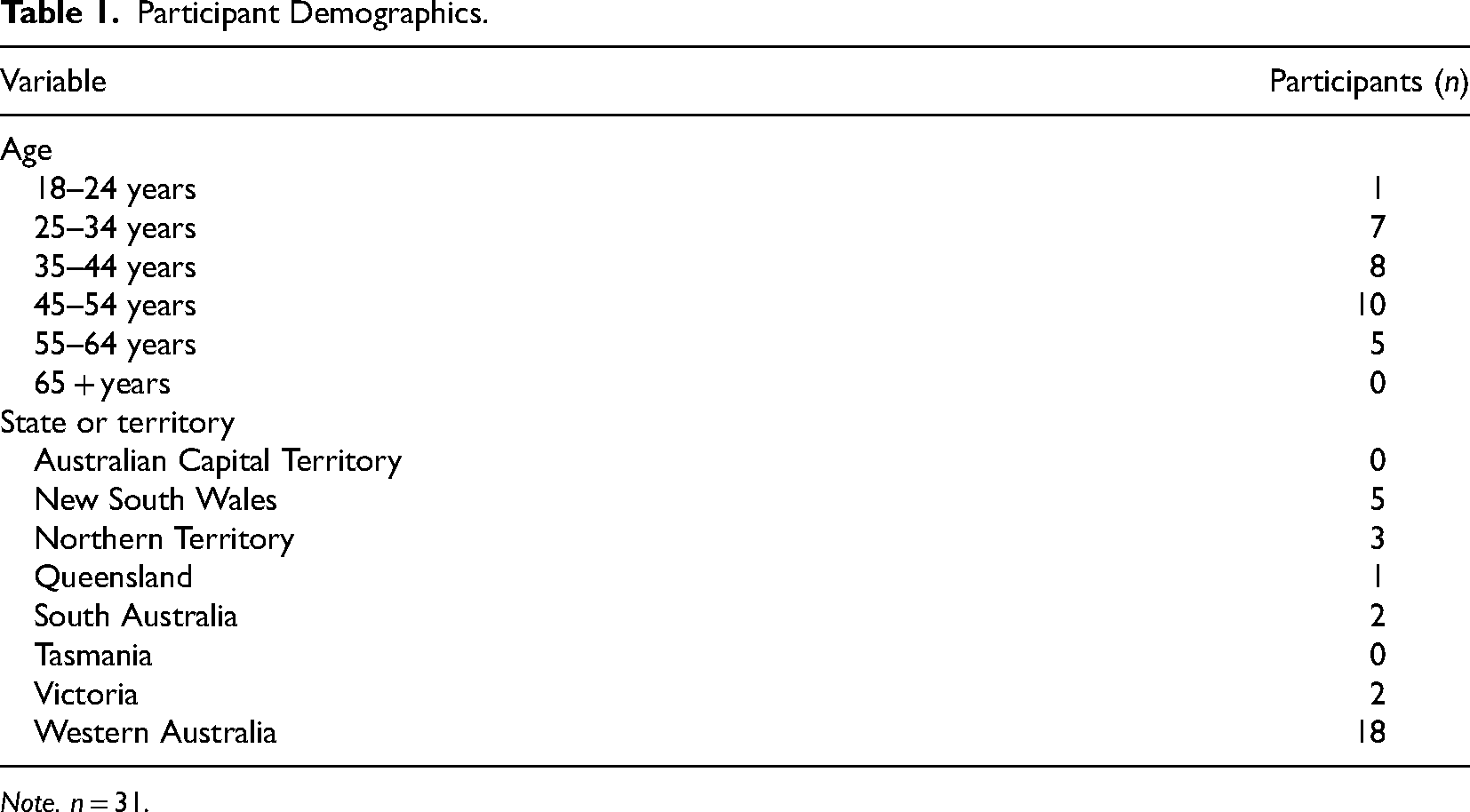
Note. n = 31.
Data Analysis
The researcher used Braun and Clarke's (2006) process of reflective thematic analysis to elicit patterns of meaning within the data. Organization and coding of the survey responses were assisted by NVivo12 software. The researcher used inductive analysis to identify semantic codes in the data that communicated the breadth of participants’ perceptions. Theories that emerged from the literature review were used to guide the further exploration of latent assumptions that shaped participant responses. The data were examined from a social constructionist theoretical perspective that considered the influence of sexual violence ideologies that exist within the participants’ rural and remote communities. An intersectional feminist lens further guided the researcher toward data that highlighted the systems of privilege that differentiated participants’ reactions to the #MeToo movement.
Findings
Reflexive thematic analysis resulted in three broad themes: authoring one's own narrative, hypervisibility equals hypervulnerability, and #MeToo as a catalyst. The first two themes largely culminated from the participants’ reasons for using or refraining from using the #MeToo hashtag. The themes contrast participants’ motivations for sharing with the barriers that prevented them, and rural and remote victims more broadly, from speaking out publicly about their experiences. The third theme drew from the participants’ appraisal of the #MeToo movement's capacity to elicit social change. The women offered vastly opposing views, with many participants celebrating the heightened media attention, while others regarded it as merely a passing trend. However, collectively the impact of the movement was perceived to be predominantly symbolic, and it was agreed that more action is needed to address the issue of sexual violence.
Authoring One's Own Narrative
The decision of whether to use the #MeToo hashtag or not arose from participants’ individualized evaluations of the risks of exposing their experiences against the benefits of disclosure. Whether participants chose to share the hashtag or not, they were wielding control over their own narrative. Such acts may be viewed as forms of resistance to the loss of control that occurs in sexual violence. While perpetrators of gendered sexual violence may be seen to achieve physical dominance over their victims, the scholarly literature suggests that women enact a range of other oppositional behaviors to resist the violence. As Crann and Barata (2016, p. 860) explain, “resistance is being used as a broad term to reflect women's active capacity to oppose, avoid, and push back against the abuse and its negative effects, the abuser and abusive relationships, and the broader social environment that upholds social and cultural norms of violence against women.” In our findings, participants who claimed sovereignty over their story in the milieu of #MeToo can be seen to resist victimization and reclaim authorial power.
Speaking Out Is an Act of Resistance
Despite all the participants having experienced sexual assault or harassment prior to the #MeToo hashtag going viral in 2017, only 8 women had shared the hashtag in acknowledgment of their experience. The motivations for sharing cited by these women largely aligned with Milano's original intent: to increase public perception of the magnitude of the issue. One participant responded that they had shared the #MeToo hashtag “[t]o spread the awareness to everyone—women, men, politicians, business leaders.” Publicizing victims’ experiences served as opposition to the silencing of women that perpetuates gendered violence.
Some participants were driven by the altruistic belief that contributing their voice to the #MeToo collective would benefit other victims. There appeared to be a tacit assumption among some participants that speaking together would cultivate a collective strength that victims could identify with, thus alleviating the psychological harm of sexual violence. One participant expressed the belief that this shared emotional strength may spur help-seeking behavior among victims. Others found relief in the unique opportunity that the platform provided to publicly reveal their experience, and to overtly position themselves within the collective. One participant cited the lack of anonymity inherent to small towns as a motivator for sharing. Maintaining a false persona was a psychological struggle for her, thus speaking out was in resistance to this negative effect: I was first assaulted when I was 19 and again when I was 21 and shared the hashtag in support of others who have experienced similar and for myself as I had never spoken about it. In a small town it was a lot harder to live with what happened as everyone knows me and it's confronting to have to pretend you’re okay and pretend that nothing happened. [M]ost of my friends were in the city so I only engaged with them online. I wasn’t going to have any awkward chance encounters with someone who read my post. Sharing online in my case didn’t reach my local community, but equally I didn’t have access to counselling support had the admission affected me emotionally.
This participant also highlighted the crucial need for professional therapeutic assistance to support victims who make disclosures. Such responses can be valuable for those providing rural and remote specific interventions. Other literature exploring online forums for mental health have also found that an anonymous format can facilitate the emotional benefits of disclosure, while preventing the negative repercussions of face-to-face interactions (Kummervold et al., 2002).
Sharing Your Story Is a Loss of Control
For some participants, the decision not to use the hashtag was justified by the belief that sharing would equate to a relinquishing of control over their narrative. Participants chose to remain silent to safeguard their experiences from being misappropriated through judgment, gossip, and public scrutiny. As one participant explained, “Regional areas tend to have small communities where everyone knows each other, so I didn’t want anyone gossiping or talking about me if I had posted about #MeToo.” Remaining silent functioned as a defense against judgment and victim-blaming ideologies.
It's Personal
Sexual violence was overwhelmingly considered a personal matter that should be handled privately and discretely. As one participant stated, “My experience was personal and not for other people's titillation.” Such statements may simply reflect the intimate nature of sexual violence, or they may be influenced by Australia's social expectation of modesty (Starkey et al., 2019), as reflected in one participant's statement, “[I] prefer to get on with the job and not make an overt comment in [the] media.” The insinuation that speaking out would be a disruption to the status quo suggests an internalization of the cultural belief that discussions of sexual violence should be kept private.
Furthermore, there is a behavioral tendency within Australia to judge those within the public spotlight harshly, and to criticize them for desiring attention. The “tall poppy syndrome” edict is sometimes used to reinforce the societal myth that women lie about sexual violence to gain attention or to seek retribution against an ex-partner (Starkey et al., 2019). For example, one participant talked about negative community responses as a deterrent to rural victims’ disclosure of sexual violence: Sharing is deeply personal. There is a great deal of shame attached to experiences of sexual violence and sometimes you are judged for sharing. Smaller communities are more intimate, and people can be far more judgmental and unabashed in the way they comment.
Small Towns and Bias
Many participants felt that the attitudes of people within their local community were less receptive to disclosures of abuse than those in urban areas. As one woman explained, “Rural areas tend to have smaller communities, and a higher proportion of people who may not be as open-minded as those in metro areas.” For some, this belief was evidenced in having witnessed negative responses to other victims’ disclosures in the past. For example, one respondent wrote, “Country folks in higher places thinks your boss sexually harassing you is some high school boy stuff. It's not taken seriously and being hidden.” These findings are consistent with previous research which suggests a tendency toward more conservative views and stronger patriarchal norms in rural towns, which can contribute to environments that are less conducive to help-seeking behavior among victims (Ermacora, 1998).
However, given the diversity between rural and remote populations, this finding cannot be stated as a standardized difference between rural, remote, and urban areas. Additionally, it is important to recognize the complexity of responding to disclosures of sexual violence. In some instances, poor responses may be ascribed to a lack of trauma-informed skills rather than victim-blaming attitudes. Regardless of whether counter-progressive views exist in all rural and remote towns, the expectation of negative responses served as a powerful barrier to disclosure.
Hypervisibility = Hypervulnerability
Sexual harassment and assault can cause long-term emotional and psychological harm to the victim. There is a strong correlation between sexual violence and mental health diagnoses such as anxiety, depression, and post-traumatic stress disorder (PTSD), as well as maladaptive behavioral responses such as substance addictions and eating disorders (World Health Organization [WHO], 2013). Sharing their story may have triggered a resurfacing of emotional distress in victims. Thus, remaining silent served as a protective function. Professional sexual violence support services such as counselling and women's refuges are limited in many rural and remote areas. Numerous participants cited this as a reason for their hesitancy to expose their trauma.
Victims respond to sexual violence in different ways; the manifestations of trauma and the manner in which victims process these are dependent on their unique coping style (WHO, 2013). For some, the emergence of the #MeToo movement coincided with a point in their recovery journey in which they felt ready to speak about their experience, and thus #MeToo provided a platform to facilitate this. For others, they perceived themselves as not being ready. As this participant shared: I chose not to use the hashtag on social media as I’m still not ready to speak out even though it was more than 40 years ago when it started happening to me. Strength to those who have sought peace and justice in their journey. When the #MeToo movement came about I didn’t realize I had been a victim most of my life and it took a lot to process it and I didn’t need that public attention. It had a profound impact on me. Reading some of the stories made me realize I had been a victim repeatedly from the age of 12. Ranging from leering and suggestive comments all the way up to sex without consent.
Everyone Knows Everyone's Business
The most cited deterrent to posting the hashtag was the lack of anonymity and confidentiality that the participants’ local communities provided. As one woman commented, “Everyone knows everyone's business no matter how private you try and keep it.” Referred to as having high levels of “acquaintance density,” small populations often mean that “most people have some level of familiarity with most other people in the community” (Neame & Heenan, 2004, p. 12). As such, information travels faster and more pervasively. Rather than remaining contained to their social media friend group, participants expected their story to infiltrate other less immediate social spheres, such as employment. Furthermore, even unnamed, participants believed that perpetrators would also be more easily identifiable in rural and remote communities, and their identification could spur community talk or, as one participant feared, invoke retribution. Another participant considered: [The] shame of being acknowledged as having been targeted by a predator, who also was well known and respected in our community. My name would be linked with his in dinner-table and front-bar conversations. Red-necked men debating if I asked for it or not, as they did about others.
Small Town Celebrity
While not overtly stated, the belief that being known as a victim of sexual violence reflects negatively on one's reputation emerged as a latent theme. Distinctive from most other forms of violence, the stigmatization of sexual violence often leads victims to feel that the experience reflects a moral failure on their behalf (Dartnall & Jewkes, 2013). Feelings of embarrassment and shame were commonly raised by participants. Several women felt that the fact that they were well-known within their community made it more critical that their identity not be linked with victimhood. As one participant shared, “I have to be cautious not to overshare personal trauma as I’m in a close-knit community and am known here.” Another explained: Anonymity is impossible in a town the size of [place redacted]. I also hold a number of community roles and am attached to the school and felt that social media was not the appropriate platform to begin the process of reconciling abuse.
Many participants were conscious of the potential negative disruption to their professional persona. As one participant said, “I work in a professional role in [mental health] and maintaining professional boundaries is important and harder generally in regional areas without disclosing sensitive information publicly.” Employment insecurity was a structural factor raised by several participants. Smaller communities provide fewer employment opportunities than metropolitan areas and as such, loss of employment or disruption to workplace relationships may bear a heavier risk for rural and remote women (Neame & Heenan, 2004).
Additionally, in rural industries such as mining and agriculture, the lack of female representation may result in a work environment that is less receptive to disclosures of violence. As one woman shared: I work in agriculture and observed that men were uncertain as to how to respond or act and these are the men that supported my career. I wasn’t going to get my mentors and sponsors offside with a social media post.
Family Matters
On a more finite level, the family system emerged as a significant factor that deterred victims from sharing. Some participants alluded to the negative responses they expected to receive from within their family; while others were cognizant of the detrimental impact that sharing would have on others’ perceptions of their family. Intra-familial abuse was cited by some, increasing their desire to remain silent. One participant stated that they were, “still experiencing reticence to talk about [their] experiences due to the abuser being a family member.”
Given the difficulty victims face in speaking out about intra-familial abuse, it is important to draw attention to the rate at which it occurs. There is a common misconception that sexual violence is most often perpetrated by strangers, which perpetuates the falsehood that it is a woman's responsibility to protect herself from violence (Dartnall & Jewkes, 2013). However, 2017 Australian Bureau of Statistics (ABS) data found that for sexual assault victims aged 15 and over, only 23% of their perpetrators were strangers (Australian Institute of Health and Welfare [AIHW], 2020) For the 77% of victims to whom the perpetrator was known to them, 1 in 3 (35%) were sexually assaulted by a family member (AIHW, 2020).
One participant noted the influence of their family's historical legacy within their town on their decision not to share: It's never easy. But my great-great-great grandparents settled here. We all know each other's lives and histories. Nothing is forgotten. What is to be gained without any support networks, counselling, or local healthcare services available? The risk to reward for being an out proud survivor is not there.
#MeToo as a Catalyst
The latter half of the survey examined the personal impact that participants felt the #MeToo movement had on them. Considering the low proportion of respondents that used the #MeToo hashtag, the breadth of positive associations that the women had with the movement was significant. It appears that the influence of the movement was largely symbolic in nature, representing women's collective resistance to abuse, rather than tangible social change. As one participant suggested, “It was a catalyst for other, possibly, more practical forms of support and action. Maybe it gave us all a bit of collective courage to speak up.” Only five participants cited no personal impact, including one woman who was entirely unaware of the phenomenon.
The Collective Voice
The participants were consistently surprised to learn of the high prevalence rates of sexual violence made visible through women's use of the #MeToo hashtag. A sentiment shared by many, one participant said, “It made me realize my experience was common, and I wasn’t alone.” Considering that all of the women had experienced sexual violence themselves, this revelation was noteworthy. This points to the social taboo of sexual violence, and its absence from public discourse prior to #MeToo. An important consideration was raised by one participant who stated: I understand that people are speaking out about their own experiences and using this “MeToo” hashtag, however I am not one to air these issues on social media—so therefore imagine how much more has happened that people don’t talk about.
Witnessing other victims’ resilience inspired hope in some participants. As one participant shared, “I found the publicizing of the issues confronting and triggering, but ultimately validating and inspiring.” Another woman explained: Yes, I feel it had an impact because I felt proud of other women for having the courage to share their experiences. I felt solidarity with them even if I couldn’t share my story publicly. And it made me feel better about my situation because I knew sexual assault was underreported and many women in the movement acknowledged this. I felt like a secret survivor. It was an incredible movement and made me feel not so alone. I think it shone a much-needed light on bad male behavior and let the world know that they will be held accountable for their actions. Now it's time to change the actual culture.
However, unlike traditional consciousness-raising groups, the open-access public forum of #MeToo included the presence of men and non-victims. Consequently, rather than sympathetic ears, many victims’ stories were met with objection and reproach. One participant noticed in her community, “More country boys just joking about it. Brushing it off as another thing that was going to make it harder for them to ‘find a missus.’” Another respondent illustrated the detrimental impact of such negative responses: I think we all know how it feels and are so supportive of each other but to anyone who hasn’t been sexually assaulted it can come with a lot of victim-blaming and shaming which scares other women from coming forward.
Conversely, speaking to an audience that included perpetrators may be perceived as a bold act of resistance. Describing the social impact of the movement, one participant shared, “I think it's more the awareness and women making a stand to reject these behaviors.” This suggests that women's refusal to be silenced stood as a declaration of their reclamation of power.
The feelings of validation and empowerment cited by participants align with the research into peer-support groups for sexual violence victims. As one respondent shared, “It made me feel comfort knowing that other people have made it through the experience of sexual assault and were able to move forward.” Such findings indicate that witnessing other victims disclosing similar stories allowed women to acknowledge and accept their own experience; feel genuinely understood; and make progress toward their healing with the help of learned resources and coping strategies, as has been found in previous research (Gregory et al., 2021).
Further validation was attributed to the widespread exposure of the #MeToo movement in mainstream media. The hashtag phenomenon sparked debate by commentators online, in print and television media, and on podcasts and radio. The extent of this coverage signaled the saliency of the issue of sexual violence, prompting ongoing discussion on an individual level and within policy formation. A small number of participants believed that the exposure of #MeToo had resulted in attitudinal change within their local community. As stated in one response, “The experiences, by and large, have been shocking, confronting and mostly believable. Attitudes of bush men are slowly changing as a result of the very hard conversations.”
A Trigger, a Bandwagon, and a False Sense of Hope
Praise for the #MeToo movement was countered with skepticism, critique, and condemnation. Not all of the participants felt buoyed by the amalgamation of women's experiences. For example, one respondent wrote, “It was triggering but unhelpful. Seeing other people have a shit time didn’t make mine any easier. Felt upset that they got so much support when I hadn’t.” The #MeToo hashtag portrayed sexual violence as a widespread phenomenon, which attracted a collective indignation far greater than any individual story could. The pitfall of this was the erasure of diversity between women's experiences. This problem was particularly pertinent for victims who felt that the severity of their sexual assault was nullified when merged with “lesser” experiences. As one participant shared: It didn’t assist me at all. It might help others, but also had people jumping on the bandwagon who had gone through lesser issues that are really just life and they were championed for making a fuss over not much.
A number of participants shared skepticism of the movement's capacity to enact lasting social change beyond the viral moment of the hashtag. Many women were cognizant of the scale of inequality that exists for women within Australia and called for more tangible action to tackle the issue of sexual violence. As one participant responded, “These things still happen due to outdated behaviors, especially in older men who haven’t changed and often are in positions of power.” Participants also acknowledged the structural impediments that remain in rural and remote communities; chiefly, the lack of professional support services available for victims.
One participant suggested that the #MeToo movement may have provided a false sense of hope to victims, which subsequently may have been detrimental to their healing journey. She explained: I think it was helpful in encouraging people to report however the same challenges and roadblocks were not necessarily removed, so after reporting many women may have given up if they weren’t believed or shown compassion and were unable to receive appropriate investigation and therapy. It may have felt like they were a victim again but this time as a result of the systemic failures.
Further geographical limitations identified by participants included the lack of accessibility and permeability in rural and remote areas. Residing in a remote Aboriginal community, this participant noted that language barriers and inadequate internet access excluded some women from the movement: [No effect] in the area where I was living, there was no access to the internet (no mobile access either) for most people in the community, and English wasn’t their first language so those who did have access didn’t really engage.
Most of the participants commended the global impact of #MeToo; however, 20 participants believed the movement had no impact on their local area. Women said that within their community #MeToo was not understood, embraced, discussed, or in some cases, even recognized. As one participant said, “No movement. No one knows about it.” Another participant shared, “[It was] not especially significant. Some in rural and remote communities seem to enjoy the “bubble” that isolation affords—highlighted by COVID and vaccine hesitancy!” This may suggest either a lack of permeation of information, or a freedom from the need to conform to the societal expectations of the broader Australian community.
Recommendations for Practice
The findings of this study add to existing literature that explores rurality as an intersectional factor that exacerbates the impact of sexual violence (Neame & Heenan, 2004). However, this study offered a unique insight into the use of a digital platform as a tool for disclosure. Participants who shared the #MeToo hashtag praised the opportunity to speak out about their experience and to unite with other victims. Regardless of personal engagement, many of the participants felt a collective sense of strength and empowerment through the virtual solidarity of victims. These findings parallel the psychological benefits attributed to peer-support groups for sexual violence victims (Gregory et al., 2021). The greatest deterrent identified to using the hashtag was the lack of anonymity that social media platforms provide. This factor was intensified for women in rural and remote communities with high acquaintance density. Conversely, the accessibility of the online format proved to be a valuable tool in connecting women and alleviating the isolating effect of small communities.
Drawing from these findings, the author proposes the design and implementation of an anonymous online platform for victims of sexual violence to connect and safely share their experiences. Rural and remote participants identified the risks of negative repercussions from speaking out publicly about sexual violence. Therefore, it is paramount that confidentiality is ensured. The author acknowledges that this may perpetuate the existing silencing of sexual violence victims; however, as evidenced in feminist conscious-raising practices, clandestine discussions can be effective in building the internal strength that leads to further action.
The lack of therapeutic professionals and trauma informed services in rural and remote areas was raised by numerous participants. Irrefutably, this is a structural factor that needs to be addressed. Potential interventions may include Government incentives for mental health professionals to relocate to, or provide mobile services for, rural and remote communities; the promotion of existing telehealth services; and the delivery of trauma awareness training for legal and medical personnel. However, when advocating for increased mental health support in response to sexual violence there is the risk of perpetuating the pathologization of victims’ distress. The emphasis is placed on fixing the individual, rather than addressing the societal conditions that underpin gendered violence. Therefore, in line with Moulding et al.'s (2020) recommendations, there is a need for all health care workers to receive additional training to reconceptualize victims’ distress as a normal response to sexual violence, and to consider the broader context of gender inequality that enables violence to occur.
Furthermore, it is paramount that any digital platform is facilitated and monitored by qualified sexual violence professionals who are able to provide counselling to victims as required. As with peer-support groups, this professional would act as a facilitator to promote constructive discussion, validate participants experiences, and manage group dynamics. In addition to providing trauma-informed care that mitigates the risk of secondary victimization, these professionals would require a nuanced understanding of the intersectional factors that impact an individual's experience of sexual violence, including race, culture, gender and sexual identity, socioeconomic status, and of course, rurality.
Finally, the #MeToo movement acted as an informal public health campaign. The viral hashtag increased public awareness of the issue; prompted public discussion and debate; and provided sexual violence education. Evidently, the amplification of victim's voices can be effectual in influencing social change. Academics, activists, and sexual violence professionals should take advantage of this momentum to continue to challenge the social, structural, and cultural factors that contribute to the issue of sexual violence.
Conclusion
The #MeToo movement was incomplete and imperfect in its capacity to amplify the voices of all women who have experienced sexual harassment or assault. However, as per Milano's intent, the magnitude of victims was exposed, and the issue of sexual violence was brought to the fore of public attention. This study found that rural and remote women's engagement with the movement was quelled by the same geographical factors that serve as barriers to help-seeking and disclosure. The participants’ praise for the movement highlighted the advantages of using a digital medium to connect victims of sexual violence. Correlating with the benefits evidenced by online peer-support groups, this could be explored as a potential therapeutic tool for psychological wellbeing. The participants’ appraisal of the hashtag movement may serve as a valuable informant for tailored interventions that address the social and structural barriers of rural and remote living.
Footnotes
Declaration of Conflicting Interests
The authors declared no potential conflicts of interest with respect to the research, authorship, and/or publication of this article.
Funding
The authors received no financial support for the research, authorship, and/or publication of this article.
