




Abstract
The aim of this study is to explore the ways in which community-led structural interventions (CLSI) shape the mothering experiences of sex workers. In-depth semistructured interviews were conducted with 40 sex worker mothers from Kolkata, India. Participants were recruited from Durbar Mahila Samanwaya Committee (DMSC), a CLSI. Elements of constructivist grounded theory were employed. Results revealed DMSC mobilization (re)shaped mothering for female sex workers through (a) the subjective reorientation about establishing sex work as legitimate labor and disclosing sex worker identity and (b) access to material resources such as safe spaces, childcare networks, and educational opportunities. CLSI have the potential to influence the self-perception of communities that are marginalized and provide them with material resources that ultimately promote family well-being. While working with sex workers, it is imperative to understand their multiple, intersecting roles and co-develop community-based interventions not only with sex workers but their families as well.
Keywords
Scholars have only recently started to examine mothering and sex work, exchange of sexual services for material compensation (Basu & Dutta, 2011; Beckham et al., 2015; Duff et al., 2015; Ma et al., 2019; Sinha & Dasgupta, 2009). Most of this research has focused on the marginalization of mothers that is often due to the stigma around sex work as well as the socially disadvantageous positions occupied as both a mother and sex worker. Fewer studies have examined the ways in which interventions shape mothering among sex workers. This research focuses on community-led structural interventions (CLSI) as an understudied area within this emerging scholarship.
In this study, we investigate CLSI and their impacts on mothering. We focus on Durbar Mahila Samanwaya Committee (DMSC) as one such mobilization in Kolkata, India, where 65,000 sex workers have collectivized around sex workers’ rights. DMSC has been successful in combatting stigma around sex work by collectivizing and advocating for recognition of sex work as legitimate labor and establishing health and other social services for sex workers (Cornish & Banerjee, 2013; Ghose et al., 2011; Jana et al., 2004; Kerrigan & Barrington, 2018; Sircar & Dutta, 2011). While many DMSC members are mothers, there is very little understanding among scholars about the ways in which DMSC shapes mothering practices. It is imperative to examine such dynamics so that interventions can be developed by communities and scholars to support sex workers and their families. Thus, the aim of this study is to explore the ways in which CLSI, such as DMSC, shape the mothering experiences of sex workers.
Sex Work and Mothering
A growing body of research, though scant, examines the various intersections of sex worker mothers’ lives. Some scholars have focused on the reasons women entered sex work and the ways in which children shaped their decisions to enter and remain in the trade (Sinha, 2015; Swendeman et al., 2015; Zalwango et al., 2010), finding that often mothers enter and stay in the trade to financially support their children. Scholars have also examined the ways in which sex workers negotiate their multiple roles and identities (Basu & Dutta, 2011; Pardeshi & Bhattacharya, 2006; Dalla, 2004; Dodsworth, 2014; Ma et al., 2019; Reed et al., 2013; Sloss & Harper, 2004), finding that they manage stigma and navigate existing resources to enhance their children’s well-being. Coupled with poverty and single motherhood, pervasive stigma about sex work can be stressful for sex workers and their families. Stressors related to poverty and single motherhood are further exacerbated by sex workers’ working conditions and interactions with clients. Their financial insecurity impacts their health and mental health as some clients might demand their services with stipulations, such as sex without a condom (Basu & Dutta, 2011; Shannon et al., 2009). Consequently, sex workers are often put in situations to provide for their children at the expense of their own physical and mental well-being (Beattie et al., 2010; Hengartner et al., 2015; Patel et al., 2015; Reed et al., 2016).
Sex Work and Motherhood in India
In contemporary India, South Asian women across class divides are usually expected to become mothers who nurture their children and anchor families into stable modes of family life. Women who enter the sex trade in India do so in response to financial hardships (Basu & Dutta, 2011; Sinha & Dasgupta, 2009). Many sex workers eventually become single mothers, live in poverty, and identify sex work as one of the few economic options to support their children (Sinha & Dasgupta, 2009). Engaging in sex work to support their family is often a viable option after women become widowed, abandoned, or divorced (Swendeman et al., 2015). Sex worker mothers encounter multiple challenges, often being the sole provider of their family, along with playing the role of the primary care giver to minor children, a context similar to that of working single mothers outside the sex industry.
Sex workers often negotiate hostile interactions with law enforcement. Although sex work, or exchange of money between individuals for sex in private, is not illegal in India (The Immoral Traffic [Prevention] Act [ITPA]) profiting from the proceeds of sex work through pimping or owning brothels is prohibited by law (Arora, 2018; ITPA). This legal clause implies that children above 18 years of age cannot be legally supported by their mothers who earn a living through sex work. Moreover, soliciting, advertising for transactional sex, performing sexual acts in public, and criminal charges against sex workers are usually brought under sections that prohibit public indecency and public nuisance (Arora, 2018). Sex workers are not protected by labor laws in India. Given these issues, structural interventions have been instrumental in mobilizing a worker-rights-based approach to center sex worker issues (Kerrigan & Barrington, 2018).
Community-Led Strcutural Interventions (CLSI)
CLSI aim to change the structural conditions that shape individuals’ well-being, decisions, and behaviors by mobilizing the communities that are impacted (Kerrigan & Barrington, 2018). CLSI are often led by impacted communities, creating community buy-in and promoting sustainable structural change. CLSI with sex workers have led to a host of structural- and individual-level changes (Evans et al., 2010; Kerrigan & Barrington, 2018). Sex workers who are mobilized or collectivized through membership in an organization or a CLSI are more likely to build safe, enabling environments to stand up against violence (Argento et al., 2011) and create and implement regulatory strategies with the local police forces in India (Bhattacharjee et al., 2016; Biradavolu et al., 2009). Sex worker collective members in India were more likely than nonmembers to report financial security, mainly due to the resources that were available and easily accessible through the collective (Patel et al., 2018; Patel et al., 2016). Furthermore, membership in collectives and advocacy involvement has also been found to increase access to social entitlements, such as identity cards, for sex workers in India (Punyam et al., 2012). Perhaps the most researched aspect of collective mobilization among sex workers across the globe is the increased use of condoms among sex workers who are members of a collective mobilization (Kerrigan & Barrington, 2018; Vejella et al., 2016). DMSC is one such CLSI in Kolkata, India, that has established health clinics, schools for sex workers’ children, and various advocacy initiatives to promote sex workers’ rights in India and around the globe (Ghose et al., 2008; Ghose et al., 2011; Jana et al., 2004). Furthermore, the DMSC children sex workers’ collective, Amra Padatik (“we are foot soldiers”), challenges the dominant narrative of rescue and rehabilitation to one of agency and self-actualization among children of sex workers (Sircar & Dutta, 2011). Indeed, CLSI shape many aspects of sex workers’ lives, however, it is less clear how CLSI shape mothering and mothering practices.
Guiding Framework
While some feminists have advocated for abolition of sex work on the grounds that it is inimical to women’s sense of dignity and perpetuates the capitalist commodification of women’s bodies (Wilson & Butler, 2014), others have urged for the provision of feminist-centered services for women who work in the sex industry (Shah, 2004; Sloan & Wahab, 2000). In this study, we aim to understand the ways in which CLSI influence the lives of sex workers, not just their worker identity, but other aspects of their identity—specifically, mothering. Intersectional feminist scholars pay also particular attention to variables other than gender, that is, factors such as race, class, and social position in analyzing the lived experiences of oppression and marginalization of women (Crenshaw, 1991). Moreover, social work scholarship has called for further expansion of the categories, to step beyond the usual variables of race, class, and gender to look at other factors and processes, such as (post)colonialism, migration, access to resources, that shape the experiences of women, especially of those in the global south (Mehrotra, 2010). Therefore, while studying interventions, particularly with women, an intersectional approach mandates one to look at the effects of the intervention on the different aspects of women’s lives and their particular context.
This study uses a feminist intersectional approach both in the nature of its inquiry and approach to analysis. First, the study examines an otherwise successful CLSI which has focused on altering HIV risk among sex workers and asks the question about its influence on mothering among sex workers. Second, the study adopts a feminist intersectional approach in the analysis. We pay particular attention to the dimensions of class (such as access to resources), sex workers’ perception of social status, norms, and cultural expectations to understand how sex worker mothers in Kolkata are interacting with and being affected by a CLSI.
Thus, guided by intersectional feminism, this study seeks to address this gap in research by examining the ways in which DMSC shapes the mothering experiences of sex workers. Understanding these dynamics is essential to shed light on the ways in which existing CLSI potentially have a lasting impact on the ways in which sex workers negotiate mothering. Insights from this study can lead to more tailored interventions that recognize sex workers’ multiple subjectivities that move beyond and intersect with their identity as a sex worker.
Method
Approach
This qualitative study was part of a broader study that utilized community-based participatory research (CBPR) to examine mother–child sexual health communication among the sex worker community in Kolkata, India. Prioritizing the co-production of knowledge, CBPR was used in all aspects of this research, from the inception of the research question to the analysis of the data. A qualitative methodology using thematic analysis informed by elements of constructivist grounded theory (CGT; Charmaz, 2014) was used to deeply examine the ways in which sex workers navigated motherhood. CGT centers the knowledge created by social process, collective iterative interpretation, and rejects subject–object dualism (Charmaz, 2014). Given that the parent study employed CBPR and community members were partners in the research, it was essential to select a qualitative approach that was intersectional in nature and flexible. Elements of CGT align with the intersectional guiding framework in that it rejects positivism, centers participants’ multiple realities, and is intentional around mutual interpretation. Furthermore, this study used both descriptive and interpretive approaches (Elliott & Timulak, 2005) to better understand the perceptions of mothering in the context of sex work and to explore the ways that community collectives, such as DMSC, shape the mothering experiences of sex workers.
Setting
This study was conducted in collaboration with DMSC (https://durbar.org/). DMSC is a collective of 65,000 sex workers in West Bengal, India. DMSC was originally conceived as the Sonagachi Project (SP) in 1992, a community-based HIV prevention intervention to address the high rates of HIV. SP is now a sex worker-led and peer-based HIV intervention that utilizes community empowerment and education to increase condom use and reduce the spread of HIV (Jana et al., 2004). DMSC coordinates all SP-related programs, including a sex worker’s union and a child of sex worker union. Differing from individual-level behavior change interventions, SP is community-level structural intervention that aims to change the societal, institutional, and political-level perception of sex work and increase access to health care (Ghose et al., 2008).
Data Collection
In-depth, semistructured interviews were conducted with 40 mothers who identified as sex workers in 2010–2011 and who met the eligibility criteria: female, self-identified sex worker, had children ages 10–18, lived in Kolkata, India, ability to consent, ability to communicate in Hindi or Bengali. Participants were recruited in collaboration with DMSC. We wanted to interview a diverse group of participants, including those that had been engaged in DMSC for varying amounts of time, living in various red-light districts, and thus the members suggested the first ten participants. We employed snowball sampling, in which the first 10 participants identified potential participants for recruitment. Snowball sampling can help to recruit communities that are marginalized as well as promote community buy-in for research (Sadler et al., 2010). This method also ensured a variability in the sample, in that not all participants were long-term DMSC members (Ghose et al., 2008). Interviews ranged from 30 min to 1.5 hr and took place in a location decided upon by the participant (the various DMSC offices or the participants’ residence).
Interviewers (first and second authors) obtained verbal consent from participants by describing the study and asking for their consent to participate in the study. Participants were given a choice to be audio-recorded or not, with the understanding that notes would be taken by the interviewer during the interview. Most participants wanted to be audio-recorded, with two who declined to be audio-recorded (extensive notes were taken during these interviews with the consent of the participants). Interviews were conducted in Bengali or Hindi, completed in one setting, audio-recorded (notes were also taken), and transcribed into English. Participants were asked a range of questions pertaining to mothering, including “What are the first things that come to your mind when you think of the word mother?” as well as questions about their experiences of being a sex worker who is a mother, influences of mothering, etc.” Institutional review board approval was obtained through a university in the United States.
The interviewer’s relationship with DMSC facilitated the collaborative relationship and recruitment of participants with DMSC. The first author, a cisgender woman of South Asian American background, is conversant in Hindi, a language that was spoken and understood by many of the participants. She has been associated with DMSC as a researcher since 2010, and had by the time of the study, gained familiarity, established rapport, and developed a strong partnership with the organization, which assiduously vets their research partners. The second author, a middle-class South Asian cisgender man, has had a similar long association with the organization as a clinic volunteer and research associate. He is fluent in Bengali, the dominant language of the region, and Hindi, and has worked as a researcher, translator, and facilitator with the organization since 2008. Our prolonged engagement in the field ensured familiarity with the social and logistical coordinates of the red-light districts and had gained them acceptability from the sex workers in DMSC who facilitated access to participants for the study.
Data Analysis
We employed thematic analysis using an inductive approach (Patton, 2014). Using an intersectional feminist approach, we sought to answer the research question from a constructionist perspective to explore meaning and experience in the context of its social production (Vivien, 1995). Our aim was to identify processes through which sex workers negotiate mothering and the ways in which DMSC shapes experiences of mothering. We open-coded three transcripts to stay grounded in the data and decide on preliminary codes. The codes were then grouped into overarching themes. Two additional transcripts were then coded, while making note of additional codes, in order to finalize the codes to use for the remaining transcripts. Through this process, we paid specific attention to the phrases or words participants used in the interviews. Thematic categories were then developed from the data by grouping focused codes together. In the final level of analysis, we developed theoretical coding to establish connections between the categories developed from the initial coding. We created conceptual diagrams were created diagrams throughout this process.
Rigor was established through memos and member checks (Padgett, 2008). Memo writing helped organize ideas and expedite the process of transitioning from initial codes, to focused ones, to categories and finally to abstract theoretical constructs. Additionally, it aided with reflexive process documentation and transparency between the team members. Member checks were done with two groups of four participants each with the aim of discussing the preliminary interpretation of the data as well as obtaining feedback from the group, which was then incorporated into our results.
Sample Characteristics
Most participants relied on sex work as their primary source of income (see Table 1). All participants identified as cisgender women. Eighty percent of the women were between ages 30 and 40 with the total range of ages varying between 25 and 50. While most of the women resided in a brothel, a small percentage were street sex workers, commuting daily into the inner-city red-light districts. Seventy-five percent of the women were involved in sex work for more than 10 years. About 60% of the participants were DMSC members, ranging from 2 weeks to 15 years of membership. The remaining 40% of participants had received services from DMSC. All participants had biological children, and over 50% of the mothers had two or more children. About half of the women had children who lived with them in the red-light district and the rest of the children lived away from the red-light district either with extended family in the village, in a hostel or boarding school, or lived separately with their mother’s spouse. Ninety percent of the women were single parents.
Key Demographics.
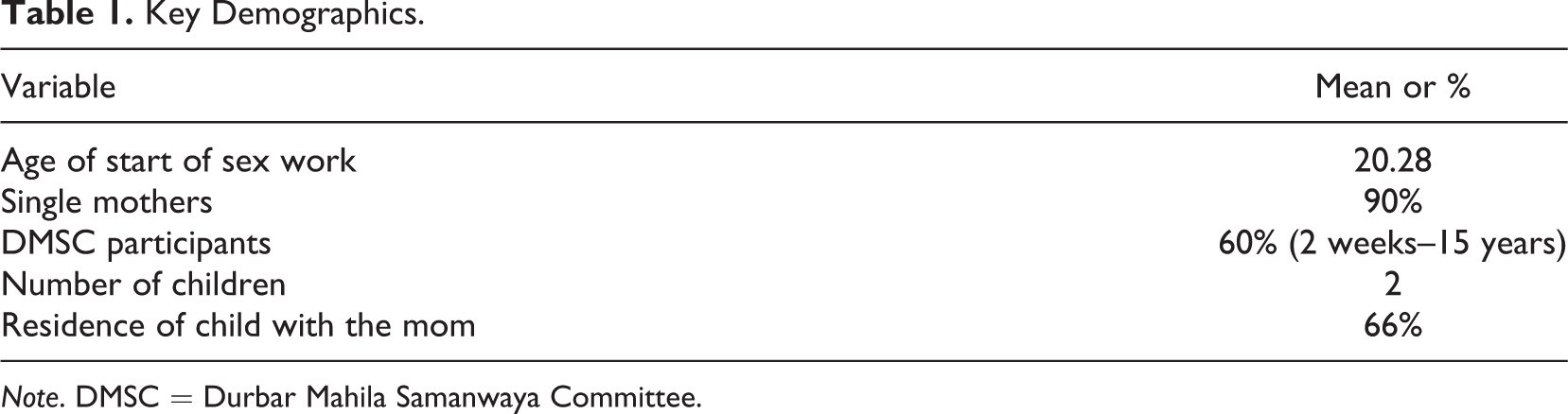
Note. DMSC = Durbar Mahila Samanwaya Committee.
Results
Results Introduction
Overall, we found that DMSC, a CLSI, had a positive impact on sex workers’ experiences of mothering. This impact was achieved through two pathways: (a) by subjectively reorienting sex work identity and (b) by creating material resources that helped in parenting. Specifically, DMSC’s mobilization encompassed sex worker mothers’ participation in peer-based sexual health education initiatives, sex worker rights workshops, cooperative banking, and protests and rallies around social justice and workers’ rights. The collective also created material resources such as the creation of safe spaces for children, the establishment of childcare networks, and the development of educational opportunities for the children of sex workers (see Figure 1). In what follows, we share findings across two thematic areas, which together demonstrate the impact of CLSI on sex worker mothers.
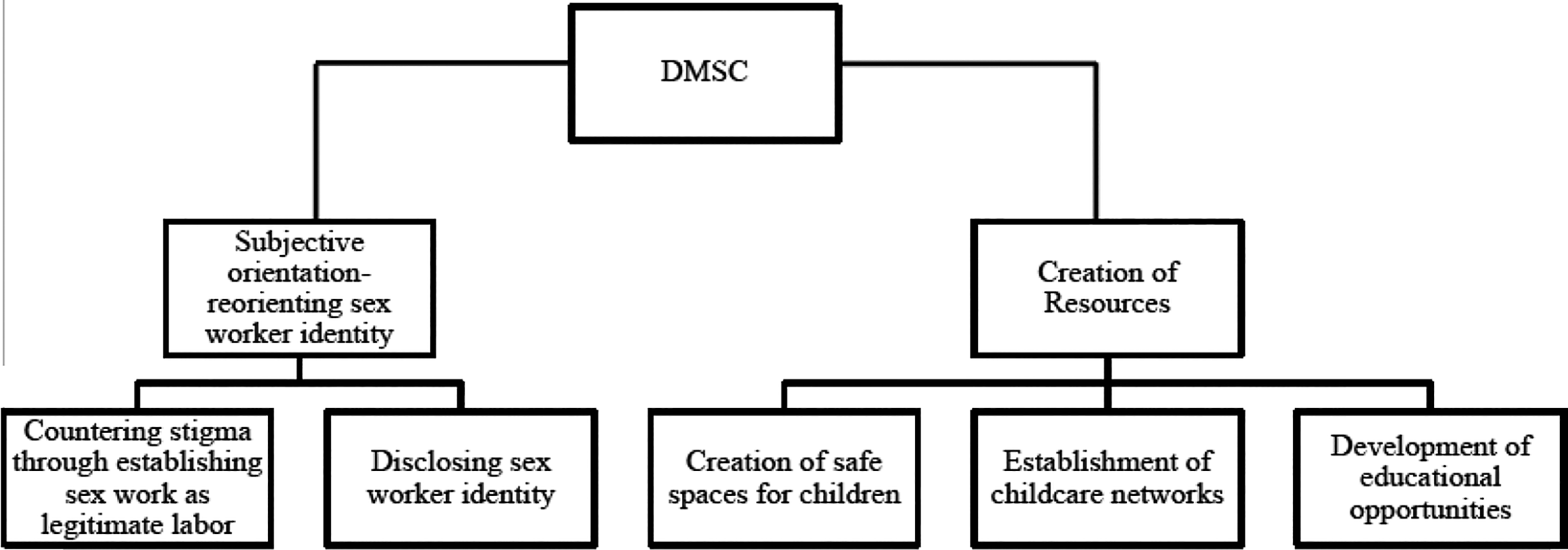
Durbar Mahila Samanwaya Committee and mothering.
Theme 1: Subjective Reorientation
We found that participants engaged in reimagining their profession and employed these new ideas to change the nature of their interactions with families. Specifically, participants described how DMSC offered them new ways to perceive and represent their work and social status, which in turn shaped their decision to disclose their profession to their children. Regardless of their choice to disclose about sex work, this research shows that DMSC created an empowering environment for women to make their own choices regarding disclosure and motherhood. We identified two ways in which subjective reorientation occurred in our sample: the countering of stigma through establishing sex work as legitimate labor and the choices regarding sex work disclosure.
Countering stigma through establishing sex work as legitimate labor
Negative constructions of sex work(ers), such as being without agency, dirty, victims, not suited for the role of mothers or are bad mothers, often drive multiple levels of stigma that have a long-standing impact on sex workers’ well-being (Ryan et al., 2019; I. Sinha & Dasgupta, 2009; Weitzer, 2018). Stigma in this context can be defined as the devaluation of sex work resulting in the marginalization of individuals involved in that work. Research conceptualizes stigma as a complex relationship between structural conditions, such as both symbolic and physical violence, and discrimination often produced by economic, social, and political powers (Link & Phelan, 2001). Internalized stigma is when qualities that are socially constructed as negative are believed to actually apply to one’s self (Goffman, 2009). For many participants, sex work was socially constructed to be “sinful work” and a job not suited for mothers. This internalized stigma played out in many ways. As a long-time DMSC member and mother of two adolescent children articulated: I was always told the work we do in our brothels is dirty work. This is not a good job for a woman and people don’t expect her to bring up good children while doing this work. After having my children, my pain and difficulty (regarding sex work) all went away. Before, I felt lonely, I had no one in the world to care for and love. When I first held my child in my arms, I felt truly happy, truly complete. Now no one can tell me that I am a bad woman. I tell them I am a mother. I am like all mothers who will do anything to protect her child.
What is the meaning of sex work to you?
I like the work! It is good! I was able to make a house. I was able to educate my children. This is good work! I was able to make something for myself on my own. I am able to do it all on my own, without anyone else. I make my own decisions.
Did you always have these feelings?
No I did not. When I first started to work, I thought, what happened to me? Why did I come to this work? My husband died and I am giving my body to someone else. This is very bad. I am not doing work.
So how did you change your feelings? What happened to you to change your feelings?
I did not know much about the work before. I thought it was bad…bad. But now I think that this work gave me my house, my children’s education. I am able to do everything on my own! Stand up on my own!
Further in the conversation, she traces the change in her beliefs around sex work. Highlighting the ways in which DMSC peer workers communicated the ideas around sex work as legitimate labor, she reflected on the power of the continued interaction, messaging, and participation in sex rights awareness events. Long-standing DMSC members identified the influence of this paradigm shift regarding sex work on their relationship with their work and family. Participating in DMSC’s activities helped many sex workers to rethink the received social norms around sex work being dirty work. DMSC’s activities ranged from sex workers’ rights rallies to peer health education. Reflecting on a recent sex worker’s right rally, a participant exclaimed: I like to participate in the rallies we put on. We march together to fight for our rights. Everyone sees us, but we also unify together. The kids in this area also join. Had I been more educated I would have taught at a school and earned money. Women run businesses. They work in offices and these days some women also drive taxis. If they are considered hard working women who provide for their family, why should I be considered any different?
The manner in which DMSC reoriented its members’ ideas about sex work helped to counter the societal stigma around their profession. Specifically, one member, who had a 15-year-old daughter and an active participant in DMSC’s peer-based initiatives, summed up the need for the reformulation of the norms around sex work by arguing: Look, there is no question of being a mother if you are ashamed of what you do. How do you teach your children to respect you? How do you look them in the eye? We are doing this for them, so they better know about it and respect us for it. Please understand—this is not about making something dirty look clean. So now I can look them in the eye too and be the mother who can set boundaries and can love them cleanly.
Disclosing sex work identity
Sex work disclosure, though not originally part of our interview protocol, quickly became a theme as participants discussed their role as mothers. About half of the participants had disclosed to their children about sex work with an aim to improve their relationship, while the other half opted to refrain from such discussions in hopes to protect their children from the negative consequences. DMSC was instrumental in shaping participants’ conceptualization of sex work as legitimate labor, which also ultimately impacted participants’ decision to disclose their sex work identity to their children. Contrary to the negative social norms about sex work, many women conceptualized sex work as labor that enabled them to financially support their children and ensure their well-being. Such a conceptualization, which defied social stigma, was often voiced by participants who were more involved with the collectivization process of DMSC and impacted their choice to disclose. For some women, disclosure about sex work was an important way to secure their children’s trust and maintain a transparent and respectful relationship, leading to better life outcomes for their children. The actual decision to explicitly talk about sex work involved self-efficacy of doing so and the urgency they perceived around having such conversations. Ultimately, disclosure about sex work was a major parenting decision that impacted relationships with children and quickly emerged as a salient theme in this study.
Long-standing DMSC members felt that discussing sex work could inspire confidence in their children regarding their roles as mothers and promote a loving and trusting relationship. Their children would appreciate the fact that their mothers had the moral courage to share such sensitive information. This, many thought, would help to consolidate bonds and help children to better accept sex work as legitimate labor. Thus, by disclosing about sex work, some mothers felt that they were looking out for the present and future well-being of their children. For some mothers, the need to disclose about sex work was self-evident, like this participant who has a son and a daughter: My eldest child always had an idea about the nature of this work. He has seen my clients. I never hide anything from my son. The didis (other sex workers) around here hide it from their children. They send their children far away or lie to them to hide their profession. This will cause a lot of pain for the child because when the child grows up and finds out that their mom is a sex worker, then they will have mental problems. He lived with me till the fifth grade or so…until he was about 9 or 10. Then he was old enough to understand what went on. I would be in the room with the customers, while he was sent outside to play, so he surely would have guessed. He knew that if we do not have customers, we can’t buy food. I brought him up like that, so he appreciated these facts. I have lived in this area for so long, many people know me, if he were to hear about it (her profession) from someone other than me, he would have been hurt. So I took the initiative and tested waters at first. Then I sat him down, talked with him, reasoned with him. “See your dad is not around. I have engaged in this profession and this is how I have brought you up. Once you grow up, please do not turn against me, do not misunderstand me or blame me. Please try to understand. I do not want you to learn this from others. This is what gets us by, so please do not end up hating me.”
Some mothers ruled out a frank discussion about sex work as difficult and potentially disruptive in their relationship with their children. Decisions to refrain from disclosing were not necessarily impacted by the length of DMSC membership. Many considered disclosure about sex work as an unnecessary risk that would further complicate their already fraught lives. Witnessing unfavorable reactions from children who came to know about their mother’s profession made some participants wary of similar experiences. For example, one participant reflected on a recent incident she observed: I am afraid to tell my children about the work that I do. It’s not suitable for them to know. I have seen many children yell and scream at their mothers when they came to know about this work. I just saw an incident like that last week. Why would I put myself through that? Why would I hurt me and my children in that way? I haven’t told my children about sex work, but they know that I work at Durbar. I will never be able be to tell my children (about sex work) because if I tell them, they will hate me. My work is not formally recognized, so I cannot tell them. If I tell them that I am a sex worker, everyone will find out and my children will be tormented by everyone.
In some instances, children lived with extended family members that resulted in mothers keeping the nature of their work a secret from both. Fearing the repercussions of being discovered as a sex worker, one mother shared that she dressed and carried herself differently when in the village with their families: When I go home to the village, I look simple. I wear a saree when I go back home. I never wear a churidar (long shirt with tights) or a nighty. I just wear that here (red-light district). If I wear churidar in the village and dress up, the village people will automatically think that I am a sex worker. Even if I dress up a little and look nice, they will think that I am a sex worker. I am away from home and because of that too, they will be 100% sure that I am a sex worker.
Decisions around disclosure were complex and varied. While half of the participants decided to disclose the nature of their work to their children, the other half decided not to engage in such conversations with their children. Participants made deliberate choices based on the conception of the legitimacy of their work, confidence and vocabulary to talk to their children about their work, and family dynamics.
Theme 2: Resource Provision
In addition to a subjective reorientation process, participants articulated that DMSC shaped mothering experiences and practices through the creation of material resources that would have otherwise not been available. This research shows that resources provided by DMSC supported mothers, ultimately enhancing their families’ well-being. DMSC’s material resources included (1) the creation of safe spaces for children, (2) the establishment of childcare networks, and (3) the development of educational opportunities.
Creation of safe spaces for children
Many participants recollected that before DMSC became active in their red-light area, minor disagreements and altercations with clients, madams, or pimps escalated into dangerous situations marked by violence. Children of sex workers who were continually exposed to such violence were vulnerable to experience physical harm, develop hostility toward their mothers and their work, and were at risk of learning such violent behavior. A long-time member of DMSC reflected on the violence experienced prior to the full mobilization of DMSC in many of the other red-light districts in the area: I was living in (X red-light district) 15 years ago, there would be some trouble or the other every day. A drunken client will misbehave, a madam will try to hit a girl, or a pimp will create a ruckus. What will the children learn from all this? They grow up just as bad and rowdy. That day in my neighbor’s room there was a big fight. So many people gathered around her door but no one raised their hand, everyone knows that if they hit anyone, all the Durbar didis (other sex workers) will be after them. Finally, a peer worker didi intervened and called police. Years ago, I would always be worried that there would be a raid, and police would take me away. My children would be left without anyone to care for them. I felt like sending them away to the village. But my parents are poor, how would they manage? But now in this district, the police understand us. Durbar didis talk with the police and we no longer live in the fear of being locked up.
Establishment of childcare networks
The presence of sex workers’ extended network in the red-light district helped mothers share the responsibility of childcare among themselves. This informal network comprised of fellow sex worker women, including friends, acquaintances, neighbors, or madams residing in the same district. The organizational impetus of DMSC consolidated these informal networks, allowing mothers to freely call upon their fellow DMSC members to assist with childcare in times of need: Before (DMSC was established), I had to suffer a lot. I had lots of trouble before I came to the Durbar collective. I suffered a lot in some instances, but the people here (XYZ red-light district) helped me. They helped me to take care of my daughter. I like the mummies here. They have daughters the same age as my daughter. That helps too. We help each other. Otherwise life would be very difficult. There would be a lot of difficulty if we did not have each other. I would take care of two or three of their kids while they did their work. They used to take mine the same way. In fact, my middle daughter is actually a friend’s daughter. When she couldn’t take care of her daughter anymore, I became her mother since I was already taking care of her so much already when her mother was working.
Development of educational opportunities
DMSC developed many educational institutions like night schools, vocational schools, and boarding schools serving the specific needs of the children of sex workers over the years (Ali et al., 2014). Most of the participants expressed to us, especially those who were living in the red-light district, that they utilized some or all of these educational facilities for their children.
While most mothers had low levels of literacy and lacked school-based education, many viewed their child’s education as an important way to secure their future. Those who had been able to send their children to school felt proud of the fact, while at the same time viewed their own interactions as unlettered women with their school-educated children embarrassing and unsatisfactory. For a few mothers who were involved in DMSC’s peer education initiative, their role as educators and jobholders gave them a sense of pride and confidence. One mother noted: My daughter is getting educated because of DMSC. That is one of the reasons I am with them. She needs to get the opportunities, the conveniences, like a good education, that I never got. Life will be different for her. They are able to play like normal children. One of them was so good he went to England. People think we are bad mothers because we are sex workers. That’s not true. We just need the same opportunities. You should see how proud we mothers are when they play. For him, he feels like he is like other kids now. He is more interested in school because he gets to play competitive soccer.
Discussion
The results reveal a complex terrain of challenge and opportunity that female sex workers negotiate in the process of mothering. Using a feminist intersectional approach, this article distills how the social role of being a mother and a sex worker interacts with the social and economic positions that these women occupy. In particular, the results illustrate how DMSC, as a CLSI, influences the social paradigm while providing material support, to influence the perspectives, strategies, and experiences of inhabiting the multiple roles of being a mother, being a working woman, and being in a socially devalued role of a sex worker. Negotiating the meaning of motherhood, which was a significant part of their self-identity as women, involved stigma management at various levels that undergird their relationships with their children. While disclosing information, and managing resources, sex worker mothers were able to capitalize on their strengths in the context of everyday battles of stigma, societal discrimination, and poverty.
Many participants managed their ambivalence toward the stigma of sex work through the experience of motherhood. Yet, most of the participants never explicitly discussed their motherhood experiences in research interviews or any other formal settings. This is the first study to explore these issues in a community who have been otherwise extensively researched.
Some participants had internalized norms about sex work being a dirty, degrading profession for mothers. This shaped their relationship with their children in that they often opted to not disclose about their profession. While the decisions were complex in nature, mothers wanted to shield their children from being tainted by association given their stigmatized profession. Some mothers, however, viewed sex work as legitimate labor that prompted them to have conversations about their profession. Given that DMSC mobilized around the idea that sex work is legitimate labor and sex workers, like any other group of workers, be recognized as laborers, this collective understanding and reframing of sex worker identity assisted some mothers in resisting sex work stigma (subjective reorientation) and disclosing their profession to their children.
While internalized stigma regarding sex work has been explored elsewhere (Beckham et al., 2015), this is the first study to conceptually link the internalized stigma and the management of such stigma through CLSI in relation to parenting decisions about disclosure about sex work. As Campbell and Deacon (2006) have argued, individuals who have been marginalized can reinterpret the normative stigma, enabling them to reframe internalized notions of devalued self. Learning to manage stigma about sex work and single motherhood through DMSC’s consciousness-raising and collectivizing processes helped several participants better integrate their personal lives with the spoiled identity of the profession.
The provision of material resources such as those for childcare and educational opportunities for the children was helpful to many participants. The appreciation of the felt needs of this community who not only struggled with the challenges of a stigmatized identity but also that of being mothers in a less than optimal socio economic situation lead to the creation of these resources. CLSI that serve marginalized communities, such as sex workers, are uniquely placed to extend their services or interventions beyond the usual realm of HIV and health care to serve the needs of their client members.
Lessons for Feminist Social Work Research and Practice
Given the social work values of social justice and dignity, social work(ers) must play a role in changing the narrative around sex work through education, practice, and policy advocacy. This work must be done in collaboration with sex workers and community-based collectives/organizations to ultimately advocate for sex workers’ rights and to change the material conditions around sex work. Organizations can also provide a foundation and structure for acts of resistance and advocacy for sex workers’ rights, as suggested by recent scholarship (Stanton & Ghose, 2017). While working with sex workers, it is imperative to understand their multiple, intersecting roles, and develop interventions rooted in harm reduction, not only for the sex workers but also for their families.
Limitations
Despite such findings, there are limitations. The sample was recruited from red-light districts in Kolkata, India, thus cannot be generalized to other sex work communities. Second, the participants were recruited through purposive sampling that could have led to sex workers that were more visible and similar in thought processes to the ones that are recruiting them, leading to bias. Since participants were recruited from DMSC, they might have some biases in discussing their profession with their children. However, effort was made to recruit participants with limited interaction with DMSC, so that a range of participants could share their experience. Furthermore, the interviews are cross-sectional, which limits our understanding about experiences over time. Finally, while this study was solely interested in learning about experiences of mothers, future studies should examine the role of sex workers who are male and transgender parents, as there is also a limited understanding of their roles.
Conclusion
We found that DMSC reshaped the mothering environment through reorienting the participants’ beliefs about sex work and through the provision of resources such as educational opportunities and childcare. Second, DMSC, being a community-based organization and CLSI, recognized and responded to the needs of sex worker mothers living in the red-light districts (discussed in detail in Ali et al., 2014). While DMSC’s collectivizing processes and their impact on sex workers’ sexual health choices have been well-documented (Ghose et al., 2008; Jana et al., 2004), it was less evident how such processes impacted their role as mothers and children. Our findings indicate that community-based organizations and CLSI, such as DMSC, play an important role in changing the ways in which mothers think about sex work and provide essential material services that ultimately enhance mothering and promote their children’s well-being.
Footnotes
Acknowledgment
The authors would like to acknowledge the study participants for their participation in this study.
Declaration of Conflicting Interests
The author(s) declared no potential conflicts of interest with respect to the research, authorship, and/or publication of this article.
Funding
The author(s) disclosed receipt of the following financial support for the research, authorship, and/or publication of this article: This study was funded by the Leboy-Davies Fellowship at the University of Pennsylvania.
