




Abstract
Women are the fastest growing sector of the incarcerated population. Community reentry is challenging for both men and women. However, pathways out of crime and reintegration have been found to be more complex for women. This article uses empowerment and narrative theories as conceptual frameworks and to contextualize the findings of this exploratory study. The findings indicate that self-identifying as persistent offender and/or career criminal, together with marginalization (ethnicity, poverty, and education) impact redemptive narratives of justice-involved women and their ability to create successful lives after incarceration. Using regression models, this study aimed to create a holistic model that integrated both micro and macro factors to better understand the complexities for community reintegration for justice-involved women. It sought to frame the experience of reintegration and the desistance process with a feminist lens, drawing greatly from community reentry literature in an era of mass incarceration.
Keywords
Background
Over the past four decades, while illegal drug use in the United States was declining, the “war on drugs” continued to be waged with vigor. This war, together with stricter sentencing policies, such as the three-strikes laws, mandatory minimums, and truth in sentencing, has resulted in the United States incarcerating a greater percentage of its citizens than any other country and more than at any previous historical period (Wagner & Walsh, 2016). The number of individuals incarcerated in either prison or jail, rose nearly 700% between 1980 and 2000 (Schmitt, Warner, & Gupta, 2010), and the majority were drug-related offenses (United States Department of Justice, 2017). The rate of incarceration in the United States is 6–10 times higher than countries with similar living standards; with only 4.6% of the world’s population, we possess 22.4% of its prison population (Wagner & Walsh, 2016). By 2014, nearly seven-million Americans were justice involved (Bureau of Justice Statistics [BJS], 2016), exacting large tolls on individuals, families, communities, and state budgets (Moran, 2014).
Women are the fastest growing sector of the incarcerated population and comprise 7% of the total prison population (BJS, 2016). The war on drugs has had particularly devastating impact on women. In 1979, the ratio of women serving sentences for drug conviction was approximately one in ten (Women’s Prison Association, 2009). Compare this to one in three women by 1999 (Greenfield & Snell, 1999), and the effects of substance use and draconian drug laws are evident. There are currently more than one-million women under some form of correctional supervision in the United States (BJS, 2016). Justice-involved women are one of the most socially excluded and marginalized populations as gender-, race-, and class-based disadvantages intersect with their criminal status (Bloom, Owen, & Covington, 2003; LeBel, 2012; Owen & Bloom, 1995; Richie, 2001). Social policies such as the Welfare Reform Act, Adoption and Safe Families Act, and housing policies disproportionately involve women and thereby have a greater negative influence on women transitioning into communities than men.
Mass incarceration has countless consequences and has led to a complexity of problems for individuals transitioning out of prison as well as for the communities to which they return (Petersilia, 2003; Travis & Visher, 2005; Western, 2006). The fundamental themes and issues affecting many justice-involved women such as sexism, racism, poverty, intimate-partner violence, sexual abuse, and substance abuse are also societal issues (Covington, 2003). With a combination of their overwhelmingly marginalized status, and because women involved in the justice system frequently return to communities with limited resources (Petersilia, 2003; Richie, 2006); desistance from criminal lifestyle can be an uncertain course for women (Opsal, 2012; Richie, 2001). Women’s histories of poverty, abuse, and involvement with mental health and child service agencies have profound implications for incarceration and reintegration (Bloom, Owen, & Covington, 2004; Chesney-Lind & Shelden, 1998; Daly, 1994).
Much research has been conducted around pathways into criminal behavior, so we now have a better understanding of the complex issues that potentially lead individuals into crime (Bloom, Owen, & Covington, 2001; Salisbury & Van Voorhis, 2009; Sampson & Groves, 1989; Sampson & Laub, 1993; Skarðhamar, 2003). However, much less research has been done to increase our understanding of the complex pathways out of crime or desistance. Reintegration into communities and pathways out of crime have been found to be more complex for women involved in the justice system than men (Gelsthorpe, Sharpe, & Roberts, 2007). Reintegration implies that these women were integrated within their communities prior to prison, yet most were socially excluded before prison, and time in prison potentially excludes them further (Carlen & Tombs, 2006; Nilsson, 2003). Although it is well established that most criminal offenders will eventually stop offending (Laub & Sampson, 2001; Maruna & Farrall, 2004; McNeill, 2006); what is much less established or studied is why or how they stop.
Desistance
Desistance from crime, similar to any change process, is not an event or an end result but a process (Bushway, Piquero, Mazerolle, Broidy, & Cauffman, 2001; Laub & Sampson, 2001; Maruna, 2001; Maruna, Immarigeon, & Lebel, 2004). Many of the theories guiding reintegration are deficit based, account only for individual behavior, and fail to account for environmental influences on behavior. However, there is an interaction between individuals and environments that contributes to the success or failure of community reintegration (Lebel, Burnett, Maruna, & Bushway, 2008) for justice-involved individuals. An integrated theory of desistance is required that attends to both the aspects of structure and agency (Farrall, 2005; Farrall & Bowling, 1999; Gadd, 2006; Gadd & Farrall, 2005).
Desistance refers to a change in behavioral patterns from involvement in criminal activity to nonoffending behavior. This process can vary in several ways. It can be an abrupt change or a slow, gradual decline, and can be either early or late in a criminal career (Bushway, Thornberry, & Krohn, 2003). Desistance is defined in two phases: primary and secondary. Primary desistance is simply a crime-free gap at some point during the course of a criminal career. Secondary desistance involves not only the stopping of offending behavior but also the incorporation of an identity transformation within the subjective state of the offender. Research has found long-term desistance involves identifiable and measureable changes in the personal identity of the individual where the ex-offender labels herself as a desister or ex-offender (Giordano, Cernkovich, & Rudolph, 2002; Maruna, 2001).
Desistance (and its intricacies) is the least studied and understood concept in criminology (Farrall, 2012; Maruna, 2001; Maruna & Farrall, 2004). The negligible amount that is known has been gathered in studies with predominately male samples. Yet the social and economic marginality of women has been found to make the effects of imprisonment even more devastating than for men (Severance, 2004). Not only must they cope with gender and sexual discrimination, but they also have higher rates of substance abuse and trauma experiences, and lack of educational and vocational training (Belknap, 2001; Bloom et al., 2004; Chesney-Lind & Shelden, 1998; Daly, 1994). The postincarceration experience of women is qualitatively different (O’Brien, 2001) because the social and economic marginality of women makes the effects of imprisonment even more devastating (Belknap, 2001; Richie, 2012). It is reasonable to expect that reintegration into the community and the desistance process would not be gender-neutral. Desistance from crime should be contextualized by the marginalized status of women and the circumstances they experience.
The most fully developed theory of desistance includes a four-part “theory of cognitive transformation” (Giordano et al., 2002). Emerging from symbolic interactionism and referring to the motivational models of desistance, this theory focuses on specific changes in personal cognition (Giordano et al., 2002) and self-identity (Burnett, 2004). Narrative theories, which emerged from qualitative research, stress the significance of subjective changes in the individual’s self-identity.
Narratives and Redemptive Self
Narrative knowing is what we learn from stories (McAdams, 2013). Most adults make sense of their lives through stories that provide their lives with purpose and meaning and/or justification for chosen paths. This story is called the redemptive self (McAdams, 2013). Redemption is “a deliverance from suffering to a better world” by transforming negative to positive or “putting the past behind” (McAdams, 2013, p. xiv). Generative adults are able to see growth and progress (McAdams, 2013) while less generative adults are not. The concept of the redemptive self has been found to be an important contribution to understanding secondary desistance as it depicts the narrator as exhibiting some control over their lives (enhanced agency), demonstrating a stronger sense of connection to others or community (enhanced communion), and possessing the desire to “give back” to society (ultimate concern; Maruna, 2001).
Narrative research methodology allows for the possibility of examining the cognitive mediators between environmental influences and individual behavior (Maruna, 2001), as these self-narratives shape and guide individuals’ future behavior in ways that are congruent with their created stories (McAdams, 1985). In order to explain cessation of criminal behavior, this theoretical approach emphasizes the importance of shifts in offenders’ identities (Vaughn, 2007). Desistance theories must adequately measure these variations and incorporate the nuances of the complex process rather than measure some arbitrary cutoff point (Bushway et al., 2003).
Identity Theory
There is much empirical evidence to support the argument that narratives and identity change are highly significant to the overall desistance process (Giordano, Cernkovich, & Holland, 2003; Maruna, 2001; Paternoster & Bushway, 2009; Serin & Lloyd, 2009; Vaughn, 2007).
A common theme explored and discussed in most identity theories is turning events. After experiencing life events or stressors, many individuals will experience a transformation marking a milestone or turning point (Tebes & Perkins, 1988). Turning points characterized by Tebes, Irish, Vasquez, and Perkins (2004) are emblematic of cognitive transformation, which is: (1) The recognition that coping with adversity has resulted in the emergence of new and desirable opportunities that previously were not possible, unavailable, outside of awareness, or not fully understood, and (2) The reevaluation of the experience from one that was primarily traumatic or threatening in meaning to one that is growth promoting (p. 771). However, these turning event experiences may impact individuals differently, as the event may result in one person desisting and an escalation in criminal behavior in another (Maruna, 2001). Therefore, these events need to be assessed within the context of the narrative as they are not universal. These internal changes will be understood in the narratives of justice-involved individuals and will aid in our understanding of how individuals internalize criminal identities and create new prosocial identities for desistance.
The labels of offender, criminal, felon, or convict create social exclusion (LeBel, 2012), which impacts the self-esteem of women and significantly affects their ability to reintegrate successfully (Pogrebin & Dodge, 2001). Maruna (2001) believes that rather than “knifing off” or “discarding” past criminal identities (Paternoster & Bushway, 2009), individuals actually reinterpret past identities into their current self-identity. Therefore, justice-involved women need to create new, healthy narratives for themselves that incorporate their strengths and potential for change (Herrschaft, Veysey, Tubman-Carbone, & Christian, 2009).
This exploratory study sought to better understand women involved in the justice system and the factors that would support their community reintegration and ultimately, desistance from crime. This research aimed to explore whether identification with the label of persistent offender and/or career criminal together with a marginalized status (ethnicity, poverty, and education) would mediate the effect of personal resources and environmental factors on the redemptive self, agency for desistance, and anticipated desistance for justice-involved women. The findings add to our understanding of the complex relationship between women involved in the justice system, their social environment, and factors that support the creation of successful lives after incarceration.
Method
Sample and Procedure
This study draws from identity, feminist, and narrative theories and sought to clarify correlations of variables suggested in the literature to impact community reintegration for justice-involved women. After securing permission from both the university institutional review board and the department of correction (DOC), recruitment in the state correctional facility for women began in May 2015. All participants were notified via the survey cover letter that their consent was voluntary and any potential risks were outlined in the information sheet. The criteria for selection in this study were any woman over the age of 18, who was housed within the institution and not serving a life sentence or residing in long-term restricted housing. Because processes associated with desistance cannot be measured on those just beginning criminal careers, an additional exclusion criterion was women incarcerated for the first time. Women were offered a variety of available dates and times for data collection, and the estimated time of completion was clearly noted to avoid unanticipated burden on participants. The confidentiality and anonymity of participants was protected to encourage the participant’s honesty and openness with the questionnaire. Ultimately, 286 women were randomly selected, 185 women agreed to participate, and a total of 150 incarcerated women completed the survey. Because the research institution was both a jail and prison, the daily census varied with a highly transient population. Therefore, the 64.7% response rate was acceptable.
A survey consisting of 133 questions was used to collect data including marginalization, identity measures, life narratives, and desistance measures from currently incarcerated women. The scales were assessed for missing data, ranging from no missing in all five scales to participants skipping entire scales. Nine participants who failed to respond to a majority of the scales and/or questions were removed from analysis. The total 141 completed surveys produced a 94% usable rate.
The justice-involved women in this study were a relatively representative sample of the ethnic breakdown of the state correctional facility with 51% white (56% DOC), 19% black (27% DOC), and 12% Latina (15% DOC). The random sample was nearly identical to the racial breakdown of the total institution population.
Measurement
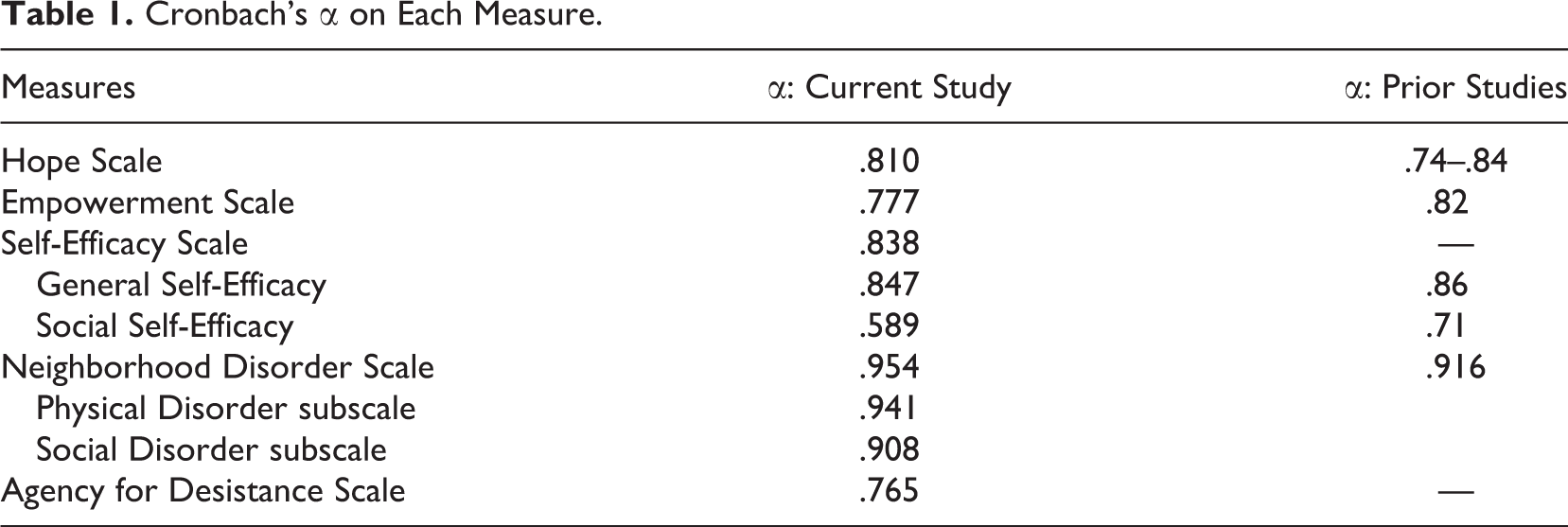
In addition to demographics, the survey consisted of standardized measures for hope, empowerment, self-efficacy, and disordered neighborhood. Cognitive appraisal of goal-related capabilities and two interrelated components of agency and pathways were measured using The Adult Hope Scale (Snyder et al., 1991). Reliability of the instrument has been strong with Cronbach αs from .74 to .84 and test–retest correlations of .80 or higher at 10-week and greater intervals.
Subjective feelings of empowerment were measured using the Empowerment Scale. The 28-item instrument included subscales in domains of self-esteem-self-efficacy, perceived power-powerlessness, optimism and control over the future, community activism, and righteous anger used a 4-point Likert-type scale. Cronbach’s α suggests a high level of internal consistency with an α of .82.
Generalized self-efficacy including (a) willingness to initiate behavior, (b) willingness to expend effort in completing the behavior, and (c) persistence in the face of adversity was measured using The Sherer Self-Efficacy Scale (Sherer et al., 1982). The 23-item scale consisted of two subscales, general self-efficacy and social self-efficacy with adequate reliability (Cronbach α = .86 and .71, respectively) and measures expectancies in social skills or vocational competence.
Women’s perception of order and disorder in childhood neighborhoods was measured using The Ross–Mirowsky Perceived Neighborhood Disorder Scale (1999). The index measured physical signs of disorder such as graffiti, vandalism, and abandoned buildings as well as social signs such as crime, people hanging out, drinking, and using drugs. The α reliability of the disorder scale is .916.
Identity was measured with two questions: How strongly they agreed with the label of persistent offender and if they considered the identity of career criminal as the woman they were meant to be. Identity measures were used as mediating variables in the regression models.
Dependent Variables
There were three outcome measures used as proxy measures for desistance and included agency for desistance (Lloyd & Serin, 2012), anticipated desistance (Friestad & Hansen, 2010), and redemptive self (Maruna, 2001). Created and previously used by Lloyd and Serin (2012), the Personal Agency for Desistance Questionnaire included 12 items specific to criminal engagement. Respondents were asked to respond to questions regarding their sense of control over criminal activity and skills they have acquired to support a crime-free lifestyle, on a 7-point scale ranging from strongly disagree to strongly agree. As previously used by Friestad and Hansen (2010), self-reported intentions to go straight or to continue in crime was measured using a 4-point Likert-type scale to the single question regarding perceptions of their chances to successfully avoid crime in the future.
The redemptive self (story of generativity) was measured using a modified version of The Life Interview (McAdams, 1992). Participants wrote responses to four open-ended questions: high point, low point, turning point, and where the respondents saw themselves in 10 years. In an effort to promote a natural and comfortable setting, as well as encourage descriptive details, participants were instructed to write a letter (or “Kite” in prison terms) to their best friend. Written narratives included prompts, who was in the scene, what led up to the scene, thoughts and/or feeling during the scene, how the scene ended, and how this one scene fit into their whole life story (McAdams, 1992). Although many of the narrative in this study contained similar themes including trauma, loss, childbirth, and struggles with addiction and reincarceration, the narrative score (0–4) was dependent on how the story ended, or whether they found positive from negative, or moved from a negative emotion to a positive one from the experience.
Data collection occurred in group settings ranging from 8 to 15 women over a 5-month period in 2015. Both the survey and life story narratives were provided simultaneously and women varied in their approach to completing both instruments. The quantity and completion time of the narratives varied greatly, ranging from 20 min to 120 min. Incentives were not allowed by the DOCs. Please see Table 1 for scales reliability from current and previous studies.
Cronbach’s α on Each Measure.
Description of the Participants
The majority of respondents (N = 141) spent their childhood in the state in which the prison was located. More than half of participants identified themselves as white (51%), followed by African American (19%), Latina (14%), and mixed (13%). The women ranged between 19 and 59 years old, with a mean age of 37 (SD = 10.50) and mean age at first arrest of 21. Most women were single, never married (38%), or divorced (22.7%). Nearly three quarters of respondents (74.5%) had at least a high school diploma or General Equivalence Degree (GED), and 7% identified as college graduates. Similar to what has been found in the literature, the majority of the respondents (73.8%) had children and sadly nearly a quarter of these (24.9%) believed reunification with children upon release was not likely. Although 35% of the women believed it likely they would be reunified with children, nearly half reported being homeless or having no place of their own to live prior to incarceration, highlighting the lack of necessary resources for stability, and family reunification in the community.
It is known that most incarcerated individuals will eventually return to the community, and this study found 70% of the women were expecting to be released within the next 6 months. Only seven women reported 3 or more years left on their sentence and 21% reported one to 3 years remaining. No trends were found among the length of incarceration and quantity or quality of written responses.
Analysis
The life narratives were analyzed and thematically content coded by three independent coders and scored according to McAdams’ (1992) coding framework. Narratives that did not contain a redemptive script were scored as zero, and narratives that did contain a redemptive script were scored as one (Cohen’s κ of 1.0). Of the 138 narratives, 69 (48.9%) were condemnation and 69 (48.9%) were redemptive narratives.
Once redemption themes emerged and were coded, narratives were further assessed for additional components of enhanced agency, enhanced communion, and/or ultimate concern. Redemptive narratives that included these additional themes were scored one point for each. The range for redemptive narratives was 1–4. Coders were trained to add these points conservatively, not to make any clinical inferences beyond the written word, and only given when “additional” enhancement to self, interpersonal relationships, and generativity for others was clearly evident, and not simply the transformation from negative to positive. Independent coders reached 88% interrater reliability for additional points (2–4).
Condemnation narrative
Condemnation narratives are the opposite of redemption narratives and contain excuses and/or justifications and were characterized by a sense of personal failure. Narratives that were scored as condemnation (zero) included themes of something good turning bad and/or a lack of personal agency (McAdams, 1985). An example of a condemnation narrative from this study include: I got pregnant…. I felt excited…. I used drugs…. DCF took my baby…I felt like a loser my crack cocaine addiction became worse…there was no stopping my habit…. I began sleeping with multiple men for drugs and money…. I lost family and friends…. I became homeless…had nothing…. I didn’t care…. I felt lonely scared and afraid…the judge sentenced me to 18 months…. I thought he was being unfair…. in jail they treat us like animals…. I was thinking how I lost everything, my daughter and son, house, family and friends, but my drug-dealing BF is still there…hopefully I have time to get my thoughts straight.
Redemptive narratives
Narratives that were scored as redemptive (one) contained themes of something bad turning good, and the protagonist was tragically optimistic about their life. These stories contained sequences that despite considerable pain and setbacks, they were able to continue to grow, make progress, and/or get better over time. The narrator was able to make a clear distinction between their crime and their true selves and believed that the bad had to happen in order to achieve a larger good (McAdams, 1985). Examples of redemptive narratives from this study include: Drugs took everything…prison helped me to find myself…. I started the healing process…. I am learning to deal with emotions here without drugs…. I feel confident and determined.
Enhanced agency
Redemptive narratives were scored an additional point for enhanced agency if they contained one of four themes of agency including self-mastery, status/victory, achievement/responsibility, and/or empowerment (McAdams, 1985). Examples from this study include: I have diligence and perseverance; wisdom now; self-confidence; learned more about myself; found the real me; I am resourceful; I will do better; and not self-sabotage.
Enhanced communion
Redemptive narratives were scored an additional point for enhanced communion if they contained one or more of the four themes of communion including love/friendship, dialogue, caring/help, and unity/togetherness (McAdams, 1985). Examples from this study include: I built a sober network of women to use as support; I found forgiveness in my heart; I have remorse for others who cannot catch a break; I now have a greater relationship with my higher power; have a strong bond with my daughter—she visits me in prison—I have the most beautiful relationship with my daughter; I now have a support system that I didn’t have before; I no longer isolate myself; I am more social with positive people—cutting out negative people who put me down; Now I know I need to maintain healthy relationships and boundaries with friends and family
Ultimate concern
Redemptive narratives were scored an additional point for ultimate concern if they contained sequences of making the next generation better or expressions of concern about making a lasting contribution, especially to future generations (McAdams, 1985). Examples from this study include: Volunteer at soup kitchen and shelter; Help others that are in and out of prison; I want to be a substance abuse counselor; I hope to pass on my life experiences and knowledge to someone else….hope it changes their lives so they never have to deal with what I have; Make amends with those I’ve hurt…. and give back…open a program for young kids whose parents are battling addiction.
Results
The results presented in this article focus on the findings related to identity measures and the marginalized statuses of 141 incarcerated women. This study identified marginalized statuses as race, poverty, and levels of formal education. Respondents who identified as ethnic groups other than white (n = 67) were further assessed for marginalization including poverty and lack of formal education. A majority (n = 47) experienced poverty prior to incarceration and nearly twice as many nonwhite respondents lacked high school diplomas or GED when compared to white respondents. Marginalization was negatively correlated with employment (r = −.319, p < .01) and social support during incarceration (r = −.267, p < .05). Women with higher education levels had higher empowerment (r = .211, p < .05), self-efficacy (r = .258, p < .01), and increased prosocial support (r = .199, p < .05) meaning less peers involved in criminal activity. Women of color reported higher disorder (r = .280, p < .01) in childhood neighborhood. Women who had experienced poverty prior to incarceration had lower personal resources including hope (r = −.172, p < .05) and self-efficacy (r = −.283, p < .01) and were less likely to receive visits during incarceration (r = −.227, p < .01). If women reported poverty prior to incarceration they were more likely to have experienced poverty in childhood, had fewer prosocial supports and more illegal income in the community. Sadly, the poor women were less likely to believe reunification with their children upon release was possible. These findings highlight the additional barriers that women from marginalized statuses must overcome to successfully create lives for themselves post incarceration.
Identity
The majority of participants (85.1%) did not identify with the label of career criminal, 9% were not sure, and only four participants said yes, they identified as career criminal. Yet more nearly half (43%) agreed or agreed strongly with the identity of persistent offender. This study found ethnicity and poverty to be correlated with age of first police contact, arrest, and persistent offender identity. The identity measures and marginalization were also significantly correlated with human and social capital, optimism and redemptive narratives. When I committed my crime I wasn’t thinking. I was on a drug induced auto pilot…. The scene ended with me locked up serving 16 years. This scene will never go away no matter how long I’m clean or how productive my life is. It will always be a part of my life…
Social disorganization theory (Bursik & Grasmick, 1993; Sampson & Groves, 1989) posits that place matters. Increased incarceration rates are disproportionately concentrated in marginalized communities, characterized by high rates of poverty, unemployment, and racial segregation (Travis, Western, & Redburn, 2014). Respondents in this study used zipcodes to identify both their childhood communities and the communities, they planned to return upon discharge. According to census tracking, these identified childhood neighborhoods had rates of residents living below the poverty line ranging from 23% to 37%. The percentage of female headed households in these neighborhoods ranged between 25% and 54%. And lastly, these neighborhoods had between 14% and 22% of residents without health insurance. Therefore, if women are to successfully return to communities and avoid rearrest, community conditions must change (Travis & Waul, 2003). Interventions must include community components in addition to individual ones.
Regression models
Baron and Kenny (1986) proposed a four-step approach to test for mediation, in which several regression analyses are conducted and significance of coefficients is examined at each step. This four-step process was followed in each model with each outcome variable. This study found the three dependent variables (agency for desistance, anticipated desistance, and redemptive self) were mediated by identity and marginalization.
Agency for desistance
Four-step, hierarchical multiple regression was used to assess the ability of personal resources and environmental factors, identity measures, and marginalization, to predict agency for desistance, after controlling for age, marital status, and length of criminal career. After entry of the personal resources, environmental factors, self-identity, and marginalization at Step 2 the total variance explained by the model as a whole was 52.2%, F(20, 89) = 4.86, p < .001. The personal resources, environmental factors, identity measures, and marginalization measures explained an additional 46% of the variance in agency for desistance, after controlling for age, marital status, and length of criminal career, R 2 change = .522, F change (17, 89) = 5.03, p < .001.
Anticipated desistance
Four-step, hierarchical multiple regression was used to assess the ability of personal resources, environmental factors, identity measures, and marginalization to predict anticipated desistance, after controlling for age, marital status, and length of criminal career. After entry of the personal resources, environmental factors, identity measures, and marginalization at Step 2, the total variance explained by the model as a whole was 43.9%, F(20, 89) = 3.48, p < .001. The personal resources and environmental factors, identity measures, and marginalization explained an additional 35% of the variance in anticipated desistance, after controlling for age, marital status, and length of criminal career, R 2 change = .348, F change (17, 89) = 3.25, p < .001.
Redemptive narrative
Logistical regression was performed to assess the impact of personal resources, environmental factors, self-identity, and marginalization on the likelihood that narratives would be condemnation (0) or redemptive (1). The full model containing 17 predictors was statistically significant, χ2 (17, n =118) = 49.07, p < .001, indicating that the model was able to distinguish between narratives that were condemnation and redemptive. The model as a whole explained between 45.4% (Nagelkerke R 2) of the variance in narratives and correctly classified 78% of cases. Please see Table 2 for correlation matrix of mediating variables.
Correlation Matrix of Mediating Variables.
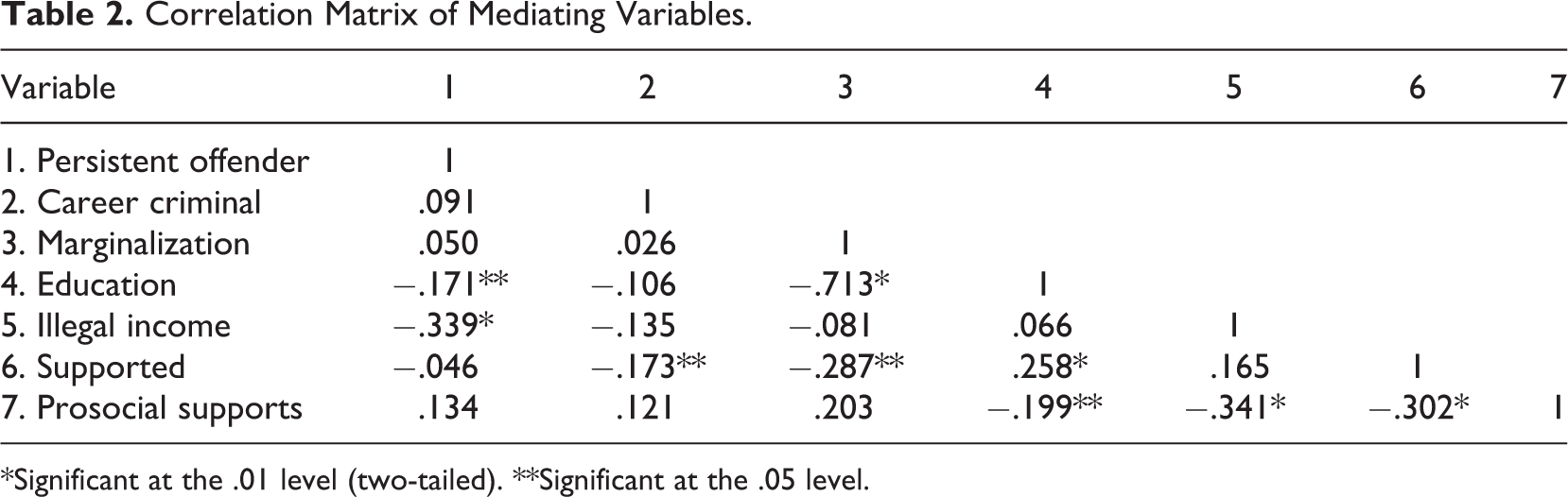
*Significant at the .01 level (two-tailed). **Significant at the .05 level.
Discussion
This study investigated variables that may mediate the relationships between personal resources and environmental factors and community reintegration and the desistance process, and included identity and marginalization. The results provide insight into justice-involved women and contribute to a better understanding of factors that mediate between individual resources and environmental factors affecting community reintegration and the desistance process. This research found all three dependent variables to be mediated by identity and marginalization. These findings highlight the expanded social work roles with justice-involved populations and need to be translated into social work practice at all levels. The discussion section will highlight the implications for the social work profession and interventions at the micro-, mezzo-, and macrolevels.
Because we know that incarcerated women have high rates of addiction, trauma and mental illness, it is critical to gain understanding around how women shed concepts of stigma and create new healthy identities of themselves (Veysey, 2008). This study found self-identity to be correlated with optimism, and identification as a persistent offender increased with the number of incarcerations.
The objectifying language of “offender” and “perpetrator” keeps individuals in categories of “unredeemed” and complicates an already difficult reintegration. This study found respondents who had higher hope, empowerment, and self-efficacy were less likely to identify as persistent offender and reported a higher level of effort into being a law-abiding citizen upon release. This aligns with Maruna’s (2001) finding that secondary desisters avoid crime because they see themselves as fundamentally “good” despite criminal activity. Therefore, interventions that are strength-based, promote, and support identity change are crucial.
This study identified marginalized statuses of race, poverty, and levels of formal education. Women in this study who experienced poverty prior to incarceration were more likely to have experienced poverty as children and be mothers who believed it not likely to be reunited with children post incarceration. Poor women also had lower hope and general self-efficacy. Ethnicity was correlated with age of first arrests and education levels were correlated with identity of persistent offender.
Predicting future desistance is very difficult and relying solely on self-control or social control is too simplistic. This individual transformation must be supported and sustained within a larger social context (Veysey, 2008). The Women’s Prison Association’s Institute on Women and Criminal Justice released a report in March 2009 profiling advocacy organizations that are mobilized and managed by women who were previously involved in the criminal justice system. It was reported that these groups were instrumental in identifying problems and solutions, speaking out on issues, bridging the gaps between prison and communities, supporting leadership, and taking multiple routes to change (Villanueva, Nixon, & Pearson, 2009). This is a necessary aspect of supporting women in creating successful lives for themselves after incarceration. Integrating both individual and environmental factors is much more promising and a concept not new to the social work profession.
Desistance is an evolving multifaceted process (Maruna, 2001), and there is a lack of research on the dynamic interaction between individual and environmental factors. The reasons that individuals are able to desist from criminal behavior are coupled with issues of “structure and agency,” and therefore, both are needed (Vaughn, 2007). Social problems have been found to be caused and/or exacerbated by the internal subjective state of individuals being released from prison (Lebel et al., 2008). In order for justice-involved women to maintain personal changes, regulate the events in their lives and successfully navigate the desistance pathway, an optimistic sense of personal efficacy will be required. Yet this study found self-efficacy to be diminished in poor women who lacked formal education and those who identified as persistent offender. And although this internal mind-set or other personal factors may be important components of desistance they are not sufficient. In addition to the internal cognitive change, external social or environmental factors need to occur in order to encourage and sustain desistance.
Similar to empowerment practice, desistance-focused practice integrates both individual change and social change and seeks to place equal emphasis on both the individual and environment for supporting the process. Furthermore, empowerment and desistance are both a process and outcomes. A key position for practitioners is to help individuals identify obstacles for change and then develop the capacity to overcome these obstacles. Treatment approaches need to acknowledge the individual needs of the justice-involved population and their experiences, while supporting the development of efficacy. Therefore, this author posits that empowerment is a crucial component in desistance.
Microlevel
An individual’s story develops within a larger social–historical context, which colors, shapes, and constrains it in important ways (McAdams, 1985). Change can be challenging and unfurls as a process with numerous steps (Christian, Veysey, Herrschaft, & Tubman-Carbone, 2009). Narratives have been found to be a particularly influential medium to understand this movement (Gadd & Farrall, 2005; Maruna, 2001; Vaughn, 2007). Because hope and empowerment were found to correlate with redemption narratives, it is imperative that justice-involved women feel empowered to create change in their lives as well as have hope in their ability to create new stories for themselves. Social workers need to create and provide interventions that are rooted in empowerment and narrative theories for clinical practice with justice-involved populations.
Microlevel approaches include supporting women in their efforts to create new narratives and shed negative labels and stigma related to marginalization and criminal justice involvement. Micropractitioners working within mental health, substance abuse, or family support services need to practice strength-based and empowerment practices. These approaches will support individuals in creating and sustaining prosocial identities in spite of familial, institutional, and societal structures not necessarily aligned with these individual changes. Social workers situated within state agencies, health and mental health agencies, educational and community settings need to engage clients effectively with practices that are empowering and strength based and are aligned with the ethics and values of the profession. Additionally, in the era of evidenced-based treatment and focus on cognitive–behavior therapy, social workers with knowledge of the interaction between person and environment, will be able to ensure CBT interventions account for this interaction and its impact on client’s cognitions. Empowering individuals to overcome stigma and shed negative identities should be an integral aspect of clinical practice with this population. However, this individualized approach is only a small part of assisting individuals on the pathway to sobriety and/or desistance. If women are to successfully return to communities and avoid rearrest, community conditions must change (Travis & Waul, 2003). Interventions must include community components in addition to individual ones.
Mezzolevel
The effects of incarceration on life chances are significant and therefore can be profound on those who already come from oppressed positions. Increased incarceration rates are disproportionately concentrated in marginalized communities, characterized by high rates of poverty, unemployment, and racial segregation (Travis et al., 2014). The findings of this study, indicate that women with longer criminal careers and higher numbers of previous incarcerations had increased housing instability, lower employment rates and higher amounts of monthly income obtained through illegal means. The social work profession has a long tradition of understanding the interaction between individuals and their environment and other macrostructures.
When the quality of education and life opportunities varies so dramatically among neighborhoods segregated by race and class, structural inequalities are evident and contribute to disproportionalities in poverty, unemployment, and incarceration. Removal of structural barriers is crucial in order for women to successfully take advantage of the opportunities and offered services so they are less likely to engage in criminal activities. These findings highlight the additional barriers that women from marginalized statuses must overcome to successfully create lives for themselves post incarceration. These fundamental structural injustices need to be addressed in order to appropriately address this social problem. These practice and policy interventions can be prison based and/or community based. Community corrections, alternative to incarceration programs, and reentry programs must address the economic marginalization of women as well as the disease of addiction.
Interventions need to provide the basic resources that are necessary for reintegrating individuals to live in communities and acquire the tools and social supports necessary for identity shifts. Assisting justice-involved populations not only with needed resources but also with support for shedding stigmatizing labels will help support successful transitions. Interventions need to support a holistic reconstruction of self while social workers address individual, relational, and contextual factors of individuals and environments (McNeill, 2009).
Macrolevel
Most reentering citizens will need to find ways in which to be successful in their communities, therefore interventions that support and foster community enhancement are critical. Social workers are trained to see the connection between problems affecting individuals as well as problems affecting larger numbers of people due to governmental policies. Similar to empowerment practice, the individualized treatment approaches with justice-involved individuals must account for the social contexts that effect motivation and behavior without blaming individuals. Reliance on ecological perspectives and strength-based approaches allows the social work profession to effectively create working alliances with individuals, families, and communities and to develop successful interventions and strategies. Macrolevel approaches include supporting marginalized communities and promoting policy changes that address racial and economic injustice by leveling the playing field for returning citizens.
Taking responsibility, and feeling competent and empowered are critical parts of the desistance process. Therefore, policies and practices need to be inclusive of those with lived experiences rather than created by those on the outside and administered or inflicted on them. Those with lived experience need an outlet to share their learned wisdom so they feel they are valued and capable rather than in need of being cured by others. Approaches must encourage and respect the capacity of individuals to make choices and affect change for themselves.
Limitations
This study was exploratory in nature and was cross-sectional, therefore, causal factors cannot be determined. The self-report nature of the self-administered survey was also a limitation. The final and most significant limitation to the current study is the lack of an “actual” measure of how well women did upon release. An exact measure for desistance does not exist in this study, and therefore, this study used the redemptive self, agency for desistance, and anticipated desistance as proxies for the process of desistance. Future research should be longitudinal and have capacity for the researcher to contact respondents for follow-up after released from prison and in the community. Further qualitative analysis of the written narratives would also add to this knowledge base and will be conducted.
Conclusion
This research is politically well-timed and relevant for the social work profession to address policy reform efforts in criminal justice. The rate of incarceration in the United States is 6–8 times higher than in countries with similar living standards. During 2010, prison releases (708,677) exceeded prison admissions (703,798) for the first time since the BJS (2012) began collecting jurisdictional data in 1977. As the number of incarcerated women and community discharges increases, so does the need to understand the complex interaction between individuals and their environment. This research provides a better understanding of the complex interrelationship between personal resources, environmental factors, identity, and marginalized statuses and contributes to the knowledge base of desistance research with women. Social Workers have important information regarding client needs and a distinctive view of social justice (Hoefer, 2005). Consonant with policy statements from the National Association of Social Work to champion the rights of society’s most vulnerable members, and the National Organization of Forensic Social Work to advance social justice, this study contributes to the understanding of the importance of including women’s voices in correctional and criminal justice reform.
In 2003, with an in-depth understanding of the cost of incarceration and human toll of imprisonment, Justice Anthony Kennedy told the American Bar Association, “Our resources are misspent, our punishment too severe, our sentences too long…. the more than two-million inmates in the United States are human beings whose minds and spirits we must try to reach.” McNeill (2006) advocates for correctional practices and policies to be embedded in the understandings of the desistance process. The voice of the social work profession has been fairly silent on the social injustices that are entangled in mass incarceration of vulnerable populations. In the current political climate, when discussions about criminal justice reform are copious and diverse, the social work profession needs to be involved in the development of a new criminal justice practice paradigm.
Footnotes
Declaration of Conflicting Interests
The author(s) declared no potential conflicts of interest with respect to the research, authorship, and/or publication of this article.
Funding
The author(s) received no financial support for the research, authorship, and/or publication of this article.