




Abstract
This article explores whether gendered norms and beliefs about emotions persist, as people relive and recount unexpected incidents of mass violence. The emotional expressions of men and women after two school shootings in Finland are examined and compared, based on qualitative interviews with local residents and crisis workers. Two emotional orientations in relation to school shootings were identified: being affected and being detached. Women were associated more with being emotionally affected and men with being detached. However, there was not always a consensus on how gendered individuals should express emotion in the aftermath of a school shooting.
Keywords
Introduction
It has been suggested that disasters undermine social and cultural distinctions and place all individuals under similar conditions (Fritz, 1961, p. 655). Others claim that crises highlight social structures and patterns that go unnoticed in everyday life. For example, natural disasters in the global south are often seen as opportunities to increase women’s participation in decision making within families and communities, as they engage in rescue and reconstruction. However, traditional gender roles are often found to persist during and after disasters (Bradshaw & Linneker, 2009, pp. 77, 80–82). Also in the global north, in times of crisis, parenting responsibilities and postdisaster care work are mostly performed by women (Enarson & Scanlon, 1999; Peek & Fothergill, 2009).
Random, lethal school violence is a gendered global phenomenon in that almost all perpetrators are male, while victims are usually both male and female. In public discussion in Finland, school has often been presented as an institution that favors girls and their way of learning, making it easier for girls to succeed academically (Lahelma, 2005). Thus, school shootings can be interpreted as young men’s attacks on institutions associated with femininity. Previous research on school shootings has considered gender in relation to explaining random school shootings by analyzing the cultural link between masculinity, homophobia, and violence (Kimmel & Mahler, 2003; Watson, 2007). The gendered emotional experience has not been the focus of any previous studies examining school shootings. Also, the research on other crises and traumatic incidents usually only maps the gender differences in stress reactions or posttraumatic stress disorder, while qualitative understanding of these reactions as gendered experiences is still lacking.
This article examines the gendered expressions of emotions related to two school shootings in Finland. The first occurred on November 7, 2007, in the small town of Jokela, in Southern Finland, when an 18-year-old male student killed eight people and wounded one at the local high school. Three of the victims were female and six were male. The second shooting incident occurred on September 23, 2008, in another small town, Kauhajoki, in Western Finland. A 22-year-old male student shot and killed 10 people and wounded one at a unit of Seinäjoki University of Applied Sciences. Eight of the victims were female and two were male. Both perpetrators committed suicide before the police entered the targeted schools.
I draw from qualitative interview accounts of residents and crisis workers in the targeted communities of Jokela and Kauhajoki. The aim is to examine whether shared cultural meanings define the appropriate and legitimate emotional reactions for men and women when they recount their experience of a mass violence incident. While many social situations have a conventional, gendered frame for the “appropriate” emotions that fit the situation (Hochschild, 1979), a school shooting is such an exceptional event that it may be less clear what the “right” emotions are. The presumed shift toward a confessional culture that emphasizes public as well as private expressions of emotions (see Furedi, 2004) might also contribute to the development of more identical emotion norms and expectations for both genders.
The Gendered Order of Emotions
When analyzing gender and the experience of mass violence, we need to start by looking at how emotions are shaped by cultural norms and expectations. Emotions help shape groups and identities; they are not located in individuals or in groups, but produce the surfaces and boundaries that allow them to be distinguished (Ahmed, 2004, p. 10). In Western thought, reason and emotion have been considered opposing forces; reason has been linked with rationality and emotion with irrationality (Turner & Stets, 2005, p. 21). Emotionality has been commonly associated with femininity; it marks female and feminine as different from male or masculine (Ahmed, 2004, p. 3; Shields, Garner, Leone, & Hadley, 2006).
Feminist theories have increasingly considered issues related to emotion and affect during the last decades. This work has stressed the importance of feelings and the bodily response to feelings in theorizing human action (Gorton, 2007). The boundaries of female and male identities are especially strongly created and maintained with cultural beliefs about emotion. Emotional stereotypes produce and restrict individuals’ expressions of emotion, and are connected to the reproduction of gender hierarchies. Certain emotions (such as sadness and fear) are considered more appropriate for women and some (such as anger or pride) for men. For example, the stereotype of women as more emotional than men has both positive (women are warm, nurturing) and negative (women are too emotional) meanings (Lupton, 1998; Shields et al., 2006).
Whether emotionality is considered a strength or a weakness is strongly context dependent. Feeling rules define the appropriate extent, direction, and duration of emotions in different situations. These standards are often different for women and men because of the assumption that men and women are inherently different (Hochschild, 1979). However, this gendered order of emotions is also open to negotiation and might change in an exceptional and socially disruptive situation such as a school shooting incident. Of course, expectations for expressing emotions depend on other aspects of social identity as well; for example, Finnish emotional culture has been considered rather reserved (Pantti, 2005). However, cultural expectations for acceptable action are always gendered, and gender-based stereotypes reflecting a notion of white, heterosexual gender difference are particularly influential (Shields et al., 2006).
A great number of studies have sought to find out whether there actually is a difference between women and men in how they experience, report, and cope with emotions. The problem with this approach is that it is based on the assumption that gender operates as a set of fixed and stable characteristics that differentiate women and men (Shields, 2002, p. 22). Actually, the extent to which gender differences are found to be present depends on the framing of the research context and on what it is about emotion that is being measured (Shields et al., 2006). Gender-based expectations have been found to influence the way people reconstruct and narrate past emotional events (Hess et al., 2000). Gender-emotion stereotypes influence self-reports especially if the reporting is not done immediately after the experience (Hess et al., 2000; Robinson, Johnson, & Shields, 1998). It seems that people rearrange their emotional experiences when recounting them later, and align their experiences with the gendered expectations. Social memory and shared styles of narrating crisis and events also shape and frame personal narratives and memories of past experiences (see Connerton, 1989).
Gender differences in cases of emotionally difficult events have been widely studied. Many studies examining community disasters, terrorist attacks, and other stressful situations have found that women react more strongly to traumatic events and are more prone to posttraumatic stress symptoms than men (Rubonis & Bickman, 1991; Zeidner, 2006). Men and women are often found to use different coping strategies (Morano, 2010; Zeidner, 2006). Problem-focused coping attempts to change the stressful situation, whereas emotion-focused coping attempts to change the emotional response. However, a meta-analysis of different studies on coping behavior found that, contrary to the assumption visible in even academic research, women reported greater use of almost all the coping behaviors, including problem-focused strategies. Overall, differences between men and women are small (Tamres, Janicki, & Helgeson, 2002.)
Emotions can also “spread” between individuals in interaction, especially in exceptional situations. Individuals are not emotionally contained. Emotions, like thoughts and ideas, are always to some extent dependent on cultural and social factors (Brennan, 2004, p. 2). “Catchy” or “contagious” feelings leap from one person to another, for example, when a speaker’s anxiety makes the audience feel uncomfortable as well. Mass media and especially the electronic media further amplify these emotions and also extend the reach of the communication of emotions (Gibbs, 2001). Others suggest that emotions do not originate within individuals, but can be absorbed from other people and are transmitted in a process that is social, biological, and physical (Brennan, 2004, p. 3). Catching emotions indeed includes synchronization in brain activity, especially with negative emotions (see Nummenmaa et al., 2012).
Research Questions, Data, and Methods
I consider gendered emotions in the context of school shootings both through self-reports of participants’ emotional experiences and their descriptions of other people’s emotional reactions. My goal is to examine whether gendered norms and beliefs about emotions persist in the context of sudden, unexpected incidents of mass violence. And if the gendered order of emotions in fact persists, why does it do so? I am interested in the following questions:
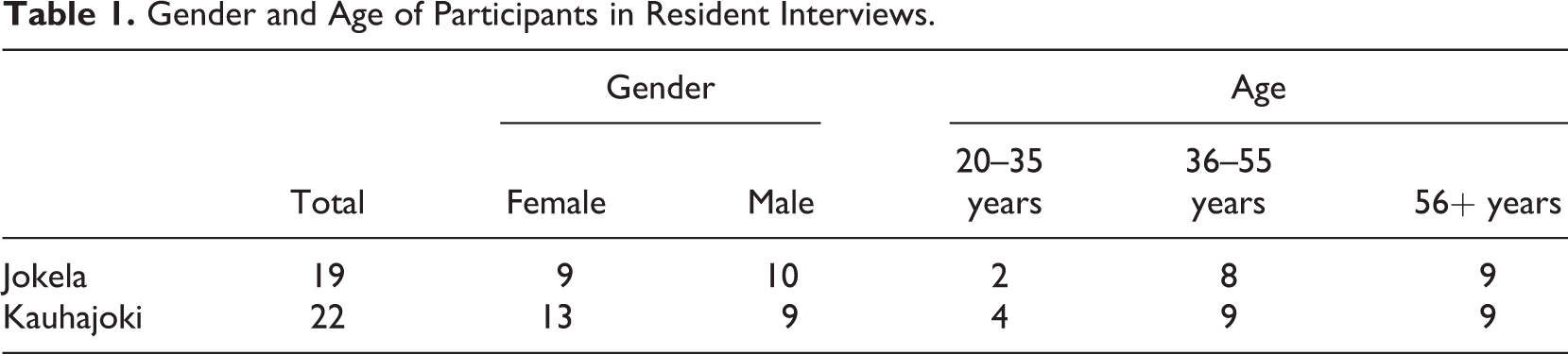
The analysis is based on two sets of focused interviews: 34 interviews with Kauhajoki and Jokela residents and 11 interviews with individuals who participated in the crisis relief efforts. The resident interviews were conducted in Jokela in October 2009 (23 months after the shootings) and in Kauhajoki in April 2010 (19 months after the shootings). The interviews with crisis workers were conducted approximately 12–18 months after the shootings, in early 2009 in Jokela and in the winter of 2009–2010 in Kauhajoki. More information about the resident and crisis worker participants can be found in Tables 1 and 2.
Gender and Age of Participants in Resident Interviews.
Gender of Participants, and Organizations Represented in the Interviews With Crisis Worker.

Participants for resident interviews were recruited through a letter sent together with a questionnaire that gathered survey data for a study on community reactions to school shootings (Hawdon, Oksanen, Räsänen, & Ryan, 2012). A desire to discuss the shootings was a common feature of all participants. However, emotions were not an explicit theme in the recruitment letter. Several participants did not want to talk about their own emotions, so the group of participants was not biased toward those who were comfortable discussing their emotions. While some wanted to process emotions and experiences related to the shootings, others wanted to give their opinions about why the shootings happened or the way in which the incidents were managed by the authorities. Many stated that they wanted to be of help in the research on school shootings. Six interviews were conducted with more than one participant in cases where family members present in the interview situation participated on their own initiative. 1 These interviews did not differ considerably from those conducted with one participant regarding the themes, and the depth and the confidentiality of the discussions did not seem to be dependent on the number of participants. The interview themes covered social relationships in the local communities, descriptions of the local communities, the participant’s personal experience of the school shootings, and the consequences of the shootings for personal and community life. For some participants, the interviews evoked uncomfortable feelings related to the shootings or other past experiences of violence. No follow-up interviews or meetings were organized to help participants process these feelings, but all participants had access to free counseling, organized as part of the aftercare provided for the community.
For the interviews with crisis workers, a snowball sample technique was used to contact potential participants from the organizations that participated in the psychosocial care work after the shootings. Participants were chosen based on their work experience in the Jokela and Kauhajoki communities before and after the shootings. Themes discussed ranged from the organization of crisis work and aftercare of the crisis to the community-level experience and consequences of the shootings. One of the main focal points was the experiences that the participants had of the local residents’ emotional reactions and coping strategies in the aftermath of the shootings. The crisis worker interviews are used as additional data in this study, as they are not directly comparable with the resident interviews.
All interview participants are given full anonymity in this article. Information provided about them is limited to gender and residential location in the case of resident interviews, and gender, location, and occupation for the crisis worker participants. Resident interviews were done by two interviewers: a young female researcher (the author) and a young male researcher, both interviewing male and female participants. The influence of the gender of the researcher and the participant on the research material is extremely difficult to define. Gendered cultural practices and values are not merely reflected, but also performed—reinforced or contested—in qualitative interview situations (Broom, Hand, & Tovey, 2009; Oakley, 1998). These performances shape interview data, as there might be tension between personal experience and the desire to perform idealized constructions of gender (Broom et al., 2009). It is not a given that women interviewing women and men interviewing men would lead to more confidential, open, or honest research material. It has been suggested that men might find it easier to talk about emotions with women, because they feel uncomfortable showing emotion or “weakness” to other men (Seidler, 1998, p. 208). In any case, it must be kept in mind that self-reporting of emotional reactions is not a literal record of experienced emotion, especially when done this long after actually experiencing the shootings. Interpretations of a sequence of events, especially of exceptional events, are likely to change over time, in a way that promotes a coherent, concise narrative (see Bartlett, 1932/1995). Moreover, individual and social memory are always interconnected; groups and communities frame, localize, and map individual memories (Halbwachs, 1992, p. 38). Thus, the interview accounts tell us more about what people remember about emotional reactions in relation to school shootings and how these memories are filtered and interpreted through gendered cultural expectations.
Results: Emotional Orientations and Coping
In the first part of the analysis, I used content analysis to map the variety of emotions and emotional reactions discussed in the interviews. I examined the emotions that resident participants remembered having had during and after the shootings, as well as descriptions of other people’s emotional reactions whenever they discussed or mentioned the gender of the individual/individuals in question. The interviews with the crisis workers were less personal, so only the gendered descriptions of other people’s emotional experiences and reactions were considered in the analysis. The most common emotional reactions identified in the content analysis were summarized in a quantified manner to support the qualitative interpretations (see Appendix A).
Based on the preliminary content analysis, two types of emotional orientations were constructed: being affected and being detached. The connection of these orientations with gender was then examined, resulting in the observation that, in the interview data, women were mostly associated with being affected and men were mostly associated with being detached. The participants’ descriptions of their own emotional experiences and reactions also followed these gendered orientations more than the closeness with the victims of the shootings. 2 However, there were exceptions to this, which are discussed later in this article. In the final phase of the analysis, residents’ self-reported coping actions and both residents’ and crisis workers’ descriptions of other people’s coping behavior were examined in relation to gender. Based on this examination, talking as a coping activity was further analyzed. In the interview data, talking was the most discussed coping behavior and also the one most associated with gender differences.
Being Affected
Emotions such as sadness, fear, and shock, and behaviors such as crying and rumination were considered features of being emotionally affected. Another feature was excessive or overly intense emotion. This emotional position, with its embodied feelings and actions as well as thoughts and speech, was mainly associated with women and femininity. 3
When participants talked about the emotional reactions of others, women were associated significantly more often than men with feeling and expressing fear and panic, and with crying and “overreacting,” meaning emotional reactions that were too intense. These findings were in line with how participants described their own emotions; far more women than men reported experiencing or having experienced fear, panic, anxiety, and worry. Also, more women than men said that they cried, took time to contemplate their own life, or experienced psychosomatic symptoms, insomnia, or nightmares due to the shootings. The scope of emotions was much wider when participants described their own reactions than when they talked about other people’s reactions (see Appendix A).
When describing their own reactions to the school shootings, women talked more about being emotionally affected than men. In many studies, if gender differences in the expression of emotion have been found, women in fact reported more frequent and intense emotion (Shields, 2002, p. 30). But the findings of this study are more about the quality, intensity, and permissibility of the gendered performance of emotion than the presence versus lack of emotion in women and men. Both men and women depicted having felt powerless, empathy for the victims and their families, and having been shocked. However, both men and women tended to describe women as intensely emotional and men as rational and not emotional, as a married couple does in this example: Wife: When the shooting happened and I was frantically driving back to Jokela, my husband had just bought a new air freshener for the car. When I drove that car again a few weeks later and there was that same smell, I felt the same terror as when I was driving home on the day of the shooting. (.) Husband: Yeah, she is the one with bad nerves, I haven't been bothered much by any smells. (Male 2 + wife, Jokela)
Both are performing gender and emotion in a way that complement each other. The wife’s emotional reminiscence is detailed and intense, while the husband is performing masculinity through rational and detached orientation toward the shooting. The husband is presented as a rational, counterbalancing force to his wife’s intense emotionality.
There was an aspect of being emotionally affected that included expressing too much emotion, or doing so too intensely: being panicky or hysterical, overreacting or overdoing emotion. Sometimes women were described by men as being too emotional or emotional in the wrong way. For example, a participant (Male 5, Kauhajoki) stated that most of the people he saw converging around the targeted school after the shooting were women. He found this convergence deplorable and believed that these women were pretending to be shocked and sad and that they just wanted something they can “fuss about” until something else happens. Women’s emotional reactions were thus disapproved of and their sincerity questioned. The participant separated himself from the women he described by underlining that he had not gone to the school but merely went to run some errands in town and passed the school, and this was how he knew about the people there.
In the traditional Finnish culture marked by Protestantism and its demand for controlling one’s emotions, public expressions of emotions have been considered inappropriate (Pantti, 2005). This might explain some of the downplaying and ridicule directed toward open, public expressions of emotion. Women themselves did not seem to consider their own reactions as too intense, although they sometimes considered the reactions of other women to be. Mothers were on occasion singled out as hysterical or overreacting by both female and male participants. For example, they were depicted as reacting more intensely than their children who were at the scene of the shootings—another example of women’s feelings being portrayed as ill placed, unreasonable, or too intense. Some participants thought that some children’s fear or nightmares after the shootings were caused by their parents—especially mothers—overreacting.
Another aspect of motherhood in relation to the emotional expressions was that some female participants talked about experiencing empathy for the perpetrators and their families. Many women were wondering how the mothers of the perpetrators emotionally cope with the events and how they would feel if their own child committed a school shooting. Empathy for the victims’ families was also often felt through identifying with the mothers of the victims: “This emotional state came to me only through motherly feelings. Someone has lost their child” (Female 8, Kauhajoki). The emotional orientation of mothers—while often said to be too intense—was also sometimes described in positive terms, for example, that mothers were better than fathers in comforting their children.
Women and girls were portrayed as especially prone to catching emotions. This is typical of the gendered order of emotions, where the feminine bodies are often described as fluid and open to different influences, while masculine bodies are considered more contained (Lupton, 1998, p. 106). Sadness, shock, and hysteria were described as “catchy” feelings. Participants especially talked about girls who started crying because someone else was crying. A teacher, talking about the reactions of her students during the shooting, mentioned that a girl panicked and started crying, and the teacher had to calm her down along with some other girls in class who “naturally started crying too” (Female 6, Kauhajoki). Most participants seemed to consider it obvious that more than boys or men, women and especially young girls would be sensitive and adjust to the emotions around them. As an exception, a youth worker in Jokela also included boys in her description when she described how the young had experienced emotions as a group after the shooting and how the whole group was already feeling better, until “one or two broke down, and then the whole group broke down” (Female youth worker, Jokela).
There was only one reference to an adult man catching emotions from other people. This was also the only time when a man was portrayed as too emotional or having unjustifiably intense emotions. A male participant said that he was not particularly shocked by the shooting and went on to tell how he had found it ridiculous that his partner had lit candles at the targeted school with his friends. He explained how his partner had always found this kind of “mass hysteria” ridiculous and despicable—mass hysteria referring to people who had not been personally touched by the shootings openly expressing feelings of sadness and solidarity toward the victims. He explained that his partner had caught these emotions from a female friend he was living with at the time: “That woman was pretty much hysterical, she cried and wept and wrote poems about the shooting and my boyfriend somehow went along with that” (Male 3, Kauhajoki). This is also an example of how one’s own position as detached and rational can be strengthened by comparing it to someone who is thought to be too emotional—even hysterical, which implies that their emotional reactions are unjustified and should not be taken seriously.
Even though the gendered emotional orientation of being affected was rather consistent throughout the research material, there were some exceptions. First, slightly more intense emotionality was associated with young boys than with men. Boys were described as expressing more emotion than adult men, although not to the point of being hysterical or too emotional, like women and girls. Some parents talked about their young sons’ fear of being left alone at home or not wanting go to school after the shootings or on the anniversary of the shootings for fear of another shooting. There were only two references to a boy crying; one by a resident participant and one by a youth worker.
Youth workers often talked about the emotions of the young in general, including both boys and girls in their descriptions of very intense emotional reactions and expressions. However, youth workers in Jokela said that boys and girls had different emotional reactions. Boys were said to be angry and more physical in their reactions: kicking chairs and wrestling with each other—which was interpreted as a form of intimacy. Girls were said to talk, cry, grieve, and seek comfort and intimacy with their friends, such as holding hands or hugging. Interestingly, boys apparently had also been crying in the immediate aftermath of the shooting in Jokela, but the traditional gender norm of “boys don’t cry” took over soon after. Three days later, boys were described as telling “heroic tales” and detailed, exaggerated descriptions of the shooting, while girls still expressed empathy and grief (female youth worker, Jokela). Thus, the rearranging and realigning of emotional experience with gendered expectations took place soon after the incident.
It was considered exceptional for boys to show emotion, and therefore especially touching by some of the female participants: “teenage boys, fifteen to eighteen year old boys hugging their parents and their friends—that’s something that still makes me cry,” said one of the crisis workers (female church employee, Jokela). Another participant (Female 2, Jokela) talked about young men who, on the anniversary of the shooting, waited until late at night—when nobody was around—to go light candles around the pond next to the targeted school, visited by hundreds of people after the shooting and on the anniversary of the shooting. The media is also found to be contributing to the image of the “new emotional man,” especially by portraying young men openly expressing sadness due to extraordinary deaths (Pantti, 2005). This conflict with the traditional gender order of emotions may enable some renegotiation of gendered norms related to emotions. Another exception was feeling anger, which, contrary to most research findings (Lupton, 1998, p. 106; Shields, 2002, p. 30), was reported by women considerably more than men. Women mostly reported having felt hate and anger toward the perpetrators or the shooting incident as a whole.
Being Detached
Male participants stated remarkably often that they were not shocked or touched by the shootings or that the incident remained distant to them. This might be understood simply as lack of emotion, but concurring with Ahmed (2004, p. 4) I propose that indifference and a distant position should be seen not as “the absence of emotions, but a different emotional orientation” in the context of school shootings. Although a few female participants in this study performed the same position, this is a stereotypical male position, where men are expected to be in control of their emotions, to handle problems on their own, and to offer solutions for the (emotional) problems of others (Seidler, 1998). Instead of being shocked on a personal level, participants who identified with this detached emotional orientation said they pondered the larger, society-level aspect of the shootings. Of the resident participants, 11 men and 5 women identified mainly with this emotional orientation.
There are three possible interpretations of the lack of emotional expression, all of which were present in the interview data. The first one was to see detachment as a sign of resilience. Many of the participants who expressed a detached emotional orientation said that they found the shootings unfortunate, but since the incidents did not touch them personally, they did not feel very intensely about them. In fact, research findings indicate that after traumatic events, it is more common than previously assumed for people to move quickly into acceptance of what happened, without feeling a lot of distress or negative feelings (Bonanno, 2004). Another interpretation considered detachment and distancing as ways of coping aimed at regulating emotion. This links it with the emotion-focused coping methods (Lazarus & Folkman, 1984, p. 275). Third, it can be seen as a sign of inability to process emotions. The latter interpretation was present in many of the interview accounts. Many participants said that they had consciously taken their distance from the shootings because they felt they did not have the capacity to process the incident or because they wanted to save themselves from intense emotion. Still, men were sometimes seen by female participants as expressing too little emotion and thus in need of (women’s) emotional support. In the following example, a young man is portrayed as possibly incapable of dealing with the emotional experience in the absence of his female classmates: We were really worried about the only boy in our class. He was the first one who saw the shooter. And when he looked in the hallway, [the perpetrator] fired his gun toward the classroom so he ran away immediately. And all the girls were just laughing, like what is he up to. So we’ve been worried about him because he lives in [another town] and he was never comforted even though he saw it all. (Female 7, Kauhajoki)
One aspect of this emotional orientation was the reluctance to talk about the shootings, which will be further analyzed in the next section. The reluctance to seek emotional support was also related to the detached emotional orientation. Studies have concluded that women seem to seek more emotional support than men. This held true with participants in Jokela and Kauhajoki. Emotional support was mentioned considerably more often by female participants. When men mentioned receiving emotional support, it was often justified by altruistic motives. A male participant (M1J) gave a lengthy account of going to see a psychologist within the psychosocial care organized after the shootings. He explained that he only contacted a psychologist because he was worried about a young boy’s behavior related to the shooting. During his first visit, he found out that the situation with the boy was already resolved. However, he kept seeing the psychologist and talked about his personal concerns and feelings related to the shootings. He described how these visits helped him deal with some difficulties in his own family. Although he clearly benefited from emotional support, he wanted to justify it by claiming that he was actually seeking help for others, not himself.
Moreover, a few participants mentioned men helping others with their emotional problems. This might have been one reason for taking a detached emotional position in relation to the shootings: “My husband had a very strong role as a helper and supporter of others [at work]. For a long time. And actually here at home too, he was a support person for me too. Not just as my husband but he really took his distance from the incident and dealt with it not based on emotions but based on facts” (Female 8, Kauhajoki).
Whereas women supported others through empathy and shared sorrow, for men it required taking distance from emotions. This is the case in the quote mentioned previously, where emotions and facts are interestingly presented as opposed to one another, and emotions are seen as something that would hinder the (male) individual’s capacity to be a support person.
Talking and Not Talking—And With Whom?
The idea that women discuss their emotions and men do not is a powerful gender-emotion stereotype. However, there were no great differences in how men and women reported having spoken about the shootings in general. Most participants said they had talked with several people about the shootings—women slightly more than men. Refusing to talk about the shootings included more gender differences. Not speaking was closely associated with men and the detached emotional orientation. Reluctance to talk was justified in different ways. Some saw talking about the shootings as disrespectful gossiping. Some participants found it unnecessary: “I haven’t even tried to talk about it. I guess you could. But there’s no need. Everyone knows what has happened, why should we talk about it? (.) I haven’t had a reason to talk about it anywhere, ever” (Male 3, Jokela).
At times, participants criticized trauma psychologists or other people who urged others to discuss their emotions related to the shootings; this was seen as unnecessary and harmful rumination. In this view, talking was associated with the affected position, and labeled as “too emotional,” feminine, and not adaptive. This critical position can be interpreted as a response to the cultural tendency toward the “feminization of masculine emotionality” (Lupton, 1998), which demands that men express and discuss their emotions more openly.
When reporting other people’s behavior, not wanting to speak at all or dealing with the shootings on their own was more often associated with men. Discussing one’s emotions was strongly labeled as feminine by both women and men. Boys and men were often presented as dealing with their emotional experiences in ways other than talking, or not dealing with them at all. It was considered obvious that women and girls wanted to discuss the shootings and their emotions. Female participants also mentioned more often that they received emotional support, mostly in the form of talking. The clearest differences were in how girls and boys were described; it was often mentioned that girls wanted to talk a lot about the shootings whereas boys did not: My daughter wanted to talk, my son didn’t. We watched the news together with my daughter and when she asked me about things I answered honestly that things like this can happen. So with my daughter we worked on it and processed it daily while watching the news. But my son was quiet and basically stayed in his room all by himself for a couple of days. (Female M2, Jokela)
Talking was seen by women, especially mothers, as a way to release emotions, whereas not talking was interpreted as not processing one’s feelings. Still, mothers were careful not to force their sons to talk; boys were often trusted to come to terms with the experience on their own, and mothers said that it was normal for their sons to “keep things inside.” Even in cases of strong emotional reactions, parents were careful not to pressure boys to talk: “My son was really, really sad, it was like that for a long time. He was really gloomy. ( … ) You couldn’t like ask him about anything, he would just start crying” (Male 4, Jokela). The reluctance of the boys to talk was sometimes feared to have restraining consequences. While men and boys were sometimes seen as incapable of dealing with emotions, women and girls were depicted as being better with emotions. This is usual in the gendered order of emotions: Because women are assumed to be inherently emotional, they are also thought to be “naturally” good at dealing with other people’s emotions (Lupton, 1998, p. 107). This sometimes included managing the processing of emotions within families, essentially through talking: “I recall that my daughter sort of led the conversations, she had such mature thoughts about it that I was completely amazed and I would have never thought of it that way” (Male 1, Jokela).
However, girls were said to dwell on the experience and this was seen as leading to fear and other emotional problems. Youth workers and resident participants alike said that girls and boys talked with their friends about the shootings in different ways. Girls were said to talk in a more emotionally intense way: talking all night and combining talking with mutual grieving and comfort. Boys were said to talk less intensely, in bigger groups and with general comments and observations more than personal emotions. The reluctance of the boys to talk was feared to have restraining consequences: “This one boy, he has never talked about it at all. ( … ) If he talked, it might be easier for him to forget and go on with his life” (Female 6, Jokela).
In two cases, men reported talking with other men about the shootings in an emotional way. One participant told that he talked about the shootings with other men in the swimming hall sauna, and described the type of talking as rumination, which is usually emotionally laden and associated with women more than men: “A few times when I was there we talked about it. That’s a place where they always ramble on about different things. So we talked and pondered [the shooting]” (Male 1, Kauhajoki). Another male participant expressed more clearly that talking with his male friends about the shooting helped him cope emotionally: “It helped me quite a bit to talk to my friends and fellow sports team members. ( … ) And I’ve never been one to open up to people about things, but about this I just had to say something every time” (Male 4, Jokela).
In this example, the exceptionality of the shooting incident broke down the usual gendered pattern of not “opening up” and discussing emotional issues with other men. This could be interpreted as part of the emergence of the “new emotional man” (Lupton, 1998), but it seems that the traditional gender norm of men not talking about emotions is similarly validated in this excerpt, while the participant justifies the exception to this norm with the rareness and the intensity of the shooting incident.
Conclusion
Individual experience of a crisis is embedded in social, political, and economic forces that form the context for the experience (Park, Miller, & Van, 2010). Collective practices of remembering, such as shared narratives and memorialization, are also important in framing personal emotional experience. In this study, I identified two cultural and emotional orientations that framed individual emotional experience of school shootings: being affected and being detached As highlighted in previous feminist discussions on emotion, it was clear in the studied mass violence cases that expressing and discussing emotions included performing gender and maintaining gender boundaries. Open and public expressions of emotion were especially seen as marking women or feminine as different from men or masculine.
The affected emotional position subscribed to the interpretation of the shootings as a traumatic experience for bystanders, and emphasized discussing one’s emotions as an important step toward recovery. This orientation was in line with the observations on the tendency in Western cultures to use therapeutic ethos and the concept of trauma to make sense of events and experiences (see Furedi, 2004). The affected emotional orientation was mostly associated with women and only very rarely with men. The detached orientation was often described in opposition with the affected orientation. The interpretation it promoted was that school shootings are not—and should not be—traumatizing for bystanders, and stressed the importance of moving on with one’s life. This lead to the conclusion that discussing the shootings or one’s emotional reactions was unnecessary or even harmful. The detached orientation was most often associated with men, although it was associated with some women as well.
In this article, I set out to explore whether gendered norms and beliefs about emotions persisted in two unexpected incidents of mass violence. In the interviews, men and women expressed different norms and expectations for emotional expression within the gendered order of emotions. These expressions mostly conformed to the traditional, gendered order of emotions, playing a part in creating and sustaining boundaries between women and men. This was especially apparent in the interview situations because the emotions that resident participants expressed or reported in the interviews were subjected to emotional work, their intensity, and quality more or less adjusted to fit the idea of “appropriate” emotions. Typically, there is a gender difference in the expectations and rules for the appropriate emotions for particular situations (Hochschild, 1979). However, the situation of school shootings examined in this study was very rare and exceptional, and there was not always a consensus on how gendered individuals should express emotion in the aftermath of a school shooting. Therefore, although the traditional gender roles and expectations remained fairly stable, there were also examples of possible boundary-breaking or subversive emotional expressions, enabled by the unique, unprecedented context of mass violence.
As a consequence of different interpretations, some contradictions arose. Those identifying with the affected orientation stressed the positive outcomes of discussing emotional experiences, and tended to see the detached orientation as symptomatic of avoiding and denying one’s emotions, which was thought to lead to emotional problems. Those identifying with the detached orientation blamed the affected for unnecessary and even pretentious emotional expressions, as well as for pressuring everyone to talk about their feelings. This resulted in some emotional expressions—often those of women—being labeled as exaggerated and unjustified.
Another consequence of the gendered emotional orientations was that women and even girls were assigned the role of emotional caregivers more often than men. Women were described as experts in emotions and comfort, while men were described as supporting others by remaining rational, calm, and somewhat distant in relation to the shootings. Care work after crises and disasters, whether practical or emotional, is often done mostly by women (Enarson & Scanlon, 1999; Peek & Fothergill, 2009). This requires emotional work and resilience, and may also put women in a more vulnerable position, making the event even more stressful (Reid & Reczek, 2011; Sever, Somer, Ruvio, & Soref, 2008). In this study, men showed more apparent signs of resilience than women, but women talked more about the positive outcomes of the incident. In other studies, men have indeed been found more resilient when resilience is measured simply by the lack of symptoms, but posttraumatic stress and negative feelings can be crucial in turning the experience into something positive, such as increased personal strength (Tseris, 2013). We could also ask if women’s higher posttraumatic stress levels that have been identified in many studies might have to do with cultural expectations concerning postcrisis emotionality, and with collective, shared narratives of men’s and women’s emotions in crisis situations.
Social workers play a vital part in the psychosocial relief efforts during and after collective crises—whether as part of acute crisis work or, later, as part of their everyday work. The two emotional orientations identified in this study offer two different cultural frames for interpreting and emotionally experiencing mass violence incidents. Recognizing these orientations and their interconnectedness with gender can help social workers and other professionals of socioemotional care understand and deal with different and often opposing emotional reactions that individuals experience in postcrisis situations. It also helps us understand why some bystanders find it important to participate in the memorialization of these incidents, and why others disapprove of it. While these emotional orientations perform and interact with gender, it is important to avoid deterministic interpretations about women’s and men’s emotional lives—exceptions and negotiations of the appropriate emotions are constant.
The present study can offer insight into a specific phase of the long process of remembering, narrating, and performing gendered emotions in relation to mass violence. The fact that the research material was collected at only one point of that process limits the implications of the findings. Further research should focus on the process of rearranging and realigning emotional accounts with gendered expectations. This could be done by examining emotional expression in the immediate aftermath and sometime after a violent incident.
Footnotes
Appendix A
Appendix B
Declaration of Conflicting Interests
The author declared no potential conflicts of interest with respect to the research, authorship, and/or publication of this article.
Funding
The author received no financial support for the research, authorship, and/or publication of this article.