




Abstract
Studies on equitable development have proliferated in recent years across an array of academic disciplines, but no review has examined the conceptualization and application of the term. We conduct a narrative review that traces the term's evolution over time across disciplines and geographies. After analyzing how different domains conceptualize equitable development, we examine frameworks and tools used to advance equitable development in practice. We find that there is little agreement on definitions, scales for implementation, or even what approaches are most effective. Moving forward, we propose a research agenda that will help guide the push for equitable development in practice.
Keywords
Introduction
Equity is considered a core principle of planning; the AICP Code of Ethics asks planners to incorporate equity into plans, consider historic impediments to equity, and achieve equitable outcomes (American Institute of Certified Planners 2021). Not surprisingly, then, urban planners, advocates, and policymakers frequently refer to the need for more equitable development, whether referring to a real estate development or a new policy, program, or infrastructure investment. A plethora of tools have emerged to help measure the extent to which these interventions increase the level of equity for an area or group.
Yet, it is not clear that planners share a clear understanding of the term. Equitable development may mean physical or human development. It may refer to more inclusive processes of participation in decision-making, or outcomes that reduce disparities between neighborhoods or racial/ethnic groups. For some, it is about economic development that gives disadvantaged jobseekers the opportunity to participate in the mainstream economy or attracts investment to particular neighborhoods. For others, it is about quality of life that allows people to achieve their aspirations and thrive. Many frame it more broadly as the missing leg of the “planner's triangle” (economy, environment, and equity) (Campbell 1996); in this view, it is the part of sustainable development that addresses affordability, culture, social connection, among other goals (Krings and Schusler 2020).
The fuzziness around equitable development often leads to unresolved contradictions that may actually hinder implementation. Is development supposed to benefit people or place? What if it leads to gentrification and displacement? Is growth necessary for equitable development? Can development be equitable if it comes from above, rather than community engagement? How do we prioritize equity across multiple domains (health, housing, income, transportation) and what should the tradeoffs be, if any?
Academic scholarship, as well as gray literature, on equitable development has blossomed in recent years across a wide array of disciplines. Yet, these studies have largely failed to either provide a consistent definition of equitable development or address these contradictions, which has made it difficult to construct coherent narratives about equitable development that resonate with both policymakers and communities. This article thus reviews both the conceptualization and application of equitable development. We begin by tracing the evolution of the term over time across disciplines and geographies. We then examine how literature has addressed the multi-level governance of equitable development and the focus on equity as a process versus an outcome. After an analysis of how the conceptualization of equitable development differs across domains, we look at the frameworks and tools used to advance equitable development in practice. A conclusion proposes a research agenda that will help ground and guide the push for more equitable development in the future.
Methods
Literature Review Approach and Information Sources
This work is based on a semi-systematic literature review of peer-reviewed publications and gray literature (e.g., policy papers and reports) since much of the work on equitable development, including frameworks for practice, is driven by non-academic players (Kirchherr, Reike, and Hekkert 2017). A semi-systematic review approach, also known as narrative review, partially follows the guidelines of a systematic review in literature survey and selection (Mlambo, Masuku, and Mthembu 2024). It includes steps of framing a written discourse about literature (Zunder 2021) and is designed for topics studied and conceptualized differently by various groups of researchers within diverse disciplines (Snyder 2019). Taking into consideration the research questions, a search strategy for identifying relevant literature was developed and conducted between February and May 2024 under six (6) interdisciplinary search engines and electronic databases: Google Scholar and Google Ngram, Social Science Citation Index (Web of Science), Semantic Scholar, ResearchGate, JSTOR, and Scopus. These are the most efficient and frequently used search engines/databases by researchers across various disciplines, including urban planning (Xiao and Watson 2019).
Data Collection and Article Selection
We gathered data by reviewing scholarships or publications relevant to equitable development and related terms. Thus, in searching for the literature, the research team used search terms such as “equitable development,” “equitable outcome,” “inclusive growth,” “just development,” “just society,” “sustainable progress,” “shared prosperity,” “equitable development process,” “equitable development outcome,” “equitable economic growth,” “definition of equitable development,” “evolution of equitable development,” “equitable development framework,” and “planning for equitable development,” among others. These terms are related to the concept under study—equitable development—and the research questions. Boolean operators were used to define the search terms in databases such as Scopus by expanding or narrowing the search, resulting in more focused and productive results. In narrowing the search results, the author used operators such as “AND,” “NOT,” quotation marks (“”), and parentheses (..), while “OR” and asterisk “*” were used to expand or widen the search. Our preliminary literature search yielded 604 papers and reports (all these items are called “documents” throughout this paper), after which duplicates and studies irrelevant to the concept of equitable development were removed, leaving a total of 451. Next, we identified authors with multiple publications on the list (of which there were five) and compared the definitions they used in their documents. 1 Three of the five authors used the same language verbatim in their different articles, reports, and books to describe equitable development, and thus we chose to include only one publication from each of those authors in the final analysis. The other two authors introduced new definitional dimensions of the concept in their two publications so both were included. After further data extraction and consideration of all the inclusion criteria (discussed below), only 101 documents were selected for analysis. Data extraction was in the form of (i) reading abstracts/executive summaries and making selections, followed by (ii) reading full text (quick scan) to make the final selection. Once the initial documents had been selected, the research team screened the texts in full detail to ensure they met the inclusion criteria. In addition, we scanned the references in the selected documents to identify other potentially relevant publications.
Inclusion and Exclusion Criteria
Setting inclusion and exclusion criteria is one of the most critical steps in conducting a literature review and improving the research quality (Snyder 2019; Mlambo, Masuku, and Mthembu 2024). The criteria for inclusion in this study were language (strictly English), conceptual and empirical articles, and media sources as well as reports from institutions and organizations worldwide. The team considered all qualitative, quantitative, and mixed methods studies. The search also had no limitations to the dates on which these documents were published.
Data Analysis and Presentation
The research team used NVivo software to synthesize the results from selected sources through thematic analysis, an analytical method commonly used in identifying and reporting patterns in the form of themes within a text (Snyder 2019). Narratives were also supported with direct quotations to ensure that written definitions and concepts from the publications or sources stayed close to the author's words, an approach that adds validity to the research (Hay 2000; Ritchie, Spencer, and O’Connor 2003). Additionally, statistics from Elsevier's Scopus and Google Ngram databases were generated to support narratives. While these databases may not provide a holistic account of equitable development studies, particularly those published in gray literature and the media, they offer a much larger collection of textual sources that present relevant statistics and trends for comparison. This helps facilitate an understanding of the evolution of academic interest in equitable development. The team used Zotero management software to organize the citations and references.
Limitations of the Study
The term “equitable development” originates from the Global North. Its origins, coupled with the inclusion of only English-language materials in this article, could inherently bias the content towards the Global North. For instance, while some of the reviewed studies were conducted in non-English-speaking countries and published or transcribed in English, the results, including Figure 3, might have varied if we had considered literature in other languages. Thus, the research team recognizes that there may be various ways to describe equitable development in different languages that are not covered in this analysis. Also, given the power imbalances between the Global North and South, a significant portion of the academic and development gray literature on this topic is likely published in English, contributing to a diffusion of this term and its application from the Global North to the Global South.
Results
How Equitable Development Evolved over the Years and across Disciplines
Equitable development is a multifaceted concept that has undergone a significant evolution over the years and across disciplines, reflecting a shift in societal values, academic inquiry, and policymaking. Its origin can be traced back to the civil rights movements of the 1960s and 1970s, where activists advocated for fair housing, access to quality education, and employment opportunities for marginalized groups/communities (Bullard 2007; Durán 2019). During this period, urban planners and social justice activists began to emphasize the need for inclusive city planning that addressed the disparities faced by racial and ethnic minorities in the United States. Consequently, equitable development as a concept and framework to ensure that everyone, regardless of their socioeconomic status, benefits from urban growth and development started to gain traction in academic inquiry worldwide in the mid-1970s. It was, however, not until the turn of the twenty-first century that a significant expansion of equitable development in academic inquiry and into social and economic policies occurred (see Figure 1) 2 .
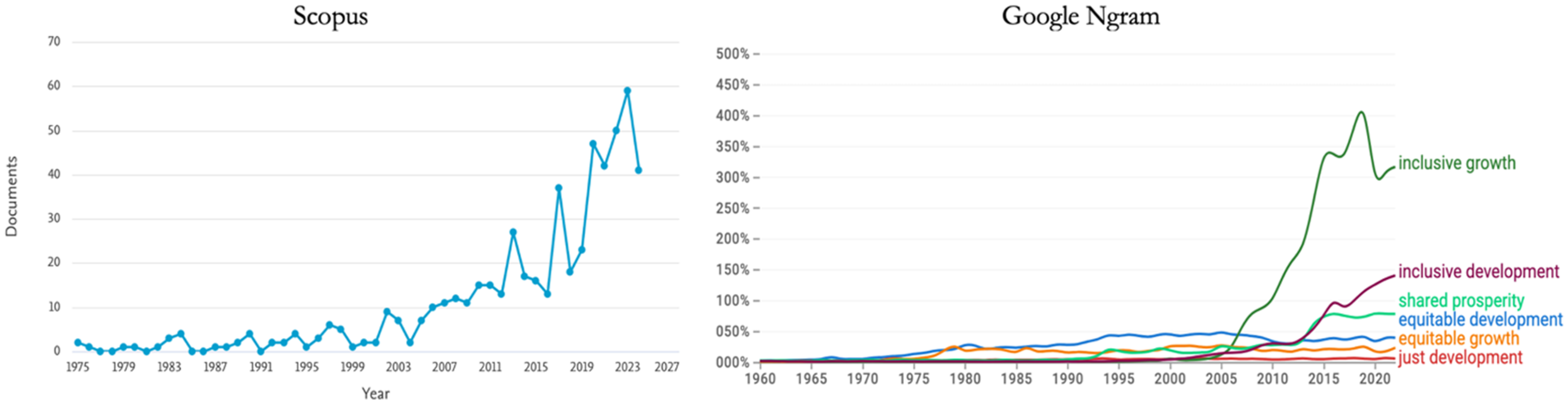
Evolution of equitable development inquiry over the years (1975–2024). Source: Scopus Database and Google Ngram Search Engine, 2025.
Initially rooted in urban planning and social justice, the notion of equitable development was further refined in the field of community development in the 1980s, focusing on improving the living conditions of low-income neighborhoods through local initiatives and policies that promoted social equity. Academics and practitioners emphasized participatory planning processes where residents had a voice in shaping the future of their communities. This approach, according to Krumholz and Forester (1990), sought to empower marginalized groups and ensure that the benefits and costs of development projects were equitably shared among existing residents. This era also saw the convergence of equitable development with the principles of environmental justice. Scholars and equity activists highlighted how environmental degradation disproportionately affected low-income communities and communities of color, advocating for the fair and equitable distribution of environmental benefits and burdens (Agyeman 2005). The linkage between environmental sustainability and social equity became more pronounced with a landmark publication in 1987 by the Commission for Racial Justice titled “Toxic Wastes and Race in the United States.” The report documented the disparate impact and damaging conditions of hazardous waste sites on minority communities (Commission for Racial Justice 1987), galvanizing the environmental justice movement, media reports, and academic inquiry on equitable development that included the rights to a healthy environment in the 1980s. Subsequently, the principles outlined in the report influenced planning practices and environmental policies, ensuring that equity considerations were integral to the built environment and decision-making (Bullard 2007).
Fast forwarding to the twenty-first century, academic discourse on equitable development saw a significant shift from the environment and earth sciences back to the realms of economics, business, management, and social sciences (see Figure 2). With increasing awareness of income disparity and growing unemployment, economists and policymakers started exploring how economic growth could be more inclusive, analyzing the effects of tax policies, labour market regulations, and social welfare programs on different population groups (Piketty 2014). This era saw the emergence of concepts such as “inclusive growth,” “equitable outcome,” and “shared prosperity” which aligned closely with equitable development (Stiglitz 2012; Rodríguez-Pose and Wilkie 2018). It is, however, important to note that academic discourse and policies during this period did not focus only on increasing GDP but also on ensuring that the benefits of growth were human-centered or shared across different segments of the population, emphasizing the well-being of individuals and communities. This included initiatives to improve access to housing, education, healthcare, transport, energy, and economic opportunities for disadvantaged groups and communities. An example of this shift was the adoption of the Sustainable Development Goals (SDGs) by the United Nations in 2015, underscoring the importance of reducing inequalities, promoting sustained and inclusive economic growth, and ensuring access to quality education and healthcare for all (United Nations 2015).
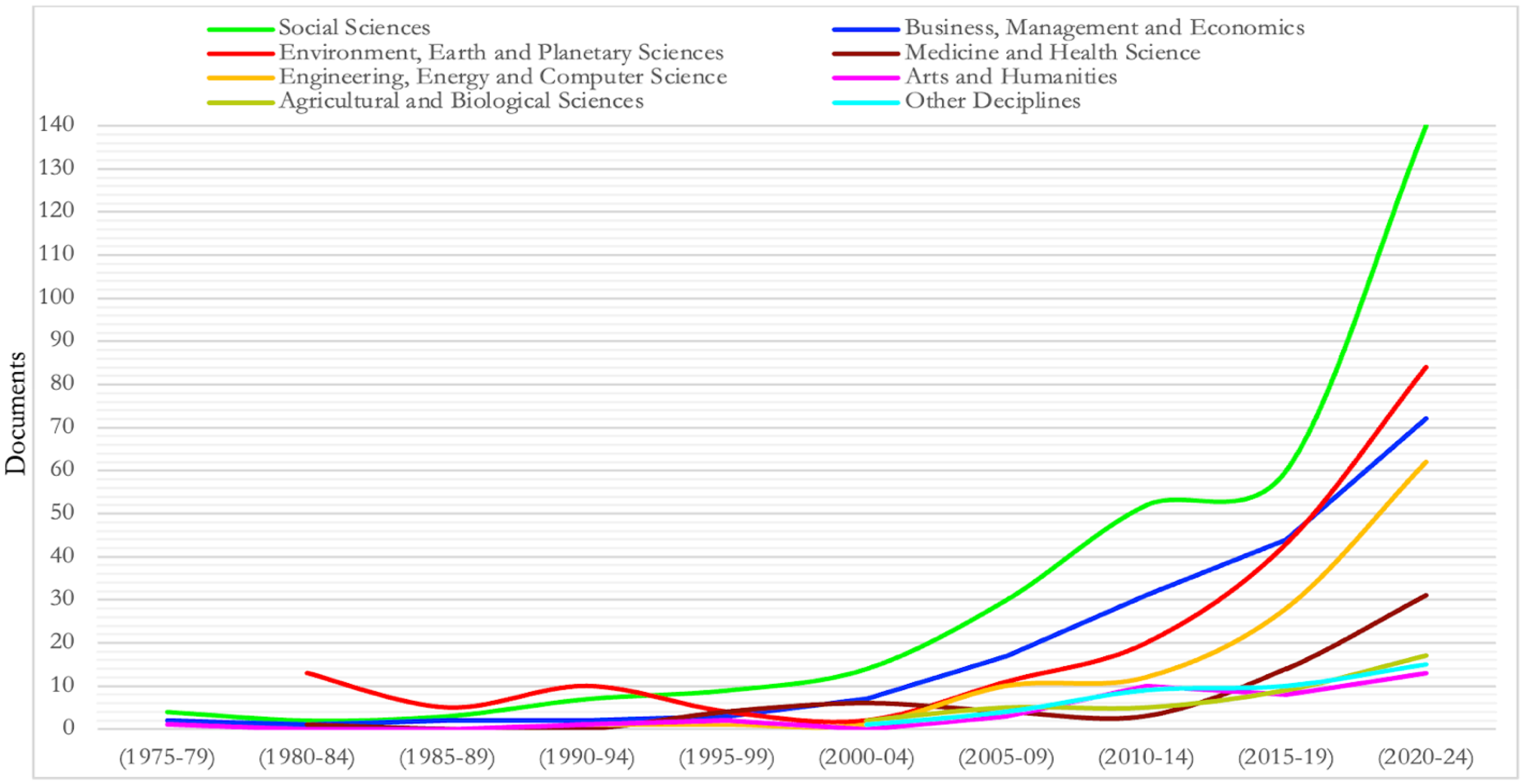
Analysis of the evolution of equitable development inquiry across disciplines. Note: Scopus defines economics as a field outside of Social Sciences. Source: Scopus database, 2024.
Following the SDGs, equitable development significantly evolved to integrate public health considerations. The COVID-19 pandemic further exposed the deep health disparities that exist within communities, prompting a re-evaluation of equitable development practices through a public health lens (Marmot 2020). Consequently, equitable development discourse and practices in recent times have seen growing interest from public health experts, including in medicine, nursing, and other health sciences (see Figure 2). They advocate for policies and practices that address the root causes of health disparities, recognizing that social, economic, and environmental inequities directly impact health outcomes. This includes ensuring access to adequate healthcare, healthy food, and safe living conditions for all communities. Public health integration into equitable development is further exemplified by initiatives such as the Health in All Policies (HiAP)—an approach that aims to reduce health inequities and improve the health of communities by integrating and articulating health considerations into policymaking across sectors (World Health Organization 2014).
While the notion of equitable development has evolved over the years to cover a range of academic disciplines and practices, including in engineering, energy, agricultural, and biological sciences, it resides primarily in the social sciences and environment and planetary sciences as well as economics, business, and management fields (see Figure 2), disciplines that are adjacent to urban planning and social justice activism. For example, in sociology, equitable development is studied in the context of social stratification and mobility, examining how systemic and structural inequalities along the lines of race, wealth, income, gender, etc., can be dismantled to create more just societies (Wilson 2009) while public policy research often uses quantitative methods to assess the impact of different interventions, aiding in designing and implementing policies that promote equity (Sen 1999). Geographers, architects, and engineers also analyze spatial and design patterns of development interventions, exploring how social and spatial disparities can be addressed through equitable planning and implementation of projects (Harvey 2005).
Unsurprisingly, most of this scholarship stems from the United States (see Figure 3), driven by the civil rights and environmental justice movements from the 1960s to the 1980s (Agyeman 2005; Bullard 2007). However, researchers in the United Kingdom, India, Australia, Indonesia, and China, among other countries, have also undertaken significant studies and reports to analyze equitable development. In India, numerous studies on equitable development have been carried out on its vast socio-economic diversity, including a report from Books for Change (2014) which provides a comprehensive analysis of exclusion and inequity across various groups and sectors (education, health, and employment). The legacy of apartheid in South Africa also had a profound impact on equitable development studies. A series of publications discusses the disparities in income, education, and access to services post-apartheid, proposing measures to foster a more inclusive society and achieve equitable development (Human Sciences Research Council 2013).
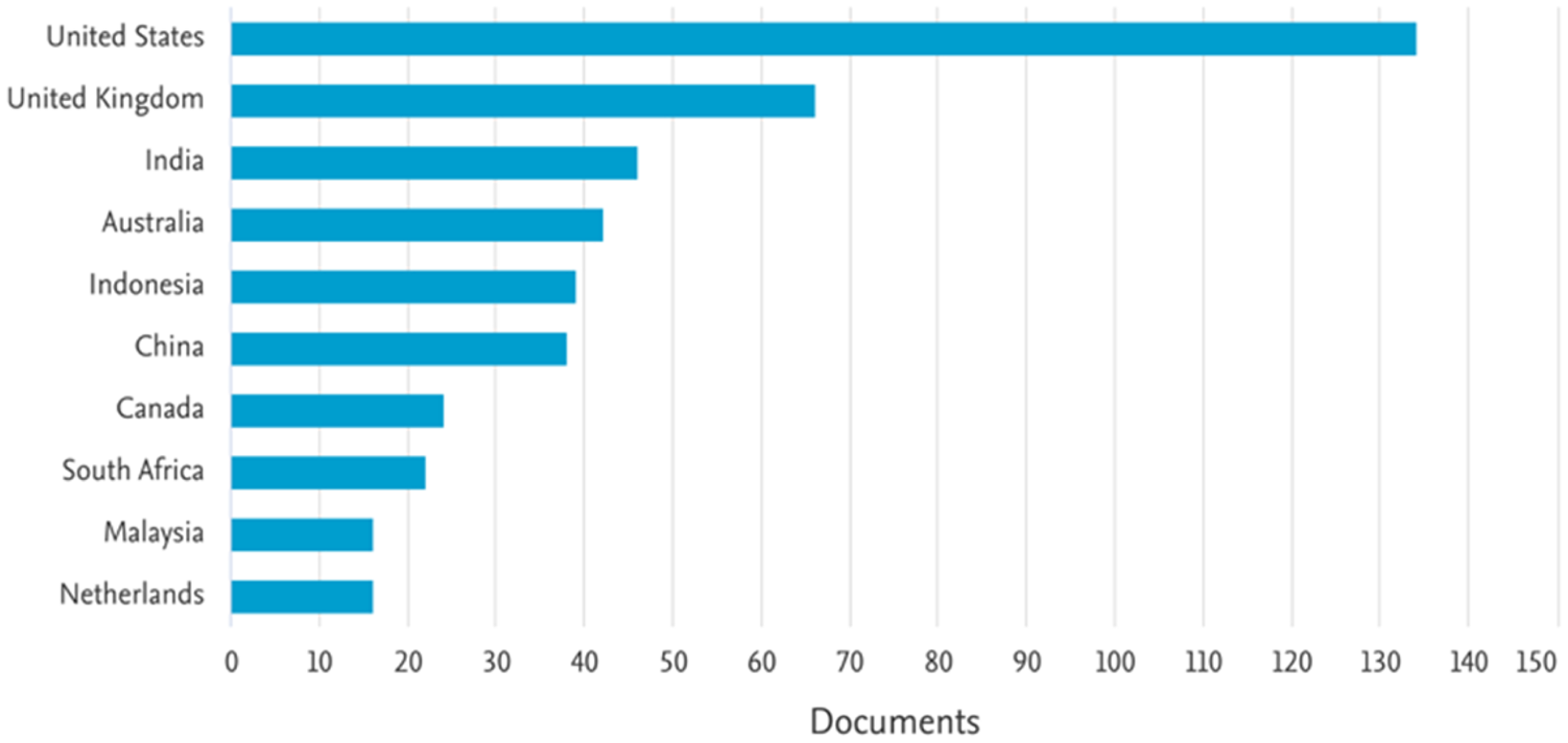
ED Inquiry by country/territory (1975–2024). Source: Scopus Database, 2024.
Documents are primarily (86%) in the format of peer-reviewed articles, book chapters, and conference papers linked to organizations such as the World Bank and the World Economic Forum; the remainder are books and short pieces. Insights from this literature have led to the development of applied toolkits to support more equitable development. For example, an “Equitable Development Toolkit” in the United States outlines strategies for ensuring that marginalized communities and groups benefit from growth (PolicyLink 2015). Currently, in the US and Canadian context, people who have been marginalized by development are considered to include Black people, people of color, Indigenous peoples, immigrants, people with disabilities, under-resourced people, and countless other forms of human diversity based on race, ethnicity, gender, sexual orientation, religion, and so on (Cullen and Pretes 2019). This toolkit has been influential in guiding local governments and community-based organizations in implementing plans and policies that address disparities in wealth, housing, education, health, and access to resources or inclusive economic opportunities.
Whether through comprehensive reports, targeted studies, or policy toolkits, the evolution of equitable development through these efforts and across disciplines and territories since the civil rights movements of the 1960s underscores the global commitment to reducing inequalities and fostering more just and inclusive societies. With a theoretical framework and growing evidence base in the academic literature, the onus is increasingly on organizations and governments to collaborate across various fields and apply knowledge to action.
Methods Used across the Different Studies
Equitable development studies have applied a range of methods, both theoretical and empirical, across academic disciplines to understand and address disparities in communities. Almost half of the documents reviewed are theoretical. These studies are largely within the environment and social science disciplines, including economics and the built environment (urban planning), and focus on exploring and developing concepts, strategies, and frameworks to promote fairness and inclusivity. They examine literature, policy documents, and reports to propose and refine frameworks or guidelines that could foster equitable outcomes. For example, the Bowdler et al. book (2017) combines analysis of best practices, implemented policies, and case studies to provide a path for economic mobility and regional economic growth in cities. Others explore social equity and environmental justice theories, adapt them to local policy planning, and suggest frameworks for fair access to societal resources. These theoretical studies frequently recommend policies that prioritize community needs, social equity, and sustainable development practices.
Empirical studies use mostly descriptive approaches based on archival research or primary data (surveys or interviews); just a few (deploy causal or quasi-experimental approaches. Several studies (29.6%) adopting an archival method are from the social science disciplines, including economics and the built environment. These analyze historical data, public records, and existing datasets to examine how past policies, economic structures, and societal changes have affected equitable development over time. Some studies, for example, assess census data, housing records, or employment statistics to document persistent inequalities in income, housing quality, or access to services like education, health care, etc. This approach is valuable in understanding long-standing structural inequities and trends within communities, providing a historical context for current challenges, and charting a pathway. Descriptive studies (19.4% of the total) employ surveys, case studies, and interviews to gather data on individual or community-level experiences, perceptions, and outcomes. This approach enables researchers to collect responses from diverse populations to understand disparities in access to resources, employment, education, and health services while also offering insights into how equitable development initiatives function in practice. Studies that employ causal research methods, on the other hand, aim to identify and measure endogenous factors that drive or inhibit equity by manipulating variables under controlled conditions. These studies are quasi-experimental, examining the effects of policy interventions, such as subsidized housing or workforce training programs, on different communities’ socioeconomic outcomes. By controlling variables, researchers gain a clearer picture of how some interventions impact different groups, allowing for a more targeted approach to equity-oriented policymaking. Used mostly by researchers in economics and urban planning, these studies test specific policies to see which produces the desired outcomes.
Together, these methods create a complementary and multifaceted approach to studying equitable development across academic disciplines. Archival research provides historical context, theoretical research outlines principles, causal research tests interventions, and descriptive research captures subjective experiences and the nature of disparities. However, compared with other disciplines such as health that have developed an extensive evidence base for policies, equitable development research is clearly still in its infancy and generally fails to identify which policies are the most effective at producing equitable outcomes.
Definitional Dimensions of Equitable Development
How Were the Definitions Presented?
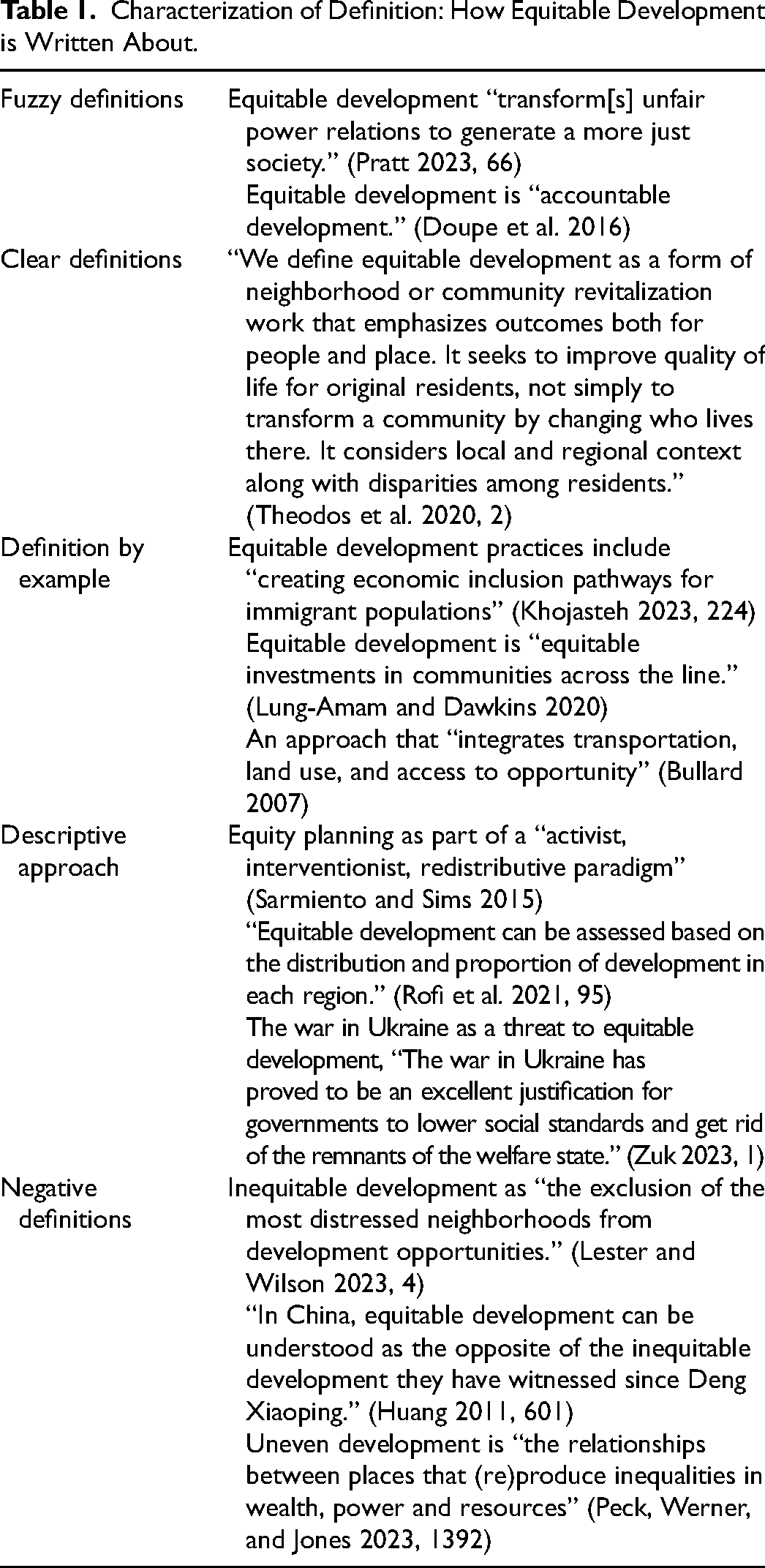
As detailed in the previous section, researchers across numerous disciplines and contexts have focused on equitable development, and its usage has increased exponentially in the past two decades. Despite its increasing prevalence and resonance, the term lacks conceptual coherence within and across disciplines. Scholarship often refers to equitable development without explicit definitions while organizations define it but tightly bound the term. A report by the Urban Institute on the usage of equitable development in practice found that definitions, “often reflect the perspective of particular organizations and professions” (Schilling, Fu, and Freemark 2024). The articles and reports included in this analysis represent only a small share of the literature on equitable development; but notably, they either provide an explicit definition or attempt to explain or delimit equitable development in a meaningful way. Just 29 documents articulate clear definitions, while 45 others provide examples of equitable development processes and outcomes. Of these, 16 documents employ a descriptive approach and named particular conditions within the context of empirical studies that exemplify equitable development, while in contrast, 14 provide examples of what was not equitable development or conditions indicative of an absence of equitable development. Definitions are often almost tautological, e.g., “equitable development” is “equitable investment” or “accountable development” (Table 1).
Characterization of Definition: How Equitable Development is Written About.
The majority of the documents are empirical studies and thus the application of the term equitable development was often in reference to very specific conditions or cases. These note specific data points that could signal equitable and inequitable development such as life expectancy across neighborhoods, housing conditions, commute times, unemployment, poverty, wealth and income, proximity to open space, healthy and affordable food, rates of obesity and blood pressure, proximity to environmental hazards and rates of asthma (Curren et al. 2016). Data points selected depend upon the scale upon which equitable development is considered, further explored in the next section.
One of the major themes in the definitions and descriptions of equitable development is redistribution as a remedy for past inequalities and ills. These articles and books cross scales, asserting development's redistributional imperative on the city, regional, and global scales. Redistribution aligns with Harvey’s (2012) assertion that uneven spatial development can only be remedied by an equal distribution of political and economic power which stems from Lefebvre's (2003) field-defining “right to the city.” This stream of scholarship inspired many of the process—focused ideas of justice in the city—asserting a right to participate in the actual process.
Despite these origins, redistribution appears in these documents to be split between process- and outcome-oriented understandings of equitable development. Economic papers focus explicitly on the redistribution of income as a desired outcome of equitable development (Jomo 2003a; Durán 2019; Piketty 2014) and point to economic metrics as indicators of successful equitable development, for example, as described by Dev and Rao (2010), “GDP is a necessary condition but employment and poverty alleviation are sufficient conditions for equitable development” (27). Development scholars often support redistribution; for example, a study of the development of a rural tourist area in Indonesia asserts that the redistribution of resources and development itself is tied to the notion of fairness and that achieving equity in education, health, and economic growth is essential in working towards parity (Rofi et al. 2021). Urban studies scholars by contrast propose a more comprehensive redistribution, including resources, political power, and access to participation (Krumholz and Hexter 2019), redistributional infrastructure as a result of equitable and inclusive programs (Sotomayor 2015), and the proposal of an “activist, interventionist and redistributive paradigm” to guide all planning to achieve real equitable development that is not siloed to one facet such as housing (Sarmiento and Sims 2015). This literature is often critical of interventions such as community development corporations (CDCs) for failing to successfully redistribute resources, thus requiring an insurgent intervention in urban planning (Laskey and Nicholls 2019). For some, conceptions of redistribution of resources have evolved towards a participatory notion of serving the disenfranchised. For example, Krumholz's work consistently has a “pro-poor” orientation and contends that it is imperative for urban planners to address poverty and racial segregation with an outcome-focused orientation.
Also complicating a conception of equitable development as redistribution is the issue of identity. Redistributive models of justice fall short as redistributing assets consolidates individual identities into one category: haves and have nots, limiting the multiplicity of identities that people value and are imperative to understanding their lived experiences (Young 1990). Likewise, in social movements, urban spaces manifest a multiplicity of identities in each individual, each of which requires new ways of understanding of relating beyond class binaries (Tajbakhsh 2001). 3
Redistribution provides in some ways a practical solution to the instances of uneven distribution and inequitable development. However, as we see in the range of definitions and understanding of this term, what is to be redistributed, to whom, and how, depends greatly on the context which crosses scales and jurisdictional boundaries, discussed next.
Scale
Equitable development works across multiple scales: Overlapping levels of government, from the community to the nation-state, shape equitable development conditions, processes, and outcomes, presenting real challenges for both understanding and achieving equitable development. Further, specific contexts shape the interpretation and evaluation of equitable development and dictate the solutions prescribed.
Of the articles and policy documents analyzed, 31 were focused on the urban and sub-urban (neighborhood and village) scale, 17 on the regional/provincial scale, 22 on the national scale, and 12 on the international/global scale. Urban- and suburban-specific publications focused on community-building programs, policies, and institutions seen as aiding or inhibiting equitable development such as CDCs and community benefits agreements, conservation and the environment, poverty, racial segregation, displacement, housing, public services, investment, health and education. By contrast, publications at the regional level almost all discussed a need for redistribution of assets, resources, and investments in order to achieve equity and develop equitably. These publications drew their evidence of inequitable development from economic indicators such as income and GDP favoring macroeconomic data points. Publications on equitable development at the national level frequently considered the urban–rural divide and regional disparities, and geopolitical issues such as the “resource curse” and war. National-scale articles, which were typically descriptive in approach, tended to frame equitable development as shaped by both economic and social elements.
Global and internationally focused papers centered on foreign direct investment, aid, and the institutions facilitating international development. These empirical papers used both singular and comparative case study methodologies, notably either within specific countries or regions.
The remaining 17 papers in the sample were theoretical or framework-based as opposed to empirical. As expected, these papers considered institutions and processes instead of pointing to specific individual-level indicators of equitable development and outlined the preconditions for equitable development. Among these papers, there was a shared focus on community empowerment, equity in the process, reimagining partnerships, uplifting marginalized and disenfranchised populations, and providing opportunities for expression and shared political power. Authors of these papers crossed scale in terms of their expertise and domain yet shared a lexicon of engagement and empowerment.
Process vs. outcome
For some, equitable development is a process, while others target the distribution of resources and parity in physical conditions. The debate over whether idealized cities are achieved via a process- or outcome-oriented approach has dominated the planning literature for decades. Communicative planning, inspired by Habermas, asserts that situated planning, creating shared meaning, and striving toward mutual understanding among stakeholders work towards just planning, emphasizing process over metrics (Innes 1998). However, the debate about the just city refocused attention on outcomes: according to Fainstein (2011), the just city is a place “in which public investment and regulation would produce equitable outcomes rather than support those already well off.” The idea of a just city would not only reorient resources towards the disenfranchised but also create a utopian good city grounded in democratic practice and shared rights (Amin 2006; Marcuse et al. 2009).
Of those concerned with the equitable development process, there was a shared focus on participation and political power. A process in their view could not be equitable without all voices being represented and included. In their policy manual, Bell, Carl, and Snyder (2004) argued that access to participatory opportunities must be “institutionalized in the urban planning process.” Lung-Amam (2021) asserts that development is only equitable when it is a direct response to priorities voiced by the community. Other process-oriented pieces assert that policy mechanisms and regulations are the processes through which equitable development can be achieved (Jomo 2003a; Jomo 2003b) as part of “accountable development” (Doupe et al. 2016), suggesting a feedback loop for equitable development processes. Insurgent urban politics scholars by contrast argue that institutionalized urban planning processes are not conducive to achieving equitable development, given power imbalances and the dominance of privileged voices, and as such, insurgencies are imperative for achieving real community-generated and beneficial results (Laskey and Nicholls 2019). Interestingly, others argue that equitable processes do not yield equitable outcomes and thus should be top-down, at least in the case of green space allocation (Francis, Disney, and Law 2023).
Outcome-oriented approaches to planning follow Fainstein's imperative, adopting specific indicators of inequity. Krumholz and Forester’s (1990) and Kuhonta’s (2011) conceptions of equitable development note that the presence of poverty is indicative of a lack of equitable development, and while Krumholz and Forester advocate for providing the disenfranchised with a wider range of choices, he focuses on education, profession, and healthcare rather than political power. Likewise, other equitable development authors focus on disparities and their remedies. Racial disparities in specific outcomes, including education, income, environmental quality, and transportation, provide evidence of inequitable development (Curren et al. 2016). Yet, progressive policies such as fair housing can have unintended consequences that result in the displacement of disadvantaged residents from communities and economic opportunity, and equity language can be co-opted by profit-seeking interests, as in the case of some mixed-income development (Chapple 2014; Chaskin and Joseph 2019).
Some view equitable development as both a process and a specific set of outcomes. Equitable development can be both empowerment and access to specific social and economic opportunities, including access to resources, decision-making authority, and representation (Jones 2004; Krings and Schusler 2020). Krumholz in his 2019 book with Hexter builds on his earlier conceptualization of equitable development, adding that a redistribution of resources enabled by participation and the distribution of political power to disenfranchised communities are essential to achieving this development. According to Lung-Amam (2020, 2021), equitable development consists not only of equitable investment but also of processes that utilize methods such as story mapping which are accessible to everyday citizens. Thus, the use of this term has varied over time along with our collective understanding of what achieving equitable development looks like.
Domains
Equitable development spans disciplines and domains, including economy, built environment, environment/sustainability, and health. Economics and economic development led the field representing 42 of our 101 citations, followed by built environment and planning with 36, environment/sustainability with 13 and 6 in health. Development has long been the territory of economics, drawing from indicators such as GDP, GNP, and poverty rates as indicators of whether or not development has been successful (particularly on the national scale) (Baster 1972).
Economics and economic development
The economics literature on equitable development frequently discusses redistribution of income and resources (Kuhonta 2011; Piketty 2014; Lamont 2017) and mechanisms such as taxes to facilitate a transfer of wealth (Rose 2002; Jomo 2003b; Glaeser and Gyourko 2018). For those concerned with civil rights as well as economic development, democracy is key to equitable development (PolicyLink 2015). Discussions of rights also recur throughout the built environment literature discussed next.
Built environment and planning
The built environment and planning literature focuses on place and emphasizes policy outcomes and community development mechanisms such as strengthening regional governance (Spink 2012; Chapple 2015), land banks (Small and Minner 2024), polycentric design (Vandermotten 2007), community land trusts (Crabtree et al. 2012; Wates 2014), and inclusionary zoning (August and Tolfo 2018) along with an emphasis on participation. As described by Rantissi in their study of Jaffa, “there must be a concentrated emphasis on social inclusion and equitable development, involving improvements in affordable housing, public services, and community decision-making.” (Rantissi 2024, 473). Specifically, 16 of the 36 citations spoke about community empowerment, the need for participation, increasing resident agency, and centering resident voices in order to achieve equitable development. Case studies illustrate how organizations join people and place strategies for equitable development (Bowdler et al. 2017). For example, for Detroit, equitable development means avoiding non-physical (cultural and economic) displacement, as well as development that undermines existing community networks (Mah 2023).
Climate/sustainability
Rather than equitable development, the climate and sustainability scholarship focuses on “sustainable development,” which similarly suffers from “broad appeal and little specificity” (Parris and Kates 2003). While sustainable development has expanded over the last few decades to include social and economic metrics (Bell 2020), the clear emphasis on the environment rather than on equity among communities is the reason why ‘sustainable development’ was not included as one of our search terms. This literature centers on environmental justice and equitable access to sustainable development (Goyette et al. 2024; Heffron 2021; Krings and Schusler 2020; Winkler 2011; Winkler, Letete, and Marquard 2013) with a focus on remedying toxic exposures and pollution (Commission for Racial Justice 1987; Stiglitz 2012), tree canopy (Francis, Disney, and Law 2023), and food access (Khojasteh 2023). Many allude to sustainability as a vital piece of equitable development (“sustainable equitable development” or “equitable and sustainable development”), and articles that focused on climate change and sustainability also frequently referenced the need for more democratic practices and economic development (Commission for Racial Justice 1987; Rose 2002; Winkler 2011; Pratt 2023). Environmental justice emerged as a resonant and important theme in this stream of scholarship, with significant overlap with the health field, discussed next.
Health
Health scholarship and education have in the past few decades given serious attention to social determinants of health (Braveman, Egerter, and Williams 2011), or the “sensitivity of health to the social environment” including income, geographical setting, race, ethnicity, gender and structural setting (Marmot and Wilkinson 2005, 1). Equitable development scholars thus discuss the need for a health equity impact assessment in all future plans (Armijo and Kauffman 2019; World Health Organization 2014), leveraging community schools as a place to provide health services (Oakes, Maier, and Daniel 2017), equitable access to healthcare (Shaw, Brewer, and Veinot 2021), and social determinants of health (Marmot 2020, Nele, Kelly, and Avendano 2021). Equitable development thus has implications far beyond the built environment or the allocation of capital and infrastructural resources, by actually impacting life expectancies. Despite the dearth of equitable development research within the health discipline, this literature outlines conditions, outcomes and aspirations similar to those in the fields of economics, built environment, and environment.
The remaining articles evaluated were in fields of geography (2) and community advocacy (1), bridging disciplinary divides by noting the economic origins of uneven development and advocating for planning processes that emphasize empowerment (Hay 2000; Harvey 2005; Causa Justa :: Just Cause 2014).
Across domains, there is generally agreement that the “development” in equitable development may refer to either human or physical (real estate) development. Many are also targeting disparities that occur across space, e.g., concentrations of poverty or proximity to toxic pollutants. However, in some domains, equitable development approaches need not be local or spatial to be effective. For example, the economic and fiscal policies recommended by economists to redistribute income typically are implemented at the state/provincial or national scale. Although environmental justice is typically a local issue, equitable development of environment, sustainability, and climate may also be implemented broadly (e.g., penalizing manufacturers with high emissions). Likewise, equitable development for health may be aspatial – e.g., health impact assessments for policies or general improvements to health services – or locally based (e.g., food access). In contrast, in the urban domain, equitable development nearly always targets disparities in a particular neighborhood or even a specific site.
Applied Frameworks: Putting Equitable Development into Action
Organizations including PolicyLink, the Urban Institute, the United States Environmental Protection Agency (USEPA), and the American Institute of Architects (AIA), among others, have developed equitable development frameworks to guide practice (USEPA 2013; PolicyLink 2015; AIA 2021; Schilling, Fu, and Freemark 2024). All four frameworks center on the principles of including diverse identity groups, reducing disparities, providing access to the opportunity needed to thrive, and avoiding displacement. The Urban Institute, USEPA, and AIA also emphasize community empowerment and engagement to ensure that all voices, especially those of historically marginalized groups, contribute to the decision-making process (Melcher 2014; Arnstein 2019). The Urban Institute framework also includes the idea of repairing past harms, and PolicyLink adds a focus on dismantling systemic racism. Other key themes that appear across these and other frameworks include a fair distribution of resources, sustainability, and accountability. Fair distribution of resources ensures that social and economic benefits, services, and opportunities are equitably allocated across different populations and spaces (Atuguba 2013; Lamont 2017). The sustainability principle works to create resilient communities that can thrive over the long term while accountability ensures that policies or decision-making processes are transparent, and the implementation can be monitored and evaluated to meet equity goals (Wheeler 2013; AIA 2021).
To put equitable development into action, planning professionals, architects, and practitioners from other disciplines apply various strategies and tools. The PolicyLink Equitable Development Toolkit (now updated as the All-In Cities Policy Toolkit), for instance, comprises 27 tools aimed at reversing patterns of segregation and disinvestment, preventing displacement, and promoting equitable revitalization, many (though not all) tested via empirical studies. PolicyLink's housing anti-displacement tools, for example, work to increase affordable housing by expanding and preserving affordability through inclusionary zoning (IZ), housing trust funds, and community land trusts (CLTs). IZ is one of a set of land value capture tools, including community benefits agreements, developer exactions, density bonuses, tax increment finance, and others, that recapture land-based capital gains for the public good (Wolf-Powers 2024); studies suggest however that it has minimal impacts on supply and affordability (Schuetz, Meltzer, and Been 2011; Wang, Kang, and Fu 2025). CLTs, where nonprofit organizations acquire and manage land, are an underutilized but effective another prominent tool implemented to address speculative real estate practices in cities and ensure that land and housing remain accessible to low- and moderate-income residents (Crabtree et al. 2012; Wang et al. 2019). Tools such as just cause legal protections, legal representation, rental registries, and rent stabilization may work to prevent displacement of low-income communities and protect vulnerable tenants (Chapple et al. 2023).
Inclusive economy and economic opportunity tools also work to dismantle barriers to employment and increase access to good jobs through local hiring and living wages (e.g., Dube, Lester, and Reich 2010). Where people live, work, and play has a major impact on their health, so health equity and place tools aim to reduce environmental risk and build health-promoting neighborhoods via access to healthy foods, equitable food hubs, urban agriculture, community gardens, farmers’ markets, local food procurement, grocery stores, and corner stores, among others (Larson, Story, and Nelson 2009; Burgaz et al. 2023). Moreover, since land use planning drives public and private development decisions, land use and environment tools work to create healthy communities and ensure that new development meets residents’ needs via community mapping, infill incentives, transit-oriented development, and more (e.g., Thomas and Bertolini 2020).
Beyond the built environment, health practitioners apply equitable development frameworks and principles to reduce health disparities or promote health equity and access, for example via the Affordable Care Act (Artiga 2013). Educational initiatives include equitable funding formulas that allocate more resources to schools serving low-income and minority communities and increasing diversity in the faculty (Oakes, Maier, and Daniel 2017). Environmentalists advocate for policies to promote the equitable distribution of green spaces and clean energy; efforts to combat climate change and its impacts or environmental hazards; and policies that support workers and communities affected by the shift to a green economy (Heffron 2021).
Even as these equitable development frameworks and tools have multiplied, the organizations promoting them have largely failed to incorporate these frameworks and have tended to overlook the critical perspectives emerging from scholarship. Critical urban theorists typically extend Harvey’s (1978) critique of how planners support the status quo, suggesting that these well-intended interventions are not radical enough to address systemic inequalities within a capitalist system. Land value capture mechanisms may serve to legitimize the right to commodify, may function as a funding rather than a redistributive mechanism, and may also exacerbate inequality (Wolf-Powers 2024). Likewise, critics of community development initiatives like CDCs have long argued that they are too under-resourced and not focused enough on local empowerment to be effective (e.g., Stoecker 1997; Laskey and Nicholls 2019). Even the literature supportive of equitable development acknowledges challenges in reaching scale (e.g., Martin et al. 2024 on community land trusts).
These applied frameworks suggest specific tools and outcomes at local, urban, and sometimes regional scales, often in piecemeal fashion: culture, housing, economic development, and sustainability are often treated as separate issues. As such, these frameworks guide urban planners toward achieving small-scale equitable development outcomes within the scope of their roles and existing jurisdictions. However, they lack guidance for planners to address the systematic and systemic forces behind inequitable development, which require change at regional, national, and international levels (Chapple 2014; Smith 2020; Young 1990). Paradoxically, equitable development projects occur at the regional and national scale within the Global South due to investment and imposition from international financial institutions in the Global North, while the Global South has had little opportunity to contribute to the global conversation about equitable development (Smith 2020; Sanghera and Satybaldieva 2021; O’Connor 2025). International financial institutions, such as the World Bank, are funded primarily by Global North countries but exert significant influence over Global South policy-making processes, often overshadowing local expertise and voices (O’Connor 2025).
In certain disciplines, there is broad agreement on equitable development approaches. For example, economists mostly accept the need for some redistributive policies at the national level (Berg and Ostry 2017), and policies to improve equitable food access have generally performed well in evaluations (Smith and Gregory 2013). But evaluations of equitable development interventions in the built environment, from the parcel to the community level, have often found mixed results. For example, inclusionary zoning has yielded few units and may slightly increase local housing prices, rent stabilization can be exclusive, community benefit agreements fall short in implementation, transit-oriented developments typically lack affordable housing, and mixed-income neighborhoods may not be truly inclusive (Wolf-Powers 2010; Schuetz, Meltzer, and Been 2011; Pastor, Carter, and Abood 2018; Chapple and Loukaitou-Sideris 2019; Chaskin and Joseph 2019). The push for more equitable development approaches tends to ignore such concerns and thus may result in unintended consequences.
Geographic Analysis of the Literature: Power and Diffusion in Equitable Development
Of the papers included in the analysis, 47 (just under half, dominated by the United States) relied on empirical analysis or examined historical and institutional arrangements specific to the Global North. In comparison, 15 studies focused on the Global South, and four on other regions (China, South Africa, and Ukraine).
The papers originating from the Global North predominantly focused on urban-level interventions (nearly 50%), with 25% providing interventions at the national level, and 12% at the sub-national regional level. The remaining papers adopted a theoretical approach and did not provide any specific scalar analysis or interventions. In contrast, the Global South studies focused about equally on the urban, national, sub-national regional, and international region levels. This variation reflects urban development governance and funding in the Global South, which occurs at the regional and national scales due to neoliberal restructuring, taxation schemes, and foreign direct investment from international financial institutions (Mathur 2024; Véron 2010; Woods 2003). In contrast, much of the Global North operates under a federal system with urban planning governance managed by local governments, while a national level provides support for specific projects.
The tendency to study equitable development distinctly in the normative global North and South has led to insufficient diffusion of knowledge and mutual learning across contexts (Pike, Rodríguez-Pose, and Tomaney 2014). Few studies address equitable development across global north and south contexts, with the exception of Stiglitz (2012)'s examination of how the proliferation of mega-cities exacerbates inequity and two sustainable development studies (Winkler, Letete, and Marquard 2013; Pratt 2023). However, studies do examine the relationship between the normative global North and South as factors in (in)equitable development (Harvey 2005, Rigby 1993; Ross 2004) and note the lack of equitable development as a shared experience across both the normative global North and South (Sen 1999).
Conclusion
The study of equitable development, as well as the advocacy for policies to reduce disparities, grew out of the civil rights and environmental movements in the United States. After 2000, the literature on equitable development grew rapidly, expanding from the social sciences and environmental studies to multiple disciplines, including engineering, business, humanities, and health, among others.
Throughout this extensive literature, there is no consistent definition of equitable development, and in fact most documents neglect to define it at all. There is little agreement on the scale at which to implement equitable development policies or whether it should focus on equitable processes or outcomes. Some disciplines (e.g., economics) take a largely aspatial view of disparities, while others (particularly those concerned with the built environment) ground equitable development in particular places.
Although most of the equitable development literature consists of peer-reviewed journal articles, the focus is largely on describing the extent of disparities, rather than evaluating the effectiveness of equitable approaches, or how different approaches work in combination. When research does evaluate equitable development tools, it often focuses on outcomes rather than processes. This is particularly true of the place-based, urban, built environment literature, which often provides cases of equitable development without systematic analysis, due in part to the lack of the large databases and quasi-experimental research designs readily available in economics and health. Thus, local practitioners lack a clear evidence base—particularly one that looks at people within a place—for many equitable development initiatives.
Thus, this review finds clear research gaps in the study of equitable development. To understand the effectiveness of equitable development interventions at a local level, researchers should conduct more systematic studies. Whether qualitative or quasi-experimental in design, these studies should take careful note of the role of intervening factors, local context, market characteristics, and the interaction and tradeoffs of multiple equitable development approaches (e.g., mixed-income communities with healthy food access) as well as unintended consequences (such as displacement).
As noted above, the equitable development literature is global in scope, driven in part by the interest of international development institutions. Despite this breadth, studies often lack a comparative perspective; comparisons that cross continents, regions, and cities could help clarify the role of institutions and governance, as opposed to specific policies and programs, in supporting equitable development outcomes (Robinson 2011). Also, the exponential increase in publications related to equitable development across many different disciplines suggests an opportunity to collaborate across disciplinary silos. Adopting an interdisciplinary approach to the study of equitable development could help harmonize definitions, synthesize knowledge, and create a more rigorous evidence base for practitioners.
Finally, drawing insights from the various definitions and frameworks reviewed, we present a comprehensive definition of equitable development: Equitable development is both a process and an outcome— a multidimensional, justice-oriented approach to growth that actively transforms unjust power relations, ensures accountability, and prioritizes inclusive and sustainable progress for historically marginalized communities. As a process, it emphasizes participatory decision-making, economic inclusion, and intersectional justice to ensure that investments, policies, and planning efforts are designed to redistribute resources, expand opportunities, and remove structural barriers to opportunity. As an outcome, it seeks to improve people's quality of life and their places by addressing economic, social, and spatial disparities while preventing displacement.
Footnotes
Acknowledgments
We are grateful to Mckenzie Diep, Andrew Feng, and Sarah Smith for their research assistance. The Robert Wood Johnson Foundation provided funding for this research.
Declaration of Conflicting Interests
The author declared no potential conflicts of interest with respect to the research, authorship, and/or publication of this article.
Funding
The authors disclosed receipt of the following financial support for the research, authorship, and/or publication of this article: This work was supported by the Robert Wood Johnson Foundation.
