




Abstract
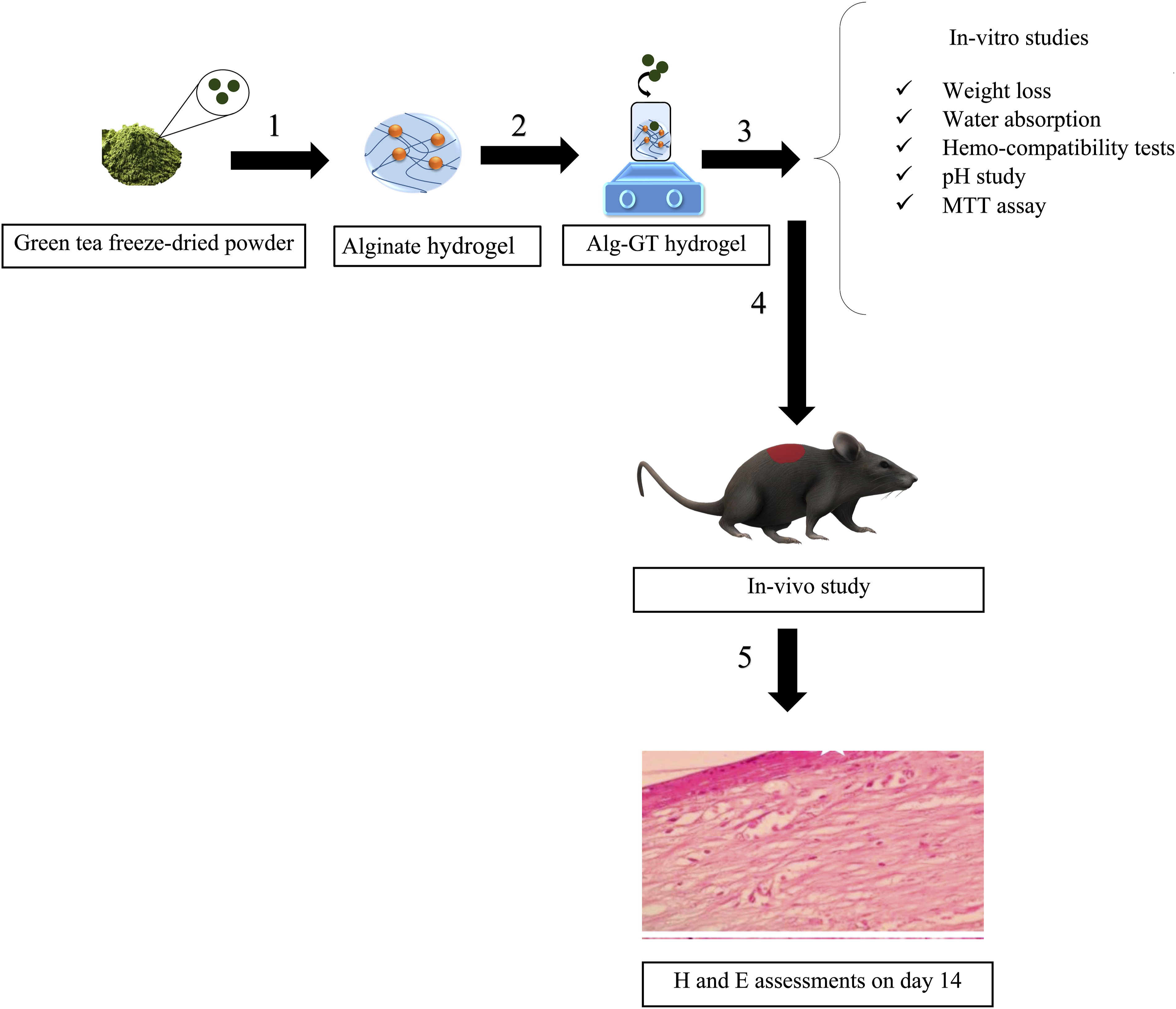
A functional and biocompatible biomaterial is essential for accelerating the regeneration of skin tissue at the wound site. Hydrogel scaffolds in three dimensions show promising candidates for this purpose. This study was conducted to design a novel porous cross-linked alginate (Alg) hydrogel containing green tea (GT) and assess its morphology, swelling, weight loss, hemocompatibility, and cytocompatibility. Ultimately, the created hydrogel’s therapeutic effectiveness was examined in a complete dermal diabetes wound model. The findings indicated that the hydrogel prepared had significant porosity, with interconnected pores around 75.821 µm in size. The weight loss evaluation indicated that the created hydrogel can be degraded naturally, with a weight loss ratio of about 74% for Alg/GT 80 mg after being incubated for 24 hours. Additionally, the study indicated that hydrogel dressings exhibited greater wound closure compared to gauze-treated wounds, which served as the control. The group with GT at a concentration of 80 mg showed the highest percentage of wound closure. The histopathological studies and IHC evaluation for TGF-β1 confirmed the in vivo finding. This study proposes utilizing 3D Alg hydrogels with GT as a wound dressing, but further studies are needed.
Get full access to this article
View all access options for this article.