




Abstract
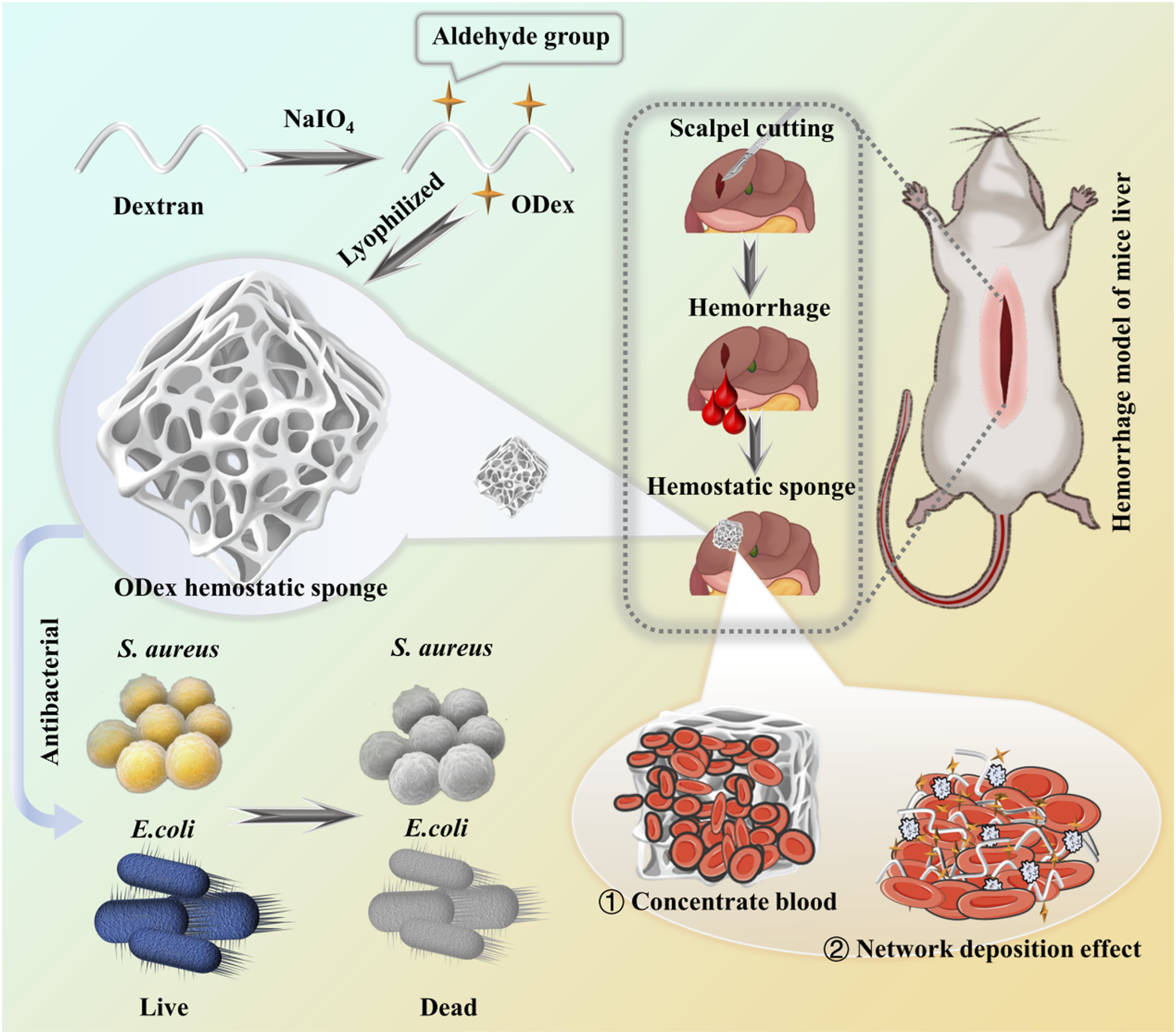
Surgical procedures frequently result in varying degrees of bleeding and infection, which can impede patient recovery, particularly in situations of limited blood supply. Minimizing surgical blood loss and preventing infections remain crucial clinical challenges. To address these tissues, we developed a porous hemostatic sponge by aldehyde-functionalizing dextran. The high porosity and blood absorption capacity of ODex sponges enables them to effectively concentrate red blood cells, platelets, and coagulation factors, forming a blood clot together with the sponge matrix. The aldehyde groups bind to the amines in the tissue, helping to seal the bleeding site. This innovation significantly reduced clotting times in both in vitro and in vivo experiments. Furthermore, the sponge demonstrated excellent biocompatibility and potent antimicrobial activity. These findings highlight oxidized dextran as a highly promising hemostatic biomaterial with strong antimicrobial capabilities, offering the potential for broad clinical applications.
Get full access to this article
View all access options for this article.
References
Supplementary Material
Please find the following supplemental material available below.
For Open Access articles published under a Creative Commons License, all supplemental material carries the same license as the article it is associated with.
For non-Open Access articles published, all supplemental material carries a non-exclusive license, and permission requests for re-use of supplemental material or any part of supplemental material shall be sent directly to the copyright owner as specified in the copyright notice associated with the article.
