




Abstract
This toolkit presents a comprehensive framework for a toolkit intended to increase equity, diversity, and inclusion (EDI) within the medical field and recommendations. We advocate for clear, comprehensive definitions and interpretations of fundamental EDI terms, laying the groundwork necessary for initiating and maintaining EDI initiatives. Furthermore, we offer a systematic approach to establishing EDI committees within medical departments, accentuating the pivotal role these committees play as they drive and steer EDI strategies. This toolkit also explores strategies tailored for the recruitment of a diverse workforce. This includes integral aspects such as developing inclusive job advertisements, implementing balanced search methods for candidates, conducting unbiased appraisals of applications, and structuring diverse hiring committees. The emphasis on these strategies not only augments the diversity within medical institutions but also sets the stage for a more holistic approach to healthcare delivery. Therefore, by adopting the recommended strategies and guidelines outlined in this framework, medical institutions and specifically radiology departments can foster an environment that embodies inclusivity and equity, thereby enhancing the quality of patient care and overall health outcomes.
This is a visual representation of the abstract.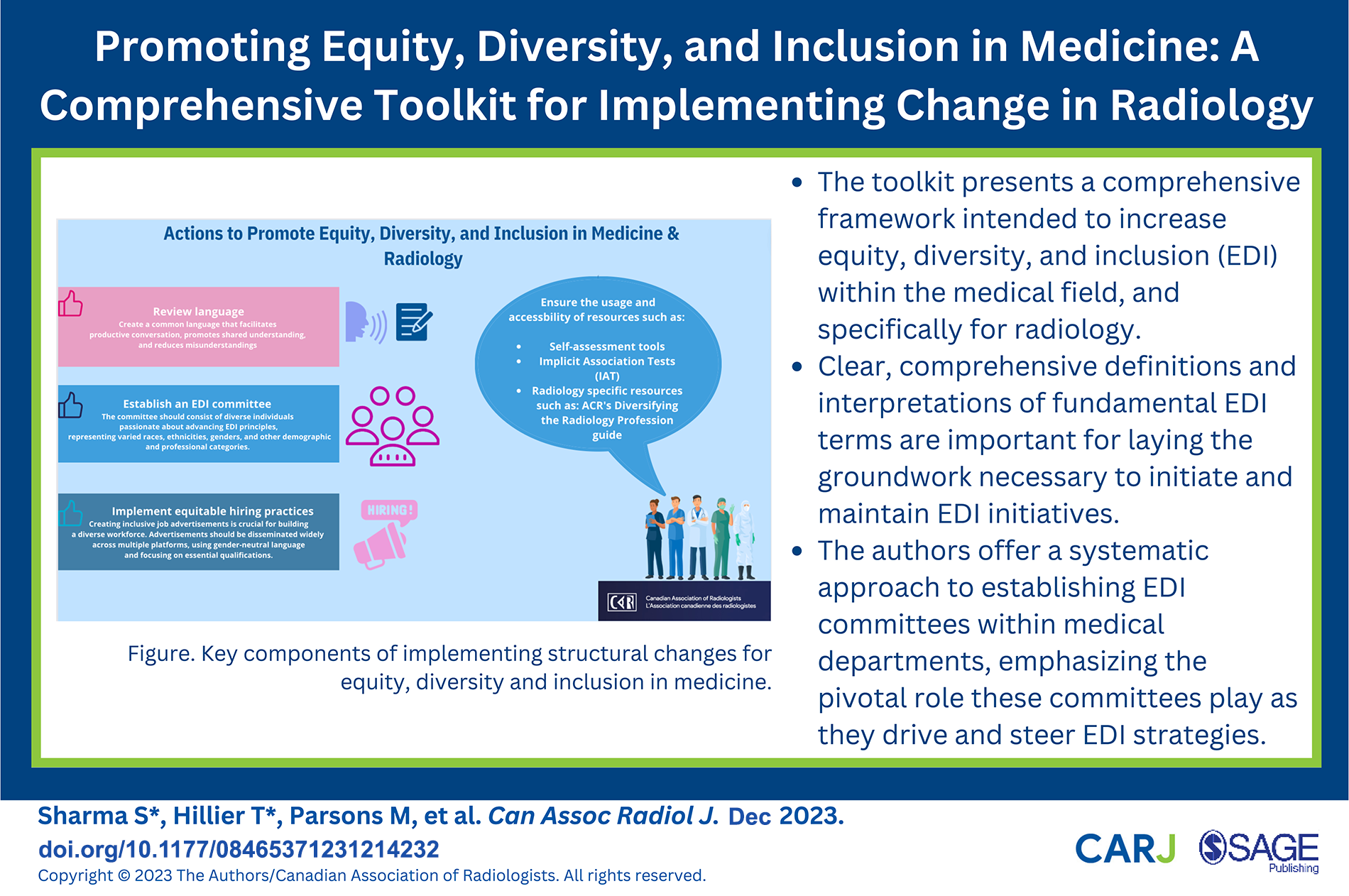
Introduction
Equity, Diversity, and Inclusion, commonly referred to as EDI, is a crucial part of healthcare and medicine, a sector that deals with intricate and sensitive matters related to diverse patient populations and nuanced health issues. 1 With many patients and members of the medical community facing discrimination and inequities daily, it is imperative that EDI values and policies are incorporated into all aspects of medical practice.
Implementing EDI into medicine consists of ensuring equal access to quality healthcare for all, irrespective of race, gender, socioeconomic status, or other diverse backgrounds. 2 It also means ensuring that the field of medicine itself reflects this diversity, both in its workforce and in the research, treatment, and policies it undertakes. 3
However, existing data and research suggest that there is a deficit in the integration of these principles in medicine. 4 Such deficit can be due to various factors, such as deeply ingrained systemic biases, lack of awareness or training, and resistance to change, making it a complex challenge to address. 5
Incorporating EDI within medicine and radiology involves a transformation of existing systems, practices, and perspectives to acknowledge and uphold the diverse needs of both patients and healthcare providers. 6 This journey toward inclusion may encounter challenges due to unconscious biases and a lack of education about EDI.
To facilitate this change, we recommend and provide a comprehensive toolkit framework to serve as a guide for medical institutions to incorporate EDI into their practices. A toolkit in this context refers to a set of resources, guidelines, strategies, and methods that assist medical institutions in promoting and implementing EDI principles effectively.
The toolkit provides a framework with a structured approach to addressing EDI, offers practical solutions to common challenges, and provides resources for continuous learning and improvement. The components of this toolkit include clear definitions of key terms to ensure a shared understanding, guidance on establishing EDI committees to drive and monitor change, strategies for recruiting and retaining a diverse workforce, and resources for assessing and enhancing current practices. 7 These resources may include self-assessment tools, case studies, templates, training materials, and more.
Implementing EDI involves understanding its contents, customizing it to the unique context of the institution, and implementing it systematically. It also involves ongoing monitoring and evaluation, with adjustments made as necessary.8,9 By incorporating the recommendations and resources provided in this toolkit, medical institutions have the opportunity to create an environment that values diversity, challenges systemic barriers, and improves the quality of patient care (Figure 1).
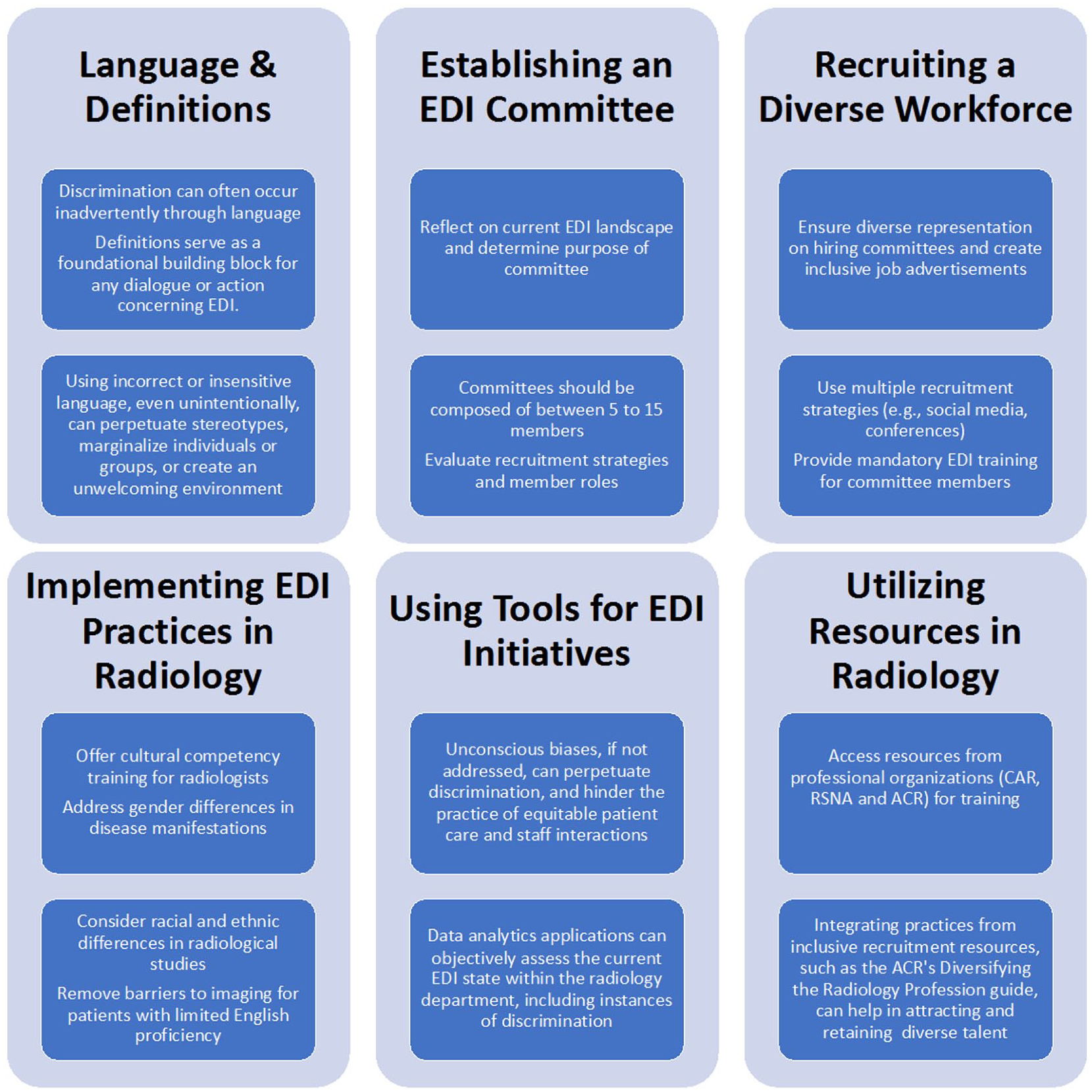
A summary of elements to consider when incorporating an EDI framework into practice.
Definitions
Language is a powerful tool that not only communicates our thoughts and ideas but also shapes our understanding of the world. In the context of Equity, Diversity, and Inclusion (EDI), having a clear, shared understanding of key terms is crucial. Definitions serve as a foundational building block for any dialogue or action concerning EDI. They create a common language that facilitates productive conversation, promotes shared understanding, and reduces misunderstandings. 10
In addressing EDI in medicine, it becomes even more imperative to ensure that the correct language is used. Medical professionals, patients, and policymakers may have different interpretations of these terms, and these varying interpretations can lead to confusion or even unintentional harm. 11 The toolkit, thus, provides definitions and explanations for a range of terms related to EDI. These terms include but are not limited to, concepts like ableism, accessibility, cisgender, colonialism, diversity, equity, gender expression, heteronormativity, intersectionality, microaggression, systemic barriers, unconscious bias, and more.
Discrimination can often occur inadvertently through language. 12 Using incorrect or insensitive language, even unintentionally, can perpetuate stereotypes, marginalize individuals or groups, or create an unwelcoming environment. For instance, using a person’s previous name (or “deadname”) instead of their chosen name in a transgender individual’s case can be distressing and disrespectful. 13
Moreover, addressing someone using inappropriate gender pronouns can cause discomfort and perpetuate exclusion. Thus, understanding and using correct language is not just about political correctness but also about respect, empathy, and creating a safe, inclusive environment. Recognizing individual identities and experiences and fostering an environment that respects and values these differences, without unconscious bias is crucial. 14
Establishing an Equity, Diversity, and Inclusion Committee
The process of establishing an EDI committee begins with determining purpose and considering the current context in which you are operating. It requires reflecting upon the existing landscape of equity, diversity, and inclusion in the workplace and identifying potential areas for enhancement. 15 It’s critical to consider how the committee could support and enhance existing initiatives, as well as assess the overall receptivity toward EDI initiatives within the institution.
Composition of the Committee
The committee should consist of diverse individuals passionate about advancing EDI principles, representing varied races, ethnicities, genders, and other demographic and professional categories. A blend of perspectives and expertise can further enrich the committee’s work. 16 The optimal committee size is typically between 5 and 15 members, but this can vary depending on the unit size and the need for facilitated discussion. 17
Recruitment strategies might involve advertisements, peer nominations, self-nominations, proactive identification of interested individuals, or promotions via e-newsletters. During the selection process, factors like member accountability, budget considerations, reporting requirements, member roles, and the frequency of meetings need to be evaluated.18,19
The chairperson of the committee should be carefully selected, bearing in mind their capacity to guide and motivate the team toward achieving the set EDI goals. Providing necessary support to the leaders is a pivotal step.
Additionally, a robust communication strategy should be developed that identifies key stakeholders and messages, provides for stakeholder feedback, outlines reporting procedures, and shares regular updates and progress reports. 20
The placement of the committee within the organizational structure should be strategic to facilitate reporting and resource allocation and to ensure commitment and accountability. This might require periodic reassessment based on the committee’s evolving purpose and responsibilities.
Decision-making authority and processes are other key considerations. The committee should have adequate authority to make and implement decisions, even though these often require approval from a higher body. It’s essential to recognize the power dynamics within the committee to create a safe space for all members to voice their thoughts and opinions.
Accountability measures must be established, such as regular reporting to leadership and the department, sharing results with the local Radiology community, and possibly creating budgetary reports if department funding is involved. These measures help ensure that the committee’s work is transparent, and its progress is continuously monitored.
Planning meetings thoughtfully, ensuring accessibility, and formulating clear goals and objectives are all part of the committee’s tasks. Progress tracking and periodic evaluations help to monitor the effectiveness of the committee’s work and expand diversity initiatives as needed.
Goals of the EDI Committee
While the goals of the EDI committee will be institution-specific, potential areas EDI committees could work to improve include: ensuring institutional actions are in alignment with EDI values, securing adequate funding for EDI initiatives, combating misconceptions about EDI work, scheduling, preventing faculty burnout, and maintaining leadership support. The EDI committee can also advocate for more wellness and resilience initiatives and more education on EDI topics. The committee’s scope and mandate should be wide-ranging, with the aim of breaking down organizational barriers, increasing visibility for marginalized members, and integrating EDI considerations into decision-making processes. These can include strategic planning, policy revision, diversity data collection, initiation of educational programs, addressing discrimination and human rights concerns, and boosting EDI competencies among staff. The EDI committee should establish a formal process for managing complaints related to equity, diversity, and inclusion. It is imperative to clearly communicate the process to all members and provide contact information for addressing concerns. Additionally, the committee should address complaints promptly, maintain confidentiality, support complainants, and prevent retaliation.
Recruiting a Diverse Workforce
Creating inclusive job advertisements is crucial for building a diverse workforce.21-24 Advertisements should be disseminated widely across multiple platforms, using gender-neutral language and focusing on essential qualifications with an emphasis on EDI experience. The organization’s commitment to equity, diversity, and inclusion should be clearly stated to encourage applications from underrepresented groups.
Maintaining diversity within the search committee is crucial. Additionally, ensuring that members of the search committee are qualified and are committed to equitable and inclusive practices is imperative.
Representation from different seniority levels and demographic backgrounds should be a priority. Institutions should provide adequate compensation and allocate time for committee members to participate in committees, along with mandatory EDI training. Recognizing and compensating for the labour involved in EDI work is also crucial, as it often falls on faculty, staff, and trainees with existing commitments. This can be accomplished in a similar manner as other administrative committees, by providing honoraria, public recognition, or other forms of compensation. 23
The hiring committee should be diverse and include members with EDI expertise and representation from different ranks. The committee should provide mandatory education and training around EDI topics to committee members enabling them to recognize and manage conflicts of interest.
Strategies for attracting and recruiting diverse talent should be multifaceted. Hiring committees should advertise widely across platforms, maintain a list of potential candidates, utilize social media and professional conferences, and encourage community involvement.
Collecting self-identification data to gain insights into workforce composition and identify areas for improvement proves. Respect privacy and confidentiality, communicate the purposes and benefits to employees, and encourage participation.
Hiring committees should structure interviews to ensure fairness and eliminate biases as well as prioritize accessibility and provide key information in advance to all candidates. Making hiring decisions based on objective assessment, prioritizing strategic hiring to address underrepresentation, and considering individual circumstances are essential for a fair evaluation.
Retaining and promoting diverse staff requires a commitment to equity, diversity, and inclusion. 24 Clinical teams with diverse backgrounds may be more effective in tackling the observed health outcome differences among specific racial and ethnic patient groups. Their interest in exploring the influence of non-medical factors on health, such as social determinants, plays a role in this. As a result, diverse groups in academic medicine can enhance the educational framework, offering in-depth and important information on a range of patient demographics and biomedical issues.
Establishing and reviewing faculty evaluation and promotion guidelines every year with EDI oversight and implementing mentoring programs for new faculty can help in addressing systemic barriers, and contribute to creating a healthy work environment. Consider equity, diversity, and inclusion principles in faculty awards, nominations, and academic promotion committees.
Institutional support is crucial for promoting diversity and inclusion. Institutions should provide strong support to all chairholders, address dual career issues, provide equitable support for underrepresented groups, and incorporate EDI into organizational goals and strategic planning. Establishing policies to address hate speech, violence, harassment, and discrimination against underrepresented groups is also crucial and should be reviewed in consultations with EDI committees yearly.
Conducting periodic audits of policies and hiring practices is essential to ensure equitable access to career development opportunities for professionals from underrepresented groups.
EDI Practices in Radiology
There are certain practices that can be implemented in Radiology to increase EDI. 25 Consequently, radiologists should integrate this understanding into their practice to better optimize individual interpretation and recommendations, but also avoid unnecessary bias.
Consideration of gender differences is also pivotal. Notably, the manifestation of diseases can differ between male and female patients, which in turn might impact imaging outcomes. Furthermore, with the growing recognition of transgender patient’s healthcare needs, radiologists need to provide targeted leadership for these communities, especially for the provision of exams where gender presentations may not be congruent with expected anatomy. For example, mammography for trans masculine people, and prostate imaging for trans feminine people. 26 Radiology departments need to implement protocols and systems that guarantee respectful and safe care. Such protocols should include using preferred pronouns, handling discussions about anatomy sensitively, and understanding the impacts of hormone therapy on imaging findings. 27 Additionally after consultation with transgender patients, EMR systems which allow for the correct identification of transgender people with an accurate anatomical organ inventory may be a key tool to help ensure proper evaluation and diagnoses of medical imaging. 28
A critical focus should be on strengthening the training of radiologists. As Patel and Parikh 29 point out, cultural competency is a fundamental skill for radiologists. According to Goldberg et al., imaging guidelines are inconsistently applied across different racial groups, as demonstrated by numerous studies. For example Black patients, in comparison to White patients, are less likely to receive guideline-based follow-up for incidental pulmonary nodules. 30 Medical education should include comprehensive training in understanding and addressing health disparities and stereotypes, appreciating cultural diversity, and effectively communicating with patients with limited English proficiency. Obstacles such as socioeconomic constraints, language barriers, and physical disabilities can limit access to imaging. Therefore, healthcare institutions need to offer services such as interpretation, accessible facilities, and financial aid, to ensure these barriers are minimized or eliminated.
Implementing Tools Into EDI Initiatives
The strategic use of tools is vital in promoting and monitoring progress in equity, diversity, and inclusion (EDI) within medical departments. These tools, which could be digital platforms, surveys, assessment frameworks, or data analytics applications, give an objective overview of the current EDI status within the organization. They help quantify and track the impact of EDI initiatives, providing a clear picture of what is working and what requires adjustment. They can provide practical guidance on addressing issues such as microaggressions, stereotypes, and discriminatory practices.
Tools like Implicit Association Tests (IAT) can be particularly useful in identifying unconscious biases in personnel. 31 Unconscious biases, if not addressed, can perpetuate discrimination, and hinder the practice of equitable patient care and staff interactions. By using the IAT, institutions can tailor subsequent training and development activities to tackle identified biases.
Data analytics applications can objectively assess the current EDI state within the radiology department, including instances of discrimination. By tracking representation at various levels, monitoring the demographics of patients served, and measuring the impact of EDI initiatives, these tools provide a clearer picture of existing inequalities and the effectiveness of efforts to combat them.
These tools aid in examining organizational policies, procedures, and training programs, allowing for the identification of potential biases or systemic barriers that may hinder EDI. They can also highlight areas of success, facilitating the sharing of best practices within the organization. 32
Moreover, leadership assessment tools can help gauge leaders’ understanding and commitment to EDI, their effectiveness in fostering an inclusive culture, and their capacity to address the challenges faced by underrepresented groups. 32 These insights are useful for guiding leadership development programs and enhancing the overall effectiveness of the organization’s leadership in promoting EDI.
By leveraging these tools, institutions can ensure that their EDI efforts are data-driven, targeted, and effective, which is essential for fostering an inclusive culture and achieving the goals of diversity and inclusion.
Utilizing Resources to Combat Inequities in Radiology
The appropriate use of resources is essential for fostering EDI within radiology departments and addressing discriminatory practices. Using resources from the Radiological Society of North America (RSNA) and the American College of Radiology (ACR) can provide guides on best practices, webinars, mentorship programs, and training modules focused on cultural competency and unconscious bias.33,34
Unconscious bias training is critical in identifying and mitigating biases that could perpetuate discrimination in radiology practices, from patient care to hiring decisions. Raising awareness about these biases and providing strategies to counter them are important steps toward promoting fairness and equal opportunity.
Integrating practices from inclusive recruitment resources, such as the ACR’s Diversifying the Radiology Profession guide, can help in attracting and retaining a diverse talent pool. 35 These resources offer guidance on crafting inclusive job advertisements, developing unbiased selection criteria, and creating mentorship programs to support diverse radiologists, thereby actively combating discriminatory hiring practices.
By using these tools and resources, radiology departments can ensure their EDI efforts are data-driven, targeted, and effective.
Effectively Using Resources in EDI Initiatives
The availability and proper utilization of resources are fundamental for fostering EDI in medical departments. These resources, which may come in the form of guides, handbooks, training modules, and digital content, provide practical guidance and support for implementing and maintaining EDI initiatives. 36
We recommend an inclusive language guide to help communicate in ways that are respectful and sensitive to all identities and experiences. It promotes an environment where every individual feels seen, heard, and valued, which can foster a sense of belonging among staff and contribute to higher job satisfaction and productivity.
Bias mitigation resources are essential for addressing unconscious biases that could skew decision-making processes and create inequities. 37 By raising awareness of these biases and offering strategies to counteract them, these resources promote fairness and equal opportunity within the organization.
Inclusive recruitment resources, such as guides for creating inclusive job advertisements and developing unbiased selection criteria, help attract a diverse range of talent.38-40 By ensuring that all applicants, regardless of their backgrounds, have equal access and opportunity to be considered for roles, these resources help the organization build a diverse and inclusive workforce that better reflects and serves the community. 41
By leveraging these resources, medical departments can continually enhance their understanding and application of EDI principles, helping to create a more inclusive, equitable, and productive work environment.
Conclusion
The promotion of equity, diversity, and inclusion (EDI) in the healthcare sector is integral in ensuring an inclusive, equitable, and robust healthcare system that caters to the needs of diverse patient populations. This article presents a comprehensive framework for a toolkit that provides essential resources and strategies that empower medical departments to actively instill a culture of EDI.
This toolkit framework offers recommendations for the formation of EDI committees within medical institutions, asserting the importance of these committees as the catalyst for driving EDI initiatives. It also provides robust strategies for attracting and retaining a diverse workforce, thereby fostering a medical environment that is reflective of the diverse communities it serves.
Footnotes
Acknowledgements
We would like to acknowledge the Canadian Association of Radiologists Equity, Diversity and Inclusion Working members: Rawan Abu Mughli, Joy Borgaonkar, Maura Brown, Paula Cashin, Suki Dhillon, Nicolas Gibson, Natalia Gorelik, lloyd Shane Greek, Kate Hanneman, Alison Harris, Tracey Hillier, Samuel Idachaba, Faisal Khosa, Kiana Lebel, Ashley Leckie, Emil Lee, Souleymane Maïga, Daria Manos, Manuela Matta, Mana Modares, Ralph Nelson, Stephanie Nguyen, Barakat Ogunde, Uzuazoraro Okoro, Siobhán O’Neill, Manuela Pérez, Alanna Supersad, Elizabeth Tai, Jana Taylor, Cynthia Walsh, Wan Wan Yap, Charlotte Yong-Hing, Kaitlin Zaki-Metias.
Declaration of Conflicting Interests
The author(s) declared no potential conflicts of interest with respect to the research, authorship, and/or publication of this article.
Funding
The author(s) received no financial support for the research, authorship, and/or publication of this article.
