




Abstract
Elementary students can experience high levels of school-related stress, which can subsequently hinder learning and well-being. At this age and stage, students are still developing the skills to manage stress and academic demands, and benefit from additional support. Few studies have explored interventions that combine stress regulation with learning management or compared different learning consolidation methods. This study examined the effectiveness of the Stress Stories Project, an integrated intervention targeting two key stress appraisals linked to student success: (a) stress mindset and (b) coping self-efficacy. It also compared the effects of two consolidation strategies, memory reconsolidation and metacognitive reflection, on the appraisal outcomes. Grade 4 and 5 Canadian Public School students participated in the 2-week intervention and were assigned to either the memory reconsolidation or metacognitive reflection condition. Stress mindset and coping self-efficacy were measured before and after the intervention. A 2 (Time: pre, post) × 2 (Group: reflection, reconsolidation) repeated measures ANOVA assessed the impact of condition on outcomes. Results showed an overall increase in stress mindset scores, with more students adopting a “stress is enhancing” mindset. Coping self-efficacy did not change significantly. However, a significant time-by-group interaction revealed that memory reconsolidation was more effective than reflection in improving stress mindset over time. These findings suggest that addressing students’ past school stress experiences through memory reconsolidation may enhance stress mindset and offer greater psychological and motivational benefits.
Keywords
Introduction
Student success is increasingly viewed as multifaceted, with contributions from student experiences, such as mental health and well-being, as well as academic learning and performance (Kuh et al., 2005; Louis & Schreiner, 2012; Suldo et al., 2006; Tinto, 2017). Students face significant levels of stress, which has the potential to impact student success by adversely affecting both learning and overall wellbeing (Pascoe et al., 2020; Sood et al., 2024). Moreover, students can also encounter challenges in effectively managing academic demands (Hadwin et al., 2019, 2022; Koivuniemi et al., 2017), further impacting learning and well-being. Given the intertwined processes of stress and learning and their impact on student success, there is a critical need for interventions addressing both stress regulation and learning management to foster student success.
There is a growing emphasis on supporting student mental health, fostering resilience, and promoting well-being through evidence-informed interventions (e.g., Short et al., 2022). This shift has highlighted the need for prevention, early intervention, and whole-school mental health promotion. Community-engaged research and collaborative approaches are emerging as promising practices to address the ongoing need for effective support embedded within schools (Bearman et al., 2020; Lawson & Owens, 2024; Parade et al., 2024).
This study investigated the effectiveness of an integrated intervention, developed collaboratively with school based partners, targeting both stress regulation and learning management and with the aim of influencing two stress appraisals crucial for enhancing student success outcomes: stress mindset and coping self-efficacy. Furthermore, we compared the effectiveness of two learning consolidation approaches, memory reconsolidation and metacognitive reflection, on the stress appraisal outcomes. The integrated intervention, the Stress Stories Project, was developed to support students to regulate school-related experiences of stress by providing stress education and learning management support within the school context. Considering the elevated levels of stress and anxiety that children experience (Ellis et al., 2020; Zengin et al., 2021) and the potential negative impact of stress on children in school (Chou et al., 2011; de la Fuente et al., 2020), effective support for managing stress at school is increasingly important. As such, this study makes two significant contributions to the existing literature. First, this study assesses the effectiveness of an intervention that addresses the combined impact of stress regulation and learning management on two stress appraisals: (a) stress mindset, and (b) coping self-efficacy. Second, this study assesses the impact of two learning consolidation approaches, memory reconsolidation and metacognitive reflection, on the stress appraisal outcomes.
Review of the Literature
Stress has the potential to impact student success. The association between stress and student success is delineated in the next section, including: (a) what is stress, (b) why stress matters in the school context, and (c) how stress and student success are associated.
What is Stress?
In this study, stress is conceptualized as an emotion. Emotions and emotion regulation are central topics in current educational and school psychology research (e.g., see Frenzel et al., 2024; Harley et al., 2019; Pekrun et al., 2023; Wong et al., 2023). In much of this work, emotion is conceptualized from an appraisal perspective, which views emotion words as referring to distinct mental states, with “appraisals” understood as specific cognitive antecedents of emotion that help individuals make meaning of the world (Gross & Feldman Barrett, 2011). In this research, the emotion of stress is examined through both the psychological construction perspective and the appraisal perspective of emotion. From a psychological construction perspective, emotions are not fixed reactions to external events, but something the brain actively constructs (Barrett, 2017a, 2017b, 2022). Each emotional instance is formed when the brain makes meaning from a combination of past experiences, current sensory input, interoception (internal physiological signals related to allostasis or body budget), and contextual cues ultimately prescribing actions like approaching or avoiding a task (Barrett, 2017a, 2017b, 2022). Emotions, therefore, are better understood as categories constructed around goals and context, rather than fixed responses (Barrett, 2017a, 2017b, 2022).
In goal-oriented academic settings, emotions like stress are shaped in part by goal relevance (Barrett, 2017b). These goals may involve outcomes (e.g., completing an assignment, earning a specific grade, finishing a degree) or learning (e.g., gaining knowledge, improving comprehension). An individual’s experience of stress is therefore influenced by how well these goals are being met. This process relies on predictive processing, the brain constantly anticipates what will happen next, using prior experience to interpret bodily sensations and contextual cues (Barrett, 2017a, 2017b, 2022). The brain then constructs emotions such as “anxiety,” “stress,” or “excitement” based on these interpretations.
In goal-oriented academic environments, stress is both inevitable and influential (Park et al., 2018), making students’ capacity for adaptive regulation critical to learning and mental health (Barbayannis et al., 2022). Stress is not inherently harmful, it is a non-specific physiological response (Selye, 1936) that, when effectively managed, can motivate goal pursuit and support both academic and personal growth (Brooks, 2014; Jamieson et al., 2018; Ng et al., 2009). Student stress can have both positive (Denovan & Macaskill, 2017; Rudland et al., 2020) and negative effects (Chou et al., 2011; Pascoe et al., 2020), depending largely on how it is appraised and regulated (Bienertova-Vasku et al., 2020). High stress levels are common and can undermine academic success and well-being if not well managed (Pascoe et al., 2020; Sood et al., 2024). However, efforts to eliminate stress entirely are neither practical nor beneficial (Jenkins et al., 2021). Rather than background noise, stress actively shapes students’ cognitive, emotional, and behavioral functioning (Brooks, 2014; Jamieson et al., 2018; Jenkins et al., 2021). Supporting students in developing effective regulation strategies allows stress to function as a constructive force in academic settings.
How individuals interpret both internal cues (e.g., heart rate, thoughts) and external cues (e.g., situational factors) plays an important role in shaping their stress response, underscoring the importance of cognitive appraisals and self-regulation in the experience of stress (Jamieson et al., 2018). Specifically, this research focuses on participant appraisals regarding: (a) the nature of stress itself, named stress mindset; and (b) confidence in coping with stressful situations, named coping self-efficacy.
Stress and the School Context
Educational settings inherently evoke stress as students pursue personal goals within evaluative, performance-based environments (Brooks, 2014; Jamieson et al., 2018). Adaptive stress management is pivotal for well-being (Denovan & Macaskill, 2017), effective learning (Vogel & Schwabe, 2016), and academic performance (Yaman-Sözbir et al., 2019). Poorly managed stress in educational contexts can lead to decreased academic achievement and motivation, increased dropout risk (Pascoe et al., 2020), and interference with cognitive processes (de la Fuente et al., 2020). Stress is not solely negative; stress can enhance performance and promote coping when well managed and is necessary for growth (Brooks, 2014). How each student understands and manages stress, particularly their appraisals about stress, impacts whether stress is adaptive or distressing.
The impact of school-related stress on students varies. Poorly managed stress can hinder information processing, recall, motivation, and academic achievement (de la Fuente et al., 2020; Pascoe et al., 2020). Conversely, well-managed stress can enhance performance, foster growth, and correlate with higher levels of well-being and competence (Brooks, 2014; Ng et al., 2009). Managing well in school requires adaptive stress responses, promoting both well-being and learning (Denovan & Macaskill, 2017; Vogel & Schwabe, 2016). Perceptions and appraisals of stress are thought to influence stress regulation capacity, well-being, and performance (Crum et al., 2017; Epel et al., 2018; Jamieson et al., 2018), which can subsequently affect students’ overall success in the school context.
Stress and Student Success
A holistic view of student success encompasses both academic performance and student psychological experiences (Kuh et al., 2005; Louis & Schreiner, 2012; Suldo et al., 2006; Tinto, 2017). Stress is expected in academic settings where students are pursuing personally relevant goals (Park et al., 2018) and the context is evaluative, goal-oriented, and performance based (Brooks, 2014; Jamieson et al., 2018). Responding to stress adaptively is integral to wellbeing (Barbayannis et al., 2022; Denovan & Macaskill, 2017; Slimmen et al., 2022) and adaptive learning (Vogel & Schwabe, 2016) that comprise student success. High perceptions of stress can also interrupt regulation of emotion and learning and prime a student for negative appraisals and attributions (Kim & Cicchetti, 2010; Panlilio et al., 2019), which leads to subsequent disruption in regulation of behavior, emotion, and cognition (Panilio et al., 2019). Student responses to stress have the potential to impact both learning processes and academic outcomes (de la Fuente et al., 2020; Vogel & Schwabe, 2016). Adaptive stress appraisals are hypothesized to correlate with flourishing mental health and effective coping (Freire et al., 2016; Karademas & Kalantzi-Azizi, 2004). Thus, a student’s capacity to regulate stress is a critical component of adaptive learning and student success.
How Can Students Manage Stress at School?
Given that stress can impact student success, three primary perspectives informed the development of curriculum that facilitates adaptive responses to stress in academic settings. First, stress optimization theory helps explain how students experience the emotion of stress. Second, how students assess their experience of stress within the academic environment, referred to as stress appraisals, shapes their belief about stress (e.g., stress mindset) and their confidence in handling stress and academic tasks at school (e.g., coping self-efficacy). Third, student regulatory responses in the academic context, or how a student manages the academic environment, is informed in this research by self-regulated learning theory.
Stress Optimization Theory
At the core of stress optimization theory lies the acknowledgment that stress is often unavoidable in contexts requiring motivated performance, such as academic settings (Barrett, 2017; Jamieson et al., 2018; Jenkins et al., 2021). Stress optimization integrates various stress theories, including psychological construction, to encourage optimizing and deriving benefits from acute stress experiences rather than avoiding them (Barrett, 2017b; Jamieson et al., 2018). The goal of stress optimization is to promote thriving, resilience, and adaptive coping amidst the pressure and uncertainty inherent in meaningful goal pursuit that is prevalent in educational settings (Brooks, 2014; Jamieson et al., 2018; Park et al., 2018). A stress optimization approach integrates research on stress appraisals and stress mindset, suggesting that when stressful experiences are viewed as functional and adaptive opportunities for growth, they can promote physiological and psychological thriving, as well as enhance performance and well-being (Jamieson et al., 2018, 2022).
Student Stress Appraisals
Appraisals, including self-efficacy and stress mindset beliefs, are key cognitive processes for understanding stress and its impact on student success. Appraisals refer to a person’s evaluation of a stressful situation, influenced by both individual factors and the context (Epel et al., 2018). Appraisals can be viewed as a perceptual process that helps determine how a situation is valued, guiding actions such as approach or avoidance behavior (Gross, 2015). Prior findings indicate that appraisals and beliefs regarding stress determine whether stress: (a) is experienced as a resource or detriment (Crum et al., 2017; Jamieson et al., 2022), (b) facilitates approach over avoidance motivation and behavior (Blascovich et al., 1999; Freire et al., 2016), and (c) facilitates higher levels of mental health (Crum et al., 2013, 2017; Yeager et al., 2022; Yeager & Dweck, 2023).
Appraisals involve cognitive evaluations of situations, emotional reactions, coping strategies, and perceptions of a situation as challenging or threatening (Diotaiuti et al., 2023; Lazarus, 1991; Scherer & Moors, 2019). Stress optimization theory posits that stress perceptions and coping are shaped by beliefs or appraisals about stress (Crum et al., 2017; Jamieson et al., 2022), an area underexplored in academic contexts. This research examines two stress related appraisals expected to influence student success: (a) stress mindset and (b) coping self-efficacy.
Stress Mindset
Stress mindset refers to a person’s belief about whether stress enhances or impairs performance, suggesting that stress responses can be modified even when situations remain unchanged (Crum et al., 2017). Research indicates that higher levels of stress mindset (e.g., stress is enhancing mindset) predicts: (a) greater psychological and physical wellbeing, (b) positive affect, (c) cognitive flexibility, (d) attentional bias toward positive stimuli, (e) mental health, and (f) academic performance (Crum et al., 2017; Jenkins et al., 2021; Keech et al., 2018; Khan & Shamama-Tus-Sabah, 2020). While stress mindset has received less attention in educational settings than growth mindset, evidence suggests stress mindset will impact student success outcomes (Crum et al., 2013, 2017; Jenkins et al., 2021; Keech et al., 2018; Yeager et al., 2022; Yeager & Dweck, 2023).
Coping Self-Efficacy
Stress is nonspecific and can exert a positive or negative influence on students; therefore, the focus shifts to coping with stress. Coping self-efficacy represents a person’s belief in their ability to cope with stress and challenges (Chesney et al., 2006), which is crucial in academic settings. Despite limited research related to student success (see Kapil, 2024), coping self-efficacy has been associated with academic well-being, motivation, and successful coping in other contexts (Benight & Harper, 2002; Freire et al., 2016; Karademas & Kalantzi-Azizi, 2004).
Stress and coping theory indicate stress is considered a person–environment relationship that is evaluated as personally significant and depends on a person’s resources for coping. Coping involves: (a) emotion-focused coping (e.g., managing emotional responses to stressful events), (b) problem-focused coping (e.g., responses that alter aspects of the event itself; Chesney et al., 2006; Lazarus & Folkman, 1986), and (c) support (Chesney et al., 2006). Stress mindset and coping self-efficacy are experience dependent and impacted by controllability of the stressor (Jamieson, 2022; Jenkins et al., 2021). Therefore, specific regulatory actions are expected to interact with appraisals over time, providing rationale for addressing the combined effect of stress regulation and learning management in the Stress Stories Project intervention.
Student Regulatory Responses to Academic Demands
Integral to student success is the perception of being capable of: (a) learning effectively, (b) managing academic tasks, and (c) regulating stress. Student success in the academic context is informed by self-regulated learning (SRL) theory. SRL provides a robust framework for studying the dynamic, multifaceted, and situated processes involved in in student success. SRL is a framework for understanding how people learn (Efklides et al., 2018) and includes cognitive, metacognitive, behavioral, motivational, and emotional/affective components of learning (Panadero, 2017; Winne & Hadwin, 2008). SRL theory emphasizes reciprocal associations between social cognitive appraisals or beliefs and strategic actions learners enact to meet academic goals (Kapil, 2024). In an academic setting, SRL provides information for students about leveraging resources and reducing demands to promote adaptive coping with stress in addition to effective learning.
Learning Consolidation Approaches
In addition, there are two learning consolidation approaches included in the Stress Stories Project intervention, namely: (a) metacognitive reflection and (b) memory reconsolidation. Both reflection and memory reconsolidation are considered postintervention learning consolidation processes with the potential to support the integration of new learning for students in a meaningful way.
Metacognitive Reflection and Memory Reconsolidation
Metacognitive Reflection
Reflection is a metacognitive process that facilitates both awareness and adaptation (Nelson & Narens, 1990; Perfect & Schwartz, 2002). The traditional definition for metacognition is the experience and knowledge we have about our own cognitive processes that are governed by the interaction between awareness (monitoring) and adaptation (control; Flavell, 1979). Metacognitive reflection supports learners to be more aware of their learning and regulation strategies, comprehension, and the need for adaptation. The regulation of both learning and emotion is supported by metacognition (Efklides, 2006, 2011; Perfect & Schwartz, 2002). In the Stress Stories Project, to promote awareness and adaptation of stress related appraisals and learning management, the metacognitive reflection group was asked to reflect on the following prompts after each learning module: (a) What is the most useful thing you learned is this module? and (b) Is there something that you learned that will help you manage school stress and learning?
Memory Reconsolidation
Past experiences shape emotional responses, including stress (Barrett, 2017a, 2017b). Emotionally charged memories often retain the original emotions, influencing how stress is appraised and maintained over time (Buchanan, 2007; Tryon & McKay, 2009). For example, a student who once performed poorly during a stressful presentation may come to view stress as harmful and expect future failure. These memories form implicit schemas that guide future interpretations and responses (Barrett, 2021; Ecker & Vaz, 2022). Without awareness, such memories can reinforce negative patterns and stress responses.
Memory reconsolidation, a process that updates memories upon retrieval, can help revise maladaptive interpretations of past stress (Ecker & Vaz, 2022). In the Stress Stories Project, participants go beyond reflection by visualizing improved outcomes using program strategies. This process helps participants mentally rehearse the strategies and form a new expectation of success. Memory reconsolidation works by activating an existing memory (e.g., past school stress), introducing new, contrasting information (e.g., stress as enhancing appraisal, new coping strategies), and keeping the individual engaged with this new information for up to several hours afterward (Ecker, 2015; Ecker et al., 2012; Ecker & Vaz, 2022). Memory reconsolidation is a way of updating the prediction contained within an existing experience of stress for a student.
Both metacognitive reflection and memory reconsolidation support post-intervention learning. Given the influence of memory on emotions, stress mindset, and coping efficacy (Barrett, 2017; Buchanan, 2007; Chesney et al., 2006; Crum et al., 2013), the memory reconsolidation condition is expected to be more effective than reflection alone.
Current Study: The Stress Stories Project
Central to managing school-related stress is a student’s belief in their ability to perform actions necessary to achieve their goals (Bandura, 1977), which is influenced by how they appraise stress (Jamieson et al., 2018). In this study, the Stress Stories Project intervention is situated within the school context and is framed by two theories: (a) self-regulated learning theory (e.g., Winne & Hadwin, 2008) to facilitate problem-focused coping capacity, and (b) stress optimization theory (e.g., Jamieson et al., 2018) to facilitate emotion-focused coping, and (c) SRL and stress optimization to understand how social support and social regulatory processes are important for managing learning and stress (Hadwin et al., 2011, 2022; Ozbay et al., 2008).
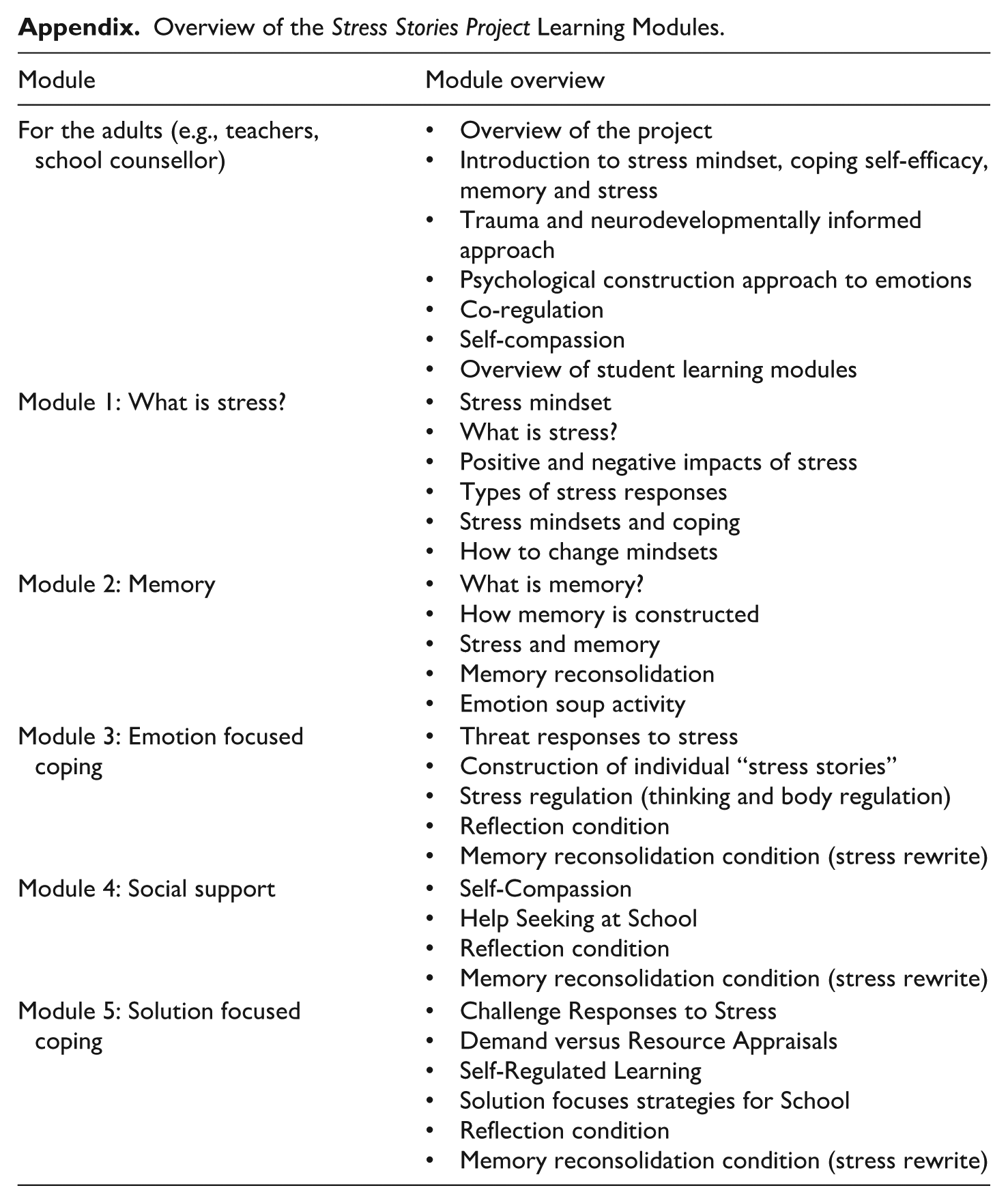
The intervention began with a professional learning session for the school facilitator, including teachers and the school counselor. This session provided an overview of the project and introduced foundational concepts such as stress mindset, coping self-efficacy, and the relationship between memory and stress from a psychological construction perspective of emotion. A trauma- and neurodevelopmentally informed approach was emphasized, alongside strategies for co-regulation and self-compassion, and a review of the student modules. The student-facing portion included five learning modules which were each approximately 10 min in length. Module One introduced the concept of stress, including stress mindsets, types of stress responses, and how mindsets influence coping. Module Two focused on memory, how it is constructed, how memory and prior experience shapes stress, and the concept of memory reconsolidation, introduced through an “emotion soup” activity. Module Three addressed emotion-focused coping, guiding students to understand their personal “stress story” and explore cognitive and body focused regulation strategies. For module three, four, and five, the metacognitive reflection group reflected on what they learned while the memory reconsolidation group were guided through a structured visualization using the information from the learning modules to write a new “stress story” that would better support their individual regulation of stress and learning in the school context. Module Four emphasized the role of social support, self-compassion, and help-seeking in managing stress. Module Five concluded with solution-focused coping strategies or learning management, highlighting challenge-based stress responses, self-regulated learning, and ways to appraise and manage demands and resources in academic settings. Please refer to the Appendix for additional detail.
Community Engaged Research and Curriculum Development
Community engaged research, as a stance and a methodology, informed this research project in several ways. First, respectful co-learning guided program development (e.g., Parade et al., 2024) through collaboration with the school-based facilitator to identify which community needs within the school context could be addressed through curriculum development and research, and through transparent communication of findings with community partners. Feedback from the community-based facilitator following the intervention further informed iterative development of the program, such as incorporating module summaries and adding interactive activities in subsequent delivery of the intervention. Second, acknowledging the practical constraints of time and resources in the school setting shaped the co-design process with the school-based partner. This led to pragmatic compromises regarding the content and delivery of information, balancing research integrity with the realities of limited time and resource capacities in the school context to uphold relevance (e.g., alignment with social emotional learning curriculum requirements) and respect for the participants (Bearman et al., 2020; Parade et al., 2024). Third, community engaged research aligns with a context-sensitive, deployment-focused approach, wherein the intervention was intentionally designed to fit the specific conditions of the school environment to enhance both feasibility and sustainability (Bearman et al., 2020; Lawson & Owens, 2024; Parade et al., 2024).
Few studies have examined the impact of interventions integrating both stress management and learning regulation approaches and even fewer have compared the effectiveness of various learning consolidation approaches. The purpose of the study was twofold. First, we investigated the effectiveness of the Stress Stories Project intervention on two stress appraisals crucial for enhancing student success outcomes: (a) stress mindset and (b) coping self-efficacy. Second, we compared the effectiveness of two learning consolidation approaches, memory reconsolidation and metacognitive reflection, on these appraisal outcomes. Specifically, we addressed three research questions in this study.
First, does stress mindset change after the intervention? Considering extant research indicating brief interventions exposing students to information about the benefits of stress succeed in increasing stress-is-enhancing mindsets (Crum et al., 2013, 2017), we expect that stress mindset scores will increase post-intervention.
Second, does coping self-efficacy change after the intervention? Based on prior findings suggesting self-efficacy requires mastery experiences and a longer period of time to change (e.g., an academic term; Ahn et al., 2017; Bandura, 1997; Usher & Pajares, 2009; Won et al., 2024), we are uncertain whether this brief intervention will alter coping self-efficacy scores.
Third, is there a difference between the memory reconsolidation and metacognitive reflection learning consolidation conditions? Informed by evidence that prior experience impacts a person’s experience of emotion and appraisals (Barrett, 2006; Buchanan, 2007; Chesney et al., 2006; Crum et al., 2013; Ecker & Vaz, 2022; Tryon & McKay, 2009) we hypothesize that the memory reconsolidation condition will have a larger effect on stress appraisals than the metacognitive reflection condition.
Method
Participants
The participants were enrolled in grades 4 and 5 at a public elementary school in western Canada. The students were randomly assigned to one of two groups: (1) memory reconsolidation or (2) metacognitive reflection. The learning modules were presented to the students in their class units by the school counselor during the regular school day. There were two classes of students in the English stream and two classes in the French immersion stream. All 86 students in grade 4 and 5 received the intervention. The participants who did not complete either a preintervention or postintervention survey (22 students) were removed from the data analysis, and 33 participants in the memory reconsolidation group and 31 participants in the reflection group remained. Participants were age 9/10 in grade 4 and age 10/11 in grade 5 (Government of British Columbia, 2024). Ethical approval for this project was obtained from the University of Victoria Research Ethics Board. Additional demographics (e.g., gender, race/ethnicity, language background) were not able to be collected under the Research Ethics Board application.
Sampling and Recruitment
The school was recruited through an existing collaborative relationship with school personnel. Although this facilitated access and implementation, it also reflects a non-random, convenience-based sampling approach. All students in grade 4 and 5 were included in the intervention as part of their social emotional curriculum. The parents of the participants were sent an information letter by email from the school that described the curriculum and the research, and instructions regarding opting out of the research. All the students received the intervention (e.g., learning modules) and opted into the research by default. The participants were provided instructions for opting out of the research, but no participants selected to do so. Data were collected by providing participants with a survey to be completed by their classroom teacher before and after the intervention. The intervention was delivered over a 2-week period in late May/early June 2022. All participant data were anonymized prior to collection by the researchers.
This pilot intervention was time limited due to logistical constraints within the school context, specifically time and facilitator availability. We prioritized delivering the intervention within a school setting as opposed to a highly controlled laboratory environment. This in situ approach emphasizes collaboration with school-based community partners and flexibility regarding time frame and delivery according to the school’s available resources.
Curriculum Development and Delivery
The curriculum was developed by researchers in consultation with the school counselor, following principles of community-engaged research. Considerations included: (a) minimizing added demands on teachers, leading to the decision for the school counselor to deliver the modules (Bearman et al., 2020; Parade et al., 2024); (b) leveraging the school counselor’s existing relationship with students to support comfort and readiness to learn (Lawson & Owens, 2024); and (c) collaborating with school partners to address a gap in the school’s curriculum related to stress regulation, learning, and student success, an area identified by staff as important but not covered in current social-emotional learning programs (Bearman et al., 2020; Lawson & Owens, 2024; Parade et al., 2024).
Measures
Stress Mindset Scale
The stress mindset scale (Youth Version; Park et al., 2018) was adapted from the original stress mindset scale (Crum et al., 2013). The three-item measure assesses an individual’s beliefs about the nature of stress and its consequences, for example, whether the effects of stress are enhancing or debilitating. The items ask participants whether they believe that stress leads to learning and growth, health and energy, and productivity (e.g., “Experiencing stress improves your health and increases your energy level”). The other two items are “Experiencing stress improves your productivity. You get more done when you experience stress” and “Experiencing stress improves your learning and growth.” Higher scores indicate that higher levels of stress enhance mindset. The participants rated items on a five-point Likert scale to indicate whether the scale items were never true, rarely true, sometimes true, usually true, or always true. The internal consistency for the Stress Mindset Scale (Youth Version) is reported as 0.77 (Park et al., 2018). In the current study, the Stress Mindset Scale (Youth Version) demonstrated moderate reliability (α = .66) pre-intervention and good internal consistency (α = .77) at post intervention.
Coping Self-Efficacy
Coping self-efficacy was measured by the 13-item Coping Self-Efficacy Scale (short version), a modified version of the 26-item Coping Self-Efficacy Scale (CSES; Chesney et al., 2006); higher scores indicate higher levels of coping self-efficacy. The participants rated items on a 5-point Likert scale ranging from not confident to completely confident. The scale consists of three subscales: (1) managing unpleasant emotions and thoughts, (2) using problem-focused coping, and (3) receiving support from family and friends. The CSES uses this prompt before the scale items: When things aren’t going well for you, how confident are you that you can? The scale prompt was adapted for this research by instructing the students to consider their responses in reference to coping with challenges in the academic context by using this prompt: When things aren’t going well for you at school, how confident are you that you can. The original CSES has high internal consistency (α = .95) and strong construct validity (Chesney et al., 2006). In the current study, the CSES exhibited good to excellent internal consistency. At pre-intervention, the scale demonstrated good reliability (α = .88). The post-intervention reliability improved further, showing excellent internal consistency (α = .94).
Data Analysis
Data was analyzed using JASP (JASP Team, version 0.95.2, 2025). There was minimal missing data as students completed the surveys in class with guidance from the teacher. Only 5 cases of missing data points were noted in the coping self-efficacy scale, these missing data were addressed with mean imputation. Data was reviewed for violations to assumptions of normality (SD, skewness, kurtosis, Shapiro-Wilk test, Q-Q plots) and no major concerns were noted (Table 1).
Descriptive Statistics for Stress Mindset and Coping Self-Efficacy by Group and Time.
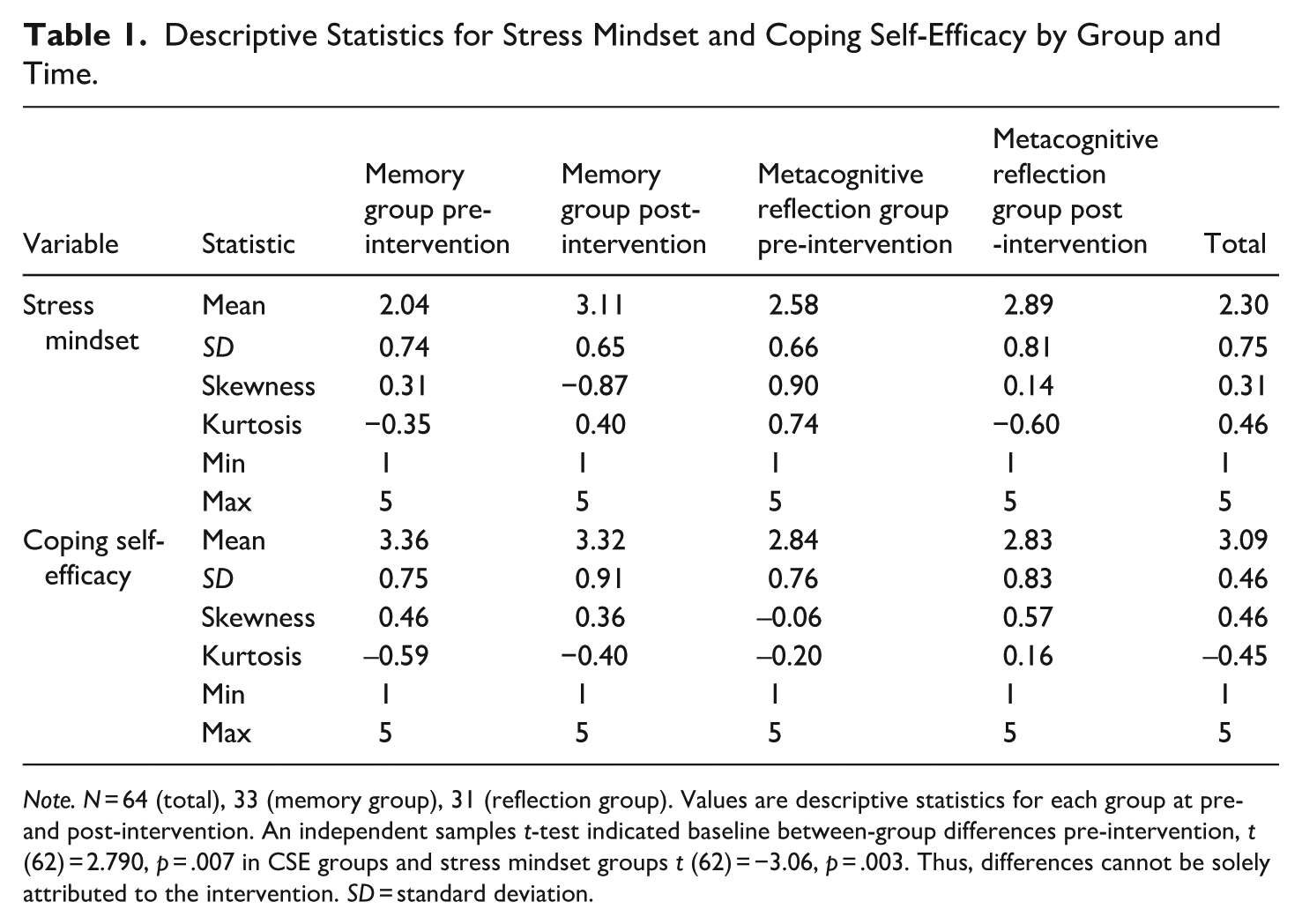
Note. N = 64 (total), 33 (memory group), 31 (reflection group). Values are descriptive statistics for each group at pre- and post-intervention. An independent samples t-test indicated baseline between-group differences pre-intervention, t (62) = 2.790, p = .007 in CSE groups and stress mindset groups t (62) = −3.06, p = .003. Thus, differences cannot be solely attributed to the intervention. SD = standard deviation.
A priori power analyses were conducted using G*Power (Faul et al., 2009) to determine the required sample sizes for detecting a medium effect (f = 0.25) at 95% power with α = .05 in a 2 (Time: pre, post) × 2 (Group Condition: metacognitive reflection, memory reconsolidation) repeated-measures ANOVA.
For the within–between interaction (Time × Group), the analysis indicated that a total sample size of 54 (i.e., 27 participants per group) would be sufficient to detect a medium effect. The actual sample size in this study exceeds this threshold, suggesting the analysis was adequately powered to detect interaction effects.
For the between-subjects main effect (Group Condition), a separate power analysis showed that a total sample size of 158 (i.e., 79 per group) would be required to detect a medium effect with 95% power. Thus, the current sample size may be underpowered to detect between-group differences, particularly if the true effect is medium or smaller.
Results
Stress Mindset Change
Regarding research question one, does stress mindset change after the intervention, results indicated a significant main effect of Time, F(1, 62) = 42.47, p < .001, η2p = 0.41, indicating that stress mindset scores changed from pre-intervention to post-intervention across both conditions (Table 2). This effect size can be interpreted as a large effect, suggesting a meaningful change in stress mindset following the intervention. Additionally, a significant Time × Group interaction was observed, F (1, 62) = 12.78, p < .001, η2p = 0.17 (Figure 1). This medium sized interaction effect suggests that the change in stress mindset scores over time differed between the metacognitive reflection and memory reconsolidation groups.
Repeated Measures ANOVA for Stress Mindset Within Subjects Effects.
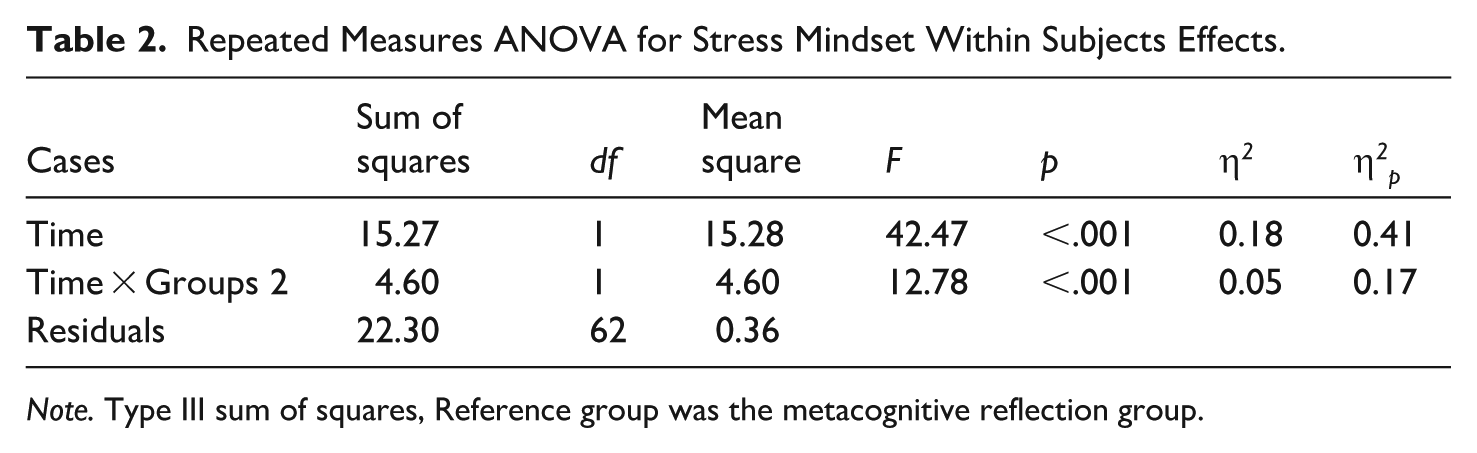
Note. Type III sum of squares, Reference group was the metacognitive reflection group.
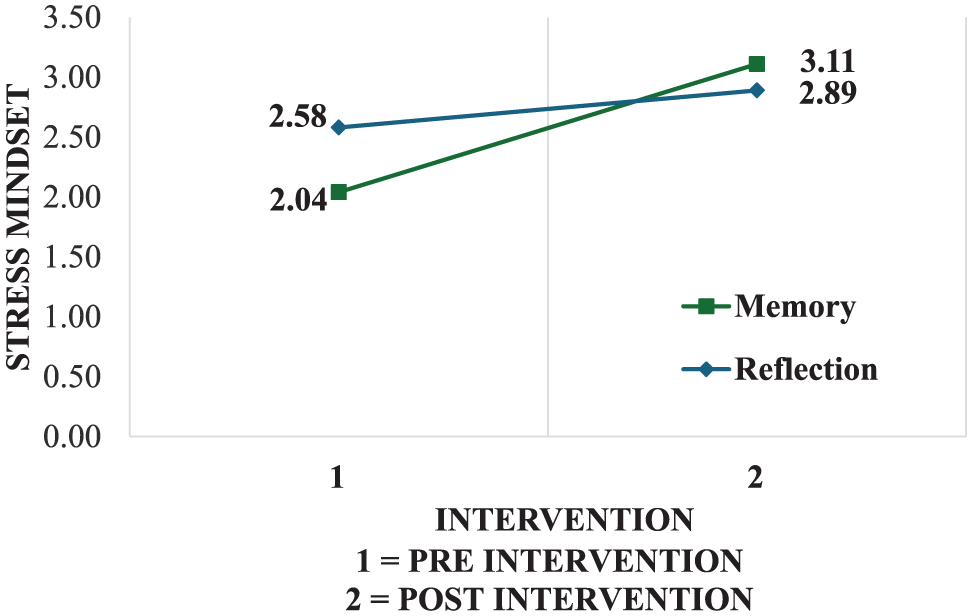
Stress mindset interaction effect for time and group condition.
Learning Consolidation Conditions
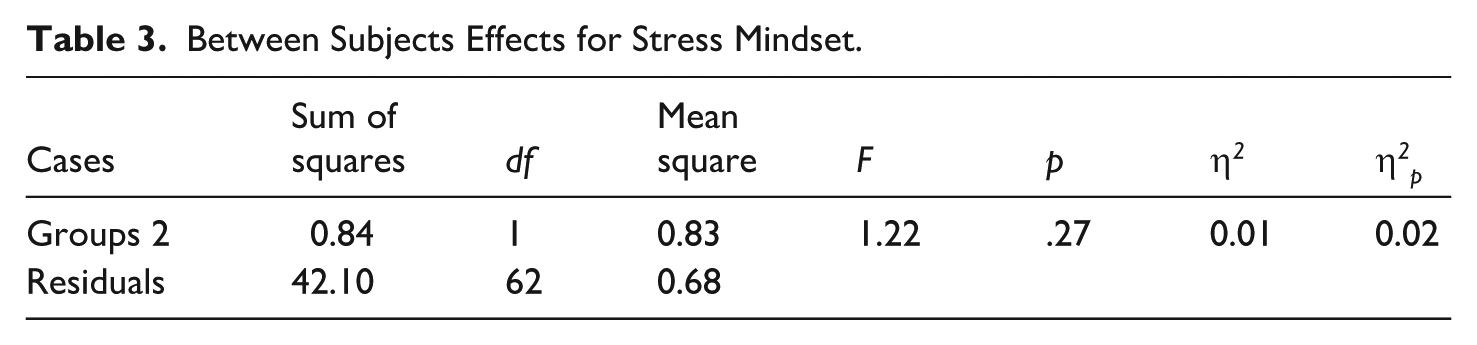
There was no significant main effect of Group, F(1, 62) = 1.22, p = .27, η2p. = 0.02, indicating that overall stress mindset scores did not differ significantly between the two intervention groups when averaged across time points (Table 3). The significant main effect of Time suggests that, on average, participants’ stress mindset scores improved from pre- to post-intervention, regardless of group. However, the significant Time × Group interaction indicates that the change in stress mindset scores differed by intervention condition. Visual inspection of Figure 1 suggests that the memory reconsolidation group was more effective in changing stress mindset scores compared to the metacognitive reflection group.
Between Subjects Effects for Stress Mindset.
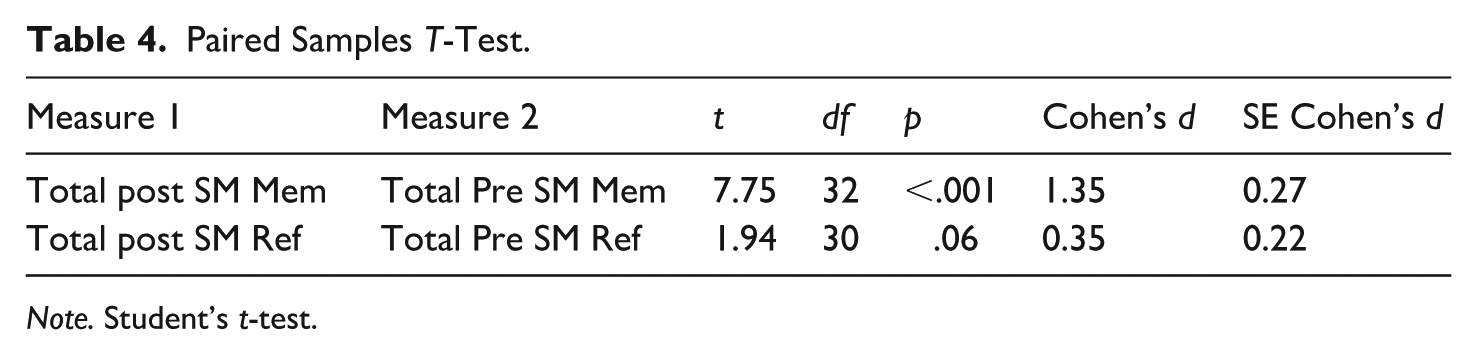
A post hoc paired-samples t-test was conducted to further examine changes in stress mindset scores from pre- to post-intervention within each group (Table 4). For the metacognitive reflection group, the increase from pre-intervention (M = 2.58, SD = 0.66) to post-intervention (M = 2.89, SD = 0.81) did not reach statistical significance, t(30) = 1.94, p = .06, though the small-to-moderate effect size (d = 0.35) suggests a potential trend toward improvement. In contrast, the memory reconsolidation group showed a statistically significant and large increase in stress mindset scores, t(32) = 7.75, p < .001, d = 1.35. This indicates a strong effect of the memory reconsolidation intervention on enhancing students’ stress mindset from pre-intervention (M = 2.04, SD = 0.74) to post-intervention (M = 3.11, SD = 0.65).
Paired Samples T-Test.
Note. Student’s t-test.
Coping Self-Efficacy Change
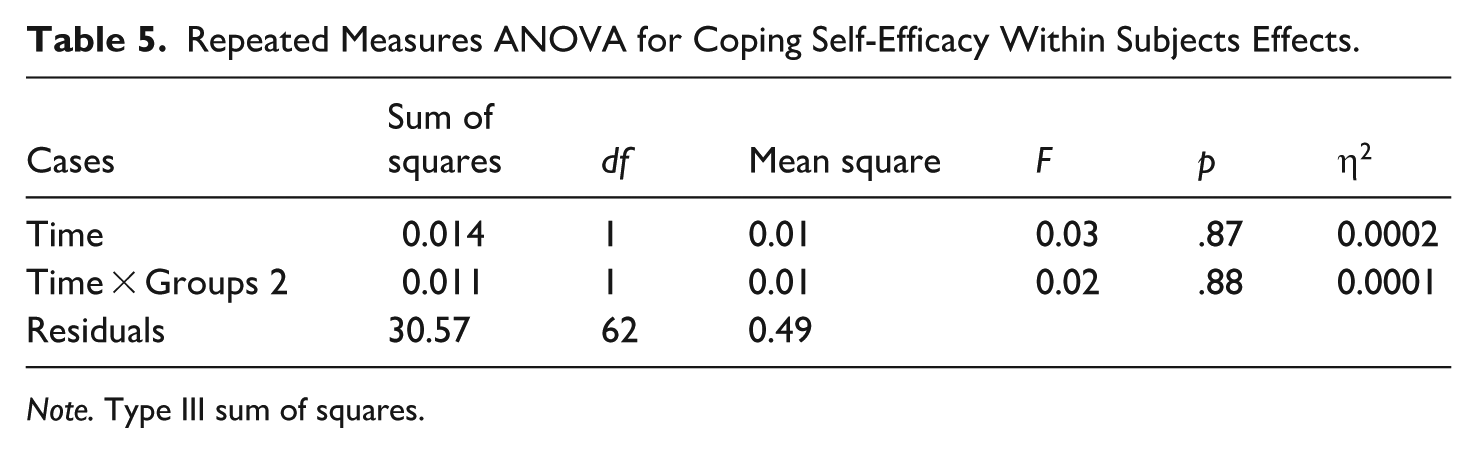
To answer research question two, does coping self-efficacy change after the intervention, a 2 (Time: pre-intervention, post-intervention) × 2 (Group Condition: metacognitive reflection, memory reconsolidation) repeated measures ANOVA was also conducted to examine the effects of the intervention on Coping Self-Efficacy (CSE) scores (Table 5). The analysis revealed no significant main effect of Time, F(1, 62) = 0.029, p = .866. This indicates that, overall, CSE scores did not change significantly from pre-intervention to post-intervention when averaged across both groups (Table 6). Additionally, there was no significant Time × Group interaction, F(1, 62) = 0.022, p = .882 (Table 6). This suggests that the pattern of change in CSE scores over time did not differ significantly between the metacognitive reflection and memory reconsolidation groups.
Repeated Measures ANOVA for Coping Self-Efficacy Within Subjects Effects.
Note. Type III sum of squares.
Between Subjects Effects for Coping Self-Efficacy.
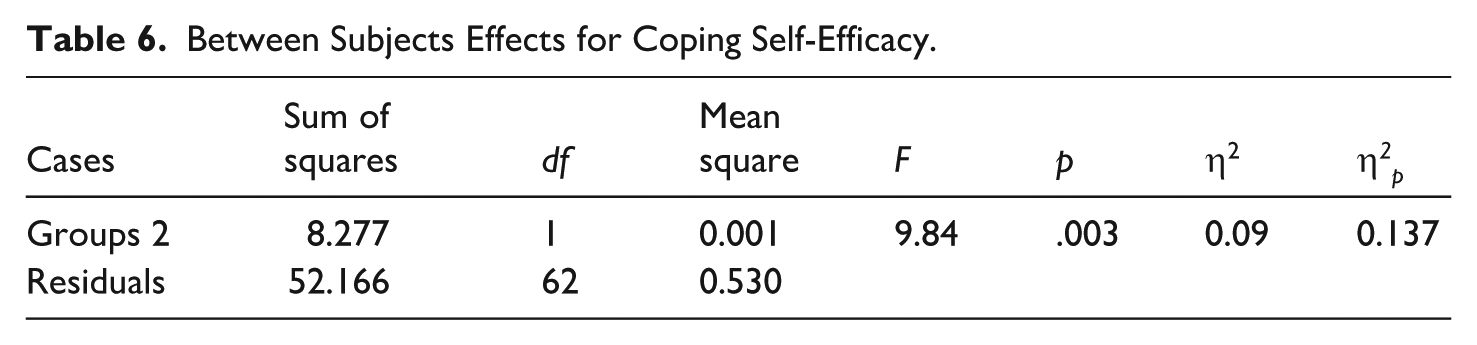
A significant main effect of Group was observed, F(1, 62) = 9.837, p = .003, η2p = 0.137. This effect size can be interpreted as medium, indicating a meaningful difference in overall CSE scores between the two intervention groups when averaged across time points.
These results suggest that while there were no significant changes in CSE scores over time for either group, there was a significant overall difference between the groups. The metacognitive reflection and memory reconsolidation groups differed in their CSE scores, regardless of the time point, with the mean for the memory reconsolidation group higher than the metacognitive reflection. However, the interventions did not appear to significantly change CSE scores from pre- to post-intervention.
Discussion
Considering the elevated levels of stress and anxiety that children experience at school and the potential negative impact of stress (Chou et al., 2011; de la Fuente et al., 2020), effective support for managing stress is increasingly important. The results from this pilot offering of the Stress Stories Project are relevant for developing curriculum to support students in managing stress and learning at school. At post-intervention, results revealed; (a) stress mindset scores increased, with more students adopting a “stress is enhancing” mindset; (b) there was no significant difference in coping self-efficacy scores; and (c) a time by group interaction was observed for stress mindset, indicating the memory reconsolidation condition was more effective than the metacognitive reflection condition in changing stress mindset over time. These findings are discussed below.
Stress Mindset
The significant change in stress mindset scores after the intervention was consistent with extant stress mindset research (Crum et al., 2013, 2017). This result is relevant for students, as a stress mindset is expected to shape outcomes linked to stress, including health, performance, and well-being (Crum et al., 2013), and informs coping practices by shaping the psychological and motivational context within which coping actions are chosen and enacted (Crum et al., 2017). Providing students with accurate information about stress and facilitating a belief about the nature of stress as enhancing has the potential to enhance performance and well-being. Further, stress mindset interventions can be very brief, and therefore can be integrated into classrooms using minimal teacher time and resources, in alignment with pragmatic and practical considerations within community engaged research (Bearman et al., 2020; Parade et al., 2024).
Learning Consolidation Conditions and Stress Mindset
The memory reconsolidation condition was more effective than metacognitive reflection in shifting stress mindset over time. This suggests the value of addressing past school stress experiences in shaping current responses. The result aligns with both the psychological construction theory of emotion, which emphasizes past experience as a component of emotion (Barrett, 2017), and the recognition that stress mindset is experience-dependent (Crum et al., 2013, 2017).
Memory reconsolidation goes beyond simply reflecting on the past stress experience to include visualizing a “rewrite” of the stress experience that incorporates effective coping responses for stress regulation and learning management, potentially facilitating transformative and stable change for students (e.g., see Ecker & Vaz, 2022). In the Stress Stories Project, effective coping included emotion regulation, seeking support, and self-regulated learning. For example, students selected a memory to “rewrite” that represented not coping well with school-related stress. In the memory reconsolidation activity, newly acquired information and strategies from the Stress Stories program about effectively coping with school-related stress contrasts with the student’s previous negative stress experience, creating a sense of dissonance or “prediction error” that supports memory reconsolidation (Ecker & Vaz, 2022). While metacognitive reflection is valuable, in the case of highly emotional memories such as school stress, additional memory reconsolidation support may enhance a stress is enhancing mindset beyond metacognitive reflection alone.
This highly individualized approach is consistent with current emotion and stress research (e.g., Barrett, 2017a, 2017b, 2022; Ecker & Vaz, 2022), and also honors the diversity of student experiences within their unique context which is further consistent with community engaged research (Bearman et al., 2020; Lawson & Owens, 2024; Parade et al., 2024).
Coping Self-Efficacy
While stress mindsets create favorable conditions for adaptive downstream motivation, cognition, emotion and behavior (Crum et al., 2017), stress mindsets do not capture situation-specific coping. Central to managing school stress adaptively is the belief that a person is capable of coping with specific school demands and the emotion of stress, or coping self-efficacy, which refers to an individual’s belief in his or her ability to cope with emotions (e.g., stress) and stressful events (e.g., tests and other academic challenges).
The results did not reveal a significant change in coping self-efficacy after the intervention, which was delivered over a 2-week period. The decision to deliver the learning modules in the short time duration was mainly logistical to complete the project before the end of the school year and to respect the available time and staff resources in a busy school environment. One explanation for the null coping self-efficacy finding is the short duration of the intervention. Mastery experience, the interpretation of successful past performances and achievement, has been found to be most influential in increasing students’ self-efficacy (Ahn et al., 2017; Bandura, 1997; Usher & Pajares, 2009; Won et al., 2024). Proximal time points don’t typically capture changes in self-efficacy (Won et al., 2024). Given the expected role of mastery experiences in other types of self-efficacy (e.g., Usher & Pajares, 2009; Won et al., 2024), it is likely that a significant change in coping self-efficacy would result if the intervention was delivered over a longer time interval. This projection is supported by the increase in mean coping self-efficacy scores from pre to post intervention in this study, insufficient change for statistical significance but trending in that direction.
Summary
This study examined the effectiveness of an integrated intervention involving stress regulation and learning management, known as the Stress Stories project. This intervention targeted two key stress appraisals: stress mindset and coping self-efficacy. Students often experience significant stress levels, which can adversely affect their learning and overall well-being, highlighting the need for effective regulation strategies. The participants were divided into two groups, memory reconsolidation and metacognitive reflection, and they completed the pre- and postintervention surveys. The results revealed stress mindset scores increased after the intervention, with more students adopting a “stress-enhancing” mindset. The memory reconsolidation condition facilitated a larger change in stress mindset scores. There was no significant difference in coping self-efficacy scores, possibly due to the short duration of the intervention. These findings suggest that the intervention has potential psychological and motivational benefits, particularly in addressing how prior experiences shape stress appraisals. Recommendations for future iterations of this project include extending the intervention over a longer period and incorporating more opportunities for students to apply what they learned in class. This would likely provide increased mastery experiences that enhance students’ ability to manage school-related stress and academic demands.
Implications for Practice
Findings from this pilot intervention study hold several important implications for practice regarding: (a) stress mindset interventions; (b) coping self-efficacy, (c) memory reconsolidation; and (c) integrated approaches.
First, changes in stress mindset with more students adopting a “stress is enhancing mindset” are observed following a relatively short intervention, which has potential benefits for student performance and wellbeing (e.g., Crum et al., 2013, 2017; Yeager et al., 2022; Yeager & Dweck, 2012). To promote a stress is enhancing mindset, teachers can incorporate lessons and activities that reframe stress as a potentially beneficial experience that can lead to growth and improved performance and share examples of how stress can enhance learning, resilience, and skill development when approached with a stress is enhancing mindset.
Second, although coping self-efficacy did not change significantly in this time limited intervention, the mean did increase. This suggests that over a longer duration, with increased opportunities for mastery experiences that including coping with stress and academic demands, coping self-efficacy will likely exhibit significant change (e.g., Won et al., 2024). Teachers can facilitate coping self-efficacy by; (a) providing information and strategies to manage the emotion of stress, cognitive reframing and physiological regulation for example; and (b) providing information, support, and scaffolding to facilitate strategic management of academic demands.
Third, encouraging students to reflect on past stressful experiences where they ultimately grew or succeeded despite initial challenges, is grounded in the principles of memory reconsolidation. This approach recognizes the role of prior experience in shaping student experiences of stress. Although findings were modest in this small sample and should be generalized with caution, the memory reconsolidation approach had a larger effect on changing stress mindsets and student experiences of stress at school. This suggests teachers, school counselors, and school psychologists can guide students through exercises to recall and reframe past stressful academic experiences in a more positive light and have students identify lessons learned or skills gained from overcoming difficult academic situations. In other words, supporting students to be able to answer questions like “where does that idea come from” and “what can you do differently next time” when students voice negative self-beliefs and appraisals.
Fourth, this study highlights the potential of interventions that integrate stress regulation and learning management. This implies there is benefit for future research to further develop curriculum that; (a) combine stress management skills with study strategies and learning techniques, (b) collaborate across school support departments (e.g., counseling and inclusive learning) to develop holistic programs, (c) incorporate stress management information and experiential learning into regular class time, (d) applies the integrated approach in this research to students who are particularly vulnerable to challenges with stress and learning management (e.g., students with ADHD), and (e) support likely times of stress for students such as transition points from middle to high school (e.g., grade 8) and from high school to post-secondary (e.g., grade 12).
Limitations
Findings from this pilot offering of the Stress Stories Project should be assessed in light of several limitations. First, the sample size was relatively small and was limited to one school and two grade levels. The sample size was appropriate for a pilot study and for community-engaged research; however, findings should be generalized with caution. Second, additional demographic information was not included, thus a full array of contextual contributions was not considered in this research. Third, multiple comparison corrections (e.g., Tukey, Bonferroni) were not applied increasing risk for Type I error, and the groups differed at baseline on both outcome measures which means the changes cannot be solely attributed to the intervention. Fourth, the intervention was offered over only 2 weeks, which may have detracted from possible changes in coping self-efficacy as the temporal interval for changes in self-efficacy is typically longer, an academic term, for example. Fifth, the scale for coping self-efficacy is not tailored specifically to academic contexts and has not been widely used with children or in academic settings; thus, it may not accurately capture student experiences. Future research could benefit from the development of an academic coping self-efficacy scale that considers age and developmental level. Sixth, limitations in time and resources within the school context constrained the length of learning modules, the availability of facilitators, and the ability to provide individualized support. It is vitally important to weigh the “cost” in staff and student time and effort of adding interventions to the school context against the benefit. Given that stress is constructed through personal and contextual factors, and that memory reconsolidation activities require tailored regulation strategies, scaling this intervention to a whole-school level may not be appropriate. A key limitation, therefore, is that the intervention may be most effective when implemented on a smaller scale, allowing for adult co-regulation and responsiveness to individual student needs.
Footnotes
Appendix
Overview of the Stress Stories Project Learning Modules.
| Module | Module overview |
|---|---|
| For the adults (e.g., teachers, school counsellor) | • Overview of the project • Introduction to stress mindset, coping self-efficacy, memory and stress • Trauma and neurodevelopmentally informed approach • Psychological construction approach to emotions • Co-regulation • Self-compassion • Overview of student learning modules |
| Module 1: What is stress? | • Stress mindset • What is stress? • Positive and negative impacts of stress • Types of stress responses • Stress mindsets and coping • How to change mindsets |
| Module 2: Memory | • What is memory? • How memory is constructed • Stress and memory • Memory reconsolidation • Emotion soup activity |
| Module 3: Emotion focused coping | • Threat responses to stress • Construction of individual “stress stories” • Stress regulation (thinking and body regulation) • Reflection condition • Memory reconsolidation condition (stress rewrite) |
| Module 4: Social support | • Self-Compassion • Help Seeking at School • Reflection condition • Memory reconsolidation condition (stress rewrite) |
| Module 5: Solution focused coping | • Challenge Responses to Stress • Demand versus Resource Appraisals • Self-Regulated Learning • Solution focuses strategies for School • Reflection condition • Memory reconsolidation condition (stress rewrite) |

Funding
The authors disclosed receipt of the following financial support for the research, authorship, and/or publication of this article: This research was funded by a Social Sciences and Humanities Research Council of Canada (SSHRC) Doctoral Fellowship awarded to Meg Kapil (#752-2022-1802), a grant from the Center for Outreach Education (CORE) UVic awarded to Meg Kapil, and SSHRC Insight grant # 4352018-0440 (Hadwin, PI).
Declaration of Conflicting Interests
The authors declared no potential conflicts of interest with respect to the research, authorship, and/or publication of this article.