




Abstract
This study assessed the predictive nature of professional self-care practices on various outcome variables (academic performance, psychological well-being, and affect) and investigated if self-care influenced the relationship between perceived stress and psychological well-being amongst school psychology graduate students across Canada. Participants included 102 Canadian school psychology graduate students (female: 94, male: 8, Mage: 26.9). Results indicated that professional support and life balance self-care practices predicted increased psychological well-being and that life balance predicted positive affect. Additionally, the results indicated that professional self-care practices strengthened the inverse relationship between perceived stress and psychological well-being, suggesting that self-care practices can buffer the negative effects of perceived stress on well-being. These results highlight the important role that professional self-care plays for school psychology trainees and may guide researchers and practitioners on ways to improve self-care intervention practices within professional and training settings.
Keywords
Introduction
School psychologists report high levels of distress as a function of their psychologically demanding work role (Acker, 2012; Killian, 2008), resulting in high rates of fatigue and burnout (Garcia-Williams et al., 2014). This may be in part due to the transition of the roles and responsibilities that a school psychologist has. Historically, school psychologists have delivered services that primarily involved formal assessment of children for placement into specialized programs (Castillo et al., 2016). However, under the National Association of School Psychologists Model for Comprehensive and Integrated School Psychological Services’ guiding framework, school psychologists are encouraged to provide a range of services across different levels of the system while consecutively performing assessments informing intervention and consultation (Castillo et al., 2016). Therefore, school psychologists may be experiencing more distress currently than before as a consequence of their roles expanding into the comprehensive and integrated framework. (Castillo et al.’s (2016) study reported six themes that may contribute to burnout and fatigue in psychologists, including lack of time/heavy caseload, misalignment between policies and priorities in school districts and the role of school psychologists, lack of stakeholder involvement (e.g., staff, teacher, and administrator buy-in, and support), obstacles in problem-solving implementation (e.g., limited access to families), lack of resources (e.g., lack of funding or inability to access materials), and/or insufficient training and professional development. Beyond these challenges, school psychologists must uphold ethical and legal standards outlined in multiple regulatory bodies. Consequently, school psychologists may feel higher levels of emotional exhaustion (e.g., feeling overwhelmed by job demands), depersonalization (e.g., developing negative attitudes toward clients), decreased levels of personal accomplishment (e.g., feeling incompetent and ill-equipped to support clients), and lack of experience (Badali & Habra, 2003; Daly & Gardner, 2022), negatively affecting their well-being. Subsequently, higher rates of mental health disorders are reported by school psychologists than by others in the healthcare profession (Acker, 2012; Rossi et al., 2012).
School psychologists face many uncontrollable challenges that may contribute to burnout or diminished mental well-being. There are activities one can do to decrease the likelihood of experiencing burnout. Specifically, one can engage in daily activities that promote a positive state of well-being to aid in effectively managing distress and preventing mental health disorders. One’s engagement in behaviors that maintain and promote physical, emotional, psychological, and social well-being is a psychological construct referred to as self-care (Myers et al., 2012). Another widely accepted definition of self-care in the literature states that self-care is the “process of purposeful engagement in practices that promote holistic health and well-being of oneself” (Bressi & Vaden, 2017), referring to activities that attend to one’s needs or ways to effectively manage stress. Self-care practices have been shown to promote healthy functioning, alleviate stress (Colman et al., 2016), and consequently enhance one’s well-being (Dorociak, Rupert, Bryant et al., 2017).
To best understand the construct of self-care, it is important to describe and differentiate the categories of self-care practice explored previously in the literature: cognitive, physical, emotional, intellectual, social, relational, and spiritual (Williams-Nickelson, 2006). Cognitive self-care can be defined as the ability to reappraise situations and set realistic expectations of oneself and her/his workload capacity (Myers et al., 2012). Physical self-care, the most widely researched practice (Williams-Nickelson, 2006) can be defined as one’s involvement in activities that help promote physical health. These include but are not limited to; exercise (Brown, 1991; Fleshner, 2005), massage, adequate sleep hygiene (Beccuti & Pannain, 2011), the maintenance of a healthy diet, taking internet, or video game breaks, taking “brain breaks” (e.g., drawing), maintaining realistic academic expectations, maintaining friendships, and relationships, partaking in gratitude activities, listening to music, scheduling breaks, and celebrating accomplishments (Daly & Gardner, 2022). Emotional self-care is defined as one’s ability to self-reflect and monitor their emotional state, which can often include positive self-regard, seeking personal therapy, and utilizing self-talk strategies (Gross, 2007). Social self-care can be defined as one’s ability to appropriately seek social support that can assist in times of need and engage in fulfilling relationships (social; American Psychiatric Association (2018). These support systems can include friends, families, colleagues, and supervisors (Ayala & Almond, 2018) and this frequent interaction can be referred to as relational self-care (Williams-Nickelson, 2006). Spiritual self-care can be defined as one’s involvement in activities that promote a realization of one’s spiritual being, which can be attained through rituals such as; mindfulness (Bishop et al., 2004), mediation and organized religion (Williams-Nickelson, 2006). According to Williams-Nickelson (2006), intellectual self-care refers to exploring ideas and learning in a creative way. Lastly, psychological self-care includes the ability to cope with stressors (e.g., worry, anxiety relative to one’s personal, and professional life).
The specific self-care activities one engages in may differ depending on their personality, lifestyle, preferences, culture, gender, or age, however, they are proactively done with the purpose of improving mental or physical well-being (Collins & Cassill, 2022). Notably, ineffective self-care may lead to diminished well-being, which in turn affects other areas of life such as one’s academic and social-emotional performance. Therefore, it is reasonable to assume that limited self-care and associated distress can have a significant impact on those who are practicing or training to become mental health professionals (e.g., psychologists). Noteworthy, self-care practices are not limited to preventing burnout. Instead,Zahniser et al. (2017) state that self-care can counterbalance burnout and play a valuable role in helping individuals cope effectively with stressors that may arise, while simultaneously promoting healthy habits that will assist individuals in facing future stressors. Together, self-care practices can support one’s functioning on a personal and professional level by developing effective ongoing strategies that enhance one’s overall well-being (Wise et al., 2012).
Psychologists’ Self-Care
Professional self-care practices have been examined relative to five categories: professional support, professional development, life balance, cognitive awareness, and daily balance (Dorociak et al., 2017). Professional support refers to the tendency for professionals to foster relationships at work, whereas professional development focuses on behaviors that increase one’s professional competencies. The practice of life balance emphasizes one’s ability to set boundaries between his/her personal and professional identities. The ability to employ cognitive strategies for keeping perspective and coping with heavy work demands is referred to as cognitive awareness. The professional self-care practice of daily balance refers to incorporating strategies throughout the workday to manage stressors while replenishing resources (e.g., “I take breaks throughout the day”) (Dorociak, Rupert, & Zahniser et al., 2017). Exhausting one’s energy, strength, and resources by making excessive demands on oneself can consequently lead to burnout and in response, negatively affect one’s overall well-being (Bressi & Vaden, 2017).
As previously mentioned, research suggests that psychologists may be particularly vulnerable to the types of stress and burnout that self-care practices can help to minimize (D'Souza et al., 2011; El-Ghoroury et al., 2012; Volpe et al., 2014). As positive outcomes of self-care activities are present, so is the ethical obligation to practice self-care to maintain one’s well-being and competent abilities to best serve clients. Although self-care stands as an ethical mandate for psychologists, to ensure clients benefit from psychological interventions and are not harmed, there is debate regarding how often self-care is actually utilized by psychologists. In fact, psychologists often promote the use of self-care practices in their work with clients, yet do not effectively implement such practices in their own lives (Bettney, 2017; Wise et al., 2012).
The two most commonly reported reasons that limit psychologists’ ability to engage in self-practices are with respect to their professional situation (competing job roles—e.g., academic, research, supervision, consultation) and systemic barriers (budget cuts, job insecurity; Bettney, 2017). Further, one’s ability to serve linguistically and culturally diverse students/families may be influenced by their own demographic orientation (e.g., ethnicity and gender; Castillo et al., 2016). Other hypotheses for lack of self-care are attributed more broadly to one’s cognitive processes. For example, Ehrlinger and Dunning (2003) questioned the accuracy of self-impressions one has given that people make assumptions about their performance based on their preconceived beliefs. In this case, school psychologists may not believe self-care is necessary as a consequence of beliefs passed onto them through their previous experiences (e.g., not emphasized in training, not modeled appropriately). Thus, leading them to make inaccurate self-impressions about the importance of self-care. Alternatively, others may engage in flawed self-assessment (Dunning et al., 2016). For school psychologists, flawed self-assessment may occur when one believes they are competent in their work and do not need to engage in self-care practices to promote greater success. However, evidence of self-care utilization is present, as an exploratory study completed by Mahoney (1997) revealed that self-care activities such as reading, exercising, and obtaining colleague feedback and support were frequently practiced by psychologists. Additionally, a study by Coster and Schwebel (1997) evidenced that psychologists engaged in activities such as personal psychotherapy, vacation, and self-reflection for self-care practice.
School Psychologists’ Self-Care
It is particularly important to address school psychologists’ self-care as research (Huebner, 1993; Newman, 2013) has indicated that school psychologists, in comparison to clinical, and counseling psychologists, are more susceptible to burnout, due to higher levels of emotional exhaustion (i.e., feeling overwhelmed by job demands), depersonalization (i.e., developing negative attitudes toward clients), decreased levels of personal accomplishment (i.e., feeling incompetent and ill-equipped to support clients), lack of experience, and increased interpersonal relationships (Badali & Habra, 2003; Daly & Gardner, 2022). These findings could be attributed to the vast array of challenges and expectations school psychologists are faced with daily (Fagan & Wise, 2000). National Association of School Psychologists (NASP, 2019) identified two unique challenges school psychologists are currently facing, (1) the current shortage of school psychologists, and (2) the expanding role of a school psychologist. The current shortage of school psychologists increases the workload demands on these professionals and has been shown to negatively impact their performance (Fagan & Wise, 2000). In addition, the roles of school psychologists have expanded over the past decade to include such responsibilities as intervention and consultation in addition to their primary role which has historically been psycho-educational assessment, and in response feelings of incompetence may arise if these individuals are not prepared for changing demands of the role (NASP, 2019). Hence, it is important for school psychologists to address these challenges to prevent burnout. Unfortunately, little evidence exists regarding the self-care practices of school psychologists. However, promising preliminary results exist. For example, Bolnik and Brock (2005) examined the self-care strategies of 400 school psychologists and found that negative symptoms such as general fatigue and exhaustion were prevalent, however, the use of self-care strategies was important to combat these negative feelings, with a reported 94% of the sample utilizing self-care practices in response to crisis intervention work.
The COVID-19 pandemic has changed the field of school psychology dramatically. In a study by Ritchie et al. (2021), 95% of school psychologists indicated a significant change in their roles and responsibilities. School psychologists’ main role of assessment and intervention prior to the pandemic was transferred to primarily consultation and professional development activities. However, the authors allude to these new roles as methods of developing and extending new competencies and methods of practice. Modifications include facilitating an assessment in a valid and secure manner online and developing innovative ways to identify students who require services (e.g., better utilizing parent and teacher consultation). Beyond the challenges associated with the roles and responsibilities of a school psychologist, the Covid-19 global pandemic has presented psychologists with additional obstacles (e.g., the transition from in-person to virtual assessments) that may negatively affect their well-being. Thus, engaging in self-care may be even more necessary than before. Norcross and Phillips (2020) promote self-care as a coping mechanism for psychologists, which maintains their ability to support and treat clients effectively despite external factors. Practices pertaining directly to psychologists navigating the pandemic include limiting media coverage of COVID-19, remaining on a schedule, engaging in cognitive restructuring and mindfulness, practicing gratitude and self-empathy, spending time outdoors, having a strong support system, and refocusing one’s mission (Norcross & Phillips, 2020).
School psychologists were asked about their well-being before and during the pandemic, and results indicated a dramatic decline in job satisfaction, self-efficacy, and mental health (Norcross & Phillips, 2020). To support their well-being during the pandemic, school psychologists indicated some self-care practices, including exercising and spending time with family and friends. Beyond modifying practices, school psychologists have had to deal with financial strain, including layoffs or decreased hours. As such, this study demonstrates the significant impact the pandemic has had on Canadian school psychologists.
Interestingly, no known literature exists regarding the effects of the pandemic in association with psychology graduate students. Therefore, it is imperative to understand how psychology graduate students support themselves to effectively handle stressors. Hence, understanding the nature and scope of the self-care practices of mental health professionals, and of those training to be mental health professionals is warranted.
School Psychology Graduate Students’ Self-Care
Although evidence of the number of Canadian school psychology students within school psychology programs across Canada could not be found, school psychology programs make up 12.5% of programs compared to clinical psychology, clinical neuropsychology, and counseling psychology. Hence, there are fewer school psychologists in training then within other programs of psychology. This information, along with estimating the number of students in school psychology programs across Canada (based on website statistics of each applicable University) leads the researchers to estimate that there would be approximately2,000 psychology graduate students, with approximately 250 being enrolled in a school psychology graduate program within Canada.
Although the number of students in school psychology programs in Canada is questionable, the number is much smaller than what would be predicted for students enrolled within other psychology programs across Canada (e.g., Clinical, and Counseling psychology programs). This is partly understood to be the case because there are currently only five CPA accredited school psychology programs within Canada and many more clinical and counseling psychology programs CPA that are accredited within Canada. Nevertheless, limited research exists regarding self-care within the graduate student population. This is surprising as self-care is one of the core foundational competencies necessary to develop early in one’s career to uphold the psychological ethical principles of Responsible Caring and Integrity in Relationships (Maranzan et al., 2018). However, studies analyzing clinical student training and self-care practices provide promising results regarding the benefits of self-care. As graduate students are expected to maintain sufficient clinical and academic standing, while dealing with life stressors, including funding, finances, time constraints, power differentials, and relationships, and competition/unknown job trajectories, it is unsurprising that graduate students are at a greater risk of experiencing burnout (Maranzan et al., 2018; (Park et al., 2021). Further, external stressors and academic demands can negatively affect one’s functioning, increasing the risk of experiencing mental disorders (e.g., anxiety, depression; Maranzan et al., 2018; (Park et al., 2021). Unhealthy coping mechanisms, such as drug use, are linked to graduate student demands (Park et al., 2021). To support students with the stressors placed on them in a healthy manner self-care practices are encouraged. Positive outcomes of engaging in self-care practices reported by clinical psychology students included lower perceived stress, increased ratings of well-being, and increased perceived clinical, and academic performance (Maranzan et al., 2018). A meta-analysis by Colman et al. (2016) reported that graduate psychology students who engaged in self-care activities demonstrated better outcomes. Interestingly, both studies found that the benefits reported by the students remained regardless of the type of self-care activity chosen, the program setting, or the students’ characteristics (e.g., culture; Colman et al., 2016; Maranzan et al., 2018).
Recent literature by Daly and Gardner (2022) explored the benefits of teaching self-care to school psychology graduates with a small sample (N = 22) and found that students’ reflections of self-care activities assisted in meeting the demands associated with their graduate training. However, the authors recommend further examination of this finding with a larger sample size.
Colman et al. (2016) along with other scholars (Ayala et al., 2017; Goncher et al., 2013; Myers et al., 2012) have supported the need to broaden the sample of graduate student participants in studies of self-care (i.e., school psychology graduate students), along with greater diversity within these samples (i.e., culture and gender) to create a more representative sample of psychology graduate studies when examining self-care within this population. This could better differentiate the degree of stress and the types of self-care approaches graduate students in psychology utilize or do not utilize to support and maintain their well-being.
Although no studies were found regarding school psychology graduate students and self-care during the pandemic, it can be assumed that school psychology graduate students are navigating many obstacles. For example, a school psychology student is required to obtain a certain number of clinical hours. As the pandemic resulted in school closures, students’ ability to obtain enough hours may have been directly affected. Further, online teaching and assessment may accentuate performance stressors such as the reliability of technology when test-taking. Due to the added stressors in addition to the prior financial, home, and academic ones, as well as the need to adapt on a daily basis to changes in the field, self-care as a school psychology graduate student may be more necessary than ever. Therefore, the implications of this research study conducted during COVID-19 could provide a greater understanding of the self-care practices of these graduate students and could better prepare these students for psychological practice during our current pandemic situation as well as in later years with better self-care.
From the author’s review of the literature and perspective, no current published peer-reviewed study has focused on school psychology graduate students in isolation with respect to their self-care practices and associated outcomes (i.e., psychological well-being, academic achievement, affect). Hence this study is a unique, timely, and important investigation of self-care practices and associated outcomes among school psychology graduate students across Canada.
Present Study
The present research is designed to take a more focused look at self-care among Canadian school psychology graduate students. The specific questions addressed in this study are: (1) What professional self-care practices do school psychology graduate students utilize the most? (2) Does engagement in self-care practices predict increased well-being, perceived stress, affect and greater academic performance amongst Canadian school psychology graduate students? (3) Does self-care have a protective effect against the harmful effects of stress?
Methods
Participants
One hundred and two school psychology graduate students across Canada (8 males, 94 females) participated in the study. Participants were attendees of the University of Calgary’s, University of British Columbia, University of Toronto, University of Saskatchewan, University of Manitoba, University of Alberta, McGill University, and Western University in school, and applied child psychology, educational psychology, school clinical child psychology, and school clinical programs. Students in various years of their training program were included, as first and second-year students both represented 20.6% of the sample, third-year students included 27.4% of the sample, fourth-year included 9.8%, fifth-year had 12.7%, and six or more years of training included 7.8% of the participants, with 1% not reporting their year. The graduate students ranged in age from 22 to 39 years (M = 26.9 SD = 3.494). The majority of the participants were of Canadian descent, (70.6%), followed by English/Welsh/Scottish/Irish/British (6%), Hispanic (1%), Chinese (3%), African (1%), Middle Eastern (2%), Pacific Islander (1%), Other (14%), and 2% did not report their ethnicity.
Measures
Demographics
A demographic questionnaire was designed to obtain relevant demographic information of the participating graduate students. The form requested the participants to provide information regarding their attending university, year in the school psychology training program, current student status, gender, age, race, and ethnicity.
Self-Care
Self-care practices were assessed using the Self-Care Assessment for Psychologists Scale (SCAP; Dorociak, Rupert, Bryant et al., 2017), with instructions adjusted to tailor the instrument to apply to graduate students in the field (i.e., allowing them to leave questions unanswered if they do not apply to them). Zahinser et al. (2017) created the Graduate Student Version and made the necessary adjustments to coincide with the student population. The SCAP is a 21-item assessment designed to measure self-reported proactive, preventive self-care practices for practicing psychologists. These items are further divided into five subscales (professional support, professional development, life balance, cognitive awareness, and daily balance), each comprising 3 to 5 items.
Dorociak, Rupert, Bryant et al. (2017) analyzed the internal consistency, factor structure, and validity of the SCAP, previously revised from its original name, the Professional Self-Care Scale (PSCS). The SCAP demonstrated acceptable internal consistency for the five factors, with coefficient alpha values between α = .65and α = .83 (Dorociak, Rupert, Bryant et al., 2017). Preliminary evidence for the validity of the scale was established through examination of the correlation coefficients between the SCAP and other theoretically related constructs (The Perceived Stress Scale (Cohen et al., 1983), The Satisfaction With Life Scale (Diener et al., 1985), and the Maslach Burnout Inventory-Human Service Survey (Maslach et al., 1996).
Psychological Well-Being
Psychological well-being was assessed using the Flourishing Scale (TFS; Diener et al., 2010). The FS is an eight-item scale that measures self-perceived success in various social-psychological domains that is, self-esteem, purpose, and relationships (Diener et al., 2010).
Diener et al. (2010) demonstrated the FS has good internal consistency, with a coefficient alpha value of α = .87. Moreover, convergent validity findings show that the FS is also associated with other measures of well-being such as, Satisfaction with life Scales (Silva & Caetano, 2013), the Ryff Scales of Psychological Well-Being (Ryff, 1989) and the Basic Need Satisfaction in General scale (La Guardia et al., 2000; Ryan & Deci, 2000) with correlations ranging from r = .42 to r = .73.
Perceived Stress
Perceived stress was assessed using the 10-item version of the Perceived Stress Scale (PSS-10; Cohen et al., 1983). The PSS-10 is a 10-item scale designed to measure the degree to which stressful situations are perceived as unpredictable, uncontrollable, and overloaded.
A meta-analysis conducted by E. H. Lee (2013) examined the validity and reliability of the PSS-10 (Roberti et al., 2006), it was found that 11 out of 12 studies (Chaaya et al., 2010; Cohen & Williamson, 1987; Lesage et al., 2012; Leung et al., 2010; Mitchell et al., 2008; Örücü & Demir, 2009; Reis et al., 2010; Remor, 2006; Roberti et al., 2006; Wang et al., 2011; Wongpakaran & Wonpakaran, 2010) reported a Cronbach alpha score >.70, along with other accepted reported psychometric properties (i.e., test-retest reliability (>.70), factorial validity(>.70), and criterion validity (<.70). Cohen (1988) show correlations between PSS and various other outcome measures; including health behavior measures, smoking status, and help-seeking behaviors.
Academic Performance
Academic performance was assessed using the Perceived Progress in Training Scale (Zahniser et al., 2017), designed to evaluate students’ academic progress, based on performance feedback in four aspects of their graduate training, including research, clinical work, coursework, and achieving program milestones.
Affect
Graduate students’ affect was assessed using the Positive and Negative Affect Schedule (PANAS; Watson et al., 1988). The 20-item assessment was designed to measure pleasurable and unpleasurable emotions at a given time. These items are further divided into two subscales, negative, and positive affect.
The PANAs has been reported to have good reliability, with Cronbach’s alpha of.89 for PA and.85 for NA (Crawford & Henry, 2004; Watson et al., 1988). Additionally, convergent validity findings show that PA is associated with measures of social activity and daily mood measures, while NA was correlated with measures of stress, depression, and aversive events (Watson et al., 1988).
Procedure
Data were collected between July 2020 and January 2021 using an online survey titled “Self-Care Practices of School Psychology Graduate Students” which was distributed through the Directors of Clinical Training (DCTS) at all English-speaking school psychology graduate programs in Canada via Qualtrics. Approval for this study was granted through the University of Calgary’s Conjoint Faculties Research Ethics Board. Information regarding the attending university and students were removed prior to data collection, therefore the response rate was not calculated. After ethics approval, recruitment emails were sent to the Directors of Clinical Training (DCTs) of all English-speaking school psychology graduate programs in Canada (University of Calgary’s, University of British Columbia, University of Toronto, University of Saskatchewan, University of Manitoba, University of Alberta, McGill University, Western University, and Mount St. Vincent). DCTs were asked to forward the recruitment email, containing information about the present study and a link connecting to the online “Self-Care Practices of School Psychology Graduate Students” survey, to all students in their program. A follow-up email was also sent to all DCTs, requesting that they forward a reminder email to their students.
Data Analysis
Statistical analyses were performed using SPSS software, version 26. All assumptions related to sample size, normality, multicollinearity, and linearity were conducted to assess data suitability for use with multivariate analyses. Further, Pearson correlations were computed to examine whether there were significant correlations between the independent variables (i.e., five dimensions of self-care) and the dependent variables (i.e., perceived stress, affect, psychological well-being, and academic performance) to determine the relationships between them. Next, to determine the degree of prediction between the dimensions of self-care (i.e., professional support, professional development, life balance, cognitive awareness, and daily balance) and well-being, academic performance, and affect, multiple regression analyses were conducted with post hoc tests and discriminant analyses were used to examine group differences. Following these analyses, a moderation analysis was conducted to determine if there is a buffering effect of self-care between the relationship between perceived stress, and psychological well-being.
When considering an appropriate sample size for the analyses used in this study (regressions and moderation analysis), the researcher first considered the approximate sample size of school psychology graduate students (250) and further ran the estimated population size, effect size, margin of error into the G*Power sample size formula to determine adequate sample size. The researcher initially controlled for age, gender, and student status and sought to determine the effects of gender and year in the program on self-reported professional self-care practices, in any of the five professional self-care subscales (professional support, professional development, life balance, cognitive awareness, and daily balance). To do this, the researcher ran a three-by-two factorial analysis of variance (ANOVA). Contrary to the initial hypothesis that gender, year in the program and student status would impact one’s engagement in professional self-care practices, this hypothesis was not supported.
Results
What Professional Self-Care Practices Do School Psychology Graduate Students Utilize the Most?
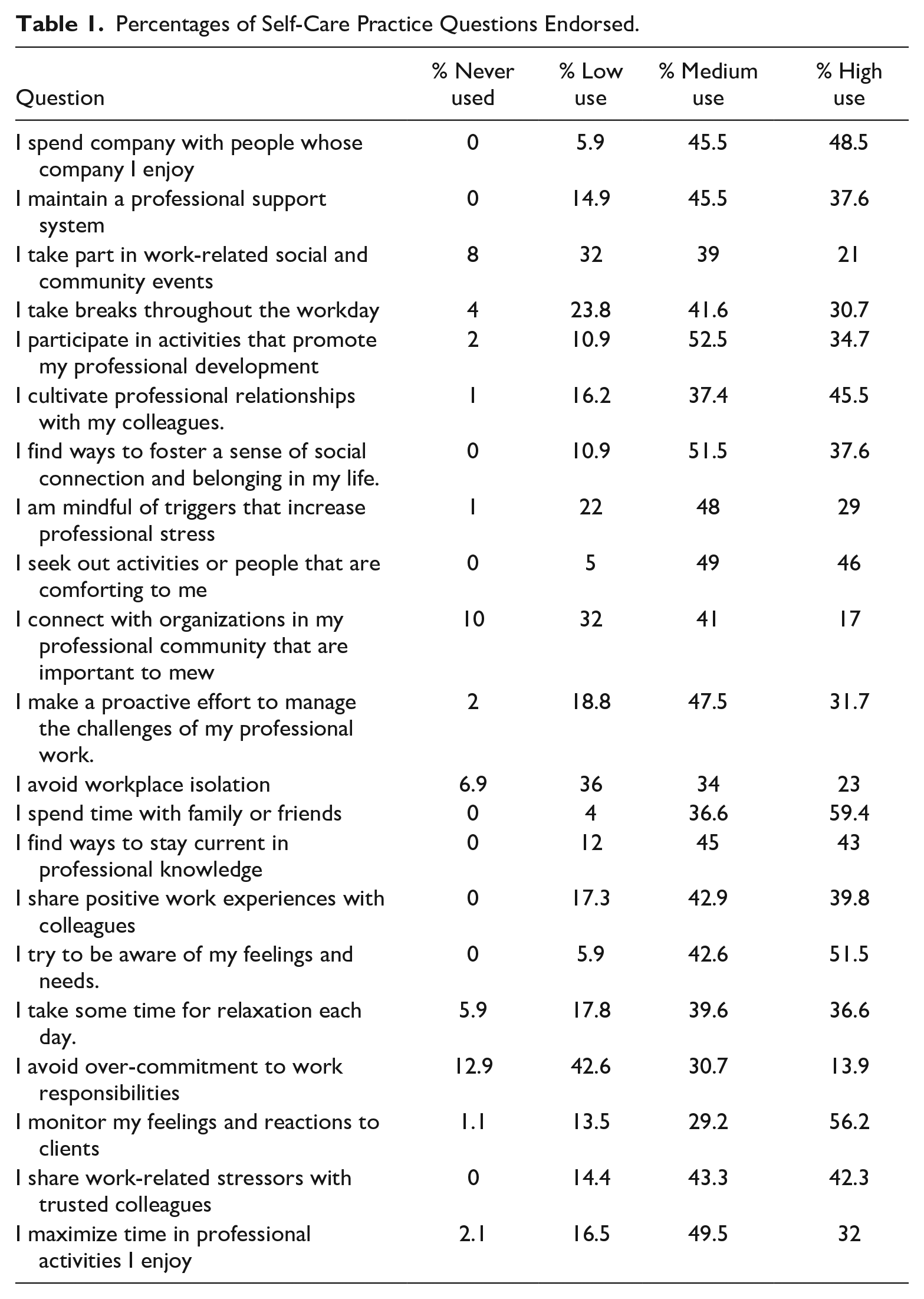
To determine which professional self-care practices were utilized or endorsed the most, the self-care practice Likert responses were first recoded into four groups: never used (response 1), low use (responses 2 and 3), medium use (responses 4 and 5), and high use (responses 6 and 7). The self-care practices utilized the most by school psychology graduate students were (1) spending time with family and friends (59.4%), (2) monitoring one’s own feelings and reactions to clients (56.2%), (3) being aware of feelings and needs (51.5%), (4) spending time with people whose company they enjoy (48.5%), and (5) cultivating professional relationships with colleagues (45.5%). Self-care practices used least frequently included (1) avoiding over-commitment to work responsibilities (12.9%), (2) connecting with organizations in the professional community that are important to them (10%), and (3) taking part in work-related social and community events (8%). Noteworthy, commonalities between questions exist which may affect the percentage of use reported by the students. For example, “I take part in work-related social and community events” and “I connect with organizations in my professional community that are important to me” ask about the similar underlying domain of communicating/interacting with the professional community. Therefore, the percentages reported by students in these questions may be similar due to the nature of the questions asked. Percentages endorsed at each level (never, low, medium, and high) are presented in Table 1.
Percentages of Self-Care Practice Questions Endorsed.
Does Engagement in Self-Care Practices Predict Increased Well-Being, Positive Affect, and Greater Academic Performance Amongst Canadian School Psychology Graduate Students?
A series of multiple regression analyses were used to test if professional self-care practices predict psychological well-being, affect, and academic performance scores. This analysis allowed the researcher to determine whether well-being, affect and academic performance was related to and predicted by professional self-care practices such as professional support, professional development, life balance, cognitive awareness, and daily balance.
The first analysis indicated that the model explained 53% (adjusted R2 of 50.0%) of the variance and that the model significantly predicted psychological well-being scores, F (5, 78) = 17.59, p ≤ .00. Life balance practices were the strongest predictor and contributed to the model (β = .4), p ≤ .00). Similarly, professional support practices predicted and contributed to the model (β = .29), p = .03). The remaining predictors did not significantly contribute to the model with cognitive awareness practices contributing the least (β = .88 p = .45), followed by professional development (β = −.10 p = .44), and daily balance practices (β = .19, p = .06). Regression coefficients and standard errors are presented in Table 2.
Summary of Standard Multiple Regression Analysis for Self-Reported Psychological Well-Being.
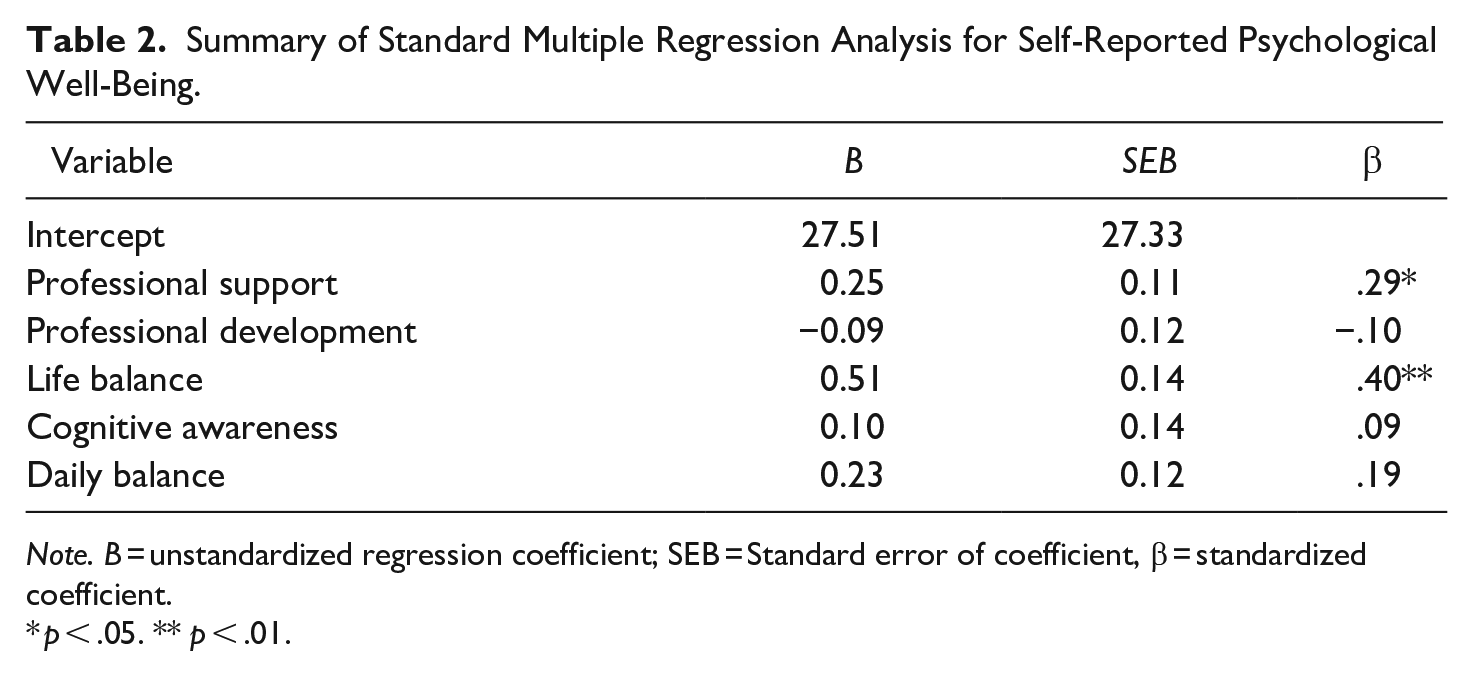
Note. B = unstandardized regression coefficient; SEB = Standard error of coefficient, β = standardized coefficient.
p < .05. ** p < .01.
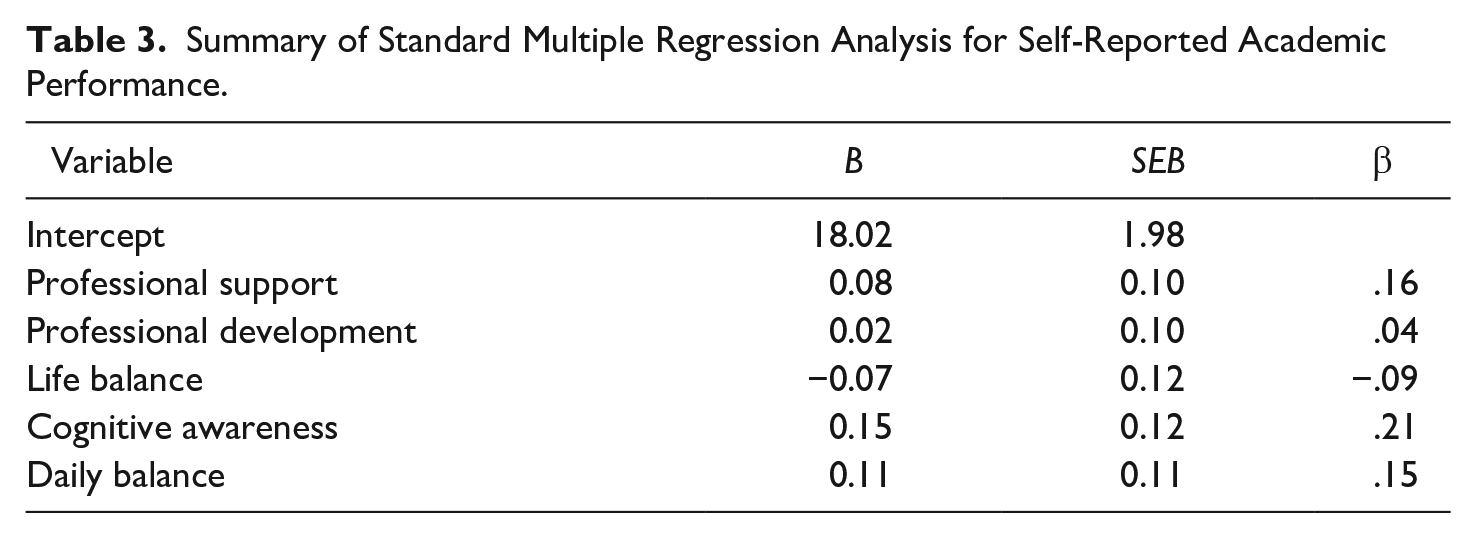
The second analysis indicated that the model explained 15% (adjusted R2 of 9%) of the variance and that the model did not significantly predict academic performance scores, F(5, 64) = 2.318 p = .053. Professional development practices contributed the least (β = .04 p = .83), followed by life balance practices (β = −.09 p = .58), professional support practices (β = .16, p = .41), daily balance practices (β = .15 p = .30) and cognitive awareness (β = −.21 p = .22). Regression coefficients and standard errors are presented in Table 3.
Summary of Standard Multiple Regression Analysis for Self-Reported Academic Performance.
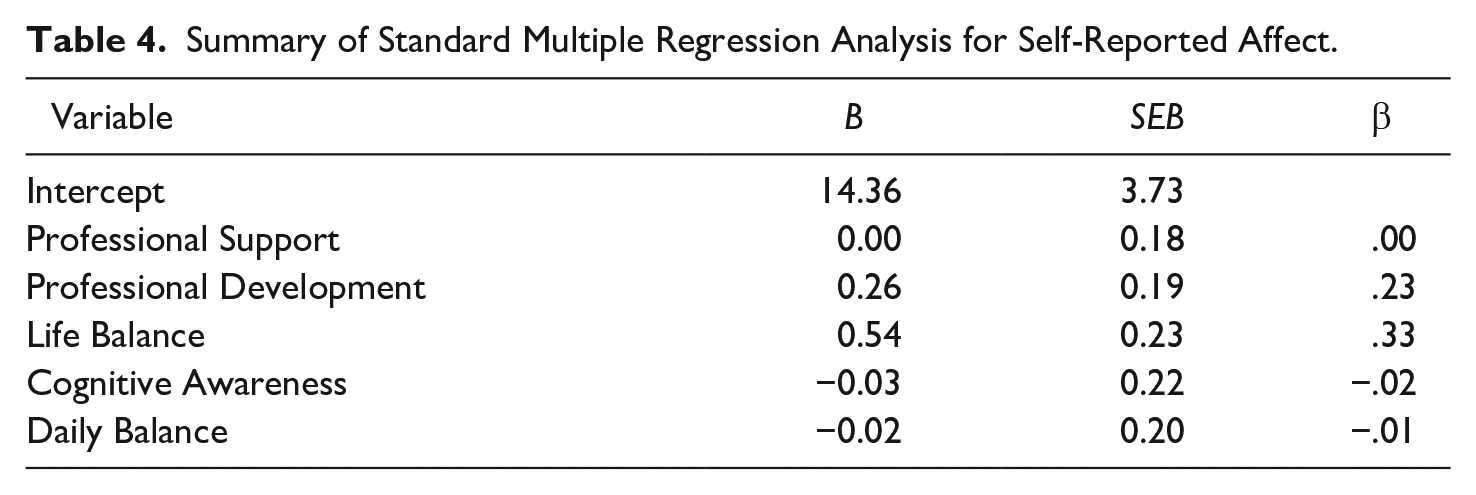
The third multiple regression yielded that the model explained 23% (adjusted R2 of 17.6%) of the variance and that the model significantly predicted positive affect scores, F (5, 79) = 4.58, p = .001. Life balance practices were the strongest and only significant predictor that contributed to the model (β = .54), p = < .02). The remaining predictors did not significantly contribute to the model with professional support practices contributing the least (β = .0 p = 1.0), followed by daily balance practices (β = −.02, p = .93), cognitive awareness (β = −.3 p = .90), and professional development (β = .54 p = .02). Regression coefficients and standard errors are presented in Table 4.
Summary of Standard Multiple Regression Analysis for Self-Reported Affect.
Does Professional Self-Care Practice Moderate the Relationship Between Perceived Stress and Psychological Well-Being?
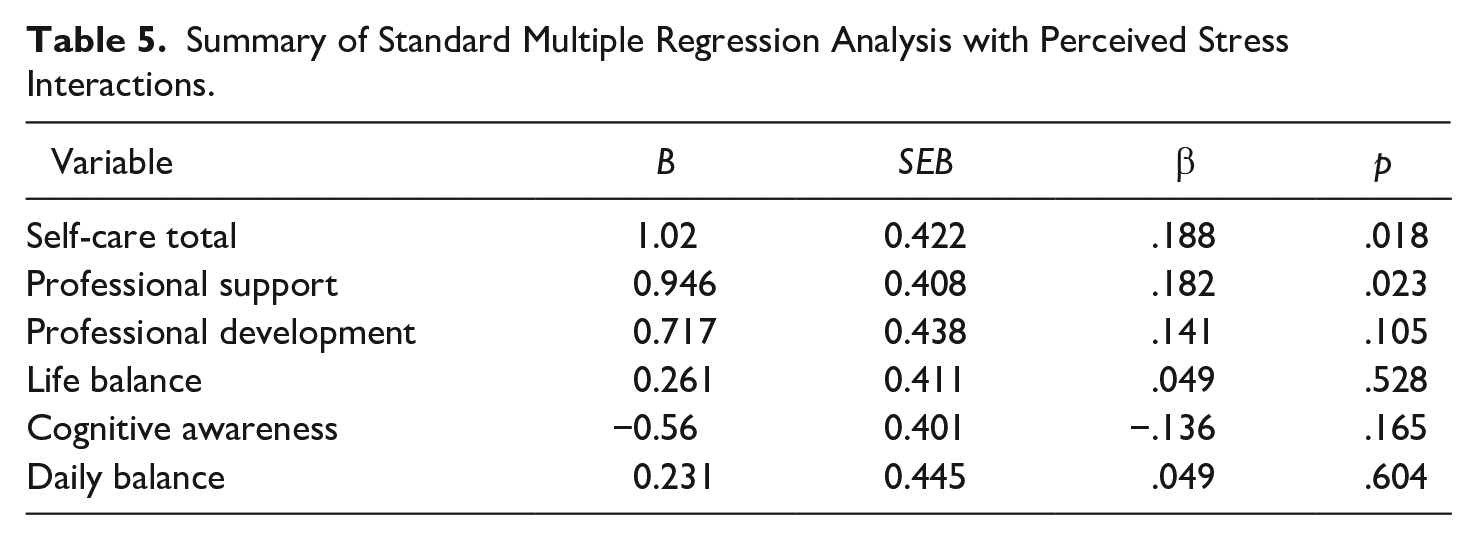
A moderation regression model was used to examine whether the relationship between perceived stress and psychological well-being was strengthened or weakened by an individual’s engagement in professional self-care practices. Perceived stress and professional self-care were entered in the first step of the regression analysis, and this relationship was determined to be significant, F (2, 80) = 46.57, p < .01. In the second step of the regression analysis, the overall model of the moderation was significant F (3, 79) = 34.86, p ≤ .01, suggesting that self-care practices strengthen the inverse relationship between perceived stress and psychological well-being. The lower perceived stress scores interacting with higher self-care practice scores, result in higher psychological well-being scores, indicating that self-care practices can buffer the negative effects of perceived stress. Further exploration of subscales within professional self-care was conducted through five moderation regression models in which the interactions of perceived stress and each professional self-care factor was evaluated for their ability to influence psychology graduate students’ levels of flourishing. Overall moderation model results indicated that there was only one significant interaction (professional support self-care practices; β = .946, p = .023, and the remaining four factors had non-significant interactions (professional development, β = .717, p = .104, life balance; β = .261, p = .528, cognitive awareness; β = −.56, p = .165, and daily balance; β = .231, p = .604). See Table 5 for a summary of standard multiple regression analysis with perceived stress interactions.
Summary of Standard Multiple Regression Analysis with Perceived Stress Interactions.
Discussion
The present study sought to examine what (if any) professional self-care practices were utilized by school psychology graduate students in Canada. The findings determined that: (1) spending time with family and friends, monitoring one’s own feelings and reactions to clients and being aware of feelings and needs were the most commonly endorsed professional self-care practices for school psychology graduate students; (2) school psychology graduate students’ engagement in professional self-care practices predicted greater psychological well-being and positive affect, however; did not predict academic performance; and (3) professional self-care practices strengthen the inverse relationship between perceived stress and psychological well-being, indicating that self-care acts as a buffer between stress and negative outcomes. These results highlight the importance of professional self-care practice engagement among school psychology graduate students and further support previous literature that indicates their susceptibility to burnout if these practices are not cultivated.
Generally, the results obtained from the current study are consistent with previous research that has been completed using those in other psychology training programs (Colman et al., 2016; Myers et al., 2012; Zahniser et al., 2017). It is not of surprise that school psychology graduate students do engage in a wide array of professional self-care practices, since it is not only beneficial in the promotion of healthy functioning (Myers et al., 2012) but more importantly, an ethical responsibility (Canadian Psychological Association, 2020) explicitly taught to those in the profession of psychology. Life balance, specifically spending time with family and friends was reported as being the most frequently endorsed self-care practice by this population. There are many explanations that could account for the significant endorsement of life balance as a self-care practice in this population at the time of data collection. Firstly, existing literature supports the notion that social beings rely on other individuals to help maintain positive mental, emotional, and physical wellness (Umberson & Montez, 2010). Social interaction and mental health have been found to have a cause-and-effect relationship (Umberson & Montez, 2010); hence, supportive networks promote mental wellness (Dattailo, 2015; Myers et al., 2012). Secondly, friends and family are those individuals who are most often confidants as a result of their comfortability and relatedness to the personal and professional lives of those around them (D. S. Lee et al., 2020). Thirdly, specific to those in the psychology profession, the maintenance of healthy interpersonal relationships is one practice that is actively promoted in the practice when interacting with clients, due to the known empirical support of its benefits (i.e., stress relief, improved mental, and physical health, promotion of prosocial behaviors, and decreased antisocial behaviors; Colman et al., 2016).
Further, along with life balance self-care practices, the practice of professional support was reported as utilized by some school psychologist trainees, however, it was not endorsed as much as hypothesized. The timing of data collection could be a factor in these findings, due to the current situation of COVID-19. School closures and the implementation of online learning were in place during data collection and may have influenced school psychology graduate student’s ability to interact with their colleagues and in turn, seek support from them. Alternatively, professionals may have lacked the availability, or time to support students, given the significant changes affecting their lives (e.g., financial changes, children at home learning online). Future research with students returning to pre-covid regulations (e.g., in-person classes) should be analyzed to determine potential differences in the availability and utilization of professional support.
The promotion of cognitive awareness has been increasing in psychology graduate programs, as the stressors continually increase (i.e., additional coursework) and time to engage in supportive activities (i.e., yoga) decrease (Myers et al., 2012) therefore, in addition to life balance, consistent with existing literature, cognitive awareness was frequently endorsed by school psychology graduate students. The majority of school psychology graduate programs in Canada expect their students to complete a course on counseling techniques (Canadian Psychological Association, 2020) in which their coursework teaches them cognitive awareness and monitoring skills to implement in their own lives, along with promoting it within those in which they intend to work with.
The second research question examined whether professional self-care practices were predictors of flourishing, positive affect, and greater academic performance in school psychology graduate students. It was hypothesized that those who practice professional self-care in all five domains of professional self-care have increased well-being, greater affect, and academic performance than those who do not. The results of the current study were unable to confirm the hypothesis that all five domains of professional self-care predicted positive outcomes.
In congruence with existing literature, (Zahniser et al., 2017) it was found that life balance and professional support practices are especially important in one’s overall flourishing. The findings may be influenced by several factors, including the above mentioned importance of interpersonal connection on one’s well-being, as well as the role of extracurricular activities (i.e., exercising, hiking) in the promotion of mental health (Myers et al. (2012), avoiding solidarity (Umberson & Montez, 2010), and the increase in accumulation of resources (e.g., workload management and coping strategies) (Ayala & Almond, 2018).
Positive affect was not found to be predicted by all five domains of professional self-care. However, the present study found that life balance self-care practices were the sole predictor of positive affect in school psychology graduate students. Interestingly, professional self-care practices did not significantly predict participant’s self-reported academic performance in the four areas: research, clinical work, coursework, and meeting program milestones. A small and homogenous sample size, and the scale utilized could account for the insignificant finding regarding the relationship between professional self-care practices and self-reported academic performance. Future studies are encouraged to examine academic performance given participants reported grade point average (GPA) rather than the use of a Likert scale.
The third research question of the present study sought to examine whether professional self-care has a moderation effect on the relationship between perceived stress and psychological well-being. The findings suggest that self-care practices strengthen the inverse relationship between perceived stress and psychological well-being indicating that those with lower perceived stress scores interacting with higher self-care practice scores, result in higher psychological well-being scores. As such, these findings indicate that engagement in professional self-care practices may buffer the negative effects (i.e., burnout, exhaustion) of perceived stress, as evidenced previously by using different samples (Zahniser et al., 2017). Further exploration of subscales within professional self-care was conducted through five moderation regression models in which the interactions of perceived stress and each professional self-care factor was evaluated for their ability to influence school psychology graduate students’ levels of flourishing. Professional support was found to have the greatest influence on buffering the effects of stress. An explanation for this compelling finding could be attributed to the shared experiences amongst school psychology graduate students, and their willingness to guide one another through the perceived stressful experience, by providing resources (i.e., their time and trusted attention) to promote optimal functioning (Lambert et al., 2013).
Relevance to the Practice of School Psychology
Existing literature posits that school psychologists exhibit a greater number of stressors than their counterparts in counseling and clinical psychologists (Huebner, 1993; Newman, 2013), however, to date, no known study has examined the relationship between perceived stress and psychological well-being in school psychology graduate students. Hence this study was a unique, timely, and important investigation of self-care practices and resulting outcomes within school psychology graduate students across Canada to aid in the development of training programs, the promotion of healthier graduate school cultures, and increasing productivity in those training to become school psychologists. This present study recognizes the need for school psychology graduate programs to focus greater attention on the implementation of professional self-care practices as a preventive measure for their students to fully attend to the needs of students and uphold ethical obligations required by professional associations. Existing literature discusses the susceptibility to burnout experienced by school psychology graduate students (Bressi & Vaden, 2017). However, this present study provides evidence that engagement in professional self-care practices can combat or minimize the detrimental effects of perceived stress experienced by school psychology graduate students.
In alignment with Collins and Cassill’s (2022) findings, multiple recommendations for psychology training programs to promote self-care and deter burnout are given. The first is to monitor student well-being during training, watching for signs of distress or burnout (Collins & Cassill, 2021). Standardized measures are recommended to determine significant changes in well-being. If signs arise, supporting students in times of distress or pre-emptively problem-solving distressing periods of schooling is highlighted. Additionally, as younger professionals are more likely to report high burnout rates, monitoring, and acknowledging burnout may support these individuals as they enter the school workforce. Students’ supervisors are encouraged to address well-being, self-care, and burnout to promote self-awareness. It is also recommended that programs incorporate the topics of self-care and burnout into the curricula, as well as strategies to promote well-being. Collins and Cassill’s (2021) address the need for the Canadian Psychological Association Accreditation Standards to include more specific guidelines for work/life balance. Generally, wellness programing, such as drop-in mindfulness sessions, should be utilized to provide students with the opportunity to engage in self-care at various times throughout their schooling. Mentoring programs to support and normalize graduate student hardship and to provide strategies for school psychology graduate success, are recommended. Understanding and promoting self-care from an institutional level is highlighted to ensure students and staff are receiving the necessary accommodations and time for self-care practices (e.g., mental health days). Lastly, institutions creating a positive culture around self-care and promoting work/life balance may promote greater buy-in from school psychology staff and students.
Limitations
Despite several strengths and positive findings from the present study noted above, there are several limitations that relate to the sample of participants, measurement of variables, the data collection process, and the climate in which this study was completed. There was an unequal sample of males and females, and the results should be interpreted with caution due to this gender imbalance. Despite this limitation, the demographics were similar to the general school psychology population and are representative of those in the field (predominantly female and white). Further, the findings of this study were collected via self-report measures and should be interpreted with caution, as previous research indicates that self-report responses may be influenced by social desirability effects (Podaskoff et al., 2003). Additionally, the distribution of the study could have been influenced by DCTs who value or have invested interest in the construct of self-care. Thirdly, it is important to understand that the COVID-19 global pandemic occurred during the time of data collection for this study. This pandemic notably has increased stressors for all, especially graduate students, and in turn could have had an influence on individual engagement in self-care practices (or lack thereof). Therefore, despite the findings eliciting similar results to other studies, it is crucial to understand the global climate during this time. Other limitations pertain to the measures utilized in the study
Conclusion
Results of the current study highlight the essential role of professional self-care engagement among school psychology graduate students. Understanding the influence of pr ofessional self-care in school psychology graduate settings has the potential to promote flourishing, academic performance, and overall affect in trainees, and foster a healthier culture of self-care in graduate studies. These results further support previous literature that indicates psychology graduate students’ susceptibility to burnout if these practices are not cultivated.
The results of the current study extend the theoretical and empirical literature and elicit practical implications that are necessary for shaping current school psychology graduate students into ethical and competent practitioners.
Footnotes
Declaration of Conflicting Interests
The author(s) declared no potential conflicts of interest with respect to the research, authorship, and/or publication of this article.
Funding
The author(s) received no financial support for the research, authorship, and/or publication of this article.
Ethical Approval
Approval for this study was granted through the University of Calgary’s Conjoint Faculties Research Ethics Board.
