




Abstract
Collegiate athletes must satisfy the academic obligations common to all undergraduates, but they have the additional structural and social stressors of extensive practice time, competition schedules, and frequent travel away from their home campus. Clearly such stressors can have negative impacts on both their academic and athletic performances as well as on their health. These concerns are made more acute by recent proposals and decisions to reorganize major collegiate athletic conferences. These rearrangements will require more multi-day travel that interferes with the academic work and personal schedules of athletes. Of particular concern is additional east-west travel that results in circadian rhythm disruptions commonly called jet lag that contribute to the loss of amount as well as quality of sleep. Circadian misalignment and sleep deprivation and/or sleep disturbances have profound effects on physical and mental health and performance. We, as concerned scientists and physicians with relevant expertise, developed this white paper to raise awareness of these challenges to the wellbeing of our student-athletes and their co-travelers. We also offer practical steps to mitigate the negative consequences of collegiate travel schedules. We discuss the importance of bedtime protocols, the availability of early afternoon naps, and adherence to scheduled lighting exposure protocols before, during, and after travel, with support from wearables and apps. We call upon departments of athletics to engage with sleep and circadian experts to advise and help design tailored implementation of these mitigating practices that could contribute to the current and long-term health and wellbeing of their students and their staff members.
Keywords
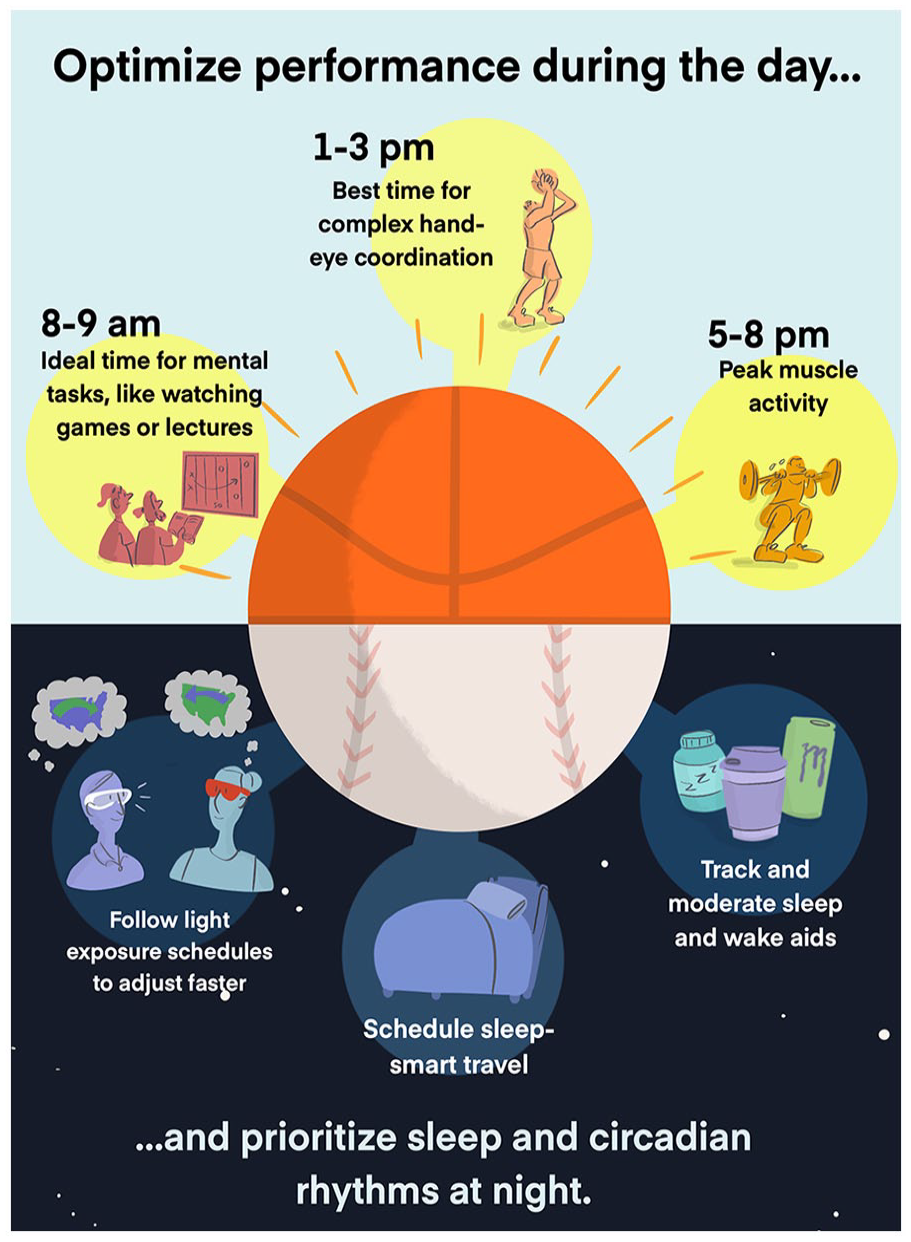
Travel, an essential component of collegiate athletics, poses well-established challenges for students. Academic performance is impacted by missing classes and losing opportunities for interactive learning experiences. Working on assignments and exams while on the road is compromised by distractions and non-optimal scheduling. Irregular and shortened sleep is a primary factor in travel-impaired learning and athletic performance. That problem is exacerbated when the travel is across time zones, which disrupts biological (circadian) rhythms resulting in a mismatch between biological and local time for the fatigued traveling team—a condition commonly referred to as jet lag. The underlying biological processes and long-term negative consequences of student travel have been under-appreciated despite their direct influence on performance and health. 1 Given the need for travel associated with athletics, we scientists and physicians with expertise in sleep and circadian biology urge athletic departments, the National Collegiate Athletic Association (NCAA), and those who schedule broadcasted events to incorporate evidence-based mitigation strategies into formal plans (e.g., travel and event schedules) to minimize the negative outcomes of travel-induced circadian rhythm and sleep disruptions of our student-athletes and those who travel with them. We also suggest specific mitigating strategies to minimize the negative effects of trans–time zone travel.
Travel can cause misalignment of internal rhythms of bodily functions
Discussions of student travel are usually cast in terms of travel time. Of course, longer and more frequent travel carries greater consequences, but all travel does not have the same impact on performance and health. Trans–time zone travel disrupts the daily rhythms of our bodies the most—the condition of jet lag. The internal bodily rhythms that organize our physiological and mental processes are generated by a wide diversity of cells in our bodies and are synchronized by an internal clock or pacemaker that resides in the brain. The resulting rhythm is called a circadian rhythm—“circa” comes from Latin for “about” and “dies” for “day.” 2 The synchronizing circadian clock in the brain resets with daily environmental cues through a process called entrainment. When we travel to a different time zone, our circadian systems adjust slowly from the home time to the local time (on average, 1 h per day). During this re-entrainment period, the mismatch between our biological (body) time and the clock time in the new environment impairs the ability of our bodies and brains to respond to challenges relevant for optimal performance. Trying to sleep when circadian clocks are promoting wakefulness results in poor, disrupted sleep. Encouraging athletes to eat when their digestive systems are not ready results in poor nutrient management. Having to respond to mental challenges when their brains are prepared to sleep puts them at reduced cognitive capacity and can result in impaired reaction time and decision-making (important in most sports and especially among coaches), reduced cognition, poor memory storage, and poor emotional regulation. Eventually, circadian clocks come into synchrony with the local environment, but it takes time, and how much time depends on factors such as the number of time zones crossed, whether the team traveled east or west, individual physiology, athletes’ typical training and sleep-wake schedules, and the timing, intensity, and duration of the light exposure of the travelers.
For trips lasting only a few days, re-entrainment of all physiological processes may not be completed in the new environment before traveling home. The return trip requires circadian adjustments in the opposite direction. Thus, jet lag adversely affects the traveler going and coming. Jet lag on the outgoing leg may compromise athletic performance, and jet lag after the return trip may compromise academic performance. Multiple trips back and forth across time zones with insufficient time for all clocks to align before another disruption create a state of chronic jet lag.
Chronic jet lag impairs health and performance of student-athletes
The symptoms of jet lag might be uncomfortable and disruptive during and after a single short duration trip involving 1 or 2 time zones, but even these small disturbances of circadian rhythms can have effects on athletic performance by impairing physical and mental reaction time (Song et al., 2017; Craven et al., 2022). Small disturbances of circadian rhythms also have effects on health as demonstrated by population studies of adverse events associated with changes between standard time and daylight savings time (Fritz et al., 2020). Worse, however, is chronic jet lag that is more likely to lead to undesirable and even pathological results as shown in multiple studies of airline personnel (Wen et al., 2023).
To explain why recovery from jet lag can take days and why frequent travel can produce chronic jet lag, we need to describe some operating principles of circadian rhythms. For terminology, the duration of a single cycle of a rhythm is its period. Any time point on the cycle is a phase. Thus, one normally goes to sleep, or wakes up, or eats at particular phases of their daily cycle. The period of the daily environmental cycle is 24 h, but the period of a person’s endogenous (internal) circadian rhythm is not exactly 24 h; it can be shorter or longer but it is unique and stable for an individual. The non-24-h circadian rhythm has to be brought into synchrony to the 24-h environmental cycle, or body rhythms would drift out of phase with the environmental cycle. The matchup of the circadian phase with the clock time phase is entrainment and is predominantly due to morning and evening light exposure. Bright light exposure in the early evening—that is, at a phase of the cycle when the brain’s clock anticipates the dimmer light of dusk—phase delays the circadian rhythm (think of turning your setting your watch back), which delays all bodily rhythms the following day. Conversely, bright light exposure before the brain anticipates dawn phase advances the circadian pacemaker (think of setting your watch ahead).
The normal phase adjustments required for daily entrainment of circadian body rhythms to the 24-h day length are on the order of minutes, whereas phase adjustments following east-west travel span 1 h or more (Figure 1). Multiple days are necessary to entrain to a new light cycle after crossing just a few time zones. In general, humans can shift their circadian rhythms by about 1 h per day depending on how much light the person is exposed to and when light is experienced (Aschoff et al., 1975; Zeitzer et al., 2000; Khalsa et al., 2003). Eastward travel requires more time to adjust than westward for most people, thus the aphorism east is least, west is best when it comes to getting over jet lag. Furthermore, some clock processes take more time to entrain to the new time zone than others, creating desynchrony among body processes.
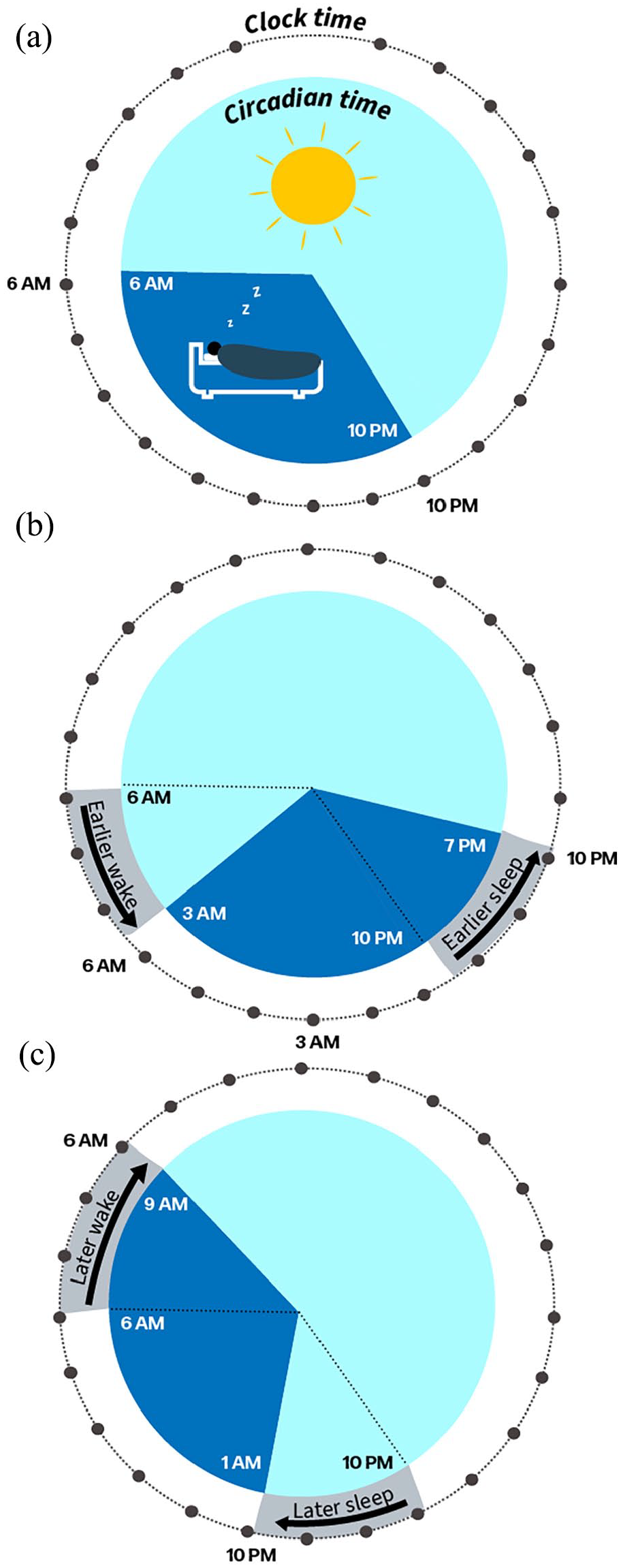
Disruptions of circadian rhythms due to eastward and westward travel across 3 time zones. (a) The outer circle represents clock time. The inner circle represents circadian time. Before travel these 2 cycles largely coincide. Small differences due to the fact that the period of the circadian rhythm is not exactly 24 h are corrected by the process of entrainment largely due to exposure to light in the morning and evening. Daily activities such as bedtime and wake time occur at specific times or phases of the circadian clock. (b) Traveling 3 time zones to the east puts the circadian clock 3 h behind local time, requiring the circadian clock to be moved ahead, or phase advanced by 3 h. This phase advance may take several days to once again synchronize circadian time to local time, and until that occurs the onset and termination of optimal sleep will be delayed. (c) Conversely, traveling 3 time zones to the west puts the circadian clock 3 h ahead of local time. Until the process of entrainment brings circadian time in synchrony with local time by a phase delay of the circadian clock, the onset and termination of optimal sleep will occur at earlier clock times than desired.
The effects of circadian phase disruptions and jet lag on performance have been reported in many sports (e.g., Baseball: Recht et al., 1995 and Song et al., 2017; Basketball: Glinski and Chandy, 2022; Football: Jehue et al., 1993; Swimming: Lok et al., 2020; Craven et al., 2022). All studies show negative consequences of trans–time zone travel but differ as to whether eastward or westward travel is worse, often depending on the time of day of the travel and the time of the competition. The main disadvantage of eastward travel is that the phase advance necessary for re-entrainment is more difficult to achieve than a phase delay when traveling west. The disadvantage of westward travel is that the resulting jet lag can put athletes in non-optimal times for specific components of performance, especially for games timed at the traveling team’s bedtime. Figure 2 shows the approximate optimal times of day for different types of activities. Activities that depend on peak dynamic muscle activity such as football are typically best performed in the late afternoon-early evening (Ravindrakumar et al., 2022). So, for an east coast team traveling to the west coast, a 1900 h game time means they are competing at a circadian phase of 2200 h and later—past their optimal phase. Because different sports involve different combinations of strength, power, and hand/eye coordination, east-west travel has different consequences in different sports, or even in the same sport, depending on the performance characteristic studied (Walsh et al., 2020). For example, traveling east significantly decreases the chance of winning in baseball (Recht et al., 1995) primarily by increasing runs allowed by the west coast team (Song et al., 2017). A study of National Basketball League teams also showed impairment of performance associated with eastward travel (Leota et al., 2022), but another study found impaired free-throw shooting associated with westward travel (Glinski and Chandy, 2022). Clearly, circadian misalignment or sleep schedule disruption has effects on performance, but as will be specified below, those effects depend on the sport, the specific activity, the light exposure and travel history, and the scheduling of the event.
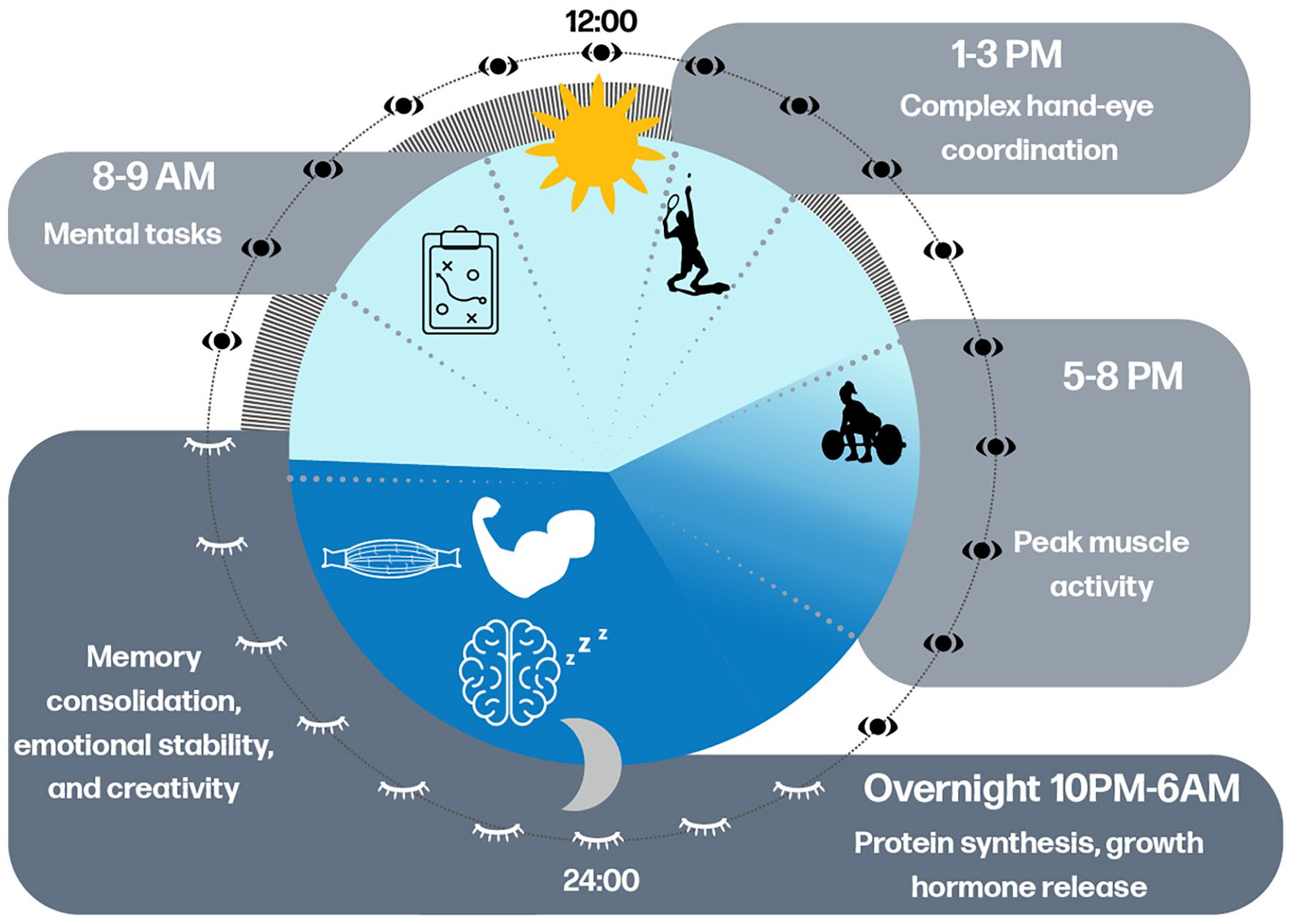
Different types of activities and skills have different circadian rhythms in optimal performance under entrained conditions (i.e., normal training week). Game day travel (especially east-west travel) often misaligns these circadian rhythms of athletic performance making optimal performance more challenging to achieve.
Of greater long-term significance than winning or losing, however, is the long-lasting impact of potential physical injury. If an athlete is under the pressures of competition when jet lagged or sleep deprived, injury is more likely (Dobrosielski et al., 2021). A study of professional football (NFL) players reported that injury risk is 3-fold greater for east coast teams traveling west, likely because they tend to play at non-optimal circadian phases (e.g., late in their biological night; see Figure 2), compared to their west coast opponents traveling east (Brager and Mistovich, 2017).
The quality of sleep is compromised by circadian misalignment
A major consequence of circadian misalignment is degradation of the quality of sleep. What is good sleep? There are various dimensions to sleep that affect its quality. A common question is how much sleep is optimal. That number varies for individuals and across the life span. For college students it is generally between 7 and 9 h, but it can depend on prior sleep deprivation (short sleep), physical activity, environment, and, of course, illness (Watson et al., 2015). There are other important qualities of good sleep, such as having consolidated or non-fragmented sleep. Sleep efficiency is the percentage of time spent in bed for the purpose of sleep that one is actually asleep. Sleep efficiency should be around 85%, and it can be negatively impacted by many factors including caffeine (common in pre-workout drinks and supplements; de Souza et al., 2022), noisy environments, and sleep disorders like sleep apnea. A person with sleep apnea can have their sleep interrupted hundreds of times a night and next morning they do not remember these short arousals, but the consequence is excessive daytime sleepiness.
A conceptual framework for determining the quality of sleep is called the SATED model (Buysse, 2014). SATED stands for: Satisfaction with one’s sleep, Alertness during the day, Timing of sleep at the optimal time of day, Efficiency of ability to sleep when in bed, and adequate Duration of sleep. Buysse (2014) also provides references to studies showing the consequences of deficits in the 5 components of the SATED concept.
Travel for athletic events disrupts sleep health in multiple ways. Even without crossing time zones, being in a new environment makes it more difficult to obtain sufficient sleep without disturbances—a commonly observed phenomenon known as first night effect has been documented with EEG and brain imaging studies (Tamaki et al., 2016). Jet lag makes it even more difficult to obtain sufficient good quality sleep. In addition, there are many other factors including anxiety of competition, team social activities, social media, and fulfilling academic obligations while on the road that can also delay sleep time, shorten sleep, and decrease sleep quality.
Physiological factors also affect the quantity and quality of sleep when traveling. Sleep is regulated primarily by 2 processes (Figure 3): a use-dependent one and a circadian one (Borbély et al., 2016). The use-dependent process promotes sleep more strongly when the duration of wake as well as the physical and mental activity during prior wake have been greater. The need for sleep, or sleep pressure, builds up during wake and dissipates during asleep. Travel frequently involves longer than normal waking periods that can be compensated for by increased length and depth of sleep if the environment and scheduling allow. The circadian process is important in allowing the body to remain asleep all night since toward the end of the night the decreased sleep pressure can make an early awakening more likely. As an individual goes through the day, the hours of wake accumulate, so sleep pressure accumulates. Yet, the circadian system pushes back against this sleep pressure and maintains wake, enabling one to be highly alert in the late afternoon/early evening even though the individual may have been awake for many hours. The late afternoon circadian waking action makes late afternoon/early evening nap attempts frequently unsuccessful. When the circadian wake promotion declines late in the evening, sleep pressure is not opposed by the circadian system making it difficult to remain awake and alert. The timing of that transition may be different for different individuals.
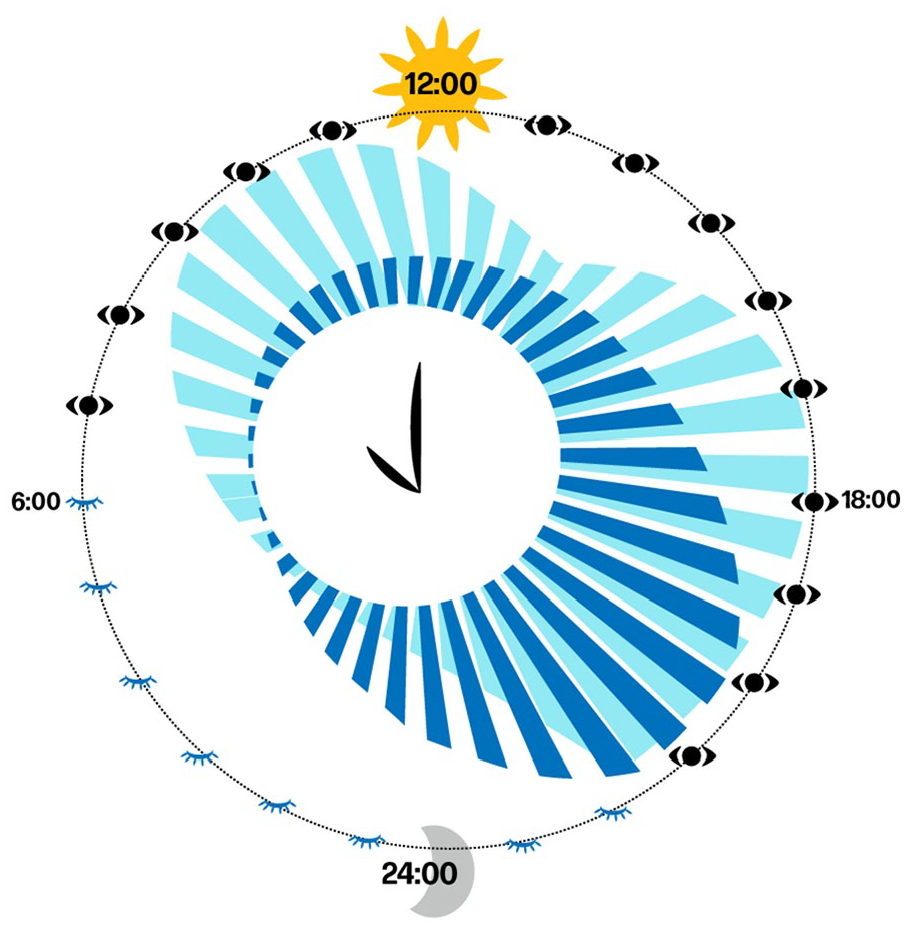
The 2-process model of sleep regulation. The strength of the circadian wake-promoting process is portrayed by the light-colored bars. It is lowest during the sleep phase from around 2300 h to 0700 h. The use-dependent process that generates the need for sleep is portrayed by the dark bars that continuously gain in strength over the waking hours, from around 7 AM till the onset of sleep around 11 PM. The difference in the lengths of the bars is an indication of the changes in alertness and sleepiness. A dip in the strength of the circadian process in early PM, between about 2-5, makes this phase a possible time for naps.
We refer to a person’s circadian profile as their chronotype. Some are morning chronotypes (“larks”), others are intermediate chronotypes, and a third group of people are evening chronotypes (“owls”). Your chronotype determines how you will be affected by eastward or westward travel. Overall, trans–time zone travel will cause disruptions of sleep that shorten daily sleep amounts, fragment sleep (cause a higher number of brief awakenings), and lead to poor sleep quality. Regardless of the causes of sleep disruption, it has negative effects on physiological, cognitive, and emotional functions (Facer-Childs and Brandstaetter, 2015).
Good sleep is critical for optimal athletic and academic performance
Important functions that occur during sleep include muscle building, body repairing, brain debris clearing, immune system boosting, memory consolidating, emotional resetting, and energy metabolism functions. Young adults typically require more than 7 h of sleep per night to function at peak levels physically, emotionally, and cognitively, and college athletes may require even more sleep to perform at their best (Hirshkowitz et al., 2015). Too little sleep in the days prior to and during travel makes the negative consequence of travel worse. A recent longitudinal study of sleep health in a US Division I football team observed that over 65% of the players had clinically significant sleep disturbances (Burke et al., 2020). Another study across 29 varsity athletic teams and over 600 athletes revealed chronic short sleep (<7 h) in over 50% of the population (Mah et al., 2018). Studies have shown that poor sleep has negative impact on athletic performance (Charest and Grandner, 2020, Craven et al., 2022). Conversely, increased sleep duration and quality are associated with improved performance and competitive success (Watson, 2017; Cook and Charest, 2023).
As mentioned above, jet lag is a consequence of traveling home as well as traveling to an athletic event site. Therefore, jet lag associated with student-athlete travel can be expected to compromise academic performance as well as athletic performance. The kinds of sleep disruption associated with jet lag are known to affect academic performance (Phillips et al., 2017; Hartmann and Prichard, 2018; Prichard, 2020).
Circadian and sleep deficits caused by stress impair mental health
The incidence of mental health issues such as alcoholism and depression is high in current and former athletes (Gouttebarge et al., 2019), and may be precipitated by sleep and circadian deficits. We know that sleep health is critical to brain development (Cao et al., 2020; Tarokh et al., 2016; Telzer et al., 2015), and sleep disturbances disrupt development of critical brain areas. The frontal brain areas that are still developing during the college years include areas where critical judgments and decisions are made, and where impulsive behaviors and emotions are controlled (Young et al., 2019, Etkin and Wager, 2007; Etkin et al., 2011). Even fully developed frontal lobes are challenged by sleep disturbance and are the most sensitive brain areas to sleep deprivation, impacting functions like emotional lability (Toschi et al., 2021), anger (Saghir et al., 2018), aligning actions with values (Goel et al., 2009), and decision-making (Harrison and Horne, 2000). The lower the quality of deep sleep, the more anxious people feel (Simon et al., 2020) and the less overall sleep obtained, the more people report feeling depressed and lonely (Goldstein et al., 2013, 2018; Simon and Walker, 2018).
Chronic east-west travel is a stressor indicated by elevated cortisol levels and cognitive deficits (Cho et al., 2000), as well as emotion and mood vulnerability (Chellappa et al. (2020). The effects of psychological stress are of concern for competitive athletes when winning can come down to fine margins; chronic stress has a large negative impact on the health and wellbeing of all students. But the problem of stress is particularly severe for athletes because of the already high physiological and psychological demands of collegiate sports (i.e., physical performance, managing academic and athletic expectations, social life, leisure time, etc.). Stress has large negative effects on sleep (Kalmbach et al., 2018). Anxiety, depression, mania, schizophrenia, obsessive compulsive disorder, and other mental health disorders such as suicidal ideation frequently have their onset in the college years, and these conditions are exacerbated by inadequate sleep and disturbances in sleep schedules. Psychotic symptoms are predicted by sleep difficulty and disturbances (Koyanagi and Stickley, 2015; Waters et al., 2018). Feelings of anger, sadness, and suicide ideations were 3 times higher in college athletes compared to their non-athlete peers even when matched for gender and age. All of these emotions and harmful thoughts also increase with sleep disturbance (Simon and Walker, 2018; Simon et al., 2020).
Mental health disorders can also exacerbate sleep problems. For example, individuals with bipolar disorder sleep very little in the manic phase, further impairing forebrain function and reducing the sound decision-making governed by the forebrain. This impairment will influence decisions about personal care for health such as nutrition, sleep health, and even making good decisions during competition. Anxiety and insomnia are comorbid as anxiety about life’s troubles and even anxiety about being able to get enough sleep further reduce sleep and lead to higher anxiety—a vicious circle that degrades all physiological functions that depend on sufficient sleep. The bidirectional relationship between mental health and sleep can have especially severe consequences on the performance and wellbeing of the student-athlete. Optimized sleep and daily schedules reduce subjective and objective measures of stress, anxiety, and depression in students as rated by the students themselves, their parents/caregivers, and their educators (Thacher and Onyper, 2016).
Lose sleep, lose academic performance
Disturbed sleep due to a combination of time zone changes, travel stress, and performance anxiety all diminish cognitive reserves (Cho et al., 2000; Ford et al., 2017; Lee and Galvez, 2012; Watson, 2017). Optimal learning requires sleep stages to occur in an orderly fashion and without frequent disruptions. Otherwise, there are deficiencies in the process responsible for consolidating short-term memories into long-term memories (Diekelmann and Born, 2010; Rauchs et al., 2005). Even a few hours of sleep deprivation can eliminate the gains made in learning that day. Unfortunately, the memory consolidation process cannot be recovered by more sleep on subsequent days (Stickgold, 2005; Abel et al., 2013). Optimizing circadian and sleep schedules consistently improves learning outcomes (Edwards, 2012; Wahlstrom et al., 2014). Sleep deprivation and disturbance increase the number of attention lapses that prevent the intake of information both in the classroom and in athletic practices diminishing the ability to attend, to learn, and to remember.
The potential for differential impact
Circadian and sleep disparities that potentially affect mental health as well as academic and athletic performance have been documented across various social identity groups (e.g., race/ethnicity, sexual orientation; Jackson et al., 2020; Johnson et al., 2019). These effects are largely due to differences in environmental and social conditions across the life course and have been shown to emerge as early as infancy for minoritized racial/ethnic groups. The population of student-athletes is large and highly diverse, so it is important to consider that some demographic groups may be especially socially vulnerable to and differentially affected by factors that disrupt sleep and circadian rhythms during athletics-related travel. In a recent survey of 70,000 student-athletes conducted by the NCAA’s Sports Science Institute, mental health concerns in collegiate athletes were pervasive and additionally compounded by race and sexual orientation. 3 Many college athletes come from underserved backgrounds with suboptimal environmental and social conditions resulting in toxic stress including adverse childhood experiences (e.g., physical or emotional abuse) that have been shown to contribute to poor sleep health into adulthood (Yu et al., 2021; Vadukapuram et al., 2022). According to the NCAA Sports Science Institute survey, Black women athletes had the highest prevalence of negative mood, which can be caused by misogynoir, that manifests as anxiety and irritation. Data also suggest Black women athletes have been most reluctant to discuss mental health issues, which could result from historical and persistent medical mistrust. These factors can contribute to disparities in utilization of care. Any efforts to understand and mitigate the negative effects of athletic event travel should include attention to differential social, economic, and environmental factors contributing to sleep/circadian disparities among college athletes.
Filling the gaps: promoting appropriate sleep health and circadian behaviors
The impact of circadian disruption and subsequent insufficient sleep on athletic performance and athlete health is not “one size fits all.” The consequences of travel depend on the sport. For example, endurance athletes (i.e., cross-country, soccer) generally sustain peak performance levels over longer amounts of time compared to anaerobic athletes (e.g., sprinters, gymnasts). Endurance training is more energetically costly. Aerobic athletes have a higher sleep need than their anaerobic athlete counterparts (Trinder et al., 1985), and anaerobic muscle power and strength are less affected by insufficient sleep (Thun et al., 2015). The impact of insufficient sleep on physiological systems required to perform optimally in endurance activities is significant. Insufficient sleep leads to early onset of anaerobic thresholds during endurance-based tests as well as reductions in insulin sensitivity and glucose availability (Thun et al., 2015). These considerations are integral for determining an ideal sleep/training schedule for endurance athletes across the competition season and support the need for analyzing competition schedules for each sport as well as the performance, academic, and health outcomes resulting from those schedules.
Filling the gaps: monitoring sleep health, academic performance, and stress
To further develop advice, protocols, technologies, and best practices to enable individuals and teams to have optimal performance and recovery when their events require travel, more data are required. These data are not only important for research purposes, but also for tracking the health and wellbeing of the athletes and those traveling with them. Comprehensive data are especially important, including information about daily schedules, travel details, academic progress, and mental health before, during, and after competition. Multiple studies have correlated reduced performance in several sports with eastward travel (Glinski and Chandy, 2022; Jehue et al., 1993; Recht et al., 1995; Song et al., 2017), but there are no longitudinal studies on individual college athletes or teams as a function of travel direction, distance, activity schedules, and game times.
The changes in the NCAA with more teams competing across as many as 4 time zones or more (for Hawaiian or Alaskan teams or teams competing internationally) demand increased tracking and monitoring of metrics on outcomes that matter to the athletes, schools, and stakeholders. With advances in personal data collection devices that can be worn (wearable) or just kept near an individual (nearable), scientists, team physicians, trainers, and coaches as well as individuals can and should develop means of gathering data on sleep timing, duration, latency, efficiency, and fragmentation during training, traveling, and competing. Devices and technologies are developing and improving rapidly, and they are reliable for tracking the basic sleep/activity details that would enable recording sleep and circadian characteristics of athletes when at home and when traveling (Sargent et al., 2022; Chinoy et al., 2021, 2022). Issues of privacy must be taken into consideration, and the methods for subject protection will differ for different levels of data acquisition. Studies by scientists will be guided by the requirements of Institutional Review Boards. The study of Burke et al. (2020) on Division I football players is an example. Team physicians have access to player health records and can offer individualized advice. Methods can be developed to provide trainers and coaches with anonymized group data from their teams. Most importantly, with training and regular reminders/discussions, individual players can use available technologies to monitor and optimize their own behaviors and conditions. At all levels, education on sleep and circadian health is essential to maximize implementation.
Tracking injuries and recovery is also important. A recent study in a cohort of Division III football players who suffered concussions reported that continued sleep deprivation impairs their reaction time and decision-making well after team physicians approved a return to play (St. Pierre et al., 2018). Academic performance, mood status, and injury such as concussions should be taken into consideration along with sleep and circadian measures to help in the development of optimized schedules for athletes. The Pac 12-Big10 Traumatic Brain Injury Consortium is an example of a program that encourages and supports individual and team longitudinal studies on the health and performance impacts of athletic event travel.
Evidence-based countermeasures: how to mitigate the impact of travel on student-athletes and traveling staff
Travel across time zones results in a mismatch between internal circadian time and local light, sleep opportunities, and mealtimes in the new time zone. Furthermore, short sleep duration before, during, and after travel contributes to jet lag symptoms such as daytime fatigue and sleepiness and impaired physical and cognitive performance (van Rensburg et al., 2021). It is therefore not surprising that meta-analyses of studies of sleep interventions on athletic performance have shown that sleep extensions through timing and naps are effective in improving athletic performance and recovery (Cunha et al., 2023; Bonnar et al., 2018). However, there is a lack of studies of countermeasures involving adaptations of the internal circadian system to new time zones and resulting efficacy on promoting sleep.
How to Adapt the Circadian System to New Time Zones
Adaptation of the circadian system to a new time zone is important when team members cannot maintain their typical sleep times from their home time zone due to scheduling of events. For example, a morning game start time in the Eastern Time Zone may require visiting west coast teams to awaken at a time when they would typically be obtaining the sleep important for memory consolidation, creativity, and emotional regulation. Adaptation of the sleep and circadian system to the new time zone prior to the game would be beneficial, but this may require further disruption to scheduled academic courses, work out schedules, and team practices. To entrain to new time zones the best current advice is to optimize exposure to natural light and avoid bright and especially blue artificial light at the critical times when such exposure can inappropriately phase advance or phase delay the internal body rhythms. Wearables that track sleep patterns and apps that can help implement current understanding of human circadian responses can be used to help athletes and teams plan their travel and light exposure to minimize jet lag.
An evening game start time in the Eastern Time Zone allows west coast teams to maintain the sleep schedule of their home time zone which requires little or no adaptation, provided they have opportunity to awaken at their normal west coast time rather than at the earlier east coast time. This would also require control of early light exposure, and allowance for a later than usual breakfast and other meals for the visiting west coast team. Practice times would also need to be kept at the visiting team’s habitual hour and exposure to morning light would also need to be controlled. Using such precautions, the west coast athletes could then return to their own time zone with minimal disruption of their sleep and circadian system. Thus, with thoughtful consideration of scheduling light exposure, physical activity, and meals, travel across time zones can be optimized rather than allowing the travel to harm student-athletes.
Pre-adaptation
Adaptation of the individual’s circadian system to a new time zone after arrival can take days. However, the circadian system can be partially or fully aligned with the new time zone in the days prior to travel. For example, a team traveling eastward from the Mountain Time Zone to the Eastern Time Zone would benefit from a 2-h advance of the circadian system in the days just prior to travel. Pre-adaptation, in this case, would be achieved by team members scheduling bedtime 30-60 min earlier on each of the 2-3 days prior to travel and, on these days, being exposed to bright light after waking up. They should also dim lights in the evening for 2 h prior to going to bed at this earlier bedtime. However, this pre-adaptation for eastward travel can be quite challenging for collegiate athletes. Common in this age-cohort is an intrinsic delay in the phasing of their circadian rhythms that began when they were in middle school and continue typically into emerging adulthood (Carskadon, 2011; Crowley et al., 2014). This phase delay may be 2 h or more in comparison to young children and older adults, and makes it nearly impossible for many college-aged students to fall asleep even 1 h earlier than usual. Intrinsic phase delay seems to be less for student-athletes, however (Bender et al., 2019), perhaps because early morning workouts maximize early light exposure, and self-selection may favor early chronotypes engaging in varsity sports.
Pre-adaptation for westward travel would use the opposite pattern to the pre-adaptation for eastward travel as the purpose would be to delay their circadian rhythms. For example, a team traveling westward from the Central Time Zone to the Pacific Time Zone requires a 2-h delay of the circadian system. Pre-adaptation for 2-3 days prior to travel would be achieved by team members being exposed to bright light in the early evenings and going to bed 30-60 min later than usual each evening and avoiding morning bright light for 1-2 h after awakening 30-60 min later than typical.
Adaptation After Arrival in the New Time Zone
If the team can arrive in the new time zone days prior to competition, it is possible to adjust the circadian system to the new time zone after travel. As noted, a team traveling eastward from the Mountain Time Zone to the Eastern Time Zone requires a 2-h advance of their circadian systems. Such advances can be achieved by team members awakening 60 min earlier than they would at home and being exposed to bright light (e.g., morning sunlight) in the new time zone, and then in the evening dimming the lights for 2 h prior to going to bed 60 min earlier than they would on home time. This pattern would be repeated for 2-3 days in the new time zone.
Promoting Sleep Health
Countermeasures to mitigate the consequences of student-athlete travel require planning, effective management, and compliance. The successful implementation of these methods depends heavily on the general knowledge that students and athletic department personnel have about sleep and circadian health. Awareness of the importance of sleep for overall health and optimal performance is a motivating factor for student-athlete compliance with countermeasures. A first step in sleep health promotion for an athletic department could be screening of their student-athletes for pre-existing sleep problems. Students may be unaware of their pre-existing sleep problems that may make them especially vulnerable to stress of travel, competition, and academic challenges. Undiagnosed sleep disorders such as sleep apnea, primary insomnia, narcolepsy, and restless leg syndrome of individuals should be evaluated by a physician as there are effective treatment strategies available. Activities that take away from sleep opportunities should be avoided during travel. Social activities, use of social media, team practice schedules, and school work such as working on assignments and taking exams should also be scheduled so as to not interfere with sleep. Use of stimulants like caffeine should be discouraged if they will not be fully metabolized and cleared before bedtime. Caffeine, when used in moderation and at the right time of day, can be performance-enhancing and/or a counterbalance to some of the deleterious impacts of travel but will not replace the functions of sleep, including muscle building, body repairing, brain debris clearing, immune system boosting, memory consolidating, emotional resetting, or energy metabolism functions (de Souza et al., 2022). Caffeine can briefly increase endurance throughput (Southward et al., 2018), strength (Mora-Rodríguez et al., 2015), and stabilize vigilance and attention (Killgore et al., 2008). In weightlifters, caffeine has effectively offset the negative effects of training and competing at non-optimal times of the day (Mora-Rodríguez et al., 2015). Today, collegiate athletes can have access to smartphone apps such as PeakAlert developed by the Department of Defense to optimize caffeine dosing and subsequent performance (Reifman et al., 2019; Kumar et al., 2019). However, individuals differ enormously as to how long it takes caffeine to clear their systems (e.g., 3-9 h). During travel and when sleeping in a new environment, stimulant use should be avoided if they would not clear the system before bedtime. Methods to potentiate sleep include eyeshades, ear plugs, noise-canceling headphones (Fowler et al., 2020), and music recordings created to promote sleep (e.g., Sona.care). Athletes who share rooms may be impacted by untreated sleep problems such as snoring of their roommate, thus presenting a communal impetus to address sleep problems prior to travel-based competition.
Promoting sleep health should be more than just treating sleep disorders. As pointed out by sleep researcher and clinician Dan Buysee, there is always room for improvement, and benefits will follow.
Reducing Circadian Misalignment
Promoting circadian alignment can optimize performance. Smartphone apps such as Entrain can help with planning travel schedules by prescribing light exposure to minimize jet lag (Christensen et al., 2020). Artificial bright light therapy can assist with the entrainment of the sleep-wake cycle for athletes. Rosa et al. (2018) found that 30-45 min of bright light therapy made possible by devices such as ReTimer glasses helped to modulate the sleep-wake cycles of athletes, which translated into improved reaction times. Recovery sleep after competition and travel should be included in training schedules to help maintain personal capacity to deal with academic, athletic, and social challenges, and to avoid burnout. A good recommendation is to allow a minimum of 24 h off from required training activities after travel. Naps of 20-90 min can benefit physical and cognitive performance, psychological state, and athletes’ perception of their own sleep quality (Lastella et al., 2021). Napping, especially in the early afternoon (not later in the afternoon when circadian signals prevent sleep), can help to reach target daily sleep durations. Finally, athletic training or cognitively demanding activities should be avoided for at least 30 min after waking on the first day after return home to allow the dissipation of jet lag–associated sleepiness and its associated cognitive lapses or reduced physical reaction times and coordination that could lead to injury. Taken together, education in sleep/circadian health should be part of collegiate athletic training, especially as travel demands increase. That education must not stop with the student-athletes, but should extend to athletic directors, coaches, trainers, and those responsible for creating competition schedules and event timing.
Summary
Sleep is essential for health and optimal performance—both academic and athletic.
Circadian rhythms coordinate and optimize the physiological and neurological activities of the body. Circadian misalignment due to east-west travel disrupts that coordination, leading to sleep disruption and deficits in performance and health.
Athletes are susceptible to cumulative sleep loss. Poor sleep causes poor academic and physical performance and impairs mental health and even brain development. Athletes are 3 times more likely to struggle with mental health compared to their non-athlete peers. Sleep loss can worsen mood and emotional regulation, and some social identity populations may be more vulnerable due to life histories. In all student-athletes, the many negative consequences of sleep loss and disruption are exacerbated by the demands of athletic competition including frequent cross–time zone travel.
Rearrangements of collegiate athletic conferences that increase cross–time zone travel and create circadian non-optimal competition schedules should be evaluated from the perspective of the health and performance of the athletes and associated travelers. Mitigation measures should be put in place wherever possible.
Recommendations
Students can maintain and improve their academic and athletic performance with adequate amounts of good quality sleep every day. Methods to achieve good-quality sleep when confronted with athletic event scheduling and travel include: optimal bedtimes informed by circadian considerations such as timed lighting exposure before, during, and after travel; judicious scheduling of social events and use of social media, provision of quiet times for fulfilling academic obligations while traveling; opportunities for early afternoon naps, implementation of pre- and post-travel adaptation strategies for optimizing circadian alignment, and awareness of stressors other than travel that compromise sleep in the highly diverse population of students involved in athletic travel and events.
Coaches, trainers, physicians, and athletic directors can support teams with screening for the most common disorders (e.g., insomnia, obstructive sleep apnea). They can implement circadian and sleep monitoring (e.g., using wearables) and maintain longitudinal records of sleep health, general health, and academic performance. They should make use of expert consultants—especially sleep and circadian scientists and physicians in their own institutions. Because the negative effects of travel increase with time zones crossed, those anticipating travel to games that require more time for adjustment to new time zones should incorporate pre-adaptation practices into their schedules (e.g., https://michiganstate.rivals.com/news/msu-battles-jetlag-with-sleep-banking-before-washington-trip) and additional recovery time upon return (e.g., avoid mandatory workouts and reviewing of game films early the next morning).
The scheduling of all sports-related activities—from practices to games—to suit broadcast schedules can lead to unhealthy and counterproductive situations for the students. Considerations of student health consequences of event scheduling—from a health equity perspective—should be given priority in event planning.
Footnotes
Acknowledgements
The authors are grateful to Olivia Walch of Aracoscope for contributing the graphic abstract for this paper. Other figures were produced by Rockelle Jang. This work was funded, in part, by the Division of Intramural Research at the NIH, National Institute of Environmental Health Sciences (Z1AES103325 [C.L.J.]) and by the Division of Intramural Research at the NIH, National Institute on Minority Health.
Authors’ Note
Ravi Allada is now affiliated with the Department of Anesthesiology, University of Michigan, Ann Arbor, MI.
Conflict of interest statement
The authors have no potential conflicts of interest with respect to the research, authorship, and/or publication of this article.
