




Abstract
Recent federal cuts have intensified pressure on nonprofit organizations, particularly those supporting vulnerable communities. As government support declines, nonprofits are increasingly dependent on individual prosocial contributions not only in terms of donations, but also more generally in terms of helping, to sustain their programs. Yet, motivating individual support for psychologically distant causes—those perceived as unrelated to one's immediate context—remains a persistent challenge. Despite over 17 years of research on prosocial behavior, it is unclear how psychological distance shapes responses to cause-related appeals. This meta-analysis synthesizes 235 effect sizes from 132 empirical studies to examine how psychological distance influences prosocial responses to cause-related appeals. Overall, the authors find no significant difference in prosocial responses between psychologically distant and proximal appeals. The results reveal distinct effects across dimensions of psychological distance. While spatially proximal causes yield only a modest impact, socially proximal causes are notably more persuasive. Crucially, proximal causes interact with the nature of the prosocial outcome: Proximal appeals are more effective when they spotlight a single individual or request monetary donations. These findings provide insights for nonprofits seeking to optimize individual prosocial engagement amid widening economic and social disparities.
One in 22 people around the world are now in need of humanitarian assistance – that's a staggering 362 million people, which is a record high. mpa#thinsp;…mpa#hellip; Conflicts, climate change and financial turmoil are increasing the need for aid.
Increasing wealth disparities, war, displacement, rising health care burdens, and community marginalization have placed growing pressure on the nonprofit sector to mobilize support for the world's most vulnerable communities. Recent large-scale policy shifts have further increased pressure for the sector (Appe 2025; Parks 2025). For instance, federal cuts to USAID (the U.S. Agency for International Development) and its foreign aid contracts have heightened pressure for nonprofit organizations to sustain foreign assistance (Gedeon 2025). Domestically, one-third of U.S. nonprofits that serve local communities have noted disruptions due to ongoing federal freezes and cuts (Faulk and Kim 2025). Facing this uncertainty, many nonprofits now must rely on individuals to support their programs (Bond, McLaughlin, and Tanis 2025; Pierson and Kruzel 2025). However, driving individual prosocial behavior, especially for causes that feel psychologically distant, that is, spatially, socially, or temporally disconnected, remains a significant challenge.
Prosocial behavior, which involves sacrificing personal resources, time, or effort for the welfare of others, represents a unique challenge for nonprofits (Penner et al. 2005; White, Habib, and Dahl 2020). This requires nonprofit marketers and policymakers to consider how the cause is positioned relative to the individual's present experience, taking into account psychological distance, that is, the perceived distance of the cause in terms of location (spatial), similarity (social), or time (temporal) (Trope, Liberman, and Wakslak 2007).
Previous research that has explored the effect of psychological distance on prosocial behavior has often equated spatial, social, and temporal distance under the umbrella term “psychological distance” (Trope, Liberman, and Wakslak 2007). While there are obvious motivations for this, in practice, these cause appeals manifest in distinct ways. Comic Relief's Red Nose Day (in the United Kingdom) encourages individual advocacy efforts on behalf of spatially distant causes (Comic Relief 2025), whereas other nonprofits, such as the Red Cross, may conduct local charity drives to appeal for support on a spatially proximal basis. White Ribbon frequently establishes socially distant campaigns empowering men to advocate for ending violence against women (White Ribbon 2025), yet organizations like Women for Women focus on socially proximal campaigns by motivating women within their own communities to support one another (e.g., Women for Women International 2025). Finally, the United Nations used a temporally distant “Agenda 2030” campaign, crafted in 2015, to guide global development efforts (United Nations 2025b), while also launching the “ActNow” campaign to inspire people to act toward sustainable development goals immediately (United Nations 2025a). Further examples from practice and research can be seen in Table 1.
Examples of Proximal Versus Distant Cause Appeals in Research and Practice.
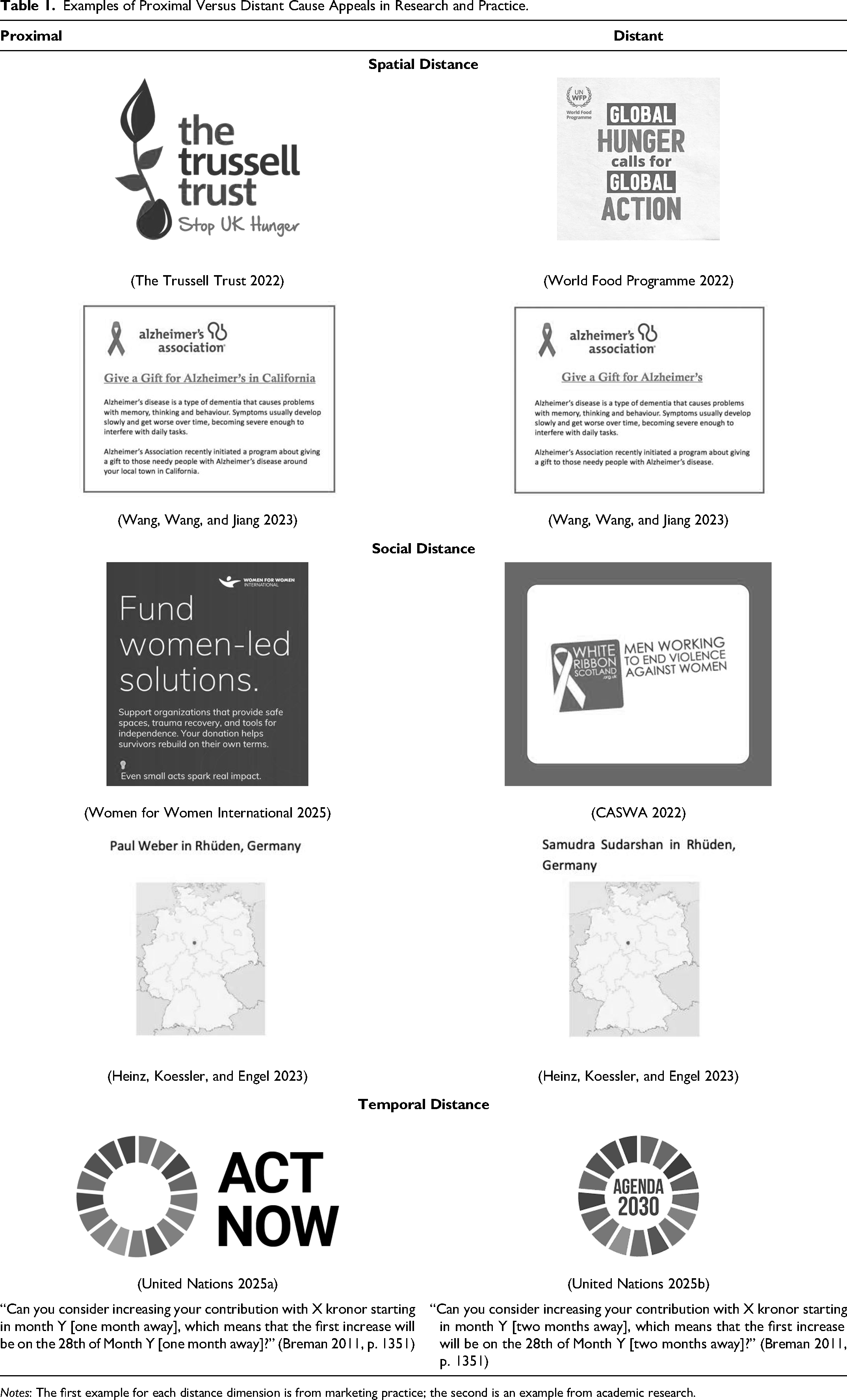
Notes: The first example for each distance dimension is from marketing practice; the second is an example from academic research.
There remains little consensus regarding whether individuals are more likely to act prosocially toward either distant or proximal causes, and under what conditions. For example, some studies suggest that psychologically distant causes are more effective (e.g., Rogers and Bazerman 2008), while others find greater effectiveness for psychologically proximal causes (e.g., Habib, White, and Hoegg 2021). Still, many highlight that the effect is conditional on other factors (Chang and Lee 2009; White and Peloza 2009). However, despite the increasing urgency of nonprofit action, it remains unclear which factors most effectively drive donations and effort-based behavioral change, leaving practitioners with limited guidance at a time when a reliance on individual support is extremely important. While prior meta-analyses have examined psychological distance or prosocial behavior, these have typically focused on psychometric variables (e.g., Chapman et al. 2025; Thielmann, Spadaro, and Balliet 2020), specific contexts (Bednall et al. 2013; Schamp et al. 2023), or different outcomes (e.g., Moran and Eyal 2022; Soderberg et al. 2015). Therefore, it becomes important to ask: When are psychologically distant versus proximal cause appeals more likely to increase individuals’ prosocial responses? And for which types of psychological distance?
To address this question, we examine the effect of psychological distance of nonprofit cause appeals through a comprehensive meta-analysis of 235 effect sizes from 132 experimental studies across 75 research articles, representing 677,768 independent observations. We conduct exploratory comparisons of different psychological distance dimensions—social, temporal, and spatial—and then individually analyze their impact, assessing the moderating role of key factors that relate to (1) how the appeal is framed (e.g., how the cause's focus is framed) and (2) the prosocial outcome (e.g., what type of behavior is being requested). Construal fit theory serves as the theoretical foundation for understanding these interactions and their implications for nonprofit marketing strategies.
In light of marketing's evolving role in advancing the common good—and nonprofits’ increasing responsibility for sustaining and scaling such efforts—this research is both timely and consequential (DeBerry-Spence et al. 2023; Nardini et al. 2022). By providing a comprehensive synthesis of a growing literature on psychological distance and prosocial behavior, we offer theoretical and practical value for scholars, nonprofit marketers, and policymakers alike. First, we identify critical moderators that shape the effectiveness of proximal versus distant appeals, yielding actionable insights for tailoring communications across spatial, social, and temporal dimensions. Second, to our knowledge, this is the first empirical investigation to systematically conduct an exploratory comparison of the effects of all three forms of psychological distance within prosocial contexts—an important step forward given their conceptual distinctions and varied applications in nonprofit messaging. Third, we advance the meta-analytic literature by addressing a theoretically unresolved and practically urgent question: When are psychologically distant versus proximal cause appeals more likely to increase individuals’ prosocial responses? And for which types of psychological distance? Finally, we test the predictive utility of construal fit theory in this domain, offering novel strategic guidance for designing persuasive appeals that align message framing with psychological distance. Together, these contributions offer timely insights for practitioners navigating an increasingly complex landscape and highlight pathways for mobilizing individual engagement in response to global challenges.
Conceptual Framework
Prosocial Behavior
Prosocial behavior involves voluntary actions that prioritize the welfare of others over self-interest and personal gain (Penner et al. 2005). It encompasses a range of behaviors, including donation, volunteering, and advocacy (White, Habib, and Dahl 2020). Prosocial behavior is a crucial and distinct facet of the wider notion of consumer behavior, as consumers make a trade-off between their own resources (e.g., time or money) for the benefit of others (Touré-Tillery and Fishbach 2017). While various meta-analyses have incorporated prosocial behavior in broader consumer behavior contexts, they may fail to fully address its complexity (Melnyk, Carrillat, and Melnyk 2022; Schomburgk, Belli, and Hoffmann 2024).
Previous meta-analyses have delved into understanding various facets of prosocial behavior (see Table 2 for overview). Some meta-analyses have focused on specific contexts, such as cause-related marketing (Schamp et al. 2023) and blood donation (Bednall et al. 2013), whereas others focus on individual characteristics (Thielmann, Spadaro, and Balliet 2020). Some meta-analyses examine the impact of campaign elements like gain versus loss framing (Xu and Huang 2020) or incentives (Peloza and Steel 2005). Despite an increasing number of review articles on prosocial behavior, there remains limited insight into the effects of cause-related factors, such as the effect of psychological distance, on prosocial behavior. 1
Overview of Meta-Analyses on Prosocial Behavior.
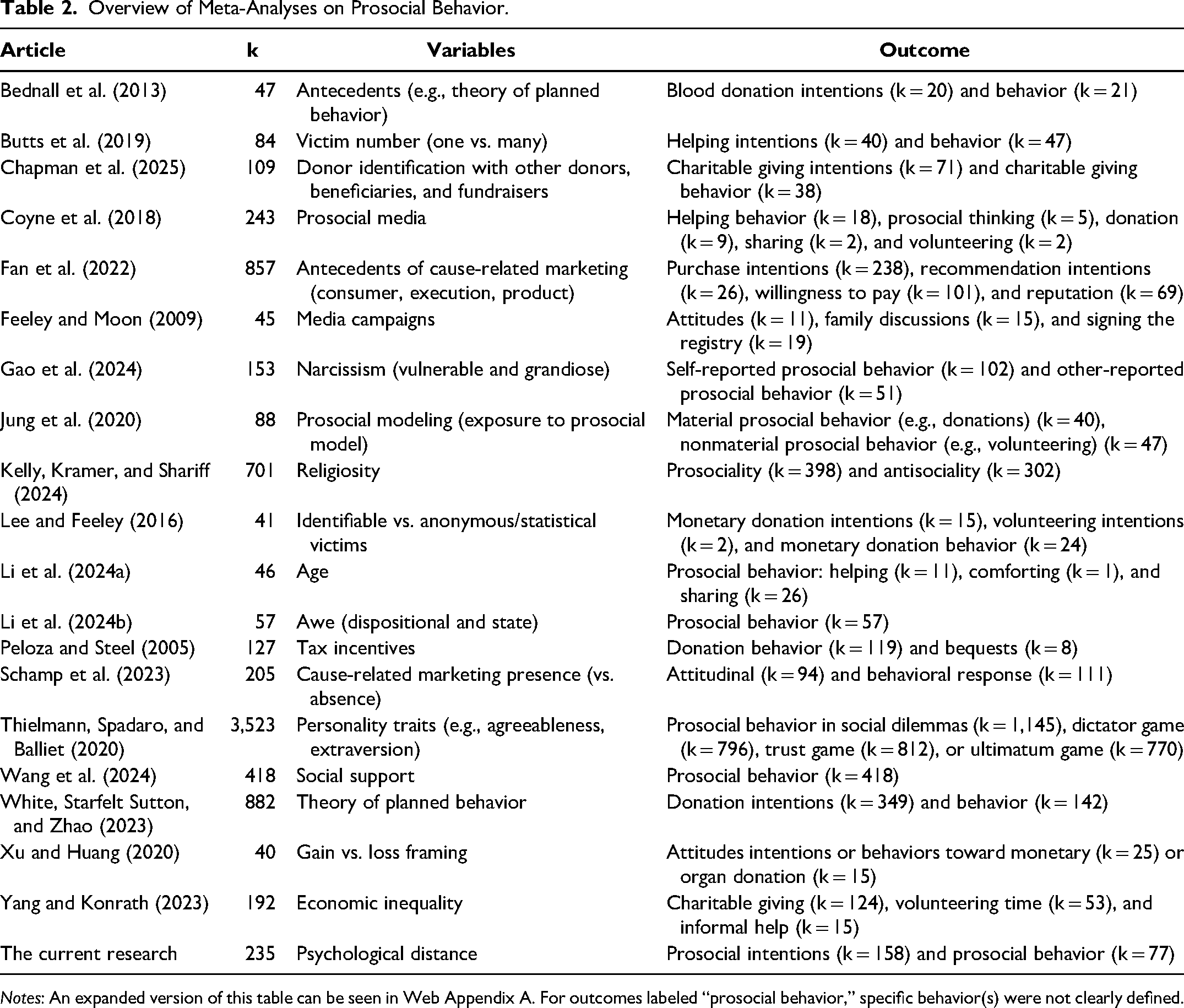
Notes: An expanded version of this table can be seen in Web Appendix A. For outcomes labeled “prosocial behavior,” specific behavior(s) were not clearly defined.
Psychological Distance
Psychological distance refers to how far removed an event, object, or person is from the individual's present state (Trope and Liberman 2010). Thus, when a cause is further removed from (immediately in) the individual's direct experience, it is psychologically distant (proximal). Psychological distance is a favored framework due to its established effect on an individual's construal level and mental representation (Soderberg et al. 2015). According to construal level theory, individuals can mentally represent the same entity at varying levels of abstraction (Trope and Liberman 2010). In a cause appeal, when the cause and its focal recipient(s) are far removed from (immediately relevant in) an individual's direct experience, consistent with psychological distance (proximity), it induces a higher-level (lower-level) construal, which the individual will mentally construe as more abstract (concrete) (Liberman, Trope, and Stephan 2007).
Many differences in individual behavior have been attributed to differing degrees of psychological distance (Kim and John 2008; Lee and Aaker 2004). While an extensive number of these differences have been uncovered in and across prosocial behaviors, there is no consistent consensus on whether individuals inherently display greater prosocial tendencies toward distant or proximal causes. For example, some studies suggest that individuals have an innate preference for proximal causes (e.g., Zagefka 2018) while other studies suggest that they may favor distant causes (e.g., Rogers and Bazerman 2008; see full literature summary in Web Appendix B), with many studies suggesting that the effect is contingent on other factors (e.g., Chang and Lee 2009; White and Peloza 2009).
Psychological distance can often be established in three distinct ways: spatially, socially, and temporally (Trope and Liberman 2010). In the context of cause appeals, spatial distance refers to the physical location of the action or its impact relative to the individual, often operationalized by the geographic distance between the cause's focal recipient(s) and the individual's residence or present location. For example, an anniversary disaster relief campaign for the Indian Ocean tsunami (Hurricane Katrina) targeted at U.S. individuals represents a spatially distant (proximal) cause (Winterich, Mittal, and Ross 2009). Social distance, in contrast, relates to the level of identification the individual has with the focal recipient(s) depicted in the cause. Social distance (proximity) is often represented by the low (high) level of identification that the individual has with the focal recipient(s) depicted in the cause. Examples of social distance can relate to other-benefit (vs. self-benefit) fundraisers (White and Peloza 2009) or to differences (vs. similarities) in ethnicity (Duclos and Barasch 2014), behavior (Fajardo, Townsend, and Bolander 2018), and features (Munz, Jung, and Alter 2020). Temporal distance concerns how far in the future an action or consequence will occur relative to the present (Kim and John 2008). For instance, an event or consequence is considered temporally distant (vs. proximal) if it is projected to occur four years from now, compared with today (Rogers and Bazerman 2008).
Despite these nuances between the different types of distance, there remains little evidence to suggest that these different dimensions are more effective than one another. Previous research seldom compares the differences between the dimensions. This lack of direct comparison reflects a broader oversight in the academic literature, likely stemming from the wide-ranging and inconsistent ways in which psychological distance is operationalized in experimental research (see Web Appendix C), which in turn complicates its application and interpretation in real-world prosocial cause appeals.
To address this gap and provide an overview of the relationship between psychological distance and prosocial behavior, our research synthesizes the existing literature on the effectiveness of psychologically distant (vs. proximal) cause appeals. We focus on whether individuals are inherently more likely to engage in prosocial behavior on behalf of psychologically distant (vs. proximal) causes and conduct an exploratory comparison of the various dimensions through which it has been operationalized.
Construal Fit
Psychological distance is not the only factor that shapes how individuals construe a cause. It is also possible that certain communication elements within the cause appeal shape the way individuals construe the cause. For example, Amit and Greene (2012) find that words (pictures) induce a high-level (low-level) construal, and Macdonnell and White (2015) find that time (money) is similarly construed at a high (low) level. Previous studies suggest that when a fit exists between the construal level of the cause and other elements within an appeal, known as construal fit (Lee, Keller, and Sternthal 2010), it enhances the individual's processing fluency, which subsequently increases engagement and participation (Amit and Greene 2012). For instance, Amit and Greene (2012) find increased response rates when words (pictures) are used to depict distant (proximal) events, and Macdonnell and White (2015) find higher donation amounts of time (money) in response to requests for distant (proximal) causes, due to construal fit.
We use construal fit as the theoretical framework to hypothesize various moderating effects on the relationship between psychological distance and individuals’ prosocial responses. Specifically, we identify contingency factors and hypothesize the moderating effects of (1) appeal framing and (2) prosocial outcome. With this comprehensive approach, our aim is to offer actionable, practical insights for nonprofit marketers to understand the effectiveness of distant and proximal cause appeals. Figure 1 shows our full conceptual framework.
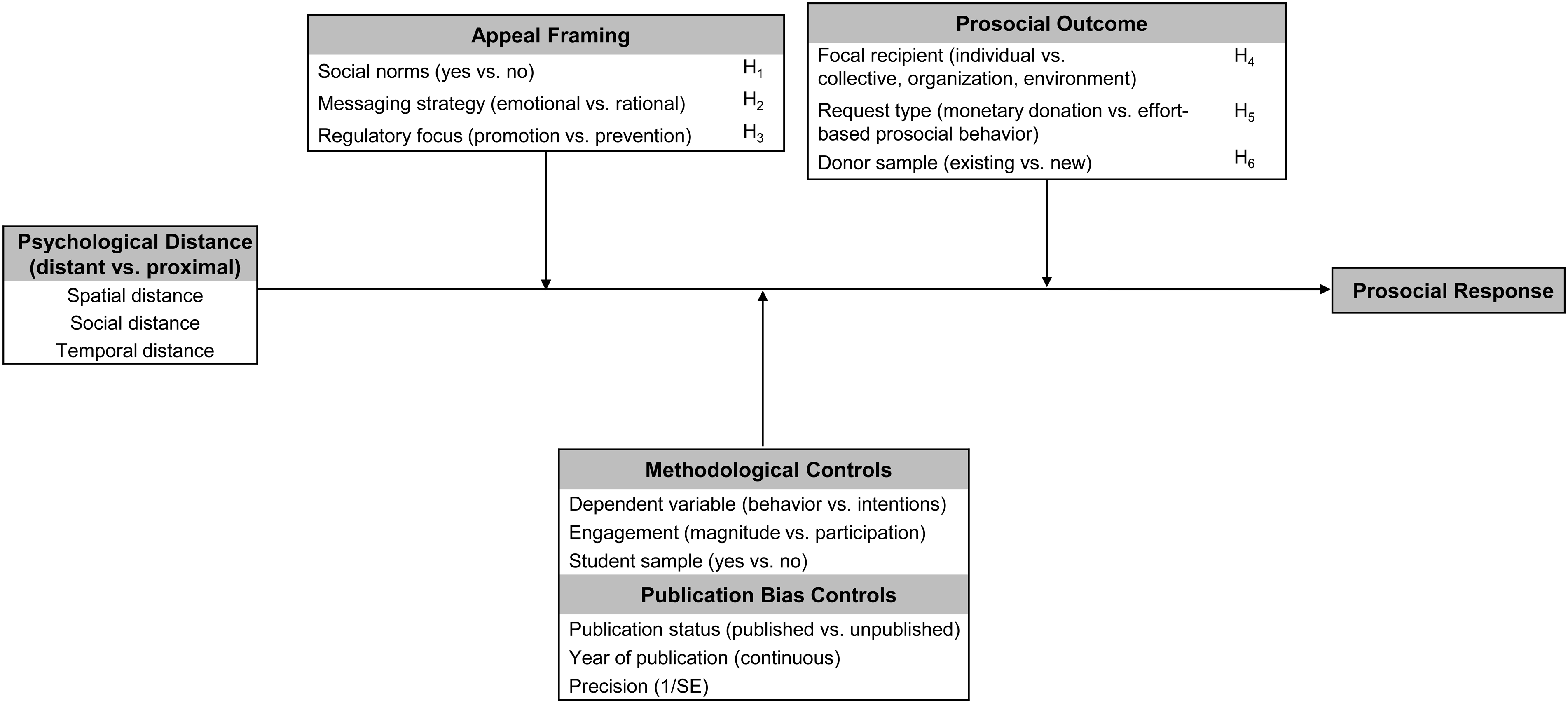
Conceptual Model.
Hypothesis Development
Appeal Framing
Appeal framing relates to factors that describe how the cause appeal is designed. These framing factors are likely to interact with the psychological distance of the cause, as previous research suggests they can trigger different construal levels. In the following section, we examine moderating factors explored in previous studies that may create a construal fit with psychological distance.
Social norms
Social norms represent contextual behavioral standards understood by group members that regulate or guide behavior within a specific context or among a certain group (Melnyk, Carrillat, and Melnyk 2022). As these norms are contextual and operate within a specific, defined context, or among a specific group as set by the marketer (Cialdini, Reno, and Kallgren 1990), they are likely to induce a lower-level construal. Specifically, social norms provide behavioral guidance, contextual specificity, and concrete information about behavioral expectations that aligns with a low construal level (Melnyk et al. 2011; Trope and Liberman 2010).
Previous research has suggested that a construal fit between social norms and psychologically proximal causes may make cause appeals more effective. For example, Goldstein, Cialdini, and Griskevicius (2008) find that in spatially proximal contexts, when a social norm is used, hotel guests are more likely to reuse their towels. Ryoo, Hyun, and Sung (2017) find the same result with individuals engaging with sustainable programs when a social norm is combined with low-construal messages, which further highlights the effectiveness of construal fit with social norms. Thus, it is likely that there is a construal fit between social norms and appeals for proximal causes. Accordingly, we expect:
Messaging strategy
Marketers often face the challenge of selecting the most effective messaging strategy when developing campaigns or appeals, particularly regarding whether to use a rational or emotional approach. Previous research suggests that rational and emotional appeals likely induce different construal levels. Specifically, studies have shown that when individuals are primed with concrete mindsets (i.e., exposed to a proximal event or cause), they tend to rely on rational decision-making processes (Amit and Greene 2012). In such cases, individuals will actively seek concrete information such as statistics and facts to help them make their decisions, consistent with a rational appeal (Maurer Herter et al. 2022). Conversely, emotions are inherently abstract, varying in intensity and reception among individuals, making them subjective and challenging to quantify (Crawford 2009). Emotional appeals, often associated with high construal, are expected to align well to distant causes. Thus, we predict:
Regulatory focus
Regulatory focus distinguishes between two approaches for goal attainment, which may create distinctions in construal level. Specifically, when an individual adopts a promotion focus, their aim is to maximize positive outcomes (e.g., “keeping children full”), which may prompt individuals to achieve a higher-order schema, which is more abstract (Eyal et al. 2004). In this case, individuals fixate on happiness, well-being, and achievement, all of which are inherently abstract in nature and consistent with a high construal level. Conversely, when the cause appeal has a prevention focus (e.g., “stopping children from going hungry”), individuals seek to minimize a negative outcome, which relates to imminent issues and sources of threat, representing a low construal level (Park and Morton 2015). Accordingly, we expect that there will be construal fit between the type of regulatory focus and the psychological distance of the cause, whereby prevention-focused cause appeals will have a construal fit with psychologically proximal causes, and promotion-focused appeals will have a construal fit with psychologically distant causes. Therefore, we predict:
Prosocial Outcome
Prosocial outcome refers to the specific nature of the target behavior, individual, or recipient featured in the appeal. Outcome-related factors are likely to interact with the psychological distance of the cause, as different outcomes can evoke varying construal levels. In the following section, we examine moderating factors identified in prior research that may create a construal fit with psychological distance.
Focal recipient
Nonprofits have several strategic options when designing appeals, particularly in how they define the focal recipient in cause appeals. Commonly, recipients are framed as an individual recipient, collectives of recipients, nonprofit or public sector organizations, or the environment. Prior research suggests that individuals are typically construed at a lower level than collectives, organizations, or the environment (Ein-Gar and Levontin 2013). When a recipient is named and described, as is common in nonprofit appeals, it enables individuals to vividly imagine their situation, fostering psychological proximity (Small and Simonsohn 2008), which implies a construal fit. This fit has been shown to increase prosocial responses; for instance, Kogut and Ritov (2007) find that individuals are more willing to help a single identified victim, particularly when they perceive them as part of their ingroup (i.e., socially proximal). Similarly, Ein-Gar and Levontin (2013) uncover consistent effects across multiple studies to suggest that prosocial appeals are more successful when there is a construal fit between the psychological distance of the cause and the focal recipient.
In contrast, collectives, organizations, and the environment are more abstract entities, often associated with systemic issues or higher-level outcomes rather than individual need (Gu and Chen 2021; Smith et al. 2023). As such, these recipients tend to be construed more abstractly and are more psychologically distant from the targeted individual. This abstraction aligns closely with distant framing. Supporting this, Ein-Gar and Levontin (2013) find that individuals are more likely to donate time or money when collective and organizational recipients are paired with psychologically distant appeals. However, we do not anticipate variation in construal among these recipient types, as all three are typically framed in ways that emphasize generalized need or outcomes rather than concrete, individual circumstances. This shared emphasis on abstraction suggests that differences in prosocial responses are unlikely to stem from differences in construal level across these categories. Thus, we expect that:
Request type
Cause appeals often solicit different outcomes based on organizational needs—most commonly capital (monetary donations) or labor (effort-based contributions such as helping). To fill these gaps, promotional efforts focus on soliciting time or money from individuals. Both money and time are finite resources, yet they are construed differently (Song and Kim 2020). People are typically acutely aware of monetary constraints—such as budgets or income cycles—making money a salient, quantified resource. In contrast, effort is psychologically experienced as time, and its finiteness is often less salient unless explicitly constrained (e.g., deadlines, time commitments).
As a result, money and effort-based contributions activate different goals. Money tends to drive individuals toward utility-maximization goals, which are concrete (Liu and Aaker 2008), whereas effort-based contributions, like time or helping, are linked to optimizing abstract concepts such as happiness and well-being, consistent with a high construal level (Liu and Aaker 2008). Consistent with this distinction, MacDonnell and White (2015) find evidence to substantiate the role of construal fit in the context of donation campaigns. Specifically, they find that for monetary (time) campaigns, individuals donate more when exposed to a concrete (abstract) message. Extending this logic to psychological distance, distant causes, which are already construed abstractly, should align more with effort-based requests, whereas proximal causes should align more with monetary requests. Thus, we expect:
Donor sample
Prior research often uses existing donor samples from nonprofit databases (e.g., Breman 2011; Damgaard and Gravert 2017). Existing donors are defined as individuals that have previously engaged in the targeted prosocial behavior and are affiliated with the nonprofit. Experience, which is integral to existing donor samples, has implications for construal level. Previous research suggests that familiarity and association induce a low construal (e.g., Park and Lee 2015), whereby when individuals are more familiar (acquainted or experienced) with an object, organization, or person, it becomes less abstract, as they are able to identify specifics and imagine through lived experience (Liberman, Trope, and Stephan 2007). Thus, we expect that there is a likely construal fit between existing donors and proximal causes, and we hypothesize:
Method
Data Collection and Inclusion Criteria
To conduct the meta-analysis, we ran multiple rounds of searches for published and unpublished experimental studies between July 2022 and June 2025. First, a computerized search of various widely used databases and specific journals (see comprehensive search terms and databases in Web Appendix D). Second, we conducted backward and forward searches of relevant conceptual and eligible manuscripts. Third, we published a call for unpublished work from scholars on relevant academic discussion boards. Our dataset includes 77 published and unpublished manuscripts, which consist of 132 empirical studies and 677,768 independent observations.
To be included in the meta-analysis, the study had to meet the following inclusion criteria: First, estimates captured a measure of the effect of psychological distance on a participant's prosocial behavioral or intentional response to a cause appeal that represented a nonprofit sector cause or issue. We define prosocial as a voluntary action that comes at a cost to the individual and primarily benefits others (White, Habib, and Dahl 2020). In accordance with this definition, we include behaviors that relate to prosocial consumption change (e.g., Rogers and Bazerman 2008), monetary donation for cause (e.g., White and Peloza 2009), and volunteering (e.g., Ein-Gar and Levontin 2013). Thus, we excluded effect sizes obtained from studies in for-profit contexts, as the primary objective of these marketing efforts is not prosocial (Schamp et al. 2023). Second, distance was only operationalized through the cause appeal (e.g., cause location; Winterich, Mittal, and Ross 2009) or through observable individual characteristics (e.g., location from the institution [Khodakarami, Petersen, and Venkatesan 2015]; ethnicity matching or not matching that of the targeted individuals [Duclos and Barasch 2014]). We excluded studies that operationalized psychological distance as a psychometric variable to ensure the feasibility of findings to practitioners. Third, eligible effect sizes were only distant (vs. proximal) through one dimension of psychological distance (i.e., social, temporal, or spatial); this criterion was necessary to accurately include them as moderators. An effect size was coded as reflecting spatial distance if it manipulated or observed the physical location of an action or its consequences relative to the individual; as social distance if it manipulated or observed the level of observable identification (high vs. low) (i.e., similarities) that the individual had with the focal recipient(s) depicted in the cause appeal; and as temporal distance if it manipulated or observed the timing of the action. Where a study manipulated multiple dimensions of psychological distance, we extracted all that were available as independent effect sizes. Fourth, the study had to provide the necessary statistical information to accurately compute or convert the effect size. These papers capture data between the years 2007 and 2024. For a full overview of all screened papers and reasons for exclusion, see Web Appendix E.
Effect Size Computation
Cohen's d was selected for the subsequent analysis, as it describes the standardized difference of the effect between two conditions (Lakens 2013). This is particularly relevant as effect sizes capture variations in individuals’ responses between distant and proximal causes. The directionality of estimates informs whether a distant (positive) or proximal (negative) cause has a significant differential effect. We calculated Cohen's d through standardized mean differences where the data were provided in the manuscripts or appendices. If the author(s) did not provide means and standard deviations, these values were converted from other statistics (e.g., t-values, Pearson's r, p-values, F-values) using common effect size conversion procedures, 2 which can be seen in Web Appendix F.
Further, we ran influential case diagnostics to identify outliers and inflated effect sizes that could distort any conclusions derived from the dataset. We determined that reported effect sizes would be excluded from the meta-analysis if they had high studentized residuals that exceeded 2.57 (Viechtbauer and Cheung 2010). We then visually assessed the sample size and whether the variation could be due to the small sample sizes and removed them accordingly (Melnyk, Carrillat, and Melnyk 2022). Further discussion about the excluded effect sizes is available in Web Appendix G.
Data Coding
A coding system was created to account for the effect of the hypothesized moderators included in the conceptual framework. 3 A full table of these moderators, examples, and their operationalization can be seen in Table 3. Moderators are categorized as (1) appeal framing and (2) prosocial outcome.
Moderators.
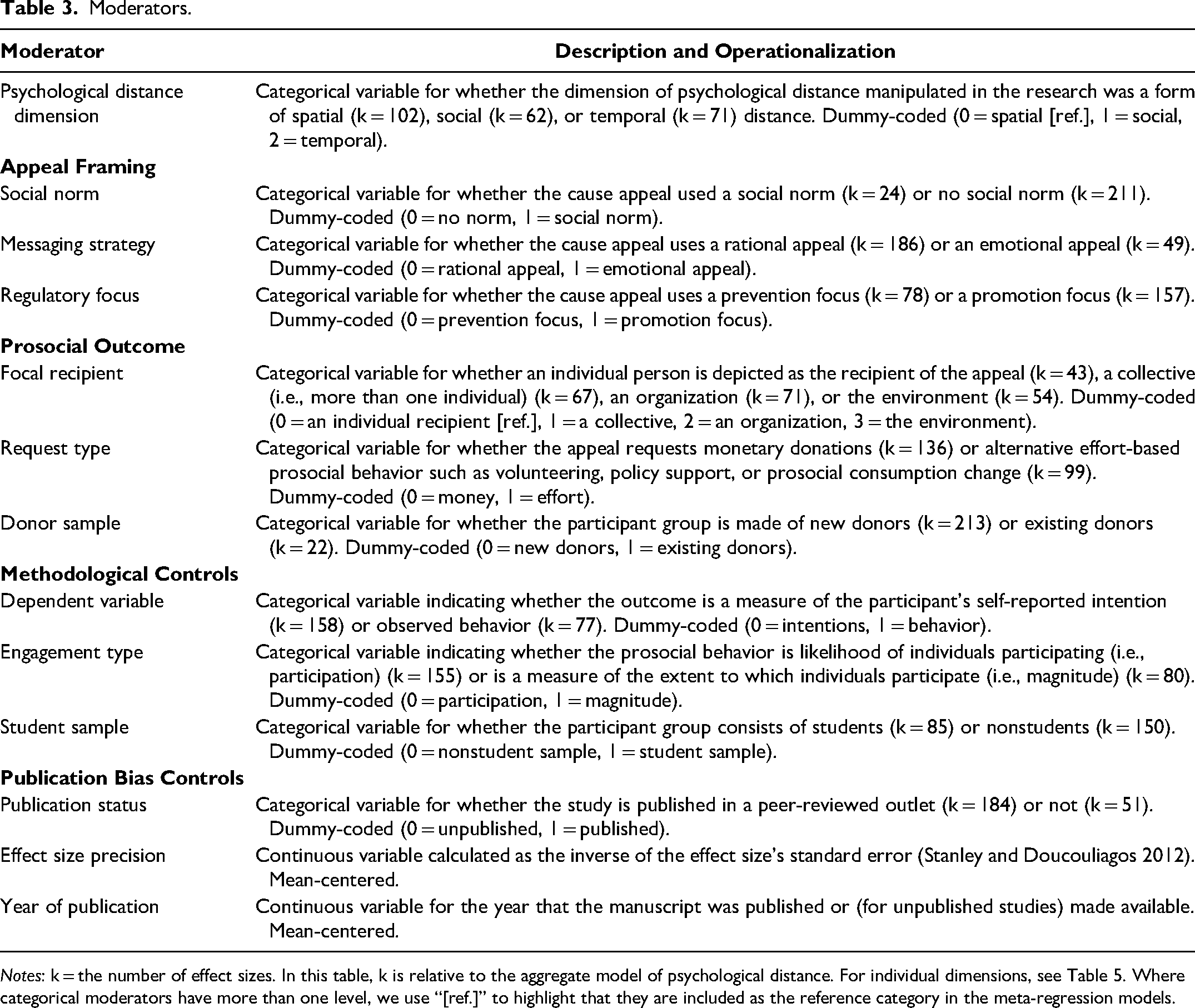
Notes: k = the number of effect sizes. In this table, k is relative to the aggregate model of psychological distance. For individual dimensions, see Table 5. Where categorical moderators have more than one level, we use “[ref.]” to highlight that they are included as the reference category in the meta-regression models.
We also incorporate various methodological controls to account for common differences across studies’ designs and sampling methods. These include the dependent variable (intentions vs. behavior) and engagement (participation vs. magnitude). We included these control variables not only because they are commonly used in marketing, nonprofit, and psychology meta-analyses (e.g., Chapman et al. 2025; Smith et al. 2023), but also because behavioral outcome and magnitude measures have been identified as more susceptible to social desirability bias, compared with measures of intention or participation (Chapman et al. 2025; Motyka et al. 2014). In addition, we included a moderator to distinguish between studies that use student samples and those that do not, due to concerns about representativeness among these groups (Peterson 2001). Further, for similar reasons, we include common publication bias controls such as the publication status (unpublished vs. published), a precision estimate, and the year of publication.
Meta-Analytical Procedures
We adopted a three-level model for all analyses to account for potential biases and variances due to the nested structure of observations coming from the (1) same manuscript, (2) same study, and (3) same sample group (Van Den Noortgate and Onghena 2008). Random-effects maximum likelihood models were selected under the assumption that true effect sizes vary among participants and treatments (Borenstein et al. 2009). Estimates were generated using the metafor package in R Studio (Viechtbauer 2010). First, we ran main effects of the aggregate effect of psychological distance (i.e., how the concept is often treated in existing research) and then calculated separate main effects for each independent dimension (i.e., separate for main effects for social, spatial, and temporal distance) to allow for a novel statistical comparison. Second, we ran four meta-regression models to account for moderation effects in the aggregate effect of psychological distance and for each independent dimension of psychological distance.
From the model outputs, we calculated the predicted values to provide grand-mean estimates for each level in the model. These estimates were calculated based on the moderators’ proportions in the dataset (see Melnyk, Carrillat, and Melnyk 2022). Meta-regression coefficients provide a comparative significance across levels, whereas predicted values reveal the absolute significance for each level in the model. Model specifications for all models can be found in Web Appendix H. Predictors were removed if the correlation with other variables was greater than .70 or if variance inflation factors were over the recommended threshold (>10). Variance inflation factors for models included in the main manuscript can be seen in Web Appendix I, and additional robustness checks with discussion of six additional models are in Web Appendices J and K. The data and code used in this research can be found on the OSF at: https://osf.io/dbj5e.
Results
Main Effects and Heterogeneity Indicators
The aggregated effect of psychological distance on individual prosocial responses was not significant (d = −.05, p = .280), nor were the main effects of social distance (d = −.18, p = .201) or temporal distance (d = .11, p = .275). However, there was a small, significant, negative main effect of spatial distance (d = −.11, p = .035), suggesting a stronger association with prosocial responses for the causes that were spatially proximal to the individual. All main effects and heterogeneity indicators are shown in Table 4.
Main Effects and Heterogeneity Indicators for Psychological Distance Dimensions.
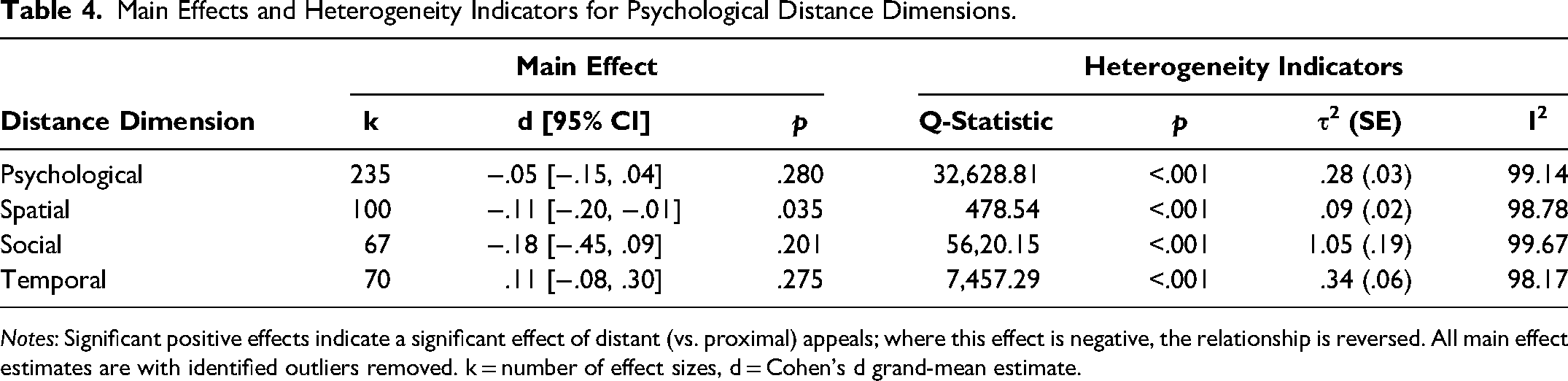
Notes: Significant positive effects indicate a significant effect of distant (vs. proximal) appeals; where this effect is negative, the relationship is reversed. All main effect estimates are with identified outliers removed. k = number of effect sizes, d = Cohen's d grand-mean estimate.
We used three indicators to assess heterogeneity across these effects, which included τ2 for sample estimates of variance between effect sizes, I2 for variance between effect sizes, and Q-statistics for effect size dispersion (Carrillat, Legoux, and Hadida 2018). Across all indicators we observed a significant Q-statistic (p < .001), τ2 > 0, and I2 > 50%, suggesting that there was substantial heterogeneity, which warranted running meta-regression models.
Publication Bias
We ran several diagnostic tests, only on published effect sizes, for the aggregate effect of psychological distance and the independent dimensions, shown in Table 5. We found limited evidence to suggest that there was a susceptibility for publication bias. Results passed both Rosenthal's (1979) and Rosenberg's (2005) fail-safe N, which predict how many effect sizes are needed to change the results’ significance level and to support the null hypotheses, respectively (Carrillat, Legoux, and Hadida 2018), as estimates exceeded the recommended N > 5k + 10 (Zlatevska, Dubelaar, and Holden 2014). Second, we found superficially, through funnel plots, that there were multiple effect sizes outside of the funnel (see Web Appendix L). Trim-and-fill tests revealed asymmetry for aggregate psychological distance, spatial distance, and temporal distance, but not for social distance. Third, we conducted an Egger's regression, where a significant z-value suggests publication bias (Sterne and Egger 2005). Across all dimensions, these results were not significant.
Publication Bias Diagnostics Across Psychological Distance Dimensions.
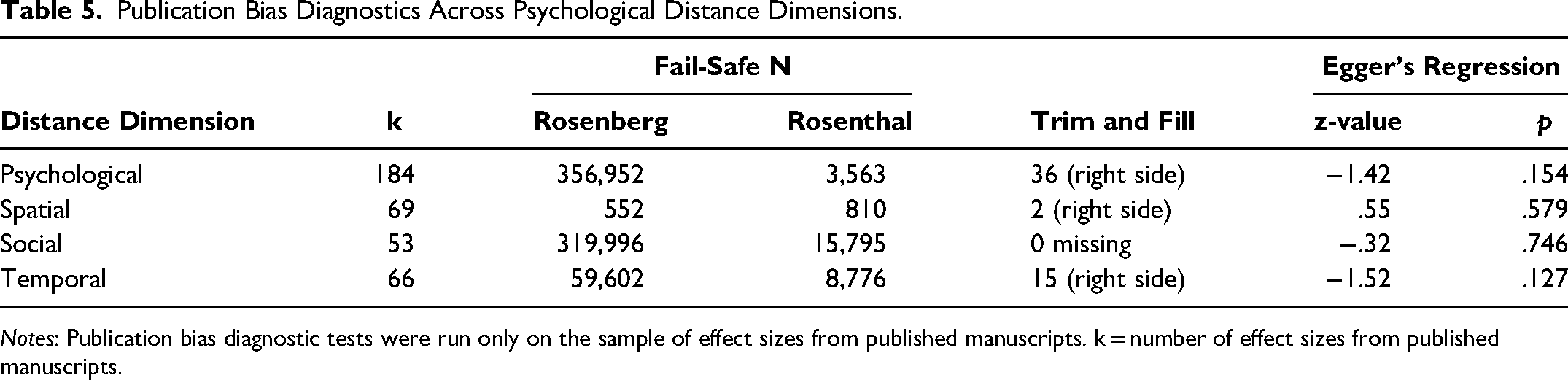
Notes: Publication bias diagnostic tests were run only on the sample of effect sizes from published manuscripts. k = number of effect sizes from published manuscripts.
Meta-Regression Results
To understand moderation of the effect of psychological distance and the various dimensions, we ran four multilevel random-effects maximum likelihood models. Estimates for the aggregate relationship between psychological distance and prosocial responses can be seen in Table 6. Results from the independent dimensions of psychological distance are shown in Table 7, and predicted values for these estimates can be seen in Web Appendix M.
Multilevel Meta-Regression Results for the Aggregate Effect of Psychological Distance on Prosocial Responses.
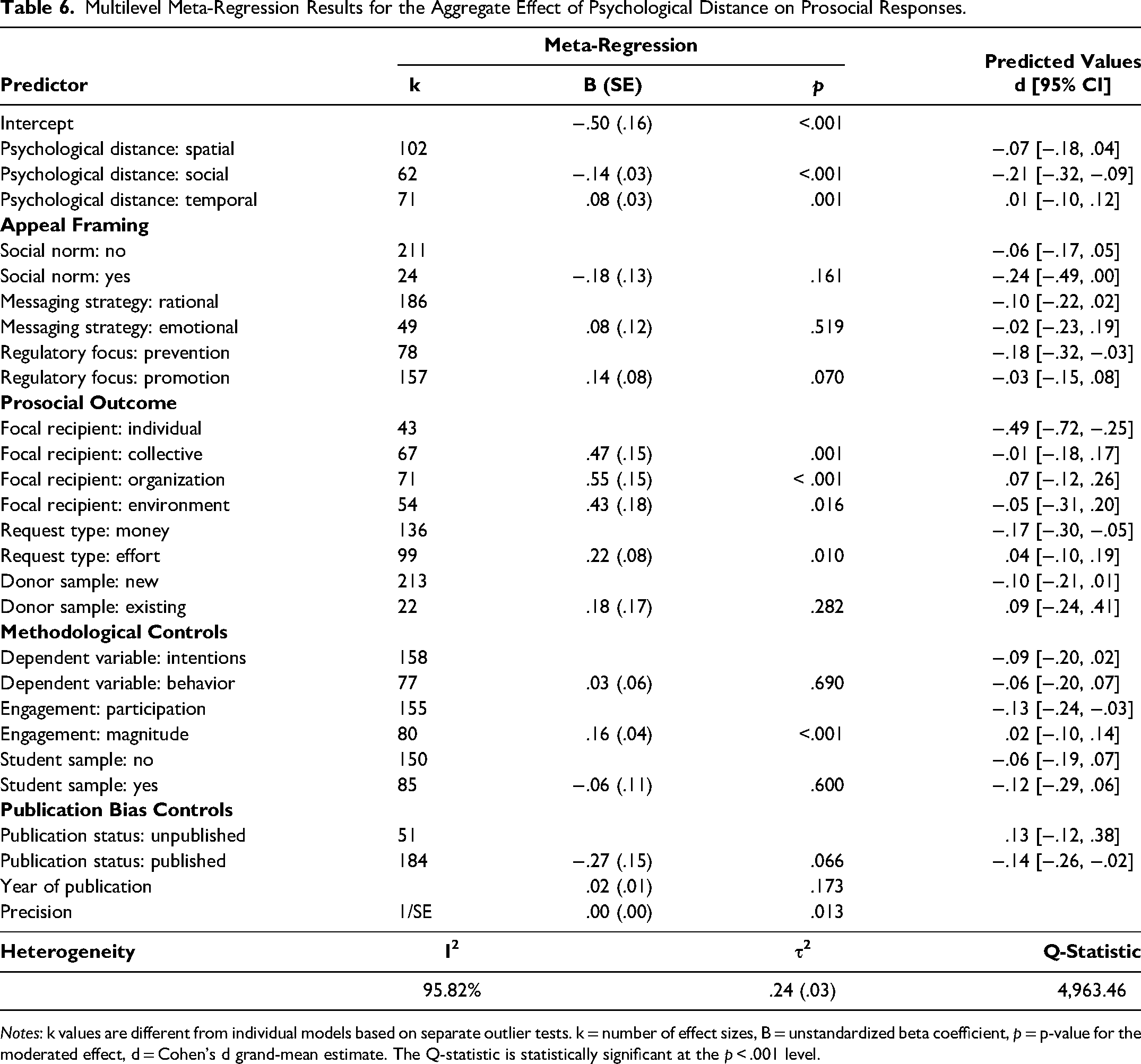
Notes: k values are different from individual models based on separate outlier tests. k = number of effect sizes, B = unstandardized beta coefficient, p = p-value for the moderated effect, d = Cohen's d grand-mean estimate. The Q-statistic is statistically significant at the p < .001 level.
Multilevel Meta-Regression Results for the Independent Dimensions of Psychological Distance on Prosocial Responses.
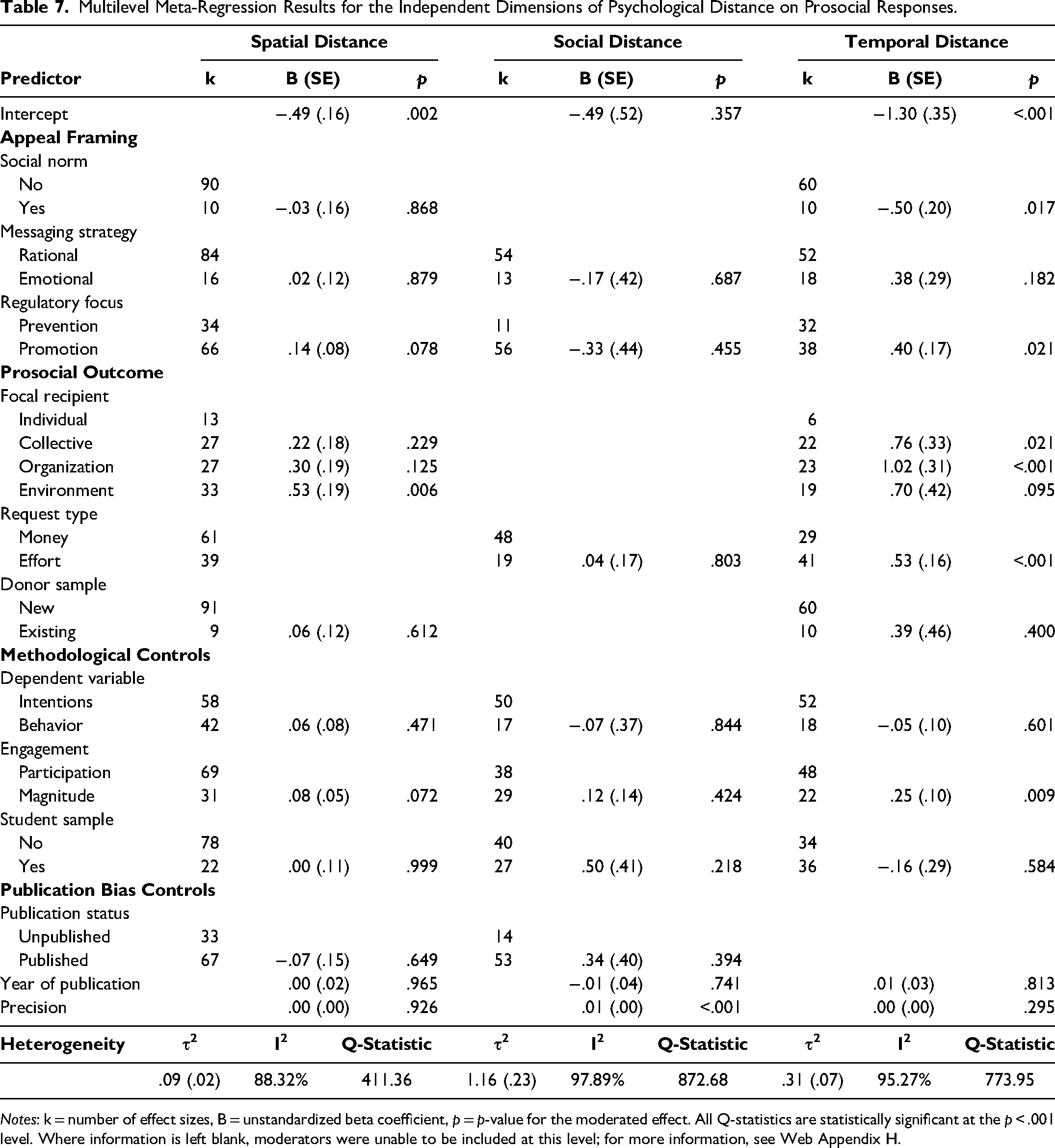
Notes: k = number of effect sizes, B = unstandardized beta coefficient, p = p-value for the moderated effect. All Q-statistics are statistically significant at the p < .001 level. Where information is left blank, moderators were unable to be included at this level; for more information, see Web Appendix H.
Psychological Distance Dimensions
Although spatially proximal causes showed a significant effect, this effect did not remain significant in the meta-regression model (p = .319). In contrast, socially proximal causes emerged as a significantly stronger predictor of prosocial responses (p < .001), with the predicted value reaching statistical significance in the model (p < .001). Furthermore, the effect of spatially proximal causes was significantly different from that of temporally proximal causes (p = .001), suggesting that different dimensions of psychological distance may differentially influence individual prosocial responses.
Appeal Framing
Psychological distance
Results from the meta-regression revealed that the relationship between psychological distance and prosocial responses did not vary if a social norm was present (vs. absent) (p = .161) nor according to the messaging strategy used (p = .519); thus, H1 and H2 were not supported. However, there was marginally significant moderation from regulatory focus (B = .14, SE = .08, p = .070). Predicted values suggested that there was a weak, significant relationship, favoring psychologically proximal appeals, when a prevention focus was used (d = −.18, p = .025), marginally supporting H3.
Spatial distance
Similarly, there was no significant moderation of appeal framing factors on the relationship between spatial distance and prosocial responses for social norms (p = .868) nor for messaging strategy (p = .879); thus, H1 and H2 were not supported. Yet, there was a marginally significant effect for regulatory focus (B = .14, SE = .08, p = .078).
Social distance
We observed no significant moderation of appeal framing factors on the relationship between social distance and prosocial responses (ps ≥ .455); thus, H1–H3 were not supported.
Temporal distance
Social norms significantly moderated the relationship between temporal distance and prosocial responses (B = −.50, SE = .20, p = .017), supporting H1. There was no significant moderation from the messaging strategy used (p = .182); thus, H2 was not supported. However, significant moderation was uncovered for the regulatory focus of the appeal (B = .40, SE = .17, p = .021), supporting H3.
Prosocial Outcome
Psychological distance
The cause's focal recipient significantly moderated the relationship between psychological distance and prosocial responses. Specifically, the relationship was stronger when the recipient was either a collective (B = .47, SE = .15, p = .001), an organization (B = .55, SE = .15, p < .001) or the environment (B = .43, SE = .18, p = .016), compared with a sole individual, supporting H4. Predicted values suggested that there was a medium-strong significant summary effect of psychologically proximal causes when the recipient was a sole individual (d = −.49, p < .001).
Further, we found significant moderation based on the request type (B = .22, SE = .08, p = .010), whereby predicted values indicated a small significant summary effect in favor of psychologically proximal causes for appeals requesting money (d = −.17, p = .014), supporting H5. However, we did not find any significant moderation for the donor sample (p = .282); thus, H6 was not supported.
Spatial distance
Results showed a significant difference when the recipient was an individual or the environment (B = .53, SE = .19, p = .006) but not when it was a collective (p = .229) or an organization (p = .125), partially supporting H4. Similarly to the aggregate psychological distance model, predicted values showed a medium significant effect of spatially proximal causes when the recipient was an individual (d = −.39, p < .001). Yet, we did not find any significant moderation from the donor sample (p = .612).
Social distance
There was no significant moderation from the request type on the relationship between social distance and prosocial responses (p = .803); thus, H5 was not supported.
Temporal distance
Recipient type also significantly moderated the relationship between temporal distance and prosocial responses. Specifically, we found that the relationship between temporal distance was stronger when the recipient was a collective (B = .76, SE = .33, p = .021) or an organization (B = 1.02, SE = .31, p < .001) and marginally stronger for the environment (B = .70, SE = .42, p = .095), compared with a sole individual, partially supporting H4. Further, the relationship between temporal distance and prosocial responses was significantly moderated by the request type (B = .53, SE = .16, p < .001), supporting H5, but not by the donor sample (p = .400); thus, H6 was not supported.
Methodological Controls
Psychological distance
There was significant moderation of engagement type on the relationship between psychological distance and prosocial responses (B = .16, SE = .04, p < .001). Predicted values suggested that psychologically proximal causes were significantly associated with increases in prosocial responses when researchers used a measure of participation (d = −.13, p = .033) but not magnitude (p = .603). However, there was no observed moderation from the dependent variable or from whether a student sample was used (ps ≥ .600).
Spatial distance
There was no significant moderation from the dependent variable (p = .471) or from the student sample (p = .999), but the type of engagement was marginally significant (B = .08, SE = .05, p = .072).
Social distance
There was no significant moderation from any methodological controls on the relationship between social distance and prosocial responses (ps ≥ .218).
Temporal distance
The type of engagement significantly moderated the relationship between temporal distance and prosocial responses (B = .25, SE = .10, p = .009), whereas other methodological controls showed limited moderation (ps ≥ .583).
Publication Bias Controls
Psychological distance
We found marginally significant moderation of publication status on the relationship between psychological distance and prosocial responses (B = −.27, SE = .15, p = .066). Predicted values showed a weak, significant summary effect in favor of psychologically proximal causes for published papers (d = −.14, p = .038), suggesting that on average published papers aggregate a significant effect in favor of proximal causes. Further, we found a significant effect of effect size precision (B = .00, SE = .00, p = .013), but not for the year of publication (p = .173).
Spatial distance
We found no significant moderation from publication bias controls on the relationship between spatial distance and prosocial responses (ps ≥ .394).
Social distance
There was a significant effect of effect size precision on the relationship between social distance and prosocial responses (B = .01, SE = .00, p < .001). However, all other moderators did not significantly moderate this relationship (ps ≥ .389).
Temporal distance
Results revealed no significant moderation from publication bias controls on the relationship between temporal distance and prosocial responses (ps ≥ .293).
General Discussion
Through meta-analysis of 235 effect sizes obtained from 132 empirical studies, we found no significant main effect of psychological distance on individual prosocial responses. Rather, the effect of psychological distance on individual prosocial responses relied on various moderating factors, including the dimension of psychological distance, the type of recipient, and the type of behavior that the cause appeal requested. In the following sections, we provide further detail on the theoretical implications and future research avenues, and we discuss practical implications and strengths and limitations of the present research.
Theoretical Implications and Future Research
Recently, substantial scholarly attention has been devoted to understanding enablers of prosocial behavior, as evidenced by a growing number of meta-analyses (see Table 2) and systematic reviews on the topic (White, Habib, and Dahl 2020; White, Habib, and Hardisty 2019). Our meta-analysis contributes to this expanding synthesis by providing a quantitative summary of how psychological distance in cause-related appeals influences individual prosocial responses. We focus on psychological distance because it offers insight into how the positioning of a cause—relative to an individual's present experience—can shape their willingness to act prosocially. We concentrate on interventions rather than psychometric constructs, as interventions are more actionable for marketers and public policy practitioners and are thus more readily implemented in real-world campaigns. Notably, few existing meta-analyses have examined the impact of such controllable, message-level factors on prosocial behavior. Those that do tend to be specific in scope, focusing on mechanisms such as the identifiable victim effect (Lee and Feeley 2016) or economic incentives like tax breaks (Peloza and Steel 2005). Taken together, these considerations underscore the need for broader, integrative analyses of the kinds of interventions that can be leveraged to effectively motivate prosocial action, which is central to nonprofit and public-sector efforts.
Dimensions of psychological distance
The effect of psychological distance on prosocial responses depended on which dimension (i.e., spatial, social, or temporal) was manipulated. While we did not observe an overall main effect of psychological distance, we found a small but significant positive effect when the cause was spatially proximal to the targeted individual. This indicates that individuals are more likely to respond to a prosocial appeal when the cause or its recipients are geographically close. Our finding aligns with prior research highlighting a preference for supporting local causes (e.g., Chapman et al. 2022; Grimson, Knowles, and Stahlmann-Brown 2020). One commonly cited explanation is that spatially proximal causes enhance the perceived tangibility and impact of one's actions, making the prosocial behavior feel more meaningful and effective (Touré-Tillery and Fishbach 2017; Xu, Rodas, and Torelli 2020). Although our meta-analysis cannot directly test this mechanism, the consistent pattern of effects supports its plausibility.
Our analysis revealed significant differences across the dimensions of psychological distance. To our knowledge, this is the first study to offer a comparative account of these dimensions in the context of prosocial behavior. We found that both spatially and socially proximal causes were associated with increased prosocial responses, with socially proximal causes demonstrating a comparatively stronger effect. However, these effects were not entirely robust. When entered into the meta-regression model, the main effect of spatially proximal causes was no longer significant, whereas the predicted effect of socially proximal causes emerged as significant. Temporal distance, by contrast, did not show a significant effect in either analysis. It is important to note that both social and temporal distance were represented by fewer effect sizes (k = 67 and k = 70, respectively) than spatial distance (k = 100), which may reflect either reduced statistical power or greater variability in how these constructs are operationalized. Additionally, the removal of the outlier effect sizes related to social distance in sensitivity analyses further suggests substantial heterogeneity within this dimension. Because outlier analyses were conducted both at the dataset level and within individual dimensions, a small number of effect sizes were excluded across models. This selective removal may have contributed to the observed instability of certain effects, particularly for dimensions represented by fewer studies.
To unpack the social distance findings, or lack thereof, further, we operationalized this dimension as the manipulated or observed level of similarity between individuals and the recipients depicted in the cause appeal. While this approach is practically relevant, it does not capture participants’ internalized identification with the recipient. Chapman et al. (2025) conduct a meta-analysis including effect sizes measuring internal identification between donors and recipients and find a small but significant effect of social proximity (r = .24). Taken together with our findings, this suggests that although social proximity may positively influence prosocial responses, achieving these effects through external interventions is difficult. That is, while internal identification appears to matter, replicating this psychological closeness through manipulation in cause appeals may pose practical limitations for marketers.
Adding further complexity, the way that social distance is operationalized across previous research varies substantially. Some studies manipulate it through shared culture or ethnicity with the targeted individual (Duclos and Barasch 2014; Sudhir, Roy, and Cherian 2016), whereas others use shared demographics (i.e., age, name, gender) (e.g., Munz, Jung, and Alter 2020) or who benefits from the outcome (e.g., White and Peloza 2009). Although our robustness analyses (see Model IV in Web Appendix K) suggest that these differences do not significantly influence the overall effect, they nonetheless represent distinct strategic approaches with potentially different practical implications. Future research may benefit from developing a taxonomy that categorizes these operationalizations, clarifies their psychological mechanisms, and evaluates their relative effectiveness in driving prosocial responses.
Building on our main findings, we anticipated that the effect of psychological distance on prosocial responses would be moderated by the construal fit of other campaign-level features. Specifically, we examined whether appeal framing (H1–H3) and prosocial outcome (H4–H6) factors would interact with psychological distance dimensions to influence response strength. All effects can be seen in Table 8.
Hypotheses.
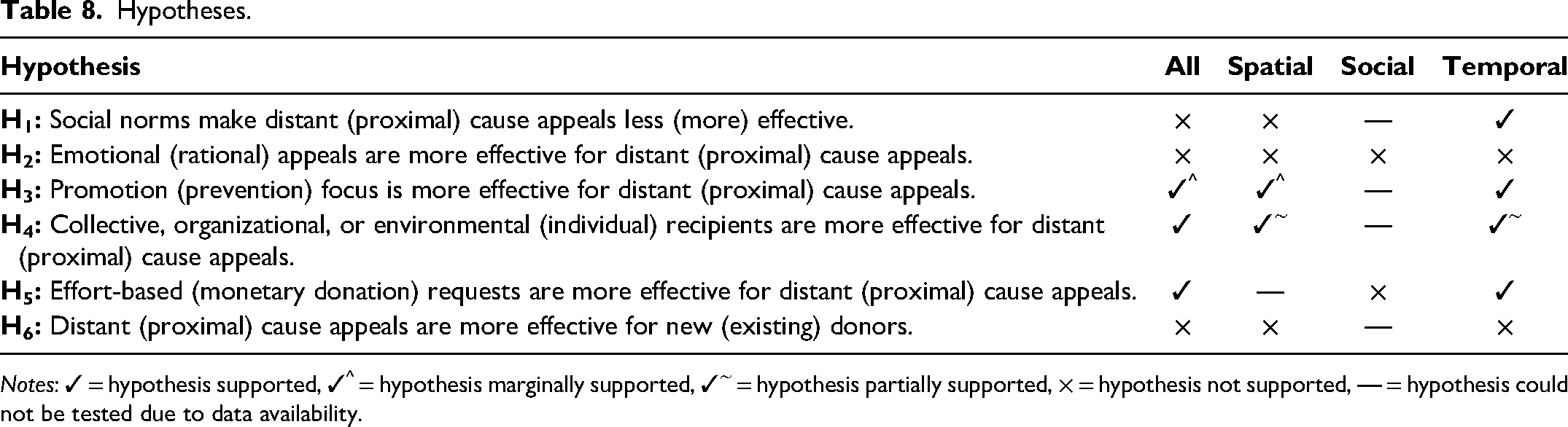
Notes: ✓ = hypothesis supported, ✓^ = hypothesis marginally supported, ✓∼ = hypothesis partially supported, × = hypothesis not supported, — = hypothesis could not be tested due to data availability.
Appeal framing
We found partial support for some hypotheses across different dimensions of psychological distance, though the results were mixed and at times counterintuitive. Specifically, the use of social norms (H1) moderated the effect of temporal distance, but not spatial distance. This effect is surprising given that previous work suggests that social norms are often effective when they are spatially proximal (Goldstein, Cialdini, and Griskevicius 2008). However, our meta-analytic results indicate that normative influence was most robust when the behavior was temporally immediate. One possible explanation is that temporal immediacy enhances the perceived relevance and urgency of the norm, and when a behavior is urgent or imminent, individuals may be more likely to rely on normative cues as heuristics for decision-making (e.g., Belli et al. 2024; Cone and Rand 2014). By contrast, we speculate that nonurgent behaviors, whether spatially or socially distant, may be construed more abstractly and thus may be less susceptible to normative influence. Future research could test this possibility by examining how different dimensions of psychological distance interact with normative messaging, and whether immediacy increases compliance with social norms of prosocial behavior.
In contrast, we observed no significant variation for messaging strategies (i.e., rational vs. emotional; H2). Thus, appeals that used rational and emotional messaging were statistically equivalent across all dimensions of psychological distance. While this may seem counterintuitive, given that emotions are often considered more abstract than facts (Crawford 2009; Maurer Herter et al. 2022), it is possible that different types of emotions are construed at different levels of abstraction. In the present research, the prevalence of emotional appeals was relatively low (k = 49), and because this sample was divided across three models, the study was underpowered to examine discrete emotional categories. Existing conceptualizations of discrete emotions suggest that negative emotions may be easier to conceptualize and observe (Baumeister et al. 2001), and thus more concrete, whereas positive emotions tend to be more abstract, with less clearly defined outcomes (Fredrickson 2001). This interpretation is speculative; future research should examine whether the concreteness or abstraction of specific emotional appeals influences their effectiveness across psychological distances.
Further, we observe both significant and marginal effects of regulatory focus (i.e., promotion vs. prevention focus; H3), with predicted values suggesting that a prevention focus may be more effective for encouraging prosocial responses for spatially proximal causes. One possible explanation is that spatially proximal causes can heighten perceived threat (e.g., White, Johnson, and Kwan 2014), which could align more with a prevention focus, making prevention-oriented messaging more compelling. Similarly to previous results, this interpretation remains speculative, and future research could explore whether spatial proximity cues increase threat perception in prosocial contexts, and whether this interacts with regulatory focus to shape prosocial outcomes.
In sum, these findings suggest that appeal framing factors exert limited influence on the relationship between psychological distance and prosocial responses. The limited moderation from appeal framing is somewhat unexpected, given that prior research has proposed that social norms, regulatory focus, and emotional versus rational appeals are construed at different levels (Amit and Greene 2012; Eyal et al. 2004; Ryoo, Hyun, and Sung 2017). However, in meta-analytic research, it is not uncommon for theoretically established effects to be attenuated or obscured when the moderator is not explicitly manipulated or salient within the primary studies (Rosenthal 1995), or when conceptual overlap exists across conditions, reducing contrast between groups (Lipsey 2003).
Prosocial outcome
In contrast, we found that prosocial outcome factors significantly moderated the effect of psychological distance on individual prosocial responses. Consistent with prior research, appeals featuring sole individuals were significantly more effective for psychologically, spatially, and temporally proximal causes than those featuring abstract targets such as collectives, organizations, or the environment (e.g., Ein-Gar and Levontin 2013; Kogut and Ritov 2007), supporting H4. Substantial research has uncovered the identifiable victim effect, whereby individuals are more likely to respond prosocially to a single, identified person in need than to statistical need (see Lee and Feeley [2016] for meta-analysis). Although we did not directly assess identifiability, we found that a sole individual interacted with multiple forms of psychological proximity.
Similarly, psychologically proximal cause appeals were significantly more effective when the prosocial behavior solicited was monetary donation rather than other effort-based prosocial behaviors (e.g., Gu and Chen 2021; Macdonnell and White 2015). These findings align with the idea that donation-based requests are construed at a lower, more concrete level, and therefore pair more effectively with proximal cause framing. However, from different perspectives, effort, often conflated with time, can be finite, as we all have the same 24 hours in the day, and volunteering requires a tangible commitment. Similarly, money can prime abstract thoughts and influence peripheral processing (e.g., Hansen, Kutzner, and Wänke 2013). Importantly, effort is often a more practical and immediate need for local organizations (e.g., soup kitchens), whereas monetary donations are increasingly sought for distant, global causes (e.g., United Nations 2023). Therefore, future research could explore how framing strategies could be tailored to increase effort-based prosocial behaviors for proximal causes and monetary donations for distant ones.
We also examined whether donor sample characteristics moderated the effect of psychological distance on individual prosocial responses but found no support for H6. Although familiarity with the cause aligns with construal fit theory (Liberman, Trope, and Stephan 2007; Park and Lee 2015), Chapman et al. (2022) find in a network analysis of over 1.5 million donor transactions that both local and distant charities share similar donors. While these findings pertain specifically to spatial distance, they suggest that existing donors are driven by stable prosocial dispositions or generalized prosocial commitments that override contextual distance cues.
Taken together, our findings suggest that prosocial outcome factors—such as the type of behavior solicited and the nature of the recipient—explained more variance in the effect of psychological distance than appeal framing factors. We speculate that prosocial outcome factors are more consistent with how the cause is construed and therefore more directly influence psychological distance processing. In contrast, appeal framing strategies may operate more peripherally, shaping perception without substantially influencing the construal of the cause itself. This suggests that construal fit may be driven primarily by outcome-level features, and that framing strategies may only be effective when they reinforce—rather than conflict with—the psychological level evoked by the outcome. As this is speculative, future research could include primary experimental studies that manipulate both appeal framing and prosocial outcome features. Such studies could examine their interactive effects on psychological distance and prosocial behavior, and test whether construal fit across these levels enhances the effectiveness of distant cause appeals.
Practical Implications
Our meta-analysis indicates that spatial proximity is positively associated with prosocial responses, meaning that individuals are more likely to support geographically close causes. This poses a challenge for marketers and policymakers promoting engagement with distant or international causes. Unlike social or temporal distance, which can be reframed, geographic location is fixed and less amenable to manipulation. Practitioners may therefore benefit from strategies that suggest proximity or avoid emphasizing distance. For example, appeals could highlight the local impact of global issues (e.g., “Floods in Pakistan affect global supply chains and local economies”) or use localized representations of international organizations (e.g., Oxfam GB [Great Britain]) to build familiarity. Linking distant causes to local events—such as community fairs or school fundraisers—may also enhance perceived proximity. These constraints underscore the need for future research on strategies to increase prosocial engagement with spatially distant causes.
Organizations aiming to solicit monetary donations may benefit from framing their appeals in ways that feel psychologically proximal to the targeted individual. This might involve referencing geographically close locations, emphasizing shared characteristics between the donor and the recipient group, or conveying a sense of urgency. Our findings further suggest that appeals featuring a sole individual as the focal recipient are more effective than those featuring collectives or organizations when the cause is proximal. Together, these strategies likely work by promoting a lower-level, more concrete construal of the cause, which aligns more closely with how proximal issues are mentally represented and may facilitate greater prosocial responses.
Strengths and Limitations
In this meta-analysis we systematically aggregated effect sizes from 132 empirical studies, providing a generalizable synthesis of the relationship between psychological distance and prosocial behavior. The breadth of the dataset allowed for multivariate modeling and, thus, the examination of controllable campaign-level features (such as appeal framing and outcome characteristics) that nonprofit marketers and public policy professionals can directly implement.
However, meta-analyses are inherently limited by the availability and reporting of data, and we note approximately 26 manuscripts in which no statistical information was available, which is equivalent to 34% of the current papers included. We make the assumption that the original researcher(s) and author(s) reported the quality of findings correctly.
Our focus on studies where psychological distance was explicitly manipulated aligns with our aim of bridging theory and practice. This approach enabled us to isolate the effects of campaign-level interventions, which a focus on psychometric qualities would not have allowed for. Nonetheless, it excluded research examining the role of internalized psychological distance, which may yield different patterns of influence (e.g., Chapman et al. 2025).
Although this meta-analysis aimed to inform public policy professionals and marketers on how to communicate effectively about psychologically distant causes, the results largely favored psychologically proximal causes across all distance dimensions. While some meta-regression models revealed significant moderation effects, predicted values indicated that these effects consistently favored proximal causes at specific moderator levels. For instance, although recipient type emerged as a significant moderator—suggesting potential variation in the impact of distance—only appeals featuring individual recipients showed a significant advantage for proximal causes. This interpretation is further supported by the marginal moderation of publication status, where predicted values indicated that proximal causes were more “effective” in published studies (k = 184), which constituted a larger share of the dataset than unpublished ones (k = 51). These findings pose an important caveat for interpreting these conclusions and highlight a potential bias in publication practices, which peer-reviewed journals may seek to address by embracing the publication of null effects and counterintuitive effects.
As previously noted, limitations in data availability presented challenges for the current meta-analysis, which is a common constraint in meta-analytic research (Smith et al. 2023). In particular, inconsistent reporting across primary studies restricted the inclusion of several potentially meaningful moderators. This was especially evident in our attempt to extend moderator analyses across the distinct dimensions of psychological distance, where missing or incomplete information limited statistical power and comparability. As a result, certain moderator variables could not be included in all models, despite their theoretical relevance. To address this, we implemented tailored model specifications for each distance dimension based on available data and conceptual alignment (see Web Appendix H). While this approach enabled us to maximize analytical rigor within the constraints of the dataset, it also points to the need for more standardized reporting and comprehensive data sharing in future primary research to enable fuller synthesis and integration across studies.
Conclusion
Our meta-analytical review provides new insights about the effect of psychological distance on individual prosocial responses. Importantly, we uncover differential effects of the dimensions of psychological distance. Further, we identify effects for an array of moderators. These include communication factors and response characteristics, which are, respectively, directly and partially controllable for marketers. Additionally, we find moderating effects that are induced by the defining cause characteristics, which impose limitations for practitioners. In the context of the ongoing federal intervention into nonprofit support, this research takes on increased significance. With government funding and support uncertain, nonprofits must increasingly rely on alternative sources, such as individual donors and volunteers, to sustain vital programs. However, mobilizing individual support for distant causes presents a unique challenge, particularly as these causes may not directly impact individuals’ immediate lives. This article provides evidence-based, actionable strategies for nonprofits to increase individual responses to both proximal and distant causes.
Footnotes
Acknowledgments
The authors would like to thank Nathan Moore for his research assistance in double-coding this meta-analysis, Amy Grady for professional copy editing, and practitioners Jessica Carius and Joanna Purcell-Jones for their insights.
Joint Editors in Chief
Jeremy Kees and Beth Vallen
Associate Editor
Dhruv Grewal
Ethical Considerations
No ethics approval was required to undertake this research.
Funding
The author(s) received no financial support for the research, authorship, and/or publication of this article.
Declaration of Conflicting Interests
The author(s) declared no potential conflicts of interest with respect to the research, authorship, and/or publication of this article.
