




Abstract
Adolescents’ risky drinking behavior continues to be a public policy concern, and insight into effective messages and behaviors that resonate with adolescents is needed. Evidence points to the potential of tapping into adolescents’ need for authenticity. Drawing on authenticity literature and implementing a mixed-methods approach using family group interviews, followed by a 1 × 3 between-subject experiment with adolescents, this research conceptualizes a novel authentic engagement framework for reducing adolescents’ risky behavior. The findings identify and test that messages about drinking need to acknowledge positive aspects while warning of the negative consequences (i.e., mixed messages) across three dimensions: social, hedonic, and safety. Alongside mixed messages, parents need to be honest about past experiences and align their behavior by acting as positive role models. Importantly, adolescents need an environment that enables them to experiment while having clear boundaries. Together, these approaches translate into openness and authenticity, critical for trust and the ability for adolescents to be true to themselves. The research has implications for parents and policy makers/marketers engaging with adolescents authentically about risky behavior, by providing information on message type and behaviors for effective training/educational programs and responsible drinking campaigns. The framework can be transferred to other contexts involving risky behavior.
Risky behavior related to alcohol consumption is particularly prevalent in many Western nations, with approximately a third of adolescents age 15–19 years reporting heavy episodic drinking (World Health Organization 2018). In the United States, seven million adolescents reported drinking alcohol beyond “just a few” sips, putting themselves at risk of alcohol-related incidents including car crashes, falls, drownings, and alcohol poisoning (National Institute on Alcohol Abuse and Alcoholism 2021). Beyond the obvious policy-level interventions to reduce alcohol consumption, such as raising taxes on alcohol, maintaining legal drinking ages, and enacting zero-tolerance laws, educational programs and social marketing campaigns can also be impactful. The Substance Abuse and Mental Health Services Administration, part of the U.S. Department of Health and Human Services, runs a national prevention campaign called “Talk. They Hear You” that aims to help parents and caregivers talk with their children about the dangers and risks of underage drinking and drug use. It focuses on providing parents with the knowledge and skills to initiate authentic conversations with their children.
Despite these efforts, much work remains to be done to understand the complexities of adolescent risky behavior (Pechmann, Catlin, and Zheng 2019; Tanner and Tanner 2020). Adolescents’ impulsive and self-conscious nature and propensity to experiment makes them particularly vulnerable to risky behavior (Pechmann et al. 2005). Although policies and legal restrictions are important in reducing the harm associated with adolescent risky behavior, scholars have suggested that a participatory perspective may offer an alternative approach (Mason et al. 2013). A participatory perspective is an authentic approach that recognizes that risky behavior is socially embedded and acknowledges the balance between having life experiences and weighing perceived risk (Mason et al. 2013). However, no research to date has empirically investigated the role authenticity plays in directly communicating and engaging with adolescents around risky behavior.
The concept of authenticity has received attention across a range of disciplines (Pérez 2019; Vredenburg et al. 2020). Research points toward authenticity playing a critical role for adolescents, in terms of how they see themselves and how they perceive their relationships with others (Alchin et al. 2024). Authenticity is about an individual's willingness to be self-determined and self-aware and engage in communication and behaviors that are genuine and real (Turner, Faulk, and Garner 2020). From an adolescent's perspective, authenticity is fundamentally about a sense of being one's true self and engaging with others (family, friends, teachers) who are perceived as open, genuine, and trustworthy (Alchin et al. 2024; Turner, Faulk, and Garner 2020). Openness (willingness to consider/accept a variety of perspectives) is a particularly important aspect of authenticity because it can potentially lead to trust of both self and others. Creating an authentic environment, characterized by openness, enables adolescents to be true to themselves and is more likely to result in adolescents trusting messages about risky behavior and making good decisions about engaging in risky behavior (Arnett 2014; Kernis and Goldman 2006; Turner, Faulk, and Garner 2020).
The primary aim of our research is to examine how and why “authenticity” in the context of adolescent risky behavior is important in fostering responsible adolescent behavior around alcohol consumption. We use the term “risky behavior” to denote risky alcohol consumption, such as underage drinking and the overconsumption of alcohol. Our research takes a participatory perspective and draws on authenticity and adolescent risky behavior literature to conceptualize and build theory about authenticity and adolescent risky behavior, where we develop four propositions that guide our research and offer the following conceptualization of authenticity related to adolescent risky behavior: Adolescents’ thoughts, feelings, and behavior regarding risky behavior enable them to have a sense of being true to self, while their engagements with significant others are perceived to be real and genuine, and associated with openness and trust, ultimately enhancing their ability to make good decisions.
Our study addresses a call for research in public policy aimed at curbing adolescents’ risky behavior (Chaplin and Connell 2015), and “examin[ing] new types of interventions aimed at adolescents” (Pechmann, Catlin, and Zheng 2019, p. 167). Guided by our four propositions, in Study 1, we first examine authentic communication and behavior around risky alcohol consumption at a micro level (two-way engagement between parents and adolescents) using a qualitative approach to develop a comprehensive authentic engagement framework for reducing adolescent risky behavior that identifies authentic communication messages and behaviors that adolescents respond to regarding risky behavior. In Study 2 we test one proposition related to authentic messaging, relevant to the macro level (one-way communication from policy makers to adolescents), using an experiment, providing evidence that authentic communication is crucial not only for parent–adolescent engagement but also for marketing and policy makers targeting adolescents.
This research makes two key contributions to the literature on adolescent risky behavior (Ryan, Jorm, and Lubman 2010; Tanner et al. 2008). First, we provide empirical evidence that an authentic and participatory approach is critical to reducing adolescent risky behavior related to alcohol consumption, extending Mason et al.'s (2013) work. Significantly, we find that it is essential to not only highlight the negative consequences of risky behavior, as is commonly done and suggested (Gilligan and Kypri 2012; Ryan et al. 2011), but also to acknowledge the positive aspects (e.g., drinking alcohol is an enjoyable sharing experience). Acknowledging the positive aspects reflects adolescents’ implicit and explicit attitudes toward risky behavior that are fundamental to their belief structures/attitudes (Fitzsimons and Moore 2008). We show that for a message about risky behavior to be trusted, policy makers, social marketers, and parents need to warn of perceived risks while acknowledging the positive aspects, because this is perceived as open and authentic. We also offer talking points that parents and policy makers can use related to the hedonic, social, and safety dimensions of messages regarding alcohol consumption specifically relating to adolescents.
Second, we provide evidence for the importance of authenticity in parent–adolescent engagement as an effective tool to navigate adolescents’ risky behavior, extending previous work (Alchin et al. 2024; Gilligan and Kypri 2012). We show that authentic communication paired with authentic behavior (including giving adolescents room to gain experience within boundaries) creates openness, leading to perceived authenticity of others and self. This perceived authenticity makes messages more trustworthy, reducing the likelihood of adolescents engaging in risky behavior. Our findings have implications for public policy, social marketing, and parents, and ultimately for adolescents, enabling them to flourish into adulthood.
Background Literature
Adolescents and Risky Behavior
Adolescence is the period of life between childhood and adulthood (ages 10 to 19) and is a fundamental stage of human development, which lays the foundations for good health and life balance (World Health Organization 2022). Adolescence can be viewed from various perspectives that provide insights into risky behavior, including epidemiological/neurological, psychological, political-legal, and participatory sociocultural perspectives. An epidemiological/neurological perspective considers adolescents’ personal characteristics and neurological makeup. Adolescence can be a difficult period, with many facing challenges because of the complex epidemiological and neurological profile of this group (Pechmann, Catlin, and Zheng 2019). The epidemiological metrics for adolescents suggest that they need to navigate many risks and life factors, such as peer pressure, family circumstances, drug and alcohol use, sex and sexuality, and access to unhealthy food, that can have a major impact on their well-being (Batat and Tanner 2021; Laghi et al. 2019). Furthermore, adolescents’ brains are wired with a strong desire to engage in risky behavior (Batat 2015; Pechmann, Catlin, and Zheng 2019).
From a psychosocial perspective, adolescence is also a time when young people are vulnerable due to their perceived lack of control and propensity for being impulsive and self-conscious, which can lead to questionable decisions around risky consumption of alcohol, drugs, and cigarettes (Baker, LaBarge, and Baker 2015; Hill and Sharma 2020). Adolescents start experimenting with their emerging independence and identity (Erikson 1968). Among the peers they select, adolescents adjust their behaviors and goals that are important to their developing sense of self (Nurmi 2004). Critical to adolescent risky behavior are their positive implicit attitudes (positive associations) and explicit attitudes (expectancies) toward experimenting and experiencing life (Fitzsimons and Moore 2008; Sherman 2008). Positive explicit attitudes related to alcohol consumption start to form during early adolescence, while positive implicit attitudes tend to form once adolescents have begun to experiment with it (Thush and Wiers 2007).
A political-legal perspective takes a protective approach to youth risky behavior, regulating both the behavior of young people and their environment (Andreasen 2006; Mason et al. 2011). One way to safeguard youth is through age-based legal rights for certain consumption activities, such as buying alcohol, tobacco, firearms, and certain forms of birth control. Additionally, age-specific bans on promotions have been enacted, such as those prohibiting tobacco product advertisements targeted at teenagers, near schools, and in PG-13 movies. These limitations aim to minimize young people's premature exposure to adult activities, as research indicates that adolescents may be particularly attracted to such activities at this stage of their development (Andreasen, Goldberg, and Joseph 2012; Pechmann, Catlin, and Zheng 2019).
An alternative approach to understanding adolescent risky behavior is a participatory sociocultural perspective (Mason et al. 2013). Developing a deep and contextualized understanding of risk is important for public health responses to young people's risky behavior (Hennell, Piacentini, and Limmer 2021). A participatory perspective recognizes that risky behavior occurs within a sociocultural context in which adolescents are faced with a multitude of life situations and circumstances that create tension between perceived risk and having socially accepted life experiences (Mason et al. 2013). One key socially accepted consumption behavior among young people, often seen as a rite of passage, is risky alcohol consumption, otherwise known as getting drunk (Griffin et al. 2009). Excessive drinking is a major concern because it can trigger other behaviors, such as risky sexual behavior or dangerous driving (Cornil, Chandon, and Krishna 2017). Understanding how parents, other significant adults, and policy makers can engage effectively with this group to reduce risky behavior is critical (Pechmann, Catlin, and Zheng 2019). Previous research on adolescent risky behavior points to the importance of perceived mutual trust in protecting adolescents from engaging in risky behavior, making them more likely to believe and listen to their parents’ advice (Abar, Abar, and Turrisi 2009; Borawski et al. 2003). A potential avenue for engaging effectively involves adopting a participatory approach (Mason et al. 2013), exploring the concept of authenticity (Alchin et al. 2024), and linking this to trust (Borawski et al. 2003) since these aspects are of particular relevance to adolescents (Harter 2002).
Authenticity
The concept of authenticity has been studied in disciplines including philosophy, sociology, and psychology, providing multiple perspectives, all with a common thread: Authenticity is about being true to oneself, with actions that reflect the core self (Fritz, Schoenmueller, and Bruhn 2017). Although the definition of authenticity has been debated (Kernis and Goldman 2006; Ryan and Deci 2002; Wood et al. 2008), there is consensus that authenticity refers to the quality of being true to oneself and others, and is associated with attributes such as genuineness and a sense of what is “real” (Beverland and Farrelly 2010; Molleda 2010). From an adolescent's perspective, authenticity is enhanced by the positive social support and knowledge of significant others (Alchin et al. 2024). Our research examines adolescents’ experience and perceptions of authenticity related to risky alcohol consumption from multiple angles: parental communication about risky/responsible alcohol consumption; parent and adolescent behavior around alcohol consumption (i.e., two-way engagement at the micro level); and social marketing messaging on responsible alcohol consumption directed toward adolescents (i.e., one-way communication at the macro level). Given these multiple perspectives, we consider two key streams of literature on authenticity: a psychological view of adolescent authenticity relating to being true to oneself and others (i.e., parents, peers, and other social support), and consumer authenticity relating to marketing messaging.
Adolescent authenticity—related to oneself and others (family)
Authenticity is particularly important during adolescence because of young people's need to function autonomously and engage with opportunities (Arnett 2014; Harter 2002). Adolescents are striving for authenticity (both of the self and from others), and knowledge of authenticity is a key pathway for healthy development (Alchin et al. 2024; Thomaes et al. 2017). According to Alchin et al. (2024), adolescent authenticity involves thoughts, feelings, awareness, and a sense of being one's true self, and is context-driven according to close social relationships with others (parents, friends, classmates).
Authenticity related to oneself refers to “one's willingness to be self-determined, be conscious and aware of one's feelings and experiences and engage in behaviors that are genuine” (Turner, Faulk, and Garner 2020, p. 501). Being authentic allows adolescents to align their behavior and decisions with their true selves, rather than conforming to societal or peer pressure (Pechmann, Catlin, and Zheng 2019). Adolescence is a time when individuals are trying to establish their sense of identity and self-concept, by exploring different roles and identities (Pechmann, Catlin, and Zheng 2019). Parents can have a positive impact on adolescents’ experiences and perceived authenticity, especially if they facilitate adolescents’ independence and need for experimentation (Alchin et al. 2024). Parental relationships during this developmental stage can either enhance or hinder a sense of authenticity, with controlling (helicopter) parents hindering it, and with parent–adolescent relationships built around autonomy and mutual understanding fostering authenticity and trust (Turner, Faulk, and Garner 2020). Adolescents who experience less authenticity, particularly in their relationships with parents, are more likely to experience symptoms of depression (McCormick, Turner, and Foster 2015; Turner, Faulk, and Garner 2020) and more inclined to make poor decisions with regard to risky behavior (Mikeska, Harrison, and Carlson 2017; Pechmann, Catlin, and Zheng 2019). Inauthentic behavior can lead to stress and anxiety, as adolescents may feel they are not being true to themselves. In contrast, being authentic can lead to greater resilience and coping skills, as individuals are better able to navigate challenges by drawing on their own inner resources. Authenticity can help adolescents build positive relationships with others by allowing them to express themselves honestly and openly (Kernis and Goldman 2006). Interestingly, adolescents who experience authenticity tend to act in line with desired behavior, for example, listening to parents’ advice and conforming with school procedures and discipline (Gueta and Berkovich 2022). Studies have shown that developing a sense of authenticity in adolescence aids good decision making and reduces risky behavior (Alchin et al. 2024; Arnett 2014; Sutton 2020).
Authenticity in terms of others refers to how authenticity can impact close relationships with regard to how others see and respond to the adolescent, and, in turn, how the adolescent perceives the authenticity of others (Alchin et al. 2024). Importantly, others who are perceived as being authentic tend to be trusted, and this trust means that adolescents are more willing to believe information and knowledge from these supportive sources (Alchin et al. 2024; Borawski et al. 2003). Critical to adolescent authenticity around risky behavior is authentic communication around sensitive topics and the perceived authenticity of the source (Harter 2002). Therefore, this is likely to be an important consideration for public policy and marketing, such as targeted educational initiatives or social marketing campaigns.
Consumer and marketing authenticity—others
Authenticity has become critical in marketing because consumers are demanding that organizations be genuine, transparent, and honest (Cinelli and LeBoeuf 2020). Hence, authenticity is considered essential for successful marketing and communication because it improves message and source credibility by reducing consumer skepticism and enhancing trustworthiness, while the indirect benefits include loyalty and advocacy behaviors (Becker, Wiegand, and Reinartz 2019; Beverland and Farrelly 2010; Moulard, Raggio, and Garretson Folse 2016; Pérez 2019). From a marketing and public policy perspective, research has started to acknowledge the importance of adopting authentic messaging and behaviors with marginalized and potentially vulnerable individuals (Ciszek and Pounders 2020). Marketing, advertising, and brand authenticity literature can provide fruitful insights that can be applied to social marketing messaging around risky behavior (Ciszek and Pounders 2020).
Despite its importance, there has been a lack of a shared definition of authenticity across advertising, branding, and social media marketing (Nunes, Ordanini, and Giambastiani 2021). Various marketing scholars have attempted to provide definitions, with many taking a brand perspective; these include Morhart et al. (2015), who define authenticity as the extent to which consumers perceive a brand to be faithful and true toward itself and its consumers and to support consumers being true to themselves, and Moulard, Raggio, and Garretson Folse (2021), who define authenticity as “the degree to which an entity in one's environment (e.g., object, person, performance) is perceived to be true to or match up with something else” (p. 99). Other scholars consider authenticity to be a process; for example, Newman and Dhar (2014, p. 372) state that “authenticity describes a verification process—the evaluation of some truth or fact.” Critical to our study is a consumer perspective. Nunes, Ordanini, and Giambastiani (2021) offer a reconceptualization of authenticity in marketing, describing it as “a holistic consumer assessment determined by six component judgments (accuracy, connectedness, integrity, legitimacy, originality, and proficiency) whereby the role of each component can change according to the consumption context” (p. 2).
Authenticity is a multifaceted concept that is subjective and therefore should be studied contextually (Shoenberger, Kim, and Sun 2021). In brand marketing, authenticity is linked to alignment: Vredenburg et al. (2020) define brand authenticity as the alignment of a brand's explicit purpose and values with its marketing messaging and prosocial corporate practice. Authentic brands that are characterized by a positive alignment of purpose, messages, and corporate practice can potentially lead to social change (Bulmer et al. 2024). In a marketing communications context, advertising can play a role in reinforcing aspects of authenticity through executional tactics and cues (Beverland, Lindgreen, and Vink 2008). An authentic ad is one that is genuine, real, and true with regard to its executional elements: Consumers’ assessment of alignment between brand image and ad is critical as an important determinant of advertising effectiveness (Becker, Wiegand, and Reinartz 2019). Interestingly, Lee and Johnson (2022) find that executional elements such as two-sided messages contribute to the perceived authenticity of the source.
This notion of “aligning” is reflected in the conceptual feature of authenticity for adolescents, including (1) congruency of thoughts, feelings, and awareness with the true self; and (2) self-consistency, which reflects the self as consistent across or within contexts, situations, and roles (for a review, see Alchin et al. [2024]). Despite a reasonable amount of research on authenticity and authentic messaging from organizations and brands (Campagna, Donthu, and Yoo 2023) and the significance of authenticity to adolescent behavior (Alchin et al. 2024), there has been little research and no conceptualization on authentic communication messaging around adolescent risky behavior.
Conceptualizing Authenticity and Adolescent Risky Behavior
Given that extant research considers authenticity to be socially constructed (Beverland and Farrelly 2010; Molleda 2010), we took a participatory approach that accepts that risky adolescent behavior is socially embedded and endorses acknowledging adolescents’ need for life experiences and experimenting while providing boundaries (Mason et al. 2013). Applying a participatory approach and authenticity to the context of communication and engagement with adolescents around risky alcohol consumption, we conceptualized authenticity related to adolescent risky behavior via four propositions that guided our empirical work. The four propositions relate to authentic communication messages (i.e., what messages adolescents perceive to be authentic); parental behavior (i.e., authenticity of others as a message source); behavior of adolescents (i.e., authenticity of self); and their association with an adolescent's perceived sense of openness, authenticity, and trust. Previous research points toward an association between openness, authenticity, and trust (Hoffman 1993; Kernis and Goldman 2006; Shen and Kim 2012). There is further indication that openness is associated with greater authenticity (Alchin et al. 2024), while authenticity is associated with trust (Portal, Abratt, and Bendixen 2019; Vredenburg et al. 2020), highlighting the potential of openness in creating authenticity and trust for adolescents. Adapting Price et al.'s (2015) definition of open-minded cognition, we defined openness as the willingness to consider/accept (including behaving and communicating) a variety of perspectives including values, opinions, beliefs and behavior—even those that contradict one's own opinion.
Authentic Communication Messages
Previous research on communicating risky behavior to adolescents consistently highlights the need to warn of negative consequences, using fear-based messages to reduce adolescents’ risky behaviors (Esrick et al. 2019; Gilligan and Kypri 2012; Ryan, Jorm, and Lubman 2010). However, this negative approach is potentially less effective (Fitzsimons and Moore 2008). Adolescents develop both implicit and explicit attitudes around risky behavior in general, being drawn to risk due to their biophysical and psychosocial characteristics, which are often in contrast to parental and adult norms (Baker, LaBarge, and Baker 2015; Fitzsimons and Moore 2008). Messages that only focus on the negative consequences of risky behavior (health, accidents), without considering the positive aspects (belonging, socializing), do not align with this implicit attitude of adolescents, potentially undermining the authenticity of the message.
Communicating both the negative consequences and the positive aspects of risky behavior (which aligns with adolescents’ implicit attitudes toward risk) also reflects openness in terms of considering a variety of perspectives (Price et al. 2015). Two-sided messages have the potential to enhance authenticity (Lee and Johnson 2022). Similarly, Xu and Petty (2022) highlight the importance of two-sided messages in promoting openness, particularly with regard to morally based attitudes, which seems particularly important in the context of risky behavior. Further, scattered evidence points toward an association of openness with authenticity (Kernis and Goldman 2006), while authenticity is also linked with trust (Portal, Abratt, and Bendixen 2019; Vredenburg et al. 2020). Based on the literature on trust, authenticity, and openness, combined with evidence that adolescents have negative and positive attitudes toward risky behavior (Fitzsimons and Moore 2008; Vredenburg et al. 2020), we proposed the following:
Authentic Behavior: Parents
Previous research has identified positive parental role modeling (i.e., parental behavior) that aligns with the negative consequences of risky behavior as a successful strategy to discourage adolescents’ risky behavior (e.g., Abar, Abar, and Turrisi 2009; Ryan, Jorm, and Lubman 2010). However, the alignment between parents’ role-modeling behavior and subsequent communication messaging on adolescents’ response to the message has not been studied extensively. Therefore, we suggested investigating how parents’ authentic messaging (P1) aligns with their behavior in two ways: first, with how open parents are about their own previous risky behavior (i.e., experience with drinking), and, second, their current drinking behavior and the subsequent impact on adolescents’ risky behavior. We argue that by relating and aligning parents’ previous experience with risky behavior (i.e., revealing stories from their youth about previous real and true behavior), including both positive and negative messaging, creates openness that establishes authenticity, making the message more trustworthy and ultimately effective. We proposed the following:
In line with this proposition, information that is perceived to come from an authentic source (e.g., parents being open about personal experiences) plays a critical role in the persuasiveness of messages related to risky behavior (Guilamo-Ramos et al. 2006). Alongside being open about past experiences (both positive and negative experiences of drinking alcohol), current parental behavior needs to model the behavior expected of adolescents (i.e., responsible behavior). As highlighted in the authenticity literature, messaging needs to be aligned with the behavior of the source (Vredenburg et al. 2020). Applying the authenticity literature of alignment, we argue that the message (i.e., acknowledging the positive aspects while warning of the negative consequences) and the behavior of the source (i.e., parents/brand) need to align to be considered authentic and trustworthy. Therefore, we proposed the following:
Authentic Behavior: Adolescents
In the context of adolescent risky behavior, alignment of behavior and message is not only relevant from the perspective of others; just as critical is the perception of adolescents’ self-authenticity and a sense of being true to one's self (Alchin et al. 2024). Previous research consistently emphasizes restricting adolescent engagement in risky behavior (Esrick et al. 2019; Gilligan and Kypri 2012), as opposed to giving adolescents room to experience, and providing them with the knowledge and awareness needed to make their own decisions and shape their own social context (Alchin et al. 2024; Mason et al. 2013). Therefore, enabling adolescents to align their own behavior with their explicit and implicit attitudes and propensity toward risk (Pechmann, Catlin, and Zheng 2019), while setting boundaries through authentic messaging (positive and negative) from others, will contribute to an open, authentic environment (where a variety of perspectives, both positive and negative, including beliefs and behaviors are accepted), allowing them to be true to themselves. We proposed the following:
Previous research has separately investigated various elements of parent–adolescent engagement with regard to mitigating risky behavior related to alcohol, for example, communication messages that warn of the negative consequences (Esrick et al. 2019; Gilligan and Kypri 2012), behavioral aspects such as parental role modeling (Abar, Abar, and Turrisi 2009; Taylor and Bonner 2003), and restricting and/or providing boundaries around risky behavior (Bourdeau et al. 2012). Research has also indicated the importance of adolescents being given the room to experience (Moore, Rothwell, and Segrott 2010), creating openness and trust (Miller-Day 2008), and enabling adolescents to be true to themselves (Alchin et al. 2024) as key success factors in navigating adolescent risky behavior (Abar, Abar, and Turrisi 2009). However, despite this, the literature on adolescent risky behavior does not give specific advice on how openness, trust, and the ability to be true to oneself are created and how these relate to authentic messaging and behavior. Guided by our four propositions, we conducted two studies: a qualitative study that explored adolescent and parent communication and behavior around risky alcohol consumption (examining all four propositions, P1 to P4), followed by an experiment to test potential intervention (i.e., authentic communication messaging related to P1) in a social advertising context, as outlined in the following section.
Overview of Methodology
This research adopted a mixed-methods approach, including an interpretive qualitative methodology and quantitative experimental design, following a two-study process as outlined in Figure 1. We chose a mixed methodology to provide broader and more complete insights into the problem (Almeida 2018). Because of the complex nature of studying adolescent risky behavior and wanting to understand the implications for marketing and public policy, a mixed-methods approach was deemed appropriate.
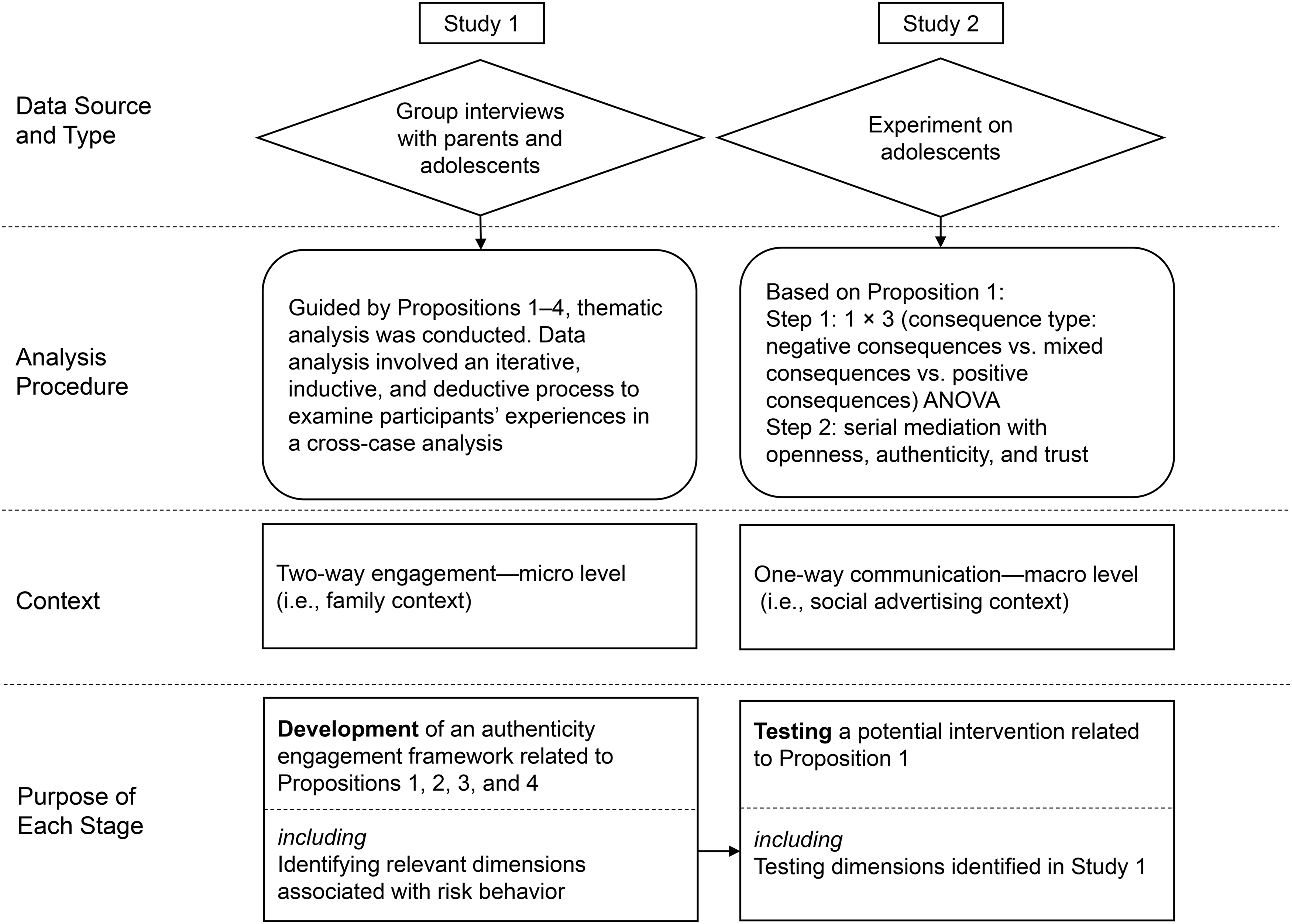
Research Design and Analytical Approach.
We used a “complementarity design,” whereby “different, but complementary, aspects of the same phenomenon” are examined (Davis, Golicic, and Boerstler 2011, p. 496). The overall purpose was to advance marketing and public policy on authenticity and adolescent risky behavior about the most effective way for parents to engage with adolescents around risky behavior such as binge drinking and excessive alcohol consumption. The aim of the first qualitative study, guided by P1 to P4, was to generate insights to help build theory and develop a framework related to a two-way engagement (i.e., micro level, in a family context). The aim of the second study, an experiment, was to test part of the phenomenon (P1) that is relevant to one-way communication (i.e., macro level, in a social advertising context), to test a potential intervention related to effective communication messaging.
Study 1: Qualitative Approach—Framework Development
The purpose of Study 1 was to develop a framework by gaining insights into parent–adolescent engagement around risky and responsible alcohol consumption in relation to our conceptualization of authenticity and adolescent risky behavior and our associated propositions. In addition, the aim of this study was to uncover authentic communication dimensions that are relevant to adolescents in relation to risky behavior.
Method
To gain insights into how adolescents and parents engage with communication around risky behavior, we used a group interviewing technique that consisted of adolescents and their parents (or primary caregiver[s]). As outlined in the literature, parent–adolescent communication is fundamental to how adolescents navigate risky behavior (Pechmann, Catlin, and Zheng 2019). Previous research has also noted inconsistent responses when parents’ and/or adolescents’ perspectives are taken alone (Chassin et al. 2005; Cohen and Rice 1997). For these reasons, we chose to interview parents and adolescents together as a family group to provide insights into how parents and adolescents communicate, enabling a deeper understanding of what messaging adolescents deem to be effective. We acknowledge that family interviewing can sometimes create desirability bias and pressures. In this case, the potential was for adolescents to not disclose true risky behaviors and attitudes about alcohol with their parents present. We recognize that adolescents are prone to conforming in terms of what they believe their parent(s) expect as appropriate behavior and/or that some may experience heightened anxiety due to possible chastisement, penalty, or disciplining by the parent(s) for revealing inappropriate behavior. Therefore, the adolescent participants in our study may not have fully disclosed their true dinking behavior. We highlight these limitations, yet also believe using family group interviews was most appropriate. Given that this study was focused primarily on how parents communicate about alcohol and risky alcohol behaviors and how adolescents respond to such messaging, having both parties in the interview was important to enable us to observe and record the interplay of communication. One of the main advantages of the group interviewing technique, particularly with family groups, is the opportunity for all participants to share their experiences and knowledge on a particular issue or phenomenon, without feeling intimidated or dominated by others in the group (Dodds and Hess 2021). Refer to Web Appendix A for further information.
Recruitment
Eleven New Zealand families and 12 French families, involving 48 young people age 12 to 21 years and 39 parents, totaling 87 participants, participated in the study. We chose to interview families in France and New Zealand for convenience; however, these countries also represent typical youth alcohol consumption in Western countries (World Health Organization 2022). Also, both countries have similar family structures and are culturally similar with regard to drinking behavior, with minor differences in wine consumption (Mouret et al. 2013). It is important to note that this study examined typical adolescents’ experience of alcohol and not adolescents (or families) that had some known level of risky alcohol consumption.
A convenience sampling method was used. Family groups were recruited via the snowballing technique (Parker, Scott, and Geddes 2019). Initially, families were recruited through the researchers’ personal contacts, and then each family interviewed was asked to recommend other families. This convenience sampling method was implemented primarily due to the difficulty of recruiting adolescents and family groups, which is a common reason for using snowballing (Parker, Scott, and Geddes 2019). Adolescents, particularly those under age 18, are often hard to access and difficult to engage in research (Flanagan and Hancock 2010; Hepi et al. 2017); therefore, recruitment strategies that ensure these groups are accessible and that alleviate distrust or discomfort about the research process are needed (Batat 2015; Batat and Tanner 2021). Although this method has limitations with regard to selection bias and representativeness, care was taken to ensure a reasonable spread of gender and age of the participating adolescents, and varying family structures. Two criteria were used to select families. The first criterion was that the family group had adolescents age 12 to 19 years. Adolescence has been classified by the World Health Organization (2022) as the phase of life between childhood and adulthood (ages 10 to 19); however, we did not recruit those younger than 12 for ethical reasons, and we included a few participants who were 20 and 21 years of age. These slightly older participants were often siblings of younger participants and provided great insights by being able to reflect on their entire adolescence. The second criterion was that parents had been or were currently social drinkers and that their adolescent(s) had been exposed to alcohol either via family gatherings and/or by going to parties (older adolescents). A comprehensive and rigorous human ethics application was submitted and approved for this research through Massey University. See Web Appendix A for details of the recruitment process and participants across the New Zealand and French sample.
Data Collection
Group interviews with each family were primarily conducted online due to COVID-19 preventing face-to-face group interviews. Nine (out of 11) New Zealand interviews and 10 (out of 12) French interviews were conducted online using a videoconference platform. In retrospect, moving the group interviews online provided some advantages; for example, the interviews were less intrusive and enabled a safe environment for discussion because participants were in their own homes without the interviewer in their space. This setup enabled the interviews to be more engaging and convenient for both participants and researchers (Dodds and Hess 2021). A semistructured interview guide was used to ensure consistency across the New Zealand and French interviews; however, both interviewers (the second and fourth authors) are experienced qualitative researchers and therefore allowed the interviews to flow like a conversation. The group interviews lasted on average around 60–75 minutes, with the smaller groups around 60 minutes and the larger groups upward of 75 minutes (details of different groups can be found in Web Appendix A). The French interviews were conducted in French, and then the transcriptions were translated to English. Families and participants were given pseudonyms to protect their identity.
Participants were asked questions related to four key areas: experience of alcohol consumption, family communication around alcohol, effective communication around alcohol consumption, and responsible alcohol consumption. The key focus of the group interview was on family communication and effective communication. Specific questions around family communication were directed at parents/caregivers and adolescents. The younger participants, particularly those age 12–15, were also encouraged by their parent(s). This was a significant advantage of using family groups and enlisting parents as cofacilitators (Dodds and Hess 2021). The interviewers ensured each member of the family had an opportunity to talk about their experiences openly, and where appropriate each member was probed to discuss further the points they had made, to gain a deeper understanding. See Web Appendix B for the full interview guide.
Data Analysis
All the family group interviews were recorded and transcribed verbatim, resulting in 269 pages of data. The data analysis was guided by P1–P4. Data analysis involved an iterative, inductive, and deductive process whereby comparisons were made in a cross-case analysis of our participants’ experiences, to uncover common patterns and themes (Azungah 2018). The process of analysis involved five key steps. Step 1 involved the first, second, and fourth authors reading through the transcripts separately and creating loosely derived first-order themes (and codes) around alcohol consumption, family communication and communication messaging, and responsible alcohol consumption. In Step 2 the three researchers discussed patterns and insights, creating second-order themes (and codes); for example, under alcohol consumption, themes relating to amount and frequency, type of alcohol, and situations where alcohol was consumed were identified. Under family communication, themes such as open communication, trust, and education were found. Associated with responsible alcohol consumption, ideas around social, hedonic, and safety aspects emerged. Step 3 involved enlisting one of the young participants (age 20) to review the initial codes and to anonymously read through the transcripts to cross-check and ensure the voices of the young participants were accurately represented. Member checking is common in qualitative research to ensure the correct portrayal of participant voices by allowing participants the opportunity to comment on the accuracy and interpretations of data (Candela 2019). Minor refinements were made to the initial codes. Step 4 employed an independent researcher to upload the transcriptions and code and recode the data in Excel, ensuring robust data. These initial insights were discussed within the entire research team, and the researchers compared the existing literature and our emerging understanding to clarify our theoretical insights (Arnold and Fischer 1994). Step 5 was the production of a final set of themes and subthemes, resulting in the development of a framework. In this step, illustrative quotes that represented each theme were identified.
Findings
Our findings are presented according to relevant insights identified for each of the four propositions—authentic communication messaging (P1), authentic parent behavior (P2 and P3), and authentic adolescent behavior (P4)—and its association with openness and trust.
Authentic communication messaging
Our analysis of effective authentic communication messaging about risky alcohol consumption provides evidence for P1. We found in our family group interviews that adolescents responded well to messages that acknowledge the positive aspects of alcohol consumption, such as accepting adolescents’ need for socializing and having pleasurable experiences (i.e., implicit and explicit attitudes), while warning of the negative consequences. Further analysis identified three key message dimensions for both positive and negative aspects: social, hedonic, and safety. We discuss the findings related to each dimension and provide a summary table highlighting and describing the subdimensions of each, with illustrative quotes, as summarized in Table 1.
Authentic Communication Messaging.
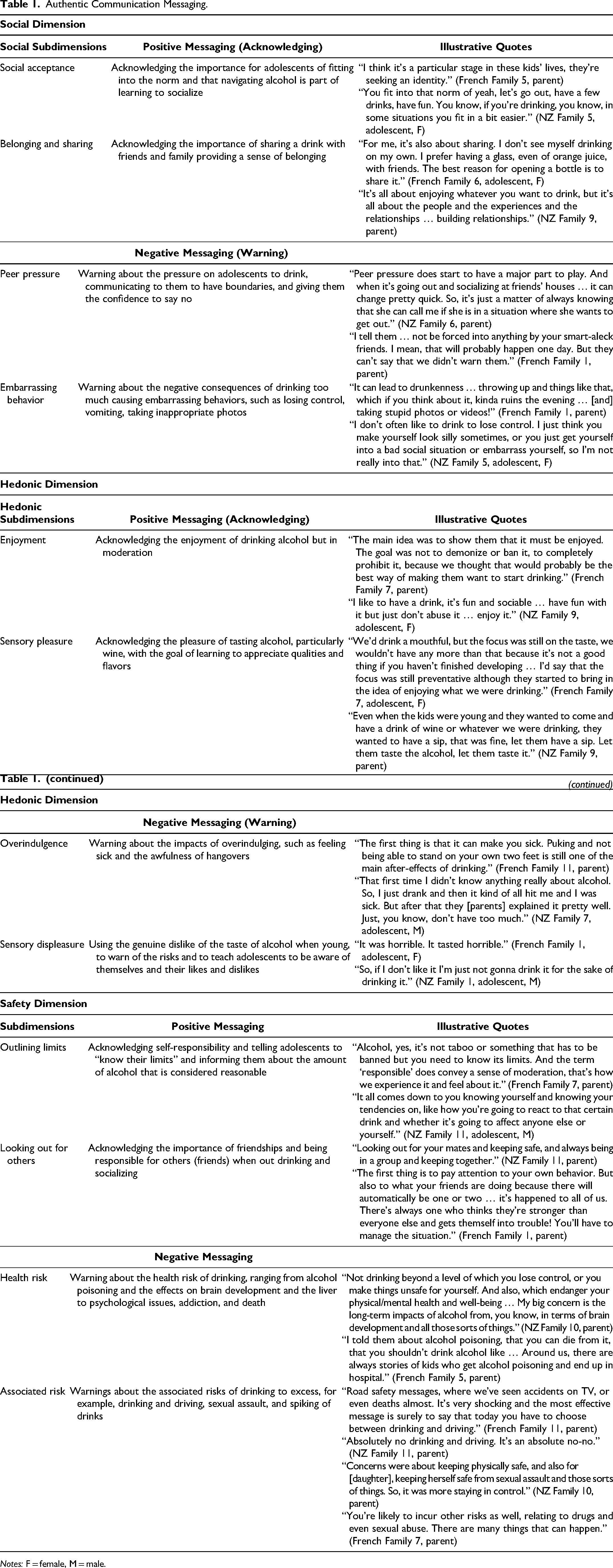
Notes: F = female, M = male.
Authentic behavior
The behavioral aspects we identified from our data capture the importance of both parents and adolescents displaying authentic behavior around alcohol consumption, providing evidence for P2, P3, and P4. Importantly, we found that parents who align their messages with appropriate behavior and who are open about their own experiences of alcohol are perceived as more authentic. Authentic adolescent behavior was found to revolve around adolescents experiencing alcohol and related social events while understanding and accepting boundaries given by parents. That is, parents behaving consistently with the communication messages they give, and both parents and adolescents behaving according to their beliefs, attitudes, and values around responsible alcohol consumption, are critical to parent–adolescent engagement. See Table 2 for an overview of the key authentic behaviors of parents and adolescents important for establishing authentic engagement.
Authentic Behavior.
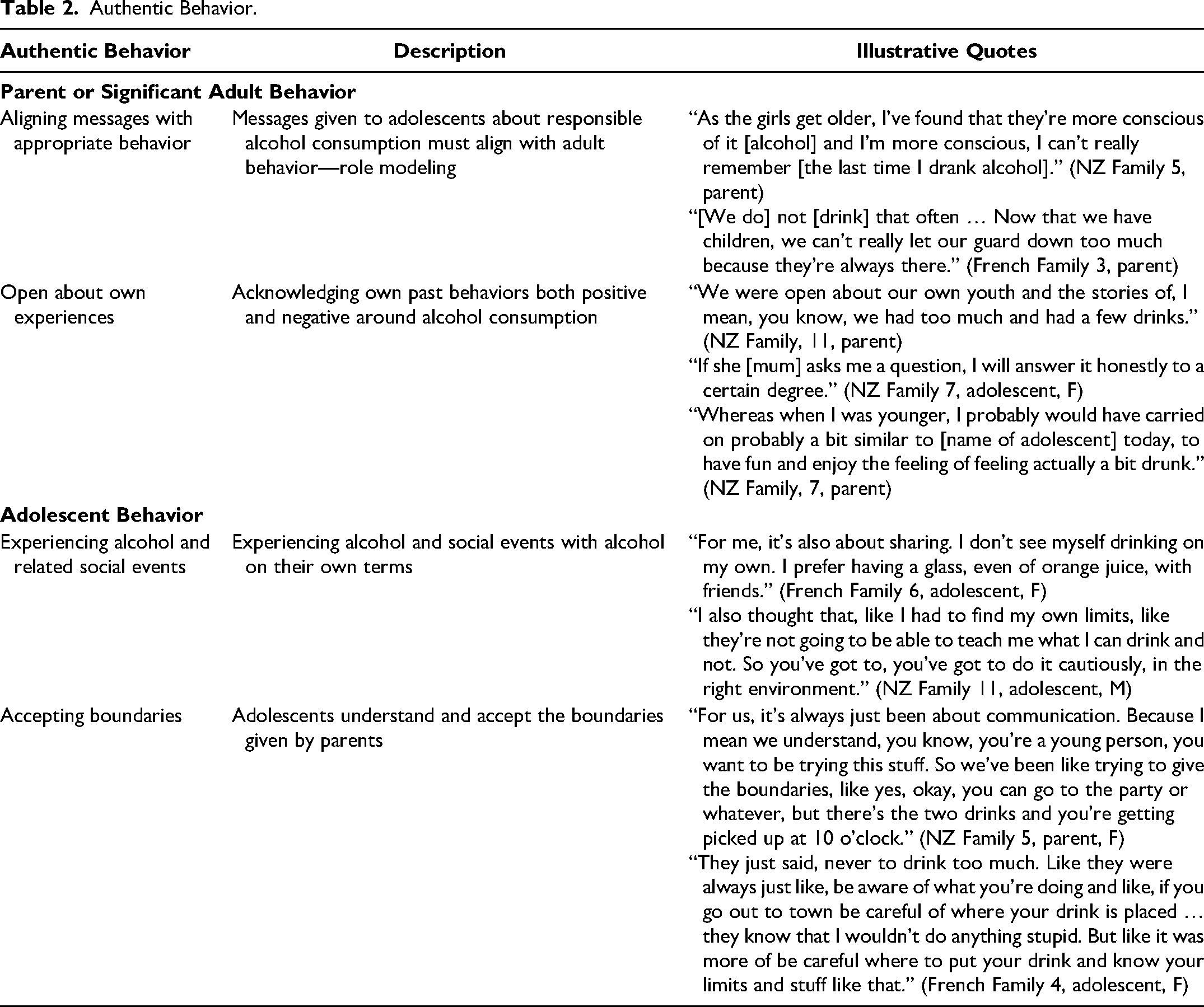
Authentic environment
Our findings highlight the importance of creating an authentic environment, identified by three key aspects: being open, trusting, and enabling adolescents to be “true to themselves” (see Table 3). Specifically, we found that an authentic environment is open and builds trust, enabling adolescents to be true to themselves. Authentic communication and behavior of parents, in addition to adolescents having the opportunity to be open and honest about their alcohol experiences and the ability to be true to themselves, is fundamental to parent–adolescent engagement around risky alcohol consumption.
Authentic Environment.
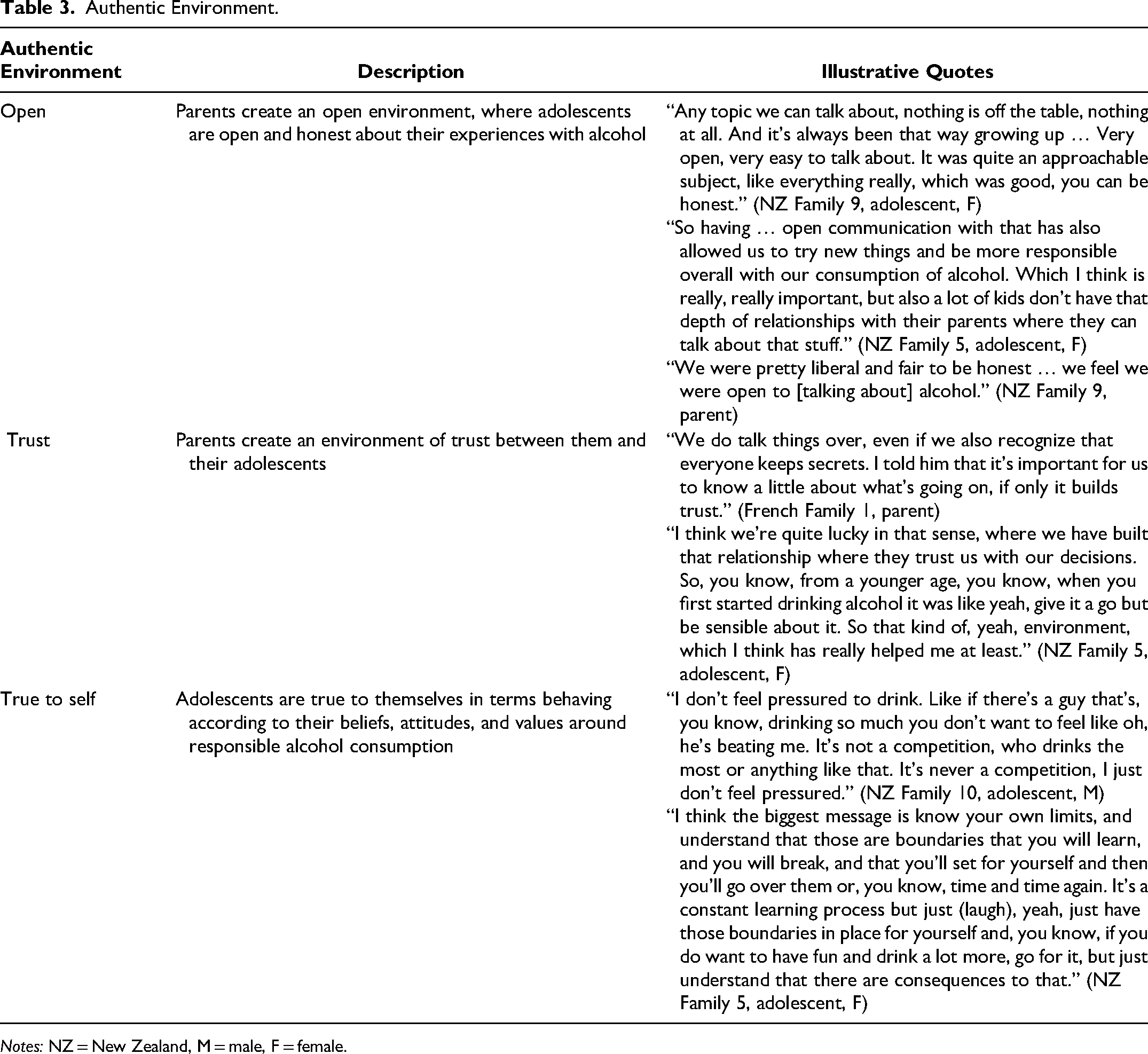
Notes: NZ = New Zealand, M = male, F = female.
Discussion
Based on our analysis, we developed an authentic engagement framework for reducing adolescent risky behavior (Figure 2). Our framework is underpinned by the key concept of authenticity (Alchin et al. 2024; Kernis and Goldman 2006), which aims to discourage risky consumption while allowing adolescents to flourish.
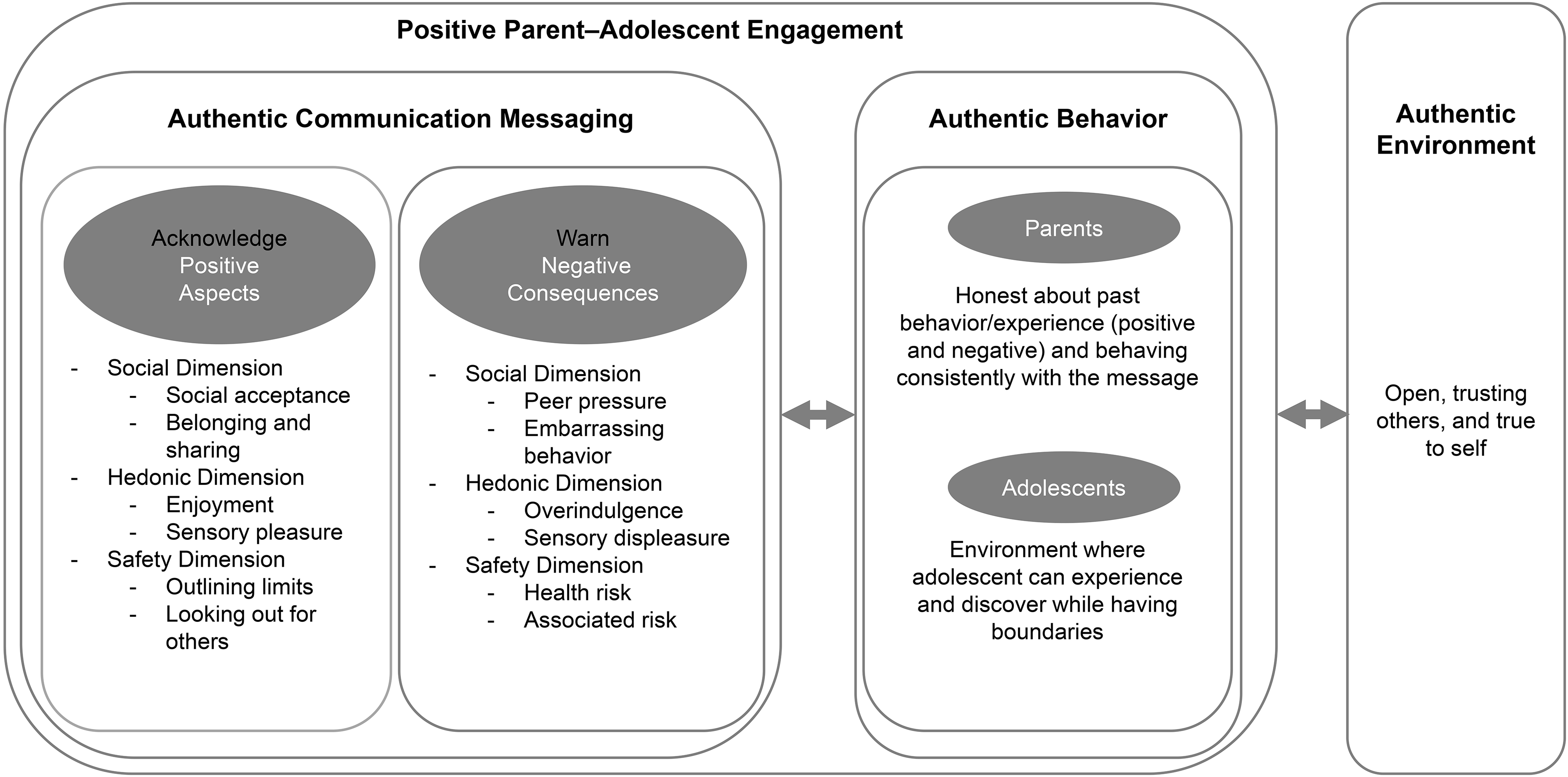
Authentic Engagement Framework for Reducing Adolescents Risky Behavior.
Importantly, we found that effective engagement with adolescents requires a two-pronged approach: (1) consideration of the authentic communication message, including negative consequences (i.e., warning) and positive aspects (i.e., acknowledging) across three dimensions: social, hedonic, and safety; and (2) attention to authentic behavior of parents and adolescents, aligning messages (and attitude) with corresponding behavior. Ultimately this two-pronged approach leads to an authentic environment characterized by openness, creating trust and allowing adolescents to be true to themselves with the goal of reducing risky behavior. Importantly, we propose that an authentic environment is influenced by authentic communication messaging and authentic behavior and vice versa. We next discuss the framework components in detail.
Authentic communication messaging
Our findings show that a mixed approach (positive and negative) to communication messaging around risky alcohol consumption appears to resonate with adolescents. Historically, messaging about risky behavior has focused on highlighting the negative consequences using fear-based tactics (Esrick et al. 2019). Although adolescents are aware of the negative aspects, adolescents’ belief structures also include positive implicit attitudes (Fitzsimons and Moore 2008; Sherman 2008), indicating the potential importance of acknowledging the positive aspects of alcohol consumption, while warning of the negative consequences. It seems that ignoring adolescents’ implicit positive attitudes toward risky behavior disregards their reality, creating a nonopen environment, making messaging less authentic and trustworthy, and diminishing their ability to express themselves authentically (Harter 2002). Our findings support research that recognizes that consumer well-being can be improved by satisfying psychological needs related to safety and security (the safety dimension); hedonic well-being related to pleasure and happiness (the hedonic dimension); and well-being related to meaning and purpose, belonging, and connection (the social dimension) and autonomy and authenticity (Dodds, Jaud, and Melnyk 2021; Kasser 2004).
A key finding is the social dimension of alcohol consumption for adolescents. Our findings indicate the importance of acknowledging adolescents’ need to socialize to instill confidence and enhance relationships with their peers (Akhtar and Boniwell 2010). With socializing and social acceptance come belonging and shared experiences within a group, both important in enabling adolescents to flourish and to have confidence. The key underlying message that seems to resonate is “it's okay to have fun with your friends, but drink in moderation.” This gives adolescents autonomy while setting clear boundaries around moderating risky behavior (Pechmann, Catlin, and Zheng 2019). Alongside the positive messaging it is crucial to warn adolescents about the pressure to drink and the accompanying potential embarrassing behaviors. Parents who explicitly discuss the risks and potential outcomes of indulging in harmful substances can reduce the likelihood of adolescents engaging in risky behavior (Cerezo, Méndez, and Ato 2013).
From a hedonic perspective, we found that espousing the enjoyment aspect of alcohol is an important message that advocates the savoring of pleasurable experiences (Carr et al. 2021), while ensuring that any associated risks are monitored (Pechmann, Catlin, and Zheng 2019). This finding supports the notion that parents who monitor behavior in a warm, authentic environment are more effective at reducing risky behavior (Paiva, Rocha, and Mota 2012). Safety is a key message, particularly around adolescents knowing their limits with alcohol. Adolescents who learn about themselves, set their own limits, and focus on their strengths are more likely to be well-adjusted and hence avoid risky behavior (Carr et al. 2021). Also, messages about caring and looking after one’s friends are important. Adolescents who are part of friendship groups that care, cooperate, and help also tend to model these responsible behaviors (Wentzel, Filisetti, and Looney 2007). Fundamentally, we find that adolescents respect autonomy and respond to messages that allow them to make responsible decisions about alcohol, while being warned of the health and associated risks.
Authentic behavior
A critical consideration is that messaging being offered by parents (or significant adults) must align with their behavior to be perceived as authentic by adolescents. This means that parents must align with the message on the negative consequences by role modeling appropriate behavior in the form of moderate consumption themselves (Abar, Abar, and Turrisi 2009; Bowden et al. 2019). This is consistent with previous research highlighting the need to serve as a role model for adolescents (Brook et al. 2013; Darling, Palmer, and Kipke 2005). We also found that parents’ best approach is to be open about their own previous positive and negative experiences with risky behavior, specifically relating back to their own experiences as adolescents. Being open and consistent makes the key messages more authentic and trustworthy. Parents also need to give adolescents the room to experience and discover alcohol for themselves in a safe and supportive way to move toward openness, trust, and self-authenticity. In this respect, behavior is not centered around prevention or forbidding alcohol; it focuses on enabling adolescents to have the freedom to experiment, acknowledging the implicit positive attitudes toward risky behavior, while providing boundaries and understanding the risks and associated negative consequences.
Authentic environment
Our findings support those of Kernis and Goldman (2006), advocating that being open and trusting associated with an authentic environment that gives adolescents room to experience and allows them to be authentic (true to themselves), paired with clear boundaries, creates openness and a trusting environment where adolescents can flourish and be encouraged to responsibly approach risky behavior. Giving adolescents room to gain experience within boundaries is supported by previous research on authenticity related to adolescent risky behavior (Baker, LaBarge, and Baker 2015; Fitzsimons and Moore 2008). Blind obedience to environmental forces (i.e., parents strictly forbidding alcohol) typically reflects the absence of authenticity (Deci and Ryan 2000), implying that it is critical that adolescents have the room to experience and be true to themselves (i.e., acknowledge their own implicit positive attitudes and desires). Nevertheless, research also highlights the need to monitor and restrict risky behavior (in conjunction with the warning; Pechmann, Catlin, and Zheng 2019), suggesting that leaving adolescents to their own devices might backfire.
In Study 1, guided by P1–P4, we proposed an integrative framework around authentic engagement for reducing risky behavior that is relevant to a two-way engagement accounting for message and behavior. While the aim of Study 1 was exploratory, with the aim of building theory and creating a conceptual framework relevant to two-way engagement, the purpose of Study 2 was to gain conclusive evidence about an important component of this framework—authentic communication messaging (reflecting P1)—relevant to one-way communication in a marketing context (i.e., advertising campaigns targeted at adolescents with the aim of promoting responsible behavior). Study 1 identified dimensions relevant to risky behavior (safety, social, and hedonic), while Study 2 applied and tested some of those dimensions.
Study 2: Testing Potential Intervention
The aim of Study 2 was to test the causal relationships of P1, which is relevant to a one-way communication context such as a social advertising campaign target directed toward adolescents. To get conclusive results, P1 was transferred into testable statements specifying main and mediating effects between constructs/empirical variables (Ulaga et al. 2021). By making parts of our propositions empirically observable, we were able to test potential practical, relevant interventions. In Study 2 we tested a social marketing advertising campaign and its effect on adolescents’ behavior. P1 deals with the relationship between message type (mixed message, acknowledging positive aspects while warning about negative consequences) and openness, authenticity, and trust. Previous research has highlighted the association between trust and persuasion (Touré-Tillery and McGill 2015); hence, we predicted that a message that is trusted is also more persuasive and has the ability to reduce risky behavior/enhance responsible drinking practices. Overall, we operationalized and predicted that mixed messages (positive and negative), versus just negative messages, would lead to adopting more responsible drinking practices, which are serially mediated by the openness of the message (i.e., considering a variety of perspectives), the authenticity of the source (i.e., being genuine, real, and true to the topic), and thus the trustworthiness of the message.
Method
In Study 2, we used three experimental conditions featuring a fictitious responsible drinking advertising campaign. We manipulated the message type by describing either four negative consequences (negative condition), two positive and two negative consequences (mixed condition), or four positive consequences (positive condition) of drinking alcohol (Figure 3 features the negative and mixed conditions). We used message dimensions that were identified in Study 1. We confirmed our manipulation in a separate study (N = 39; see Web Appendix C for full description, OSF link, and results).
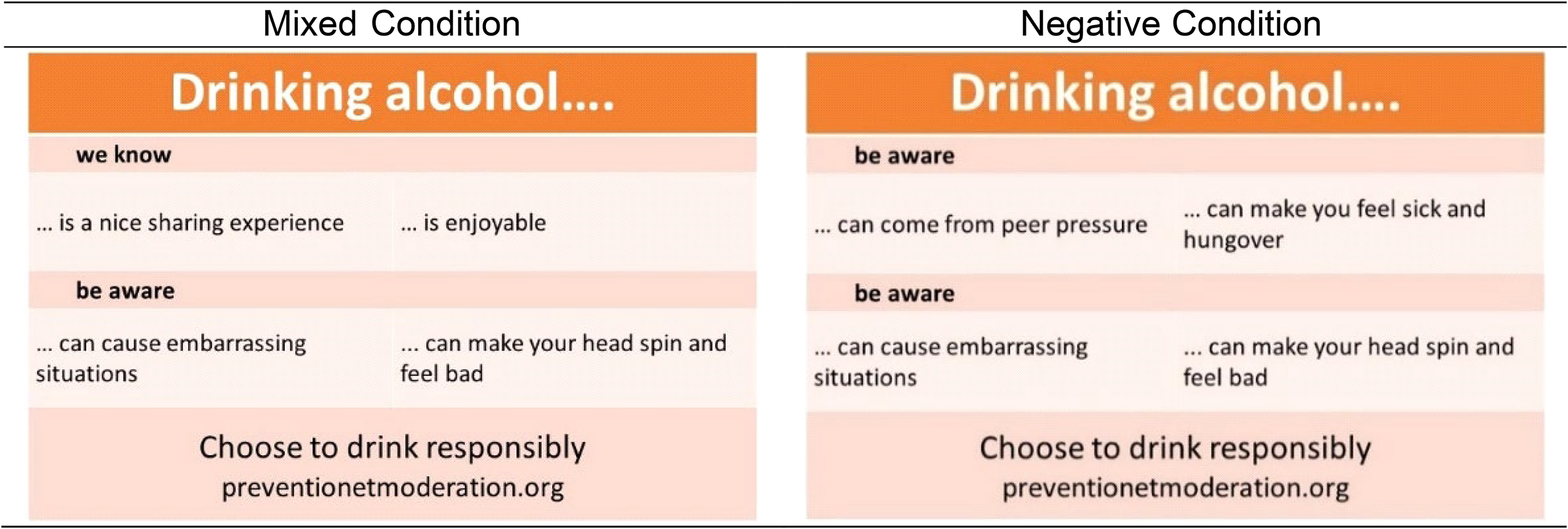
Stimulus Material for Mixed and Negative Condition (Translated from French).
Participants perceived the condition with positive consequences as more positive (Mpositive = 6.56, SD = .64) than the negative (Mnegative = 1.44, SD = .72) or mixed (Mmixed = 5.44, SD = 1.07) conditions (Wilks' lambda = .037, F(2, 37) = 475.11, p < .001). Next, the results showed that participants perceived the condition with negative consequences as more negative (Mnegative = 6.54, SD = .64) than the positive (Mpositive = 1.67, SD = 1.28) or mixed (Mmixed = 5.49, SD = 1.32) conditions (Wilks' lambda = .106, F(2, 37) = 155.47, p < .001). Those results confirm our manipulation.
We used a 1 × 3 (consequences: negative vs. mixed vs. positive) between-subject design. We collected data from French adolescents age 18 and 19, using Norstat (a European panel company). We chose not to sample adolescents younger than age 18 as it would have required parental permission. Parental permission would have carried the risk of respondents’ answers being biased by their parents, which we tried to avoid. Participants were randomly assigned to one of the three experimental conditions (see pretest for details) featuring a fictitious advertisement campaign promoting responsible drinking.
We received a total of 475 responses. We removed systematic error variance and random noise using common data cleaning procedures to provide more accurate and powerful tests (Meyvis and Van Osselaer 2018). We excluded 153 participants who responded in an unrealistic task completion time of 360 seconds or less (time required to read all items and complete their answers based on the pretest; see Johnson 2016). Web Appendix D summarizes all sampling details and exclusion criteria. We used an effective total of 322 participants (160 female, 157 male, 4 nonbinary, 1 transgender). Before exposing respondents to the stimulus, we presented a table that provided participants with information about what a standard glass means (i.e., 10 g of alcohol, for example, 10 cl of wine at 12% alcohol or 25 cl of beer at 5%). Next, we measured respondents’ usual drinking behavior (as a control variable). We asked, “How many standard alcoholic drinks do you usually consume during an evening?” using a sliding scale from 0–30 drinks. The manipulation was followed by a set of questions assessing some of the key elements of our proposed framework. First, to prime the valence of the communication, we asked participants to write down in a few words what the message of this campaign ad was. Next, using a seven-point scale (1 = “very unlikely,” and 7 = “very likely,” adapted from Kelly, Chan, and O’Flaherty [2012]), we measured responsible drinking practices as a proxy for reducing risky behavior (Jaud, Gergaud, and Lunardo 2023), asking respondents how likely or unlikely they were to implement the following practices when they had an alcoholic drink. We presented six items (α = .838; see Web Appendix E for items). Next, using a seven-point scale (1 = “not at all authentic,” and 7 = “very authentic”), we measured authenticity by asking “How authentic do you find the organization preventionetmoderation.org?” (adapted from Cornelis and Peter [2017]; see Web Appendix F for more details about the measure). We also measured trust in the organization on a seven-point bipolar scale using two items: dishonest–honest and nontrustworthy–trustworthy (r = .49; p < .001; adapted from Kirmani et al. [2017]). We added a measure of openness: “How open do you think the message of this responsible drinking ad campaign is?” using a seven-point scale (1 = “not at all open,” and 7 = “very open”; see Web Appendix F for posttest details). We included a measurement of risk perception on a seven-point Likert scale as follows: “I am at risk of getting hurt or sick” and “It would provide me with pleasure” (adapted from Hampson et al. [2001]). We also measured existing knowledge (control variable): “Do you know or have you ever heard of the organization preventionetmoderation.org?” Respondents could answer “yes” or “no.” After answering the key question related to our focal research objective, respondents completed additional measures as part of a broader explorative research project. Data analysis started after data collection was completed, following a predetermined analysis plan. The data and code are available at https://osf.io/x8nym/.
Results
We conducted a 1 × 3 (consequence type: negative vs. mixed vs. positive) one-way ANOVA with responsible drinking practice as the dependent variable. The main effect of the independent variable was significant (F(2, 319) = 4.455, p = .012). 1 Specifically, adolescents in the mixed condition indicated higher levels of responsible drinking practices when the advertisement outlined mixed consequences (Mmixed = 4.93, SD = 1.23) compared with negative consequences only (Mnegative = 4.43, SD = 1.70; p = .021) or positive consequences only (Mpositive = 4.33, SD = 1.75; p = .005; see Figure 4).
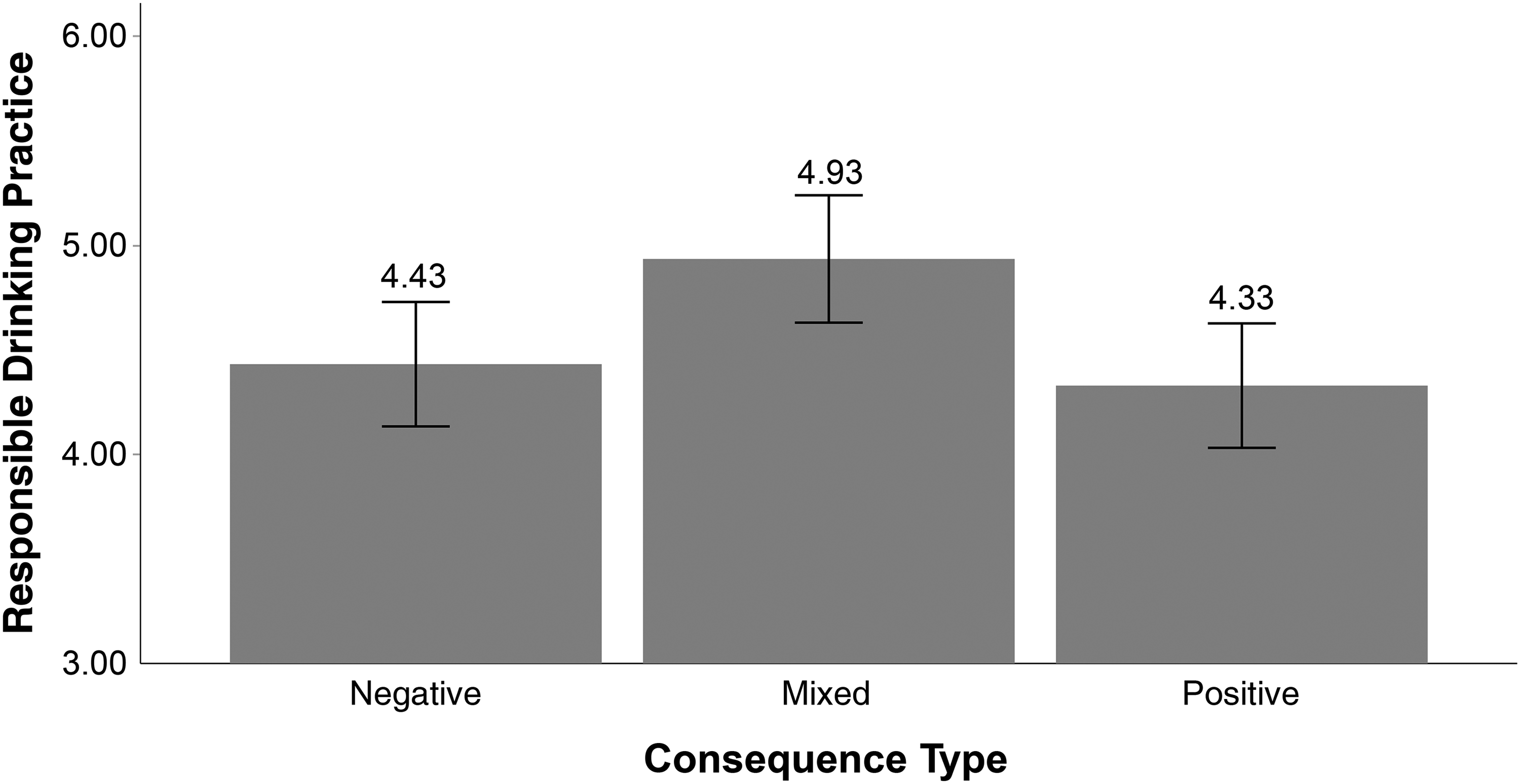
Effect of Consequence Type on Responsible Drinking Practices.
We did not find any significant difference between the positive and negative consequence conditions (p = .632). To ensure that the results were not impacted by predisposed risky behavior and preexisting knowledge of the organization, we controlled for general alcohol consumption and organization knowledge in a separate model. The results of our main effect, consequence type, stayed significant (F(2, 317) = 4.865, p = .008). Next, to ensure that our approach did not influence overall risk perception (i.e., by using positive consequences), we conducted a 1 × 3 (consequence type: negative vs. mixed vs. positive) one-way ANOVA with the two items separately. We found no significant effect of message type for both items (ps > .19). To investigate the sequential underlying mechanisms (i.e., the role of openness, authenticity, and trust) responsible for the effect of types of consequences on responsible drinking practices, we predicted the following serial mediation (see Figure 5): types of consequences → (1) openness perception → (2) authenticity perception → (3) trust → responsible drinking practices. Because the independent variable was multicategorical (negative vs. mixed vs. positive), we used Hayes’s (2018) PROCESS Version 3 to test our serial mediation model (95% bootstrapping; Model 6; N = 5,000 resamples) with types of consequences as the multicategorical independent variable (X1 = negative vs. mixed; X2 = positive vs. mixed; mixed condition, our key interest, served as the baseline condition), openness perception as Mediator 1, authenticity as Mediator 2, trust perception as Mediator 3, and responsible drinking practices as the dependent variable.
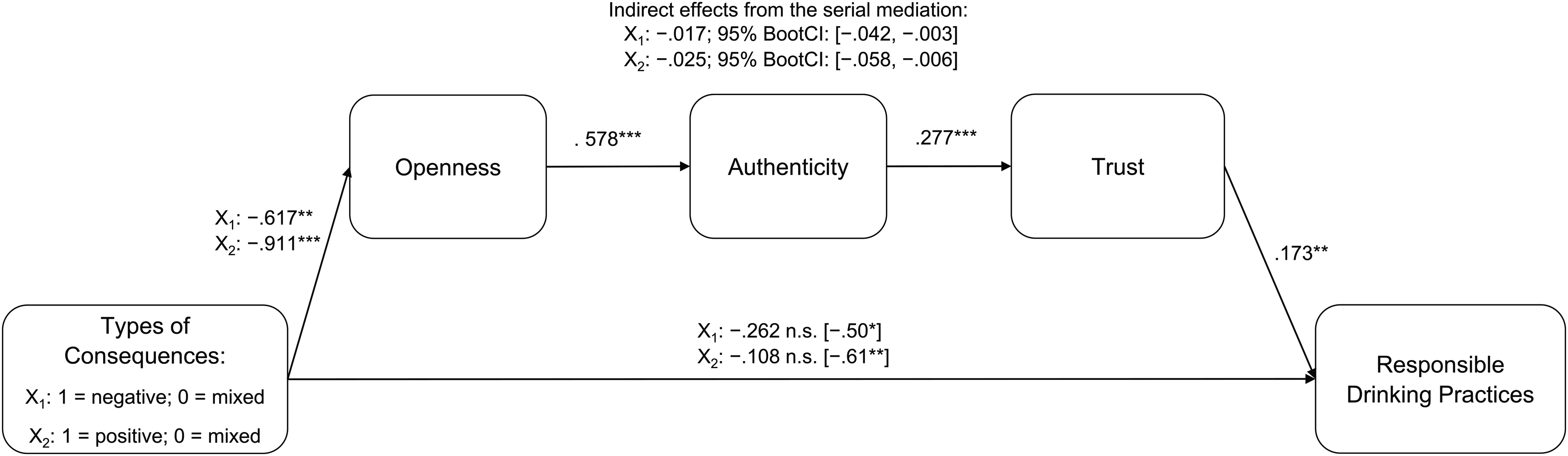
Serial Mediation Model for Openness, Authenticity, and Trust.
We found significant negative effects of (1) mixed versus negative and (2) mixed versus positive consequences on openness (bnegative = −.617, bpositive = −.911; ps < .01). Openness had a significant and positive effect on authenticity (bopen = .578, p < .001). Next, authenticity had a positive effect on trust (bauth = .277, p < .001), and this increased trust then triggered higher levels of responsible drinking practices (btrust = .173, p = .002). The indexes for the serial indirect effects through the three sequential mediators—openness, authenticity, and trust—were significant (bnegative = −.017, 95% CI: [−.042, −.003]; bpositive = −.025, 95% CI: [−.058, −.006]), indicating that the effects of types of consequences on responsible drinking practices were serially mediated by openness, authenticity, and trust (in that order). Last, while the total effects of types of consequences on responsible drinking practices were significant (X1 [negative vs. mixed]: p = .021; X2 [positive vs. mixed]: p = .005), the direct effects of consequences were not significant (95% CI for negative vs. mixed: [−.509, .292]; 95% CI for positive vs. mixed: [−.651, .128]), indicating indirect-only mediation (i.e., the strongest type of mediation; Zhao, Lynch, and Chen 2010). The full regression results for the serial mediation are reported in Web Appendix G.
Discussion
Our results confirmed our prediction about the mixed messages that led to a higher intention to engage in responsible drinking practices (i.e., reduced risky behavior). The serial mediation–based results confirmed the positive effect of applying mixed versus negative or positive consequences on responsible drinking practices, using three underlying mechanisms: (1) openness, (2) authenticity, and (3) trust. Our findings taken together suggest that in social marketing campaign messages that aim to reduce risky behavior, acknowledging the positive aspects of risky behavior while warning of the negative consequences is the most efficient way to encourage responsible drinking consumption among adolescents. The least efficient is communicating around positive consequences only, which makes sense given that individuals are aware of the negative side effects of drinking alcohol.
Overall Discussion and Implications
Adolescent risky behavior continues to be a major public policy concern. Despite research on effective marketing and policies to address adolescent risky behavior, studies that provide further insights into the messages and behavior that resonate with adolescents are still needed. Applying the concept of authenticity, which has great significance for adolescents, we proposed and tested effective communication messages and behaviors that adolescents respond to. Using qualitative group interviews followed by an experiment to test one of our marketing relevant interventions, we found that policy makers’ and parents’ messages need to acknowledge the positive aspects of risky behavior while warning of the negative consequences across three key message dimensions: social, hedonic, and safety. Our findings support P1, which proposed that mixed messaging (positive and negative) would be more effective in reducing risky behavior. A key takeaway from our study is that adolescents perceive a campaign sponsor as more authentic and trust its message when it does not deny adolescents’ implicit and explicit attitudes toward risky behavior (Fitzsimons and Moore 2008; Sherman 2008), creating a perception of openness.
Our qualitative findings, guided by P2, P3, and P4, further suggest that those messages (P1) must align with both parents’ and adolescents’ behavior to be effective. From the authenticity literature, we found that messages around risky behavior need to align with the parent's own behavior expectations. Authentic behavior by parents (i.e., other-authenticity) is characterized by parents mirroring the message they give to adolescents by drinking responsibly (i.e., role modeling). At the same time, it is important to allow adolescents to be true to themselves (self-authenticity); that is, they are given permission to align with their true nature and attitudes, and are given room for experience but in a controlled environment. Aligning messages about risky behavior with behavior helps create an open, authentic, and trusting environment that also allows adolescents to be true to themselves. Fundamentally, our findings support a participatory approach to adolescent risky behavior that recognizes the importance of allowing adolescents to have socially accepted life experiences, but within boundaries (Mason et al. 2013). They also point to an adolescent's need for not only autonomy but also pleasurable and meaningful consumption experiences (Carr et al. 2021; Schmitt, Joško, and Zarantonello 2015). Our authentic engagement framework provides an integrated platform for understanding authentic communication messages and behavior related to adolescent risky behavior. The underlying premise of the framework is that it fosters authenticity and provides parents and policy makers with guidance on how to engage in a participatory approach.
Theoretical Contributions
We provide important contributions to public policy literature on effective ways to reduce adolescent risky behavior. First, we highlight the important role of parents’ engagement with adolescents with regard to authentic communication messages and authentic behavior, and the development of a novel authentic engagement framework. We build on Ryan, Jorm, and Lubman's (2010) systematic review of parental strategies to reduce adolescent alcohol consumption, and Pechmann, Catlin, and Zheng's (2019) comprehensive theorization of how parents can facilitate adolescent well-being, by providing empirical evidence of the need to provide support by openly discussing the risks, giving guidance around peers, monitoring and restricting risky behavior, and modeling good behavior. Previous research has investigated individual practices to reduce risky behavior (Ryan, Jorm, and Lubman 2010). Using authenticity insights, we are the first to investigate and propose a framework that looks at each practice and how they are interconnected.
Second, previous research has continuously highlighted the need to warn adolescents about risky behavior (Gerrard et al. 1999). We extend this knowledge by proposing and testing the need to also acknowledge adolescents’ implicit and explicit attitudes toward risky behavior by acknowledging some of the positive aspects of alcohol consumption, across social, hedonic, and safety dimensions, making the message more authentic and ultimately more effective. A mixed message that acknowledges the positive aspects and warns of the negative consequences leads to communication messaging being perceived as more authentic. Along with delivering a mixed message is the need for parents (and other communication sources) to behave authentically by aligning with the message(s). This two-pronged participatory approach contributes to creating an open and authentic environment leading to trust and allowing adolescents to be true to themselves. In this environment, adolescents are more likely to trust their parents (and other significant adults/organizations) and can flourish while adhering to responsible behaviors.
Third, we contribute to the literature on adolescent authenticity (Alchin et al. 2024) and authenticity related to marketing (Vredenburg et al. 2020) by demonstrating how critical (and effective) authenticity is to parent–adolescent and policy maker–adolescent engagement around risky behavior. Along with our novel authentic engagement framework for reducing risky behavior, we propose a new conceptualization of authenticity and adolescent risky behavior (see the introduction to this article), building theory in this critical area. Significantly, we extend authenticity to the context of adolescent–parent engagement around risky behavior. We highlight the need for parents and policy makers to apply the notion of authenticity as outlined in our framework. Fundamentally, adolescents’ attitudes and experiences need to be acknowledged, and messaging and behavior need to be adjusted correspondingly. Harter (2002) emphasizes the need for parents to acknowledge their children's reality rather than purely acting on their (parents’) agenda to promote authenticity, aligning with a participatory approach (Mason et al. 2013).
Implications for Public Policy and Marketing
Our research has implications for how public policy officials and agencies can influence adolescents to engage in responsible consumption, indirectly via their parents as key socializing agents, and directly via targeted messaging (i.e., social marketing advertising campaigns). Our authentic engagement framework can be used by public policy officials and agencies in efforts to prevent adolescents from engaging in risky behaviors through (1) education and (2) marketing communications.
Education
The components of our framework and key findings around authenticity and alignment can be used by public policy officials to develop and provide guidelines for effective ways to communicate with adolescents about risky behavior and educate parents about the importance of aligning their own behavior with their messages through training modules and via media such as TED talks and podcasts. The U.S. Department of Health and Human Services already provides evidence-based practical resources for communities, parents, and educators to prevent risky behavior (Substance Abuse and Mental Health Services Administration 2023). With insights from our research, clear guidelines can be added to existing resources. Specifically, the three dimensions—social, hedonic, and safety—can serve as talking points. For instance, schools and/or other educational institutions could run education programs for both parents and adolescents. Parents could be given the tools to manage adolescent risky behavior and learn to behave authentically by acknowledging the social, hedonic, and safety (positive and negative) aspects of alcohol use and other risky behaviors. Policy makers and educators could develop training modules for parents to facilitate and inspire authentic conversations; for example, they could be given a range of specific statements that could be used, such as “I know that drinking alcohol can make you feel you are part of a group; however, it comes with risks, so know your limits and don’t feel pressured by your friends.” This communication should emphasize key aspects of responsible consumption (e.g., the number of standard drinks deemed responsible, eating while drinking, drinking in a safe environment, and looking out for friends) and focus on authentic elements that empower adolescents to say no when they have had enough, to recognize their own limits, and to deal with peer pressure. In this context it is important to note that our description of “positive” messaging around risky behavior does not negate any legal or public health issues. Our mentioning of positive aspects should in no way be seen as a promotion of risky behavior; instead, it is solely an acknowledgment of them. Further, our research does not promote alcohol consumption. Parents must set boundaries, while acknowledging their implicit need to experience life (i.e., their authenticity). Critical to our findings is warning adolescents of the social, hedonic, and safety (health) risks.
Marketing communications
Our results also provide a direct tool for social marketers developing responsible consumption campaigns targeted at adolescents. Specifically, in our experiment we tested P1 as a potential intervention for social marketers. Social marketing advertising campaigns targeting adolescents can use messaging that acknowledges the positive aspects (social and pleasurable aspects) in addition to warning of the negative consequences (health risks, peer pressure). National advertising campaigns are particularly important in countries such as the United States, Australia, the United Kingdom, New Zealand, and France, which have issues with adolescent heavy episodic drinking (World Health Organization 2018). Moreover, public policy social media marketing can be implemented as a key strategy to communicate with adolescents. Social media platforms are a powerful way to communicate with vulnerable consumers, such as youth, and have been shown to enhance well-being (Fletcher-Brown et al. 2021). Social media influencers known for influencing and empowering youth in a positive way and behaving responsibly can be used in responsible drinking campaigns. Social media influencers can post about their own past experiences in an authentic way (i.e., both negative and positive experiences), while communicating their stance for responsible consumption.
Conclusion and Future Research
We offer a comprehensive authentic engagement framework to mitigate adolescent risky behavior as a platform for future research. First, our framework was developed in the context of alcohol consumption; however, we believe it has the potential to be applied to other risky behaviors (e.g., vaping, social media use, drug consumption, sexual behavior), and further research is needed to explore its application in these different contexts. Alcohol consumption is a topic most parents have knowledge of and experience with, and the risks generally apply regardless of gender. Other risky behaviors, such as sexual behavior (see Tanner and Tanner 2020), might require a gendered approach; for instance, mothers might find it easier to communicate around sexual behavior with their daughters and fathers with their sons, respectively. Also, parent–adolescent communication around sexual behavior may not be as open and engaging due to potential embarrassment about discussing this topic on both parents’ and adolescents’ sides. Second, our research focused primarily on reducing risky behavior (i.e., risky drinking practices); however, our framework might be influenced by or impact other variables such as youth experimentation, rites of passage, emerging identity and self-esteem, and ultimately adolescent well-being. Importantly, our research implemented family group interviewing, which has the potential to create desirability bias, whereby adolescents may not have disclosed their true behavior. Future research can consider both family group interviews alongside individual interviews with adolescents separate from their parents. Third, research could also investigate potential boundary conditions, such as adolescents’ or parents’ characteristics, for this framework. For example, there might be other factors that can impact the perception of proposed messages and behavior, such as cultural, demographic, and/or sociographic characteristics. Fourth, future research could consider more diverse gender identities and dig deeper into how a mother/father could communicate with their nonbinary child (for a conversation about gender and consumer research, see Drenten, Harrison, and Pendarvis [2023]). Finally, our research helps demonstrate the importance of authenticity, opening many avenues for future research. Our research makes a link between authenticity and trust; however, future research could consider the believability of the message and other behavioral elements (e.g., binge drinking). Future research should consider well-being outcomes (psychological, social, and emotional) and broaden the authenticity lens to include positive psychology to ensure that adolescents flourish. Authenticity as part of positive psychology is an extremely important area, especially for adolescents. Our research suggests that an authentic environment enables adolescents to be true to themselves. Further research could investigate the nuances of this notion and how that links to a better outcome. We hope our work inspires more research to further expand and investigate our framework and the concept of authenticity.
Supplemental Material
sj-pdf-1-ppo-10.1177_07439156241291476 - Supplemental material for Curbing Adolescents’ Risky Drinking Behavior with Authenticity
Supplemental material, sj-pdf-1-ppo-10.1177_07439156241291476 for Curbing Adolescents’ Risky Drinking Behavior with Authenticity by Alexandra C. Hess, Sarah Dodds, David A. Jaud, Claire Garnier and Olivier Gergaud in Journal of Public Policy & Marketing
Footnotes
Acknowledgments
The authors thank the JPP&M review team for the excellent feedback provided throughout the review rounds.
Joint Editors in Chief
Jeremy Kees and Beth Vallen
Associate Editor
Marlys J. Mason
Declaration of Conflicting Interests
The authors declared no potential conflicts of interest with respect to the research, authorship, and/or publication of this article.
Funding
The authors received financial support for the research, authorship, and/or publication of this article, including the following: This study was partially funded by Kedge Business School (Vin & Société “Responsible Consumption” Chair grant).
Notes
References
Supplementary Material
Please find the following supplemental material available below.
For Open Access articles published under a Creative Commons License, all supplemental material carries the same license as the article it is associated with.
For non-Open Access articles published, all supplemental material carries a non-exclusive license, and permission requests for re-use of supplemental material or any part of supplemental material shall be sent directly to the copyright owner as specified in the copyright notice associated with the article.
