




Abstract
This study sheds new light on the importance of perceived object-related authenticity for a positive tourism experience. We used a novel method of categorizing tourists based on their objective and constructive authenticity perceptions. The authors hypothesized that authenticity perception type would affect tourists’ positive experiences more than other factors. Specifically, differences among authenticity perception types in existential authenticity, satisfaction, and memorability scores were investigated using on-site surveys. The effect was empirically tested in settings with conflicting characteristics: original and re-created heritage sites in South Korea. The results suggest that tourists had more existentially authentic, satisfactory, and memorable experiences when they perceived the site as more objectively authentic. This had a greater impact on positive experience than setting and authenticity orientations. This study makes theoretical contributions by uncovering the relationality of objective and constructive authenticities, which also has implications for practitioners, as it significantly and positively contributes to tourists’ experiences.
Keywords
Introduction
Authenticity holds special value for consumers. They desire real, original, genuine, and authentic products and experiences, whereas fake, replica, phony, and inauthentic offerings are usually avoided (Gilmore & Pine, 2007). Tourism products are no exception to this trend. Although tourists can appreciate the copy site “Little Venice,” experiencing the real, genuine, and authentic Venice still holds a special quality than the replica experience (Yousaf & Fan, 2020). As Kirillova et al. (2017) and Vidon and Rickly (2018) have empirically shown, the pervasiveness of inauthenticity in routine life, in turn, drives tourists to seek authenticity during travel (Wang, 1999). Tourists are on the quest for authenticity in their tourism experience (MacCannell, 1976; Yeoman et al., 2007), and fulfilling the desire for authenticity is a fantasy that motivates tourists to travel (Knudsen et al., 2016).
Tourism and tourists were at the forefront of contemporary academic discussions on authenticity, as covered in concepts such as pseudo-events (Boorstin, 1964), staged authenticity (MacCannell, 1973), and disneyfication (Bryman, 1999). Sparked by Wang’s (1999) seminal work on the categorization of four authenticities (objective, constructive, postmodern, and existential), tourism academia continues to evolve the concept, making authenticity one of the oldest and hotly debated topics in tourism (Rickly, 2022). Furthermore, the exploration of “What does authenticity do?” (Rickly-Boyd, 2012a, p. 270) offers empirical proof that authenticity matters for both consumers and providers of tourism products. For tourists, experiencing authentic objects during travel leads to existential authenticity (Kolar & Zabkar, 2010; Li, Tian, et al., 2021; Yi et al., 2018), satisfaction (Domínguez-Quintero et al., 2020; Park et al., 2019), and well-being (Yi et al., 2022). From the perspective of providers, authenticity is related to behavior intention (Ramkissoon & Uysal, 2011; Stepchenkova & Belyaeva, 2021), organizational identity (De Bernardi & Arenas, 2022), perceived quality (Akhoondnejad, 2015; Domínguez-Quintero et al., 2020), and customer loyalty (Kolar & Zabkar, 2010; Lin & Liu, 2018; Li, Tian, et al., 2021; Park et al., 2019).
Although the list of concepts related to authenticity is still growing, much less is known about how tourists perceive the authenticity of a visited site. This study addresses this lacuna by examining tourists’ authenticity perceptions and how they relate to the tourism experience. We propose a novel method for categorizing tourists based on their authenticity perception, which extends the conceptualization of objective and constructive authenticity. In particular, the relationship between the two authenticity perceptions was considered. As Grayson and Martinec (2004) and Stepchenkova and Belyaeva (2021) took note of, objective and constructive authenticities are not mutually exclusive, and the line between what is “objectively” or “constructively” authentic is often vague. In other words, an object’s authenticity is neither entirely objective nor constructively authentic. However, most studies on authenticity only examine either of the two authenticities (e.g., Domínguez-Quintero et al., 2020; Kolar & Zabkar, 2010; Lu et al., 2015; Nguyen & Cheung, 2016; Ramkissoon & Uysal, 2011; Stepchenkova & Belyaeva, 2021; Zatori et al., 2018) or do not consider the relationship between the two (e.g., Castéran & Roederer, 2013; Grayson & Martinec, 2004; Li, Tian, et al., 2021; Park et al., 2019). However, we believe that examining objective or constructive authenticities independent of one another does not tell a full story, as the two aspects coexist within the same object and tourists perceive the two simultaneously. In contrast, our model considers the relationality between objective and constructive authenticities. Three types of tourists have been suggested: tourists who perceived a site as more objectively authentic, those that perceived it as more constructively authentic, and those that perceived it as equally objectively and constructively authentic. Rather than presenting a new concept of authenticity, this method is built upon and extends the existing theoretical framework (Rickly, 2022). Moreover, the authors hypothesized that the difference in tourism experience is not due to the characteristics of the site but is the result of the different authenticity perception types. Therefore, a positive tourism experience primarily depends on these three authenticity perception types rather than other factors.
Considering the preference of tourists for objectively authentic sites (Chhabra, 2012), it was hypothesized that tourists who showed an objective authenticity level higher than the constructive authenticity level would have more positive experiences than the other two types of tourists. The hypotheses were empirically tested in two contrasting settings: an original site with historical buildings and a re-created site with artificially created attractions. Furthermore, positive tourism experiences were operationalized from three perspectives: existential authenticity, satisfaction, and memorability. The following section briefly revisits theoretical and empirical studies on the authenticity of toured objects and how it relates to existentially authentic, satisfactory, and memorable tourism experiences.
Literature Review
Authenticity in Tourism
The exploration of authenticity in tourism dates to the academic debate between Boorstin and MacCannell. Boorstin (1964) criticized tourists for chasing pseudo-events, but MacCannell (1976) argued that tourists pursue authenticity rather than superficiality (Dann & Cohen, 1991); however, their desire for authenticity could not be satisfied at staged tourism sites (MacCannell, 1973). Tourism academia’s debate on the definition and categorization of authenticity is still ongoing; furthermore, the schools of thought related to the concept are still evolving (cf. Belhassen & Caton, 2006; Canavan & McCamley, 2021; Mkono, 2012; Moore et al., 2021; Reisinger & Steiner, 2006; Shehade & Stylianou-Lambert, 2020; Shepherd, 2015). Paradoxically, active discussions on this topic indicate that authenticity remains important in tourism research. Authenticity is important in tourism for at least three reasons. First, as MacCannell (1973) suggested, tourists seek authenticity during travel. Tourists are on a quest for authenticity (MacCannell, 1973), although the degree of willingness to venture out from the staged domain to an unembellished “backstage” may vary (Cohen, 1979). Second, some scholars argue that authentic experience motivates tourists; this is the “push” factor (Dann, 1977), a desire that triggers individuals to travel (Chhabra, 2010). This is especially true from the existentialist perspective, which suggests that an authentic tourism experience alleviates tourists’ alienation in everyday life (Knudsen et al., 2016; MacCannell, 1976; Rickly-Boyd, 2012a; Wang, 1999). Finally, people have different attitudes toward authenticity. Both providers (Chhabra, 2008) and recipients (Stepchenkova & Belyaeva, 2021; Stepchenkova & Park, 2021) of the tourism experience have their own stances on authenticity, which affects tourism experience.
One of the most widely accepted conceptualizations of authenticity in tourism is the three types of authenticity proposed in Wang’s (1999) seminal work: objective, constructive, and existential authenticity. Objectivists argue that authenticity is an inherited feature or property of a toured object (Wang, 1999). Therefore, it is independent of the judgment of tourists and can be measured objectively (Reisinger & Steiner, 2006). Conversely, constructivists posit that authenticity is a socially constructed concept (Reisinger & Steiner, 2006; Wang, 1999). Therefore, it can be negotiated or changed over time (Cohen, 1988). According to Wang (1999), these two perspectives are object-related authenticity; they concern the authenticity of the toured object. Finally, existential authenticity is activity-related authenticity (Wang, 1999). It is about becoming one’s true self (authentic self) through tourism. Hence, the authenticity of a toured object is not necessarily related to existential authenticity (Reisinger & Steiner, 2006). Postmodernism is another school of thought that relates to authenticity. From a postmodernist perspective, object-related authenticity does not matter; drawing a line between authenticity and inauthenticity is futile (Steiner & Reisinger, 2006). As long as tourists can enjoy their travel, authenticity is irrelevant; hence, postmodernists argue that the concept of authenticity should be abandoned (Reisinger & Steiner, 2006). The authors of this study assert that, unlike postmodernists, tourists care about object-related authenticity. Several empirical studies support this claim (e.g., Castéran & Roederer, 2013; Domínguez-Quintero et al., 2020; Grayson & Martinec, 2004; Kolar & Zabkar, 2010).
Reviewing the literature, the authors of this study discovered that object authenticity and objective authenticity are often used synonymously. The two terms should be distinguished not only for rhetorical purposes but also because the terminology limits the analytical scope of the study. When the term object authenticity refers to objective authenticity (e.g., Stepchenkova & Belyaeva, 2021), the constructive authenticity of the object is excluded. Conversely, if constructive authenticity is referred to as an object or object-related authenticity (e.g., Bryce et al., 2015; Kolar & Zabkar, 2010; Lee et al., 2016), the objective authenticity of the toured object is overlooked. Some scholars have used the term objective authenticity to refer to the constructive authenticity of the toured object (e.g., Domínguez-Quintero et al., 2020; Zhou, Zhang, et al., 2015), which causes further confusion. Because the purpose of the current study was to examine both objective and constructive authenticities of the toured object, the two terms will be differentiated in line with the conceptualization of Wang (1999) and Reisinger and Steiner (2006): object (or object-related) authenticity is defined as the authenticity of toured objects, and objective authenticity refers to the objectivist stance on object-related authenticity.
The authors of the current study adopted a tourist-based approach to authenticity (Kolar & Zabkar, 2010). That is, we examined how tourists perceive the authenticity of an object. The logic behind this proposition is that tourists can perceive objective and constructive authenticity (Castéran & Roederer, 2013; Grayson & Martinec, 2004; Li, Tian, et al., 2021; Park et al., 2019) regardless of the nature of the object. This is not necessarily because tourists are ignorant (Boorstin, 1964) but because objective and constructive components often coexist. Let us take the Basílica de la Sagrada Família in Barcelona, Spain, for example. The cathedral is infamous for its centuries-long construction, which has been ongoing since 1882 (Wilkinson, 2021). The question then is how to discern the actual objective authenticity of this toured object. Are the first few bricks of the cathedral more objectively authentic than the recently added star crowning the tower top? Even in museums, artifacts (seemingly having objective authenticity) are displayed in glass cases, which hinders some tourists from experiencing the authenticity of the relics (cf. Goulding, 2000). Consequently, it is almost impossible to measure true objective authenticity. Therefore, the authors agree with the grounds of constructivism that the perception of authenticity is a more relevant subject for both academia and tourists (Castéran & Roederer, 2013; Kolar & Zabkar, 2010; Ramkissoon & Uysal, 2011; Yi et al., 2018).
Although the current study’s authors adopt the constructivist position, the aim is to consider both perceived objective and constructive authenticity. The literature suggests that perceived objective and constructive authenticity are not mutually exclusive concepts (Castéran & Roederer, 2013; Grayson & Martinec, 2004; Li, Tian, et al., 2021; Park et al., 2019). Although the two aspects of object-related authenticity are analytically dichotomous, they should be viewed as a scale rather than a binary concept (i.e., something can only be objectively authentic if it is not constructively authentic). Therefore, the toured object can be perceived as objectively and constructively authentic. In extreme cases, some tourists perceived the artifacts in the Sherlock Holmes Museum as objectively authentic, even though they were aware that Sherlock Holmes was a fictional character (Grayson & Martinec, 2004).
On the contrary, most scholars have examined either objective or constructive aspects of object-related authenticity or have not distinguished between them. Ramkissoon and Uysal (2011) used a mixture of items related to both objective and constructive authenticity as perceived authenticity variables. Some scholars have constructed object-related authenticity and existential authenticity as single variables (Lu et al., 2015; Nguyen & Cheung, 2016). Most authors have adopted either objectivist (Stepchenkova & Belyaeva, 2021) or constructivist (Bryce et al., 2015; Kolar & Zabkar, 2010; Zatori et al., 2018) stances when measuring object-related authenticity. A limited number of recent studies (e.g., Li, Tian, et al., 2021; Park et al., 2019) have incorporated both the objective and constructive aspects of perceived object-related authenticity and existential authenticity. Such researchers have used perceived objective and constructive authenticity as two separate variables. This leads to the following question: If objective and constructive authenticities are perceptions of the same object, can we examine them in relation to one another?
The current study’s authors considered both objective and constructive aspects of object-based authenticity and examined whether the two perceptions of authenticity are closely related. To the best of our knowledge, no study has assessed perceived objective and constructive authenticity in relation to one another. Objective and constructive authenticities were not used as discrete latent variables in this study. Rather, the two levels were compared, and the relative perceived authenticity levels of the toured object were used to categorize tourists. There are three possible types of tourists: tourists who perceived a site as more objectively authentic (objective authenticity > constructive authenticity), those that perceived it as more constructively authentic (objective authenticity < constructive authenticity), and those that perceived it as equally objectively and constructively authentic (objective authenticity = constructive authenticity). The authors expected that these three types of authenticity perception would affect a positive tourism experience more than the other factors. Existential authenticity, satisfaction, and memorability were examined as the outcomes of a positive tourism experience. In addition, we hypothesized that perceived objective authenticity best satisfies the authenticity-seeking desires of tourists. Hence, tourists would have more authentic, satisfactory, and memorable experiences if they perceived the tourism site as more objectively authentic. Therefore, the following hypotheses were formulated:
Hypothesis 1: Existential authenticity, satisfaction, and memorability depend primarily on perceived authenticity rather than site setting or authenticity orientation.
Hypothesis 1a: When the perceived objective authenticity score of a tourism site is higher than that of a tourism site, the existential authenticity score is higher.
Hypothesis 1b: When the perceived objective authenticity score of a tourism site is higher than that of a tourism site, the satisfaction score is higher.
Hypothesis 1c: When the perceived objective authenticity score of a tourism site is higher than that of a tourism site, the memorability score is higher.
Memorable Tourism Experience
In tourism, the effects of memory have been examined in three different contexts. First, in the pre-travel phase, memories are used as information sources during decision-making. Tourists cannot “try out” the tourism experience before the actual trip (Reisinger, 2001); hence, they utilize various information sources to minimize the risk. Memory of past travel experiences is often one of the first internal sources of information invoked (Fodness & Murray, 1999). Second, the memorability of the tourism experience can be used as an indicator to measure the positive experiences of tourists during their trip (Kim, 2018; Kim et al., 2012; Oh et al., 2007). As Pine and Gilmore (1999) argued, providing memorable experiences is critical in the experience economy. Hence, memorability serves as an indicator of a positive experience (Oh et al., 2007), which complements other frequently used measures such as satisfaction or loyalty. Finally, memory can shape and predict post-travel behavioral intentions. Some studies suggest that the likelihood of repeating the behavior is largely affected by the positive memory of the experience and less so by the positivity of the on-site experience (Kahneman et al., 1993; Wirtz et al., 2003). That said, it should be noted that satisfactory on-site experience leads to a more favorable memory of the experience, thus indirectly affecting behavioral intention (Wirtz et al., 2003). This study focused on using memorability to survey the experiences of individual tourists.
When reviewing the literature, the authors identified two distinctive (and somewhat conflicting) perspectives when measuring the memorability of the tourism experience. One is asking tourists how likely they would remember their experiences at the site. Oh et al. (2007) questioned the guests of bed and breakfast (B&B) facilities about their experiences at the accommodations and the likelihood of remembering their stay (items “I will have wonderful memories about this B&B,” “I will remember many positive things about this B&B,” and “I won’t forget my experience at this B&B”). This was a prospective measurement of memorability. The other method involves examining what people remember about their travel experiences after returning to their home environment. The Memorable Tourism Experience (MTE) scale developed by Kim et al. (2012) was developed using this method. They sent questionnaires to participants to ask them to recall aspects of their MTE (Kim & Ritchie, 2014; Kim et al., 2012). In addition, MTE was defined as “a tourism experience positively remembered and recalled” (Kim et al., 2012, p. 13; emphasis added). This retrospective approach is more dependent on the long-term memory of the experience.
However, studies point out that retrospective measurement often suffers from memory recall bias, and the further away the point of memory retrieval is, the more likely it is to be influenced by bias (Sthapit et al., 2019). As most studies on memorable tourism experiences were conducted at the post-visit stage, Hosany et al. (2022) recommended collecting data in situ to mitigate issues related to recall bias. For this reason, the present study took a prospective stance on memorability because it aimed to investigate the differences in on-site experiences among perceived authenticity types. Using this approach, we examined the effect of authenticity perception on positive tourism experiences using three outcomes: existential authenticity, satisfaction, and memorability. Consequently, the authors defined memorability as anticipation or expectation of remembering positive tourism experiences. Although our operational definition of memorability is limited to positive memorability, negative experiences can also be memorable (Sthapit et al., 2021). Nevertheless, most studies that examined memorability only considered its positive dimension (Hosany et al., 2022).
Tourism studies have recently begun to examine and develop measurement scales for negative memorability (e.g., Kim, 2022; Sthapit et al., 2021). The present study only measured positive memorability as our analysis focused on examining how object-related authenticity perception affects a positive tourism experience. There were at least two reasons for this decision. First, a negative memorability scale was unavailable during the sample collection period. While we could have attempted to develop and validate negative memorability measurement items, our exploratory approach to typologizing tourists based on perceived object-related authenticity may also be limited by an unestablished scale. Second, if we consider both the positive and negative dimensions of memorability, the dualities of existential authenticity and satisfaction should also be considered. Existential inauthenticity relates to concepts such as alienation (Xue et al., 2014) or existential anxiety (Kirillova et al., 2017; Vidon & Rickly, 2018). Likewise, studies suggest that tourist dissatisfaction should be seen as a distinct construct rather than a lack of satisfaction (see e.g., Lu & Stepchenkova, 2012). In addition, negative authenticity (Martin, 2010; Zhou et al., 2018), which is something that is authentic but is accepted negatively by tourists, should also be considered. We leave the examination of negative dimensions as an avenue for future research and focus on how the level of positive memorability differs among authenticity perception types.
Relationship Between Memorable Tourism Experience and Satisfaction
In this study, satisfaction is defined as the judgment of tourists that the tourism experience provided “a pleasurable level of consumption-related fulfillment” (Oliver, 2014, p. 8). Previous studies on MTE have examined its relationship to satisfaction and posited that MTE leads to satisfaction (Kim, 2018; Stavrianea & Kamenidou, 2022; Zhong et al., 2017), with a few exceptions that have examined MTE as an outcome of satisfaction (e.g., Sthapit et al., 2018). Two questions arise from this proposition: First, were tourists satisfied because the experience was memorable, or was the experience memorable because it was satisfactory? Second, considering that most studies that examined memorability as an antecedent of satisfaction surveyed tourists at the post-visit stage, how can one be sure that tourists were satisfied at the time of experience and did not answer a questionnaire based on a false reconstruction of memory?
Considering that both satisfaction and positive MTE are outcomes of a positive tourism experience (Tung & Ritchie, 2011), distinguishing and determining the order of the two constructs might be tricky, especially when relying on a retrospective evaluation. Our approach to surveying tourists in situ helped us differentiate the two more easily. At the time of the on-site inquiry, judgment satisfaction was based on the retrospection of experience (my visit was satisfactory), whereas memorability assessment was based on prospection (my visit will be memorable). Thus, the authors of this study posited that memorability is a consequence of satisfaction, considering the nature of each evaluation. The following hypotheses were formulated to test this assumption empirically:
Hypothesis 2: Satisfaction is the antecedent of the memorability of the tourism experience.
Hypothesis 2a: When controlled for satisfaction, there are no significant differences in memorability scores among settings, authenticity orientations, and authenticity perception types.
Hypothesis 2b: Satisfaction will positively influence the memorability of the tourism experience.
Effects of Authenticity on Satisfaction and Memorability
Following Wang’s (1999) conceptualization and empirical studies on authentic experiences (Kolar & Zabkar, 2010; Ram et al., 2016; Stepchenkova & Belyaeva, 2021; Yi et al., 2018), existential authenticity has been used as an indicator of authentic experience. Although some scholars have examined the relationship between authenticity and satisfaction (e.g., Domínguez-Quintero et al., 2020; Lee et al., 2016; Lu et al., 2015), its effect on memorability has not been thoroughly investigated. Although Zatori et al. (2018) used authenticity and memorability as latent variables, their relationship was not examined. Yi et al. (2022) suggested that existential authenticity and well-being positively affect memorability; however, perceived object-related authenticity is limited to constructive authenticity, and the influence of object-related authenticity on memorability has not been investigated. If memorability is an indicator of a positive travel experience and tourists seek an authentic experience, existential authenticity should positively affect satisfaction and memorability. Therefore, the following hypotheses were formulated:
Hypothesis 3: Existential authenticity is an antecedent of satisfaction and memorability.
Hypothesis 3a: Existential authenticity will positively influence satisfaction.
Hypothesis 3b: Existential authenticity will positively influence the memorability of the tourism experience.
The proposed research model is illustrated in Figure 1.
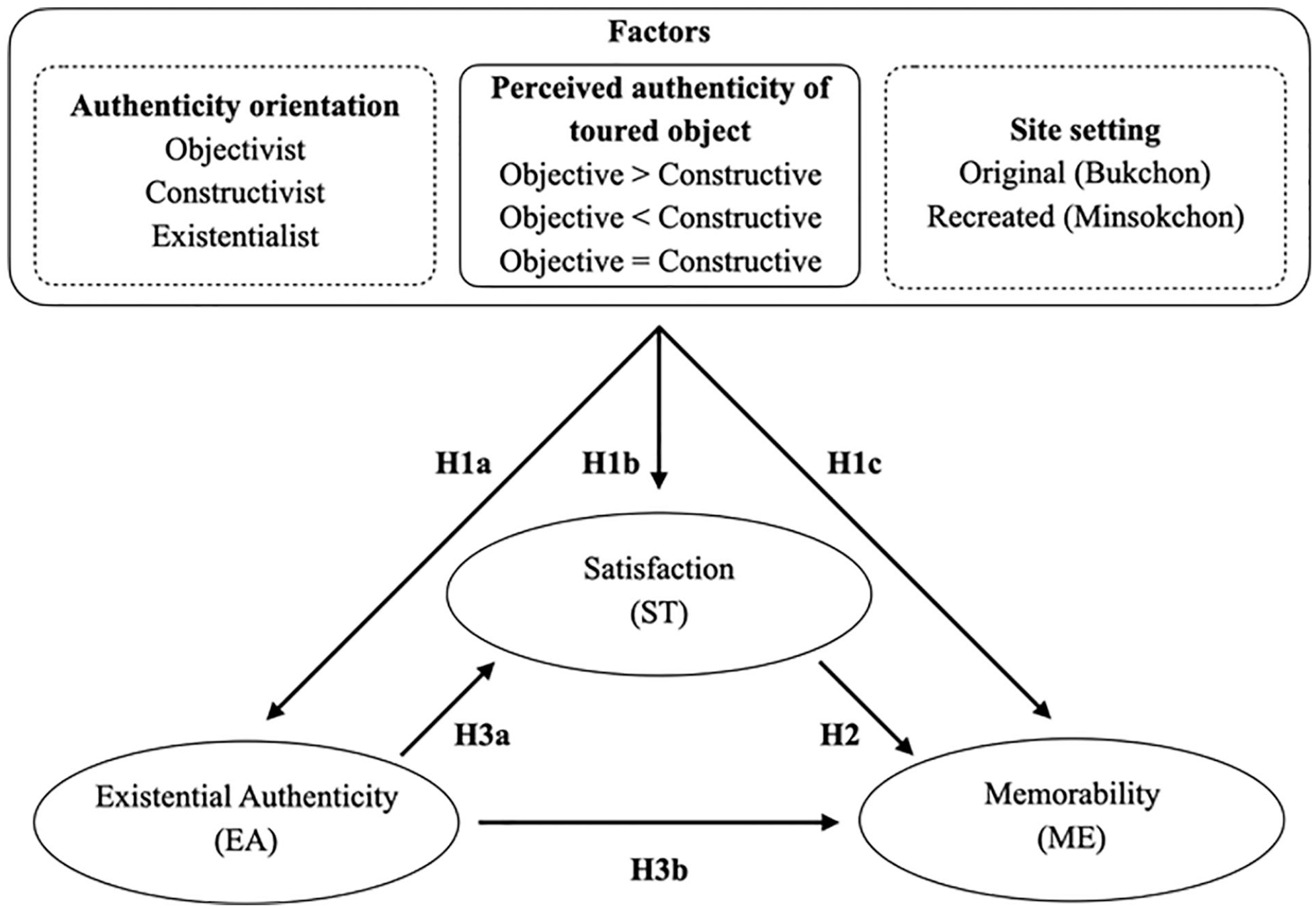
Proposed research model.
Methods
Data Collection
Similar to Stepchenkova and Belyaeva (2021), this research was carried out in two contrasting settings: one with more objectively authentic aspects and the other with more constructively authentic aspects. The difference is that the current study was conducted in a more general setting than museums. The authors reviewed tourist sites in South Korea that have prominent historical features. Two tourist locations, Bukchon (a traditional Korean house village) and Minsokchon (the Korean folk village) were chosen for this study for the following reasons.
Bukchon is a district in Seoul, South Korea, where hundreds of traditional housing units remain intact. The origin of Bukchon dates back to the beginning of the Joseon dynasty in the early 15th century. Seoul (then named Hanseong) was the capital of the Joseon dynasty, and royals and nobles mostly inhabited Bukchon. Although much of traditional housing was replaced with Western-style buildings in the 20th century, numerous buildings stand as they did in the past, and have the charm of the old dynasty. Bukchon is not a tourist place per se, as residents still live in these houses. However, it has become a popular attraction for both domestic and international tourists who visit Seoul because it allows them to glimpse Korean history without traveling far from the city center. Buildings and roads have undergone renovations since the modernization of Korea, but houses remain “hard evidence” (Grayson & Martinec, 2004) of history. Thus, Bukchon was chosen as a tourist location more strongly associated with objective authenticity. Hereafter, this research site is referred to as the original setting.
In contrast, Minsokchon in Yongin city (about an hour drive from Seoul) is an artificially created tourist attraction that is specifically staged to allow visitors to experience Korean folk culture. In a sense, it is a theme park based on Korean history. First opened in 1974, Minsokchon contains several styles of traditional Korean buildings. For example, whereas a higher social class formerly inhabited most buildings in Bukchon, Minsokchon also provides a chance to see the types of houses where commoners lived. In addition to physical attractions, it provides performances of traditional Korean folk culture and activities in which tourists can participate as if they were part of their living history. For these reasons, Minsokchon is less hard evidence than a connection to the past (Grayson & Martinec, 2004). Hence, Minsokchon is more strongly associated with constructive authenticity and is referred to as a re-created setting hereafter.
Responses were collected using convenience sampling during the same period at both sites by two researchers from September to October 2018. The survey was conducted during the day, considering the opening hours of the two sites. The survey was conducted near the main road in the original setting and at the entrance of the re-created setting. The rate of decline was not formally recorded. At each site, the researchers approached visitors and asked whether they had just begun touring the site or had been looking around for a while. Tourists who had just arrived were not asked to participate in the current study because they had not experienced the site sufficiently. If a participant visited the site as part of a group (friends, family, couple, etc.), only one visitor was asked to volunteer for the study. The respondents were limited to Korean nationals because they were more likely to have prior knowledge of Korean history and discern the characteristics of each site than international tourists, as Korean history is included in formal education. Two researchers thoroughly discussed the sample collection methods before conducting the survey. A total of 230 responses were collected from the original site and 401 from the re-created site. Although surveys were conducted during the same period using the same method, the number of respondents differed significantly between the original and re-created sites. We anticipated that this difference in the number of participants was most likely caused by differences in the characteristics of each site (i.e., residential district vs. enclosed tourist attraction). Since the re-created site is a “tourist attraction,” it has a clear entrance and exit. In contrast, the original site does not have an entrance or exit because it is a residential area, and multiple routes exist to access the village. Therefore, tourists who took alternative routes to visit the original site can access the village without encountering the researchers, whereas visitors to the re-created site cannot. The authors agreed not to conduct a second survey on the original site, as additional sampling may induce unintended discrepancies between the settings.
Instrument
The questionnaire was developed in English and translated into Korean by bilingual researchers. In the first section, respondents were instructed to choose from three stances that best fit their attitudes when visiting historical tourism sites. Descriptions of each orientation were obtained from Stepchenkova and Belyaeva's (2021) questionnaire. Details of this description are provided in Appendix 1. The respondents were not provided with the labels for authenticity orientations (i.e., objectivist, constructivist, and postmodernist). Next, their perceived objective, constructive, and existential authenticities were captured. Items from Castéran and Roederer (2013) were used to measure perceived objective and constructive authenticity. The existential authenticity variable was measured using the items from Kolar and Zabkar (2010). The following section measured satisfaction and memorability using three items each. Satisfaction and memorability items were adopted from de Rojas and Camarero (2008) and Oh et al. (2007), respectively. Minor changes were made to the items (e.g., “Romanesque” to “Korea”) to reflect the context of this study. All constructs were measured on a seven-point Likert scale (1 = strongly disagree, 7 = strongly agree). The measurement items, descriptive statistics, and references to the items are listed in Table 1. All items met the suggested criteria for normal distribution (|Skewness| < 2 and |Kurtosis| < 7; Hair et al., 2010). Respondents were also asked if this was their first visit to the tourism site and if their trip was a part of a group tour. Both were binary questions (yes or no), and repeat visitors were asked to indicate the number of previous visits they had made. No period was provided for their previous visits. Finally, the demographic characteristics of the participants were recorded.
Survey Items and Descriptive Statistics.
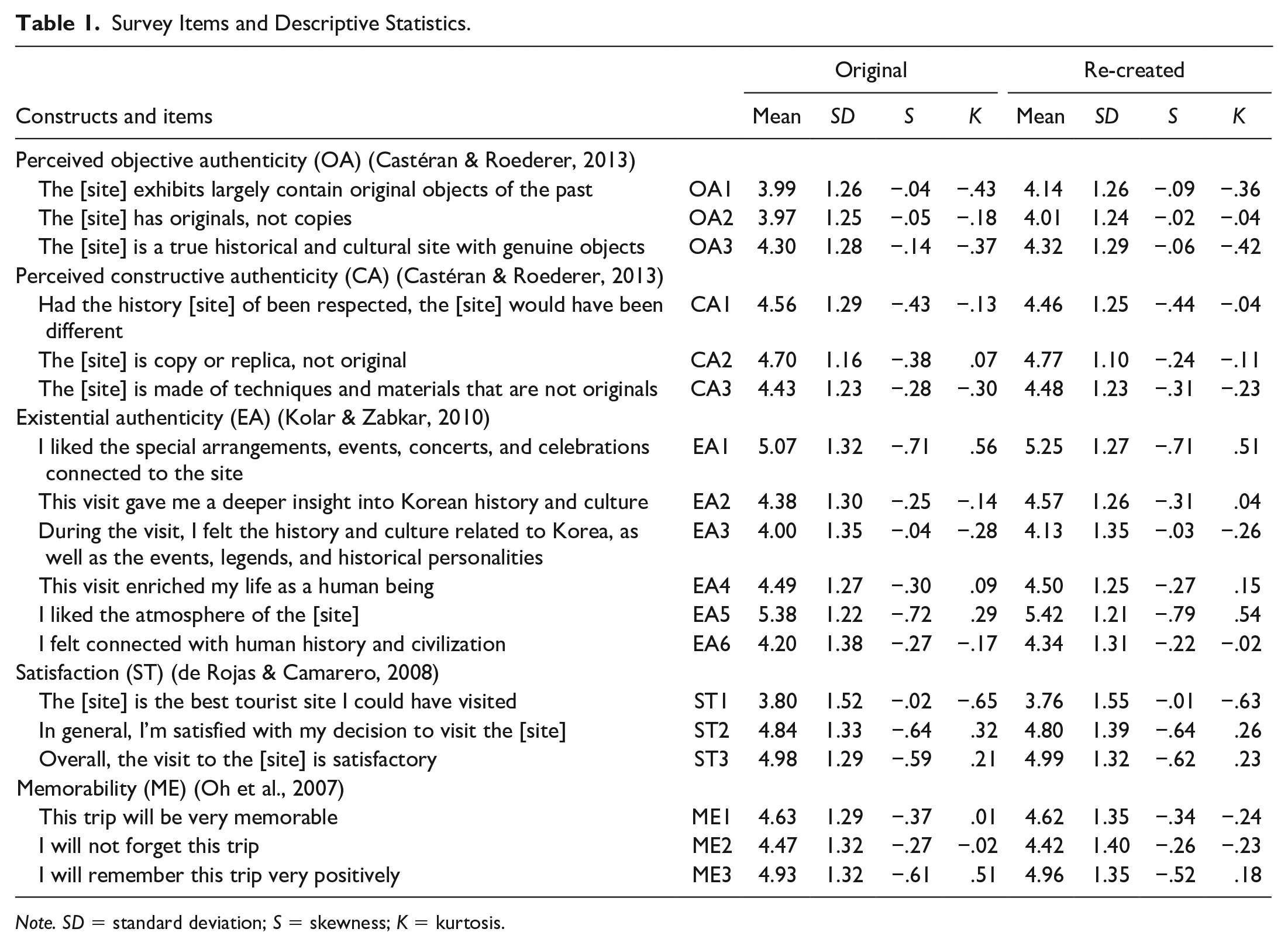
Note. SD = standard deviation; S = skewness; K = kurtosis.
Data Analysis
The collected data were analyzed using Jamovi, an open-source statistical software based on the R programing language (Jamovi (2.2.5), 2021). Invalid responses were filtered before analysis. Participants who did not answer one or more items related to authenticity orientation, perceived authenticity, satisfaction, and memorability were excluded. Furthermore, participants who stated that this was their first visit (yes or no question) but also answered that the frequency of visits was more than once (open-ended question) were considered inattentive and therefore excluded. After filtering, 214 responses from the original site and 362 responses from the re-created site were retained.
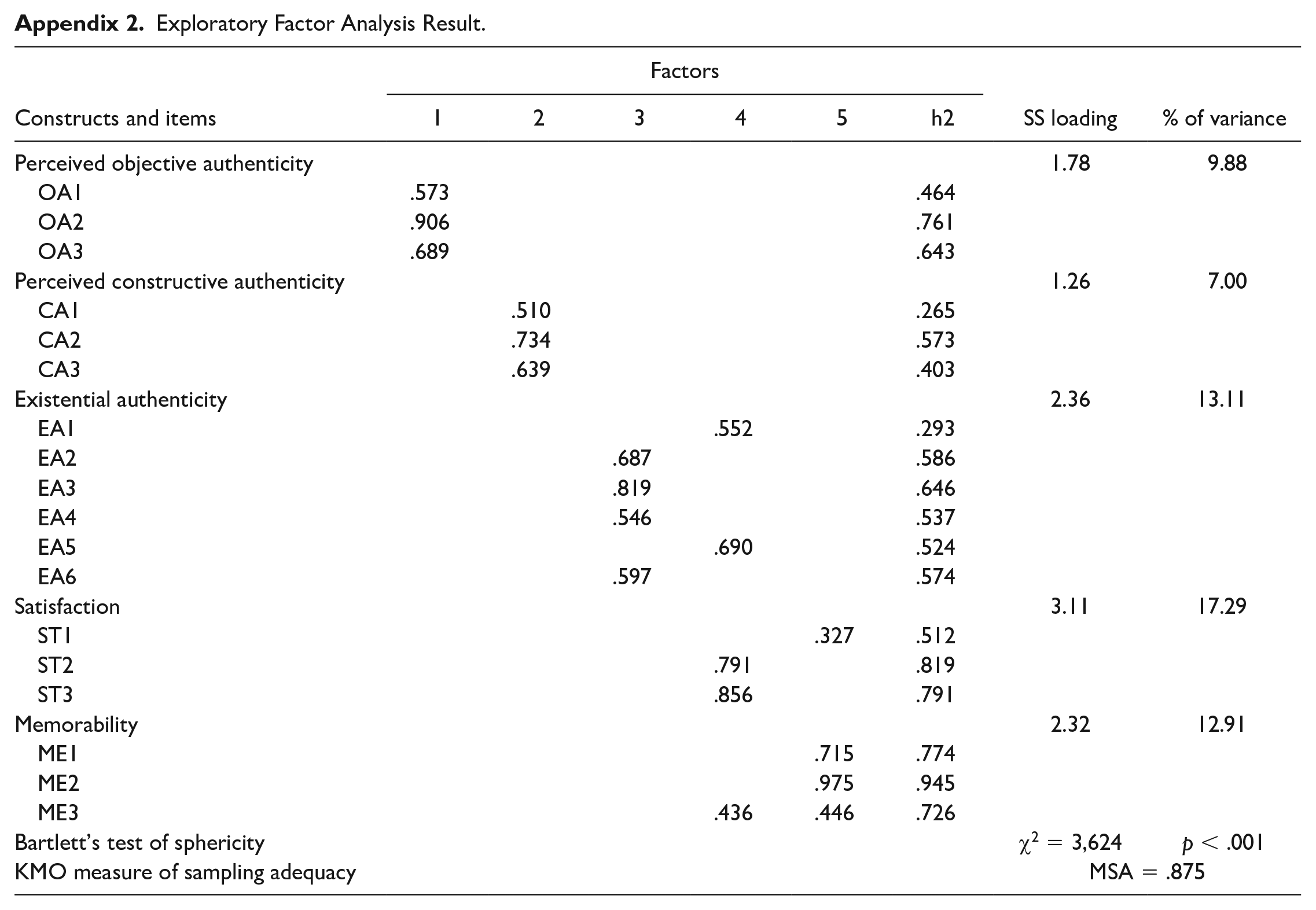
The survey items were refined through exploratory factor analysis (EFA) before constructing the measurement model using confirmatory factor analysis (CFA). Items were removed if the factor loading was low (<.60) or communality value was high (>.30). Consequently, there were three items for perceived objective authenticity, two items for perceived constructive authenticity, three items for existential authenticity, two items for satisfaction, and three items for memorability. The initial EFA results and factor loadings for all items are provided in Appendix 2.
Respondents were categorized into three types based on their perceived objective (OA) and constructive authenticity (CA) levels: tourists who perceived the site as more objectively authentic (hereafter OA > CA type), tourists who perceived the site as more constructively authentic (hereafter OA < CA type), and tourists who perceived the site as equally objectively and constructively authentic (hereafter OA = CA type). Composite variable scores were used for this categorization. For example, respondents who showed a composite scale score of OA higher than that of CA were coded as OA > CA type, indicating that these visitors perceived the site as more objectively authentic. We did not use the margin of error, and only those who showed the exact same scores for the OA and CA variables were coded as OA = CA type.
The analysis was conducted in three stages. The first stage focused on investigating the factors that affect tourists’ positive experiences. Specifically, setting, authenticity orientation, authenticity perception types, and travel characteristics of tourists (first vs. repeat visitors and group tour vs. self-guidance) were considered as influencing factors. Positive tourism experiences were measured from three different aspects using existential authenticity, satisfaction, and memorability constructs. The difference between the study settings (including the number of respondents) may outweigh the influence of the predictor variable. Therefore, the authors employed a two-way analysis of variance (ANOVA) to consider the interaction effect between the primary predictor variables and the differences between the two settings. Second, we conducted an analysis of covariance (ANCOVA) to test the order of satisfaction and memorability variables. The main model (satisfaction as an antecedent) controlled for satisfaction when observing the mean difference in memorability, whereas the alternative model (memorability as an antecedent) controlled for memorability when observing the mean difference in satisfaction. If the main model is more effective than the alternative model in canceling out the group mean differences observed in the first stage of the analysis, it can be concluded that satisfaction is an antecedent of memorability. The last stage of the analysis aimed to examine how relationships among the three variables (existential authenticity, satisfaction, and memorability) are affected by differences in setting and authenticity perception types. Partial least squares structural equation modeling (PLS-SEM) was employed in this stage. Multigroup structural models (2 × 3 design) were constructed using SmartPLS 3.3.4 software (Ringle et al., 2015) with 5,000 bootstrap samples for each group.
Respondents’ Profiles
Table 2 shows the profile of the sample for each setting. Although all respondents answered questions related to their authenticity orientations and gender, some chose not to provide personal information, such as marital status, age, and level of education. Differences based on demographic characteristics were not the primary focus of this study. Therefore, such responses were retained for analysis. No statistically significant differences were found for the variables authenticity orientation, first visit, marital status, and age. Visitors with a constructivist stance on authenticity were the most frequent (original = 47.2% and re-created = 47.5%), followed by objectivist and postmodernist orientations. Most of the visitors were repeated visitors (original = 53.7% and re-created = 55.2%) and were not married (original = 58.8% and re-created = 58.8%). The average age of visitors was 32.9 in the original setting and 33.6 in the re-created setting. Considering that the average age of Koreans was 41.7 in 2018, our sample was skewed toward younger generations.
Respondents’ Profiles.
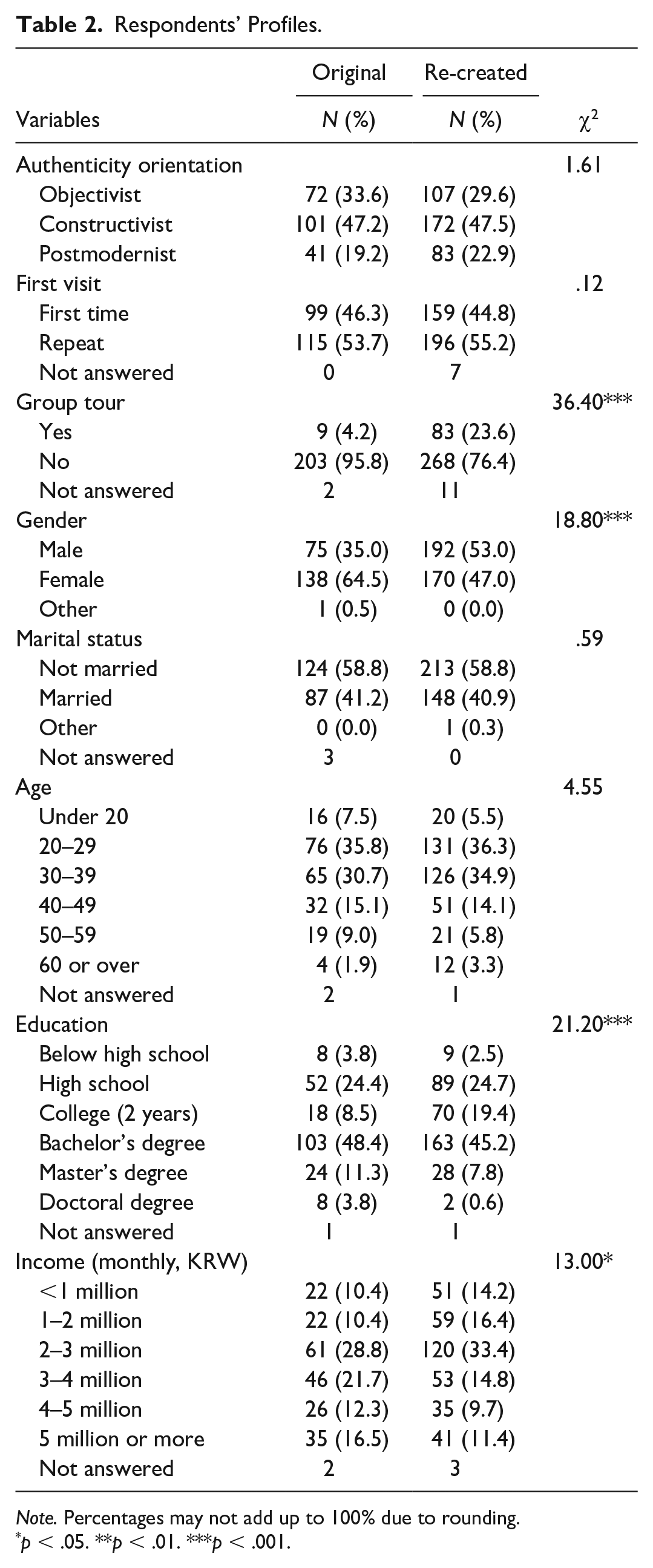
Note. Percentages may not add up to 100% due to rounding.
p < .05. **p < .01. ***p < .001.
Some profiles differed significantly between the settings. The proportion of respondents who visited the site as part of the group tour was much larger in the re-created setting than in the original setting (original = 4.2% vs. re-created = 23.6%; χ2 = 36.40, p < .001). This is likely due to the re-created site being a tourist attraction, compared to the original site being a residential space. Female visitors outnumbered male visitors in the original setting, whereas the opposite was true in the re-created setting (χ2 = 18.80, p < .001). Education (χ2 = 21.20, p < .001) and income level (χ2 = 13.00, p = .024) of the respondents were generally higher than the expected values in the original setting.
Results
Measurement Model
Table 3 presents the results of the CFA. The convergent validity of all constructs was established, with factor loadings greater than .60 and average variance extracted (AVE) values greater than .50 (Hair et al., 2010). Furthermore, Cronbach’s alpha values for each construct in both settings were greater than .60 (Table 3). Therefore, internal consistency indicates scale reliability (Litwin, 1995). Bivariate correlations of the constructs are presented in Table 4. The square root of AVE is greater than the correlations of the constructs (Fornell & Larcker, 1981), and the heterotrait-monotrait ratio of the correlation values is less than .85 (Henseler et al., 2015), which confirms the discriminant validity of the scale. Although satisfaction and memorability showed the highest correlation (r = .796), the convergent and discriminant validity measures were more than sufficient, indicating that the respondents distinguished between the two constructs.
Confirmatory Factor Analysis Result.
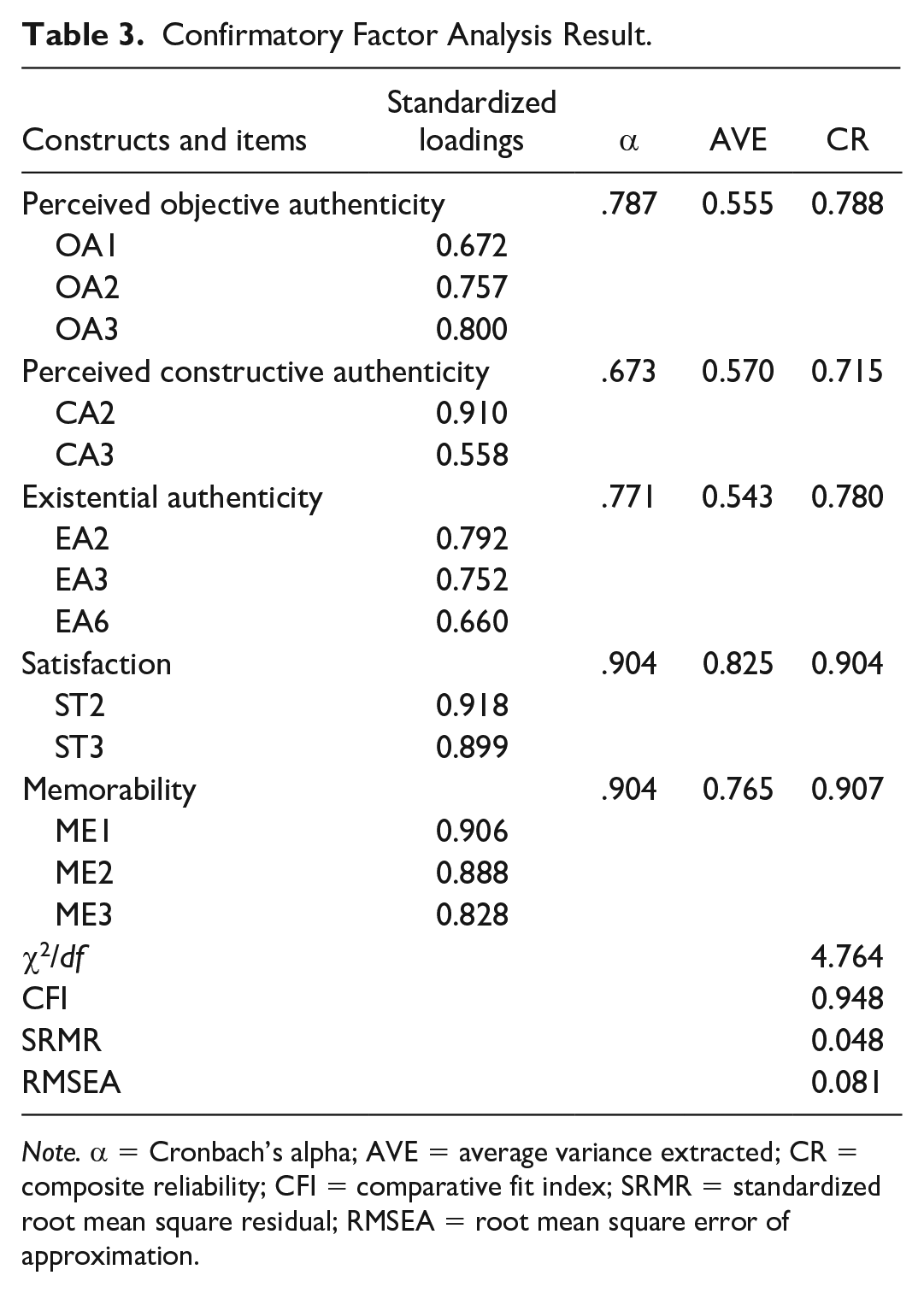
Note. α = Cronbach’s alpha; AVE = average variance extracted; CR = composite reliability; CFI = comparative fit index; SRMR = standardized root mean square residual; RMSEA = root mean square error of approximation.
Discriminant Validity Test Results.
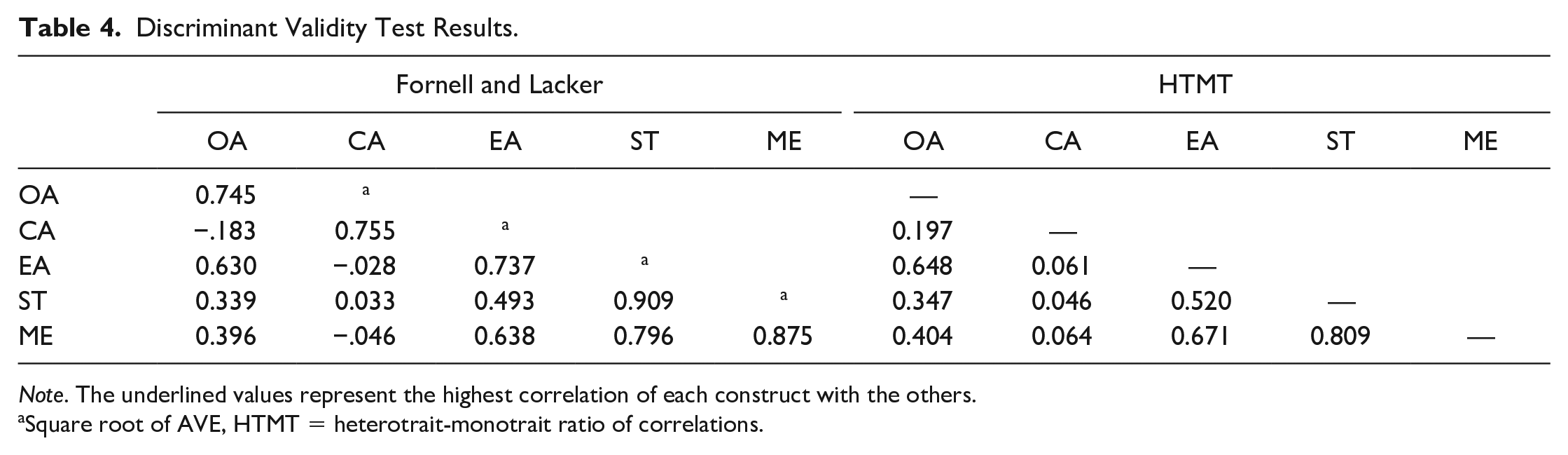
Note. The underlined values represent the highest correlation of each construct with the others.
Square root of AVE, HTMT = heterotrait-monotrait ratio of correlations.
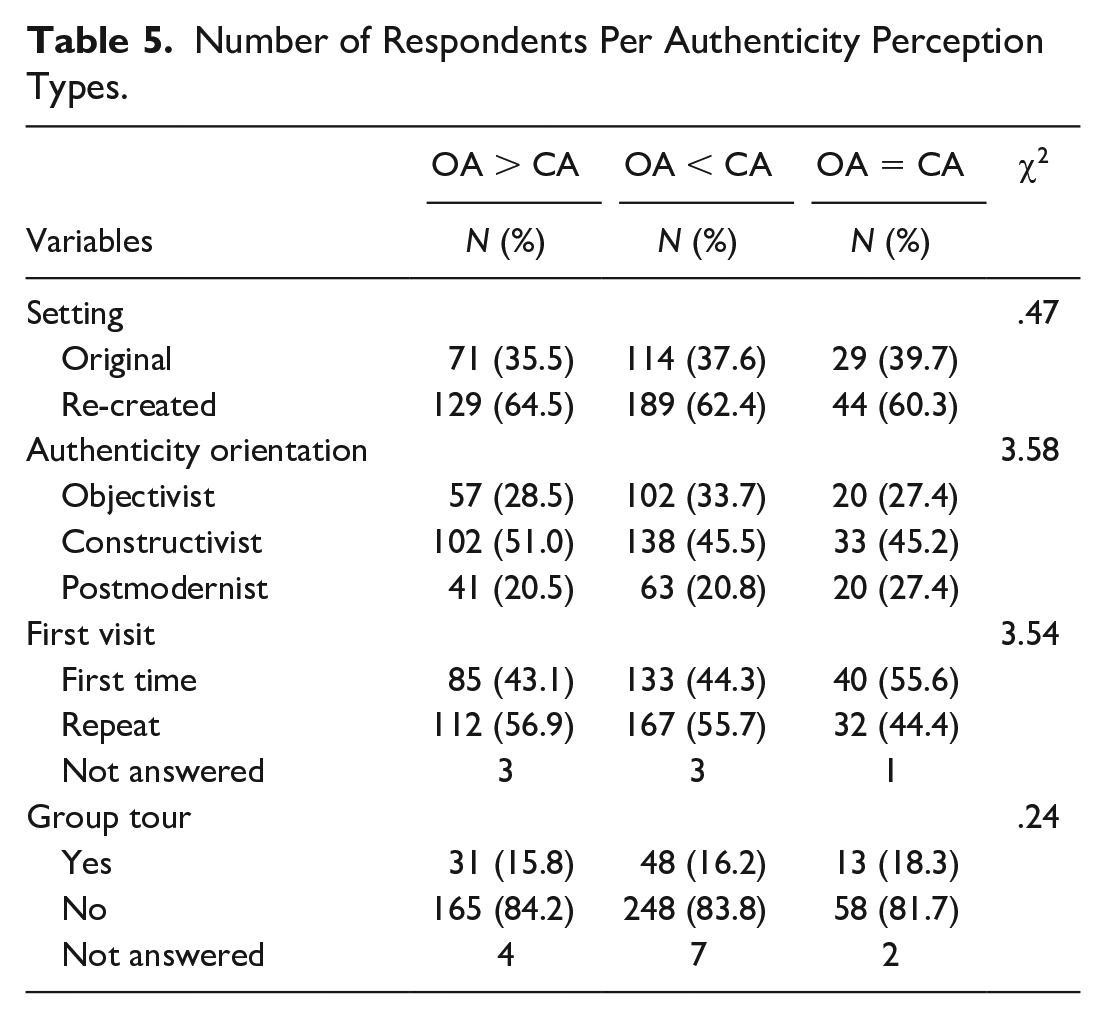
Subsequently, the sample was split into three groups based on the perceived authenticity scores: OA > CA, OA < CA, and OA = CA types. First, chi-square tests were performed to test the associations between authenticity perception types and other factors. Setting (χ2 = .47, p = .791), authenticity orientation (χ2 = 3.58, p = .466), first visit (χ2 = 3.54, p = .171), and group tours (χ2 = .24, p = .885) were not significantly associated (Table 5). Hence, it can be concluded that authenticity perception types are independent of the factors examined in this study.
Number of Respondents Per Authenticity Perception Types.
The Effect of Authenticity Perception Types on Mean Differences
The authors conducted a two-way ANOVA to check the mean differences in existential authenticity, satisfaction, and memorability between the groups (Table 6). For each analysis, we included the setting as an additional independent variable and an interaction term to account for variances caused by differences in setting. Therefore, four different ANOVA models were constructed: (1) authenticity orientation and setting (3 × 2), (2) authenticity perception type and setting (3 × 2), (3) first visit and setting (2 × 2), and (4) group tour and setting (2 × 2). The assumption of homogeneity of variances was not met in Model 4; therefore, it was excluded from further analyses. In general, there were significant differences in existential authenticity levels between the settings. Across the three models, existential authenticity levels were higher in the re-created setting (mean difference = 0.338). However, the interaction of setting with authenticity orientation, authenticity perception, and the first visit was not statistically significant. The authenticity orientations and first visit of the independent variables did not show significant differences in mean scores. The authenticity perception type was the only factor that exhibited a statistically significant mean difference for all three dependent variables. Even though existential authenticity levels were significantly different between settings, F-values, and partial Eta-squared (η2p) values suggested that the effect size of authenticity perception types (F = 24.424, η2p = .079) was greater than that of setting (F = 9.978, η2p = .017).
Two-Way Analysis of Variance Results.
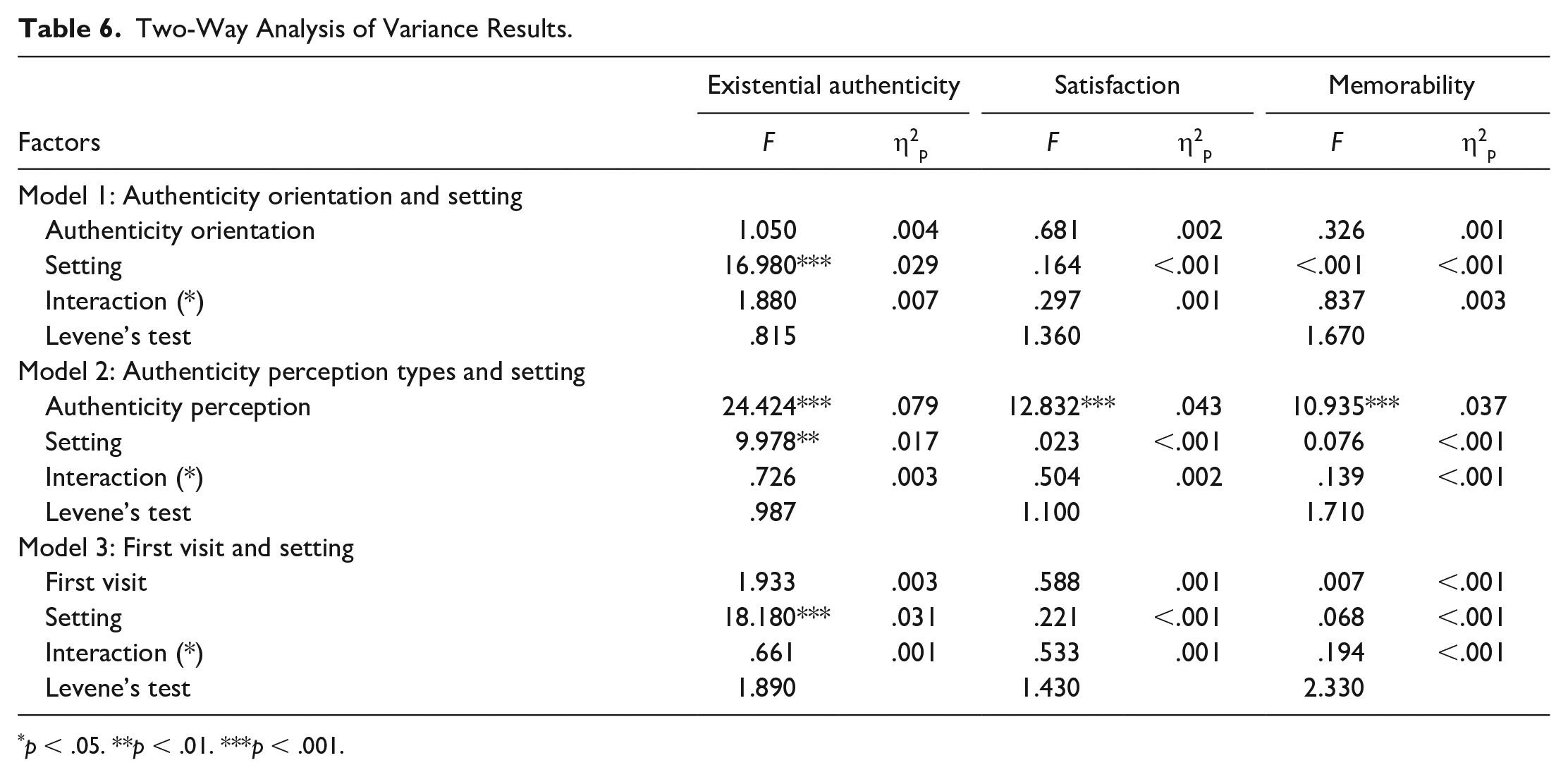
p < .05. **p < .01. ***p < .001.
Post-hoc analysis was performed to clarify differences in group means for existential authenticity, satisfaction, and memorability scores among authenticity perception types (Table 7). The OA > CA type generally had higher scores than the other two types, and there were no significant differences between the OA < CA and OA = CA types. Exceptions were found for the difference in existential authenticity, where OA > CA and OA = CA types did not show a significant difference in the existential authenticity score, whereas the OA < CA type showed a lower score than the OA > CA and OA = CA types. Therefore, Hypotheses 1a, 1b, and 1c are fully supported.
Post Hoc Analysis Result and Group Mean Differences (Tukey Test).
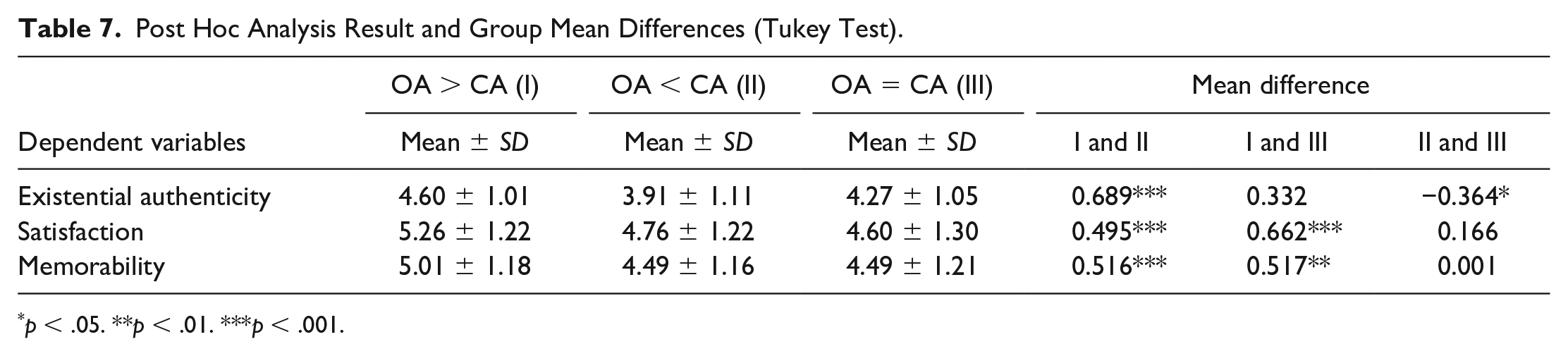
p < .05. **p < .01. ***p < .001.
Satisfaction as an Antecedent of Memorability
Table 8 presents the ANCOVA results that were conducted to test hypothesis 2a. The main model (satisfaction as an antecedent) controlled satisfaction when observing the mean difference in memorability. There were no significant differences in memorability scores between authenticity perception types and between settings (p > .05). However, when memorability was controlled when observing the difference in satisfaction in the alternative model (memorability as an antecedent), group mean differences in satisfaction levels were still observed among the perceived authenticity types (p = .023). In other words, controlling satisfaction effectively canceled the difference in memorability between perception types (evident in the ANOVA result), whereas memorability could not. Therefore, this finding supported Hypothesis 2a that satisfaction is an antecedent of memorability.
Analysis of Covariance Results.
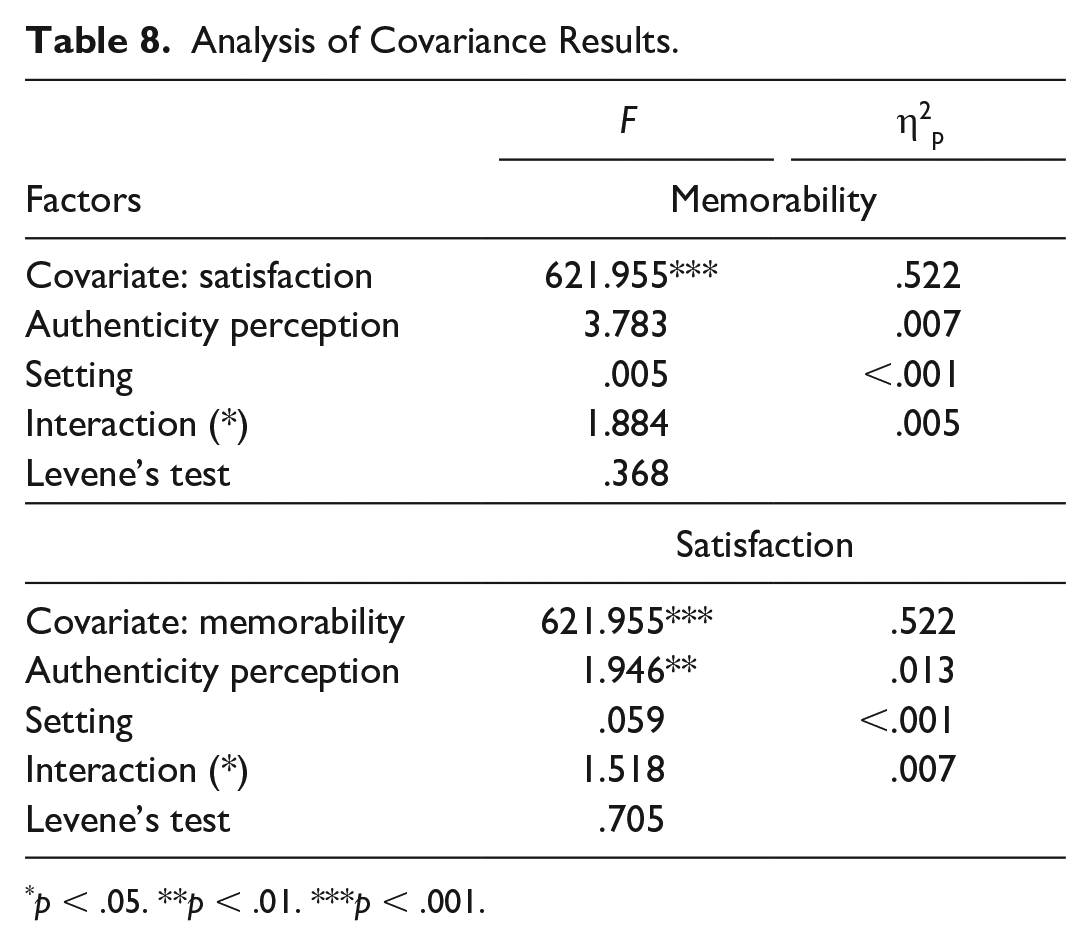
p < .05. **p < .01. ***p < .001.
The Effect of Authenticity Perception Types on Relationships Among Variables
Changes in the relationships of the three variables among the three authenticity perception types were examined using multigroup structural model analysis. The results are shown in Table 9 and Figure 2. Standardized root mean squared residual (SRMR) values were less than 0.10 in all six models, showing sufficient model fit (Hu & Bentler, 1999).
Structural Model Results.
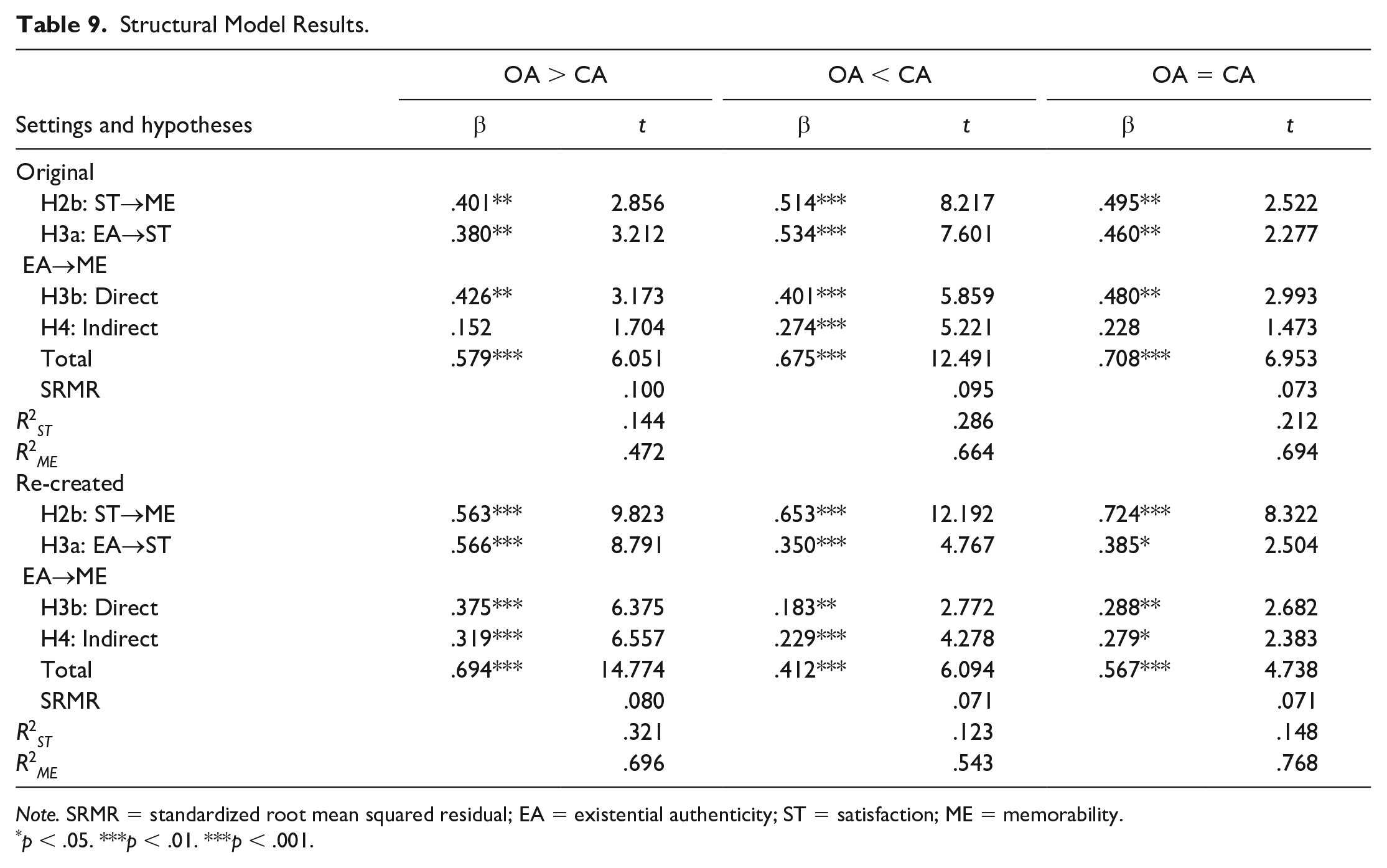
Note. SRMR = standardized root mean squared residual; EA = existential authenticity; ST = satisfaction; ME = memorability.
p < .05. ***p < .01. ***p < .001.
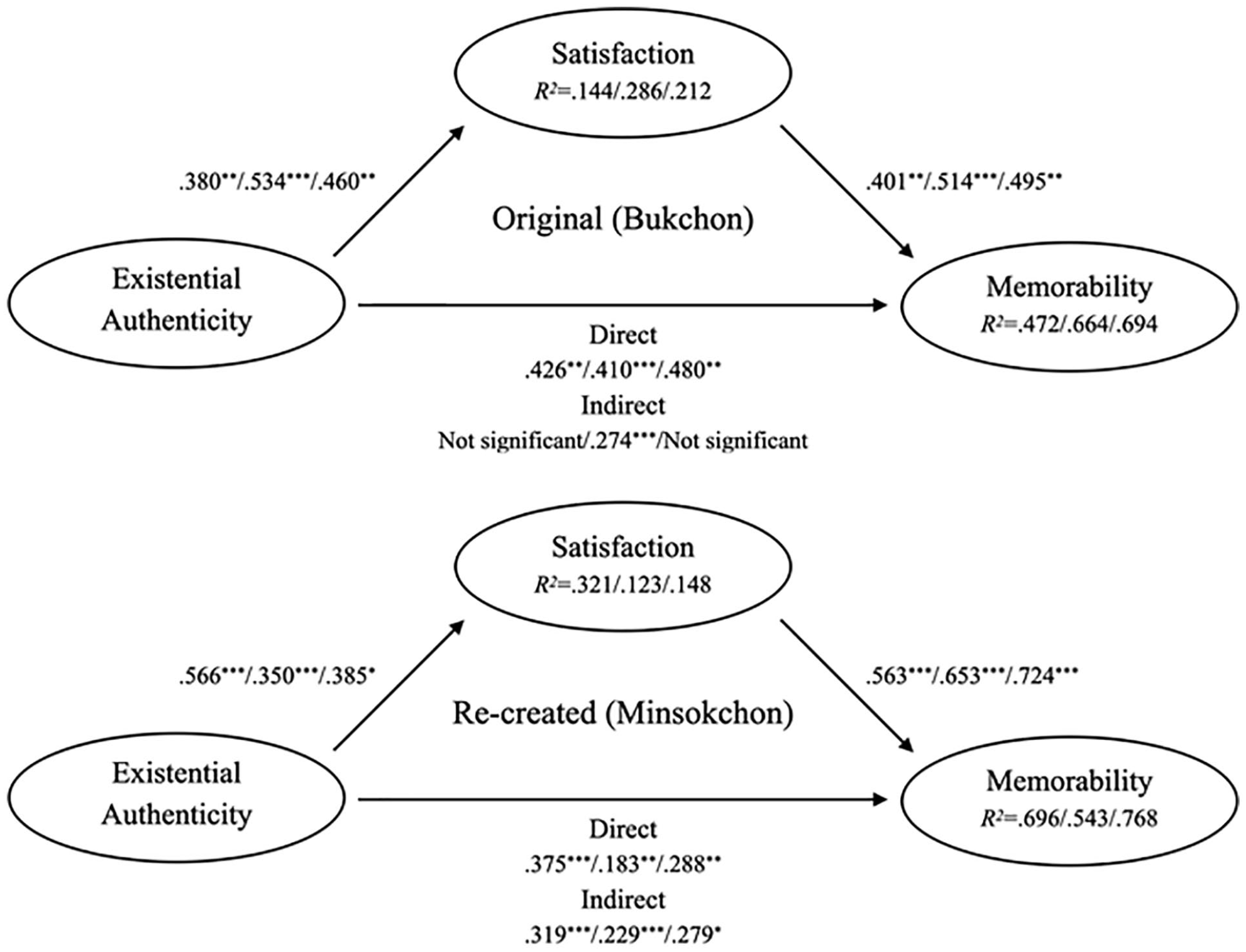
Diagram of resulted structural model.
All direct relationships among the variables showed significant path coefficients. Hence, Hypotheses 2b, 3a, and 3b are fully supported. However, the indirect effect of existential authenticity was only significant for the OA < CA type in the original setting, while the effect was significant for all perception types in the re-created setting. In other words, satisfaction did not mediate the relationship between existential authenticity and memorability for the OA > CA and OA = CA types in the original setting. Additionally, the direct effects of existential authenticity on memorability were stronger than the indirect effects, except for the OA < CA type in the re-created setting. There were some noticeable differences in the path coefficients and R-squared values between settings. First, the relationship between existential authenticity and satisfaction was strongest for the OA < CA type in the original setting, whereas the equivalent was strongest for the OA > CA type in the re-created setting. Second, the path coefficients from satisfaction to memorability were larger in the re-created setting. Furthermore, the path coefficient was highest for the OA < CA type in the original setting, showing a small difference from the OA = CA type. In contrast, the equivalent effect was strongest for the OA = CA type in the re-created setting. Third, in the re-created setting, the direct relationship between existential authenticity and memorability was strongest for the OA > CA types in the re-created setting. Fourth, the R2 value for satisfaction was below .20 for the OA > CA type in the original setting and the OA < CA and OA = CA types in the re-created setting. Finally, the OA = CA type had the highest R2 value for memorability in both settings.
Discussions and Implications
The findings of this study verified the relationality between objective and constructive authenticity and its effect on a positive tourism experience. By considering both the objective and constructive authenticities of the toured object in relation to each other, the authors presented a novel method of categorizing tourists based on authenticity perception. Authenticity perception types had the greatest effect on the level of existential authenticity, satisfaction, and memorability, which confirmed the hypotheses in this study.
Theoretical Implications
This study contributes to the literature in several ways. First, the categorization of tourists based on the relationship between the two aspects of object-related authenticity (i.e., objective and constructive authenticity) is a novel analytical approach of the present article. Most scholars measured either the objective or constructive authenticity of the toured object or did not distinguish between them (Domínguez-Quintero et al., 2020; Kolar & Zabkar, 2010; Lu et al., 2015; Nguyen & Cheung, 2016; Zatori et al., 2018). While some studies have examined both the objective and constructive aspects of object-related authenticity (Li, Tian, et al., 2021; Park et al., 2019), the two constructs were treated independently. Three types of tourists emerged based on their perceived objective and constructive authenticity levels: tourists who perceived the tourism site as more objectively authentic (OA > CA type), more constructively authentic (OA < CA type), and equally objectively and constructively authentic (OA = CA type). The authenticity perception type did not show a statistically significant relationship with factors such as setting, authenticity orientation, first visit, and group tour (see Table 5). In other words, visiting the original tourism site or self-identification as an objectivist is not related to perceiving the tourism site as more objectively or constructively authentic. Although not examined in this study, the motivation to visit the site (Lin & Liu, 2018; Ramkissoon & Uysal, 2011), pre-trip expectations (Stepchenkova & Belyaeva, 2021), and prior knowledge about the site (Song et al., 2019) are some of the external factors that can contribute to the difference in authenticity perception types among tourists.
This novel method of categorizing tourists based on their perceived objective and constructive authenticity would have little significance if it makes no difference to tourists and their experiences. Another implication of this study is that authenticity perception type was the most significant factor affecting positive tourism experience in terms of existential authenticity, satisfaction, and memorability. One notable finding is that when tourists perceived the site as more objectively authentic (OA > CA group), they had significantly more authentic, satisfactory, and memorable experiences (see Tables 6 and 7). Other than the differences among authenticity perception types, the heterogeneity of existential authenticity levels between the settings was the only significant difference. In contrast, the self-identified authenticity orientation and first visit were not significant in this study. At first glance, this result seems to oppose the assertion that objective authenticity is an unimportant matter for tourists (Reisinger & Steiner, 2006; Rickly-Boyd, 2012b) and supports the importance of objective authenticity. We propose that the findings of this study provide a third perspective. Rather than the objective (or constructive) authenticity of the toured object affecting the experience of tourists by itself, the perception that the site is more objectively authentic than constructively authentic seems to be a more important factor. Furthermore, this study brings tourists to the center of the discussion on objective authenticity. Most studies on objective authenticity have focused on authenticity as the quality of the toured object, whereas studies on constructive authenticity have focused on the perception of tourists (Rickly, 2022). By contrast, our findings show that the perception of objective authenticity is more important than the actual nature of the site.
This study also attempted to refine and use the concept of positive memorability to examine the impact of authenticity perception type on positive tourism experience. Unlike most previous studies, we measured tourist memorability at the site rather than relying on retrospective reports (Hosany et al., 2022). Thus, the authors defined memorability as the anticipation or expectation of remembering the experience because on-site evaluation is closer to the likelihood of remembering the tourism experience than the enduring positive memory of the experience. Contrary to the literature on memorable tourism experiences, the findings showed that satisfaction is the cause of the relationship with memorability, not the result.
Finally, the authors examined the relationship among the three indicators of positive experience (existential authenticity, satisfaction, and memorability) and how the relationships differ by setting and perceived authenticity type. Examining the relationships among authenticity perception types (in addition to differences in group means) provides a more comprehensive picture. In general, when perceptions matched the characteristics of the setting, satisfaction was better explained by factors other than existential authenticity. However, when their perceptions did not match the setting, existential authenticity became a significant factor in satisfaction. Another noticeable difference was in the mediation effect of satisfaction on memorability between the settings. In the original setting, the direct effect of existential authenticity on memorability was as strong as that of satisfaction; however, the effect of satisfaction was noticeably stronger in the re-created setting. This is presumably because satisfaction’s mediation effect was not significant in the original setting. In the re-created setting, existential authenticity showed a statistically significant indirect effect on memorability through satisfaction. Hence, existential authenticity and satisfaction should be viewed as separate factors affecting memorability in the original setting, whereas they should be considered closely related variables in the re-created setting. One peculiar exception was the group that perceived the setting as more constructively authentic (OA < CA). These were the only types that exhibited statistically significant indirect effects in the original setting. In other words, when they perceived the original site (Bukchon) as a re-created setting, they showed similar characteristics to tourists who visited the re-created site. This again supports the assertion of this study that tourists’ perceptions of authenticity are more significant than the physical or constructed features of the setting. This resonates with the points made by Leiper (2000) and Larsen (2007), who emphasized the importance of individual tourists to the destination when understanding the tourism experience. However, this study could not reveal why the degree of tourists’ perception of objective and constructive authenticity varied. More research is needed to identify the factors that make objective and constructive cues more easily perceptible to tourists.
Practical Implications
Our findings related to authenticity perception type suggested that when visitors perceived the tourism site as more objectively authentic, they had a more authentic, satisfactory, and memorable experience. In addition, the effect of the difference in setting was marginal compared with the authenticity perception type. In other words, how tourists perceive a site is more important than what they experience. This underscores the importance of managing authenticity perceptions to improve visitors’ experiences.
The literature has taken note of tourists’ preference for objectively authentic sites over constructively authentic sites (e.g., Bruner, 1994; Chhabra, 2012). However, our findings suggest that a high level of perceived objective authenticity is insufficient to provide tourists with a better experience. Because the objective and constructive aspects of the toured object coexist (Grayson & Martinec, 2004), objective features should be perceived more prominently than constructive features.
This is an additional challenge for tourism attractions that objective authenticity is intermittently lacking (i.e., a re-created setting). Geographical proximity to the genuine site and availability of the original site (Sarial-Abi et al., 2020) is one way to convince visitors that a re-created site is more objectively authentic. If the original site is located far from the reproduced site or the original site no longer exists, tourists will perceive the site as more objectively authentic. We believe this was true in the case of Minsokchon (the re-created site), as it is the easily accessible alternative to the “real” folk village, located near the capital of South Korea but far from originals. The uniqueness of Bukchon (the original site) is lacking because several similar but better preserved historical sites are within walking distance from there.
The authentication process (Cohen & Cohen, 2012) is another method that can be used to emphasize objective authenticity. The reenactments, performances, and participation activities provided by Minsokchon are good examples of opportunities for “hot” authentication (i.e., dynamic, ritualistic, gradual, participatory, and performative authentication). Contrarily, visitors to Bukchon mainly interact with the object (rather than staff and tourists), besides joining privately guided tour programs. In this case, authenticity perception becomes an evaluation rather than a process. Objective aspects may be perceived less prominently even if the nature of the site is objectively authentic. In fact, our findings suggest that more than half of tourists who visited the original site perceived the site as more constructively authentic. For instance, Bukchon could offer programs for visitors to experience Korean traditional way of life, such as opportunities to experience traditional cuisine and reenact daily routine of premodern Koreans. Although there are several short-term vacation rentals and guesthouses in the village, the primary purpose of such accommodations is a lodging rather than a cultural experience. In addition to staying in traditional housings, providing such programs could benefit both original and re-created sites and ensure that the site is perceived as more objectively authentic thorough hot authentication, thus providing a better tourism experience in result.
Limitations and Future Research
Although the current study’s findings suggest that the authenticity perception type of tourists affects their positive experiences, we could not reveal the causes that led to this difference in authenticity perception types. Motivation for visiting a site is one of the antecedents of authenticity perception explored in previous studies (Lin & Liu, 2018). Another notable factor is tourists’ pre-trip expectations. For example, tourists may perceive a site as more objectively authentic if the experience at the site matches their prior expectations, thus providing a stronger connection with them (Moore et al., 2021). Future studies should focus on what makes people perceive a site as more objectively authentic. In addition, the respondents who visited the original setting were different from the tourists who were surveyed in the re-created setting. Therefore, repeated examinations of the same individual could be helpful in controlling the potential influence of external factors. Our sample was also limited to Korean nationals and tilted toward younger generations and self-guided tourists.
Given the study design, questions about the constructs’ negative dimensions remain unanswered. This study has only explored the positive aspects of authenticity and memorability. Tourists can experience negative encounters (Li & Chan, 2022) and emotions (Kim et al., 2022) during their travel. In certain types of tourism, such as dark tourism and pilgrimages, tourists voluntarily seek to experience negative emotions (Nawijn & Biran, 2019). Though, Kim et al. (2021) pointed out the gap in tourism study that negative tourism experience has been mostly examined under specific contexts. Negative authenticity and memorability of negative tourism experience are negative aspects of authenticity and memorability. As mentioned earlier, not all object-related authenticity is accepted by tourists (Zhou et al., 2018). Something that is perceived objectively authentic but unpleasant for tourists (e.g., unhygienic environments and unethical customs) could result in negative consequences, such as existential alienation and negative memorability. Future studies could investigate authenticity perception types related to negative authenticity and their consequences such as dissatisfaction and negatively memorable experiences. Furthermore, while empirical studies have shown that tourists remember negative experiences (Kim, 2022; Sthapit et al., 2021), much less is known about the vividness of the memory of negative experiences compared to positive experiences. Future research may consider investigating both positive and negative dimensions of authenticity and memorability, and validate if tourists are more (or less) likely to remember negative aspects of perceived authenticity compared to positively authentic aspects.
Finally, it should be noted that the current study was conducted before the COVID-19 pandemic. The pandemic has caused significant disturbances and changes to tourism. The results need to be interpreted with caution because applicability depends on the sensitivity of post-pandemic tourists to the authenticity of the object. During the pandemic, people spent a great deal of time interacting with their colleagues, friends, and families online. An objectivist sense of authentic reality has often been put off for the sake of health and safety. Future studies could consider the potential effect of the pandemic on the importance of objective authenticity and how the relationship between authenticity and a positive tourism experience has changed.
Another avenue for future research closely related to the pandemic is the authenticity of virtual tourism. Due to safety concerns about the viral transmission of COVID-19, many tourists had to stay home (not to mention canceling their travel plans) either voluntarily or involuntarily. In such a unique situation, virtual travel has been suggested as an alternative to physical travel to satisfy people’s desire to “go somewhere” (Yang et al., 2021, p. 360). Future studies could apply the methodology used in this study to classify tourists based on their perceived objective and constructive authenticity to deepen their understanding of the tourism experience in the virtual world. While virtual tourism is “inherently inauthentic” from the perspective of objectivism (Guttentag, 2010, p. 645), some scholars have suggested that tourists could have authentic experiences from such virtual forms of travel (Zhu et al., 2022). Regardless, the concept of authenticity is still indispensable when examining tourists in the virtual world, as perceived authenticity is a crucial matter of virtual experience (Yung & Khoo-Lattimore, 2019).
Footnotes
Appendices
Exploratory Factor Analysis Result.
| Constructs and items | Factors | SS loading | % of variance | |||||
|---|---|---|---|---|---|---|---|---|
| 1 | 2 | 3 | 4 | 5 | h2 | |||
| Perceived objective authenticity | 1.78 | 9.88 | ||||||
| OA1 | .573 | .464 | ||||||
| OA2 | .906 | .761 | ||||||
| OA3 | .689 | .643 | ||||||
| Perceived constructive authenticity | 1.26 | 7.00 | ||||||
| CA1 | .510 | .265 | ||||||
| CA2 | .734 | .573 | ||||||
| CA3 | .639 | .403 | ||||||
| Existential authenticity | 2.36 | 13.11 | ||||||
| EA1 | .552 | .293 | ||||||
| EA2 | .687 | .586 | ||||||
| EA3 | .819 | .646 | ||||||
| EA4 | .546 | .537 | ||||||
| EA5 | .690 | .524 | ||||||
| EA6 | .597 | .574 | ||||||
| Satisfaction | 3.11 | 17.29 | ||||||
| ST1 | .327 | .512 | ||||||
| ST2 | .791 | .819 | ||||||
| ST3 | .856 | .791 | ||||||
| Memorability | 2.32 | 12.91 | ||||||
| ME1 | .715 | .774 | ||||||
| ME2 | .975 | .945 | ||||||
| ME3 | .436 | .446 | .726 | |||||
| Bartlett’s test of sphericity | χ2 = 3,624 | p < .001 | ||||||
| KMO measure of sampling adequacy | MSA = .875 | |||||||
Declaration of Conflicting Interests
The author(s) declared no potential conflicts of interest with respect to the research, authorship, and/or publication of this article.
Funding
The author(s) received no financial support for the research, authorship, and/or publication of this article.
