




Abstract
Climate change has become an increasingly polarizing issue in the United States and across the globe, a divide reflected in the sustainable behaviors of liberals and conservatives. Previous studies have investigated the psychological underpinnings of this polarization in the sustainability domain; however, findings have been fragmented across disciplines. The current work aims to integrate and synthesize academic research at the intersection of political ideology and sustainable behavior to propose a framework that explains polarized responses to climate change. This framework, represented by the acronym BREAK, suggests that several key factors can shed light on the underlying causes of the division regarding climate change. These factors include Balance, Reactance, Essence of the problem, Adherence to ingroup norms, and Knowledge. The author also employs this framework to propose strategies for reducing climate change polarization and outline potential avenues for future research. Overall, this review can help policy makers, practitioners, and academics in their endeavors to increase sustainable behavior across the political spectrum.
Climate change is one of the biggest existential and pressing challenges of our time (De Vries 2020; Loy, Reese, and Spence 2022). It is a threat that can worsen humanity's grand challenges, including health, poverty, hunger, rising sea levels, inequality, and ecosystem preservation, among others (Zhenmin and Espinosa 2019). Given the tremendous threats of climate change, significant changes at many levels are necessary, including policy and structural changes as well as changes in consumers’ lifestyle, habits, and consumption patterns to reduce carbon emissions (Geiger, Middlewood, and Swim 2023; White, Habib, and Hardisty 2019).
Nevertheless, climate change beliefs and attitudes have become a way for individuals to signal their political ideology (Hornsey and Lewandowsky 2022), wherein liberals are generally more inclined than conservatives to endorse the notion that humans are responsible for climate change and to participate in sustainable behaviors (McCright and Dunlap 2011b). For example, in the United States, liberals are over twice as likely as conservatives to alter their lifestyle and work habits to mitigate the impact of climate change (94% vs. 45%; Pew Research Center 2021). Indeed, citizen ideology serves as a predictor of CO2 emissions in the United States as individuals in states with more liberal political leanings tend to have lower CO2 emissions (Gokkir and Barkin 2019). This increasing divide between parties makes climate change one of the most polarizing issues in politics today (Popovich 2020), a trend that is becoming increasingly prevalent across the globe (Briley, Jung, and Danziger 2019; Krange, Kaltenborn, and Hultman 2019; Tranter and Booth 2015).
The tension between the political left and right regarding climate change has negative social, economic, and environmental implications (Baldwin and Lammers 2016). For instance, the refusal to acknowledge the human-caused nature of climate change, a stance more commonly held by those identifying as political conservatives, poses a significant barrier to implementing the lifestyle changes essential for reducing carbon emissions (Santos and Feygina 2017). Household consumption is responsible for over 60% of the total greenhouse gas emissions (Ivanova et al. 2016). If these emissions persist at their current levels, scholars anticipate a temperature increase of 7°F by the year 2110 (Whillans et al. 2021). In addition to environmental consequences, climate crises will increase forced migration (Zuo et al. 2022) and can exacerbate social and economic inequalities (Uenal et al. 2021); therefore, making people's consumption patterns more sustainable across the political spectrum is crucial (Vermeir et al. 2020).
As a result, scholars from diverse disciplines have investigated the influence of political ideology and its theoretical foundations on individuals’ propensity to adopt sustainable behaviors (e.g., Campbell and Kay 2014; Feygina, Jost, and Goldsmith 2010; Hennes et al. 2016; Kidwell, Farmer, and Hardesty 2013). Conservatism and its ideological underpinnings (i.e., system justification, right-wing authoritarianism, free market ideology, social dominance orientation, moral foundations theory) have been linked to a greater likelihood of denying environmental risks and displaying reduced interest in adopting sustainable behaviors (e.g., Coffey and Joseph 2013; Dunlap, Xiao, and McCright 2001; Neumayer 2004). These ideological differences in sustainable behavior can be narrowed by understanding the specific values endorsed by each group and tailoring marketing communication accordingly (Briley, Jung, and Danziger 2019).
Despite a plethora of research at the intersection of political ideology and sustainable behavior, the findings to date are fragmented across disciplines. This article is motivated by the need for a comprehensive framework that elucidates the relationship between political ideology and consumers’ (un)sustainable choices. By integrating research findings from different disciplines, the current review makes several contributions to the literature. First, I provide an overview of the environmental implications linked to political ideology, exploring its theoretical foundations and introducing a framework for synthesizing existing research at the intersection of political ideology and sustainable behavior. In this process, I have identified five key dimensions, leading to the creation of the acronym “BREAK.” This framework encapsulates vital factors for tackling the polarization surrounding climate change: Balance, Reactance, Essence of the problem, Adherence to ingroup norms, and Knowledge. These factors contribute to a deeper understanding of the ideological differences in adopting sustainable behavior.
Second, because climate change and sustainability are highly politicized issues, effective communication strategies are crucial for inspiring individuals across the political spectrum to adopt sustainable behaviors. My approach builds on prior research by incorporating marketing communication interventions that encourage environmentally friendly actions among consumers from diverse political backgrounds (e.g., Feygina, Jost, and Goldsmith 2010; Kidwell, Farmer, and Hardesty 2013). I leverage the BREAK framework to synthesize and integrate these findings, thus offering valuable insights for policy makers and practitioners committed to advancing sustainability objectives. Lastly, based on the five factors, I outline future research directions to guide further conceptual development at the intersection between political ideology and sustainability.
This current literature review differs from those concerned with sustainable consumption in general (White, Habib, and Hardisty 2019) and reviews that highlight the link between general consumer behavior and political ideology (Jost 2017; Jung and Mittal 2020). Drawing from previous research that has explored the connection between ideological tendencies and sustainable behavior (Feygina 2013), I conduct a more comprehensive and up-to-date literature review within the realm of political ideology and sustainable behavior. Through this extensive review, I provide practical and theoretical implications for practitioners and policy makers striving to promote sustainable behaviors among diverse political groups.
Breaking Climate Change Polarization
In a partisan environment, political ideology has become a central part of individual identity (Iyengar and Westwood 2015), and it is increasingly reflected in people’s core values and motives (Jost et al. 2003). I define political ideology as individuals’ beliefs about the primary goals and principles of society (Adorno, Levinson, and Sanford 1950). Studies to date have demonstrated that political ideology can cause individuals to engage in fundamentally different cognitive processing styles and alter their motivations, thoughts, and behaviors (Farmer, Kidwell, and Hardesty 2021; Jost 2017).
Political ideology has been generally conceptualized along a liberal–conservative continuum (Skitka and Tetlock 1993). While liberalism is defined as the belief in the federal government's role in reducing inequality, protecting historically marginalized groups, and ensuring a balance between private sector profit-seeking and the broader welfare of the nation (Brinkley 1995), conservatism is defined as a set of beliefs that emphasize the status quo, social stability, religion, morality, and the natural inequality of people (Kerlinger 1984, p. 17). Although the traditional single left–right continuum has commonly been used to conceptualize political ideology in previous literature (e.g., Farmer, Kidwell, and Hardesty 2021; Jost 2006; Ordabayeva and Fernandes 2018), this approach may not fully encompass the theoretical foundations of political ideology, as there are at least two dimensions involved: social and economic aspects of political ideology (Jung and Mittal 2020). Moreover, the theoretical underpinnings of political ideology are key to understanding how individuals approach environmental issues, and they have important implications for promoting sustainable behavioral change (Feygina 2013).
Previous literature highlights four distinct ideological underpinnings of political ideology: system justification, social dominance orientation, right-wing authoritarianism, and the moral foundations theory (Jung and Mittal 2020). My research contributes to the existing literature by investigating the environmental implications of these theoretical underpinnings of political ideology. Additionally, I expand on this literature by introducing another theoretical underpinning of political ideology—free market ideology—which is closely associated with conservatism (Campbell and Kay 2014) and carries significant implications for promoting sustainable behavioral change (Lewandowsky, Oberauer, and Gignac 2013).
I started the review by searching for articles that examine the link between political ideology (and its theoretical underpinnings) and sustainable behavior. For ideology, the criteria for the papers were that they had to examine the role of political ideology or one of its theoretical underpinnings within the context of sustainable behavior (i.e., political identity, system justification, social dominance orientation, free market ideology, right-wing authoritarianism, or moral foundations). In line with the most recent reviews of sustainable behavior, publications selected in this area needed to examine “a process of consumption, including information search, attitude, decision-making, product or behavior adoption, product usage or disposal in ways that allow for more sustainable outcomes” (White, Habib, and Hardisty 2019, p. 24). The keywords used in the search strategy are illustrated in Table 1.
Keywords Used in the Search Strategy.
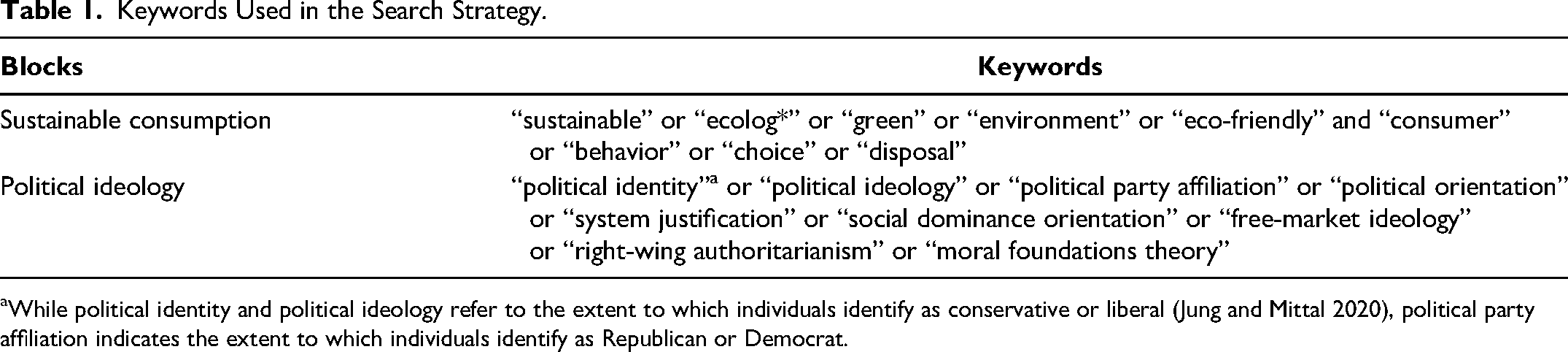
While political identity and political ideology refer to the extent to which individuals identify as conservative or liberal (Jung and Mittal 2020), political party affiliation indicates the extent to which individuals identify as Republican or Democrat.
I chose articles listed in Social Sciences Citation Index journals, given their high quality and relevance (Gupta et al. 2020). I also used the Scopus database to find academic articles focused on sustainable behavior and political ideology. By using the selected keywords, I identified 92 articles. After removing the duplicates (n = 15), I focused on articles that are at the intersection of political ideology and sustainable behavior (n = 15). In addition to these findings, I extended my research by exploring the reference sections of these articles (n = 1,017) and examining the articles that cited them to identify relevant literature (n = 759). In this process, I identified an additional 55 articles.
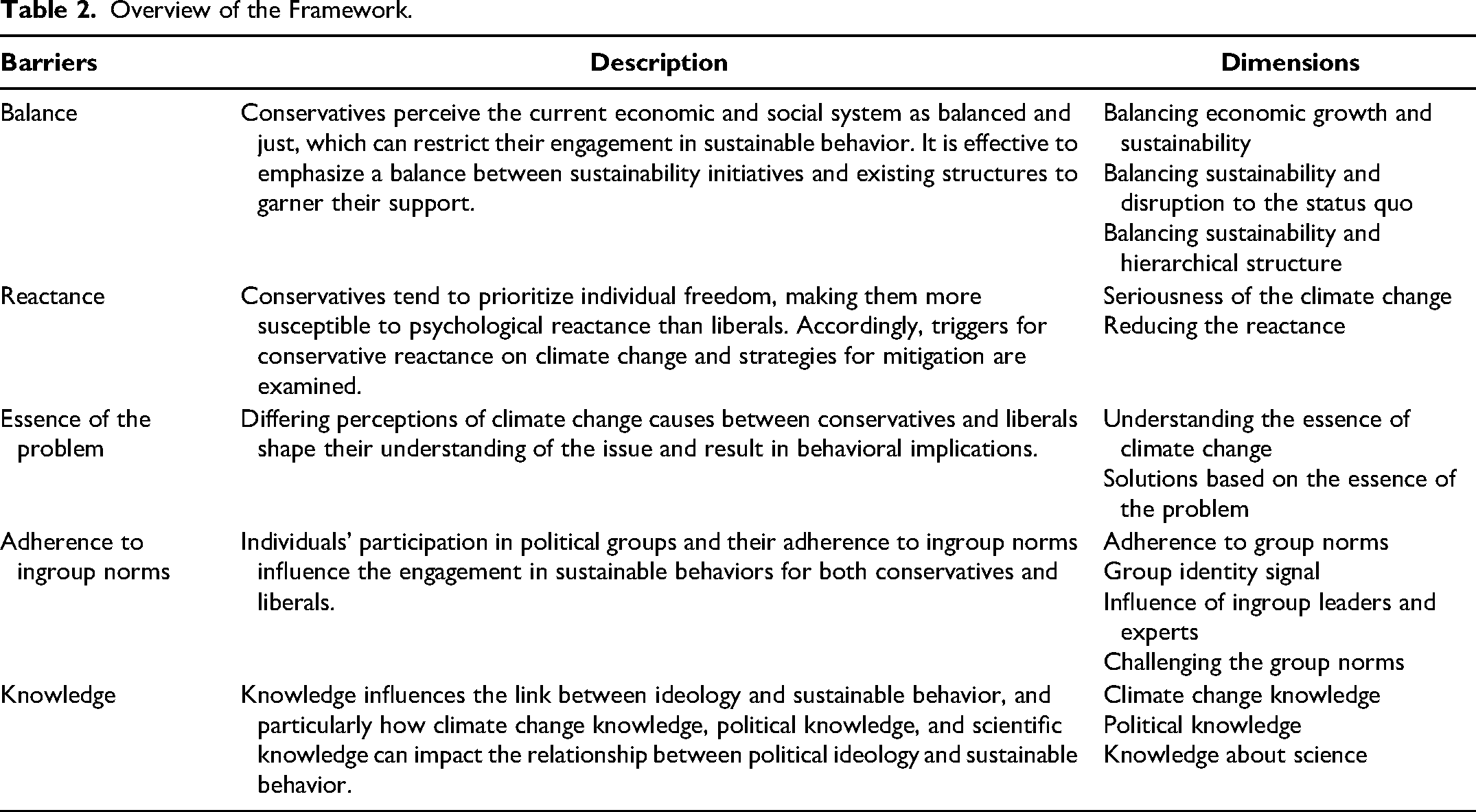
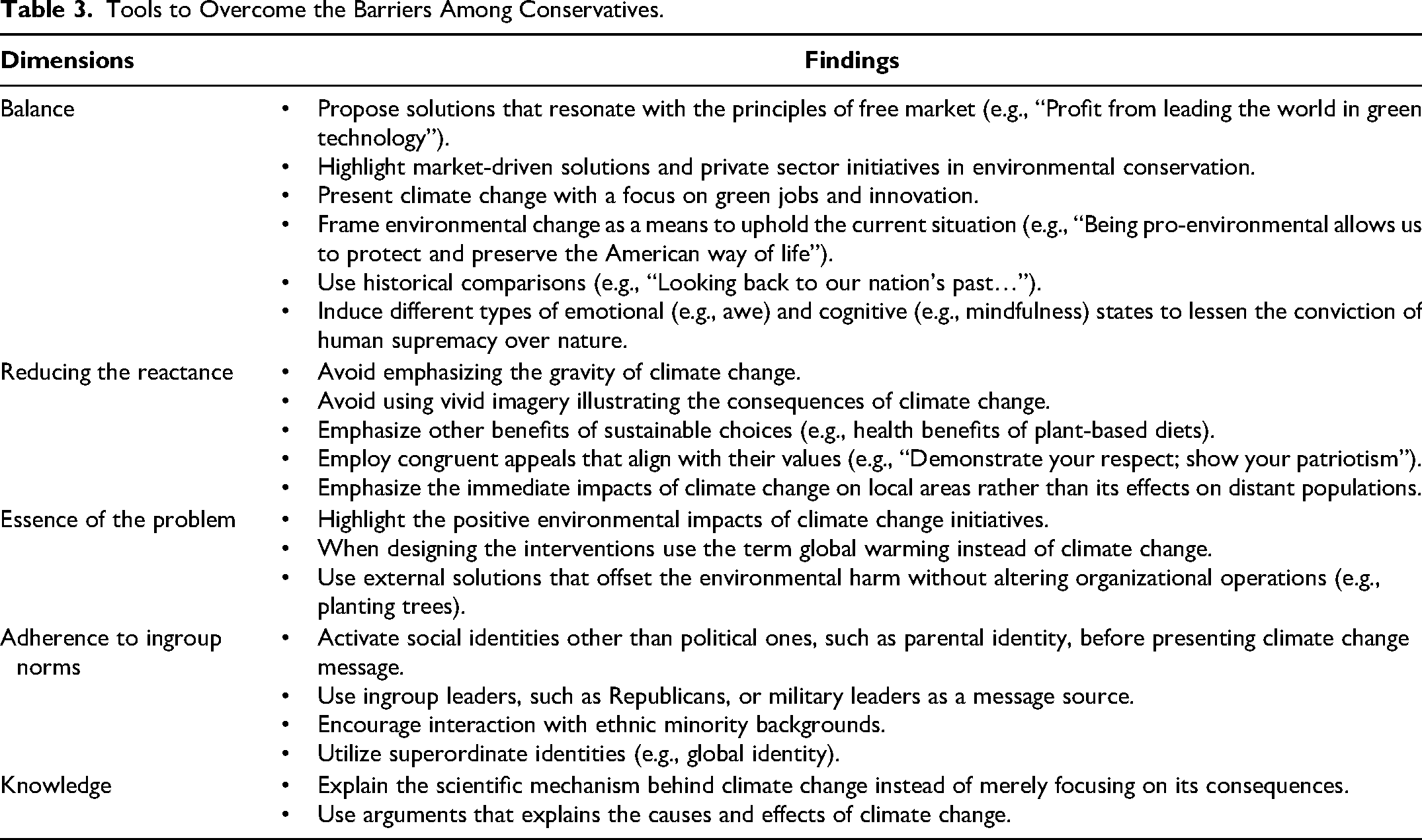
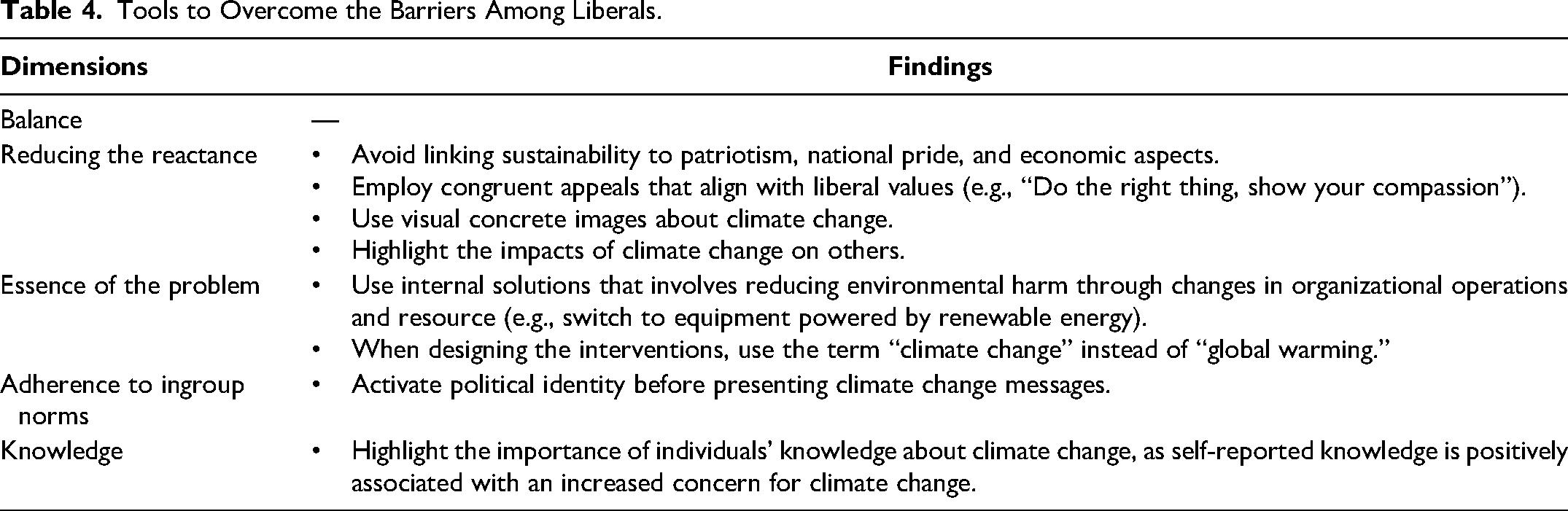
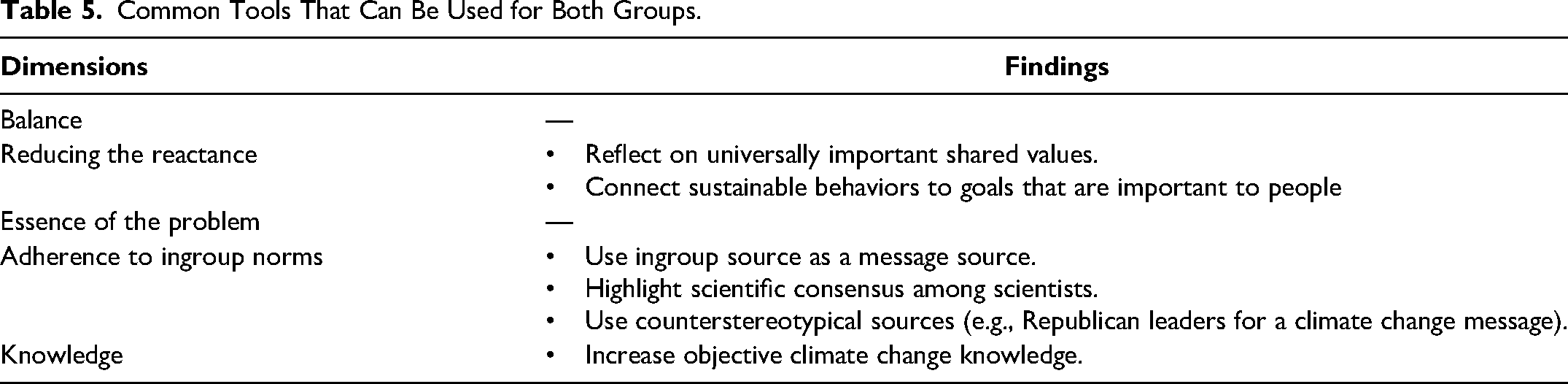
My analysis of these papers led to the formulation of the acronym BREAK, symbolizing key factors in understanding climate change polarization: Balance, Reactance, Essence of the problem, Adherence to ingroup norms, and Knowledge. These factors can illuminate the causes of the divide in climate change (Table 2) and suggest ways to diminish this polarization (Table 3, 4, and 5). I selected these categories and terms because they represent obstacles that hinder the involvement of both conservatives and, occasionally, liberals in sustainable actions, while also holding the potential to act as catalysts for increasing engagement in sustainable behavior.
Overview of the Framework.
Tools to Overcome the Barriers Among Conservatives.
Tools to Overcome the Barriers Among Liberals.
Common Tools That Can Be Used for Both Groups.
To broaden the scope of my review, I conducted a more extensive literature search using labels pertinent to our five identified themes, depicted in Table 2. I focus on journals in behavioral science, political science, sociology, economics, psychology, and management. For example, in exploring the “knowledge” aspect, my search terms included “climate change knowledge,” “political ideology,” and “sustainable behavior.” This approach enabled me to identify further articles in peer-reviewed academic journals, which I then classified according to the BREAK framework. In total, my review consists of 87 articles (see the Web Appendix).
Findings and Discussion
Balance
Previous research suggests that compared with liberals, conservatives are more likely to view the current state of affairs, with its flaws, as ideal and balanced, marked by an equilibrium where negatives are offset by positives (Lisjak and Ordabayeva 2023). As a result, conservatives view sustainable initiatives, which include measures from taxes and regulations to personal lifestyle changes such as adopting a vegetarian diet, as disruptive to the existing balance that underpins current economic growth, hierarchical structures, and the status quo. This section explores how conservatives’ tendency to uphold existing economic and social systems might limit their support for sustainable behaviors and examines how emphasizing the synergy between these initiatives and the preservation of economic growth, established hierarchies, and the status quo can boost conservative support.
Balancing economic growth and sustainability
A stronger belief in the market's capacity to self-regulate and maintain equilibrium without government intervention, often referred to as a free market ideology, may hinder individuals’ willingness to support climate change policies (Heath and Gifford 2006). This belief, which is more prevalent among conservatives (Jost et al. 2003), posits that climate change solutions like pollution taxes and regulations could disturb the economy's natural balance, governed by free market principles where the market autonomously operates on supply and demand (Campbell and Kay 2014; Rossen, Dunlop, and Lawrence 2015). Thus, to mitigate conservatism's reluctance toward environmental action, it might be effective to propose environmental strategies that resonate with the principles of the free market (e.g., “profit from leading the world in green technology”; Campbell and Kay 2014). In one example, informing participants that Arizona's market deregulation spurred a significant increase in wind energy led to conservative participants more strongly acknowledging the reality of climate change (Dixon, Hmielowski, and Ma 2017). In another example, presenting climate change with a focus on green jobs and innovation enhanced pro-environmental intentions among conservatives (Whitmarsh and Corner 2017). Similarly, highlighting market-driven solutions and private sector initiatives in environmental conservation proves to be more effective than governmental regulation for conservatives (Gillis et al. 2021). Therefore, emphasizing the synergy between climate change strategies and economic growth is crucial in encouraging sustainable behaviors among conservatives.
Balancing sustainability and disruption to the status quo
Belief in balance plays a key role in preserving the status quo because it reinforces the idea that all options come with their own advantages and disadvantages, suggesting that there is no perfect choice necessitating a departure from the current situation (Lisjak and Ordabayeva 2023). This carries significant implications for the environment, because addressing environmental issues requires acknowledging problems with the current system and necessitates changes to the status quo (Feygina, Jost, and Goldsmith 2010). Therefore, some individuals, particularly those with conservative political leanings, perceive the act of questioning existing practices and disturbing the equilibrium through climate change solutions as a threat (Hennes et al. 2016). Consequently, those who view the system as just and balanced (see system justification theory; Jost et al. 2003) tend to deny issues and are less likely to adopt sustainable behaviors (Hoffarth, Azevedo, and Jost 2019; Jylhä and Akrami 2015).
To address resistance to sustainable behavior stemming from support for the status quo, framing environmental change as a means to uphold the current situation, such as linking it to preserving the American way of life (e.g., “Being pro-environmental allows us to protect and preserve the American way of life”; Feygina, Jost, and Goldsmith 2010) or using historical comparisons (e.g., “Looking back to our nation's past”; Baldwin and Lammers 2016), can be effective. By framing environmental protection as a means to preserve the status quo and emphasizing the maintenance of societal balance, individuals who perceive the economic system as fair and stable are more likely to adopt sustainable behaviors, viewing them as a way to uphold the current order. Additionally, when individuals perceive economic stability, their bias in processing climate change information diminishes, as highlighting economic strength reaffirms the current system, satisfying their need for validation and maintenance (Hennes et al. 2016).
Balancing sustainability and hierarchical structure
Individuals who support hierarchical relationships in society may view the exploitation of natural resources as part of an ordered balance, where humans assert dominance over natural resources (see social dominance orientation; Milfont and Sibley 2014; Milfont et al. 2013; Pratto et al. 1994) or exploit these resources to gain dominance over others (Stanley and Wilson 2019). This view, which is particularly more pronounced among conservatives, is associated with climate change denial (Häkkinen and Akrami 2014; Jylhä and Akrami 2015), lower levels of sustainable behavior (Canova, Bobbio, and Manganelli 2023; Milfont et al. 2018; Uenal, Sidanius, and Van der Linden 2022; Zhao et al. 2018), an increase in meat consumption (Becker, Radke, and Kutlaca 2019; Dhont and Hodson 2014), and a decrease in the willingness to engage in collective actions to fight climate change (Choma et al. 2020).
Furthermore, individuals inclined toward hierarchical social structures may perceive actions that harm the environment as a means to uphold existing social and economic hierarchies. This perspective aligns with their conviction that these hierarchies are balanced and must be maintained (Pratto et al. 1994). For example, individuals who endorse hierarchical systems often support environmentally detrimental projects if they are presented as profitable and beneficial to either high-status groups (e.g., exclusively benefiting a mining company and its investors; Milfont and Sibley 2014) or their own group (Jackson et al. 2013). However, this support decreased when such initiatives were presented as benefiting all members of society equally (Milfont and Sibley 2014), as this equitable approach challenges their preferred social hierarchy and disrupts their perception of societal order.
Various cognitive and emotional states can challenge individuals’ adherence to the belief in human hierarchical dominance over nature. For example, experiencing awe, which reduces a person's feelings of superiority and self-importance (Skurka, Eng, and Oliver 2022; Zhao et al. 2018), or mindfulness (i.e., the tendency to be aware of the present moment and accepting it in a nonjudgmental way; Panno et al. 2018) can lessen the conviction of human supremacy over nature, consequently increasing the propensity to engage in sustainable behaviors.
Reactance
Brehm (1966) defines psychological reactance as an individual's opposition to a perceived reduction in their freedom and their drive to regain it. The previous literature suggests that that political conservatives are more likely to experience psychological reactance than liberals, as conservatives tend to place a higher value on individual freedom (Chan and Lin 2022; Pereira and Stornelli 2022), whereas individual freedom is less central to the values of liberals (Lakoff 2010). In this section, I explore various contexts and linguistic styles that might provoke reactance among conservatives regarding climate change, along with strategies to mitigate such reactions.
Seriousness of climate change
Numerous politicians and individuals alike emphasize the gravity of climate change, with some labeling it an existential threat (Ocasio-Cortez 2019) and others highlighting its status as the greatest threat to human health in history (Introsaco 2018), often utilizing vivid imagery to depict its impacts. While employing concrete images depicting the effects of climate change effectively reduces the psychological distance to the issue among liberals (Duan, Takahashi, and Zwickle 2021), the emphasis on the gravity of climate change (Chan and Lin 2022) or the use of vivid imagery illustrating the consequences of climate change (Duan, Takahashi, and Zwickle 2021) can have adverse effects when targeting conservatives. This occurs because conservatives, who typically have lower levels of concern for climate change, interpret such language as an attempt to persuade them to reevaluate their perception of climate change seriousness, thereby triggering a reactance response to messages emphasizing the seriousness of climate change (Chan and Lin 2022). In a related context, information about the potentially severe and unpredictable consequences of climate change can challenge the belief in a predictable and fair world. Consequently, individuals who strongly adhere to such beliefs may feel threatened, resulting in a potential reactance toward such messages (e.g., reducing people's willingness to engage in behaviors that aimed to combat climate change; Feinberg and Willer 2011).
Reducing the reactance
Since mentioning climate change or emphasizing its severity can sometimes lead to resistance, one approach to mitigate this resistance is to employ messaging tactics that steer clear of explicit references to climate change or the environment (Dean, Fielding, and Wilson 2019; Feldman and Hart 2018; Forster, Kunreuther, and Weber 2021; Gehlbach, Robinson, and Vriesema 2019; Gromet, Kunreuther, and Larrick 2013). Alternatively, emphasizing other benefits of sustainable choices, such as the health or taste advantages of plant-based diets (Yule and Cummings 2023), the positive effects of climate policies on energy security and air pollution reduction (Dean, Fielding, and Wilson 2019; Forster, Kunreuther, and Weber 2021), or benevolence in society (e.g., framing climate change as increasing consideration for others; Bain et al. 2016) can be more effective in influencing sustainable behavior change among conservatives.
Another way to reduce reactance among conservatives regarding the climate is to employ congruent appeals that align with their values (Feinberg and Willer 2013; Scharmer and Snyder 2021). Conservatives and liberals adhere to distinct moral foundations that correspond to their emphasis on different personal values (Graham, Haidt, and Nosek 2009). In general, the conservative worldview aligns more closely with binding values, including purity, authority, and loyalty (Graham, Haidt, and Nosek 2009). Even though conservatives perceive sustainable behavior as less moral than liberals (Currie and Choma 2018), advertisements using congruent appeals with conservatives’ moral views can increase their recycling behavior (Kidwell, Farmer, and Hardesty 2013) and their concerns and beliefs about climate change (Wolsko, Ariceaga, and Seiden 2016). Framing environmental behaviors in accordance with the values of conservatives (e.g., “Demonstrate your respect; show your patriotism”) can enhance message fluency (Kidwell, Farmer, and Hardesty 2013) and create the perception of a more compelling argument (Wolsko, Ariceaga, and Seiden 2016). Furthermore, when these types of framing techniques (e.g., purity, authority, loyalty) are combined with conservative sources, they can reinforce the impact of environmental messages on the attitude and behavior change of conservatives within the realm of sustainability (Hurst and Stern 2020).
However, emphasizing values like patriotism, national security, and libertarian ideals, such as linking sustainability to national pride and economic prospects in advertisements, might backfire among liberal audiences (Gainous and Merry 2022; Wolsko 2017). Liberals typically emphasize values like fairness and care (Jost et al. 2016), so messages that align with these values (e.g., “do the right thing, show your compassion”) are more persuasive for them (Kidwell, Farmer, and Hardesty 2013; Watkins et al. 2016; Wolsko, Ariceaga, and Seiden 2016). Reflecting their stronger emphasis on fairness, highlighting the consequences of climate change on individuals, regardless of their level of social distance, led to greater support for climate change mitigation among liberals. Conversely, aligning with conservatives’ emphasis on purity, authority, and loyalty, emphasizing the adverse impacts of climate change on groups seen as socially distant had an adverse effect on conservatives’ support for climate change initiatives (Hart and Nisbet 2012).
While employing a diverse approach that aligns with the distinct moral values of both liberals and conservatives is a common strategy to mitigate reactance, the literature also indicates several common tools that can be employed irrespective of political affiliation. For instance, encouraging individuals from diverse political backgrounds to reflect on universally important shared values (e.g., asking everyone to consider common values to matter to all; Wolsko 2017) or linking sustainable behaviors to personal objectives that hold significance for individuals (Unsworth and McNeill 2017) can also effectively minimize resistance to sustainable behavior across the political spectrum.
Essence of the Problem
A key aspect in the polarization of climate change views is the differing perceptions of its causes between conservatives and liberals. This section delves into how ideological variances shape the fundamental understanding of the climate problem and the behavioral implications stemming from these ideological differences.
Understanding the essence of climate change
While the escalating occurrences of lethal heat waves, devastating droughts, and rampant wildfires have heightened conservative acknowledgement of climate change, this awareness has yet to effectively lead to their engagement in sustainable practices (Friedman and Davenport 2021). One reason for this ongoing divide is the differing views on the essence of the climate change problem. Conservatives tend to attribute climate change to natural variations in Earth's temperature and environmental conditions, whereas liberals commonly believe that the issue of climate change is primarily driven by human activities (Tranter 2017). These types of beliefs—such as climate change not being human-caused, the Earth is resilient enough to cope with it, or that technology can resolve such issues—enable conservatives to recognize environmental destruction while mitigating feelings of guilt or responsibility (Bickel and Preston 2023).
Conservatives’ belief that climate change is driven by natural factors is also closely tied to their understanding of the natural world's fundamental nature. Compared with liberals, they are more likely to hold the view that the world is inherently stable and not significantly affected by human actions, which contributes to their reluctance to adopt sustainable practices (Chan and Faria 2022). Therefore, conservatives are more likely to underestimate the positive impact of sustainable actions on the environment; however, highlighting these positive environmental impacts can reduce this underestimation and increase their motivation to engage in sustainable behaviors (Cakanlar, Trudel, and White 2023).
Solutions based on the essence of the problem
The differing attributions of climate change's causes have significant implications for the types of interventions proposed. For instance, a recent meta-analysis has found that interventions were slightly more effective for conservatives when using the term “global warming” as opposed to “climate change,” while the opposite pattern was observed for liberals (Rode et al. 2021). This discrepancy could be attributed to the belief among conservatives that the Earth is warming, albeit not solely due to human activities.
Moreover, researchers categorize climate change solutions as either internal or external (Guo, Nenkov, and Li 2023). Internal solutions involve reducing environmental harm through changes in organizational operations and resource use, such as switching to equipment powered by renewable energy or reducing carbon emissions from transportation. External solutions, in contrast, aim to offset environmental harm without altering organizational operations, for example through planting trees or purchasing carbon offset credits. Given that conservatives tend to attribute climate change to natural causes while liberals attribute it to human behavior, liberals are more inclined to support internal solutions for climate change, whereas conservatives favor external solutions (Guo, Nenkov, and Li 2023).
Adherence to Ingroup Norms
People's connections with their group members often influence their perspectives on climate change and their participation in sustainable activities (Barth et al. 2021). This section examines various factors arising from individuals’ involvement with political groups and their adherence to ingroup norms, which are defined as the shared expectations, behaviors, and attitudes that are common in a group (Brauer and Judd 1996). These factors include adherence to group norms, signaling of group identity, influence of ingroup leaders and experts, and challenging of group norms.
Adherence to ingroup norms
Association with a particular group often involves adopting the norms of that group. People are often reluctant to endorse climate change policies when they perceive a potential conflict between their support for these policies and the behavior of those who share their ideological views (Boven, Ehret, and Sherman 2018). This is particularly noticeable among conservatives, who commonly perceive a norm against sustainable actions, leading to lower engagement in such behaviors (Geiger et al. 2020). This perception not only hinders initial adoption of sustainable practices but also contributes to a swift return to previous habits. For instance, social norms and limited social support make conservatives more likely to revert to meat consumption after trying plant-based diets (Hodson and Earle 2018). Conversely, conservatives’ beliefs in climate change strengthen when they perceive that their close friends and family members also believe in climate change (Goldberg et al. 2020).
In contrast, liberals perceive their fellow group members as being more committed to environmental protection compared with the average American or conservatives (Bouman, Steg, and Zawadzki 2020). This perception of strong sustainable norms within their ingroup can positively influence liberals’ engagement in sustainable behavior (Geiger et al. 2020). In fact, for liberals, deviating from sustainable behavior can contradict their ingroup norms and self-image, which, in turn, enhances their motivation to support climate change policies and increases the importance they place on climate change issues (Lacasse 2015).
While these studies have shown that liberals generally hold strong sustainable norms regarding environmentally friendly behavior, it is important to note that salient ingroup norms can lead individuals across the political spectrum to feel socially pressured to conform to specific opinions or engage in behaviors that are not environmentally friendly (Jost, Baldassarri, and Druckman 2022). In one example, Democrats were less likely to support climate change policies if they believed the policy was proposed by a Republican representative. Similarly, Republicans also showed reduced support for a policy if they perceived it was suggested by a Democrat representative (Boven, Ehret, and Sherman 2018). Similarly, conservatives’ support for environmental protection declines in the presence of strong liberal endorsements of climate change policies (Ehret, Boven, and Sherman 2018) and during Democratic presidencies in the United States (Johnson and Schwadel 2019). These findings suggest that conservatives’ reluctance to support climate change initiatives is partly influenced by the norm of partisan opposition, and ingroup norms can shape the engagement of both liberals and conservatives in sustainable behavior (Boven, Ehret, and Sherman 2018; Ehret, Boven, and Sherman 2018).
Signaling of group identity
Adherence to group norms contributes to the formation of an individual's social identity (Barth et al. 2021). This social identity often influences personal choices and behaviors, shaping how people express their values and beliefs (Berger and Heath 2007). Conservatives and liberals can use (un)sustainable behavior as a signal of their identity to themselves and others; therefore, emphasizing political identity exacerbates the partisan divide on this issue (Guilbeault, Becker, and Centola 2018). For instance, liberals are more likely to engage in sustainable behaviors when their political identity (vs. parental identity) is salient, whereas highlighting political identity among conservatives reduces their participation in sustainable behaviors compared with when their parental identity is emphasized (Diamond 2020; Unsworth and Fielding 2014). Therefore, highlighting the environmental benefits of sustainable behavior (e.g., carbon emission reduction, the negative impacts of climate change) can shape liberals’ engagement in sustainable behavior (Forster, Kunreuther, and Weber 2021; Kim et al. 2021; Xu, Arpan, and Chen 2015), but these initiatives can be less effective on conservatives.
Influence of ingroup leaders and experts
People are influenced by ingroup members more so than by outsiders who deliver the same message (Hornsey and Lewandowsky 2022). Consequently, utilizing information sources that align with the ingroup identity can enhance persuasion (Irmak, Murdock, and Kanuri 2020). In one example, employing Republicans or military leaders as sources of climate change information enhanced persuasion and reduce motivated reasoning among Republicans, particularly when the messaging emphasizes the impact of climate change on U.S. national security (Goldberg et al. 2021; Motta, Ralston, and Spindel 2021). Furthermore, employing conservative leaders as message sources can sway liberals’ engagement in sustainable behavior, as any deviation from party norms by these leaders is seen by liberals as a significant and costly action (Bolsen, Palm, and Kingsland 2019).
Likewise, experts, including scientists, play a role in influencing individuals’ views on climate change across the political spectrum through their communication efforts. Recent studies indicate that communicating the scientific consensus on climate change (e.g., “97% of climate scientists agree that human-caused climate change is happening”) has not only resulted in increased belief in climate change but also fostered greater acceptance of the notion that climate change is human-caused (Van der Linden 2021). However, it is worth noting that these findings have faced some criticism. For instance, some studies have failed to identify any interaction effect between political ideology and the consensus message (Deryugina and Shurchkov 2016). Nonetheless, it is observed that there is no backfiring effect among conservatives (Dixon, Hmielowski, and Ma 2017).
Challenging the group norms
When individuals predominantly interact with those who hold similar views, they often form strong connections within their groups, which in turn naturally reinforces the established norms of these circles. However, this dynamic shifts when they engage with individuals from ethnic minority backgrounds, as such interactions can promote egalitarian viewpoints, subsequently increasing engagement in environmentally responsible attitudes and behaviors (Meleady et al. 2020). Similarly, fostering a stronger sense of global belonging may enhance individuals’ empathy toward vulnerable populations affected by climate change and diminish the influence of political conservatism on engaging in sustainable behavior (Chung and Milkoreit 2023; Devine-Wright, Price, and Leviston 2015). These findings underscore the significance of diverse interactions and the utilization of superordinate identities (e.g., identification with the country instead of a political party) to challenge established norms within groups and promote sustainable behaviors.
Knowledge
This section explores different types of knowledge and their impact on the relationship between ideology and sustainable behavior. I focus on how the provision of climate change information, political knowledge, and scientific knowledge can either strengthen or weaken the connection between one's ideological beliefs and their commitment to sustainable actions.
Climate change knowledge
One of the most long-standing and essential inquiries in the study of climate change beliefs and skepticism focuses on the influence of knowledge (Fischer and Said 2021). How does a deeper understanding of the scientific aspects impact attitudes about climate change? Climate change knowledge constitutes the accuracy of an individual's understanding of the subject of climate change (Fischer and Van den Broek 2021). In exploring the relationship between climate change knowledge and beliefs, some studies have used self-assessed knowledge as a proxy for objective understanding. Results from these studies suggest that self-reported knowledge is positively associated with increased concern for climate change in liberals, whereas this relationship is weaker, negative (Hamilton 2011; McCright and Dunlap 2011b), or nonexistent among conservatives (Malka, Krosnick, and Langer 2009). Notably, the highest levels of climate change denial were observed in white male conservatives who claim to have a deep understanding of climate change (McCright and Dunlap 2011a). These results are in line with a motivated reasoning explanation, which suggests that individuals are inclined to seek out and favor information that aligns with their preexisting beliefs and to interpret information in a manner biased toward reinforcing those beliefs (Druckman and McGrath 2019; Kahan 2015).
However, it should be noted that these studies did not incorporate objective measures of specific climate change knowledge but rather depended on proxies like subjective climate change knowledge 1 (Guy et al. 2014). Notably, possessing objective knowledge about climate change 2 can safeguard against biased judgments on climate issues (Cho et al. 2023) and reduce the influence of political ideology on attitudes toward climate change (Guy et al. 2014; Hu et al. 2017). In line with these findings, elucidating the scientific mechanisms underpinning climate change (as opposed to solely emphasizing its consequences; Joslyn and Demnitz 2021; Rotman, Weber, and Perkins 2020) or highlighting the way an argument explains the causes and effects of climate change (Johnson 2017) can enhance conservatives’ belief in climate change and their involvement in sustainable practices.
Political knowledge
Objective knowledge about climate change can mitigate the adverse impact of political ideology on climate views, but increased political knowledge might have the opposite effect. In line with the motivated reasoning account, as individuals acquire more information about their political party, polarization regarding climate change intensifies, as more knowledgeable individuals are more likely to interpret evidence in ways that conform to their existing viewpoints (Kahan et al. 2012). For instance, paying attention to political news negatively affects conservatives’ support for climate change policies, while it does not have the same effect on liberals (Hart, Nisbet, and Myers 2015). Similarly, political sophistication, which encompasses both political knowledge and interest, enhances resistance to persuasion on climate change issues (Nai, Schemeil, and Marie 2017). In another example, Bolsen and Druckman (2018) exposed individuals to a scientific consensus message about climate change. This message caused low-knowledge Democrats and Republicans and high-knowledge Democrats to report greater belief in human-induced climate change. Republicans with high political knowledge were, however, unmoved.
Knowledge about science
Prior studies indicate that general education in science might actually intensify, rather than diminish, polarization on climate change issues (Kahan et al. 2012). This is because increased scientific knowledge and scientific literacy (i.e., understanding of the process or nature of scientific inquiry; Fischer, Huff, and Said 2022) may enable individuals to more vigorously defend their existing beliefs (Drummond and Fischhoff 2017). However, other researchers see scientific knowledge in a markedly different light. For instance, a recent study shows that knowledge about basic science tends to enhance the general acceptance of scientific ideas, a pattern that is observable in the area of climate change as well (McPhetres, Bago, and Pennycook 2023). Similarly, conservatives who paid attention to science news exhibited higher levels of perceived harm and knowledge about climate change (Hart, Nisbet, and Myers 2015). These contrasting findings signal that there could be other factors that moderate this relationship. For instance, a recent study suggests that the psychological distance from scientific topics is a more accurate predictor of skepticism toward science in various areas (Većkalov et al. 2024). The psychological distance individuals perceive from scientific subjects (i.e., “perceptions of science in terms of its tangibility and relevance for the individual”; Većkalov et al. 2024, p. 19) may be a more crucial factor in determining their attitudes toward science than their actual knowledge, thereby influencing their acceptance of scientific facts about climate change.
Theoretical Implications and Future Research Directions
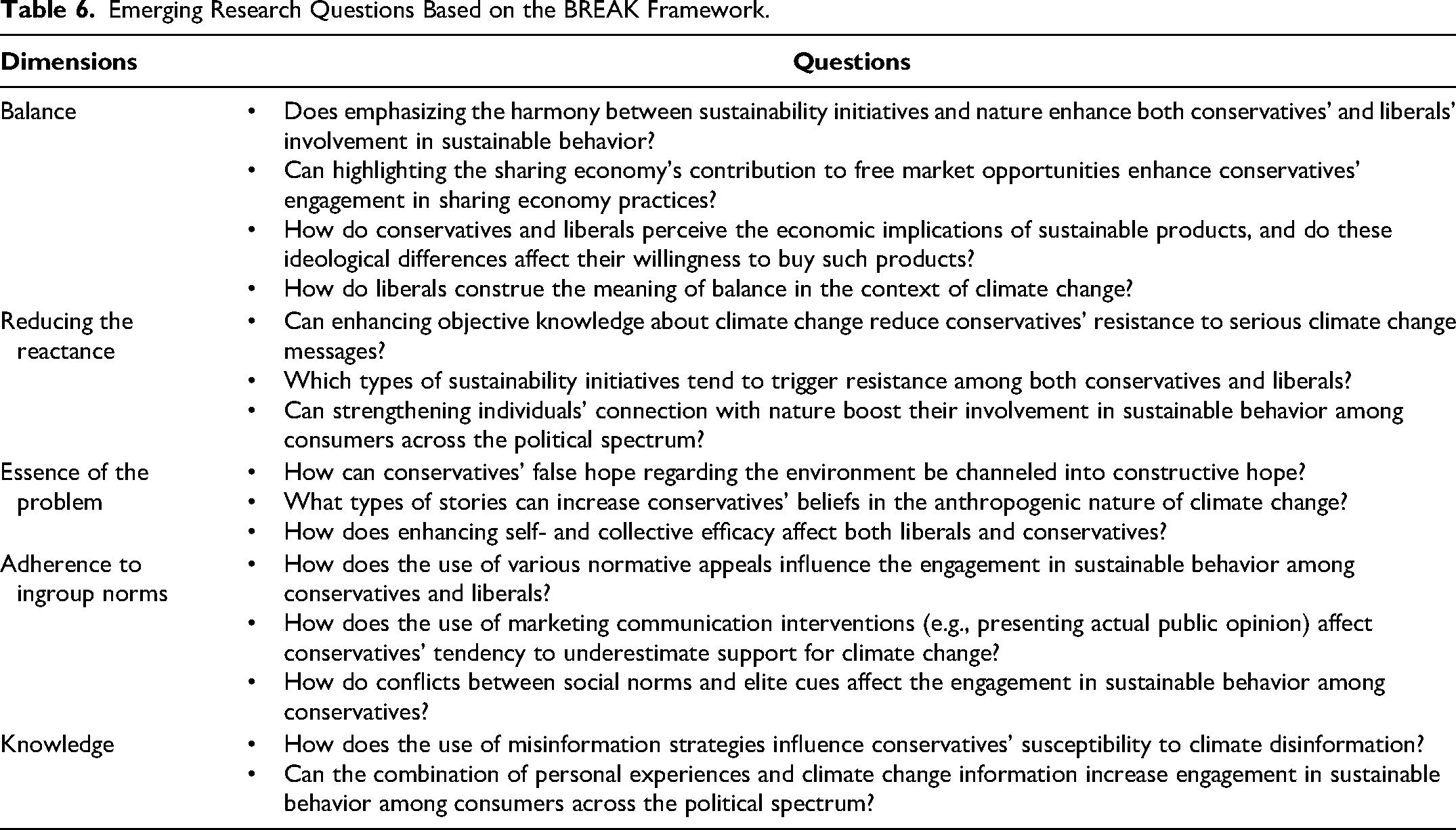
In this review, I synthesize academic research at the intersection of political ideology and sustainable behavior and develop a unifying framework for existing findings. This framework encompasses five key dimensions: Balance, Reactance, Essence of the problem, Adherence to ingroup norms, and Knowledge, collectively referred to as the BREAK framework. Next, I delineate research opportunities within each of these five factors and explore the interplay between various factors that may impact consumers’ sustainable behavior across the political spectrum (see Table 6).
Emerging Research Questions Based on the BREAK Framework.
Balance
Balance between sustainable initiatives and nature
While prior studies have explored presenting sustainability initiatives as a means to reconcile economic growth, hierarchical structures, and the prevailing status quo, they have not directly delved into the question of whether highlighting harmony with the natural environment in sustainability initiatives can garner increased support from conservatives for environmental endeavors. For instance, initiatives utilizing recycled materials could be framed to emphasize their contribution to preserving nature's balance, potentially garnering greater support from conservatives who are more likely to perceive the current state of affairs as ideal and balanced (Lisjak and Ordabayeva 2023). Future research can investigate whether sustainable initiatives presented in a manner that emphasizes the restoration of natural balance can enhance support for environmental issues among individuals across the political spectrum.
Balance between free market and sharing economy
Recent research indicates that individuals who justify the existing economic system are more likely to express interest in sharing economy practices compared with those who perceive the economic system as unfair (Cakanlar and Ordabayeva 2023). This is because individuals who consider the economic system fair attribute a greater entrepreneurial spirit to peer-to-peer providers. Considering that the sharing economy has the potential to shift consumers from ownership to access of existing products and services (White, Habib, and Hardisty 2019), emphasizing how sharing economy practices can contribute to advancing free market opportunities might resonate with conservatives who are more inclined to endorse principles of a free market (Campbell and Kay 2014).
Balance between sustainable initiatives and economy
Previous research has argued that sustainability is often perceived as a liability, leading consumers to view sustainable products as having inferior performance (i.e., sustainability liability heuristic; Luchs et al. 2010). Because conservatives tend to prioritize balance more than liberals, they might be more inclined to adopt the “sustainability liability” heuristic, which could lead them to attribute lower effectiveness and strength to sustainable products compared with liberals (Lisjak and Ordabayeva 2023). Furthermore, this heuristic may also extend to other product dimensions, such as perceiving sustainable products as detrimental to the economy or not contributing to economic growth. Future research can examine the extent to which these perceptions influence liberals’ and conservatives’ sustainable choices and behaviors, as well as strategies to mitigate potential misconceptions surrounding sustainable products’s impact on the economy.
Furthermore, initiatives like the Green New Deal entail significant government expenditure (McDonald 2019). It is possible that conservatives, who tend to favor free markets and limited government interventions (Campbell and Kay 2014), may focus on government spending over the merits of the sustainability initiative itself. It is possible that emphasizing a balance between the policy's budgetary implications and its sustainability goals could potentially enhance conservatives’ support for such initiatives.
Balance and liberals
Liberals are often more critical of the status quo and question the fairness of societal balance (Lisjak and Ordabayeva 2023). Their focus on fairness and care (Jost et al. 2016) may lead them to believe that everyone should participate equally in addressing climate change, regardless of their socioeconomic status. Contrary to previous findings that suggest that consumption choices are judged differently based on the individual's income (Hagerty and Barasz 2020; Olson et al. 2016), liberals may advocate for an equitable contribution from all individuals toward climate change mitigation. Future studies could investigate how liberals construe the meaning of balance and its potential effects on sustainability perspectives.
Reactance
Reactance and sustainable initiatives
Companies engage in various types of sustainable initiatives. For example, certain brands affix carbon footprint labels to their products, while others embrace circular business models like take-back programs (Tari and Trudel 2024) and repair services (Munten and Vanhamme 2023). Previous literature has not examined whether consumers’ reactions toward these initiatives vary based on their ideology. It might be possible that prominent sustainable initiatives directly related to climate change (e.g., carbon footprint labels) may be viewed unfavorably, but other efforts, like those emphasizing product durability or promoting repair services, might receive favorable perceptions from conservatives. Future research can investigate various sustainability initiatives and the circumstances that may lead consumers from both ends of the political spectrum to respond negatively or positively to these initiatives.
Green identity and knowledge about nature
Efforts to foster an environmental identity may encounter difficulties, especially within certain populations, such as U.S. political conservatives (Billet et al. 2023). Conversely, interventions designed to cultivate a sense of connection with nature, as defined by individuals’ affinity for the natural world (Mayer and Frantz 2004), or initiatives aimed at enhancing knowledge about nature (Ng and Leung 2022), have the potential to enhance consumer engagement in sustainable behavior. These experiences often evoke a sense of awe, which, in turn, fosters the perception of oneself as an integral part of the natural world (Ng, Leung, and Chan 2023). Notably, such interventions can be especially effective among conservatives, who tend to view nature through an instrumental lens, believing in human dominance over the environment (Milfont and Sibley 2014).
Essence of the Problem
Self and collective efficacy
Given that conservatives often attribute climate change to natural fluctuations in Earth's climate and environment (Tranter 2017), presenting them with narratives that highlight personal contributions to environmental conservation may bolster their confidence in the effectiveness of both individual and collective efforts to combat climate change. Research has shown that stories can exert a significant influence on people's beliefs and behaviors (e.g., Lteif et al. 2023). Consequently, this approach has the potential to foster a sense of responsibility and urgency, motivating individuals to engage in proactive environmental practices. Similarly, future studies could explore the impact of enhancing both self-efficacy (i.e., belief in one's ability to perform well in a task; Bandura 1977) and collective efficacy (i.e., shared beliefs in a group's ability to achieve desired outcomes; Bandura 2000) in encouraging sustainable actions among conservatives and liberals.
False and constructive hope
The denial of the anthropogenic nature of climate change among conservatives may be linked to false hope, acting as a coping mechanism that leads them to believe that improvements will occur naturally without the necessity of personal action or acceptance of responsibility (Marlon et al. 2019). Consequently, this perception may cause conservatives to believe that external factors, such as technological advancements, will ultimately resolve climate change concerns without requiring them to alter their own behaviors. This diffusion of responsibility may, in turn, result in the underestimation of the seriousness of the problem. Future research could explore the connection between political ideology and false hope. More importantly, it could investigate strategies aimed at transforming false hope into constructive hope, which involves individuals’ tendency to assess their ability to address problems either individually or collectively (Ojala 2012). It is possible that cultivating constructive hope could encourage conservatives to recognize the value of both personal and collective actions in addressing climate change, thereby promoting a more proactive and engaged approach to this urgent global issue.
Adherence
Normative appeals
Normative appeals, which refer to established norms, have the potential to influence a range of behaviors, particularly those that address communal challenges like sustainable behaviors (Abrahamse and Steg 2013). Given that individuals, whether conservative or liberal, generally adhere to the norms of their own groups (Boven, Ehret, and Sherman 2018), and perceptions of social norms are malleable (Cole et al. 2023), various social norm interventions could be employed to mitigate polarization in the realm of climate change. These encompass dynamic norms, informing individuals about evolving norms (Sparkman and Walton 2017); descriptive norms, underscoring the behavior's prevalence among a group's members; and injunctive norms, highlighting group members’ perceived endorsement of behaviors (Cialdini and Jacobson 2021), along with appeals that encourage collaboration, like invitations to participate in joint efforts (e.g., “Let's work together”; Howe, Carr, and Walton 2021). Such appeals might play an important role in shaping beliefs and actions related to climate change and sustainability. Future research could explore the unique effects of these diverse normative strategies on conservatives and liberals and investigate if any of these appeals might trigger reactance among various political groups. Similarly, in light of the nuanced findings concerning scientific consensus messages and political ideology, future research may investigate other factors, such as trust in scientists, that could potentially influence or moderate the relationship between ideology and consensus messages.
Correcting pluralistic ignorance
A significant obstacle in promoting sustainability across different political groups is that conservatives tend to underestimate the support for climate policies more than liberals, potentially impeding their engagement in sustainable practices (Sparkman, Geiger, and Weber 2022). This tendency, which is associated with pluralistic ignorance, defined as systematic misperception of public opinion (Geiger and Swim 2016), can lead to a vicious cycle, where the perceived lack of consensus prevents meaningful dialogue and collective action toward environmental goals. This misperception might stem from the false consensus effect, where individuals tend to notice and overvalue beliefs that mirror their own, leading them to overestimate how many people share their views (Ross, Greene, and House 1977). Considering that individuals often have more exposure to the behaviors of those within their own ideological circles than to those with different political views (Brady et al. 2017), conservatives, who are typically less engaged in sustainable practices, may consequently form an inaccurate perception of how common these behaviors are. Future research could explore various communication strategies, such as presenting actual public opinion data to demonstrate the percentage of people who acknowledge climate change as a global emergency, to effectively correct these misperceptions.
Conflict between norms and elite cues
The positions of political elites on climate policy can serve as indicators of wider social norms (Cole et al. 2023). For example, in a study where participants were informed about the climate policy stances of political elites without being told about general social norms, they inferred that the views of ordinary citizens matched those of party elites (Ehret, Boven, and Sherman 2018). However, there are cases where the views of political elites and the general populace may diverge. For instance, with the increasing recognition of climate change among conservatives (Friedman and Davenport 2021), it is possible that the positions of some political elites may not align with this emerging consensus. Future research could explore how such discrepancies influence conservatives’ conformity to norms and responsiveness to elite cues, potentially affecting their participation in sustainable behaviors.
Knowledge
Climate disinformation
Unfortunately, climate disinformation has the potential to exert greater persuasive influence than scientifically accurate information. Processing climate disinformation not only impacts individuals’ beliefs in human-induced climate change but also diminishes their involvement in sustainable behaviors (Spampatti et al. 2024). Individuals tend to interpret scientific (mis)information by evaluating its intuitiveness and its congruence with their preexisting worldviews, ethical principles, and political affiliations. When individuals perceive a discord between their existing beliefs and incoming scientific information, they often respond by constructing counterarguments as a means of resistance (Spampatti et al. 2024). To counter disinformation effectively, it can be advantageous to either clearly communicate the pros and cons of contentious policies (Petersen et al. 2021) or encourage deliberate thinking, prompting individuals to assess incoming information based on its factual accuracy (Pennycook and Rand 2022). Future research could explore whether such strategies can help mitigate climate disinformation among conservative audiences.
Personal experiences and information
In addition to knowledge, another crucial aspect is the manner in which information about climate change is disseminated. With the proliferation of climate change news, understanding how journalists, policy makers, and marketers can effectively convey facts has become increasingly important. However, sharing facts can pose challenges; therefore, instead of relying solely on facts, sharing one's adverse personal experiences with political adversaries is one strategy for bridging divides (Kubin et al. 2021). Recent research has shown that journalists and citizens can employ this approach by combining two elements: presenting factual information alongside personal adverse experiences, which has the potential to reduce intolerance and dehumanization among different political groups (Kubin, Gray, and Von Sikorski 2023). It is possible that this strategy of combining facts with personal experiences could also bolster support for climate change initiatives among individuals across the political spectrum.
Implications for Public Policy
The BREAK framework offers valuable insights into overcoming obstacles and facilitating the adoption of sustainable behaviors among consumers spanning the political spectrum. Although there is not a single factor that serves as the optimal approach to mitigate climate change polarization, the framework can assist practitioners in designing interventions once they have identified a behavior with environmental consequences (see Tables 3, 4, and 5). Take, for example, the endeavor to promote vegetarian diets as a means to reduce environmental impact (Winterich, Reczek, and Makov 2023). Policy makers and marketers can enhance their strategies by examining how this particular sustainable behavior can be framed to coexist harmoniously with continued economic growth, established societal structures, and the prevailing status quo. To effectively tackle this challenge, practitioners can also use the ideological disparities in the essence of the climate change issue as a guiding compass for developing interventions and solutions. Given that conservatives often attribute climate change to natural events and perceive the world as inherently stable and relatively unaffected by human actions (Chan and Faria 2022), emphasizing the environmental benefits of sustainable diets may have a limited impact on their willingness to adopt such dietary choices when compared with liberals. However, because conservative orientations often emphasize personal responsibility for physical health behaviors (Chan 2019), highlighting the health advantages of sustainable diets may be more persuasive to conservatives. Additionally, aligning with group norms can steer the development of social norm interventions, as the prevalence of sustainable behaviors within one's social group can influence the extent to which individuals across various political affiliations will embrace such behaviors. Thus, implementing dynamic norms (i.e., information that shows how other people's behaviors change over time; Sparkman and Walton 2017) could be more effective for conservatives, who may view sustainable behaviors as less common among their ingroup members.
Practitioners can also strive to improve consumers’ understanding of nature as a means to reduce climate change polarization and encourage sustainable behavior. For instance, research indicates that students who participated in a one-day nature education program exhibited significant improvements in their connection to nature compared with those who did not take part (Kossack and Bogner 2012). Similarly, another study revealed that students who engaged in a program centered on water at a school field center also experienced increased connection to nature (Liefländer et al. 2013). These findings underscore the idea that gaining knowledge about and nurturing an appreciation for the complexity and richness of nature can empower individuals to recognize their role within a larger interconnected ecosystem, where their well-being is intricately linked to the flourishing of other species (Ng, Leung, and Chan 2023). By incorporating nature-focused courses into educational programs, we can boost individuals’ knowledge and connection to the natural world, which may lead to increased adoption of sustainable behaviors, regardless of political affiliations.
In this research, I have examined and organized the literature that explores the relationship between political ideology and sustainable behavior. Through this analysis, I have identified five dimensions aimed at comprehending and mitigating climate change polarization: BREAK (Balance, Reactance, Essence of the problem, Adherence to ingroup Norms, and Knowledge). I hope that this framework will offer valuable guidance to practitioners and policy makers in their efforts to diminish climate change polarization and promote sustainable behavior among individuals across the political spectrum.
Supplemental Material
sj-pdf-1-ppo-10.1177_07439156241244737 - Supplemental material for Breaking Climate Change Polarization
Supplemental material, sj-pdf-1-ppo-10.1177_07439156241244737 for Breaking Climate Change Polarization by Aylin Cakanlar in Journal of Public Policy & Marketing
Footnotes
Joint Editors in Chief
Jeremy Kees and Beth Vallen
Associate Editor
Melissa Bublitz
Declaration of Conflicting Interests
The author declared no potential conflicts of interest with respect to the research, authorship, and/or publication of this article.
Funding
The author received no financial support for the research, authorship, and/or publication of this article.

Notes
References
Supplementary Material
Please find the following supplemental material available below.
For Open Access articles published under a Creative Commons License, all supplemental material carries the same license as the article it is associated with.
For non-Open Access articles published, all supplemental material carries a non-exclusive license, and permission requests for re-use of supplemental material or any part of supplemental material shall be sent directly to the copyright owner as specified in the copyright notice associated with the article.
