




Abstract
Understanding the factors that promote and discourage physical activity among adolescent boys is critical for their long-term health and well-being. This qualitative study investigates the influence of autonomy on physical activity, emphasizing the importance of choice and volition while considering how masculinities shape motivations and behaviors. Utilizing innovative visual methods across two time periods, 13 boys in the UK aged 13 to 17 participated in photo-elicitation interviews. Initial interviews involved researcher-led photo-boards depicting motivational topics and physical activities. Participants were then asked to take photographs of what motivates them to be active, which were discussed in follow-up interviews 2 to 12 weeks later. This approach facilitated the co-construction of data and findings between participants and the researcher. Reflexive thematic analysis, framed by Self-Determination Theory and masculinity theories, revealed that perceived autonomy significantly influences adolescent boys’ motivation to participate in physical activity. This study highlights the pressure on boys to conform to hegemonic masculine sports environments. Boys in our study who felt restricted by these expectations either sought alternative forms of physical activity or withdrew altogether. In contrast, boys who experienced autonomy over their physical activity choices reported higher intrinsic motivation. We advocate tailoring programs to offer a range of physical activities that accommodate different preferences and gendered behavior. Addressing rigid masculine expectations and ensuring inclusivity in physical activity will help promote active lifestyles, boost self-esteem, and support positive body image for all adolescent boys.
Introduction
Adolescent boys are at a critical juncture where their choices can have a lasting impact on their health and well-being. Adolescents are more likely to engage in physical activity (PA) when they feel autonomous and have a choice in whether to be active and what activities to participate in (Hagger et al., 2002). Autonomy, a key component of Self-Determination Theory (SDT), refers to the perceived volition and self-endorsement of one’s actions (Ryan & Deci, 2000). Adolescents have a strong desire for self-determination and seek to direct their own lives (West et al., 2023). In the context of engaging in PA, Hagger et al. (2002) demonstrated that adolescents having a sense of choice and control increases their likelihood of participation (Hagger et al., 2002).
However, adolescent boys’ growing need for autonomy often clashes with external influences such as coaches (González et al., 2016), family members (Doggui et al., 2021), teammates (Lawler et al., 2021), and peers (Chu & Zhang, 2019). Additionally, societal and cultural expectations might impose a narrow vision of masculinity on boys, urging them to conform to stereotypes that can affect their autonomy in PA. These pressures can suppress boys’ natural choices, making it challenging for them to engage in PA that reflects their personalities and allows them to feel fulfilled (Light & Kirk, 2000; Swain, 2006).
With the rising obesity epidemic among boys (NHS Digital, 2022), encouraging autonomy in PA during adolescence supports their well-being and helps prevent harmful behaviors that may lead to obesity and related health issues in adulthood. In the United Kingdom, the rate of boys living with obesity at the start of primary school (4–5 years of age) is 9.3% versus 9.0% for girls, but by the end of the sixth grade (10–11 years of age), the rate had risen to 25.1%, compared to 20.1% for girls (NHS Digital, 2022). Adolescent boys are not meeting the World Health Organization’s recommendation of 60 min of physical activity each day with 49.4% meeting it in the UK (Sport England, 2021) and 30.9% in the USA (Lin, 2022).
This study examines how adolescent boys can be empowered to make positive choices about their PA. We aim to uncover the complex emotions and behaviors driving boys’ engagement in PA and identify the socio-cultural factors influencing their decision-making (Martins et al., 2021). Sparkes and Smith (2013) highlight the significance of examining contexts such as social structures and cultural influences in attempts to understand a population’s thoughts, beliefs, and actions.
By focusing on these personal and social dimensions, this study aims to provide a richer, more comprehensive understanding of what it means for boys to feel in control of their PA choices. The study employs visual methods and photo-elicitation interviews (PEIs) utilizing researcher-led and participant-led photos. Using visual methods and photo elicitation interviews (PEIs), where both researchers and participants contribute photos, has been recognized as a powerful approach to addressing power imbalances and cognitive differences between researchers and adolescents (Leonard & McKnight, 2015). PEIs are particularly valuable for helping participants express abstract ideas, such as emotions, beliefs, and decision-making processes—an area where adolescents may face challenges with solely verbal communication (Duncan et al., 2009).
By addressing the following research questions, this study contributes to advancing our understanding of SDT, and specifically the role of autonomy in motivating adolescent boys’ physical activity.
• How does the basic psychological need for autonomy affect adolescent boys’ motivation to be active?
• How do adolescent boys’ individual and socio-cultural masculine identities affect their perceived autonomy in relation to PA?
The following literature review critically engages with current research, identifies gaps in knowledge, and justifies the need for this study. This research takes a novel, creative approach by employing novel visual methods to explore autonomy and motivation in adolescent boys.
Literature Review
This literature review begins by defining masculinities through cultural, societal, and individual dimensions, specifically examining the theories of Hegemonic Masculinity (R. Connell, 2005) and Inclusive Masculinity Theory (IMT; Anderson, 2009). The discussion then extends to how embodiment, the lived experience of one’s body, affects boys’ autonomy and its relationship to masculinity. The study is framed by Self-Determination Theory (SDT), and the review details the rationale for its selection and introduces the theory, focusing on basic psychological needs (Ryan & Deci, 2000).
Masculinities and Adolescent Boys’ Autonomy
Men’s masculinities refer to the cultural and individual meanings attached to men and boys and are influenced by self-perception, others’ perceptions, contextual influences, sociocultural factors, and the behaviors of men (Wong & Wang, 2022). Connell’s theory examines the power relations between forms of masculinity, particularly how hegemonic masculinity asserts dominance and privilege over others (R. Connell, 2005). This form of masculinity often subordinates other masculinities and reinforces social dominance, affecting how men perceive themselves and how they are perceived by others. In physical activity environments, boys may feel pressured to succeed in sports, exhibit physical strength, and conform to societal expectations of dominance and aggression (Swain, 2006).
White hegemonic masculinity prioritizes White men’s cultural norms over those of other racial groups (Miller, 2022). In environments that reinforce these norms, boys from racial minority backgrounds often feel marginalized, which diminishes their autonomy and participation in sports (Hill, 2013; Ward et al., 2023). Research indicates that racism intersects with masculinity and shapes PA experiences. (Ward et al., 2023) examined the racialized experiences of non-White student-athletes in British university sports, revealing how Whiteness perpetuates racial bias in sports settings. Non-White athletes reported experiencing covert racial biases, such as exclusionary remarks and ambiguous incidents that are difficult to substantiate, which contributed to their feelings of marginalization (Ward et al., 2023). Research conducted in British Columbia found that boys of Chinese heritage faced racial discrimination in physical education (PE), where White male students harassed boys of Chinese heritage based on perceived weakness, effectively marginalizing Asian students. This dynamic reinforced the idea that Whiteness is normative. Similarly, Hill (2013) discovered that British Asian boys navigate their PE experiences through the lens of their ethnicity, with factors like skin color, muscularity, and perceived fitness negatively impacting their opportunities to gain physical capital and social status among peers. The pressure to conform to dominant White masculine norms may reduce boys’ engagement in physical activities, as White culture often fails to acknowledge and respect boys of other cultural or racial groups, effectively othering them and reinforcing a sense of exclusion (Ward et al., 2023).
This hegemonic hierarchical structure is challenged by the Inclusive Masculinity Theory (IMT), which implies that multiple masculinities can coexist without the dominance of one (Anderson, 2009). IMT suggests that a greater acceptance of multiple masculinities, rejections of homophobia, and traditional stereotypes of gender identity and expression are now being observed in the UK and the US (Anderson & McCormack, 2018). PA environments with gender-neutral changing rooms and co-ed teams, along with a focus on skill development over traditional norms, support diverse masculinities (Anderson & McCormack, 2018). Gender identity is a person’s internal sense of their gender, whereas gender expression is how they outwardly present their gender through appearance, mannerisms, and body language.
Literature applying hegemonic masculinity theory has shown that masculine social expectations and hierarchies significantly shape boys’ participation in PA (Messner, 1990; Parker, 1996). Messner (1990) analyzes how organized sports reinforce traditional masculine norms such as dominance and competitiveness, marginalizing those who do not conform. Parker (1996) highlights the role of physicality and competition in sports as crucial for expressing and validating masculinity. For example, Light and Kirk (2000) found that high school rugby reinforced hegemonic masculinity by valuing physical toughness, emotional restraint, and dominance. Conversely, research using IMT has demonstrated that boys and men exposed to more inclusive environments can exhibit a broader range of masculine behaviors and identities (Anderson, 2012; Campbell et al., 2016). Anderson (2012) demonstrated that PE programs emphasizing cooperation and emotional expression, rather than traditional competitiveness and toughness, enabled boys to explore a wider range of masculine identities. A Scottish study on school PE found that when diverse activities were introduced, emphasizing teamwork and allowing for emotional expression, boys felt more engaged and valued, which led to increased participation (Campbell et al., 2016).
Embodiment and Hegemonic Masculinity in Physical Activity
Embodiment, as articulated by Maurice Merleau-Ponty, explores how societal norms shape our physical identity and behavior. Csordas (1994) expands on this by examining how cultural meanings and personal experiences influence our bodily experiences. Understanding embodiment is crucial for examining how hegemonic masculinity influences boys’ participation in PA, as it highlights the broader impact of cultural ideals on both external behaviors and internalized feelings. Arbeit et al. (2016) contributed to this understanding by finding that boys’ masculine embodiment was connected to their physical abilities and how they held their bodies around others. Swain (2006) found that feeling the need to conform to hegemonic norms can result in boys internalizing negative body images and reducing PA participation. Peer perceptions can also negatively impact boys’ body image as they feel their bodies are being judged (Kenny et al., 2016). The literature demonstrates the complex interplay between the embodiment of masculinity and avoiding perceptions of femininity or stereotypically gay behaviors as binary gender expression norms persist in many PA spaces (Joy et al., 2021). Mora (2012) provided further insight into body image and masculinity among Dominican and Puerto Rican boys living in the US, highlighting how boys reenact gender hierarchies and heteronormative ideals from their countries of origin to avoid being perceived as gay or feminine and to maintain their social dominance. A study in the UK looking at Asian boys’ embodiment and PA experiences found they could experience marginalization and feel undervalued as their bodies were not perceived as conforming to Western masculine ideals (Hill, 2013).
By failing to understand what supports autonomy in activities that align with boys’ interests and masculinities, we risk undermining their self-esteem and well-being, potentially leading to diminished participation and fulfilment. Neglecting the need for autonomy in PA can increase boys’ frustration and disengagement. PA can be replaced by damaging sedentary behaviors such as gaming and spending excessive amounts of time on social media, which can have detrimental effects on boys’ physical and mental health (Morningstar et al., 2023).
Self-Determination Theory and Adolescent Boys’ Autonomy
This study employs SDT and the Basic Psychological Needs (BPN) framework to examine autonomy (Ryan et al., 2022). SDT’s focus on intrinsic motivation, self-regulation, and psychological well-being provides an ideal framework for addressing our research questions. While Social Cognitive Theory (Bandura, 1997) acknowledges competence in self-motivation, it dismisses the importance of autonomy, which is central to our study. Similarly, Achievement Goal Theory (Nicholls, 1984) explores motivational climates and goal setting, it does not examine BPNs. Given our emphasis on how autonomy motivates adolescent boys to be active, SDT is particularly well-suited for this research.
SDT places a strong focus on autonomy, with autonomy-controlled regulation being viewed as a key factor that promotes intrinsic motivation (Ryan & Deci, 2020). As a framework for analyzing human motivation and personality, SDT identifies the factors that influence our autonomous and controlled motivations to act (Ryan & Deci, 2000). SDT emphasizes the “why” of human behavior, considering how social and cultural factors facilitate or hinder a person’s sense of autonomy and ensuing well-being. The SDT continuum examines six types of motivation: (1) amotivation; a lack or absence of volitional drive to engage in an activity, (2) external regulation; poor autonomy and engaging in an activity to obtain an external reward or avoid punishment, (3) introjected regulation; with internalized controlled autonomy leading to feelings of guilt and shame, often to meet societal expectations, (4) identified regulation; with increased autonomy as the value of an activity aligns with personal goals and identity, (5) integrated motivation; when an activity has become of primary importance in their life, and (6) intrinsic motivation; performing an activity for its inherent satisfaction and pleasure (Ryan & Deci, 2020).
A core element of SDT is achieving optimal motivational functioning by meeting the three BPNs of autonomy, competence, and relatedness (Standage et al., 2005; Vansteenkiste et al., 2020). Autonomy involves initiating actions based on personal values and maintaining control over one’s own behavior, leading to greater satisfaction (Ryan & Deci, 2020). For example, coaches’ leadership can enhance or diminish athletes’ PA experiences depending on whether they are autonomy-supportive or controlling (Carroll & Allen, 2021; Haerens et al., 2015). Competence is the belief in one’s ability to perform tasks successfully (Ryan & Deci, 2020). High perceived competence is linked to intrinsic motivation, while low competence can lead to avoidance of PA (Erdvik et al., 2014). Relatedness refers to a sense of belonging and support within a group, promoting autonomous motivation and PA participation (Bolter & Kipp, 2018; Xiang et al., 2017).
Autonomy can be the most challenging of the three BPNs to achieve during adolescence, as much of life is still regulated by school and family structures (Ryan et al., 2015). SDT emphasizes that need-supportive environments from significant others, such as parents (Bülow et al., 2022) and teachers/coaches (Carroll & Allen, 2021), are crucial for adolescents’ well-being. Without autonomy support at home or school, boys may feel overruled or unsupported in decision-making. Research on adolescence can define autonomy as detachment and independence from adults (Steinberg & Silverberg, 1986), but our study values the SDT concept of dependence on significant others during adolescence (Ryan & Lynch, 1989). Adolescents develop self-regulation best in environments that balance autonomy with belonging to an involved adult structure (Ryan & Lynch, 1989; Tilga et al., 2020).
Adolescent Boys’ Autonomy in Physical Activity
Previous research highlights the pivotal role of autonomy in adolescent boys’ engagement and avoidance of PA (Hagger et al., 2002). Studies show that autonomy-supportive interventions, like choice-based exercise programs and realistic goal setting, are effective in promoting PA adherence and long-term participation by encouraging self-regulation (Hagger et al., 2002). Research indicates that as adolescents get older, the influence of coaches and peers becomes more significant, with parents shifting to a more supportive role, such as providing transport and finance for PA (Chu & Zhang, 2019).
Studies have examined how autonomy-supportive environments facilitate involvement in decision-making and enhance PA participation, while controlled climates reveal that negativity, intimidation, and manipulation can undermine autonomy (Tilga et al., 2021). Conflicts with parents often arise as adolescents seek independence, with peer influence increasingly shaping identity and motivation during middle adolescence (Masten et al., 2009; Meeus et al., 2005). SDT literature acknowledges both external and internalized pressures, such as guilt and shame, which can lead to conformity with societal expectations of hegemonic masculinity (R. Connell, 2005). The literature indicates that a masculine persona often includes the expectation of a muscular physique (Roche et al., 2021). The concept of self-objectification (Fredrickson & Roberts, 1997) where one values body appearance over body competence results in controlled embodiment, promotes body-shaming, and in turn reduces autonomy over our physical self (Baceviciene et al., 2022). For adolescent girls, self-objectification is linked to disordered eating, dysmorphia and low self-esteem (Tiggemann & Slater, 2015), whereas, for boys, it manifests as a desire for muscularity, often leading to compulsive exercise, body dissatisfaction, and the internalization of unrealistic body standards (Baceviciene et al., 2022). Overall, the literature highlights the importance of autonomy-supportive environments in promoting PA among adolescent boys while addressing the sociocultural pressures they face.
Current Study
While extensive research (Fraguela-Vale et al., 2020; Markland & Ingledew, 2007) has explored adolescent PA motivation, a significant gap remains concerning the role of autonomy, specifically the ability to make independent choices about how, why, when, and where to move, particularly among boys. Research has shown a significant gap in qualitative research related to exploring the subtle and nuanced reasons underpinning perceptions of autonomy among adolescent boys in PA. Additionally, it is essential to examine the role of sociocultural expectations and hegemonic masculine ideals on adolescent boys’ autonomy in PA, and by framing the study in both SDT and masculinity theories a broader perspective is achieved. Research (Chu & Zhang, 2019; Tilga et al., 2021) has often focused on the effect of coaches providing autonomy-supportive environments for adolescents, whereas the effects of family (Meeus et al., 2005) and peers (Masten et al., 2009) on adolescent boys’ autonomy remain underexplored, despite these significant others being the primary context in which identity is constructed in early adolescence. This study extends SDT and BPN theory by applying a visual methodological approach of photo-elicitation interviews (PEIs). As far as I am aware this is a novel approach for sports and adolescent psychology, utilizing both researcher-led and participant-led PEIs at two time points. This approach allows participants to actively contribute to data collection by capturing their own photographs to explore adolescent boys’ motivations in PA.
This method provides new insights into how autonomy-supportive environments influence both active and inactive boys’ PA as they negotiate and discover their masculinity. Ultimately, this research seeks to fill the identified gaps by offering an in-depth qualitative understanding of the sociocultural and interpersonal factors shaping boys’ autonomy and participation in PA.
Methodology
Philosophical Assumptions and Positionality
The researchers adopted a relativist ontological perspective (Guba & Lincoln, 1994) and social constructivist epistemological approach (Sparkes & Smith, 2013) to recognize adolescent boys’ individual, culturally constructed experiences with PA while acknowledging the researchers’ biases and contexts. A relativist ontology proposes that reality is subjective and shaped by our experiences and social interactions, leading to subjective interpretations that vary based on personal and social contexts (Guba & Lincoln, 1994). These interpretations are not competing, absolute truths, but are shaped by context and experience. The social constructivist approach emphasizes how knowledge and meaning are created through social processes and contextual factors, guiding the analysis of how societal pressures and personal experiences shape PA.
In my role as the lead researcher, identifying as a cisgender, heterosexual female (she/her), my personal biases and lived experiences have influenced the study (Denzin & Lincoln, 2005). My dislike of mandatory school sports enabled me to empathize with boys who also struggled with compulsory physical education (PE), and my role as a parent of teenagers with varied interests in PA shaped my visual methods approach to the study and allowed me to relate to the participants. The theoretical frameworks (Anderson, 2009; R. Connell, 2005; Ryan & Deci, 2000) provided a coherent basis for understanding how both personal perceptions and broader social influences shape boys’ PA experiences. For example, by examining the cultural context that shaped the boys’ autonomy perceptions and behaviors and employing an iterative coding process (Braun & Clarke, 2019), we explored social influences such as pressures to conform to masculine traits, desires to be muscular, and social media influences. Combining multiple data sources from the two sets of interviews and photographs provided a rich, detailed and multimedia dataset that was continually refined to align with the relativist perspective, acknowledging the subjective and socially constructed nature of the boys’ PA experience.
In qualitative research with young people, concerns about confidentiality and the potential for parental involvement can arise (Duncan et al., 2009). My age, being similar to their parents, and my gender as a woman, may have affected their comfort level in discussing sensitive topics. However, developing rapport and sharing my family’s PA experiences in an informal style helped alleviate these concerns. As a White woman, I recognize that my perspective and experiences have limited my ability to fully engage with and understand the nuances of race and ethnicity when discussing these topics with boys from racial minorities.
Recruitment and Participant Data
Ethical approval was obtained by an Institutional Ethics Committee and required the adolescent participants to be recruited via their parents/carers. I posted a call for participants on my public Instagram page connected to my social media network. Following contact with the parent or caregiver, I used a purposive sampling approach to obtain a wide range of participants in terms of age, schooling, athletic ability, and type of regular PA (Sparkes & Smith, 2013). The study involved 13 male adolescent students in full-time education at five schools/colleges, aged between 12 and 17 years. Two participants self-identified as British Chinese, one British Pakistani, eight White British and one White European. A voluntary questionnaire found one participant self-identified as bisexual, 10 as straight, and two chose not to answer; 12 self-identified as male at birth, one chose not to answer; and 12 self-identified as male at the time of the interview and one chose not to answer.
Methodological Approach
My methodological approach employed visual methods to generate data for a Reflexive Thematic Analysis (RTA) process (Braun & Clarke, 2019). The participants were interviewed in two phases at their homes, with a parent or carer in the next room. Both participants and their parents/carers signed consent forms, and no social media contact was made between the researchers and the participants. Although parents/carers consented to the interview, participants’ information remained confidential, with only the photographs shared for safeguarding purposes, in line with the University’s ethics guidelines. I maintained a non-judgmental and supportive environment, enabling participants to freely discuss their physical activity levels and opinions (Harper, 2002).
In Phase 1, I curated publicly available photos to show the participants and printed them off and placed on boards to discuss for the first PEIs. The photo boards (see Supplemental Appendix A) showed different forms of PA, body shapes, skills, emotions, spaces, coaches, families, teammates, and leisure activities to initiate conversation and create an interview structure. The photo boards acted as prompts for participants to talk more openly about their feelings and emotions concerning PA and reflect on abstract ideas such as motivation, masculinity, identity, and relationships (Harper, 2002). The first PEIs lasted between 40 and 85 min with each participant. The duration of the PEIs varied based on the boys’ communication style and confidence. Despite differences in interview length, all boys provided nuanced and thoughtful responses, regardless of how easily they communicated. At the end of the first PEIs, in line with the Participant Brief for Photography (see Supplemental Appendix B), I asked the participants to take photographs on their mobile phones, to demonstrate what motivated and amotivated them to be active. As a safeguarding measure, the parent/carer reviewed the photos before sending them to the lead author via WhatsApp and were securely transferred to an encrypted server.
In Phase 2, participants’ photographs were shown in the second PEIs to co-construct data (Leonard & McKnight, 2015). This approach deepened the research team’s insights into the adolescents’ lives and gave the boys a stronger sense of ownership in the research. PEIs empower young people to discuss contentious or sensitive topics (Croghan et al., 2008). No deadline was set for returning photographs to keep the task enjoyable and avoid it feeling like a school assignment. The study was conducted in winter and weather influenced when boys could take photos, with some waiting for daylight, better weather conditions, or school holidays. They had full control over the type and timing of their photos, focusing on capturing authentic portrayals of their daily PA rather than refined images for social media.
The second PEI, lasting 25 to 50 minutes, was conducted in the participants’ homes. It began with follow-up questions to clarify points from the first PEI and rebuild rapport (Leonard & McKnight, 2015). Photo elicitation used open-ended questions to prompt detailed responses. Since the boys or their significant others took the photos, initial questions focused on context, such as “Where and when did you take this photo?” Following this, reflective questions like “How did you feel taking this photo?” were asked to encourage deeper analysis. If participants were hesitant to share beyond descriptive comments, I occasionally offered my interpretation, which helped prompt their agreement or disagreement. This constructivist interview style, emphasizing collaboration in interpreting photos, aligns with the research team’s constructivist approach. Participant-centered interviews avoided theoretical discussions, engaging the boys in iterative dialogs to co-construct data and meaning. Conducting the interviews in their homes, free from peer pressure, allowed for flexible questioning that deepened my understanding of their perspectives. The boys’ pride in their photos significantly enhanced their engagement and investment in the study.
Data Analysis
This present study is part of a wider qualitative project examining adolescent boys’ motivations to be active framed by SDT and the three BPNs of autonomy, relatedness, and competence. In this study, we examine how perceived levels of autonomy affect the experiences and motivations of adolescent boys in PA. An abductive approach in qualitative research blends inductive and deductive reasoning to create a dynamic and iterative process of theory development (Tavory & Timmermans, 2014). While SDT directed the research focus, the abductive method allowed for ongoing refinement of this framework based on evolving data patterns. This process supports the co-construction of knowledge, as participant insights can inform the research without prior knowledge of SDT and BPN. By facilitating continuous reflective dialog between researchers, theory, and data, the abductive approach ensured the research remained adaptable to new insights and provided a nuanced understanding of participants’ lived experiences (Tavory & Timmermans, 2014).
As the lead author, I recorded the interviews on my phone using the Otter app, transcribed and manually corrected the PEIs on the subscription service (Otter), before anonymizing the data. During the RTA process (Braun & Clarke, 2019), six stages were followed: (1) Familiarization with the data, by transcribing and becoming immersed in the adolescents’ experiences, (2) Three rounds of iterative coding, which allowed detailed analysis of the adolescents’ opinions on their autonomy and motivations to be active, (3) Generating initial themes and sub-themes, for example, pressures to conform to masculine traits, desires for muscularity, and social media influences were integrated into the theme, “How Societal Masculine Identities Affect Adolescent Boys’ Autonomy to Be Active.” (4) Developing and reviewing initial themes, allowing more complex analysis concerning autonomy and identity to be formed, (5) Refining, defining, and naming themes, to ensure the research questions were addressed, and finally, (6) Writing up, where themes were still being reflexively discussed, refined and presented as a narrative account (Sparkes & Smith, 2013). The iterative coding process, combined with two interviews and photographs per participant, effectively captured the boys’ subjective experiences, reflecting a relativist ontological perspective, and ensuring a thorough, reflective analysis.
Rigor and Trustworthiness
Ensuring rigor and trustworthiness in qualitative research is crucial for establishing credibility and integrity of the research (Smith & McGannon, 2017). Guided by a relativist approach, I employed strategies to enhance rigor and credibility, including contextualization, reflexivity, and transparency (Creswell & Poth, 2017). Engaging in the boys’ social and family backgrounds helped deepen my understanding of what motivated them to be active, while maintaining awareness of my own positionality (Braun & Clarke, 2019) enabled me to remain reflexive about how our respective contexts influenced the research process. A reflexive diary was kept throughout the data collection process, facilitating reflection on each participant and the PEIs (Braun & Clarke, 2019). Rich data and extensive participant quotes in the findings support the trustworthiness of the results. With interviews conducted in two phases, participants had the opportunity to reflect on their initial responses and provide additional insights, which facilitated participant validation of data (Lincoln & Guba, 1985). Photo-elicitation techniques enabled the boys to gain deeper insights into their PA with many noting new reflections on their motives. Regular consultation with critical friends helped challenge and refine the data analysis (McGannon et al., 2021) and the research team aimed to evoke naturalistic generalizations through powerful participant descriptions and rich interpretations of both oral and visual data (Smith, 2018).
Findings
In this study, 13 adolescent boys were interviewed using photo-elicitation techniques at two intervals to gain insight into how their autonomy affects their PA. Figure 1 summarizes the thematic structure that details how the RTA process advanced (Braun & Clarke, 2019) and highlights the following four overarching themes:
1. Increased autonomy affects adolescent boys’ motivation to engage in physical activity.
2. Parental autonomous support influences adolescent boys’ motivation to be physically active.
3. Adolescent boys’ increased autonomy can sometimes lead to amotivation toward physical activity.
4. Racial, societal, and cultural masculine identities shape adolescent boys’ autonomy and motivation to be active.
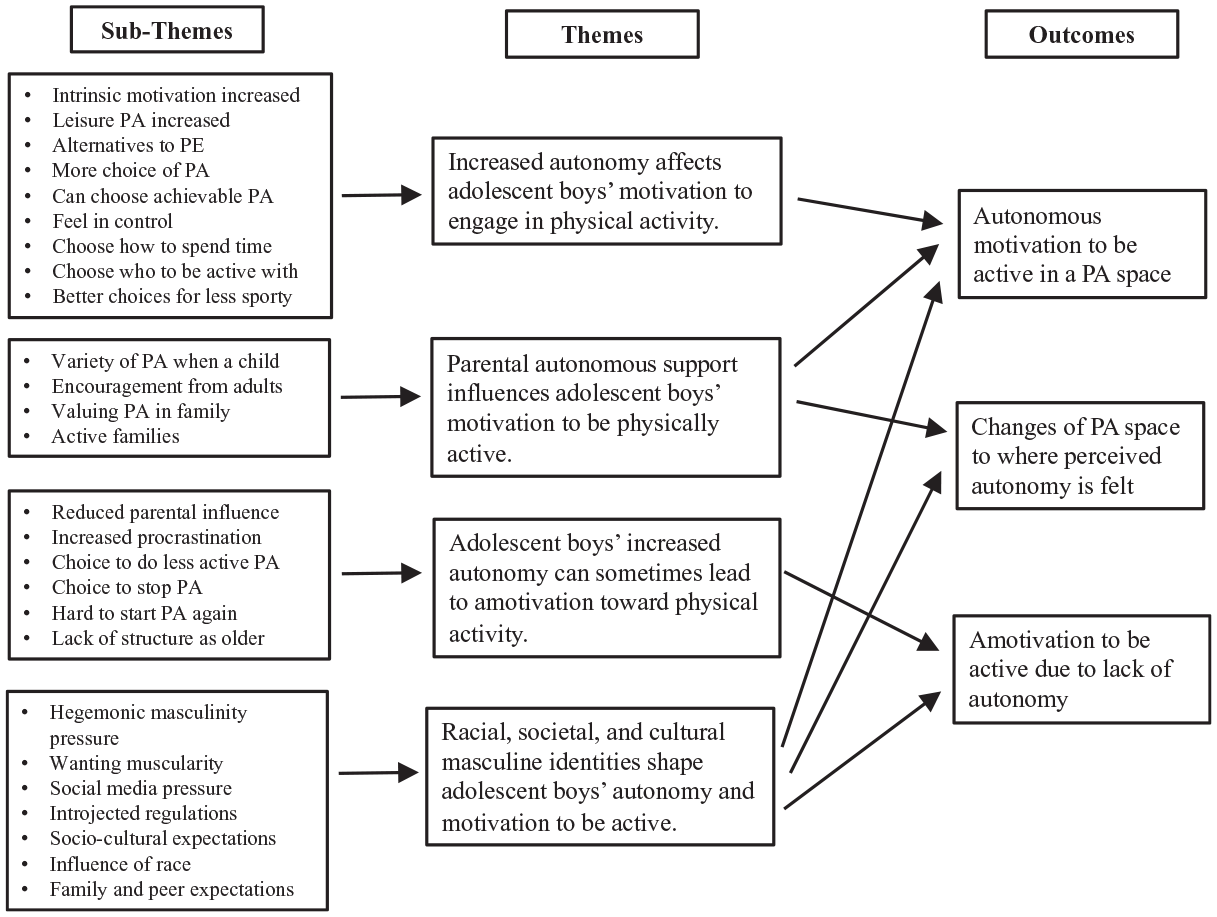
Thematic structure of what motivates and amotivates adolescent boys to be active: focusing on autonomy.
Increased Autonomy Affects Adolescent Boys’ Motivation to Engage in Physical Activity
Theme one found participants who enjoyed competitive PA and school PE continued to be motivated to be active as their BPN of autonomy was satisfied in autonomous-supportive environments (Ryan & Deci, 2000). For example, Alistair, 16, has found his football (soccer) coaches supportive and friendly, saying, “I’ve had a couple of football coaches, and none of them have been like shouty or pressurizing; they just want people to do the best they can.” Niko, 16, identified as a cross-country runner but enjoys ball games such as football (soccer) and has found his PE teachers to be inclusive in sports such as football (soccer): “They always include you, like I was on the E team once. So, they always try to get as many people doing it as they can.”
The increased autonomy adolescent boys had over their PA as they grew older allowed them to choose activities that aligned with their identity, including their personal interests, values, and self-concept. The ability to choose their PA was particularly beneficial for participants who had not enjoyed competitive and organized PA at school. Tom had not enjoyed the combative element of sports like football (soccer) and rugby and was now old enough to choose not to do these sports and to go running on his own instead. Tom, 16 (Figure 2), said, “That’s why I think running is great. It’s so accessible. You just literally go through the doors to do it.” Notably, the boys did not express fear for their safety while walking, running, or traveling to gyms, unlike adolescent girls who cite safety concerns as a key barrier to PA (Akpınar, 2020).
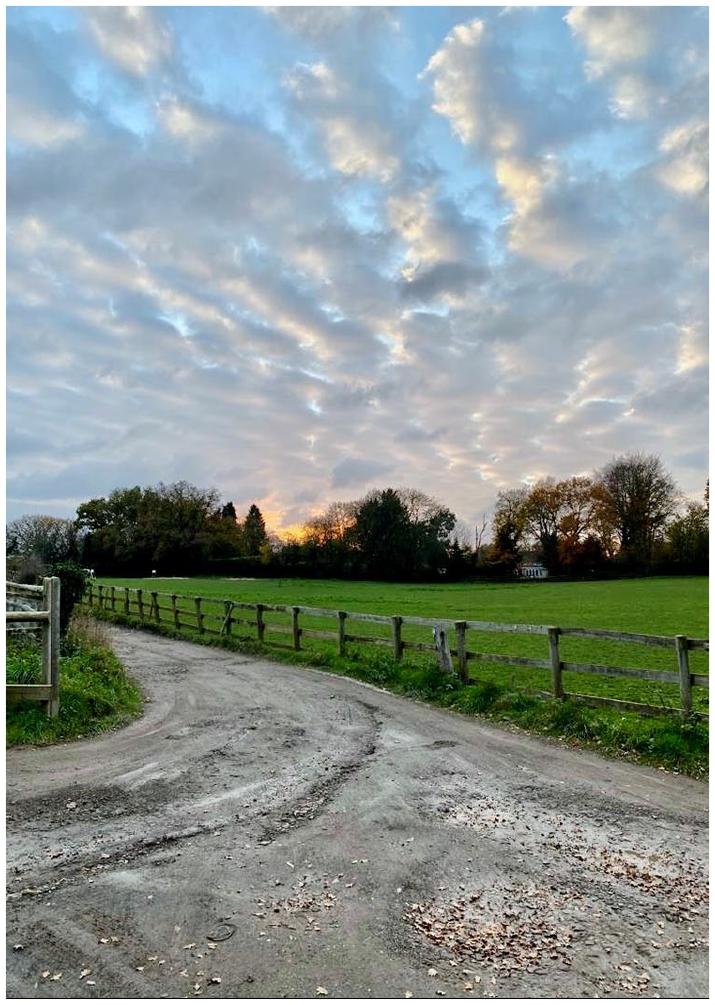
Tom’s running route.
Joe, 16, also enjoyed the ability to choose his own PA now he was older, saying he likes to go, “Mountain biking, just in the woods in the local area with my friends.” Bill, 17, had stopped going to organized swimming lessons as he found them too structured with too many adult interventions and expectations. Bill explained why he chooses to go to general swim sessions saying, If I’m like in a lane then there’s the expectation, you’re gonna do it like, properly, professionally. Like I try to just have fun. I don’t really want to (swim) competitively, I just want to swim because I love swimming and being in the water.
Participants who had disliked traditional competitive or combative PA or PE were enjoying the increased control over their leisure time and some had discovered other forms of less traditional PA. Kenny, 16 (Figure 3), hates ball games and had identified himself as “not sporty” when he was younger. Kenny now sails and is doing his instructor exams at his local club. Kenny said, “I thought that’s more fun than a traditional sport” and had decided it was something he wanted to continue with into adulthood, saying, “And it was just that moment, which it clicked for me and I’m sailing, literally out of the boat full pelt. I realized yeah; this may actually be a lifelong thing.”

Kenny’s sailing and windsurfing instructor books.
Encouraged by his father, Hugo, 16, played rugby every weekend since he was 5 years old. Hugo has chosen to stop playing rugby because it no longer interests him, and he feels more autonomy to choose what PA he participates in. Talking about playing rugby Hugo said, “It was two-hour training for rugby, and I felt I felt like I was there all day. And for an hour and a half of it I was like properly going for it, but that last half an hour I was just absolutely lost all my energy for it.” Hugo now chooses to play basketball, “If it’s a training session it flies by when you’re having fun, that’s how I feel about basketball right now.” Bill, (Figure 4) also “hated” PE, but aged 17 now chooses to walk his dog every day and to go for walks with his friends which they make fun using augmented reality, “We’re just walking and chatting. Every once in a while, catching a thing. It’s more of an excuse to walk around.”
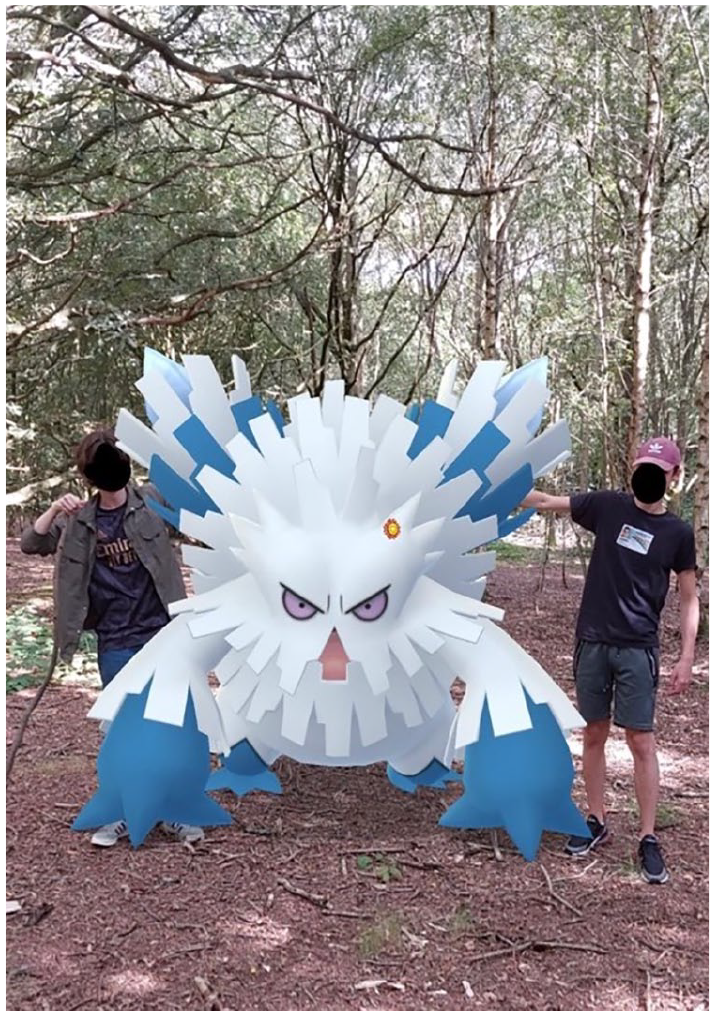
Bill’s walk with his friends playing with augmented reality.
Seb, 15, enjoys his increased autonomy over his free time and being active with friends rather than his parents. Seb likes to be able to choose how he is active and be independent from adults.
I feel like I’m more independent now. Like when I would go cycling with my friends or stuff or by myself. I just don’t really want to go with my parents because they’ll always have a set route and it’s always just restrictions and it’s just you will have to go that way. And if I don’t like it, I still have to go. And it’s just I have to follow on.
These boys are not only happier now that they can choose what PA they participate in, but are choosing to be active without external pressure from adults.
Parental Autonomous Support Influences Adolescent Boys’ Motivation to be Physically Active
Theme two found that during childhood, children have limited autonomy over their activities, and parents play an important role in introducing adolescent boys to various types of PA (Tilga et al., 2021). Participants were appreciative if their parents had given them options to try different PA as children and had provided a supportive and encouraging environment. Alistair, aged 16, who belongs to football (soccer) and running clubs, acknowledged his family’s influence, saying, “I think that has definitely shaped what types of activities I do. Exercise I do. Yes, I had lots of like different choices when I was young, and then you can really find something you love.” Frank, 17, had played cricket and football (soccer) as a child and is aware he did not have autonomy over these choices as his family had chosen them, but he was happy to take part: I probably didn’t have a choice, but then at the same time, I kind of wanted to, so it didn’t really matter if that makes sense. Like I wanted to pretty much always play football and I wanted to play cricket, but then let’s say I didn’t want to. Did I have the choice? I don’t know.
Martin, 13 (Figure 5), had been influenced by his parents’ choice of PA and showed a photograph taken by his parents.
Dad was quite good at hockey, I believe, when he was younger, and he wants me to be the same. He chose for me to go to the hockey club when I was like four or five. And I’m glad that he did because I really like hockey now.
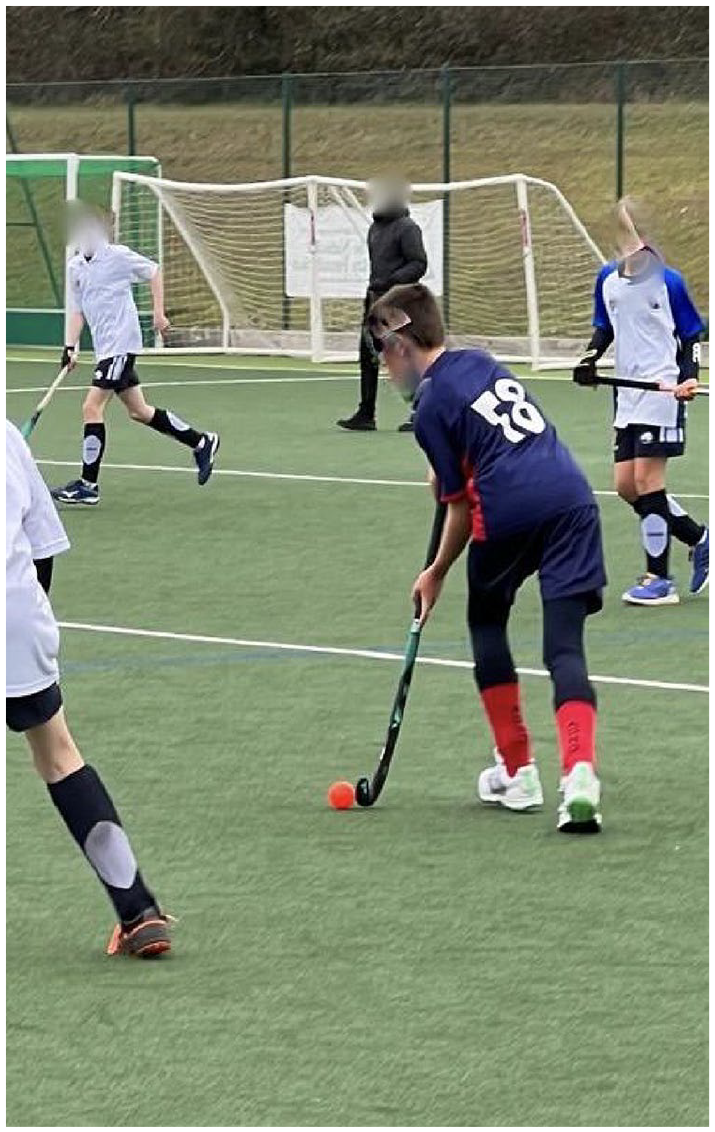
Martin playing hockey like his dad had as a child.
Older participants were experiencing more autonomy over their PA but still appreciated the enthusiasm and support they got from their parents to be active and healthy. Martin enjoyed discussing his hockey with his Dad, “My Dad often motivates me a lot and he gives me like talks, and he wants me to try and do better and he gives me advice trying to get her to do another sport.” Participants were aware that parents’ encouragement to be active is helpful, with Alistair saying, “Yeh, it’s good to have a bit of a push.”
Parental attitudes to what is considered PA can affect adolescent boys’ choices. Parents want their children to be involved in more structured, traditional, team-based PA. Some participants had decided to disregard their parents’ concerns and choose the PA they intrinsically enjoyed. Kenny, who sails regularly, explained that his Mother was surprised by his choice of PA as she did not see it as “sport” in the traditional sense as “It’s just not what she imagines sport to be.” Whereas Joe (Figure 6) had decided to continue doing a team sport alongside his mountain biking as his parents wanted him to. Joe explained: They do see mountain biking as a sort of sport and value the fitness side of bikes, the health side, but they have encouraged me to do a team sport as they sort of see it as building leadership and teamwork, and stuff like that, that individual sports don’t necessarily build in a person. So, I still do team sports.
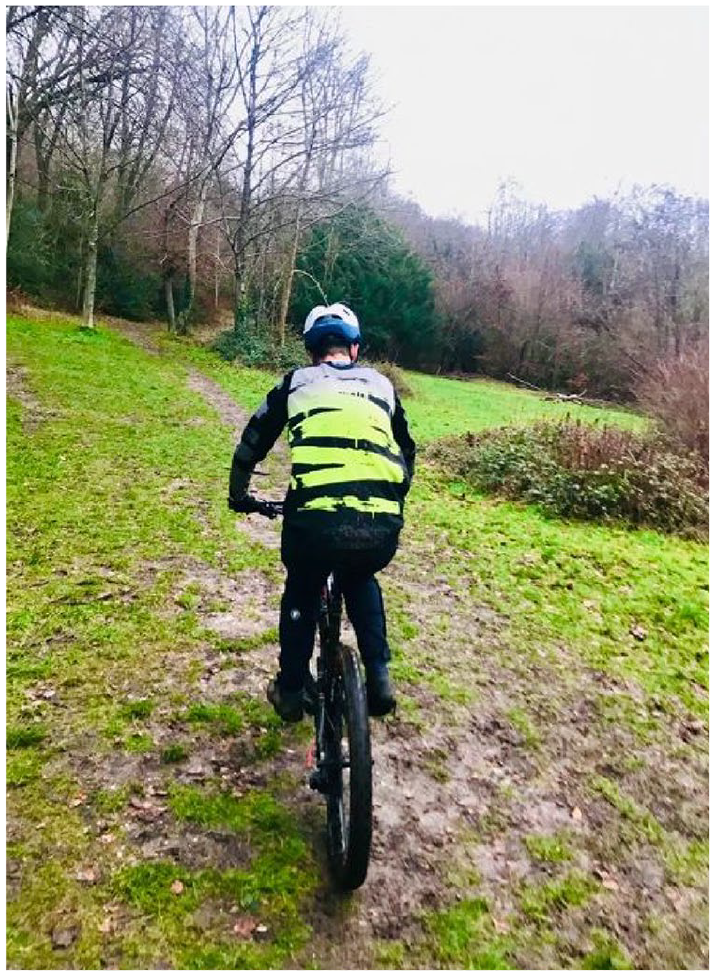
Joe mountain biking.
For many participants increased autonomy allowed them to choose what they do in their leisure time, rather than being dictated to by their parents. Bill had been taken to cricket coaching when he was younger, but he had chosen to stop playing as he was not enjoying it and stayed at home instead: I was going because I thought I had to because my Dad was paying for it. I realized after I missed the ball because I was daydreaming, that maybe I should just call it quits because I clearly don’t really enjoy it much.
Hugo played rugby as a child which was chosen by his Dad, He got me into rugby which I did for like 7 years. That was kind of his idea, but now you’ve got a lot more independence. I enjoyed rugby for ages. . . wanting to go and then one year, actually thought I’m not enjoying this, and yeah, so I just stopped.
Some adolescents felt pressure to continue in PA due to their parents’ wishes. Niko is a cross-country runner, but his parents want him to continue swimming to increase his fitness. Niko said, “I don’t really want to swim anymore. But . . . my parents, they convinced me to keep going. I see it as soon, in the next couple of years, I’d probably see myself quitting. But for now, it’s fine.” Parental autonomy support regarding PA is vital in early childhood but tends to diminish during adolescence as boys begin to make their own choices.
Adolescent Boys’ Increased Autonomy Can Sometimes Lead to Amotivation Toward Physical Activity
Theme three found the reduction in parental influence and increased personal autonomy resulted in some adolescent boys choosing to be less active. Bill, 17, said his parents wanted him to do PA when he was younger, but now he is choosing not to be active. Bill said, “They used to pester me a lot, but not so much anymore.” At 16, Luke felt that his parents’ influence over his PA had lessened, giving him more control over his choices. “It’s less about my parents telling me what to do and more about me actively making the decision. He’d (Luke’s Dad) say, “I think you should play some sport, maybe run around a bit or do some badminton.” Luke chooses not to. He believes that, now that he’s older, he has greater autonomy over his schedule and prefers to focus on music and schoolwork instead.
As children, participants’ parents were responsible for facilitating their PA, but they had not always been able to find an activity that their children enjoyed. The less active participants often felt resentful about the PA their parents took them to as children and chose not to continue in adolescence. Mo, 15, had been taken to various types of PA when he was younger, “In primary school, I did this hockey and tennis school club.” Mo had stopped going, saying, “I think most of the time it was just me being angry having to do it at like seven in the morning!” Seb, 14, (Figure 7) explained that his parents had tried different PA with him as a child, but now that he is older, he could choose to stay at home and game.
It’s been them telling me to try different things and stuff, which I didn’t want to do because I know I just want to, it may sound bad, but. . . I just want to stay at home and play my game. When I was younger, I think my parents took me to a lot of sports. I did judo for a bit, but I didn’t like that because it’s just physical contact and stuff. I like being free when I get home. I don’t like having something I know I need to do.
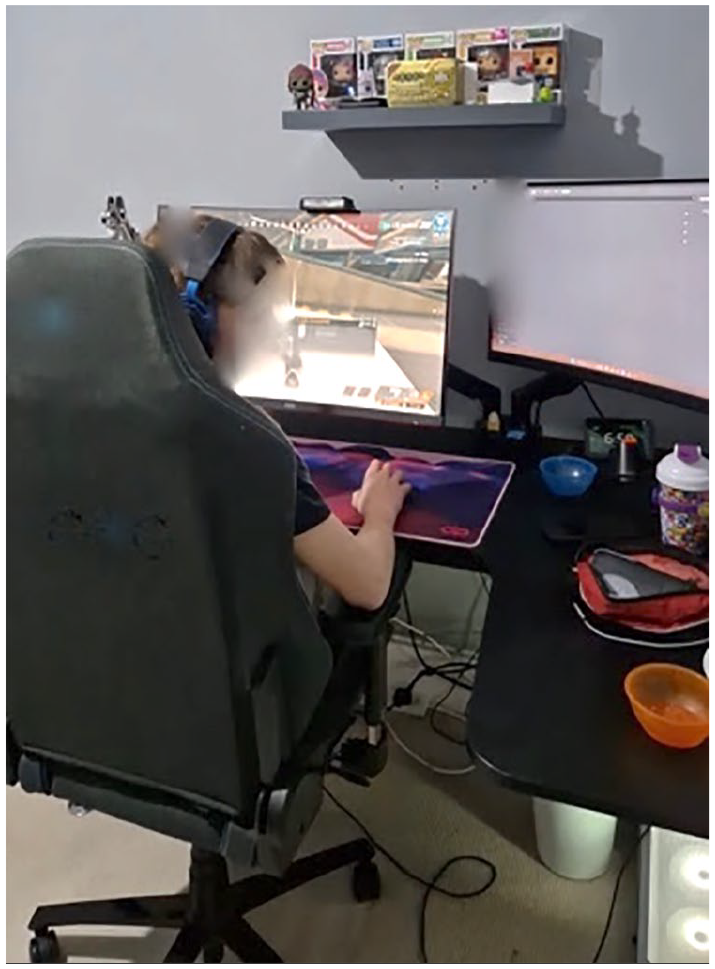
Seb gaming after school.
As participants aged and had more autonomy to choose their PA, those less motivated to be active chose sedentary or less active hobbies. Mo explained, “I like playing the piano because it makes me happy. I feel less compelled to do sports than to play the piano. I’m not doing sports or going outside because I prefer to do other stuff.” Participants had more autonomy and freedom in PE as they got older. From year 9, they could choose the PA, which was less active and inside, such as badminton or table tennis. Mo explained that as he doesn’t enjoy ball games outside, he chooses the other PE option, but is aware he won’t be as physically active during the lesson. “In games, there was an option to do table tennis or football (soccer).” Mo chose table tennis saying, But then I didn’t actually do any exercise really because people weren’t taking it seriously. My Fitbit didn’t record anything and that made me feel a bit guilty as I should have gone outside and actually got some form of exercise.
Boys who disliked PA as children or who had not found a suitable sport, often appreciated the freedom in adolescence to engage in less exercise and more sedentary activities.
Racial, Societal, and Cultural Masculine Identities Shape Adolescent Boys’ Autonomy and Motivation to be Active
Theme four found that how adolescent boys view their masculine identity affects their autonomy and motivations to be active. Participants felt external heteronomy manifested in a social expectation to be a certain body shape, weight, and size (Slater & Tiggemann, 2014). Luke had decided to do more PA to lose weight due to social stigma around his weight and body shape. Introjected feelings of shame about his body had been his main motivator to be more active, rather than autonomy-driven thoughts, such as enjoyment and self-satisfaction. Luke explains, Two years ago, I don’t think I would have had the same confidence as now in my body image because, you know, I was. . . I weighed quite a bit more. . . So, I went on a diet and did loads more exercise, but then I got to like quite a good weight and like my shape was way better. But I sort of realized at the end of it, I didn’t really like what I’d tried to be. It wasn’t to try and get rid of, you know, the shape of my body. It was mainly to try and get rid of my insecurity, but just by dieting and doing exercise, it didn’t really get rid of it.
Participants were asked to take photographs of what motivates and amotivates them to be active, and Luke took a picture of a cake (Figure 8). In response to why he took the photograph, he stated that eating calorific foods was a key motivation to be active. Luke’s response shows a lack of autonomy around his PA due to the need to comply with social norms and be a certain weight or body shape, saying, So, the cake was basically a motivator for exercising. So, if I would, you know, eat really really sugary foods. I would say, I think I should do a bit of exercise to cut down these calories a bit because like, that was my birthday cake. It was very tasty. I think eating food is one of the motivators for exercising. You don’t want to put on too much weight because that’s generally unhealthy for the body. If I eat like loads and loads of food I might do some sit-ups, might do some push-ups, just like I don’t know, just walk around a bit. Because like, it’s a feeling like when you see a Domino’s Pizza, then you eat it. Like it’s one of the best feelings, you know, eating the food, but then afterwards, the regret after eating the food and seeing what you’ve just done is like aaaah.

Luke’s birthday cake.
Luke, who identifies as British Chinese, described a cultural expectation around K-POP music as influencing his desire to change his body shape (Figure 9). Luke’s racial and cultural background has influenced his PA motivation with expectations to look a certain way, restricting his autonomy: The expectations. I think there’s a pressure from this part of Asia, like Korea, to sort of look like that. The hairstyles, the body structure, and the clothing. So, I think that’s probably one of the motivators that caused me to exercise. I don’t think it was necessarily a good one.

Luke’s K-POP idols on social media. This image had circles covering the faces to avoid a problem with copyright. There is one circle on one of the faces but the others arent there.
Despite feeling pressure to achieve the K-POP body ideals by becoming more active, Luke believes that these cultural influences caused extrinsic and controlling and did not contribute to his well-being.
You gain that body shape; you don’t enjoy it and you’re not really happy. Because you’d rather do it for something that would make you happy, rather than you know fitting into society’s expectations. Does anyone treat you differently or does it change much of anything? No.
Luke articulated that his main motivations for participating in PA are external, extrinsic regulations and sociocultural controls, which reduced his autonomy. Luke has stopped exercising, focusing on his music and schoolwork and is happy with his identity.
Participants demonstrated self-objectification, prioritizing body appearance over competence, which undermines their autonomy over PA and body image (Fredrickson & Roberts, 1997). For instance, Frank’s gym motivation focuses more on societal pressures for muscularity than on enjoyment or health. He reflected, “I think most people have similar reasons to start, you know, they’re not happy with how they look. They want to get stronger. It’s usually one of those two reasons.” Despite enjoying the gym and aiming to improve his football (soccer) performance, Frank’s main drive is esthetics. His social media feed centered on bodybuilding, further pressures his autonomy over the body and PA. Frank discussed his social media feed and whether he is happier with his body now, I go on my phone, and within a minute I could find like physiques that you will never see in real life. . . it’s just constant, it’s all I see. Mostly what comes up, to be honest, I don’t actively go out and really look for it, it just comes up. But no, I don’t think I’ll ever be happy, but that’s kind of the game, no one’s ever happy with how they look. Some people, even after they go to the gym, they then think they have a worse physique. They get less happy with the way they look.
When discussing the photos of bodies on his media feed, Frank (Figure 10) is aware the photos are not real bodies, saying, “It’s editing. They’ll distort it. They’ll make them wider (pointing at the shoulders) and things like that.” Yet when asked, even though he knows it isn’t “real” and has been edited, if he would like to look like the image, he says, “Yeah, that’s like close to the ideal.” Frank is aware that the pressure to be muscular has reduced his autonomy, and trying to achieve an unrealistic body shape by going to the gym will not improve his sense of well-being.
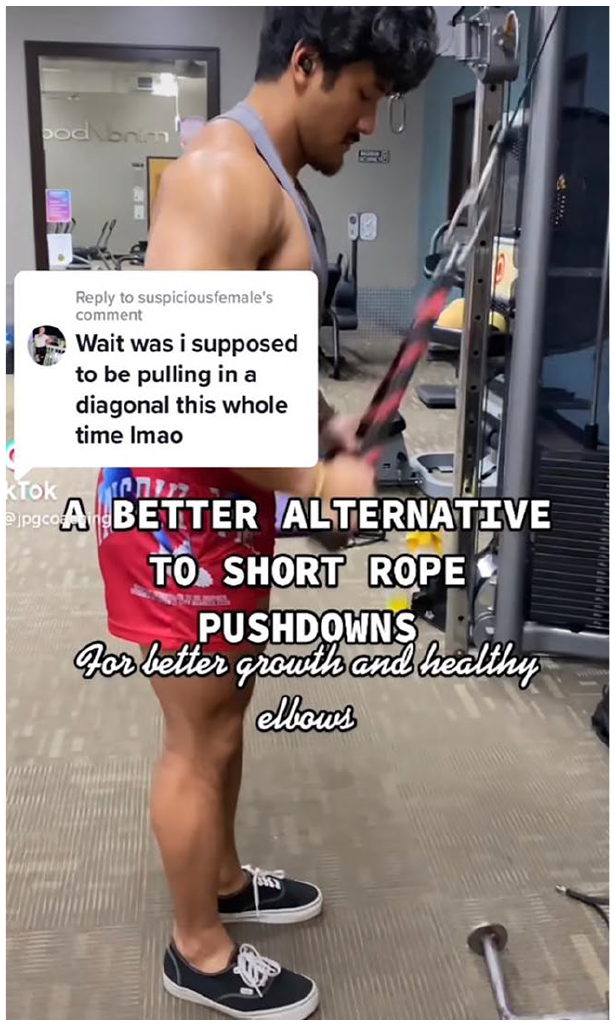
Frank’s social media feed.
Discussion
The study extends our knowledge into how adolescent boys’ autonomy influences their PA participation. The findings highlight how a strong sense of autonomy in PA is crucial for instilling intrinsic motivation among adolescent boys, which enhances their engagement. By addressing the impact of rigid masculine norms and advocating for inclusive, diverse PA programs, this research offers valuable insights into promoting long-term health and well-being for boys. Our findings revealed that as boys mature and gain more control over their PA, their motivation is significantly impacted by increased perceived autonomy. The findings illustrate how the transition from structured, adult-guided activities to self-directed choices can either strengthen or weaken their enthusiasm for PA. This outcome largely depends on whether adolescent boys find activities that resonate with them. Boys who discovered intrinsic motivation for PA at an early age tend to remain active. Conversely, those who struggled with PA in their younger years benefit from having the freedom to choose how, when, and with whom they engage in PA. This autonomy helps adolescent boys align their activities with their evolving identities. However, our findings also reveal that some adolescent boys have yet to find a PA that fits their interests and, as a result, may be avoiding it altogether or engaging in less moderate to vigorous physical activity (MVPA). The findings also support research that adolescent boys’ autonomy and embodiment are influenced by societal expectations to be active, pressure to conform to masculine ideals, and the social pressure to view their bodies as aesthetic assets (Baceviciene et al., 2022). In line with studies on gender expression, the participants encountered the need to exhibit heteronormative, hegemonic body image and gender expression within PA spaces and, in particular, around their peers (Kenny et al., 2016). These intense pressures challenge not only their engagement in PA but also their personal autonomy and sense of identity.
Our findings align with existing evidence that boys had limited autonomy over PA when younger, relying on parents to introduce them to activities (Lau et al., 2016). As they reached puberty, study participants described increased freedom and control over their free time, leading to greater autonomy over their PA. Our study builds on existing literature by showing that adolescents often shift their PA choices during puberty, aligning activities with personal goals and spending more time with friends than family (Fraguela-Vale et al., 2020). While the boys had previously followed their parents’ PA expectations, they now make their own decisions, supporting earlier findings that fathers introduced their sons to traditional UK sports like rugby, cricket, and football (soccer). Participants described having the autonomy to follow parental expectations or choose activities aligned with their identities, rejecting their parents’ choices. It was inspiring to observe boys who did not view themselves as “sporty” in childhood discovering PA that aligned with their teenage identity and values. These activities, such as sailing and walking, often diverged from traditional heteronormative masculinities, providing a more authentic and meaningful engagement for the boys while also challenging restrictive gender norms during adolescence. The attitudes of parents toward PA are influential, with some families fostering an autonomy-supportive view of fitness and health. Consistent with existing research, parents often favored traditional sports like football (soccer) and swimming and need to be informed that PA can encompass a wide range of activities beyond traditional sports (Tilga et al., 2020).
For some boys, increased autonomy and decreased adult control as they aged led to reduced PA engagement, with boys who do not enjoy PA feeling more autonomy to choose less active or sedentary activities. Our study found that while parents often facilitated active hobbies when boys were younger, increased independence led some to abandon PA for activities like gaming, music, social media, and socializing. Adolescent boys, who often have delayed social and cognitive maturity compared to girls (Fraguela-Vale et al., 2020), may not fully grasp the long-term health impacts of sedentary choices and the difficulty of re-engaging in PA later (Beddoe et al., 2023). Although quantitative studies report a positive correlation between autonomous motivation and exercise (Teixeira et al., 2012), we found that boys who dislike PE could choose lower activities with MVPA, such as badminton or table tennis, allowing them to socialize with less supervision. To meet PA recommendations, it is essential to elevate lower MVPA activities to the same level as other sports in terms of structure and coaching. By offering personalized or tiered options in PE and incorporating non-competitive, cooperative activities, boys can build confidence and achieve success. Autonomy-supportive environments are created by boys being able to set their own goals and make choices, which enhances intrinsic motivation and reduces the fear of mistakes. Peer mentoring and robust anti-bullying programs further encourage a supportive and inclusive atmosphere in PE.
Our findings are consistent with literature connecting boys’ masculine embodiment with their beliefs and behaviors in PA (Arbeit et al., 2016). The boys in our study described the pressure to conform to hegemonic masculinity could lead to internalized negative body image and reduced PA participation. This reflects previous work (Light & Kirk, 2000; Swain, 2006) on the intense pressure to perform masculinity rather than to simply enjoy PA, highlighting deeply ingrained social expectations around masculinity that can undermine boys’ confidence in their bodies. Previous research indicates that male identity affects PA motivations, with external pressures related to body image influencing activity levels (Baker et al., 2019; Markland & Ingledew, 2007). Our study supports this, as boys were aware of social stigma around being overweight and experiencing guilt and shame as motivators for PA (Ryan & Deci, 2000). Our research challenges the view that all boys prioritize muscularity, showing that masculinity is defined subjectively and can be expressed through various physical appearances (Monocello, 2023). Sociocultural body expectations should be examined more deeply to include multiple masculine identities beyond Western norms. For example, South Korean K-POP culture has popularized leaner body types among some adolescent boys (Monocello, 2023). These findings emphasize the need to understand boys’ autonomy within diverse social, cultural, and racial contexts beyond Western ideals. This study extends previous literature (Hill, 2013; Mora, 2012) in understanding how race and cultural identity intersect with masculinity, with different experiences for boys depending on their background.
Our study supports the notion of self-objectification, where boys prioritize physical appearance over body competence, resulting in controlled embodiment, the promotion of body shaming, and ultimately reduced autonomy over their bodies (Fredrickson & Roberts, 1997). Boys focused on diet and exercise to meet societal ideals of body image rather than for health, with boys who weight trained specifically aiming to boost attractiveness and body esthetics for extrinsic reasons (Rosenblum & Lewis, 1999). Previous research found that bodybuilders often face extrinsic pressure to present flawless bodies on social media (Goodyear & Quennerstedt, 2020). In our interviews, participants discussed sharing images of “perfect” bodies on Instagram and TikTok, striving for these physiques despite recognizing their digital alteration. This aligns with Goodyear and Quennerstedt’s (2020) finding that societal pressures for unrealistic body perfection compromise boys’ autonomy.
Adolescent boys need individualized support to stay active into adulthood, emphasizing autonomy-supportive environments at home, school, and PA spaces (Beddoe et al., 2023). Boys socially and cognitively mature later than girls, continuing to develop self-regulation and decision-making skills into early adulthood (Fraguela-Vale et al., 2020). It is, therefore, important to provide autonomy support to boys going through this transitional phase to make informed decisions about their body and PA.
Limitations and Future Studies
COVID-19 affected this cohort of adolescent boys’ PA experiences by reducing their abilities to exercise with others (Ng et al., 2020). The study participants were from higher socio-economic families in small towns and rural locations, and future research is needed on PA autonomy amongst adolescent boys in lower socio-economic groups and urban environments to examine whether these factors affect autonomy. Focus groups were used in previous studies (Fernández-Prieto et al., 2017; Hill, 2013) alongside individual PEIs and should be considered in future research, particularly when discussing complex socio-cultural issues such as how gender identity and race affect adolescents. Future research should investigate how the self-determined need for autonomy can be optimized in PA settings for boys. As the findings suggest that increased autonomy can sometimes lead to a reduction in PA, it is imperative to provide an autonomy-supportive environment that keeps boys engaged in PA. Co-constructing interventions for adolescent boys to stay active is an effective approach to ensuring they feel a sense of autonomy over their PA choices. The findings also indicate that hegemonic masculinity stereotypes remain prevalent in PA spaces and may limit some boys’ participation. Further research is needed to explore how different types of masculinity interact with PA choices and how inclusive PA environments can support diverse expressions of masculinity. Boys who do not enjoy hypermasculine sporting environments might benefit from non-traditional forms of physical activity, such as individual sports and non-competitive activities.
Conclusion
This novel qualitative study provides valuable insights into the complex relationships between adolescent boys’ autonomy and their PA, revealing how nuanced and interconnected factors affect autonomy and providing a deeper understanding of how we can effectively encourage adolescent boys to remain active. As boys gain more autonomy during adolescence and the role of significant adults diminishes, they acquire the freedom to choose where, when, and with whom to be active. Boys typically mature socially and cognitively later than girls, so they require a structured autonomy-supportive environment from parents, teachers, and coaches to maintain PA into adulthood. We found that increased autonomy can be associated with reduced PA, as boys may choose to be less active.
The research confirms the need to look beyond traditional team PA and PE to provide autonomy-supportive environments for boys to discover activities that align with their developing identities. Significant others need to acknowledge the added socio-cultural pressure of hegemonic masculinity, cultural body images, and self-objectification, which can undermine adolescent boys’ PA autonomy. We must look beyond Western notions of masculinity to create inclusive spaces for diverse forms of masculine expression in PA. Empowering boys with autonomy over their choices allows them to make informed decisions about their health and well-being within a supportive and encouraging environment.
Supplemental Material
sj-docx-1-jar-10.1177_07435584251330810 – Supplemental material for “Making Choices for Yourself”: A Qualitative Visual Methods Study on Adolescent Boys’ Autonomy in Physical Activity
Supplemental material, sj-docx-1-jar-10.1177_07435584251330810 for “Making Choices for Yourself”: A Qualitative Visual Methods Study on Adolescent Boys’ Autonomy in Physical Activity by Amelia Beddoe, Rebecca Hings and Charlotte Kerner in Journal of Adolescent Research
Footnotes
Declaration of Conflicting Interests
The author(s) declared no potential conflicts of interest with respect to the research, authorship, and/or publication of this article.
Funding
The author(s) received no financial support for the research, authorship, and/or publication of this article.
Ethical Approval
This study was approved by the University Research Ethics Committee (UREC), Brunel University London. Code: 36480-MHR-Sep/2022- 41626-3
Consent to Participate
Informed consent was obtained from the parent/carer of the adolescents, and assent was obtained from the participants.
Consent for Publication
Informed consent for publication was obtained from participants and their parent/carer.

Data Availability
Data supporting the findings are not available.
Supplemental Material
Supplemental material for this article is available online.
Author Biographies
References
Supplementary Material
Please find the following supplemental material available below.
For Open Access articles published under a Creative Commons License, all supplemental material carries the same license as the article it is associated with.
For non-Open Access articles published, all supplemental material carries a non-exclusive license, and permission requests for re-use of supplemental material or any part of supplemental material shall be sent directly to the copyright owner as specified in the copyright notice associated with the article.
