



Abstract
For older adolescents, the COVID-19 pandemic and UK restrictions arrived during a critical period in the transition to adulthood. Early research exploring impact of the pandemic paints a picture of worsened adolescent wellbeing and mental health. We explore the subjective experiences of 16- to 19-year-olds during the first UK lockdown, with an emphasis on wellbeing and coping, to complement quantitative evidence and inform strategies and provision for support. In May 2020, we invited UK-based 16- to 19-year-olds to share written accounts of their experiences of the initial UK lockdown for The TELL Study. A total of 109 participants engaged, submitting anonymous written accounts via an online survey portal. We used inductive reflexive thematic analysis to develop rich experiential themes. We constructed seven main themes: heightened emotionality; feelings of loss, change, and uncertainty; recognizing the value of self-care; efforts to think positively; opportunities for relief, growth, and development; the importance of togetherness; and frustration with government and media. Findings highlight the multifaceted nature of adolescents’ lockdown experiences, and offer insight into emotional impact and new concerns alongside the value placed on self-care and staying connected. We offer directions for supporting adolescents as pandemic consequences continue.
Keywords
Background
On March 23, 2020, the United Kingdom (UK) Government implemented a lockdown in response to the novel coronavirus disease 2019 (COVID-19) pandemic. This included strict restrictions on face-to-face social contact, time spent outdoors, and ability to work, as well as severely reduced access to school and education services. Though such measures were intended to slow the progression of COVID-19, concerns were raised about the possible short- and long-term impacts for mental health and wellbeing (Holmes et al., 2020). Indeed, evidence suggests that by late April, mental health among UK individuals aged 16 and above had worsened compared to pre-COVID-19 trends (Pierce et al., 2020). Notably, evidence has suggested that the impact of restrictions was not equal across groups, with some individuals at greater risk of distress and poor mental health than others, and indications of growing mental health inequalities (Banks & Xu, 2020; Fancourt et al., 2020; Pierce et al., 2020).
Specifically, early in the pandemic, researchers raised initial concerns about the potential impact on adolescents and young people as one of several groups at risk (Clemens et al., 2020; Holmes et al., 2020; The Lancet Child & Adolescent Health, 2020). Younger groups faced considerable disruption to daily life, reduced access to support, and the threat of COVID-19 for themselves and their loved ones during an already vulnerable period for mental health (Jones, 2013). Initial evidence seems to have corroborated such concerns, to an extent. Pierce et al. (2020) tracked UK population-level mental health before and during the pandemic and identified an increase in mental distress in young adults aged 18 to 24, while Banks and Xu (2020) reported worsened mental health trends among young adults aged 16 to 25 during the pandemic compared to previous years. Fancourt et al. (2020) reported that younger UK adults reported greater anxious and depressive symptoms in the initial stages of the March lockdown, though they also found that this group showed a quicker recovery compared to older adults. Evidence from other countries echoes these trends, indicating greater distress and anxiety among adolescents and young adults (Chen et al., 2020; Newby et al., 2020; Xiong et al., 2020). Many (but not all) such studies relied on convenience samples, necessitating caution, and at the time of writing there is limited peer-reviewed empirical evidence relating to younger adolescents compared with adult populations. However, taken together, emerging evidence indicates vulnerability among adolescents and young people in the context of COVID-19 restrictions, and highlights the need for further exploration of experiences and key issues among these age groups.
For older UK adolescents aged 16- to 19 years, the pandemic and restrictions arrived at a key moment in the transition to adulthood. Late adolescents tend to be increasingly autonomous as developmental shifts bring greater self-regulation and ability to conceptualize the consequences of one’s actions (Patton et al., 2016). Considerable emphasis is typically placed on social connection with peers, and indeed evidence indicates that positive (e.g., supportive) peer relationships and friendships are associated with greater psychological wellbeing and reduced mental health symptomatology at this time (La Greca & Harrison, 2005). Thus, although they are at low risk for the physical health impacts of the virus (Castagnoli et al., 2020), UK March 2020 restrictions brought considerable disruption to “normative” daily life among this group. Staying inside, not attending education settings, and only socializing with one’s own household (likely to consist of family members), curtailed late adolescents’ independence and prohibited in-person interactions with peers. For some, restrictions also meant continuous exposure to challenging home circumstances, such as high-conflict family relationships and domestic or child abuse (Crawley et al., 2020).
Late adolescence also frequently brings educational and vocational shifts. In the UK, this age group typically finishes secondary education, engages in some form of further/higher education, goes onto further training, or enters the workforce. Thus, this stage encompasses various transitions, high stakes examinations, and considerable future-oriented decisions and planning (Patton et al., 2016). In 2020, education settings were closed and key high stakes examinations cancelled, most notably GCSEs (General Certificate of Secondary Education; undertaken nationally at age 15–16) and A Levels (General Certificate of Education Advanced Level). Alternative grading systems were put in place, relying on teacher assessment and prior mock exam results, though this process took several months. Concerns were noted over the uncertainty such shifts could bring for adolescents (The Lancet Child & Adolescent Health, 2020), and initial international evidence indicated that such disruptions were creating considerable feelings of uncertainty (Scott et al., 2021).
Rationale
Early research painted a picture of worsened wellbeing and mental health for older adolescents in the context of the pandemic (Banks & Xu, 2020; Fancourt et al., 2020; Pierce et al., 2020). Restrictions brought considerable disruption and introduced challenges at odds with normative experiences, which may have had adverse consequences for wellbeing. It is imperative to explore older adolescents’ experience of lockdown so that we might learn from their experience and use it to develop strategies to support them through the ongoing pandemic and its aftermath. Notably, initial UK research with adolescents and young people adopted quantitative designs. While monitoring of mental health and wellbeing among the wider population has been important during this time, we must also ensure focused investigations among at-risk populations, including through qualitative exploration (Demkowicz et al., 2021; Holmes et al., 2020). Critically, efforts to translate “monitoring” knowledge into meaningful steps for support and provision will be challenging without understanding the subjective experience of adolescents themselves. Researchers have also been using “pre-COVID-19” knowledge to inform provision and support for adolescents at this time; however, the novelty of these circumstances means such inferences are not always straightforward (Gilleard et al., 2020). Gaining insight into adolescents’ personal experiences of the pandemic is essential for informing policy and practice as the pandemic and its consequences continue. However, evidence capturing the perspectives of adolescents during the pandemic has been limited. In this study, we contribute to this developing evidence base by exploring the subjective experiences of older adolescents during the first UK lockdown. Specifically, we focus on understanding how 16- to 19-year-olds make sense of their lockdown experiences, perceive the impact of lockdown on their circumstances, and experience and manage their wellbeing in lockdown.
Method
Research Design
The current study, The TELL Study (Teenagers’ Experiences of Life in Lockdown), qualitatively explores subjective experiences of the UK COVID-19 lockdown among adolescents aged 16- to 19 years. We focused on subjective, individualized experiences of lockdown and therefore adopted a qualitative design within a social constructivist lens, which recognizes individualized constructions of reality (Patton, 2015). Our approach was exploratory, and so we adopted an open-ended approach within data generation and an inductive approach to analysis, focusing on what was meaningful to participants rather than exploring through a specific theoretical or conceptual lens (Braun & Clarke, 2006). As noted in the previous section, evidence exploring adolescents’ perceptions and experiences during the pandemic has been limited overall, and insight into their subjective experiences is imperative to make sense of the wider evidence and inform policy and practice. We used a social constructivist lens and open-ended approach in an effort to contribute to bridging this gap and promote adolescents’ voices and experiences as researchers, policymakers, and practitioners attempt to understand how lockdown and the wider pandemic have affected youth in the UK.
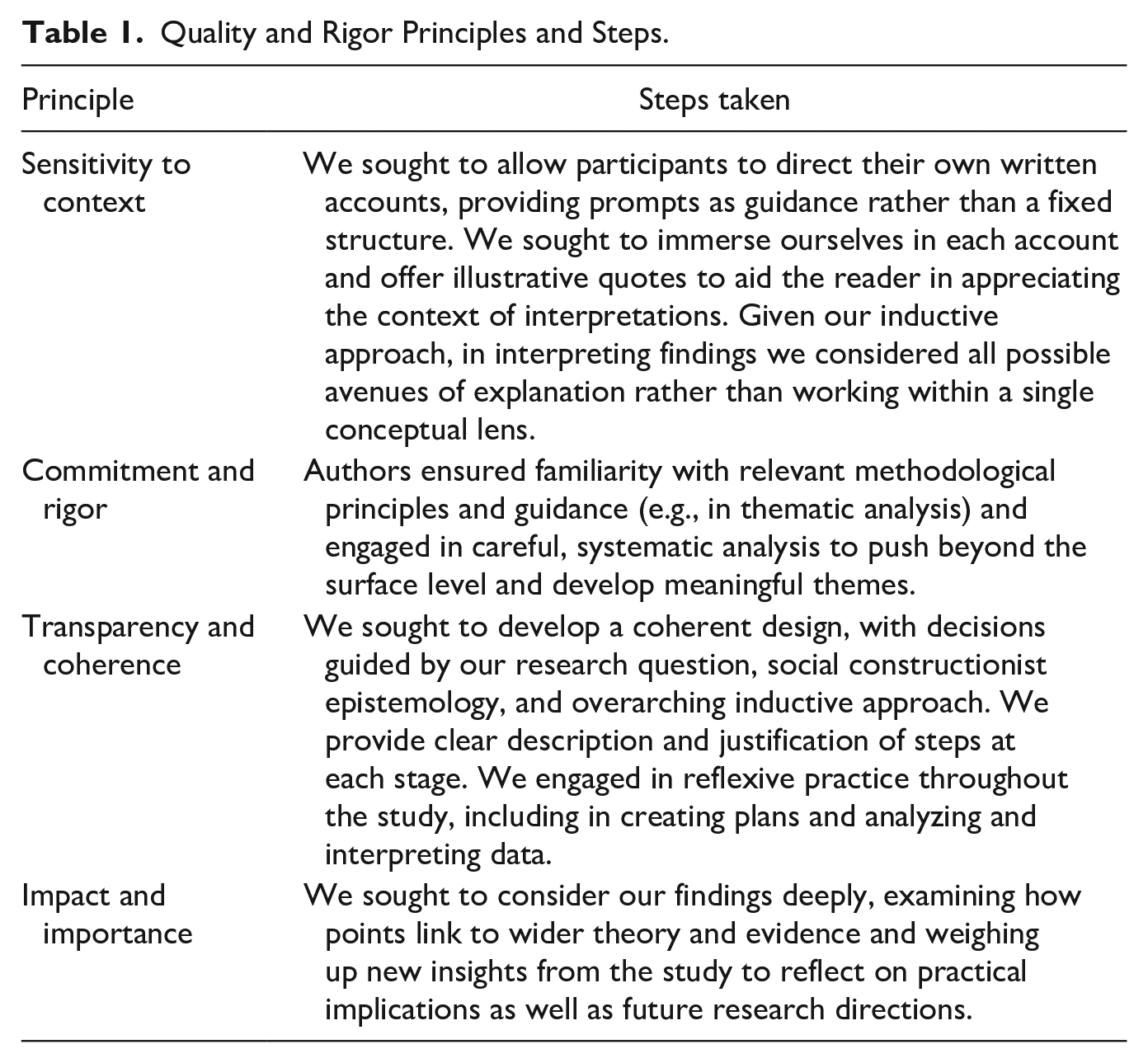
In May 2020 we invited 16- to 19-year-olds based in the UK to share their initial lockdown experiences. We used anonymous written accounts, submitted via a secure online questionnaire server (SelectSurvey), to allow participants to reflect independently and in their own space and time, given the novel and unfamiliar nature of lockdown. We analyzed data using reflexive thematic analysis and here we adopt a pragmatic approach to exploring and making sense of our findings, drawing pluralistically on relevant theory and conceptualizations to best make sense of these data-driven findings. Our design was informed by Yardley (2015) quality principles of sensitivity to research context, commitment and rigor, transparency and coherence, and impact and importance (see Table 1).
Quality and Rigor Principles and Steps.
Given the study’s timeliness amid the pandemic, we outlined key findings in a public-facing report for 16- to 19-year-olds and those supporting them (Demkowicz et al., 2020). Here, we explore findings for an academic audience, with greater depth and detail, connections to theory and prior research, and reflection on implications.
About the Researchers
In line with qualitative research guidelines (American Psychological Association, 2018), we describe the authorship team. We are mixed methods and qualitative adolescent mental health researchers, with specialisms in risk and resilience, help-seeking and social support, and school-based wellbeing and mental health provision. Author 4 (Hanley) is also a counseling psychologist with over 10 years’ experience as a school-based counselor, and a parent to adolescents during the pandemic; Author 5 (Pert) is a former secondary school teacher. In designing the study, we drew on our existing theoretical understanding of adolescent wellbeing and mental health and related processes (e.g., emotion experience, coping, social support) but sought to set aside specific theoretical lenses given the study’s exploratory approach.
Participants
In total, 109 individuals volunteered to share their experiences. Inclusion criteria were being 16- to 19-years old, and living in the UK. We recruited purposively via various routes. We called for participants on Twitter, aiming to reach both adolescents and adults who may pass along information (e.g., parents/carers, professionals). We contacted a range of networks and organizations and asked them to share this with adolescents and those supporting them, both national (e.g., the Anna Freud National Centre for Children and Families, Association of Colleges) and regionally and locally specific (organizations across England, Scotland, Northern Ireland, and Wales, and local networks such as a Manchester-based teacher network and university volunteering sites at host institutes in Manchester and Liverpool).
A sample in the region of 100 participants is quite large in qualitative online survey research (Braun et al., 2021). We initially planned for a smaller sample of 30 participants, and engaged this number in just a few days. Upon reviewing data from our initial participants, we found that that the length and richness of response varied, and felt that the quick response to our call for participation indicated a desire on the part of adolescents to share their experiences of this unusual time. Taken together with the large size of the target population, we expanded the study to approximately 100 participants, with ethical approval, to offer space to more adolescents to contribute and to generate a rich, expanded dataset. This aligns with guidance encouraging contextual sample size consideration and continual reviews of plans during data generation (Braun & Clarke, 2021; Braun et al., 2021).
Participants’ mean age was 17.6 years (SD = 1.22). Of the total sample, 87 participants (79.8%) identified themselves as girls and women, and a smaller proportion of 22 participants as boys and men (20.2%). All participants reported being in some form of education; 13 (11.9%) attending school, 52 (47.7%) attending further education, 1 43 (39.4%) attending higher education, 2 and 1 (0.9%) attending another form of education. In terms of ethnicity, the sample is broadly similar to the current national pattern recorded for state-funded secondary schools and thus the current generation of UK adolescents (Department for Education & Office for National Statistics, 2019); the majority were White (n = 69; 63.3%), followed by Asian (n = 21, 19.3%), Black (n = 7, 6.4%), mixed (n = 4, 3.7%), Chinese (n = 3, 2.8%), and other (n = 4, 3.7%). The remaining 0.9% chose not to disclose ethnicity. Four participants disclosed that they had left the UK during lockdown to return to their home country. We included these participants as they were in the UK for part of the lockdown.
Data Generation
In May 2020 we invited 16- to 19-year-olds in the UK to share their experiences of the initial lockdown so far. Participants anonymously submitted written accounts of their experiences via a secure online questionnaire server, SelectSurvey. We used written accounts, rather than interviews or focus groups, to allow participants to take their time, reflect independently without researcher presence, and focus on experiences most salient to them (Braun et al., 2021). Participants remained anonymous to minimize social desirability and aid candor (Braun et al., 2021). Participants could request a certificate for contributions to socially responsible research, an age-appropriate recognition of contributions (Kirby, 2004), and requested this in a separate link to preserve account anonymity.
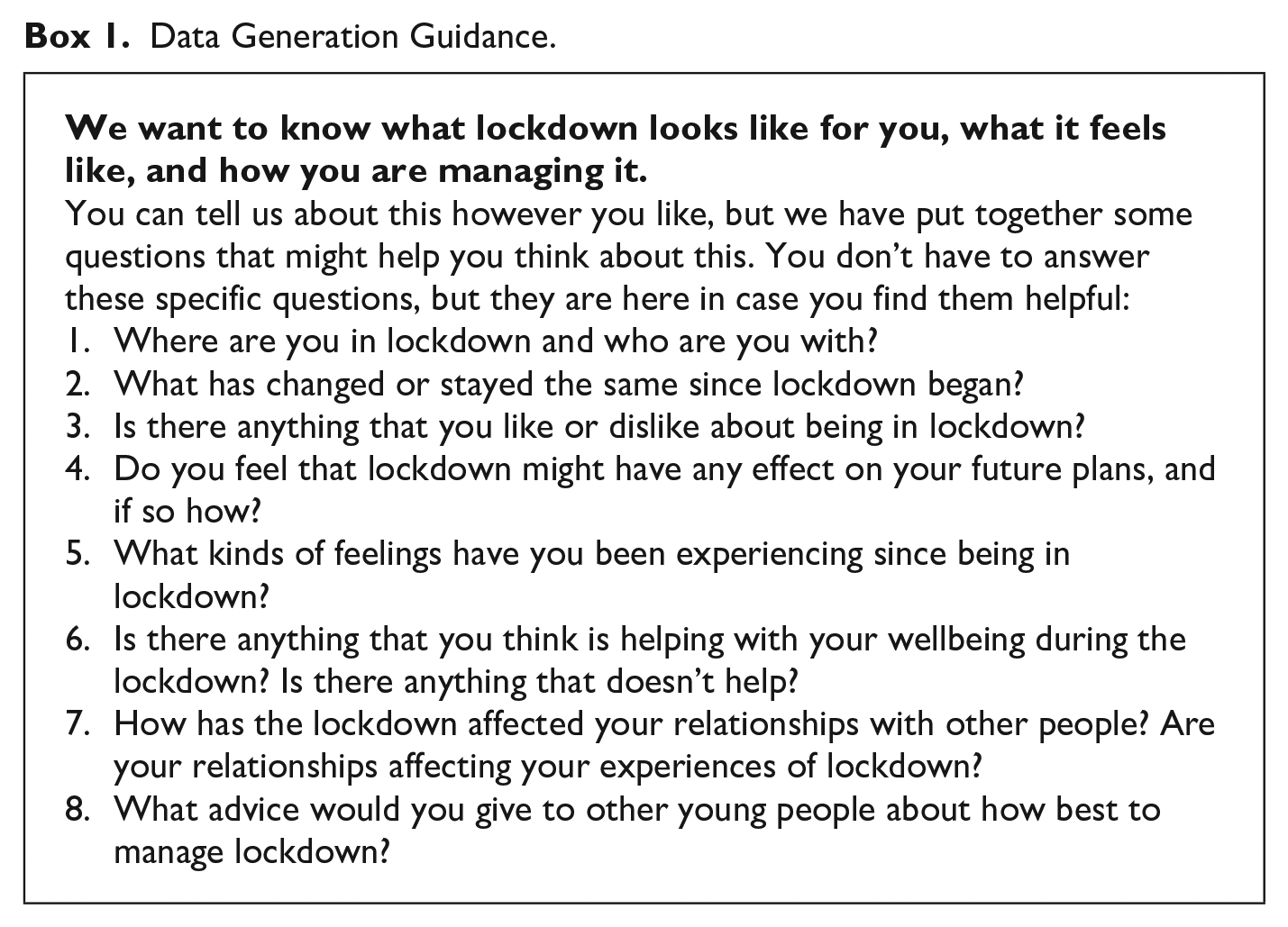
We offered a single box for writing to allow participants to focus on what was most personally meaningful and enable unanticipated points to arise, in line with our inductive approach. We provided a broad, open-ended objective for the account along with question prompts (shown in Box 1) that participants could use to reflect on. These instructions and prompts were presented immediately above the box where participants wrote accounts so that participants could refer back if useful. However, we used a singular text box for accounts rather than a box for each individual question in line with our inductive approach, our emphasis on eliciting and promoting youth voices during this time, and given the novelty of the situation and anticipated variety of lockdown experiences. We ended with a prompt asking participants for advice to other teenagers, to end positively and provide some personal distance (a summary of this advice is publicly available; Demkowicz & Ashworth, 2020). Length of accounts varied, from seven to 1,215 words, with a mean length of 409.71 words 3 (SD 289.57) and a median of 358 words. Only 13 accounts (11.9%) were less than 100 words; these were often focused on particular aspects of experience or simply briefer in style. We included these as they each offered clear reflections from participants, and as this may be all that these participants felt able to offer during an unusual time.
Data Generation Guidance.
We asked participants to provide age, gender, ethnicity, and education status (see Box 2). Given the novelty of lockdown, we aimed to reduce data burden and limited the details requested (see Strengths and Limitations section). We presented these questions before the written account page, as they are concrete and less threatening to begin the process (Braun et al., 2021) and to ensure participants went straight to signposting after writing.
Demographic questions.
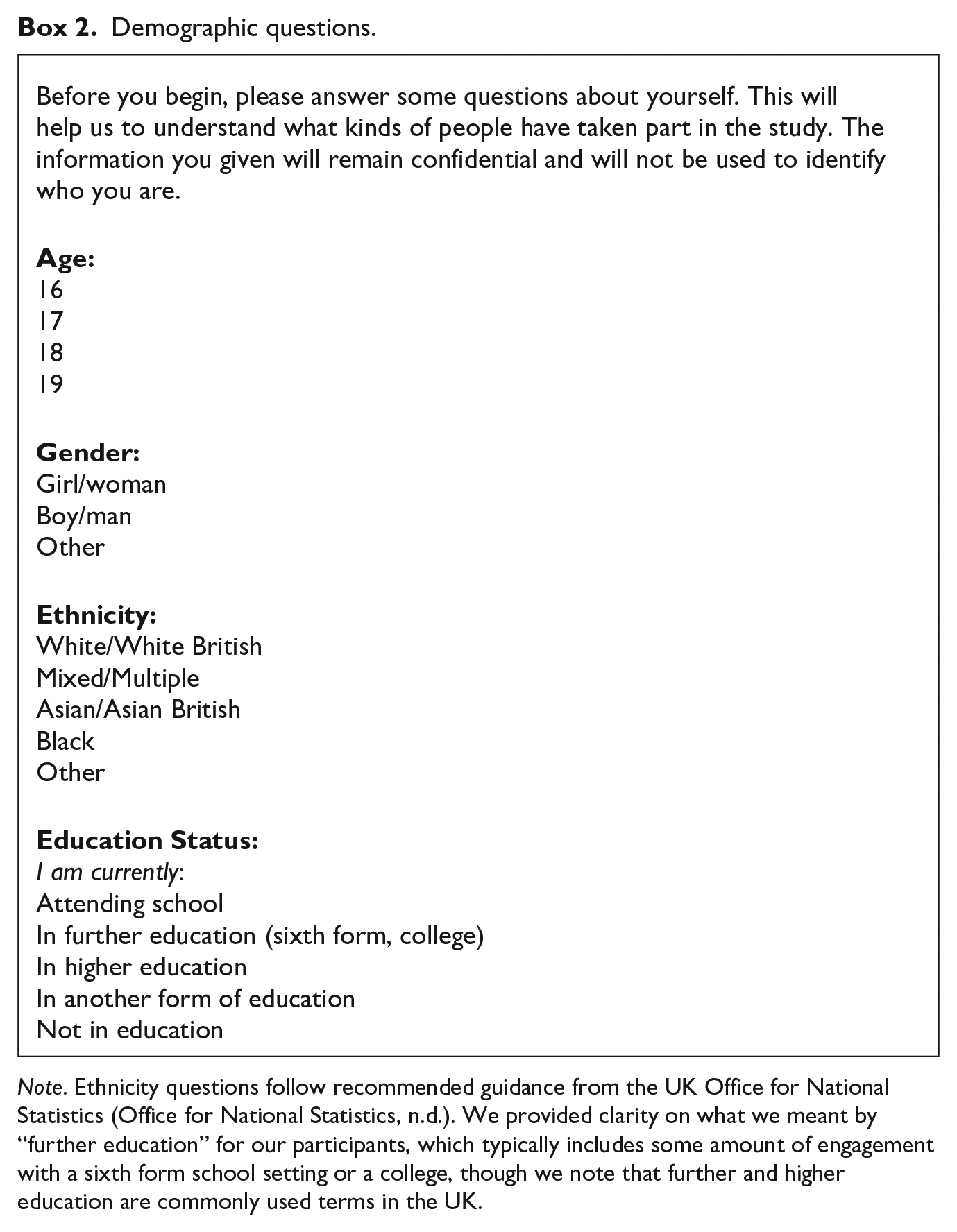
Note. Ethnicity questions follow recommended guidance from the UK Office for National Statistics (Office for National Statistics, n.d.). We provided clarity on what we meant by “further education” for our participants, which typically includes some amount of engagement with a sixth form school setting or a college, though we note that further and higher education are commonly used terms in the UK.
Ethical Considerations
The study was approved by the host institute’s ethics committee (Ref: 2020-9615-15277); procedures were informed by institutional and wider guidance (The British Psychological Society, 2014). Participants were presented with information on the research and consented by clicking to agree that they had read and understood key information and met inclusion criteria. Immediately prior to the writing page, we included a reminder of the expected time for completion (maximum 1 hour) and that they should only take part if feeling safe and comfortable to do so and should take a break if needed. We offered regular signposting throughout to services relevant for COVID-19 symptoms, unsafe environments, and mental health, and developed a procedure should a participant directly ask for help.
Analysis
We analyzed data using Braun and Clarke’s (2006) reflexive thematic analysis. This aligned with our focus on developing rich experiential themes that could capture latent features of the data and offer nuanced insights into participants’ subjective experiences. We adopted an inductive approach, focusing on what was meaningful to participants rather than analyzing through a specific lens. We followed Braun and Clarke's (2006) six-stage process, and the first three authors (Demkowicz, Ashworth, and O’Neill) undertook this analysis process, engaging in regular debriefing and reflexive discussion, consistent with guidance (Nowell et al., 2017). First, Demkowicz and Ashworth familiarized themselves with all accounts, reading and re-reading and noting down and discussing initial reflections. Next, we allocated accounts for coding between Demkowicz, Ashworth, and O’Neill; here, O’Neill familiarized themselves with their allocated accounts. We engaged in inductive line-by-line coding of each allocated account in NVivo to systematically explore and identify features with relevance to our research questions. Demkowicz reviewed coding across the dataset and Demkowicz, Ashworth, and O’Neill met together via Zoom to begin to construct themes. Demkowicz reviewed themes against coded data, worked to refine names of themes, and produced a brief written summary of initial theme constructs to help further refine the concepts. These three authors then met with the fifth author, Pert, to engage in reflexive discussion to explore our decisions and examine where further consideration may be valuable; we then revisited and developed themes and their names accordingly.
Findings
We constructed seven main themes, each capturing several subthemes: (1) Heightened emotionality; (2) feelings of change, loss, and uncertainty; (3) recognizing the value of self-care; (4) efforts to think positively; (5) opportunities for relief, growth, and development; (6) the importance of togetherness; and (7) frustration with government and media. Figure 1 presents these seven themes alongside their associated subthemes. This section details and explores these themes, drawing on quotes to illustrate and evidence the aspects discussed.
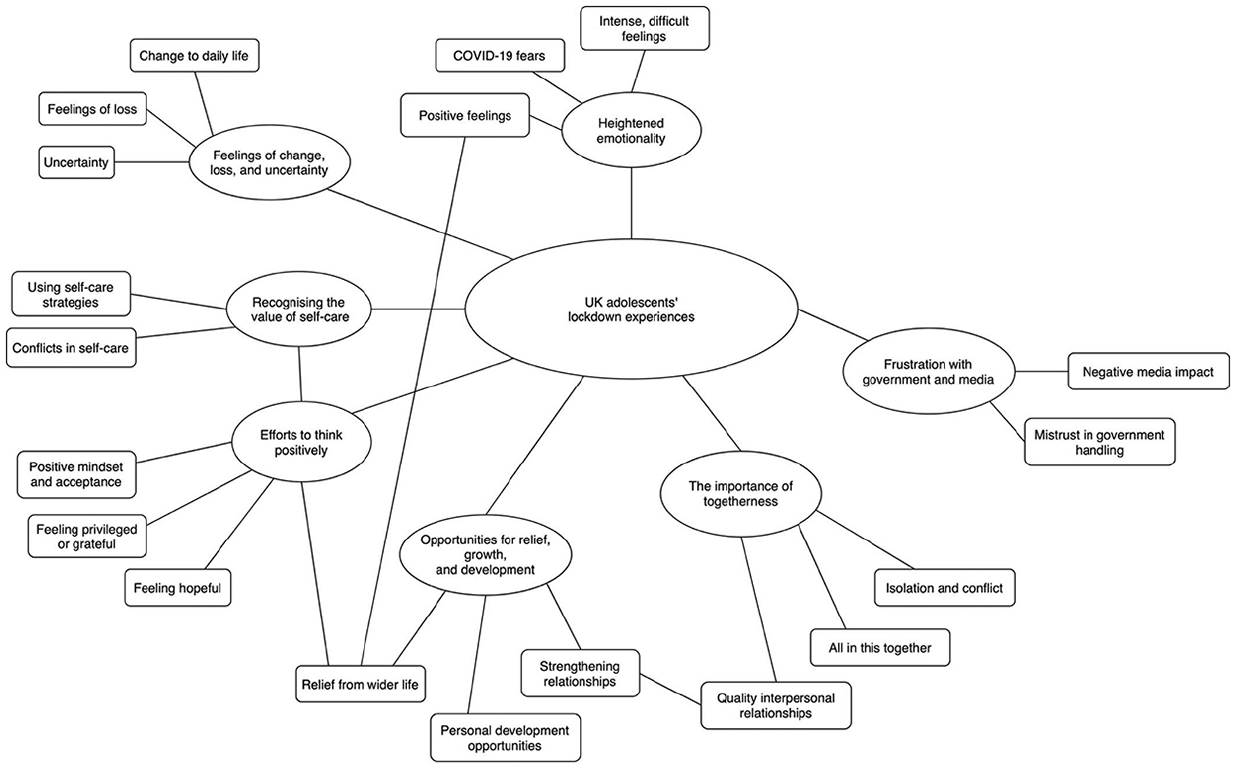
Thematic map of main themes and associated subthemes.
Our themes aim to capture a complex picture. Accounts were multifaceted, and seemingly contradictory experiences were sometimes present within and across accounts. In developing and presenting themes, we have sought to acknowledge and explore these complexities, in line with guidance for qualitative analysis and reporting (Braun & Clarke, 2006; Yardley, 2000, 2015). This includes instances where features of the data are represented across multiple themes; for instance, close relationships with family members feature in Theme 5 (opportunities for relief, growth, and development), as participants said that lockdown brought greater quality time with family and thus deepening relationships, and in Theme 6 (the importance of togetherness), as participants shared that close, trusting relationships made lockdown easier. Figure 1 highlights connections linking relevant subthemes. To indicate reoccurrence of a given aspect in presenting themes, we use: “almost all” participants where a finding is present for 80 or more of the 109 accounts; “the majority” for 55 to 79 accounts; “many” participants for 26 to 54 accounts, and “some” where a finding is connected to 25 or fewer accounts. This is for transparency, rather than indicating salience, as within reflexive thematic analysis a finding can be meaningful based on its importance for even a few participants (Braun & Clarke, 2006).
Theme 1: Experiences of heightened emotionality
The majority of participants described intense, difficult feelings, commonly including sadness, anxiety and worry, anger, frustration, dread, and helplessness; “I have felt angry, sad and had times of bad depression and anxiety throughout the lockdown”; “I occasionally feel helpless, stressed and slightly frustrated.” Some described irritability, often increasingly so: “lockdown has begun to take its toll and I’m becoming agitated and upset at the smallest things.” However, some described feeling drained and detached at times: “I feel so anxious and emotional and simply choose not to think about it, becoming sort of numb again [. . .] I have felt the last couple of months have been a blur and have felt so disassociated from reality.”
Participants’ emotional state seemed to shift often. Some described mood swings: “I would say that lockdown will have me feeling extremely numb one minute and extremely tense the next.” Some noted shifts over time, saying they felt okay initially but their mood declined, or vice versa; “in the beginning weeks of lockdown it wasn’t too bad as there was a belief that it wouldn’t last over summer, however [. . .] with nothing to look forward to it is very difficult to maintain a positive attitude.”
Participants attributed feelings to various factors, including feeling overwhelmed, feeling trapped within their households, missing people, cancellation of examinations, and uncertainty about the future. Some noted specific circumstances, such as existing mental health difficulties, household conflict, having or living with people with health conditions, and social anxiety; “my moods have been a lot worse since lockdown with depression and an eating disorder getting even worse”; “there was a lot of conflict at first as residing in a place that has caused everyone a lot of pain tends to bring up past feelings.” However, some struggled to understand why they felt the way they did: “I remember at the start of lockdown feeling inexplicably angry. I am not usually an angry person so this confused me.” Some said they had begun overthinking and ruminating, which was difficult: “this situation caused me to overthink everything and gave me more time to be anxious about details that would not even cross my mind during normal time.”
Many reported worries about COVID-19. Some expressed fear for themselves, particularly those with health conditions: “I am in a high risk category and have felt really anxious about getting COVID-19 as it would most likely make me really ill and possibly kill me.” There was fear for loved ones (often vulnerable people), and of transmitting COVID; “I was terrified of anyone that I knew getting it, especially my sister who suffers from asthma.”
However, some described more positive feelings. For many these occurred alongside difficult feelings; “I have found that during lockdown, there are days where I experience peace and happiness but other days where I want to break down and cry.” Some reflected that overall, they mostly felt okay: “there has been mixed feelings when in lockdown from being happy to feeling a bit down and stressed but overall it hasn’t been bad!” As in Figure 1, sometimes these positive feelings appeared linked to some of the relief from daily life that participants experienced in lockdown (see Theme 5).
Theme 2: Feelings of Change, Loss, and Uncertainty
Many highlighted substantial change to daily life: “nothing has really stayed the same since lockdown began.” They described specific changes, including moving back in with family, parents working at home, and being unable to freely go out. Many noted the change to their daily routine: “the major thing since lockdown is not doing a lot, now there is no school or exams, I have no structure to my day.” This may reflect the nature of our sample, who were all in education. Many described lockdown as boring, with days blurring together:
It feels less like there has been any great change and more like everything is just stagnant. Within lockdown, the days just sort of run on to each other and it feels like everything has just paused, this ultimately has led to a slight dread, feeling like I’m missing out on life in some way.
Almost all participants shared feelings of loss. This included loss of specific experiences, such as traveling, employment and work experience opportunities, and loss of learning resources and experiences: “I also unfortunately lost a job that took a significant amount of training to get which was disappointing”; “I was meant to have my final semester of my first year at university, party a lot and then travel for the summer before I return to university again.” Again, this may reflect the nature of our sample.
Many participants highlighted losses that seemed to represent normative teenage “rites of passage,” including prom, the last day of school, starting university, learning to drive, traveling, and spending time with friends; “I feel a sense of missing out (traveling with friends in the summer, freshers week, making friends, moving in) even though I know we are all in the same position.”; “I missed out on a proper ending to school, my exams that I worked so hard for, all the traditions I had anticipated over the last five years just taken from me so quickly!” Cancellation of examinations was also perceived as a loss, with many participants feeling less in control and like they had wasted time: “When it was announced that GCSEs were cancelled, I was distraught. [. . .] It felt like all of my efforts had gone to waste and I would never get back all the time I had spent or ‘wasted’ revising.” This point is very much specific to the age of our sample (16–19 years) where high stakes examinations are common, and reflects that our participants are all in some form of education.
Many described broader feelings of loss. Some outlined loss of freedom and independence; “not being able to do what I want or go where I want is something I’ve been struggling with.” It sometimes seemed to be the conceptual loss of freedom that was difficult; “I do wish I had the opportunity to do things, even though I wouldn’t have done them anyway.” Some described loss of purpose and motivation now they did not have daily goals and/or formal education settings: “I often find myself refusing to get out of bed in the mornings because there doesn’t seem to be any point.” For others, it was the loss of relationships, with some reporting feeling more distant from those outside their households or that relationships were weakening: “my friendships are now more distant as it’s harder to keep up with people as there’s nothing to talk about and also a lot of people have lost motivation to want to talk.”
A small number of participants disclosed a family bereavement. These participants described having to sit separately from family at funerals or not being able to attend at all: “not being able to go to [my grandad’s] funeral was extremely hard and upsetting.”
The majority of participants described feeling uncertain about the future, particularly around educational and vocational possibilities. Cancellation of examinations and lack of clarity around alternative grading were frequently commented on here, again reflecting the age and nature of our sample. Many noted that this brought new uncertainty about grades and the future, including that grades wouldn’t be taken seriously “because it seems like we ‘haven’t earned it,’” and there were fears about the long-term impact:
I can’t even sit an exam to determine a [university] place, nobody seems to understand how the teachers will rank us so I can’t plan what uni I’ll be going to, whether or not I will be able to move out, whether or not I should take a year out etc. and being unable to make a plan means there’s no way I can make myself feel in control of my situation.
Vocationally, many felt lost opportunities (e.g., work experience) could impact their chances in next steps; “I cannot get work experience in the NHS [National Health Service], as I want to do physiotherapy, and I’m worrying about it all the time.” Some highlighted feelings of uncertainty about what university and college would be like moving forward and the economic impact of the pandemic created uncertainty: “I’m also fearful of job opportunities in the future due to the spiraling economy.” Though participants’ feelings of uncertainty were often focused on such educational and vocational trajectories, there were also broader concerns and a wider overall sense of increased unpredictability moving forward:
I’m also worried in general about what the future of the world might look like, and how long things will take to go back to normal. Will my young adult years have to be spent socially distancing? Thinking about this too much quickly makes me feel quite depressed so I try not to.
Theme 3: Recognizing the value of self-care
Participants tended to emphasize the value of self-care in lockdown, and often described a range of self-care strategies; however, this didn’t mean self-care was easy for everyone. Many described how hobbies and activities helped them to relax and feel better, such as baking, drawing, exercising and eating healthily, being outdoors, learning new things, and spending time with pets. Participants highlighted how such activities helped them keep busy and pass the time, and could distract them from difficult feelings: “if I didn’t keep myself busy with the baby [younger sibling], films or sketching I would allow the loneliness to consume me.” It is worth being mindful that we used voluntary sampling, and it may be that adolescents having a more difficult time caring for themselves may not have been inclined to take part in a project such as this during that time.
Many described developing routine and structure for themselves and creating goals; “one thing that is helping with my wellbeing during lockdown is having a routine in place, as it allows me to keep busy and stops me from getting anxious and worried.” However, such approaches could feel pressurizing for some, and some noted the need for self-compassion: “we are going through a major crisis globally, we have to cut ourselves some slack.”
Although participants recognized self-care as important, some found it difficult: “lockdown has also caused me to start unhealthy habits such as not doing any exercise, oversleeping, and generally not looking after my own physical and mental health anymore.” Some described strategies they saw as helpful and problematic, including smoking and emotion suppression: “I know that it is unhealthy to suppress your emotions and not deal with anxious thoughts but that has been mainly my coping strategy.”
Theme 4: Efforts to Think Positively
Many talked about adopting a “positive mindset” in lockdown, using various thinking strategies. This is inter-connected with the previous theme in that, for some, this could be considered to represent a form of self-care, but it was not always described as such, hence its presentation as a separate theme here. Some focused on positive aspects of lockdown to compensate for more difficult parts: “I miss my friends, a lot, but take this time to relax and enjoy time with your family.” Some participants described trying to accept the situation:
I have had phases where I have been down and upset maybe even a little big angry, but now after a long period I have accepted the fact this is not a normal situation and there is nothing to do to change it.
A small number of participants described suppressing difficult feelings. For some, this was presented as a pragmatic decision to stay positive (“instead of moping around feeling sorry about myself I’ve decided to be productive”), while for others this seemed to constitute avoidance: “I feel so anxious and emotional and simply choose not to think about it, becoming sort of numb again.”
Some participants focused on finding things they were grateful for. This included personal circumstances such as supportive relationships, access to outdoor spaces, and limited personal impact in terms of health, finance, or personal risk: “I feel lucky as no one in my family has been affected by COVID-19 so far and I have a supportive family with a big garden and lots of places we can go without the stress of social distancing.”
Finally, some described hopefulness for a post-lockdown future, focusing on lockdown as temporary: “It is really important that we remind each other that this is only temporary and that the best thing to do is just keep going forward.” These participants frequently highlighted things they would appreciate more afterward, typically spending time with loved ones: “lockdown has just made me look forward to planning and doing more things with the people I care about.” However, some said this hope was fading over time: “In the beginning weeks of lockdown it wasn’t too bad [. . . now] it seems inevitable it will last until the end of the year with little hope for the future.”
We note that aspects of this theme may be specific to our participants, given our voluntary sampling, as it is possible those experiencing a less positive outlook in lockdown may not have been inclined to reflect and write about their experiences.
Theme 5: Opportunities for Relief, Growth, and Development
The majority of participants noted positive opportunity within lockdown, though again, this may speak to the nature of individuals taking part in such a study. Many described relief from “normal” life. This included academic relief, such as being able to work independently and cancellation of examinations: “the thing I like about quarantine is that I can do my work at my own pace”; “not having to take my exams [. . .] took a huge stress off me.” Participants also noted relief from social pressures, with less concern about fitting in or being judged: “no pressure to [. . .] wear the right thing or say the right thing.” This relief from daily life was tied into the experience of more positive feelings in lockdown for some.
Many reflected that having this much time and space offered novel opportunities for self-exploration and personal development. This included self-reflection, evaluating what they wanted from life, and considering what they might change: “lockdown is looking like a time for self-reflection on the past and things I am doing right and wrong.” Some explored new hobbies (or revisited old ones), or learned new skills: “I am taking the opportunity to learn new skills such as gardening, baking, pointing a patio, cutting and pruning hedges, and vehicle maintenance.” However, this emphasis on personal growth could itself be pressurizing:
Just because your friend has perfected her baking or learnt a new instrument doesn’t mean you should hold yourself to the same standard or feel pressure to have learnt a new skill, maybe just take a break and go easy on yourself because we’re in a really stressful situation.
Finally, many highlighted that lockdown had enabled them to strengthen and appreciate their relationships and wider community. Often this was within their household, as they were spending quality time together and supporting one another: “as a family, I think this time together and what is going on has made us appreciate each other so much more.” Some described feeling closer to those outside their household and appreciating friendships more: “I actually think that I have gotten closer [to friends] as I haven’t had much time to do anything else other than talking to friends.”
Theme 6: The Importance of Togetherness
Almost all participants placed strong emphasis on staying connected to other people during lockdown. The majority noted the value of positive relationships with family and friends, which they said made lockdown easier to cope with. Many wrote about spending more quality time than usual with others in their households, and even talking to those outside their households more, which they enjoyed; “I enjoy spending time with my family as we are all very close anyway and this is the first time in a long while we have all been able to spend time together.” Many participants highlighted that relationships with people who were supportive and understanding were important for wellbeing; “sometimes the feeling of abnormality and uncertainty has upset me or put me in a bad mood but my girlfriend and I have helped each other though those moments.” Many described trying to reach out and stay connected outside their households via technology; “every Friday, I FaceTime my friends and we all drink some wine and talk about anything.”
However, simultaneously to the above, almost all participants described feeling socially disconnected in some way. Some experienced issues with feeling connected in their households. This was due to a general sense of tension within the house (e.g., “[my] family gets into trivial disputes easily because conversations are frequently repeated, and lifestyle habits clash”) or due to difficult relationships with members of their household: “I sometimes feel alone because my relationship with my mum’s husband is pretty strained. I don’t speak to him and try to avoid him so that can lead me to isolate myself in my room.”
Beyond their households, the majority of participants described missing people and feeling isolated and distant from friends and family. Some felt unable to reach out to others, or found it hard to stay meaningfully connected; “lockdown has made it harder to stay in contact with as many people and it makes me feel so heavy at times, I really miss people but I’m not close enough to just reach out.” Many reflected that remote forms of social interaction (e.g., texts, phoning, video calls, and social media) were difficult to maintain or was not the same as being face-to-face:
Phoning or texting is difficult sometimes so now that’s the only way to talk to people, I talk less to them and it makes me feel quite sad and it isn’t the same anyway. I miss seeing people and being able to hug and just be near them.
This disconnection was often a source of difficult feelings, and some experienced loneliness: “I have felt incredibly lonely despite having what is honestly a great support system.”
However, many participants described feeling “all in this together.” They described how the pandemic and lockdown created a sense of community, which seemed to extend to their local neighborhood, the country, or even the world; “people on my street that I’ve never spoken to before are now interacting with the rest of the neighborhood which is quite weird, in a nice way.” Shared experiences like clapping for the NHS seemed to contribute to this: “the NHS clap, every Thursday, puts a smile on my face and makes me realize that we’re all in this together.” For some, this broader connectedness seemed helpful in rationalizing losses, framing them as meaningful sacrifices; “it is stressful not being able to go out, however that it is a small sacrifice to pay.” However, some expressed frustration with those breaking restrictions, as they felt this had negative implications for everyone else:
I’m constantly frustrated by the people that don’t care about the situation, don’t listen to the government rules and act like they don’t care. I’m angry and sad because I know that because of them we might risk seeing friends again or have one normal month this summer.
Theme 7: Frustration With Government and Media
Some participants expressed frustration toward the UK government and the news media. In relation to the government, these participants said they felt the pandemic was being poorly handled, with concerns that lockdown was being eased too soon (note time of data generation was May 2020, when initial restrictions were first beginning to be eased), and that guidance and communication about restrictions were confusing, which sometimes caused conflict: “I go for a walk with a friend however come back to face confrontation with my brother as he believes that to be unsafe. If we were given clearer guidance, then these disputes could be avoided.” A small number of participants did not agree with lockdown restrictions: “the way lockdown was imposed and handled has been a great violation of my right to freedom.”
Some participants described feeling unsure the government would effectively make educational settings safe (again reflecting that all participants were in some form of education): “I am unsure if I want to go back in September because I’m unsure that the government has the best supervisions.” They also raised concerns about how much guidance had been offered for their age group, particularly on understanding approaches to cancelled or forthcoming examinations and ensuring limited impact of lost educational experiences:
Year 12 (my year) have already missed 2 months of education and will go on longer and we still have to do our A levels. The information we are receiving is not clear and practically non-existent when it comes to sixth forms. [footnote: these examinations were later cancelled]
Some also highlighted frustration with media, particularly news media, explaining that it was often distressing: “it is filled with contradicting, unpleasant information and isn’t good for mental health.” Some expressed irritation with how negative the news coverage was, which they felt was irresponsible: “The news channels have been extremely helpful in depressing the country even further by primarily focusing on every negative possible during this pandemic instead of attempting to lift our moods or at least mention some form of positivity.” A few participants said they had begun limiting their engagement with the news for the benefit of their wellbeing: “I’ve recently stopped watching the news because that wasn’t helping me at all, seeing all those numbers of people that unfortunately passed away or have got it is honestly heart-breaking.”
Discussion
We set out to qualitatively explore older adolescents’ subjective experiences of the initial UK COVID-19 lockdown, with an emphasis on how they understood their lockdown experiences, perceptions of impact, and experiences and management of wellbeing. Our findings identified seven themes, which collectively capture how lockdown could be an intense, uneasy experience for older adolescents, with difficult emotions, feelings of loss and uncertainty, lack of connection, and concerns about wider societal systems and decisions relating to the pandemic. Yet, findings also suggest a level of adaptation and resilience in the face of lockdown, with many adolescents undertaking considerable efforts to actively cope, and maintain relationships, and even experiencing relief and identifying opportunity for growth. These findings capture a multifaceted experience for adolescents in the initial lockdown; participants tended to describe experiencing both unease and more positive aspects of lockdown. Here, we explore these key aspects of our findings, in turn, drawing pluralistically on relevant theory and evidence and considering the implications throughout. We emphasize that our findings cannot be considered representative of or generalizable to all adolescents of this age in the UK, given our sample size and the demographics of our participants. Instead, our findings offer some insight into how some adolescents experienced this process and the depth and multi-faceted nature of individual experience at this time.
Psychological Distress in Lockdown
Participants’ descriptions of an “emotional rollercoaster” highlight the depth and intensity of emotional impact for this group. This echoes recent qualitative findings around emotional impact (Ashworth et al., 2022; Branquinho et al., 2020) and emerging evidence of worsening adolescent mental health and wellbeing (Pierce et al., 2020). Loss of routine, normality, psychological control, independence, purpose, and aspects of social connection that older adolescents experienced, alongside fear about COVID-19 and the future, represent a sudden, profound life disruption. Thus, such feelings are arguably normative reactions, and it would be surprising not to see an emotional response to such intense changes; others have challenged the pathologizing of such reactions as a youth mental health “crisis” (Danese & Smith, 2020; Siddaway, 2020). Though such distress and anxiety could ordinarily be conceptualized as emotional symptoms, it must be considered that these emotional reactions have been normal under the circumstances, and may prove temporary (Danese & Smith, 2020; Siddaway, 2020). As the pandemic continues, opportunities for older adolescents to engage in emotional reflection will be valuable, alongside support in developing coping and emotion regulation strategies. Findings highlight that the extent of distress varies across individuals and time, necessitating varied provision options to meet diverse needs and ongoing monitoring and exploration of adolescent wellbeing and mental health over time.
Findings demonstrate that older adolescents have grieved lost rites of passage and day-to-day teenage experiences. Many rationalized these as sacrifices, which may reflect our participants’ stage of development, with adolescence and particularly late adolescence typically a time when individuals come to more fully appreciate their place in society and their own ability to make positive civic contributions (as often captured within positive youth development theory; Lerner et al., 2003). This could also perhaps reflect the UK Government’s initial lockdown morality discourse and sacrificial coding of public behavior (Morgan, 2020). Even with such a perspective of “sacrifice” and contributing to wider societal needs in the context of the pandemic, these losses were felt acutely. Some have questioned whether pandemic measures have been unnecessarily costly for UK youth during an important developmental stage (Efuribe et al., 2020; Gruber et al., 2021). We are not physical health researchers, and it is not within our remit to comment on the necessity of such restrictions; however, our findings do suggest that certainly these have been experienced by young people as important losses. Though long-term implications are not our remit, feelings of distress at such disruption highlight the need to consider adolescents’ needs and preserve a sense of normality within ongoing restrictions. Public messaging acknowledging and celebrating adolescents’ efforts and demonstrating attention to their needs may be beneficial during and after the pandemic, given their belief that they have made important personal sacrifices for society. This is perhaps particularly important as our participants felt overlooked by the government and in light of blame messaging toward UK youth for rising cases, which has been criticized as unfair and divisive (Reicher, 2020).
Participants described considerable loss of control and freedom alongside feelings of helplessness, both presently and regarding their futures. Locus of control, or the extent to which people perceive control over events in their lives, shows associations with wellbeing and mental health (Flores et al., 2020; Groth et al., 2019), and evidence suggests a highly external locus of control (when control is perceived as the “result of chance, fate, as under the control of powerful others, or as unpredictable because of the greater complexity of forces surrounding [them]”; Rotter, 1966, p. 1) increases the likelihood of emotional difficulties among adolescents (Flores et al., 2020), especially alongside high levels of stress (Huebner et al., 2001). It follows that the loss of control that older adolescents experienced in lockdown, coupled with a complex and stressful situation, uncertain futures, and plans dictated by powerful others such as government, raised difficult feelings. Findings emphasize that shared decision-making, alongside clear justification and transparency in decisions, may be vital as we emerge from the pandemic and respond to ongoing consequences, to help reinstate perceived autonomy and control for adolescents, across all domains of their lives. Furthermore, as emerging evidence suggests young adults are disproportionately affected by ongoing pandemic-related UK employment issues (Boneva et al., 2020), ongoing recovery initiatives for young people may not only provide vocational and economic benefits but also wellbeing benefits, giving adolescents greater confidence in their next steps.
A novel fear was COVID-19 itself, and many participants expressed worry that they or a loved one would contract the virus, particularly when they had a high-risk health condition. This offers further evidence that COVID-19 anxiety is likely acute for those more vulnerable to the impact of the virus (Alonzi et al., 2020; Holmes et al., 2020), and illuminates concerns about vulnerable family members, as also noted by Ashworth et al. (2022) with younger adolescents. Findings suggest a need for support for adolescents at greater risk or who have loved ones at risk, and monitoring of mental health trends should be attentive to such factors. Findings also contribute qualitative evidence of the distress and anxiety that media coverage of the pandemic could prompt for older adolescents. Initial global media framing of COVID-19 was driven by fear messages, scaremongering, and “breaking news” coverage (Ogbodo et al., 2020), and research demonstrates that risk-elevating messages in infectious disease coverage intensifies public anxiety (Sell et al., 2017); this may explain the distress among our participants. Researchers could explore “healthy” balances of media engagement at this time for different age groups. Notably, some expressed desire for positive coverage that could offset anxiety-inducing coverage and messaging; while messages of hope have been somewhat present in UK media coverage (Ogbodo et al., 2020), findings perhaps suggest need for greater emphasis on de-escalating fear and anxiety and messages of hope during events such as the pandemic.
Adaptation and Growth in Lockdown
Despite the adversity and disruption experienced in lockdown, participants described efforts toward coping and, in some aspects, even thriving. Current resilience theory places considerable focus on how individuals interact with their environment, and there is increased emphasis on the external factors that facilitate the development of wellbeing under stress (Ungar, 2012). Indeed, many of the strategies employed by young people in the present study were centered around accessing external protective factors at multiple ecological levels (Bronfenbrenner, 1979), including support from friends and family, having a consistent routine at home, and community connection. The pandemic brought a disruption and rebalancing of the “multisystem,” with systems within and around the child all undergoing transformation (Masten & Motti-Stefanidi, 2020). For instance, schools closed and found new ways to support students, and parents/carers experienced shifts and stress while juggling parenting responsibilities and new support needs. Aspects of our study provide insight into the ways that these kinds of system-level shifts have been experienced by older adolescents; we explore aspects of growth and adaptation in this section.
Findings offer some insight into the adaptation occurring among some adolescents in the first UK lockdown, with the majority here placing value on looking after their wellbeing. Those who found that their usual coping strategies were incompatible with restrictions described actively working to identify new and feasible approaches to self-care. As a whole, participants adopted various strategies to help with their wellbeing during lockdown, including both active coping strategies, such as seeking support from their friends, and internal cognitive coping strategies, such as finding the positives of lockdown. This is unsurprising given that such coping strategies are among the most frequently used by adolescents to cope with everyday stressors (Gelhaar et al., 2007; Stapley et al., 2020).
However, many reported strategies that could be perceived as avoidance, such as using distraction techniques and suppressing their feelings. Although this is a technique used more often by younger adolescents (Eschenbeck et al., 2018), perceived lack of control in lockdown may have meant this seemed the only available strategy. While avoidance strategies have been framed as “maladaptive,” research suggests that techniques like distraction are not necessarily avoidant if the individual first acknowledges the stressor (Compas et al., 2001), as participants often described here. Indeed, a recent study from Dewa et al. (2021) identified that young people’s use of distraction coping strategies in the pandemic was not linked with poor mental health, although other dysfunctional coping strategies (e.g., substance misuse) were. In the face of quarantine situations and restrictions as well as in responding to the aftermath of the COVID-19 pandemic, provision of information around coping alongside active discussion with adolescents to encourage individualized reflection to identify appropriate coping strategies will be valuable (Raccanello et al., 2020).
Findings suggest that lockdown also brought considerable relief for older adolescents. That such a situation—even with the psychological distress it often brought—was somewhat preferable to “normal” day-to-day adolescent life is worrying. Concern about the demands of the UK education system on adolescents are not new, including the growing emphasis on performance and high stakes exams (Banks & Smyth, 2015; Hutchings, 2015), and it is well-documented that adolescents face social demands that can be stressful (Blakemore, 2018). Participants’ responses to UK school and university closures in 2020 offer unique insight into the extent of this pressure and the personal impact it can have, as well as into adolescents’ use of their time when demands are lessened. Participants’ engagement in personal development and evaluation of life in lockdown reflects positive youth development positioning of adolescents as agents of their own development and growth (Larson, 2006), and it has previously been argued that educational systems are at odds with the adolescent need for self-determination and autonomy (Eccles et al., 1993). The COVID-19 pandemic may represent an opportunity to critically reflect on the structure of our education system and the demands placed on our adolescents, and the extent to which we act as facilitators in self-exploratory adolescent development. Such reflection should include active discussion with adolescents at a local and national level about what can be learned and acted on to carry forward learning.
(Dis)Connection
Findings offer new insights into the value adolescents place on social connectedness during lockdown periods. Participants indicated that positive, close relationships (both in and beyond their households) made the initial lockdown more positive and provided a source of support. This is unsurprising given the developmental timing of lockdown during a period where social relationships, particularly with peers, are highly valued (La Greca & Harrison, 2005). Other recent studies have similarly found that quality social connection in the context of lockdown is valuable for coping and wellbeing (e.g., Bu et al., 2020; Dewa et al., 2021). Our findings extend knowledge by highlighting efforts made to stay connected and, interestingly, indication of greater depth and quality in relationships. Findings suggest there is value in supporting adolescents in staying meaningfully connected during periods of enforced social isolation, particularly as it seems this was not always easy, as discussed below. It may also be beneficial to consider ways to strengthen knowledge and skills around wellbeing and coping among parents/carers and adolescents themselves to facilitate effective, quality family support for adolescents, given their tendency to turn to informal others as part of coping (Rickwood et al., 2005). Findings also highlight the value that adolescents placed on being “all in this together,” as also reported by Dewa et al. (2021). A sense of community and shared experiences appeared meaningful in managing restrictions and other perceived sacrifices, suggesting that public messaging promoting solidarity may be valuable in the face of continued disruption, and perhaps even for adherence to ongoing restrictions.
However, alongside this was a strong feeling of disconnection, with participants finding it difficult to reach out and relationships becoming more distant. Commentary around remote connectedness not being the same as in-person interaction demonstrates that remote connection can recoup some of the social losses in lockdown but does not fully replicate offline connections, reflecting understandings that online and offline communication offer distinct functions for adolescents’ close relationships (Nesi et al., 2020). Such disconnection is at odds with the typical developmental emphasis on social ties in adolescence. Indeed, research has demonstrated that feeling socially isolated in adolescence can show associations with worsened mental health (Hall-Lande et al., 2007), and that periods of social isolation and disruption to social bonds in adolescence can have both psychological and physical health consequences (Cruz et al., 2016). Thus, our study illuminates the variability and barriers as to the level and quality of connection and support in lockdown, with some experiencing more acute isolation, and provides further support for an emphasis on social (re)connection in the aftermath of restrictions. It will be valuable to consider ways to support adolescents in rebuilding social connections and, for some, social skills, providing opportunities to socialize and spend time with peers within education and community settings. This may be at odds with a growing emphasis on “catching up” academically, but ought to be a priority to avoid further disconnection during a key developmental period.
Strengths and Limitations
At the time of writing, this study is one of few qualitative empirical studies that has explored adolescents’ experiences of the COVID-19 UK lockdown; indeed, qualitative research as a whole has been underused in the UK mental health response to the pandemic (Demkowicz et al., 2021). An emphasis on this age group’s voices is key in building a meaningful understanding of their experience. Our use of inductive data generation and analysis is a key strength of the study in this respect. Our open-ended approach to data generation, wherein participants could focus on what was personally meaningful to them with neutral, open prompts, facilitated development of a dataset more authentically capturing adolescents’ own perspectives on their experiences. An inductive analytic approach enabled us to work “bottom-up” from these perspectives and thus construct findings that sought to best capture and articulate these experiences without being driven by preconceptions. In turn, pragmatically making sense of these findings through blended theoretical and conceptual perspectives allowed a deeper understanding of the varied aspects explored within the study.
The online tool used for data generation allowed participants to reflect in their own time, with perhaps less perceived pressure (Braun et al., 2021), and our open-ended approach allowed participants to focus upon aspects of greatest personal salience. However, anonymous online data generation meant that we could not clarify meaning or follow up on points. Our emphasis on participants’ perspectives carries limitations to our remit and learning; for instance, we cannot determine the appropriateness or efficacy of coping strategies (though some did highlight limitations in these) and findings reflect conscious coping, rather than involuntary coping not within conscious awareness. A single timepoint for data generation may also mean that accounts could, to some extent, reflect participants’ mood at the time of writing, and participants noted that their feelings and mood could fluctuate.
We note key limitations in sample representativeness. Firstly, our sampling operated broadly via organizations, networks, and social media, with participants volunteering to take part. Thus, our sample represents individuals who felt comfortable and interested in sharing subjective experiences at this time, perhaps meaning that those with acutely challenging lockdown circumstances or difficulty reflecting on feelings may have been less likely to participate. Our written data generation method may have been off-putting for some, such as those with difficulty communicating in writing, although consistent with guidance, we offered reassurance that spelling and grammar were unimportant (Braun et al., 2021). Indeed, some groups were more likely to engage; most were girls and young women and all were in education. Participants did not necessarily reflect on how their experiences were specific to their context, but wider evidence indicates that mental health during the pandemic has been influenced by demographics such as gender and ethnicity (Hu & Qian, 2021; Pierce et al., 2020). Within this, we note the need for intersectional perspectives recognizing that individuals experience demographic “factors” uniquely; for us this meant ruling out top-down comparative analysis (e.g., examining differences in accounts of boys and girls). Taken together, our findings cannot be considered representative of or generalizable to all adolescents of this age in the UK. Instead, our findings offer some insight into how some adolescents experienced this process and the depth and multi-faceted nature of individual experience. Future research should seek to achieve representativeness as well as explore specific adolescent sub-populations’ experiences of lockdown (e.g., those not in education, employment, or training), and should adopt varied methods of data generation.
Finally, we note limitations in our demographic data. This was a rapid project exploring an unfamiliar and disruptive phenomenon, and we sought to minimize data burden and prioritized a small number of demographic factors. More recently, various studies have painted a picture of mental health disparities in lockdown, for instance: socioeconomic status, with evidence that acute financial concerns (e.g., worry about paying the bills) during the initial lockdown period was associated with greater mental health difficulties (Chandola et al., 2020; Serrano-Alarcón et al., 2022); region in the UK, with evidence of regional differences in impact for youth mental health (Pickett et al., 2021); and specific living arrangements, for example, with evidence that sudden changes in living arrangements may have increased stress and conflict (Evandrou et al., 2021). Some of our participants made disclosures raising further questions, such as some disclosing that they had left the UK during the lockdown. We are unclear whether this is also true for other participants; future studies could ask participants to provide a timeline of lockdown circumstances. Thus, our study and wider evidence highlight a range of wider potential circumstantial and demographic factors that could influence pandemic experiences, and we cannot definitively situate our findings in that context. Readers should consider our findings a snapshot of how some adolescents in the UK were experiencing the lockdown, rather than a generalizable set of findings, and should consult with wider evidence to better understand particular pockets of experience.
Conclusions
Our findings offer rich insight into the experiences of a subset of older adolescents’ subjective experiences of the first UK lockdown, with participants experiencing both unease and growth in response to these circumstances. Though we emphasize that findings cannot be considered generalizable, they provide some insight into the complex and multifaceted nature of lockdown experience among some members of this age group. Readers can consider these findings as part of the wider evidence and their own knowledge of their context in supporting adolescents as the UK (at the time of writing) works toward reducing and eradicating lockdown restrictions. This includes provision of support directly in relation to wellbeing and mental health within their social networks and relationships, and more broadly, in helping adolescents make sense of and respond to health information and public messaging. Implications are not restricted purely to any current restrictions, however, and offer relevance in implementing support for adolescents as the aftermath of the pandemic continues, such as how ongoing employment issues may prove challenging for adolescents’ and young people’s wellbeing. Findings may also offer wider implications beyond the UK for countries still experiencing high levels of restrictions relating to the pandemic and can be valuable in future instances of quarantine situations and pandemic-related disruptions. More generally, findings also highlight that the pandemic could represent a unique opportunity to take stock and consult with adolescents about what “adolescence” and their daily lives ought to encompass, given that the unease that lockdown brought co-existed alongside feelings of relief and the capacity for personal growth. Further investigation is needed to more fully understand the varied complexities in adolescents’ experiences of lockdown(s), including exploring experiences among varied samples and methodological approaches, exploring how reactions have shifted across the course of the pandemic and its aftermath, and exploring the ways that effective support can be offered at this time and in future emergency and isolation situations.
Footnotes
Acknowledgements
Thanks are due to our participants, for sharing their experiences and insights with us. We are also grateful to Claire Briegel for reviewing our findings at an earlier stage and offering valuable questions for further consideration; to Tee McCaldin for continued discussion and insights during the shaping of this study; to Cathy Creswell for offering reflections on the practical implications of findings for those supporting adolescents during the pandemic; to Neil Humphrey for consistently championing this project and for offering guidance in refining the manuscript; and to Emily Stapley and Pamela Qualter for offering guidance in refining the manuscript.
About the Researchers
We are a team of mixed methods and qualitative adolescent mental health researchers, with specialisms in risk and resilience processes, help-seeking and social support, and school-based provision for wellbeing and mental health. In addition, Hanley is a counseling psychologist who has over ten years’ experience working as a school-based counselor and was also a parent to adolescents during the pandemic, and Pert is a former secondary school teacher.
Author Contributions
Demkowicz (Principal Investigator) and Ashworth (Co-Investigator) led the conception and design of the current study, the analysis of data, and development of the manuscript. O’Neill was a major contributor to the analysis of data and to the writing of the manuscript. Hanley was a major contributor to the study design, the translation of findings into implications, and reviewing and refining the manuscript. Pert made contributions to the analytical process and contributed to reviewing and refining the manuscript. All authors read and approved the final manuscript.
Declaration of Conflicting Interests
The author(s) declared no potential conflicts of interest with respect to the research, authorship, and/or publication of this article.
Funding
The author(s) disclosed receipt of the following financial support for the research, authorship, and/or publication of this article: The TELL Study was partially supported with financial funding from The University of Manchester’s ESRC Impact Acceleration Account.
