




Abstract
Low-educated adults participate less in adult education than higher-educated adults. In this study, we analyze psychosocial barriers to learning while acknowledging that barriers for low-educated adults may be different from those of medium- and high-educated adults. An extended version of the Theory of Planned Behavior is used to study training intention. We add prior Learning Experiences as predictor to the model. A total of 563 adults filled in the questionnaire. Higher-educated adults show more Perceived Behavioral Control, Perceived Social Norms, and more positive Attitudes towards lifelong learning. Logistic regression demonstrated that Perceived Behavioral Control, Perceived Social Norms and Attitudes are related to training intention, but prior Learning Experiences are not. Mediation analyses showed that the relationship between Perceived Behavioral Control and Intention is mediated through Learning Experiences. The findings suggest that psychosocial barriers need to be taken into account when considering how to reach non-participating adults.
Keywords
Introduction
The importance of frequent renewal of knowledge and skills is rising, not only at work, but also at home and in daily life. For example, the Covid-19 crisis demonstrated the growing relevance of health literacy (Sentell et al., 2020). Adult learning is associated with increases in social cohesion, active citizenship, personal wellbeing, and life satisfaction (Manninen & Meriläinen, 2014; Schuller & Desjardins, 2010). Specifically for adults with limited educational backgrounds, higher changes in learning motivation, wellbeing, attitudes, social capital, and meeting intimate contacts are reported after participating in training compared to adults with higher educational levels (de Greef et al., 2015; Manninen & Meriläinen, 2014). However, research shows that low-educated adults are often not engaged in continuous training (Desjardins, 2015).
We aim to identify what is keeping adults from participating in continuing education, referring to both formal and non-formal education, work- and non-work-related learning, while acknowledging that barriers to learning for low-educated adults (those with lower secondary qualification at most) may be different from those of medium- (less than higher education) and high-educated adults (who have completed tertiary education). Literature on participation barriers is scarce and much of the existing research has its shortcomings. Particularly, there are four shortcomings we would like to address.
First, the majority of research on participation barriers only includes employed adults or workers and consequently emphasizes work-related barriers (e.g., Fouarge et al., 2013; Kyndt et al., 2013; Sanders et al., 2011). Second, psychosocial barriers to learning, which are beliefs, values, attitudes, or perceptions about learning within a social context, are often neglected (Darkenwald & Merriam, 1982; Goto & Martin, 2009). Third, limited research on participation barriers targets low-educated adults (e.g., Sanders et al., 2011). In addition to the many benefits this group could obtain from participating, compared to medium-and high-educated adults, they have higher odds of being unemployed and may be more likely to experience psychosocial barriers (Gibney et al., 2018). As a result, it is extremely important to include them in analyses on barriers to learning. Finally, a large share of research gathers information on participation and accompanying barriers from adults that are (expressing interest in) participating in adult education (Gallacher et al., 2002; Paldanius, 2007; Porras-Hernández & Salinas-Amescua, 2012). Even though participants are still able to encounter barriers, it is likely that these barriers will differ from barriers of non-participants (see Van Nieuwenhove & De Wever, 2022). When only adults participating in adult education are included in research, barriers can easily be reduced to situational barriers (e.g., family responsibilities) or institutional barriers (e.g., accessibility), neglecting psychosocial barriers (Rubenson, 2010). However, next to situational and institutional barriers, non-participants may also be more likely to experience psychosocial barriers (Rubenson, 2010).
To analyze these barriers, we propose a modified version of the Theory of Planned Behavior (TPB; Fishbein & Ajzen, 2010). This theory is well-suited to study psychosocial barriers. It includes three components: Perceived Behavioral Control, Perceived Social Norms, and Attitudes. Each of these components has been discussed in the field of adult education participation and they can be categorized as psychosocial barriers. Contrary to theoretical models related to adult education participation such as the Chain-of-Response model by Cross (1981) or the Psychosocial Interaction Model by Darkenwald & Merriam (1982), the TPB can be used to predict participation by using training intention as a predictor of actual participation. Although limited, the TPB itself has been successfully used before to study adults’ barriers to learning but to our knowledge, only in a work-related context such as a specific organization or company (Renkema, 2006; Sanders et al., 2011). Furthermore, no comparisons have been made between low-, medium-, and high-educated adults’ barriers to learning using the TPB. These shortcomings of the literature will be demonstrated throughout the theoretical background.
We first illustrate what psychosocial barriers are, what the TPB is, why TPB is useful for studying psychosocial barriers to learning and what is already known about these barriers in the field of adult education. Finally, we demonstrate why we believe it needs modification to properly capture adults’ participation barriers.
Theoretical Background
Psychosocial barriers to learning are individually held beliefs, values, attitudes, or perceptions that inhibit participation in organized learning activities (Darkenwald & Merriam, 1982). Empirical research on this barrier is scarce. When psychosocial characteristics are acknowledged it is often as one single, rather vague category labeled “dispositional barriers,” measuring some form of attitudes although there is evidence that adults experience a variety of dispositional barriers and attitudes are only one type of dispositional barriers (Hayes & Darkenwald, 1988). The social component that accompanies dispositional barriers, which is captured within the broader concept of psychosocial barriers, is even studied less (Blair et al., 1995; Porras-Hernández & Salinas-Amescua, 2012). One possible explanation is that institutions and educators believe psychosocial barriers are beyond their control (Goto & Martin, 2009), to be resolved by the individual itself (Osam et al., 2017), and as a consequence less attractive to study from an economic perspective.
The TPB states that the proximal determinant of one's behavior is the intention to engage in that behavior (Fishbein & Ajzen, 2010). Former research on participation shows that training intention and actual participation are strongly related (Raemdonck, 2006). According to the TPB, intention is influenced by (1) Perceived Behavioral Control, (2) Perceived Social Norms, and (3) one's Attitude toward the behavior.
Perceived Behavioral Control is defined as “the extent to which people believe that they are capable of performing a given behavior, that they have control over its performance” (Fishbein and Ajzen, 2010, p. 154). The greater the Perceived Behavioral Control, the stronger the intention to perform the behavior. The definition of Perceived Behavioral Control is very similar to that of “self-efficacy”, or a person's belief in his or her own capacities (Bandura, 1997; Fishbein & Ajzen, 2010). In fact, both concepts refer to the same latent construct. Self-efficacy appears to be a strong predictor of learning intentions of low-educated workers (Renkema, 2006; Sanders et al., 2011).
Perceived Social Norms or “subjective norm” refers to the social pressure to perform (or not to perform) a given behavior. The notion of Perceived Social Norms can be linked to Bourdieu's (1984) concept of social capital, in which participation is also determined by the social circles the adult familiarizes itself with (Boeren, 2011). Within broader adult education participation research, evidence exists that social forces and group membership or comparing oneself to a reference group play a role in forming and maintaining attitudes towards participation in education (Cross, 1981; Darkenwald & Merriam, 1982; Isaac, 2011). Social disapproval, the reflection of a social environment in which education is not perceived as important or useful, seems to be the most important sociocultural barrier hindering participation in adult education (Blair et al., 1995). Most participation frameworks often minimize adults’ life context (Blair et al., 1995; Porras-Hernández & Salinas-Amescua, 2012). When applying the TPB, this issue is addressed.
Attitudes are the most studied psychosocial barrier within adult education participation research. It is defined as a multidimensional concept, consisting of both instrumental and experiential factors (Fishbein & Ajzen, 2010). The first reflects the behavior's perceived instrumentality or its anticipated consequences, either positive or negative (e.g., bad-good, useless-useful, harmful-beneficial) while the latter reflects the positive or negative experiences associated with performing the behavior (e.g., dull-exciting, unpleasant-pleasant, aggravating-satisfying). This instrumental conceptualization of attitudes is closely related to the Expectancy Valence Model of Rubenson (1977). The valence element in the model refers to the value an individual attaches to the participation whereas the expectancy element refers to specific expectations regarding successful participation in adult learning (Boeren, 2011).
Next, attitudes are part of the well-known and frequently used Chain-Of-Response model of Cross (1981). Within this model, they arise directly from the learners’ own past experiences and indirectly from the attitudes and experiences of significant others. Conceptualizing attitudes in adult education research is, however, not always easy. Blunt and Yang (2002) discovered that attitude toward adult education is a multifactorial construct consisting of three components (i.e., enjoyment of learning, intrinsic value, and perceived importance) that influence a person's decision to participate in adult education. The first component can be captured within the experiential factor of attitudes within the TPB, while the remaining components can be captured within the instrumental factor of attitudes. Although recent research is scarce, previous studies have analyzed attitudes and beliefs of low-educated adults towards education and learning. Beder (1990) studied reasons for non-participation in adult basic education and found a dislike for school, low perceptions of need, and the perception that participation would entail too much effort are the main dispositional reasons for not participating. Later, Paldanius (2007) discovered that low-educated adults show a lack of interest or motive for education. When interviewing low-educated adults, it appeared that most of them considered education as a rather boring period in their life, as something that had to be done while waiting to get to the real (work) life. Fouarge et al. (2013) found that differences in participation rates between high- and low-educated adults relate to differences in preference for leisure time which can also be linked to attitudes and values toward lifelong learning.
Extending the TPB
The TPB has received some criticism for using an insufficient number of variables to explain reasons for undertaking behavior (Tommasetti et al., 2018). Therefore, several researchers have altered the TPB by extending the original model (e.g., Tommasetti et al., 2018). Hazelzet et al. (2012) used the TPB to predict participation of low-educated adults in adult education and expanded the model with work-related variables.
Although TPB is ideal for studying psychosocial barriers (it includes three important psychosocial barriers and needs both participants and non-participants to study intention), some modifications to the model are needed to address differences between adults with different educational levels and educational experiences. We extend the original TPB with two variables, being educational level and prior learning experiences (see Figure 1). As repeatedly demonstrated, we have reasons to believe that educational level will play an important role in the decision to participate. Next to that, research claims that low-educated adults are more likely to have negative Learning Experiences, which may possibly influence the other TPB-constructs (Cross, 1981; Illeris, 2006).
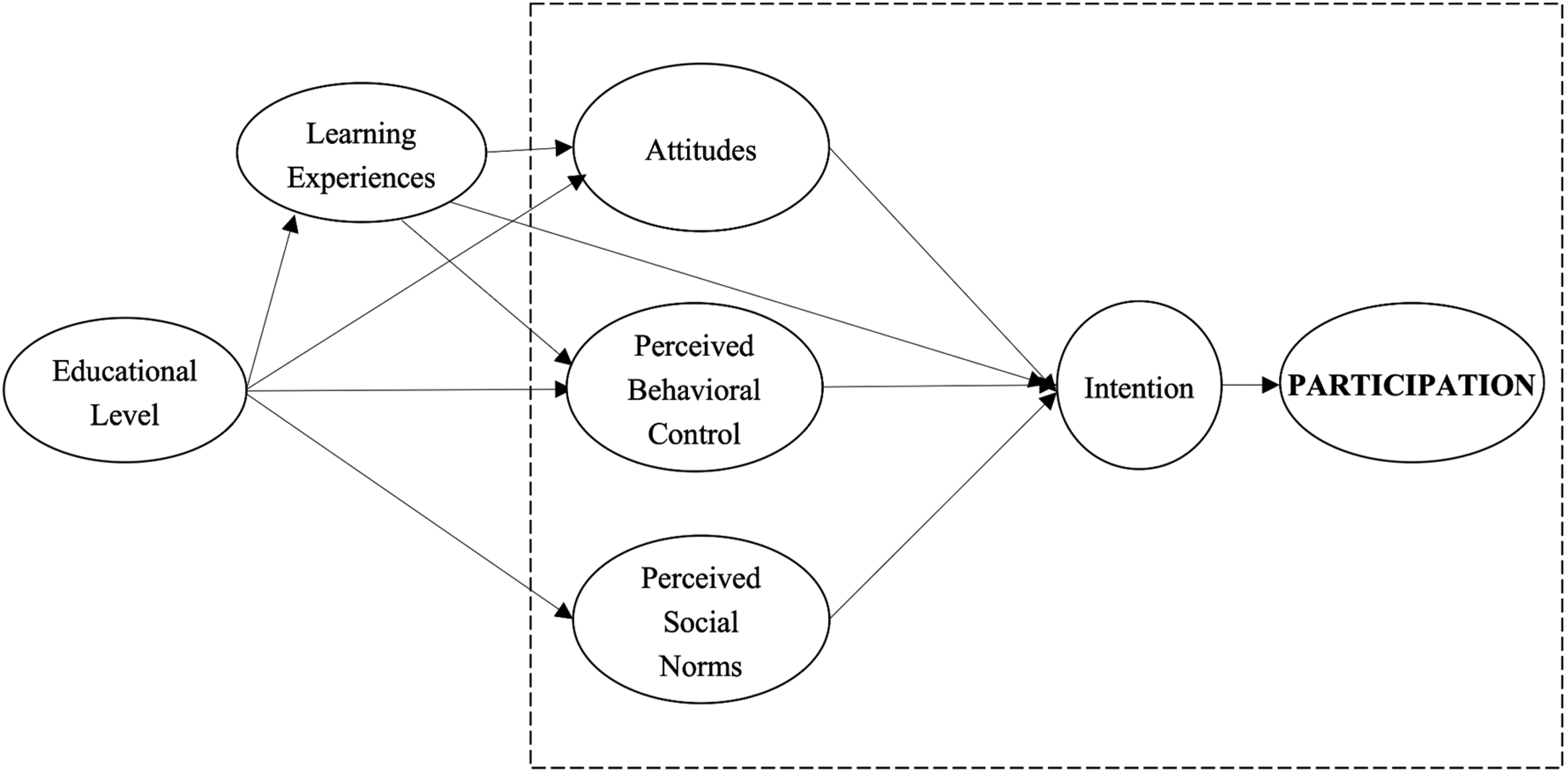
Conceptual model (original TPB model in frame).
Educational Level
According to the TPB, the major predictors of intentions and actions can be understood in terms of behavioral, normative, and control beliefs. However, the origins of these beliefs are not addressed (Fishbein & Ajzen, 2010). Adding background to the model may help to discover underlying relationships. In the theoretical background we demonstrated that low-educated adults may experience other barriers than higher educated adults. Therefore, in this research we add educational level as a background factor to the model.
Prior Learning Experiences
Qualitative research shows that negative learning experiences can play an important role in the decision to participate in adult education. According to Illeris (2006), those who are low-skilled are probably low-skilled because they did not do very well at school. The accumulation of negative experiences (not being good enough, being humiliated, wanting to leave school as soon as possible) may result in them never wanting to return to the place that reminds them of these feelings, fears, and humiliations and thus lead to a negative attitude towards education. Similarly, Cross (1981) states that adults who hated school as a child are unlikely to return voluntarily to the place where they were formerly embarrassed. Early school leavers, according to Illeris (2006), lack self-confidence as a result of poor pedagogical experiences. As a result, people with poor prior schooling experiences are more likely to develop a negative attitude toward learning later in life. According to the TPB, this negative attitude would then result in a lower intention to participate in learning.
Theoretically and even qualitatively, the importance of positive or negative learning experiences of low-educated adults has already been demonstrated. Sanders et al. (2015) pointed in their survey research to the relevance of positive prior Learning Experiences of low-educated adults regarding adult training activities. The positive Learning Experiences in this research contributed to low-educated workers’ self-efficacy. However, Learning Experiences in this research only refer to workers’ satisfaction with adult training. Whether and how positive or negative experiences of compulsory education continue to affect adult educational experiences remains unclear. According to Boeren (2011) adults who have had successful educational experiences are likely to have stronger levels of self-efficacy and, as a result, are more inclined to take on additional learning challenges in the future because they are confident that they can do it. In line with this, Desjardins (2015) claims that adults with low levels of education are less likely to participate because they lack readiness to learn (in terms of knowledge, skills, and motivation). Additionally, low-educated workers with exam anxiety are much less inclined to participate in training (Fouarge et al., 2013). This described lack of readiness to learn and exam anxiety of low-educated adults due to compulsory education would thus lead to a low Perceived Behavioral Control and in turn a low intention to participate.
Given the importance of Learning Experiences and their relation to Attitudes and Perceived Behavioral Control, we believe it is valuable to add Learning Experiences as a separate variable as it would provide more information and context to the two TPB-variables.
The Present Study
The aim of this research is to identify adults’ psychosocial barriers to learning by using the TPB. The TPB was extended with two variables (Educational Level and prior Learning Experiences) to address the four shortcomings described in the introduction. Adults with different educational levels are included. We believe comparing between low-, medium-, and high-educated adults’ barriers is important as in this way priorities of these subgroups can be more easily detected (Porras-Hernández & Salinas-Amescua, 2012). We also have a reason to believe that the constructs of the TPB will have a stronger influence for low-educated adults than higher educated adults (e.g., Desjardins, 2015; Gibney et al., 2018) and research claims that negative prior Learning Experiences may be related to Attitudes and Perceived Behavioral Control (Illeris, 2006; Sanders et al., 2015).
This leads to the following research questions:
Method
Participants
The participants (N = 563) were recruited by 68 Educational Studies graduate students at Ghent University in Flanders (Belgium) in 2021. On average, participants were 42 years old with a minimum of 21 and maximum of 67 years (SD = 13.04). Of this sample, 56.5% was female (n = 321), 43% male (n = 242) (n = 3 missing). In total 35.9% of the sample was low-educated (n = 202), 23.1% medium-educated (n = 130), and 41% high-educated (n = 231).
Procedure
The students who were responsible for data collection were teamed up in groups of four. Each group was asked to recruit 32 participants in their own networks between the age of 25 and 65, of which 16 participants had to be low-educated, 8 medium-, and 8 high-educated. Additional guidelines for these participants’ age and gender were provided (see A1 in Appendix). By giving this instruction, we considered the overrepresentation of high-educated adults when asking high-educated students to recruit participants in their own networks, which is a risk when using convenience sampling. Consequently, oversampling of low-educated adults was ensured and a more balanced sample was obtained. Students distributed the link to the online survey to the potential participants, but they did not have access to the questionnaire replies of their participants. Within the limitations imposed to us by Covid-19, this way we ensured maximal variation of our sample while respecting participants’ privacy.
This research was approved by the Ethical Committee of the Faculty of Psychology and Educational Sciences of Ghent University (ref. 2020/161). All participants received an informed consent before participating, describing research goals and data anonymization. Only after giving consent, the participants completed the questionnaire. On average, participants took 25.20 minutes to complete the questionnaire (Mdn = 19.36). As an incentive, 15 webshop vouchers of 15 euro each were distributed at random among the participants.
Measures
At the beginning of the online questionnaire a definition of lifelong learning was presented: “Lifelong learning implies that learning does not end after leaving school. It refers to all forms of learning where people can acquire new knowledge, skills, and attitudes. This can be work-related, but you can also learn for personal reasons, in your spare time.” This definition referred to both formal and non-formal learning activities. Several examples of learning activities were given: a photography course, language lessons, a training at work, formal courses at adult education centers, or trainings of public employment services.
The questionnaire included six sections. Examples of questions are provided in Table 1.
Item Summary and Reliability Analysis.
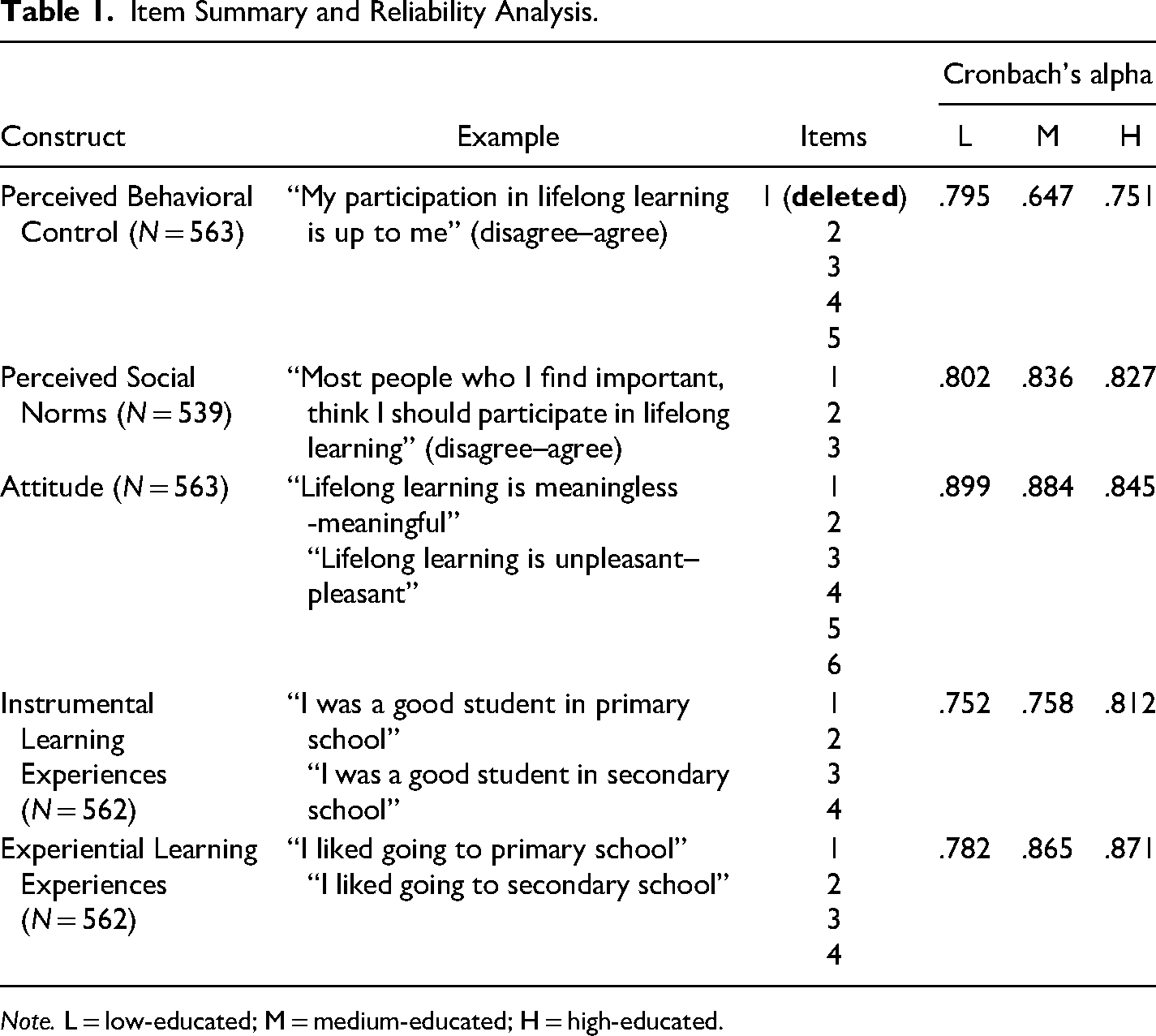
Note. L = low-educated; M = medium-educated; H = high-educated.
The TPB-constructs were assessed according to the TPB-framework (Fishbein & Ajzen, 2010). According to the theory you need to (1) define the behavior (i.e., participating in lifelong learning), (2) specify the research population (i.e., adults who are no longer in initial education), and (3) formulate items for direct measures. A sample questionnaire exists but can only be used if appropriate for specific behavior and research population, which is the case in this study. One of the sample questions of Fishbein & Ajzen (2010) to measure Perceived Behavioral Control is: “My exercising for at least 20 min, three times per week for the next three months is up to me: disagree (1)–agree (7).” This could easily be altered to: “My participation in lifelong learning is up to me.” We did not specify the timing (in the following 12 months) in each question to improve readability for low-educated adults but the timing was repeated multiple times in the questionnaire headings. Following Fishbein and Ajzen's (2010) approach, we provided 3–6 direct items for each construct and used 7-point bipolar Likert scales (and thus obtained ordinal data).
Sections 1, 2, and 3 of our questionnaire consisted of the TPB-constructs. Section 4 measured Prior Learning Experiences. In line with the TPB-construct Attitudes, we distinguish between Instrumental Learning Experiences and Experiential Learning Experiences. The first refers to experiences and memories of educational content and results of compulsory education, of which two items referred to primary school and two to secondary, while the latter refers to the feelings adults experienced in the learning environment, again both for primary and secondary school. In Section 5, training intention was assessed. Participants indicated whether they intended to participate in some form of lifelong learning in the following 12 months (no or yes). If the participant agreed with this statement, a follow-up question appeared asking the participant what the name of the intended learning activity was and where it would take place. Participants who indicated having an intention but who were not able to describe this training activity (i.e., their intention was too vague) were not considered as having a training intention.
In the last section control variables were included to gather personal information on age, gender, and educational level as these are all related to participation rates (Desjardins, 2015; Kyndt et al., 2013; Massing & Gauly, 2017; Patterson, 2017).
Analytic Strategy
First, participants were divided into one of three groups according to their educational level, being low-educated (ISCED 0–2), medium-educated (ISCED 3–4), or high-educated (ISCED 5–8). Next, mean scores for every section of the questionnaire were calculated.
To answer RQ1 we calculated a binary logistic regression model. This method is most suited as the dependent variable (training intention) is a binary construct. To answer RQ2 we added educational level as background factor and gender and age as control variables. We added interactions with educational level to analyze whether the relation between the TPB and training intention is stronger for low-educated adults. We again calculated binary logistic regression models and Chi-squared tests to examine whether the difference between the models was significant. To answer RQ3 a mediation regression was calculated using natural effects models. Four separate mediation regressions were calculated: two using Instrumental Learning Experiences (one with Perceived Behavioral Control as mediator, one with Attitudes as mediator) and two using Experiential Learning Experiences (again either Perceived Behavioral Control or Attitudes as mediator).
Analyses were performed using R (version 1.4.1106). Mediation analyses (RQ3) were calculated using the R-package “medflex” by Steen et al. (2017). Cases with missing values were deleted (N = 27).
We conducted a reliability analysis to measure internal consistency of each construct (Table 1). We calculated the reliability analyses separately for each educational group to make sure no group-differences can be found in the interpretation of the questionnaire's constructs. Cronbach's alpha ranged from .647 to .899, indicating the construct's reliability is good. One item was deleted after the analysis to improve the Cronbach's alpha of high-educated adults Perceived Behavioral Control (Table 1).
Results
Descriptives
Descriptives show that 31%, 31%, and 68% of respectively low-, medium-, and high-educated adults have participated in adult learning during the last 12 months. Regarding intention, 24%, 26%, and 59% of low-, medium-, and high-educated adults express the intention to participate in training during the next 12 months.
In Table 2, means are presented for each of the constructs. High-educated adults report the highest Perceived Behavioral Control, Perceived Social Norms, Attitudes, instrumental and Experiential Learning Experiences.
Extended TPB Means and Standard Deviations.
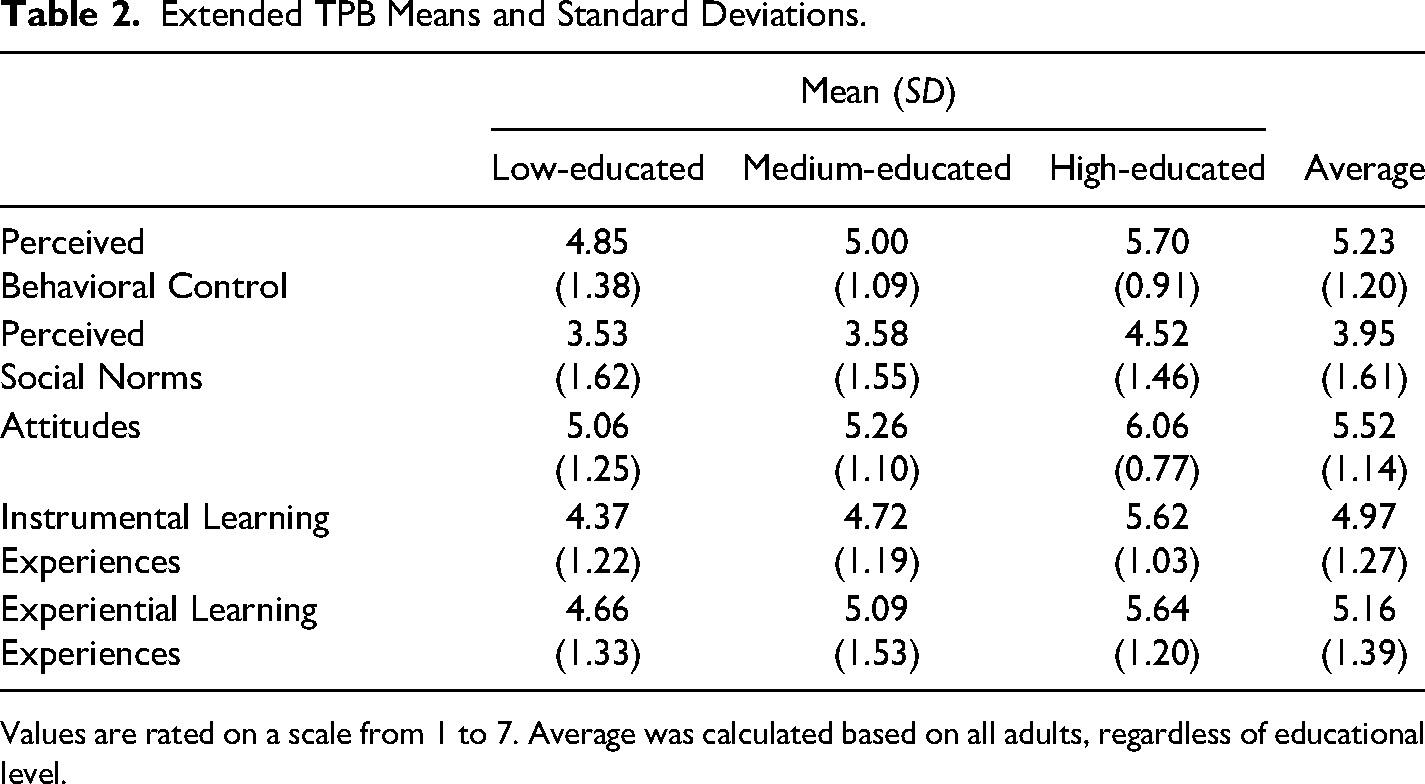
Values are rated on a scale from 1 to 7. Average was calculated based on all adults, regardless of educational level.
Analyses of variance demonstrate that there is a statistically significant difference between groups (Perceived Behavioral Control X2(2,560) = 33.440, p < .001; Perceived Social Norms X2(2,536) = 26.176, p < .001; Attitudes X2(2,560) = 54.200, p < .001). A Tukey post-hoc test showed that scores on the TPB-constructs are significantly higher for high-educated adults (p < .001 for Perceived Behavioral Control, Perceived Social Norms, and Attitudes) compared to low-educated adults, but not for medium-educated adults compared to low-educated adults (Perceived Behavioral Control p = .432; Perceived Social Norms p = .950, and Attitudes p = .219).
The mean scores of instrumental and Experiential Learning Experiences show different results compared to the TPB-constructs. There was a statistically significant difference between groups (Instrumental Learning Experiences X2(2,559) = 70.010, p < .001 and Experiential Learning Experiences X2(2,559) = 29.679, p < .001). The results of the Tukey post-hoc test showed significant differences between low-and high-educated adults (p < .001 for instrumental and Experiential Learning Experiences) but also between low- and medium-educated adults (Instrumental Learning Experiences p = .014 and Experiential Learning Experiences p = .011).
Logistic Regression
To answer RQ1, we calculated a logit regression model that only includes the TPB-constructs (Table 3). The model explained 36.09% (Nagelkerke R2) of the variance. The results show that both Perceived Behavioral Control, Perceived Social Norms and Attitudes are significantly related to participants’ intention to participate. The odds an adult expresses an intention to participate increase by a factor of 1.404 for each additional point on the 7-point Likert scale of Perceived Behavioral Control; 1.729 for Perceived Social Norms and 1.662 for Attitudes. To answer RQ2, we calculated Models 2 and 3. In Model 2 we add the sociodemographic variables age, gender (male as reference category), and educational level (low-educated as reference category) as predictors. This model explained 38.99% of the variance. While Perceived Behavioral Control, Perceived Social Norms and Attitudes remain significant, age and gender appear to be not significantly related to training intention. Educational level, however, is significantly related to training intention. Interestingly, we notice only a significant difference (p < .01) between low- and high-educated adults. The odds that a high-educated adult expresses a training intention is more than two times higher than the odds that low-educated adults expresses a training intention. Now, when sociodemographic variables are taken into account, the odds that an adult expresses an intention to participate increase by a factor of 1.494 for each additional point on the 7-point Likert scale of Attitudes. Comparing Model 1 and Model 2, we see that by adding educational level there is a significant difference: X2(2,528) = 10.696, p = .005. Then, in Model 3 we added interactions between educational level and the TPB-constructs. This model explains 40.08% of the variance. The interactions are not significant and the difference between Model 3 and Model 2 was not significant either (X2(6,522) = 6.096, p = .413). Therefore, Model 2 is our best and final model and the model which will be used to answer RQ3.
Logistic Regression Model of the Extended TPB on Training Intention.
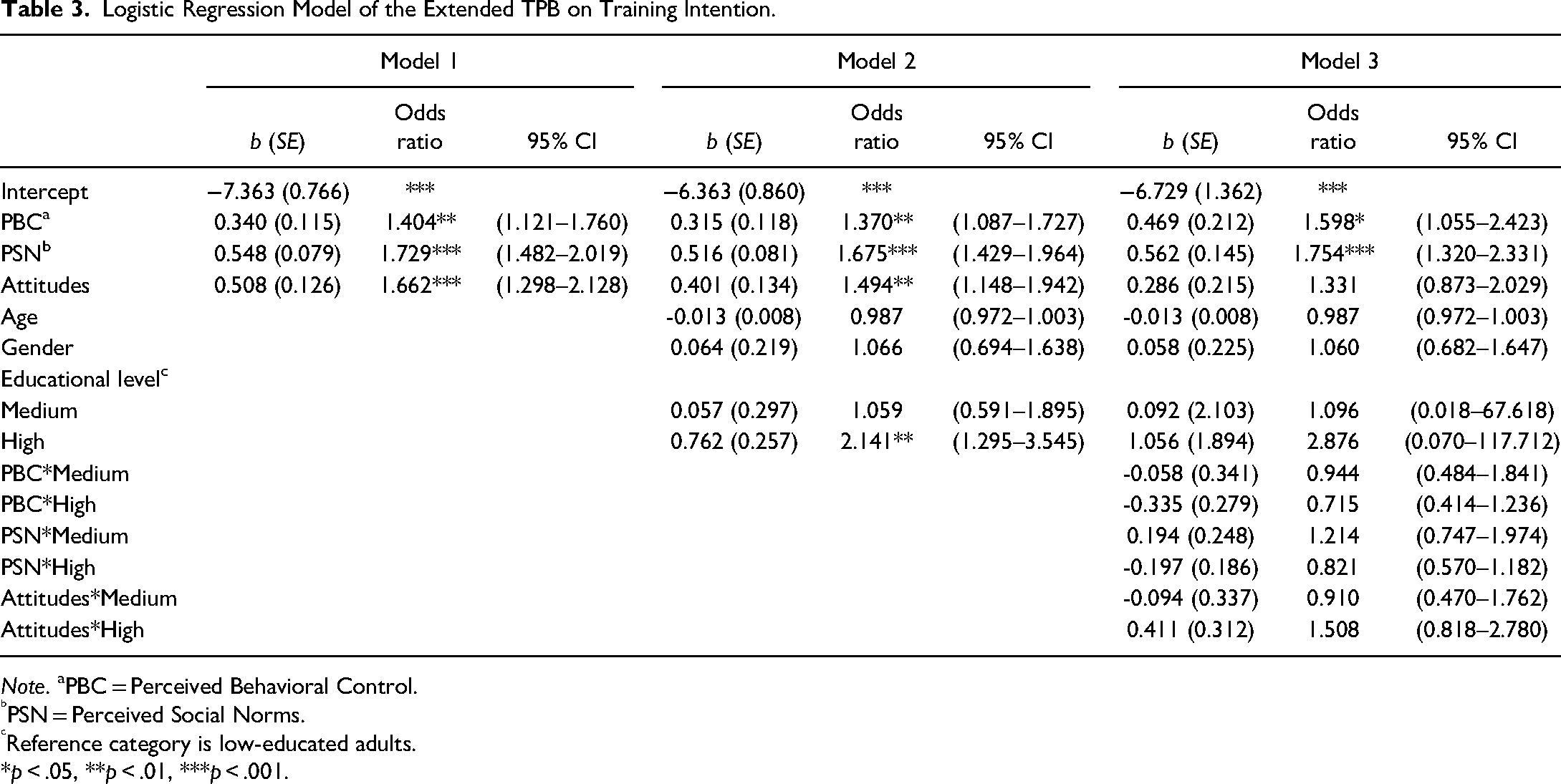
Note. aPBC = Perceived Behavioral Control.
PSN = Perceived Social Norms.
Reference category is low-educated adults.
*p < .05, **p < .01, ***p < .001.
We use AUC (see A2 in Appendix) to analyze the goodness of fit. The AUC is 0.823, suggesting excellent discrimination. Consequently, there is no indication the model does not fit the data.
We present effect plots to visually demonstrate the effects of the TPB-constructs on intention. The magnitude of the main effect is proportional to the slope of the line. Figures 2 to 4 illustrate that the TPB (Perceived Behavioral Control, Perceived Social Norms and Attitudes) is positively related to training intention, especially results for Perceived Social Norms are striking: adults with a 4-point score on this scale show a chance of about 35% to express a training intention. However, an increase of 2 points on this scale results in a chance of about 60% to express a training intention. This increased chance of training intention as a result of an increased score on this specific scale is far less strong for Perceived Behavioral Control or Attitudes.
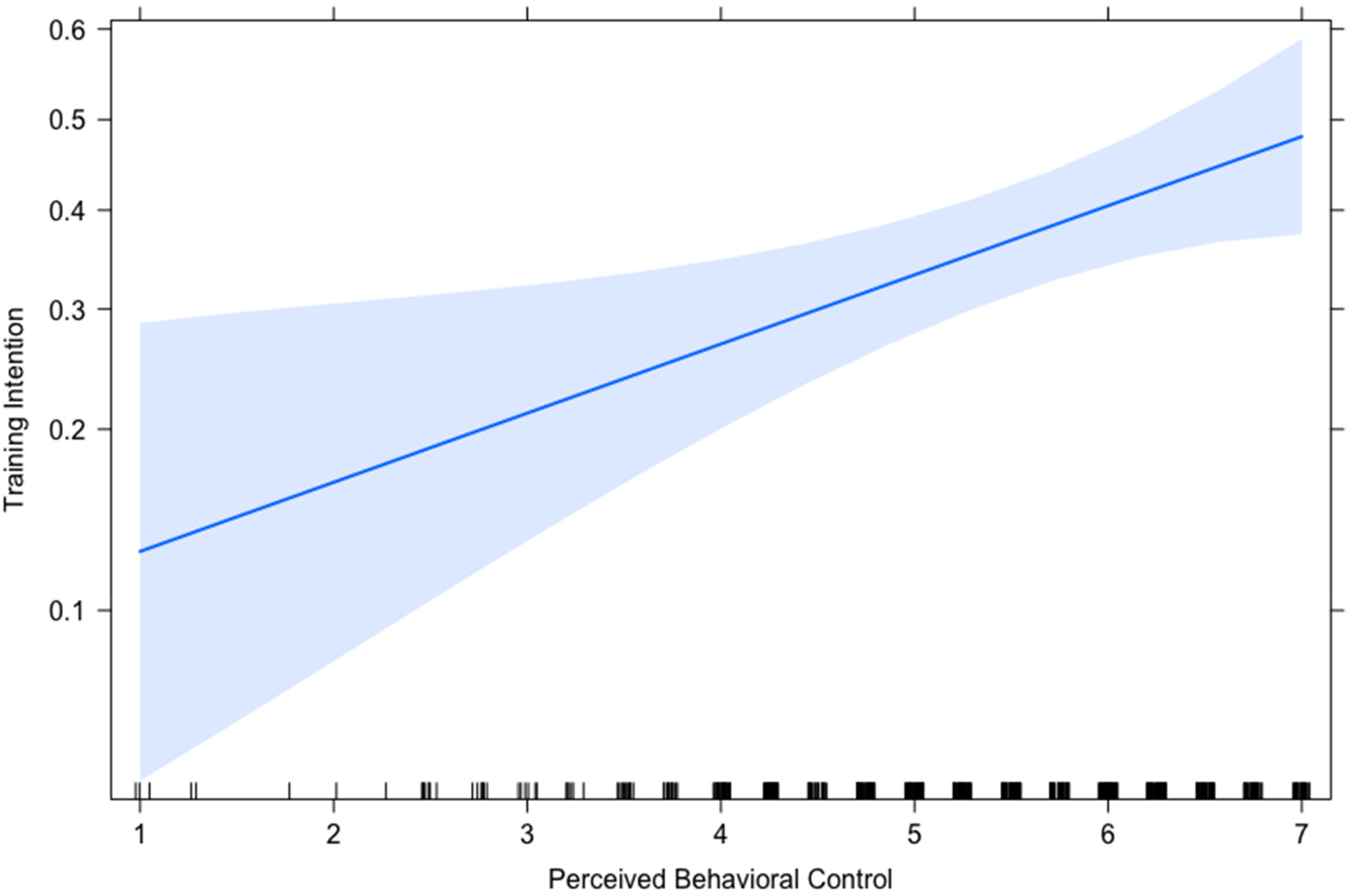
Effect plot of Perceived Behavioral Control on intention.
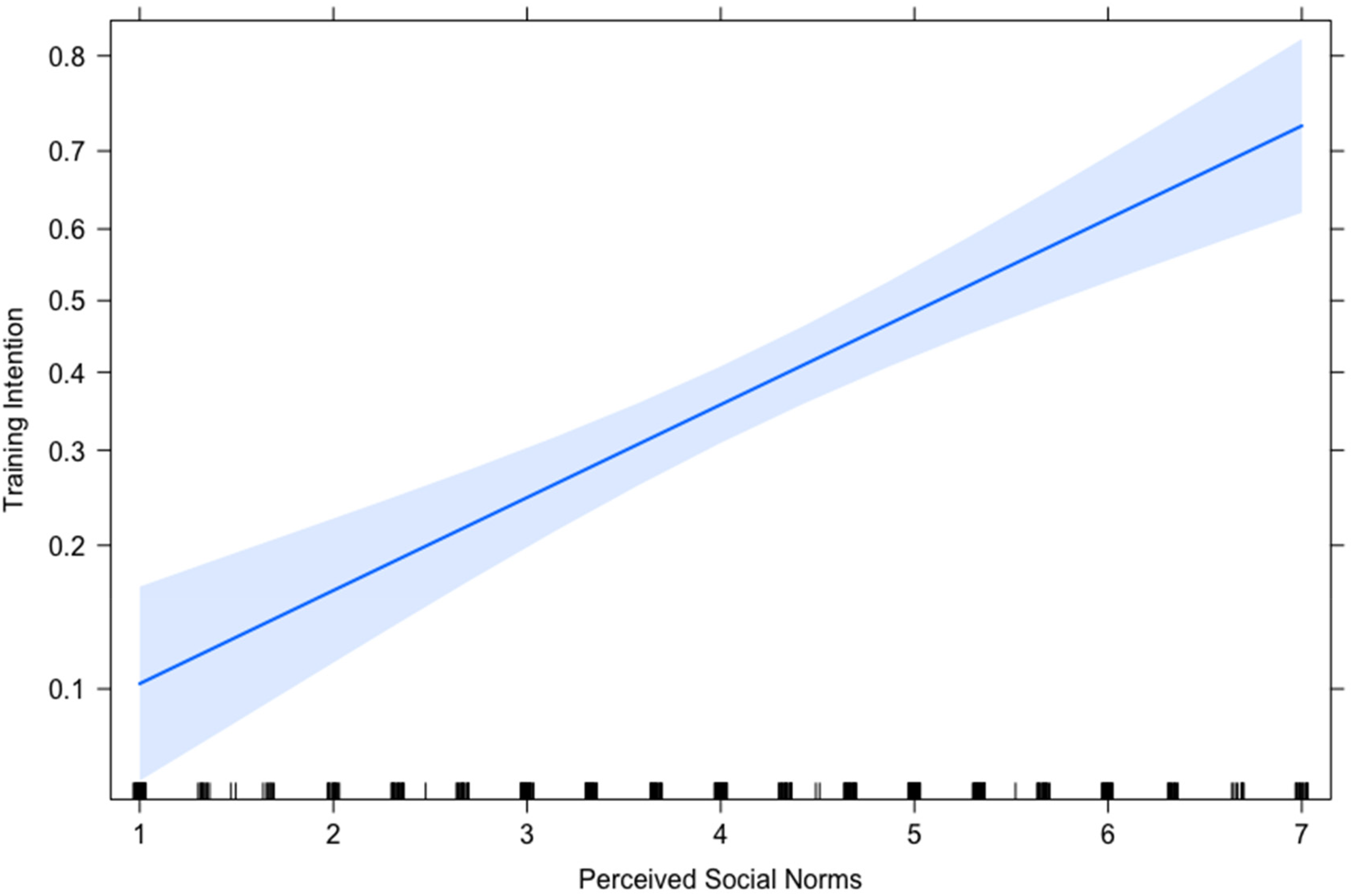
Effect plot of Perceived Social Norms on intention.
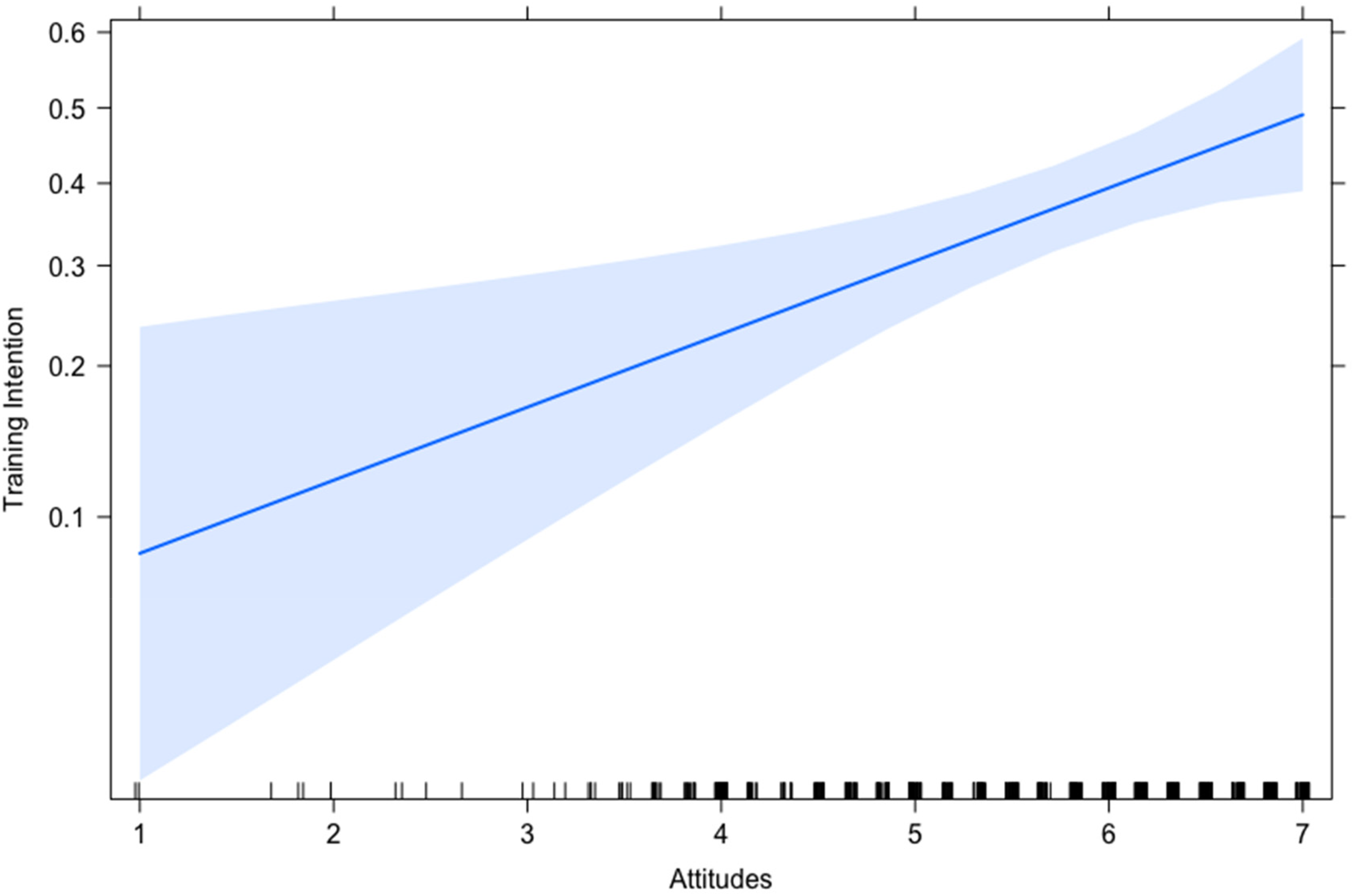
Effect plot of Attitudes on intention.
Figure 5 demonstrates there is a main effect of educational level on intention as the line is not horizontal. The figure illustrates the importance of educational level and the difference in training intention between low-and high-, and medium- and high-educated adults. Also notably there is no difference in intention between low- and medium-educated adults.
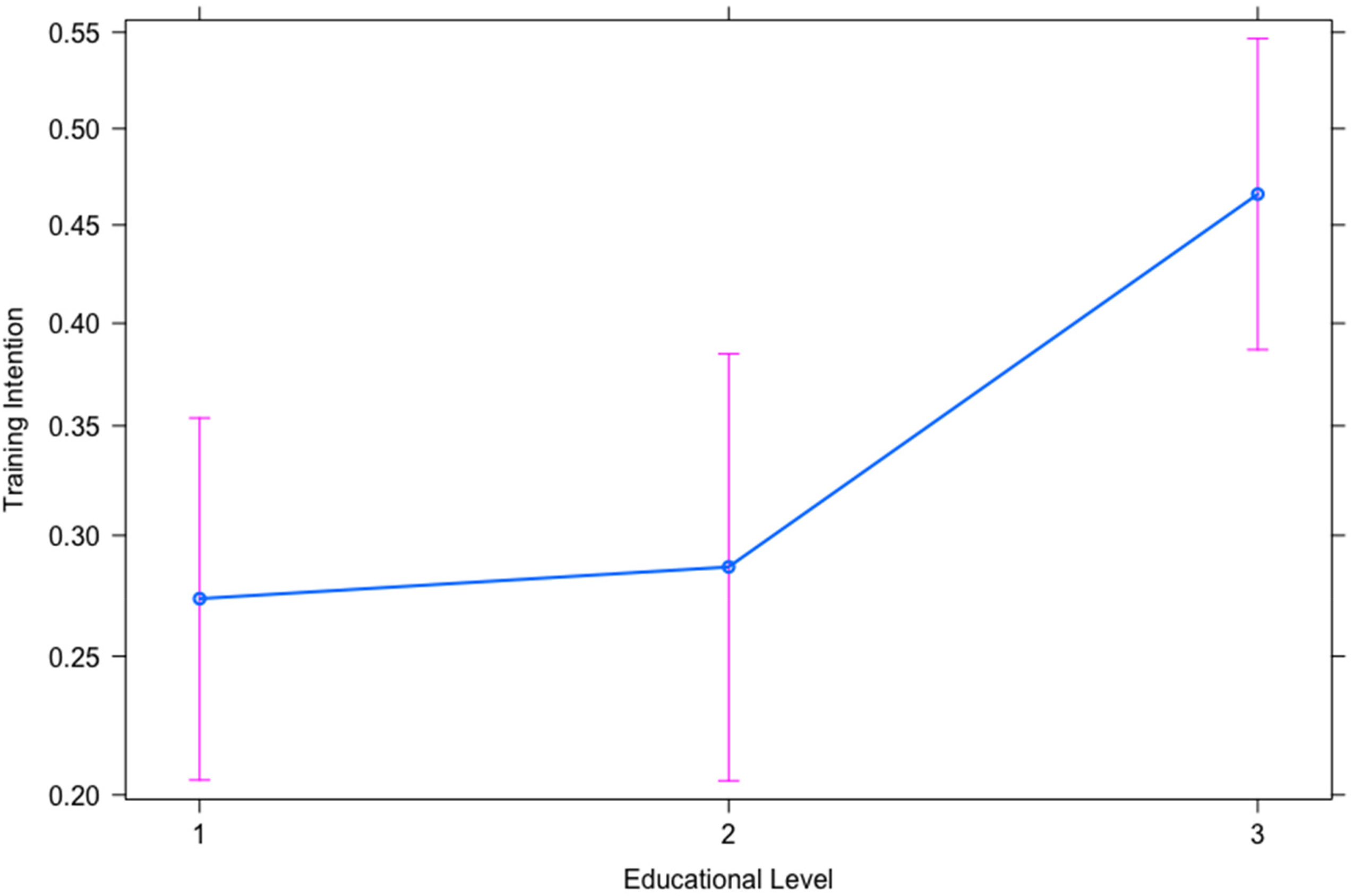
Effect plot of Educational Level on intention.
Mediation
To answer RQ3, we calculated a mediation regression to study the role of learning experiences in the extended TPB-model. Because we are working with a nonlinear model in this study (the outcome variable “training intention” is not measured at interval level but is categorical), we use the flexible mediation analysis proposed by Loeys et al. (2013) that provides natural effects models. We estimated direct and indirect natural effects with the medflex package (Steen et al., 2017) using an imputation-based approach to expand the dataset and impute nested counterfactual outcomes. The indirect natural effect is the change in outcome (odds of training intention) that would be observed if we could alter the mediator (either Attitudes or Perceived Behavioral Control) to what would be observed if the exposure was changed but without actually changing the exposure (learning experiences). This is illustrated in Figure 6. The direct effect is the amount of total effect of learning experiences on training intention that does not operate via the mediator Attitudes or Perceived Behavioral Control. In sum, we wanted to study whether the effect of learning experiences (X) on training intention (Y) is mediated by Attitudes or Perceived Behavioral Control (M). As can be seen in Figure 6, X to Y is the direct natural effect and X to Y through M is the indirect natural effect. Gender, age, and educational level are the baseline covariates (C).
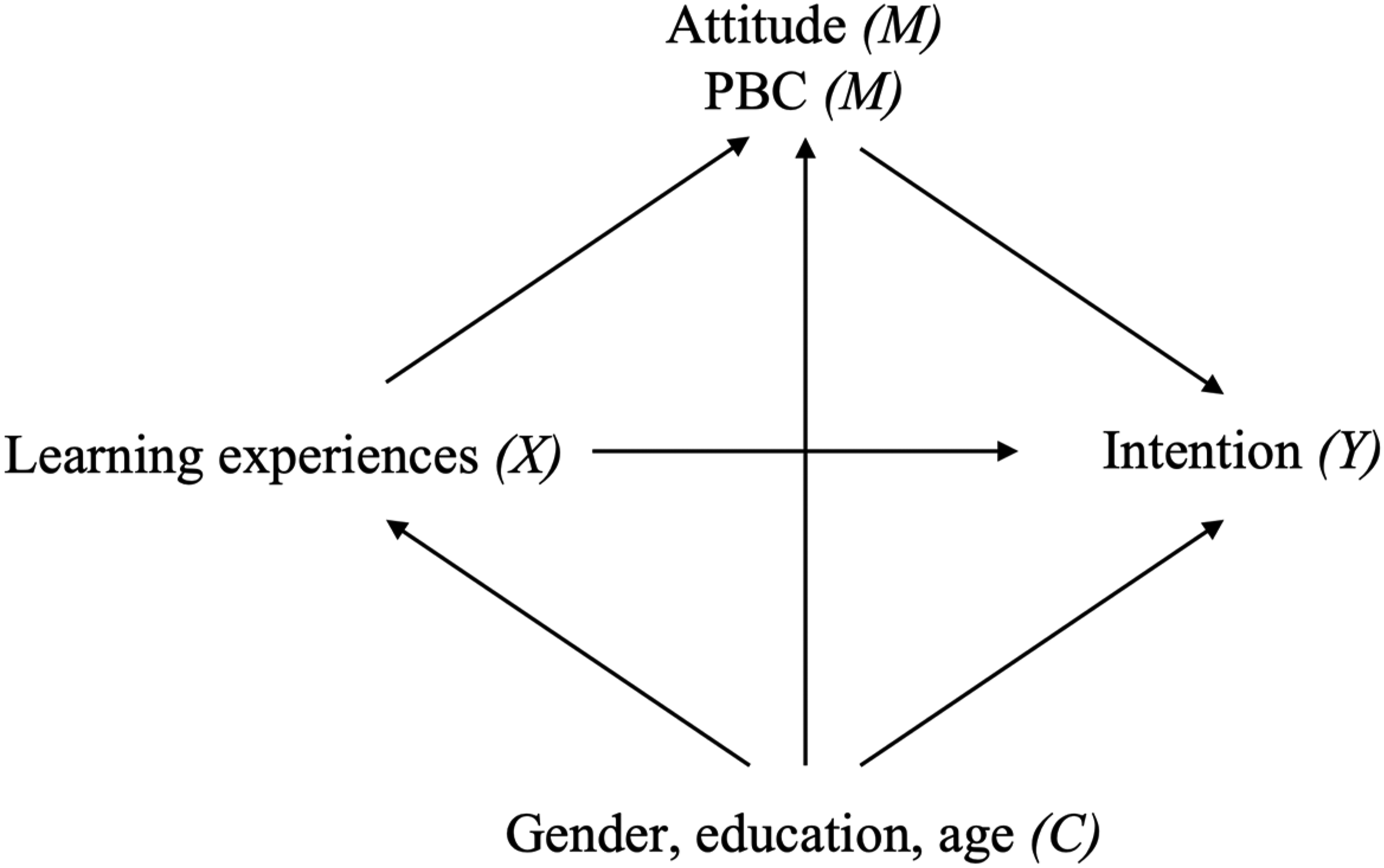
Mediational causal model (based on Loeys et al., 2013).
The results of the mediation analyses (Table 4) show no significant direct effects of learning experiences, not for instrumental nor for Experiential Learning Experiences. This means no form of Learning Experiences is significantly related to training intention. When studying indirect effects, we see no significant effect when Attitudes functions as a mediator, again not for instrumental nor for Experiential Learning Experiences. Thus, change in learning experiences will not lead to change in Attitudes and as a consequence will also not lead to change in training intention. However, when Perceived Behavioral Control functions as a mediator we do find a significant indirect effect of Instrumental Learning Experiences on intention (p = .019) although this effect is rather small. Altering levels of Perceived Behavioral Control as observed at low Instrumental Learning Experiences scores to levels that would have been observed at high Instrumental Learning Experiences scores, while controlling their Instrumental Learning Experiences score at any given level x, increases the odds of expressing training intention with a factor of 1.056. This means that change in Instrumental Learning Experiences leads to change in Perceived Behavioral Control, which in turn leads to significant change in training intention. Contrarily, change in Experiential Learning Experiences will not lead to change in Perceived Behavioral Control and consequently not lead to change in training intention.
Discussion
Participating in adult education has several benefits, especially for low-educated adults (e.g., Fouarge et al., 2013). However, low-educated adults are often not engaging in learning (Van Nieuwenhove & De Wever, 2022). In addition, there is a gap in the literature regarding low-educated adults’ participation since the existing literature is rather economically oriented and often targeting adults who are already (interested in) participating (e.g., Fouarge et al., 2013; Kyndt et al., 2013). Although also important for low-educated adults, psychosocial barriers to learning are often neglected (Goto & Martin, 2009).
Therefore, in this article we aimed to identify barriers to learning by extending the TPB. As such, our framework was designed to include non-economic or work-related characteristics such as personal characteristics (Attitudes, Perceived Behavioral Control), social components (Perceived Social Norms), and prior learning experiences (instrumental and experiential experiences). Data was collected outside of a specific work environment and participation referred to work- and non-work-related training.
Regarding RQ1, results show that training intention is in fact related to Perceived Behavioral Control, Perceived Social Norms and Attitudes. Our findings extend results of Sanders et al. (2011) who used the TPB to specifically study low-educated training intention in a work-related environment. Given that our findings show that psychosocial barriers are significantly related to training intention, we argue they should be more incorporated in future research. For example, most frameworks on participation in education overlook adults’ social context (Blair et al., 1995; Porras-Hernández & Salinas-Amescua, 2012) although the current study demonstrates the importance of Perceived Social Norms. The included effect plots visualized that an increase on the scale of Perceived Social Norms results in a large increase in the chances to express a training intention. This increase is smaller for Perceived Behavioral Control and Attitudes.
Furthermore, educational level is related to outcomes of the TPB-constructs: high-educated adults experience higher Perceived Behavioral Control and Perceived Social Norms and more positive Attitudes than adults with lower educational levels. The results for the TPB-constructs are not significantly different between low- and medium-educated adults. These results are in line with our hypothesized association between the included TPB-constructs and training intention for low-educated adults (Sanders et al., 2011). Adding educational level adds to the overall value of the model, however, adding interactions between the three TPB-constructs and educational level did not generate significant results (RQ2). Thus, the relation between the TPB and intention is not different for low-, medium-, or high-educated adults. Because of the importance of these constructs for low-educated adults (e.g., Boeren et al., 2010; Isaac, 2011), we expected the relation between psychosocial barriers and intention to be stronger for them compared to medium-, and high-educated adults (who already have their educational background in their favor). It is possible that these associations are stronger for participation in formal adult education (compared to general participation in lifelong learning) because the setting reminds adults more of compulsory education. Another possible explanation for the insignificant interaction results may be that, although results on Perceived Behavioral Control, Perceived Social Norms and Attitudes significantly differ between low-and high-educated adults, the results of low-educated adults are not as negative as the literature suggested. We expected the differences of the TPB-constructs to be larger for low- and high-educated adults and expected for example that results for Attitudes would have situated on the left (and negative) side of the scale for low-educated adults and on the right (positive) side for high-educated adults. However, they both have positive Attitudes.
Finally, to answer RQ3, we analyzed whether prior Learning Experiences can be added to the TPB-model when studying training intention. In analogy with the conceptualization of Attitudes in the TPB, we provided two measures of Learning Experiences: Instrumental and Experiential Learning Experiences. In Table 2, descriptives on learning experiences demonstrate that adults with higher educational levels have more positive learning experiences (both instrumental and experiential). This is in line with our hypothesis, based on Illeris (2006) who claimed that low-skilled adults may have had more negative schooling experiences like not feeling good enough, being humiliated and wanting to leave school as soon as possible. He also hypothesized that the accumulation of these negative experiences of low-skilled adults might result in a reluctance to return to education. This reluctance can be considered a negative attitude towards lifelong learning. Similarly, Cross (1981) hypothesized that adults who hated school as a child are unlikely to return voluntarily. Our results (Table 4) demonstrate that prior Learning Experiences (both Instrumental and Experiential) neither have a direct effect on training intention, nor an indirect effect with mediator Attitudes. So contrary to our hypothesis, neither the school results nor the school environment influence training intention. Additionally, neither the school results nor the school environment influences Attitudes. Future studies may examine the relationship between prior learning experiences, various types of attitudes, and training intentions. For example, by using the categorization of attitudes by Blunt and Yang (2002), that is enjoyment of learning, intrinsic value, and perceived importance.
Direct and Indirect Effects of Learning Experiences on Training Intention (Mediation Through Attitudes and Perceived Behavioral Control).
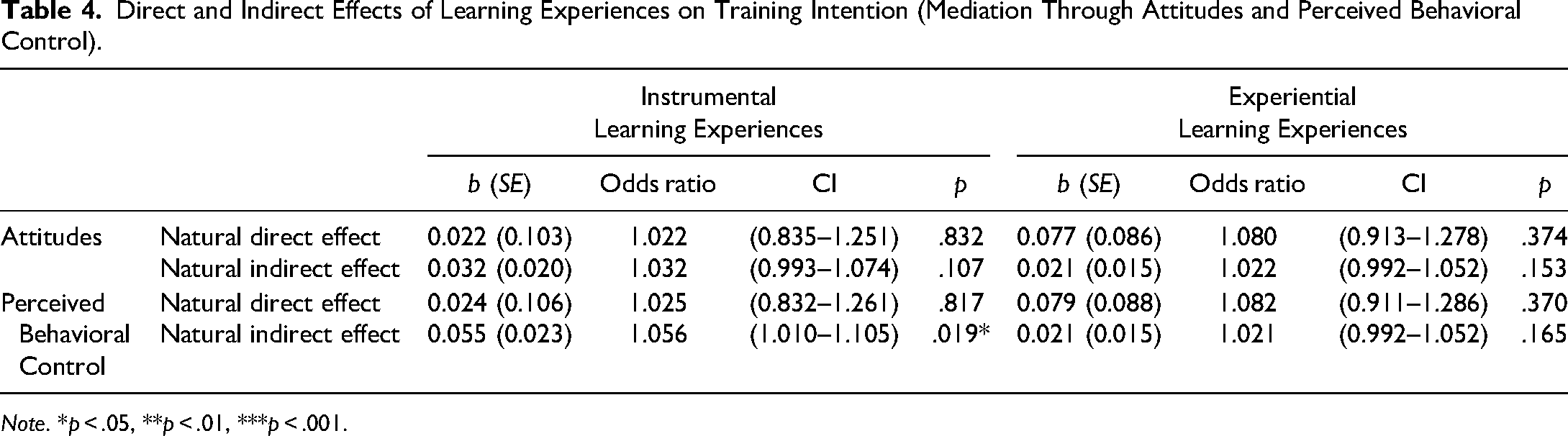
Note. *p < .05, **p < .01, ***p < .001.
Instrumental Learning Experiences do have a significant effect on training intention when Perceived Behavioral Control acts as mediator. Thus, adults’ school results when they were in compulsory education still influence their Perceived Behavioral Control as adults and this Perceived Behavioral Control influences their training Intention. This way, prior Learning Experiences are related to adults’ current training intention. These results are in line with Boeren (2011) and Desjardins (2015) who theorize that adults with successful educational experiences are likely to have a higher self-efficacy and consequently would be more inclined to engage in further learning because they are confident that they will be successful at participating. Contrarily, adults who have a lack of skills and knowledge are less likely to participate. Our results are also in line with those of Sanders et al. (2015), who already pointed to the importance of positive Learning Experiences in relation to developing post-training self-efficacy. However, Learning Experiences in this research referred to experiences regarding the training and not to compulsory education. Again, it is plausible that the relation between Learning Experiences (Instrumental and Experiential) and training intention would be stronger for participation in formal education as this setting is more similar to compulsory education and the thought of formal evaluation could evoke more negative experiences and attitudes. The review of van Dinther et al. (2011) proves that Perceived Behavioral Control can be influenced through intervention programs. However, the question remains how these intervention programs can attract adults with low Perceived Behavioral Control in the first place. In the workplace, Sanders et al. (2011) suggest supervisors should emphasize earlier successful Learning Experiences and reduce feelings of exam anxiety to strengthen workers’ belief in being successful. How Perceived Behavioral Control can be stimulated outside of the workplace is more complicated.
Limitations
There are a few limitations to our work. First, Covid-19 restrictions affected the research method as we had to switch to an online questionnaire. We needed to apply a convenience sampling method as face-to-face recruiting was not possible. Because respondents were recruited by more than 60 junior researchers, we were still able to reach as many adults as possible. Sampling was set up in such a way that sufficient low-educated adults were present in the dataset, to facilitate generalizability of the results for this specific group. Still, it is possible that certain population groups, for example adults with a migration background, are less included. And, although we tried to sample an equal amount of low-, medium-, and high-educated adults, the sample of medium-educated adults was rather small compared to that of low- and high-educated adults. Students could substitute a low-educated participant by a participant of their choice, when they could not reach a low-educated participant. This may explain the difference between the included number of medium-and high-educated adults. Additionally, filling in an online survey that takes 25 min may have been particularly challenging for the low-educated adults. A total of 46 respondents did not complete the questionnaire, however we have no information on their educational level. And although the survey was anonymous, we cannot rule out that sometimes socially acceptable answers may have been provided, for example attitudes may be more favorable than they are in reality.
Next, and also in relation to Covid-19, participation and intention rates are likely affected by the pandemic. Multiple respondents indicated they had not been able to participate during the past 12 months due to Covid. Still, participation rates of low-, medium-, and high-educated Belgian adults in adult learning in this sample are very comparable to participation rates in the Programme for International Assessment of Adult Competencies (see e.g., Van Nieuwenhove & De Wever, 2022). Due to the uncertainty (and perhaps other priorities) during the next 12 months, intention of participating in adult education may be lower than usual.
Last, SEM-analyses could also have gained interesting results, but our methodological choices were constrained by the nature of the dependent variable training intention, which is a binary variable. As a result, logistic regression was most suited to carry out the analyses.
Implications
Although this study is not the first to use the TPB to analyze barriers, the comparison between low-, medium-, and high-educated adults and the extension of the TPB with experiences of compulsory education adds important information to existing literature on barriers to learning. Using the TPB, we were able to move away from an exclusively work-related or economically oriented focus on participation barriers which is necessary to get a grasp on low-educated adults’ reasons for not participating. Although many theoretical assumptions have been made on the role of psychosocial barriers (e.g., Boeren, 2011; Cross, 1981), they are often overlooked in empirical research on participation barriers. Our results, however, demonstrate the importance of three psychosocial constructs (Perceived Behavioral Control, Perceived Social Norms and Attitudes) in deciding to participate in training. Adults with more positive attitudes towards learning, whose peers believe it is important they participate and who have a higher perceived sense of control over participating, are more likely to express an intention to participate in training. This is true regardless of educational level as we were unable to demonstrate an interaction effect of educational level and any of the TPB-constructs on training intention. This means that the TPB is just as important in predicting training intention for low-educated adults as it is for high-educated adults. In addition, we were able to demonstrate the importance of prior Instrumental Learning Experiences (i.e., good school results) in developing Perceived Behavioral Control as an adult, which in turn is related to training intention. Thus, adults who had higher grades in compulsory education have a higher sense of control over participating in lifelong learning today and this sense of control leads to increased odds of forming an intention to participate in training. Experiential Learning Experiences (i.e., whether one liked going to school) do not have the same effect. As a result, our findings show that compulsory school results continue to play a role in participating in adult education.
The results of our study should be considered when examining how to reach non-participating adults. Non-participating groups who are difficult to reach may share these characteristics. Intervention programs should take this into account. For example, in Flanders, a lot of initiatives emphasize tackling situational and institutional barriers (such as providing training vouchers, training credit, and educational leave) while our results show that psychosocial perspectives also play a significant role in deciding to participate.
Recommendations for Future Research
Expanding the statistical models in this research with qualitative data could be a fruitful area for further research. Qualitative studies can provide more in-depth insight into the included psychosocial barriers and how they are experienced by low-, medium-, or high-educated adults. Conducting interviews with low-educated adults, however, is not easy because of the negative connotation these adults may have assigned to learning (Kyndt et al., 2013). This is especially true for adults who are not participating in adult learning. Alternative ways for conducting qualitative research on participation with this population are needed. Finally, more research is needed on how policy makers and educational institutions can increase non-participating adults’ attitudes to learning and sense of control over participating but also how they can reach adults who experience little social pressure to participate in lifelong learning.
Footnotes
Declaration of Conflicting Interests
The authors declared no potential conflicts of interest with respect to the research, authorship, and/or publication of this article.
Funding
The authors received no financial support for the research, authorship, and/or publication of this article.
