



Abstract
The COVID-19 pandemic has prompted a renewed interest in intergenerational letter and email writing. Evidence shows that expressive writing, including letter writing, has a number of benefits including improved literacy and perceived well-being, and it can also facilitate a deep connection with another person. This scoping review provides an overview of the existing research on letter and email writing between different age cohorts. Of the 471 articles retrieved from Scopus, CINAHL, PsycINFO, MEDLINE, Academic Search Premier, and Web of Science, 17 studies met the inclusion criteria and were critically appraised and synthesized in this review. The studies were grouped into two themes according to their stated aims and outcomes: (a) studies exploring changes in perceptions, and (b) studies relating to skills development and bonds. The results showed a range of benefits for intergenerational letter writers, from more positive perceptions of the other age group, through improved writing skills and subject knowledge, to forming intergenerational memories and bonds. The review also highlights some of the limitations of the current research and formulates recommendations for future studies in the fields of writing studies, intergenerational research, and educational gerontology.
Introduction
While there has been a longstanding interest in the impact of letter writing on well-being (Gibbons, 2012; Krzeczkowska et al., 2021; Mosher & Danoff-Burg, 2006; Nicolini, 2008; Pennebaker & Seagal, 1999), the COVID-19 pandemic and the measures taken to control it, such as lockdowns, have created renewed interest in forms of socially distanced interaction between people, especially intergenerational interactions. One form of interaction that has received renewed attention are written forms of communication, such as letter or email writing to maintain social contact (Blunt, 2020; Long, 2022) or to develop new connections by facilitating exchanges, thus nurturing bonds between separate individuals and groups (Cote et al., 2003; Pole, 2015). Such possibilities are especially important in forging bonds across intergenerational letter writers.
The existing body of research on intergenerational activities, which can be traced to the 1960s in the United States, demonstrates a great variety in population groups participating in intergenerational initiatives (such as primary school children or teenagers with older adults), and the type and duration of these with activities ranging from one-time arts and crafts events to ongoing service models providing services such as mentoring (Aday et al., 1991; Bales et al., 2000; Chase, 2010; Cote et al., 2003; Marx et al., 2005; Rhodes et al., 2006). The literature describes a range of benefits for the participating groups involved. These include improved health and well-being outcomes (e.g., less anxieties, improved quality of life, reduced self-perceived loneliness), changes in cross-age attitudes and perceptions, and lastly “generativity,” such as skills exchange or mentoring (Krzeczkowska et al., 2021). Intergenerational programs can also improve community and social cohesion by breaking down barriers and nurture exchanges between disparate groups (Murayama et al., 2019).
However, in many intergenerational programs, in-person meetings with group activities such as arts and crafts, cooking, and music making are favored. The reasons for this appear to be immediacy of the outcomes in the shared and in-person experience, and less cognitive effort needed for listening than for writing and reading skills (Rubin et al., 2000), yet it is not a simple divide between orality and literacy (Soukup, 2007). Regardless of the mode of interaction and despite the aforementioned health and community benefits, intergenerational programs are often hard to sustain over time, generally because of funding cuts or lack of sponsors, key personnel leaving, or the amount of time involved in coordinating and transporting children or young people to meet with older adults (Hamilton et al., 1999; Murayama et al., 2019).
A number of intergenerational letter writing initiatives, including several “pen pal” schemes, emerged from the COVID-19 lockdown period. For example in the United Kingdom, the Sheffield Churches Council for Community Care set up a befriending and pen pal scheme for families and older residents in their community (Stannard, 2021), the University of Greenwich Student Union (GSU) installed a pen pal scheme between students and care home residents in South East England (Greenwich Students’ Union, 2021), and Age UK Maidstone established several pen pal schemes between school children and care home residents (Age UK Maidstone – Posts | Facebook, n.d.).
The literature is ambiguous about where and when exactly the expression “pen pal” originated from (McAnally, 2015), but it appears that “having a pen pal” as a hobby was initially instigated by an organization called Student Letter Exchange in 1936 for students from different countries to exchange letters to stimulate learning, curiosity, and to promote a better understanding between cultures (Student Letter Exchange, 2010). At the 1964–65 New York World’s Fair, the Parker Pen Company launched its international pen friend program “Peace Through Understanding Through Writing” (Cotter, 2020). To this day, the advertised benefits of taking part in pen pal programs have included the chance to improve one’s literacy skills (reading, writing, and comprehension) and educational confidence, to gain a better understanding about differences in personality and cultures, to nurture social skills and develop long lasting friendships, which can provide emotional support, encouragement, advice, and constructive criticism (e.g., Australian Post, 2021).
Letter/email writing, such as pen pal schemes, allows for potentially deeply personal communication, where the participants can be physically in two different locations, never physically meeting each other (Stamper, 2020). Although the literature points to differences between letter writing and email sending, often considering the latter as a medium for fast communication similar to sending text messages (Bertacco & Deponte, 2006; Frank et al., 2022a), emails often embody the notion of letter writing where a “dialogue at a distance” (Moffett, 1992, quoted in Frank et al., 2022a, p. 5) or “epistolary intent” (Stanley, 2015) takes place and where participants might reveal issues that they would be less likely to reveal if they were interacting face to face with a person (Letherby & Zdordowski, 1995; Stamper, 2020). Both letters and emails (when printed out) are tangible artifacts, which can be drafted and revised before sending; after receipt, they can be reread and reinterpreted. Similarly, both involve perspective-taking, because, without an immediate response from the recipient, the letter/email writer needs to imagine what he or she and the recipient have in common in order to generate thoughts about common experiences, interests, or passions they may share (Ebert et al., 2020, p. 66). Letters as well as emails often contain “experimental disclosure” (Frattaroli, 2006; Pennebaker, 1993), increasing insight in oneself and others (Channa, 2017; Kralik et al., 2000; Mosher & Danoff-Burg, 2006), and promoting openness to the perspective of others in a safe space (Bertacco & Deponte, 2006; Ebert et al., 2020; Nicolini, 2008; Numata, 2013).
Research clearly shows that writing has many qualities to allow people to express themselves (Adler-Kassner & Wardle, 2015) and to develop multiliteracies (Alexander et al., 2020; Selber, 2004), and that these possibilities, in turn, can provide a platform for deep and meaningful relationships, which can create and mediate strong bonds between participants in epistolary exchanges. Research has also shown that expressive writing, including letter writing, can be used both as an educational (Chohan, 2011; SmithBattle et al., 2010) and a therapeutic tool (Davidson & Birmingham, 2001; Ramsey-Wade et al., 2021) as well as a form of collective memory making (Binnie, 2019). Studies have found writing to be associated with improved health-related outcomes such as reduced stress and depressive symptoms, and beneficial for psychological health and well-being (Frattaroli, 2006; L. A. King, 2001; Pennebaker & Seagal, 1999; Petko et al., 2015; Seligman et al., 2005; Sheldon & Lyubomirsky, 2006; Toepfer et al., 2012).
Although writing is featured in a variety of intergenerational programs such as letter writing projects (e.g., Binnie, 2019; Cote et al., 2003; Pole, 2015), mentoring programs using email (e.g., Rhodes et al., 2006), and the creation of reminiscence books (e.g., Buron, 2010), reviews of such work are limited. This review, therefore, aims to contribute a perspective on the role of writing in the intergenerational research context. It provides an overview of the existing methods used as well as recommendations for research in written communication between different cohorts going forward.
Methods
Research Aims
The aim of this systematic scoping review is to synthesize and appraise the empirical literature on intergenerational letter writing (which can include pen pal initiatives) and to provide direction for future investigation. More specifically, this review seeks to explore (a) the landscape of studies involving intergenerational letter and email writing such as pen pal programs reported in the academic literature, (b) the evaluation methods employed in these studies, and (c) the impact and consequences of studies involving intergenerational letter and email writing on attitudes, skills, and relationships.
Design
A systematic scoping review was utilized to examine the extent, range, and nature of research activity and to identify gaps in the existing literature (Arksey & O’Malley, 2005). This involved the following steps: (a) identification of area of interest; (b) systematic literature search; (c) study selection; (d) charting the data by extraction, appraisal, and synthesis; and (e) collating and reporting the results. This review follows a data-based convergent synthesis design. That is, both qualitative, quantitative, and mixed-methods studies were identified in a single search, integrated throughout analysis, synthesis, and presentation (Noyes et al., 2019). Preferred Reporting Items for Systematic Reviews and Meta-Analyses (PRISMA) was used to show our search process in a flow diagram as depicted in Figure 1 (Page et al., 2021).
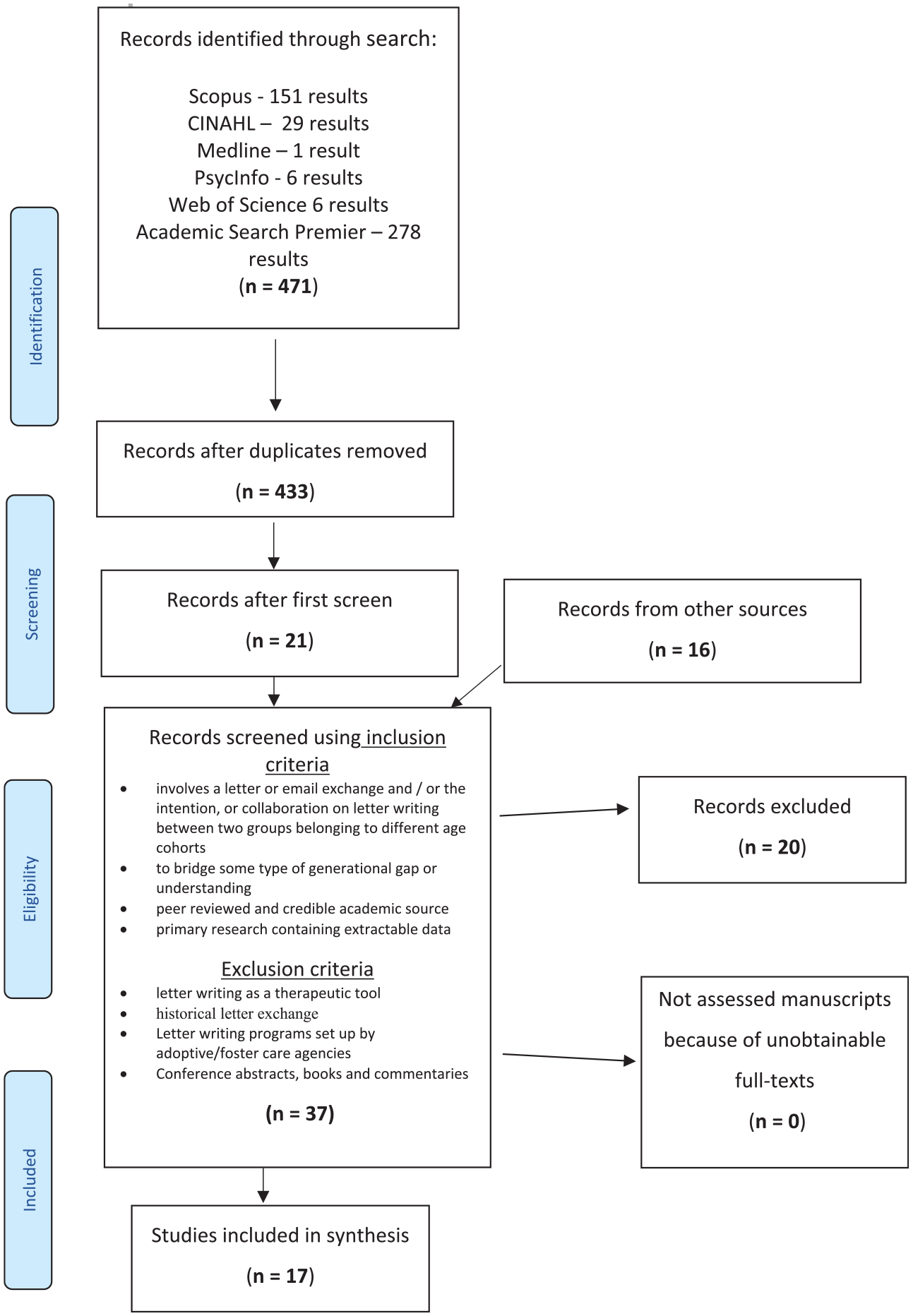
PRISMA flow diagram.
Search Strategy
A systematic search was undertaken in March 2021 using Scopus, CINAHL, PsycINFO, MEDLINE, Academic Search Premier, and Web of Science. Search terms were developed to reflect the concept in question. The final terms were: “Pen Pal” OR “pen-pal” OR “Letter writing” AND Intergen* OR inter-gen* OR Multigen* OR multi-gen*. Furthermore, two journals, Educational Gerontology and The Journal for Intergenerational Relationships, were hand-searched with the key words “Letter writing” and “Pen Pal” to ensure no articles were missed with the main search query.
Inclusion and Exclusion Criteria
The search returned 471 results that were reduced to 433 after deduplication (Figure 1). After the first screening, 21 articles were identified as potentially relevant. The reference lists of these articles were searched, with 16 further articles included from those 21. All articles were assessed against the following criteria:
Inclusion criteria:
• the study involves a letter or email (exchange and/or the intention of exchanging) between two groups belonging to different age cohorts or the study involves intergenerational collaboration on letter/email writing;
• the study or letter writing sought to bridge some type of generational gap or improve intergenerational understanding;
• the study was peer reviewed and published in a credible academic source; and
• the study was primary research and contained extractable data.
Exclusion criteria:
• studies primarily focused on letter writing as a therapeutic tool;
• a historical letter exchange, that is, the exchange was analyzed in relation to historical events and use of language;
• letter writing programs set up in prison settings and/or by adoptive/foster care agencies between children and their biological parents/relatives 1 ; and
• conference abstracts, books, and commentaries.
No time, language, or country restrictions were applied in the searches.
Quality Appraisal
The quality of retained studies was assessed using the Mixed Methods Appraisal Tool (MMAT), which is designed for the appraisal stage of systematic mixed studies reviews, that is, reviews that include qualitative, quantitative, and mixed methods studies (Hong et al., 2018). Since the critical appraisal process is about judgment making, two researchers (E.K., R.E.) independently assessed 17 full-text articles using this tool. Articles were sorted according to whether they were of quantitative (descriptive, nonrandomized, randomized), qualitative, or mixed methods design and assessed using the criteria for their category within the tool.
Data Extraction and Synthesis
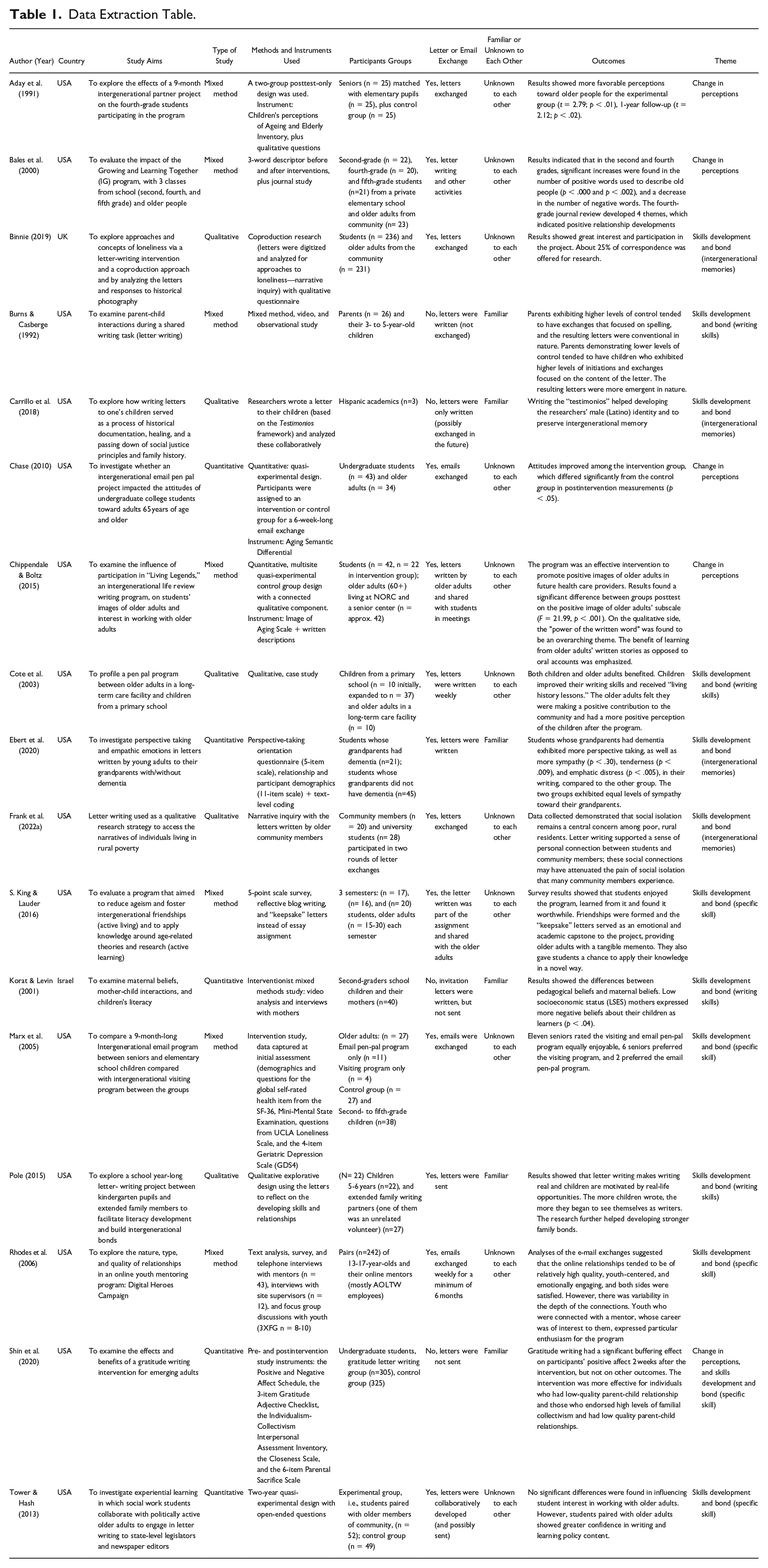
Data from the included 17 studies was extracted by the authors and categorized by citation details, country, study aims, study type, methods and instruments used, participant groups, letter or email exchange, familiar or unknown participants, outcomes and themes (Table 1). Categories were kept broad because of the methodological differences within and between studies and, as a result, summary measures were not possible. Since we aim to describe the existing body of literature, identify the scope of what has been studied while assessing the strength of evidence available and the gaps that need addressing, we decided to utilize a textual narrative synthesis to help understand our results (Lucas et al., 2007). This meant that we grouped the studies by their characteristics and then produced narratives for the synthesis concerning the groups and subgroups (Lucas et al., 2007).
Data Extraction Table.
Results
Descriptive Synthesis
Location and time
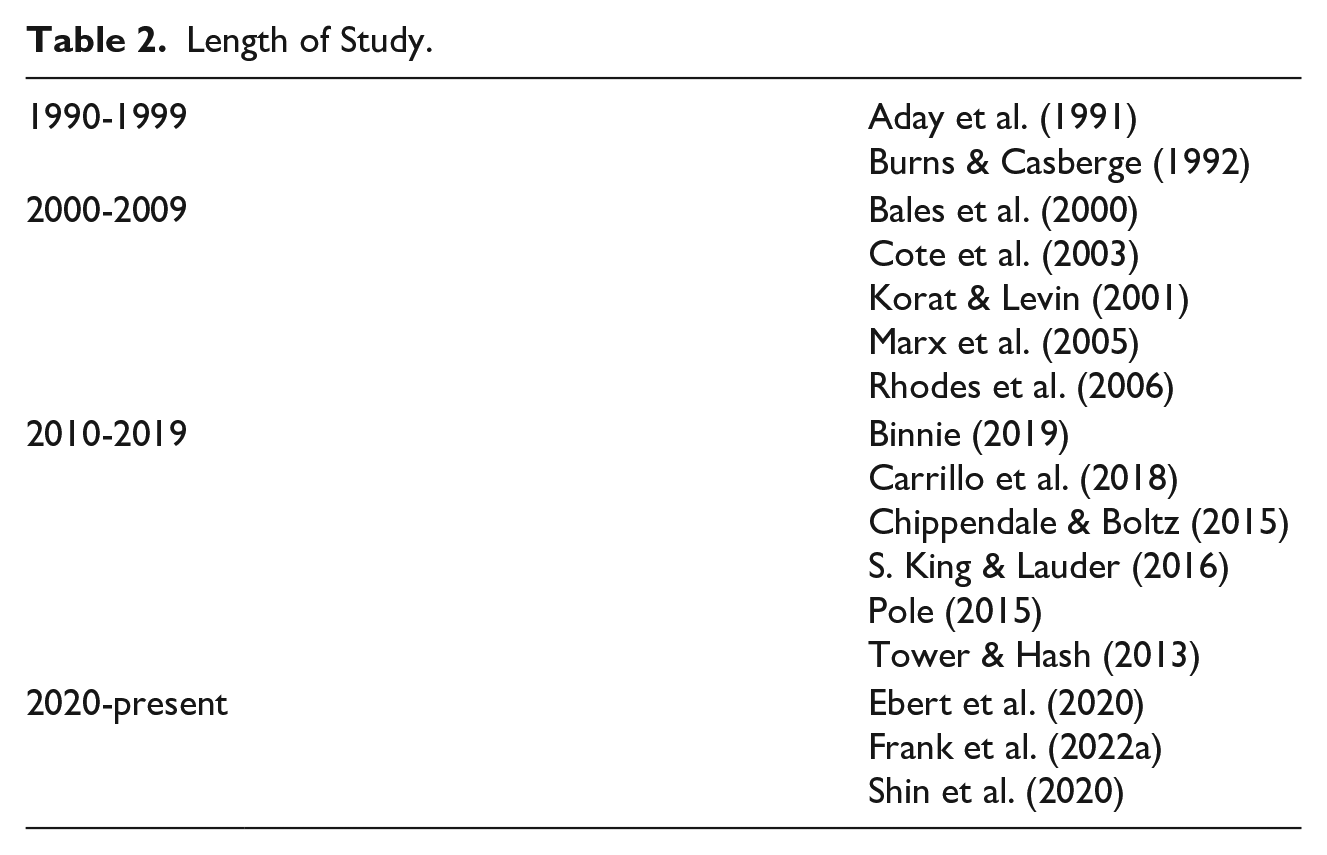
Of the 17 studies included in this review, 15 studies took place in the United States, one study in the United Kingdom (Binnie, 2019), and one in Israel (Korat & Levin, 2001). The results cover a time span of 30 years of research and are presented Table 2.
Length of Study.
Twelve studies were explicit intergenerational programs or facilitated at least a 6-week-long exchange between groups; in comparison, five studies (Burns & Casberge, 1992; Carrillo et al., 2018; Ebert et al., 2020; Korat & Levin, 2001; Shin et al., 2020) focused on one-time or short interventions. Eleven studies facilitated the exchange between strangers matching either university students or primary school pupils with older members of the community. Six studies were concerned with letter writing in a family context (Burns & Casberge, 1992; Carrillo et al., 2018; Ebert et al., 2020; Korat & Levin, 2001; Pole, 2015; Shin et al., 2020).
Artifacts
A letter exchange took place in nine studies (Aday et al., 1991; Bales et al., 2000; Binnie, 2019; Chase, 2010; Chippendale & Boltz, 2015; Cote et al., 2003; Frank et al., 2022a; S. King & Lauder, 2016; Pole, 2015), emails were exchanged in three studies (Chase, 2010; Marx et al., 2005; Rhodes et al., 2006), older and younger participants collaborated in the letter writing in three studies (Burns & Casberge, 1992; Korat & Levin, 2001; Tower & Hash, 2013), and participants wrote letters to their family member without necessarily sending them in three studies (Carrillo et al., 2018; Ebert et al., 2020; Shin et al., 2020).
Participants
The studies enrolled a total of 2,002 participants, of which 1,409 participants could be considered as “young” and 593 participants as “older”; with “young” being defined as writers who attended kindergarten to college and “older” being defined as adult beyond adolescence. The largest group of young participants were university students with 909 participants (Chase, 2010; Chippendale & Boltz, 2015; Ebert et al., 2020; Frank et al., 2022a; S. King & Lauder, 2016; Shin et al., 2020; Tower & Hash, 2013), followed by 302 “secondary school–aged” young people (Korat & Levin, 2001; Marx et al., 2005; Rhodes et al., 2006), 150 “elementary school–aged” children and 48 kindergarten children (Burns & Casberge, 1992; Pole, 2015). The information about older participants was less clear in terms of age groupings as older participants tended to be categorized by their role with respect to the young person or by their location. Following this categorization, there were 338 parents, extended family members, or caring adults enrolled in the studies (Burns & Casberge, 1992; Carrillo et al., 2018; Korat & Levin, 2001; Pole, 2015; Rhodes et al., 2006), 156 older adults from the community (Aday et al., 1991; Bales et al., 2000; Binnie, 2019; Chase, 2010; Frank et al., 2022a; Tower & Hash, 2013)), 69 seniors living in a federal subsidized apartment building (Marx et al., 2005), and 10 seniors from a long-term care center (Cote et al., 2003).
Study focus
Seven studies focused on researching the experience for the young person (Bales et al., 2000; Chase, 2010; Chippendale & Boltz, 2015; Ebert et al., 2020; S. King & Lauder, 2016; Shin et al., 2020; Tower & Hash, 2013) and with some of these studies capturing experiences by older persons informally. Six studies researched the experience of both groups (younger and older persons) and collected their perspectives directly, while two studies employed observations of parent-child interactions. Only two studies focused on the perspectives of the older participants (Carrillo et al., 2018; Marx et al., 2005) and did not capture the perspectives of the younger participants.
Regarding the broader context, most studies fit with the “literacy in the wild” metaphor (Alexander et al., 2020) because they placed attention on co- and extracurricular literacy practices, that were either self- or externally sponsored. The majority of the studies nurtured the development of literacy outside of formal curricular contexts and three studies (Binnie, 2019; Carrillo et al., 2018; Frank et al., 2022a) focused on the development of individual writers’ ability, supporting the perspective that everyone’s life journey mattered by employing in-depth qualitative approaches to describe and analyze the writing practices within different contexts. For those studies carried out in educational settings, the investigated letter/email writing activities were usually in addition to the formal curricula (only S. King & Lauder, 2016, had an assignment integrated).
Evaluation Methods Employed in the Studies
Study types
The reviewed literature encompassed seven mixed methods studies (Aday et al., 1991; Bales et al., 2000; Burns & Casberge, 1992; Chippendale & Boltz, 2015; S. King & Lauder, 2016; Marx et al., 2005; Rhodes et al., 2006), five qualitative research studies (Binnie, 2019; Carrillo et al., 2018; Cote et al., 2003; Frank et al., 2022a; Pole, 2015), and five quantitative studies (Chase, 2010; Ebert et al., 2020; Korat & Levin, 2001; Shin et al., 2020; Tower & Hash, 2013). Cote et al. did not list their empirical research methods, but we categorized this study as qualitative given that it reported participants’ experiences narratively.
Data collection methods
There were 17 quantitative instruments (some of them slightly modified) employed in the articles selected for this review that were not solely created for the specific study. None of these instruments was employed repeatedly and, therefore, the studies could not be quantitatively compared in a meaningful way. Aday et al. (1991) used the Children’s Perceptions of Aging and Elderly Inventory (Rich et al., 1983) to measure the attitudes of the participating children toward older people. Chase (2010) utilized the Ageing Semantic Differential Instrument (Polizzi, 2003) to measure the impact of an intergenerational email writing project on the attitudes of university students toward people aged 65 years or older. Chippendale and Boltz (2015) employed the Image of Aging Scale (Levy et al., 2004) to assess change in views held by university students. Marx et al. (2005) developed a questionnaire to capture the participating older population’s characteristics at the start of an intergenerational e-mail and visiting program. The questionnaire included global self-rated health items from the SF-36 (Samani et al., 1988), the Mini-Mental State Examination (Folstein et al., 1975), questions from UCLA Loneliness Scale (Russell et al., 1980), and the 4-item Geriatric Depression Scale (GDS4) (D’Ath et al., 1994). Shin et al. (2020) used the Positive and Negative Affect Schedule (Watson et al., 1988) to assess the results of a gratitude letter writing intervention among university students. In addition, the authors designed a bespoke instrument using Likert scales, which comprised a 3-item Gratitude Adjective Checklist (McCullough et al., 2002), the Individualism-Collectivism Interpersonal Assessment Inventory (Matsumoto et al., 1997), the Closeness Scale (Buchanan et al., 1991), and a 6-item Parental Sacrifice Scale (Chao & Kaeochinda, 2010).
Data collected
Four qualitative studies and three mixed methods studies employed written artifacts as a means to collect qualitative data, including the exchanged letters (Binnie, 2019; Carrillo et al., 2018; Frank et al., 2022a; Pole, 2015), journals (Bales et al., 2000), blog entries (S. King & Lauder, 2016), and written descriptions of the program experience (Chippendale & Boltz, 2015). In addition, some studies employed open-ended questions in surveys or collected free-form feedback or informal feedback, which was reported with some examples, but without detailing the forms of analysis used (Aday et al., 1991; Binnie, 2019; S. King & Lauder, 2016; Marx et al., 2005; Pole, 2015). Only Rhodes et al. (2006) reported on telephone interviews (a total of n = 55) and focus groups (n = 24–30).
Data analysis and use
Of all 17 studies, 8 studies explicitly used the letter (or email) as a research tool to explore answers to their research questions (Binnie, 2019; Burns & Casberge, 1992; Carrillo et al., 2018; Ebert et al., 2020; Frank et al., 2022a; S. King & Lauder, 2016; Pole, 2015; Rhodes et al., 2006). Binnie (2019) and Frank et al. (2022a) employed the letters for narrative enquiry; Carrillo et al. (2018) followed the testimonios writing format by Cervantes-Soon (2012) to produce and analyze the letters; Burns and Casberge (1992) and Pole (2015) used the letters to assess the development of children’s writing skills; Rhodes et al. (2006) reviewed the email exchanges for the depth of interpersonal connections between adolescents and their mentors; Ebert et al. (2020) reviewed the letters for pronoun use and references to shared experiences to assess perspective taking and empathy; and S. King and Lauder (2016) utilized “Keepsake letters” as a basis for the assessment of content learned during a university course.
Quality Appraisal Results
The quality of retained studies was assessed using the Mixed Methods Appraisal Tool (MMAT). Overall, six publications met all quality criteria for their study types (Binnie, 2019; Carrillo et al., 2018; Frank et al., 2022; Pole, 2015; Ebert et al., 2020; Chippendale & Boltz, 2015). Two studies (Burns & Casberge, 1992; Cote et al., 2003) could not be appraised using the MMAT tool. Qualitative studies had the highest overall quality (Figure 2).
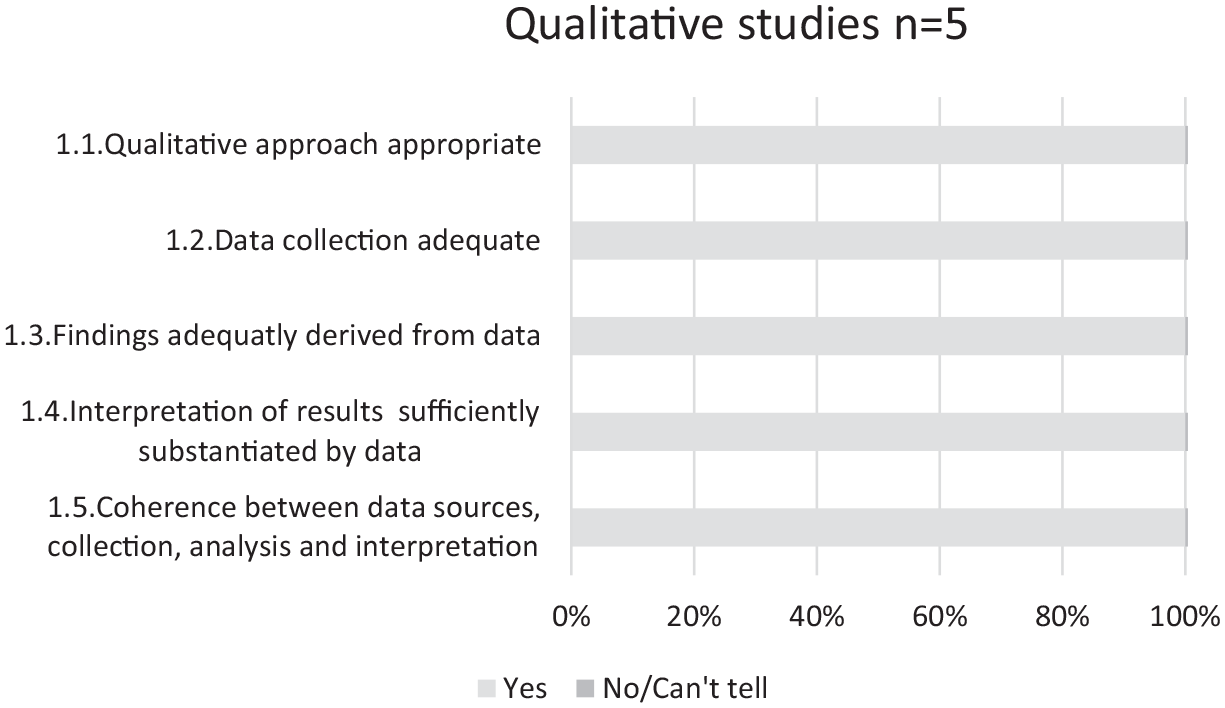
Quality appraisal qualitative studies.
The quantitative nonrandomized studies (Chase, 2010; Ebert et al., 2020; Korat & Levin, 2001; Tower & Hash, 2013) had some shortcomings related to sampling and potential confounders (Figure 3), which were not accounted for in the design/analysis of half of the reviewed publications.
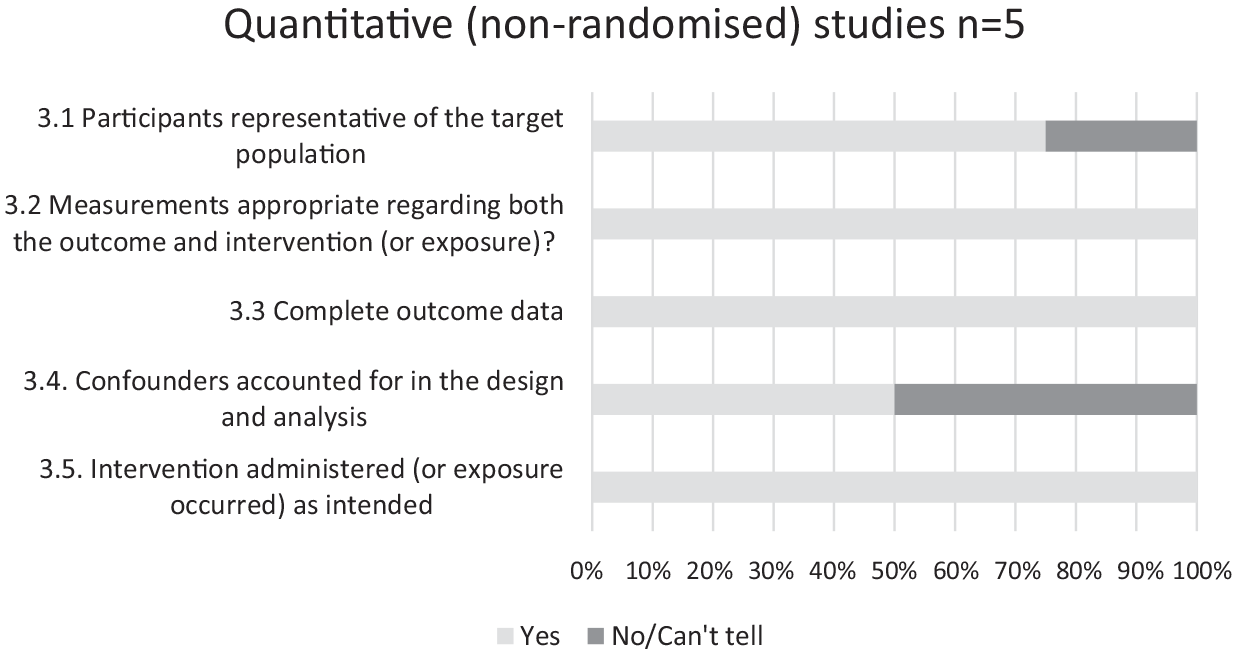
Quality appraisal quantitative studies.
The one publication that reported a randomized control design (Shin et al., 2020) did not adequately explain how randomization was performed. The outcome assessors in this study were not blinded to the intervention either, increasing the potential of bias.
In the mixed methods studies, which had the lowest overall quality (Figure 4), different study components and outcomes were often poorly integrated and/or did not satisfy the quality criteria of the different research traditions involved. Similarly, potential divergences and inconsistencies between the reported quantitative and qualitative results were seldom addressed.
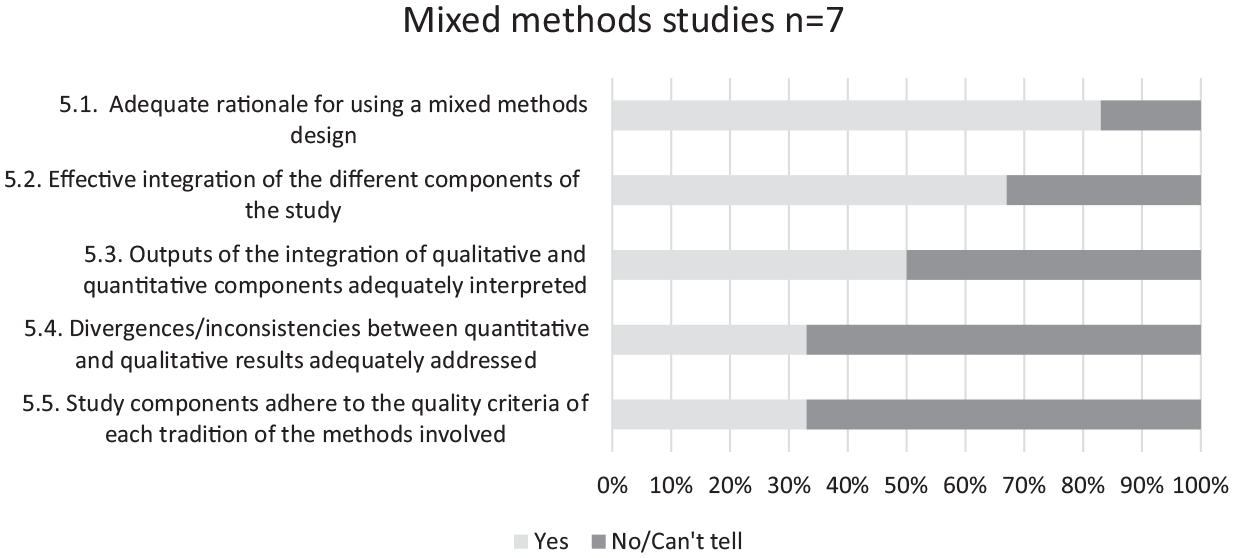
Quality appraisal mixed methods studies.
Results of Textual Narrative Synthesis
The results were grouped under two key themes in relation to the aims and the outcomes of the studies. These themes were (a) change in perceptions, such as where the focus lay on measuring the attitudes toward older people before and after the intervention, which included letter or email writing; and (b) skills development and bond, such as development of writing skills or greater awareness around a situation (e.g., loneliness) and developing a better understanding between the groups involved, which could evolve into “shared memories.”
Studies relating to a change in perceptions
Five studies (Aday et al., 1991; Bales et al., 2000; Chase, 2010; Chippendale & Boltz, 2015; Shin et al., 2020) focused predominantly on changing and measuring the perceptions of younger participants. They all demonstrated a positive change in perceptions toward older people after an intergenerational activity that involved some form of letter writing. The outcomes of these studies also showed that a positive change in perceptions was more likely to occur with interventions or exchanges taking place over time rather than with one-time activities. For example, Bales et al. (2000) observed a significant increase in positive words used to describe older people with pupils in the second and fourth grade where several rounds of letters were exchanged between young and older participants. However, there was no significant increase with fifth-grade pupils who exchanged only one letter with older participants. In their quasi-experimental study, Chippendale and Boltz (2015) compared two groups of health care students using the Image of Ageing Scale (Levy et al., 2004). The students in the experimental group worked for four weeks with older adults as part of an intergenerational life review writing program. The study showed that the program was an effective intervention to promote positive images of older adults in future health care providers as a statistically significant difference between groups on the positive image of older adults’ subscale was found posttest. In participants’ feedback, the “power of the written word” was found to be an overarching theme, and the benefit of learning from older adults’ written stories as opposed to oral accounts was also emphasized by the experimental group.
In four of the five studies that investigated changes in perception, the exchange took place between strangers and participants who may or may not have developed a relationship during the intervention. The only exception was Shin et al. (2020), who measured changes in perceptions in parent-child relationship. In their study, U.S. university students of Asian and White racial/ethnic backgrounds took part in a gratitude letter writing intervention to examine the effects and benefits of gratitude writing for emerging adults. The intervention had a significant positive effect on participants’ perceptions and, overall, was more effective for individuals who had low-quality parent-child relationships. Shin et al.’s (2020) study was the largest study (n = 591) investigating change in perceptions after an intergenerational letter writing activity; the other studies in this group involved typically 20–25 (young) participants.
Studies relating to skills development and bond
In this section the results are grouped based on the type of the skills developed and the quality of the bond developed, or both. Four studies (Burns & Casberge, 1992; Cote et al., 2003; Korat & Levin, 2001; Pole, 2015) focused on literacy development and observed the existing or emerging bond between the participants. Five studies (S. King & Lauder, 2016; Marx et al., 2005; Rhodes et al., 2006; Shin et al., 2020; Tower & Hash, 2013) were predominantly concerned with developing a skill or specific knowledge with one of the sides involved, whilst intergenerational memories between the groups were created based on the experience of taking part in the intervention or program. Four studies (Binnie, 2019; Carrillo et al., 2018; Ebert et al., 2020; Frank et al., 2022) were predominantly concerned with creating a connection between participants to either form intergenerational memories or to create an understanding of participants’ individual circumstances.
Two of the four articles about literacy development reported experiments to investigate parent-child interactions during a letter writing task (Burns & Casberge, 1992; Korat & Levin, 2001). Burns and Casberge (1992) found that parents who exhibited a higher level of control during the task had children produce more conventional letters in format. Korat and Levin (2001) showed that parents from lower socioeconomic groups who expressed lower expectations for their child as a learner and parents from a higher socio-economic group who expressed negative beliefs about their children as learners both tended to have children with lower levels of independent text writing. Both studies observed collaborative writing practices in which processes of letter writing, including preparation for writing, the format and register used in a typical letter as compared to oral language, and spelling were taught to the children. Furthermore, both studies point to the importance of parents’ beliefs and expectations about their children’s capabilities in their early literacy outcomes.
Cote et al. (2003) and Pole (2015) were also concerned with early literacy skills. Pole (2015) implemented a writing initiative with kindergarten children (n = 22) in which the children periodically exchanged letters with extended family members (n = 27). The outcomes of this qualitative study showed that real-life opportunities to write motivated children to learn and engage in letter writing, and that this motivation, in turn, led to a stronger bond with extended family members. Cote et al. (2003) discussed a letter writing program that linked long-term care residents (n = 10) with children of the surrounding community (n = 37). The study concluded that letter writers and letter recipients benefited; the writing skills of the children improved while a bond between generations was developed.
Five of the 17 studies focused on developing a skill or specific knowledge while also creating an interpersonal bond through intergenerational exchange. Two of these studies involved email exchanges: Marx et al. (2005) and Rhodes et al.(2006). Marx et al. (2005) compared different modes of interactions (email pen pal vs. a visiting program) in an intergenerational program between older adults (n = 69) and elementary school children (n = 20). From the older adults who participated in activities involving both modes of interaction (n = 19), 11 older people rated the visiting and email pen pal program equally enjoyable, 6 preferred visiting only, and 2 the email program. In contrast, Rhodes et al. (2006), the largest study in this scoping review, evaluated an online email mentoring program called “Digital Heroes,” in which working-age adults were matched with adolescents (total number of pairs n = 242). The emails were analyzed for the strength of connection developed between mentors and mentees. Outcomes showed that both the mentors and mentees were emotionally engaged and satisfied with the relationship, although the depth of the connection varied. The connection was stronger when the mentees expressed an interest in the mentors’ career.
Two further studies (King & Lauder, 2016; Tower & Hash, 2013) in this subgroup created physical letters that were shared with the participants. Tower and Hash (2013) evaluated an intergenerational activity run as part of a Bachelor of Social Work (BSW) experiential learning program. In the study, two groups of social work students engaged in letter writing to state-level legislators and newspaper editors, with the experimental group focusing on aging issues and working directly with 10 older adults from the community.
The control group wrote letters on a current bill in the state legislature (e.g., on increasing the tobacco tax) and did not include an intergenerational element. The results of this 2-year quasi-experimental study showed no significant differences between pre- and posttests for students’ future interest in working with older adults. However, the experimental group showed greater confidence in and learning of the course contents. This study also highlighted that a collaborative experience of letter writing can affirm confidence in the skills and processes needed for writing effective letters with the students’ future professional context in mind. Similarly, King and Lauder (2016) reviewed aspects of active living and learning through an intergenerational study, the Shenandoah Area Agency on Aging (SAAA) program. This mixed methods study found that friendships between the generations were formed, and that the letters written by the students provided the older participants with a tangible memento since they included a synthesis of what the students learned from their partners, a statement of gratitude, and research-based recommendations.
Finally, four of the reviewed studies focused on establishing a bond between participants to create either an understanding of their individual circumstances or intergenerational memory. In two of the studies, an actual letter exchange took place (Binnie, 2019; Frank et al., 2022) while in the remaining two studies, the letters were written and analyzed, but not sent (Carrillo et al., 2018; Ebert et al., 2020). Binnie (2019) initiated a “writing back” program in 2014 between students enrolled in a university volunteering hub and older residents in Yorkshire (UK). Using a coproduction approach shared in the exchange, she used letters and historical photographs to explore concepts of loneliness. The program ran from 2014 to 2018 and succeeded in recruiting and retaining 236 student volunteers and 231 older pen pals. The study also collected data using the revised version of the Older People Quality of Life Questionnaire (OPQOL-35) (Bowling et al., 2002) and a Loneliness Measurement tool, although those results were not reported in the study. Frank et al. (2022) employed letter writing as a qualitative research tool to access the narratives of individuals living in rural poverty and analyze them with social work students (n = 28). According to the authors, letter writing supported a sense of personal connection between students and community members and helped students understand the lived experience of poverty.
The coauthors of Carrillo et al. (2018) used the format of a testimonio to write one letter each to their children in which they reflected upon their life trajectories and male (Latino) identity in the United States. The letters in their study were conceptualized as a tool for preserving intergenerational memory and passing down family history and social justice principles from one generation to another. Finally, Ebert et al. (2020) explored empathy and the perspective-taking abilities of university students using letters that the students were prompted to write to their grandparents. The study compared two groups: one student group had grandparents with dementia (n = 21) and the other had grandparents without dementia (n = 45). The letters were analyzed for references to shared experiences and expressed tenderness and empathy. Results showed that students who had grandparents with dementia exhibited more perspective-taking, tenderness, and emphatic distress in their writing.
Discussion
Overall, all 17 studies reviewed for this article found positive results regarding the exchange of letters or emails—imagined or actual—between younger and older adults, pointing toward intergenerational understanding, more positive attitudes toward the other age group, and emerging or improved bonds. Those bonds, at times, led to continued relationships for participants, including those who did not know each other before the research study.
The role of writing in this intergenerational context was pluralistic in nature, addressing abilities such as writing skills (spelling, format, register and rhetorical awareness), subject knowledge development, technology skills (e.g., email applications), and presenting forms of self-expression, yet writing in this context was foremost a tool to create a social connection and understanding between participants, which allowed tangible memory making with the letter as an artifact that also embodied the skills and knowledge learnt.
Overall, what has become apparent from the scoping review is that research in the topic of intergenerational letter writing is resource intensive: it takes a considerable amount of time, people, and cooperation to plan and carry out inclusive and methodologically robust studies of intergenerational initiatives (Hamilton et al., 1999; Murayama et al., 2019). The administration, recruitment of participants, and coordination of the research, including the ethical and safe management of the written artifacts, can be very time consuming, especially when vulnerable older adults and very young children are involved. Many of these challenges are shared across qualitative research projects based in community, yet intergenerational letter writing projects have to engage two very distinct populations who do not necessarily meet in person, and thus a sense of community and connection is harder to achieve and sustain. There may well be many intergenerational pen pal projects currently ongoing, but these may not be evaluated and academically reported on exactly for the aforementioned reasons. One of the most successful studies in our review in terms of continuity and the involvement of participants appears to be Binnie (2019), who both managed to secure external funding and invested a lot of personal commitment in order to keep the pen pal exchanges continuing over several years.
In regard to the development of writing skills, the reviewed studies (Burns & Casberge, 1992; Cote et al., 2003; Korat & Levin, 2001; Pole, 2015; Tower & Hash, 2013) show that the practice of letter writing skills in an authentic context improves engagement and interest and potentially leads to better learning outcomes. Yet, future research should compare the effectiveness of different learning contexts in regard to development of letter writing skills. Another observation found during the review was that writing skills were almost exclusively considered in the context of child development; however, in studies such as Frank et al. (2022), it was noticed that older adults from disadvantaged backgrounds could also highly benefit from writing skills development initiatives. Life span writing development involving posttertiary education settings is currently an underresearched area, and as such it constitutes an important direction for future research.
Our scoping review points to a number of limitations in the existing research on intergenerational letter writing. These are centered around the use of research methods and research designs, access to and recruitment of participants, and finally insufficient reporting of research details. First, in regard to research methods utilized in quantitative research, our results report only a limited number of validated instruments to measure changes in perceptions in an intergenerational context, namely, the Children’s Perceptions of Aging and Elderly Inventory (Rich et al., 1983), the Ageing Semantic Differential Instrument (Polizzi, 2003), and the Image of Aging Scale (Levy et al., 2004). A rapid review of instruments in intergenerational research does not offer many more recently development instruments, despite an increasing interest in intergenerational research generally, and in particular concerning social, health, and well-being outcomes. This begs the question why these instruments have not been updated to reflect current population trends (e.g., longevity, older workers, and phased retirement) and multicultural sensitivities. Furthermore, the majority of the qualitative components in the mixed methods studies and in some qualitative studies in this scoping review failed to provide a clear approach to data analysis, while results were often reported in summary format or by providing representative quotes only (Aday et al., 1991; Binnie, 2019; S. King & Lauder, 2016; Marx et al., 2005; Pole, 2015). There also appears to be a lack of well-implemented study designs for pre- and postinterventions, with some notable exceptions such as Shin et al. (2020) and Ebert et al. (2020). Some studies appear to have captured a range of information at the beginning of the intervention, but do not measure these post-intervention, or at least they do not fully report on it (King & Lauder, 2016; Marx et al., 2005; Rhodes et al., 2006) In addition, only very few intervention studies considered a follow-up measure to gather data on the long-term effect such as Shin et al. (2020). This would be particularly interesting for research studies that use pre- and post-intervention measures. These would also benefit from including scales that measure health, well-being, and social outcomes such as Health-Related Quality of Life scale (HRQOL) (Fukuhara & Suzukamo, 2004) or the 36-Item Short Form Health Survey (SF-36) (Ware & Sherbourne, 1992).
A further discussion point around evaluation methods is that the letter writing as research artifact for contemporary research may have been undervalued. Properties of letter writing as a tool for self-development have been recognized in fields such as therapy and creative writing, which raises the question why writing has not been utilized more in intergenerational research considering its overarching aims of social cohesion and bringing generations closer (Aday et al., 1991; Ronzi et al., 2018).
In our included research results, more emphasis was placed on collecting data on changes with younger audiences, be it skills or perception changes, rather than observing the resulting relative effects in both populations. There was no reference to a possible research instrument to measure the perceptions of older adults toward younger populations. On the one hand, it could be argued that the reasons for the dominant research focus on young people is that most of the reviewed schemes were established by educational institutions and, therefore, it was in their immediate interest to measure change in their populations. On the other hand, one can perceive this one-sidedness as ageist, as value and interests are not placed on the observable and possibly significant changes (positive or negative) within the older populations. The only study to focus primarily on older adults’ experience in an intergenerational exchange was Marx et al. (2005), and this was in the context of developing digital skills with older adults.
Our next discussion point concerns access to and recruitment of participants. The majority of the studies worked with relatively small sample sizes, around 20 to 25 participants in each group. We found that the research studies frequently describe that it was (only) possible because the university, school, or organization had an existing relationship with each other and therefore convenience sampling was dominant. Some studies reported clearly the demographics of the participants, which were overall homogenous and frequently predominately White. Notable exceptions were Shin et al. (2020), who compared the effects of gratitude writing between U.S.-based White and Asian youth, and Rhodes et al.’s (2006) study, in which only 7% of younger participants were White and 59% were African American.
Our final discussion point is that the reporting of the research often lacked detail, and it was unclear whether certain actions had been performed (e.g., noting down the participants’ demographics) or were simply not reported. This was particularly noteworthy with some older studies such Cote et al. (2003), but also with more recent ones such as King and Lauder (2016). In this respect, we would like to commend Giraudeau et al.’s (2019) recommendations for future intergenerational projects, especially for those that involve letter writing. Future studies should be planned for a considerable length or have at least several rounds of exchanges in order to measure a change in perception, skills, and/or bonds. These studies should include detailed information about the participants, such as age and gender, health status, place of residence, participant characteristics relevant to study (e.g., gender, age, socioeconomic status, or perceived level of loneliness), and base level of perceptions about the other age group. Ideally, the reporting should account for the motivations of the participants for taking part, including how they were informed and prepared to participate, the quality of exchanges such as frequency, the length of the letter or email, and the type of content exchanged (e.g., advice or self-disclosure). If an intergenerational letter writing study is designed to be of considerable duration (e.g., years), we expect the research to consider mechanisms to monitor the effects of the exchanges (e.g., change in perceptions, skills development, and/or bond) to establish how and when change occurs and whether these changes are maintained. Capturing this information will allow future researchers and other stakeholders to more effectively design intergenerational letter writing programs considering their resources and funding available.
Limitations
This scoping review has several limitations. Even though no language restrictions were applied in the search, the search terms returned predominantly studies from the United States and the United Kingdom. To identify relevant research conducted elsewhere, the search strategy needed to be revised, translated, and localized. This process required direct input from researchers working in specific (non–English speaking) contexts, the collection of which was beyond the scope and capacity of this review. This review also excluded books, conference papers, and gray literature. 2 We further excluded the field of therapeutic writing, where letters are frequently employed as a tool in counseling, psychotherapy, couples therapy, and coaching. We also excluded any letter writing programs set up in prison settings or by adoptive or foster care agencies between children and their biological parents and relatives. Another exclusion was a historical letter exchange, where the exchange was analyzed purely in relation to historical events and use of language.
Conclusion
This scoping review contributes to the evolving landscape of intergenerational letter writing studies reported on in the academic literature. Our review shows that the majority of research has been carried out in the United States, the most frequent populations connected were students to older adults in the community, and the majority of research studies recruited relatively small samples of participants. Research showed a range of benefits for intergenerational pen pals, including more positive perceptions about the other age group, improved writing skills, increased subject knowledge, as well as intergenerational memories and bonds. The letter as an artifact to conduct qualitative and quantitative research with is emergent, but otherwise research evaluation approaches were predominantly quantitative to capture either a change in perception or skills. Qualitative results in mixed method research were frequently reported by providing examples of quotes of feedback rather than detailing the full breadth of the qualitative data collected and the approach to analysis. Many quantitative studies and mixed methods studies concentrated their data collection only on the change of attitudes and skills development in younger populations. Only few studies collected data from both participant groups involved. Synthesis of the results brought out that intergenerational letter writing can indeed change attitudes, in particular when the exchanges are held over a period of time. Letter and email exchanges increase (writing, knowledge, or IT) skills while instilling a bond between participants, which can result in continuing friendship. Considering this is an emergent area of research, more large-scale research with more detailed reporting is needed.
Footnotes
Declaration of Conflicting Interests
The authors declared no potential conflicts of interest with respect to the research, authorship, and/or publication of this article.
Funding
The authors received no financial support for the research, authorship, and/or publication of this article.
