



Abstract
Millions of users write and read freely accessible texts every day on online literary platforms (OLPs). Intra-platform surveys aside, only very few studies have considered the demographics of digital readers and authors. Our exploratory study of avid OLP users helps to close this research gap. We requested an international sample of OLP users (13 years and above) to complete an online questionnaire. Our survey gathered demographic data and information about participants’ OLP usage, motivation, (communicative) relationship with other users, and perceptions of the positive effects of OLP usage (Nmax = 315). Among others, our results not only reinforce the theoretical concept of wreading but also indicate that OLPs are likely to enhance the pleasure derived from writing and reading. Our data show that OLP usage is not limited to adolescent users. Reportedly, for participants from Generation Y as well as from Generation Z, the experience of creative freedom and the possibility to get direct reader feedback are major motivational factors to write on OLPs. Also, our data indicate that our surveyed writers on OLPs prefer short stories. We call for more longitudinal investigations and for a common theoretical framework, in order to strengthen future research on digital literature practices and to be able to implement the didactic potential of OLPs in the classroom.
Keywords
Introduction
Contrary to the much-deplored end of the book (Wolf, 2007), literature has never been read and written as intensely as in digital societies (Kuhn, 2013, 2015a,b; Lauer, 2018, 2020; Price, 2019). Millions of users daily read, comment on, rate, and write texts themselves on various online literature platforms (OLPs), such as Wattpad.com, Fanfiction.net, Sweek.com, and many more. 1 However, debates about digital literature practices focus mainly on whether texts can be read correctly and in depth on screen (Meckel, 2013; Singh, 2012; Spitzer, 2012)—despite empirical studies showing that device selection depends chiefly on reading frequencies (Büchermonitor Deutschland, 2018) and habits (Mangen et al., 2013). Neither data from the US National Endowments for the Arts (National Endowments for the Arts, 2020) nor European data (JAMES Studie, 2020; JIM-Studie, 2019; KIM Studies, 2018, 2020; MIKE-Studie, 2019) confirm the widespread belief that reading abilities are declining. Rather, intensive digital media use is evident, which always (also) includes reading and, in many cases, a range of writing practices.
Nevertheless, reading and writing practices have changed significantly because of digitization (Stavanger Declaration, 2018), foremost because of the heavy use of social media, which also include online literature platforms (Lauer, 2020; Murray, 2018). Changes in practices concern in particular an expansion of the individual writing activities. Users of OLPs not only upload their literary stories and books to the platform but also write often about the specific context and the creation process of their writings. In a similar vein, OLP users present and stage their own profile with short texts (Kraxenberger & Lauer, 2021) and—often excessively—comment, evaluate, and review the texts of others. Furthermore, many OLP users are active beta readers; that is, they correct and give (written) feedback on diverse aspects, ranging from grammar and orthography to storyline and development of characters. This expansion of writing activities leads consequently to a (re)definition of boundaries between author, editor, critic, and publisher. Likewise, because of the immediate and direct exchange between authors and readers, literary roles can only situationally be attributed and eventually become obsolete (Kraxenberger & Lauer, 2021).
Referring to a coincidence of different literary activities in one person, George Landow coined the term wreader as early as the 1990s (cf. Landow, 2006). This characterization as both writing (literary as well as commenting) and reading seems suitable to today’s OLP users—nevertheless, it remains an empirical question whether this theoretical concept captures everyday occurrences. Despite ever-expanding OLP usage, research has barely heeded such “other” writing and reading; if it has, then mostly to articulate cultural criticism (see, however, Driscoll & Rehberg Sedo, 2019; Rehberg Sedo, 2011; Thelwall & Kousha, 2017; for a review of digital social reading, see Rebora et al., 2021). This research lacuna is all the more remarkable since OLPs seem to be a promising terrain not only to investigate theoretically coined concepts such as wreading but also to study different writing and evaluation practices, as well as to observe written interaction within communities of interest (e.g., fandoms). Similarly, research on OLPs might also provide detailed data on text genesis or reading behavior over time. However, some platform-specific data aside, 2 no empirical surveys to date have explored the perspective of OLP users.
Our exploratory study of avid OLP users (13 years and older) aims to help close this research gap. The present study specifically used a quantitative online survey to gain insight into OLP users’ practices, motivations, and platform assessments. Since OLPs are usually considered social media, we also explored how users communicate with each other and which positive effects they experience when writing and reading on OLPs. In doing so and in line with our exploratory approach, our study examines both writing and reading activities on OLPs. In the context of users’ genre preferences, their usage frequency, and their motivation to use OLPs, we considered writing and reading separately; with regard to the concept of wreading, however, we also surveyed these activities holistically, for example, in terms of platform experiences or with regard to the features and applications that participants reportedly consider to be of particular importance to them.
Methods and Sampling
Survey
Data were collected through an online survey (conducted in German and English using Unipark [www.unipark.info]). All experimental procedures received ethical approval from the Ethics Council of the University of Basel and were undertaken with participants’ informed consent.
Besides gathering demographic data (including gender, age, level of education, and native language), the survey comprised mainly experimenter-selected, forced-choice, and closed questions. 3 These addressed which OLP features participants found important, and in which language they used OLPs. Using a list of platforms, participants were also asked to identify OLPs they had used before. In doing so, multiple answers were possible. The list also included an “other”-option that could further be specified by the participants. In addition, we asked participants to report their (communicative) relationship with other users, the social-cognitive effects of using OLPs, their reading socialization, and whether reading or writing was their principal OLP-activity. Depending on their answer to the last question, participants answered further questions about their motivations for using literature platforms, their digital genre preferences, and how frequently they used OLPs for reading or writing. We used Wattpad’s predefined genre list to query participants about their preferred genres. We chose this list because it is the most comprehensive on-platform genre list and because it includes genres not necessarily established within research (e.g., “Chick Lit” or “Werewolf”), yet highly familiar among our target group (avid OLP users).
All questions were presented with verbal labels on bipolar scales in randomized order. Frequencies were assessed using (1) verbal 3-point scales (recently/ for a few weeks; for some time/ for a few months; for a long time/ for a few years), (2) 5-point scales (ranging from never to very often), and (3) 6-point scales, respectively (daily; several times a week; once a week; several times a month; once a month; less common). All other forced-choice questions targeting opinions and attitudes were presented on (4) verbal 4-point scales (not true at all; not so much true; more likely to be true; completely true).
Participant Recruitment and Selection
Participants had to be at least 13 years old. Given that our target group included adolescents and young users, we used age-appropriate language in advertising our study and in the survey. Twenty-five vouchers for Apple Store & iTunes or Google Play, worth 20 Swiss Francs each, were raffled among all participants.
For participant acquisition, study profiles were created on various social media sites (reddit®, Instagram®, Facebook®). 4 In the course of the data collection, we published our own content (using relevant hashtags) on these sites to draw attention to the survey and posted calls for participation in various groups, forums, and reddits. In addition, we e-mailed a variety of German- and English-language book bloggers and individuals with a broad reach and a content focus on literature. Also, we (rather unsuccessfully) approached OLPs as well as reading circles and municipal and cantonal libraries with diverse audiences, asking them to distribute the survey link. While the success of the latter efforts is rather difficult to track, posts and comments on social media (including removals of posts and contributions), for example on the various subreddits, are relatively well documented and traceable under the given study profile. Reviewing the posts reveals that fan fiction–related groups tended to show more interest in the study; by contrast, more general subreddits on reading and/or writing were more likely to delete the call for the study survey. However, since we did not collect the IP addresses of our participants for data protection reasons, it is not possible to make any concrete statements about which links participants used to reach our survey, nor is it clear how many users on which pages saw the call to our study.
Three-hundred fifty-six individuals completed the survey. After data inspection, our sample comprised 315 participants. As we decided to use mostly optional questions in our survey, the number of answers per question varied (nmin = 101; Nmax = 315).
Statistical Analyses
All analyses were conducted in SPSS (IBM SPSS Statistics for Windows, version 22.0; IBM Corp.). We used principal components analysis (PCA) for dimensional data reduction (for a similar procedure, including comparisons of averaged means of individual item loadings, see Kraxenberger et al., 2021; Sarkhosh & Menninghaus, 2016). In line with our exploratory approach, we consistently used oblique rotation (oblimin). We verified the sampling adequacy of our analyses with the Kaiser-Meyer-Olkin measure (all KMO ≥ .65). In all cases, Bartlett’s test of sphericity indicated that correlations between items were sufficiently large for PCA (all p ≤ .001).
In very simplified terms, PCA is a factor-analytical procedure for data reduction; the identified components are determined in each case by the items with a particularly high factor loading (see the tables below). Roughly speaking, this makes it possible to determine which of the queried aspects (or clusters of aspect, respectively) are relevant for the surveyed participants. In addition, the comparisons of averaged means of individual item loadings of the identified components indicates whether there are one or more components that stand out because of significantly high values, that is, are of particular importance.
Results
OLP Users
Demographics
The great majority (74.5%) of our participants identified as female, 17.5% as male. Seven participants (2.2%) did not disclose their gender and 5.7% indicated nonbinary gender (n = 314). Most participants (58%) were native English speakers, while 20% reported German as their native language (n = 304; no other language reached double-digit percentages). From the total of 315 participants, 151 participants indicated a bilingual upbringing. Of these, 46% identified English as their second native language, followed by two variants of Chinese (8% each).
Only participants born after 1990 were requested to provide details of their age (n = 305); participants aged 30 or over were subsumed in one age group. Eighty-three percent of our participants were born after 1990. The mean age of participants below 30 was 20.8 years (SD = 4.83, min = 13, max = 30); 32.8% were aged 13-17 years, 45.9% were aged 18-25 years, and 21.3% were aged 26-30 years. Seventeen percent were aged at least 31 years.
Consistent with the reported mean age, 70% of participants who answered questions about their education (n = 310) had finished school and were either at university (47%) or working (46%). Regarding educational qualifications, 37% had a high school diploma, 30% a bachelor’s degree, and 19% a master’s degree (n = 306).
Thus, in total, 86% of participants had a higher education entrance qualification or a degree. Comparing averaged OECD data with German statistical data 5 revealed that our data indicated above-average education in OECD countries (higher education entrance qualification: 36%, university degree: 31%, in total: 67%).
Of the 30% of our participants still at school, the majority (83%) were attending high school; 15% were at junior high school, 2% at elementary school.
Next, we allocated participants by age to two established demographic cohorts: Generation Y (born before 1999, n = 179; 58.7%) and Generation Z (born between 2000 and 2007, n = 126; 41.3%).
Reading socialization
We measured participants’ reading socialization by using the average of several ratings for their “reading past” as a composite index. Items assessed whether participants’ parents owned many books, whether their parents read a lot, whether participants were often read to as children, and whether participants had looked at or read books with their parents when they were children. Items were phrased as statements and could be rated on 4-point scales (ranging from “not true at all” to “completely true”). The pooled index of items exhibited high internal consistency, as determined by a Cronbach’s alpha of 0.82 (for a similar procedure, see Kraxenberger & Menninghaus, 2017; Lüdtke et al., 2014).
Derived from the pooled index, our integrated measure of reading socialization showed rather high values (M = 3.05, SD = 0.83, N = 315). Regarding this index, analyses of variance revealed no significant differences between Generation Y (M = 3.07, SD = 0.87) and Generation Z (M = 2.99, SD = 0.76, p = .42), nor between participants who preferred reading on OLPs (M = 3.00, SD = 0.86) and ones who preferred writing on OLPs (M = 3.13, SD = 0.83; all F(1, 314) ≤ 1.64, all p ≥ .20).
OLP Usage Practices
OLPs used
Regarding the assessment of platforms that the participants of our study had used before, 73% of participants indicated having used Archive of Our Own.org, 70% had used Fanfiktion.net, and 56% Wattpad.com. Thirty-five percent reported using specialized subreddits on reddit.com, 11% had used Fanfiktion.de. Further, 23% of our participants had used other OLPs (e.g., LiveJournal.com, asianfanfics.com, and Sweek.com). The “other” platforms mentioned only reach negligible percentages with regard to our sample.
We tested for age-specific differences in platform use by applying chi-square tests for nominal variables. Analysis revealed that Fanfiction.net and Archive of Our Own.org were used significantly more by Generation Y than by Generation Z (Fanfiction.net: χ2(1, n = 305) = 14.59, p ≤ .001, ɸ = 0.22; Archive of Our Own.org: χ2(1, n = 305) = 5.86, p = .02, ɸ = 0.14). In contrast, Wattpad.com was used significantly more by Generation Z than by Generation Y (Wattpad.com: χ2(1, n = 305) = 42.27, p ≤ .001, ɸ = 0.37). Similarly, yet with a notably smaller effect size, reddit.com was unknown to (and hence not used by) a significantly larger number of Generation Y than Generation Z participants (χ2(1, n = 305) = 5.36, p = .02, ɸ = 0.13). Usage of Fanfiction.de revealed no significant differences between age groups (χ2(1, n = 305) = 0.03, p = .87, ɸ = 0.01).
Language
The overwhelming majority of participants (90%) used English-speaking OLPs, compared with 9% for German OLPs. Only three other languages were mentioned, although by very few participants (Dutch, Filipino, and Russian, each 0.3%; n = 312). Eighty percent of participants used English-speaking OLPs even if English was neither their first nor their second language. Usage of English-speaking OLPs predominated across different age groups with relatively similar proportions (Generation Y: 91%, Generation Z: 88%).
Platform experiences
Asked how they became aware of OLPs, 46% of participants reported “by coincidence,” compared to 31% via social media and 17% through friends. Only a small percentage had been introduced to OLPs by siblings or family (3%), and only 2% by advertisements (n = 311).
Almost all our participants had experience of reading on OLPs (99.7%, i.e., 311 participants from n = 312 answered this question), while 73% indicated experience of writing on OLPs (n = 315). Notably, our participants reported having no experience of writing or publishing with others on OLPs (0.3%, n = 315). A chi-square test showed no significant difference between Generation Y and Generation Z regarding OLP experiences (all χ2(1, n = 305) ≤ 3.07, p ≥ .08, ɸ ≥ −0.10). Most of our participants were interested in fandom (72%; n = 314). Participants from Generation Y and Generation Z showed no significant differences regarding their interest in fandom (χ2(1, n = 305) = 1.25, p = .26, ɸ = 0.06).
Anonymity
The vast majority of our participants (94%, n = 314) reported that they did not use OLPs with their clear name, but anonymously (or with a nickname). Answers to parents and friends knowing about participants’ OLP usage were rather mixed: Overall, 55% of participants indicated that the statement that their parents knew about their OLP usage was either “not true at all” (33%) or “not really true” (22%), while 45% reported that this statement was “more likely to be true” (19%) or “completely true” (26%). Regarding whether their friends knew about their OLP usage, a total of 38% said that this statement was “not true at all” (17%) or “not really true” (21%), whereas 62% reported that this statement was either “more likely to be true” (25%) or “completely true” (37%). Answers about parents’ or friends’ knowledge about participants’ OLP usage exhibited no significant differences between Generation Y and Generation Z (all F(1, 302) ≤ 0.81, all p ≥ .37).
Preference for writing or reading on OLPs
The majority of participants (n = 209; 66%) preferred reading on digital literature platforms, while 37% preferred writing (n = 116, N = 315). Examining the mean age per group showed no significant age difference between participants who preferred writing and those who preferred reading on OLPs (F(1, 304) = 2.08, p = .15). Further, a chi-square test revealed no significant difference between Generation Y and Generation Z regarding a preference for writing or reading on OLPs (χ2(1, n = 305) = 2.29, p = .13, ɸ = 0.09).
Usage frequency
Seventy-two percent of participants who preferred writing on OLPs had done so for a long time, 23% for some time, and 6% had only recently started using OLPs (n = 106). Seventeen percent had used OLPs daily for writing during the last 12 months prior to the survey, while 45% reported using OLPs several times a week. Ten percent of participants wrote on OLPs once a week, and another 10% used OLPs several times a month for writing. Eight percent of participants who preferred writing used OLPs once a month, while 9% reported doing so less frequently (n = 106).
Our data show that most participants who preferred reading (83%; n = 208) had been using literature platforms “for a long time, a few years.” Fifteen percent of participants who preferred reading on OLPs had been using such platforms “for some time, for a few months,” while 2% had starting using OLPs “recently, for a few weeks.” Forty-two percent of our participants who preferred reading on OLPs reported doing so daily during the 12 months prior to our survey; 26% used OLPs several times a week, 10% once a week. Nine percent reported reading on OLPs several times a month, 6% once a month, and 7% used OLPs less commonly for reading (n = 209). Most participants who preferred reading on OLPs used their smartphone (42%), 17% used their computer, and 7% used a tablet or iPad.
Genre preferences
In order to assess participants’ genre preferences, we used the data collected on frequency of genre exposure as a proxy (see Sarkhosh & Menninghaus, 2016; for a comparison of genre preference and genre exposure, see also Stern et al., 2018). Frequency of genre exposure was collected depending on participants’ stated preference for writing or reading on literature platforms.
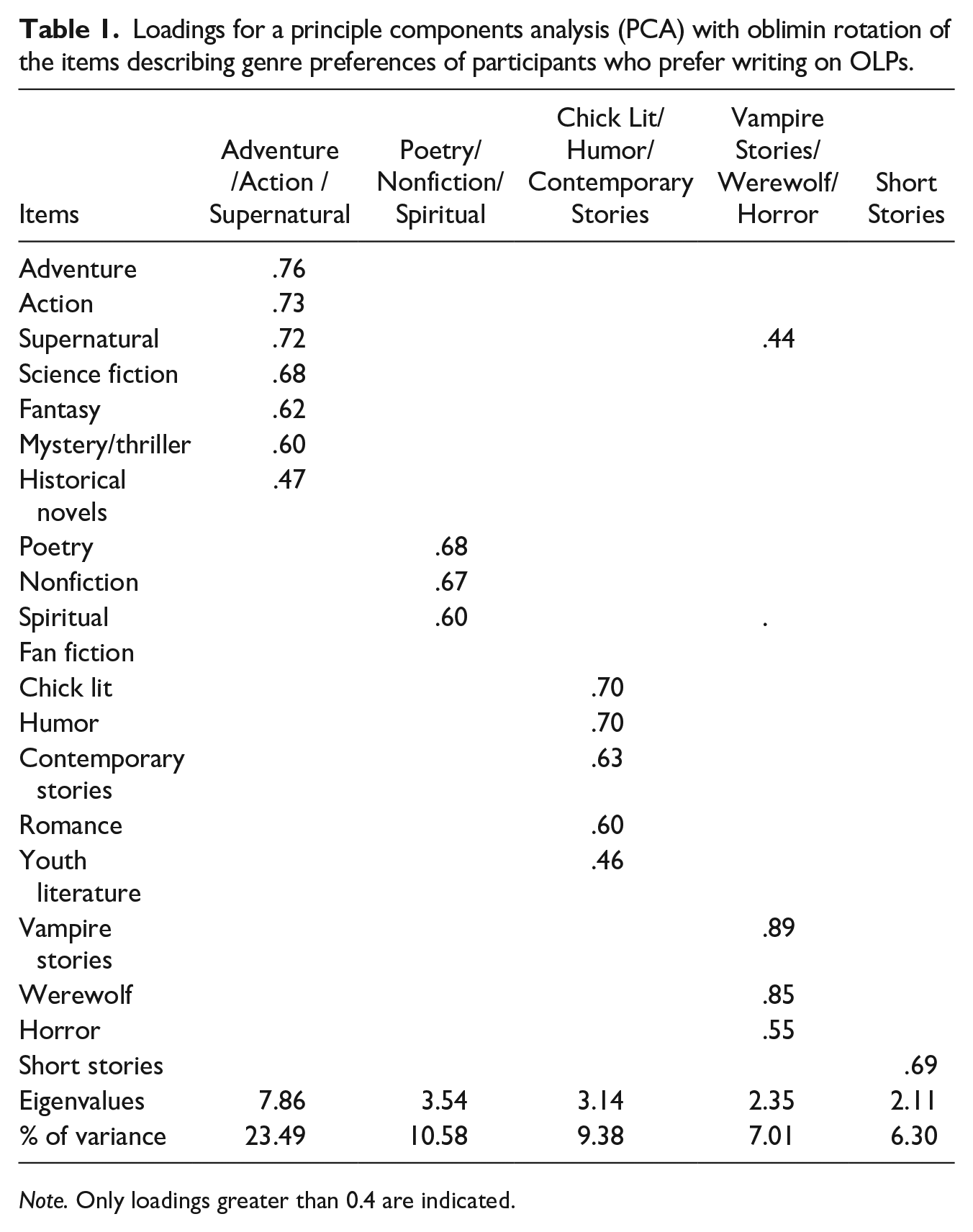
Among participants who preferred writing on OLPs, we applied a PCA with oblique rotation. This revealed five components, explaining 57% of the variance in the initial item set (see Table 1; all further tables featuring component loadings for PCA also show factor loadings after rotation).
Loadings for a principle components analysis (PCA) with oblimin rotation of the items describing genre preferences of participants who prefer writing on OLPs.
Note. Only loadings greater than 0.4 are indicated.
As for those items with the highest loadings, Component 1 concerns a preference for Adventure/Action/Supernatural (Component 1, M = 2.64, SD = 0.88). Component 2 comprises Poetry/Nonfiction/Spiritual (Component 2, M = 2.30, SD = 0.65). Component 3 captures a preference for Chick Lit/Humor/Contemporary Stories (Component 3, M = 2.52, SD = 0.87). Whereas Component 4 indicates a preference for Vampire Stories/Werewolf/Horror (Component 4, M = 1.98, SD = 0.89), Component 5 refers to Short Stories (Component 5, M = 2.97, SD = 0.95). Components differed significantly (all F(1, 211) ≥ 3.97, all p ≤ .05, all η2 ≥ .02)—except for Components 1 and 3 (F(1, 211) = 1.12, p = .29). Component 5 (Short Stories) scored the highest mean value (see Figure 1).
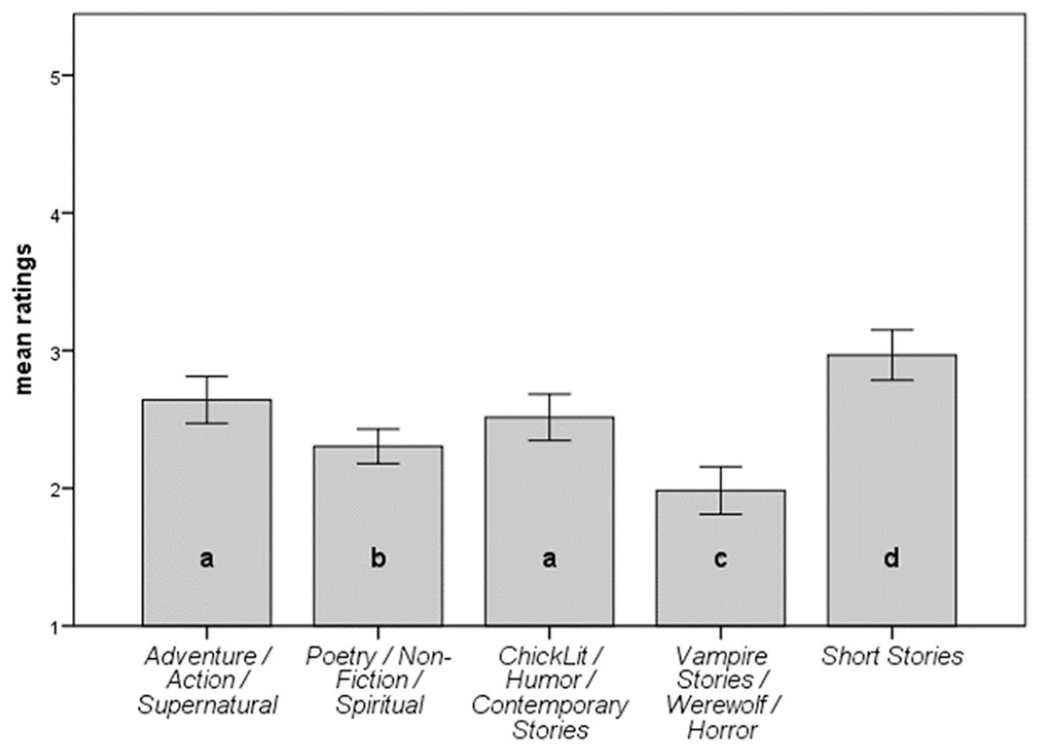
Mean ratings for each of the five components reflecting genre preferences of participants who prefer writing on OLPs.
Except for Component 5 (Short Stories), variance analyses showed no significant differences between age groups (all F(1, 101) ≤ 1.74, all p ≥ .19). For Component 5, Generation Y showed higher values (M = 3.16, SD = 0.94) than Generation Z (M = 2.65, SD = 0.88; F(1, 101) = 7.11, p = .01, η2 = .07).
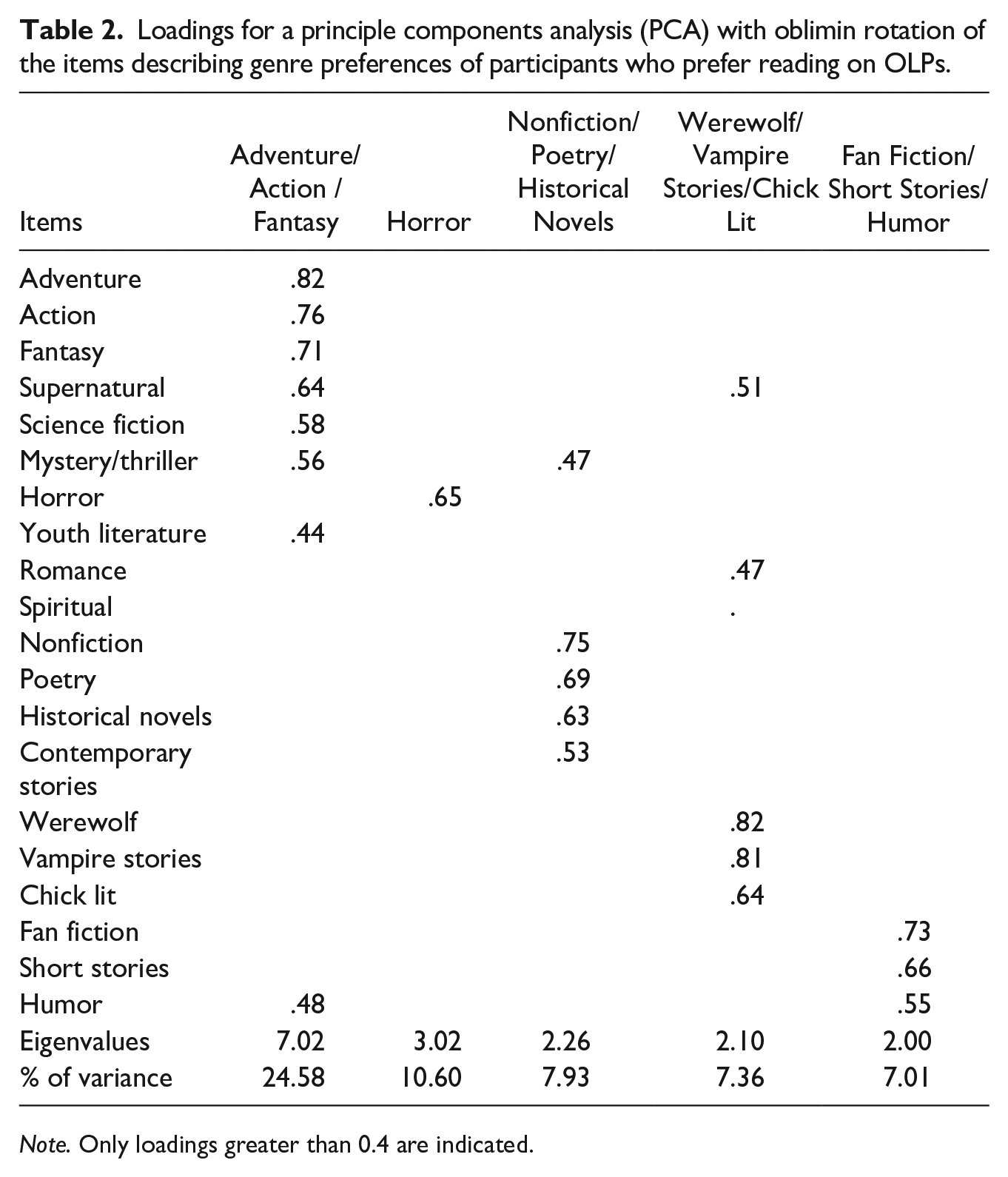
A PCA with oblique rotation considering the genre preferences of participants who preferred reading on OLPs also revealed five components, explaining 57% of the variance in the initial item set. Table 2 shows the factor loadings after rotation.
Loadings for a principle components analysis (PCA) with oblimin rotation of the items describing genre preferences of participants who prefer reading on OLPs.
Note. Only loadings greater than 0.4 are indicated.
The first component concerns those three items with the highest loadings: Adventure/Action/Fantasy (Component 1, M = 3.19, SD = 0.79). Component 2 reflects a preference for Horror, since this item showed the highest positive loading (Component 2, M = 2.56, SD = 0.71). Component 3 indicates a preference for Nonfiction/Poetry/Historical Novels (Component 3, M = 2.47, SD = 0.73), whereas Component 4 captures a preference for Werewolf/Vampire Stories/Chick Lit (Component 4, M = 2.46, SD = 0.83). Component 5 (Fan Fiction/Short Stories/Humor; Component 5, M = 3.43, SD = 0.83) exhibited the highest mean value. Comparing the averaged means of the items loading on the five components revealed no major differences between Components 2, 3, and 4 (all F(1, 417) ≤ 1.86, all p ≥ .17). In contrast, Components 1 and 5 exhibited significantly different mean values (all F(1, 417) ≥ 8.74, all p ≤ .003, all η2 ≥ .02; see Figure 2).
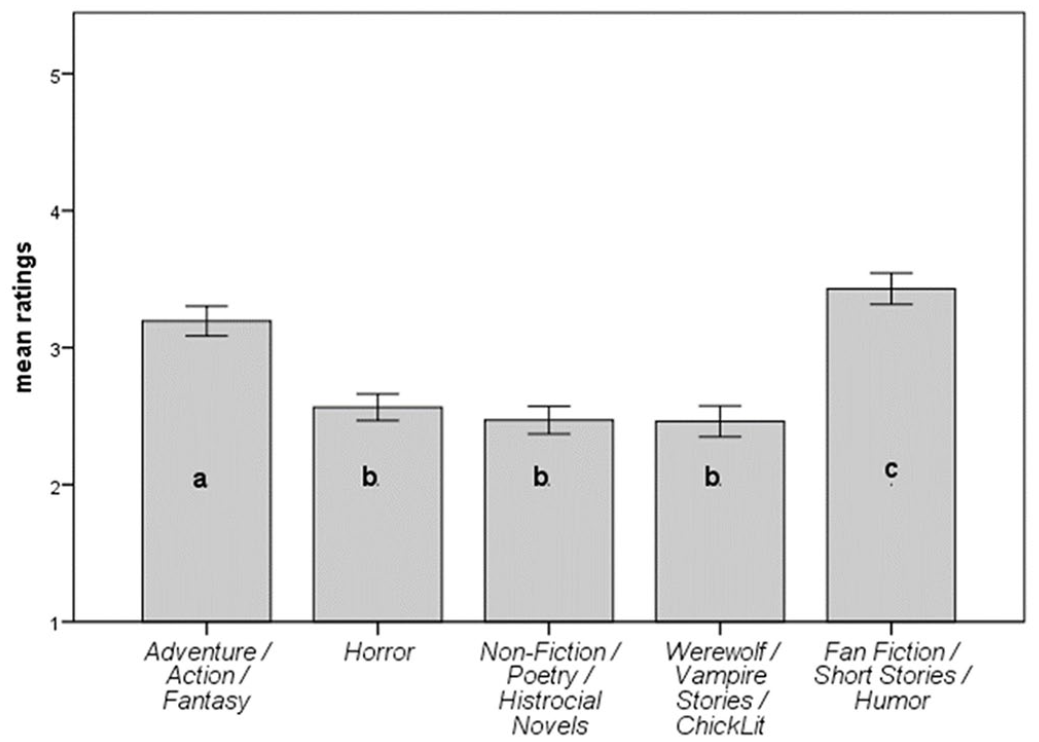
Mean ratings for each of the five components reflecting genre preferences of participants who prefer reading on OLPs.
Our previous analyses revealed no significant difference between Generation Y and Generation Z regarding their preference for writing or reading on OLPs. Nevertheless, we tested whether the averaged mean values of the individual items loading on the identified components differed between generations. Variance analyses showed no significant differences between age groups (all F(1, 202) ≤ 2.06, all p ≥ .15)—except for Horror (Component 2; F(1, 202) = 7.39, p = .01, η2 = .03). In the latter case, Generation Y exhibited lower values (M = 2.44, SD = 0.63) than Generation Z (M = 2.71, SD = 0.78).
OLP User Motivation(s)
Depending on their preference for writing or reading on OLPs, participants were asked to indicate how far OLP user motivations applied to them.
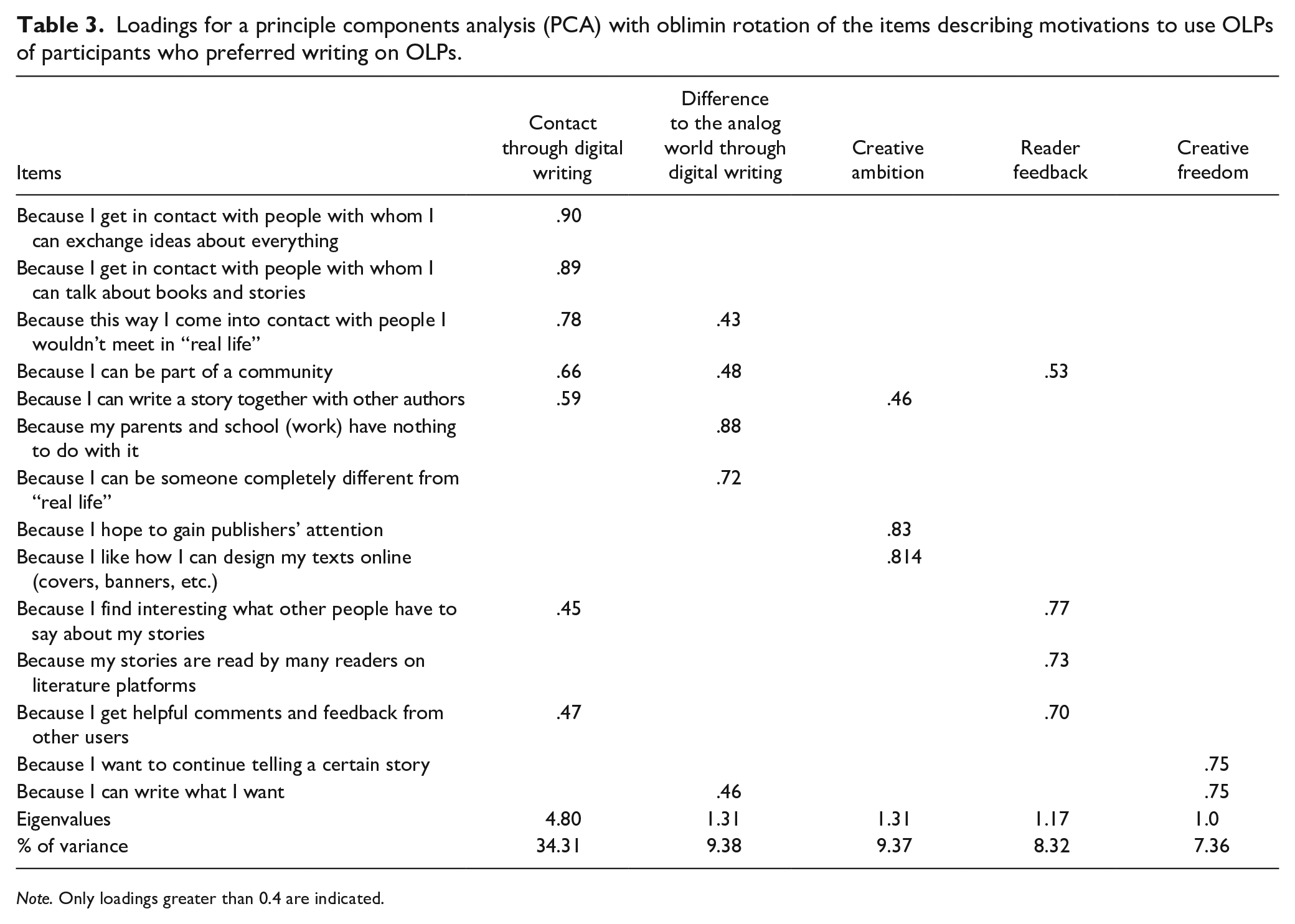
Regarding the motivation of participants who preferred writing on OLPs (n = 105), a PCA revealed five components, explaining 69% of the variance in the initial item set (see Table 3).
Loadings for a principle components analysis (PCA) with oblimin rotation of the items describing motivations to use OLPs of participants who preferred writing on OLPs.
Note. Only loadings greater than 0.4 are indicated.
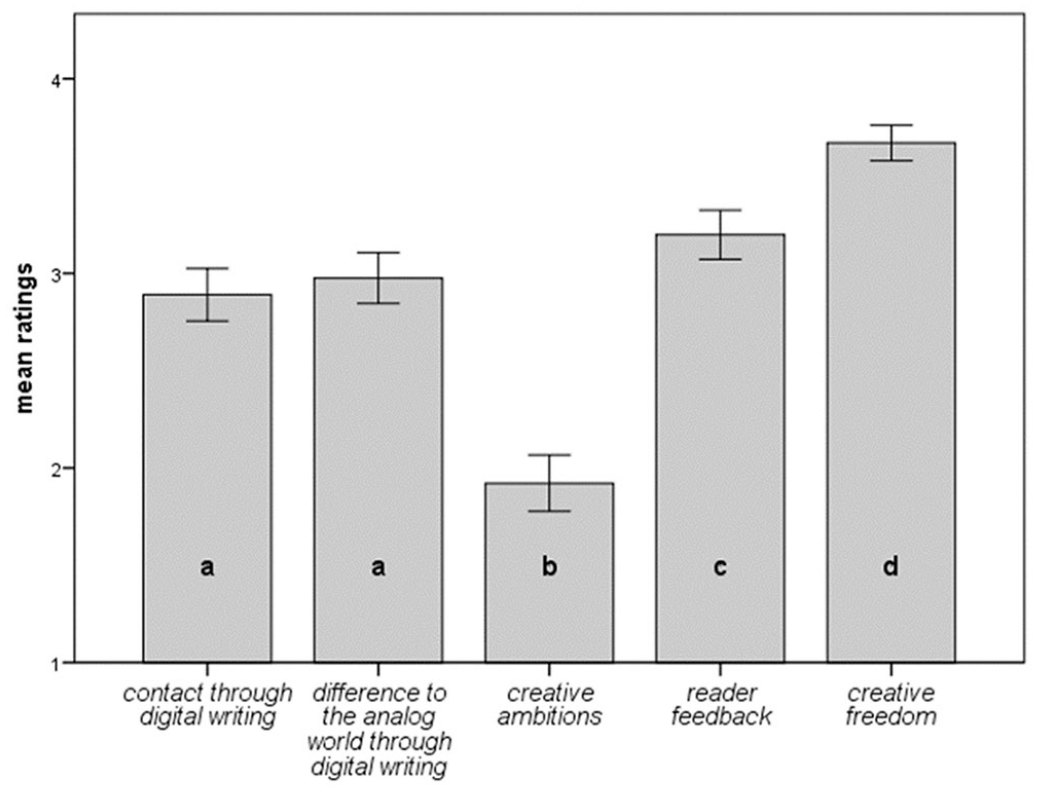
Component 1 (contact through digital writing; Component 1, M = 2.89, SD = 0.70) included three corresponding items: “because I get in contact with people with whom I can exchange ideas about everything”; “because I get in contact with people with whom I can talk about books and stories”; and “because this way I come into contact with people I wouldn’t meet in ‘real life.’” Component 2 (difference to the analog world through digital writing; Component 2, M = 2.97, SD = 0.68) exhibited very high loadings on three items: “because my parents and school (work) have nothing to do with it”; “because here I can be someone completely different from ‘real life’”; and “because I can be part of a community.” Component 3 (creative ambition, M = 1.92, SD = 0.75) also includes three corresponding items: “because I hope to gain publishers’ attention”; “because I like how I can design my texts online (covers, banners, etc.)”; and, albeit to a lesser degree, “because I can be part of a community.” Component 4 (reader feedback, M = 3.20, SD = 0.65) displayed very high values for three corresponding items: “because I find it interesting what other people have to say about my stories”; “because my stories are read by many readers on literature platforms”; and “because I get helpful comments and feedback from other users.” Component 5 summarized aspects of creative freedom, for example, “because I want to continue telling a certain story” or “because I can write what I want.”
Component 5 exhibited the highest averaged mean of all components concerning participants’ motivations for writing on OLPs (M = 3.67, SD = 0.47), followed by Component 4 (reader feedback; see Figure 3). Components differed significantly (all F(1, 211) ≥ 5.91, all p ≤ .02, all η2 ≥ .03) with the exception og Component 1 and 2 (F(1, 211) = .82, p = .37). Further variance analyses revealed no significant differences between Generation Y and Generation Z (all F(1, 101) ≤ 2.42, all p ≥ .12).
Mean ratings for each of the three components reflecting the motivations for using OLPs of participants who prefer reading on OLPs.
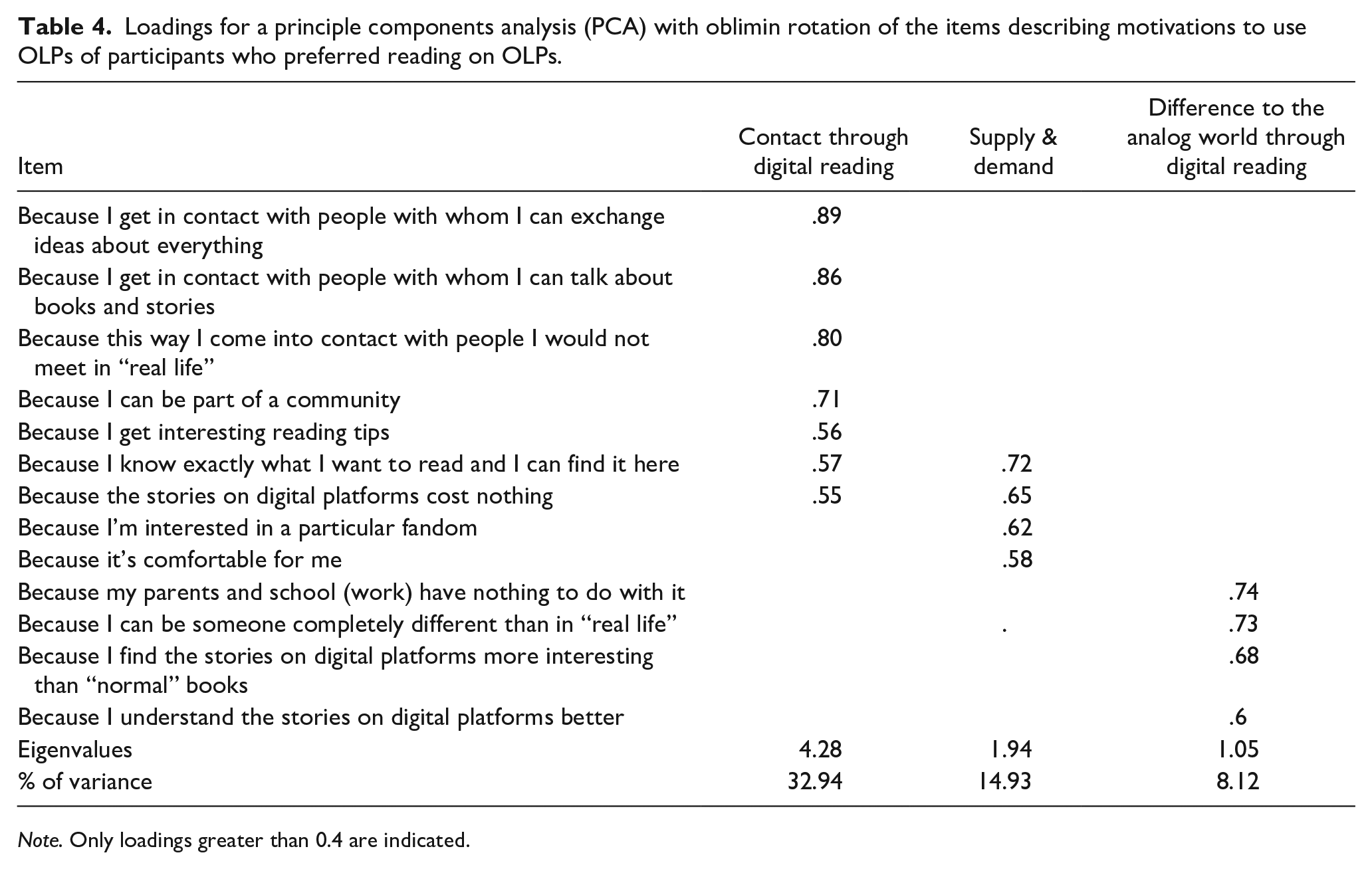
Regarding participants who preferred reading on OLPs (n = 206), the PCA with oblique rotation resulted in three components, explaining 56% of the variance in the initial item set (see Table 4).
Loadings for a principle components analysis (PCA) with oblimin rotation of the items describing motivations to use OLPs of participants who preferred reading on OLPs.
Note. Only loadings greater than 0.4 are indicated.
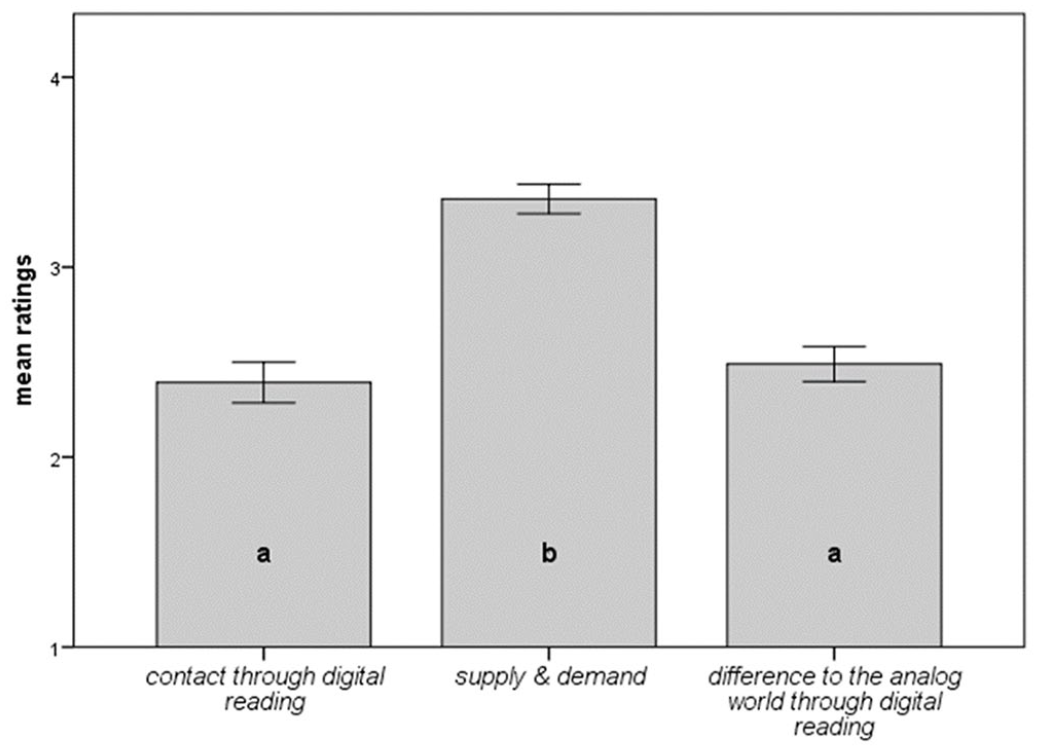
Component 1 (contact through digital reading) reflects participants’ motivation to engage with other users. Three items exhibited very high loadings on this component: “because I get in contact with people with whom I can exchange ideas about everything”; “because I get in contact with people with whom I can talk about books and stories”; and “because this way I come into contact with people I wouldn’t meet in ‘real life’” (Component 1, M = 2.39, SD = 0.78). Component 2 (supply & demand) includes corresponding items: “because I know exactly what I want to read and I can find it here”; “because the stories on digital platforms cost nothing”; and “because I’m interested in a particular fandom” (Component 2, M = 3.56, SD = 0.56). Component 3 (difference to the analog world through digital reading) includes corresponding items: “because my parents and school (work) have nothing to do with it”; “because here I can be someone completely different from ‘real life’”; and “because I find the stories on digital platforms more interesting than ‘normal’ books” (Component 3, M = 2.50, SD = 0.67).
Comparing the averaged means of the items loading on the three components revealed that Components 1 and 3 differ significantly from Component 2 (all F(1, 417) ≥ 210.16, all p ≤ .001, all η2 ≥ .33). Figure 4 shows that Component 2 (supply & demand) has a significantly higher mean value than both Component 1 (contact through digital reading) and Component 3 (difference to the analog world through digital reading).
Mean ratings for each of the five components reflecting the motivations for using online literature platforms (OLPs) of participants who prefer writing on OLPs.
Further variance analyses revealed no significant differences between age groups (all F(1, 202) ≤ 2.71, all p ≥ .10) but for Component 3 (difference to the analog world through digital reading). In the latter case, Generation Y exhibited lower values (M = 2.35, SD = 0.67) than Generation Z (M = 2.62, SD = 0.63; F(1, 202) = 8.15, p = .01, η2 = .04).
OLP Features and Applications
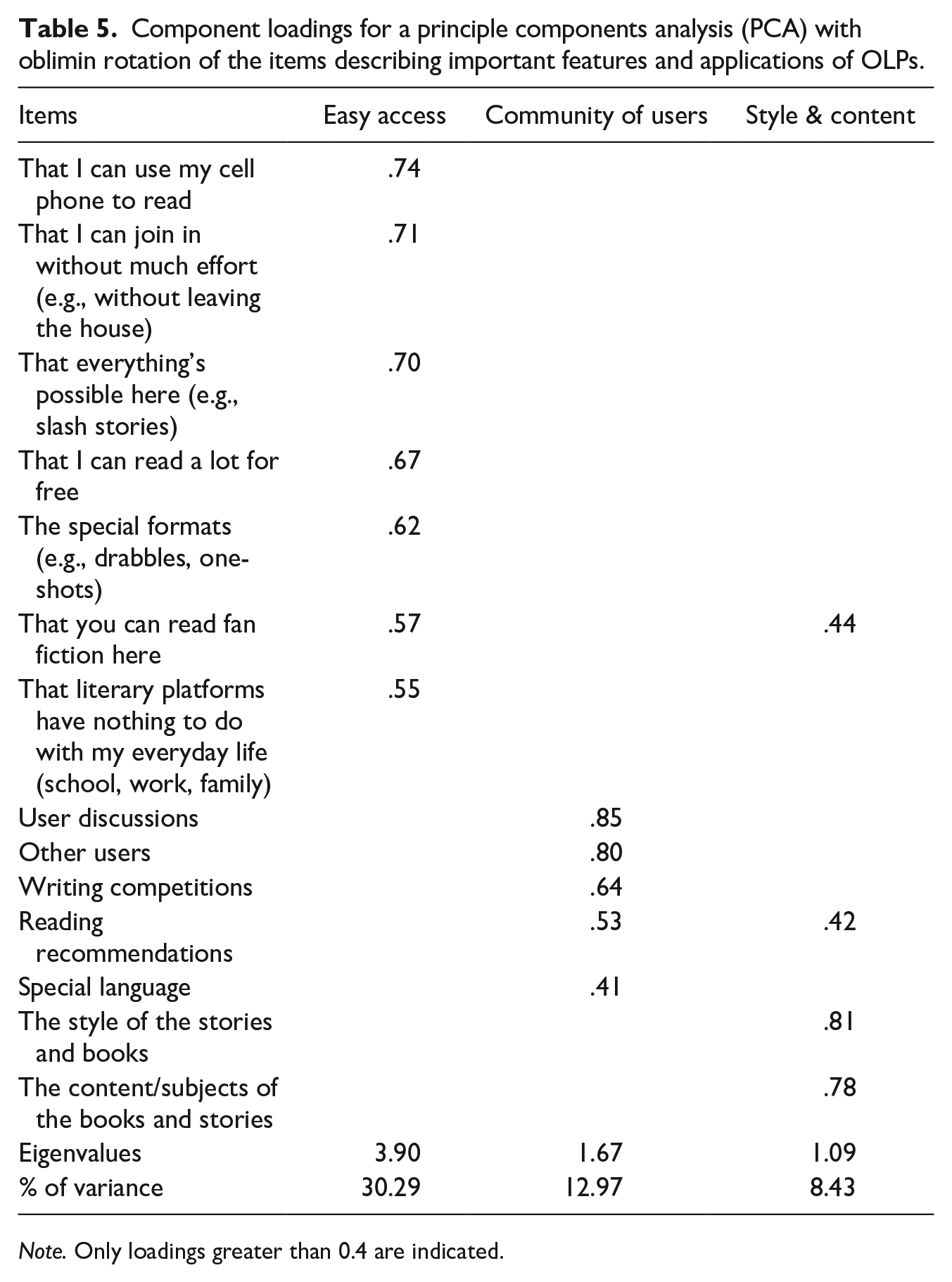
Regardless of their preference for writing or reading on OLPs, we further asked participants to indicate important OLP features and applications. Our PCA resulted in three components and explained 52% of the variance in the initial item set (see Table 5).
Component loadings for a principle components analysis (PCA) with oblimin rotation of the items describing important features and applications of OLPs.
Note. Only loadings greater than 0.4 are indicated.
The items clustering on Component 1—“that I can use my cell phone to read,” “that I can join in without much effort (e.g., without leaving the house)”; “that everything’s possible here (e.g., slash stories)”; “that I can read a lot for free”—mainly reflect easy access (M = 3.11, SD = 0.67). Component 2 concerns the OPL user community (e.g., “user discussions,” “other users,” “writing competitions”; M = 2.29, SD = 0.65). Component 3 addresses OLP style & content (“the style of stories and books,” “the content and subjects of books and stories,” and “you can read fan fiction here”; M = 3.22, SD = 0.61). Comparing the averaged means of the items loading on the three components revealed significant differences (all F(1, 629) ≥ 335.63, all p ≤ .05, all η2 ≥ .03). Component 3 (style & content) displayed the significantly highest mean value, followed by Component 1 (easy access) (see Figure 5). Analyses of variance revealed no significant differences between Generation Y and Generation Z (all F(1, 304) ≤ 3.50, all p ≥ .06).
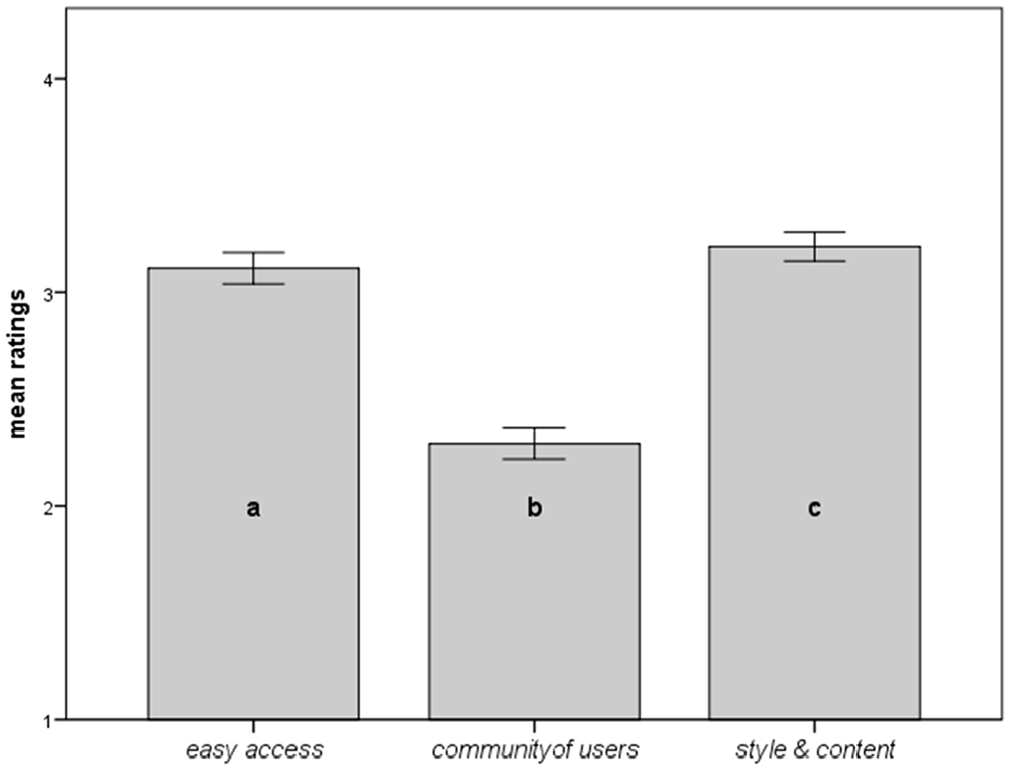
Mean ratings for each of the three components reflecting important features and applications of online literature platforms (OLPs).
Communicative Behavior and User Relationships
Most of our OLP users reported communicating with other users (71%; N = 315). Sixty-four percent of participants who preferred reading on OLPs exchanged ideas or had contact with other users (or both). As many as 86% of participants who preferred writing on OLPs indicated that they exchanged ideas or had contact with other users (or both).
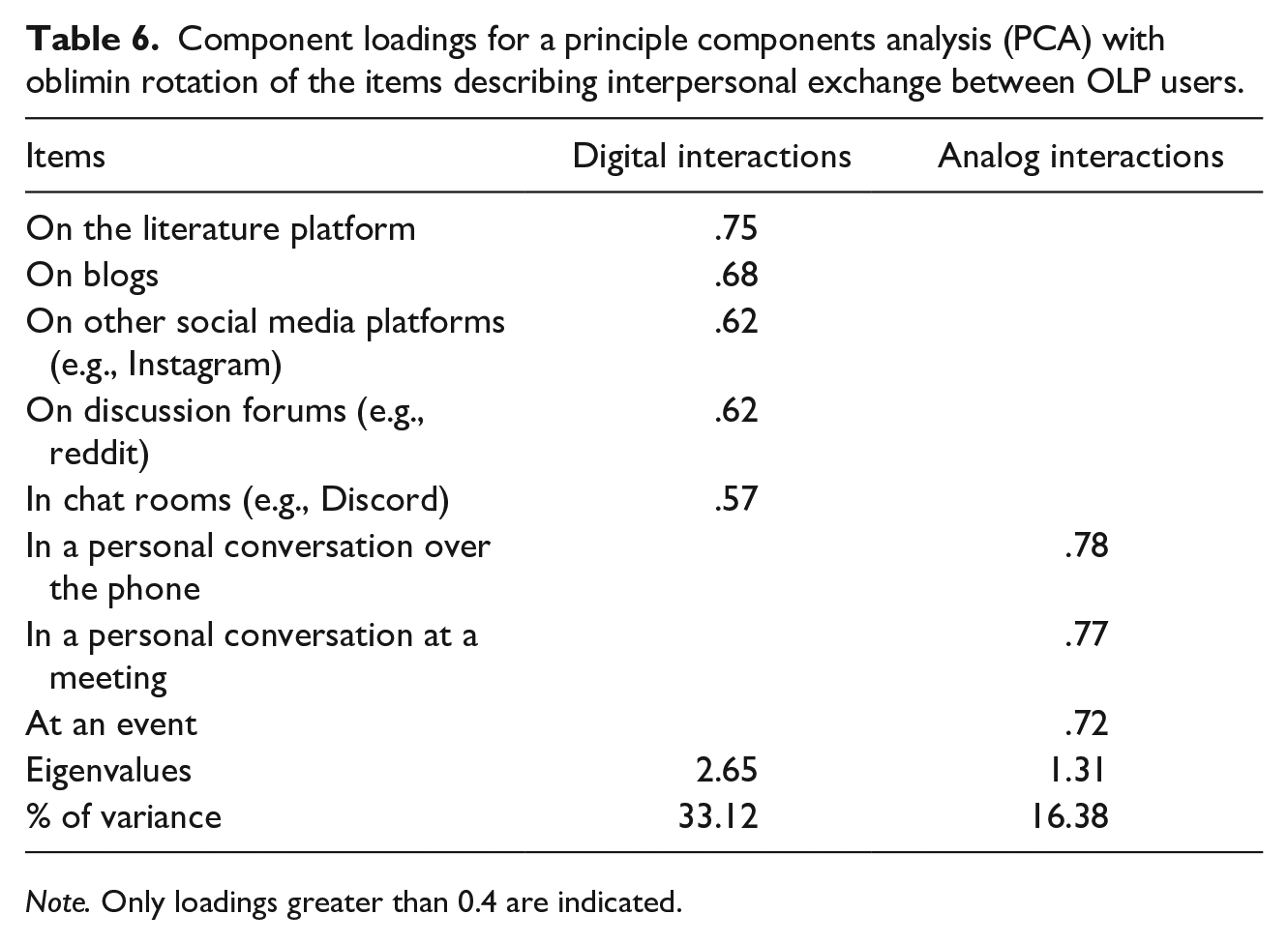
Participants who indicated contact with other users were asked how such exchange took place. A PCA with oblique rotation resulted in two components, explaining 49% of the variance in the initial item set (see Table 6).
Component loadings for a principle components analysis (PCA) with oblimin rotation of the items describing interpersonal exchange between OLP users.
Note. Only loadings greater than 0.4 are indicated.
These two components and their corresponding items can be distinguished as digital interactions (Component 1, M = 2.47, SD = 0.88; items loading high on this component include “on the literature platform,” “on blogs,” and “on other social media platforms”) versus analog interactions between users (Component 2, M = 1.42, SD = 0.65; items loading high on this component include “personal conversation over the phone,” “personal conversation at a meeting, ” and “at an event”). Comparing the averaged means of the items loading on the two components showed significantly higher mean values for digital interactions than for analog interactions (F(1, 559) = 253.67, p ≤ .001, all η2 = .31).
Variance analyses revealed no significant differences between Generation Y and Generation Z (all F(1, 271) ≤ 0.61, all p ≥ .44).
Social-Cognitive Effects of OLP Usage
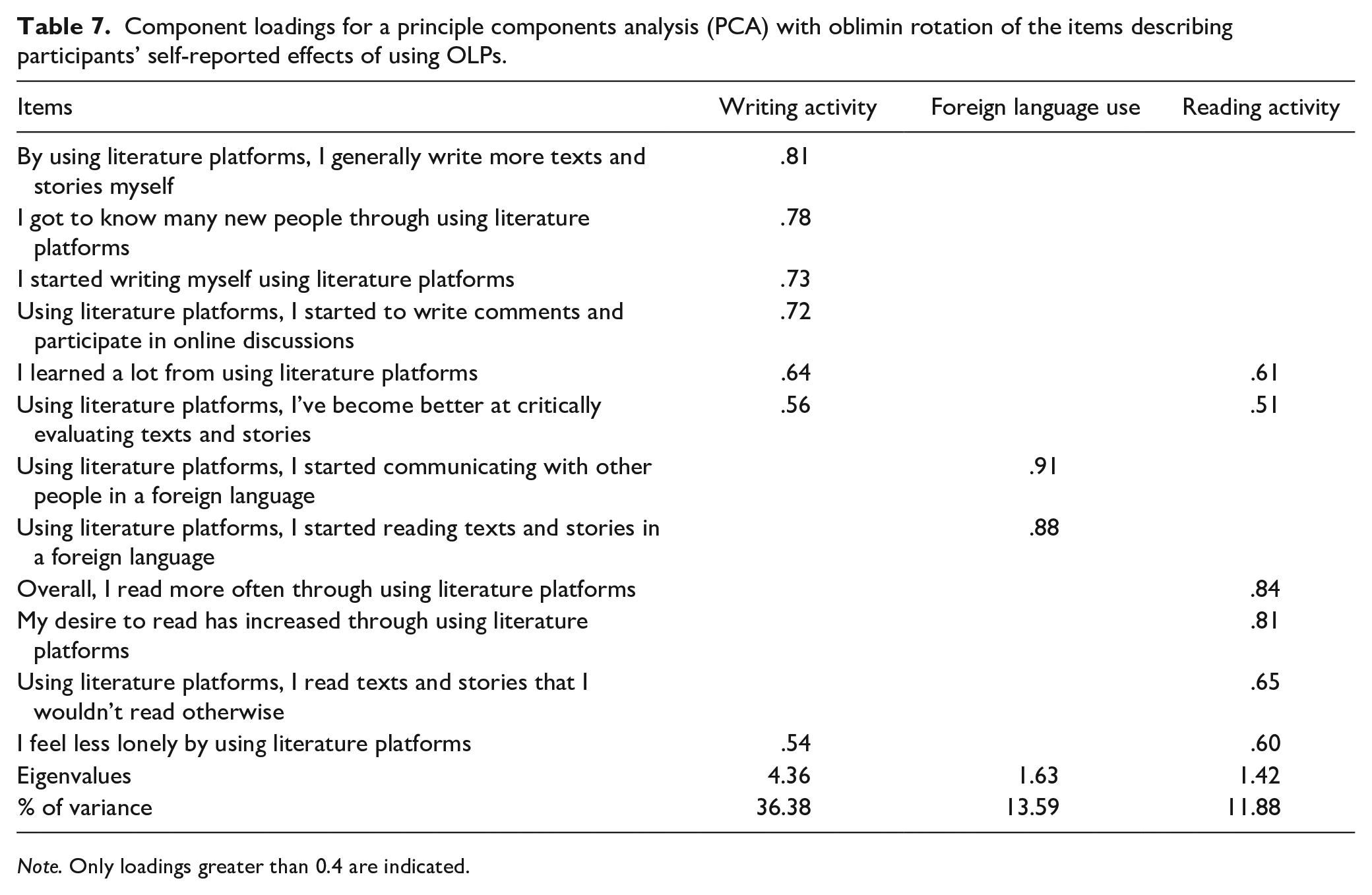
Participants were also asked how they thought OLP usage affected them. A PCA with oblique rotation resulted in three components, explaining 62% of the variance in the initial item set (see Table 7).
Component loadings for a principle components analysis (PCA) with oblimin rotation of the items describing participants’ self-reported effects of using OLPs.
Note. Only loadings greater than 0.4 are indicated.
Several items clustered with very high loadings on Component 1 (writing activity, M = 2.49, SD = 5.16): “By using literature platforms, I generally write more texts and stories myself”; “I got to know many new people through using literature platforms”; “I started writing myself using literature platforms”; and “Using literature platforms, I started writing comments and participating in online discussions.” Component 2 concerns foreign language use (M = 1.90, SD = 1.02): “Using literature platforms, I started communicating with other people in a foreign language”; “Using literature platforms, I started reading texts and stories in a foreign language.” Component 3 concerns how OLP usage enhances reading activity (e.g., “Overall, I read more often through using literature platforms”; “My desire to read has increased through using literature platforms”; and “Using literature platforms, I read texts and stories that I wouldn’t read otherwise”; M = 2.99, SD = 0.67). Comparing the averaged means of the items loading on the three components showed significantly lower mean values for foreign language use (Component 2) than for the two other components (all F(1, 628) ≥ 3.94, all p ≤ .05, all η2 ≥ .01). Although reading activity (Component 3) displayed the highest mean value, it did not differ significantly from writing activity (Component 1; F(1, 628) = 2.98, p = .08; see Figure 6).
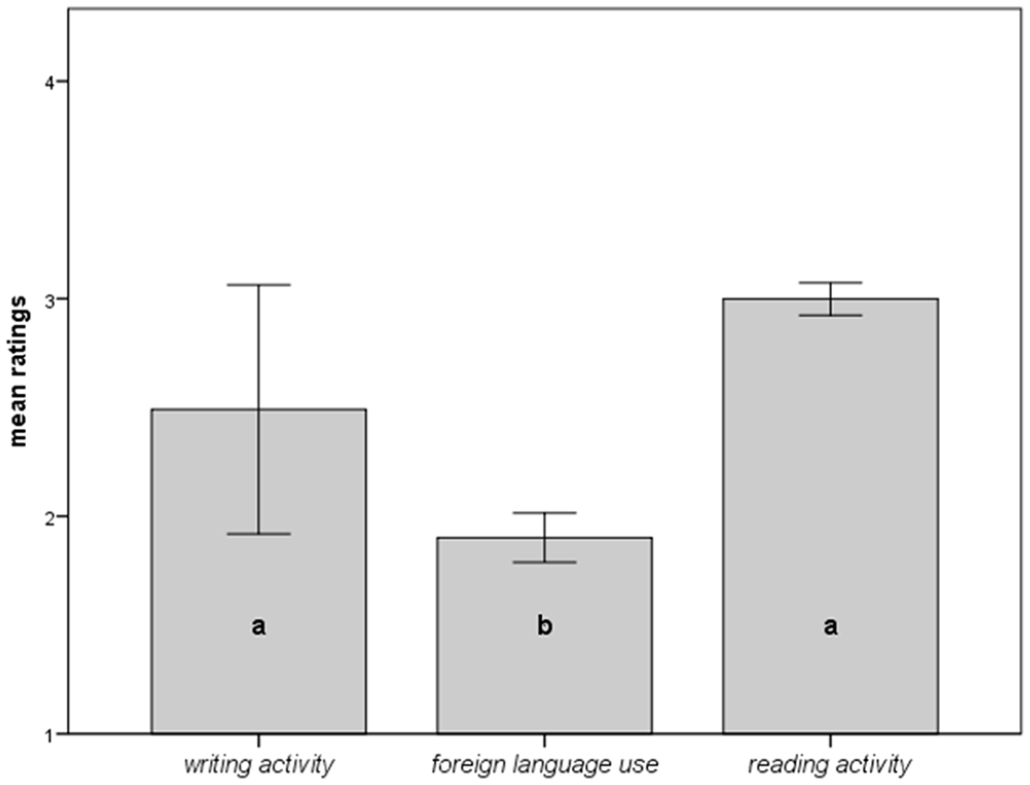
Mean ratings for each of the three components reflecting participants’ self-reported social-cognitive effects of using OLPs.
Variance analyses revealed no significant differences between Generation Y and Generation Z (all F(1, 304) ≤ 1.16, all p ≥ .28) except for reading activity. Generation Y exhibited lower values (M = 2.88, SD = 0.71) than Generation Z (M = 3.15, SD = 0.58; F(1, 303) = 11.69, p ≤ .001, η2 = .04).
Discussion
Our exploratory approach served to identify OLP usership, usage practices, and user motivations. We also wanted to find out which OLP features were particularly important to participants, whether and how they interacted with other users, and what positive social-cognitive effects they attributed to their OLP use.
Our participants were mostly females under the age of 30 years (on higher reading motivation among female adolescents, see Philipp, 2016; on increased Internet use among males, see Mesch, 2005). Compared with average OECD data, our participants held higher educational qualifications. This was also reflected in our pooled index of reading socialization and coincided with the large number of participants using English-speaking OLPs (even if this was not their native language).
Our query of known platforms shows that Archive of Our Own.org, Fanfiktion.net, and Wattpad.com are the top three previously used platforms for the participants of our study, followed by subreddits on reddit.com and Fanfiktion.de. Only less than a quarter of the participants named unlisted “other” OLPs; also, no tendency for one or more platforms emerged from this alternative naming. Considering the identified known platforms, the participants of our study predominantely use OLPs that gather mainly non-professional writers and readers. The access to these platforms is relatively low-threshold and usually free of charge. The identified platforms are also characterized by the fact that they are accesible by users of different ages and cover a relatively broad spectrum of interests, including access to highly specialized fan culture(s).
Regarding active site usage, our data indicate age-related differences. Generation Y uses Fanfiction.net and Archive of Our Own.org significantly more than (younger) Generation Z participants, who strongly preferred Wattpad.com and subreddits on reddit.com. To a certain extent, this reflects the transformation of OLPs in the transition from the twentieth to the twenty-first century: While Fanfiction.net (established 1998) is limited almost exclusively to fan fiction, Wattpad.com (established 2006) extends far beyond fan fiction and offers readers and authors diverse genres and multimedia features (e.g., being able to implement clips, GIFs, or music videos).
Most of our participants had both OLP writing and OLP reading experience. This observation is consistent with the concept of the wreader, that is, users who write and read, above all in digital contexts, and who thus combine different literary activities (Landow, 2006; Rebora et al., 2021). Nevertheless, it should be noted that across age groups, most participants preferred reading on OLPs over writing.
Almost none of our participants reported writing or publishing stories with other users on OLPs. This supports Ingelmann and Matuszkiewicz’s (2017) assumption that although digital literary platforms facilitate collaborative text production, most digital publications are limited to conventional writing formats, and thus do not (yet) utilize the possibilities offered by digital writing processes.
Regardless of their age, most participants were interested in fandom. The strong representation of users with experience on fan fiction platforms in our study is also reflected in the overall ranking of the OLPs known to the participant in our study (i.e., Archive of Our Own.org, Fanfiction.net, Wattpad.com). Accordingly, fan culture is integral to digital reading and writing on literary platforms, at least in terms of our participant sample. Interest and participation in fan culture here are not purely adolescent phenomena but also evident in users in their late 20s and 30s.
The vast majority of our participants use OLPs anonymously or under a nickname. Slightly over half of participants indicated that their parents were unaware of their OLP usage, whereas friends were more likely informed. Thus, OLP usage seems to be, at least to some extent, part of everyday popular culture beyond the grasp of (adult) authority. This interpretation probably applies especially to younger users and aspects of their (youth) culture, since it is further buttressed by our observation that participants from Generation Z who preferred reading on OLPs scored higher on the motivational factor difference to the analog world through digital reading compared to participants from Generation Y. Our finding that most participants get to know OLPs by coincidence or friends, but not through school or family recommendations, further supports this argument.
Most participants who preferred writing on OLPs had been using literature platforms for a long time. However, they had used OLPs less frequently (several times weekly rather than daily) during the 12 months prior to our study than those participants who prefer reading on OLPs. These participants had been using OLPs also for a long time, and over 40% had used OLPs on a daily basis during the 12 months prior to our study.
In terms of genre preferences, participants who prefer OLPs for writing seem to particularly like Short Stories. This finding, which is particularly strong for Generation Y, coincides with the preference for Fan fiction/Short Stories/Humor among participants who prefer reading on OLPS. Again, this aligns with the significant interest in fandom among our participants and underlines the prominence of fan fiction–experienced OLP users among our participant sample. Fan fiction texts are usually defined as “fan-generated, fictional stories that include characters as well as certain plot elements of a specific (popular culture) source product” (Goldmann, 2015: 1, our translation; on the importance of fan fiction for OLPs, see, e.g., Cuntz-Leng, 2014; Kraxenberger & Lauer, 2021; Stock & Nieland, 2019). Participants’ strong interest in short story variants such as the “drabble” or “one-shot” goes hand in hand with the high popularity of such text forms on OLPs. 6
Our analyses revealed no age-related differences regarding genre preferences in participants who prefer reading on OLPs, except for the identified Horror component (which scored higher in Generation Z than in Generation Y). This age-specific difference suggests that younger participants are particularly fascinated and tempted by horror fiction. Although OLPs have age restrictions and require adult content to be labeled, horror stories featuring no severe violence and (also) addressing younger users are prominent on Wattpad.com, a popular OLP among younger participants.
Among participants who prefer writing on OLPs, creative freedom is the greatest motivational factor, followed by reader feedback. This finding (consistent in both Generation Y and Generation Z) highlights two key aspects: First, active digital writers consider the creative possibilities of OLPs particularly important. OLPs encourage users to actively participate in fan (fiction) cultures and surpass analog opportunities to explore one’s writing. Second, and in line with previous research, another important motivation is direct exchange with readers, as well as receiving feedback and comments from a digitally enlarged audience. In this vein, Goldmann’s (2015) qualitative study of fan fiction dedicated to The Mentalist showed that reader feedback not only helps digital writers to develop their writing style, but also affirms and reinforces their work. The possibility of having anonymity on OLPs might thus promote highly agreeable and sheltered interaction for both authors and commenting readers. This seems to be especially the case for fan fiction–related platforms, where users usually follow clear rules and do not pursue professional or monetary intentions, but seem to use the platforms mainly for nonprofessional leisure purposes.
Of the reasons for using OLPs, supply & demand motivates users who prefer reading on OLPs the most, followed by contact through digital reading. This finding corresponds to our assumption that OLPs offer digital readers in particular “literature on demand”—even for small and specialized reading interest groups. On the one hand, such functionally determined motivation means reading and writing are strongly grouped by specific genres. On the other, very specific user expertise emerges from finding the “right” story via tags and search functions. In turn, this motivation creates fan cultures with highly specialized knowledge both about digital genres and about their access and placement on OLPs (Kraxenberger & Lauer, 2021).
We found no age-related differences in the motivations of OLP users who prefer reading, except for the difference to the analog world through digital reading. This component reached higher mean values in Generation Z than in Generation Y. Although this is not the primary motivating factor for users who prefer reading on OLPs, the opportunity to escape everyday life seems important, particularly for younger users. Besides the possibility of finding very specific texts on OLPs, the escape option also encompasses OLPs’ fairly low access threshold. This is reflected, among others, in the large number of participants who read OLPs mainly on their smartphone (see also below).
We collected our data during the early phase of the Corona virus pandemic (late March 2020 to late August 2020), which severely restricted social life in many countries. We therefore assume that online activities increased during this period (on rising e-content reading during the pandemic, see Parikh et al., 2020). Like other social media, OLPs may thus have enabled users (particularly younger ones) to draw boundaries to the analog world, but still conect with others. Being able to use OLPs anonymously, as most of our participants do, may also have incentivized users to seek digital escapes and distractions.
Participants across age groups rate style & content and easy access as particularly important OLP features. This again underscores three key aspects: the very special content and form of OLP stories, the related prominence of fan fiction, and low threshold access (reading on smartphones; see above).
As reported, most participants communicate with other OLP users, primarily via digital media. This is true in particular of participants who prefer writing on OLPs and highlights the importance of reader feedback. It also supports the assumption that users who actively engage in writing on OLPs orient themselves more toward the user community and thus more closely heed self-presentation and user interaction (Kraxenberger & Lauer, 2021).
According to Pianzola et al. (2020), the self-descriptions of authors on, for example, Wattpad.com show that many users strive for a career as an author. In addition to active participation and networking on the literary platform, the mostly meticulously constructed self-presentation (cf. Marwick & Boyd, 2011) is essential for the success of one's own texts; the audience functions as a fan base that should help to achieve (micro-)popularity (cf. Marwick & Boyd, 2011) and, eventually, commercial success. To this end, the displayed self-presentation as author deliberately rejects certain characteristics of the book market (e.g., the underlying concepts of authorship are expanded to include aspects of distribution) while other practices, such as the creation of commodified covers, are continued (cf. Kraxenberger & Lauer, 2021). Many platforms support and reinforce their users' efforts toward professionalization and commercial, monetary, success. However, for the participants of our study, including the minority that had expressed a preference for writing, monetization and professional aspirations obviously play only a subordinate role. Thus, although our analysis of the motivational reasons of users with a preference for writing on OLPs identified a corresponding component (creative ambitions, including items such as “because I hope to gain publishers’ attention” and “because I like how I can design my texts online [covers, banners, etc.]”), this component showed relatively low average means and is thus only of weaker importance. It can be assumed that a study focusing exclusively on OLP writers would have come to a different conclusion; in this vein, it can also be expected that aspects of competition – and most probably related negative experiences such as trolling and cyberbullying – would then have been of greater importance. On bases of the data we collected, however, no such conclusions can be drawn and these assumptions remain (at least for the time being) speculative.
Independent of users’ creative or monetary ambitions, previous research has highlighted the importance of social connectedness among users: They are committed to supporting each other’s communication (Ferrer et al., 2007). Evidence also shows that digitization takes social connectedness through reading and writing to a new level (Lauer, 2020). Contact with other users promotes group belonging, fosters identification (Graf, 2007), and influences reading choices (Deller & Smith, 2013).
Our participants reported that using OLPs enhanced their writing and reading activity. Generation Z scored higher on increased reading activity than Generation Y. This finding supports our interpretation of the reported age-specific differences on the motivational factor of difference to the analog world through digital reading. It might, however, also relate to the (self-)enhancement of OLP activities. In this regard, current research assumes that young readers’ cognitive and social development benefits from increased reading activity. Jerrim and Moos’s (2019) analysis of the PISA 2009 data set confirmed that reading fictional novels and stories positively affects young people’s reading skills (“fiction effect”).
Various research has explained the “fiction effect”: First, reading fiction usually requires more time than other texts (e.g., newspapers or magazines; see Moss & McDonald, 2004). Second, fictional texts often make higher cognitive demands on readers and thus potentially enhance their ability to cope with greater textual complexity (Krashen, 2004; Oakhill et al., 2015; Suk, 2016; Westbrook et al., 2019). Further, adolescent fiction reading is said to positively influence interpersonal engagement and social cognition (Mar, 2018), as well as facilitate participation in social networks (Moss, 2007). Although these social and cognitive benefits tend to be unconscious, they may be assumed to accompany reading activity on literature platforms, and thus to shape and (self-)enhance OLP usage. If and to which extent the fiction effect can also influence writing activities has not yet been investigated.
Limitations and Outlook
Our findings are limited by our approach. Crucially, our data are not representative. Yet collecting data from participants either unfamiliar with OLPs or not actively using them would have made little sense given our aim to better understand this specific usership (Kraxenberger et al., 2021; Sarkhosh & Menninghaus, 2016). In addition, users with experience on fan fiction–related platforms seem to make up a prominent part of our surveyed participants, although the current empirical data on OLP-usage do not allow us to draw any conclusions about overrepresentation or disproportionality in the strict sense (cf. Skiba et al., 2008: 266). Further, our results are clearly restricted to the platforms participants indicated to be familiar with or to have used before. Although this limitation is data driven, it results in an exclusion of, for instance, fee-based apps and platforms, as well as specialized content sites (apart from fan [fiction] content). Despite these limitations, our exploratory study provides important insights into emerging writing and reading practices. In doing so, our survey study is one of the first empirical investigations of digital authorship and readership. In addition to revisiting the concept of wreading, the aim of our study was to gain a better insight into the practices of digital literature, which—despite its huge global usership—has so far been rather neglected by quantitative research.
Some of our findings are likely to be particularly relevant for future research. First, our results on the effects of OLP usage indicate that these platforms, and first and foremost fan fiction–related platforms, are suited to promoting the pleasure of writing and reading. This concerns both using digital media in the classroom (on quality-oriented learning via digital media, see Voß, 2019) and applying “scaffolding” strategies for didactic and pedagogical purposes. In particular interactional scaffolding, defined as the responsive personal support offered by an expert to a novice, represents a promising means of support (Athanases & de Oliveira, 2014; Hammond & Gibbons, 2005; Reynolds, 2017, p. 136; on interactional scaffolding in educational contexts to support reading comprehension, see also Reynolds, 2017). To date, however, scaffolding strategies in the classroom have been studied mainly in younger pupils; data on older learners have been collected only marginally (cf. Reynolds, 2017).
Second, the large number of participants using English-speaking OLPs (even if English is not their native language) also points to the potential didactic uses of OLPs. Similarly, Hanauer (2015) examined the development of writer’s voice, emotional engagement, and ownership through creative writing in the ESL/EFL classroom. Note, however, that we have examined foreign language acquisition only as a secondary effect of OLP usage.
The potential of OLPs for educational purposes should be separated as far as possible from the school context—especially because the difference between OLPs and the analog world seems to be a significant motivational factor for platform use, in particular for younger people. Such a decoupling with simultaneous reinforcement of positive platform-related effects could be, for example, the opening of language and literature classes to independent modular work, in which digital texts and OLPs can (among other) be used by students independently and individually. The same applies to the outsourcing of scaffolding strategies to peer-supported writing feedback, which could possibly also include aspects of gamification and would predominantly aim at increasing the enjoyment of writing. Another possibility would result from a reduced exclusion of previously marginalized literary forms and content in the educational context and a stronger acceptance of self-selected reading and its positive effects in the sense of the above-mentioned fiction effect.
Third, OLPs are used not only by adolescents but frequently also by older individuals. This finding highlights the urgency to more strongly distinguish youth and fan culture(s)—also in terms of individual reading and writing biographies. It also establishes that popular digital phenomena are often more socially relevant than might be assumed at first glance (Kuhn, 2015b; cf. e.g. Alderton, 2014).
Given the rapidly advancing digitalization of all areas of life, we call for interdisciplinary research on digital literature phenomena. From an empirical perspective, in particular longitudinal studies seem needed to better understand not only the development of individual reading and writing inside and outside learning contexts (i.e., classrooms) but also the effects of increasingly digitized literary practices. In doing so, our study design could be further developed for the separate investigation of digital writing and reading. This would allow a finer differentiation of users of different platforms than it was the case in our general exploration of the field. Also, a separate investigation of digital literary practices would presumably allow to draw more precise conclusions about the general usership, as well as about specialized groups, such as particular fan communities or specific user roles on the various platforms, and their respective practices. In this vein, future research might try to cooperate with selected platforms, work together with digital scouts, that is, selected users with an outstanding expertise, or include exchange with digital writing and reading groups.
From a theoretical perspective, research so far lacks a common theoretical framework that would enable comprehensively conceptualizing today’s writing and reading culture, including its social aspects and direct exchange between users. Such a framework might start from the sociology of culture, which, at least since the nineteenth century, has understood literary activities and practices as contributing to the rise of modernity (Nipperdey, 1988). Thus, writing, private reading, and discussing literature with others have contributed both to the emergence of the modern public sphere and to the private realm as we know them today (Habermas, 1962/1971). Future theorizing might draw on studies of youth and fan culture (Hoechsmann & Low, 2008), or on social psychology (on the connection between well-being and reading and writing fiction, see, e.g., Kuijpers, 2018).
Such research appears even more urgent given that digital formats and activities, including writing and reading on online literature platforms, have become indispensable, and will most likely become (even) more important for many wreaders.
Footnotes
Acknowledgements
Many thanks to Jasmin Grohmann and Moritz Irsch for their insights into OLPs from a user’s point of view and our fruitful discussions that facilitated the start of our project. Also, we would like to thank the Stiftung Lesen (Mainz) for discussing a previous version of our questionnaire with us.
Declaration of Conflicting Interests
The author(s) declared no potential conflicts of interest with respect to the research, authorship, and/or publication of this article.
Funding
The author(s) disclosed receipt of the following financial support for the research, authorship, and/or publication of this article: The research for this article was supported by the Swiss National Science Foundation as part of the Digital Lives program. The corresponding author was funded by the University of Stuttgart during the finalization and submission of the manuscript.
Data Availability
The data that support the findings presented here are not publicly available, because they contain data of minors and are subject to data protection regulations. However, an anonymized data set as well as survey codebook is available on reasonable request, exclusively for scientific purposes, from the corresponding author (M.K.) until March 2025.