




Abstract
Drawing from agenda building theory, this study explores the impact of factors like journalistic culture, national stance and conflict periods on the similarity and dissimilarity of network agendas in China-U.S. trade conflict news across China, the United States, Singapore and Ireland. Findings revealed significant correlations in network agendas across countries, albeit with disparities between China and the United States. Notably, the correlation weakened in both Chinese and U.S. news following the trade war’s eruption.
Keywords
China and the United States, the world’s two largest economies, have been locked in a rivalry since the election of Donald Trump as the 45th President of United States. During his tenure, Trump advocated “America First” policy and initiated a “trade war” against China by imposing several rounds of tariff and non-tariff barriers on Chinese imports. In retaliation, Beijing also took a series of measures to counter import and export restrictions targeting Chinese enterprises (Mullen, 2022). At the same time, “trade war” is more than trade issues. China and the United States are also engaged in frictions around politics, technology, military and even ideology. The two powers’ trade policies, thus, have been interpreted by many as not only reflecting their growing demands for economic interests, but also as strategies aimed at counterbalancing each other in global order (Liu & Boukes, 2023). To justify their actions and garner supports from other countries, both governments have been attempting to interpret the conflict from their own perspectives.
During the tug of trade war, the press assumes a crucial role in constructing media agendas and shaping the public’s perceptions of international events, as such affairs are geographically distant from the public’s everyday lives (Liu et al., 2023). Meanwhile, media agendas can manifest at different levels. This study draws on the media agenda at the third level, known as the network agenda, in news coverage. This level focuses on the interconnected relationships among reported objects or objects’ attributes (Guo et al., 2015; Ren & Xu, 2023), thus offering a means to untangle the intricate associations between various facets of the China-U.S. trade conflict.
Furthermore, in line with the agenda building theory, media agenda can be shaped by a range of external factors, such as journalism culture and news sources (Denham, 2010; Malling, 2023). However, previous studies on agenda building mainly focused on these factors’ effects on the first and second level of media agenda, namely the salience of reported objects and objects’ attributes (e.g., Parmelee, 2014; Wirth et al., 2010). To explore the potential factors that affect the network agenda building, this study employs a transnational comparative approach by analyzing the network agenda in trade conflict news from China, the United States, Singapore and Ireland. The reasons for selecting the four countries are stated below. First, China and the United States are direct participants in the trade conflict, while Singapore and Ireland, both export-driven economies, are particularly susceptible to trade fluctuations (Suárez, 2005). This renders the “trade war” a prominent subject in these countries’ news coverage. Meanwhile, against an adversarial relationship between China and the United States, Singapore and Ireland serves as representative neutral countries, respectively, in Asia and Europe (Karsh, 2012). In addition, these four countries differ regarding their journalism culture, with the United States, Ireland and Singapore adhering to the liberal-democratic ideology, whereas the Chinese press operates under stringent political control (Wu, 2018). The variations regarding national stance and journalism culture among these countries provide an opportunity to uncover the extent to which variations in the attributed network agenda reflect their distinctive characteristics (Pfetsch & Esser, 2004). Moreover, this study offers a fresh perspective by examining the chronological evolution of the network agenda in each country, revealing the extent to which changes in the network agenda correspond with the actual fluctuations in the China-U.S. trade relationship.
In so doing, this study aims to uncover the potential factors that contribute to the divergence in network agenda and shed light on the intricate dynamics inherent in international news coverage. Practically, this study delves into multifaceted dimensions of the China-U.S. trade conflict via the lens of news reports, thereby examining the pivotal role played by news media in either intensifying or mitigating the political undertones of economic friction.
Conceptual Framework
Network Agenda in News Coverage
The conceptualization of media agenda, referring to “the coverage pattern of news coverage for the major issues” (McCombs & Guo, 2014, p. 251), originated from agenda-setting research conducted in the Chapel Hill study (McCombs & Shaw, 1972). This research paradigm examines how news media influence the salience of topics in public opinion, whereby the issue prominence in news content (referred to as the media agenda) is conveyed to the minds of the public (known as the public agenda) through their exposure to cumulative media messages (McCombs, 2005).
The commonly adopted approach to study media or the public agenda is formed by two levels of analysis. The first level focuses on the rank order of objects’ salience (McCombs & Shaw, 1972), while the second level examines the salience of objects’ attributes, including cognitive attributes (i.e., characteristics or qualities) and affective attributes (i.e., tone of these characteristics) (Golan & Wanta, 2001; Lim, 2011). Agenda research at both the first and the second levels assumes that individuals perceive or process information in a hierarchical or linear structure. However, cognitive network theory suggests that reported objects and their attributes are commonly represented as a network structure in human’s mind (Anderson, 2013). Put differently, the public or the media outlets usually “map out objects and/or their attributes as network-like pictures according to the inter-relationships among these elements” (McCombs et al., 2014, p. 792). In line with this, Guo and McCombs (2011) postulated to study media and the public agenda at the third level, known as network agenda. Network agenda setting examines the associations of networked relationship among objects and/or attributes between the media and the public agenda, or between media agendas. Taking the coverage of the China-U.S. trade conflict as an example, if journalists report the trade conflict’s escalation and a region’s geopolitics concurrently, audiences are more likely to consider these two subtopics simultaneously. Based on above literature, this study first investigates the reported attributes (i.e., subtopics) of the China-U.S. trade conflict in news coverage from China, the United States, Singapore and Ireland. Accordingly, the research question is formulated:
What are the main attributes (i.e., subtopics) of the China-U.S. trade conflict covered in news from China, the United States, Singapore and Ireland.
Network Agenda Building
The research paradigm of agenda setting primarily examines how news media shape the public’s perception, while ignoring the factors influencing the formation of media agenda. Gandy (2016) thus called upon researchers to go beyond agenda setting constructs to determine who sets the media agenda, how and for what purpose it is set, and with what impact on the distribution of power and values in society. Scholars introduced the conceptualization of media agenda building, defined as the “overall process of creating mass media agendas” (Denham, 2010, p. 311).
The focus of media agenda building revolves around understanding how macro-level structures, such as the political media system, and external sources, such as public relations, impact the creation of media agenda. This notion aligns with the hierarchy of influences model advanced by Shoemaker and Reese (1996). According to their model, media agenda can be affected by various factors, including characteristics of individual journalists, media routines, organizational imperatives, extramedia influences and cultural consideration. Previous studies have investigated the factors influencing agenda building at the first and the second level. For instance, Parmelee (2014) found that tweets from political leaders could affect first- and second-level agenda building. In another study, Zhao et al. (2023) investigated how social bots build the agenda for Russia-Ukraine war. To gain a more comprehensive understanding of agenda building, this study seeks to investigate how external factors affect third-level agenda building, that is, the network agenda in news coverage, by virtue of a transnational comparative approach.
Transnational Homogeneity of Network Agenda
First, a certain homogeneity in the media network agenda across different countries may be identified in the context of China-U.S. trade conflict. The advancements in information and communication technologies (ICTs), along with globalization, have contributed to the shrinking of space and time and facilitated the expansion of social relationships across long distances. This gives rise to the emergence of a global public sphere and a network society (Castells, 2007). News events are portrayed not merely within localized contexts but increasingly from a globalized perspective by establishing connections with other commonly faced issues (Berglez, 2008; Reese, 2010). Previous studies have indicated the alignment of media network agenda across countries. For instance, Guo et al. (2015) examined the similarity and dissimilarity of network agenda between the United States, China, Taiwan and Poland in the context of the Iraq War. Shi and Wang (2023) compared the network agenda surrounding the vaccine crisis between traditional media and social media. The outcomes of these studies demonstrated significant correlative relationships in network agenda between any pair of countries (Guo et al. 2015; Guzek, 2019).
Compared to studies on above-mentioned news contexts, the network agendas in the news covering the China-U.S. trade conflict are likely to exhibit greater resemblances across different countries. This is because economic disputes often result in significant global ramifications (Kallio, 2023). As a result, journalists from various countries are likely to report on the multiple aspects of the conflict with a globalized outlook, therefore, offering a comprehensive understanding to their domestic audiences. Therefore, the hypothesis is proposed:
The network agendas in news coverage of the China-U.S. trade conflict demonstrate a high degree of similarity across China, the United States, Singapore and Ireland.
Transnational Heterogeneity of Network Agenda
Although attributes of the China-U.S. trade conflict are likely to be linked in a similar manner in news coverage from different countries, the similarity degree of network agenda between any pair of countries may vary because of these countries’ characteristics, such as political and media system, cultural ideology and national interests (Guo et al., 2015; Guzek, 2019).
Journalism Culture
The similarity degree of network agenda between countries may correspond to the level of likeness of journalism culture. Journalism culture can be defined as “a particular set of ideas and practices by which journalists legitimate their role in society and render their work meaningful” (Hanitzsch, 2007, p. 369). It typically possesses three core constituents: institutional roles, epistemologies and ethical ideologies (Hanitzsch, 2007). Institutional roles pertain to journalists’ normative responsibilities and their functional contributions to society. Epistemologies refer to the philosophical underpinnings that guide journalism practices, including principles like objectivism and empiricism. The ethical ideologies point to how journalists respond to ethical dilemmas. Previous comparative studies indicated journalists sharing similar professional beliefs and practices tend to construct comparable media agenda, news framing and news sourcing (Jiang et al., 2021). The reason could be that journalists who are amid comparable news culture tend to adhere to similar journalistic norms and values, undergo analogous media education and training, and work in industries with similar ownership structures and political proximity.
The cultivation of journalism culture is often intertwined with specific political and media systems (Jiang et al., 2021). The global expansion of media industries, primarily from advanced capitalist countries, notably the United States, has contributed to greater uniformity in media systems and journalism practices (Hallin & Mancini, 2004). Sparks (2007) thus contends that globalization often gets entangled with media imperialism, a phenomenon that globally unfolds through Western/American hegemony and capitalist ideology. Regarding the current study, as former British colonies, the media systems of the United States, Ireland and Singapore all bear the imprint of British influence. Hallin and Mancini (2004) categorize the media system of the United States and Ireland as the liberal model, with the relatively early establishment of commercial newspapers and limited governmental interventions. Correspondingly, journalists in both countries tend to align with a liberal-democratic ideological framework (Hackett & Zhao, 1998). The journalism culture in Singapore is also affected considerably by the Anglo-American liberal ideology (Wu, 2018). Consequently, Singaporean journalists share with their global counterparts a strong sense of professional responsibility in informing the public and facilitating citizens to express their interests (Hao & George, 2012).
In contrast, the normative news ideals of the Western liberal democracies, such as news professionalism and objectivity, are often criticized by a large number of Chinese journalists because these notions are perceived as pseudo-propositions and as concealing the inherent power structure and media control in democratic countries (Liang, 2021). In China, the press is either instrumentalized as a part of their government and the Chinese Communist Party (CCP), or regulated strictly by the propaganda department. Chinese journalists, accordingly, often assume the role of “eyes, ears, tongue and throat” of the CCP (Obbema, 2015). With the growing centralization of power, the control by the CCP over media organizations, particularly state media, has been further intensified (Marsh et al., 2023). Informed by the differences in journalism culture between China and the other three countries, the following hypothesis is proposed.
The network agendas in news coverage of the China-U.S. trade conflict between the United States and either of the third-party countries (i.e., Singapore and Ireland) are more similar, compared to those between China and either of the third-party countries.
National Stance
The factor of national stance may also affect the correspondence of network agendas across countries. This is due to the fact that news media are affiliated with specific countries and often reflect their national perspectives. Therefore, they are more likely to be influenced or “spun” by officials when covering the international news coverage (Bennett et al., 2008). Regarding this, news media from countries sharing common national interests tend to build network agenda in a similar manner. Previous empirical study could provide some supports for this argument. For instance, due to the opposed political interests in the Iraq War, the media network agenda between mainland China and Taiwan demonstrated greatest dissimilarity (Guo et al., 2015).
In the context of the current study, as the initiator of the trade conflict, the Trump administration has been justifying its behavior by casting China as a threat and describing the trade frictions via a zero-sum lens (Liu et al., 2023). Therefore, more attributes about the political and ideological frictions were mentioned in U.S. trade conflict news (Liu et al., 2023). Conversely, playing a role of defending against the U.S. tariffs attacks, China has a strong desire for a peaceful solution or trade agreement, since it is in the Chinese government interest to avoid public panic on the consequence of the tariffs. Thus, the peace journalism framework—emphasizing the attribute of solutions and peace initiatives—was more prevalent in Chinese news (Liu et al., 2023). Comparatively, Singapore and Ireland were consciously selected as two representatives of neutral countries, respectively, in Asia and Europe (Karsh, 2012). Singapore has been a member of the Non-Aligned Movement (NAM), while Ireland never joined North Atlantic Treaty Organization (NATO). Therefore, they have been seeking to balance their international relationships, while avoiding taking sides between their top trading partner, China, and the security ally, the United States (Karsh, 2012). Considering the adversarial relationship between China and the United States, the following hypothesis is posed:
The network agenda in news coverage of the China-U.S. trade conflict differ in a higher degree between China and the United States than all other dyadic comparisons.
Conflict Period
Trade frictions between China and the United States have been brewing for several years. Since the second term of the Obama administration, the United States put forward the Trans-Pacific Partnership (TPP) Agreement, which is perceived by many as a move to contain China’s rise (Song & Yuan, 2012). This period also coincided with Xi Jinping’s presidency, during which China initiated the project of One Belt One Road (OBOR) aimed at enhancing economic and geopolitical connectivity and cooperation between China and other countries (Kallio, 2023). Furthermore, during the 2016 U.S. presidential election, foreign trade, particularly the trade relationship with China, continued to be a prominent issue in election debates (Noland et al., 2016). These ongoing trade frictions may also be reflected in the media agenda.
To investigate the impact of the trade conflict’s breakout on media network agenda, this study explores the attributed network during the stage which is described by the press as the “trade war,” and the period before the “trade war” (i.e., since the second term of the Obama administration). To reflect the changes of network agenda across different periods, this study divides the time frame into three stages with two cut-off points: Trump’s announcement to run for presidency (June 16, 2015) and the announcement to slap tariffs on Chinese imports (January 22, 2018). The first stage, pre-trade war during Obama’s second term, can be seen as a control condition. On this basis, this study proposes the following research question:
Whether correspondences in network agendas exist between different periods in news coverage of the China-U.S. trade conflict, respectively, in four countries?
If the correspondences exist, do they become weaker or stronger as the China-U.S. trade conflict proceeds?
Method
Data Collection
To identify network agenda in news coverage of each country, a manual content analysis was conducted on eight flagship newspapers from China, the United States, Singapore and Ireland. Despite social media being increasingly used as the primary information source, national newspapers still take a critical role in reporting public affairs, particularly international events (Entman, 2003). The selected newspapers in each country differ as much as possible in terms of their ideologies and have been widely used as representatives of corresponding political leaning in previous studies (e.g., Jeong & Lee, 2023; Marron, 2021). In China, People’s Daily serves as the official mouthpiece of CCP, mainly targeting domestic political elites (Wang et al., 2018). In comparison, China Daily is an English-language newspaper with a slight liberal leaning, primarily catering to the international readership for public diplomacy (Hartig, 2018). Regarding the United States, the New York Times is a national newspaper with a nuanced liberal tendency and is known for its investigative and international reportage (Gunnels, 2017). The Wall Street Journal, in contrast, possesses a more conservative bias and places greater emphasis on financial reports (Gunnels, 2017). With respect to Singapore, the English-language newspapers, the Strait Times, displays a slight alignment with the United States and mainly targets readership in Southeast Asia (George, 2012). In contrast, Lianhe Zaobao, a Chinese-language newspaper, encompasses wide coverage of China and its political leaning is inclined toward China (George, 2012). For Ireland, the Irish Time is a national newspaper with a liberal inclination (Marron, 2021), while the Irish Independence tends to report with a conservative angle (Marron, 2021).
The time frame of the content analysis is from January 20, 2013, the beginning of Obama’s second tenure, to January 15, 2020, when the two countries signed the Phase One Trade Deal. The end point was chosen since after this date the two countries gradually suspended the tit-for-tat attacks on each other. The analysis unit for this study is individual news articles, which were retrieved from the database of NexisUni, ProQuest and People’s Daily’s online service. A Boolean string “Trade AND China AND (America OR ‘the U.S.’ OR U.S.A OR U.S. OR U.S.A.)” was used as a keyword in abstract and title to filter news articles.
As we seek to investigate various attributes of the China-U.S. trade conflict, this study took a comprehensive approach, not only considering articles solely dedicated to the topic of the China-U.S. trade issues but also incorporating those where this subject holds secondary importance. In addition, articles classified as editorial, commentary or market trend were excluded as these types of articles are either subjective analysis or purely informational, which could potentially impact the overall structure of the analyzed network. After removing irrelevant articles, 4,178 articles remained.
Since the number of news articles per newspaper was unbalanced and the minority group may not be large enough to demonstrate statistical differences, a disproportionate systematic sampling approach was employed. This method oversampled the minority newspaper to ensure statistical power across groups with different sample sizes (Fox et al., 2009). Specifically, every second article was chosen from People’s Daily, the New York Times, the Strait Times and Lianhe Zaobao. Every third article was selected from China Daily and Wall Street Journal. All related articles from the Irish Times and Irish Independence were included. The final sample size is 1,872.
Coding Scheme
The attributes of the China-U.S. trade conflict were identified by coding the subtopics as long as they appear in an article. The subtopic list was constructed using an iterative inductive and deductive approach. A preliminary topic list was developed based on WTO trade topics 1 and the United States investigation report into China, 2 which outlined the primary reasons and areas for the United States imposing tariffs on China. Then, 100 randomly sampled news articles 3 were used to verify the validity of the list. If an article’s subtopic explicitly appeared on the list, coders would label it; otherwise, a new subtopic would be created. Finally, 14 subtopics (i.e., attributes) were produced (see Table 1 for definitions of the subtopics). Since the attributed network of an article is constructed through coding the co-occurrence of different subtopics, the binary approach was used: If one subtopic exists, we coded 1 for the article; otherwise, “0” was given. Thereby, 14 binary variables were created.
Attributes, Definitions and Inter-Coder Reliability
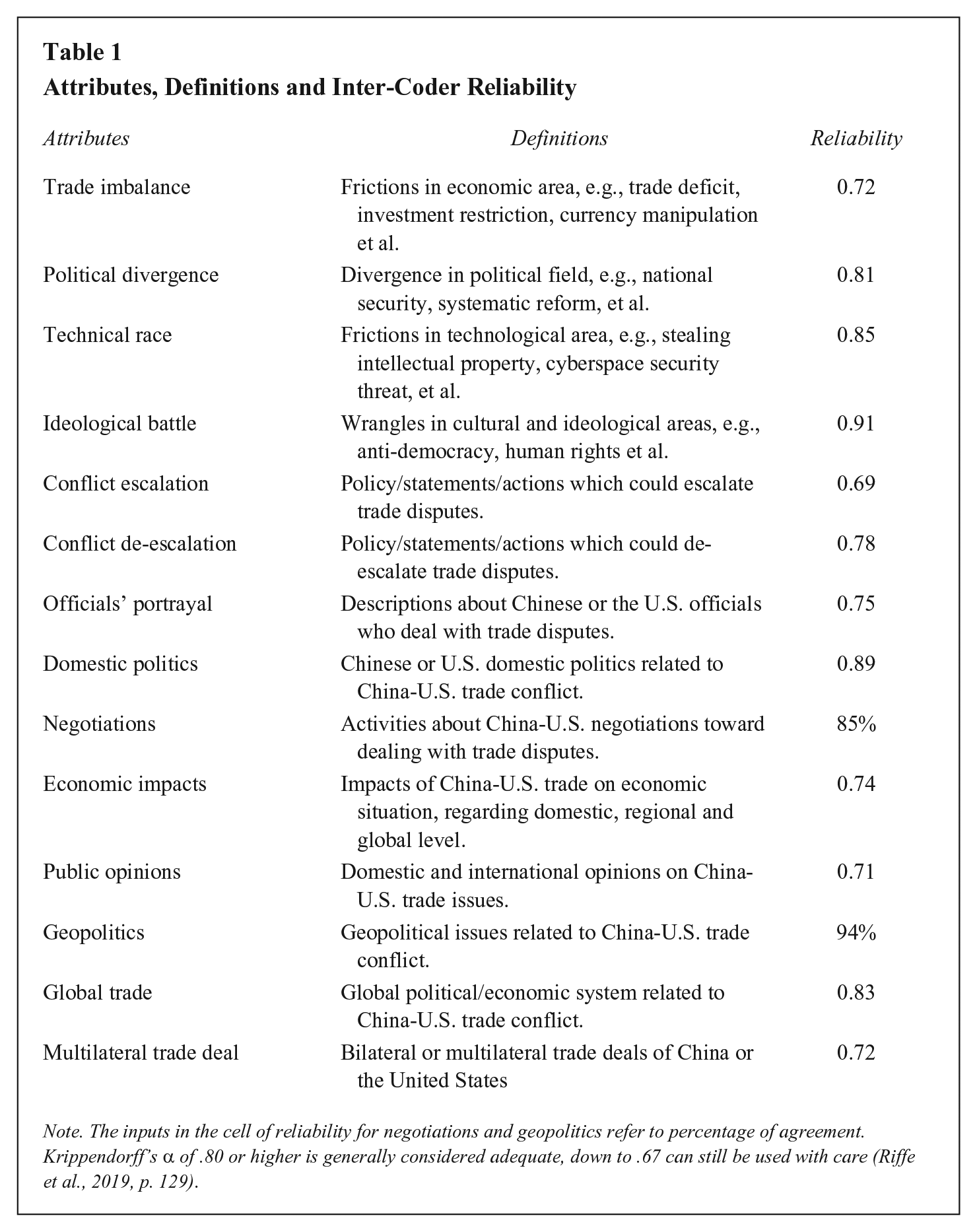
Note. The inputs in the cell of reliability for negotiations and geopolitics refer to percentage of agreement. Krippendorff’s α of .80 or higher is generally considered adequate, down to .67 can still be used with care (Riffe et al., 2019, p. 129).
Two coders, including the author, coded these subtopics. They are both native Chinese speakers and fluent in English. The inter-coder reliability assessment was conducted on 100 news articles using Krippendorff’s α. These articles were randomly selected from the full sample. After several rounds of pilot studies, none of the items scored lower than .67 (see Table 1).
Analysis Strategy
Network analysis was employed to examine the attributed network, respectively, for each country. In network analysis, an attribute is characterized as a node. If two subtopics (i.e., attributes) co-occur in a news article, these two nodes would be connected by an edge. A network with n nodes can be represented as a n * n adjacency matrix, in which the row and column are assigned to the nodes of the network. Each cell in the matrix reports the number of times the two nodes are connected (i.e., the times of two subtopics co-occur in the same article). In this vein, adjacency matrices composed of 14 rows and 14 columns were constructed using the datasets comprised of 14 binary variables, respectively, for four countries.
To identify the primary subtopics in four countries’ news coverage (
Findings
Degree Centrality of Attributes
Table 2 summarizes the top 10 attributes with the highest number of links within each country. To display the attributed networks more intuitively, we visualized the networks using the Gephi software for each country (see Figures 1–4). The node sizes were adjusted to reflect the average weighted degree of each attribute. The larger the node, the more central it is, and vice versa.
Ten Most Central Attributes in Four Countries’ News Networks
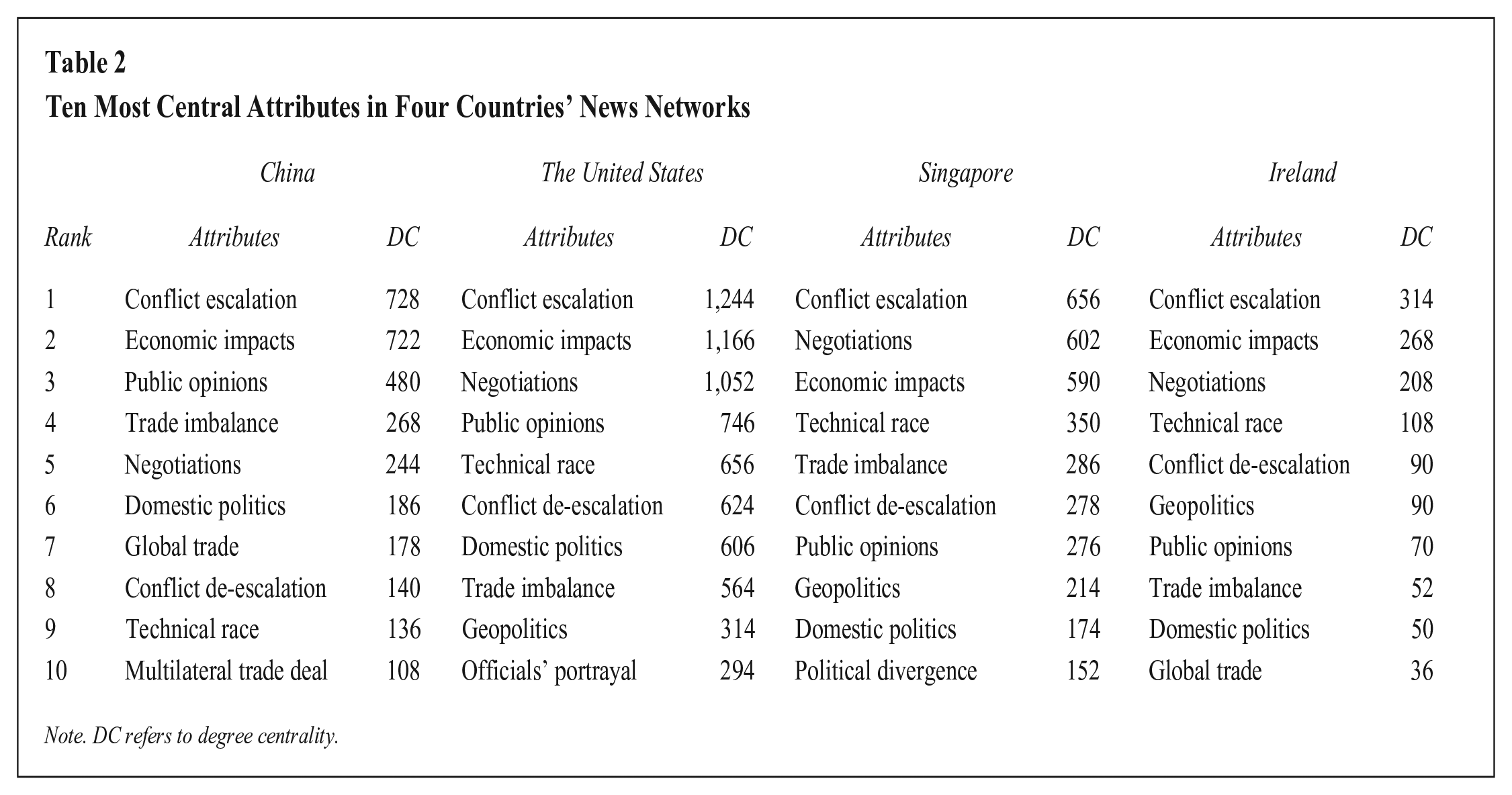
Note. DC refers to degree centrality.
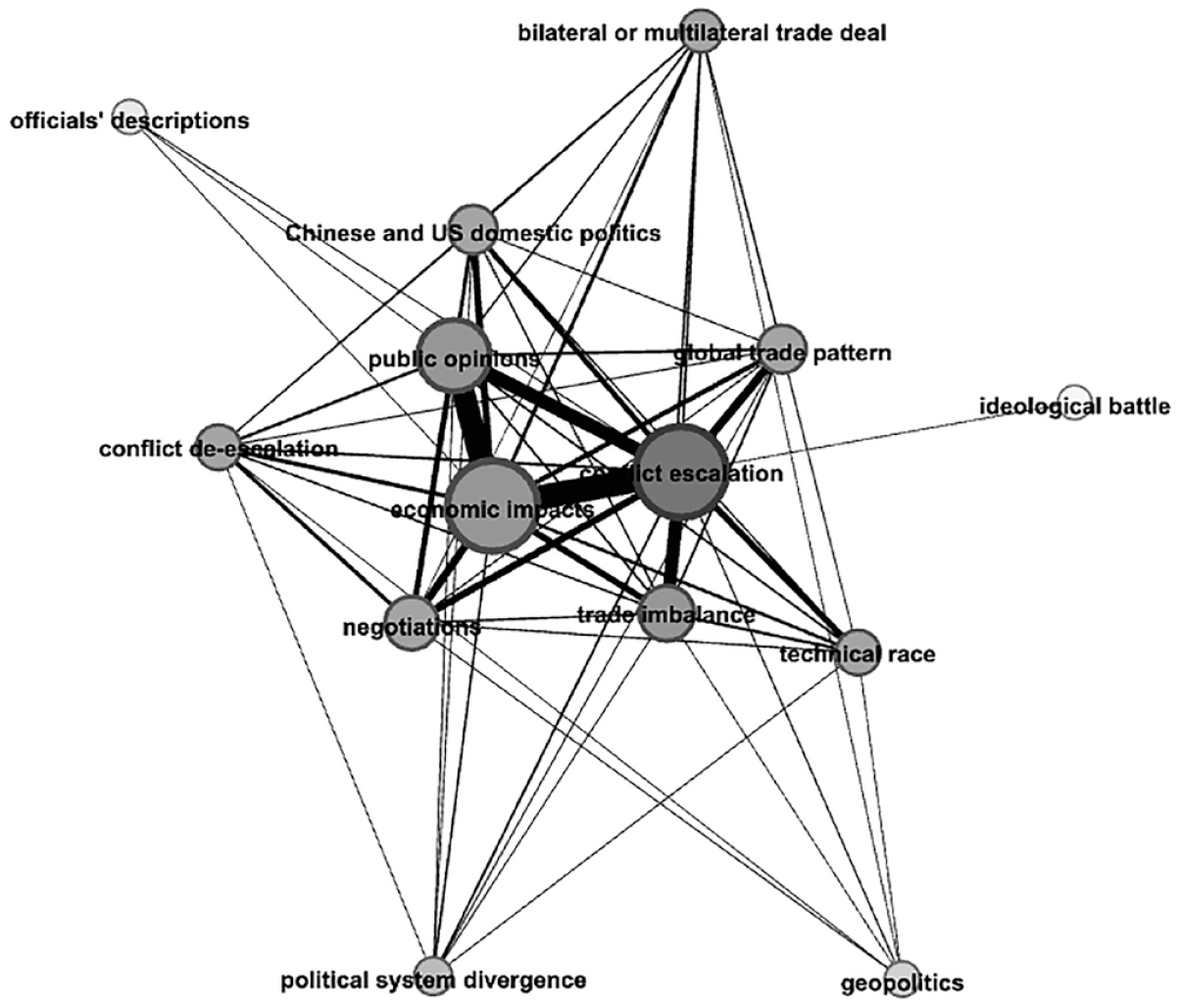
Attributed Network on China-U.S. Trade Conflict in Chinese Coverage
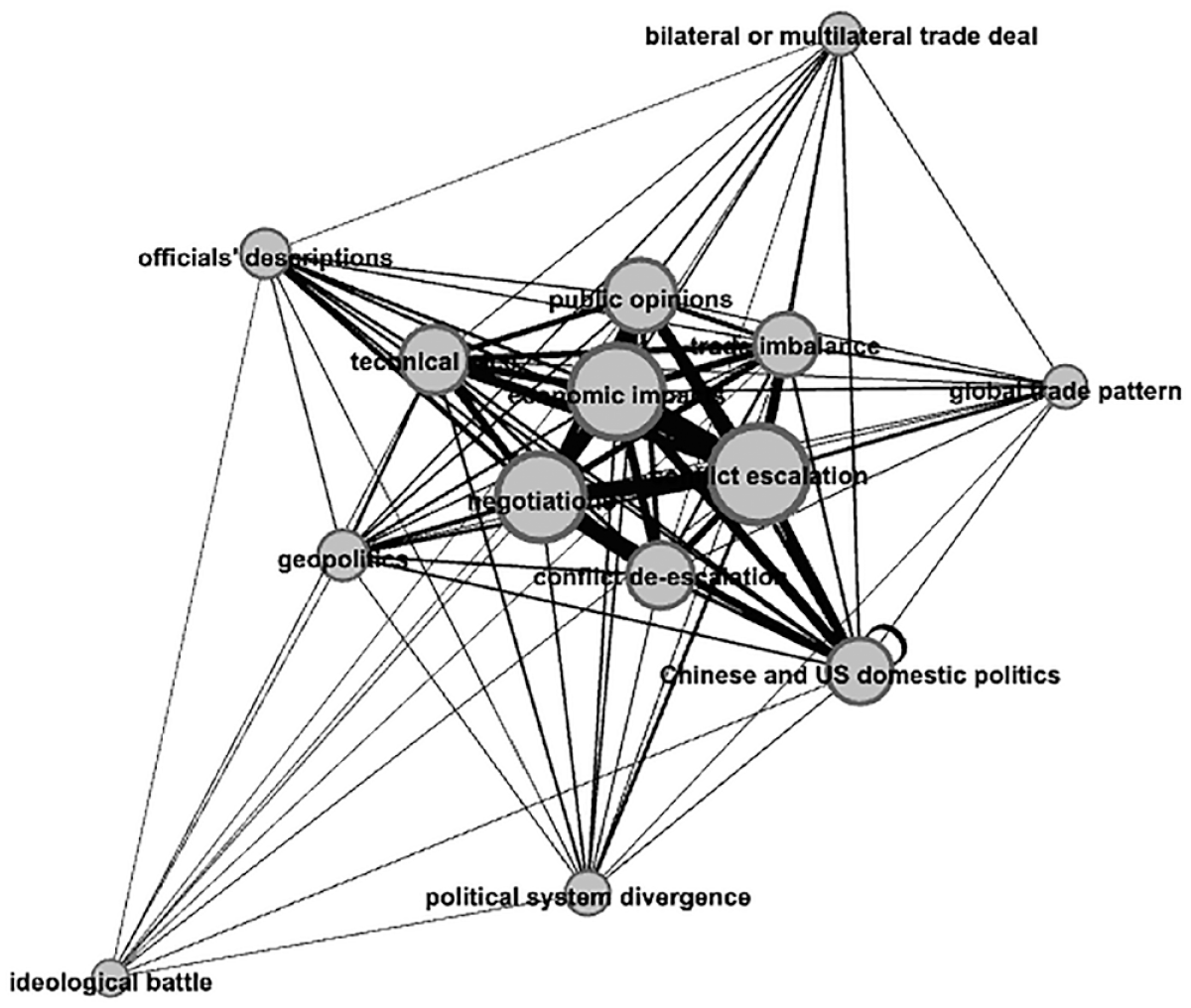
Attributed Network on China-U.S. Trade Conflict in U.S. Coverage
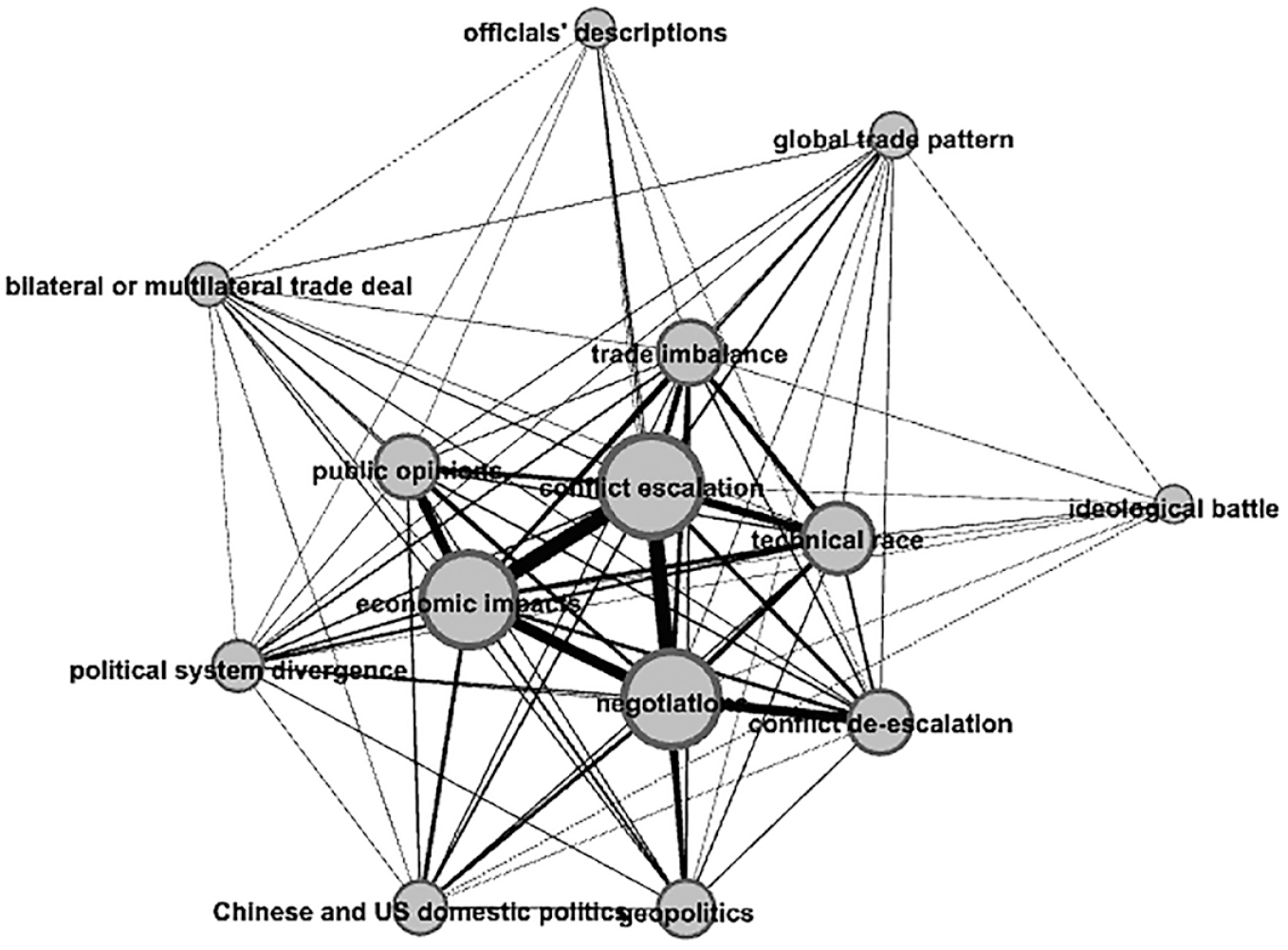
Attributed Network on China-U.S. Trade Conflict in Singaporean Coverage
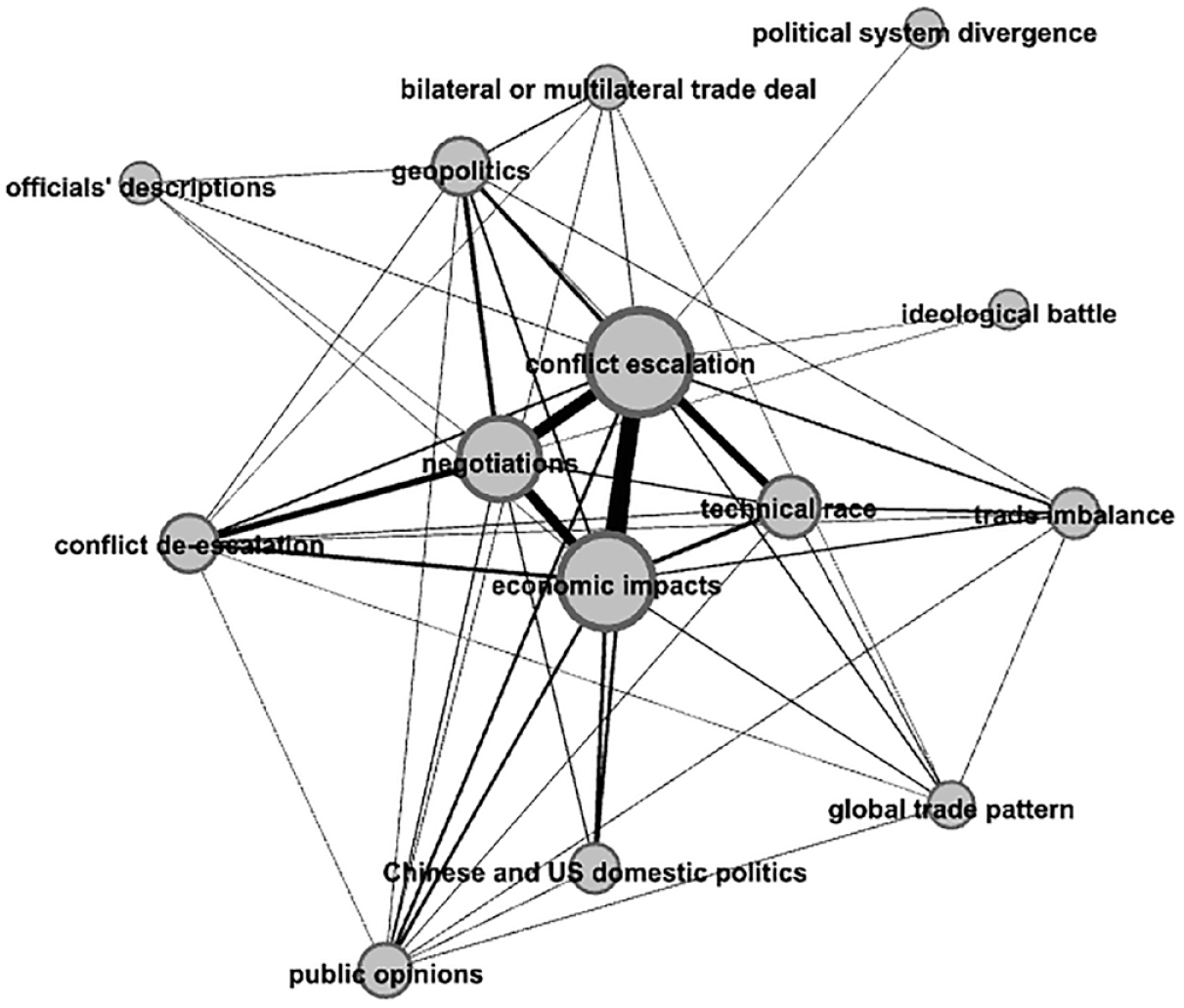
Attributed Network on China-U.S. Trade Conflict in Ireland’s Coverage
The descriptive statistics concerning degree centrality and the visual representations of the four networks showed that attributes such as “conflict escalation,” “economic impacts,” and “negotiation” held significant centrality across the four countries. In other words, these three subtopics were most likely to be associated with other subtopics in news coverage of the four countries. In contrast, the attribute “ideological battle” was least likely to be connected in the four countries’ networks. Table 3 summarized the ten most frequently reported attributes across the four countries independent of the number of links each attribute had. As shown in Table 3, attributes like “conflict escalation” and “economic impacts” consistently appeared as commonly covered topics in all four countries. However, being more frequently reported does not necessarily mean more links are established. For example, the attribute “multilateral trade deal” ranked fourth among China’s ten most frequently reported attributes, yet it was at the bottom in the corresponding rank in Table 2.
Ten Most Frequently Reported Attributes in Four Countries’ News Networks.
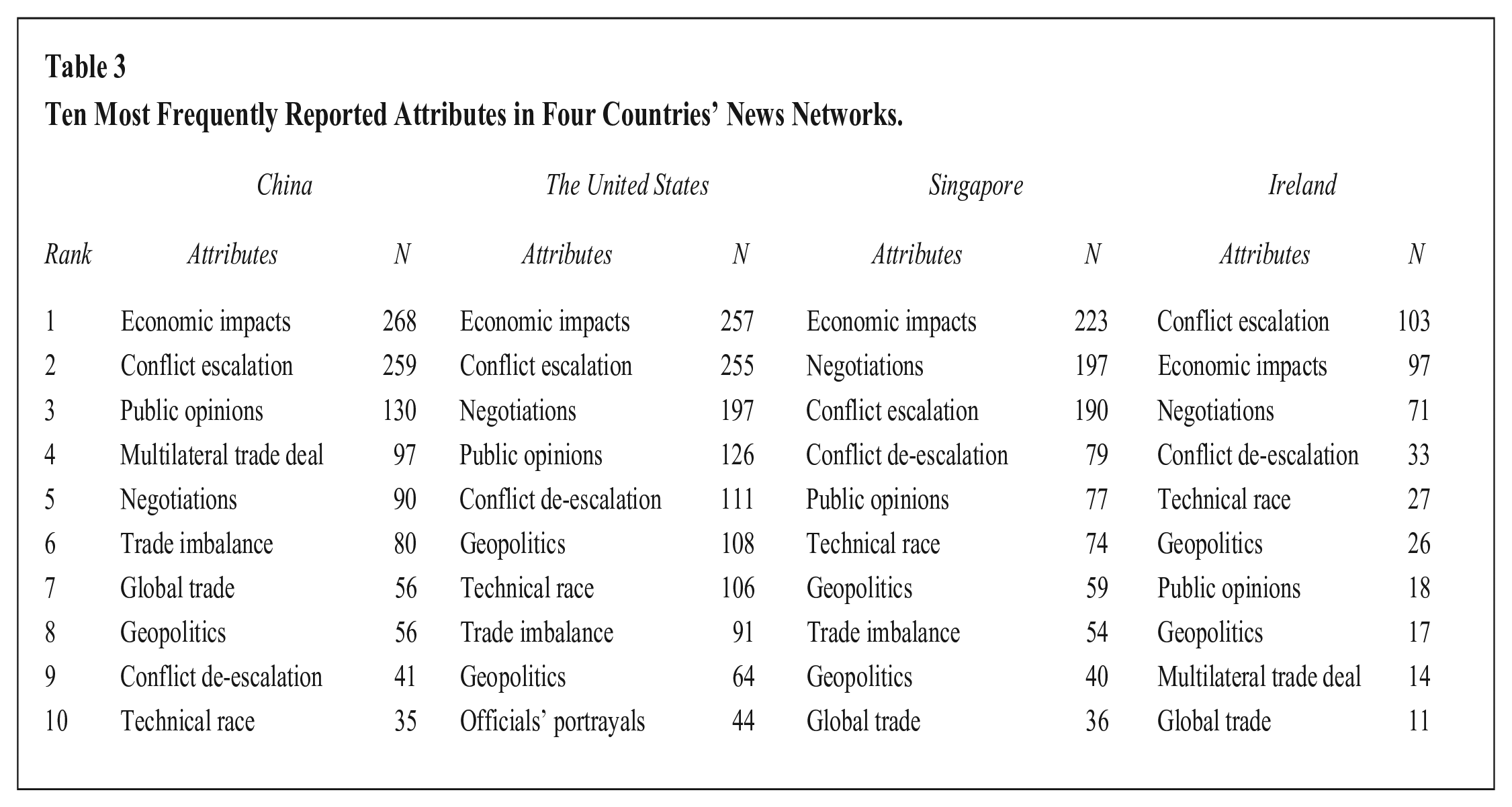
Regarding the disparities in attribute rankings across the four countries, the attribute “technical race” ranked in the top 5 most central attributes in the networks of the United States, Singapore and Ireland. Yet, it held a lower ranking (the 9th) in China’s network. Meanwhile, the attribute “geopolitics” in networks of the United States, Singapore and Ireland ranked the top ten; however, it was not in the 10 most central attributes in China’s network. In comparison, Chinese newspapers allocated significant attention to attributes such as “global trade” and “multilateral trade deal.” The divergences between China and the other three countries illustrated that when covering the China-U.S. trade conflict, subtopics related to global trade practices were more likely to be associated with Chinese journalists. In contrast, journalists from the other three countries tended to link the subtopics related to the China-U.S. strategic competition in realms of politics and technology.
It is worth noting that more associations were found among the attributes within the U.S. network, as the number of degree centrality for the U.S. attributes was apparently larger than that of the other three countries. This might be explained by the fact that U.S. journalists are known for their investigative journalism (Gunnels, 2017), and the subtopics of trade conflict were portrayed more comprehensively than the other three countries.
Correlations Between Attributed Networks of Four Countries
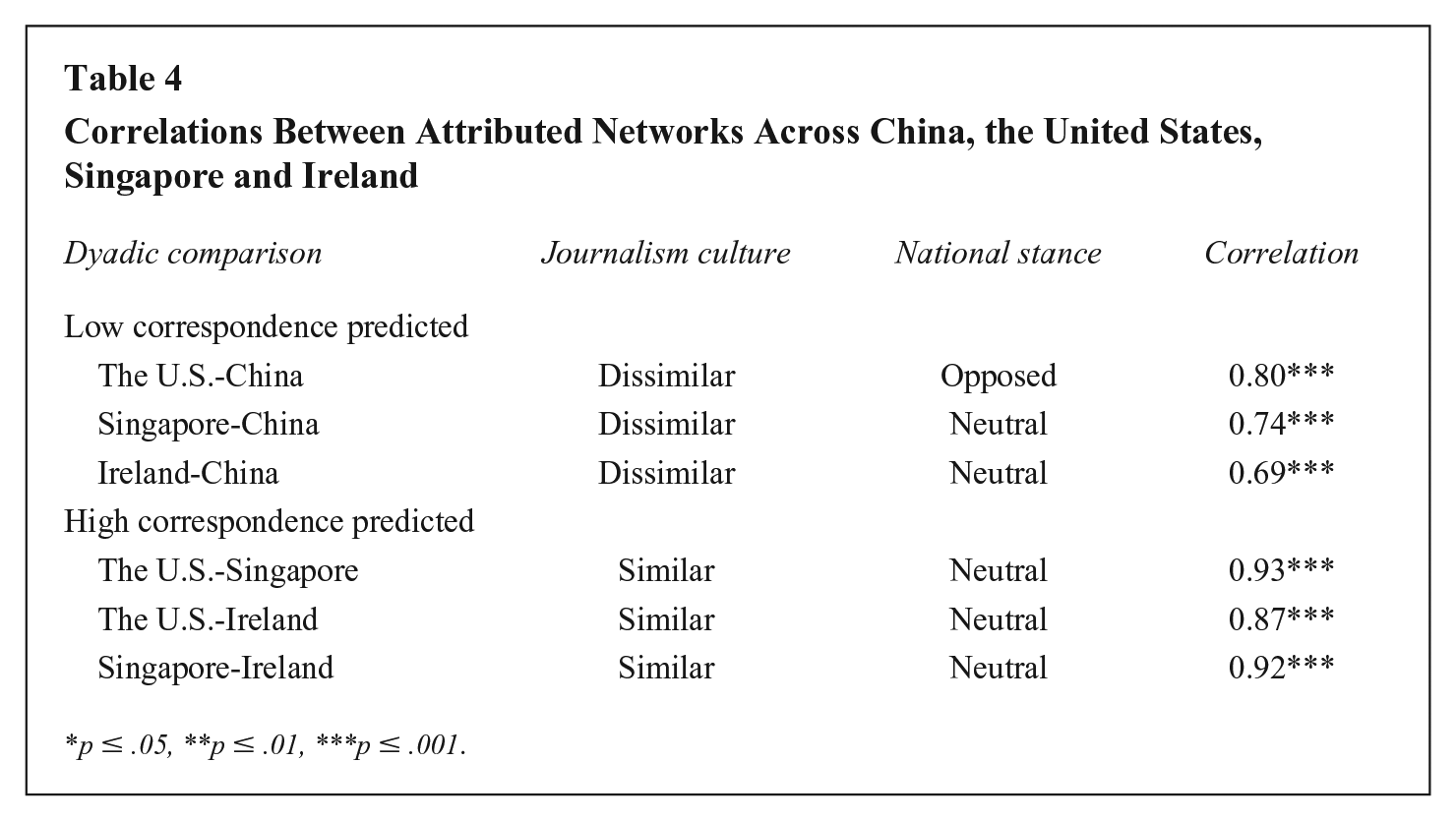
Results of QAP analysis (see Table 4) showed that positive and significant correlations existed in all pairwise comparisons among the four countries. Except for the correlation between Ireland and China, which displayed a moderate value of 0.69, the correlation scores for all other pairs of comparison exceeded 0.7 (Ratner, 2009). These findings provided support for
Correlations Between Attributed Networks Across China, the United States, Singapore and Ireland
p ≤ .05, **p ≤ .01, ***p ≤ .001.
Regarding the nuanced differences between these attributed networks, results in Table 4 indicated that the coefficients of all correlative comparisons with China (the U.S.-China: +0.80, p <.001; Singapore-China: +0.74, p < .001; Ireland-China: +0.69, p < .001) were all smaller than those of all comparisons involving the United States (the U.S.-Singapore: +0.93, p < .001; the U.S.-Ireland: +0.87, p < .001; Singapore-Ireland: 0.92, p < .001). This indicated that in comparison with China, subtopics of the China-U.S. trade conflict were associated in a more analogous manner in news coverage from the United States, Singapore and Ireland, as journalists from these three countries embrace more similar professional values and ideals.
Zooming in on the comparison of the attributed network between China and the United States, although the coefficient was lower than those of other pairs of comparisons, namely the United States versus Singapore (+0.93, p < .001), the United States versus Ireland (+0.87, p < .001), and Singapore versus Ireland (+0.92, p < .001), it was not the lowest in all pairs of comparisons. Specifically, it remained higher than the comparison between Singapore and China and between Ireland and China. This illustrated that the national stance cannot be seen as a factor to account for the divergence between different countries’ attributed networks in this study. Thus,
Correlations Between Attributed Networks of Different Periods
Results in Table 5 indicated that for China and the United States, significant correlations were observed between the attributed network of Period 1 and Period 2 (China: +0.80, p < .001; the United States: 0.78, p < .001 and between Period 2 and Period 3 (China: +0.31, p = .04; the United States: +0.42, p = .02). This suggested that in Chinese and U.S. news, the concurrence of subtopics of the trade conflict was consistent across different time periods. Yet, the correlative relations between attributed networks of different periods turned to be weakened due to the outbreak of the 2018 “trade war.”
Correlations Between Attributed Networks Across Different Periods
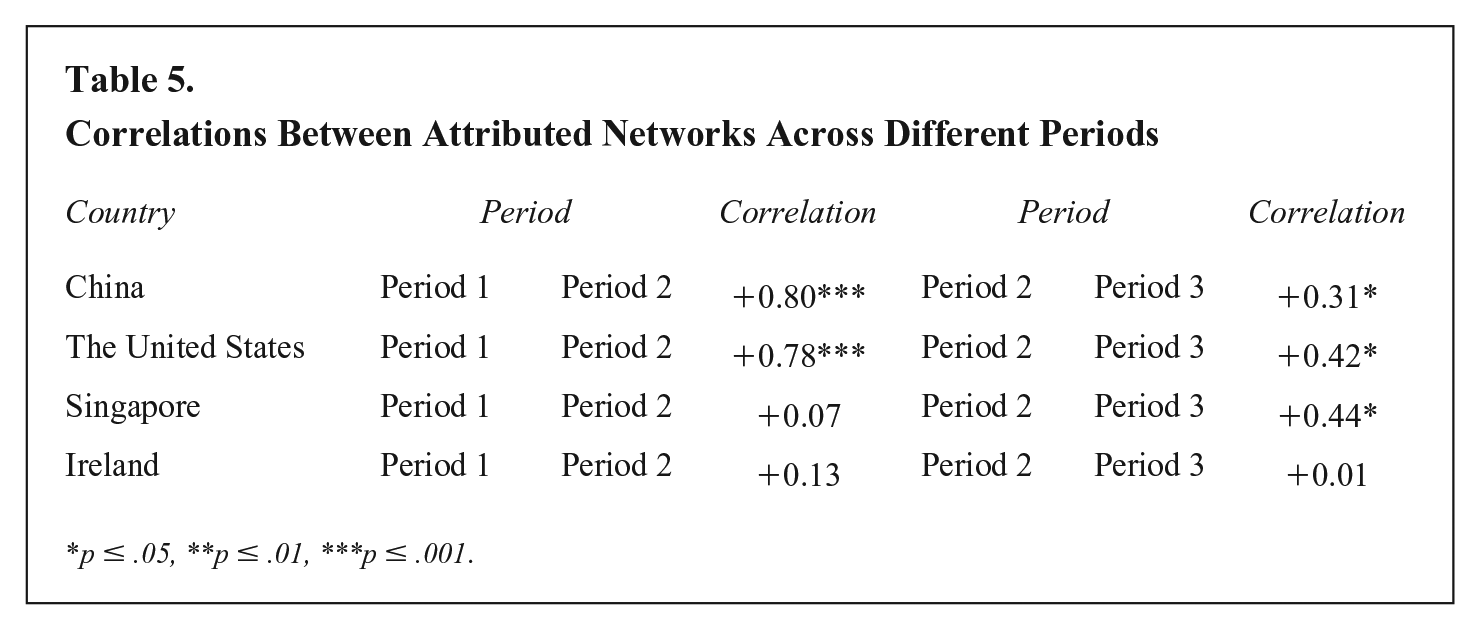
p ≤ .05, **p ≤ .01, ***p ≤ .001.
For Singapore and Ireland, the correlation coefficients between Period 1 and Period 2 (Singapore: +0.07, p = .30; Ireland: 0.13, p = .17), and between Period 2 and Period 3 (Singapore: 0.44, p = .02; Ireland: 0.01, p = .33) were all at a low level. In particular, except for the network comparison between Period 2 and Period 3 in Singaporean news, all other comparisons were not significant.
Discussion
The China-U.S. trade conflict that broke out in 2018 has posed significant risks not only to economic relationships but also to the global political order. To disentangle the complexity of the trade conflict and uncover underlying associations between different subtopics produced by journalists, this research analyzed the China-U.S. trade conflict news coverage using a network-oriented view. Meanwhile, to comprehend the factors that may shape the network agenda building in news coverage, this study conducted a comparative and chronological examination of trade conflict news across countries.
As hypothesized, high correspondences were identified in the structure of attributed networks among the four countries. Particularly compared with previous studies on network agenda in the context of Iraq War and 7/7 London bombing, the level of similarity between the attributed networks of any pair of countries in this study was notably higher. This aligns with the global homogenization of journalistic practice (Berglez, 2008; Reese, 2010). According to Berglez (2008), journalism practices are increasingly transcending the “traditional domestic-foreign dichotomy” and should be analyzed from a global perspective. In other words, the reported subtopics and how the subtopics are associated are increasingly being controlled by interactional global powers, such as global capital and international politics (Beck, 2005). This is particularly evident against the backdrop of the China-U.S. trade conflict, as its ramifications have spread beyond the geographical limitations of the two involved countries.
Specifically, among the examined subtopics, “conflict escalation,” “economic impacts,” and “negotiation” were both associated and reported more frequently across the four countries, whereas the “ideological battle” was least linked in four countries’ news coverage. This implies that, overall, journalists from the four countries primarily focused on the core issues of the trade conflict itself, while avoiding framing the economic tension as an ideological clash. One reason may be that these subtopics were closely tied to the evolution of the trade frictions and aligned with the interests of the audiences. As the “burglar alarms” of a society, journalists tended to establish links between these subtopics to keep the audiences informed about the latest progress.
In terms of the nuanced difference among the four countries’ attributed networks, although political stance has been regarded as a driving factor for the divergence in network agenda in previous research (Guo et al., 2015; Guzek, 2019), the scorecard in this study tilted more toward journalism culture as an explanation for the strength of the correlations. In other words, the subtopics of the China-U.S. trade conflict were associated in a more similar way in news coverage of the United States, Singapore and Ireland. Specifically, the attributes related to China-U.S. strategic rivalry (e.g., “technical race,” “geopolitics,” and “officials’ portrayal”) displayed more frequent connections in the news of these three countries. In contrast, in Chinese news, there was a higher tendency to associate trade issues with global trade order. This distinction squares well with the difference regarding journalism culture between China and the other three countries. In China, news coverage, especially concerning international events, is commonly regarded as a tool employed by the Chinese government to convey its standpoint and garner support from both domestic and foreign audiences. Therefore, Chinese journalists lean more toward developing a new discursive approach, consistently addressing the disruption of the global trade order by the United States, to justify the policies and actions of the Chinese government (K. Zhao, 2016). In contrast, in the other three countries, journalists tended to prioritize professional ideals and practices. Thus, they are more inclined to address the elements of news value, such as conflict and power elite (Liu, 2023; McIntyre, 2016) when covering the economic friction between China and the U.S. Future studies could delve deeper into examining differences across countries in terms of how they construct the politicized aspects of news events in greater detail.
It is important to highlight that the correspondence between countries regarding attributed networks does not necessarily imply that the U.S. news media were actively shaping the agenda. In the current study, we also tried to examine the utilization of media outlets as news sources (i.e., the U.S. press, Chinese press, and third countries’ press) 4 employed by journalists from each country. The findings revealed that in the United States, U.S.-based news outlets were the most frequently cite (n = 34). However, journalists from Singapore played a more balanced role, with both the U.S. press (n = 101) and Chinese press (n = 95) appearing nearly equally in their reporting on the trade war. In the case of Ireland, news outlets from third countries (n = 92) other than the United States were more commonly referenced in their reporting. In contrast, Chinese news coverage predominantly relied on the U.S. press (n = 65) as a source, with Chinese journalists using quotes from U.S. media to underscore the dissatisfaction among U.S. domestic audiences regarding U.S. trade policies. Future studies could further explore the news sources in international news coverage, including the source of media outlets, to better understand the function of news sources in building media agenda.
Regarding the chronological changes of attributed networks, the correlative relationships between Period 1 and Period 2, as well as between Period 2 and Period 3 were found to be significant in newspapers from China and the United States. However, the correlations weakened with the outbreak of the “trade war.” This suggested that in Chinese and U.S. news, the subtopics of the China-U.S. trade frictions have been covered in a continuous manner. However, the outbreak of the “trade war” in 2018 altered the way these subtopics were associated. The reason might be that more actors and frictions in other areas have been involved since 2018. Another explanation could be that, as direct participants in the trade conflict, both countries utilized their media outlets to mobilize public support and engage in public diplomacy. Therefore, as the trade war unfolded, more issues unrelated to economic frictions were linked to media agenda.
Comparatively, regarding the attributed networks of Singapore and Ireland, no significant correlations were found across different periods. It may be because the topics around the China-U.S. trade friction in these two countries’ news were more likely to be covered as isolated episodes depicting specific social events rather than being placed within a broader contextual framework (Iyengar, 1991). Thus, no significant correlations were identified across different periods (De Vreese et al., 2001; Nitz & West, 2004).
Limitations of this study should be noted. Although the correlative relationships regarding attributed network were significant across different countries, this cannot offer sufficient evidence for causal transference. Thus, more studies should be conducted to assess these results’ validity. Second, this study did not examine the direction of links between different attributes, leaving us unaware of which aspects received predominant coverage and which were only briefly mentioned. Future studies could delve into the proportions of various subtopics within news coverage to gain a more specific understanding of how the network agenda was constructed. Finally, although we tried to analyze news outlets as sources within news coverage to disentangle potential intermedia agenda-setting effects across countries, we still lack a comprehensive understanding of the interactive influence between different countries’ media outlets. Future studies should consider applying cross-lagged correlations to investigate the potential intermedia network agenda-setting across countries. Despite its limitations, this study contributes to the extant literature on agenda building by extending it to the third level of media agenda, known as the network agenda by virtue of a cross-national and longitudinal approach. In practical terms, our study provides a more comprehensive perspective for evaluating various attributes related to the China-U.S. trade conflict, and sheds light on the pivotal role that news media play in either politicizing or de-politicizing international tensions.
Supplemental Material
sj-docx-1-nrj-10.1177_07395329231221519 – Supplemental material for Building network agenda in China-U.S. trade conflict news: Transnational comparative study across China, the United States, Singapore and Ireland
Supplemental material, sj-docx-1-nrj-10.1177_07395329231221519 for Building network agenda in China-U.S. trade conflict news: Transnational comparative study across China, the United States, Singapore and Ireland by Shujun Liu in Newspaper Research Journal
Footnotes
Supplemental Material
Supplemental material for this article is available online.
Notes
References
Supplementary Material
Please find the following supplemental material available below.
For Open Access articles published under a Creative Commons License, all supplemental material carries the same license as the article it is associated with.
For non-Open Access articles published, all supplemental material carries a non-exclusive license, and permission requests for re-use of supplemental material or any part of supplemental material shall be sent directly to the copyright owner as specified in the copyright notice associated with the article.
