



Abstract
Several limitations have thwarted the implementation of California housing law for over fifty years. This paper sheds light on the evolution of municipal-state relations at a period of reform by analyzing the contentious implementation of state housing law in Orange County, California, a region of concentrated affluence. Systemic privilege has historically allowed some jurisdictions to influence decision-making at higher levels, skewing housing policy and planning outcomes. Nonetheless, and despite contention between different government levels and localities, the leverage of reactionary local politics is weakening.
Introduction
Fragmented governance and tensions between different government, private, and civic agendas have promoted uneven regional growth and allowed persistent barriers to low-income housing provision to thwart California’s housing laws for half a century. Recent reforms and their contentious local implementation, however, offer multiple lessons for states aiming to address housing unaffordability and segregation. Planning scholarship around these reforms has gravitated toward the evaluation of housing strategies and allocation methodologies to offer policy recommendations (Clare 2019; Elmendorf et al. 2020). While there is some consensus around the local hurdles to state law implementation, few studies (e.g., Camacho and Marantz 2020) have centered on the governmental functions and political tensions that surface when aiming to harmonize public aims at different levels. This paper examines the evolution of municipal-state relations at a period of housing reform. While contentious, bringing up tensions between societal needs and localized interests, the implementation of recent state housing decrees appears to be increasingly successful, impacting regions of concentrated affluence. The tampering of systemic privilege, and the political power that comes with it, brings promise to other US regions plagued by and aiming to combat exclusionary and discriminatory land use and development practices that distort democratic outcomes and exacerbate various public issues (Goetz, Damiano, and Williams 2019; Pendall 2000).
Housing politics and pressing unaffordability in Orange County (OC), one of two Los Angeles (LA) metropolitan area counties, provide a fertile ground for this investigation. OC is known for its anti-big government stance in favor of local and private control, evident in the strong adherence of many of its cities to exclusionary zoning (e.g., minimum lot sizes). Private actors and entities, such as property and land owners, real estate developers, homeowners’ associations (HOAs), and consultants, are heavily influential in local decision-making. Aiming to increase revenues, several OC cities have also consolidated as employment hubs, housing business complexes, the largest shopping malls in the US West Coast, theme parks, and university campuses (Soja 2014). Furthermore, and despite notably low housing allocations during the past 8-year cycle (2014–21), over 300 percent of the county’s market-rate allocation got permitted. Yet, most cities in the county permit low-income housing at notably low paces, if at all (California Department of Housing and Community Development [HCD] n.d.).
Cities along the coast, eastern canyons, and to the south of the county are generally low-density, high-income, majority-white, and among the least affordable. In contrast, most cities to the north and closer to LA County are denser, lower-income, and minority-white and have been responsible for the county’s affordable housing provision through their management of subsidy programs and by permitting low-income housing development at higher rates (HCD n.d; US Department of Housing and Urban Development [HUD] n.d.). Thus, this research also underscores the uneven ramifications of prominent, persistent, and reactionary local resistance to state housing reform, evident in the legal battles launched by the county and several of its cities against the state. OC cities led the appeals process against new housing allocations in Southern California, and arguably the state, in 2020 and 2021. A handful of cities even requested higher allocations for the densest and one of the lowest-income cities to the north of the county (SCAG 2021). Nonetheless, broader societal considerations, such as housing provision, are increasingly in the purview of reactionary geographies whose sphere of influence is weakening. In turn, and despite surfacing tensions among jurisdictions, less influential localities are seeing their interests better represented and materialized, underscoring the importance of promoting studies examining such political processes.
Evolving Local Control and Exclusion
Local land use controls, among other public policies at different levels, have contributed to pressing housing unaffordability and segregation throughout the United States. This has in turn reinforced ethno-racial and socioeconomic disparities, promoted limited access to adequate services and socioeconomic opportunity for some populations, and exposed some groups to harmful living conditions. In contrast, public decision-making has allowed already advantaged groups to hoard and enclose resources through local control, self-interest, and privatism ideals embodied in discriminatory development practices (Anderson 2010; Danielson 1976; Feagin 2014; Freund 2007; Hartman and Squires 2010; Lipsitz 2011; Pendall 2000; Shapiro 2017; Tighe 2010; Tilly 1999). The intergenerational transfer of property wealth, for example, has solidified class standing and privilege. Exclusionary enclaves, affluent groups, and the structural systems that have allowed wealth to concentrate have reproduced disparities, perpetuated regional injustices, and shaped public outcomes (e.g., housing access). This underscores the importance of questioning the legitimacy of policies that rationalize the social position of established groups. Similarly, it stresses the need to investigate affluent and exclusionary urban areas, as well as their attempts to defend exclusionary spaces and guard their advantages, benefits, and protections under assumed liberal democratic norms (Goetz, Damiano, and Williams 2019; Goetz, Williams, and Damiano 2020; Howell 2019; Steil 2022).
States are increasingly recognizing the importance of addressing the above imbalances. Some are looking to California, Massachusetts, and New Jersey, aiming to follow their steps in pushing localities to prevent segregation, meet their fair share of regional low- and moderate-income housing needs, and streamline residential development processes (Basolo 2019). Beyond providing technical prescriptions, California’s recent reforms respond to the multiple political limitations faced by its housing laws since 1969. By some accounts, California’s segregation has actually increased since then, isolating white and wealthy populations in particular (Ethington 2000; Ramsey-Musolf 2017). Similarly, reforms respond to increasingly pressing housing unaffordability. Since the 1980s, California requires localities to incorporate a Housing Element (HE) in their General Plans “aimed at meeting their ‘fair share’ of regional needs for lower-income housing” (Calavita and Grimes 1998, 164). Implementation, however, continued to face local opposition (Myers and Park 2002).
In Southern California, entire cities were built under the assumption “that affordable and integrated housing would reduce property values and deter desirable buyers” (Pulido 2000, 30). Developers building housing in OC in the 1960s pioneered planned-unit developments with automatic membership in HOAs. At their inception, HOAs purposefully curtailed civil rights by, for instance, preventing integration in open and privatized spaces. Despite their curtailment of several other freedoms, such as speech and assembly, courts have ruled them as constitutional given consumers’ “voluntary” choice to engage with HOAs (McKenzie 1994; Soja 2014). As this governance model spread quickly throughout the state—and country—the enforcement of various laws within these private entities has proven particularly difficult.
The lack of consistent revenue to build and preserve low-income housing (Fulton and Stephens 2011; Mattiuzzi 2016; White 2015) and Proposition 13 have also exacerbated housing pressures (Chapman 1998). The latter was brought by a coalition of homeowners and business leaders, benefiting real estate interests and incentivizing commercial construction at the expense of residential construction (Lo 1990). Adopted by California voters in 1978, Proposition 13 caps property taxes to 1 percent of assessed values, which cannot increase by more than 2 percent each year, unless a property is sold, at which point properties are assessed at market value. OC cities strongly advocated for the passage of Proposition 13 under the argument of limiting public spending. To make up for the loss in local revenue, the county established a speculative investment fund. Shortly thereafter, interest rate fluctuations during the Savings and Loan crisis led to the then largest municipal bankruptcy in the country, along the discharge of around 3,000 government employees in the 1990s. The county, however, continued to be fertile ground for financial speculation, housing one of the largest clusters of subprime mortgage lenders, many of which would later declare bankruptcy (Soja 2014).
Governance fragmentation and a wide range of local housing programs have also reflected the political economies of different localities. Similar to other policy arenas, and US regions, resource competition and opposing jurisdictional interests have thwarted regional cooperation. Uneven economic and political influence among jurisdictions has also promoted significant disparities in intraregional housing allocations and development, impeding low-income housing production and perpetuating residential segregation. The state’s Department of Housing and Community Development (HCD) provides statewide population and housing projections to be regionally distributed. The Southern California Association of Governments (SCAG), the largest metropolitan planning organization in the United States, then apportions its Regional Housing Needs Assessment (RHNA) to the most populous region in the state; its six counties 1 house close to half of the state’s population. Over the last couple of decades, SCAG’s allocations have been widely uneven, pushing housing growth to the most affordable counties and cities to the east of the LA region 2 while exempting coastal and wealthier jurisdictions from accommodating their fair share of growth (Ramsey-Musolf 2020).
Aiming to address socioeconomic and ethno-racial regional disparities, and while allocation methods continue to be critiqued as overly complex or inaccurate, in 2018, Senate Bill 828 and Assembly Bill 1771 changed the process to determine and distribute regional housing needs. This yielded significantly higher housing allocations for affluent, homogeneous, and exclusionary areas. Moreover, Assembly Bill 686 now requires all public agencies in the state to purposely address and combat residential disparities and segregation. Reforms have incorporated regional planning considerations, recently requiring Councils of Government (COGs) to consider access to jobs, transit, and opportunity in their allocation methodologies 3 (Baer 2008; Elmendorf 2019; Elmendorf et al. 2020; Lewis 2005; Mattiuzzi 2016). Notably, California’s HCD also uses Goetz, Damiano, and Williams (2019) denomination—Racially Concentrated Areas of Affluence (RCAAs)—to identify census tracts with particularly high median incomes and an overrepresentation of non-Hispanic white population with respect to their region. Furthermore, Assembly Bill 1304 mandates jurisdictions to conduct an analysis of RCAA patterns and trends at the local and regional scales (HCD 2021).
Other aspects of California’s housing law have also evolved considerably. Since 2017, over a hundred housing bills have been framed as a watershed wave to address California’s significant housing pressures by strengthening HCD’s authority, oversight capacity, and ability to gather critical housing data (Clare 2019). The Housing Accountability and Housing Crisis acts limit jurisdictions’ abilities to restrict housing development, and Senate Bill 35 creates consequences for failing to meet local housing targets, a condition shared by most jurisdictions in California. Localities with insufficient progress toward their housing targets are subject to streamlined development processes for multifamily projects with a share of housing units accessible to residents earning less than 80 percent of the area median income (AMI). Now, localities taking actions inconsistent with state housing law risk legal proceedings and losing resources and control of their housing-development processes (Elmendorf et al. 2020). Local governments in California must thus zone for local projected low-income and market-rate housing needs and develop inventories of available sites for housing development, analyses of public and private constraints hindering housing development, and programs to reduce such constraints (Agatstein 2015; Monkkonen, Manville, and Friedman 2019). Higher and more balanced housing allocations, along with new legislation holding local governments increasingly accountable for failing to meet their housing targets, make the current moment particularly relevant for investigation.
Research Methods and Data
This research expands planning scholarship’s inquiry around the political impediments and prospects for aligning public goals at different government levels by examining the implementation of California’s housing laws and reforms. Contentious housing politics, notable ethno-racial and socioeconomic segregation, and unaffordability pressures make OC an important and understudied case for analysis (Figures 1 and 2). Shedding light on how RCAAs are evolving (Goetz, Damiano, and Williams 2019), this context-dependent analysis adds detail and nuance to our understanding of municipal-state relations and planning processes by making use of and triangulating multiple data sources (Campbell 2003; Flyvbjerg 2004; Hopkins 2001; Yin 1998).
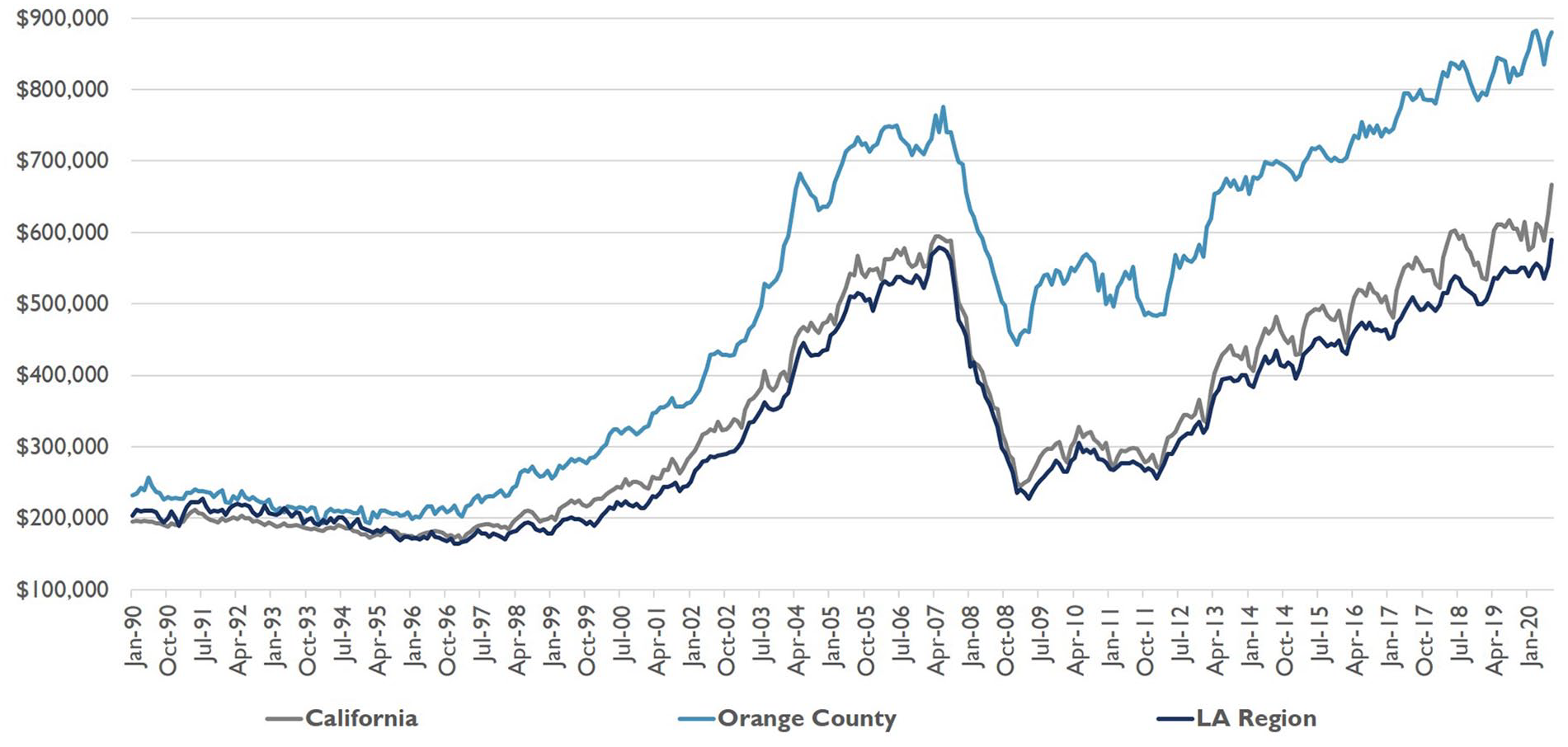
Median single-family detached home prices.
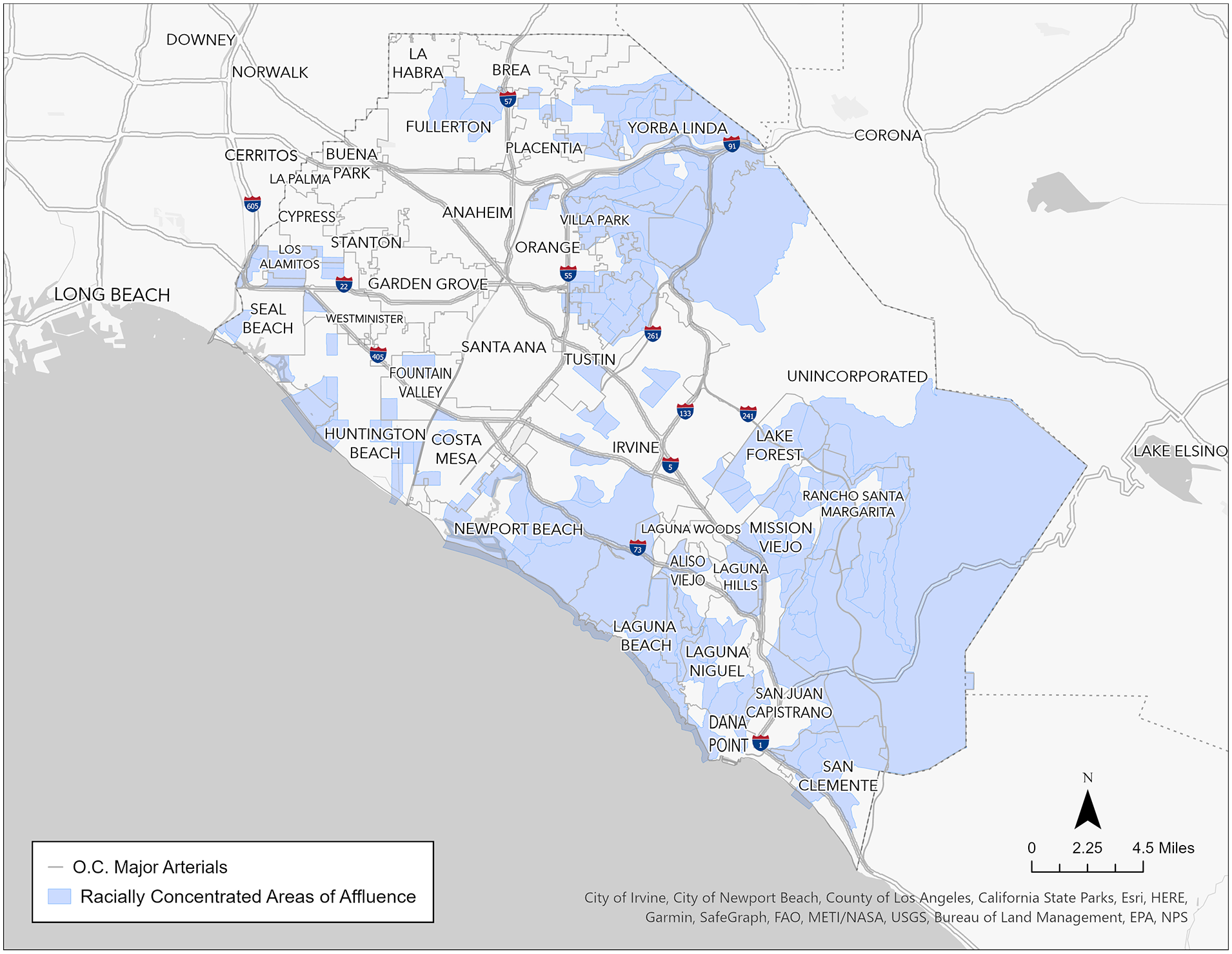
Racially concentrated areas of affluence in Orange County.
This paper draws from the content analysis and coding of recurring themes from 221 news sources (2020–24) 4 and 72 public meetings, 5 yielding five salient themes, the most prominent of which, state-local conflict (i.e., legal and political), is the main focus of this paper. 6 This analysis is complemented by the consultation of fifty-eight government documents (e.g., relevant plans, appeals, resolutions, policy reports, press releases, and ordinances) to corroborate information. While briefly discussing other prominent legal battles, this article centers on the contentious appeals process for the 6th RHNA cycle (2021–29), led by various OC cities in 2020 and 2021. City appeals and public hearings held by SCAG therefore constitute this paper’s main data sources. Given their unprecedented nature, four appeals are particularly central to this paper. The OC cities of Garden Grove, Irvine, Newport Beach, and Yorba Linda requested a higher allocation for Santa Ana, a low-income and 77-percent Latinx city. Also important are Santa Ana’s, SCAG’s, and HCD’s responses to these appeals. The nine appeals hearings took place on January and February of 2021, lasting between 1:13 and 5:34 hours each. Moreover, four RHNA subcommittee meetings from 2014 provide important reference to contrast 5th and 6th RHNA cycle appeals processes.
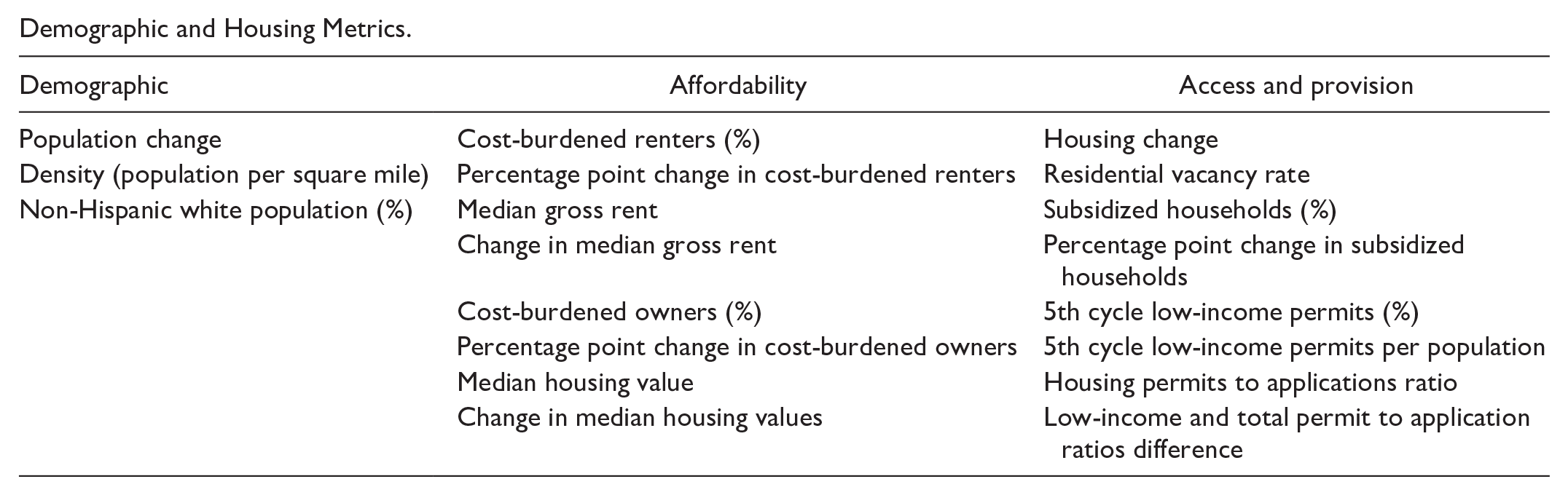
Spatial analyses also inform this research, providing important context about OC and its thirty-four cities. Nineteen demographic and housing metrics (Appendix) were considered to assess the propensity of cities to allow for growth and diversity, low-income (<80% AMI) housing permitting patterns, cities’ management of housing subsidy programs, and affordability conditions for both home owners and renters. Data were retrieved from the US Census Bureau (American Community Surveys 2010–14 and 2015–19), the HUD (n.d.), and the HCD (n.d.) and align with the 5th RHNA cycle (2014–21) to the extent possible. Data of housing permits and applications from HCD, for instance, are only available since 2018. Qualitative and quantitative data unveil OC as a strategic and theoretically and empirically relevant case (Eisenhardt 1989; Flyvbjerg 2004), embodying both a paradigm and a parody of the segregated diversity of contemporary metropolitan regions.
OC: A Legacy of Segregation and Uneven Development
Less than a third of the population of the LA metropolitan statistical area (MSA), including OC cities, is non-Hispanic white (U.S. Census Bureau 2020). This MSA is also among the most racially diverse in the United States. Yet, vast swaths of OC—including entire cities—have been identified as RCAAs (Figure 2). Within OC, 7 white and wealthier residents concentrate in cities to the south and along the coast and eastern canyons. Latinx residents concentrate in northern (closer to LA), denser, and lower-income cities that tend to manage housing subsidies and permit lower-income housing at higher rates (Figure 3).
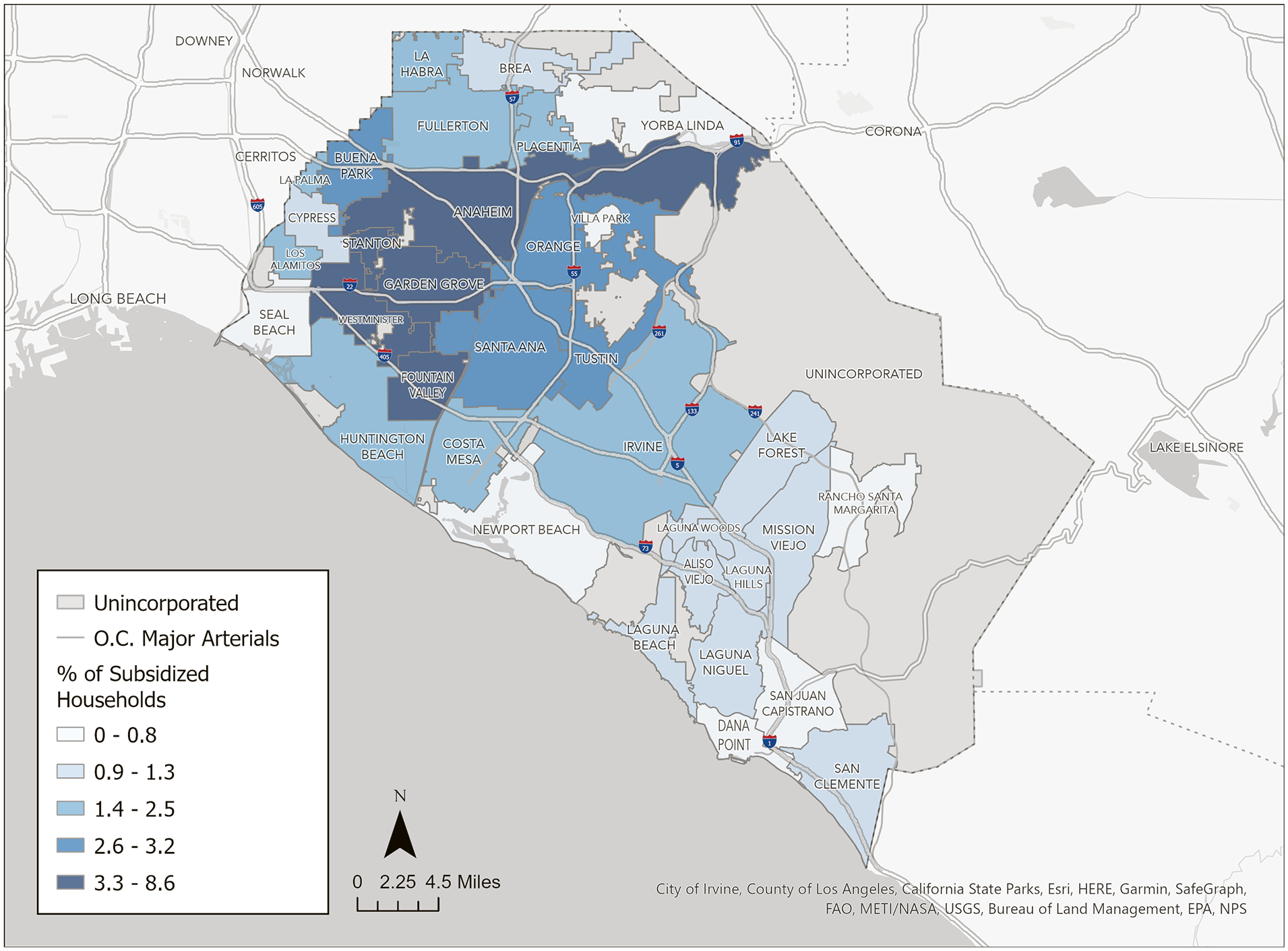
Percentage of subsidized households in Orange County Cities (2020).
OC formed as other suburban regions in the United States, with predominantly white residents moving away from the perceived threats of urban unrest and crime in LA. Yet, residential interests and land uses have been competing with various other wealth generators. The county houses theme parks, high-tech industrial and corporate master developments (e.g., the Irvine Business Complex), universities, California’s largest shopping malls, such as Costa Mesa’s South Coast Plaza, with over 10,000 parking spots, and the Market Place, stretching across two cities, Irvine and Tustin (Soja 2014). Such economic hubs have drawn over three million inhabitants, making OC the second largest of the SCAG region.
Despite contentious politics and significantly low housing allocations in the past, OC is the second largest county and third fastest growing in the region. A vast majority of built housing, however, is only accessible to high-income residents. Despite exceptions (e.g., Santa Ana), most OC cities underperform markedly in low-income housing development. According to the California Housing Partnership (2023), the average asking rent in OC makes housing unaffordable to anyone earning less than fifty-one US dollars an hour. Some particularly affluent cities (i.e., Newport and Laguna Beach) and retirement towns (i.e., Seal Beach and Laguna Woods) also have high residential vacancy rates. This served as justification for their low RHNA allocations during the 5th cycle (SCAG n.d.), although wealthy cities have been known to lobby for housing unit reductions and close to a third of OC cities received single-digit RHNAs for the past cycle (Duara 2020; HCD n.d.).
Appeals for Local Control Face Housing Reform
RHNA allocations were low across the state for the 5th cycle as housing markets recovered from the 2008 foreclosure crisis. Yet, OC’s was particularly low. OC was allocated 3.3 percent of the state’s RHNA during the 5th cycle and 10.6 percent for the 6th (HCD n.d.). For reference, OC’s share of California’s population has remained at 8.1 percent since 2010. SCAG first appealed for a RHNA reduction based on methodological concerns and inconsistencies between SCAG’s and HCD’s population forecasts. The incorporation of overcrowding and cost burden metrics in the allocation methodology also impacted Southern California’s numbers in particular. Yet, HCD underscored that the assigned RHNA “is already a product of moderation and compromise” (HCD 2019, 1). HCD also noted that housing allocations to localities had to be lower within an income bracket when jurisdictions have disproportionately high shares of households in that bracket, per the most recent American Community Survey, underscoring the aim to address segregation and regional imbalances.
The Fight Against Disadvantaged Communities
For decades, uneven political influence has thwarted low-income housing construction and promoted uneven growth and residential segregation in Southern California. Yet, following the state’s directive to affirmatively further fair housing and avoid the concentration of lower-income housing in low-resource areas, SCAG capped their RHNA allocations for cities defined as disadvantaged communities (DACs). This classification uses California’s 2019 Opportunity Index Scores to assess jurisdictional access to opportunity, residential segregation, and concentrated poverty, among other dimensions related to long-term life outcomes. Such scores went through a development and public review process, including written and oral testimony within the 18-month RHNA planning process (SCAG 2021).
While HCD found that SCAG’s methodology furthers RHNA’s statutory objectives on January 2020, the Yorba Linda City Council passed a resolution to oppose it and its DAC denomination. Along other OC cities aiming to enclose resources through local control, the city argued that the DAC definition was a late introduction with substantial implications and inadequate opportunity for input by jurisdictions. It further argued for the need to strengthen the local control of housing as “the best means to protect the City of Yorba Linda, its residents and business owners, and to promote the goals and policies of the community . . . [preventing] significant threat of lasting damage” (City of Yorba Linda 2020b, 3). Yorba Linda has multifamily housing in less than 1 percent of its land mass and the second highest median household income in the county. It is also in the bottom 10 percent of California cities in terms of neighborhood income diversity and majority-white, albeit with a growing Asian population (Monkkonen et al. 2024).
While all OC representatives opposed it, SCAG’s Regional Council approved their RHNA Methodology on a vote of forty-three to nineteen on March 4, 2020. Deaf to fair housing aims, OC cities contested 6th cycle allocations at the most notable rate in the region—and state. Close to half of the fifty-two appeals submitted to SCAG (composed of 197 local jurisdictions) in late 2020 came from OC and its thirty-four cities. Comparatively, the also contentious RHNA appeals process for the Association of Bay Area Governments (ABAG 2021; 110 local jurisdictions) received twenty-eight appeals, whereas the San Diego Association of Governments (nineteen local governments) received four and the Sacramento Area Council of Governments (twenty-eight cities and counties) received none (SCAG n.d; Schwartz 2021). Given low and single-digit allocations during the 5th cycle, only one OC city appealed its RHNA eight years prior, out of twelve appeals received by SCAG then (SCAG 2012).
Promoting interjurisdictional tensions, four OC cities made unprecedented appeals on top of their requests for a reduction in their own allocations for the 6th cycle. Garden Grove, Irvine, Newport Beach, and Yorba Linda petitioned a higher allocation for Santa Ana (77% Latinx), the densest and one of the lowest-income cities in the county and region. Two additional OC cities submitted comment letters supporting these historic appeals. Per the DAC designation, 89 percent of Santa Ana’s population live in low-resource tracts, the third highest share among SCAG jurisdictions (SCAG 2021). With the exception of Garden Grove, appellant cities have almost twice the median household income of Santa Ana and are significantly less dense (U.S. Census Bureau 2020). Santa Ana was also the first city in OC to pass regionally contentious rent-control and tenant-protection ordinances (City of Santa Ana n.d.). Furthermore, it permitted the most low-income housing units in the county during the 5th cycle. Meanwhile, Newport Beach has the lowest permit to applications ratio and highest median housing values in the county, along the second highest share of non-Hispanic white residents (80%). Paradoxically, both cities are exempt from the streamlined development process for having met their 5th cycle allocations. Newport Beach, however, had a five-unit RHNA during the 5th cycle (HCD n.d.), exemplifying serious issues with the implementation of previous fair housing directives.
The 5th RHNA cycle was much less contentious, but since 2014, SCAG underscored that the grounds for appeals are limited to misapplications of the methodology. Yet, most 6th-cycle appeals requested changes in SCAG’s methodology itself (SCAG n.d.). Garden Grove’s petition proposed a sliding scale to account for jurisdictions, like themselves, that fell below the threshold to be considered a DAC while having a significant percentage of their populations living in low-resource areas (City of Garden Grove 2020). In contrast, Irvine argued that opportunity indicators identify high-opportunity areas for private investment and housing development but should not be used for calculating allocations. Along Newport Beach, Irvine contended that RHNA reductions to DACs, redistributed throughout the county, inflated already unrealistic housing allocations and constituted an unequitable burden on cities having to absorb them (City of Irvine 2020; City of Newport Beach 2020). A month prior to the RHNA appeals public hearings, however, HCD submitted a comment stating that DAC caps furthered fair housing through the allocation of more units in high-opportunity areas and fewer units in low-resource communities and concentrated areas of poverty. HCD also noted that granted appeals had to include written findings of their furtherance of RHNA statutory objectives (HCD 2020; SCAG 2021). The arguments put forth by different government levels show clear contention around housing allocations and their fairness, with some cities still reluctant to address residential segregation.
Appellant cities also contested Santa Ana’s 2018 growth projections given its number of approved, entitled, and under-review development projects in 2020. Santa Ana responded that many of these units counted toward the 5th cycle, formed part of 6th-cycle growth projections, were not approved, or no longer viable for development. Appellants also evoked the City’s General Plan in-progress update and buildout forecasts, to which Santa Ana argued that buildout scenarios and growth projections are not comparable. Possibly pressured by appeals, on November 2020, Santa Ana’s Planning Commission voted to table its proposed General Plan indefinitely, specifying additional community outreach and displacement pressures as their motives. Santa Ana’s response to appeals also complimented the adoption of an RHNA methodology aiming to further equity objectives and urged SCAG to not allow wealthy and resource-rich cities to undermine it. The city argued that the “fatally flawed” appeals against them failed to make claims consistent with state law, such as identifying an irregularity in the application of the methodology rather than requesting a modification of a methodology adopted to further statutory objectives (City of Santa Ana 2020; City of Yorba Linda, 2020a; SCAG 2021). Here, divergent equity considerations among jurisdictions also become apparent, as well as their impact on local planning processes.
Besides requesting the largest reallocation for Santa Ana, from 3,087 to 23,167 units, Yorba Linda requested among the most drastic RHNA reductions for itself, from 2,411 to 211 units, claiming to have no low-income residents requiring affordable housing (City of Yorba Linda 2020a; Tansey 2020). Failing to address fair housing considerations, most appeals incorporated technical arguments around service or infrastructure constraints, availability of developable land, existing or projected jobs-housing balances, greenhouse gas emissions reductions, and related matters. Perhaps paradoxically, cities often underscored that cities like Santa Ana, with higher densities and better access to transit, were better suited for future development. Cases brought by Newport and Huntington Beach also noted the state’s Coastal Commission denial of residential projects due to flooding and sea-level-rise projections. Yet, the OC Public Law Center noted that despite having wetlands, the city has enough developable land and that SCAG should not grant the appeal (Duara 2020; SCAG n.d.).
The Appeals Process
Two voting members from each county composed SCAG’s 6th-cycle RHNA Appeals Board, chaired by Peggy Huang, one of two OC members, former mayor, and current Yorba Linda councilwoman. Supported by SCAG staff’s technical expertise, discussions among voting members were often tense, particularly around a handful of OC appeals. Prolonged discussions, led markedly by OC members, centered on similar arguments brought by multiple jurisdictions. Councilmember Cheryl Viegas-Walker, representing Imperial, an inland county, underscored this after the longest hearing for Huntington Beach. Viegas-Walker further noted that their decisions and votes ought to be consistent. Ultimately, the board granted only two appeals, both outside of OC (SCAG n.d.). 8
On January 19, 2021, Viegas-Walker also shared that Bay Area colleagues claimed to have a similar “dumpster fire” given the incorporation of social justice and equity consideration on their allocation methodology, causing some deep divides among elected officials. At the previous public hearing, on January 15, the appeals against Santa Ana were heard. Representatives were split, with members from Ventura, OC, and LA counties validating arguments to increase Santa Ana’s RHNA, such as the city’s “homelessness” issue and the claim that its numbers seemed completely “out of whack.” While AB-686 established further obligations for jurisdictions to affirmatively further fair housing through their planning and community development processes just weeks before these hearings (HCD 2021), there was no mention of fair housing considerations or ethno-racial and socioeconomic disparities. In the end, SCAG staff and legal counsel found no bases to grant these appeals.
OC representatives advocated strongly for other OC cities. While failing to garner enough votes, OC members voted in favor of most OC appeals, with one exception, that from the lower-income city of Garden Grove. In contrast, while Laguna Beach city staff noted their prohibitive land and real estate costs for low-income housing production, OC representatives delayed this hearing on the grounds of fire risk. Eventually, representatives from Riverside and San Bernardino County noted the city’s two-unit allocation during the 5th cycle and argued that a 394 allocation for the 6th cycle was reasonable. While chair Huang underscored Laguna Beach’s vacancy credit during the 5th cycle in an attempt to further discussions, other members carried a motion to deny the appeal. Notably, 5th-cycle deliberations in 2014 emphasized that vacancy credits were sometimes at odds with social equity goals. Thus, SCAG staff recommended revisiting its 6th-cycle methodology to follow state laws indicating that allocations should not overburden certain communities (SCAG n.d.).
The frustration of OC representatives against the state was also visible. On January 19, when appeals from eight OC jurisdictions were heard, OC Councilmember Wendy Bucknum from Mission Viejo noted Sacramento’s “lawsuit abuse” against Huntington Beach (discussed below). Mission Viejo’s own appeal had no technical comment nor an appeal for a concrete numerical reduction. Rather, the city’s lawyer argued that SCAG ought to be the “shining light” in the state and force HCD to prove the logic behind their numbers. Representative Bucknum then argued that cities were being forced to wipe out commercial uses and revenues to build the slums of tomorrow, argument reiterated by Chair Huang at a later meeting. Huang further contended that state legislators should be liable and sued for their “fairy tale” legislation shoving laws down their throats and stripping localities of zoning powers.
Toward the end of the longest and most contentious meeting, and given staff and attorney recommendations, representatives stressed that, regrettably, their hands were tied. Lasting over three hours due to the Appeals Board Chair motion to extend it over two days, Huntington Beach City Attorney Michael E. Gates argued that the board’s hands were not tied. The city brought up several challenges, such as their charter city status, which state mandates preclude. Yet, Chair Huang clung to the designation of a city corridor as a High-Quality Transit Area (HQTA). Aggressively questioning SCAG staff and “faulty” data from the Orange County Transportation Authority, Gates and Huang claimed that the HQTA designation was based on contingent transit projects while failing to factor in declining ridership. Notably, 2014 RHNA hearings brought up the issue of jurisdictions providing inflated growth numbers for transportation resources and deflating them for housing mandates (SCAG n.d.), revealing the measures cities will undertake to reproduce disparities and guard exclusionary spaces.
Unyielding Battles
While reforms have closed loopholes to adapt RHNA methodologies to some cities’ convenience, OC cities have remained resolute in perpetuating housing and regional imbalances through legal battles. Only months before the deadline to submit revised HEs or plans, the Orange County Council of Governments (OCCOG) and the bulk of its cities sued HCD for allegedly overestimating the number of new residences Southern California must plan for. The lawsuit was dismissed in November 2021 by a Los Angeles County Superior Court judge, and on July 2023, the 2nd District Court of Appeals upheld the Superior Court ruling. Shortly thereafter, OCCOG voted unanimously to appeal lower-court opinions that tossed out their lawsuit against state housing mandates and asked the California Supreme Court to weigh in (Collins 2023). Beyond the county level, at which several OC cities often coalesce, they have also remained engaged in SCAG, aiming to influence regional decisions.
On January 6, 2022, and despite overwhelming public comment opposing it, SCAG’s Regional Council voted in favor 9 of supporting a ballot initiative to amend California’s constitution for city and county land-use and zoning laws to override state laws. Excluding two absences and one abstention, all OC representatives endorsed the measure. Several residents and community organizations voiced their concerns, including the intent to undermine fair housing goals, which SCAG is charged with addressing. Public speakers also noted the regressive nature of the proposed initiative and the fact that local governments have failed to address housing pressures over the last several decades. Some noted that exclusionary zoning promotes segregation, housing insecurity, long commutes, and environmental harms. An OC resident argued that local governments have not planned for but rather banned low-income and multi-family housing. While over forty people spoke against the proposed initiative and amendment, nine speakers voiced their concerns around one-size-fits-all mandates, unfettered market-rate development, California Environmental Quality Act exemptions, and displacement concerns.
SCAG representatives spoke mostly in favor of the initiative, signaling a disconnect between the attending public and elected officials. OC Supervisor Donald Wagner argued that “the government that governs less governs best.” Michael Posey, former Huntington Beach Mayor and City Councilmember, noted that state bills had become increasingly draconian, and Peggy Huang from Yorba Linda recalled how SCAG had opposed other state bills before. While these opinions seemed less substantive and more political than the previous public comment, some members did urge the council to take no position in such a controversial issue that would do nothing to further housing affordability. These opinions underscored what local governments have done to exacerbate housing pressures, prompting the state to act, as well as the risks of unleashing “ballot box zoning” and the need for a more collaborative regional approach to address housing pressures. Yet and despite a substitute motion to not take a position, Wagner’s position and motion prevailed (SCAG n.d.).
Nonetheless, reactionary housing politics are carrying increasingly less weight in California. In March 2024, a Superior Court ruling suspended portions of Huntington Beach’s land use planning authority in the midst of multiple lawsuits brought by the state and an OC-based nonprofit for the city’s failure to comply with state housing laws, increasing the uncertainty for the development of income-restricted housing. This ruling follows other recent state court decisions requiring noncompliant cities (e.g., Beverly Hills) to support affordable housing development (Kennedy Commission 2024). Huntington Beach has a particularly contentious relationship with the state. During his first year as governor, Gavin Newsom sued the city over its resistance to follow the state’s Housing Accountability Act, which requires objective and quantifiable unmet standards to accompany project denials since 2017. Its city council and planning commission have allegedly hired experts and asked staff to seek findings to support housing project denials. As a charter city, Huntington Beach contends that the state’s attempt to impose RHNA requirements is illegal. Despite the city’s combative character and willingness to engage in costly legal proceedings, its residents sought to recall the entire city council for permitting a multi-family housing project in 2021. Shortly thereafter, a new Republican majority was elected on platforms against state housing initiatives. Yet, state and federal courts have denied Huntington Beach’s request for an injunction against state housing laws (Biesiada 2023; Collins and McRea 2023; Fulton 2021).
Conclusion
California’s failure to enforce its Housing Element Law in the previous several decades allowed exclusionary localities and practices to exacerbate residential segregation and housing unaffordability. Recent reforms and their more rigorous even if contentious implementation are hindering the influence of such reactionary politics and holding regional entities and localities increasingly accountable, underscoring that there is nothing inherently virtuous about local control. Elected officials cater to the interests of their constituents and find it easier to do so at a smaller scale. Yet, given current levels of local fragmentation in Southern California, along other metropolitan regions, it is clear that many public issues cannot be addressed by disparate local action. Most local governments have remained unable—or unwilling—to address housing pressures. Thus, and while advertised as anti-democratic for stripping municipalities of power, the involvement of higher levels of government on housing matters is necessary for the inclusion of broader societal concerns and equitable public decision-making.
Along other regional entities, SCAG has historically been swayed by its wealthier and conservative members even when they represent a minority of residents in the region. Economic elites and vocal minorities in OC have been engaged in skewing regional policy priorities and public agendas. In the past, the county has showcased the political power that wealthy regions often have to thwart policies, evade responsibilities (e.g., housing provision), and promote inequality. Notably, OC’s vehement pursuit to retain local control and compete for wealth generators while relegating low-income housing has been heavily influenced by privileged stakeholder interests. As in other contexts, political inequality has exacerbated socioeconomic inequality, protecting the status quo and neglecting the interests of society at large (Flyvbjerg 2003; Stone 2015). Local planning decisions, however, are not meant to protect affluent areas and take the path of least political resistance, thus reinforcing disparities and segregation in urban and suburban spaces (Williams 2020).
Politicians continue to make a career out of opposing state laws, and OC cities continue to coalesce to influence decision-making at higher levels, exacerbating tensions between government levels and jurisdictions and impacting government processes (e.g., Santa Ana’s General Plan) and finances (e.g., through costly legal battles). Yet, less discretion around the implementation of housing policy is an important step in the right direction. Furthermore, while divisions are surfacing between lower-income and wealthier jurisdictions, formerly disenfranchised localities are seeing some of their interests better represented and materialized (e.g., sixth cycle housing allocations and their distribution throughout the SCAG region).
This research underscores the importance of political processes often overlooked by prescriptive policy assessments. Moreover, out of numerous recent reforms in California, most aiming to promote housing production, this work centers on the implementation of those aiming to further fair housing objectives to address segregation and regional development imbalances. For these aims to fully materialize, the state and its localities will need to increase their support to low-income housing provision and residents facing the starkest housing insecurity (Hamann 2020). Given heightened housing pressures since the onset of the Covid-19 pandemic, the road ahead looks challenging. Cities with inclusionary ordinances are realizing that relying on for-profit development will not yield their low-income RHNAs. Rather, they will have to much more proactively prioritize housing at deep levels of affordability and facilitate financing, along other government levels, to serve an increasing share of residents in the region who are priced out of prohibitively expensive and high-resource areas.
Footnotes
Appendix
Demographic and Housing Metrics.
| Demographic | Affordability | Access and provision |
|---|---|---|
| Population change | Cost-burdened renters (%) | Housing change |
| Density (population per square mile) | Percentage point change in cost-burdened renters | Residential vacancy rate |
| Non-Hispanic white population (%) | Median gross rent | Subsidized households (%) |
| Change in median gross rent | Percentage point change in subsidized households | |
| Cost-burdened owners (%) | 5th cycle low-income permits (%) | |
| Percentage point change in cost-burdened owners | 5th cycle low-income permits per population | |
| Median housing value | Housing permits to applications ratio | |
| Change in median housing values | Low-income and total permit to application ratios difference |
Declaration of Conflicting Interests
The author(s) declared no potential conflicts of interest with respect to the research, authorship, and/or publication of this article.
Funding
The author(s) received no financial support for the research, authorship, and/or publication of this article.
