




Abstract
In the last few decades, most Latin American countries have made good progress in improving the living conditions of urban populations, but still face enormous challenges. This paper describes the roles of city and other local governments in designing housing policies and integrating them into governance, planning and finance. This includes many innovations in local governments’ housing policies, especially those implemented in the first decade of this century by progressive city governments. It also includes decentralization that supported municipal governments to develop their housing and urban development plans. Relevant as well are policies to address the quantitative deficit (insufficient supply of housing) and the qualitative deficit (inadequate quality of housing), such as informal settlement upgrading. The paper includes examples of where housing policy decentralization created spaces for democratic, participatory and inclusive city governance. It also highlights the importance for social housing of finance and the measures that may be taken to address this, including land management instruments and capture of real estate surplus value. But much of this innovation has been lost over the last decade, after the economic crisis and the rise of a new wave of conservative regimes in the region.
Keywords
I. Introduction
The right to adequate housing is fundamental to guaranteeing a dignified life to all. In an increasingly urbanized world, the right to housing means more than just a right to private property or “owning a home”. It also means the right to the city’s opportunities, as recommended by the New Urban Agenda, which placed housing at the centre of the agenda for fairer and more inclusive cities.
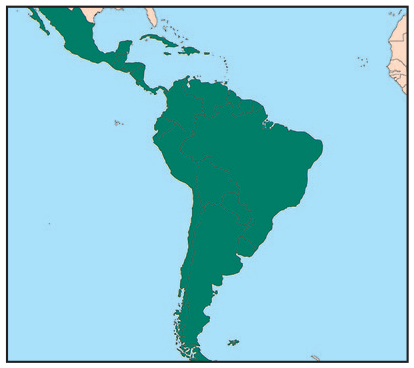
In Latin America and the Caribbean (LAC), the most urbanized region of the global South, the level of urbanization went from 41 per cent in 1950 to 75 per cent in 2000 – highly accelerated compared to Europe, which took 150 years to reach that level. With about 502 million inhabitants in urban centres, by 2015 LAC urbanization reached 79.9 per cent and is projected to increase to 82.4 per cent by 2025.(1) LAC’s urbanization boomed after the Second World War because of the region’s late industrialization, a process marked by social segregation and precarity. Without adequate policies to deliver on the housing and urban land needs of the poorest,(2) workers’ families had to build their own houses on the outskirts of cities –”urbanization at low wages”.(3)
In Latin America (LA), formal housing production historically does not offer affordable housing for all and public housing production is still insufficient to reach the demand. Therefore informal production and the so-called self-construction sector remains predominant, representing between 30 and 60 per cent of housing stock in the region’s countries.(4)
Whether housing production is formal or informal, Latin America is essentially a region of homeowners. Rental housing is less prevalent than elsewhere. In the first decade of this century, approximately 20 per cent of housing stock was rented, less than in the United States (33 per cent) or Western Europe (30 per cent).(5) Despite social rental housing programmes of some local governments in the region, housing policies in LA are mostly based on promoting homeownership, with few cases of social renting solutions or rental market regulation.
Over the years, LA housing policies have focused on new construction, housing improvement and upgrading of informal neighbourhoods and slums.(6) Implementation of these policies, with some poverty reduction between 1995 and 2009 (the latest available data), resulted in improved housing conditions in many Latin American countries. A study of quantitative housing shortages in the region found a decrease from 8 to 6 per cent. Poor-quality housing decreased from 12 to 7 per cent, and a lack of infrastructure from 24 to 16 per cent.(7) However, households facing insecure tenure grew from 10 to 11 per cent. The lack of housing units reached 7.3 million in 2009, while 8.6 million households lived in precarious conditions.(8)
In most LA countries, housing is one of the least decentralized government responsibilities. However, housing policies developed by local governments, or in partnership with them, present the most interesting results. Knowing local territories and their social, cultural, political, economic and governance dynamics is central to good development, and local governments are well placed to promote socially just and environmentally balanced responses to the housing problem. Latin American local governments offer a broad range of good experiences, supporting the centrality of housing in the urban development agenda.
This paper describes governance, planning and finance actions and strategies implemented by the region’s subnational governments, highlighting experiences implemented in the last 20 years. Rather than providing a case-by-case analysis, this attempts to cover the recent panorama of regional housing policies. Most of the experiences presented come from middle-sized and big cities because documentation for small municipalities is scarce and because they depend more on direct support from national and regional governments. The paper’s aim is to clarify the primary role of local governments in designing and implementing housing policies, and the need for these governments to be empowered to improve governance, promote better planning practices and increase funding for these efforts.
II. Local Governments’ Governance Experiences with Housing Policies
Local governance requires decentralization of political power and resources. The region’s political decentralization has been implemented mainly since the re-democratization of the 1980s and 1990s. Before that, many LA national governments were characterized by decades of centralized authoritarian power, top-down public policies and administration, little or no interaction with local governments and even less with civil society. Despite the huge challenge, local governments in the last two decades have developed innovative governance, planning and funding policies for housing.
In the 1980s and 1990s, decentralization occurred in a neoliberal context. After 2000, more democratic and social approaches attempted to correct the harmful effects of the neoliberal agenda.(9) In the first 15 years of this century, LA local governments, once strengthened, began adopting new paradigms of decentralized governance, with more efficient models of governance and urban planning, especially around urbanization, land regularization, urban infrastructure and, in the biggest cities,(10) construction of new housing.(11)
Despite this advance, in several LA countries decentralization resulted in an increase in local governments’ responsibilities without accompanying financial or technical resources. Even where local governments’ role in housing and urban issues has been strengthened, housing policies are still dominated by national government agendas, as in countries supporting massive housing production programmes with public funding for social housing constructed by private contractors and direct public subsidies for purchasing this housing.(12) This was first tried in Chile in the late 1980s.While such programmes can benefit households in need, there are also harmful urban consequences because of a splintered planning process and a mismatch of housing production schemes with land and urban policies. The weak involvement of local government in the process and the lack of well-located land reserves and land-use planning have contributed to this scenario.
In LA, greater investment in governance structures is necessary to improve local governance, even in countries that have achieved some degree of urban and housing policy decentralization. There is no single solution on this front, given the heterogeneity of municipalities in terms of economic capacities and size, and the varied level of informality and housing needs, but the region offers some good examples of national and subnational government support.
In Colombia, national law 388/1997 delegated the responsibility for implementing urban development plans to municipalities with more than 30,000 inhabitants, and placed at the disposal of municipalities the support of various national government planning bodies for elaborating their plans (Planos de Ordenamiento Territorial – POT).(13) Brazilian municipalities, especially small ones, find it difficult to carry out their plans, mainly due to the lack of funding and technical expertise. In 2005, the federal government created the Sistema Nacional de Habitação de Interesse Social (National Social Interest Housing System – SNHIS), consisting of national and local government institutions. The aim was to decentralize financial resources and promote social control of federal transfers for housing programmes. To benefit from the associated resources (National Social Interest Housing Fund – FNHIS), local governments must prepare and approve a Local Social Housing Plan, and create a Municipal Housing Fund and Council for social control. However, among 5,570 Brazilian municipalities, only 2,212 had a housing plan by 2017,(14) indicating that this is not an easy task for local governments.
In Argentina, partnerships between national and subnational governments to strengthen housing and urban governance were also identified. The federal programme Fortalecimiento de las Áreas de Desarrollo Urbano de los Institutos Provinciales de Vivienda (Strengthening the Urban Development Areas of the Institutes of Housing) aims to support more autonomous local housing agencies and to strengthen technical capacity to formulate local housing policy.(15) It also establishes partnerships between the central government’s Undersecretariat of Urban Development and Housing and provincial bodies, with each entity providing half the investments needed locally. This aims at improving capacity of provincial agencies’ urban development departments and housing agencies, which assume responsibility for, among other things, identifying vacant land in municipalities under their jurisdiction for future social housing construction.
Another interesting experience can be observed in Mexico City, where the local government set up the Instituto de Vivienda (Institute of Housing – INVI). This is a decentralized, autonomous public agency for handling housing policies for the low-income population and residents of at-risk areas, aiming for higher-quality new housing units in areas supplied with good infrastructure, services and jobs.(16) With decentralized governance and financial resources, INVI was not only able to plan Mexico City’s housing policy, but also to carry out such significant actions as the granting of hundreds of thousands of loans to low-income families, for either new housing or housing improvements, or for taking over mortgage portfolios for households that could no longer pay their private bank mortgages.(17)
Since urban expansion may occur beyond municipal limits, another approach has been creating consortia of several municipalities to develop joint knowledge, policies and actions, and effective mechanisms and tools for metropolitan planning and governance.(18) An example is the Consejo de Alcaldes del Área Metropolitana de San Salvador (Council of Mayors of the Metropolitan Area of San Salvador), in conjunction with the Oficina de Planificación del Área Metropolitana de San Salvador (Planning Office of the Metropolitan Area of San Salvador – COAMSS/OPAMSS), a decision-making body that coordinates policies and programmes for a metropolis of 14 municipalities. This institutional arrangement was set up after the 1986 earthquake, recognizing that the metropolis had problems that could not be addressed independently by each local administration.(19)
Housing policy decentralization should also create spaces for democratic, participatory and inclusive governance with deliberative power for citizens. Some local governments have followed this path. Queretaro in Mexico, Pichincha in Ecuador, and several municipalities in the Dominican Republic, Chile and Brazil are examples. In Argentina, the national government created La Mesa de Diálogo (The Dialogue Panel, 2016-present). This is a space for regular meetings of civil society organizations, local and provincial governments, and national government areas to strengthen their interaction on local housing problems.(20) In June 2018, this tool was used by the Instituto de Vivienda de Buenos Aires (Buenos Aires Housing Institute) to coordinate discussions among local government, the city’s tenants’ association, Public Ministry of Defence, Cámara de Propietarios Argentina (Argentina Owners Chamber), Cámara Inmobiliária Argentina (Argentine Real Estate Chamber), and such organizations as Habitat for Humanity. They discussed how to make rental housing in Buenos Aires more affordable, encourage landlords to rent to residents, combat vacant properties, and create incentives for administrative procedures that provide formal guarantees to tenant families.(21)
In Venezuela, a successful example of a democratic, participatory, inclusive governance space is the Comités de Tierras Urbanas (Urban Land Committees – CTUs), a civil society initiative recognized by the national government and institutionalized through a decree in 2002. The committees arise from neighbourhood associations, with the community defining its territory, electing representatives and constituting autonomous units, independent of government institutions or non-governmental organizations.(22) In partnership with the Instituto Nacional de Tierras Urbanas (National Institute of Urban Lands), the CTUs contribute to the full regularization of land tenure in consolidated urban or peri-urban settlements. By 2016, more than 650,000 titles to urban land had been granted through the CTUs, benefitting more than one million families.(23)
Another approach is participatory budgeting (PB), through which residents vote directly on municipal budget priorities, resource allocations, and the works and services executed by the municipal administration. PB has been identified in more than 40 countries globally, but has been particularly prevalent in LA, where the first experience was implemented in 1989 in Porto Alegre, Brazil. After that, PB spread across the region: Belo Horizonte, Brazil (1993); Guarulhos, Brazil (1999); Ilo, Peru (1999); Rosario, Argentina (2002); Várzea Paulista, Brazil (2005); and Canoas, Brazil (2009) are examples.(24) PB has also been identified in several local governments in Brazil, Mexico, Argentina, Uruguay, Colombia, Ecuador, Guatemala, El Salvador, Peru and Chile, and at the central level through national laws in Guatemala, Nicaragua and Peru.(25)
PB experiences tend to promote new forms of social control of public budgets, and hence of governance. In Porto Alegre, virtually all households have been provided with electricity and sanitation, after several decades of PB following collectively instituted guidelines. In Ilo, community members were elected to new bodies for control of PB, the Panel for the Management of PB and the PB Oversight Committee. In these two cases, delegates are selected from these bodies to the Provincial Coordination Council and the Permanent Committee for PB, where rules and final decisions are made, in a mixed governance model. This shows how governance can be improved through integration between governance and citizens(26) in the discussion of housing and urban issues.
In cities of over a million people, participatory processes can be a challenge. Advances in information technology and communication networks have allowed for a new field of action through the use of interactive electronic instruments to improve social control over public housing policies, while bringing civil society closer to government planning. São Paulo, Brazil’s biggest municipality, has set up interesting online platforms to promote citizen input into draft versions of bills and plans, including its new master plan (2014), before sending them to the city council to be voted on.(27) In El Salvador, the web platform Observatorio Territorial (Territorial Observatory, 2014-present) is a tool to disseminate geo-referenced information to civil organizations, the public and private sectors, and the general population to contribute to improvements in decision-making on spatial transformations.(28)
The different strategies conceived by some LA local governments to improve local and regional governance attest to great creativity, and indicate the more general potential in Latin American cities and provinces if properly supported.
III. Urban and Metropolitan Planning for Social and Spatial Inclusion
Planning skills are crucial to the formulation of accurate local development plans, with proper planning tools and strategies for solving local housing needs, accessing well-located land for social housing provision, protecting those in subpar settlements, and setting up local housing plans to address both insufficient supply and inadequate quality of housing. LA local governments supported in these skills offer a good range of interesting planning experiences, despite the difficulties many of them have putting planning into practice.
a. Urban and housing planning
Several LA cities have territorial planning instruments, including Medellín, San José, San Salvador, Guatemala City, Panama City, Santo Domingo, Mexico City and La Paz. Worth highlighting is the Plano Diretor Estratégico de São Paulo (São Paulo Strategic Master Plan), designed in 2014. It was acknowledged by UN-Habitat in 2016 as one of the best urban policy practices in the world, due to its innovative approach on the financing and planning of land resources for social housing, within the New Urban Agenda framework. This master plan connects several housing aspects to urban planning, with instruments for promoting adequate housing for the poor, such as obtaining funding to expropriate well-located land for social housing, the requirement that a proportion of land in large real estate projects be given to social housing, and the delimitation of inclusionary zoning for social housing (discussed below). The master plan is linked to the housing plan, as an integrated extension of urban policy.
São Paulo’s Municipal Housing Plan (Plano Municipal de Habitação – PMH), designed in 2016 and focused on a 16-year period, promotes housing solutions under three main lines of action:
(i) The Social Housing Service, a strategy to shelter extremely vulnerable people, offering transitional housing combined with other assistance policies
(ii) The Integrated Urbanization of Precarious Areas Line, combining strategies for urbanization of subpar settlements with provision of equipment, land regularization and, where necessary, production of new housing
(iii) The Housing Provision Line, covering both access to property (including public production, market production, and housing production promoted by self-management) and social rental housing, with emphasis on the central city
The master plan law requires the housing plan to be a law. Currently a bill is slowly moving through the municipal legislative council (which usually occurs only when party changes take place in governments.)
b. Urban planning tools that address housing shortages
One of the greatest challenges posed by housing shortages in LA cities is the provision of land for affordable housing production for low- and low-middle income families, particularly in well-located areas. Some LA cities, especially Bogotá and São Paulo, have been making efforts for some years to develop, improve and apply urban planning tools intended to access land for social housing.
In Colombia, the Territorial Development Law (Ley 388/1997) set up instruments for municipalities in the Planos de Ordenamiento Territorial (Land-Use Plans – POTs), aimed at locating and assessing land for the construction of social housing, and including social housing programmes in the urban component of the POT. Bogotá adopted a strategy of reserving land through special zoning, with mandatory allocation of social housing proportions on these plots for Vivienda de Interés Prioritário (Priority Interest Housing – VIP).(29) In Brazil, Recife’s experience inspired the Ministry of Cities to preview, in the National Law of Cities, a tool to reserve/allocate vacant or underused areas in the urban territory for popular housing, the Zonas Especiais de Interesse Social (Special Zones of Social Interest – ZEIS).(30)
These experiences indicate, however, that due to property rights and land speculation trends in these cities, effective transformation of plots under special zoning into popular housing, especially in the central areas, requires these planning tools to be applied with other mechanisms addressing property speculation and the social function of property.
Apropos of this, the Declaratorias de Desarrollo y Construcción Prioritaria (Priority Development and Construction Declarations) in Bogotá’s POT (2008–present) aims to encourage urbanization and construction on vacant plots indicated by the local government.(31) Another Bogotá instrument, the Declaratoria de Habilitación y Uso de Edificaciones (Qualification and Use of Building Declaration, 2012–present), requires the assessment and use of abandoned, underused or unused public or private buildings within a specified period.(32) In 2013, the municipality of São Paulo instituted the Departamento de Controle da Função Social da Propriedade (Department for Controlling the Social Function of Property),(33) aiming to control land speculation in the city. This department is responsible for notifying vacant or underused property owners, requiring them to put their property into use. In two years (2015–2016) the department notified landlords of about two million square metres of vacant or underused properties in ZEIS, where only the construction of social housing and complementary uses for people’s daily living is permitted.(34) By the end of the process, notified landowners had to have transformed their vacant plots into the designated use. However, political shifts in the administration virtually stopped the process – a lost opportunity for producing a more inclusionary city.
In Colombia, some cities have for many years required minimum proportions of land and social housing units to be built in the urban expansion zones and in renovation areas. In Bogotá, an improvement of this instrument was proposed, that all real estate projects should cede 20 per cent of the land to Priority Interest Housing (VIP).(35) Inspired by this experience, the São Paulo Master Plan designed the instrument Cota de Solidariedade (Solidarity Quota, 2014–present). For the approval of large real estate projects, the municipality would be given a percentage of the land area for construction of social interest housing in the same location. Unfortunately, the two instruments have undergone the same process during negotiations: allowing the allocation instead of an equivalent area in other parts of the city, or even allowing cash payments instead. The innovation here is precisely the possibility of obtaining well-located land neighbouring the real estate project, thus creating more democratic housing possibilities. The inclusion of these alternatives reduces the impact, turning it into a financial collection policy.(36)
c. Housing policies to address quantitative shortages
Several LA countries(37) have invested in new housing units to deal with the region’s shortages, mostly through national-level programmes, sometimes with local government participation. Recently, most of these policies have been characterized by their scale, leveraging the massive production of housing units, sometimes in the thousands (especially in Mexico and Brazil), but without commensurate urban planning, thus generating major environmental and urban impacts. The scale of these policies in many cases was first tied to the international economic warming, and later to countercyclical economic strategies after 2008, when some countries perceived the construction industry as leverage for economic recovery. However, the predominance of investments in new housing programmes does not always guarantee better housing conditions.
In Brazil, the Programa Minha Casa, Minha Vida (My House, My Life Programme) is an example of housing policy formulated at the national level that involves local government participation. In this case, municipal governments cooperate mainly by providing public land for housing developments built by private developers with national funding; housing is delivered to the city’s lowest-income households. Local governments are responsible for providing the names of low-income families in need of housing from housing social movements and cooperatives, which will receive funding for housing production through community work. Due to the high price of land in some economically dynamic municipalities, some subnational governments have also created municipal subsidies to help families afford homes built under this programme. However, a weakness of this programme is the lack of a stronger land policy to avoid land speculation. Developments built under Minha Casa Minha Vida need cheap land so that private developers will be interested in taking part. Hence, developments for the lowest-income people are mainly in peripheral areas.
Despite the major dependence on external funding, there are also relevant housing provision programmes formulated and implemented by local governments. In Montevideo, the Programa de Realojos (Resettlement Program)(38) aims to produce new housing for resettling families in contaminated or flooded areas. In Caracas, the Complejo Residencial Estudiantil (Student Residential Complex) “Edificio Livia Gouverneur”(39) provides university students with temporary public housing. In the Federal District of Mexico City, the Housing Institute of the Federal District (INVI)(40) finances housing projects for new units, acquisition, expansion and improvements of existing housing, interest-free, for vulnerable families. In Córdoba, the Programa Vivienda Semilla (Seed Housing Program)(41) provides loans to families that already have an urban plot but find it difficult to build, expand or improve their housing. Some programmes have in common very specific beneficiaries: students; families in vulnerable situations; those affected by natural disasters, such as landslides and floods; or families with a plot of land but no financial resources to build. The more diversified housing policies are, the more effective they are – housing needs are not necessarily addressed by identical housing in massive developments without attention to the specificities of each population.
Some LA local and national governments have set up policies to promote bottom-up housing solutions, influenced by social movement struggles, mainly since the Montevideo housing cooperatives experience. In the late 1960s, when Uruguay experienced an economic crisis(42) and rising housing shortages, the Federación Uruguaya de Cooperativas de Vivienda por Ayuda Mutua (Uruguayan Federation of Mutual Help Housing Cooperatives – FUCVAM) started a communitarian approach to building houses with or without public support. This experience grew after its inclusion in the National Law of Housing of Uruguay in 1969, which reserved some financial resources from the Housing National Fund for housing production by cooperatives. More than 300 Uruguayan cooperatives now compose FUCVAM, which has built hundreds of thousands of housing units in well- located areas, with good architectural projects.
The FUCVAM model is based on collective property and community control and support of the construction process; it generates no capital. It has influenced about 15 countries and keeps expanding. For instance, in the late 1980s the São Paulo administration of Mayor Luiza Erundina (Workers Party) established the city’s largest housing municipal programme based on community work, FUNAPS Comunitário (Community FUNAPS), also called Programa de Mutirões (Community-Led Housing Production Program). However, subsequent administrations did not follow up.
In Buenos Aires, the Programa de Autogestión para la Vivienda (Community-Led Housing Production Programme – PAV) of the Autonomous City of Buenos Aires Housing Institute, set up by Municipal Law 341/2000, builds on the FUCVAM experience and on Argentinian housing social movements from the 1990s.(43) PAV grants low-interest funding for housing construction or improvements for low-income households, integrating community housing production cooperatives. Between 2000 and 2014, it benefitted about 700 households,(44) but from 2010 to 2014, there was virtually no new grant or construction.(45)
At the national level, with pressure from social movements, the Brazilian My House, My Life housing programme created a credit line for cooperative housing production. Minha Casa, Minha Vida – Entidades (My House, My Life – Entities) achieved interesting results in terms of housing quality and urban location, despite minimal resources.(46) From 2009 to 2017, it funded the construction of 69,162 new housing units for households participating in social housing cooperatives, and managing construction themselves.(47)
Addressing the housing shortage also involves schemes for affordable renting. There are only a few such experiences in LA, given that rental housing has never been a significant option here. Despite the ideology of homeownership and the popular belief that property ownership protects against economic and political instabilities,(48) there have been demands for the inclusion of rental housing in the housing solutions promoted by governments,(49) and support from the United Nations for a more proactive government position on rental markets.(50)
d. Housing programmes to address qualitative shortages
Dealing with inadequate housing quality requires planning and interventions on both land and existing dwellings to guarantee adequate conditions. Urban areas in need of upgrading range from irregular land subdivisions that only require legalization and housing improvements, to informal settlements and slums requiring prompt investment in infrastructure, roads and risk elimination.
Recognizing existing occupations and addressing titling and regularization can help guarantee fairer solutions and the right to housing for households potentially subject to evictions, forced or not.(51) Secure land tenure can discourage segregation by inserting informal and marginalized territories into municipal planning agendas. An outstanding experience is Recife’s land titling and settlement urbanization, starting in 1987 with the Plano de Regularização das Zonas Especiais de Interesse Social (Plan for Regularization of Special Zones of Social Interest – PREZEIS). As most of the city’s precarious settlements were in public areas, the local government was able to issue a declaration of land-use rights, facilitating further investment.
Another local land regularization initiative, subsequently raised to the national level, was Peru’s Individual Titling (1996–2011), with the creation of the national institute COFOPRI.(52) More than a third of the 1.5 million titles realized between 1996 and 2006 were concentrated in Lima. The programme was conceived as a way to cope with poverty since titled properties would enable families to join credit systems to smooth consumption needs. However, the programme did not reach the expected results.(53) Access to bank credit did not improve since collateral located in peripheral areas is unappealing, and many households prefer informal credit from their social network, without the risk to their own home of a mortgage.(54) Titling alone in precarious settlements in well-located areas, without other housing policies, can also become a way to evict poor people from valuable areas by purchasing their properties at low cost.
Urbanization programmes for subpar settlements require measures to promote urban integration between vulnerable areas and consolidated settlements, as well as slum improvements, with multidisciplinary projects to address the precarity of housing and urban infrastructure. Examples include infrastructure for water supplies, sewage collection, drainage and risk reduction, road construction and improvement, and better access to public transportation (and in some cases to public schools and health centres). Land tenure regularization also provides settlers with legal protection for their property. These programmes improve the quality of life in settlements, but also improve access to labour markets and to public goods and urban services.
Latin American experiences in slum upgrading offer a panorama of examples from numerous countries. In Medellín, Colombia, the Programa Mejoramiento Integral de Barrios (Integrated Neighbourhood Improvement Program – PMIB, 2007–present) addresses peripheral territories through participatory urbanization processes, encompassing the improvement of infrastructure and existing housing, building of new housing units, equipment and public spaces, and recovery of green spaces. One of the special aspects of this programme is the effective community participation.(55) In Brazil, the Programa de Aceleração do Crescimento – Urbanização de Assentamentos Precários (Growth Acceleration Programme – Urbanization of Precarious Settlements, 2007–2016) is an upgrading and urbanization programme formulated at the national level and implemented locally, with investment from both levels. Local governments define interventions and manage the work. Although completion has been problematic for many projects throughout the country, Brazil had never before mobilized as much funding – about R$ 29.6 billion (US$ 9.1 billion, as of December 2017) – in 1,072 municipalities.(56) This was the country’s largest-ever slum urbanization programme.(57)
Interventions in informal settlements require integrated action and an approach tailored to the specific needs of each location. These kinds of approaches are most likely to succeed, since they improve the existing fabric, support the lifelong efforts of families in building their homes, and avoid both cutting existing community bonds and uprooting households from the city. This kind of project often requires several years to be completed. To be successful, these programmes require a steady source of funding. Many LA cases have relied on national or international funding, indicating the need for local governments to develop financing strategies, as discussed next.
IV. Financing Housing Policies of Latin American Local Governments
For the success of social housing policies promoted by local governments, the capacity for financing is crucial. However, generally speaking, Latin American countries tend to concentrate expenditures at the national level. Few municipalities in the region have a strong enough economic dynamic to fund their own housing actions (Buenos Aires, Mexico City, São Paulo and Medellín are some examples). Finding ways to overcome these challenges is key to the effectiveness of local government planning and governance on housing, which involves expensive and long-term policies. Obtaining land, building houses, producing and managing urban infrastructure and public parks, rehabilitating existing properties for social housing, urbanizing precarious settlements – all with the purpose of addressing hundreds of thousands of housing unit deficits – requires massive public resources for direct or indirect interventions. This set of strategies addressing various dimensions makes housing policy one of the most complex tasks that governments face.
Most LA municipalities depend on external resources (state, provincial, national or international). There are also significant differences between countries’ decentralization of expenditure.(58) By 2013, five countries – Argentina, Brazil, Colombia, Mexico and Peru – had high levels of spending decentralization. Argentina, Brazil and Mexico have federal government structures based on strong regionalist traditions, while Peru and Colombia have unitary country systems. A second group of countries – including Chile, Ecuador, El Salvador, Honduras and Paraguay (all unitary countries) – show in-between levels of decentralization, with subnational government expenditure varying from 9 per cent to 13 per cent. A third group of countries has low levels of decentralization, from 2 to 4 percent in Costa Rica, Guatemala, the Dominican Republic and Jamaica.(59)
Housing policies in most Latin American countries are thus to a large extent designed, financed and implemented by central governments.(60) The challenge is greatest for small and medium-sized municipalities, which have low revenues, little potential for attracting foreign investments, and little attention from the formal producers of urban space. In Central America, for example, an increase in the responsibilities of municipalities in recent years, unaccompanied by an increase in their capacity to fund this, compromises their capacity to implement several policies.(61) The following subsections present some strategies LA local governments have implemented to finance and implement housing policies.
a. Tax collection and intergovernmental transfers
In general, while small municipalities in the region have their own revenues (from taxes on consumption, production, services and property), collection of these can be limited and generally fails to meet all the budgetary needs. Fiscal centralization is also a problem, so that for local governments, expenditures are generally much greater than revenues. This imbalance can weaken local governments, limiting their capacity to set targets and have safe revenues for good budgetary and financial planning.
The combination of low revenue diversity, low collection and centralization of resources increases local governments’ dependence on intergovernmental transfers. In Brazilian municipalities of fewer than 20,000 inhabitants, for instance, 90 per cent of revenue depends on transfers.(62) To succeed in implementing more complex policies, the role of municipalities in budgetary matters needs to be strengthened.(63)
This requires some degree of autonomy over investment decisions, yet the reliance on funding from other spheres of government greatly limits such freedom of action. In fact, centralized financing tends to come to the local level as part of already defined and regulated policy “packages”, which fail to fit the specificities of local demands. Mass housing programmes adopted in several LAC countries in the last decade show the negative effects of this “ingrained” policy.(64)
b. Debt and loans
Larger municipalities and metropolitan regions are more likely to resort to borrowing from national or international entities, such as multilateral development banks. São Paulo, Rio de Janeiro and Salvador, in Brazil, are together responsible for the equivalent of 75 per cent of the total debt incurred by local governments in the country.(65) In Rio de Janeiro, the Programa Favela-Bairro (Slum-Neighbourhood Programme, 1995–2016) received about US$ 900 million, of which about US$ 510 million came from Inter-American Development Bank (IDB) loans and about US$ 390 million from municipal resources.(66)
Medium-sized municipalities, with their resource collection limitations, lack a robust financial management structure and are excluded from the credit and securities markets.(67) They may benefit, however, from domestic public indebtedness or non-repayable multilateral bank programmes. From 2010 to 2017, 77 municipalities with populations between 100,000 and 2 million benefitted from non-reimbursable resources from the IDB through the Emerging and Sustainable Cities (ESC) programme for the development of city action plans to address the main challenges for sustainability and urban development.(68) Medium and small municipalities can benefit from the support of the national government to access international resources. For instance, for Rosario, Argentina, the national government took IDB loans from 2002 to 2012, covering about 60 per cent of the total programme budget of US$ 71 million, and transferred this to the municipality as a subsidy. The municipality provided the remainder.(69)
c. Partnerships between local governments and other public entities
In addition to transfers between local and central governments, municipalities may join with other public bodies, such as public companies at different administrative levels, to expand resource alternatives and share housing-related responsibilities. The understanding is that, despite its primary role, the local government is not the sole party responsible for solving local housing needs.
The case of environmental sanitation is illustrative. The city of São Paulo established a partnership with the state-owned mixed-capital company for water supply and sanitation (SABESP) to contribute to the housing demands at the edges of streams. The agreement, signed into law in 2009, meant SABESP allocated 7.5 per cent of its gross profit from water sales in the municipality to the Fundo Municipal de Saneamento Ambiental e Infraestrutura (Municipal Fund for Environmental Sanitation and Infrastructure – FMSAI) created for this purpose. In 2015, the FMSAI received about US$ 35 million for infrastructure works, sanitation and production of housing units for the resettlement of resident families along the waterways of the municipality. The FMSAI’s Management Council has civil society representation, allowing the social control of the resources.
d. Land management instruments and capture of real estate surplus value
Medium-sized and large municipalities tend to attract more attention from private investors, including the real estate market, in the production of urban space. The surplus value so generated is essentially a collective social good, and it is up to the public authority to guarantee that this good is not privately appropriated. A series of urban development instruments have been created over the last decades in several countries of the region, to raise financial resources for the community this way, as alternatives to the tax.
The Contribución de Valorización/Contribución Especial de Mejoras (Special Improvement Contribution, 1921–present) is one of the main instruments for collecting capital gains in Colombia. In Medellín and Bogotá, for example, much of the transport infrastructure was financed with this instrument,(70) even in vulnerable neighbourhoods. It assumes that the installation of infrastructure will increase nearby property values and that it is incumbent upon government to capture and convert part of this into new investments that benefit the collective. The instrument can have other objectives too. In Ecuador, the Contribución Especial de Mejoras (Special Improvement Contribution, 2011–present) is part of a programme to strengthen municipal financial autonomy. Through another programme, Corresponsabilidad para el Buen Vivir (Shared Responsibility for Living Well) created in 2010, the Banco de Desarrollo del Ecuador (Development Bank of Ecuador) grants loans to municipalities for improvements of water and sewage infrastructure.(71) Through the public services implemented with this financial incentive, municipalities can improve their revenues by implementing the Special Improvement Contribution collection.
In Brazil, the Improvement Contribution has been a legal provision since the 1930s, but has not been applied much recently. Municipal master plans elaborated since the City Statute (Federal Law of 2001) have mostly used other instruments to capture real estate surplus value to finance projects and housing policies. One such instrument is the Outorga Onerosa do Direito de Construir (Chargeable Right to Build), which reflects that construction rights beyond the standard defined by zoning, so-called “created land”, belong to the collective, and real estate developers need to pay the collective to build beyond the standard defined in the zoning law.
In the case of São Paulo, the Fundo Municipal de Desenvolvimento Urbano (Municipal Fund for Urban Development – FUNDURB) has channelled funds since 2002 from the sale of construction rights to public investments in areas of social importance. Between 2005 and 2013, from 4 per cent to 11.4 per cent of the total municipal investments each year came from this fund. Since 2014, the city’s new master plan has required 30 per cent of the resources raised annually by this fund to be earmarked for land acquisition for social housing in well-located areas. In 2015, under this new regulation, 16.3 per cent of the Housing Department’s annual budget came from FUNDURB.(72)
V. Conclusions
LA countries have come a long way in improving the living conditions of urban populations, but still face enormous challenges. Progressive governments in several countries in the first decade of this century saw housing and related urban issues as key to national and subnational development, and housing policies improved in terms of governance, planning and finance. Then the 2008 economic crisis started shifting this promising scenario. The current economic slump in the region, associated with the new wave of conservative regimes, requires our attention to how housing and urban policies will be implemented from now on.
The New Urban Agenda, signed in 2016, points to local governments as important agents in this regard, and they must be empowered. Housing policy must respond to extremely diverse situations (precarious housing in risky situations, consolidated neighbourhoods in need of urban and housing improvements, insufficient supply of housing units and demand for affordable rental housing). Local governments are privileged actors, able to formulate policies adapted to local housing needs, but they need autonomy to determine the best actions in each case and develop integrated and complex solutions. However, housing policy in LA remains very centralized at the national level – few countries have delegated this to subnational governments, and even those cities with this responsibility remain essentially dependent on financial transfers from national governments.
To take best advantage of local government knowledge, it is crucial to have political, financial and administrative decentralization. This also tends to foster more participatory societies, since local governments have greater capacity to consult with the population, promoting greater transparency and involvement.
Another important factor is the integration of housing and urban policies. Despite some successful cases, LA local governments have generally failed to promote this integration – they remain focused on reducing quantitative housing shortages and diminishing their impact, for instance in reducing social and economic inequalities and environmental impacts. This oversight costs citizens a great deal. Housing policies conceived at the national level and implemented as social programmes benefitting individual households cannot ensure that these households have access to the services they need in their new homes. Fortunately, where decentralization occurs, positive housing policy experiences encompass, with support from higher levels, the institutional development of local governments; the creation of spaces for the exchange of experiences among local governments; and civil society participation in policy and programme design and implementation. In countries where informal settlements are widespread, positive experiences include greater investment in improving local capacity, strengthening of technical teams, boosting of the available work infrastructure, and promotion of more complex programmes.
There is a diversity of urban, metropolitan and regional development plans in LA, as well as some local housing plans. Some of these plans expand public policies and urban planning tools, and promote integrated solutions for housing needs, especially in larger cities, given their greater capacities. The integration between urban and housing planning systems is also happening mainly in the largest local administrations, including strategies for funding and for reserving land for social housing development. However, these systems generally are not integrated, and where they are, this does not always promote spatial justice. Nor does the existence of plans guarantee their implementation, so social control through permanent participation of the population is crucial.
Funding remains a major obstacle to local success. These policies are expensive and most LA subnational governments depend on national government transfers. Despite these limitations, local governments have been creative in promoting housing policies and programmes, especially those in economically dynamic regions. Some have developed both financial strategies to guarantee income to finance their housing programmes and financial instruments (credit and subsidy) to ensure that low-income families can have their right to housing guaranteed. There is good potential, already applied in some larger cities especially, for using urban planning tools to finance housing policies with non-tax resources, expanding the range of financial alternatives available to local governments, and guaranteeing credit and subsidies to low-income families, all of which can serve as a reference for smaller cities. LA local governments, in general, could go further, introducing progressive taxation policies, as well as capturing land values.
Considering the variety of housing needs, the more diverse policies are, the more efficiently they work. The experiences assembled here demonstrate that, while the region offers multiple housing policies, most solutions are in fact not that diverse, focusing mainly on land availability, production of housing units, and encouragement of lending for homeownership. Generally, units are produced by private companies with federal support, but private-sector solutions do not work for everybody. The region has a wide range of strategies and planning tools and policies and very creative local administrators. These experiences could be better fostered with effective decentralization of power, governance, planning and financing, so LA local governments could progress even further in guaranteeing their citizens access to adequate housing and the right to the city.
Footnotes
2.
However, in some cases land reform was implemented, such as in Mexico. See Schteingart, M (2001), Los Productores del Espacio Habitable: Estado, Empresa y Sociedad en la Ciudad de México, El Colegio de México, Mexico City, page 31.
3.
Maricato, E (2008), Brasil, Cidades: Alternativas para a Crise Urbana, Petropolis, Rio de Janeiro, page 41.
4.
Available data on housing production by the informal sector give rates of 30 per cent in Mexico (2013), 37 per cent in Argentina (2007) and 56 per cent in Colombia (2007). Ferreira, J W, E Rojas, H Carvalho, C Frignani and L Lupo (2019), “Latin America and the Caribbean report”, working paper for The Localization of the Global Agendas: How Local Action is Transforming Territories and Communities, GOLD V report, United Cities and Local Governments (UCLG).
5.
Blanco, A, V Fretes and A Muñoz (2014), Busco Casa en Arriendo: Promover el Alquiler Tiene Sentido, Inter-American Development Bank, Washington, DC.
6.
The term “slum” usually has derogatory connotations and can suggest that a settlement needs replacement or can legitimate the eviction of its residents. However, it is a difficult term to avoid for at least three reasons. First, some networks of neighbourhood organizations choose to identify themselves with a positive use of the term, partly to neutralize these negative connotations; one of the most successful is the National Slum Dwellers Federation in India. Second, the only global estimates for housing deficiencies, collected by the United Nations, are for what they term “slums”. And third, in some nations, there are advantages for residents of informal settlements if their settlement is recognized officially as a “slum”; indeed, the residents may lobby to get their settlement classified as a “notified slum”. Where the term is used in this journal, it refers to settlements characterized by at least some of the following features: a lack of formal recognition on the part of local government of the settlement and its residents; the absence of secure tenure for residents; inadequacies in provision for infrastructure and services; overcrowded and substandard dwellings; and location on land less than suitable for occupation. For a discussion of more precise ways to classify the range of housing sub-markets through which those with limited incomes buy, rent or build accommodation, see Environment and Urbanization Vol 1, No 2 (1989), available at  .
.
7.
Rojas, E and N Medellin (2011), Housing Policy Matters for the Poor: Housing Conditions in Latin America and the Caribbean, 1995–2006, IDB Working Paper No IDB-WP-289, Inter-American Development Bank, Washington, DC.
8.
See reference 7.
9.
10.
It is worth mentioning the experiences of São Paulo, Porto Alegre, Curitiba, Buenos Aires, Mexico City and Bogotá, among other big cities in the region.
11.
Ward, P, E Huerta and M Di Virgilio (2015), Housing Policy in Latin American Cities: A New Generation of Strategies and Approaches, Routledge, New York.
12.
See reference 11; also Ferreira, J W (2012), Produzir Casas ou Construir Cidades? Desafios para um Novo Brasil Urbano: Parâmetros de Qualidade para a Implementação de Projetos Habitacionais e Urbanos, Laboratório de Habitação e Assentamentos Humanos (LABHAB) and Fundação para Pesquisa Ambiental (FUPAM), São Paulo; Rolnik, R (2015), Guerra dos Lugares: A Colonização da Terra e da Moradia na Era das Finanças, Editora Boitempo, São Paulo; and Carvalho, H (2016), Habitação Social no Brasil e no México: Notas sobre Transformações nas Políticas e na Produção de mercado da Moradia, master’s dissertation, Universidade de São Paulo, Faculdade de Arquitetura e Urbanismo, São Paulo; among others.
13.
Alcaldía de Medellín (2005), Estrategia de Participación Ciudadana en la Revisión y Ajuste al POT, Medellín, available at .
14.
15.
Barreto, M A (2011), “Cambios y continuidades en la política de vivienda argentina (2003-2007)”, Cuadernos de Vivienda y Urbanismo Vol 5 No 9, pages 12–30, available at .
17.
Rangel, E V (2016), Utopías y Políticas Públicas: Los Procesos de Gestión de la Vivienda Social en el Distrito Federal 2001-2006, desde la Mirada de una Institución Pública Local, el Instituto de Vivienda del Distrito Federal, PhD thesis, Universidad Autónoma Metropolitana Azcapotzalco, Mexico City, page 223.
18.
Maria, A, J Acero, A Aguilera and M Garcia Lozano (2017) Central America Urbanization Review: Making Cities Work for Central America, Directions in Development – Countries and Regions, World Bank, Washington, DC, page 13.
21.
Buenos Aires Ciudad (2018), “Presentamos propuestas para que alquilar sea más facil y seguro en la Ciudad”, 19 June, Buenos Aires, available at .
22.
Mioto, B (2015), As Políticas Habitacionais no Subdesenvolvimento: Os Casos do Brasil, Colômbia, México e Venezuela (1980-2013), PhD thesis, Instituto de Economia, Universidade Estadual de Campinas, Campinas, page 185.
23.
Madera, H (2010), “Urban Land Committees, Venezuela”, in A Sugranyes and C Mathivet (editors), Cities for All: Experiences and Proposals for the Right to the City, page 223, available at .
24.
Cabannes, Y (2015), “The impact of participatory budgeting on basic services: municipal practices and evidence from the field”, Environment and Urbanization Vol 27, No 1, pages 257–284.
25.
Montecinos, E (2009),”El Presupuesto Participativo en América Latina: ¿Complemento o subordinación a la democracia representativa?”, Revista del CLAD Reforma y Democracia Vol 44, pages 145–1174, Centro Latinoamericano de Administración para el Desarrollo, Caracas, page 148.
26.
See reference 25, page 148.
27.
In Brazil, a master plan must be a law. The city hall is responsible for writing a bill in a participatory way; it must thereafter send the bill to the city council to be voted on and become law.
29.
Santoro, P F (2015), “Urban planning instruments for promoting social interest housing: from zoning to obligatory percentages in São Paulo, Brazil, in dialog with Bogotá, Colombia”, Revista Brasileira de Estudos Urbanos e Regionais Vol 17, No 2.
30.
Over time, this instrument evolved from the mere recognition of subpar settlements to the delimitation of vacant or underused urban areas, where the municipality requires the production of a minimum proportion of social interest housing. The incorporation of this instrument into the City Statute Law (2001) allowed its dissemination throughout the country. See Carvalho, H (2014), “Land rights and the place of social housing in the city: the experience of São Paulo, Brazil”, paper presented at the XVIII ISA World Congress of Sociology, International Sociological Association World Congress, Yokohama.
33.
For more information about the concept of the Social Function of Property in Brazil and the experience of São Paulo, see Prefeitura de São Paulo (2015), Função Social da Propriedade, Secretaria Municipal de Desenvolvimento Urbano (SMDU), São Paulo, available at https://www.prefeitura.sp.gov.br/cidade/secretarias/upload/desenvolvimento_urbano/arquivos/cartilhaPEUC.pdf; also Campos, G S P (2018), “Control and induction of the social function of property on the scale of the metropolis: the São Paulo experience between the years of 2014 and 2016”, Pós. Revista do Programa de Pós-Graduação em Arquitetura e Urbanismo da FAUUSP, São Paulo Vol 25, No 46 pages 72–84, available at .
35.
Maldonado Copello, M M, J F Pinilla Pineda, F Rodríguez Vitta and N Valencia Dávila (2006), Planes Parciales, Gestión Asociada y Mecanismos de Distribución Equitativa de Cargas y Beneficios en el Sistema Urbanístico Colombiano: Marco Jurídico, Conceptos Básicos y Alternativas de Aplicación, Lincoln Institute of Land Policy, Bogotá, available at .
36.
See references 29 and 35.
37.
This is the case in Chile, Mexico, Brazil, Colombia, Peru and Venezuela.
42.
Baravelli, J (2006), O Cooperativismo Uruguaio na Habitação Social de São Paulo: Das Cooperativas FUCVAM à Associação de Moradia Unidos de Vila Nova Cachoeirinha, master’s of science dissertation, Faculty of Architecture and Urban Planning, University of São Paulo, São Paulo.
43.
Lazarini, K (2014), Luta por Moradia e Autogestão em Buenos Aires: da Crise à Construção Popular do Habitat, master’s of science dissertation, Faculty of Architecture and Urban Planning, University of São Paulo, São Paulo.
44.
Lorences, A and C Loperena (2014), Informe Elaborado por la Dirección de Vivienda y Hábitat Dependiente de la Subsecretaría de Derechos Sociales de la Defensoría del Pueblo de la Ciudad Autónoma de Buenos Aires.
45.
See reference 43. As of February 2020, the programme was still presented on the City of Buenos Aires administrative website as a current special housing programme, although no updated data is available.
46.
Rodrigues, E (2013), A Estratégia Fundiária dos Movimentos Populares na Produção Autogestionária da Moradia, master’s of science dissertation, Faculty of Architecture and Urban Planning, University of São Paulo, São Paulo.
47.
y 2018, about 12 per cent of those new units had already been built and delivered to respective households. Reis, P M S dos and S Mercês (2019), “Panorama do Programa Minha Casa, Minha Vida Entidades: Brasil, Pará e Belém”, paper prepared for the XVIII Encontro Nacional da Associação Nacional de Pós-graduação e Pesquisa em Planejamento Urbano e Regional, Natal, Vol 1.
48.
For instance, see reference 5; also Zorro, C (1974), Estudio sobre los Inquilinatos en Bogotá (Segunda Parte), Centro de Estudios sobre Desarrollo Económico (CEDE), Universidad de los Andes; Gilbert, A and A Varley (1991), Landlord and Tenant: Housing the Poor in Urban Mexico, Routledge, London; Gilbert, A, O Camacho, R Coulomb and A Necochea (1993), In Search of a Home: Rental and Shared Housing in Latin America, UCL Press, London and University of Arizona Press, Tucson; Gilbert, A (2001), “¿Una casa es para siempre? Movilidad residencia y propiedad de la vivienda en los asentamientos autoproducidos”, Territorios Vol 6, pages 51–74; Gilbert, A (2002), Rental Housing in Colombia: Some Initial Reflections, working paper, University College London; Jaramillo, S and M Ibáñez (2002), Elementos Para Orientar una Política Estatal sobre Alquiler de Vivienda Urbana en Colombia, CEDE; Calderón, J (2012), La Vivienda en Renta en Perú, Inter-American Development Bank, Washington, DC; Pasternak, S and C D’Ottaviano (2014), “El alquiler de vivienda en Brasil: limitaciones y perspectivas”, in A Blanco, V Fretes and A Muñoz (editors), Busco Casa en Arriendo: Promover el Alquiler Tiene Sentido, Inter-American Development Bank, Washington DC; and Giorgis, A and A Falu (2019), “El acceso a la vivienda en alquiler en Córdoba Capital: un análisis desde el derecho a la ciudad y la perspectiva de género”, Habitat y Sociedad Vol 12.
49.
Gilbert, A (2003), Rental Housing: An Essential Option for the Urban Poor in Developing Countries, United Nations Human Settlements Programme, Nairobi; among others.
50.
UN-Habitat (2011), A Policy Guide to Rental Housing in Developing Countries, United Nations Human Settlements Programme, Nairobi. The countries of the English-speaking Caribbean are exceptions regarding production for social renting in LAC, since these programmes played a major role in the housing policy of these countries in the past. However, these programmes face complex management issues, and the governments of Barbados, Guyana, Jamaica, Suriname, and Trinidad and Tobago are offering the units for sale to tenants at a discount.McHardy, P and M Donovan (2016), The State of Social Housing in Six Caribbean Countries, Inter-American Development Bank,Washington, DC.
51.
Report of the Special Rapporteur on adequate housing as a component of the right to an adequate standard of living, and on the right to non-discrimination in this context – A/HRC/22/46 – presented at the 22nd session of the Human Rights Council.
52.
Smolka, M and F Furtado (editors) (2014), Derechos Reservados: Instrumentos Notables de Políticas de Suelo en América Latina, Lincoln Institute of Land Policy, page 5.
53.
UN-Habitat (2012), State of Latin American and Caribbean Cities, United Nations Human Settlements Programme, Nairobi; also Zuquim, M de L, L M Sánchez Mazo and Y M M Mautner (2017), Barrios Populares Medellín: Favelas São Paulo, Faculdade de Arquitetura e Urbanismo da Universidade de São Paulo (FAUUSP), São Paulo, page 67.
54.
Fernandes, E (2011), Regularização de Assentamentos Informais na América Latina, Lincoln Institute of Land Policy, Cambridge, pages 31–33.
56.
Cardoso, A L and R Denaldi (2018), “Urbanização de favelas no Brasil: um balanço preliminar do PAC”, Letra Capital, pages 11–26.
57.
Denaldi, R, R Moretti, C Paiva, F Nogueira and J Petrarolli (2016), “Urbanização de favelas na Região do ABC no âmbito do Programa de Aceleração do Crescimento Urbanização de Assentamentos Precários”, Cadernos Metrópole: Políticas Públicas e Formas de Provisão da Moradia Vol 18, No 35.
58.
Understood as the subnational government expenditure as a percentage of general government expenditure.
59.
Daughters, R and L Harper (2007), “Fiscal and political decentralisation reforms”, in E Lora (editor),The State of State Reform in Latin America, Inter-American Development Bank, Washington, DC, pages 213–262.
60.
Rojas, E (2018), “ ‘No time to waste’ in applying the lessons from Latin America’s 50 years of housing policies”, Environment and Urbanization Vol 31, No 1, pages 177–192.
61.
See reference 18, page 83.
62.
Pereira, R (2018), “Um terço dos municípios não gera receita nem para pagar o salário do prefeito”, O Estado de Sao Paulo, 26 August.
63.
See reference 18, page 83.
65.
66.
IDB (2010), “Rio de Janeiro recebe empréstimo de US $ 150 milhões do BID para melhorar as condições de vida nas favelas”, 9 December, Inter-American Development Bank, available at https://www.iadb.org/pt/noticias/comunicados-de-imprensa/2010-12-09/favelas-do-brasil-banco-interamericano-de-desenvolvimento%2C8828.html. See also Magalhães, F and F Villarosa (editors) (2012), Urbanização de Favelas: Lições Aprendidas no Brasil, Inter-American Development Bank, Alianças das Cidades, Caixa Econômica Federal, Brasilia; and Mendes, I (2006), Programa Favela-Bairro: Uma Inovação Estratégica? Estudo do Programa Favela-Bairro no Contexto do Plano Estratégico da Cidade do Rio de Janeiro, master’s dissertation, Faculdade de Arquitetura e Urbanismo da Universidade de São Paulo (FAUUSP), São Paulo.
67.
See reference 65.
69.
Rodriguez, A M and A Salomón (2009), La Experiencia del Programa Rosario Habitat: Aplicación de Project Management en Gobierno, ERA Project Management, available at .
70.
Ochoa, O (2014),”La Contribución de Valorización o mejoras en la experiencia Colombiana: revisitando prejuicios”, in M O Smolka and F Furtado (editors), Instrumentos Notables de Políticas de Suelo en América Latina, Lincoln Institute of Land Policy, Banco del Estado de Ecuador, Ministério das Cidades (Brasil); also Aulestia, D and V Rodríguez (2014), “Incentivos por le cobro de Contribución Especial de Mejoras para el financiamiento de la infraestructura pública”, in M O Smolka and F Furtado (editors), Instrumentos Notables de Políticas de Suelo en América Latina, Lincoln Institute of Land Policy, Banco del Estado de Ecuador, Ministério das Cidades (Brasil).