




Abstract
This paper systematically reviews the use of podcasts in planning education. Podcasting is part of a broader expansion and diversification of digital technology in education, responding to its use in teaching approaches and research dissemination. The ability to gather and share information across time and space, alongside emphases on dialogue, participation, and voice, also means that podcasts may hold emancipatory potential. This systematic review highlights how podcasts may support active learning among students and create dialogues between students and communities under-represented in mainstream debate, and the extent to which they may enhance strategies of blended and active learning in planning curricula.
Introduction
The purpose of this paper is to systematically review the current and potential use of podcasts in planning education. Podcasts can be broadly defined as audio and video files provided in digital formats, and are increasingly used in higher education to support and enhance learning and teaching (McGarr 2009). Podcasting is part of a broader expansion and diversification of digital technology in education, responding to desires for and commitments to greater student interaction, the introduction of alternative methods of inquiry and epistemologies to curricula, and creative and broader communication of knowledge and research (Gurran 2018; Sen et al. 2017). The ability to gather and share information across time and space, coupled with emphases on dialogue, participation, and voice, also means that podcasts may hold emancipatory potential (Rogers and Herbert 2020). Given this potential, I systematically review the current literature on the use of podcasts in planning education and cognate disciplines. While there is only limited literature published in planning-specific research and educational journals, I draw upon observations and findings in cognate disciplines to highlight the role of podcasts in supporting active learning among students, in creating dialogues between students and communities under-represented in mainstream debate and dialogue, and the extent to which they may enhance the use of technology and strategies of blended learning in planning curricula. In this way, I build upon previous systematic reviews that have detailed the use of podcasts in higher education by highlighting their current and potential use within urban planning education, using practical and theoretical examples. I argue that the use of podcasts holds significant potential for diversifying both the way in which planning curricula are taught and their content.
I begin by situating the use of podcasts in planning education within discussions of pedagogy and digital technology. I then discuss the investigation’s methodological approach before presenting findings around three headline themes—type and purpose, student engagement, and podcast content—and applying these findings to the context of urban planning education, offering some reflections and observations as to the practical and theoretical advantages and dilemmas associated with the use of podcasts as an educational tool.
Pedagogy in Planning Education and Research
Recent years have seen significant uptake in the use of digital technology in planning education. Once viewed skeptically due to issues of cost, accessibility, and quality (Lawhon 2001), there has been an expansion and diversification of technologies used in planning teaching, including game-based learning methods (Bereitschaft 2016), use of digital data and content, digital mapping and plans (Evans-Cowley 2017), and virtual reality technology (Nisha 2019). Barriers to use are perceived to have declined as use of technology has proliferated, although there can be distinct geographical, cultural, and socio-economic differences that affect affordability and access (Klauss 2000; Sims, Vidgen, and Powell 2008). Familiarity and capability with technology is also increasingly required for students entering labor markets post-graduation (Evans-Cowley 2017).
The use of technology in planning education, and more specifically podcasts, can also be framed within the “epistemological diversity” of the discipline. Epistemological diversity refers to the different approaches to research, knowledge creation, and data collection, or the requirement for students to understand the perspectives of alternative communities and cultural groups (Siegel 2006). Recognition of this has received increasing prominence in planning education, mirroring the “communicative turn” in planning that has emphasized collaborative and democratic planning techniques over rational planning models that presented the planning of cities as a technical exercise (Healey 1992). Planning education has evolved to reflect this, reflecting and incorporating issues of democracy, social justice, diversity and inequality in curricula, and exploring the ways in which these affect the ways in which places are planned, designed, and experienced (Sen et al. 2017). Multimedia tools may offer a method of introducing students to the multiple and competing views on the planning and development of places. Use of audio and film, including podcasts and documentaries based on personal narratives and lived experiences, may support critical thinking and understandings of issues of diversity, equity, and justice (Sen et al. 2017). In addition, their use has the potential to overcome issues of power, representation, and positionality. Rogers and Herbert (2020) argue that the politics of voice—issues of power, representation, and the influence over narrative—matters in broadcasting and dissemination, and that podcasting has the potential to empower those whose voice may be marginalized from public debate and education.
Greater use of audio and visual technology in planning education reflects broader societal trends. The podcasting medium, referring to syndicated audio content accessed online, has grown exponentially in recent years. There are a wide range of podcasts with different purposes, content, and styles, appealing to different audiences. Podcasting essentially allows anyone with rudimentary audio recording equipment to create and distribute content; it is, according to Berry (2006), “where audiences are producers, where the technology we already have assumes new roles and where audiences, cut off from traditional media, rediscover their voices.” It is in this way that engaging with podcasting content becomes important in the context of education; while some may be produced professionally and benefit from prominent distribution networks, the potential for professional gatekeeping and mediation of access to communicative platforms is reduced compared with more regulated forums such as radio or television (Drew 2017a). It may therefore allow for production of more spontaneous or grounded material or for representation of voices marginalized from mediated public debates and coverage, and for these to be accessed by students and public audiences. None of this is to suggest that podcasts are necessarily free from issues and tensions of power, distribution, and representation, but rather that the podcast production and dissemination process has the potential to “politically and ethically intervene in the socio-political world” (Rogers and Herbert 2020, 299).
Furthermore, podcasting supports public communication and reflection within urban planning. This includes podcasts produced by planning academics, such as the City Road podcast created by Dr. Dallas Rogers of the University of Sydney, which often involves discussion and reflection on urban planning theory and research, and the Housing Journal podcast that discusses research published in three major academic journals in the housing studies field. There are podcasts produced by professionals: 50 Shades of Planning is one example in the United Kingdom, involving reflection and debate between planning practitioners, while the Inside Housing podcast offers another alternative, where journalists reflect on a specialist issue related to planning (housing) and discuss recent policy and practice developments. I have chosen these podcasts to illustrate the range that are being produced, ranging from academic reflection to practitioner and journalistic debate—there will doubtless be many more relevant to urban planning educators and practitioners. Each of these podcasts reflects the epistemological diversity that underpins planning—there are a broad range of perspectives and positionalities that inform and shape understanding and debate on planning practices, processes, and outcomes, and these are increasingly represented in multimedia form. The growth of academic podcasting, often used as a way of communicating research findings and experiences, also offers an interesting alternative for student engagement with academic research, particularly given challenges over encouraging reading of and engagement with written scholarship (Sturzaker 2014). There is, however, a limited literature on the use of podcasts in urban planning education and as such, the extent to which and ways in which they are used as a pedagogic tool is under-reported.
The growing prevalence of technology and accessibility of potentially rich and varied technological information have implications for the broader context of higher education and pedagogical approaches. Engagement with technology has been positively associated with active and deep learning experiences (Laird and Kuh 2005). Technology, both the form and the content it introduces, may be one way in which student engagement is facilitated; Zepke and Leach (2010, 174) argue that “student engagement involves many actors: certainly students, teachers administrators—but also locations, structures, cultures, technologies, buildings and equipment.” There is an increasing emphasis in higher education on instructional methods that engage and challenge students in the learning process and encourage collaborative and reflective learning. This is often represented by Bloom’s revised taxonomy of learning (Krathwohl 2002), representing six levels of cognitive learning: remembering, understanding, applying, analyzing, evaluating, and creating.
The taxonomy essentially distinguishes between “surface” learning at one end of the spectrum—the memorizing and recall of facts and knowledge—and “deep” learning at the other, composed of greater analysis, evaluation, critique, and creation. The taxonomy is often interpreted as a learning process—before a student is able to understand a concept, they must remember key details; before they are able to evaluate knowledge, they must be able to undertake analysis of that knowledge. Churches (2008) adapted the revised taxonomy to create a digital taxonomy, reflecting different digital skills and activities. This placed the creation of podcasts as a higher order skill, although the rest of the digital taxonomy tends to relate the use of different digital skills to the different facets of Bloom’s taxonomy (e.g., online searching and use of Boolean search terms as lower order skills), rather than focusing specifically on the ways in which podcasts or other forms of media facilitate learning. As such, the remainder of this paper uses the more general framework of the revised Bloom taxonomy to analyze the findings of a systematic literature review on the use of podcasts in planning education and cognate disciplines. The brief introduction to podcasts in this section indicates there are three core elements of podcast that may warrant attention. The first is the type and purpose of a podcast, considering the format and structure of podcasts and the pedagogical purposes that sit behind their production. The second is the engagement of students—what does the current evidence base tell us about the ways in which students engage, experience, and use podcasts to develop their learning? The third is the content of podcasts, considering the sort of content that is developed and presented in educational podcasts and its relationship to other teaching materials, theories, and pedagogies.
The following section describes the methodological approach to the systematic literature review, before presenting the findings in relation to the three elements of podcasts—type/purpose, engagement, and content—and in relation to Bloom’s revised taxonomy. I then conclude by applying these findings to planning education, suggesting ways in which their use may be developed or adapted and reflecting on some practical and theoretical opportunities and dilemmas posed by their use.
Methodology
This paper is based on a systematic literature review of peer-reviewed published material on podcasting in higher education fields cognate to planning. Xiao and Watson (2019), calling for greater rigor and transparency in literature review reporting, offer a typology based on four purposes: to describe, to test, to extend, and to critique. Systematic reviews may seek to test hypotheses, extend and construct theory, or to critique sets of literature against set criteria. My review is one based on description and narrative, where the aim is not to “summarise the entire scope of literature” but more to “identify key topics related to the research question and provide a descriptive account of the evidence in support of their conclusion” (Xiao and Watson 2019, 96). Such reviews are common in the planning field and involve four procedures: searching literature, screening for inclusion, assessing quality, extracting data, and analyzing and synthesizing (Xiao and Watson 2019, 98).
Searching Literature
Literature searches were conducted using three major literature databases: Web of Science, EBSCOHost, and Scopus. Boolean search strings were used to combine keywords with modifiers. The following search strings were used
“podcasts” OR “podcasting” AND “students”
“podcasts” OR “podcasting” AND “learning”
“podcasts” OR “podcasting” AND “teaching”
“podcasts” OR “podcasting” AND “education”
Discussing the methodologies used for literature reviews allows searches to be repeated by others and aids understanding as to how the author has arrived at their findings. However, it should be acknowledged that even when documenting processes for literature search and selection, there are elements of individual subjectivity which affect the data that are included, and hence the observations and outcomes of the review. Here, I deliberately excluded search terms which may be considered comparable, including “vodcast” (referring to a podcast with video content), “lecture capture” (referring to the now common practice of digitally recording and storing lectures), and the use of “research” as an additional keyword. These decisions were influenced by my interest in specifically exploring the use of podcasts as a form of audio teaching, following the call from Gallagher and Prior (2014) to develop a richer body of knowledge on the use of phonographic methodologies and methods, and acknowledging that the pedagogical advantages and challenges of vodcasts may be fundamentally different due to the visual aspects used in that medium.
Screening for Inclusion
Initial database searches using the four terms listed above produced 1,170 results through Web of Science, 333 results through Scopus, and 522 through EBSCOHost. Filters were applied to refine the results. It is here that subjectivities in search practices and the inconsistent formats of databases became apparent. For instance, Web of Science possesses a more refined disciplinary filter than some other databases. Furthermore, due to contrasting epistemologies and focus, I opted to exclude studies from particular subjects and disciplines through the filtering process, most notably the bodies of literature in languages and medical education. I was particularly keen to explore the practical use and theoretical framing of podcasts in planning. However, given prior awareness that this literature was limited, I opted to include cognate disciplines such as Geography and Sociology due to the multi-disciplinary approaches to planning and contrasting location of planning schools within Universities, which may in turn affect the journals that planning scholars publish in. For instance, the author’s own institution has a Department of Geography & Planning, the University of Buffalo (US) locates its Master’s of Planning and PhD programs within a School of Architecture & Planning, and the University of Sheffield (UK) has an inter-disciplinary Department of Urban Studies & Planning homed within a Faculty of Social Science (Table 1).
Literature Search and Screening for Inclusion.
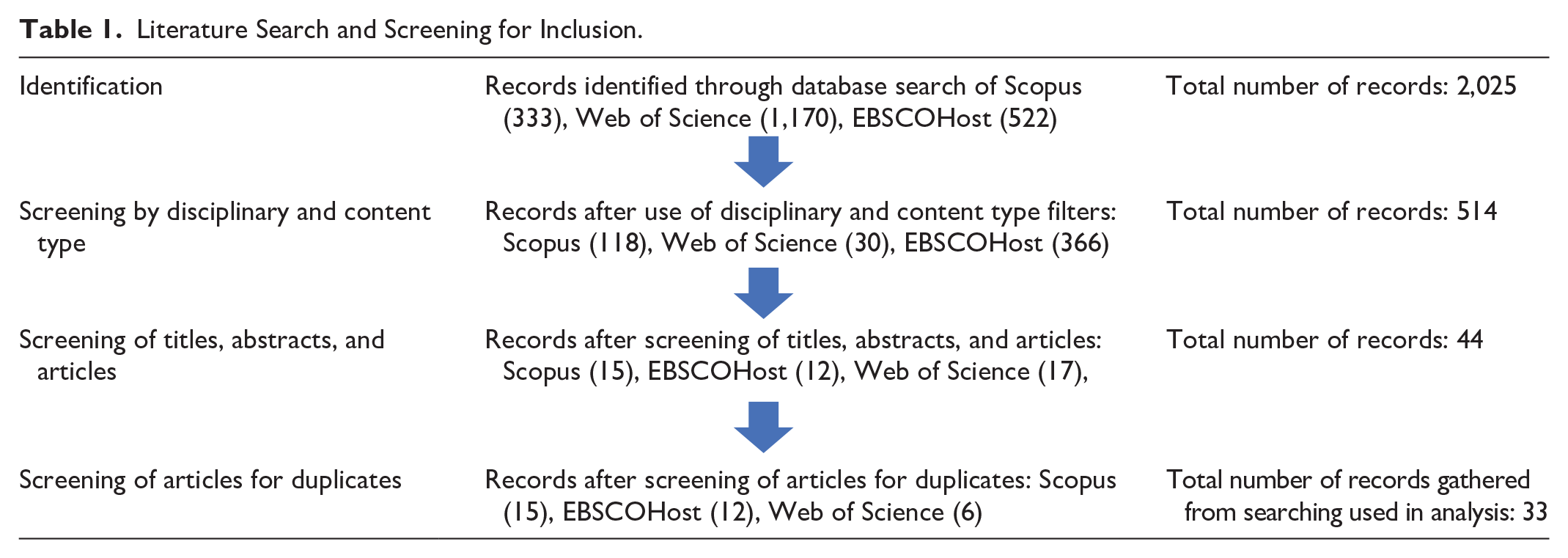
The Scopus search produced 333 results. The scope of disciplinary filters through Scopus is narrower than Web of Science (detailed below), but this was refined to limit results to Social Sciences and to academic journal articles and book chapters. This reduced the results to 118, with a further screening of titles, abstracts, and articles reducing this to 15 sources. Results produced through Scopus tended to be from a broad range of social science disciplines and journals specific to the use of technology in higher education, particularly generating publications related to social science topics published in computing and educational journals. These results also generated some publications in Information and Communication Technology (ICT) literature, some of which were included after screening after their relevance was established (for instance, the format, purpose, and structure of the podcast).
The Web of Science search was initially refined to only include academic articles and book chapters, reducing the results to 674, before further filtering by discipline reducing the number to 30. Results were filtered to only include as many cognate subjects and disciplinary areas to planning as possible, including Geography, Regional Urban Planning, Transportation, Environmental Studies, Social Sciences Interdisciplinary, Political Science, and Sociology. A further screening of titles and abstracts reduced this to a final total of seventeen. Articles excluded at this stage did not contain a particular focus on podcasts and had usually been captured in the initial search due to mentioning the word once in their article; for example, one article examined the ways in which rail passengers spend their commuting time, mentioning podcasts briefly as one such activity. Exclusion of articles that appeared in Scopus and EBSCOHost searches reduced the total number of unique results to six articles.
The EBSCOHost search yielded 522 results. Unlike Web of Science, which gives the option to filter by discipline, EBSCOHost offers the opportunity to filter by subject. I identified relevant subjects from the given list, including terms such as “audio equipment,” “electronic learning,” and “technology uses in education.” In total, twenty-eight subjects were identified as being broadly relevant to the review, reducing the total results to 366. Title, abstract, and article screening reduced the final total to twenty-nine articles, and removal of duplicates reduced this to twelve.
In addition to the exclusions described above, studies focusing on the use of podcasts in educational contexts other than higher education were also excluded, given the focus of this paper is on the use of podcasts in University-level degree programs. A limited amount of “backward searching” and “forward searching” was undertaken, where studies that did not appear in the searches documented above were identified through either through use of search engines and reading of journals, or via their use by the authors of the main set of studies generated through the search. For reasons of time, resource, and transparency of methodology, backward and forward searching was only used where an article was thought to offer a significant and unique contribution to the analysis. An example of this is the typology offered by Peoples and Tilley (2011) referred to below.
Assessing Quality
There is no consensus on quality assessment in systematic reviews; it can be argued that studies need to be similar in methodological approach and quality, while opposing positions warn of selection bias or argue that differences in quality are an important factor in undertaking and drawing conclusions from a systematic review (see Xiao and Watson 2019, 106, for a thorough discussion). The principal quality assessment technique in this review was to filter results to only include studies published in peer-reviewed academic journals and book chapters.
Extracting, Analyzing, and Synthesizing Data
Each paper was read and analyzed in relation to the six cognitive learning domains of the revised Bloom taxonomy. Textual descriptions summarizing each paper were written to take account of the different methodological and epistemological approaches used in each paper, as well as any important practical, theoretical, or disciplinary contexts. As analysis developed, these descriptions drew links with other papers in the study, highlighting areas of similarity or contrast and supporting synthesis of the data. From this, thematic analysis was developed, with a number of key themes highlighted, which structure the analysis that follows. This analysis highlighted that papers could be grouped upon the focus of their discussions and arguments related to the type and purpose of podcasts, the use of podcasts as a teaching and engagement tool, and the nature of the content of podcasts. While Bloom’s revised taxonomy provided some direction, as presented by Krathwohl (2002), the majority of studies did not explicitly refer to the taxonomy in their presentation and analysis. Indeed, McNamara and Drew (2019) note that the majority of research on podcasting in education has focused on action research and outcomes, rather than theoretical reflection or development. The references to the taxonomy made in the analysis that follows are therefore largely the author’s interpretation. Furthermore, the use of the revised taxonomy is restricted to the cognitive process dimension—remembering, understanding, applying, analyzing, evaluating, and creating—rather than the knowledge dimension, which looks at the types of knowledge produced (factual, conceptual, procedural, and metacognitive).
Research Findings
Type and Purpose of Podcasts
Definitional clarity is important before considering the content of and engagement with podcasts, particularly given the growth of audio-visual forms of technology in learning and teaching. Podcasts differ not only by content and subject matter, but according to the number and nature of participants and their format and structure.
Rogers and Herbert (2019) distinguish between “record and broadcast” podcasts involving individuals, and “interview- and narrative-driven” podcasts with objectives of storytelling and involving multiple voices. Drew (2017a) also proposes that there are multiple genres of podcast: the “quick burst,” aimed at communicating singular ideas in very short time frames; the narrative, whose communicative purpose is to tell stories and cross-link with other learning ideas; and the “chat show,” based on “engaged dialogue amongst panel members rather than predominantly single-host audio” (Drew 2017a, 208). The difference in genres proposed by these authors highlights the increasing and rapidly developing variation in podcasts. The “record and broadcast” approach mirrors the use of web-based lecture capture technologies, where lectures and talks are recorded and distributed to students (Germany 2012).
The different genres of podcasts have also been categorized according to their form and their purpose. Peoples and Tilley (2011) present a typology of three types of podcast: institutional podcasts, produced within Universities and forming part of gray literature used by students (e.g., lecture captures); episodic podcasts, typically produced outside the institution and consisting of one-off episodes or a collection of episodes within a linked series of podcasts; and audiobooks, which are analogous to podcasts in terms of their conveyance of audio material. McGarr (2009) argues that podcasting is commonly used for three broad purposes: substitutional uses, such as recordings of past lectures for review and revision by students; supplementary use, where additional material is provided to broaden and deepen student understanding; and creative use where students are responsible for producing podcasts. Combining Peoples and Tilley’s (2011) and McGarr’s (2009) analyses, we can see that podcasts can be produced by instructors to guide learning, outside University institutions and environments to inform learning, and produced by students for purposes of learning and assignment.
McGarr’s typology, based on a systematic review of podcasting in higher education that explored the medium’s influence on traditional lectures and student behaviors, suggests that podcasting can be related to different levels of Bloom’s cognitive domain. Substitutional uses may be used to achieve the lower order skills within Bloom’s revised taxonomy, such as remembering and recalling basic concepts and facts, while supplementary usage aims to encourage greater understanding and application of knowledge by providing new and additional material that relates to that which already exists. At the higher end, encouraging creative use of podcasts and involving students in their production or dissemination may encourage students to evaluate and appraise content for inclusion or exclusion from their podcast, and require them to create a podcast. Other studies in this review have also advocated student-created podcasts as a way of facilitating higher order learning outcomes and skills, as the following sections will indicate.
Enhancing Student Engagement
One of the common arguments in favor of podcasts is their ability to enhance student engagement and deepen learning. This is particularly the case when considering student engagement with and use of other forms of knowledge. In planning education, it is often expected that students will read supplementary material to broaden their knowledge, although research suggests that the extent to which students actually undertake these activities is limited, thus constraining their ability to “progress” through the different elements of Bloom’s revised taxonomy (Sturzaker 2014). Other sources have questioned the extent to which students engage with more traditional forms of learning and teaching, including lectures and textbooks (McGarr 2009). Consequently, podcasts are argued to present “exciting prospects for authentic learning and assessment” situated in wider contexts relevant to the field of study (Lee, Miller, and Newnham 2009) and posed by some as a “challenge to the conventional lecture” (Heilesen 2010, 1066). One study in this review undertook a cross-institutional study of technology preferences among students in which a significant majority of participants noted they would like increased use of podcasts and webcasts in their learning (Mirriahi and Alonzo 2015), while another in ICT literature found that podcasts are preferred revision tools compared with text books (Evans 2008).
Portability and flexibility
One of the methods through which podcasts are thought to enhance engagement is by providing a resource that can be accessed in portable and flexible ways, supporting mobile and remote learning (Bolliger, Supanakorn, and Boggs 2010; Lee and Chan 2006; McGarr 2009). Bolliger, Supanakorn, and Boggs’s (2010) quantitative study of podcast use among higher education students found that their portability was consistently cited as an advantage of the format; students valued the ability to listen flexibly and at their own convenience. However, other studies found that students were more likely to use podcasts as part of deliberate study efforts in designated locations, rather than listening while in transit, in part due to their personal study habits and due to their preference to consult other related materials or make notes while consuming podcasts (Lonn and Teasley 2009; McGarr 2009; O’Bannon et al. 2011; M. Taylor 2009; Swanson, 2012). Many studies that included significant commentary or analysis on the flexibility and portability of podcasts related to distance learning and teaching methods (Bolliger, Supanakorn, and Boggs 2010; Fernandez, Simo, and Sallan 2009; Forbes and Khoo 2015; Hurford and Read 2011; Lee, McLoughlin, and Tynan 2011). Some of these studies involved podcasts produced by instructors, typically to share introductions, capture lectures, and provide supplementary material (Bolliger, Supanakorn, and Boggs 2010; Ralph et al., 2010; Fernandez, Simo, and Sallan 2009; Hurford and Read 2011); Forbes and Khoo (2015) explored student-generated podcasts, while Lee, McLoughlin, and Tynan (2011) undertook a review of student engagement with both. These studies reported positive outcomes in relation to student motivation (Bolliger, Supanakorn, and Boggs 2010), partly due to the novelty of a new technological tool and a different approach to studying (Fernandez, Simo, and Sallan 2009), and enhancement of interactions and relationships between learners and teachers (Fernandez, Simo, and Sallan 2009; Lee, McLoughlin, and Tynan 2011). Student-generated podcasts, where students were tasked with creating and sharing podcasts for formative assessments and interactions with other students and teachers, were also positively associated with fostering a sense of community among distance learners (Forbes and Khoo 2015; Lee, McLoughlin, and Tynan 2011).
Podcasts, learning formats, and interactivity
Hurford and Read (2011) reflected on their production of podcasts to support student assignments. They reflected that their initial attempts tended to be more prescriptive and advisory, in essence reverting to more didactic and transmissive approaches, before refining their approach to create a more discursive and analytical podcast that addressed key points but hinted at a range of ways or approaches to tackle assignments.
These findings and the preceding section highlight that it cannot be assumed that the very nature of podcasts will enhance and deepen learning, precisely because the type, purpose, and structure of podcasts may vary. McGarr (2009, 319) points out that podcasts can also “reinforce the worst aspects of the transmission model of learning.” Lonn and Teasley (2009, 91) argue that “research on educational use of podcasting needs to address the conceptual issue of whether this technology is simply a mechanism for student review or a valuable method for students to construct knowledge.” Where and how instructors place podcasts within this continuum may inevitably influence the ways in which podcasts relate to different elements of the Bloom taxonomy, whether they are used for “surface” or “deep” learning, although it should be noted that most studies in this review do not make explicit reference to this. The majority of empirical studies reviewed here have attempted to explore whether and how podcasts can deepen learning and whether the medium lends itself to critical thinking, analysis, and evaluation among student populations.
Some of these studies explore the perception and use of lectures in relation to traditional face-to-face teaching formats such as lectures, often exploring whether podcasts are used as supplementary or replacement materials, with the majority of studies finding that they are often used as complementary, not desired to be a replacement for lectures, and do not diminish attendance (McGarr 2009; McKinney, Dyck, and Luber 2009; Parson et al. 2009; L. Taylor and Clark 2010). Students have indicated in some studies that they would prefer podcasts to be complementary to lectures rather than for them to become primary teaching methods (O’Bannon et al. 2011). L. Taylor and Clark’s (2010) study identified that students engaged positively with non-compulsory supplementary information to support learning and teaching activities, particularly where the specific educational goal and pedagogic intention was clear (e.g., assessment preparation), but were less engaged with material reframed from other sources (e.g., summaries of book chapters or academic papers). The argument here appears to be that podcasts can deepen learning, but only where their value is clearly signposted, and purpose is made clear to students. McGarr’s (2009) work argues that podcasts can facilitate higher cognitive learning outcomes, as the provision of supplementary material can provide students with alternative perspectives and encourage deeper exploration of topics explored in podcasts, although he also highlights the work of Huntsberger and Stavitsky (2007) which found that a large proportion of students simply used revision material supplied in podcasts rather than reading core texts, potentially adding to the passivity of the student experience. It appears, therefore, that podcasts can be located at either end of Bloom’s taxonomy, used for remembering and understanding facts or for higher cognitive outcomes of analysis and evaluation of knowledge.
Findings also suggest that podcasts can enhance learner–teacher interactions. H. Harris and Park (2008, 551) argue that podcasting goes “beyond the temporal and spatial limitations of conventional face-to-face education,” allowing content to cater to diverse learning communities and to “engage students in academic debate and in accessing timely academic research” (H. Harris and Park 2008, 549). Production values, length, and presentation can influence interactivity and engagement; Drew (2017b) argues that “shorter podcasts appeared limited to a transmissive pedagogical approach” and were likely to foster lower level cognitive skills as they did not have the time to delve deeply into analytical dialogue. Informality and tone of the instructor delivering a podcast can also influence engagement and preferences (Bolliger, Supanakorn, and Boggs 2010; Drew 2017b).
Others have created or adapted podcasts to encourage greater interactivity with lecture content and, in some cases, in its place. Germany (2012) discusses the limitations of lecture capture technology, a form of podcast we can categorize as a “record and broadcast” approach. She argues that these forms of podcast can be enhanced by using interactive and embedded features such as online discussion forums or enabling interaction with the recording using software, helping to transform these resources from transmissive and self-help to support dialogue and communication. M. Taylor’s (2009) use of podcasts in political science further develops this by arguing that the best use of podcasts may be where they complement or provide a foundation for in-class activities, rather than as a form of recording of class activities intended for later review. Taylor recorded and made available podcast lectures for students to listen to outside class in preparation for in-class activities such as discussions, Q&As, and scenario-based exercises which responded to the podcast material. Taylor’s work reported mixed responses by students; some were positive about podcasts and the associated in-class interactions; others reported challenges in digesting and applying podcast material.
Student-generated podcasts as a tool for engagement
The majority of studies in this review focused on podcasts created and distributed by instructors, often relating to the provision of supplementary material to support in-class learning. A smaller number explored the use of podcasts to support student-led enquiry-based learning, where students produced podcasts as part of course activities. The nature of these podcasts varied; podcasts were used as tools to disseminate field activity (Kemp et al. 2012), as a way of encouraging oral responses to course themes and provoking class discussions (J. Harris 2019), as a method of encouraging application of course themes to “real-world” scenarios (Moryl 2016), and as a tool for students to engage with experts and practitioners in their field (Armstrong, Tucker, and Massad 2009; Ferrer, Lorenzettim, and Shaw 2020). Students either worked individually or as part of small groups (J. Harris 2019; Lee, McLoughlin, and Tynan 2011).
The findings from these studies suggest that student-generated podcasts can offer significant learning benefits. Reported benefits included skills of teamwork (Kendall 2013), community-building (Lee et al. 2011), and situation of podcast topics within broader backgrounds and knowledges of their course, highlighting their ability to analyze date and apply this to different contexts (Kemp et al. 2012). Significantly, many of the studies reported student achievement and enthusiasm for being actively involved in “participatory knowledge creation” (Snowball and McKenna 2017, 605). Students tasked with creating podcasts, which often involved assimilating and reflecting on classroom learning and creating new knowledge on the back of this through enquiry, “moved from instruction followers to knowledge producers” (Kendall 2013, 75). They engaged with experts outside the University, helping to build identity with their course and field (Armstrong, Tucker, and Massad 2009; Ferrer, Lorenzettim, and Shaw 2020), and made links between classroom learning and experiential issues and realities through creating, searching, and synthesizing original content (Ferrer, Lorenzettim, and Shaw 2020). Moryl (2016) found that students in her Economics course demonstrated higher level proficiencies comparable with the more advanced levels of Bloom’s cognitive domain; a view also captured by a student respondent in Ferrer, Lorenzettim, and Shaw’s (2020) study:
As students we’re usually learners, so we don’t get to be involved in knowledge generation or knowledge spreading and so in this case it was a lot different than just regurgitating things that we’ve read. We’re actually responsible for creating things that other people can use. (Student participant, quoted in Ferrer, Lorenzettim, and Shaw 2020, 858)
This quotation highlights the ways in which student-created podcasts may achieve higher level cognitive outcomes, encouraging analysis and evaluation of data to identify relationships between constituent parts and themes and to make judgments to inform inclusion and exclusion, and supporting the creation of a new product and output—the higher and more advanced levels of Bloom’s taxonomy. Podcasting can “challenge normative expectations about what learning is” (J. Harris 2019, 17) by actively involving students in the process and dissemination of knowledge creation. The enthusiasm for using podcasts to generate and create knowledge also reflects the growing use of podcast as a data collection method in academia (Dutta 2020; Rogers et al. 2020).
Inclusivity
Many of the studies in this review also discussed issues of inclusivity. Kidd’s (2011) review of the potential use of podcasts in Management education tempered the potential of podcasts with discussion of a “digital divide,” recognizing that there may be inequitable access to or familiarity with digital resources which may have exclusionary effects. Sims, Vidgen, and Powell (2008) discuss this more generally in relation to e-learning, reminding us of social, economic, and cultural differences in access to and use of technology. One aspect of this was the acknowledgment that learning communities are diverse, with different learning preferences. M. Taylor’s (2009) study of using podcasts in his teaching argued that students who learn better via auditory techniques should benefit from the addition of podcasts to curricula compared with setting more out-of-class readings; although results also indicated that some students found podcasts difficult to listen to or interpret information from. Differences in learning preferences and styles need to be accounted for when using podcasts.
Inclusivity also involves ensuring that students can access the necessary technology and support with use (Moryl 2016; O’Callaghan et al. 2017). Gachago, Livingston, and Ivala (2016) studied the use of podcasts in a number of disciplines at a South African University, in a context described by the authors as “defined by resource limitations and fear of technology amongst both lecturers and students” (Gachago, Livingston, and Ivala 2016, 871). Their study found that providing institutional support could overcome issues of unfamiliarity, access, and resource constraint that may affect student engagement. Furthermore, Gachago, Livingston, and Ivala (2016) found that students reported being actively involved in the learning process while listening to podcasts, such as note taking and repeated listening, challenging assumptions that the medium may encourage passive learning, and found particular benefits for those who spoke English as a second language. Based on these findings, they argue that podcasting may be a socially inclusive pedagogical tool. Inclusion, as discussed in the literature, also relates to participation in class. J. Harris (2019) espouses podcasts as a tool to encourage students to confront and engage with topics they may otherwise be reluctant to discuss (the following section discusses this work in more detail). Many studies praise the “community-building” that podcasts can develop among distance learners, whether they be created by instructors whose teaching through podcasts has been found to “humanise” distance learning experiences (Bolliger, Supanakorn, and Boggs 2010) or through the exchange of student-created podcasts (Forbes and Khoo 2015; Lee, McLoughlin, and Tynan 2011).
The use of podcasts to “humanise” learning experiences also highlights their potential to contribute to more inclusive learning environments. There are problems in higher education as to how curricula address issues of equality and diversity and in relation to the representation of race, class, and gender (Crozier, Burke, and Archer 2016; Jessop and Williams 2009). Podcasts may represent different experiences of students and communities, either through student-generated or existing podcasts, that may have important inclusionary benefits in allowing these voices and experiences to be heard in the learning environment. In the context of the United Kingdom, the location of the author, the under-representation, and discrimination of groups within higher education on lines of race, class, sexuality, and gender highlight how this may be important for diversity and inclusion (Desai 2017; Ellis 2009). Podcasts may, for instance, represent experiences through the voice of the host and the podcast participants in a more authentic manner than represented and translated through the voice and lens of a teaching instructor. This may also support claims that podcasts can make ethical and political interventions into education, as discussed in the following section.
Content
A further aspect to consider is the content of podcasts. Earlier in this paper we have explored types of podcasts, such as those which supply supplementary and complementary information (McGarr 2009), and the ways in which the type of content may influence engagement (e.g., the findings of L. Taylor and Clark 2010, which found value in non-compulsory supplementary information and less value for students with “reframed” material). This section is not intended to rehearse these debates, but rather to reflect on a small number of studies which used podcasts to make the ethical and political interventions into education that Rogers and Herbert (2020) describe as a benefit of podcasting.
J. Harris (2019) discusses podcasts as a form of public sociology, particularly in teaching critical discourses of race and ethnicity. Her use of podcasts as a pedagogical tool aimed to overcome student disengagement from topics and discussions that made them uncomfortable and prohibited deep learning and reflection. Working in small groups, J. Harris (2019, 19) assigned her students to create podcast episodes talking about themes of race and racism in the United States, asking them to search and synthesize content and, through developing their own podcasts, empowering students with “language and critical analysis skills to name everyday racist discourse as they counter it.” Harris’s approach involved assigning students to listen to podcasts in the opening weeks of a semester to introduce them to the format and themes, asking them to take field notes while listening to note details such as the discussion tone, interaction between participants, and moments of emotive response. These points of analysis also highlight the value of audio content within learning, allowing students to take account of emotions and tone in a way that may not be possible with textual data. Following this, students were then asked to research their own podcasts to further identify and comprehend core themes and narratives, before creating and producing their own show, in a sense moving gradually up the revised Bloom taxonomy from basic recall and recording of podcast content, to analysis and comprehension, and finally to evaluation, creation, and development of new products and knowledges. Similarly, Carrillo and Mendez (2019) developed a podcast series for students within their institution that involved guest interviews, storytelling, and links to activism and education from and within Latinx communities, connecting their students with first-hand testimony and benefiting Latinx students from hearing voices from their communities in their education.
Ferrer, Lorenzettim, and Shaw’s (2020) work explored the use of podcasts to support experiential teaching and learning in the social work field, working closely with community partners and practitioners. They suggest that podcasts enhance learning by engaging students in knowledge creation, arguing that they demonstrated a deeper appreciation and understanding of theory by applying it to “real-world” scenarios through podcast production based on interviews and storytelling with communities of practice. In addition to challenging understandings of what learning is, they argued that student-led podcasts provoked greater critical thinking and reflection among students and that their enquiry-led nature supported them to confront issues of political and social justice within social work.
Podcasts have formed one aspect of what France and Haigh (2018, 504) call “a new era of technologically blended fieldwork” in Geography. This has included the creation of podcasts by students to reflect and disseminate the findings of their fieldwork (Kemp et al. 2012) and their use to actually conduct and guide field tours (Wissman 2013). Wissman’s study revealed a number of practical and pedagogical advantages of using podcasts to guide field tours in human geography. While traditional field trips follow the pace of the instructor or guide and often take place in large groups, Wissman created podcasts that students could listen to on self-guided tours around the city. His podcasts discussed points of social, economic, and political interest in the city, guiding students around places and using stopping points to ask students to refresh and apply their knowledge of topics by undertaking short exercises at each stopping point (e.g., sketching, observing, or researching in the vicinity). Guided by the podcasts, students were asked and empowered to make their own interpretations and judgments in relation to the social, economic, or political points of interest. In the context of Bloom’s taxonomy, podcasts are again used as a tool through which students are encouraged to achieve more advanced and higher level cognitive learning outcomes through independent interpretation, analysis, and evaluation.
What Do Podcasts Tell Us about Surface and Deep Learning?
Bloom’s revised taxonomy distinguishes between “surface” and “deep” learning, ranging from the memorizing and recall of knowledge and facts, to analytical, evaluative, and creative forms of learning and comprehension. While the majority of work I have reviewed did not use Bloom’s taxonomy as a theoretical frame, it has been applied here as a reference point to highlight some of the key uses—actual and potential—of podcasts as a pedagogical tool. The analysis above shows that podcasts are used across Bloom’s taxonomy. In some circumstances, they are used as supplementary tools to aid student revision and comprehension, supported for providing an aural medium that supplements lectures and textual material but critiqued for potentially reinforcing didactic and transmissive forms of teaching. The cognitive process dimension of Bloom’s taxonomy talks of learning based on remembering, understanding, and applying knowledge, and podcasts may be one technique through which students are supported with this form of “surface” learning. However, I have also highlighted that podcasts are a tool for deeper forms of learning, conceptualized in Bloom’s taxonomy in relation to analyzing, evaluating, and creating knowledge. This is particularly the case where podcasts are used as materials to provoke reflection and discussion on particular topics, themes, or places, such as their use as tools to support analysis and evaluation of public places and as materials on which peer-to-peer discussions can be based.
A particularly significant finding of my review is the growth of student-generated podcasts as a form of knowledge creation. Students are encouraged to analyze and evaluate material and produce their own podcasts. This represents a form of “‘deep’ learning” at the highest end of the cognitive process dimension of Bloom’s taxonomy. Importantly, this also extends our understanding of what a podcast is and what the medium may offer to education. The majority of papers I have reviewed understood podcasts as a tool for the consumption of learning. However, podcasts created by students rather than simply consumed may be better understood as a synthesis of learning and as a platform through which this is disseminated to audiences within and beyond academia. While the podcast medium may have traditionally and largely been shaped by logics of journalism and professions, such as the podcasts within the planning field highlighted earlier in this paper, tasking students with collecting, analyzing, and evaluating material to produce their own podcasts may reshape these logics and the ways in which podcasts are created, consumed, and used within education. Students are not just listeners and consumers of podcasts but are actively involved in knowledge creation and dissemination through the medium. When considering this in relation to Bloom’s taxonomy, this highlights that while podcasts may not be a panacea to encouraging “deep” learning—their methods of creation, design, purpose, use, and content clearly matters—their growing use and changing patterns of creation and consumption have significant potential for deeper comprehension, synthesis, and dissemination of learning among students.
Discussion
There are a number of implications arising from the studies included in this systematic review. There are several different types of podcasts used in education, including variation in who produces them (instructors or students), the number of participants involved (individual or group), and their format (“record and broadcast” or more dialogical “interview and narrative” shows). There are also a range of different purposes. The majority of studies discussed the use of podcasts as supplementary or complementary teaching tools, often used to support recall and memory of facts and concepts and aid revision for assessments. Other studies used podcasts as projects and assignments in their own right, asking students to create and produce their own shows using content created, searched, and synthesized by them.
While most of these studies were not situated in relation to Bloom’s revised taxonomy, my findings can be interpreted to suggest that those podcasts which involved multiple voices and involved students in the production and dissemination process most clearly map onto the higher levels of the taxonomy’s cognitive domains. Asking students to create podcasts also asks them to apply, analyze, and evaluate material to include. Podcasts such as those produced in the studies of J. Harris (2019) and Ferrer, Lorenzettim, and Shaw (2020) suggest that students are able to develop skills of critical thinking, analysis, interpretation, and communication with audiences internal and external to the University, and may be beneficial mechanisms through which students can engage with topics that challenge normative expectations and perceptions.
Few studies reflected on the use of externally produced podcasts (i.e., those that already exist and were produced for other purposes) in education. This is surprising given podcasts are increasingly used as forms of public pedagogy, used to give voice to communities marginalized by race, ethnicity, or socio-economic status (Carrillo and Mendez 2019). The aural medium of podcasts is beginning to be used as a research method in urban studies, representing voices and experiences that foreground positionality and consist of polyvocal inputs (Dutta 2020; Kinkaid, Emard, and Senanayake 2020; Rogers et al. 2020). Kinkaid, Emard, and Senanayake’s (2020, 2) work argues that podcasts open up space for different and unique interpretations of data: “hearing the emotion and tone in a speaker’s voice may evoke different affective engagements between the audience and the research content.” Such resources may be particularly useful for students and complement textual readings.
There are particular implications for planning education. The communicative, political, and applied nature of planning is increasingly recognized in curricula, and educators are encouraged to move away from transmissive forms of teaching to engaged scholarship. Planning education is expected and encouraged to involve practitioners and “real-world” experiences in the education of students (Fischler 2012). However, there are perceptions that research and education in planning schools can be distanced from practice (Wu and Brooks 2012). Podcasts may offer a way through which planning students can (re)-engage with the discipline and practice of planning, and as a way of branching out of the academic “ivory tower” that Universities are sometimes pejoratively associated with. Podcasts may support this in a number of ways. It may involve use of existing podcasts produced within and beyond the Academy as secondary resources. Podcasts that critically debate and assess planning practice or issues of justice, equity, and politics in urban places can expose students to a multitude of contemporary and “live” perspectives, and encourage dialogue between their classroom activities and learning and real-world experiences. Asking students to create podcasts may also help achieve higher level cognitive learning outcomes by engaging students in enquiry-led projects which can theoretically be distributed to broad audiences.
This may also involve creation of instructor-led podcasts involving guest speakers. Reflecting on practice in the United Kingdom, it is common to introduce students to “real-world” experiences and perspectives by inviting guest speakers, but practicalities and resource constraints mean these tend to be drawn from local or regional professional circles. The podcast medium may offer opportunities for students to hear and learn from experts nationally and globally, in the same way that virtual reality technology has been used to enable students to explore and interpret urban environments otherwise temporally and spatially inaccessible (Nisha 2019). The potential for this is particularly rich for education focused on international contexts where the authenticity of the representation of local voices and experiences is an important consideration.
Another significant contribution of podcasts may be their ability to introduce students to the voices and experiences of those marginalized from mainstream academic and political debate. There are podcasts that exist that critically assess the experiences of those marginalized from debate, whether on the grounds of race, ethnicity, gender, sexuality, religion, or socio-economic status (Carrillo and Mendez 2019), while studies reviewed in this paper have also encouraged students to research and engage with these power imbalances in podcast creation (Ferrer, Lorenzettim, and Shaw 2020; J. Harris 2019). Planning practice is not immune from such exclusions and power imbalances. Beebeejaun (2004) shows how planning can reinforce false and exclusionary tropes around ethnicity. Wood (2020) highlights the importance of decolonizing curricula within planning education and urban studies, challenging us to consider how we may represent and communicate the importance of other geographies, contexts, cultures, and places without re-creating and reinforcing regional hierarchies or relying on concepts of “otherness.” Gale (2008) has shown how religious groups have challenged and transformed institutionalized exclusionary practices within the planning system, while Sandercock (2003) highlights the importance of storytelling to represent multicultural and democratic aspects of planning systems. Whether and how these types of research can be articulated through aural mediums in the future may be worthy of further inquiry, exploring whether learning and teaching can be enhanced by direct representation of these voices and experiences rather than represented through instructors and lecturers who may or may not be best placed to represent and educate on such injustices. Broadcasting history shows that many community groups have been excluded from shaping electronic public culture in the past, which implicates on the historical documentation and representation of their experiences (Vaillant 2002 uses the exclusion of different nationalities and ethnic groups in 1920s Chicago to highlight this). This is not to suggest that podcasts are a panacea to the exclusion of marginalized voices, but rather to pose this as a suggestion and avenue for further study, particularly with regard to podcasting in education. As Rogers et al. (2020) note, “the question of who gets to speak through podcasting and who is listening deserves more attention.” This also relates to debates as to whether story-based media—such as podcasts and documentary film—authentically represent reality or reduce them to narrator-led reproductions. Experience of documentary film shows us that there is power in the visual element of the filmmaking medium that allows a reality to emerge from the film itself rather than this be solely communicated through narration (Bathla and Papanicolaou 2021). Similar arguments may be made in favor of podcasts in terms of their ability to tell stories set within the sounds and noise of the places in which they are produced, but similarly—as with documentary film—these sounds, noises, and experiences of podcast participants may be lost within processes of production and editorial decision-making. The ethics of podcast production will be an important consideration for urban planning educators and practitioners who seek to create and disseminate podcasts in learning and teaching, including the ways in which these may work in concert with other forms of media-based sources.
Conclusion
The podcast medium has developed rapidly in the 21st century and is increasingly used in educational contexts. My review has highlighted different ways in which podcasts are created and used in support of educational objectives. While it is difficult to draw generalizations from a large number of studies conducted in different disciplinary and institutional contexts, this paper has particularly highlighted the ways in which student-created podcasts may achieve higher level cognitive outcomes, using the revisions to Bloom’s taxonomy to show how application, analysis, and evaluation of information can be synthesized to create student-led podcasts. Podcasts may also be useful tools for stimulating critical thinking and analysis, particularly when confronting issues which may be unfamiliar or uncomfortable for students, and which may challenge normative expectations and understandings.
However, podcasts are not a panacea. As with other mediums, there are challenges related to their instrumental use by students and encouragement of “surface” learning, risk of transmissive pedagogy by instructors, and issues of inclusivity and access which may, according to personal circumstances and contexts, constrain access. As Kidd (2011, 55) puts it, “the value of the learning derived by the learner is not dependent upon the medium used to deliver the learning, but actually upon the ‘orchestration’ from the teacher.” There is limited evidence as to the use and effectiveness of podcasts in planning education and a need for greater understanding of the ways in which educators may develop, design, and disseminate learning that uses the potentially rich and valuable social and political interventions that podcasting can offer.
Footnotes
Acknowledgements
I would like to thank Dr. David Waite, the anonymous reviewers and the editorial team for their valuable comments on previous drafts of this paper.
Declaration of Conflicting Interests
The author(s) declared no potential conflicts of interest with respect to the research, authorship, and/or publication of this article.
Funding
The author(s) received no financial support for the research, authorship, and/or publication of this article.
