




Abstract
Urban design and planning studios presented considerable challenges to teach remotely following the outbreak of COVID-19 pandemic. Planning is space-based and requires real-life experience, and existing virtual teaching platforms can hardly re-create the studio atmosphere. This paper presents an empirical study, via surveys and interviews, on how instructors in Greek universities, where online teaching carried on for three semesters, adjusted studio courses to remote teaching. Findings are organized into three rubrics: Resilience, Interaction, and Surprises. Results show that planning pedagogy needs to maintain problem-based methodologies, that existing platforms should be designed to better emulate the studio atmosphere, and that inviting guest speakers online is a practice that will remain post-pandemic.
The Need to Reflect on Distance Teaching Urban Design and Planning
Following the outbreak of the new coronavirus pandemic in December 2019 and the lockdown measures implemented in most parts of the world in March 2020, urbanism, both as a lived reality and as a scientific field, has been going through major transformations. A burgeoning body of multidisciplinary research examines the impacts of the pandemic on an array of urban issues, from mobility habits (Nurse and Dunning 2020) to use of green spaces (Venter et al. 2020), and from housing prices (Fritsche 2021) to sidewalk usage (Rhoads et al. 2021), as well as the role of the urban built environment in health and well-being (Mouratidis and Yiannakou 2021) and the long-term effect of the pandemic on the planning discipline (Rice 2020; Sharifi and Khavarian-Garmsir 2020). Concurrently, in academia, the lockdown in March 2020 instigated transformative changes in teaching and learning, as educators around the globe had only days to move their classes online. In many parts of the world, such as Greece, universities offered only online classes for a duration of three semesters, up to October 2021. In other regions, after the initial lockdown, from fall 2020 onward, a hybrid mode of teaching has been implemented. Not only for academics in the field of urbanism, but for everyone involved in higher education around the world, hardly has there ever been a historical period with a denser, more heightened personal reflection on and peer-to-peer discussion about teaching than these past months.
Compared with research on how urbanism is changing due to COVID-19, the effects of the pandemic on planning education are considerably less discussed. Literature on how distance teaching has affected urban design and planning is limited (Mironowicz and Schretzenmayr 2020; Rooij et al. 2020) compared, for example, with that in the fields of architecture (e.g., Murphy et al. 2020; Sadler et al. 2020) and design (Adams, Marenko, and Traganou 2021). However, from the individual to the institutional level, rethinking about these past experiences is invaluable to figure out what was learnt and how to move forward, both in the personal and in the institutional level (Miyagawa and Perdue 2021), as a collective reflective practice (Helyer 2015; Mathew et al. 2017). As this pandemic evolves and will continue to affect urbanism, both as a reality and as a field of teaching, in unprecedented ways, the more prepared planning educators are to critically rethink their practices, the more resilient and fruitful their teaching will be.
Recent research shows that the ubiquitous and indeed universal shift to remote teaching has been by no means a uniform experience for individuals or for institutions around the world. Significant differences have emerged, depending on geography, personal life conditions, and academic discipline. In universities of the Global South, faculty and students encountered challenges such as lack of established elearning (electronic learning) platforms and Internet connectivity problems (Elrawy and Abouelmagd 2021). Institutional responses to the pandemic have been geographically different, too. In many parts of the world, such as Greece, due to very large classes and insufficient building infrastructure, a return to campuses was postponed for the entirety of three semesters, while in other regions, such as the United States, in-class courses were resumed much earlier, at least partly. Regarding personal and family conditions, there has been a growing literature on how remote teaching created or deepened inequalities among academics. For example, teaching from home was a gendered experience, as women educators were suddenly burdened with an increase in childcare responsibilities and household labor (Yildirim and Eslen-Ziya 2021). Disciplinary differences generally depended on the nature of the academic field. Teachers of disciplines that require hands-on learning had much greater difficulties to achieve their objectives than theoretical ones (Burke 2020). Even within the same discipline, theoretical subjects, usually delivered in lecture halls, were far easier to move online than practical or laboratory-based ones (Gamage et al. 2020).
In the case of planning education, Mironowicz and Schretzenmayr (2020) note the disparity between theoretical courses and practical ones, that is, studios. In their experiences, although the former faired sufficiently well, teaching the latter remotely posed unprecedented challenges and, for the most part, left faculty quite dissatisfied. This disappointment becomes especially important if we consider the central role of design studios in teaching planning and urban design. Following a pedagogy inherited from architecture, in planning education, too, studio-based teaching is the most common method, characterized by a high level of communication, exchange of ideas, physical modeling, and drawing (Milovanović et al. 2020).
Within the wider context of online teaching during the pandemic, this paper focuses on how instructors of urban design and planning studios, in particular, adjusted their courses to remote delivery, on top of necessary adjustments common to all university teachers. Based on an empirical study in Greek universities, it attempts to answer the following questions: How do professors and students assess the online teaching experience? What common trends appear in teachers’ practices in Greece and other countries, based on literature review? What lessons this experience teaches us about planning studio pedagogy, that can be useful in the future?
The paper consists of five parts. The “Distance Teaching before and during the Pandemic” section provides a perspective on the concept of distance teaching and how it has affected educators and students since March 2020, when universities shifted classes online. The “Planning Education in Greece and How Greek Universities Have Operated during the Pandemic” section presents basic information on the Greek University system, as the backdrop of this study, and on how the lockdown measures have affected higher education in Greece. The “Sources and Methods” section states the methods and materials used in this paper. The “Results and Discussion” section is the presentation and discussion of the results of the empirical study, organized under three rubrics: Resilience, Interaction, and Surprises. The “Conclusions and Contributions” section of the paper states its conclusions and contributions.
Distance Teaching before and during the Pandemic
Typically, before the pandemic, distance education was a mainly self-learning process, mostly asynchronous, and meant to reach a broader audience (Godschalk and Lacey 2001; Lawhon 2003). Distance education has a long history that goes back to the nineteenth century, when the first correspondence courses appeared, in 1840 in Europe and in 1892 in the United States (Godschalk and Lacey 2001). It was nonetheless the digital revolution and the advances in communication technologies that popularized distance learning (Moore and Kearsley 1996). The core concept of online education is that course material is ubiquitously available, and the student can use it anytime and anywhere, progressing at his or her own pace. Comprehensive platforms, known as Online Learning Management Systems (OLMSs), incorporate the educational material and various tools for communication, such as discussion forums. The role of the teacher is to design the course, produce the educational material, and, in some cases, provide asynchronous tutoring.
The emergency shift of university education to distance delivery of millions of classes worldwide was made possible due to pre-existing technological tools, some of them developed for distance education while others for other purposes. It is the product of a synergy, an amalgamation of three already existing technologies that the pandemic, as a catalyst, brought together (Figure 1): (1) distance learning tools and platforms, already established as parts of OLMSs; (2) teleconferencing technologies, already used by individuals and organizations for remote communication; (3) Internet live broadcasting of events, such as lectures and talks, and/or recorded events available to be watched anytime on the Internet.
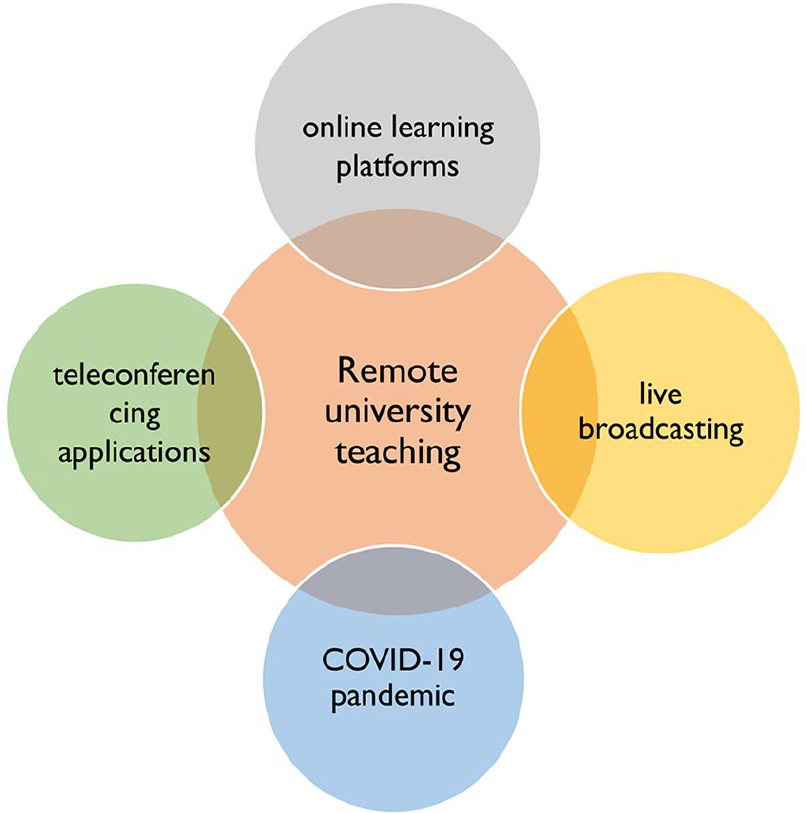
Remote university teaching as an amalgamation of already existing technologies that the pandemic, as a catalyst, brought together.
In contrast to pre-pandemic distance education, remote teaching during the pandemic relies on the teacher to be present and active throughout the online session, and also to take on complex responsibilities and tasks, much more demanding compared with an in-class session. In in-class mode, a professor has to be at a certain physical place (a classroom), maybe use a computer and a projector (but can do without them), and communicate with the students, also present in the same space, orally or by writing on a board or by demonstration (in design studios, by drawing). In online mode, a professor has to use a video-conferencing platform, communicate effectively with the students via camera and microphone on a computer screen despite not having a sense of the class as a whole (students’ faces appear in small windows of a computer screen, and have to be scrolled if students are more than, roughly, twenty), deliver an online lecture and often record it for future use, speak by paying great attention to his or her voice, as no other communication channels are available, follow the chat discussion and answer questions, and optionally have a tablet and a digital pen connected with the computer, and use it to write or draw on screen. In a studio course, particularly, a crucial aspect of teaching and learning is communication through many different channels: peer-to-peer during teamwork, team-to-team for coworking, instructor-to-team during individual reviews, and instructor-to-class throughout the session. It is truly amazing what professors, as digital “conductors” of the class, were required to orchestrate, adopting technological tools which were not designed for pedagogical purposes per se. Remote teaching during the pandemic, stressful, tiring, and “much hated” (Mironowicz and Schretzenmayr 2020, 107) as it has been, has affirmed the adaptability, versality, and endurance of university teachers around the globe.
Research on the impact of the pandemic on education has been focusing on students, and rightly so. The education gap created by the shift to remote teaching has deepened already existing inequalities. Distance learning has not been working well for everyone, especially for poor or rural students and those who have a learning disability (Sheasley 2021). From a psychological point of view, although “Zoom fatigue” (Bailenson 2021) is common to teachers and students alike, online learning has affected students also developmentally. Studies report a sense of alienation, lowered motivation, and a feeling of loss of coming-of-age expectations (Burke 2020). Teachers, as mature adults, have a set of coping skills that younger students do not. Nonetheless, they had to face their own struggles, practical and psychological: from finding spaces in their homes to work to trying alternative ways to build relationships with their students.
In the case of urban design and planning studios, depending on the syllabus, instructors had to make core modifications in content and pedagogy. For example, as both mobility in cities and use of public spaces were restricted due to lockdown measures, they had to find substitutes for the loss of site visits. They had to find virtual ways to replicate the studio atmosphere and facilitate teamwork, which is the cornerstone of design studios. These challenges put to the test not only instructors’ inventiveness and creativity, but also have forced them to rethink under a new light the learning objectives and customary ways of studio teaching. As instructors of studio courses in Delft University of Technology point out, “‘Corona times’ have been a magnifying glass that has helped one to critically reflect on curricula, course content priorities, and pedagogical approaches” (Rooij et al. 2020, 1).
At the institutional level, to assess the effects of this “enormous disruption” (Miyagawa and Perdue 2021), many universities have formed special committees and task forces to evaluate which parts of remote teaching practices could and should remain in the future. For example, Miyagawa and Perdue (2021) interviewed thirty faculty members of the Massachusetts Institute of Technology and came to four basic conclusions as to how the pandemic has influenced pedagogical practices. The first is the need to address “the whole student.” The online format opened up student’s private rooms (and lives) to the eyes of the professors and made them understand their students in a way not readily possible in an in-person class. The second is a heightened awareness of the need to create teaching practices that keep students engaged. The third is the selective implementation of technological tools that proved to be beneficial in their classes, from recorded video lectures to real-time chats. And finally, the virtual expansion of the class, far beyond their own campus, in the form of online talks by invited speakers, virtual attendance of conferences, and so on.
Planning Education in Greece and How Greek Universities Have Operated during the Pandemic
In Greece, all universities are public and free of tuition: the Greek Constitution prohibits the private sector from operating university-level institutions. Planning and urban design courses are offered at seven universities, and specifically at the seven Schools of Architecture—all of which have an Urbanism strand—and the two Schools of Planning of the country (Figure 2). Contrary to most European countries (Frank et al. 2014), there are no bachelor’s degrees in these fields in the Greek University system. The Bologna declaration has not been implemented in Schools of Engineering in Greece (Sedgwick 2001). Instead, a five-year study program is offered, which according to Georgios Panetsos, Professor in the Department of Architecture at the University of Patras, constitutes a rather “obsolete tradition” (Panetsos 2011, 128), leading to a professional degree equivalent to integrated Master’s in Architecture and in Urban and Regional Planning and Development, respectively.
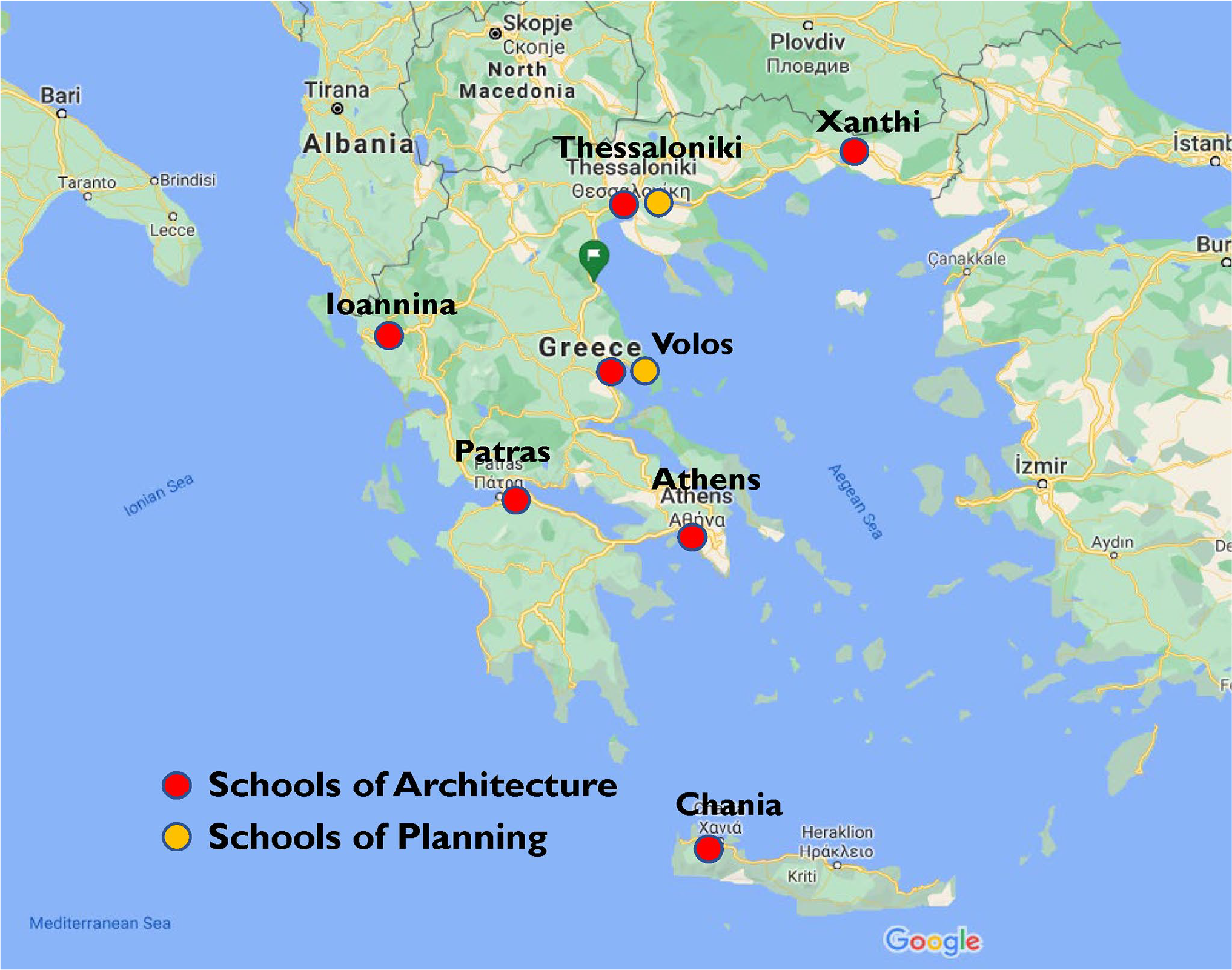
Locations of Schools of Architecture (all with a Planning strand) and Schools of Planning in public universities in Greece.
The Greek government imposed the closing down of schools and universities in Greece due to the COVID-19 pandemic on March 10, 2020. At that moment, the fourth week of the spring semester was starting in Greek universities. The effect of the shift to online teaching of studio courses depended on the syllabus and learning methods. For example, at the School of Spatial Planning and Development (SSPD) of the Aristotle University of Thessaloniki, students attending the first-year Introduction to Urban Design and Planning studio had just finished their first field exercise: to observe and map how people use various public places in the city center, using methods and techniques inspired by William Whyte’s seminal study of New York public spaces (Whyte 1980). To introduce students to urban analysis, the course normally involves a series of mapping exercises, based on on-site observation. Bringing their field notes in class, students draw maps, diagrams, and sketches on paper, without using any digital design tools. Group work takes place strictly in class, in a vivid, collaborative studio atmosphere (Figure 3).
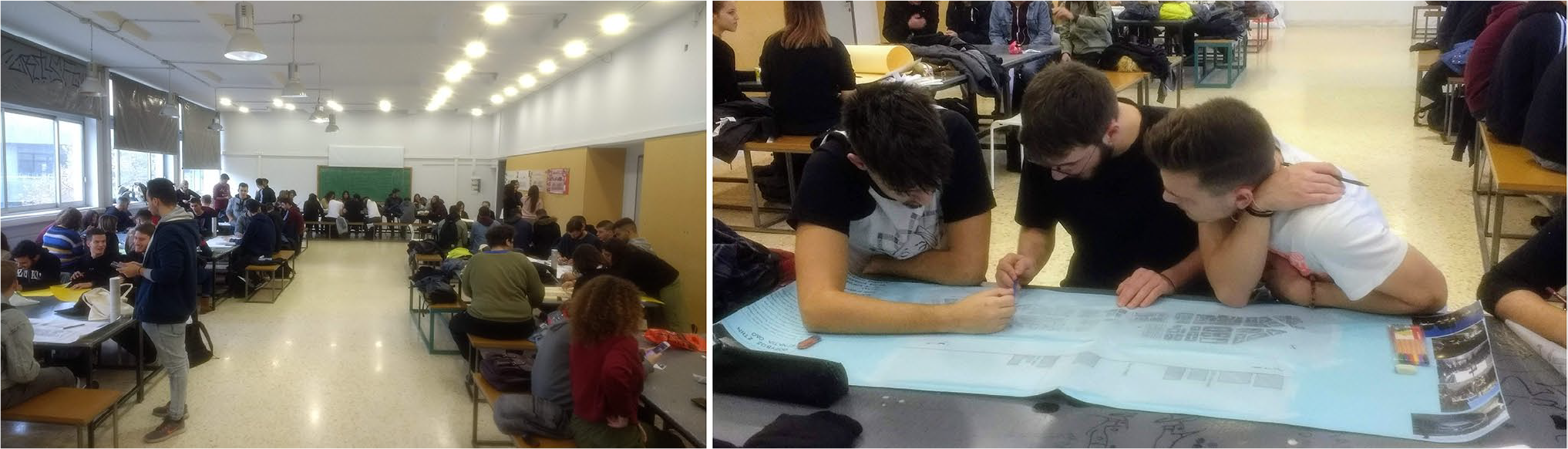
Scenes from first-year Urban Design Studio at the School of Spatial Planning and Development of the Aristotle University of Thessaloniki during Fall 2019 semester.
Thus, the lockdown and the transition to distance teaching rendered both the scope and methodology of the course impossible. Groups could not work together, as students dispersed in their hometowns, where they moved back to stay with their families. With all physical tools made inaccessible for group work (no tracing paper could be shared and drawn on, etc.), shifting to digital drawing and mapping applications was the only solution. However, a considerable number of students, being freshmen, had either no computer or no suitable software installed, or the skills to use them. Perhaps more importantly, students, even those who had stayed in town, could not have access to the studio’s “subject matter”: the city of Thessaloniki and its public space. Due to confinement measures, which remained in place until May, it was forbidden to go out of one’s home, unless by carrying a signed statement or by sending an SMS to a governmental number, announcing his or her exodus from home, for very specific reasons (a walk for observing and sketching elements of public space not being one of them). And even if one managed to overcome this difficulty (e.g., by sending an SMS stating a faux reason for going out), upon stepping outside, the city was far different from how the study of urbanism perceives it, that is, a vibrant place full of people and activities. The buildings, streets, and public spaces were all there, but the lack of people interacting with and animating them was simply bizarre.
Public measures restricting mobility and use of amenities, which at that time seemed like an interval to normality, have been following the ebbs and flows of COVID-19 cases (Figure 4). Lockdown measures restricting mobility were temporarily lifted in May 2020, as the country “opened” for the summer touristic season, but universities remained closed. In October 2020, the fall semester in the universities started online only. In early November, at the second surge of the pandemic, confinement measures were applied once again and remained in place until May 2021. In other countries, after the initial lockdowns of spring 2020, in the 2020–2021 academic year, Schools of Architecture and Schools of Planning operated in a hybrid format, allowing for some in-class teaching, especially for critiques (Elrawy and Abouelmagd 2021). In Greece, however, there was no in-class teaching in universities for eighteen months (March 2020–October 2021), except for very few exceptions such as medical schools. Literally, all academic activities, such as lecturing, teaching studios, tutoring, critiques, workshops, thesis presentations, were carried out online.
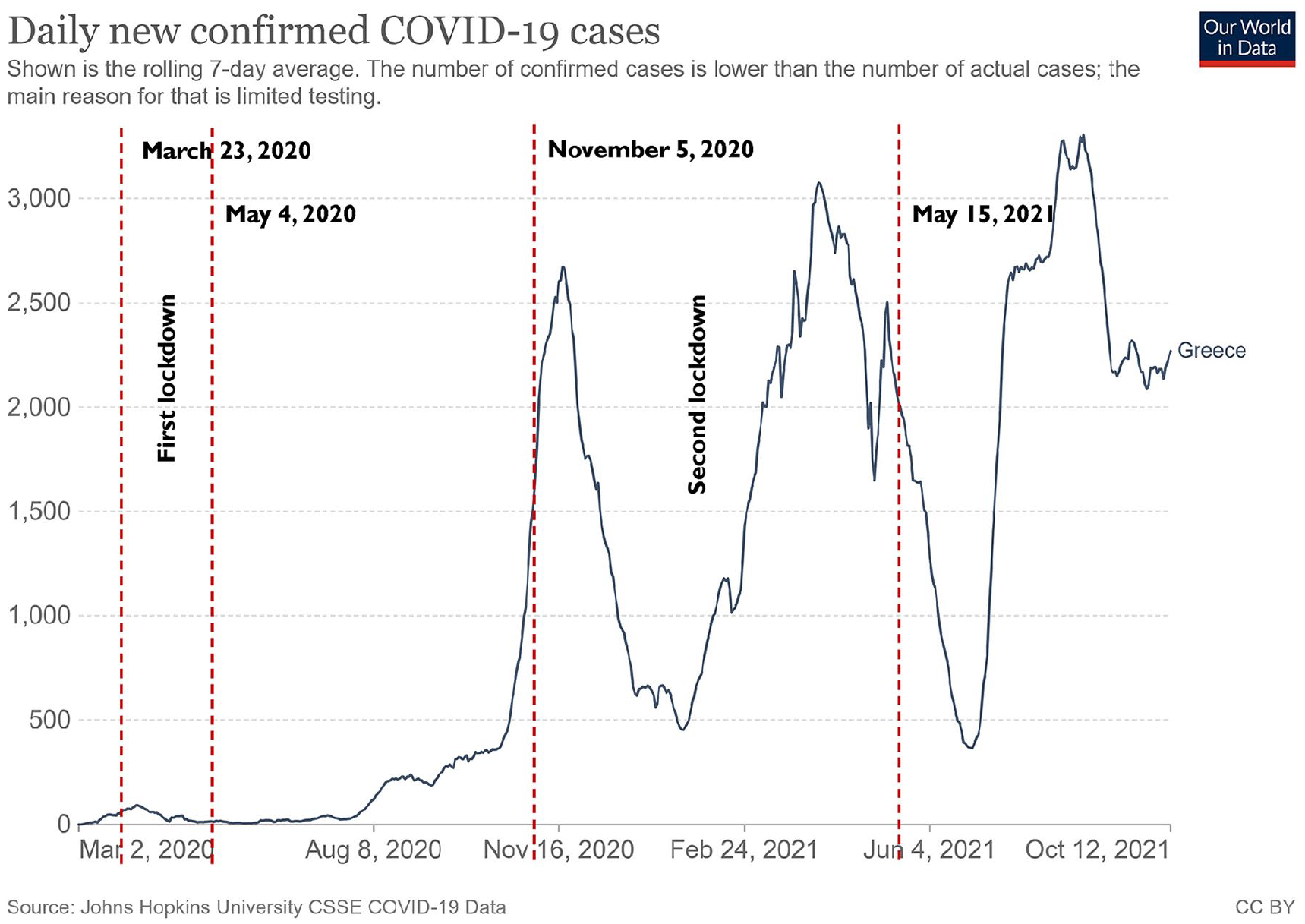
Chronology of lockdown periods in Greece shown on the diagram of daily new confirmed COVID-19 cases.
In response to this prolonged experience of online teaching in Greece, naturally, instructors have had peer-to-peer discussions, mostly informal, regarding “tips” about online teaching, about how they managed to adapt their courses, and so on, in instances when, for example, they happened to “run into” each other in virtual meetings. The only organized event of peer-to-peer discussion was a series of three forums on distance education organized by the School of Architecture of National Technical University of Athens in February and March 2021, during which Greek instructors working in foreign countries were invited to present their teaching experiences to colleagues of Greek universities. However, there has been no published survey assessing online education in the fields of architecture or planning.
Sources and Methods
The present study is an attempt to assess urban design and planning studio teaching in online format, based on both direct personal experience and empirical research, in the form of structured surveys and interviews, as shown in the methodological diagram (Figure 5).
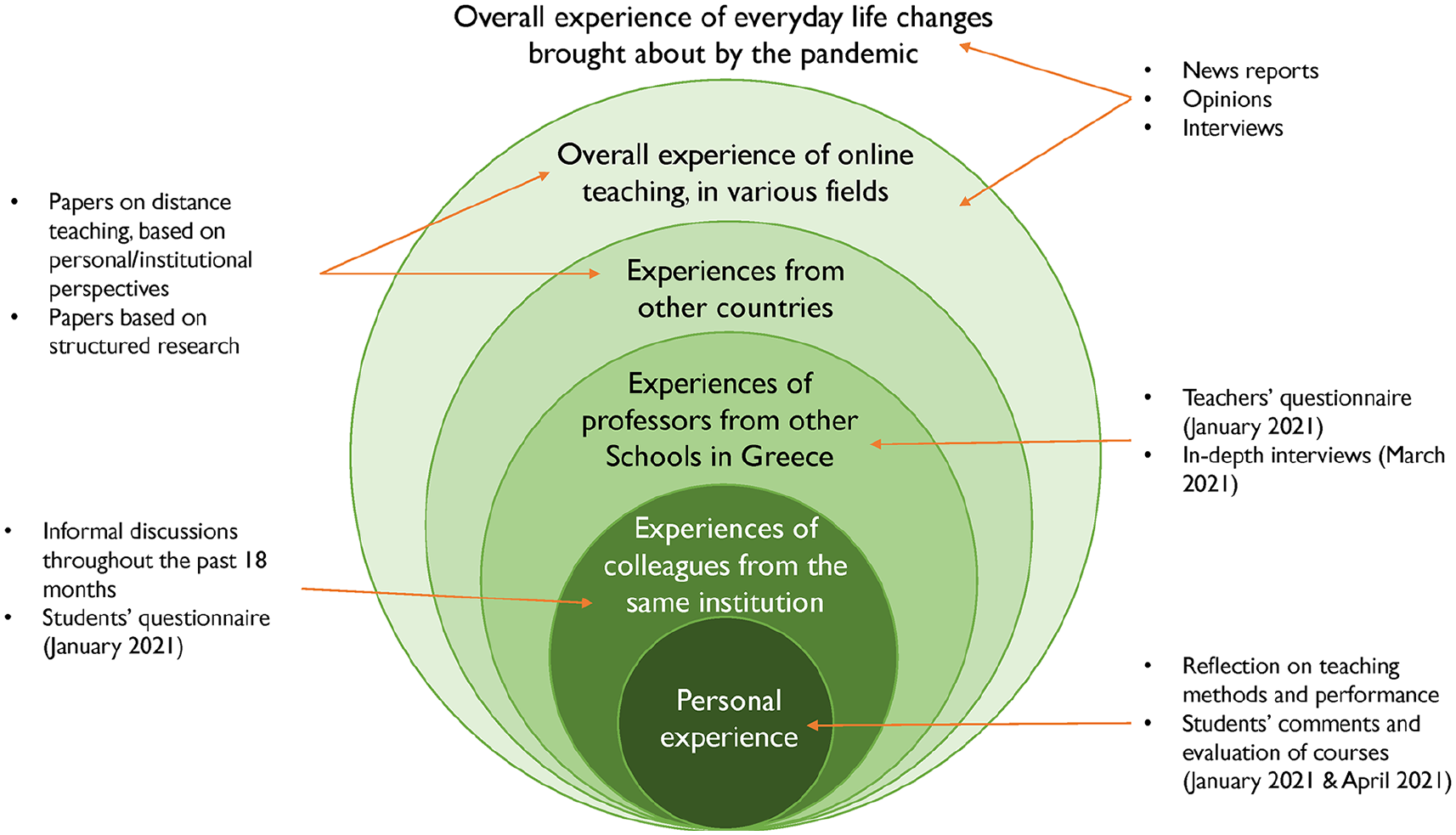
Methodological diagram showing the expanding methodology from personal to collective experiences and the various materials used.
A critical attribute of reflective teaching is that it is “a process of solving problems and reconstructing meaning” (Copeland et al. 1993, 348), and in that sense, transferring classes online was not merely a technical problem, but a reflective practice by necessity. At the personal level, reflection on teaching methods and performance is both a source and the motivation for this paper. I include some examples of my own practices in teaching urban design studios, as well as students’ feedback. Students submitted anonymous comments about studio courses through the elearning platform. There were 112 submissions out of a total of 220 participants in both first-year studios. The feedback activity included two questions: “What did you like most about the studio course?” and “What did you like least about it?.” As students were attending university courses for the first time, the open-endedness of the questions helped in getting answers that commented on any aspect of teaching that they deemed important—and online teaching practices appeared often.
At the institutional level, the main research tool was an anonymous survey via Google Forms disseminated among SSPD students who in January 2021 were enrolled in the second, third, or fourth year of studies and attending a design studio of urban design and/or urban planning (N = 320). First-year students were excluded, as they had no in-class experience of university teaching, and therefore could not make comparisons, but, as mentioned above, they provided feedback through the elearning platform. The questionnaire ran in January 2021 and there were fifty-nine valid responses. The survey contained twenty-one questions, both closed-type and open-ended, aimed to find out (1) how satisfied students who attended SSPD studios were from remote teaching; (2) the advantages and drawbacks of remote education for them, personally; and (3) what they thought was missing, compared with in-class mode, especially in terms of content and acquisition of skills. In addition to the students’ questionnaire, informal discussions and exchange of experiences with SSPD planning studio instructors have provided valuable input. The students’ survey was conducted in SSPD only, as this school offers urban design and planning studios in all semesters of the second, third, and fourth years (in the areas of Urban Planning, Regional Planning, and Strategic Planning at a metropolitan region level), contrary to Schools of Architecture, where urbanism studios are fewer and sporadically offered.
At the national level, in January 2021, there was an anonymous online survey for instructors of urban design and planning studios (n = 34), who were invited to participate in the survey via email, teaching at that time in Schools of Architecture (n = 7) and Schools of Planning (n = 2) of Greek Universities. The questionnaire ran until February 28, 2021, and there were fifteen valid responses. The questionnaire consisted of three parts: (1) how the professors adjusted their studios to online teaching; (2) how they assess their own and students’ performance; and (3) what was missed, in terms of objectives, in the online format. As a follow-up of the survey, I also interviewed four professors, three from Greek universities and one from a private university of Cyprus. Interviews had a duration of about an hour and a half each and took place in March 2021, at a timepoint when Greek universities were in the third semester of online teaching. In the interviews, professors elaborated on their answers to the survey and shared examples of their own practices and methods.
Results and Discussion
The findings of the study are organized in three rubrics: Resilience sums up the research results on coping strategies: how teachers adapted their courses to overcome the challenges and reach the learning objectives of their courses. The second rubric, Interaction, delves into the issues of communication and interpersonal relationships, and how online teaching affected both. Last, in Surprises, I summarize the unexpected outcomes from remote teaching, of which some could be carried post-pandemic.
Resilience
Given the difficulties of online teaching and learning, both students and, especially, teachers were overall satisfied with what they managed to accomplish (Figure 6). In their comments, instructors described teaching remotely as a major challenge, physical, mental, and psychological. Succeeding in delivering the course made them equally proud and amazed at themselves. A professor during the interview, which took place in March 2021, at a time when Universities in Greece were already going through their third online semester, said that “what seemed as impossible in the beginning, in the progress became almost normal.”
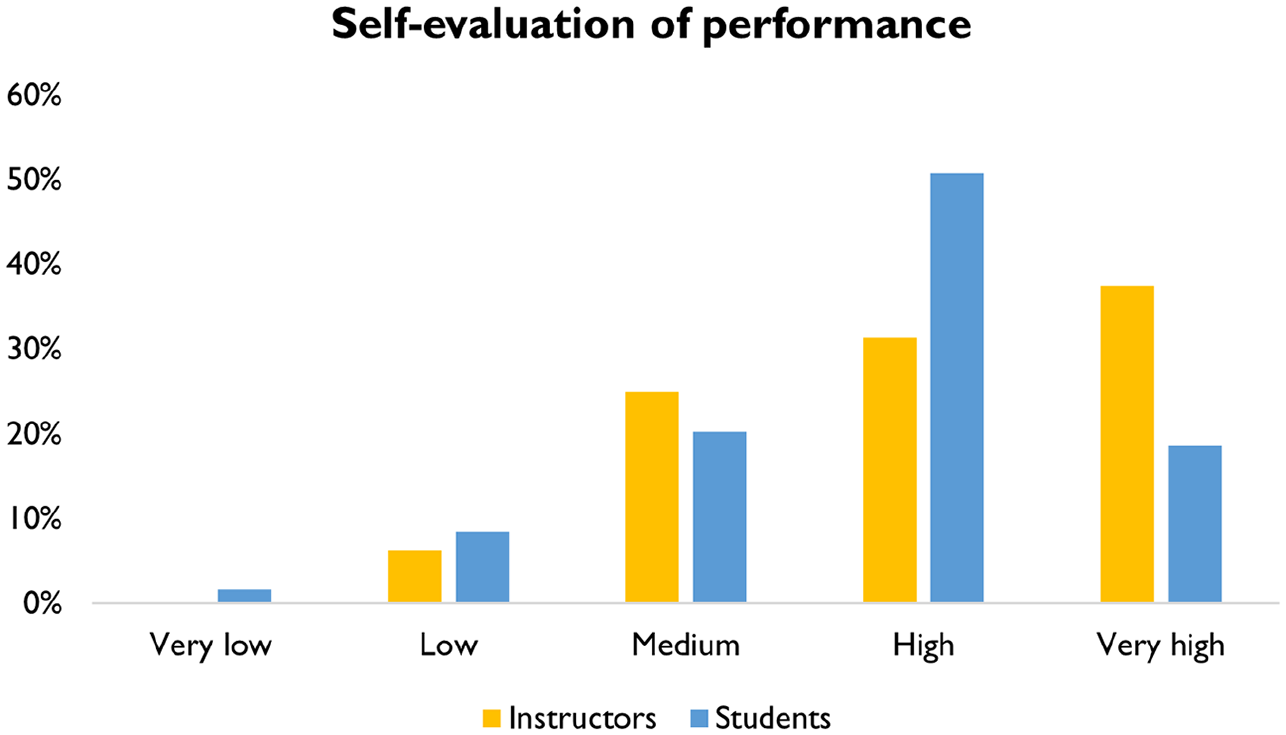
Answers to the question “How do you rate your performance as a teacher/as a student of the studio course?”
The greater challenge for teachers was work overload. As a response to the steep increase of expectations in communication, they had to work much longer hours to reply to emails, to provide additional feedback to group projects, and to tutor students. Practical difficulties were related less with technological problems (hardware, software, Internet connectivity) and more with the organization of the course.
A major difficulty was how to substitute site visits, which were impossible due to confinement measures. Teachers replaced site observation with 3D Google Earth and GIS platforms for collecting information, as an emergency solution, which, of course, had many drawbacks. During in-depth interviews, a professor characteristically said that the experience of the city is not a series of images, to be viewed on a screen, but includes all the senses. She pointed out that without having a perception of the study area, students had no real feeling of what the relative dimensions were, of the peculiarities of the surrounding natural landscape, of “what it means to go up a slope” (the area was hilly), thus falling into often silly mistakes. Not having the chance to meet with local people and community groups was also considered a major shortcoming, especially for planning studios. Instructors tried to compensate for this loss by inviting experts to talk to the students or by transferring to the students their own experiences. As a student enthusiastically wrote in a comment, the professor knew so much about the area that “she made [students] feel like [they] were there.”
Although these substitutes for site visits provided enough data for students to carry on with their projects, students missed real-life experiences which are crucial not only in urbanism education, but for learning, in general. According to Kolb’s experience-based learning (EBL) theory (Kolb 2015), learning is much more effective when learners are actively involved, use analytical skills to conceptualize the experience, and use decision-making and problem-solving skills to practice on the new ideas gained from the experience. In first-year urban design studios at SSPD, in response to the unavailability of visiting the pre-pandemic area of study, both the content and the deliverables of the studios were modified. The study area for each exercise was not unique and common for everybody, but each participant had to work on a part of the city, town, or village where he or she happened to be staying during the semester. This adjustment provided the advantages of EBL, ensured first-hand observation was possible, and highly motivated students to do the assignments.
Mironowicz, Netsch, and Geppert (2021) describe the results of a similar pedagogical experiment that took place in three European countries (Austria, France, and Poland) under lockdown. In those countries, too, confinement measures were very strict; especially in France, people were allowed to go out for up to one hour a day and within a distance of one kilometer from their home. The authors responded to the novelty of the situation by adopting an empirical and open-ended approach. They mobilized students to perform a micro-observation of their environment, be it rural or urban, and of the use of public space during the lockdown measures. Specifically, students had to present a spatial analysis of the characteristics of their area, that is, an urban block, such as land use, urban fabric, morphology, and density. Then, they had to calculate daytime and night-time occupancies, before and during lockdown based on clues such as doorbells and facades. Real-time observation took place from one’s window, twice a day, for two weeks, and involved defining and mapping the visible area, counting flows (quantitative element), and documenting behavioral information (qualitative element). Pedagogically, this collaborative staff–student endeavor was very satisfying for both students and professors. “Working on a well-known district led [students] to look at their neighborhood from a different perspective but also gave them a better understanding of the practical implications of urban planning choices on the daily lives of the inhabitants” (Mironowicz, Netsch, and Geppert 2021).
Similarly, a group of instructors at the University of Belgrade, Serbia, organized an online interdisciplinary design workshop during lockdown that also applied real-life experience (Milovanović et al. 2020). During the two-week workshop, students from various disciplines (Architecture, Urbanism, Interior Design) collaborated in producing design ideas for the pandemic city. These examples of student-led, experience-based projects show a shift in studio teaching; the strengthening of the role of the student in planning research could be a major take-away post-pandemic, as Mironowicz and Schretzenmayr (2020) point out.
Another crucial challenge for studios was teamwork. For both students and teachers, this was the main difficulty to overcome (Figure 7).
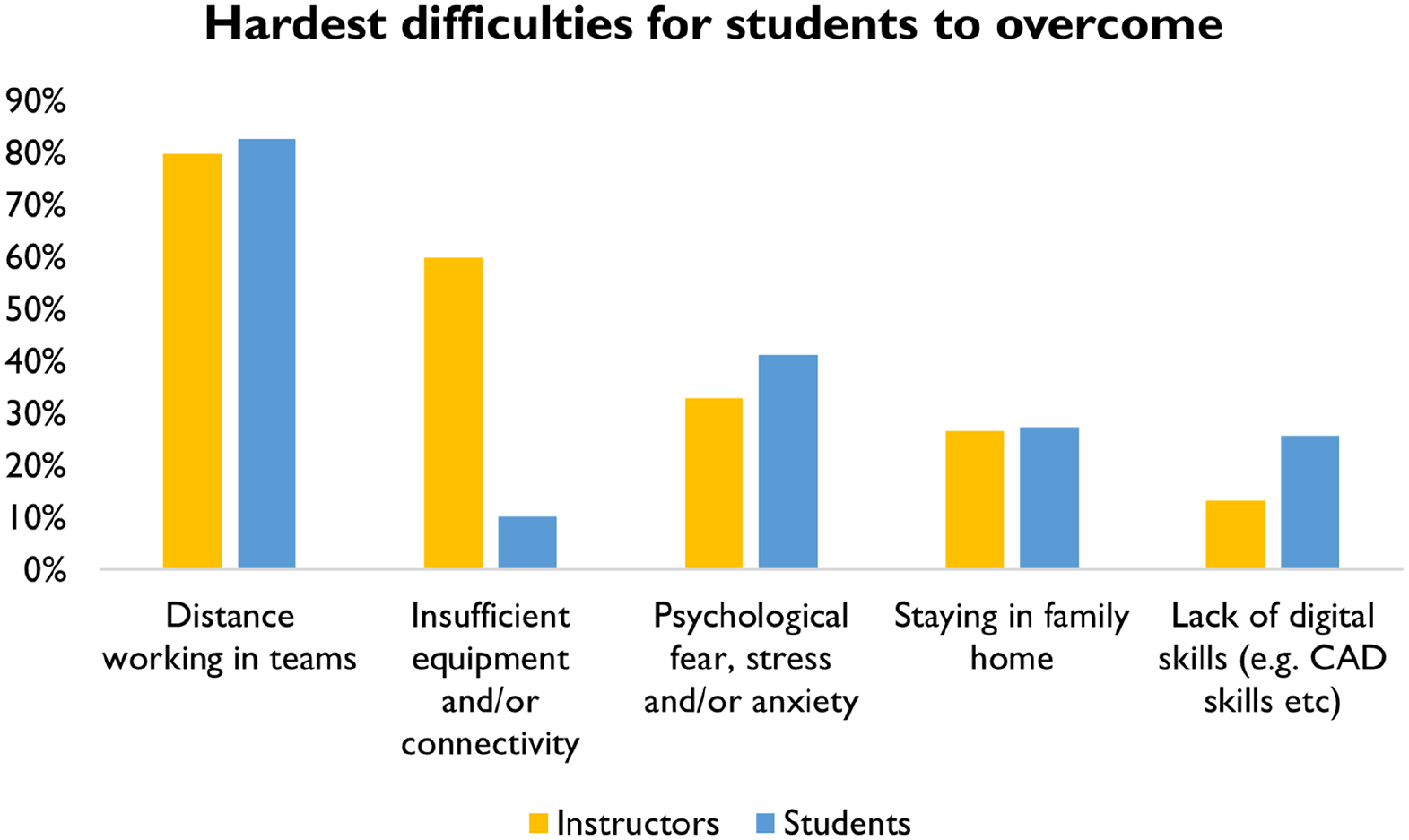
Results from the question “What was the major difficulty for you during remote teaching of the studio course?”
According to the majority of the professors, coordinating group work online and providing adequate feedback took much more time than it normally does in-class. Some teachers expressed the opinion that, on the contrary, reviewing projects online was more efficient, as it brought more discipline and increased sense of responsibility in students. The course benefited from “zoom as panopticon,” meaning that students could easily watch others’ reviews and thus correct their own mistakes. Often in the crowded, over-populated classrooms of Greek universities, it is impossible for more than a small group of students around the table to listen while the instructor reviews a team’s project. Another uptake was greater attendance; professors noticed that a greater number of students remained “faithful” till the end of the semester. It is indicative that, in the students’ questionnaire, 67 percent of the participants stated that they attended the courses at least 90 percent of the time.
Completion rates have also been high. Most groups managed to finish their projects, albeit assessments of the overall quality were not uniform: some professors thought that projects were very good, almost equal to the ones produced in normal conditions, while others believe that the lack of on-site visits and firsthand information, including encounters with local people, affected the projects negatively. As shown in Figure 6, the majority of students were satisfied with their work, either to a great extent or entirely. Interestingly, the more mature the students, the less satisfied they were from their projects. Among fourth- and fifth-year students, there were many comments about feeling insecure as to whether they had actually conquered the studio’s subject matter and acquired the necessary skills. Being very close to graduation, a student mentioned that “[she] and [her] colleagues will know whether or not [they] have really learnt what is necessary when [they] enter the job market.” Indeed, this will be the utmost test to assess the effectiveness of remote teaching.
Interaction
In studio courses, interaction with students and among students is imperative as a major component of planning education is critical thinking. Debate, discussion, questioning, and verifying the methodology, interpretation, and conclusions of each exercise, all depend on the level of interaction (Mironowicz and Schretzenmayr 2020). Online teaching platforms provided interactivity, but only to a limited level. Technology was far too imperfect to create the virtual environment alternative to real-life studio teaching, where there is a lot of multitasking and many channels of communication open at the same time. A major drawback of online teaching, according to professors, was the absence of pedagogic environment, of being together as a community. In the words of a professor during the interview, The studio process is always a collective process. The maturity of students, through the semester, is also a collective process. Everybody being online at the same time, does not mean they are together. The biggest problem of online education is that students or teams who are “behind” cannot really be helped; it is the studio atmosphere that advances them forward, and that is unfortunately missing. In addition, there is a lot of conformism, a focus on completing the assignment, instead of research investigation. I am frightened at the thought that this could be the new normal.
Interpersonal relationships highly depended on the year of studies and previous encounters between students and instructors. Some professors had never seen their students before; first-year students had never met each other or any of the instructors in real world. Lack of interpersonal contact, apart from the unfamiliarity, meant that informal conversations were hard to initiate. The fact that very few students had cameras on all the time did not help. It created a vagueness about who is really attending that was very stressful for professors. Some professors made the use of cameras mandatory for their students, throughout the entire session and not only during individual/group critiques. Students’ feelings toward this tactic differ; some students opposed to it, thinking it was oppressive, but others thought it forced them to maintain daily rituals, like cleaning up their rooms and dressing appropriately. First-year students, who had never visited the university as they enrolled in the midst of the pandemic enrolled in September 2020, also commented on the benefits of having cameras on, as it was the only way to get to know their classmates.
There were some uptakes regarding audibility. More than a few students pointed out that it was the “first time it was quiet enough to listen to the professor without classroom noise.” The large numbers of students and the poor building facilities indeed often make it difficult for students to hear professors speak in in-class studios.
Among the professors who answered the questionnaire or were interviewed, no one reported using breakout rooms. Group discussions, however, are much easier when groups are kept in a small size (Argote 1999). In online classes, students in small groups feel much more at ease to speak, and even to turn on their cameras. Personally, in first-year studio courses at SSPD, I used breakout rooms first as a tool for getting students to know each other, while working on an assignment. The breakout room was a virtual group drawing table: each student was working on his or her project, but in the company of others, thus having the opportunity to chat, tell jokes, and, more importantly, ask questions and solve problems, especially of technical nature (e.g., about AutoCAD) via screen sharing. At the time of group assignments, each group had its own breakout room and was working on the project, allowing for intimacy and privacy during reviewing. They could also call for help, with the special function that is included in many platforms. As students were free to move between rooms, they would at times “visit” other groups’ “rooms,” which felt almost like being in a real classroom, where students interact with each other, exchanging opinions and so on.
Feedback from students shows that using breakout rooms was the best tool for recreating the studio atmosphere that was so missing online. Many of them were staying in the Zoom session even after the end time of the class to continue working. A first-year student wrote in his or her feedback for the studio: “What I liked most about the studio course and I thought was the most useful, was the communication we had, as teams in the breakout rooms, where we learnt to be more collaborative.” If the function of breakout rooms is further designed and tweaked, it can facilitate group work in online studios and workshops. The current technology has been designed for other purposes; therefore, the key is to co-design remote platforms together with developers so that it fits specific teaching scenarios (Laurillard 2002).
Surprises
Professors who participated in the study emphasized that a positive aspect of remote teaching experience is the usefulness of elearning platform for uploading material and for communicating with the students. Many professors pointed out that before the pandemic, they had been under-using these platforms but, from now on, independently of how classes are delivered, online or in-person, they consider enriching the content of the course elearning page with recording of classes, especially lectures and tutorials, or pre-prepared “lectures-in-a-tin,” thus reaffirming research results from other countries (Mironowicz and Schretzenmayr 2020).
Faculty enjoyed the chance to use online teaching conditions as an opportunity to invite speakers and reviewers from faraway locations all over the world to participate in their courses. In that respect, Greek professors share the fascination about the easiness and practicality of this new practice with academics around the world. Pedagogically, having guest speakers, often scholars whose work the students have read, offered the chance to students to engage with them directly (Miyagawa and Perdue 2021), helped bring variation, and exposed them to multiple points of view. Students’ feedback in this study also shows that they greatly appreciated opportunities to meet and listen to invited speakers during remote teaching.
Students pointed out a rather surprising positive side-effect of remote education: not having to commute to the university, and specifically, not having to take the bus. In Thessaloniki, the only means of public transport are buses, which always run late, are filled beyond capacity most times of the day, and are full of pickpockets. This finding shows the significance of good quality transport infrastructure for students’ overall satisfaction about their lives. Like crammed classrooms and inefficient facilities, some aspects of the physical environment offered by the university, and the city in general, affect the students so negatively that for many of them, remote teaching suddenly appeared as an attractive alternative.
Students—and not teachers—are the ones who observed the communication barriers created by online teaching. Many students felt uncomfortable “speaking on the microphone to a ‘digital image’ instead of a real person.” Students also pointed out that the pandemic deepened inequalities among students. A student wrote, “When I discussed the issue with others, I realized that quite a lot of students did not have the equipment necessary, while others had to share it with siblings and parents, although I personally have not experienced such problems.”
It is worth noting that students overall expressed much more empathy to their peers’ experiences than teachers. They pointed out the problems of psychological stress (sadness, loneliness due to quarantine, fear and anxiety about the future) and of living with family (lack of privacy, having to share), as significant difficulties during the pandemic. As Miyagawa and Perdue (2021) stress out, the pandemic has brought to the surface the need to educate “the whole student.” However, in very large audiences, as in the case of Greek universities, the good practices that the authors propose, for example, reserving time to just talk to students about their week and see how everyone is doing, are much harder to implement.
Conclusions and Contributions
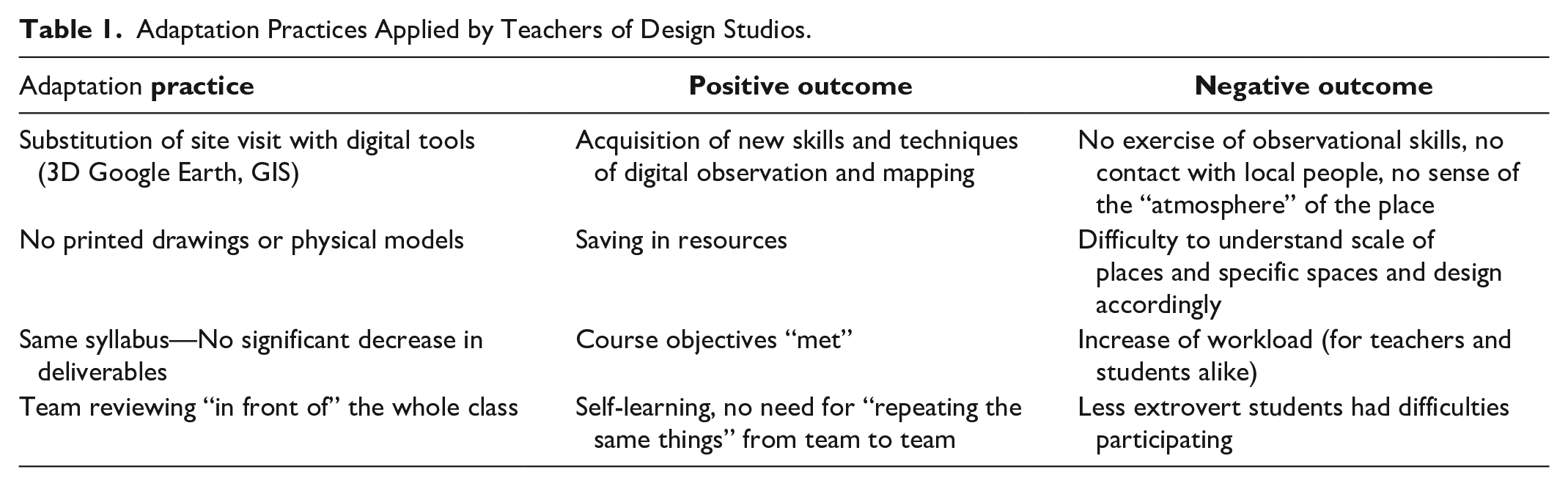
In this real-life experiment in online teaching that educators and students of urban design and planning studios in Greece have lived through during a prolonged period of eighteen months, teachers had to overcome many pedagogical challenges (Table 1). Instead of direct access to the study area and field observation, all teachers switched to digital field data mining, using Google Earth, street view, and GIS platforms. This transition insured that the studio produced the same deliverables as it normally would, but left students without practically doing any observation on their own. Digital tools facilitated the process but left a void in students’ perception and understanding of scales of space. There was no reduction in project workload (in fact, some teachers said they increased it) leading to increased stress for students and teachers, as everything required much more time to be done online. The “panopticon” aspect of online critiquing was positive for students to learn from others’ reviews but was intimidating for some participants.
Adaptation Practices Applied by Teachers of Design Studios.
On the other hand, issues related to students’ learning experiences were for the most part left out of teachers’ adaptation strategies. Under the stress of remote teaching, with all the complex tasks and responsibilities they had to take on, and with very large audiences, as it is the case in Greek universities, instructors had little time to address students’ psychological stress. In fact, maintaining the studio workload in pre-pandemic levels resulted in increasing students’ stress. What was also missing were opportunities for personal, non-structured interaction, and, occasionally, showing empathy. A teacher wrote in a comment: “Students did not express complaints about the practical aspects of the studio—they had adapted to those aspects.” Finally, as site visits were impossible, very few teachers thought of changing the studio’s syllabus, for example, by assigning each student a different area of study close to his or her home, which might have equally fulfilled the course learning objectives and, additionally, offered students the opportunity for direct environmental knowledge.
This research shows that faculty teaching studio courses of Urban Planning and Urban Design faced considerably more challenges than instructors of theoretical subjects. Design studios are based on teamwork, and their pedagogy relies on many channels of communication concurrently (peer-to-peer, team-to-team, instructor-to-team, instructor-to-class). These aspects were very constrained due to the online teaching technology available. At the same time, difficulties also arose from the nature of planning and urban design, which are fields that require a learning process based on experience and an awareness of the physical environment. These were unattainable, due to lockdown measures and due to the fact that a preselected site area was out of reach for many participants who lived far away from the city where the university is located.
Should a hybrid form of university teaching continue—as it seems high probable—it is imperative for urban planning and urban design pedagogy to safeguard design studio courses as problem-based and related to current challenges, through maintaining the direct exposure of students to physical space and incorporating active learning experiences. This can be done even if students live at a different location from the university city by adapting the assignments to allow students to study areas close to their homes, while maintaining the learning objectives of the course. As the future is still uncertain and a “return to normal” nowhere in the horizon, it is also important to initiate a design collaboration with developers of online meeting platforms to create a virtual educational environment adapted to the needs of studio work, allowing easy and user-friendly interplay between the various communication channels (peer-to-peer, team-to-team, instructor-to-team, instructor-to-class). This can be done by suitably designed team rooms, virtual “drawing boards,” and so on. Finally, the study shows that instructors will maintain online participation of guest speakers—lecturers, reviewers, and/or experts—as a standard practice, thus expanding the geographical constraints of universities.
Footnotes
Acknowledgements
I wish to thank the anonymous students and instructors who participated in the online surveys. I am mostly grateful to Professors Maria Markou, from the National Technical University of Athens; Despina Dimelli and Alexios Tzombanakis, from the Technical University of Crete; and Vyron Ioannou, from Frederick University, for their generous availability and valuable input during the in-depth interviews. Finally, I am indebted to Athena Yiannakou, Athena Vitopoulou, Charis Christodoulou, Professors at the Aristotle University of Thessaloniki, for the supportive discussions during the strange days of pandemic online teaching.
Declaration of Conflicting Interests
The author(s) declared no potential conflicts of interest with respect to the research, authorship, and/or publication of this article.
Funding
The author(s) acknowledge the following financial support for the research, authorship, and/or publication of this article: The open access publication of this article was funded in full by the Onassis Scholars Association.
