



Abstract
Through this paper, we investigate the key characteristics of planning studios and how they relate to new demands in planning education. The research is conducted through an analytical framework that is applied to a highly transferable case study (iWater Summer Schools). Results confirm that the prototypical characteristics of planning studios can support the design of multidisciplinary, research-oriented, personalized, and intensive courses, and that all these demands can be simultaneously satisfied. In addition, results indicate that positive alignments and connections can be established between different pedagogical variables (e.g., learning methods, assessment methods, provided skills) and the educational demands mentioned above.
Introduction
New Demands of Planning Studio Courses
Studio courses are central in design, planning, architecture, and landscape architecture education (Armstrong 1999; Higgins, Aitken-Rose, and Dixon 2009; Lang 1983; Lueth 2008; Neuman 2015; Senbel 2012). Planning studios involve the use of a particular type of pedagogy, a specific approach to the use of learning facilities and timetabling, a studio culture, and some basic rules of conduct (Bosman, Vella, and Shutter 2016). The prototypical planning studio is a student-centered and problem-based course promoting active and flexible learning through the development of solutions to a specific challenge, usually in a real setting or classroom and in contact with a real or hypothetical client or group, the intense interaction between students and tutors, the use of formative and summative assessment, integration of theory and practice, emphasis on both process and outcome, and the engagement of participants in the definition of topics and potential outputs (Bosman, Vella, and Shutter 2016; Higgins, Aitken-Rose, and Dixon 2009; Nemeth and Long 2012; Neuman 2015). The pedagogy of planning studios can be studied by identifying common characteristics affecting their learning outcomes, pedagogical approaches, learning and teaching methods, assessment methods, and provided skills (Higgins, Aitken-Rose, and Dixon 2009). This pedagogical analysis also reveals the importance of interconnecting these different pedagogical components during the design of the course (Nemeth and Long 2012). Although studios can be developed in various ways, they are often linked to complex or wicked problems (Balassiano 2011; Wang 2010) and to case studies (Francis 2001; Neuman 2015). This makes the analysis of “case-study based” planning studios especially relevant from a pedagogical perspective.
The studio-based learning model is under revision due to increasing complexity and interdisciplinary permeability, the appearance of new ways of social and pedagogical interaction, digitalization, and new economic and logistic conditions affecting higher education (Balassiano 2011; Higgins, Aitken-Rose, and Dixon 2009; Long 2012; Oonk, Gulikers, and Mulder 2019; Pasin 2017). The societal, technological, and educational changes listed above have generated an increasing interest in understanding the capacity of planning studios to respond to (1) the growing need for multidisciplinary planning, (2) the need of creating new bridges between education and research, (3) the importance of fostering personalized learning even when time and resources get restricted, and (4) the demand of intensive and short courses as a complement or alternative to regular courses. It would be critical to study if all these new demands can be responded to simultaneously and if there are inherent synergies or conflicts when trying to achieve all of these in a given planning studio.
Multi- and interdisciplinary collaboration is vital to envision sustainable solutions for complex challenges and to prepare future planners (Bosman, Vella, and Shutter 2016; Neuman 2015). Multidisciplinary design projects and teamwork promote creativity and innovation and provide new insights into the different cultures engaged in the design or planning process (Cennamo 2014, 61). However, multidisciplinary collaboration in planning education poses additional challenges such as the need of overcoming communication barriers between disciplines, avoiding stereotypes, reframing former types of specialized knowledge, and constructing new spaces and vocabularies for mutual understanding (Denton 1997; Neuman 2015). Moreover, there is a need to engage a wider range of fields and approaches in many planning, design, and place-based disciplines (Gruenewald 2003; Neuman 2015). This generates a double challenge. On one hand, it becomes necessary to define planning studios and methods that promote multifaceted approaches and multidisciplinary collaboration. On the other hand, planning education must still facilitate the acquisition of specific skills connected to the competences of planners and to the added value that they can provide as integrators and formalizers in multidisciplinary projects.
The generation of knowledge that characterizes many planning studios suggests their potential connection with research if some critical conditions are accomplished. Planning studios can generate bridges between education and practice and between planning and research by promoting data gathering, deep analysis, and a critical development and assessment of ideas, designs, and plans (Neuman 2015, 3; Salomon 2011, 42; Shepherd and Cosgriff 1998, 348). However, barriers to develop scholarly research in design and planning disciplines have been widely recognized (Armstrong 1999) and have even led to the formalization of new modes of research (Deming and Swaffield 2011, 8–10; Van der Brink et al. 2016, 24–34). In this regard, one of the key goals in planning education would be to provide methodological rigor and validity to the research that might take place in planning studios, for instance, by advancing in their refereed assessment (Armstrong 1999), by designing the studio as a research project (Bowring 1997), or by using different methods (e.g., triangulation) to critically contrast the generation of ideas and solutions (Armstrong 1999).
The importance of personalized learning is recognized as a response to growing student diversity and to the benefits that can be obtained by adapting education to the interests, strengths, and needs of individual students (Basham et al. 2016; Olofson et al. 2018; Zhang, Basham, and Yang 2020). However, most of the existing research has focused on primary and secondary education and has placed a special emphasis on the possibilities brought by new technologies (Basham et al. 2016; Bingham 2017). In this context, the importance of investigating which learning processes and environments can better support personalized learning in planning studios has been called for (Brown, Hallett, and Stoltz 1994; Carey and Barthelmeh 2016).
Finally, intensive courses have become increasingly frequent in universities for different reasons (Daniel 2000; Davies 2006; Kucsera and Zimmaro 2010; Scott 2003; Wlodkowski 2003). First, they offer an adequate format to concentrate exclusively and intensively on specific planning topics. Second, they are a convenient and flexible option for people searching for part-time, supplementary, or adult education (Daniel 2000, 298). The main benefits of intensive courses are diminished procrastination and increased motivation, focus, retention, stamina, and levels of interaction between participants, whereas the main risks are fatigue, overload, and lack of flexibility due to the speed of the learning process (Davies 2006; Scott 2003). In addition, intensive course teachers tend to be pedagogically more innovative and keep more time for discussion and experiential learning, whereas students are more disposed to adjust their learning techniques (Daniel 2000, 302).
Designing and Assessing Planning Studios for Multidisciplinary, Research-Connected, Personalized, and Intensive Learning
Literature on the design and assessment of planning studios is scarce although some authors have defined comprehensive and flexible frameworks (Bosman, Vella, and Shutter 2016; Denton 1997; Higgins, Aitken-Rose, and Dixon 2009; Nemeth and Long 2012; Senbel 2012) or have elaborated synthetic studies based on the analysis of different cases (Neuman 2015). A systematic assessment of planning studios would require a double exercise: first, the definition of a conceptual framework with general or specific characteristics that are deemed relevant for the assessment, and second, the testing and validation of that framework. The assessment of the planning studio process and outcomes can be conducted using different techniques (questionnaires, interviews, course evaluations) and can be based both on experts’ or clients’ opinions and in the internal assessment of the course by students and tutors (Nemeth and Long 2012, 482–83; Senbel 2012, 451). This last option might be particularly adequate when the learning process or the level of achievement of learning outcomes needs to be understood from inside and when the opinions of the participants (students and tutors) are central to the study. Furthermore, convergences or divergences between students’ and tutors’ opinions would reveal the existence of different expectations or perceptions for the same planning studio course. Actually, existing literature suggests that students’ and teachers’ assessment on students’ performance are not significantly different when they operate with the same assessment criteria (Asikainen et al. 2014, 200; Davey and Palmer 2012, 85; Kearney, Perkins, and Kennedy-Clark 2016, 841).
Subsequently, we pose the following research question: Can planning studios respond to existing demands for multidisciplinary, research connected, personalized, and intensive learning? In addition, a set of secondary research questions are proposed: first, which barriers and opportunities can affect the design and implementation of such planning studios? Second, can all these demands be satisfied simultaneously? And third, does personal or academic background influence the perception of planning studios for the demands listed above?
Method
We addressed the research questions by defining an analytical framework for the design and assessment of planning studios (Table 1) and by testing that framework in a specific case study with a high potential of transferability (iWater Summer Schools, iWSS hereafter). The case study was analyzed through a post-course questionnaire in which students and tutors assessed the iWSS for a set of key variables.
Analytical and Assessment Framework with Variables Affecting the Design and Implementation of Studio-Based, Multidisciplinary, Research-Oriented, Student-Personalized, and Intensive Planning Courses.
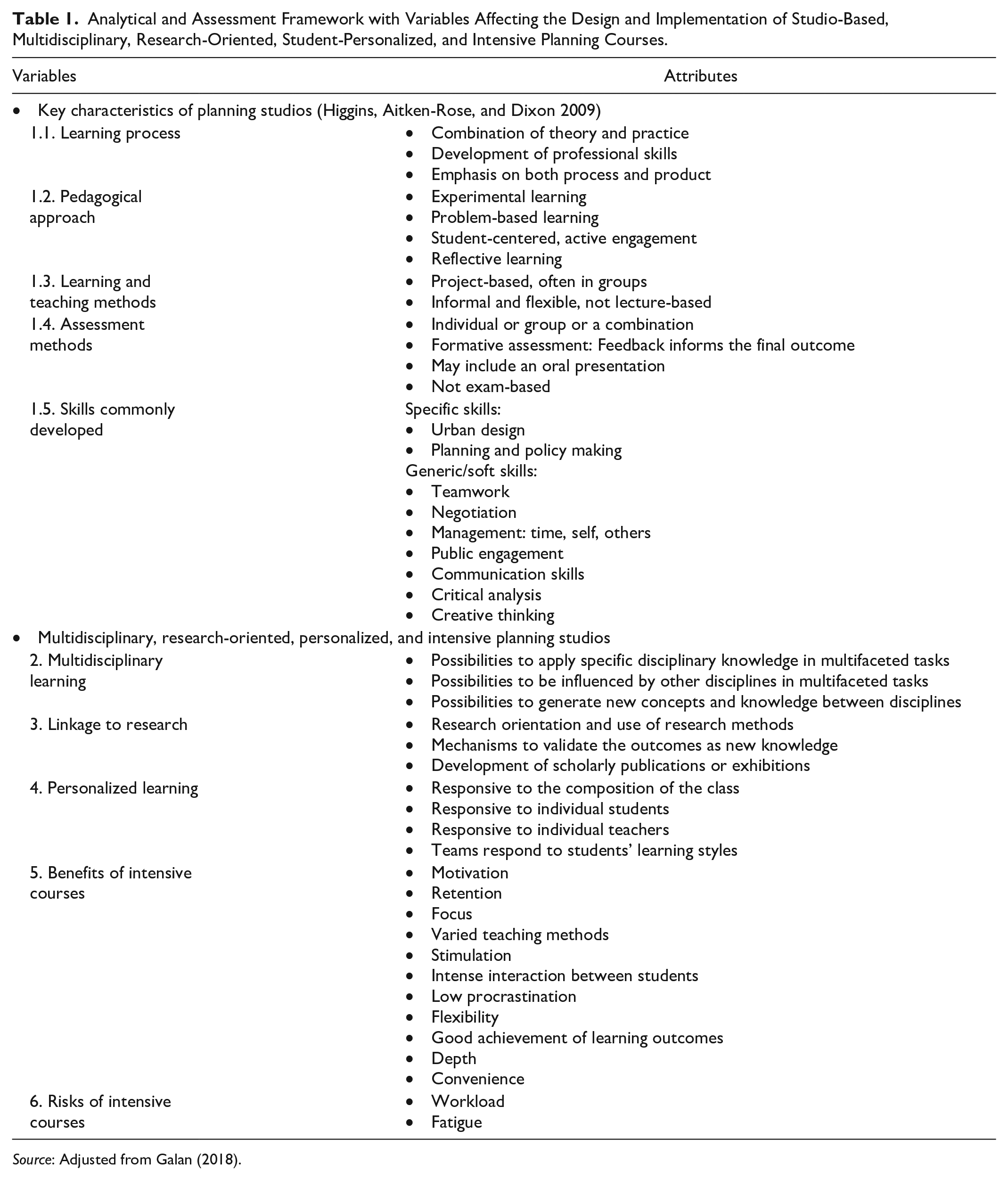
Source: Adjusted from Galan (2018).
A Framework for the Design and Assessment of Planning Studios
Table 1 presents a set of ten variables and their respective list of attributes describing a prototypical planning studio (variables 1.1–1.5 as per Higgins, Aitken-Rose, and Dixon 2009, 12) designed and conducted to promote multidisciplinary learning (variable 2), linkage to research (variable 3), personalized learning (variable 4), and the use of an intensive format (variables 5 and 6). The attributes included in each variable have been assumed from Higgins et al. or have been deducted from the literature. The variables and attributes proposed by Higgins to characterize planning studios were selected because of their general acceptance within the pedagogical community and their untested potential in the practical assessment of planning studios.
Case Study: iWSS, a Planning Studio on Integrated Stormwater Management (SWM)
The iWSS focused on Sustainable Urban SWM in the Baltic region. After finishing the course, students were expected to (1) know the key principles, tools, and techniques for integrated SWM, (2) integrate sustainable SWM in urban planning and design, and (3) incorporate SWM in landscape planning and design, with a special focus on blue–green infrastructure and ecosystem services (Galan 2018).
In the framework of the iWater Project (Interreg Central Baltic), a set of three intensive Summer Schools were organized in Latvia, Sweden, and Estonia in 2016. Each school was attended by a different group of students, tutors, city representatives, and professionals who worked intensively during one week in the pilot sites addressed in each Summer School. The iWSS were designed as an intensive, international, multi-inter-transdisciplinary planning studio for a wide variety of students. Moreover, the iWSS were expected to support further research within the iWater project. Therefore, the iWSS can be considered an optimal case to study the capacity of planning studios to respond to some of the new challenges and demands affecting the design and implementation of planning studios.
Sixty-one students from sixteen universities, seventeen countries, and different disciplines attended the iWSS. Tutors included eleven teachers and practitioners from the host universities and cities. During each school, students worked in multidisciplinary teams. Each team developed a strategic proposal to improve SWM in their pilot site. Pilot sites included consolidated urban areas (Helsinki, Gävle), urban areas under transformation (Riga, Turku, and Tartu), and periurban areas under reconsideration (Söderham, Jelgava).
In particular, the learning process, pedagogical approach, teaching methods, assessment methods, and addressed planning skills were highly aligned with the attributes listed in Table 1 for variables 1.1 to 1.5. Variables 2 to 6 were also considered in the design of the iWSS, but not their specific attributes as they were defined in a later stage and, as presented in the results, were used for the post-course assessment of the course.
Regarding intensiveness (variables 5 and 6), each summer school was conducted as a five-day intensive studio worth three ECTS (Credits in the European Credit Transfer and Accumulation System). Due to their short duration, all iWSS followed a linear sequence comprising a contextual analysis, the development of planning strategies, and the definition of multi-scale urban and stormwater proposals. Each of these phases was activated with a set of introductory lectures, continued with assisted workshop sessions, and concluded with an open review of the produced outcomes. Overall, 20 percent of the time was dedicated to lectures, 60 percent to teamwork, and 20 percent to reviews. Continuous and formative assessment was used as a learning method per se and was based on the feedback provided by tutors, peer students, and external experts.
Regarding multidisciplinary learning (variable 2), the crosscutting character of the course and the diverse academic backgrounds of both students and tutors made it possible to create highly multidisciplinary teams assisted by tutors with different academic profiles. Concerning the research component (variable 3 in Table 1), the iWSS were conceived to support future research in the iWater project and to provide some basic research tools to the students. The use of manual techniques was favored in the studio to promote more agile and interactive discussions but, at the same time, the work of the students was supported with qualitative methods and with a rough quantitative system to calculate the volume of water run-off for a standard rainfall event. This simple method helped students evaluate different planning alternatives and make decisions accordingly. Finally, the possibilities for personalized learning (variable 4) were limited by the short duration of the course and by the need of producing some predefined types of deliverables. However, students were given complete freedom to operate within those limits and to focus on those aspects of the course that were more relevant for them.
The general structure of each iWSS and the types of deliverables produced by the students are available in Supplementary Material S1. More information at: http://www.integratedstormwater.eu/content/summer-schools (Galan 2016).
Analyzing the iWSS with the Proposed Design and Assessment Framework
A questionnaire based on the variables and attributes included in Table 1 was designed to assess the structure, implementation, and results of the iWSS planning studio. The questionnaire was piloted in 2018 among a small group of students and tutors from Aalto University who participated in the iWSS and, following its validation, it was distributed among all students and tutors that same year. The questionnaire included fifty-five questions for the attributes listed under each variable in Table 1 plus one additional variable about the increase of knowledge in the key topics addressed in the iWSS. All questions were formulated as Likert-type questions with scores ranging between 1 (very low) and 5 (very high). The pedagogical assessment of the iWSS by students and tutors was chronologically decoupled from the development of the course to give them more time to process and sediment their learning experience. This lapse of time was also used to develop and test, in advance, a pilot survey. On the contrary, assessment activities during the course were strictly formative and were organized around the production and discussion of the intermediate and final deliverables. All the students who completed the proposed activities obtained a certificate of attendance without a specific grade. Therefore, no grading process affected the later pedagogical assessment of the course by the students.
The questionnaire (see Supplementary Material S2) was distributed via email to all students and tutors together with a short explanation of the purpose of the study and a summary of the results of the course (see http://www.integratedstormwater.eu/content/summer-schools). Thirty-six students (59% of the total) and nine tutors (82%) completed the questionnaire in full. All answers were associated with the personal factors describing the background of the respondents (gender, age, country of studies, university of origin, degree level, degree field, attended iWSS, and developed pilot site), but their personal names were deleted to conduct all subsequent operations anonymously.
First, answers to the fifty-five questions were used to detect possible divergences between students and teachers within each question, using the Mann–Whitney U test. Second, we calculated the mean scores of the questions within each of the eleven categories/variables (see above) for students and performed a linear regression on these mean scores. The following factors were included as predictor variables to evaluate their effect on the mean scores: gender (two levels: female [72%], male [28%]), student age (range: 20–47 years old: 50% [<26 years]; 39% [26–35 years], 11% [>35 years]), country of studies (six levels: Latvia: 33%; Finland: 28%; Spain: 14%; Estonia: 11%, Sweden: 8%; Other: 6%), degree level (three levels: bachelor: 22%; master: 61%; PhD: 17%), degree field (six levels: 31% landscape architecture, 28% architecture, 14% environmental engineering and environmental sciences, 11% urban and regional planning and geography, 11% sustainability sciences, 6% other degrees such as civil and transport engineering or law), and iWSS attended (three levels: Jelgava [Latvia]: Gävle [Sweden]: Tartu [Estonia]). We performed model selection by removing factors that did not contribute in explaining variation in the scores: factors were removed one at a time (starting from the most insignificant ones) until those left in the models had p values of < .2. Third, two correlation analyses were performed on the mean scores of the eleven variables: one for students and one for tutors, to identify potential synergies and conflicts between them.
All statistical analyses were performed using the R statistical software (R Core Team 2020). The correlation analyses were performed using the R package psych (Revelle 2021).
Results
Assessment of the iWSS by Students and Tutors
As displayed in Figure 1, results reveal that the iWSS adhered to the characteristics of a prototypical planning studio (Higgins, Aitken-Rose, and Dixon 2009) and provided a highly multidisciplinary experience that was especially recognized by tutors. Linkage to research and the possibilities for personalized learning were moderate. On the contrary, the iWSS displayed the benefits and risks of intensive courses implemented with a full-time format during a short period of time. They promoted motivation, focus, and a good achievement of learning outcomes, but this came at the expense of an intensive workload and a slight level of fatigue.
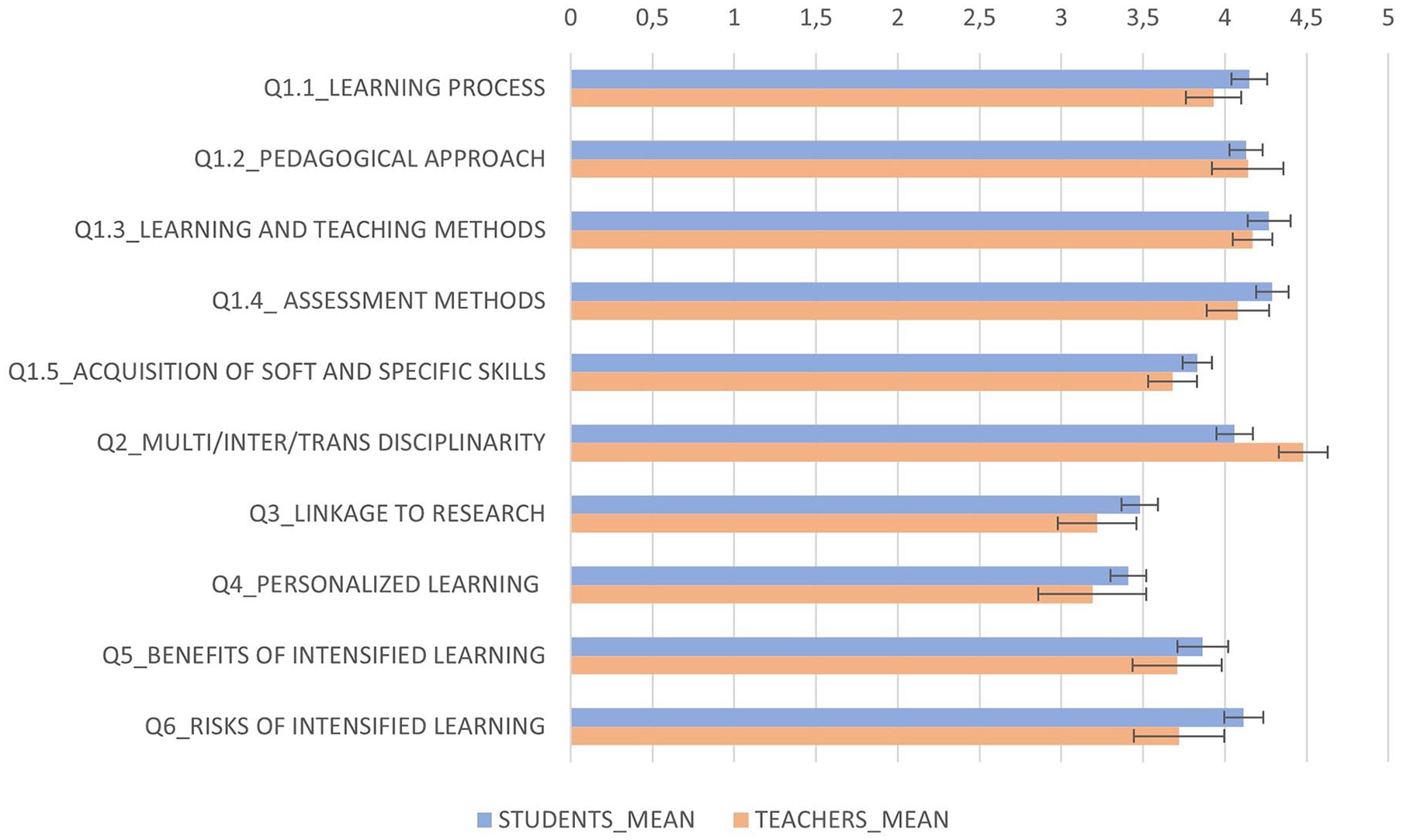
Assessment of the iWater Summer Schools planning studio according to the types of variables included in Table 1.
As presented in the Supplementary Material S3, for both students and tutors, the learning process (Q1.1) involved a deep combination of practice and theory through a practical case, emphasized both process and product, and provided professional skills emulating practice (with lower scores by tutors in this last issue). Regarding the pedagogical approach (Q1.2), the studio course promoted experimental, problem-based, and reflective learning, and was centered on the student and in their active involvement. In terms of learning and teaching methods (Q1.3), all participants found that the studio was project-based and that it included a flexible combination of methods although tutors emphasized the former over the latter. Concerning assessment methods (Q1.4), both students and tutors found that formative assessment informed the production of outcomes, that oral presentations played a key role, and that the assessment was not exam-based. Interestingly, students perceived that oral presentations were more relevant in the overall assessment and that the provided formative assessment (mid-reviews) was especially important for the production of the final outcome. Finally, regarding the acquisition of soft and specific skills (Q1.5), the iWSS were perceived as a studio supporting the development of soft or basic skills such as critical analysis, creative thinking, communication skills, managerial skills, negotiation capacities and teamwork skills, and of specific skills related to planning and policy making, and urban design. The questionnaire also reveals that, in contrast to other planning studios, public engagement was not very strong in the iWSS although this opinion was primarily held by tutors. Thematically, both students and tutors considered that the studio was more clearly connected to urban design than to planning, although students gave higher scores than tutors to both types of connections.
Concerning the level of multidisciplinarity, interdisciplinary, and transdisciplinary (Q2), the iWSS promoted the application of one’s own disciplinary knowledge, the exposure to other types of knowledge, and the generation of new types of knowledge in the interface between disciplines.
In relation to potential linkages to research (Q3), results were positive regarding the overall research orientation of the course, the level of abstraction, and the exploration and resolution of planning challenges transcending normal practice. However, the level of speculation and the validation of the produced outcomes got lower scores, especially among tutors. On the contrary, although qualitative and quantitative methods were both used, tutors found that the studio was more based on the use of rough quantitative methods whereas students gave higher scores to the use of qualitative methods.
The iWSS were not perceived as particularly responsive to the personal characteristics of the participants (Q4). Regarding personalized learning, the iWSS responded well to the multidisciplinary composition of each class and to the characteristics of the tutors. However, the course did not consider the specific strengths, interests, and needs of each student and how this could affect the composition of teams (tutors were slightly more critical for these two last issues).
Regarding benefits provided by the intensive format of the iWSS (Q5), all participants emphasized the high level of motivation, focus, and achievement of learning outcomes. Benefits were moderately high concerning the level of retention of the acquired knowledge, the combination of different teaching methods, the levels of stimulation and discussion, the level of interaction between students, the avoidance of procrastination, the level of depth, and the facility to adapt the course in the students’ academic calendar. The level of flexibility of the studio course was found moderate. Throughout, students almost always gave higher scores than tutors and in two variables (level of retention and combination of different teaching methods), this difference was especially noticeable.
Potential risks of intensive courses were also detected (Q6) and both students and tutors agreed in the high level of workload. However, the level of fatigue was moderate and was perceived differently by students and tutors.
Finally, regarding knowledge gained on the central topics of the studio (Q7), results reveal that this gain was particularly intense for SWM, and less so but still quite positive for linkages between SWM and urban planning and between SWM and other related concepts such as blue–green infrastructures or ecosystem services.
The Mann–Whitney U tests (Supplementary Material S3) reveal a high level of agreement between students and tutors for all questions, with only two variables (level of public engagement and depth of speculation) showing a significant difference (p ≤ .05) between tutors (lower scores) and students. However, these differences became insignificant when we performed a Bonferroni correction to account for multiple testing.
Influence of Personal Characteristics on Student Scores
Gender, degree level (BA, MA, PhD), and the location of the iWSS were not significant in the evaluation of the iWSS. This last result indicates that the three iterations of the iWSS were perceived similarly by the participating students. Country of studies and degree field had some influence in the assessment of some variables (see statistical analysis in Supplementary Material S4).
Correlations between Different Types of Variables
As displayed in Figure 2, results suggest positive and significant correlations between the learning process, learning and teaching methods, assessment methods, and the development of generic and specific skills (Q1.1, 1.3, 1.4, 1.5).
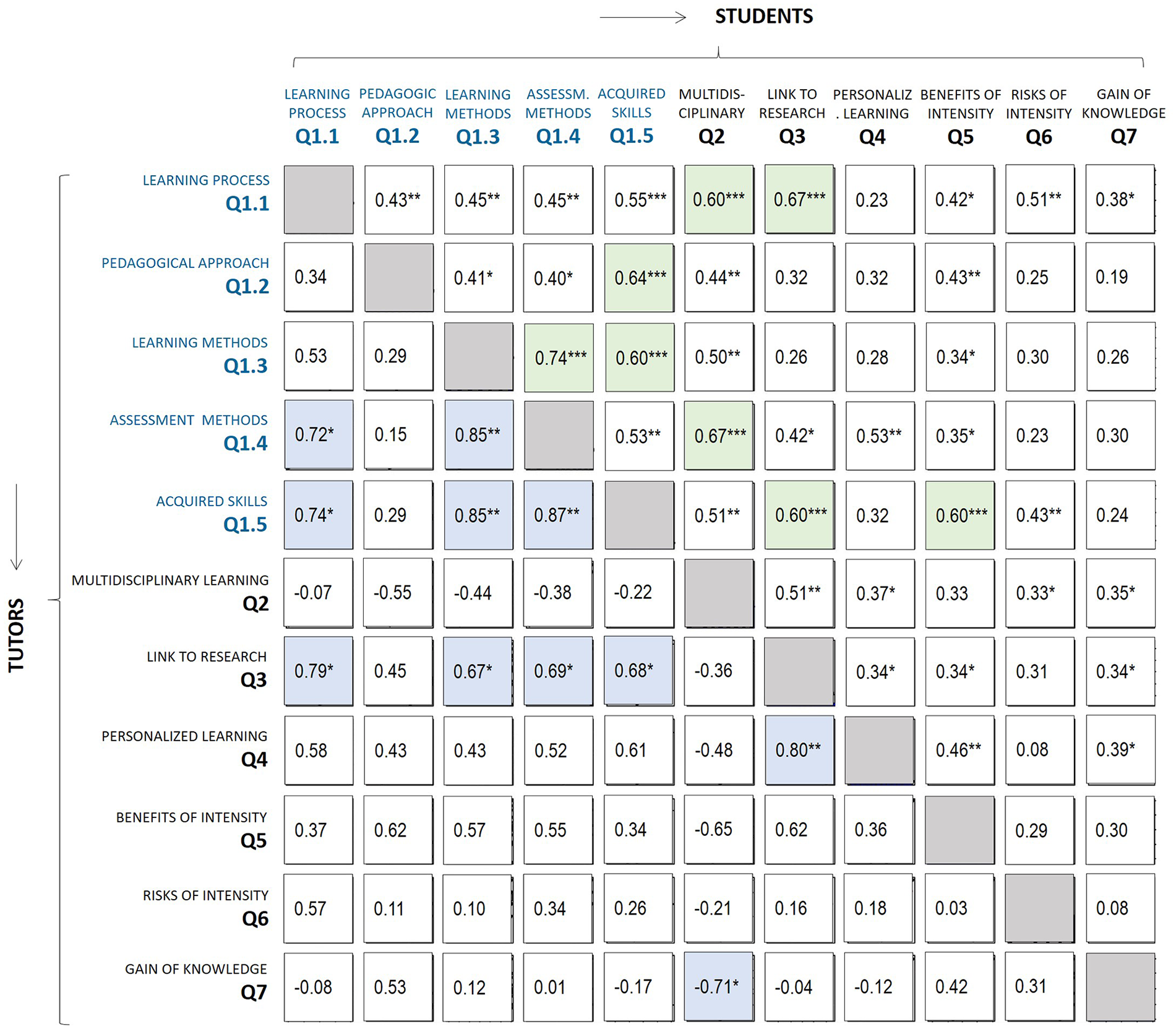
Correlations of the eleven assessed variables (students: top right half of the matrix with highly positive [≥ .6] and significant [p ≤ .05] correlations marked in green; tutors: bottom left half of the matrix with highly positive and significant correlations marked in blue).
Regarding correlations between other measured variables (multidisciplinary character [Q2], linkage to research [Q3], personalized learning [Q4], intensive character [Q5–Q6], gain of knowledge [Q7]), and the prototypical characteristics of planning studios (variables Q1.1–Q1.5), there are differences between students and tutors. Answers from the students suggest that there are positive correlations between (1) the multidisciplinary character of the iWSS and the learning process and assessment methods, (2) linkage to research and the learning process and acquisition of skills, and (3) the intensive format of the iWSS and the acquisition of skills. Tutors’ answers suggest a positive and significant correlation between linkage to research and most of the pedagogical characteristics of planning studios. In general, the level of significance for the correlations in the tutors’ answers was lower than in the students, likely due to differences in sample size.
Finally, regarding internal correlations between multidisciplinary character, linkage to research, personalized learning, intensive character, and gain of knowledge in the iWSS, no strong positive correlations (≥ .6) were found in the students’ answers. However, tutors’ answers suggest a positive and significant correlation between personalized learning and linkage to research. Answers from tutors also suggest a significant negative correlation between the multidisciplinary character of the iWSS and the gain of knowledge in the main topics of the course (intersections between SWM and urban planning, urban design, green infrastructures, and ecosystem services).
Discussion
Our study reveals the capacity of the proposed framework to support the design and pedagogic assessment of planning studios, with a special focus on multidisciplinary, research-oriented, personalized, and intensive learning.
Pedagogical Characteristics of the iWSS
In particular, the use of the framework to post-evaluate the iWSS shows that the course adhered to the pedagogical characteristics of a prototypical planning studio as defined by Higgins, Aitken-Rose, and Dixon (2009), and that all these characteristics can be concurrently aligned. Moreover, Higgins’s framework was tested and validated in a specific case, with positive results that might apply also to other similar frameworks defined by other authors (Nemeth and Long 2012; Neuman 2015; Shepherd and Cosgriff 1998). In addition, the correlation analysis reveals that all these variables were positively interconnected, opening the possibility to further research about the benefits that can be obtained through a more consistent pedagogical alignment of learning outcomes, teaching methods, and assessment methods in planning studios. The proposed analytical framework exposed some aspects that could have been improved in the iWSS, such as the level of public engagement or the level of emulation of professional practice.
From a methodological perspective, the results indicate that correlation analyses can provide relevant information to increase the alignment between teaching methods, assessment methods, pedagogical approaches, and learning processes as a precondition for deep learning (Biggs 1996; Biggs and Tang 1999; Hall 2002; Higgins, Aitken-Rose, and Dixon 2009; Nemeth and Long 2012).
Multidisciplinary, Research-Oriented, Personalized, and Intensive Planning Studios
Our results confirm the possibility for planning studios to respond to new educational demands such as multidisciplinary, research-oriented, personalized, and intensive learning. This finding was confirmed by the positive values obtained for all these variables. Due to the prototypical character of the iWSS, this finding could probably be extended to other planning studios provided that these variables are specifically addressed in their design and implementation (Biggs and Tang 1999; Hall 2002). In addition, this positive result allowed us to investigate two secondary research questions. Primarily, which barriers and opportunities can affect the design and implementation of such planning studios, and secondarily, whether all these demands can be satisfied simultaneously. These questions were answered by studying how the specific characteristics of the iWSS might have affected the responses, and by analyzing if there was a concurrence and positive correlation between the assessed variables.
In the iWSS, all participants found that the course was highly multidisciplinary, interdisciplinary, and transdisciplinary. These three qualities were associated respectively in the questionnaire with the capacity of the students to contribute with their own disciplinary knowledge in a complex task, with the possibility to combine and be influenced by other types of knowledge, and with the capacity to generate new concepts and knowledge in the intersection between disciplines (Davies and Devlin 2010; Helmane and Briška 2017). The central theme of the iWSS (SWM in urban planning), the used vehicular concepts (green–blue infrastructures, ecosystem services), and the diverse background of students could explain the intense interaction between disciplines observed in the course, whereas its short duration could have hindered the development of more transdisciplinary processes (Klein 2008, 117).
The weakly positive connection with research reveals some of the difficulties to integrate methods and procedures that characterize canonical research and that validate planning studio results as research outcomes (Armstrong 1999; Bowring 1997). It must be noted that the iWSS were designed as a highly practical, short, and intensive course in which qualitative information and rough quantitative data were combined to inform the planning and design process. These circumstances, together with the absence of a more consistent and predefined plan to provide a research dimension to the course, might have affected its research potential. As a general recommendation, it would be advisable to explicitly address research within the learning outcomes, learning and teaching methods, and assessment methods of the course, considering at the same time how the planning process and the interpretation or validation of results can be framed according to adequate research methods or how the produced results can be formally presented as research outcomes.
Regarding personalized learning, the prefixed and linear structure of the iWSS might explain the average scores obtained for this variable. These two conditions were strongly determined by the necessity of producing, in a very short time, a predefined type of outcome. However, our evaluation was able to detect these weaknesses and, although no negative correlation was found between the intensive character of the iWSS and their capacity to support personalized learning, the proposed analytical framework also revealed the importance of allowing for more flexible and customizable learning processes if planning studios are expected to respond to growing students’ diversity and to their individual capacities (Basham et al. 2016; Zhang, Basham, and Yang 2020).
Practically, all the benefits and risks associated with intensive courses were detected in the iWSS (Davies 2006; Scott 2003). As with other variables, students tended to give slightly higher scores, probably as a consequence of having fewer external references to compare with and having a positive predisposition toward an extracurricular course that they decided to attend voluntarily or that fitted their own learning style better (Davies 2006). In general, the proposed analytical framework worked well as a diagnostic tool for the intensive character of the course, revealed weaknesses and strengths, and suggested possible lines for its future improvement.
Correlations between the Studied Variables
The interaction between different pairs of variables through a correlational analysis revealed convergent or divergent patterns, which do not necessarily imply an interdependence or causal connection between them, but still might indicate a certain level of connection.
The observed positive correlation between the different pedagogical characteristics of the iWSS confirms the possibility of simultaneously increasing the alignment between learning process, pedagogic approach, learning and teaching methods, assessment methods, and acquisition of skills in planning studios (Nemeth and Long 2012, 485), and opens a potential method to statistically investigate their mutual interconnections. In fact, the correlational analysis can be perceived as a diagnostic tool to detect high or low correlations between pedagogical variables and to inform future improvements in similar courses. Thus, if a low correlation is observed between the key pedagogical characteristics of a planning studio (variables 1.1–1.5 in Table 1), the teacher can consider how to adjust the attributes associated to those variables to increase their mutual connection/alignment.
Regarding the interaction between the pedagogical characteristics of planning studios and the other assessed variables, results suggest that multidisciplinary learning, linkages to research, personalized learning, and intensive learning might be positively correlated with the teaching methods used in planning studios and with the acquisition of generic and planning-specific skills. Overall, these results reveal the suitability of the planning studio to respond to new demands in planning education. In addition, the observed correlations were particularly high between the implemented pedagogical methods and the capacity of the course to foster research and multidisciplinary learning (Armstrong 1999; Neuman 2015).
Finally, and concerning the observed correlations between the studied new demands on planning education, results indicate that planning studios might promote and benefit from more positive interactions between multidisciplinary, research-oriented, personalized, and intensive learning. As displayed in the bottom right part of Figure 2, these correlations were not particularly high and positive in the iWSS. This means that the course could be adjusted to achieve higher and more significant correlations between variables 2 to 6 by working with the attributes associated to those variables in Table 1. Interestingly, despite our initial presumption, no negative correlation was observed between the intensive character of the course and its research and personalized-learning potential. This could be explained by the fact that some sub-variables that could have been more sensitive to the short and intense character of the course (e.g., level of deep-speculation) were pooled into composite variables (e.g., research-oriented learning) with a subsequent buffering effect. Overall, results suggest the capacity of planning studios to respond and generate more synergies between new demands affecting planning education.
Influence of Personal Factors and Differences between Students and Tutors
Comparative studies between students and teachers have been traditionally conducted to analyze convergences and divergences in self/peer/teacher assessment (Kearney, Perkins, and Kennedy-Clark 2016, 841; Panadero, Brown, and Strijbos 2016, 15), but in this case, the produced results reveal that similar studies can be conducted to compare how the design and implementation of one course is perceived by both students and tutors. In particular, the pedagogical characteristics of the iWSS as a prototypical example of a planning studio and their potential to support multidisciplinary, research-oriented, personalized, and intensive learning were similarly perceived by students with different backgrounds. This suggests that the iWSS offered a versatile course that could be used in different fields and levels of education. Moreover, students from disciplines in which the planning studio is uncommon gave significantly higher scores to the pedagogical characteristics (e.g., students from Environmental Sciences and Engineering), probably because they were not familiar with the pedagogy, methods, and atmosphere of this kind of courses. Interestingly, there were no significant differences between the three iterations of the iWSS in Latvia, Sweden, and Estonia that can be explained by the fact that all three courses shared the same pedagogical design and main tutor. Regarding the list of considered predictor variables (see Supplementary Material S4), it would have been advisable to gather information about the former “work experience” of the students as this personal factor might highly affect their perception of the learning process in higher education and planning studios (Manns 2003; Sharma, Israel, and Bhalla 2021).
Transferability of Results and Future Research
The validity of the obtained data is supported by (1) the narrow standard errors displayed in Figure 1 and Supplementary Material S3, (2) the levels of significance of personal factors (°p ≤ .2, *p < .05, **p < .01 in Supplementary Material S4) and the levels of significance in the observed correlations (*p < .05, **p < .01, ***p < .001 in Figure 2)
The positive achievement of learning outcomes in the iWSS might have been influenced by the specific theme and design of the course and by the profile of teachers and students. All these factors interacted with each other and affected the quality of the final outcomes, the learning experience, and the level of satisfaction among participants. At the same time, the central theme of the iWSS (urban stormwater management) can be illustrative of many crosscutting planning studios. This adds to the overall transferability of results.
The validity and generalization of the results obtained in a single-case study requires specific and critical consideration (Francis 2001). The main challenge arises when case studies exceed a descriptive or exploratory function and acquire an explanatory role through the identification of causal relationships (Yin 2013, 322). On the contrary, according to Gibbert, Ruigrok, and Wicki (2008), the transferability or external validity of case studies depends primarily on their “internal” and “construct” validity. Internal or logical validity “refers to the causal relationships between variables and results,” whereas construct validity “refers to the extent to which a study investigates what it claims to investigate” through the use of adequate data (Gibbert, Ruigrok, and Wicki 2008, 1466).
Therefore, the transferability of the conclusions obtained from the iWSS case highly depends on how representative this course is of a typical planning studio. In Yin’s terms, the validity and transferability of the obtained results would be based on the generalization from a highly representative case to a whole category (planning studios). In Gibbert’s terms, the external validity of the iWSS case would reside on its internal validity (the use of a set of general descriptors deducted from highly accepted literature in which the occurrence of “A” implies “B”) and on its construct validity (the collected data are the direct measurement by students and tutors of the studied variables).
These reasonings suggest that the presented results can have a sufficient level of transferability. Nevertheless, this transferability could be further understood and confirmed through the use of more and more different case studies, by using specific validation methods (for instance, by triangulating questionnaires with other research methods) and by incorporating controls. These suggestions open new lines for future research in which it would also be important to investigate additional variables affecting the pedagogic assessment of planning studios such as the characteristics of tutors, the former work experience of students, or the singularities of the learning environment.
It would also be important to note that the evaluation of the iWSS by students and tutors took place eighteen months after its finalization. This might have given them a different perspective as the collection of data immediately after a period of intensive learning might not “accurately reflect the long-term learning outcomes achieved” (Davies 2006, 10). Conversely, standard post-course evaluations can be quite effective in capturing short-term impacts, feelings, and impressions. Therefore, as the research and survey concerned questions referring to both the learning experience and the learning outcomes in the short and long terms, the best approach would probably have been to include both an immediate and a long-term survey.
Conclusion
Our study demonstrates through a highly transferable case (the iWSS) that planning studios can simultaneously respond to new educational demands on multidisciplinary, research-oriented, personalized, and intensive learning. This conclusion is preceded by the validation of the iWSS as a typical example of a planning studio (as per Higgins, Aitken-Rose, and Dixon 2009). In addition, we identified potential barriers and opportunities for the design and implementation of planning studios responding to these new demands, analyzed correlations between different variables, provided a correlation method to evaluate pedagogical alignment in courses, and studied convergent or divergent opinions from different types of students and tutors.
From a practical perspective, the proposed analytical framework provides teachers with a tool for the design, assessment, and improvement of planning studios. The tool is configured as an open checklist and can be easily extended to incorporate other relevant variables affecting planning education. From the perspective of future research and based on the detected weaknesses and potentials, it would be recommendable to work with more and more diverse case studies, to incorporate more methods of validation, to explore more in depth the use of statistical tools in the analysis of courses, and to address additional demands affecting planning studios (e.g., digitalization, online learning).
Supplemental Material
sj-pdf-1-jpe-10.1177_0739456X221082502 – Supplemental material for Pedagogy of Planning Studios for Multidisciplinary, Research-Oriented, Personalized, and Intensive Learning
Supplemental material, sj-pdf-1-jpe-10.1177_0739456X221082502 for Pedagogy of Planning Studios for Multidisciplinary, Research-Oriented, Personalized, and Intensive Learning by Juanjo Galan and D. Johan Kotze in Journal of Planning Education and Research
Supplemental Material
sj-pdf-2-jpe-10.1177_0739456X221082502 – Supplemental material for Pedagogy of Planning Studios for Multidisciplinary, Research-Oriented, Personalized, and Intensive Learning
Supplemental material, sj-pdf-2-jpe-10.1177_0739456X221082502 for Pedagogy of Planning Studios for Multidisciplinary, Research-Oriented, Personalized, and Intensive Learning by Juanjo Galan and D. Johan Kotze in Journal of Planning Education and Research
Supplemental Material
sj-pdf-3-jpe-10.1177_0739456X221082502 – Supplemental material for Pedagogy of Planning Studios for Multidisciplinary, Research-Oriented, Personalized, and Intensive Learning
Supplemental material, sj-pdf-3-jpe-10.1177_0739456X221082502 for Pedagogy of Planning Studios for Multidisciplinary, Research-Oriented, Personalized, and Intensive Learning by Juanjo Galan and D. Johan Kotze in Journal of Planning Education and Research
Supplemental Material
sj-pdf-4-jpe-10.1177_0739456X221082502 – Supplemental material for Pedagogy of Planning Studios for Multidisciplinary, Research-Oriented, Personalized, and Intensive Learning
Supplemental material, sj-pdf-4-jpe-10.1177_0739456X221082502 for Pedagogy of Planning Studios for Multidisciplinary, Research-Oriented, Personalized, and Intensive Learning by Juanjo Galan and D. Johan Kotze in Journal of Planning Education and Research
Footnotes
Acknowledgements
To all the students and tutors of the iWater Summer Schools, with a special mention to those who kindly answered the questionnaire. We also thank the iWater Project funded by the INTERREG Central Baltic Programme 2014–2020.
Declaration of Conflicting Interests
The author(s) declared no potential conflicts of interest with respect to the research, authorship, and/or publication of this article.
Funding
The author(s) received no financial support for the research, authorship, and/or publication of this article.

Supplemental Material
Supplemental material for this article is available online.
Author Biographies
References
Supplementary Material
Please find the following supplemental material available below.
For Open Access articles published under a Creative Commons License, all supplemental material carries the same license as the article it is associated with.
For non-Open Access articles published, all supplemental material carries a non-exclusive license, and permission requests for re-use of supplemental material or any part of supplemental material shall be sent directly to the copyright owner as specified in the copyright notice associated with the article.
