




Abstract
This paper proposes a theoretical framework for public art plan quality evaluation and critically examines its limitations. The argument is twofold. First, the proposed framework embodies a rational planning approach to public art planning, which caters to both traditional and utilitarian types of public art, and advocates creating an environment conducive to social practice art. This framework largely applies to countries with strong rational planning systems like China. Second, while China’s urban sculpture planning system possesses strengths in terms of policies, it is weak when it comes to addressing public participation, implementation, and interorganizational coordination. That said, the plans as realized are highly influenced by individual planners and some of them excel in these areas of broader systemic weakness.
Introduction
Art has been increasingly recognized as an indispensable component of the different aspects of human lives. Fostering the arts landscape calls for a conducive environment as well as intervention tools tailored to the specific attributes of various arts and cultures (Bell and Mark 2004; Evans 2001; Landry 2000). The planning literature discusses art as one component of urban and community development (e.g., Hunting 2005; Schuster 2001), while the literature of cultural planning focuses on the spatial and social arrangement of the amenity attributes of arts and cultural facility provision (Knox 1991, 1993; Krivý 2013). Traditional ways to plan for both economic and urban development no longer suit planning for cultural production because the standards that the planning profession creates are insufficient to specify the patterns and relationships between culture and community. Planning should serve as a transient instrument to achieve the symbolic appropriation of space (Cozzolino 2018; Gainza 2018; Scott 2000, 2001). Alternatively, “cultural clusters” may represent a planning approach that organically connects cultural assets to local and regional-level civic engagement, innovation, and other positive community attributes (Haydn and Temel 2006; Stern and Seifert 2007a, 2007b, 2010). The presence of cultural quarters may increase the concentration of both artists and commercial cultural activities in newly discovered neighborhoods (Stern and Seifert 2010).
Since the 1970s, a number of public art plans have been produced and implemented. Most of them embody a rational planning approach 1 which is characterized by goals, visions, site control features, and implementation specifications. However, public art plan quality evaluation and its associated research are in the chrysalis stage, which lags behind a growing awareness of the importance of art planning. Berke and Godschalk (2009, 228) point out that “only systematic evaluation enables us to identify their [plans’] specific strengths and weaknesses, to judge whether their overall quality is good, and to provide a basis for ensuring that they reach a desirable standard.” Through researching public art plan evaluation, this paper essentially aims to determine whether a rational planning approach applies to public art. It proposes a universal conceptual framework that blends the perspectives of plan quality evaluation and public art and best practices of global cities. Conceptually, the rational planning approach only applies to assessing public art plans of traditional and utilitarian types of public art, and not social practice art. China was adopted as an extreme case study because the rational planning approach dominates the Chinese planning system. Moreover, the authoritarian ideological system of China has stifled its bottom-up social practice art. In particular, Shanghai is a global city in China that embraces a dramatic growth in its urban sculpture landscapes in the recent decade (Zheng 2017a). The second research purpose is to understand the Chinese public art planning system and the quality of its plans from a North American perspective.
There are two main arguments in this research. First, the rational planning approach applies to traditional and utilitarian types of public art better than social practice art. However, it may advocate creating conducive conditions for social practice art. Second, while China’s urban sculpture planning system possesses strengths in articulating policies, it is weak overall in advancing public participation, implementation, and interorganizational coordination. However, some individual plans actually outperform the guide in those particular areas due to individual planners’ expertise.
Conceptualizing a Public Art Plan Quality Evaluation Perspective and Mechanism
To develop a universal conceptual framework and evaluation matrix, this research applies insights from the recent literature of plan quality evaluation, tailoring them to the realm of public art.
Rational Planning and Plan Quality Evaluation
Throughout the evolution of planning theories, rational planning has traditionally been the dominant paradigm in planning practice. Rationality is embedded in a systems theory approach that perceives community as a unity of complexity comprising a variety of geographic, social, political, economic, and cultural patterns with interactive relationships. Rational planning contextualizes planning as a rational practice which is based on purposeful individual deliberation and judgment and posits a logical relationship to objectives and ends. Rational planning prescribes a form of decision making that is both bureaucratic and rational in manner and also emphasizes logic and reasoning in addition to efficiency and effectiveness, in which facts and values are separated (Alexander 2000; Webber 1983).
The early 1990s witnessed the rising awareness of the issue of plan quality evaluation and the emergence of a plan quality evaluation literature inheriting the rational planning insights. As such, plan quality evaluation approaches apply largely to comprehensive plans. While evaluation has become a distinctive feature of rational-comprehensive planning, the institution of evaluation criteria is part of the process of establishing urban planning as a profession (Baer 1997; Berke et al. 2006; Dalton and Burby 1994; Laurian et al. 2010; Oliveira and Pinho 2009). Succeeding years have seen a growing body of literature containing theories, methodologies, and practical implications for plan quality evaluation, which concentrate on plan quality and content. A number of scholars advocate systematically assessing plans, planning processes, and outcomes by comparing them with established standards or indicators (Baer 1997; Berke and Godschalk 2009; Berke et al. 2006; Laurian et al. 2010; Stevens, Lyles, and Berke 2014). 2
There were three principles for plan quality assessment during the 1970s and 1980s. First, the factual basis of a plan should present the existing local conditions of the subject community and drawing implications. Second, plan goals should represent aspirations, problem alleviations, and needs. Third, policies and action programs guide decision making and action planning (Chapin and Kaiser 1978; Dalton and Burby 1994; Hollander et al. 1988). Succeeding scholars define plan quality by using a series of dimensions for assessment (Kaiser and Davies 1999; Kaiser et al. 1995).
Baer (1997) is the first researcher who proposed a systematic framework for plan quality evaluation within internal professional reviews. According to him, plans should be composed of a vision, a blueprint, a land use guide, a remedy, administrative requirements for federal funds, pragmatic action, and responses to State and Federal planning mandates. Baer (1997) identifies the importance of having adequate context, rational models, valid procedure, adequate scope, clear guidance for implementation, appropriate approach for data collection, quality communication, and standard plan format. On land use plan quality evaluation, Berke et al. (2006) offer a framework that considers, separately, internal and external plan quality sections. Internal plan quality issues may include vision statements, fact bases, goal and policy frameworks, and plan proposals (including spatial designs, development-management programs, and monitoring and evaluation). External plan quality sections include opportunities to use plans, clear views and understanding of plans, interdependent actions in plan scope, and formal and informal actors.
Finally, Oliveira and Pinho (2009) propose that assessment methodology be clearly linked to planning theory and tailored to the specific plan under appraisal. Moreover, major components of planning, such as policies, plans, programs, processes and results on territory, and plan presentation, should also be evaluated. More recent research condenses multiple dimensions to two for plan quality evaluation, namely, direction-setting principles (e.g., goals, fact base, and policy framework) and action-oriented principles (e.g., implantation, monitoring, interjurisdictional, and participation) (Berke et al. 2013, 454). Stevens (2013; Stevens, Lyles, and Berke 2014), followed by Eagles, Coburn, and Swartman (2014) design a matrix for plan quality evaluation comprising eight dimensions, namely (1) fact base, (2) goals, (3) policies, (4) implementation, (5) monitoring and evaluation, (6) interorganizational coordination, (7) public participation, and (8) organization and presentation. This paper primarily follows the scholarship postdating Oliveira and Pinho (2009), particularly incorporating Eagles, Coburn, and Swartman (2014) and Berke et al. (2013).
The types of plans for evaluation vary. Berke and Godschalk’s (2009) statistics of plan evaluation research between 1997 and 2007 show that seven out of sixteen fell within the category of hazard plan. Two are concerned with smart growth (Berke et al. 2006; Edwards and Haines 2007). The rest address sustainable development (Berke and Manta-Conroy 2000), human rights, ecosystems (Brody 2003a, 2003b), community plans (Stevens 2013), housing affordability (Hoch 2007), green infrastructure (McDonald et al. 2005), natural hazard mitigation (Berke et al. 1996), marine spatial planning (Carneiro 2013), open space (Steelman and Hess 2009), drought contingency (Shepherd 1998), visitor and tourism management (Eagles, Coburn, and Swartman 2014), an evaluation for consensus building (Inness and Booher 1999), and coastal plans (Norton 2005).
This research aims to create a relatively universal public art plan evaluation framework that draws on planning and public art theories as well as global best practices. The plan quality evaluation approach can hypothetically be applied to a Chinese context as the rational planning approach due to its obsession with the rational planning approach and stifling the emergence of social practice art. Shanghai is a global city in China that adopts rational planning for the production of urban sculpture landscapes. Moreover, this article has incorporated the insights from Chinese urban planning studies. Meligrana et al. (2008) examine mandates set by senior levels of government and review published reports and related observations, as well as planning theories in research to assess Shanghai’s master plan. Furthermore, they develop key indicators for plan quality evaluation, including visual representations of planning concepts and vision statements. The primary merit of the Comprehensive Plan of Shanghai is found to be its holistic vision and vision statement (Meligrana et al. 2008). Chen (2009) explores the impact of the Chinese government’s policies on urban planning evaluation, including monitoring devices and plan evaluation practices with a focus on spatial planning. However, developing mechanisms for the evaluation or understanding of the Chinese planning system is not this paper’s purpose.
Public Art and Public Art Plan Quality Evaluation
Public art generally refers to artworks specifically designed for and displayed in spaces accessible to the general population. Public art is meant to respect and care about its community and broader environment, stimulate spirited disputes, and engage the public in the process of making artworks for the community (Lippard 1995). There are three categories of public art: traditional, utilitarian, and social practice (this third term was sometimes called “new genre” in the previous literature, for example, DeShazo and Smith 2014; Lacy 1995; Sharp, Pollock, and Paddison 2005). 3 Traditional public art has been used as an educational or didactic instrument, particularly through the creation of monuments, and often being incorporated into the government’s initiatives. Critics consider them elitist, conveying didactic messages in one-way, top-down flows (Miles 1989). Utilitarian art is often associated with decorative functions. It is meant to attract investment and visitors, create place identities, promote civic pride, and cater to an upper-middle-class lifestyle (Chang 2008; Hall and Robertson 2001; Hein 2002). Social practice art (or socially engaged art practice) broadly encompasses concepts such as community art, participatory art, collaborative art, and new genre art (Badham 2010; Bishop 2012; Finkelpearl 2013; Helguera 2012). Social practice art involves interactive and participatory forms of art through public participation (including activist art), and is devoted to empowering disadvantaged social groups through civic engagement and by challenging conventional thinking in community grassroots movements (Finkelpearl 2013).
Public art plans have widely adopted a systematic arrangement of land and social resources to enable public art projects to take place. Chicago Metropolitan Agency for Planning (2013) proposes four steps that a community should take to create a “cultural and art plan.” “Preparation” clarifies key terminologies, surveying the existing art and cultural resources in the community for self-assessment. “Participation and input” engage stakeholders and community for feedback. “Assessment” gauges the strengths and weaknesses of a community to formulate strategic implementation. Finally, “implementation” specifies specific approaches and initiatives for implementation (Creative City Network of Canada 2010).
Public art plan evaluation mechanisms are not short of limitations in that there are measurable and unmeasurable facts of a public art mission. One example is the measurable makeup of ethnic groups versus the unmeasurable actual social impact of a public art project (Americans for the Arts Public Art Network 2020). Keeping this insight in forefront, this section critically examines the limitations of the conceptual framework alongside elaborations on each indicator proposed. The main dimensions of the proposed matrix for public art plan quality evaluation are presented in Table 1.
The Seven Dimensions (along with Brief Justifications) Covered in the Evaluation Matrix.
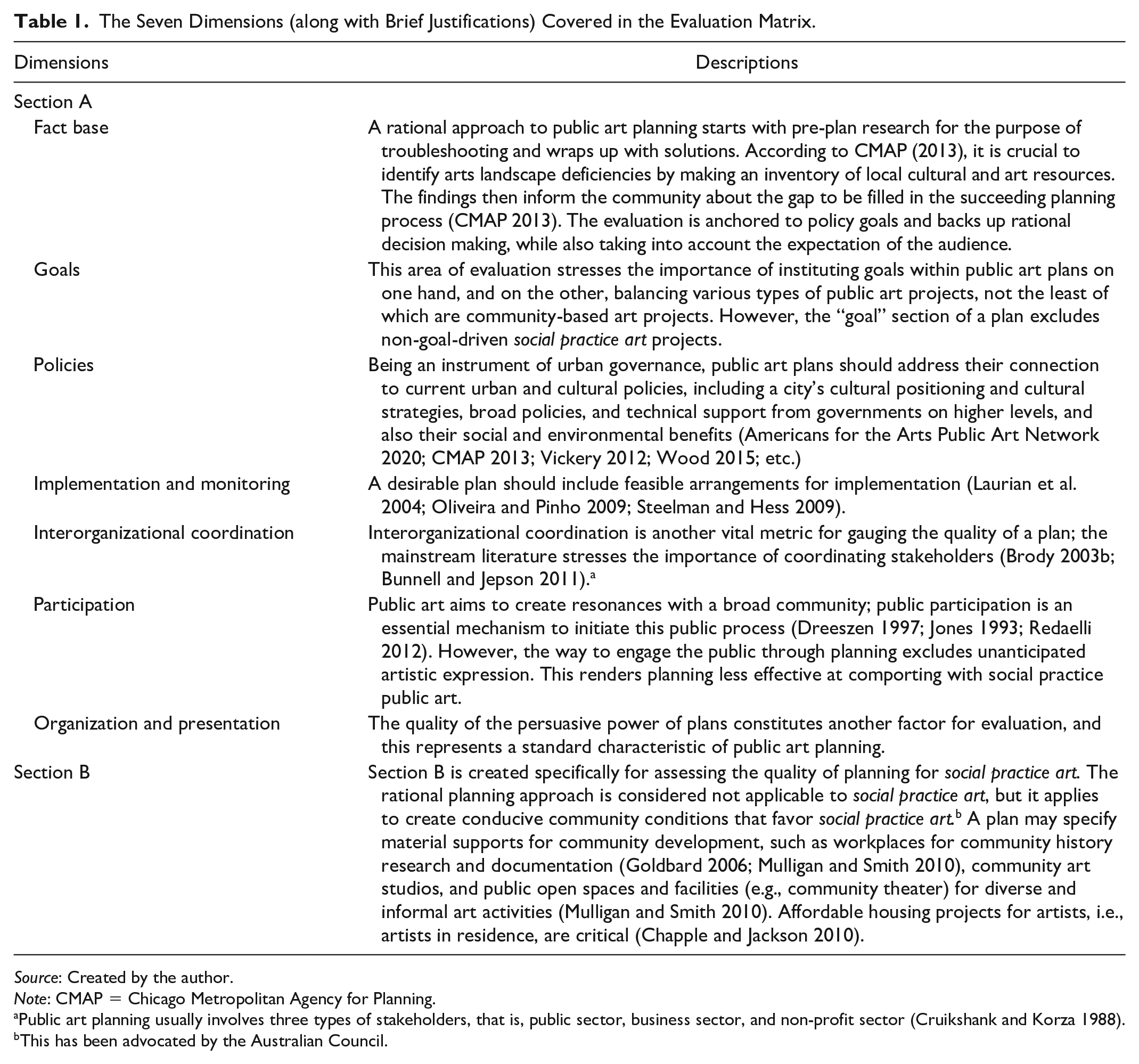
Source: Created by the author.
Note: CMAP = Chicago Metropolitan Agency for Planning.
Public art planning usually involves three types of stakeholders, that is, public sector, business sector, and non-profit sector (Cruikshank and Korza 1988).
This has been advocated by the Australian Council.
Research Methods
Document analysis is the main research methods used. Collected documents include all the urban sculpture plans for the municipal and district levels in Shanghai. Government policies and sculpture planning guides were obtained from the Urban Planning Bureau in Shanghai. Planning guides were searched for on “China Knowledge Net” using the keyword “urban sculpture planning.” Content analysis, 4 widely used in plan quality evaluation research (Baer 1997; Berke and Godschalk 2009; Berke et al. 2006; Eagles, Coburn, and Swartman 2014; Stevens, Lyles, and Berke 2014), was adopted for analysis and scoring. These analyses were supplemented by interviews with all the government officials in charge of urban sculpture plan-making in Shanghai. Interviews facilitated an understanding of urban sculpture policy, coordination, and stakeholder engagement in plan-making for the evaluation of the plans. 5
The assessment underwent two steps. First, to understand the underlying philosophy of the Chinese urban sculpture planning system, the Chinese national urban sculpture guide was assessed using the matrix. Second, eight district-level urban sculpture plans in Shanghai were evaluated and scored on a 0 to 2 scale. The coding protocol involves a thorough qualitative examination of plan contents to determine if the information or format required by specific indicators can be isolated, and it also weighs their importance through content analysis. Higher scores indicate a higher degree of fulfillment. 6 Double-coding analysis was used per the principles set by Fromme, Hebert, and Carrese (2004). An agreed-upon set of procedures and document protocols was established by the team, including a detailed rubric based on the evaluation matrix, which provides detailed criteria and definitions for scoring. This research involved three trained coders, the author, and two research assistants using coding books. This effectively reduced assumptions that might otherwise be brought to the project by team members. During the coding process, meetings were held to discuss disagreements in scoring. Table 2 reports the agreed-upon scores from the team.
List of Documents for Assessment and Scores on Each Dimension.
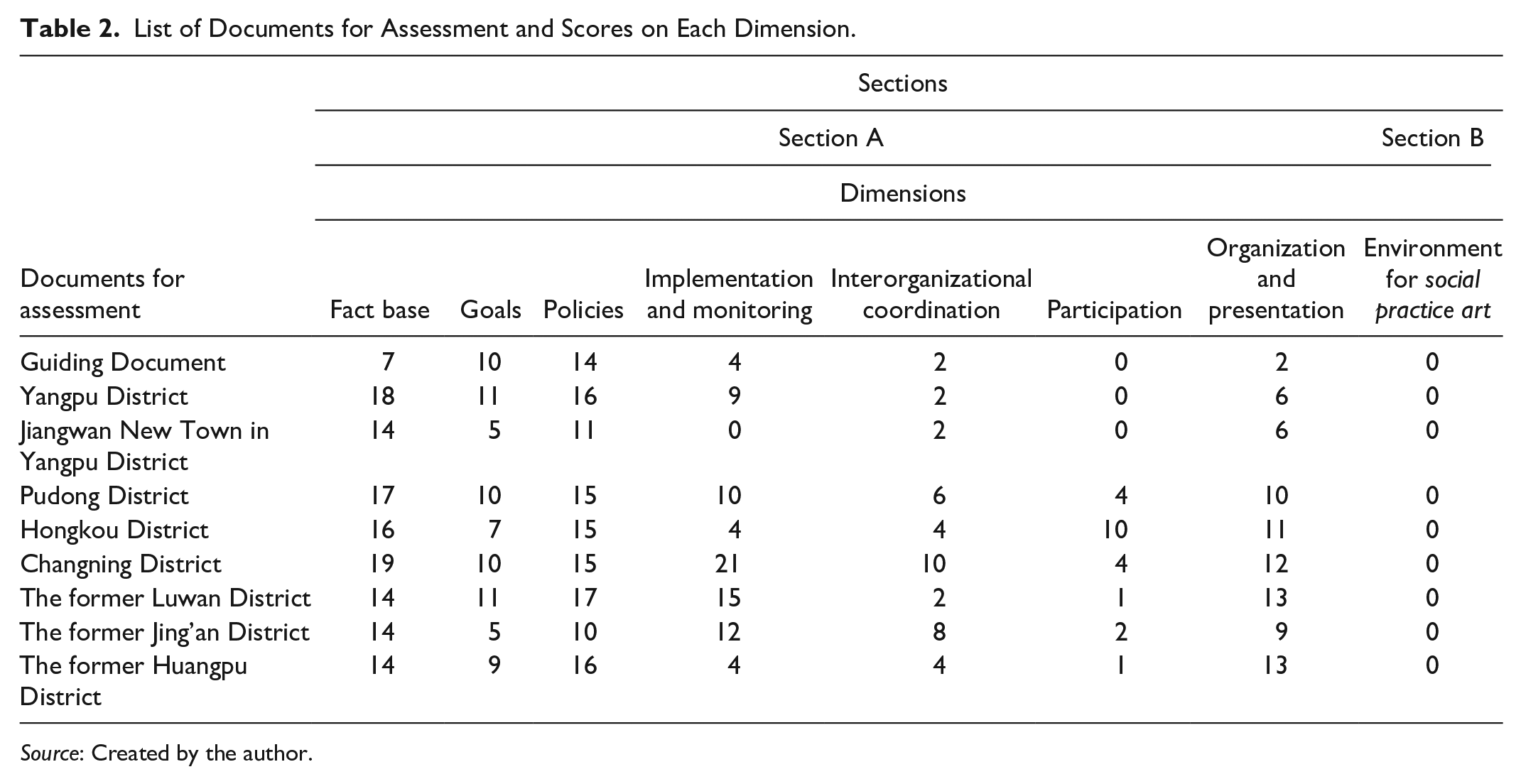
Source: Created by the author.
Evaluating Urban Sculpture Plans in Shanghai
A case study was conducted examining Shanghai’s urban sculpture planning system and evaluating district-level sculpture plans. Given the unique institutional context of Chinese public art planning, it is critical to contextualize the performance of individual urban sculpture plans by assessing the nation-wide sculpture plan guide in the first place, which gives meanings to the scores of actual plans. The overall finding is that Section A of the matrix applies to the Shanghai case while Section B does not.
A Brief Background
The Chinese urban planning system retains the legacy of the Soviet Union’s two-tier structure, comprising a master plan and a detailed layout plan. While master planning on the municipal level illustrates a state-directed vision for urban development, through the coordination of existing and new assets, the district-level plans are devoted to detailed arrangements for manufacturing, commerce, and residential areas (Ache 2000; Kemp 1992; Leung 2003; Ritchie 1993; Yeh and Wu 1999). Another issue, in tandem with the transition of the Chinese regime from totalitarianism to entrepreneurial-style authoritarianism, is that the Chinese urban planning system has been redirected toward a more development-oriented stance that highlights economic efficiency, technical feasibility, and place marketing (Wu 2007, 2015; Yeh and Wu 1999).
Shanghai’s urban sculpture planning system is a two-tier planning structure devoted to improving the city’s image. On the municipal level, the Urban Sculpture Master Plan stipulates the total number of sculptures and distributes them to corresponding districts. The imposed pattern is in line with the city’s development. On the district level, the detailed urban sculpture plans assess site-specific conditions, make specific arrangements in accordance with the site selection criteria, and propose guidelines on artworks’ themes, contents, materials, size, and cultural references. Thus, the two-tier planning structure creates an overall image of close connection between sculptures and the city (Zheng 2017a).
“Urban sculpture” has a relative narrow definition, referring to outdoor sculptures installed in publicly accessible places. This term “urban sculpture” excludes multiple genres of “public art” that are defined in Western public art theories (Zheng 2017b). The “cultural elite state” model theorizes the way to plan urban sculptures, which highlights the roles of individual Shanghai planning officials’ aesthetic tastes and judgmental dispositions (dubbed “cultural capital”) in enabling sculpture projects to take place (Zheng 2017b). To understand the urban sculpture planning system, both planning guides and actual sculpture plans were evaluated.
Evaluating the Nationwide Urban Sculpture Planning Guide
To facilitate a better understanding of urban sculpture plan quality evaluation results, sculpture plan evaluation has been contextualized within Chinese planning thought. There are four leading sculpture plan guides, including “Urban Sculpture Construction and Management Methods” (Cultural Ministry Construction Ministry 1993), The Urban Sculpture Master Plan of Shanghai (Shanghai People’s Government 2004), “Urban Sculpture Planning and Management Methods in Shanghai” (Shanghai Government 1996), and Bai Yi’s model of sculpture planning (Anon 2008a, 2008b, 2010). Bai Yi’s model, the most important guide, normalizes the structure and content of urban sculpture plans, as delineated in its main body text and explanatory book. Consulting Bai Yi’s model when making sculpture plans is prerequisite for all sculpture plan makers (Interview with sculpture officers on both municipal and district levels in Shanghai, May 17, 2016). The research team’s finding is that there is a policy-driven approach in pursuit of scientific rigor, while neglecting issues such as public participation, intergovernmental coordination, and implementation. In the area of creating conducive environment for social practice art, the evaluation matrix is either inapplicable altogether or reveals low performance.
Bai Yi’s model has two distinct characteristics. First, urban sculpture is perceived as a didactic and utilitarian instrument that either narrates the Party-endorsed history or decorates urban spaces with artworks symbolizing an affirmative relationship between them and their sites (Figures 1–3). The objective is to create a sense of pride, national identity, and a lustrous city image (Zheng 2017a). These ideological and pragmatic concerns encourage efforts to identify and exploit “cultural assets” (e.g., historical events, historical figures, cultural heritage). Nevertheless, the community is not engaged for an inventory of the existing cultural assets. 7 As a corollary, public art planning in this system barely encourages the community’s collective expression of their interests. Accordingly, Indicators 2.5 to 2.7 (plan encouraging community-based art practice and the corresponding land use pattern) and 6.1 to 6.5 (“participation” dimension) were all scored zero, in contrast with their full marks on policy-related indicators (3.3–3.7; 3.10–3.12: about policies and procedures for artwork acquisition, land use, park, and transportation).
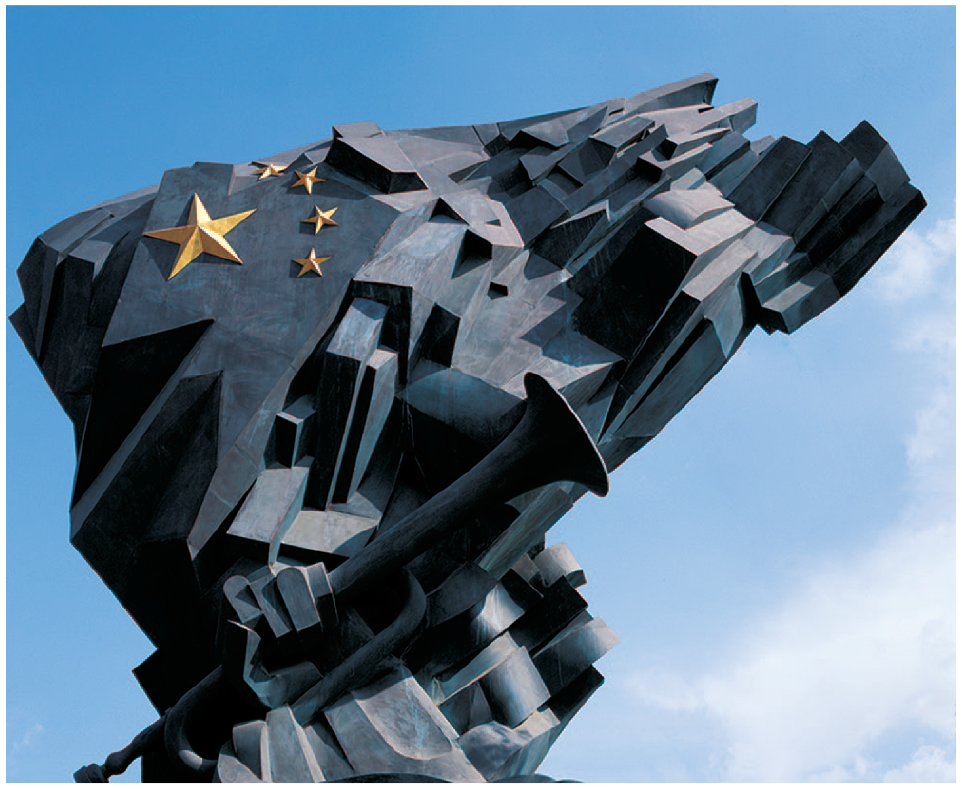
Yu Jiyong, National Anthem, 2009.
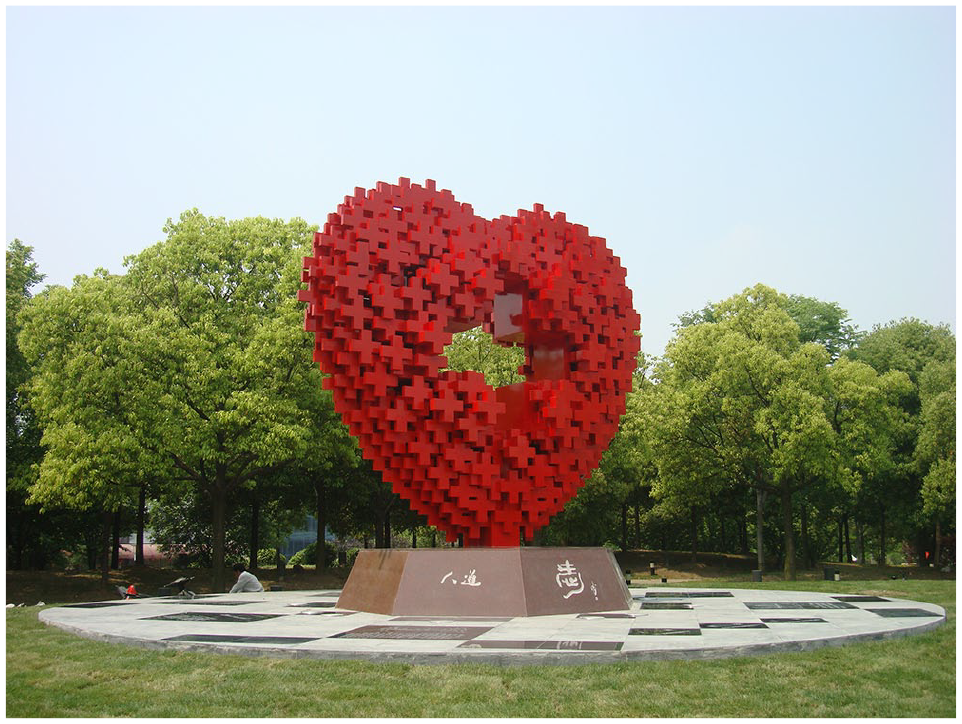
Zou Dongfang, Red Cross, 2012.
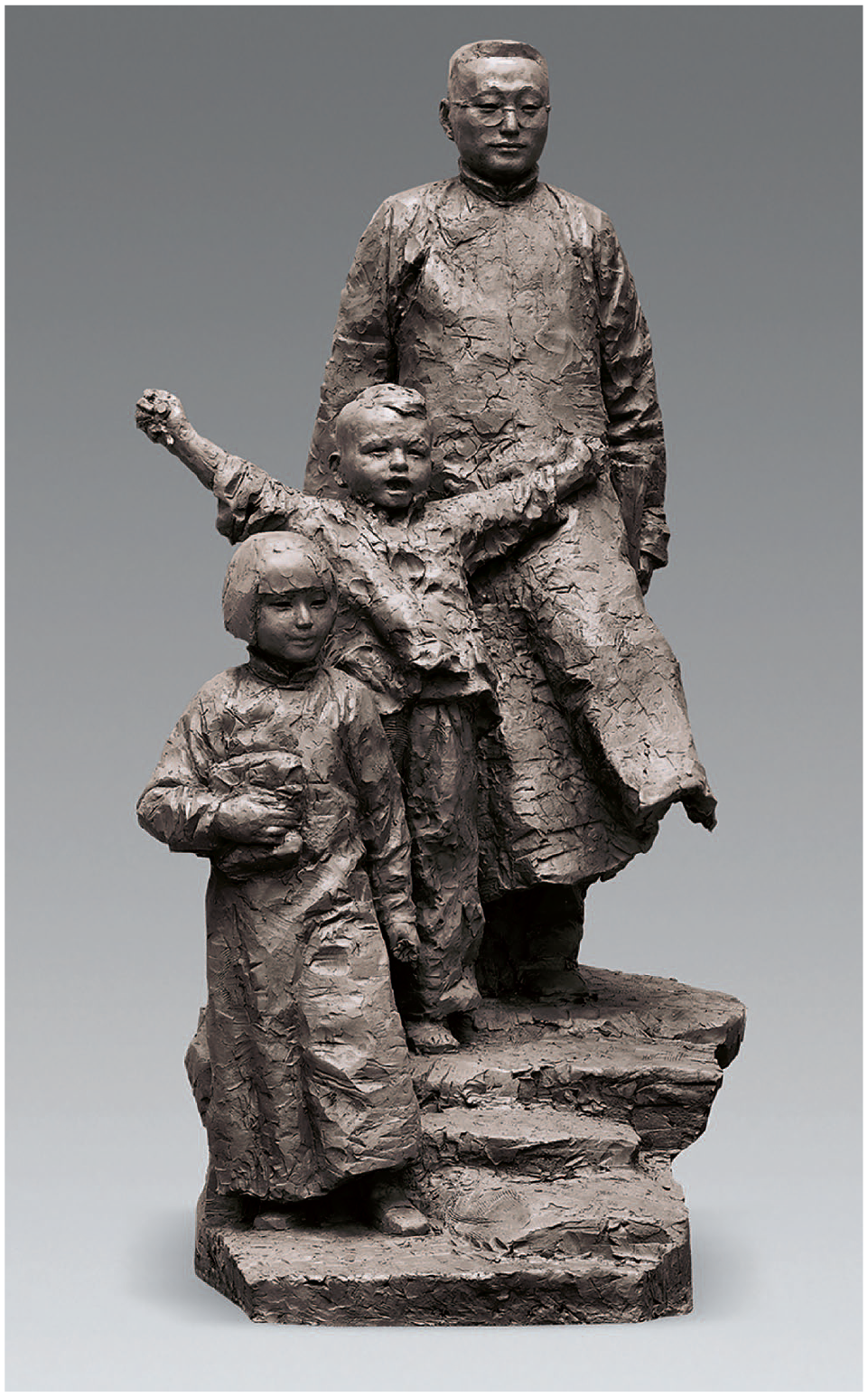
Tang Shichu, Populist Educator Tao Xingzhi, 2010.
Second, Bai Yi’s model pursues scientific rigor and heightens the importance of a thorough analysis of urban and site conditions. Sculpture analysis elements include sculpture motifs, quantity, artistic form, texture, material, color, site attributes, lighting, and design details. Moreover, it requires a comprehensive study of a city aiming toward an understanding of the pre-conditions for planning, including its geographic features, economic development, transportation infrastructure, policies, and plan supporting documents. These systematic analyses, from the level of city to sculptures, and their sites, lay the foundation of site specifics. Consequently, Indictors 3.3 to 3.7 and 3.8.2 to 3.8.4 (about linking artworks to social benefits and heritage) were all scored 2.
Implementation, however, has been neglected. No guidance is given regarding how plans should be implemented. It remains unclear whether a sculpture plan should clarify the funding sources for sculpture projects and the mechanisms for intergovernmental coordination. The guide does not require clarification of artwork acquisition methods or stakeholder engagement methods either. The resultant scores for Indicators 1.2, 5.2 to 5.6, 6.1 to 6.5, and 7.1 to 7.8 (about clarifying funding source, “interorganizational coordination,” “participation,” “organization and presentation” dimensions) were all zero.
Evaluating Shanghai’s Urban Sculpture Plans
Evaluation of actual sculpture plans (district level) reveals their conformity with the plan guide in most respects (e.g., rational planning approach, goal-driven, site specifics, Section B), while variations on the guide’s underperforming indicators are evident. The overall average score of actual plans (52.06) is much higher than the plan guide’s score (20) (Supplemental Appendix).
Under the Chinese authoritarian hierarchy, most plans are closely connected to and endorsed by related policies, acquiring high scores on Indicators 1.19.1, 3.1, 3.4 to 3.6, and 3.10 to 3.12. This indicates a clear policy-driven approach in sculpture plan-making.
Moreover, the plans have achieved a high degree of site specificity (Indicator 1.5). One example is the Yangpu District Urban Sculpture Plan that uses a unique four-step approach in site selection by combining artworks of particular themes with symbolically relevant physical sites. The criteria for the matching exercise are twofold: (1) matching artworks and potential sites according to cultural and historical relevance, and (2) assessing the physical conditions of sites for sculpture installment. For instance, in one project, historical events pertinent to the development of humanity are thematically listed. In the meantime, sites whose spatial conditions allow for installment are identified, including fourteen listed historic buildings, cultural infrastructure venues, nodes, and other forms of public space. Overlay maps generated in the first two steps narrow down the scope of site options and ensure a symbolic marrying of artworks and their sites (Figure 4). The third step concludes the artwork-site matching exercise and divides the resultant sculpture venues into three categories varying in spatial, political, and symbolical significance. The fourth step supplements site-specific design instructions drawing on key sculpture projects as examples.
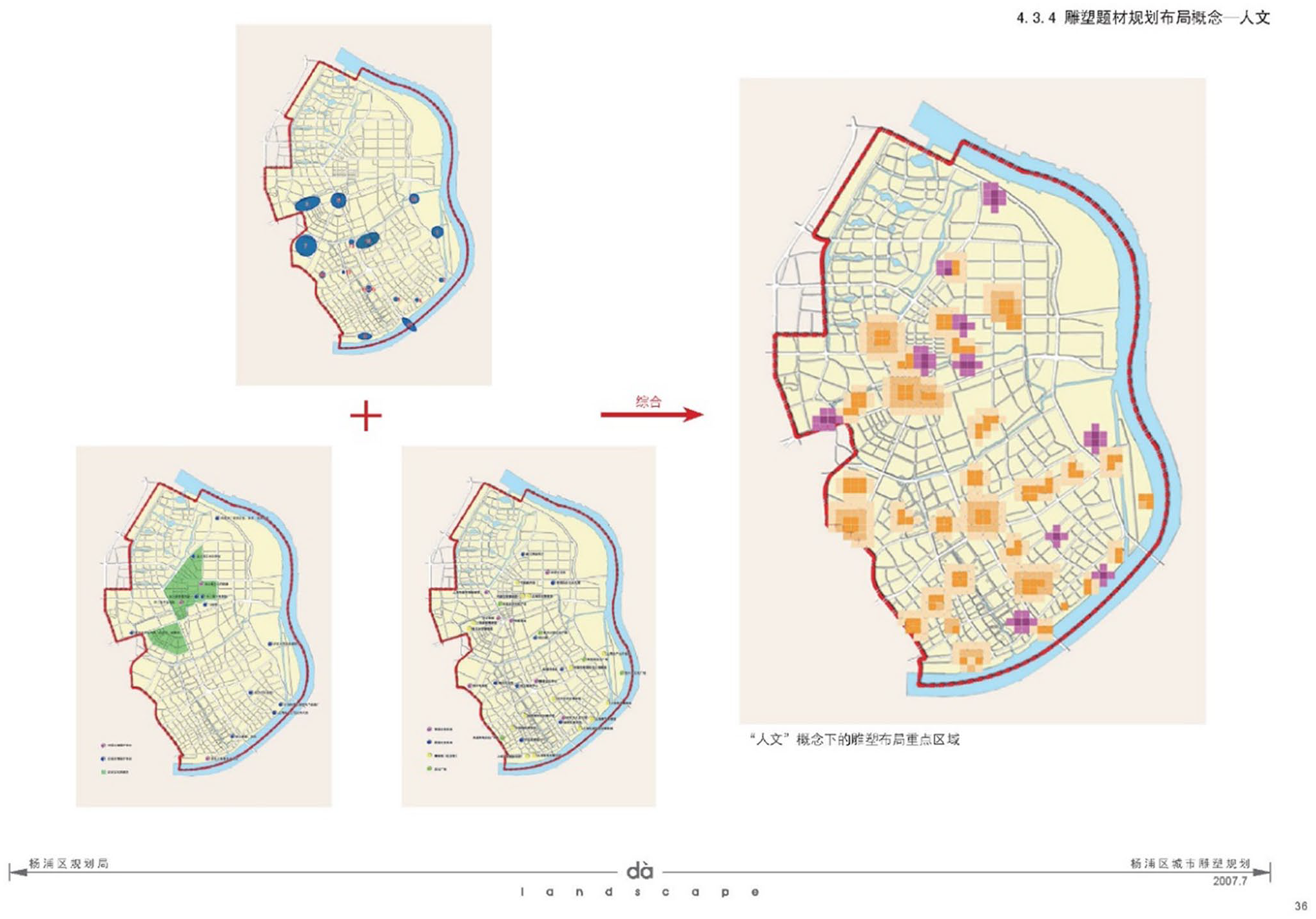
Plan for sculpture subject in Yangpu District.
The dominant rational approach in the urban sculpture planning system, however, causes qualitative statements (e.g., vision statements) to be treated of minor importance. Descriptions of the future public art landscape are rarely found in the plans (Indicator 1.3: about the city’s future landscape). Most sculpture plans include a “background” section (Indicator 1.1: about background information provision) but simplify plan-making motivations to conform with administrative mandates. A higher level plan or policy is typically cited to justify particular planning initiatives. The rest are simply descriptions of the history and social status of the subject district (e.g., Yangpu District Planning Bureau [YDPB] 2007b). Only one or two plans briefly narrate the objectives and visions. Likewise, most plans provide simplistic descriptions of the present state of urban sculptures (Indicator 1.4: about sculpture distribution pattern), merely providing the total number of sculptures and marking their locations.
Furthermore, the factor of “the people” has been neglected in these plans. The “need” for sculptures is essentially policy-driven instead of being informed by any community surveys (Indicator 1.19.2: addressing future needs for public art). Population and audience, classified by age, gender, and race, are not analyzed in the sculpture plans (Indicator 1.9: composition of the audience). Without respect for community, art education and challenging the popular ethos are equally discarded. 8 On the contrary, one principal purpose of plan-making is to consolidate the existing hegemonic conventions of the state (Indicator 2.4). Artwork genres have been narrowly limited to historical monumentality and aesthetic decoration; grassroots community-based art production is not encouraged in sculpture plans. For this reason, the plans have unanimously scored zero on most indicators in Section B. Subsections B1.3 and B3 are not applicable because public space and mixed-use land patterns are not created for social practice art in China.
However, despite the overall conformity of Shanghai’s district sculpture plans, constrained by the national planning guide, items unaddressed in the planning guide are not equally neglected in the plans. 9 Regarding most indicators excluded in the guide, “plan implementation and monitoring” (Dimension 4), “participation” (Dimension 6), and “cross-organizational coordination” (Dimension 5) in particular scored unexpectedly high in at least one or two of the sculpture plans. Table 2 shows that the sculpture plans of the Changning District and (the former) Luwan District earned noticeably higher scores on the dimension of “implementation.” The Changning District outperforms the others on the “interorganizational coordination” dimension. The Hongkou District excels on the “participation” dimension. This result can be interpreted using the “cultural elite state” model: some urban sculpture planners in Shanghai are intellectuals possessing democratic and cross-organizational coordination mind-sets (Zheng 2017b), and they have unintentionally addressed these issues in their plans, in concurrence with professional experts in the West, by ignoring the national guide. Consequently, the average score of the district plans is much higher than that of the national guide. 10
Likewise, despite the overall low scores of the “implementation and monitoring” dimension, 11 exceptions exist among sculpture plans. The Jing’an District Sculpture Plan specifies the funding source for three types of sculpture projects: developers are required to contribute 3‰ to 5‰ of their construction fees to sculptures located within their development areas. District governments are financially responsible for sculpture projects that employ “environmentally” related themes (located within the greenspace zone) in a manner similar to real estate developers (Jing’an Urban Planning Management Bureau [JUPMB] 2005).
The guide does not address the sculpture “maintenance” duties (Indicator 4.11) but some plans do. In general, the organization in closest proximity maintains sculpture. If an adjacent recipient stakeholder is lacking, local street offices (the lowest level of administration in Chinese cities) should exercise the role of caretaker (Interview with the chief official in the Planning Bureau, August 8, 2016; December 16, 2016). The Changning Urban Sculpture Plan awards more attention to this by listing eighteen current sculptures that call for maintenance, repair, removal, or replacement, and specifies the organizations responsible for sculpture maintenance.
“Interorganizational coordination” is also a dimension where the national planning guide receives low scores while actual plans do otherwise. Failure in implementation has often resulted from ineffective coordination in the sense that implementation is not within the jurisdiction of the Planning Bureau (Interview with the chief official in the Planning Bureau, August 8, 2016; December 16, 2016). However, exceptions are found in districts that institute a committee chaired by the vice-head of a district or its Construction Department (e.g., Luwan District, Pudong District). 12 The Changning District organized a district urban sculpture committee that comprises the leaders of various government departments, such as the Planning Bureau, Construction Bureau, Tourism Bureau, Cultural Bureau, Municipal Garden Bureau, and Finance Bureau, and professionals in the cultural, sculpture, and other related sectors (Changning District Planning Design Research Academy and Tongji University, 67; Interview with the Changning District planning officer, May 23, 2016). A three-step approach was adopted to ensure plan implementation. First, the aforementioned committee, under the leadership of the municipal authority, coordinates related government departments for project investments. Second, the district committee makes an urban sculpture plan. Third, members in this committee advance sculpture planning, management, and implementation (Interview with the Changning District planning officer, May 23, 2016; JUPMB 2005, 4.4). Finally, ways to engage the private sector, for plan implementation purposes, are specified (Indicator 5.4: adopting conventional and incentive zoning).
“Participation” is not addressed in the guide but included in one or two plans. In the Hongkou District Sculpture Plan, the plan-making committee launched a public consultation process that engaged local residents and specialists. An attachment within the plan documents public opinions from 2006. Moreover, each comment from the public is followed by a response from the authority for plan improvement. In this way, the evolution of the plan (Indicator 6.4) is revealed. Another exceptional case is the Pudong District Urban Sculpture Plan. It includes a specialized section on artwork selection and it heightens the importance of public participation, to achieve a high degree of transparency. It advocates a four-actor mechanism that engages experts to review artworks, the public to discuss artworks, and political leaders to make decisions. The Plan also proposes that artworks selected by political leaders and Art Committee experts in the first round should be publicized. Accordingly, planning schemes should be revised in the second round after incorporating public opinions. To foster better engagement with the public, artwork models can be temporarily displayed at specific sites, and in this way, the public would enjoy a bequeathment of real-world experience, simulating the receipt of these artworks in actuality (Pudong District Planning and Design Research Academy [PDPDRA] 2008, 170).
In the section titled “plan document organization and presentation,” score variations are evident across districts. Some plans received high scores on the dimensions of coherent narratives and high-caliber illustrations (Indicators 7.5–7.6: about including executive summary, summary, overview, table of contents in the plan text), for example, pictures and diagrams (YDPB 2007a). A lack of executive summaries reflects inadequate concern over implementability (Indicator 7.1). The other major deficiency is a disconnection from achievements inside the academic world. References and cross-sector references are largely omitted (Indicator 7.7: including a cross-referencing system), and this reflects a low level of academic rigor. Also, incorporating academic findings to inform sculpture projects is not on the agenda. Some plans include abundant examples of overseas public artworks to provide inspiration for artists, but unfortunately, illustration captions are not included (Indicator 7.4; for example, Hongkou District Urban Planning Bureau 2007; PDPDRA 2008).
Conclusion
This paper is situated within the broad discourse on cultural planning. It innovatively proposes a universal theoretical framework and evaluation matrix for the evaluation of public art plans by extending the insights from plan quality evaluation to public and community art literature. This new framework embodies a rational planning approach and is tailored to art-related issues (e.g., community-based artistic expression, site selection, and the acquisition of artworks, and cultural perceptions). Conceptually, these discussions contribute to an understanding of whether public art can be planned, using a rational planning approach. The findings affirm the capacity of the rational planning approach in producing traditional and utilitarian types of public art in terms of quantitatively addressing policy goals and achieving site specifics. However, the rational planning approach is merely conceptually workable to create a community environment favorable to the emergence of social practice art, its applicability to plan evaluation in democratic countries pending on further research. Based on the fact that the proposed framework largely applies to urban sculpture plan assessment in countries that rely on a rational planning approach in public art production like China, we may infer that it has significant deficiencies if being used to assess public art plans in democratic countries. Essentially, it is less effective in evaluating planning for social practice art, the core feature of public art. This finding echoes cultural planning literature that cultural planning calls for alternative planning approaches as well as associated evaluation methods, such as transient, flexible, and community-based planning approaches.
The Chinese urban sculpture planning system enables site-specific artworks to be produced through systematic data analyses of cultural characteristics and spatial attributes. This system is well-connected to state policies and driven by goals, but it inadequately addresses factors related to the people, such as the communities’ hopes, aspirations, and art education level. Also, “implementation,” “cross-organizational coordination,” and “public participation” are the dimensions downplayed in the sculpture planning guide. Moreover, social practice art is excluded from the Chinese system and the planning system does not aim to create an environment that favors social practice art. In the meantime, this research reveals a discrepancy between the national sculpture planning guide and actual local plans: those understated factors in the guide are partially addressed by local, self-motivated, individual planners who are equipped with democratic mind-sets and culturally judgmental dispositions. This illustrates the complexity of urban sculpture planning in China.
Supplemental Material
sj-pdf-1-jpe-10.1177_0739456X20963605 – Supplemental material for The Rational Planning Approach in Public Art Production: Evaluating the Quality of Urban Sculpture Plans in Shanghai
Supplemental material, sj-pdf-1-jpe-10.1177_0739456X20963605 for The Rational Planning Approach in Public Art Production: Evaluating the Quality of Urban Sculpture Plans in Shanghai by Jane Zheng in Journal of Planning Education and Research
Footnotes
Acknowledgements
I thank the three anonymous reviewers and the journal editor Clinton Andrews. I also thank Zheng Jiashi, Andrew Young, Kris Olds, Stephen Stofka, Kurt Paulsen, and Revel Sims.
Declaration of Conflicting Interests
The author(s) declared no potential conflicts of interest with respect to the research, authorship, and/or publication of this article.
Funding
The author(s) disclosed receipt of the following financial support for the research, authorship, and/or publication of this article: The work described in this paper was funded by the Hong Kong University Research Grants Council (GRF 14600215).

Supplemental Material
Supplemental material for this article is available online.
Notes
Author Biography
References
Supplementary Material
Please find the following supplemental material available below.
For Open Access articles published under a Creative Commons License, all supplemental material carries the same license as the article it is associated with.
For non-Open Access articles published, all supplemental material carries a non-exclusive license, and permission requests for re-use of supplemental material or any part of supplemental material shall be sent directly to the copyright owner as specified in the copyright notice associated with the article.
