




Abstract
In response to politicization and contested legitimacy, UN peace missions increasingly use social media to enhance public engagement. This study examines the UN Verification Mission in Colombia's dual Twitter strategy, comparing the institutional account with the ‘personalized’ account of the Special Representative. Analysing over 10,000 tweets using content analysis and negative binomial regression, the study finds that personalized communication and content focused on UN-related and justice topics generate greater online resonance. Conversely, excessive use of visuals and hashtags reduces engagement. These findings offer new insights into the digital communication strategies and audience dynamics of UN peace missions.
Introduction
In an increasingly contested global environment, United Nations (UN) peace missions face mounting politicization and resistance amid a broader backlash against international organizations (IOs) and the liberal order (Hooghe et al., 2019; Pevehouse, 2020). While demand for multilateral conflict management has grown, missions are constrained by waning Western support, contestation from non-Western actors and divisions within the UN Security Council (Badache et al., 2022; Coleman and Job, 2021). In some contexts, including Mali and the Democratic Republic of Congo, widespread protests have precipitated early mission withdrawals (Dayal, 2022), while host governments increasingly turn to alternative security providers such as regional coalitions or private contractors like the Wagner Group, further reducing UN influence (de Coning, 2021; Paris, 2023).
Against this backdrop, peace missions have intensified their communication efforts, turning to digital platforms to defend legitimacy and counter disinformation (Oksamytna, 2022; Sherman and Trithart, 2021). Social media, especially Twitter, 1 Facebook and Instagram, have become central to outreach, enabling missions to amplify narratives and engage stakeholders directly (Leib, 2024). A notable trend is the personalization of communication (Ecker-Ehrhardt, 2023), whereby missions combine institutional accounts (e.g. @MONUSCO) with those of the Special Representative of the Secretary-General (SRSG) (e.g. @UN_BintouKeita), who serves as both a public figure and a communicative bridge with local and global stakeholders.
Despite this expansion, little is known about how peace missions design and implement digital communication strategies. Existing studies focus largely on institutional contexts or disinformation campaigns, leaving gaps in our understanding of the content, format and effects of mission communication (Leib, 2023; Miyashita et al., 2025). Key questions remain about how missions differentiate their strategies across account types and deploy features such as hashtags or visuals, and whether these choices generate online resonance, that is, the extent to which users engage with content through consumption (reading, watching, liking, commenting) and dissemination (sharing). Resonance has been conceptualised as an indicator of communicative influence (Ausserhofer and Maireder, 2013), a ‘key mechanism for information diffusion’ (Suh et al., 2010, p. 177), and even a form of de facto digital authority (Goritz et al., 2022). Building on this literature, this article argues that generating resonance is crucial for UN peace missions to retain visibility, perform authority and counter critique (Dunton et al., 2023; Kenkel and Foley, 2021). It therefore asks which communication strategies and non-textual elements increase communicational influence and online resonance for UN peace missions.
The article addresses this question through a case study of the UN Verification Mission in Colombia (UNVMC), one of the three largest special political missions (SPMs). Tasked with monitoring the peace agreement between the Colombian government and the Revolutionary Armed Forces of Colombia – People's Army (FARC-EP), the UNVMC exemplifies the growing prominence of SPMs, which are increasingly favoured over traditional peacekeeping for their cost-efficiency and political acceptability (Dorussen et al., 2022; Karlsrud, 2023). Using this case, the article examines three dimensions of how the UNVMC uses Twitter to create digital authority: (1) message personalization; (2) thematic framing and strategic narratives; and (3) the use of platform features such as hashtags, visuals and emojis. The multi-method design combines content analysis with negative binomial regression models of social media resonance, measured through likes and retweets for tweets published by the UNVMC and its SRSG, Carlos Ruiz Massieu, between 2016 and 2023.
This article makes three contributions to the study of UN peace missions and IOs’ digital communication. First, it advances a conceptual distinction between resonance, digital authority and legitimacy, clarifying how engagement metrics can be analysed without inferring attitudinal acceptance or mission effectiveness. Second, it provides systematic evidence on how personalization, thematic framing and platform affordances shape online resonance in a politically contested peace process. Third, the findings generate broader insights into the conditions under which UN peace missions perform communicative authority in digital environments, highlighting the limits of persuasive messaging and the differentiated effects of digital style elements such as visuals, hashtags and emojis. Together, these contributions position digital communication as an increasingly salient informational resource for peace missions while delineating the boundaries of what engagement-based measures can, and cannot, reveal.
UN peace mission legitimacy, strategic communication and social media
The United Nations, like other IOs, must constantly address multiple audiences to justify its actions and reframe its mandates (Barnett and Finnemore, 2004; Koch, 2015; Reus-Smit, 2007). Increasingly, this occurs through strategic public-facing communication using digital technologies and social media. Yet the strategic communication of UN peace missions across different communication outlets has received limited scholarly attention (Leib, 2023; Miyashita et al., 2025; Shafiei and Overton, 2024).
Legitimation and public narrative
Amid rising criticism and scrutiny, UN peace missions must legitimize their decisions and presence on the ground. Research highlights the need for missions to gain legitimacy among diverse audiences, including UN Security Council members, troop-contributing and funding states, and local populations (Coleman, 2007; Hellmüller, 2018; von Billerbeck, 2016). Popular support is widely viewed as crucial for mission effectiveness, as it facilitates cooperation and compliance (Karlborg, 2014; Lemay-Hébert, 2013; Whalan, 2013). Recent studies show substantial variation in how individuals and groups perceive UN peace missions, including differences in perceived benevolence (Gordon and Young, 2017), satisfaction with performance (Kelmendi and Radin, 2018) and assessments of impartiality (Nomikos, 2025).
In increasingly politicized environments, peace missions must also counter online mis- and disinformation. They do so by constructing alternative narratives that clarify mandates, foster trust and deter spoilers (Trithart, 2022). Through public communication, missions justify their actions by providing persuasive reasons to diverse audiences and positioning themselves as legitimate actors in contested political contexts (Leib, 2024). Disseminating information about mission activities and peace process developments can reduce information asymmetries and enhance accountability (Buchanan and Keohane, 2006).
Strategic communication
Strategic communication has become a central mechanism through which UN peace missions seek to assert legitimacy and shape perceptions. It goes beyond information sharing to involve deliberate narrative construction aimed at influencing attitudes in line with mission mandates (Birnback, 2019). When effectively implemented, it can dispel misconceptions, counter spoilers and strengthen support for peacekeeping. Most peace mission mandates now include provisions for public information, voter education or media development (Di Salvatore et al., 2022), implemented by communications or public information divisions responsible for media relations, crisis communications and digital campaigns (Sherman and Trithart, 2021). Despite a broad literature on public communication, structured analyses of peace missions’ communicative practices remain rare (Buitelaar, 2025), with existing work largely confined to policy reports (Sherman and Trithart, 2021; Trithart, 2022; Vermeij et al., 2024).
The institutional importance of strategic communication is underscored in the 2016 Strategic Communications and Public Information Policy and reaffirmed in the Action for Peacekeeping+ (A4P+) initiative (United Nations, 2016, 2021). Strategic communication is intended to foster political and public support while countering mis- and disinformation (Leib, 2024). In 2022, the UN Department of Peace Operations (UNDPO) launched a dedicated workstream on misinformation targeting peace missions, leading to the UN Security Council's first high-level debate on strategic communications (UN Security Council, 2022b). These developments highlight the growing recognition of communication as central to mandate delivery and personnel safety.
Target audiences and communication goals
UN peace missions must communicate with multiple audiences that have distinct informational needs and political sensitivities (Oksamytna, 2022). Locally, missions engage host-state governments and populations to foster awareness and cooperation. Externally, they must demonstrate accountability and effectiveness to the Security Council, troop-contributing countries and donors. Internally, communication supports morale and cohesion among mission staff (von Billerbeck, 2020). Across these audiences, the overarching goal is to convey credible and transparent information about mandate implementation and institutional performance.
In environments marked by politicization and disinformation, the ability to communicate coherent narratives becomes essential (Miyashita et al., 2025). Through traditional and digital media, peace missions articulate their identities and roles within complex sociopolitical contexts (Shafiei and Overton, 2024; von Billerbeck, 2020). For example, Buitelaar (2025) studies the public communications of two UN peacekeeping missions and shows that peace missions adapt their communication to evolving normative environments. While existing research acknowledges the influence of media on conflict dynamics and peacebuilding, it focuses predominantly on traditional media such as radio (Ortiz dos Santos, 2021; Straus, 2007; Tomiak, 2018), with limited attention to digital communication. Some studies show that UN radio broadcasts can indirectly reduce violence by mitigating public support for fighting (Shafiei and Overton, 2024), while others caution against decontextualized messaging that risks deepening divisions (Udo-Udo Jacob, 2014). Missions must therefore tailor communication strategies to audience characteristics and communication platforms.
Social media and digital platforms
Contemporary communication increasingly depends on digital platforms, where much public discourse now unfolds (Gohdes, 2018). Compared with traditional media such as radio or press releases, social media offer immediacy, accessibility and global reach (Barberá and Zeitzoff, 2018; Thelwall and Cugelman, 2017; Usherwood and Wright, 2017). At the same time, they pose challenges related to audience fragmentation and competition for attention (Garrett, 2009; Klinger and Svensson, 2015; Williams et al., 2015), as well as operational risks when exploited by spoilers spreading disinformation (Loyle and Bestvater, 2019; Miyashita et al., 2025). Concerns that these disinformation campaigns undermine the credibility and effectiveness of UN peace missions have prompted the UN Security Council to adopt peacekeeping mandates aimed at countering these threats and protecting UN personnel.
Effective social media use requires peace missions to decide which platforms to prioritize, how to adapt content and how to balance immediacy with coherence (Hofferberth, 2021). Most missions operate across multiple platforms to share updates on peace processes, mission activities and community projects, SRSG statements and Security Council outcomes. 2 They also regularly amplify content from other UN bodies, making digital platforms central to UN public communication strategies. 3 Among these, Twitter has historically served as the primary channel for official communication by IOs, although its recent rebranding has altered its public perception and utility (Ecker-Ehrhardt, 2021; Usherwood and Wright, 2017). 4 Peace missions are active information ‘brokers’ within these digital networks (Burt, 2005), shaping discourse around peace processes and influencing how international and domestic audiences perceive mission activities.
Conceptualizing peace missions’ social media usage and resonance
UN peace missions operate in politically sensitive environments that require tailored communication strategies to convey their mandates effectively (Oksamytna, 2022). Although research increasingly examines UN peace missions' digital engagement and responses to disinformation (Leib, 2024; Miyashita et al., 2025; Trithart, 2022), their specific social media strategies and capacity to generate digital resonance remain underexplored. Building on prior work on strategic communication and online resonance, this study conceptualizes three dimensions shaping communicative influence: (1) authorship (personal vs. institutional); (2) communication strategy and thematic scope; and (3) the use of social media affordances such as visuals, hashtags, and emojis.
Resonance
This article analytically distinguishes between resonance, digital authority and legitimacy, treating them as conceptually related but empirically distinct phenomena. Resonance refers to observable patterns of audience engagement with social media content, such as likes and retweets, that indicate message visibility, attention and circulation. In this study, resonance is understood as an indicator of digital authority: the capacity of an actor to have its messages noticed, amplified and embedded in online discourse. Digital authority, in turn, constitutes a necessary but not sufficient condition for legitimacy, which involves evaluative beliefs about whether authority is appropriate or justified (Tallberg and Zürn, 2019). Resonance-based measures capture neither attitudinal acceptance nor normative endorsement. Accordingly, this article does not assess legitimacy or mission effectiveness but examines how communication strategies and platform affordances shape resonance and contribute to the performance of digital authority in contested information environments.
The growing use of social media by UN peace missions enables the analysis of interaction patterns that reveal communicative influence and digital authority (Ausserhofer and Maireder, 2013; Goritz et al., 2022). Social media allow missions to reach (inter)national audiences and extend peace process debates beyond official actors, while Twitter's informal tone facilitates engagement outside traditional diplomatic channels. Given the challenges of evaluating the effects of digital communication using publicly available social media data (Rid, 2020), this study focuses on resonance as an indicator of digital authority, without inferring legitimacy effects. Resonance is conceptualized as user engagement through content consumption (reading, watching, liking or commenting) and dissemination (sharing). While likes signal attention and approval, retweets extend messages into new networks and thus represent deeper resonance. Retweet counts are therefore commonly used indicators of resonance and digital influence (Goritz et al., 2022; Suh et al., 2010).
Personalization
Digital personalization 5 reflects a broader trend toward humanizing institutional communication and enhancing accessibility (Ecker-Ehrhardt, 2023). Many UN bodies complement official accounts with those of individual officeholders, giving the organization a more ‘relatable’ face (Krzyzanowski, 2018) and countering perceptions of remoteness (Destradi and Plagemann, 2019). Strategic communication of UN peace missions also frequently involves the management of two accounts: the mission's institutional account (e.g. @MONUSCO) and the SRSG's personal account (e.g. @UN_BintouKeita), which serves as both public figure and communicative bridge with local and global audiences.
As the mission's highest representative, the SRSG combines institutional authority with personal engagement. Their posts often blend official updates with reflections on field visits and meetings with political actors. Greater autonomy in framing communication allows SRSGs to craft more flexible and politically attuned narratives (Karlsrud, 2013), humanizing mission leadership and signalling political priorities. By combining official diplomacy with a personal tone, SRSG accounts may enhance visibility and resonance. Accordingly, I expect personalization of peace mission social media communication to enhance resonance.
Scope of debate and communication strategies
The effectiveness of a peace mission's communication depends not only on who communicates but also on topic selection and rhetorical strategy. Digital outreach may situate mission activities within local or national contexts or link them to the broader UN framework. Referencing the UN's institutional structures is assumed to enhance authority by embedding local developments within globally recognized narratives. In contrast to providing information on national developments, which resonate primarily with local audiences, I assume that by addressing the broader UN communication framework, peace missions tap into audiences that are already engaged with multilateral governance. Such content often carries greater perceived authority and relevance beyond the local context, appealing to international stakeholders, journalists and policy experts who actively follow UN affairs. I therefore expect tweets focusing on the UN and its structure to generate higher resonance.
Communication and public relations research distinguishes between informational, persuasive, dialogic and mobilizing strategies (Grunig and Hunt, 1984; van Ruler, 2004). Informational tweets represent one-way communication and convey facts or operational updates. In contrast, persuasive communication seeks to shape perceptions and attitudes. It is a ‘targeted tuning of the knowledge, attitude and behaviours of specific others’ through persuasive messages and aims solely at attaining favourable publicity for the mission (van Ruler, 2004, p. 140). Dialogue statements invite reflection or exchange through two-way and symmetric communication, while calls for action should prompt behavioural responses, for example calling for the cessation of violence against civilians or supporting the reintegration process. Because persuasive strategies aim to influence attitudes and behaviour, I expect them to generate higher engagement than purely informational messages.
Platform features: Visual content, hashtags and emojis
Digital platforms provide non-verbal affordances including images, videos, emojis or hashtags that enrich textual communication (Özdemir and Rauh, 2022). Visuals of peacekeepers in action, community activities or field operations, can make peace missions’ work more tangible and relatable, helping audiences visualize peacekeeping activities (Hopke and Hestres, 2018; Russmann and Svensson, 2017). Visual storytelling has been shown to increase interest (Xiong et al., 2019), engagement (Dhanesh et al., 2022) and the emotional impact of digital activism (Hall et al., 2020). Consequently, I expect visual content to enhance resonance.
Hashtags serve as indexing tools that structure public discourse and connect users around shared topics (Laniado and Mika, 2010; Xiong et al., 2019). While hashtags are often used as ideological markers of like-minded users, they can also reach beyond established networks and connect otherwise distant communicative communities (Bruns and Moe, 2014; Conover et al., 2011). By employing hashtags such as #UNPeacekeeping or #WomenPeaceSecurity, peace missions can link local activities to global discourses and UN policy agendas, potentially broadening audiences. However, excessive hashtag use may reduce readability and signal performativity, undermining credibility and engagement. I therefore expect hashtag-heavy tweets to generate less resonance.
Finally, social media allow peace missions to extend their textual communication through the use of emojis or paralinguistic elements, allowing the sender to add tone and emotional nuance (Lee et al., 2021; Prada et al., 2022). Emojis express the intentions and emotions behind textual information, make statements easier to understand, and enhance the attractiveness of messages (Bai et al., 2019). When used sparingly, emojis can humanize official messaging and convey empathy. Overuse, however, may disrupt readability and be perceived as a persuasive attempt, leading to negative effects on message credibility (Koch et al., 2023; Willoughby and Liu, 2018). Accordingly, I expect greater emoji use to decrease resonance.
Research design and methods
Case and data selection
The ongoing institutional shift from UN peacekeeping to special political missions (SPMs) highlights the importance of examining their strategic communication practices (Karlsrud, 2023). Unlike traditional peacekeeping operations, which rely on military and police components, SPMs operate primarily through political dialogue, making communication central to their credibility and effectiveness: ‘The hallmark of these missions is political engagement with governments, parties and civil society aimed at adverting, mitigating or stopping conflict’ (Gowan, 2010, p. 2). Much of this engagement has increasingly moved to the digital sphere. This study adopts a single-case design centred on the UNVMC, one of the largest SPMs, selected as an analytically ideal-typical case for studying digital strategic communication of UN peace missions. 6
Colombia combines several features conducive to online engagement: relatively high internet penetration (75.7%) and social media use (70.3%) (DataReportal, 2024), a highly politicized peace process subject to sustained public debate, and an active Twitter sphere in which domestic and international actors engage with peace-related issues (Casarin et al., 2021; Cerón-Guzmán and León-Guzmán, 2016; García-Perdomo, 2017). These conditions make digital communication a central channel through which the UNVMC conveys information, frames developments in the peace process, and maintains public visibility, rendering the case well suited for analysing how peace missions generate online resonance under political contestation.
At the same time, these contextual characteristics delimit the scope of external validity. The UNVMC operates in a comparatively stable security environment and a digitally connected host country. Communication dynamics are therefore likely to differ from those in multidimensional peacekeeping operations deployed in active conflict zones, contexts with lower internet access or environments where public communication is more constrained. The findings should thus be understood as identifying context-dependent mechanisms rather than universal patterns applicable to all UN peace missions. The study's contribution lies in theorizing how communicative authority is performed in digitally connected and politically contested settings, providing a basis for future comparative research across missions with differing mandates, security conditions and audience structures.
Established in 2017, the UNVMC monitors the implementation of the peace agreement ending more than five decades of conflict between the Colombian government and FARC-EP. Unlike many other conflict terminations, the Colombian negotiation process and peace agreement were widely debated on social media by both the government and FARC-EP actors (Henshaw, 2020; Nigam et al., 2017). Given the continued political contestation surrounding the agreement, the peace mission's digital communication, particularly on Twitter, remains a key tool for public engagement.
At the national level, the UNVMC oversees the implementation of the peace agreement and advocates for security guarantees for former combatants and civilians in conflict-affected areas (Druet, 2021). Locally, it deploys civilian experts and observers for security provision and community protection. The UNVMC uses five social media platforms (Twitter, Facebook, YouTube, Flickr and Instagram), with Twitter serving as its primary channel for strategic communication and SRSG messaging. 7 Data were collected via Twitter's API and coded for all tweets published by the UNVMC's institutional account (@MisionONUCol) between August 2016 and March 2023 and the personal account of SRSG Carlos Ruiz Massieu (@CGRuizMassieu) between December 2018 and March 2023. 8 This resulted in 14,336 tweets from @MisionONUCol and 1366 tweets from @CGRuizMassieu. To capture genuine communication patterns, retweets and replies were excluded, yielding a final dataset of 10,347 institutional tweets and 608 SRSG tweets.
Methodology and coding strategy
To analyse how the UNVMC employs Twitter to shape digital resonance, this study uses a multi-method approach, combining quantitative and qualitative content analysis with multivariate regression modelling. Quantitative content analysis was conducted using the Quanteda package for R (Benoit et al., 2018), which enabled systematic categorization of textual and non-textual tweet elements. The software facilitated data transformations and the automated identification of non-textual features such as hashtags, emojis and visual elements, allowing for systematic analysis of their distribution.
Qualitative content analysis was then used to assess the underlying communication logic of tweets (Krippendorf, 2018; Schreier, 2012). Individual tweets were treated as ‘artefacts of social communication’ and analysed in terms of meaning and framing (Berg and Lune, 2012, p. 353). Together with two research assistants, tweets were coded by content (what is communicated) and purpose (why it is communicated). 9 Content categories include peace and security, development and economy, human rights and humanitarian affairs, law and justice, climate and environment, global health, the UN and its own structure, and local politics and community affairs. 10 In ambiguous cases, up to two secondary content labels could be assigned, while a primary category was designated for analysis. 11 Purpose was coded based on the underlying communication strategy and classified tweets as informational, persuasive, dialogic or calls for action (van Ruler, 2004). Coding followed a deductive–inductive approach, allowing refinement through iterative engagement with theory and data (Schreier, 2012). Inter-coder reliability was assessed by double-coding 20% of tweets, yielding Cohen's kappa values of 0.65 for content and 0.63 for purpose, indicating substantial agreement (Landis and Koch, 1977).
To assess the effects of communication strategies, personalization and digital elements on user engagement, negative binomial regression models were estimated, with the number of likes and retweets as dependent variables. Retweets extend messages into new networks and thus capture deeper resonance than likes. These engagement metrics are widely used indicators of digital resonance (Goritz et al., 2022; Suh et al., 2010), but they cannot fully account for differences in audience composition across accounts. The SRSG's personal account and the mission's institutional account may attract partially distinct follower publics, varying in size, geographic reach, language composition and elite orientations, which may independently affect engagement. As with most social media research, engagement metrics may also partly reflect non-organic activity, including automated or organizational accounts, a limitation that cannot be fully addressed with publicly available data.
Both dependent variables consist of count data, and their distribution substantially deviates from normality with a low number of zeros and right skewedness with gradually decreasing density towards higher values. Preliminary diagnostics also confirmed overdispersion: the conditional variance of likes (25,776.95) and retweets (5192.44) far exceeds their respective means (40.92 and 21.52). To address this, negative binomial regression was preferred over Poisson models (Long, 1997), enabling robust estimation of the relationship between communication strategies and tweet resonance.
Personalization and resonance in UNVMC's digital communication
The UNVMC uses Twitter as its principal platform for strategic communication. The institutional account, @MisionONUCol, disseminates information about mission activities and peacebuilding efforts. It averages 109 original tweets per month and, at the time of writing, had over 145,600 followers – substantially more than the mission's presence on Facebook (78,000) or Instagram (39,400). In parallel, the SRSG's account (@CGRuizMassieu) posts approximately nine original tweets per month and has around 14,400 followers. Although personal in tone, the SRSG's account is managed by the public information team and used selectively to convey politically salient or sensitive messages. Institutionally, strategic communication is coordinated by one staff member at the headquarters in Bogotá, supported by public information officers in sub-regional and local offices who provide material that is edited and published centrally. 12 Field interviews conducted in Bogotá in May 2023 indicate that only potentially controversial tweets require approval from the senior leadership, including the SRSG, while routine content is approved by the lead public information officer.
Content and purpose of UNVMC's Twitter communication
Tweets published by @MisionONUCol and @CGRuizMassieu were manually coded for content and purpose using the predefined category system. In terms of content, both accounts cover a broad range of UN-related issue areas, although with uneven distribution across topics (Figure 1). Peace and security dominate communication, accounting for 40% of institutional tweets and 54% of SRSG tweets, primarily addressing the protection of former FARC-EP members and conflict-affected communities (see examples in Figure 2). The examples also illustrate the more explicit political tone of the SRSG's tweets, which emphasize both progress and shortcomings in implementing the peace agreement.
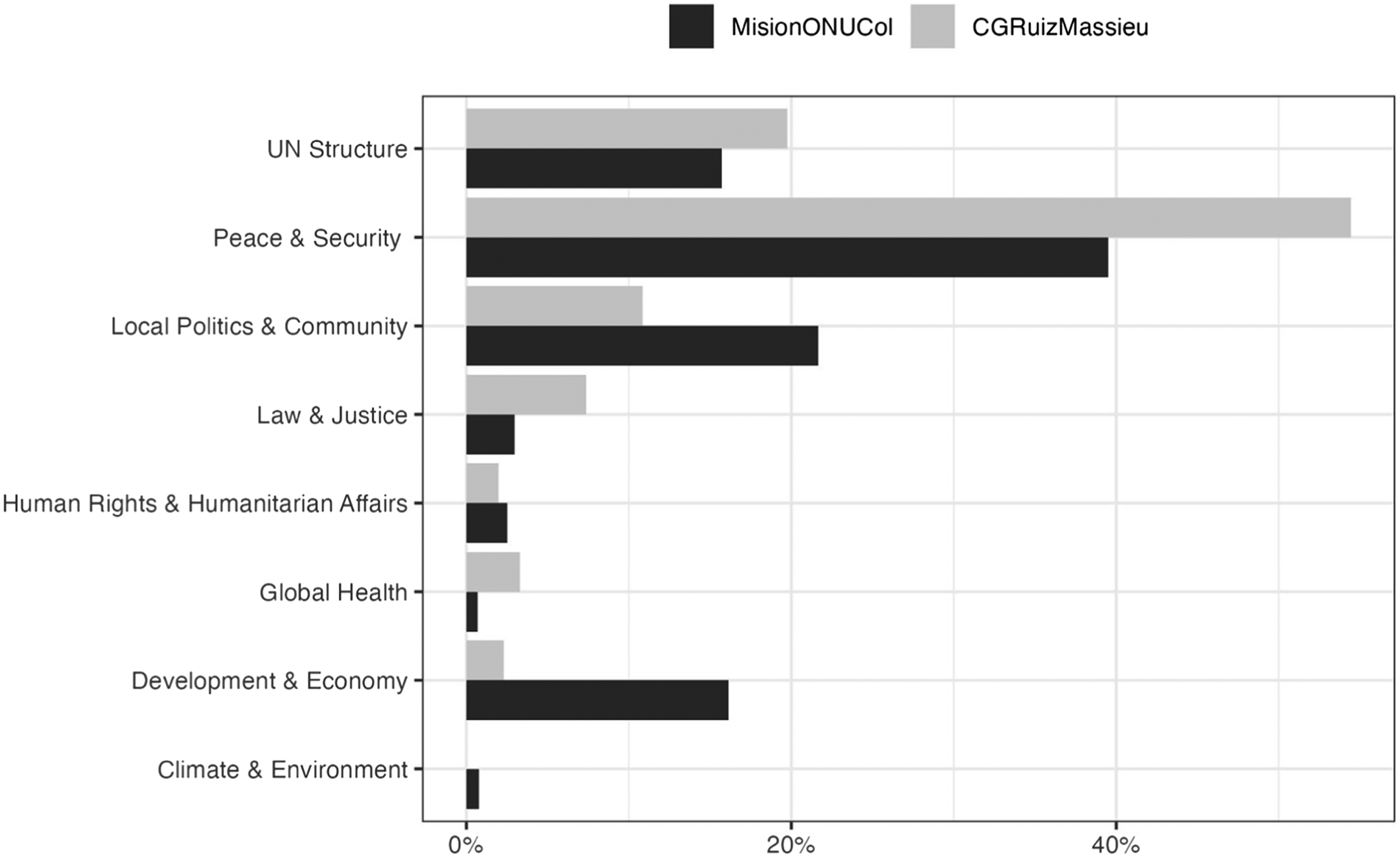
Comparison of content of tweets published by the UNVMC and SRSG Ruiz Massieu.
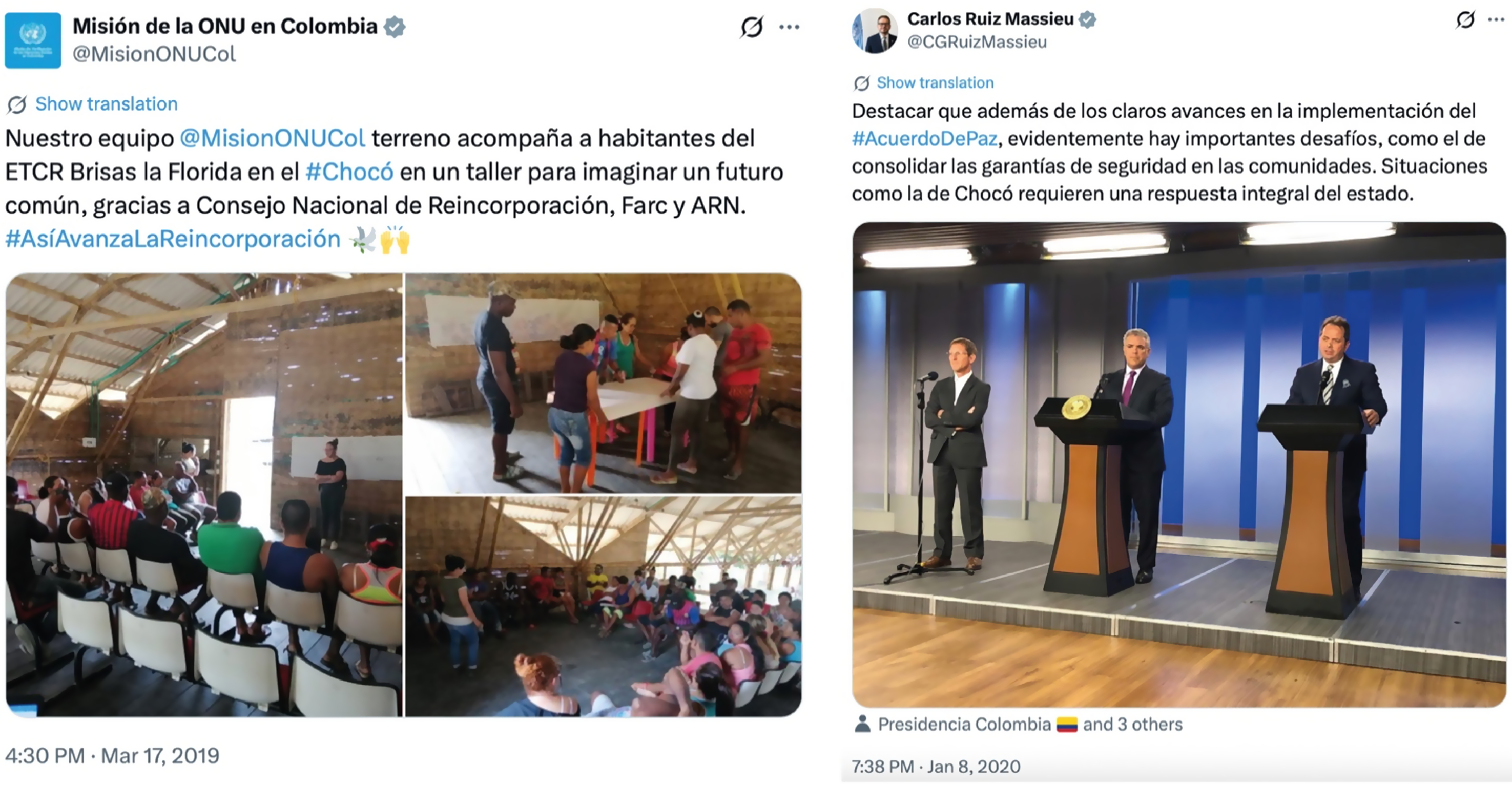
Selected tweets for @MisionONUCol and @CGRuizMassieu covering ‘peace and security’. Sources: @MisionONUCol, tweet, 17 March 2019, https://x.com/MisionONUCol/status/1107303115622100992 (left); @CGRuizMassieu, tweet, 8 January 2020, https://x.com/CGRuizMassieu/status/1214979652487467008 (right).
General UN-related content ranks second for the SRSG (20%) and third for the mission account (16%), reflecting efforts to reinforce UN visibility and authority in Colombia by highlighting Security Council developments or statements by the Secretary-General. In contrast, the institutional account places greater emphasis on local politics and community engagement (22%), often drawing on material from field offices to showcase local initiatives and peacebuilders’ stories. Other recurring topics include development and economy (16% for the mission), mostly reporting about reintegration projects for former FARC-EP combatants, legal issues such as the work of the truth commission and the Special Jurisdiction for Peace (JEP, 7% for the SRSG), and, particularly during the COVID-19 pandemic, public health messaging (3% for the SRSG). Human rights and humanitarian affairs (3% for UNVMC, 2% for SRSG) and climate and environment (1% for UNVMC) receive comparatively little attention.
Regarding purpose and underlying communication strategy, the vast majority of tweets in both samples (over 90%) are informational, reflecting a predominantly one-way dissemination model (Figure 3). These tweets focus on reintegration processes, JEP developments, the regular reporting sessions in the Security Council or regional dialogues. Persuasive tweets, intended to shape perceptions positively, account for 9% of @MisionONUCol tweets and 6% of @CGRuizMassieu tweets and typically emphasize the value of the peace process and the mission's role in verifying its implementation (see examples in Figure 4).
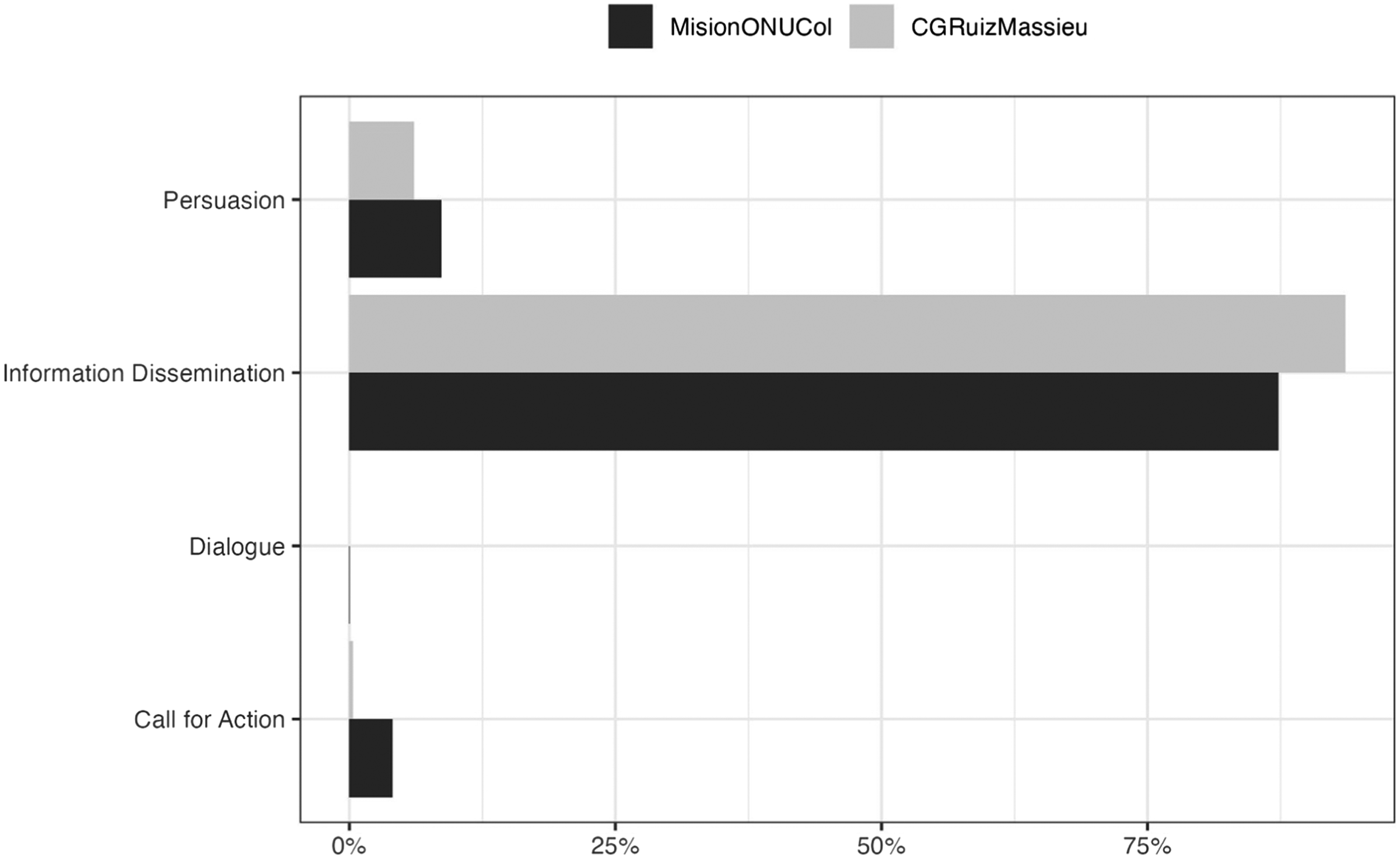
Comparison of purpose of tweets published by UNVMC and SRSG Ruiz Massieu.
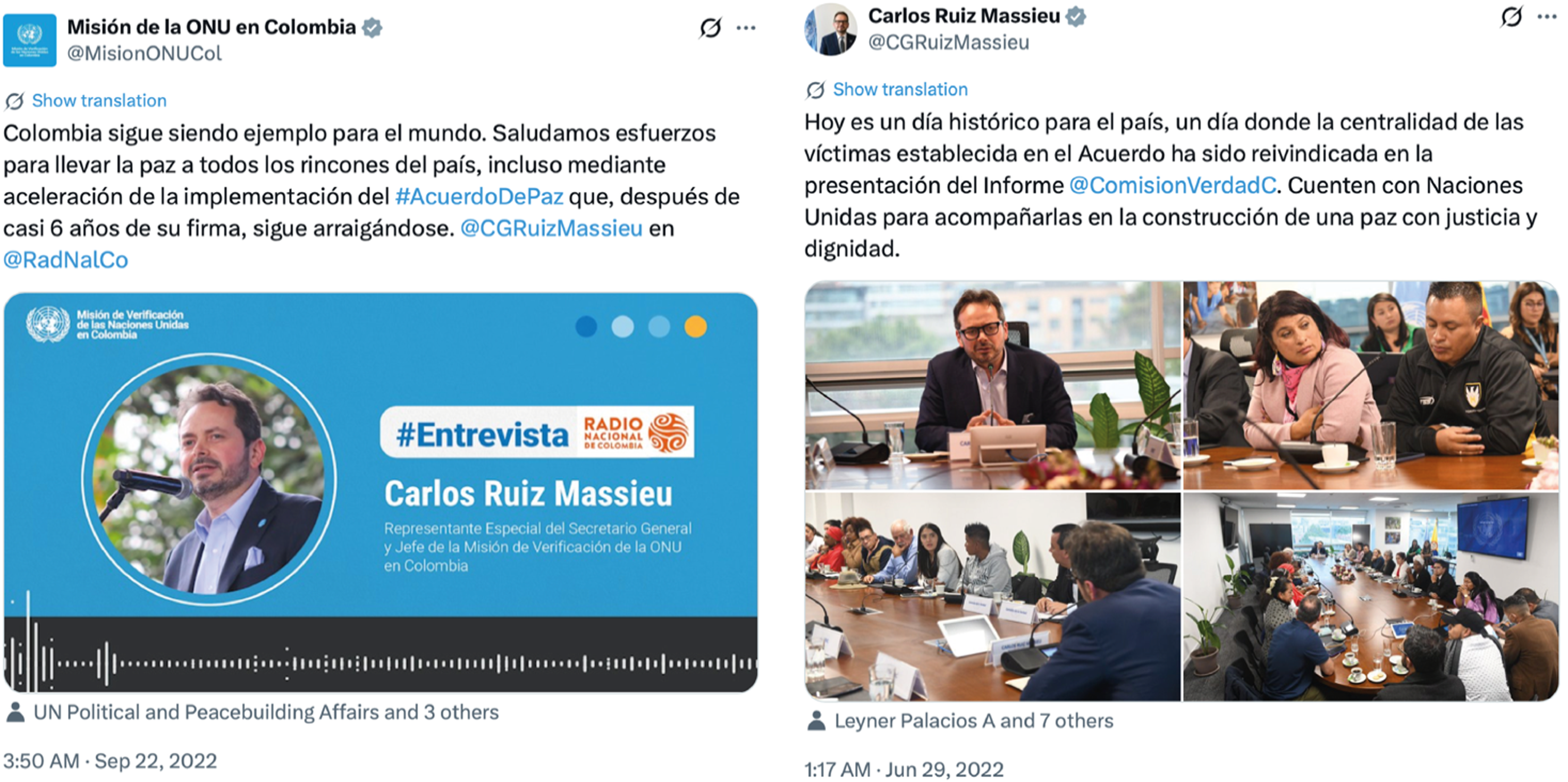
Selected tweets for @MisionONUCol and @CGRuizMassieu coded as persuasive communication. Sources: @MisionONUCol, tweet, 22 September 2022, https://x.com/MisionONUCol/status/1572765244107399168 (left); @CGRuizMassieu, tweet, 29 June 2022, https://x.com/CGRuizMassieu/status/1541923690560081920 (right).
In nearly all its Twitter communication, the mission used one-way messages to inform the public about its contributions to the peace process and to create positive, sometimes persuasive, narratives around the mission's work, and rarely tried to engage with and mobilize the local public through two-way communication. Dialogic communication is almost absent (0.01% for the mission), despite UN policy encouraging audience engagement. Calls for action, in which the mission tried to engage with local communities in asymmetric two-way communication, are rare, appearing in 4% of the mission's tweets and 0.3% of the SRSG's tweets, mainly to promote broadcasts of Security Council debates or mobilize public attention around community engagements initiatives. Despite the UN's stated goal of fostering audience interaction (UN Security Council, 2022a, p. 2), UNVMC's digital communication prioritizes informative and symbolic messaging, with limited evidence of participatory peacebuilding through social media.
Visual and nonverbal elements in UNVMC's digital communication
To assess the integration of visual and nonverbal features in UNVMC's strategic communication, tweets were systematically analysed using the Quanteda package in R (Benoit et al., 2018). As shown in Figure 5, the mission's institutional account makes extensive use of visuals, embedding images in 80% of tweets and videos in 12%. The SRSG's personal account adopts a more text-focused approach, using images in 67% of tweets and videos in only 3%. Twitter is well known for popularizing the use of hashtags, special characters and emojis in public communication. While the mission's early tweets were primarily text based, the use of emojis and special characters increased markedly after mid-2017, with 41% of UNVMC's tweets including at least one symbol, compared with 7% of SRSG tweets. Frequently used symbols include UN and Colombian flags, peace doves, directional icons (e.g. arrows, pointing hands) and announcement markers, contributing to the visual identity and symbolic framing of the mission's communication. 13
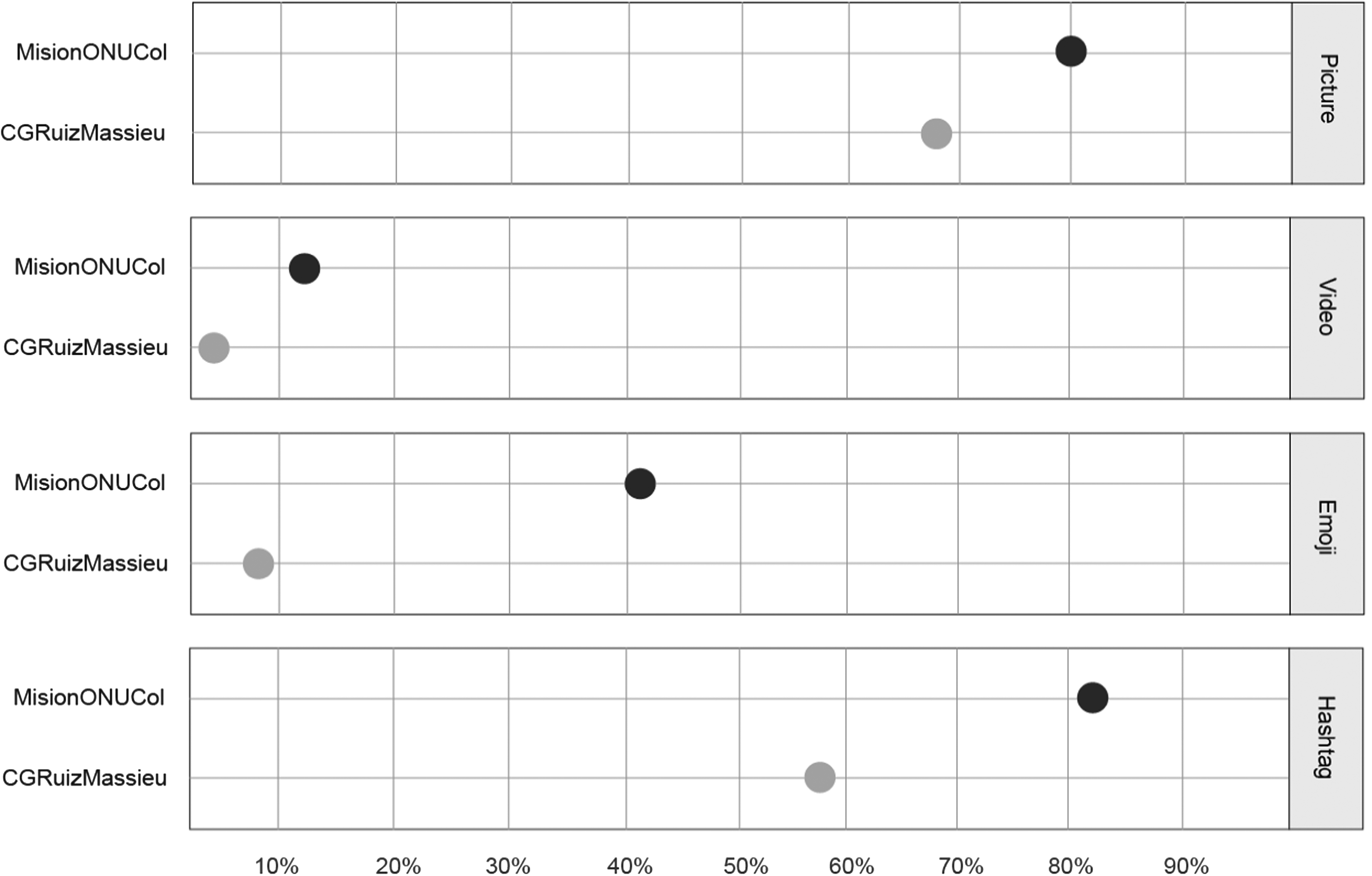
Proportion of tweets with visual and non-verbal elements according to mission accounts.
Hashtags are widely employed as indexing tools, allowing users to categorize content, structure debates and connect to broader discussions (Laniado and Mika, 2010). The data indicate that hashtag usage is widespread: 82% of tweets from the mission account and 57% from the SRSG's account include at least one hashtag, with #acuerdodepaz being the most common. Taken together, these patterns indicate a deliberate differentiation in communication styles: the institutional account emphasizes visibility, regional outreach and project-based narratives, while the SRSG's account engages more directly with political messaging and global UN discourses. This division reflects a broader communicative strategy balancing operational transparency with diplomatic signalling.
Publicity and resonance in UNVMC's digital communication
Publishing content on social media alone is insufficient for effective strategic communication. For peace missions such as the UNVMC, digital outreach must generate both visibility and audience engagement to enhance authority. While observational data do not permit inferences about who reads the tweets or how audiences interpret them, platform-based engagement metrics provide measurable indicators of resonance. Users can like messages and expand their reach through retweets or quotes. 14 Figure 6 presents average engagement rates for original tweets. Although engagement varies widely across individual tweets, it is, on average, higher for the SRSG's communication. Every tweet from @CGRuizMassieu received at least three likes, with an average of 113 likes per tweet. By comparison, 99.7% of tweets from the mission account received at least one like, with an average of 37 likes per tweet. A similar, although less pronounced, pattern emerges for retweets: SRSG tweets were retweeted an average of 42 times, compared with 20 retweets for UNVMC mission tweets. These differences indicate that the SRSG's more politically charged and occasionally critical tone generates greater resonance than the mission's general communication. This is notable given the mission's formal role as a neutral observer in the peace process, tasked with highlighting controversial actions by the government or the FARC-EP and publicly identifying non-compliance by conflict parties. 15
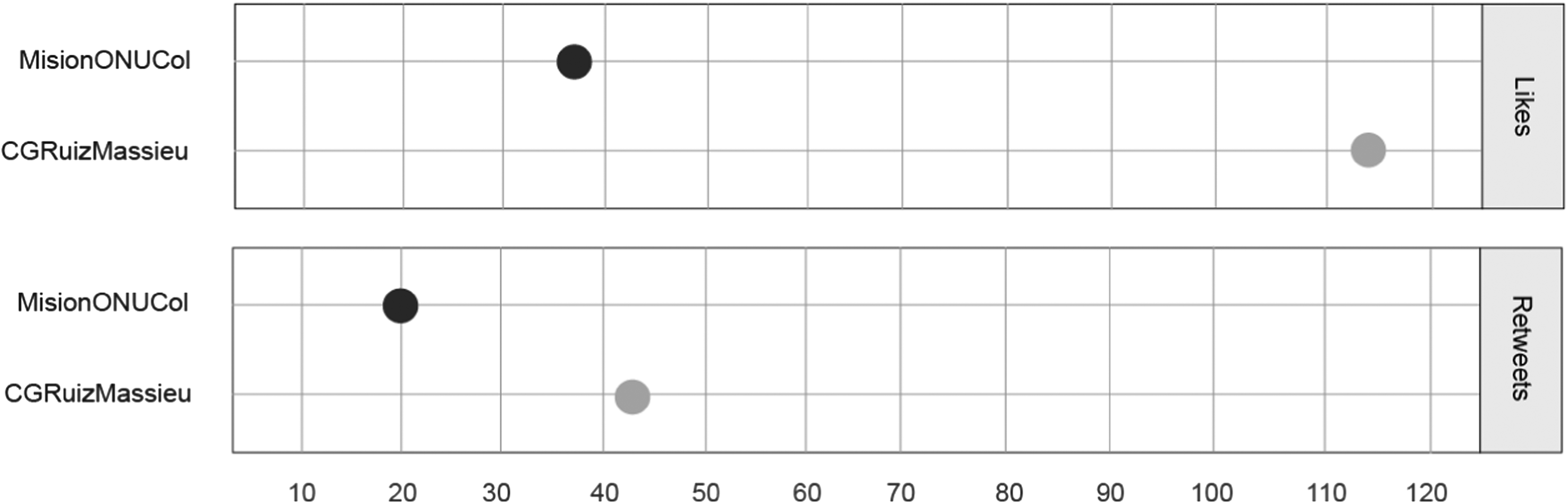
Average number of likes and retweets per tweet according to mission accounts.
To evaluate the hypothesized effects of communication strategies and non-textual elements on tweet resonance, multivariate regression models were estimated using the absolute count of likes (a) and retweets (b) per tweet as dependent variables. Both variables consist of overdispersed count data, warranting the use of negative binomial regression. The regression models include key explanatory variables: an indicator for the personal SRSG account (1) and the institutional account (0) of the mission. Regarding communication strategies, the models include single indicators for the content (0/1) and purpose (0/1) of tweets. The impact of non-textual elements is assessed through single indicators for hashtags (total number), emojis (total number), photos (total number) and video (0/1). Additional control variables include tweet length (character count) and the presence of hyperlinks (0/1). 16 Rather than raw coefficients, the analysis reports estimated incidence rate ratios (IRRs) which indicate the multiplicative effect of each independent variable on the expected count of likes or retweets. Accordingly, IRRs above 1 imply a positive effect of the independent variable (higher resonance) while values below 1 indicate a negative relationship (lower resonance).
Overall, the regression results for likes (Table 1) and retweets (Table 2) largely support the central hypotheses regarding the strategic use of personalization, content and multimedia elements in UN peace mission communication on Twitter. At the same time, important differences emerge between the two forms of user engagement, likes being a low-cost signal of approval and retweets, which reflect amplification and endorsement, offering more nuanced insights into audience engagement and digital resonance.
Negative binomial regression of tweet resonance (number of likes).
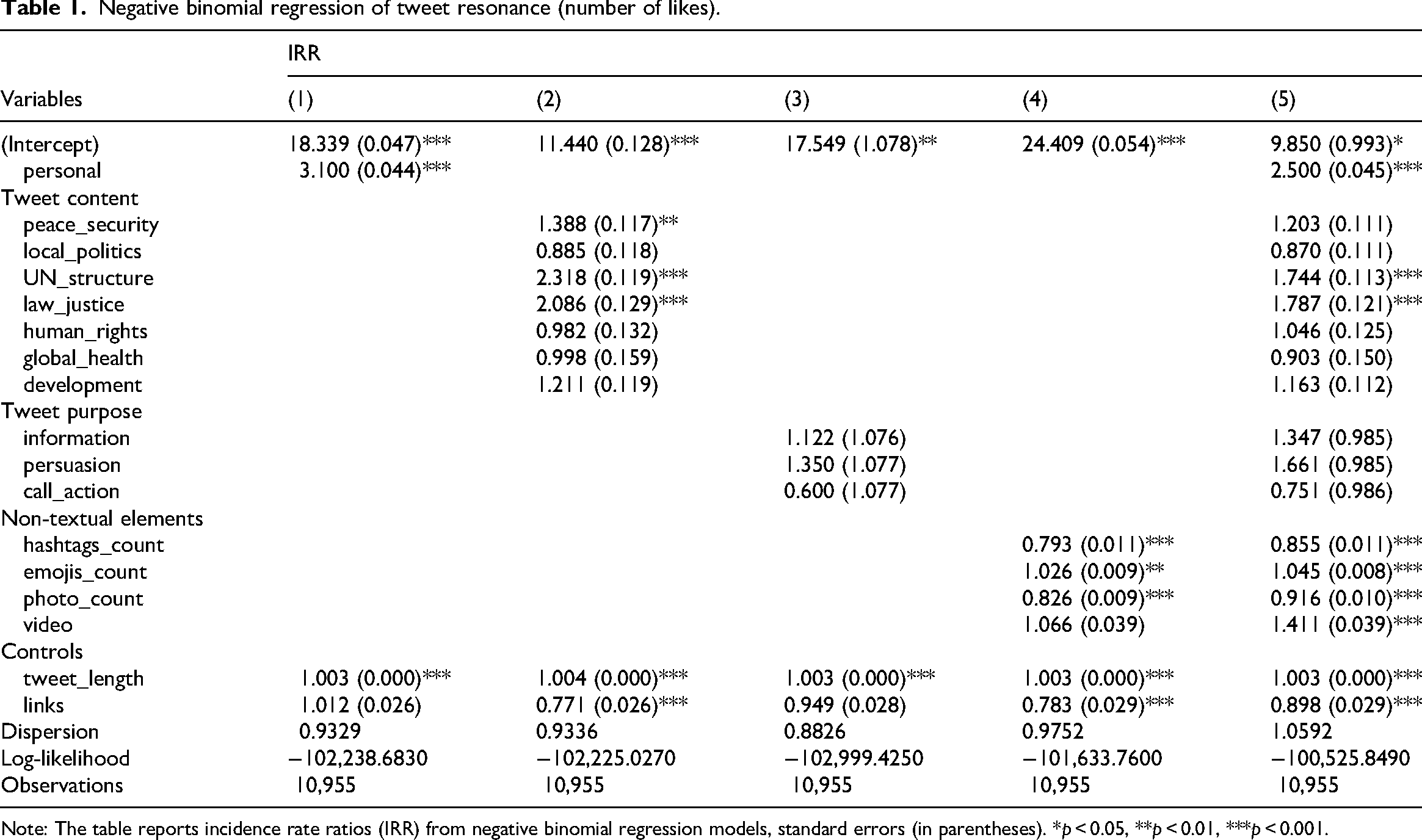
Note: The table reports incidence rate ratios (IRR) from negative binomial regression models, standard errors (in parentheses). *p < 0.05, **p < 0.01, ***p < 0.001.
Negative binomial regression of tweet resonance (number of retweets).
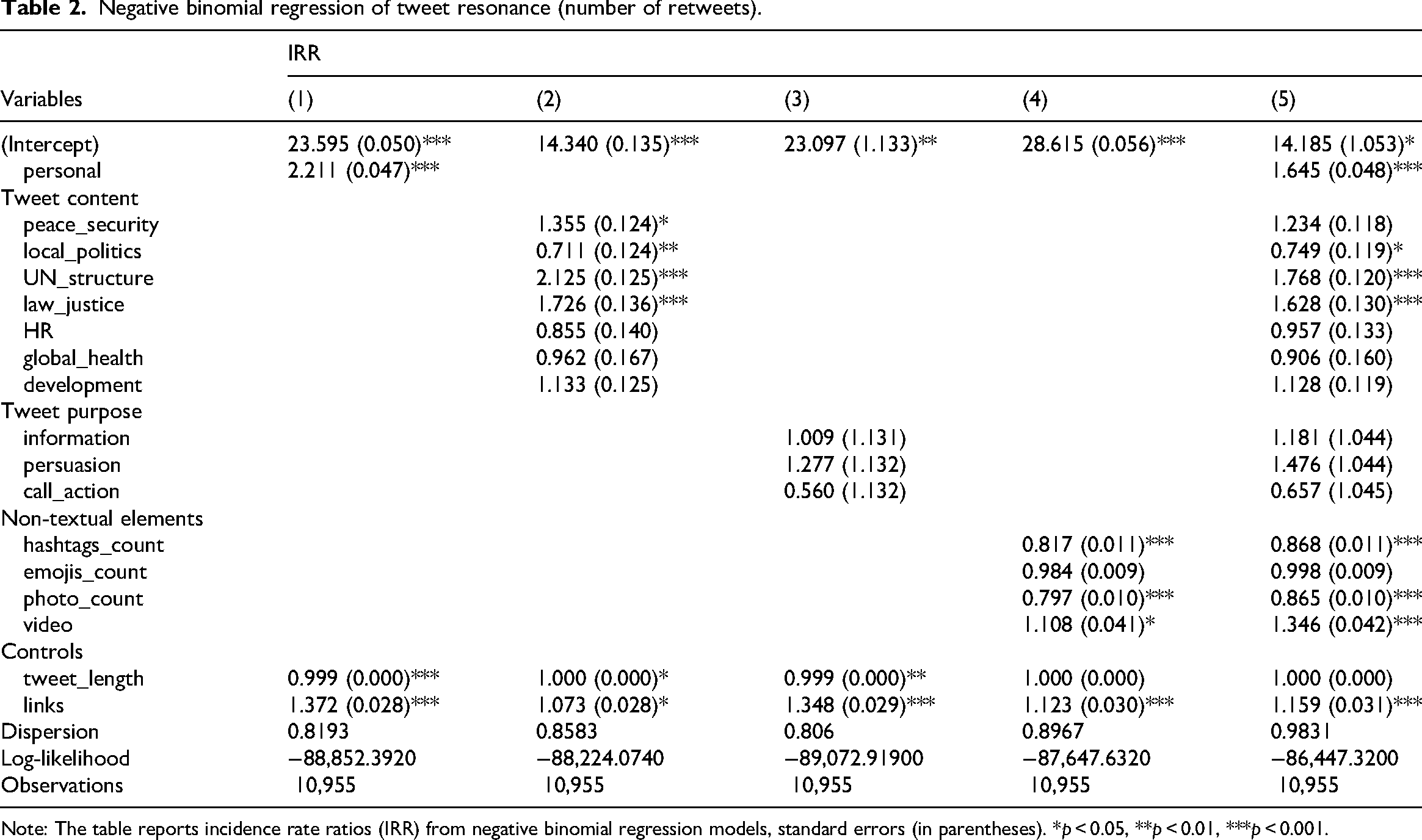
Note: The table reports incidence rate ratios (IRR) from negative binomial regression models, standard errors (in parentheses). *p < 0.05, **p < 0.01, ***p < 0.001.
The most consistent and robust finding across both outcome variables is the statistically significant positive effect of personalized communication. Tweets from the SRSG's personal account (@CGRuizMassieu) significantly outperform those from the institutional account (@MisionONUCol) in generating both likes and retweets. For likes, the SRSG's tweets generated between 2.5 to 3.1 times more engagement across all models. Considering retweets, tweets sent by the personal account are estimated to generate between 1.6 and 2.2 times more engagement than those from the institutional account. While personalization consistently enhances both approval and amplification, the stronger effect for likes suggests that personalized messages more readily foster affective resonance than endorsement through sharing. The finding supports Hypothesis 1 and aligns with arguments on the performative value of humanized institutional communication (Ecker-Ehrhardt, 2023; Metz et al., 2020). However, the results do not allow any conclusion to be drawn as to whether this positive effect on resonance is driven by the personalized nature of the SRSGs account per se, or by differences in topic framing.
To further contextualize the personalization effect, instances where the mission's institutional account retweeted posts from the SRSG's account were examined descriptively. Despite reproducing identical content, these institutional retweets received substantially lower engagement than the original posts issued from the personalized account, with several generating no likes or retweets at all. This pattern does not constitute a causal test of personalization effects, as retweets typically receive lower engagement than original posts owing to platform dynamics and algorithmic prioritization. Rather, the comparison serves as a plausibility check indicating that the higher resonance observed for the SRSG's communication is not solely driven by message content but is closely associated with the personalized mode of account-level communication through which the message is delivered. The analysis therefore supports an interpretation of personalization effects at the level of communicative form and account type, without implying individual agency or intentional influence by the SRSG.
Regarding tweet content, the calculated estimates show a varying impact on resonance across themes. Across models, tweets addressing UN structures and law and justice generate the strongest positive effects on resonance. For likes, these topics increase expected counts by 75–130%, with high statistical significance. For retweets, both thematic areas also showed strong effects, albeit slightly reduced in magnitude (60–110% expected increase). Apparently, the UNVMC's communication about broader international discourses and the work of the truth commission and the JEP has been met with the greatest resonance among the missions’ Twitter audiences. Peace and security content also shows a positive effect (35–38% expected increase), although the effect becomes insignificant once controls are added. These findings confirm Hypothesis 2a and suggest that tweets referencing broader institutional frameworks or transitional justice resonate well with audiences, probably owing to their perceived relevance, legitimacy and institutional authority. Conversely, tweets on local politics had a negative and statistically significant impact on retweets (IRRs = 0.711 to 0.749), but not on likes. This discrepancy implies that while localized or politically sensitive content may still be positively received (liked), it is less likely to be redistributed, possibly owing to its limited relevance to wider audiences or potential for controversy in politically polarized environments.
Staying with tweet content, the ways in which a peace mission communicates on Twitter about its work and the communication strategies it applies (informational, persuasive or calls to action) produce no statistically significant or robust effects on either likes or retweets, with marginal and inconsistent patterns across all models. 17 Tweets coded as persuasive do not consistently generate higher resonance than purely informational messages, despite the strong normative emphasis in UN policy documents on more strategic and persuasive forms of communication. These findings offer only limited support for Hypothesis 2b and suggest that one-way information dissemination remains the dominant and perhaps most accepted mode of peace mission communication. In addition, they suggest that resonance on social media may be shaped less by rhetorical intent than by audience expectations regarding the communicative role of IOs. Audiences engaging with UN peace mission accounts may primarily expect factual, neutral and procedural information rather than overt attempts at persuasion. In this sense, informational communication may align more closely with prevailing expectations of bureaucratic impartiality and professionalism, while persuasive messaging does not necessarily translate into higher engagement.
A complementary interpretation relates to saturation and the limited prevalence of genuinely interactive communication. Persuasive messaging by IOs is now widespread across digital platforms, potentially reducing its salience or credibility in the eyes of audiences. Moreover, the analysis shows that truly dialogic or participatory forms of communication remain rare in the UNVMC's Twitter output, with most posts relying on one-way dissemination. In this context, persuasive messages may be perceived as symbolic or formulaic rather than as invitations to engagement, limiting their capacity to generate resonance. The non-finding for H2b thus points to a broader tension between the aspiration for strategic communication articulated in UN policy frameworks and the practical constraints and audience dynamics that shape engagement in digital environments.
Turning to non-textual elements, the results reveal a more complex relationship with tweet resonance. Contrary to Hypothesis 3a, the greater use of photos is consistently associated with a negative effect on both likes and retweets (IRRS between 0.797 and 0.916). One plausible interpretation is that frequent exposure to similar visual formats produces a form of visual saturation or fatigue, reducing the marginal attention that images attract over time. Alternatively, this pattern may reflect systematic differences in the type of content that includes visual material. Tweets accompanied by photos are often used for routine, ceremonial or representational communication which may be less likely to generate engagement than posts addressing urgent, contested or politically salient developments. In contrast, the use of videos shows a positive effect on resonance, particularly on likes (41% expected increase in some models), suggesting that audiovisual content is more effective at prompting amplification than static imagery. However, with the available data, it is not possible to disentangle visual-format effects from content-selection dynamics.
In line with Hypothesis 3b, publishing hashtag-heavy tweets correlates with lower resonance across both likes and retweets (IRRS between 0.793 and 0.868), despite the central role hashtags play in UN digital communication. One plausible interpretation, consistent with existing communication research, is that hashtag-heavy messages may be perceived as performative rather than substantive, signalling alignment with institutional campaigns or global agendas without necessarily adding informational value. In addition, an excessive number of hashtags can reduce readability and increase cognitive load, making messages more difficult to process and less appealing to engage with. From the perspective of social media audiences, such messages may also resemble spam-like content, which can dampen engagement rather than encourage amplification.
In contrast, the count of emojis produces a small but statistically significant positive effect on likes (3–5% expected increase), but no consistent effect on retweets. Contrary to Hypothesis 3c, emojis do not undermine message seriousness; instead, their effect rather points to an important distinction between affective engagement and content amplification. The finding that emojis modestly increase likes but do not translate into greater retweeting suggests that they may enhance perceived warmth, accessibility or emotional tone without necessarily signalling informational value or authority worth amplifying. In this sense, emojis appear to operate primarily at the level of affective engagement rather than discursive endorsement.
Control variables also yield notable effects regarding tweet resonance. Tweet length has a consistently positive (although small) effect on likes, but negligible or slightly negative effects on retweets, suggesting that longer tweets may aid comprehension without boosting virality. Links have divergent effects: they reduce likes (probably owing to off-platform diversion) but increase retweets (potentially owing to perceived informational value or source credibility). The robustness was checked in several ways, and the results remain largely unaffected by dropping extreme values of the dependent variables (tweets with no likes/retweets or extremely high numbers) or by focusing on specific years. Taken together, the regression results support the core claim that personalization (via the SRSG's account) and issue salience, especially content linked to UN structures und justice, drive resonance in the digital communication of UN peace missions. However, overreliance on visual elements or symbolic accessories like hashtags can undermine engagement, particularly when poorly aligned with content.
Discussion and implications
In contested political and informational environments, the capacity of UN peace missions to communicate effectively has become an increasingly salient dimension of their public presence. As peace missions face declining political support, heightened scrutiny and disinformation campaigns, digital platforms, most notably social media, have emerged as central sites where missions articulate their roles, frame peace processes and maintain visibility. This article contributes to the growing literature on peace operations and strategic communication by examining how the UNVMC uses Twitter to generate online resonance, understood as observable patterns of audience engagement in the form of likes and retweets.
The analysis shows that resonance is unevenly distributed across communication strategies and account types. Personalized communication through the SRSG's personal account (@CGRuizMassieu) consistently generates higher engagement than posts issued from the mission's institutional account (@MisionONUCol), receiving on average 2.5 times more likes and 65% more retweets. This effect reflects not only differences in tone and topic but highlights the importance of individualization for digital visibility and amplification. By personifying institutional voice, the SRSG account bridges bureaucratic authority and public engagement. In this sense, personalization functions as a mechanism of representational authority: it translates the mission's formal mandate into communicative agency. Personalized communication attracts attention, conveys authenticity and signals responsiveness, traits that enhance the mission's informational impact within digital networks. The SRSG's greater resonance suggests that audiences interpret personal communication as more credible and consequential, especially when addressing politically salient or high-visibility issues. This underscores that, in the digital sphere, authority is performed through recognizable human agency rather than institutional formality. However, while the analysis demonstrates a robust association between account type and engagement, it cannot fully disentangle personalization effects from differences in audience composition across accounts. Higher engagement for the SRSG account may partly reflect follower characteristics rather than the personalized nature of communication alone. Future research combing engagement data with follower network analysis or audience-level information would be required to isolate these mechanisms more precisely.
A second set of findings concerns the thematic framing of UNVMC's Twitter communication and its relationship to online resonance. The regression results show that resonance varies substantially across issue areas. Tweets embedding mission activities within broader UN structures, particularly those referencing Security Council debates or transitional justice processes, generate significantly higher engagement than posts focused on localized political developments. These patterns suggest that communicative reach increases when local events are linked to globally recognizable institutional narratives, which may be more legible and relevant to audiences beyond the immediate host-country context. In contrast, locally specific or politically sensitive content may limit dissemination by narrowing relevance or triggering interpretive caution among users.
Contrary to expectations, the rhetorical purpose of tweets, whether informational, persuasive or mobilizing, does not exert a robust effect on resonance. This suggests that audience engagement is driven less by overt strategic intent than by issue salience and framing. The dominance of one-way, informational communication across both accounts also reflects a continued adherence to top-down communication logics. While this approach may preserve neutrality and message discipline, it limits opportunities for interactive exchange and feedback. The findings therefore suggest that the UNVMC's communicative authority remains largely declarative rather than dialogic, emphasizing controlled dissemination over networked engagement.
The findings further underscore the need for selective use of digital affordances. The institutional account relies heavily on hashtags, images and emojis, whereas the SRSG's account uses these elements more sparingly. Excessive visual or symbolic embellishment, especially multiple hashtags or frequent photos, is associated with lower resonance, pointing to risks of visual saturation and reduced message clarity. In contrast, videos consistently increase engagement, corroborating findings in media research that dynamic audiovisual content increases attentional capture and information diffusion (Moran et al., 2020). Emojis, when used sparingly, appear to increase affective engagement in the form of likes but do not translate into broader amplification through retweets. Together, these results underscore that stylistic elements of digital communication can shape different dimensions of resonance in different ways, highlighting how communicative authority on social media is performed not only through what is said, but also through how messages are stylistically framed.
Taken together, these findings suggest that UN peace missions operate as communicative actors, exercising influence through information structuring and agenda setting rather than persuasion. Their digital authority emerges through three interlocking mechanisms: (1) personalization, which humanizes bureaucratic communication and signals leadership; (2) thematic scaling, which links mission activities to higher-order institutional narratives; and (3) strategic selectivity, which curates digital affordances to preserve clarity and gravitas. Importantly, this study makes no claims about legitimacy, persuasion or mission effectiveness. Likes and retweets capture engagement and circulation, not attitudinal acceptance, normative endorsement or behavioural compliance. The UNVMC's communication strategy illustrates how digital engagement can extend the symbolic reach of peace operations, translating their on-the-ground activities into narratives that structure global and local perceptions of peace implementation.
The findings should also be interpreted in light of case-specific conditions. While Colombia's comparatively high level of digital connectivity and the politicized nature of the peace process create particularly favourable conditions for online engagement, these features also limit the generalizability of the results to peace missions in more violent or less digitally connected environments. The patterns identified here (personalization, thematic scaling and strategic selectivity) should therefore be understood as context-dependent expressions of broader communicative dynamics rather than universal properties of all UN missions.
To conclude, the findings carry several analytical and practical implications. For scholars, they highlight that communicative influence constitutes an informational dimension of how missions seek to remain visible and relevant. Through digital communication, missions seek to shape interpretive frames, signal expectations and maintain relevance in competitive information spaces. In this context, the results underscore the need for comparative research on peace missions’ social media strategies, audience structures and network dynamics. Future studies should employ cross-mission designs, longitudinal network analysis and integration with outcome data on host-state cooperation or donor engagement to assess when digital authority translates into political or operational effects.
For practitioners, the implications are clear. Missions should (1) leverage the narrative flexibility of SRSG accounts to convey politically nuanced messages, (2) invest in high-quality and more varied multimedia content, especially concise videos, to enhance user engagement, (3) embed local developments in broader institutional narratives to sustain attention across audiences, and (4) experiment with dialogic formats and context-specific engagement strategies to better reflect the principles of participatory peacebuilding.
In sum, the findings show that communicative authority functions as an informational resource for UN peace missions in the digital sphere, while its translation into legitimacy or operational effectiveness remains an open empirical question. By shaping visibility, amplification and discursive presence, digital communication allows missions to perform authority even in the absence of coercive power.
Supplemental Material
sj-pdf-1-cmp-10.1177_07388942261442283 - Supplemental material for Becoming an influencer for peace: Online communication patterns of UN peace missions and their resonance
Supplemental material, sj-pdf-1-cmp-10.1177_07388942261442283 for Becoming an influencer for peace: Online communication patterns of UN peace missions and their resonance by Julia Leib in Conflict Management and Peace Science
Supplemental Material
sj-xlsx-2-cmp-10.1177_07388942261442283 - Supplemental material for Becoming an influencer for peace: Online communication patterns of UN peace missions and their resonance
Supplemental material, sj-xlsx-2-cmp-10.1177_07388942261442283 for Becoming an influencer for peace: Online communication patterns of UN peace missions and their resonance by Julia Leib in Conflict Management and Peace Science
Supplemental Material
sj-R-3-cmp-10.1177_07388942261442283 - Supplemental material for Becoming an influencer for peace: Online communication patterns of UN peace missions and their resonance
Supplemental material, sj-R-3-cmp-10.1177_07388942261442283 for Becoming an influencer for peace: Online communication patterns of UN peace missions and their resonance by Julia Leib in Conflict Management and Peace Science
Footnotes
Acknowledgements
I would like to thank the two anonymous reviewers and the editor of Conflict Management and Peace Science for very useful and constructive comments and suggestions. Special thanks are also due to my two research assistants, Nicolas Peña Ascarrunz and Jeremias Tacke, for their invaluable support in collecting and coding data.

Funding
The author disclosed receipt of the following financial support for the research, authorship and/or publication of this article: This research was financially supported by the German Foundation for Peace Research under grant ID FP 02/22 | 01/21-FB3-AdD-Pil.
Declaration of conflicting interests
The authors declared no potential conflicts of interest with respect to the research, authorship and/or publication of this article.
Data availabilty
Supplemental material
Supplemental material for this article is available online.
Notes
References
Supplementary Material
Please find the following supplemental material available below.
For Open Access articles published under a Creative Commons License, all supplemental material carries the same license as the article it is associated with.
For non-Open Access articles published, all supplemental material carries a non-exclusive license, and permission requests for re-use of supplemental material or any part of supplemental material shall be sent directly to the copyright owner as specified in the copyright notice associated with the article.
