




Abstract
In cities of the Global South, floods, storms, and landslides strain already fragile infrastructure, often leading to destruction and hardship. While urban residents occasionally protest in response to such dire conditions, they often do not. I argue that sudden destructive weather events spark anti-government protests if they coincide with upcoming elections as organizing protests can serve as a strategy by political actors to gain attention and mobilize voters. Given the increased public attention, citizens might furthermore consider it a good time to voice their dissatisfaction. I test this hypothesis using novel self-compiled protest data on 19 Indian metropolises (2000–2019).
The manifold consequences of climate change pose significant challenges to citizens in many regions worldwide. One of the most destructive outcomes of global warming is the heightened probability of severe episodes of extreme weather, such as sudden anomalies in precipitation and wind speed (IPCC, 2021, 2023). More vulnerable populations, particularly those in the Global South, may face specific difficulties in coping with such events. When societies are ill-prepared for extreme weather conditions, storms and spikes in precipitation often result in immense destruction and widespread hardship (Buurman et al., 2017; Salvador et al., 2016; Strömberg, 2007).
Sudden weather disasters can undoubtedly exacerbate existing grievances. Yet surprisingly little is known about the conditions under which these events spark protests. Destructive storms and floods are not uncommon in many cities across the Global South, nor is the lack of adequate relief supplies (Baker, 2012; Pelling, 2003). Despite the prevalence of severe grievances, protest does not always follow, raising a key question: under what conditions do disaster-related grievances translate into anti-government mobilization?
I argue that sudden weather disasters are most likely to trigger protests in the months preceding elections, particularly elections at the level of government responsible for disaster management. Destructive floods and storms often reveal the extent to which political authorities have mismanaged resources, underinvested in infrastructure, or failed to prepare adequately for emergencies (Buurman et al., 2017; Plänitz, 2019; Strömberg, 2007). In the run-up to elections, politicians seek to win voter support and distinguish themselves from their political rivals (Birch et al., 2020; Harish and Little, 2017; Salehyan and Linebarger, 2015; Thomson et al., 2021). For opposition parties, the incumbent administration's deficiencies in disaster preparedness and response provide a strategic opportunity. Organizing protests against poor disaster management can become a way to galvanize support. At the same time, citizens affected by these disasters may be especially receptive to protest calls during the pre-election period. Arguably, political actors who are concerned about electoral outcomes are also more responsive to citizens’ demands during these times (Bunce and Wolchik, 2011; Little et al., 2015; Thomson et al., 2021).
The argument that sudden weather disasters in the Global South are most likely to trigger anti-government protests in the months leading up to elections primarily applies to democracies, where elections determine who holds power. India, as the world's most populous democracy, provides an ideal case to test this argument. However, the study of how disastrous weather events affect the likelihood of protest in India has long been hindered by limited data availability. Existing datasets covering low-intensity forms of societal unrest are often restricted to specific forms of contentious politics, such as electoral violence (Daxecker et al., 2019) or Hindu–Muslim riots (Wilkinson, 2006). More general datasets offer limited coverage of India, in either geographic scope (Thomson et al., 2022) or temporal range (Chenoweth et al., 2018; Raleigh et al., 2010).
To test this hypothesis, and in light of the lack of suitable protest data, I compiled a novel, hand-coded dataset using keyword searches from international news sources (Agence France-Presse, Associated Press, and BBC Monitoring). This original dataset covers 19 major Indian metropolises over a 20 year period (2000–2019) and includes detailed descriptions of over 400 anti-government protests, including information on protest actors, demands, and locations.
The results of several logistic and ordinary least squares regression analyses with city- and month-fixed effects provide empirical support for my argument. I find that anti-government protests are more likely to occur when a city experiences a disastrous weather event during the months leading up to state elections. In contrast, I do not observe a similar increase in protest activity in the months preceding municipal or general elections. These findings are robust across multiple model specifications. This pattern is consistent with the institutional context of India, where disaster management falls primarily under the jurisdiction of state governments. The results therefore reflect the division of responsibilities across different levels of government and highlight citizens’ capacity to correctly attribute blame for inadequate disaster response. This, in turn, suggests that protest behavior is shaped by an informed understanding of political accountability.
This study contributes to the existing literature in several important ways. While much of the existing research has focused on how extreme weather impacts agricultural livelihoods and rural unrest, considerably less is known about its effects in urban areas. Many studies examine how weather-related disasters trigger unrest in rural settings, such as disputes between herders and farmers or insurgent activities in remote regions (Bagozzi et al., 2017; Buhaug et al., 2021; Döring, 2020; Gleick, 2014; Koren and Bagozzi, 2017; Van Weezel, 2019; von Uexkull et al., 2016). Only a limited number of studies have investigated the repercussions of extreme weather events in urban environments (Plänitz, 2020; Yeeles, 2015). As a result, we know relatively little about how weather anomalies affect forms of societal unrest that are more typical of cities, such as protests, leaving a notable knowledge gap regarding how climate-related disasters influence collective action in urban areas.
Yet this is a critical area for research. According to UN projections, the share of the global population living in cities is expected to rise to 60% by 2030 (United Nations, 2018). Much of this growth is occurring in low-income countries in Africa and Asia, where extreme weather events often coincide with overstrained infrastructure (Dorward and Fox, 2022; Fox and Bell, 2016). Given the growing significance of metropolitan areas in the Global South, identifying the conditions under which weather disasters increase the likelihood of political unrest in these regions is of both scientific and societal importance.
Finally, existing studies on extreme weather and protest (e.g., Gizelis et al., 2021; Ide et al., 2021a, 2021b; Petrova, 2021) primarily focus on (a) where and for whom grievances associated with extreme weather should be most severe and (b) where and for which groups mobilization potential is highest. However, these studies pay little attention to political events that may open “windows of opportunity,” which can increase the incentives for political actors to mobilize around climate-related grievances (Fröhlich, 2016). By demonstrating the critical role of pre-election periods as moderating factors in the unrest-provoking effects of sudden weather disasters, my study helps fill this important gap in the literature.
Furthermore, the implications of my findings extend even further. The results indicate that, particularly in pre-election periods, citizens are more likely to engage in protest when confronted with extreme conditions. While in this study the trigger is an extreme weather event, similar dynamics may arise in the context of economic crises or other severe disruptions. Importantly, the findings also show that citizens possess considerable competence in attributing responsibility for the problems they encounter to the appropriate level of government.
Literature review
Reflecting on the profound grievances that environmental degradation and disastrous weather events can potentially generate or exacerbate, a strand of literature examines whether and under what conditions these factors increase the likelihood of various forms of societal unrest (Koubi, 2019; Von Uexkull and Buhaug, 2021). Political unrest can manifest in a multitude of ways (Gurr, 1970), and previous research has explored the effects of disastrous weather events on many of these. However, some types of societal unrest have received more scholarly attention than others. Given that disastrous weather events can readily damage crops and livestock, much emphasis in this research has been placed on groups and regions reliant on agriculture (Appel and Smith, 2024; Bagozzi et al., 2017; Koren and Bagozzi, 2017; Von Uexkull et al., 2016). Consequently, many studies have focused on forms of political unrest more commonly observed in rural areas, such as rebellions (Bergholt and Lujala, 2012; Buhaug et al., 2021; Devitt and Tol, 2012; Gleick, 2014; Kim, 2021; Selby et al., 2017; Slettebak, 2012; Wischnath and Buhaug, 2014) or communal conflicts (Döring, 2020; Fjelde and Von Uexkull, 2012; Petrova, 2022; Van Weezel, 2019). In contrast, forms of societal unrest based on relatively spontaneous mass mobilization and therefore more easily implementable in more urban areas have received less attention.
The imbalance in focus between densely and sparsely populated regions in the literature on climate change and conflict leads Plänitz (2019) to term this “urban neglect.” This imbalance has important implications for our understanding of the conditions under which extreme weather events lead to societal unrest. While various event types can be categorized as forms of unrest, protest, a typically urban phenomenon and, especially in democracies, considered a legitimate form of political participation, is fundamentally different from armed conflicts with rebels or communal disputes. Consequently, different factors influence how weather disasters affect the occurrence of these events. In recent years, several studies have attempted to address this research gap concerning urban areas.
The impact of destructive weather events on urban areas
Destructive weather events can have both direct and indirect effects on urban areas. On one hand, such events in rural areas can destroy harvests and livestock, endangering livelihoods that rely on agriculture. When agriculture becomes unprofitable, and no other sources of income are available, migration to urban centers in pursuit of employment may become an attractive option (Gizelis et al., 2021; Koubi et al., 2016). However, rapid urbanization, especially in low-income contexts, has been cited as a reason for increased levels of unrest. The uncontrolled influx of resource-poor individuals in need of housing and work can intensify competition for limited resources, leading to discontent that may culminate in political unrest (Bhavnani and Lacina, 2015; Dorward and Fox, 2022; Koubi et al., 2021). To date, findings on the nexus between urbanization and unrest remain mixed and are found to depend on various socio-economic, political, and geographical factors (Buhaug and Urdal, 2013; Fox and Bell, 2016; Urdal and Hoelscher, 2012).
However, weather disasters may also directly affect cities, causing hardship for urban residents, especially in low-income states. While severe anomalies in precipitation, temperature, or windspeed always pose a threat, they manifest their full destructive potential when they impact vulnerable communities struggling to prepare for and adequately respond to such events (Buurman et al., 2017; Strömberg, 2007; Tennant and Gilmore, 2020). When storms, floods, or landslides strike unstable buildings and poor infrastructure, considerable devastation frequently ensues. In addition to material losses, injuries and fatalities are not uncommon. Moreover, damaged infrastructure often disrupts the water supply, impacting basic needs like sanitation and drinking water. (Döring, 2020; Gleick, 2014). Flooding in urban areas also increases the likelihood of waterborne diseases, such as cholera. Furthermore, existing societal issues like poverty, inequality, or deficiencies in government services may become more pronounced (Plänitz, 2019; Yeeles, 2015).
Cities as hubs for disaster-induced protests
Deprivation, political discontent, unsatisfactory living conditions, and perceived or actual injustices, all of which are common consequences of weather disasters impacting urban areas, are known to be frequent motivations for engaging in protest (Gurr, 1970). Nonetheless, numerous studies demonstrate that grievances alone are insufficient, and it is the interplay between grievances, resources, and mobilization that truly matters (Adhikari et al., 2024; Brady et al., 1995; Chenoweth and Ulfelder, 2017; Dalton et al., 2010; Meyer, 2004; Opp, 1988). Furthermore, a significant level of organization is required to gather a group of individuals at a specific location to express their political demands. Democracies offer better opportunities for protest than autocracies, as participants have fewer reasons to fear repercussions (Asal and Brown, 2020; Hibbs, 1973; Tarrow, 1994). Protests may also be more viable in some regions than in others. Several reasons support the idea that cities foster protest occurrence and serve as the ideal setting for such types of unrest.
Firstly, potential mobilizing agencies for protests (e.g., political parties, trade unions, NGOs, and other civil society organizations) are predominantly concentrated in cities (Thomson et al., 2022). If events causing dissatisfaction occur in cities, the likelihood of one of these political actors encouraging citizens to protest is much higher than in rural areas. The close proximity of city residents facilitates the organizational aspect required for protests. Proximity implies that urban dwellers can easily communicate their grievances and discontent. This ease of interaction makes the relatively spontaneous organization of a larger group of people more feasible (Buhaug and Urdal, 2013; Fox and Bell, 2016; Plänitz, 2019).
In addition, urban environments significantly enhance the visibility of contentious political activities. Major cities receive more media coverage than rural regions, and the extensive population in cities ensures that many citizens will notice a protest. Also, many government agencies have their headquarters in major cities. Thus, citizens in large urban centers can address their demands directly to the relevant authorities (Plänitz, 2020, 2019).
Hence, grievances induced by disasters, which often arise in cities, are likely to find a voice through protests there. Several scholars have begun to explore whether and under what conditions this is the case. Plänitz (2020) and Yeeles (2015) exclusively focus on cities in their studies and investigate whether precipitation extremes increase the likelihood of unrest in urban agglomerations. Furthermore, Ide et al. (2021a) and Ide et al. (2021b) exclusively focus on explaining the occurrence of extreme weather-related protest events, which they find to be most common in places with higher population densities.
Most of the limited existing studies on the relationship between destructive weather events and protests theorize and test the circumstances under which disaster-induced grievances intensify, creating the ideal conditions for protest. Koubi et al. (2021) find that migrants affected by multiple environmental events are more inclined to join social movements advocating for their cause. Plänitz (2020) shows that urban flooding primarily ignites unrest in marginalized and less resilient neighborhoods. In line with this, Ide et al. (2021a, b) emphasize the prominent role of disaster impact in inciting protests triggered by destructive weather. Their findings suggest that severe droughts leading to prolonged water shortages or floods resulting in numerous fatalities and displaced people increase the likelihood of disaster-related protests. In addition, Ash and Obradovich (2020) and Ide et al. (2021a) suggest that pre-existing ethnic tensions can further amplify the risk of protests by disaster victims.
Nonetheless, it is well established in protest research that discontent must be mobilized for riots and demonstrations to occur (Chenoweth and Ulfelder, 2017; Kriesi, 2011; McCarthy and Zald, 1977). This effect has also been extensively documented in the Indian context. Wilkinson (2005, 2009), for example, demonstrates the crucial role of political actors, particularly state governments, in determining whether grievances escalate into riots. Several more recent studies support this claim. Naseemullah (2018), for instance, highlights the significant influence of varying state–society regimes and their mobilization patterns on different trajectories of anti-government violence. Similarly, Berenschot (2011) emphasizes how the composition of state governments shapes the incentives or disincentives for engaging in electoral violence.
When citizens, particularly disaster victims, are dissatisfied and angry, they are unlikely to spontaneously organize and stage a protest. Like all forms of collective action, protests require organization and preparation. Therefore, some societal or political entity is needed to gather those who share similar grievances and wish to voice them. Many studies on weather disasters and protests too acknowledge the significance of mobilization, emphasizing that certain groups are more susceptible to mobilization, and that mobilization is more likely to occur in certain locations. Petrova (2021) and Koubi et al. (2021) highlight the role of migrant networks in the participation of citizens displaced by weather disasters in protests. Similarly, Nardulli et al. (2015) find that disaster victims who are members of a political association are more likely to initiate mass mobilization events.
While these studies identify the actors and regions prone to disaster-induced mobilization, none of them illuminate when this mobilization is most likely to occur. Consequently, it remains uncertain during which time periods the likelihood of protests increases when disaster strikes. Since most protests have political undertones, disaster-induced grievances are often framed as political failures. However, the incentives for political actors to do so may vary at different times. Hence, political events should play a major role. In the following section, I explain the reasons for my argument that sudden weather disasters in urban areas are most likely to trigger anti-government protests in pre-election and election periods.
Time to speak up: Elections as focal points for disaster-related grievances
Elections are pivotal political events, especially in democracies, as they determine who gains access to power and resources. Consequently, politicians must make every effort to persuade citizens to cast their votes in their favor (Birch et al., 2020; Daxecker et al., 2019; Salehyan and Linebarger, 2015; Thomson et al., 2021).
Pre-election periods can stimulate increased protest activity for several reasons. Political actors, particularly opposition parties, may actively organize protests to draw attention to current issues, thereby showcasing how they would address these challenges more effectively than the incumbent government (Castro and Retamal, 2024; Robertson, 2010; Salehyan and Linebarger, 2015). In this way, protests offer opposition politicians a platform to communicate their policy alternatives and boost their visibility. As a result, pre-election periods are times when a wide range of issues may be raised and politicized, as political actors seek to capitalize on public grievances (Birch et al., 2020; Harish and Little, 2017; Little et al., 2015; Tucker, 2007). In the Indian context, there is robust evidence that politicians often strategically incite or leverage electoral protests and riots to enhance their electoral prospects and increase the salience of issues they view as advantageous for their campaigns (Bulutgil and Prasad, 2023; Sudduth and Gallop, 2023).
By organizing protests against governmental disaster management, opposition parties can convey solidarity with citizens when issues arise. Simultaneously, citizens affected by disasters may have strong incentives to participate in such protests. From a citizen's perspective, pre-election periods might also appear as ideal times to air grievances through protests (Bunce and Wolchik, 2011; Little et al., 2015; Rød, 2019; Thomson et al., 2021). Thus, citizens may be unwilling to engage in such activities under ordinary circumstances. They are most likely to be inclined to invest their resources in protest participation when the prospects for success and the likelihood of protests leading to an improvement from the status quo are highest (Fröhlich, 2016). Pre-election periods may serve as windows of opportunity that increase the likelihood that grievances aired during protests will be taken seriously by political decision-makers. Political actors concerned about losing electoral support in upcoming elections are more likely to pay attention to citizens’ concerns.
Hence, I posit that sudden weather disasters in urban areas are particularly prone to triggering protests in the months leading up to elections. While few individuals would directly blame political actors for exogenous weather shocks, the behavior of politicians can significantly contribute to making societies more resilient to weather hazards (Buurman et al., 2017; Döring, 2020; Salvador et al., 2016; Strömberg, 2007). Storms and floods do not necessarily result in destruction; however, they do when existing infrastructure cannot adequately cope with them (Plänitz, 2019).
I contend that, although sudden weather disasters are not uncommon in specific contexts, it is predominantly during pre-election and election periods that these grievances translate into protests. Politicians, particularly those not currently in office, will seize the opportunity to highlight how inadequate investments and policies have allowed such hazards to cause significant harm. Furthermore, citizens, aggrieved and distressed by the hardship they endure, may take the chance to take to the streets and voice their complaints publicly. The rationale is that, while under ordinary circumstances, political decision-makers might not pay too much attention, they should become more responsive to their demands in pre-election periods to avoid alienating potential voters.
I emphasize that cities in the Global South are environments where sudden weather disasters often result in severe grievances. If these events occur shortly before elections for the political entities responsible for disaster management, these issues, especially the role of political mismanagement, will receive increased attention. Politicians seeking (re)election will capitalize on every available issue and may stage protests when they perceive this as an effective tool to position themselves as the best political option. In turn, disaster victims may use this opportunity to voice their grievances and participate in such contentious activities. Hence, I hypothesize that if sudden weather disasters strike metropolises in the Global South during pre-election and election periods, involving the government level responsible for disaster management, the likelihood of anti-government protests will increase.
Research design
Case selection
When considering which countries would constitute the ideal and most relevant cases to test this hypothesis, India emerges as of utmost relevance. India ranks among the top countries across various indices measuring vulnerability to weather disasters and exposure to adverse consequences of climate change. (Eckstein et al., 2020). Moreover, as an emerging economy in the Global South, it represents a prime location for the hazardous impacts of extreme weather to manifest. India is also one of the most pertinent cases regarding urbanity and urbanization (Jaysawal and Saha, 2014; Sadashivam and Tabassu, 2016), boasting the second-highest number of megacities worldwide (United Nations, 2018).
Furthermore, India stands as the world´s largest democracy and, more recently, the most populous country globally. This underscores the significance of understanding the societal developments that sudden weather disasters may incite in the region. This is especially valuable because protest can be viewed as a form of political participation, making it particularly relevant to study protest dynamics in a democratic setting like India. By investigating the outlined research question in India, I also make an empirical contribution to the literature, as many of the findings on the links between climate and conflict originate from research conducted on African states (Courtland et al., 2018; Hendrix, 2017).
Method
To test my theoretical argument, I employ quantitative regression analyses. Event datasets that record incidents of protest offer appropriate ways to operationalize my dependent variable. To accurately capture the spatial and temporal dynamics as outlined, I conduct my analyses at the monthly level, with cities as the spatial units. Hence, the unit of analysis in all my models is city months.
Data
The above-mentioned limitations on data availability partly underlie the streetlight effect mentioned earlier. Empirically testing the outlined hypothesis using protest event data in India poses certain challenges. Focusing on the overall likelihood of protests disqualifies existing high-quality datasets that cover India but are restricted to specific, more violent event types, such as electoral violence (Daxecker et al., 2019) or Hindu–Muslim riots (Wilkinson, 2006). Furthermore, a spatially fine-grained analysis that allows for a comprehensive study of the localized effects of sudden weather disasters in urban areas requires high-resolution data on where demonstrations occurred. This requirement renders the usage of datasets without geo-referenced events like CNTS (Banks, 2011) or the Mass Mobilization Data (Clark and Regan, 2016) unfeasible.
Two datasets that would meet the criteria in terms of data structure and the events they cover, the Social Conflict Analysis Database (Salehyan et al., 2012) and the Mass Mobilization in Autocracies Database (Weidmann and Rød, 2019), cannot be used owing to limitations in geographical coverage. They are restricted to Latin America and Africa or autocratic states, respectively, which naturally excludes India. The Urban Social Disorder Dataset (Thomson et al., 2022) which includes India, is restricted to only three major cities, namely New Delhi, Mumbai, and Calcutta, not including other relevant areas. Although ACLED (Raleigh et al., 2010) covers the entirety of India, it only does so for the most recent years since 2016, which also applies to the Nonviolent and Violent Campaigns and Outcomes Dataset (Chenoweth et al., 2018).
Owing to the limited coverage provided by the datasets typically used for research on protest events, I compiled a novel dataset covering anti-government protests in 19 Indian metropolises over a 20 year period beginning in the year 2000. This was achieved through a keyword search in Lexis Nexis, identifying relevant newswire reports by Agence France Press, Associated Press, and BBC Monitoring. Additional details about the search string used can be found in Appendix A1. Subsequently, I conducted manual coding of information at the protest-event level. The methodology for collecting information and classifying events drew inspiration from the Urban Social Disorder Dataset (Thomson et al., 2022; Urdal and Hoelscher, 2012). In addition to the protest location, as well as start and end dates, I collected information on involved actors, targets, and protest issues. The complete codebook with detailed coding instructions is available in Appendix A2. Owing to practical constraints, data collection was limited to the largest and most prominent Indian metropolises, chosen based on size and political significance. The project initially aimed to include all Indian cities with populations exceeding one million, as well as all state capitals. However, as the project progressed, it became evident that completing this coding effort would exceed the available resources. Consequently, the scope was further narrowed to focus on state capitals above this population threshold and on cities whose size is extraordinary even by Indian standards. This resulted in a total of 19 metropolitan agglomerations in India, including the 10 largest cities and state capitals with more than 1 million inhabitants according to the UN World Cities Booklet 2018. An exhaustive list of the included cities is available in Appendix A3. Although these selected cities are not necessarily the locations most prone to severe weather events, given that they represent relatively developed sub-national units compared to other parts of India, they are among the most likely sites for both election campaigns and protest activity. Consequently, it remains uncertain whether the dynamics and results observed in this study can be generalized to less prominent and less densely populated areas in the Global South.
Variables
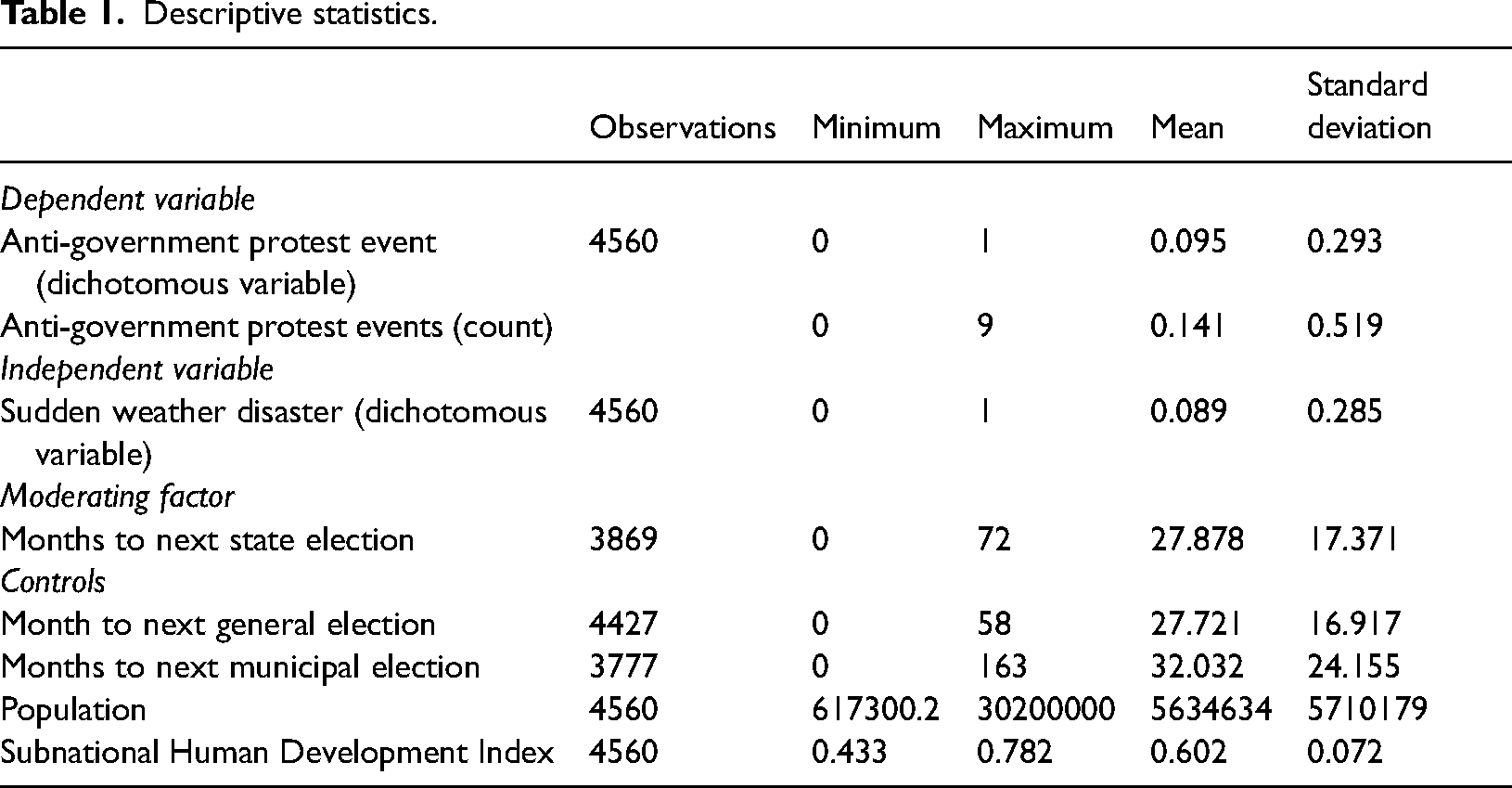
The dependent variable in this study is the occurrence of anti-government protests in specific city months, encompassing contentious incidents directed against local or national governments that convey a political message and transpire in public spaces (Schumaker, 1975). Protests may vary in terms of organization, and may range from relatively peaceful demonstrations to violent riots. While governments are the most frequent targets of such events, this is not exclusively the case. As shown in Appendix A4, a total of 522 riots and demonstrations were identified, with 431 directed against national or regional governments (see Appendix A5). To operationalize the occurrence of anti-government protests in a given month and metropolitan region, the number of riots and demonstrations against any government (state, regional, municipal) was counted and then recoded into a dichotomous variable. The count included the total number of spontaneous and organized demonstrations, as well as spontaneous and organized riots, directed against an Indian governmental entity within a specific city-month. The main reason for recoding the count variable into a binary one is its skewed distribution. Only 3% of all city months have seen more than one anti-government protest event and only 1% experienced more than two in a single month. Consequently, the variation between city months lies not so much in the number of protests but rather in whether a protest took place or not. Nonetheless, the count variable was used to assess the robustness of the main findings. Nonetheless, the count variable was used to assess the robustness of the main results.
The primary independent variable is the occurrence of sudden weather disasters (storms, floods, and landslides). The International Disaster Database (EM-DAT) (CRED, 2022) records natural disasters leading to loss of life or impacting a larger populace. By utilizing the Geocoded Disaster Locations Dataset (referred to as GDIS) created by Rosvold and Buhaug (2020), which provides precise coordinates for events recorded in EM-DAT, I can determine which city was subjected to a sudden weather disaster in a certain month. This operationalization aligns with the theory, which focuses more on destructive weather shocks that cause significant impact rather than on extreme weather conditions themselves. Sudden weather shocks alone (such as anomalies in precipitation and windspeed) are not expected to trigger discontent or lead to protest activity unless they result in devastating effects.
The most significant moderating factor in my proposed hypothesis is the proximity of elections at the level of government responsible for disaster management. In India, the primary responsibility for disaster management rests with the states, although the central government provides financial and logistical support if required. The specific provisions are outlined in the National Disaster Management Plan (UNDP, 2012). Furthermore, there exist elections to municipal corporations (The Constitution of India, 1992). Municipal corporations are the democratically elected local governance bodies in India below the state level (Kishore, 2022). They exist in municipalities with more than 1 million inhabitants, as is the case for each of the cities in my sample. I anticipate that the hypothesized effect of sudden weather disasters on protests will predominantly occur in the months leading up to state elections.
Elections for the state legislative assembly, known as the “Vidhan Sabha,” occur at different times in different states, typically at 5 year intervals. In cases where a state government fails or cannot be formed, early elections may be called, resulting in shorter intervals (Gilmartin and Moog, 2012; Kishore, 2022). Nation-wide general elections for the “Lok Sabha,” the lower house of India’s bicameral parliament, are held every 5 years, although not necessarily concurrently with state elections. Furthermore, municipal corporation elections follow varying schedules depending on the specific city (Kishore, 2022). I identified the months in which elections for one of these legislative bodies occurred and created a variable indicating for every city month how many months it was until the next state elections, general elections, or municipal elections were held.
Although all the cities in the sample are large, they vary in size. To account for this variation, I utilized city population data from the United Nations and the Indian census, interpolating for years with no available data. As mentioned earlier, state capacity and economic development often vary among sub-national regions. To account for this variation below the country level, I incorporated the Subnational Human Development Index, which measures the average life expectancy, education level, and standard of living for each region (Kummu et al., 2018; Table 1).
Descriptive statistics.
Empirical findings
Before turning to the regression results, Figures 1–4 provide an initial visual check of the theory. Each of the four plots displays the average values of protest occurrence, number of protests, sudden weather disaster affectedness, and the co-occurrence of both events (anti-government protests coinciding with sudden weather disasters in the same city-month) over time relative to the next state elections. Figures 1–3 show that neither anti-government protests nor sudden weather disasters increase in frequency as the next state elections approach. However, the leftmost bar in Figure 4 highlights a remarkable uptick in the co-occurrence of both events within the 6 months preceding state elections. This pattern aligns perfectly with the outlined theory.
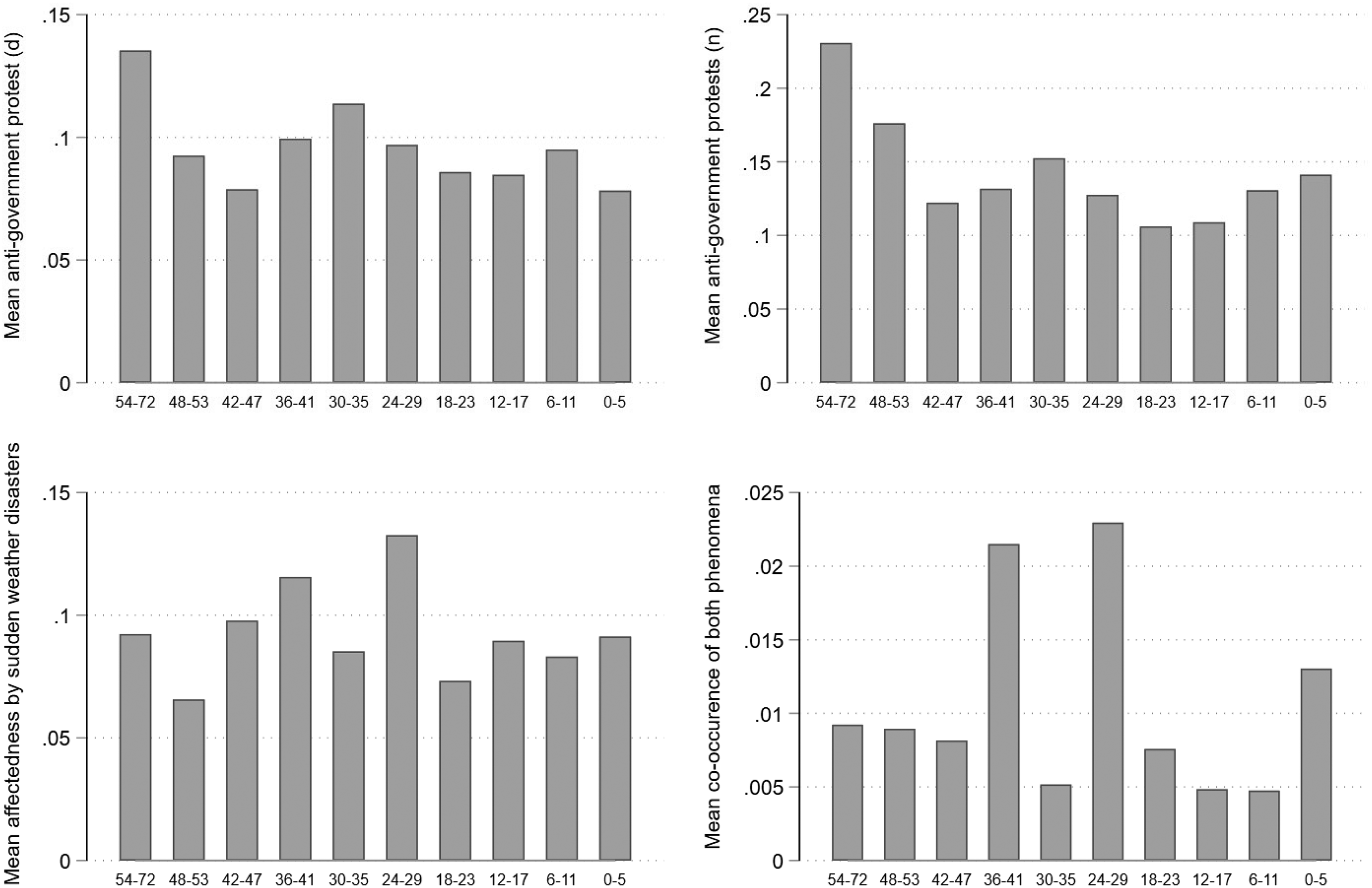
Average values of protest occurrence, number of protests, sudden weather disaster affectedness, and the co-occurrence of both events over time relative to the next state elections.
Owing to the dichotomous nature of the dependent variable, I first employ logistic regression analyses to test my hypothesis. To ensure that I only measure within-city variance, I include city-fixed effects in all my models. This allows me to assess whether protest likelihood within the same city is higher after a sudden weather disaster has occurred in the months leading up to a state election. To account for potential seasonal effects, I also introduce month-fixed effects in each of the models.
The results in Model 1 indicate that the occurrence of a disastrous weather event in a city shorter than 6 months before state elections significantly increases the likelihood of anti-government protests. The probability of a protest occurring during the pre-state election period increases by approximately 24.3 percentage points when a sudden weather disaster strikes. Conversely, in Model 2, which displays the results of an analysis of periods leading up to general elections, such a protest-enhancing effect is not observed. These findings align with my theoretical expectations, as disaster management in India is primarily the responsibility of the state governments (Table 2).
Logistic regression results with city- and month-fixed effects for the relationship between sudden weather disaster occurrence and anti-government protests.
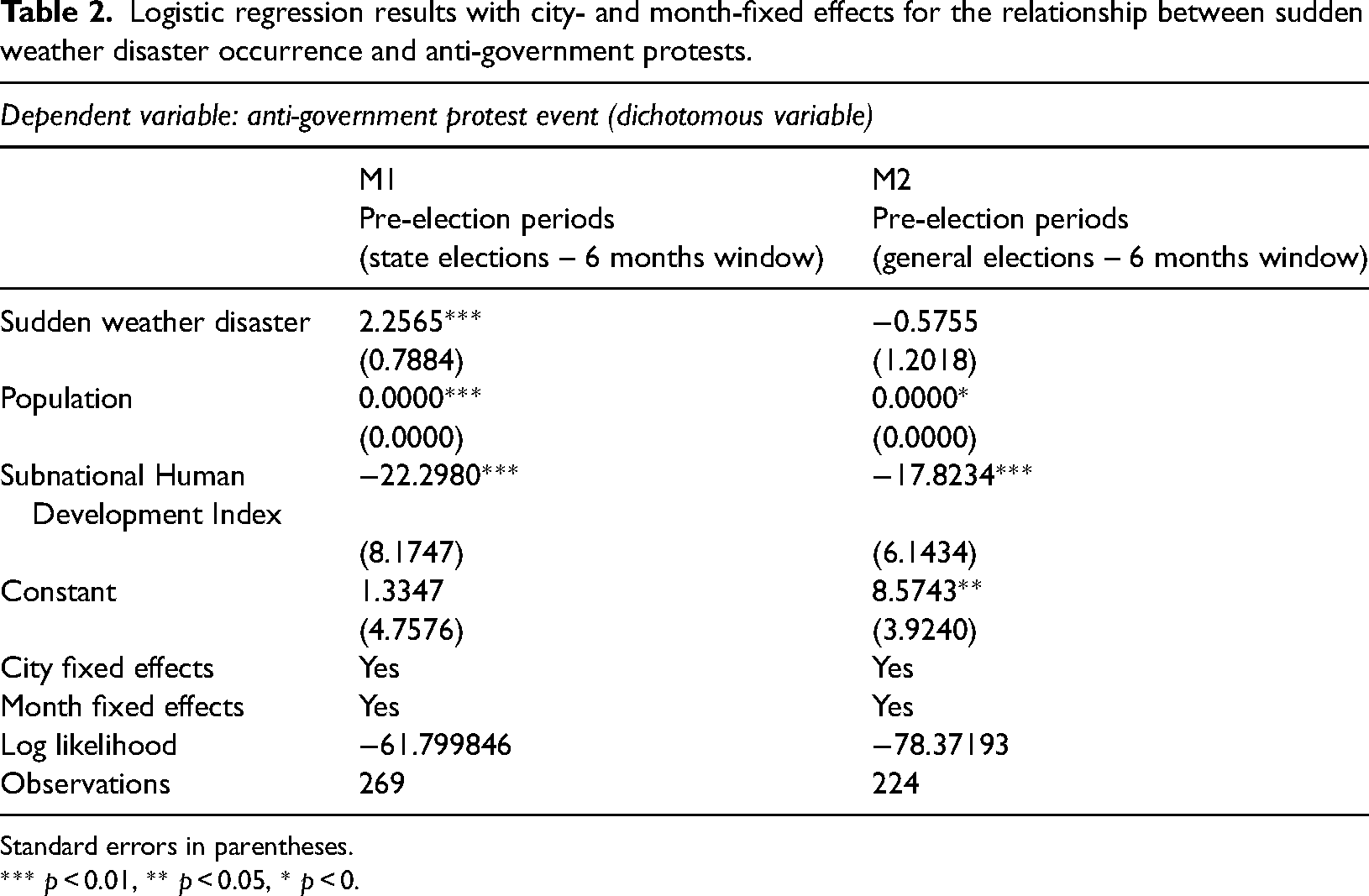
Standard errors in parentheses.
*** p < 0.01, ** p < 0.05, * p < 0.
To further strengthen confidence in the results, I also estimated interactions between the timing of the next state elections and sudden weather disaster occurrence and the next general elections and sudden weather disaster occurrence. The marginal effects plots derived from these interactions are presented in Figures 5 and 6, while the full model specifications can be found in Appendix A6 (Figure 5) and Appendix A7 (Figure 6). The model includes both the number of months until the next state elections and months until the next general elections. First, the time until the next state elections is interacted with the occurrence of sudden weather disasters; then, a similar interaction is conducted with the proximity to the next general elections.
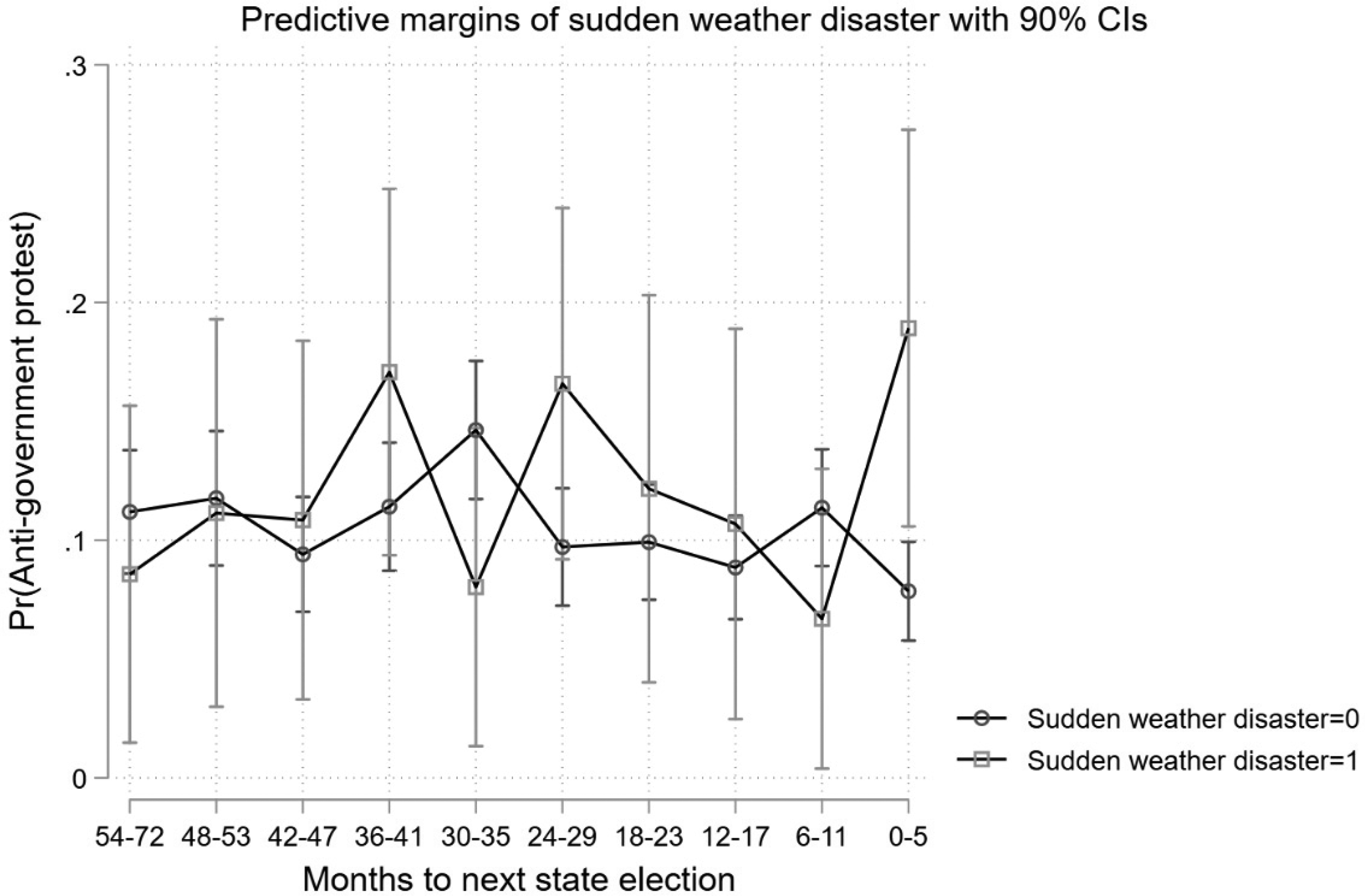
Marginal effects for the interaction between time (months) to next state election and sudden weather disaster occurrence. Dependent variable: anti-government protest.
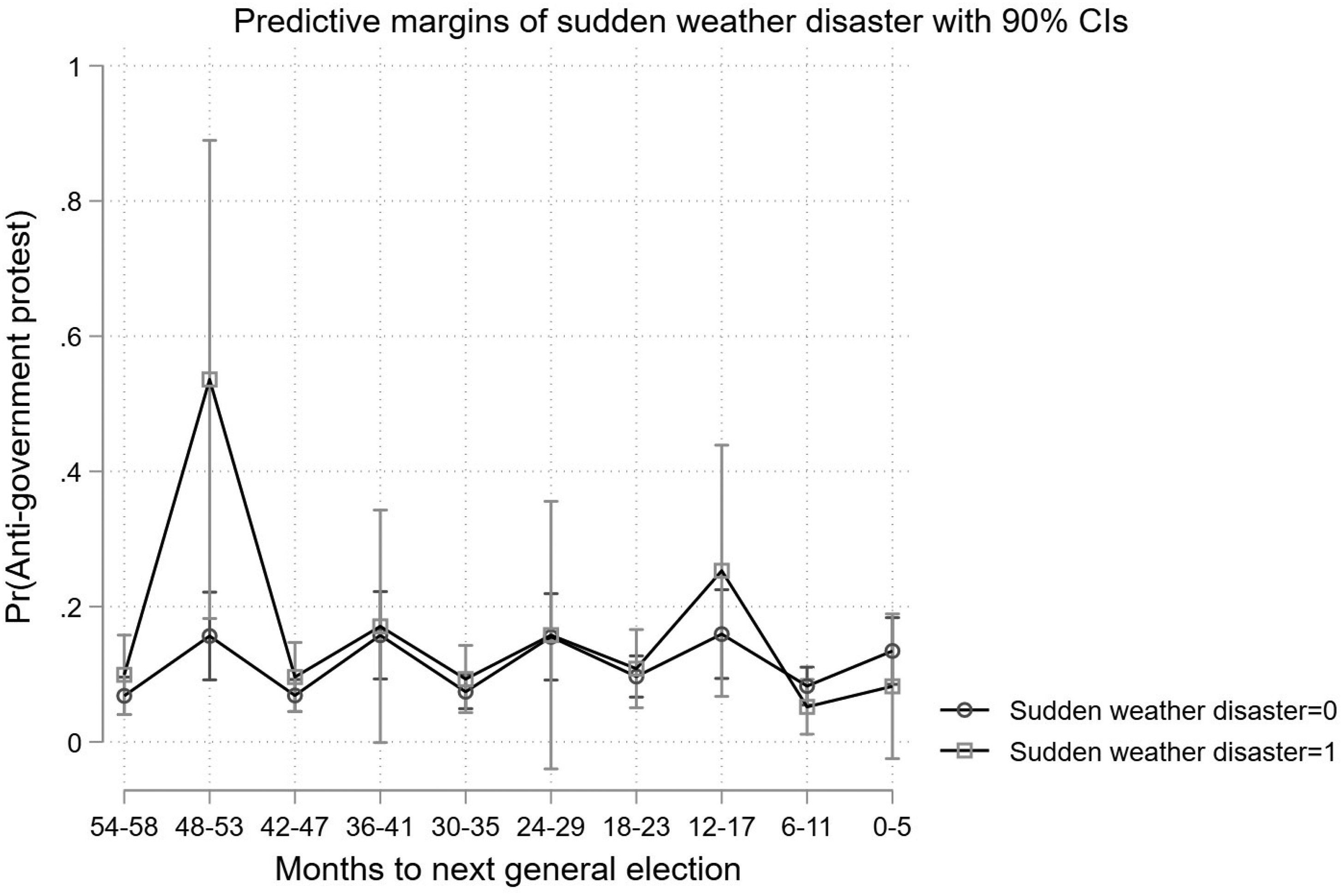
Marginal effects for the interaction between time (months) to next general election and sudden weather disaster occurrence. Dependent variable: anti-government protest.
Figure 5 shows that, except for one time period, the likelihood of anti-government protests does not generally increase following a sudden weather disaster. However, this pattern changes during the months immediately preceding state elections. Specifically, within 6 months before the next state election, the probability of anti-government protests rises significantly when a sudden weather disaster occurs in a city-month. In contrast, Figure 6 illustrates that this pattern is not observed when examining the interaction between sudden weather disasters and proximity to the next general elections.
Appendices A8–A10 further examine the uniqueness of this effect during the pre-state election period and investigate whether similar anti-government protest triggers appear in the run-up to municipal corporation elections. Whether analyzing the impact of sudden weather disaster occurrence on anti-government protests in the sub-sample of months immediately preceding municipal elections (Appendix A8) or assessing the interactive effect in the full sample (Appendix A9), I find no significant pattern. This reinforces the confidence that the observed effect is indeed unique to the periods leading up to elections at the level of government responsible for disaster management.
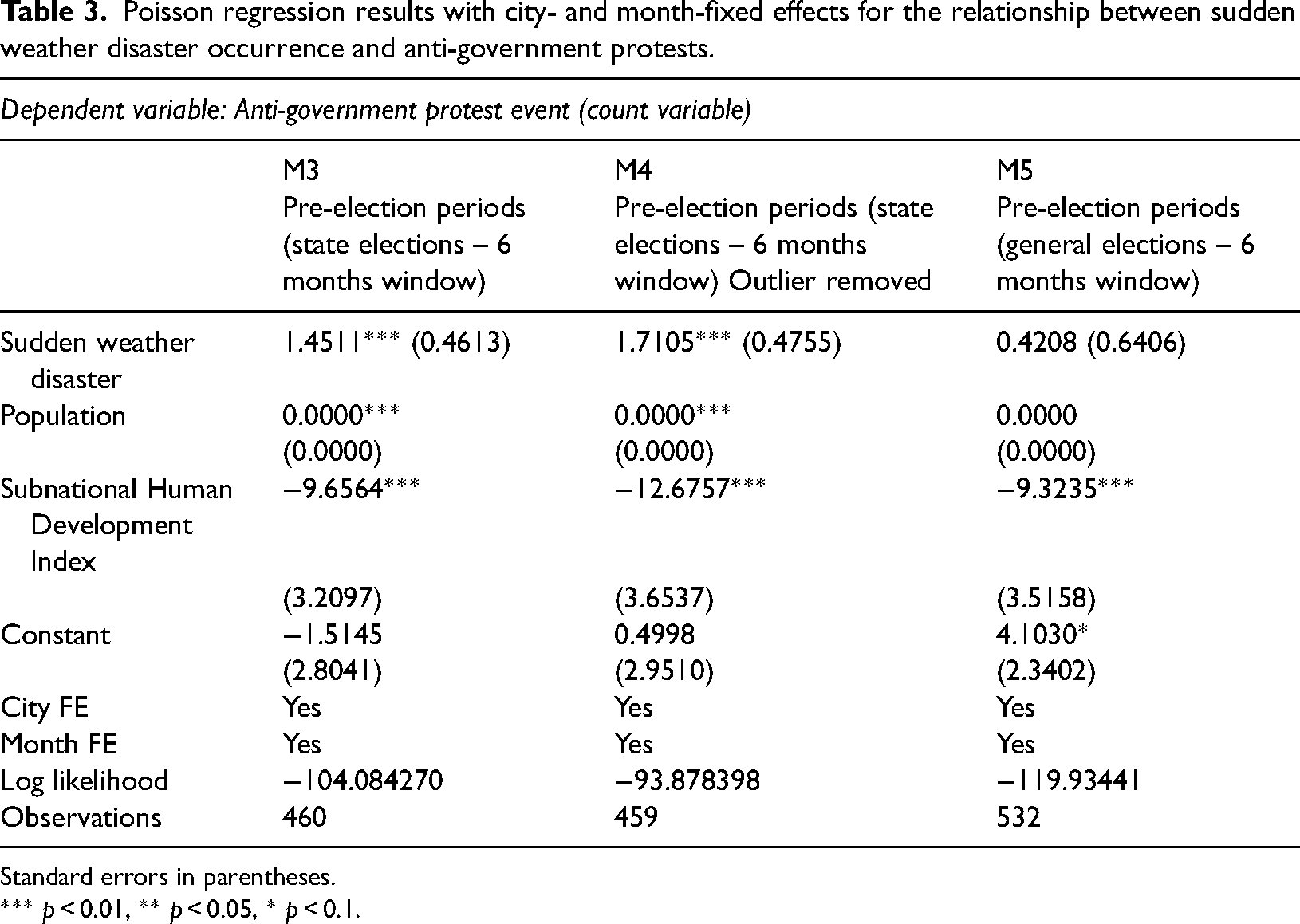
Table 3 presents several sensitivity and placebo tests. Following econometric best practices (Angrist and Pischke, 2008), I re-estimate the primary model (M1) using a Poisson regression approach with city and month fixed effects, rather than a logistic model, and use the count of anti-government protests as the dependent variable instead of the binary measure. Model 3 demonstrates a significant effect of sudden weather disaster occurrences on the number of anti-government protests in the months preceding state elections. Model 4 indicates that this finding is robust to potential outliers: even after removing a single observation, a city-month with nine anti-government protests, the effect of sudden weather disasters remains statistically significant. As noted earlier, the primary variation in the dataset lies not in the number of protests but in their occurrence overall, since very few city-months experienced more than one anti-government protest. Model 5 confirms that, even when using the count variable, no significant increase in anti-government protests is observed in response to sudden weather disasters in the run-up to general elections (Table 3).
Poisson regression results with city- and month-fixed effects for the relationship between sudden weather disaster occurrence and anti-government protests.
Standard errors in parentheses.
*** p < 0.01, ** p < 0.05, * p < 0.1.
Plausibility checks – illustrative examples
In addition to the quantitative analyses that provide empirical support for my theoretical argument, I conducted plausibility checks using illustrative examples. A foundational claim of the theory, one that warrants support through indicative evidence, is that Indian citizens direct blame toward state governments for mismanagement during disasters, particularly through protest. The events that unfolded in the Indian city of Chennai in 2005 offer compelling evidence in support of this claim.
Between October and December 2005, the Indian megacity of Chennai was hit by torrential rains resulting in widespread flooding. A few weeks into the disaster, affected citizens began taking to the streets to protest against the state government. While Chennai residents did not blame the authorities for the abnormal spike in precipitation, they were outraged by the mismanagement of the situation. During the demonstrations, flood victims emphasized the severe impact of floods on their living conditions and the substantial losses they incurred (The Hindu, 2005). Yet, what upset them most was how these hardships were addressed by governing authorities. Protestors described flood relief as being delayed, insufficient, and unfair. Anger boiled over when the chaotic distribution of limited aid resulted in riots, during which several people died. Demonstrators, led by an alliance of opposition parties, held the state administration responsible for this tragedy and accused them of poor disaster preparedness and response (Hindustan Times, 2005a, 2005b).
The protests against the state government during the devastating floods in Chennai in 2005 also support the argument that the potential for unrest in response to sudden weather disasters is particularly high in the lead-up to state elections. At the time of the floods, the upcoming elections to the state legislative assembly were only four months away. Opposition parties, notably the Democratic Progressive Alliance, actively organized anti-government protests, with numerous opposition politicians participating in them (Hindustan Times, 2005b). They highlighted the unjust distribution of relief goods by the ruling party of Tamil Nadu, the Anna Dravida Munnetra Kazhagam, even accusing them of nepotism. The opposition parties collectively called for the formation of a relief distribution committee comprising representatives from political parties at both the district and state levels, suggesting that the incumbent government was inadequate for the task (Hindustan Times, 2005a).
Another central expectation underlying my argument is that grievances arising from sudden weather disasters are severe and salient enough for politicians to address them in their election campaigns. Numerous reports on recent election campaigns in Indian metropolises corroborate this claim. In preparation for the 2019 elections, for instance, the BJP launched a “Save Hyderabad” campaign to protest the inability of Telangana governing parties to address recurring floods in Hyderabad (The Times of India, 2017). Leading up to the 2021 Kerala state legislative assembly elections, the problems stemming from sea erosion and increased vulnerability to floods were considered “key challenges for candidates from all fronts in Kochi” (The Times of India, 2021).
Another crucial aspect of the argument is that political parties actively organize protests to draw attention to how governing authorities have failed to prevent and address disaster-induced hardships. Several examples from Indian cities illustrate how parties use disastrous weather events to highlight the shortcomings of incumbent political actors. In 2004, Bihar was struck by devastating floods, and the situation escalated when afflicted citizens tried to forcibly obtain limited relief goods, leading to police firing on rioters (The Times of India, 2004a). In the days following this incident, a coalition of opposition parties organized several protests and even called for a general strike in Patna. Left-wing parties, all in the opposition, emphasized the state government's mismanagement of the situation and its consistent lack of preparedness for such disasters. They openly and repeatedly discouraged citizens from re-electing the state government in the upcoming elections. “The state government failed to solve the perennial problem of floods and when victims demanded relief, they were showered with bullets by cops,” said the general secretary of the Communist Party of India. (AFP, 2004; The Times of India, 2004b, p. 200). These events, occurring less than 6 months before the next Bihar state legislative assembly elections, underscore how opposition parties may capitalize on political discontent arising from sudden weather disasters to actively mobilize against incumbent parties and use protests to gain visibility.
Incidents such as the sit-in protest led by the mayor of Bhopal, the capital of the Indian state Madhya Pradesh, in a waterlogged area of the city, highlight how even prominent politicians utilize disastrous events to underscore their political views on various issues. Alok Sharma, the mayor of Bhopal, attributed his protest to the state government's inaction on the city's persistent urban flooding issues. He emphasized that Bhopal, represented at the municipal level, the political level he himself embodied, required significantly greater support from the state government to address the flood-related challenges effectively. He further stressed that, with upcoming state elections, the issue warranted heightened political attention (PTI, 2013). The fact that the mayor himself participated in the protest further underscores that the responsibility for providing disaster relief in India rests primarily with state governments. This also helps explain the earlier non-findings reported in this study. While I observed a robust and significant protest-triggering effect of sudden weather disasters as state elections approached (= elections at the level responsible for disaster relief) no comparable effects emerged in the months preceding municipal or national elections. It would be unreasonable to expect citizens to channel disaster-related grievances into protests during those periods, given that neither local nor central governments bear the main responsibility for delivering aid and assistance following weather disasters.
Similar dynamics unfolded when a series of cyclones and floods struck the capital city of Odisha (Bhubaneswar) a few months before the 2014 state elections. Despite promised aid, it did not arrive to the extent expected (Hindustan Times, 2013). Consequently, protests erupted in more than 18 flood-affected districts of Bhubaneswar, with numerous politicians running for election participating in them (The Telegraph, 2013). They seized the opportunity to highlight that the insufficient quantity of relief goods and compensation payments was not their fault, illustrating how parties preparing for impending elections use protests to point out deficiencies of other political actors. Local observers of the scenarios support my argument that protests by parties against governmental mishandling of disastrous weather events are most pronounced in pre-election periods. For example, protests by the National Congress Party in Mumbai against water mismanagement by the ruling Bharatiya Janata Party were characterized in several newspaper articles as being in “poll mode” and were described as the kick-off for their electoral campaign (Hindustan Times, 2018).
While the anecdotal evidence in the previous few paragraphs underscores the plausibility of the first part of my argument, the following examples illustrate how citizens leverage the public attention surrounding elections to advocate for their cause and voice their grievances. Upset about the “apathy” of the administration in handling the flash floods in Pune in 2019, slum dwellers staged protests that included blocking major roads (Hindustan Times, 2019a). Moreover, residents of some of the worst-hit districts called for a boycott of the state elections on 21 October to protest the lack of assistance from the local government (Hindustan Times, 2019b). Also, before the 2020 West Bengal state assembly elections, angry protestors threatened not to cast their votes because even one year after Cyclone Amphan, the destroyed tube wells had not been fixed. An agitated demonstrator told journalists, “Why should we vote? If the administration cannot meet our basic needs like water, there is no purpose in taking part in the poll process. We have made it clear” (The Telegraph, 2021).
Another aspect that warrants more in-depth examples is the timeframe within which such protests can be expected to occur. Several examples suggest that this effect may manifest not only immediately before elections but also a considerable time in advance. For instance, protests against corruption in the distribution of Cyclone Amphan funds occurred approximately 12 months before the next state elections in West Bengal (The Free Press Journal, 2020). Insiders commented that these protests were aimed at delineating the “battle lines” between the BJP and TMC parties for the upcoming state elections in the following year. Similarly, the “Save Hyderabad” campaign, mentioned earlier, was launched about 1 year before the next elections (The Times of India, 2017). Interestingly, the media-effective, sit-down strike of the mayor of Bhopal, which, by his own accounts, was staged to raise awareness about problems with the current administration in a year when state elections were due, occurred about 6 months before the next elections (The Times of India, 2018). In summary, these anecdotal examples increase confidence that parties often incorporate disaster-induced grievances in their electoral campaign early on and stage protests around this issue even when several months remain before the elections.
To address potential questions about whether my theory is only applicable to India, I would like to briefly mention a recent example from another emerging economy. Shortly before the most recent state elections were held in the Mexican province of Oaxaca, Hurricane Agatha devasted large areas of the state and caused considerable damage in the state capital (NF News, 2022a). Desperate citizens, feeling abandoned by authorities, took to the streets and threatened to boycott the elections if relief did not arrive immediately. In some instances, protests escalated into riots during which polling stations were set ablaze and destroyed (NF News, 2022b).
Conclusion
This paper aims to address the question of when sudden disastrous weather events in metropolises in the Global South increase the likelihood of anti-government protests. For a considerable time, scholarly attention has predominantly focused on the adverse impacts of weather disasters on individuals whose livelihoods depend on successful harvests and healthy livestock. However, recent research has progressively shifted toward examining both the direct and indirect consequences of weather disasters on urban areas. Consequently, there has been a growing body of literature dedicated to discerning the conditions under which destructive weather events may lead to societal unrest within densely populated areas.
Undeniably, storms, floods, and landslides can have extremely adverse impacts in urban areas. This holds true particularly for fast-growing, less resilient metropolises in the Global South. For example, if infrastructure is not designed to cope with such events, large-scale destruction may rapidly ensue. Arguably, such situations constitute ideal breeding grounds for political discontent. Destructive weather disasters may reveal deficiencies in public investments or expose a lack of preparedness for emergency situations among political decision-makers. However, grievances must be effectively mobilized to incite collective action. Notably, in many rapidly growing metropolises in the Global South, residents are frequently confronted with disastrous weather events that cause hardship, yet actual protests remain relatively rare.
Existing studies that have addressed this dilemma, investigating the conditions under which weather disasters may incite anti-government protests, have primarily focused on the geographical and demographic aspects of grievances linked to these disasters. While these studies have illuminated where the potential for protests following destructive weather events might be most pronounced, they have left substantial gaps in our understanding of the temporal dimension of these protests. Specifically, they have not adequately addressed when grievances arising from sudden weather disasters are most likely to be mobilized.
I argue that major political events, particularly elections, play a pivotal role in determining the timing of such mobilization. In the months preceding an election, political actors have every incentive to highlight urgent issues and present their proposed solutions to voters. Opposition parties, in particular, are inclined to capitalize on dissatisfaction stemming from weather disasters. During this phase, opposition parties typically strive to highlight the shortcomings of the incumbent government and position themselves as the better alternative (Daxecker, 2020; Salehyan and Linebarger, 2015; Tucker, 2007). Consequently, sudden destructive weather events that expose deficiencies in disaster preparedness become opportune topics for opposition parties in campaign mode. Therefore, I anticipate that they will actively mobilize grievances induced by disasters if they occur shortly before an election.
When elections for the government level responsible for disaster management are imminent, opposition parties may organize protests to draw attention to the alleged mismanagement by the incumbent government and emphasize their superior competence in handling such crises. Furthermore, citizens may be more inclined to voice their grievances publicly in pre-election periods, as politicians tend to be more attuned to voter concerns. In democracies, politicians are more concerned about what voters want as an election approaches since their election results and, consequently, their access to resources and power, depend on it.
Drawing upon insights from the literature on electoral protests and electoral violence (Birch et al., 2020; Harish and Little, 2017; Salehyan and Linebarger, 2015; Thomson et al., 2021), I propose the hypothesis that sudden weather disasters in metropolises of the Global South are particularly likely to trigger anti-government protests if they occur during the months leading up to state elections.
I empirically test this hypothesis using a newly constructed dataset comprising protest events in 19 Indian metropolises spanning a 20 year period. My findings reveal a statistically significant increase in the likelihood of anti-government protests following sudden destructive weather disasters, such as storms, floods, and landslides, when they strike shortly before elections for the state legislative assembly. Importantly, this effect is not observed in the lead-up to nationwide general elections or municipal elections. This pattern aligns with the Indian context, where the primary responsibility for disaster management lies with state governments. My findings corroborate that citizens are highly capable of identifying the primary authorities responsible for disaster management, knowing whom to hold accountable for insufficient relief measures, and recognizing the most opportune moments to demand action.
Additionally, my quantitative findings are supported by several illustrative case studies, such as the protests that followed the major floods in Chennai in 2005, highlighting how political parties sometimes stage protests in the run-up to elections to publicly denounce the politicians in charge for allowing disastrous weather events to result in chaos and suffering.
Future research could also more closely examine the role of protests that arise in the aftermath of sudden weather disasters in shaping incumbency. In particular, it could explore how incumbents respond, whether by offering concessions or resorting to increased repression, and how these responses influence their prospects for reelection.
While protests offer a relatively constructive outlet for voicing discontent, all protests carry the risk of spiraling out of control, potentially leading to violent conflict. I emphasize that understanding the periods in which grievances induced by disasters are most likely to lead to protests could provide valuable guidance to policymakers on when and where to focus their attention following sudden weather disasters.
Supplemental Material
sj-do-1-cmp-10.1177_07388942251409933 - Supplemental material for Storms, floods, landslides and elections in India's growing metropolises: Hotbeds for political protest?
Supplemental material, sj-do-1-cmp-10.1177_07388942251409933 for Storms, floods, landslides and elections in India's growing metropolises: Hotbeds for political protest? by Viktoria Jansesberger in Conflict Management and Peace Science
Supplemental Material
sj-dta-2-cmp-10.1177_07388942251409933 - Supplemental material for Storms, floods, landslides and elections in India's growing metropolises: Hotbeds for political protest?
Supplemental material, sj-dta-2-cmp-10.1177_07388942251409933 for Storms, floods, landslides and elections in India's growing metropolises: Hotbeds for political protest? by Viktoria Jansesberger in Conflict Management and Peace Science
Supplemental Material
sj-docx-3-cmp-10.1177_07388942251409933 - Supplemental material for Storms, floods, landslides and elections in India's growing metropolises: Hotbeds for political protest?
Supplemental material, sj-docx-3-cmp-10.1177_07388942251409933 for Storms, floods, landslides and elections in India's growing metropolises: Hotbeds for political protest? by Viktoria Jansesberger in Conflict Management and Peace Science
Footnotes
Data availability statement
The datasets generated and/or analyzed during the current study are provided in the supplementary materials accompanying this article.
Funding
The author disclosed receipt of the following financial support for the research, authorship, and/or publication of this article: This work was supported by the Deutsche Forschungsgemeinschaft, (grant number EXC-2035/1 – 390681379).

Supplemental material
Supplemental material for this article is available online.
References
Supplementary Material
Please find the following supplemental material available below.
For Open Access articles published under a Creative Commons License, all supplemental material carries the same license as the article it is associated with.
For non-Open Access articles published, all supplemental material carries a non-exclusive license, and permission requests for re-use of supplemental material or any part of supplemental material shall be sent directly to the copyright owner as specified in the copyright notice associated with the article.
