



Abstract
Much of the focus of cyber conflict has been on interstate conflict. This article focuses on two interrelated questions in the important but neglected area of cyber contentious politics. First, how does the public feel about the use of different eco tactics including cyber-based tactics carried out by activists involved in the radical environmental movement, a movement that uses protest and sabotage in service of environmental causes? Second, how do anti-technology sentiment and concerns about climate change influence support for different eco tactics? To answer these questions, we conduct a survey and survey experiment on a nationally diverse sample of Americans. We find that Americans are less supportive of certain eco tactics, particularly those that involve property destruction or physical sabotage compared to cyber-based tactics. We further show that anti-technology sentiment and perceived threat from climate change are correlated with increased support for eco direct actions. Using a survey experiment we show that cyber direct actions that result in sabotage are viewed as more acceptable than kinetic actions even though they both result in the same level of destruction. Finally, we include qualitative data from interviews with activists to better understand the strategy and role that new technology and tactics play in the broader radical environmental movement.
Motivation
From November 2016 until May 2017 a spate of sabotage attacks occurred along the nearly 1,200-mile Dakota Access Pipeline. A bulldozer was set on fire, and blow torches and rags doused in gasoline were used in more than 11 arson attacks to damage various sections of the pipeline. At a press conference in July 2017 in front of the Iowa Utilities Board two women affiliated with the Catholic Workers Movement – Jessica Reznicek and Ruby Montoya – announced that they were responsible for the sabotage actions. Reznicek and Montoya said in a prepared statement they carried out their sabotage after they had exhausted other protest options (Danielson, 2017).
Reznicek eventually pleaded guilty and was sentenced to eight years in prison with a terrorism enhancement charge (Morris, 2022). One might think that given the increasing threat and salience of climate change, eco-related sabotage, and contentious tactics like those carried out by Reznicek and Montoya would be on the rise in the United States. Yet, that’s not the case. From 1996 to 2009 individuals associated with the Earth Liberation Front (ELF) and the related Animal Liberation Front (ALF) conducted more than 700 attacks, including vandalism, arson, and other forms of sabotage against targets (Loadenthal, 2014). They referred to these types of direct actions as ‘monkeywrenching.’ At its peak in 2002, so-called ‘ecoterrorism’ and individuals associated with ELF and ALF were considered the number one domestic terror threat by the FBI (Potter, 2011). But since its peak in 1999–2001, eco-related attacks have declined precipitously (Spadaro, 2020).
In May 2021 one of the most prominent pipeline acts of sabotage in the USA since Reznicek and Montoya’s occurred. The Colonial Pipeline, one of the largest pipelines on the US East Coast, was hit by a ransomware attack. The attackers were motivated by greed, not concerns over climate change, and they used a ransomware attack rather than blowtorches to hobble the company’s billing and accounting systems. 1 The company ended up paying nearly five million dollars in Bitcoin to hackers to unlock their data. The ransomware attack greatly disrupted gas and fuel supplies on the East Coast, and spiked gasoline to the highest price levels since 2014 (Sanger and Perlroth, 2021).
This increasing concern about climate change and vulnerability of US targets to cyber operations has also occurred against a growing backlash against technology and technology companies. A July 2021 Pew study found that 68% of Americans believe tech companies ‘have too much power’ (Vogels, 2021). Experts are also concerned that new technologies will sow distrust, increase state surveillance, and thus weaken democracy (Anderson and Rainie, 2020; Haidt, 2022). Others are worried that increasing use of artificial intelligence presents unforeseen economic and security risks to society (Illing, 2017).
These anti-tech impulses have deep roots in certain parts of the radical environmental movement. For instance, the basis for Theodore Kaczynski’s bombing campaign from 1978 to 1995 that killed three people and injured 23, and laid out in his anti-technology manifesto (Kaczynski, 1995). Kaczysnki’s violent anti-technology stance has found a home on both the left and right, where some have referred to Kaczynski affectionately as ‘Uncle Ted’ (Farrell-Molloy and Macklin, 2022).
This article ties together these strands – concerns over climate change, anti-technology attitudes, cyberattacks, and attitudes towards contentious tactics – to form cohesive theory about technology, threat, and contentious politics. We then focus on three sets of questions. First, how does the American public view different types of contentious eco tactics known as eco direct actions? This is an umbrella term that encompasses everything from nonviolent civil disobedience to property destruction to violent direct action including assault, kidnapping, and other forms of political violence. These eco direct actions are used to defend environmental causes or fight against perpetrators involved in pollution or environmental destruction (Parkin, 2021). Which eco direct action tactics do Americans generally find acceptable or unacceptable? And which tactics are more ambiguous in their level of acceptability? Are cyber eco direct actions viewed as acceptable? Second, how do the threat of climate change and attitudes towards technology shape support for different tactics? Are people that are more fearful about climate change, or hold more anti-technology views more supportive of eco direct actions? Third and finally, how do eco activists and experts think about the role of technology and cyber tactics in shaping tactics surrounding the broader radical environmental movement. To answer these questions, we carried out a survey and survey experiment on a nationally diverse sample of Americans in July 2022. We then pair this with in-depth interviews with activists and experts in the radical environmental movement conducted in 2021 and 2022.
This article makes three important contributions. First, there is a growing literature in international relations on the threat posed by cyber (Kostyuk and Wayne, 2021; Kostyuk and Zhukov, 2019; Lindsay and Gartzke, 2022; Rid, 2012; Valeriano and Maness, 2015), and that public opinion is important to how the public understands cyber (Arsenault et al., forthcoming; Jardine et al., 2023; Shandler and Canetti, 2023). But this work has mostly explored cyber conflict between nation states. Much of this literature is focused on whether cyber war is a major threat (Wirtz, 2017), an overhyped threat (Rid, 2013), or an insidious threat eroding the foundations of democracies (Schneider, 2021). The few papers that have examined contentious cyber actions have focused on ‘cyber-terrorism’ and the public’s reaction to it (Gross et al., 2017; Shandler et al., 2023; Snider et al., 2021). The focus on interstate cyber actions obscures its use as a contentious strategic tactic by challenger groups (Rudner, 2013).
Second, where does the public draw the line on which tactics are acceptable and which go too far? And how do climate change perceptions and anti-technology attitudes influence this calculus? In this article we connect Rid (2012) and his concept of international cyber sabotage – the use of cyberattacks to ‘weaken or disable an economic or military system’ (p. 16) – with the long history of covert eco sabotage in the radical environmental movement known as monkeywrenching or ecotage that used sabotage and nonviolent resistance to protect wilderness and defend ecological targets (Haywood and Abbey, 1993; Plows et al., 2004).
Third and perhaps most uniquely, this study pairs public attitudes from surveys and survey experiments with interviews from activists and experts about how technology influences the strategy and trajectory of the movement. We use the qualitative interviews to answer one of the key questions raised by the survey and experimental data: if the public is more amenable to cyber versus kinetic eco attacks, why haven’t we seen more use of cyber?
We have four main findings. First, there is large variation in how acceptable the public finds certain eco direct action tactics. Tactics that involve violence or sabotage are seen as much less acceptable than disruptive civil disobedience, or cyber tactics. Second, those who believe that climate change is more threatening and hold more anti-technology views are more accepting of eco direct actions in general. Third, in our survey experiment, we show that the public is more likely to support, agree with the framing of, and believe the actions are more effective, when an activist uses cyber sabotage versus physical sabotage against a target. Fourth, our in-depth interviews suggest that many activists and experts see cyber and new technologies as providing new avenues for organization and a tool for sabotage. But they also see pitfalls associated with relying on technology to organize, including weaker ties among activists and easier government surveillance.
Contentious tactics and the public: Cyber, climate change perceptions, and anti-technology sentiment
The current article draws on different literatures including contentious tactics and public opinion, the effect of cyber on conflict and contention, and attitudes towards climate change and anti-technology sentiment. In this section we use these different literatures to understand which types of contentious tactics like cyber the public is likely to support, and which factors influence these appraisals.
Contentions tactics and the public
Social movements that engage in contention have multiple competing interests. They need to mobilize identities to bring resources to their cause (Gamson, 1975; McAdam et al., 2001). Movement actors also want to engage in enough disruption to put pressure on the target and get attention (Biggs and Andrews, 2015; Sobieraj, 2010). But if activists use tactics that are too extreme they can alienate the public, or cause potential allies to lose identification with the movement. Feinberg et al. (2020) refer to this delicate balancing act as the ‘activist’s dilemma’. Other research studies find that activists tend to use tactics that are considered normal or appropriate by those making claims (Tilly, 1986). But challengers are also constantly seeking new tactics and avenues to innovate and challenge the status quo (Tilly, 2008). A further consideration of activists is the specter of repression. Certain disruptive or extreme tactics against targets are likely to invite stronger repressive responses from the state, threatening the survival of movements (Davenport, 2015). Yet, sometimes movements may intentionally use provocative tactics to provoke the state into overreacting, and win supporters to their side by discrediting the government (McAdam, 1982; Simon and Klandermans, 2001). More extreme and violent tactics by radical flanks, can also push the public to be more accepting of moderate flanks within the movement as they are seen as more ‘reasonable’ (Schifeling and Hoffman, 2019; Simpson et al., 2022). In the context of the radical environmental movement, Brown (2021) shows how activists follow a stepwise escalation – when lower-level civil disobedience tactics fail, more escalatory actions are taken.
How does the public make sense of challenger tactics? Previous research finds that the public tends to draw a line between nonviolent and violent tactics. Using data from the Black-led protests in the US during the 1960s and 1970s, Wasow (2020) finds that nonviolent protests met with state violence increased the Democratic vote share. In contrast he finds that violent protests decreased it. There’s further evidence that minorities and marginalized groups are penalized even when they do engage in nonviolent protest (Edwards and Arnon, 2021; Manekin and Mitts, 2022). However, extreme protest tactics also allow protesters to get more media coverage and public attention (Boyle et al., 2012; Hellmeier et al., 2018; Zeitzoff, 2023). One of the key disagreements within the environmental movement was the utility and morality of property damage as a tactic. These ‘ecotage’ tactics that were part of actions done by the ELF and ALF and other more radical eco groups included smashing windows and arson, against various targets (Vanderheiden, 2005; Loadenthal, 2014; Pellow, 2014). While some viewed ecotage as necessary, mainstream environmental groups criticized it (Sullivan, 1998), and the government referred to these sabotage tactics as ‘ecoterrorism.’
Cyber, technology, and contention
How do new cyber tactics and new communication technologies like social media influence contentious politics? In the wake of the Arab Spring and Black Lives Matter movements, there emerged a large research program on the effect of new information communication technologies on contentious politics. While some have found that social media and new technologies favor challengers over incumbents (Shirky, 2011; Diamond and Plattner, 2012; Steinert-Threlkeld, 2017), or can foment radicalization (Mitts, 2019; Mitts et al., 2022), others have argued that it allows state actors to more easily surveil and repress potential challengers (Earl et al., 2022; Morozov, 2012; Rød and Weidmann, 2015). Freelon et al. (2018) show how social media postings around the Black Lives Matter protests raised the salience of the protests and made it more likely that elites would be forced to respond. Others argue that social media allows protests to happen more spontaneously, but that this can have negative side effects, as larger but weaker movements form (Tufekci, 2017). One of the key findings though is that social media and communication technologies afford new forms of speed, access, and communication that influence how both challengers and the state interact in contentious interactions (Zeitzoff, 2017).
While there have been several studies on attitudes towards cyberattacks, most of these have been focused on international conflict (Gross et al., 2017; Kostyuk and Wayne, 2021; Shandler et al., 2021; Snider et al., 2021). Few studies have looked at the acceptability of cyber as a tactic of contentious, protest politics. The studies that do, have mostly focused on hacktivism – or the use of network or computer-enabled tactics as a form of direct action to pressure and affect political targets. These studies have found that individuals who perceive that a system is unjust have low trust in formal institutions, and those who have low personal efficacy are more likely to support hacktivist tactics and groups (Ireland, 2022; Travaglino, 2019). Perhaps most relevant to the current piece, Van Aelst and Van Lear (2009) develop a typology of contentious tactics, some of which are Internet-supported or coordinated (protests to property destruction) while others are Internet-based (hacktivism to spam attacks). So new technologies support more traditional contentious tactics while also allowing new ones to emerge (Rolfe, 2005). Yet none of these studies measure the public’s support for cyber contentious tactics compared to traditional contentious tactics.
Climate change perception, threats, and anti-technology sentiment
What explains support for eco direct actions? In this article we focus on two key attitudes that influence the public’s support: perceived threat from climate change and anti-technology sentiment.
Attitudes towards climate change and global warming are complex. They are influenced by personal experience, science attitudes, and political ideology (Gifford, 2011; Gifford and Nilsson, 2014). Climate change attitudes and perceptions are also related to what people think is causing it, with those who believe global warming is caused by human action (the scientific consensus) more afraid of the impacts (Krosnick et al., 2006). Some studies suggest that motivated reasoning leads conservatives and Republicans to downplay the threat of climate change and global warming (Kahan, 2013). While other research argues that it is equally plausible that both Republicans and Democrats are trying to form accurate beliefs but finding different sources of information credible (Druckman and McGrath, 2019), and that scientific information about climate change does influence opinion, but is eroded by skeptical opinion content (Nyhan et al., 2022). Polling shows that younger Americans – Generation Z (18–25 years old) and Millennials (26–41 years old) – are more concerned about and more active in climate-related protests (Tyson et al., 2021).
How does exposure to threatening events influence attitudes? Increased exposure to terrorism is shown to increase people’s support for exclusionary or aggressive policies, hardline political parties, and more hawkish foreign policies (Canetti, 2017; Gadarian, 2010; Getmansky and Zeitzoff, 2014). Stress and negative emotions from exposure to violent events are thought to be the key mechanisms that shift attitudes. Yet, the effect of exposure to extreme heat waves or wildfires has a more conditional effect (Hoffmann et al., 2022). For instance, Hazlett & Mildenberger (2020) find that exposure to wildfires increases support for costly climate-related action, but only in Democratic leaning areas. Thus, negative shocks from anomalous weather can spur action, but only among those predisposed to believe in climate change.
How do people form attitudes on technology and science? Previous studies suggest that lower scientific literacy, greater religious belief and adherence, and lower levels of trust are associated with greater anti-science attitudes (Gauchat, 2008). Other research finds that anti-technology and anti-science attitudes are closely related to conspiratorial thinking. People who are distrustful of elites, more conspiratorial minded, or believe in the paranormal are more likely to have anti-science attitudes (Rizeq et al., 2021).
Among those skeptical of science, climate change denial is one of the most prominent, mainstream conspiracies (Uscinski and Olivella, 2017). More generally, recent research finds that in addition to right–left/liberal conservative values, there is an anti-establishment domain to politics (Arceneaux et al., 2021; Uscinski et al., 2021). Anti-establishment orientations are correlated with support for populism, conspiracism, and political violence.
Anti-technology sentiment has always found support within parts of the environmental movement. In particular, members of the ‘eco-centric’ wing – those who value all life and do not elevate humans above other species – have supported and promoted anti-technology views (Woodhouse, 2018). This primitivist impulse has also been popular with the green anarchist wing of the radical environmental movement (Parson, 2018). As Pellow (2014) described it, the major ideological underpinnings of eco anarchists associated with the ALF and ELF was total liberation: liberation of animals, humans, and the environment, and a rejection of ‘techno-industrial global capitalism.’
Argument and predictions
The previous literature provides the basis for our theoretical predictions of attitudes towards eco direct action tactics. We argue that the public balances the perceived intensity of a given tactic with the necessity or justness of the cause (the broader environmental movement in this case) to form their acceptability of a given tactics. For example, tactics that involve violence or destruction are viewed as more intense than those that involve peaceful protests. Those that view the threat from inaction high or identify highly with a social movement and its actors are more likely to believe a cause justifies intense actions. Thus, the public has principled views towards eco direct action tactics with a ranking of tactics from to most to least acceptable. Given these principled views on tactics, those who score higher on certain fundamental traits and dispositions like a belief that violence is acceptable, aggression, or anti-establishment orientation are also likely to be more comfortable with intense tactics in general.
We take this framework and divide it into strong predictions and weaker predictions about public attitudes. Strong predictions are hypotheses which are in line with previous findings, and we feel confident that we will find a significant relationship in the hypothesized direction. Weaker predictions are hypotheses that we believe may be true and are interested in testing but have weaker priors on.
First, the public has a rank ordering of tactics when considering contentious challenger tactics. More violent eco direct action tactics will be seen as less acceptable. Above a certain threshold tactics are likely to be viewed as inappropriate and unacceptable. Tactics associated with violence or property destruction are likely to be seen as crossing the threshold from acceptability, while peaceful protests or civil disobedience are likely to be more acceptable.
Strong Prediction 1: Eco direct action tactics that are violent or contain property destruction will be viewed as less acceptable than civil disobedience.
Support for the cause of the radical environmental movement in general is related to two key variables: the perceived threat of climate change, and partisanship. Higher perceived threat from climate change will lead people to feel that more intense actions are called for and acceptable. In contrast, survey evidence suggest that Republicans are less concerned about climate change than Democrats. And they are more likely to view environmentalism as a left-wing or Democratic cause.
Strong Prediction 2: Those who feel climate change is more threatening will be more accepting of eco direct actions in general.
Strong Prediction 3: Republicans will be less supportive of eco direct actions in general.
Individual personality attitudes such as anti-establishment orientations, trait aggression, and tolerance for political violence are associated with increased support for extreme political tactics in general (Kalmoe, 2014; Uscinski et al., 2021; Westwood et al., 2022; Zeitzoff, 2023).
Strong Prediction 4: Those who hold more anti-establishment attitudes, score higher on trait aggression, or are more tolerant of political violence will be more supportive of eco direct actions in general.
Now we turn to our weaker predictions. There’s evidence that anti-technology sentiment animates parts of the radical environmental movement. We hypothesize that these concerns over technology may also be associated with increased support for environmental causes among the public.
Weak Prediction 1: Greater anti-technology sentiment will be correlated with increased support for eco direct action tactics.
Prior research has found that the public has mixed views on cyber. While the negative externalities of cyberattacks can be as strong as conventional attacks, the public also has a slight preference for cyber retaliation (Shandler et al., 2021). So, the public may be more supportive of cyber tactics, viewing them as less destructive or extreme than conventional sabotage actions.
Weak Prediction 2: The public will be more supportive of cyber-based eco tactics compared with their kinetic counterparts.
Finally, we turn to activists and experts. How do they view new technologies such as cyber? Is it a new tool that allows activists new ways to pressure targets? Or does it weaken movements and provide new ways for the government to surveil them.
Weak Prediction 3: Activists and experts will have mixed views on cyber tactics: while it allows for tactical innovation, it also can weaken movement organization and open activists up to government surveillance.
Design, survey, and experimental results, and qualitative interviews
Research design
We take a multi-method approach to test our predictions. We field a nationally diverse sample of US respondents and elicit anti-technology attitudes and climate threat perceptions, as well as measure support for different eco direct actions tactics. Our survey also included a survey experiment to see how the public views eco sabotage actions conducted via the cyber domain versus the physical domain. We then turn to qualitative interviews conducted with experts and eco activists. We use these interviews to tease apart strategies related to views of technology and the use of different cyber tools and tactics within the radical environmental movement.
Survey and experimental results
Our survey was carried out in July 2022 (N = 1,196) via the Lucid Theorem online platform (https://lucidtheorem.com/). Respondents were screened using several questions and attention checks designed to weed out inattentive respondents. 2 Standard demographic measures including gender, age, partisan identification, race, and education were also collected at the start of the survey. Before eliciting attitudes on the main dependent variables, respondents answered several questions related to key traits and perceptions. These include five questions that measured people’s perceptions of threat from climate change (α = 0.88). 3 We also included four questions designed to measure anti-technology sentiment (α = 0.80), 4 as well as an additional three items to measure aggression (α = 0.76) (drawn from Buss and Perry, 1992). And four items were used to measure anti-establishment attitudes (α = 0.66) (drawn from Arceneaux et al., 2021; Uscinski and Parent, 2014). Acceptability of violence was measured from an item regularly fielded in the American National Election Study (ANES): ‘How often do you feel it is justified for people to use violence to pursue their political goals in this country?’
For all subsequent regressions the independent variables and dependent variables are normalized to lie between 0 and 1 for comparability of effect sizes. A full list of the demographics, survey questions, treatments, and the regression tables can be found in the Online appendix.
How supportive are respondents of different eco direct action tactics to protest individuals or companies contributing to climate change? To answer this question, after eliciting key traits and perceptions, we asked respondents to rank on a 0 to 10 scale of how acceptable 17 different eco direct action tactics were. 5 Respondents were asked to rank ten tactics in total: six of the tactics were shown to everyone – these include: (1) vandalizing websites of big polluters, (2) damaging oil pipelines, (3) sitting in trees, (4) leaking emails of companies that are big polluters, (5) demonstrating outside the homes of CEOs of big polluters, and (6) kidnapping CEOs of companies that are big polluters. The other four were randomly drawn from the remaining 11 out of the 17 tactics. Figure 1 shows the average acceptability for each tactic.
We find support for Strong Prediction 1. The public has a rank ordering of the acceptability of different eco tactics. In general, respondents are less accepting of tactics that involve violence (kidnapping CEOs) or property destruction (vandalizing SUVs, arson, and damaging pipelines). Conversely, holding public rallies or protest signs are seen as generally acceptable. Tactics like tree sitting or confronting CEOs are seen as more ambiguous and considered sometimes acceptable. Also, in line with our Weak Prediction 2, we find that the public is more supportive of cyber tactics such as vandalizing websites or leaking emails compared to their more kinetic counterparts.
Now we turn towards the correlates of support for eco direct actions in general. Figure 2 looks at the correlates of support for eco direct actions in general using an additive scale from the six eco direct action tactics that were asked of everyone (α = 0.85). In line with Strong Mean acceptability for different eco direct action tactics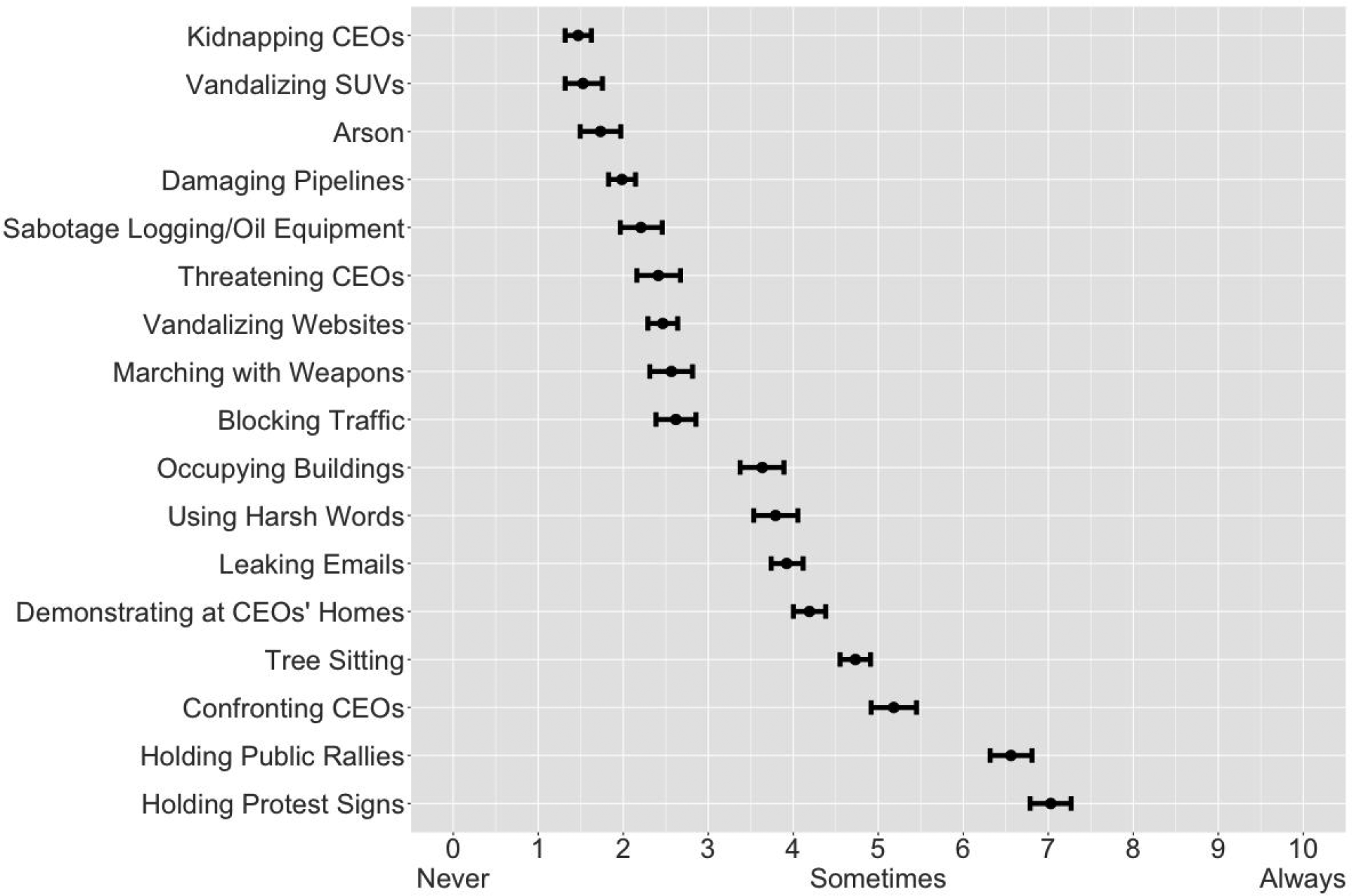
Survey experiment: Is cyber sabotage different?
Does the public perceive cyberattacks as more acceptable than physical sabotage? To answer this question, we conducted a survey experiment as part of our survey. In the experiment respondents were presented with a vignette where an activist sabotaged equipment of a coal company. We then randomized whether respondents saw that it was (1) a cyberattack or (2) a physical sabotage attack that was responsible for the sabotage. In both conditions the damage was held constant, and the attack was said to ruin much of the company’s equipment. 6
First, it is helpful to see the responses to the dependent variables across all conditions on 0 to 1 scale. A 0 corresponds to the lowest levels of support, agreement, perceived effectiveness, and shortest preferred prison sentence for the activist. A 1 indicates the highest levels of support, agreement, perceived effectiveness, and the longest preferred prison sentence for the activist. Few people support the activist’s actions (M = 0.34 across all conditions). More people support the activist’s stated reasons for their actions (M = 0.54 across all conditions). But few people think the sabotage attack was effective (M = 0.28 across all conditions). The average prison sentence for the actions corresponds to approximately 4–6 months in prison (M = 0.41) across both conditions.
Figure 3 shows the results for the treatment presenting both average treatment effects (ATE) of receiving the cyber treatment, and the models with full controls. The results show that the respondents were more supportive
Correlates of support for eco direct actions in general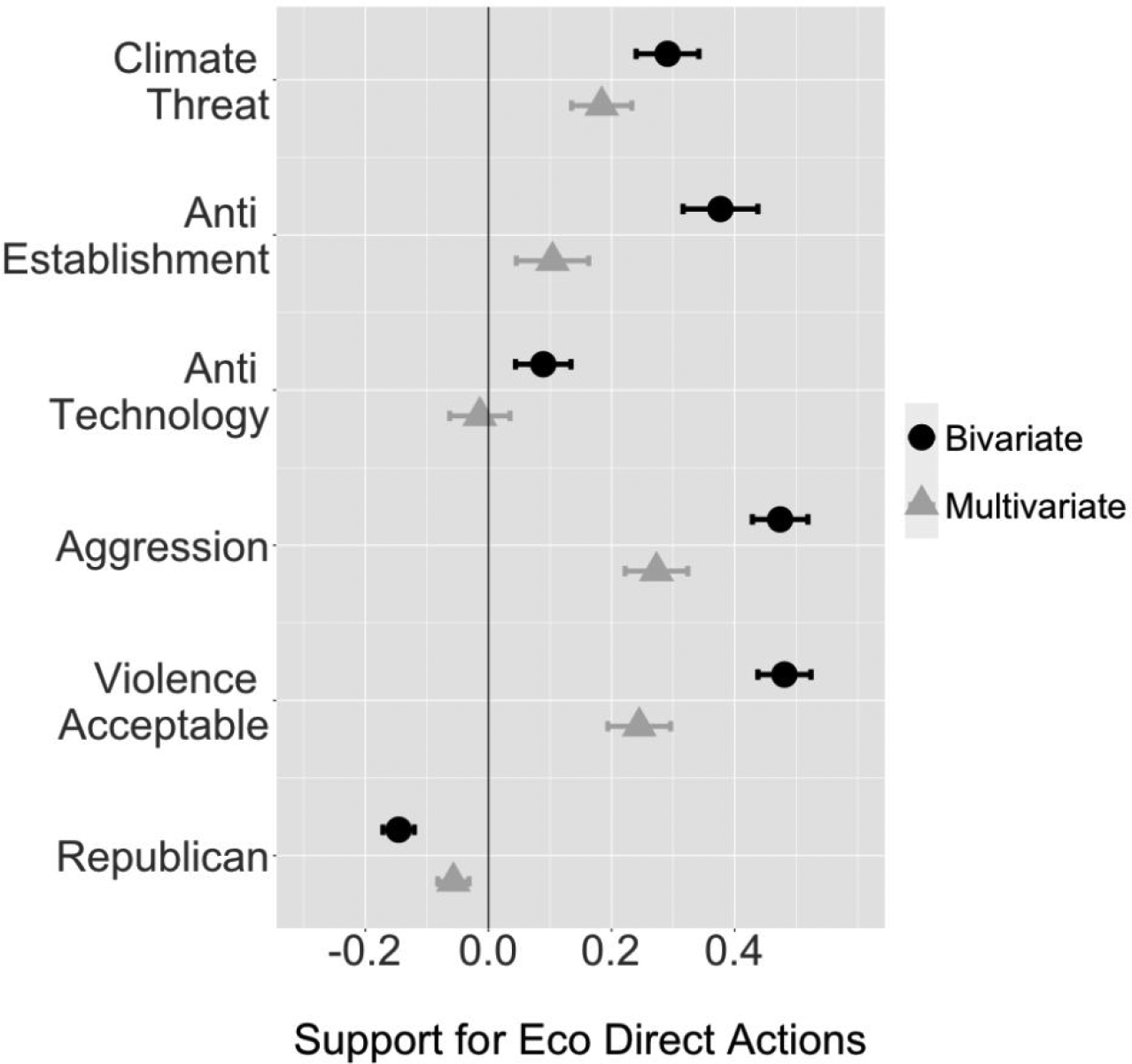
Figure 4 shows the correlation between climate threat perceptions and anti-technology sentiment across all treatment conditions. This allows us to test our predictions, but also serves as a validation of the experimental setup – climate change threat should make people more sympathetic to the activist. The results show that both climate threat perceptions and anti-technology sentiments are positively correlated with support for the activist’s actions. Both are positively correlated with agreement with what the activist said in justifying their action, particularly climate threat perceptions. Higher climate threat perceptions and anti-technology sentiment are also associated with increased belief in the effectiveness of the activist’s actions. One interesting and unexpected finding is that greater anti-technology sentiment is positively associated with support for harsher prison sentences for the activists. While climate threat perceptions are associated with less harsh prison sentences, as expected.
There are two additional points that are worth addressing. First, the sizes of these correlations are also large. Going from a 0 to a 1 (lowest to highest scores) on the climate threat perceptions and anti-technology sentiments corresponds to a 0.5 to 0.8 standard deviation increase across many of the dependent variables. Second, we may be concerned that anti-technology sentiment and climate change are largely picking up the same variation – but that’s not the case. The two scales are not correlated (r = –0.005), and anti-technology sentiment is not a significant predictor of climate threat perceptions (Table A.4.1 in the Online appendix), so they are likely capturing distinct attitudes.
In sum, the public has principled views on eco direct actions. It tends to view more violent tactics, or those that employ property destruction, as only rarely acceptable. Cyber actions are viewed as more acceptable. Our
Treatment effect of cyber vs. physical sabotage on (1) support for, (2) agreement with reasoning, (3) perceived effectiveness of tactic, and (4) how much prison time for an activist who destroys coal company’s equipment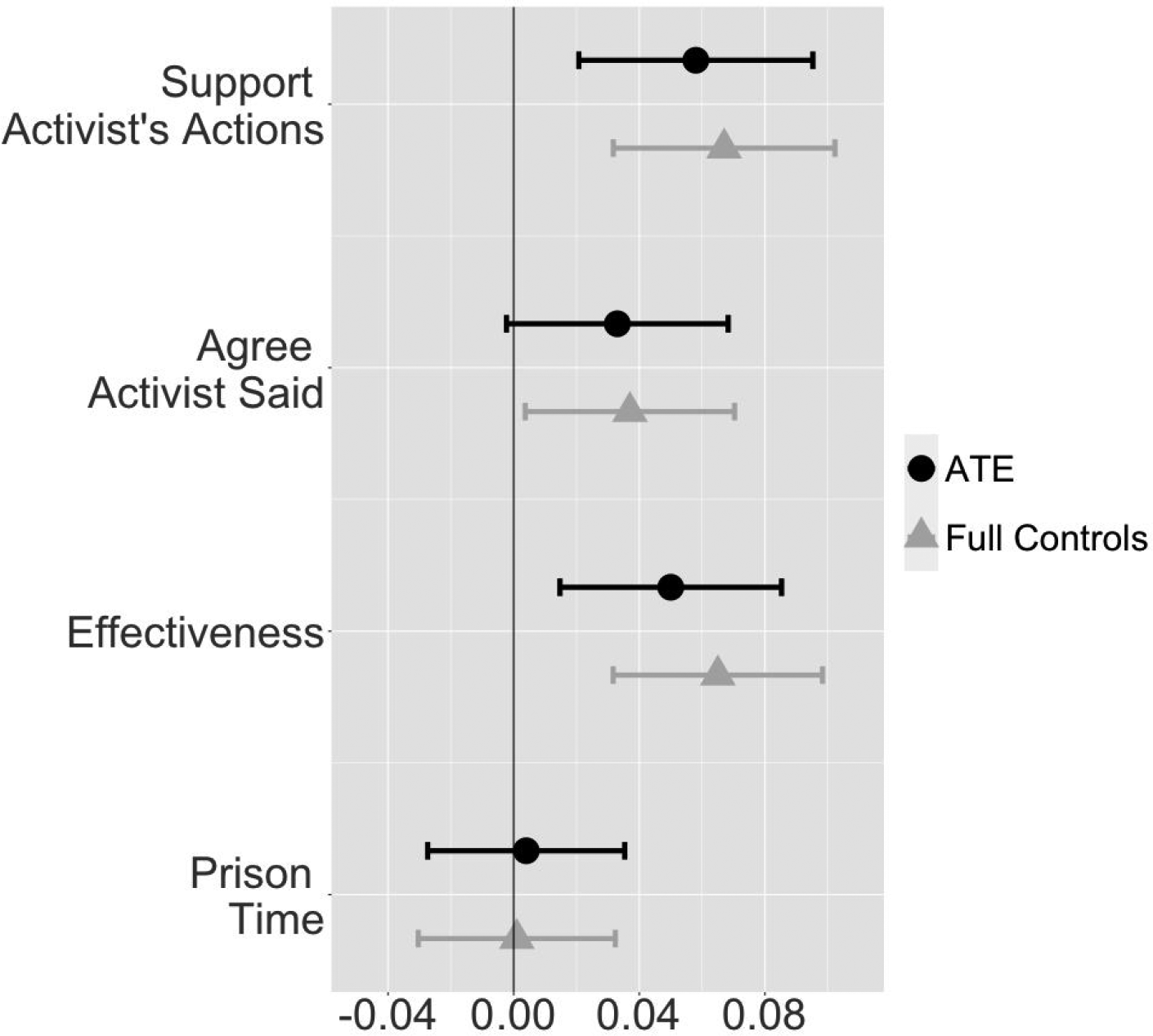
Qualitative interviews
The interviews were conducted from November 2021 through September 2022 with 25 activists and experts on the radical environmental movement. 7 Given the sensitive nature of some of the questions, and the fact that many of the activist interviewees had contact with the criminal justice system, all the interviews were conducted on background.
The focus of the interviews was on two interrelated questions related to cyber and technology in the radical environmental movement. (1) How do activists and experts see technology impacting the radical environmental movement? (2) Why has there been comparatively little use of hacking by the radical environmental movement? This latter question is particularly puzzling given that our survey and experimental evidence would suggest that the public is more amenable to cyber-related actions relative to their physical counterparts. Yet, the use of cyber tactics in the radical environmental movement has been rare. There was the short-lived Earth First!-affiliated hacking collective called ‘Decocidio’ and its one-off hack of the European Union carbon-trading website in July 2010.
8
There have also been isolated hacking operations done by animal rights activists, but not sustained action (Stosh, 2016; Young, 2012). As one self-described social movement theorist and activist said, ‘Yes, there were some explicitly ALF/ELF hacking groups, many of whom targeted the fur industry’s supply chains, and others which did the more mundane website defacing (but there hasn’t been much since then).’
9
Correlation of climate threat perceptions and anti-technology sentiments on (1) support for, (2) agreement with reasoning, (3) perceived effectiveness of tactic, and (4) how much prison time for an activist who destroys coal company’s equipment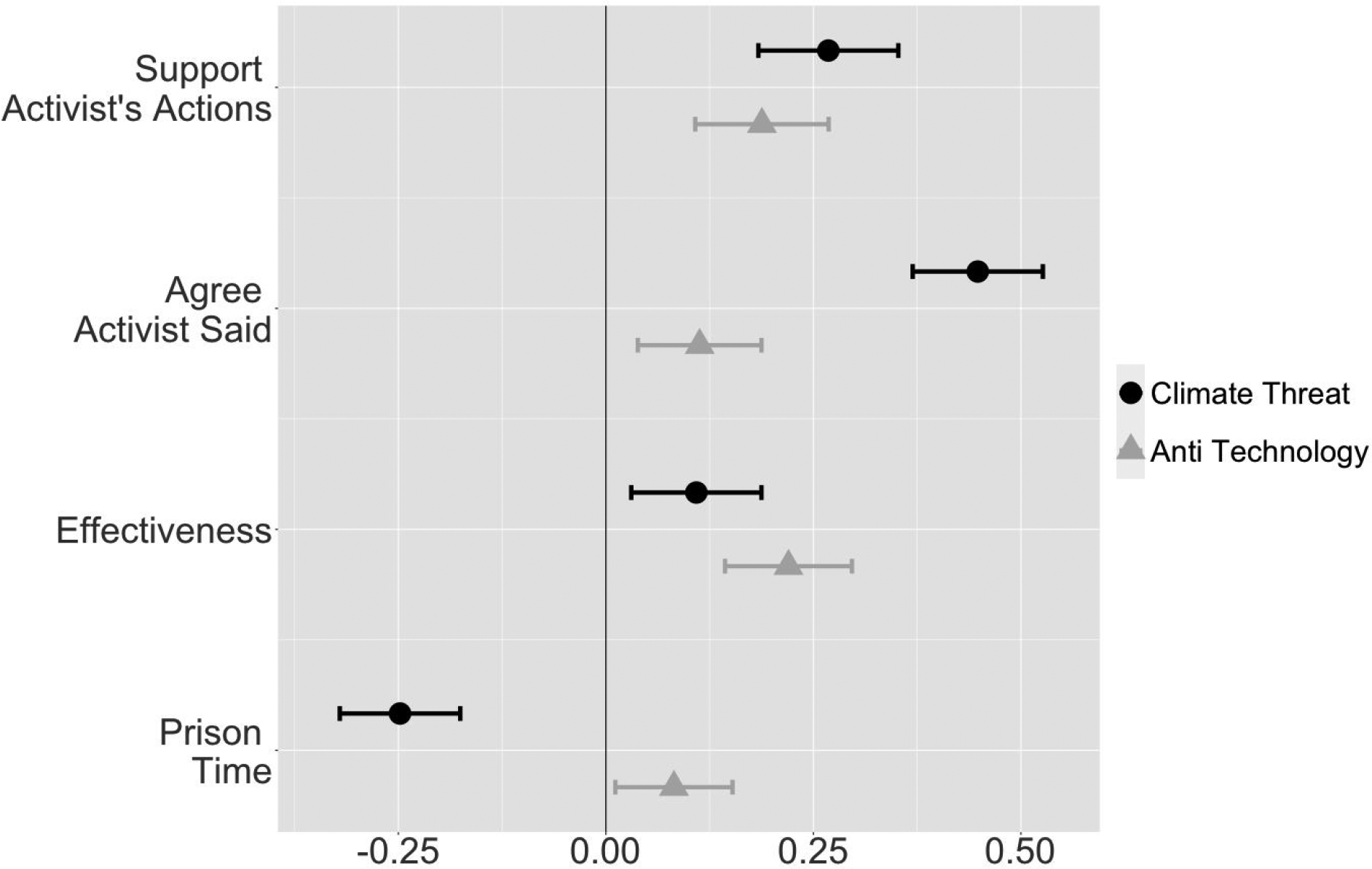
Table I shows the distribution of themes that the interviewees touched on with respect to the effects of technology on the movement, and the use of cyber tactics. The first theme mentioned by more than 90% of the interviewees was that new communication technology, and especially social media, led to problems for the radical environmental movement. Many bemoaned the problems caused by organizing in the age of social media. They liked that social media enabled them to reach large audiences. But echoing Tufekci (2017), many argued that social media weakens the movement since potential activists would rather argue or post on social media than engage in real-world actions (slacktivism).
Views on technology in the movement, and why so little hacking and cyberattacks by the eco direct action movement
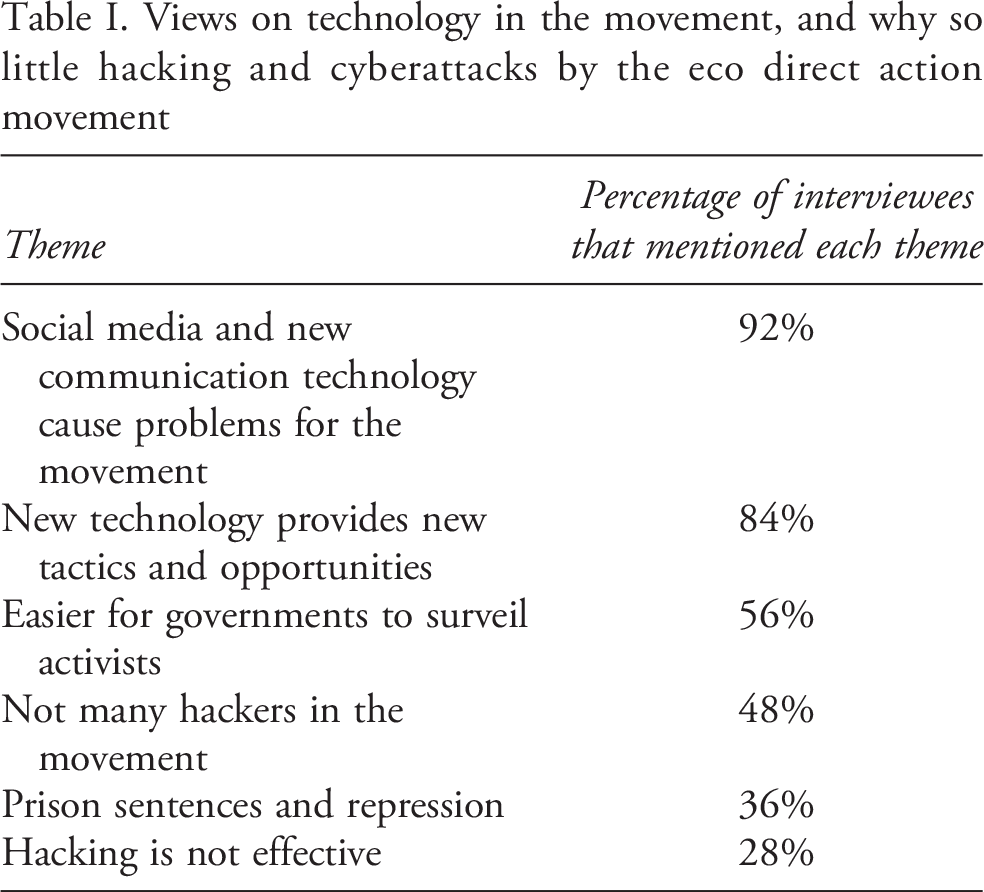
While lamenting its effect on organizing, more than 80% also suggested that new technologies like social media and new tools like cyber hacking provided new opportunities for direct action. One animal rights activist and self-described former political prisoner said: ‘A lot of direct action can now be done via online hacking, DNS attacks, phone blockades, email server blockades, civil disobedience, that’s just as much a form of direct action, as shutting down a place through occupations or banner hangs.’ 13 Several people viewed technology as providing new opportunities to disrupt or embarrass companies that supported fossil fuels, or were deceiving customers to thinking they cared about the climate when they didn’t (i.e. ‘greenwashing’).
But if technology provided new opportunities, many were also cautious. One of the common views expressed by more than 50% of our interviewees was that new technology and tactics also allowed the government to monitor activists more easily. Several said that activists themselves were implicating themselves with their social media presence. One veteran environmental and animal rights activist who spent time in prison said, ‘After I got out of jail I would have people send me pictures and post on my Facebook of them with bolt cutters, and pictures of them in balaclavas [….] if you are doing direct action you have to be more low profile.’ 14 Another self-described anarchist and environmental organizer said, ‘People need to be really smart how they use it (social media and technology), I know of specific people who got politically active when they were minors/teenagers, and they posted videos of themselves (engaged in illegal direct actions) on Tik Tok and they got caught by law enforcement.’ 15
One view expressed by many activists about the lack of hacking in the radical environmental movement is that there are simply not many technically proficient people in the movement. Nearly half mentioned the lack of hacker skills in the movement. An academic who is involved in anti-fascist groups and Earth First! stated: I have asked the same question (about why so little hacking in the movement), and people just staring at me: ‘did you say something about computers?’ There are some technically proficient people who care about the environment [….] They want to be one with nature not one with technology. The honest fact is that people who shitpost on 4chan and Reddit and have technical skills aren’t generally part of our movement.
16
Finally, about a quarter of respondents were skeptical that hacking and cyber direct actions would really make that much of a difference. One academic who had a background in the movement said: ‘[The] Colonial Pipeline [hack] suggests a strategy moving forward, but yet, I don’t have a good answer, and I have my own skepticism of the capacity of technology to have any positive effects (for the movement).’ 20 Another climate activist described the alienating effect of certain tactics and said for better or worse, ‘Doxxing [releasing personal information and details about targets] is not a nice tactic. Climate activists see that as a nasty tactic, and they don’t want to stoop that level.’ 21
Discussion and future work
The findings in our study show that the public has principled but nuanced views on protest tactics carried out by environmental activists. Anti-technology sentiment and climate threat perceptions are both positively associated with increased support for eco direct actions. While these findings are only correlational, they suggest that eco direct action attitudes are related to fundamental attitudes and perceptions. The public is more supportive of eco direct actions that are not considered violent or involve property destruction or sabotage. Cyber tactics such as vandalizing websites or leaking emails are generally viewed as more ambiguous and seen as somewhat acceptable. The findings of the cyber versus physical sabotage survey experiment further reinforce this. The experiment shows that the public is more amenable to cyber eco direct actions compared to physical direct actions – even when cyber yields the same level of destruction as physical sabotage.
The qualitative interviews add important nuance to the strategy of the radical environmental movement, showing how activists think about the role of technology and new tactics. Even though the public may be more supportive of cyber tactics, many of the interviewees point to potential pitfalls from using new technology in contentious politics. From new communication technology weakening organizational structures and increasing slacktivism in the movement, to making it easier for governments to track activists with new technology, cyber may provide new tools, but it also has its own drawbacks to groups involved in contention. Perhaps the most interesting idea broached by several activists was that certain movements like the radical environmental movement might be at a disadvantage in the cyber realm. The kinds of people attracted to the radical environmental movement are averse to technology or not as skilled in its use as other movements.
One concern may be that there are few successful cyberattacks that have paralyzed fossil fuel infrastructure – the Colonial Pipeline Hack of 2021 notwithstanding – so how does the current research connect to real world contention? Yet some eco groups have begun to ramp up activities, particularly around data leaks and doxing of information. For instance, Guacamaya, a hacktivist collective active in Central and South America in 2022 hacked and leaked internal emails of several transnational mining and fossil fuel companies based in the region (Franceschi-Bicchierai, 2022). And animal rights activists who have long mingled and shared sympathies with eco activists, have engaged in information leaks, denial-of-service attacks, and doxing campaigns of hunters, fur farms, and others who they feel mistreat animals (Radware, 2016). But there are limitations to these campaigns. A long-time climate and anti-war organizer who has planned and participated in many eco direct action campaigns said, ‘We [activists involved in direct actions] do talk about the possibility [of more intense] cyber/ransomware attacks all the time, but those people with [hacking] skills got arrested (like Jeremy Hammond) or understand the likelihood of getting caught by law enforcement is high.’ 22 This observation along with the qualitative interviews point to the fact that activists are both engaging in lower-level hacks (data dumps and doxing) and actively exploring avenues to expand their repertoire. But right now, the risks from law enforcement don’t justify broad-based hacking campaigns against fossil fuel infrastructure. Whether the growing threat and disruption posed by climate change changes this calculus – as many activists argue it should (Malm, 2021) – remains to be seen.
Blocking roads? Hacking websites? Or even tossing food at high-end art pieces (De La Garza, 2022)? Which tactics eco activists will turn to in the future remains an open question. How will activists respond to the increasing technical sophistication and cyber tools of law enforcement? A direct action organizer in the climate justice movement described the feeling that more intense and contentious actions are coming: ‘I feel like there’s an Overton Window, some forms of sabotage are being more accepted by mainstream liberal audiences.’ 23
But it’s not a foregone conclusion. Another long-time eco radical in the climate movement and eco direct action trainer said, ‘I want to believe that more aggressive tactics are coming […] But fighting the fossil company is really tough. It’s not spiking trees or digging up roads – it’s really hard to hit (these) targets with (all their) security.’ 24 Future research should continue to explore how new technologies influence contentious politics, and how both challengers and the state incorporate them into their toolkit.
Footnotes
Replication data
The dataset, codebook, and do-files for the empirical analysis in this article can be found at http://www.prio.org/jpr/datasets and at  .
.
Acknowledgments
The authors would like to thank Daphna Canetti, Ryan Shandler, and participants in the Empirical Research on War & Peace in Cyberspace at the University of Haifa for their incredibly helpful feedback.