




Abstract
The concept of ‘human security’ holds promise of capturing the strong connections between economic development and personal security that has ushered in the debate about the ‘security−development nexus’ in policy circles. Human security is understood as the ability of states to protect the security of their citizens and to cater to their basic socioeconomic needs. However, the literature on human security is fragmented, leaving applied researchers without a workable definition and a convincing measurement strategy. Part of this problem is due to the fuzziness of the concept and the ambition to associate an ever-increasing set of dimensions with the concept, which renders empirical analysis moot. Following a review of the related literature, we collect measures aligning with ‘freedom from fear’ and ‘freedom from want’, representing the varied discourse on the human security concept. Employing confirmatory factor analysis on 11 indicators, we demonstrate the existence of a single latent factor and extract their common variation to generate a new Human Security Index. We validate the index by comparison against known proxies and related measures. We then present a first empirical application examining the human security implications of IMF programmes, finding that IMF programmes undermine human security, accounting for non-random selection into IMF programmes.
Keywords
Introduction
The end of the Cold War ushered in a fundamental change in the understanding of the notion of security. Whereas traditional security was tied firmly to the survival of the nation-state, the rise of non-traditional security threats – mirrored in the sharp increase of intra-state conflicts (Holtermann, 2012; Kaldor, 2012; Sarkees and Wayman, 2010) – led to a shifting emphasis on human security, which places the individual at the centre of security-building efforts (Newman, 2010; Thomas and Tow, 2002; UNDP, 1994).
In policy circles, human security became particularly attractive as the concept explicitly recognizes the existence of a security−development nexus, whereby security is seen as indispensable for development and development can foster security (Buur et al., 2007; Stern and Öjendal, 2010). In academic circles, enthusiasm for human security as a concept has somewhat waned. In part, this is due to the fuzziness of the concept and the ambition to associate an ever-increasing set of dimensions with the concept, which limits its potential for empirical research. The literature on human security is fragmented, leaving applied researchers without a workable definition and a convincing measurement strategy. This is partly due to data limitations and methodological shortcomings, but also due to doubts over the possibility and desirability of quantifying a person-centric concept like human security. We have addressed these issues by constructing a measurement that is true to the core concept of human security, analytically coherent, empirically validated and readily applicable.
Our main goal in this paper is to reclaim the analytical value of human security while addressing some long-held criticisms of the concept through developing a human security measure that is conceptually valid, reliable and replicable. Our paper has two objectives. The first is to construct a new index of human security, drawing on pertinent conceptual prior work on human security and the security–development nexus. Using a range of indicators that theoretically correspond to freedom from fear and freedom from want, we conduct confirmatory factor analysis on multiple imputed versions of the dataset. We confirm that these indicators load onto a single latent variable, the Human Security Index (HSI). We assess the face validity of the HSI through diagnostic plots and comparisons with alternative indices and known proxies, which we believe are less useful for applied researchers respectively owing to their low time-series cross-country coverage and their poorer fit with the human security concept.
The second objective of our paper is to demonstrate the usefulness of the HSI for applied research. Specifically, we probe how interventions by the International Monetary Fund (IMF or Fund) – an international financial institution providing loans to countries in economic trouble – affect human security and its underlying dimensions. Through its position as a lender of last resort, the IMF has great sway over policies in developing countries and often uses its leverage to initiate far-reaching policy reforms in its borrowing countries. While the conditions attached to its loan programmes can easily be seen to affect human security, the IMF has so far not been considered a security actor. Using panel data for up to 165 countries from 1980 to 2019, we find that IMF programmes exert adverse effects on human security once controlling for potential endogenous selection into IMF programmes using instrumental variables. Substantively, if a country undergoes an IMF programme, its human security decreases by at least 1.27 index points (p < 0.01) – more than a standard deviation of the HSI.
Our findings make at least two contributions to the related literature. First, with respect to the human security literature, our HSI provides the first measure of human security that has universal coverage for an extended time period. Previous literature has focused on the concept-building stage, often producing too ambitious concepts that made it difficult to find appropriate indicators and that faced the challenge of missing data (Acharya, 2003; Browne and Weiss, 2012; Tadjbakhsh, 2007). While some scholars have previously attempted to construct human security indices (Hastings, 2010; King and Murray, 2001; Werthes et al., 2011), none of these attempts resulted in widely used measures. In most cases, the geographical coverage of these measures has been limited at the same time as their focus has been overly broad, rendering them less useful for analytical purposes. We address these challenges by suggesting a parsimonious human security concept and by using multiple imputation to maximize the available data for latent index construction. Second, we confirm and extend findings from a large literature on the effects of IMF programme interventions, which has looked at specific outcomes in isolation. While political economists have established that IMF interventions have adverse effects on economic performance, income inequality, social expenditures, child mortality and food security (Daoud et al., 2017; Daoud and Reinsberg, 2019; Forster et al., 2019; Przeworski and Vreeland, 2000; Stubbs et al., 2017; Stubbs et al., 2020) – to name but a few – conflict researchers have found that IMF programmes can increase the risk of government crisis, coups d’état, and civil war (Casper, 2017; Dreher and Gassebner, 2012; Hartzell et al., 2010), although some results have been challenged on the grounds of methodological choices (Midtgaard et al., 2014). Our contribution is to bridge these hitherto disparate branches of literature in the spirit of the security−development nexus.
This paper proceeds as follows. Section 2 discusses the concept of human security and provides the theoretical underpinning for our empirical work. Section 3 summarizes previous attempts of measuring human security. Section 4 introduces the new Human Security Index. Section 5 presents a first empirical application using the index to examine the various human security-related impacts of IMF programmes.
Theoretical considerations
The concept of human security encapsulates a re-conceptualization of security away from notions of national security towards a broader and deeper notion of security which takes the individual human being as its focus. In the following, we argue theoretically that human security consists of two constitutive dimensions – freedom from want and freedom from fear. We define freedom from want as the ability of an individual to meet their essential physical and social needs. We define freedom from fear as the ability of an individual to live without threats to physical integrity or intentional harm.
From national security to human security
The broadening and deepening of security which lie at the heart of human security are also present in a general transformational shift in the academic security discourse taking place in the late 1980s and early 1990s. Just as the Cold War was ending, the academic study of security was shifting away from national security, derived from neo-realist theories (Mearsheimer, 2001; Walt, 1998; Waltz, 1979), to a broader understanding of security beyond the nation-state. With the disintegration of the Soviet Union, attention shifted to other security threats, in particular those that had gone unaddressed before, and sought to move away from security orthodoxy with its predominant focus on superpower conflict (Hampson, 2001; Tadjbakhsh and Chenoy, 2007).
Although the first use of the term ‘human security’ dates back to 1945, it was the early 1990s which saw policy thinking within the UN and states such as Australia and Canada align with emerging critical approaches to conflict to popularize the concept of human security (Chinkin and Kaldor, 2017: 481–486). The 1994 United Nations Development Programme (UNDP) Human Development Report was the first to widely popularize the concept of human security. The concept emerged as part of efforts to broaden and deepen the concept of security and shift it away from the conventional focus on hard power and the political and geographical integrity of the state (Paris, 2001; Thomas, 2001).
Given its dual nature, human security has attracted a variety of definitions – some broader, some narrower – in the academic literature as well as from policymakers. At the core of the concept is a move away from the traditional focus on the state and towards the needs and rights of individuals (Kaldor, 2007). However, differences emerge between narrower approaches focusing on individual security from political violence and broader approaches which also emphasize economic and social aspects of security (Kaldor, 2007). The influence of the former approach can be seen in the development of the ‘Responsibility to Protect’ doctrine, which argues for responsibility of the international community to prevent mass atrocities against civilians. Meanwhile, the latter approach has found purchase within the UNDP (Bajpai, 2003, 200–205) and the wider debate on the security−development nexus (Stern and Öjendal, 2010). There have also been attempts to bring more specificity and a wider scope to the concept of human security. This includes consideration for the specific security challenges faced by women and incorporating a broader view of human rights (Wibben, 2015), as well as looking at wider aspects of food, health and environmental security. This variation in scope is at the core of conceptual differences in both the academic and policy thinking on human security. 1
In addition to the focus on the individual rather than the state, another commonality of most definitions is the two constitutive dimensions of human security – freedom from want and freedom from fear. They reflect thinking about the existence of a security−development nexus, which is particularly popular in the policy world. The nexus is based on the observation that security and development are mutually reinforcing – in other words, security is hard to achieve without development, but development without security is meaningless (Sen, 2000; UNTFHS, 2009). For instance, lack of economic opportunities can lead to crime or identity-based tensions among the populace while civil conflict undermines trust, which is indispensable for societies to thrive economically. This would lead us to think that both dimensions are inseparable, constitutive parts of the concept of human security.
The UN later proposed a third dimension of human security – freedom to live in dignity – associated with political freedoms, human rights and democracy. These are clearly important, but we argue for keeping the focus on two dimensions for several reasons. First, indicators captured under the freedom to live in dignity appear to causally precede issues captured under freedom from fear and freedom from want. For example, democratic accountability may improve human security by reducing the likelihood of state violence and repression. From a methodological perspective, however, a concept should not entail its causes or consequences (Box-Steffensmeier et al., 2008). Second, many other indicators associated with the freedom to live in dignity can be captured under freedom from fear and freedom from want. For example, protections from human rights violations can be readily captured under freedom from fear, while issues linked to poverty can be captured under freedom from want. Therefore, while we do not fundamentally disagree with the view that the freedom to live in dignity is a part of human security conceptually, from an analytical point of view it is best left out of the measurement itself for reasons of empirical validity and parsimony. It is also worth noting that we are not alone in this approach, with even recent work on human security maintaining a focus on freedom from fear and freedom from want (Hanlon and Christie, 2016).
Criticisms
The concept of human security has attracted varied criticisms since it was popularized. Critiques are usually not aimed at the nature of the concept itself but stem from the tension between human security as a broad, abstract conception of security on the one hand and as a practical guide for policy decisions on the other. For example, the notion of fragile and failed states illustrates the interconnected nature of economic development and security in human-security thinking. However, such states also stand out as potential targets for humanitarian intervention, if not in the name of a responsibility to protect then in order to ‘stabilize‘ or ‘fight terrorism’, or as part of ‘post-conflict reconstruction’ (Rubin, 2005: 94). Rather than being a boon to the acceptance and practice of human security, this led many to worry that its principles could be invoked to ‘encourage a shallow approach to state-building’ by compromising on order and stability over ‘participatory institutions of governance capable of delivering a broader panoply of socioeconomic goods as well as human security for their populations’ (Patrick, 2007: 648).
More generally, the charge goes, the need for pragmatic choices often undermines core tenets in the broader conception of human security relating to personal and preventative readings of security. For instance, Bellamy and McDonald (2002: 273) criticize narrow readings of human security, focusing purely on violence and freedom from fear, and contend that they are ‘inconsistent with normative concerns inherent in the human security agenda’. In the same vein, Chandler (2008: 428) describes human security as ‘the dog that didn’t bark’, arguing that despite the radical discourse the human security paradigm in practice simply ‘reinforced, rather than challenged, existing policy frameworks’. Stavrianakis (2019) uses the example of the UN Arms Trade Treaty to argue that, despite the radical changes to security promised by the language of human security, in practice, this ‘proved to be an accommodation with global militarism in its various forms’. Thus, human security is often alleged to fail on its promise to broaden the security discourse and draw it away from traditional notions of national security, although this in turn has also led to the inverse criticism that human security is too fuzzy, lacking in analytical and practical sharpness (Paris, 2001).
Debates also emerged over the possibility and desirability of quantifying a person-centric concept like human security. Some scholars and practitioners have expressed concern that quantifying human security would involve unacceptable conceptual trade-offs and could risk the concept being misapplied. This could include the use of human security measures as prescriptive targets and the use of a securitized (if more person-centric) discourse to justify ‘draconian and excessively harsh’ policy responses (Bajpai, 2000: 56). Hence, human security discourse and practice could undermine human rights (Howard-Hassmann, 2012).
This fits with a broader critique that sees the adoption of human security as a tool by states and international organizations as a process of assimilating a radical concept into the dominant traditional security frame (Shani, 2017; Stavrianakis, 2019; Turner et al., 2012; Wibben, 2015). The neoliberal economic development agenda is often seen particularly at odds with the concerns expressed through the concept of human security (Conteh-Morgan, 2002). Examining the links between development policy, the prevalent neoliberal economic agenda, and human security, Thomas (2001: 174) concludes that it ultimately ‘requires different development strategies from those currently favoured by global governance institutions’. These critical interventions on human security cast the spotlight on the purveyors of the neoliberalist order – like the IMF – framing them squarely, and unusually, as security actors. Similarly, critics of the liberal peacebuilding paradigm highlight how a focus on individual rights and conventional capitalist economic development is often at odds with the goal of promoting effective human security following large-scale conflict (Kurtenbach, 2010; MacGinty, 2010; Paris, 2004). While major peacebuilding operations recognize the links between development and security in line with human security, outside actors frequently promote policies such as marketization and privatization which undermine the security of vulnerable groups and individuals.
Measuring human security
Given competing conceptual understandings of human security, its measurement has faced many challenges. An important challenge is conceptual overstretch, whereby human security has been overloaded with too many dimensions. While this reflects attempts to recognize the breadth of the concept, it may limit its analytical value because isolating the effect of individual dimensions on other outcomes becomes increasingly difficult (Collier et al., 2008). Another challenge is practicality. An individual-level conceptual focus engenders practical problems such as gaining granular data, which implies the need for trade-offs in choosing measurement indicators. Owen (2008) identified this as a ‘measurement paradox’ created by issues of ‘data availability, integrity, and aggregation’ almost 20 years ago, and these issues remain present. In addition to conceptual challenges and practical issues of data availability, there is an epistemological challenge to construct an objective empirical measure of something that at its heart is relative and individualistic.
Existing attempts to measure human security are either broad or narrow, as described above, or bespoke – focusing on particular aspects of human security, such as food or the environment. There have also been some attempts, of which our proposed measurement is the latest, to provide a multidimensional measurement which combines aspects of the broad and narrow conceptions of human security. While most human security measures are theory driven, none of them tests whether the posited constituent dimensions cohere empirically. To our knowledge, ours is the first to address this shortcoming by using confirmatory factor analysis, thus validating the theoretically deduced measure of human security.
King and Murray (2001) define human security as ‘generalized poverty’ and thus closely follow the concept’s formulation popularized in development studies (UNDP, 1994). They measure several domains such as income, health, democracy, education and political freedom. While this covers many dimensions of human security, it does not touch as extensively on personal security and aspects of violence. Similarly, Bajpai (2000) follows a broad approach in developing his Human Security Audit. He defines human security as the protection of individuals from direct and indirect threats, drawing on the UNDP definition. Owen (2008: 40–41) points out that this measure has practical limitations, as neither aggregation rules nor the weighting of its components is elaborated. Thus, existing broad measures fall short by either analytically by not covering key dimensions of human security or practically owing to limitations relating to actualizing the proposed measures.
Other measures, such as the Fragile States Index (Fund for Peace, 2021) and State Fragility Index and Matrix (Marshall and Elzinga-Marshall, 2019), utilize a range of indicators encompassing both socioeconomic development and violent conflict. These measurements are empircally sound and widely used in research related to conflcit and security, making them an important point of comparison. However, they have not been designed with the intent to measure human security. Given their tendency to focus on state-level indicators, they remain close to traditional notions of security. Meanwhile, indices working off the narrower understanding generally focus on the security aspect of human security, primarily measuring violence and conflict. For example, the Global Peace Index contains 23 indicators, but explicitly retains a narrow focus on ‘negative peace’ (IEP, 2021) – a pragmatic approach which sacrifices breadth for depth, thereby failing to capture the notion of human security.
Bespoke indices focus on particular aspects of security often listed under the human security umbrella, such as food security or environmental security. This includes Carolan’s measure of food security which is framed within the broader human security paradigm (Carolan, 2012), and the Global Environmental Change and Human Security Project (GECHS, 2022). The Global Food Security Index (EIU, 2022) uses 58 indicators across four categories, built around a comprehensive account of food security. In our view, bespoke indices of human security – despite offering precise measurements of specific subdimensions – fail to capture the breadth of human security.
Multidimensional indices of human security have been proposed but none have seen widespread use. The most salient of these is Hastings’ (2009) index of human security, built along similar lines to the Human Development Index. Initially focused on Asia and the Pacific, it was subsequently expanded in its geographic scope (Hastings, 2010). The index breaks human security into three component indices: the ‘Economic Fabric Index’, the ‘Environmental Fabric Index’ and the ‘Social Fabric Index’, each with multiple subcomponents and indicators. This approach recognizes the broad and multidimensional nature of human security, and our own measurement approach shares several indicators with it. However, the multiple levels and subdimensions mean that significant conceptual fuzziness remains, while the focus on the societal fabric moves away from the core, person-centric UNDP definition. More crucially, the data from the index are not readily available and work on this project appears to have stopped after 2013. Werthes et al. (2011) take a similar approach, operationalizing six dimensions to build a Human (In)security Index which hews more closely to the original conceptualization. Their analysis also suggests thresholds for different levels of insecurity, which is a useful extension on previous work. However, data are only presented for one year, with a somewhat limited number of countries, and has seen no empirical application. In contrast, our measurement builds on this and other work while seeking to maximize coverage and retain parsimony.
Our approach to measuring human security is both theory driven and empirically valid, reliable and replicable. Conceptually, we bridge the gap between broad and narrow approaches, considering factors related to both freedom from want and freedom from fear. Crucially, our proposed index improves on previous measures in terms of time-series cross-section coverage, thereby enhancing its analytical and practical usefulness.
A new human security index
This section introduces our HSI, a new measure to capture latent human security across 216 countries from 1980 to 2020. We favour a latent factor approach because human security, in all its facets, is unobservable; at the same time, the numerous indicators that have been proposed tend to be related but do not fully capture the concept. In choosing our initial set of indicators for the latent factor analysis, we seek to strike a balance between comprehensiveness (whether the indicators jointly capture all important traits of human security), parsimony (whether there no redundant indicators that capture similar traits) and efficiency (whether the indicators have enough observations across countries and over time).
Concept and measurement
Following our review of the human security literature, we source indicators from two dimensions: freedom from want reflects a broad understanding of the concept and captures socioeconomic aspects of human life that contribute to reducing individual vulnerabilities. Freedom from fear reflects a narrower understanding of the concept and captures the absence of direct threats to the physical security of human beings, for instance in the form of government repression, civil war and terrorist attacks. Drawing measures from these two dimensions allows us to assess inductively the constitutive elements of human security and thus whether a broad understanding or a narrower understanding of the concept is most appropriate.
Capturing freedom from want, we include variables measuring human needs with respect to education, food, health, and water. These are available in the World Development Indicators (WDI), a global repository of development data (World Bank, 2022). From the WDI, we use the primary gross enrolment ratio, originally collected by the United Nations Educational, Scientific and Cultural Organization. We also include the prevalence of undernourishment in children under the age of 5, originally collected by the UN Food and Agriculture Organization. Our health indicators include life expectancy and infant mortality, originally collected by the United Nations. Finally, access to fresh water is measured by the percentage of the population using safely managed drinking water services. This variable is available from the WDI and originally collected by World Health Organization/United Nations Children Fund.
Since freedom from fear is hard to measure, we include variables that indicate greater levels of fear. We include the number of (intentional) homicides per 100,000 people from the UN Office on Drugs and Crime and available through the WDI. In addition, we include the Political Terror Scale, which measures ‘violations of basic human rights to the physical integrity of the person by agents of the state within [its] territorial boundaries’ (Gibney et al., 2021). Personal integrity violations include torture, beatings, rape, unlawful detention, political imprisonment, disappearances and extrajudicial killings. We also measure the time during which a country has been in a state of war over the past 5 years. We consider both civil wars, available from the Uppsala Conflict Data Program/ Peace Research Institute Oslo (UCDP/PRIO) database (Gleditsch et al., 2002), and international wars, from the COW dataset (Sarkees and Wayman, 2010). A 5 year horizon is appropriate theoretically because of the destructive effects of war and empirically to avoid the use of dummy variables. 2 While this variable captures the temporal scope of conflict, we further include an ordinal variable capturing conflict intensity, available from the Major Episodes of Political Violence dataset collected by the Center for Systemic Peace (Marshall, 2019). In addition, we count the number of high casualty terrorist bombings; each terrorist event in the dataset involves at least 15 casualties (Center for Systemic Peace, 2020). For many of these indicators alternative data is available and was considered. However, in all cases we opted for the source with greater coverage.
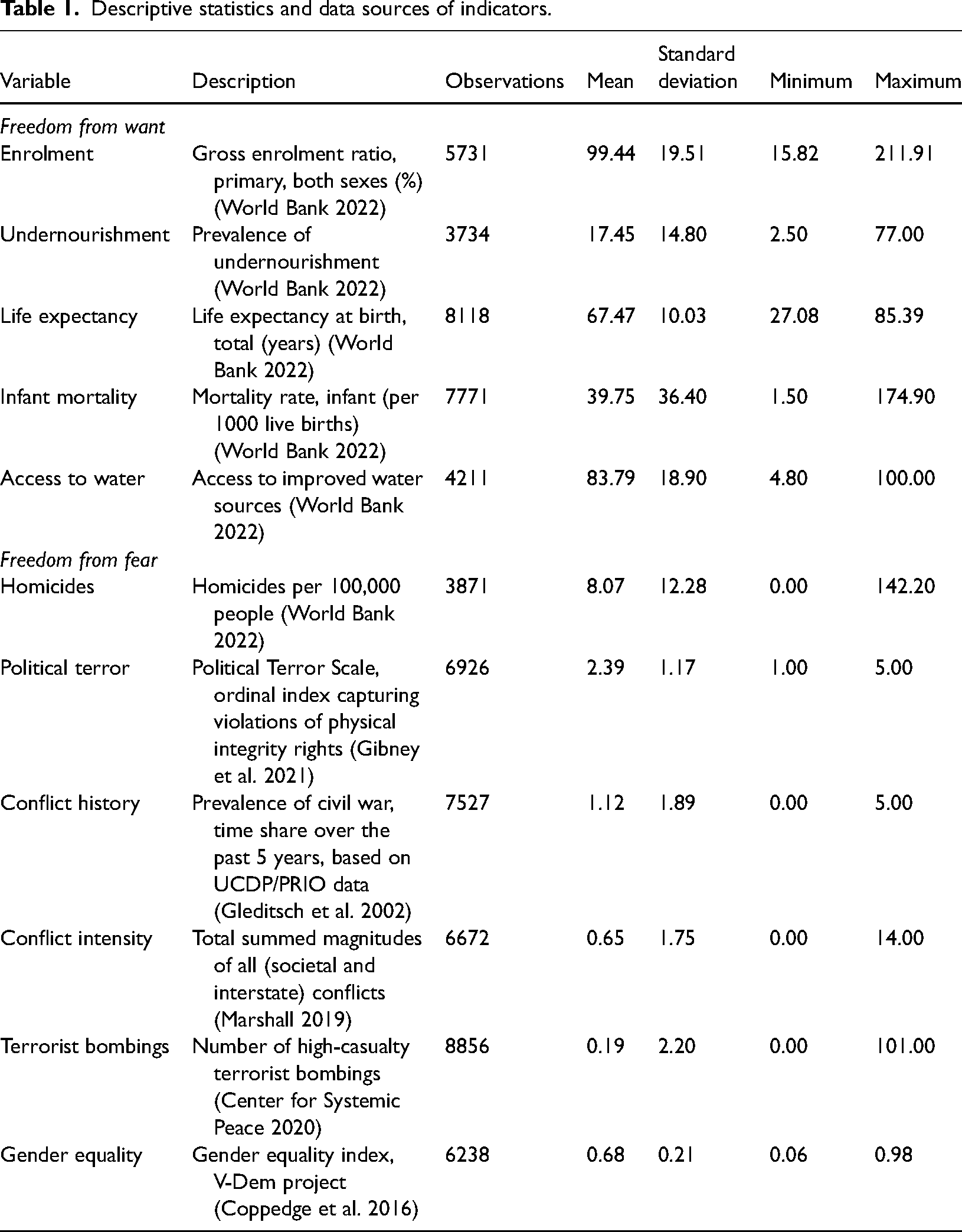
Finally, we include three indicators that do not fit neatly into either dimension but are nonetheless constitutive of human security (Andersen-Rodgers and Crawford, 2018; Annan, 2000; Hanlon and Christie, 2016). In our view, these are cross-cutting indicators that capture aspects of both freedom from want and freedom from fear. Specifically, we use an index of gender equality, available from the V-Dem project (Coppedge et al., 2016), given that a society cannot score high on human security where it disrespects the concerns of women (Hudson, 2009). Similarly, we include measures of democracy, specifically indices of horizontal accountability – checks and balances – and vertical accountability – the degree to which civil society can hold their leaders accountable (Lührmann et al., 2020). Democratic societies are known to provide more public goods that positively contribute to freedom from want (Bueno de Mesquita and Downs, 2005; Landman, 2006; Plümper and Martin, 2003). At the same time, democracy as a system of governance can guarantee freedom from fear as it protects freedom of expression and fundamental rights. Table 1 shows descriptive statistics and data sources for all indicators. 3
Descriptive statistics and data sources of indicators.
Constructing the Human Security Index
We now construct our Human Security Index in three steps. First, we prepare a cross-section time-series dataset of 216 countries from 1980 to 2020 containing the aforementioned indicators. Owing to missing data in these indicators, proceeding with listwise deletion would result in an unacceptable loss of observations. To obtain latent human security scores for all observations, we adopt a multiple imputation approach, using five rectangular datasets with the above variables (Honaker et al., 2011). While multiple imputation assumes that the data are multivariate normal distributed, we ensure that imputations are not out of bounds for count variables using Poisson regressions. For limited range variables, we perform truncated imputation regressions.
Second, we perform a latent factor analysis on the resulting datasets. Table 2 shows the results. Consistent with common practice (eigenvalue > 1), we retain one factor. The single retained factor explains 88.4% of the variation. As this is a remarkably high percentage, adding an additional factor would not capture much additional variation while coming at the expense of parsimony. Table 3 shows the factor loadings. We confirm that all indicators have the anticipated theoretical relationship with the latent concept of human security. Human development indicators, democratic rights and gender equality are positively correlated with human security. Conversely, food insecurity, infant mortality and conflict-related indicators are negatively correlated with human security.
Results from latent factor analysis.
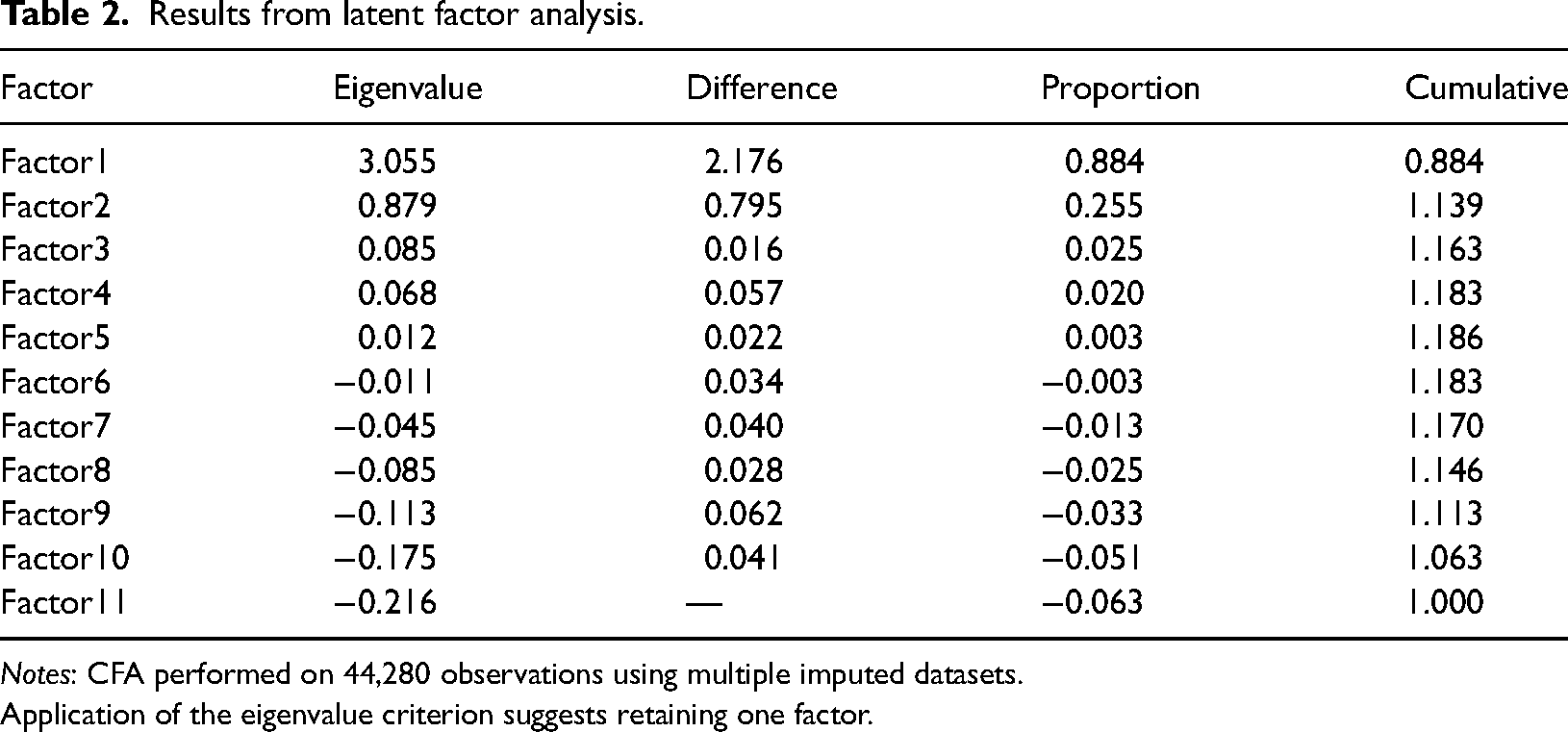
Notes: CFA performed on 44,280 observations using multiple imputed datasets.
Application of the eigenvalue criterion suggests retaining one factor.
Factor loadings in the single-factor solution.
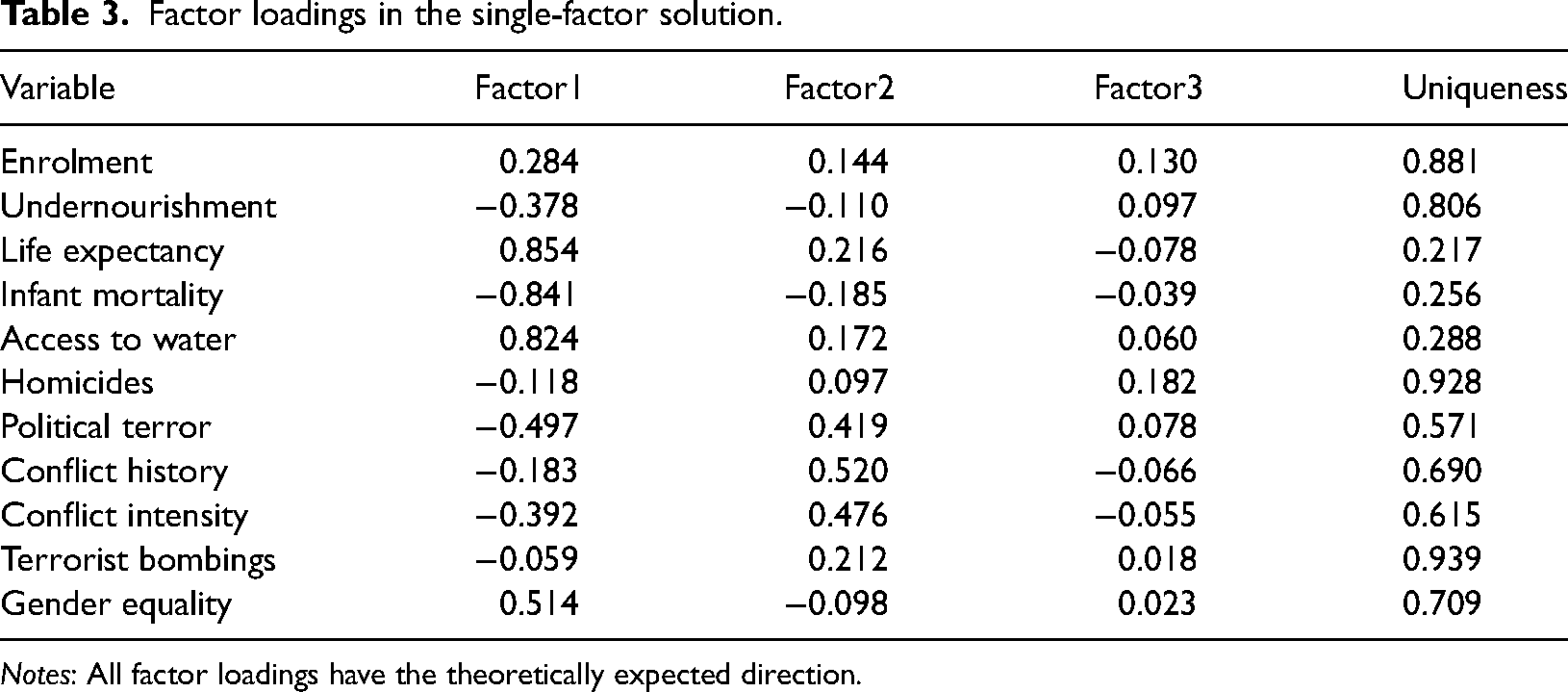
Notes: All factor loadings have the theoretically expected direction.
With all indicators loading onto a single latent factor, our results indicate that human security is an inherently broad concept in which security concerns and developmental aspects are intertwined. This is a first key takeaway of our analysis because it affirms the validity of the security−development nexus. In other words, a narrow understanding of human security that focuses exclusively on the absence of physical threats fails to capture a constitutive element of human security.
The final step in the construction of the latent index is to aggregate the estimates across the five imputations and to calculate the standard error of the prediction. Here we calculate the average latent HSI for each country-year observation across the imputed datasets. In addition, we provide an estimate of the uncertainty of the prediction combining the within-series variance and the variability across imputations (Rubin, 1987).
Exploring the Human Security Index
We now examine the HSI descriptively. In the Online Appendix, we plot the average HSI across all countries over time (Figure A1). As would be expected, this is an upward-sloping line, given the remarkable progress in living standards across the globe over the past decades. 4 We therefore choose to look at differences in the HSI. Figure 1 shows the distribution of these differences for all years. Two observations are worth noting. The first is that median changes are close to zero, which indicates that most countries are stable with respect to their HSI scores. The second is that improvements in human security in some countries and deteriorations in other countries co-occur, as shown by dots to both sides of the zero-change line. Consistent with anecdotal evidence, there are years with a particularly large number of negative outliers, such as around the collapse of the Soviet Union and the Arab Spring revolutions.
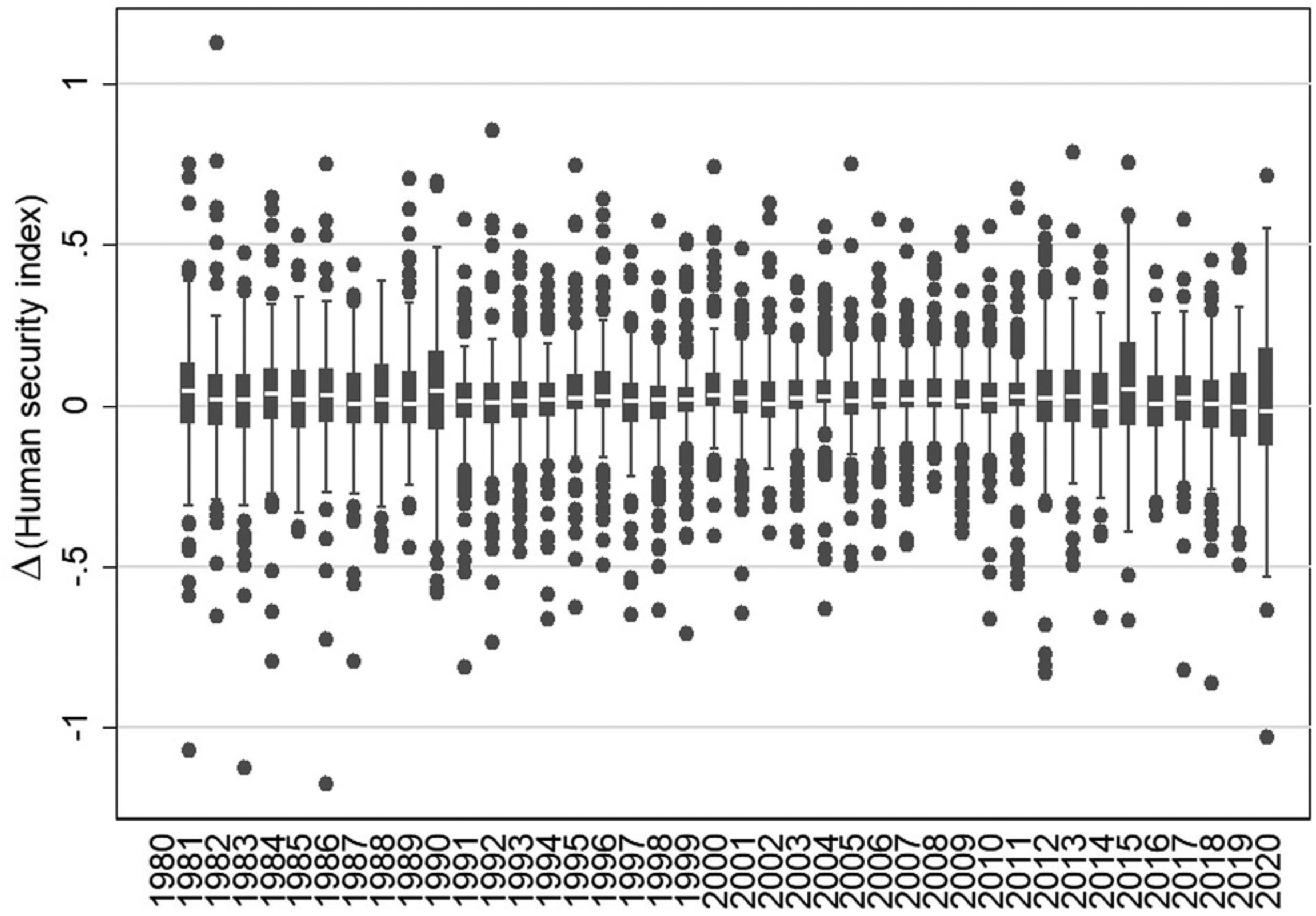
The temporal evolution of changes in the Human Security Index (HSI).
A breakdown of the evolution of HSI levels by income groups does not reveal much heterogeneity at the aggregate level. Figure 2 shows that there are level differences in human security that broadly correspond to per-capita income levels, with the notable exception of negative outliers among high-income countries and upper-middle-income countries and some low-income countries. The steadiest increases in human security have occurred in lower-middle-income countries, but also in low-income countries. These are encouraging signs, although these countries are yet to reach the human security levels of the median high-income country four decades ago.
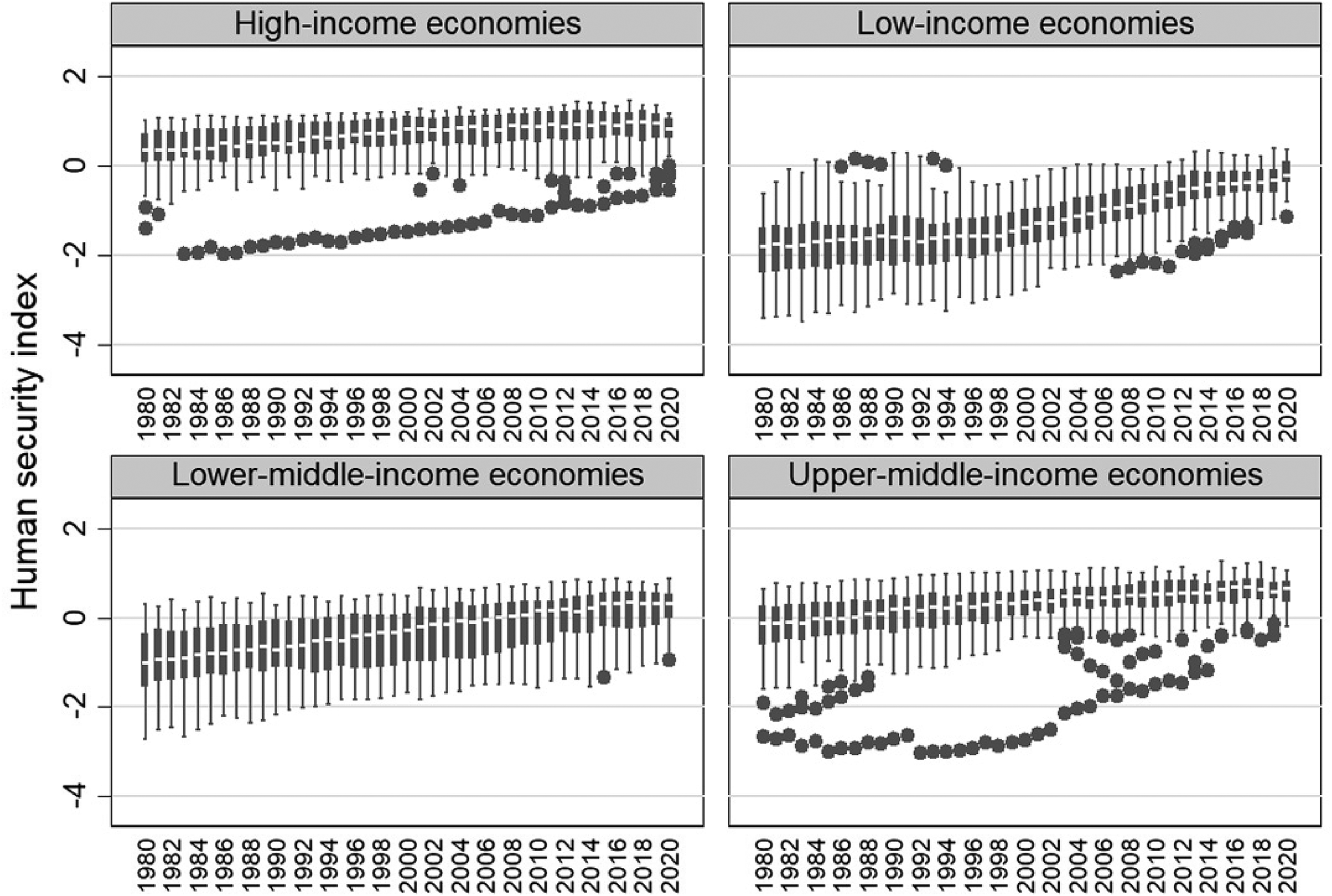
The evolution of the HSI over time in different income groups.
Figure 3 shows the evolution of HSI levels by world region. While there have been improvements in human security in all world regions over the past four decades, the general increases are strongest in South Asia. Particularly remarkable is the relative homogeneity of this trend among South Asian countries. In other regions, such as Sub-Saharan Africa, the evolution of the HSI has been more uneven, with both positive outliers and negative outliers in recent years. In fact, HSI improvements in Sub-Saharan Africa may have been driven by a few success stories. In some regions, outliers cluster at certain points in time, as for example in Middle East and North Africa during the Arab Spring.
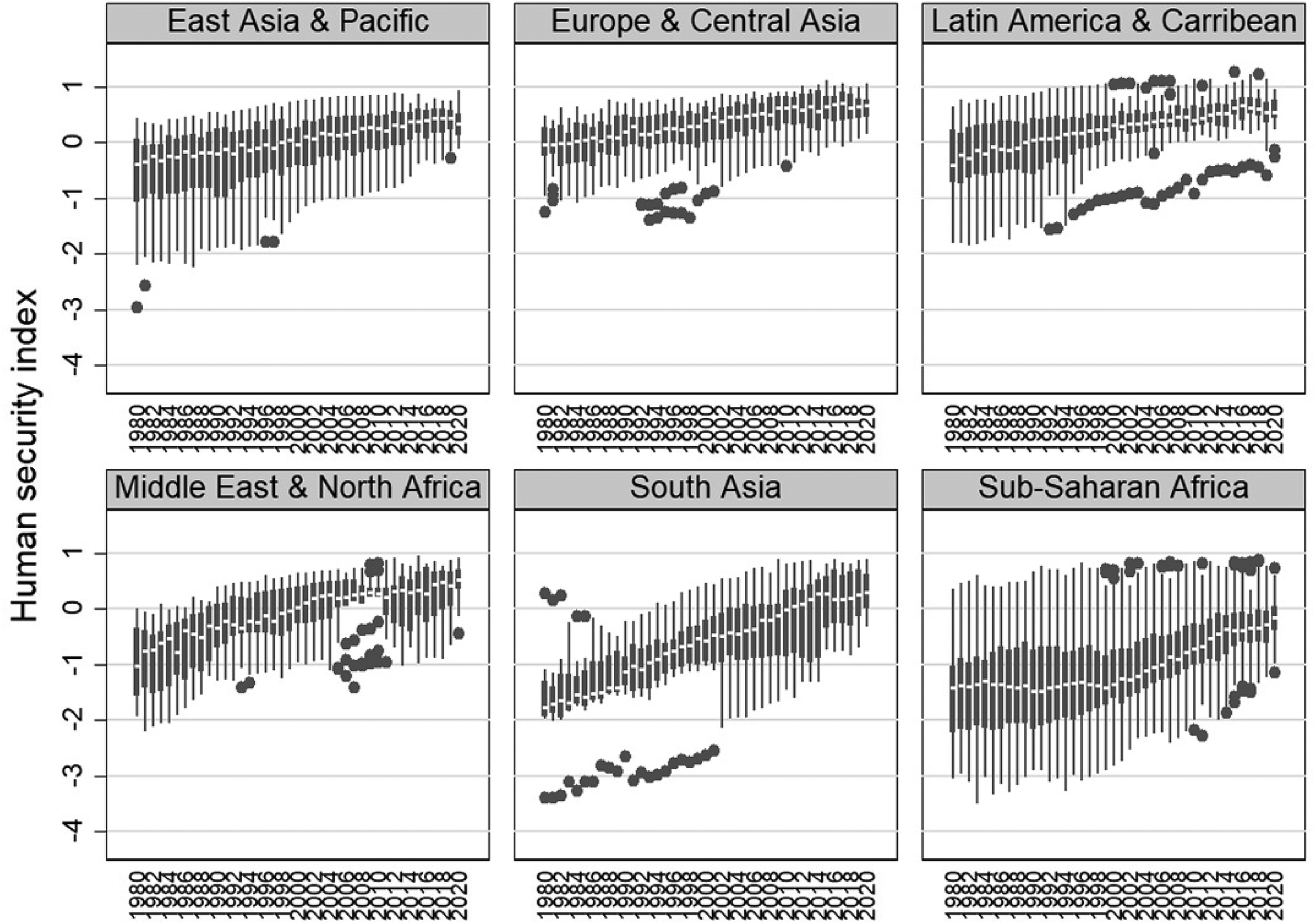
The evolution of the HSI over time and across world regions.
In the Online Appendix, we conduct factor analysis separately for the sets of indicators respectively pertaining to freedom from want and freedom from fear. This adds a theoretical prior into the analysis by assuming that both dimensions are separate. We confirm that within each dimension, all indicators load onto a single latent factor (Table A4) and that factor loadings conform to theoretical expectations (Table A5). Conceptualized in this way, we can examine the empirical relationship between freedom from want and freedom from fear across countries. We find that both dimensions of human security are positively correlated, although the relationship is only moderately strong (ρ = 0.38). Some examples illustrate this point (Figure A2). While the association between both dimensions is strong in Chad, Bangladesh, Romania, Uruguay and Costa Rica, it is weaker in Mali (which scores similarly low on freedom from want as Chad, but a standard deviation better on freedom from fear) or Mexico (which scores similarly high on freedom from want as Uruguay, but one-and-a-half standard deviations lower on freedom from fear). 5
Validation against known proxies and other indices
Our index is preferable to existing human security indices because it has been inductively created following a rigorous, reliable and replicable procedure. Furthermore, the HSI also extends the time-series cross-section coverage of previous indices. These features will make it useful for applied researchers and policymakers alike. To establish its validity, we correlate the HSI with (selected) existing indices of human security and other measures that are theoretically related to human security.
Comparing the HSI against existing indices, we find that the HSI correlates strongly with the Human Development Index (ρ = 0.53). The Human Development Index captures the extent to which human beings have a long healthy life, a decent standard of living and educational benefits. The index uses similar indicators like ours (especially as regards freedom from want) but aggregates them differently. Similarly, the HSI is (negatively) correlated with the State Fragility Index, developed by the Center for Systemic Peace and available for 167 countries in 1995–2018 (Marshall and Elzinga-Marshall, 2019) (ρ = −0.91). The State Fragility Index combines information from eight dimensions capturing state effectiveness and state legitimacy in four domains (economy, politics, security and social affairs). Comparing our HSI with the Fragile States Index, published by the Fund for Peace and used more by policymakers (Fund for Peace, 2021), we find a high cross-country correlation (ρ = −0.87). Our HSI improves upon the Fragile States Index in terms of data coverage, as the latter includes up to 178 countries from 2006 to 2021. Finally, we also find a strong correlation between the Global Peace Index (IEP, 2021) – available for 163 countries from 2008–2019 – and our HSI (ρ = −0.63), but again our index has far greater coverage. 6
In addition, our index is preferable over single proxy measures because it provides a richer picture of human security while also offering better time-series cross-section coverage compared with most proxies. Our measure correlates with (logged) GDP (ρ = 0.70). The correlation is strong but not perfect, thus demonstrating the value of using our HSI as it may include other pertinent aspects of human security that per capita income would omit.
IMF programmes and human security: an empirical application of the HSI
Having validated our new index, we now present a first application to understand how IMF adjustment programmes affect human security. We begin with a short theoretical discussion to derive some expectations on how IMF interventions should affect human security. We then provide a first plausibility probe using graphical evidence and multivariate regressions.
IMF programmes and human security
The IMF is an international organization that functions as a lender of last resort to developing countries – lending a helping hand in exchange for commitments by borrowing countries to undertake market-liberalizing policy reforms (Kentikelenis and Babb, 2019; Reinsberg et al., 2020; Vreeland, 2003). IMF interventions are controversial because IMF policy conditionality reduces the scope for policy discretion on the part of the recipient country (Stubbs et al., 2020). The IMF held the firm belief that ‘conditionality needed to be more far-reaching […] in order to be more effective’, thus justifying their outside influence on recipient countries on matters of economic policy and beyond (Bird, 2009: 89).
The far-reaching effects of IMF conditions are well documented. Through the narrowing of economic and financial positions, as well as privatization measures mandated through conditions, IMF loans have social implications, as the so-called ‘IMF riots’ in many recipient countries have demonstrated (Walton and Seddon, 1994: 39). Conditions not only affect the overall economic position of the state as such, but also pertain to the economic security of individuals living in recipient countries. Beyond that, privatization and market liberalization measures can have impacts on food and health security and resulting erosions in state capacity affect personal, community and political security. In extreme cases, the impacts of IMF-directed reforms can cut across multiple dimensions of security while destabilizing the state. For example, the 1983 Tunisian bread riots, which started in response to an increase in food prices caused by an IMF-directed removal of subsidies, led to a state crackdown which killed over 100 people (Dakhli, 2021). This then laid the groundwork for the 1987 coup which brought General Ben Ali to power. Some have also argued that internationally led macroeconomic liberalization in Rwanda contributed to ethnic and political tension in the run-up to the 1994 genocide (Chossudovsky, 2003: 103; Paris, 2004). Therefore, IMF policy reforms, supposedly related only to economic policy, can have clear-cut human security implications.
While the (adverse) socioeconomic effects of IMF programmes are well established (Forster et al., 2019; Lang, 2020; Stubbs and Kentikelenis, 2018; Vreeland, 2002), we interrogate the potential effect of IMF programmes on human security. This has been a neglected outcome in the IMF literature, given that human security goes beyond economic development to include security-related aspects. The small line of existing work has focused on state security, with an emphasis on government turnover, high-intensity civil war and coups d’état (Casper, 2017; Dreher and Gassebner, 2012; Hartzell et al., 2010).
Illustrative evidence
We now probe the relationship between IMF programmes and human security graphically. Figure 4 plots the relationship between the Human Security Index and the number of years a country has been under IMF programmes, using only observations with at least one IMF programme in the sample period. We obtain a negative relationship, which may suggest that IMF countries are less able to protect human security. Anecdotal evidence from individual countries supports this interpretation. The starkest example of this is the severe drop in security in Rwanda from 1990. This is of course related to the 1991 resumption of the civil war and the subsequent 1994 Rwandan genocide. However, some scholars have pointed to the role which an IMF programme and related reforms played in stoking tensions in the run-up to the crisis (Chossudovsky, 1996). Most notably, privatization, currency devaluation and the attendant inflation crisis contributed to public anger, ethnic tension and state weakness. Our HSI captures this drop in human security well (Figure 5).
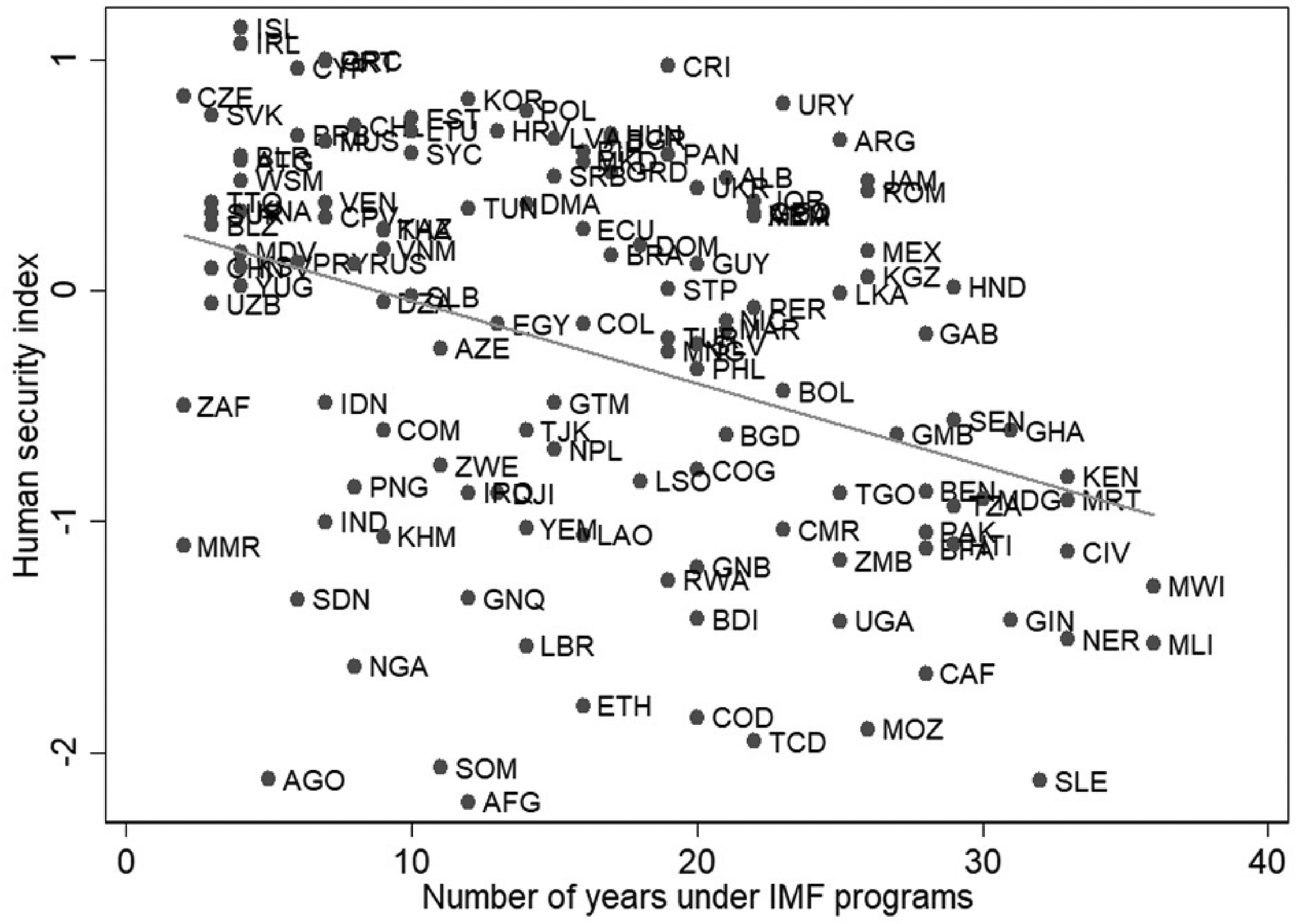
Human security and years of International Monetary Fund (IMF) programme exposure.
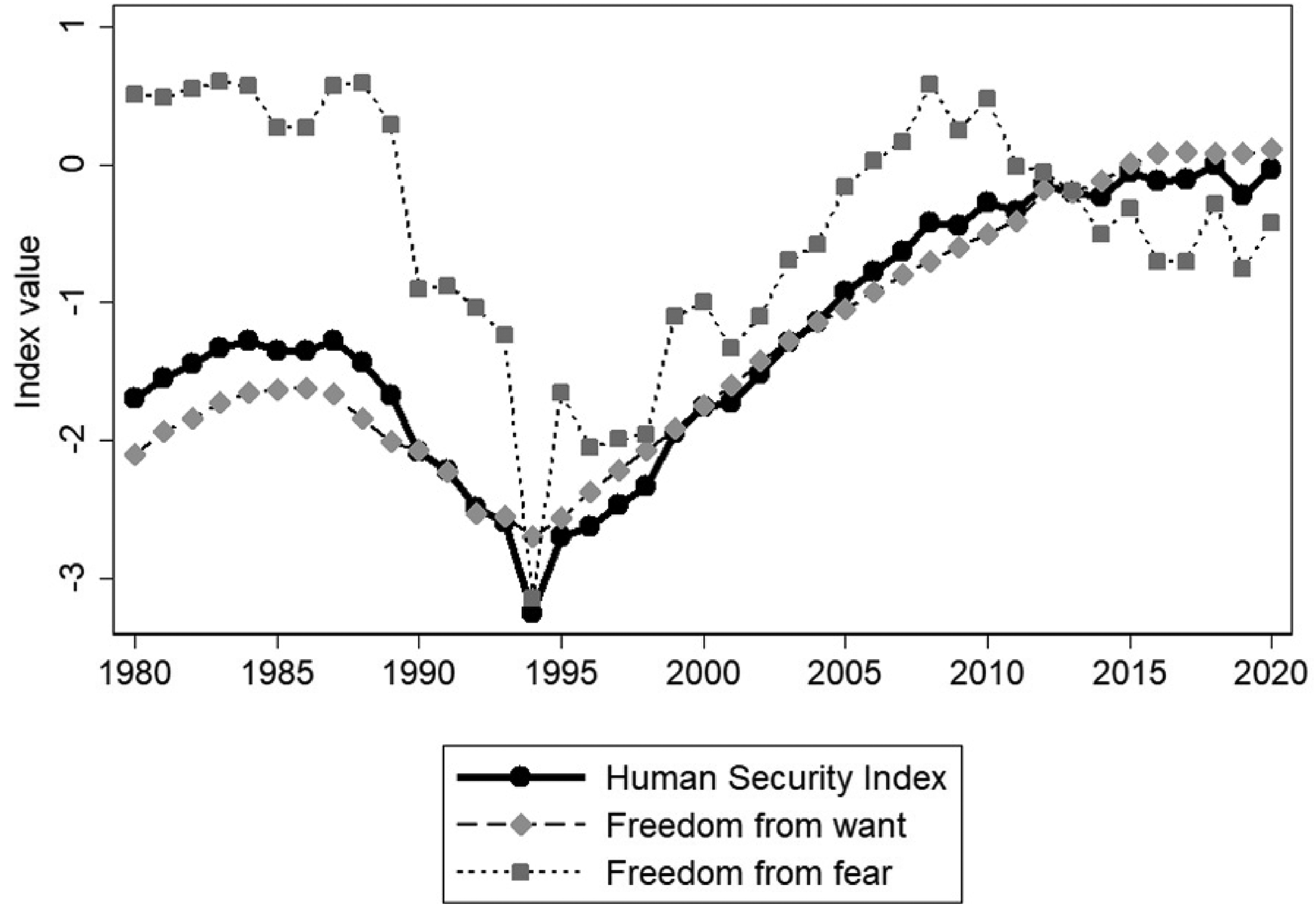
The evolution of human security in Rwanda (1980–2020).
Of course, these pieces of evidence may not be causal, but coincidental. Countries may need IMF assistance because of underlying structural weaknesses that also weaken human security. Countries receiving IMF support are likely to be suffering from underdevelopment, reduced state capacity or the effects of some conflict or socioeconomic crisis. To control for such confounding factors, we now turn to multivariate regression techniques. 7
Regression analysis
We conduct panel analysis for up to 165 countries for 1980–2019. Sample sizes vary owing to missing values in control variables. The outcome variable is our Human Security Index. Our key predictor is a binary variable indicating whether a country is under an IMF programme in a given year, drawn from the IMF Monitor Database (Kentikelenis et al., 2016).
Control variables include potential confounders that could affect both human security and the likelihood of going under an IMF programme. Arguably, this is the case if countries face economic distress. Our baseline set of variables therefore includes a dummy for financial crisis (Laeven and Valencia, 2013), reserves in months of imports and (logged) inflation. We also augment the model to include macroeconomic fundamentals – (logged) GDP per capita, (logged) population and GDP growth – as well as the number of coups d’état (Powell & Thyne 2011), and a binary indicator for natural disasters (EM-DAT 2018). While political instability in the political executive may have implications for human security, natural disasters may inflict human suffering. At the same time, countries may be more likely to request IMF assistance in these cases. We lag all control variables to mitigate potential simultaneity bias. We also include a time trend as well as country-fixed effects, thereby exploiting only within-country variation. The Online Appendix provides information on all variables in the model and descriptive statistics (Table A6).
We begin with fixed-effects panel regressions on HSI levels. Table 4 shows a negative relationship between IMF programmes and HSI levels in the first two columns. In contrast, there is no relationship between (lagged) IMF programmes and differences in the HSI, shown in the last two columns. Economic distress variables are not always statistically significant, but if they are, the direction of the effects is in line with theoretical expectations. Including additional control variables leaves our main result unaffected, while producing further insights into the correlates of human security. Specifically, increases in per capita income and population size are related to increases in the HSI. Conversely, greater occurrence of coups can reduce human security, while economic growth and the incidence of natural disaster have no relationship with the HSI.
Multivariate regression results.
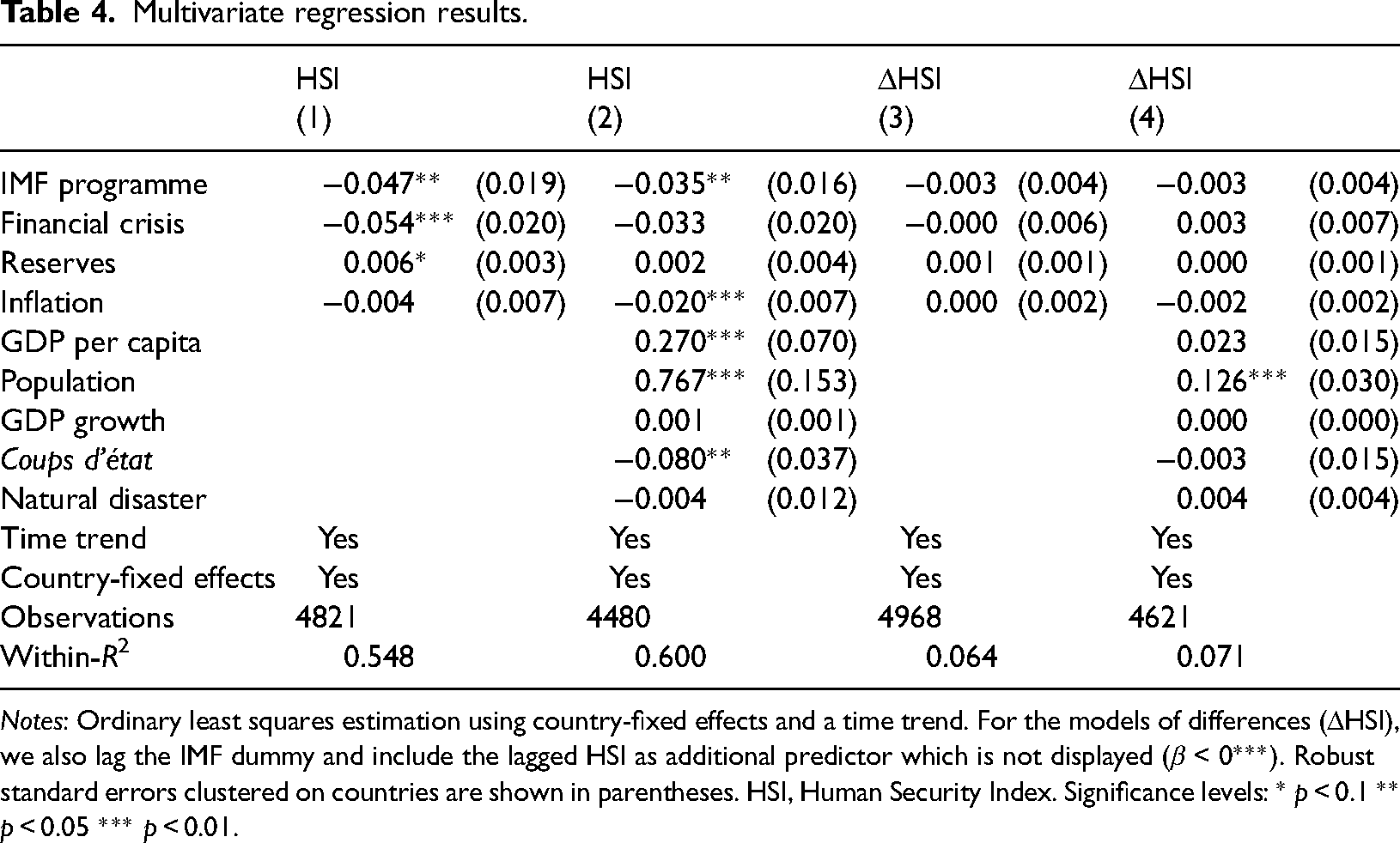
Notes: Ordinary least squares estimation using country-fixed effects and a time trend. For the models of differences (ΔHSI), we also lag the IMF dummy and include the lagged HSI as additional predictor which is not displayed (β < 0***). Robust standard errors clustered on countries are shown in parentheses. HSI, Human Security Index. Significance levels: * p < 0.1 ** p < 0.05 *** p < 0.01.
In the Online Appendix, we probe an alternative lag structure. When we allow for the effect of IMF programmes to unfold with a 1 year lag, we obtain a significantly negative relationship in the HSI level specification as well as with respect to HSI changes (Table A7). We also pursue analysis separately on the two HSI subindices corresponding to freedom from want and freedom from fear respectively. Controlling for economic distress situations and other background characteristics, we find that if a country undergoes an IMF programme, its HSI subindex on freedom from want is significantly lower in the level specification, but not in the difference specification. Conversely, IMF programmes are unrelated to freedom from fear (Table A8). As these patterns cannot be interpreted causally, we hold off from providing substantive interpretations but continue with instrumental-variables regressions.
A well-known challenge is potential endogeneity of IMF programmes, for instance owing to reverse causality whereby lower human security causes countries to request IMF assistance more often. Even controlling for weak fundamentals and economic crises may not fully resolve endogeneity. We remedy this challenge by employing an instrumental variable: the interaction of the (logged) IMF liquidity ratio and the long-run propensity of a country to request IMF programme lending (Lang, 2020). Controlling for constitutive terms, country-fixed effects and other covariates, this instrument is plausibly excludable with respect to human security outcomes. The intuition for this instrument is based on a difference-in-difference logic: while the Fund is more likely to provide assistance when it has more liquid resources available, this additional liquidity will benefit irregular IMF borrowers to a greater extent than regular IMF borrowers (which for idiosyncratic reasons almost always obtain funding). By controlling for baseline probabilities of being under an IMF programme, the total liquidity of the Fund, and other potential channels through which IMF liquidity may affect human security, we effectively remove the endogenous portion of the estimated effect (Lang, 2020; Nelson and Wallace, 2017; Stubbs et al., 2020).
Table 5 shows the results from two-stage least squares (2SLS) estimations. We find robustly negative effects of IMF programmes on human security across model specifications. Effect magnitudes are larger than in the naive panel estimations and statistically significant (p < 0.01). For instance, if a country goes under an IMF programme, its HSI index is predicted to decrease by 1.49 points (1.64 SD). With additional controls, the effect is 1.27 points (1.41 SD). This means that the average country would slide from 0.64 (95% CI 0.33; 0.94) to −0.85 (95% CI −1.54; −0.16) on the HSI if under IMF tutelage. A more demanding specification that considers HSI changes produces a negative estimated effect of at least 0.23 (p < 0.01). This is sizeable given that the observed range of HSI differences is from −0.64 to 0.76. Our confidence in the results is further enhanced by strong instruments. The Kleibergen–Paap F-statistics are at or above the conventional critical value (F > 10), indicating no problems owing to weak instruments.
Multivariate regression results accounting for endogeneity of IMF programmes.
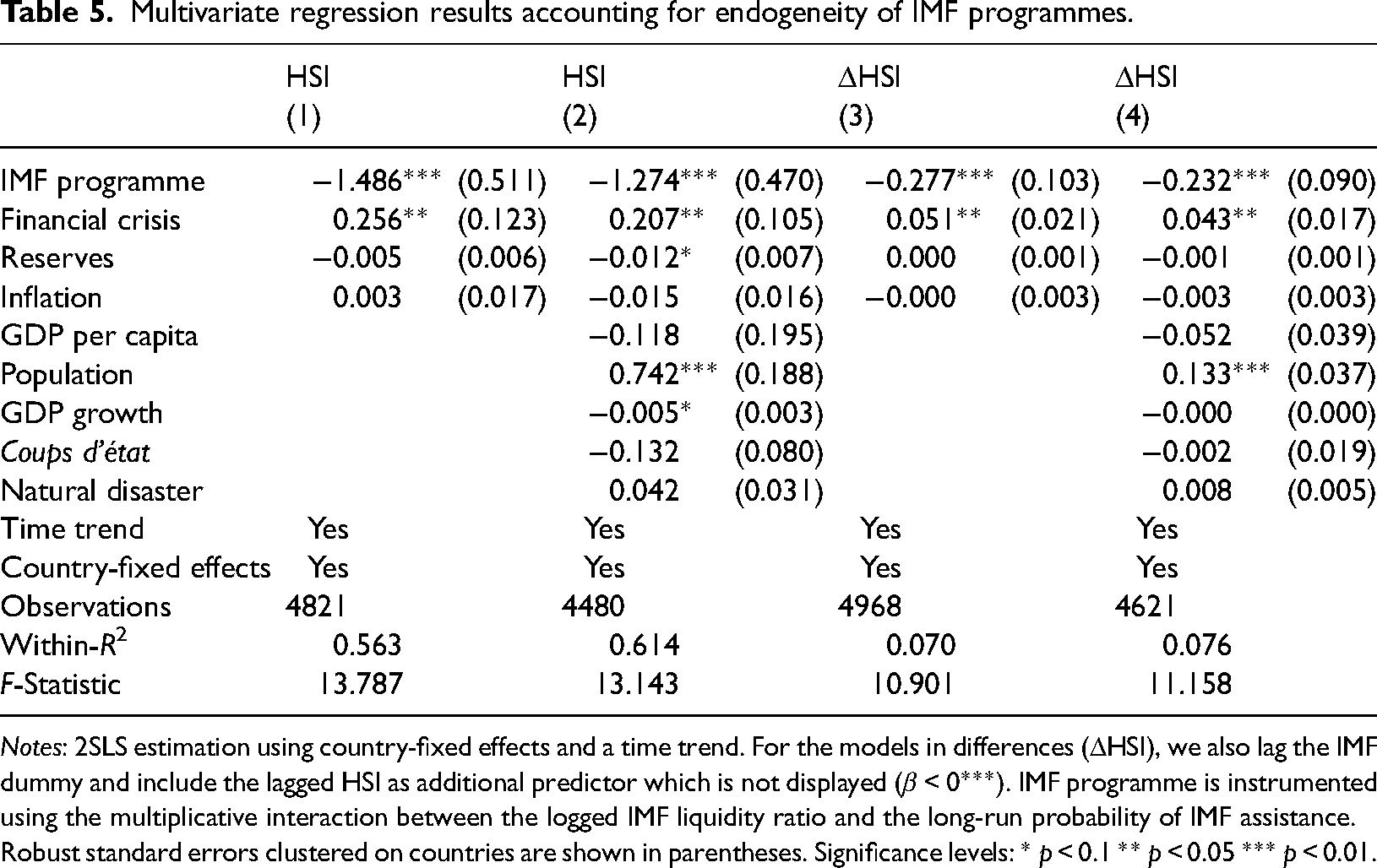
Notes: 2SLS estimation using country-fixed effects and a time trend. For the models in differences (ΔHSI), we also lag the IMF dummy and include the lagged HSI as additional predictor which is not displayed (β < 0***). IMF programme is instrumented using the multiplicative interaction between the logged IMF liquidity ratio and the long-run probability of IMF assistance. Robust standard errors clustered on countries are shown in parentheses. Significance levels: * p < 0.1 ** p < 0.05 *** p < 0.01.
In summary, we have found that IMF programmes lead to decreased human security. This result holds (even) after considering the endogenous nature of IMF programmes with respect to human security. We also found that the effect is most consistent for freedom from want, while the evidence for freedom from fear is more mixed. Future research could refine these results in various ways, for example by considering variation in IMF programme design.
Conclusions
Our primary goal in this paper was to recapture the important yet underused concept of human security and to make it accessible for empirical, analytical and policy work. Based on the notion of the security−development nexus, we theoretically derived a set of 15 related indicators capturing freedom from want and freedom from fear. Using latent factor analysis on these indicators, we confirmed that all indicators load onto a single common factor – human security – thus confirming the notion that security cannot exist without development and that development does not come about without security.
In addition, we presented a first empirical application using our new index, examining the impact of IMF programmes on human security. While past research has demonstrated the adverse socioeconomic effects of IMF programmes (Dreher, 2006; Forster et al., 2019; Lang, 2020), analysis of the human security implications of IMF programmes has been lacking. While naive panel regressions did not find a relationship between IMF programmes and human security, we found a significantly negative effect of IMF programmes on human security using instrumental-variable regressions that remedy potential endogenous selection into programmes. Our findings not only make an original contribution to the IMF-related literature but also highlight the conceptual and analytical worth of our new HSI.
Our aim is to stimulate research that draws on our Human Security Index to inform contemporaneous issues on the security−development nexus. While our first application has used the index as an outcome measure, it can also be used as an independent variable – for example to understand the allocation patterns of international development assistance. A significant policy debate focuses on whether donors do enough in so-called ‘conflict affected and fragile states’, which are characterized by multiple complex crises and therefore make development interventions difficult. There is a vibrant debate as to whether and how donors should intervene in such contexts, with performance-driven donors being less likely to engage and more likely to bypass recipient governments when they do so (Chasukwa and Banik, 2019; Dietrich, 2021; Swedlund, 2017).
Our measure also has applications beyond understanding the behaviour of international development organizations. For example, it could be useful when assessing the impacts of political reforms, democratization, peacebuilding policies and other events or reforms that might affect human security. By including indicators of government violence, small-scale community violence, low-intensity conflict and full-blown war, our measure also bridges diverse pockets of the conflict literature that do tend to work in relative isolation from each other. A measure of human security conceived in this way would also be able to capture violence which has its origins in, say, food insecurity stemming from increases in food prices.
That said, we believe there is further room for conceptual development and related data collection. Our choices reflect a compromise between comprehensiveness, parsimony and efficiency. This renders the measure sufficiently nimble on a conceptual level, negotiating the competing demands levied at a human security measure while at same time being practical and actionable. With further advances in data availability, further extensions of the index will be possible, with the result of a richer understanding of human security and its causes and consequences.
Supplemental Material
sj-docx-1-cmp-10.1177_07388942221111064 - Supplemental material for Revisiting the security–development nexus: Human security and the effects of IMF adjustment programmes
Supplemental material, sj-docx-1-cmp-10.1177_07388942221111064 for Revisiting the security–development nexus: Human security and the effects of IMF adjustment programmes by Bernhard Reinsberg, Daniel O Shaw and Louis Bujnoch in Conflict Management and Peace Science
Supplemental Material
sj-txt-2-cmp-10.1177_07388942221111064 - Supplemental material for Revisiting the security–development nexus: Human security and the effects of IMF adjustment programmes
Supplemental material, sj-txt-2-cmp-10.1177_07388942221111064 for Revisiting the security–development nexus: Human security and the effects of IMF adjustment programmes by Bernhard Reinsberg, Daniel O Shaw and Louis Bujnoch in Conflict Management and Peace Science
Supplemental Material
sj-dta-3-cmp-10.1177_07388942221111064 - Supplemental material for Revisiting the security–development nexus: Human security and the effects of IMF adjustment programmes
Supplemental material, sj-dta-3-cmp-10.1177_07388942221111064 for Revisiting the security–development nexus: Human security and the effects of IMF adjustment programmes by Bernhard Reinsberg, Daniel O Shaw and Louis Bujnoch in Conflict Management and Peace Science
Supplemental Material
sj-do-4-cmp-10.1177_07388942221111064 - Supplemental material for Revisiting the security–development nexus: Human security and the effects of IMF adjustment programmes
Supplemental material, sj-do-4-cmp-10.1177_07388942221111064 for Revisiting the security–development nexus: Human security and the effects of IMF adjustment programmes by Bernhard Reinsberg, Daniel O Shaw and Louis Bujnoch in Conflict Management and Peace Science
Supplemental Material
sj-dta-5-cmp-10.1177_07388942221111064 - Supplemental material for Revisiting the security–development nexus: Human security and the effects of IMF adjustment programmes
Supplemental material, sj-dta-5-cmp-10.1177_07388942221111064 for Revisiting the security–development nexus: Human security and the effects of IMF adjustment programmes by Bernhard Reinsberg, Daniel O Shaw and Louis Bujnoch in Conflict Management and Peace Science
Supplemental Material
sj-dta-6-cmp-10.1177_07388942221111064 - Supplemental material for Revisiting the security–development nexus: Human security and the effects of IMF adjustment programmes
Supplemental material, sj-dta-6-cmp-10.1177_07388942221111064 for Revisiting the security–development nexus: Human security and the effects of IMF adjustment programmes by Bernhard Reinsberg, Daniel O Shaw and Louis Bujnoch in Conflict Management and Peace Science
Footnotes
Acknowledgements
We thank the International Relations cluster group at the University of Glasgow for helpful comments.
Data availability statement
The Human Security Index is freely available on Harvard Dataverse (https://doi.org/10.7910/DVN/GU8V2R).
Declaration of conflicting interests
The authors declared no potential conflicts of interest with respect to the research, authorship, and/or publication of this article.
Funding
The authors disclosed receipt of the following financial support for the research, authorship, and/or publication of this article: This work was supported by the Gerda Henkel Foundation (grant ‘The human security implications of IMF programs’).

Supplemental material
Supplemental material for this article is available online.
Notes
References
Supplementary Material
Please find the following supplemental material available below.
For Open Access articles published under a Creative Commons License, all supplemental material carries the same license as the article it is associated with.
For non-Open Access articles published, all supplemental material carries a non-exclusive license, and permission requests for re-use of supplemental material or any part of supplemental material shall be sent directly to the copyright owner as specified in the copyright notice associated with the article.
