




Abstract
It is widely suggested that migration is a key mechanism linking climate change to violent conflict, particularly through migration increasing the risks of conflict in urban destinations. Yet climate change also creates new forms of insecurity through distress migration, immobility and vulnerability that are prevalent in urban destination locations. Here we examine the extent and nature of human security in migration destinations and test whether insecurity is affected by length of residence and environmental hazards. The study develops an index measure of human security at the individual level to include environmental and climate-related hazards as well as sources of well-being, fear of crime and violence, and mental health outcomes. It examines the elements of human security that explain the prevalence of insecurity among recent and established migrants in low-income urban neighbourhoods. The study reports on data collected in Chattogram in Bangladesh through a survey of migrants (N = 447) and from qualitative data derived using photo elicitation techniques with cohorts of city planners and migrants. The results show that environmental hazards represent an increasing source of perceived insecurity to migrant populations over time, with longer-term migrants perceiving greater insecurity than more recent arrivals, suggesting lack of upward social mobility in low-income slums. Ill-health, fear of eviction, and harassment and violence are key elements of how insecurity is experienced, and these are exacerbated by environmental hazards such as flooding. The study expands the concept of security to encompass central elements of personal risk and well-being and outlines the implications for climate change.
Climate change, migration and conflict
A significant critique of climate and conflict research relates to the underspecification and conceptualization of widespread, pernicious, and sometimes hidden impacts of climate change on life, livelihood, sense of place and identity beyond the threat of violence (Tschakert et al., 2017; Barnett, 2019). Propositions on the mechanisms by which climate change may induce violence have included the displacement of populations through weather-related disasters or inundation of settlements, leading to breakdown of social order or ethnic divisions in places where displaced people seek refuge (Burrows & Kinney, 2016). Yet it is well established that the majority of migration flows do not necessarily create conditions for conflict and insecurity (Raleigh & Jordan, 2010).
Contemporary dominant migration flows are not associated with conflict risk. Global migration flows remain dominated, in absolute terms, by movement from rural areas to well-established urban destinations within countries. Such movements, concentrated in Asia and Africa, also drive the urbanization trend in those regions. Are such regular migration flows currently or potentially in the future affected by climate change? Clearly, increases in weather-related extreme events cause mass displacement every year – with estimates of over 20 million people displaced per year averaged over the past decade (ICRC, 2018). But this is predominantly temporary displacement, and those evacuated or displaced from their places of residence and communities due to storms, drought, floods and wildfires are not a principal source of organized violence. Longer-term migration is, in effect, an effective adaptation to declining attractiveness or uncertain futures in specific locations, but sometimes with significant costs to individuals in terms of moving (Adams & Kay, 2019; Henderson, Storeygard & Deichmann, 2017). It is also well documented that migrants in many destination cities globally are forced to cluster in neighbourhoods characterized by insecure tenure, high rents, poor access to services and labour markets, and disproportionate exposure to environmental hazards, such as flooding or landslides (Tacoli, McGranahan & Satterthwaite, 2015).
But does movement to cities in itself lead to increased violent conflict risk? Buhaug & Urdal (2013) find that observed conflict in growing cities is not associated with population growth and high population densities in 55 African and Asian cities that have experienced such growth, driven by migration. Petrova (2021) shows that urban migrants displaced from rural areas in Bangladesh are not more likely to be involved in protest and conflict, while Koubi et al (2021) suggest that migrants displaced by weather-related disasters in Kenya engage more in pro-social advocacy and engage in social movements. Cities are, of course, net importers of food. And food prices and food insecurity are widely observed elements of political unrest and conflict in cities. Hendrix & Haggard (2015) and Berazneva & Lee (2013) show that global food prices transmit into localized violence in cities, but the patterns of violence depend on the relative support of rural economies and urban consumers during such food crises. In essence, then, there appear to be only marginal and indirect causal links between migration and organized violence in urban centres in expanding cities in the global South.
Climate change will, however, create new forms of vulnerability, distress migration and immobility. There is, we argue, a case for expanding the conceptual focus of research on climate change and its human impacts to include holistic experiences of insecurity to include everyday social exclusion and precarity: these are represented in the theories and measurement of human security. This study, therefore, describes human security in urban settings of rapidly growing cities as a set of economic, social and environmental dimensions. It develops a new Human Security Index at the individual level incorporating these dimensions and examines whether length of residence in destination areas explains the prevalence of insecurity, through phenomena such as housing tenure and exposure to health impacts of water and environmental hazards. The following section introduces the proposed elements of a Human Security Index. The study examines the human security of new migrant populations in Chattogram city in Bangladesh, with results reported from survey and data generated through in-depth visual methods. The results show that environmental hazards represent an increasing source of insecurity to migrant populations over time, and that these are manifest in perceptions of ill-health and mental health status. Environmental hazards in cities are likely to represent an important mechanism for continued insecurity in cities under climate change.
Individual-scale human security
Measuring human security
The proposition here is that human security captures holistic elements of risk that affect well-being and meaningful lives, over and above the specific risk of organized violence. To do so, it is necessary to describe the vital core of human lives in measurable and meaningful dimensions. The term ‘human security’ was elaborated and formalized in the UN Commission for Human Security, and adopted principally as a counterpoint to state, national and territorial conceptualizations of security (Gasper, 2010). Most definitions of human security emphasize a set of necessary conditions: protection of individuals and their basic human rights and freedoms, access to material well-being, equality and freedom from fear (Owen, 2004; Adger et al., 2014). Human security is thus a condition with interdependent subjective and objective components, which can be met when human freedoms and rights are recognized and protected (Alkire, 2003; O’Brien & Barnett, 2013).
Some elements of the relationship between climate and violence are manifest for individuals, such as links between weather variables and personal violence, self-harm and suicide (Berry et al., 2018). But freedoms, equality and rights are all socially contextual phenomena. The advantages of a human security focus are in the holistic and all-encompassing nature of the phenomenon and the idea of stability and absence of risk, articulated as freedom from fear. The limits of the concept have been argued to be this holism: the lack of empirical social science that has bounded the concept and made it measurable (Gasper, 2010).
There have been various proposals for human security measures at individual and population levels. Most elaborate dimensions of well-being and capabilities, while others expand from absence of violence to incorporate wider elements of dignity and flourishing. King & Murray (2001) developed an individual-level ‘Years of human security’ measure, for example, on the absence of generalized poverty and causes of poverty. Ingelhart & Norris (2012) used cross-national comparative data to focus on perceived threats to life and community. But the adoption of human security measures has been limited in application for two reasons. First, the boundaries of personal risk and of human flourishing are ambiguous. Second, the unit of analysis of human security would intuitively be the individual, but population-level measures are most readily available. An analysis of human insecurity in Palestine, for example, shows that for many elements of fear of violence or harm, the causes and consequences of insecurity are unclear or deliberately hidden (Batniji et al., 2009).
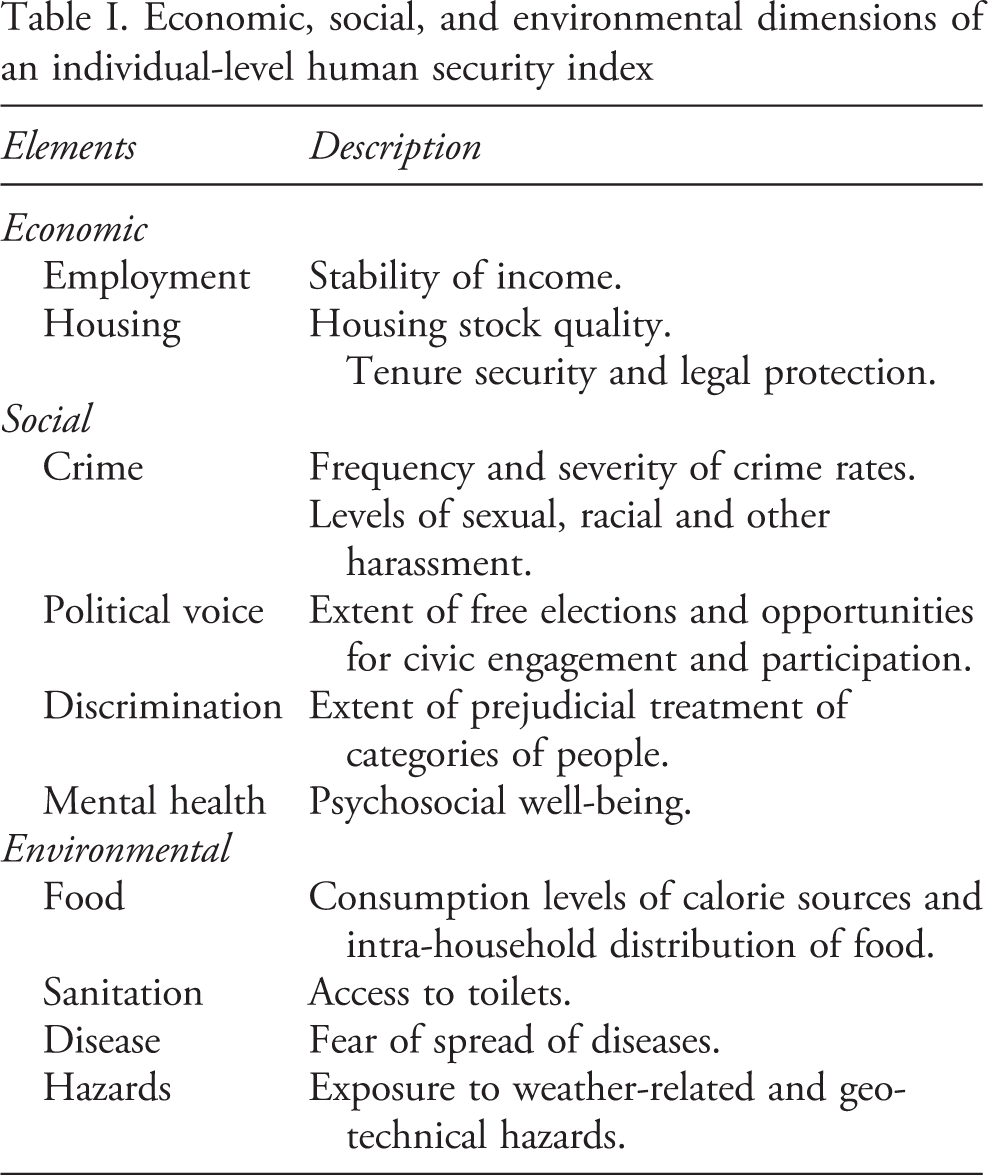
Economic, social, and environmental dimensions of an individual-level human security index
Human security, mobility, and how they are affected by environmental change
Applying these elements of human security to the nexus of migration and climate change involves explaining security in source and destination. Social-ecological systems of migration source and migration destination regions have a human core captured in the elements of human security, along with sets of resources and social infrastructure that determine their stability and distribution (Sampson, 2017). Source and destination regions are both affected by changing climate through multiple pathways, principally on ecosystem productivity and in risks to place. In urban destination areas, increased population levels through inward migration affect aggregate human security. Cities have been contextualized as inherently conflictual because of social, cultural and political inequalities: the economic, social and environmental dimensions of insecurity may be manifest in access to food, neighbourhood crime and environmental risks.
Standard migration theory suggests that length of residence has positive effects on inclusion and well-being of migrants in the receiving society (Borjas & Chiswick, 2019). However, such processes may be dampened or negated by economic precariousness, prolonged separation of social networks, and exposure to extreme events, such as disasters. Moreover, rapidly urbanizing cities in developing countries often contain unsafe spaces, in which men, women and children are exposed to different manifestations of insecurity resulting from poor infrastructure, limited transport networks or insufficient design of public infrastructure. These limitations are exacerbated for marginalized populations who have to walk in poorly lit roads, commute long distances or live in precarious locations, as widely reported in descriptions of urban poverty in Bangladesh (Gupte & Commins, 2016; Banks, 2016). In these contexts, upward social mobility is limited as movement to non-slum areas is rare, and for those who manage to experience any upgrade within slums, it is often capped at a low level and rarely sustained (Rains & Krishna, 2020). These material constraints are compounded by emotional and psychosocial barriers that prevent marginalized populations from moving out of urban informal settlements, leaving them trapped in high-risk areas (Ayeb-Karlsson, Kniveton & Cannon, 2020). Hence we seek to answer two research questions. First, does migrants’ length of stay translate into an improvement of perceived human security? Second, do environmental dimensions, such as hazards, mediate this relationship?
In terms of length of residence, we suggest that longer-term migrants perceive lower human security than more recent arrivals and, thus, low-income areas are more likely to represent cul-de-sacs for migrants rather than pathways-out-of-poverty (Turok & Borel-Saladin, 2018). Regarding environmental dimensions of insecurity, we postulate that exposure to environmental stressors mediates the relationship between length of stay and perceived human security as informal urban settlements are more likely to be severely affected by environmental change (Mitlin & Satterthwaite, 2013).
Human security and climate change in precarious urban settings
Urban and migration context
We examine the extent of insecurity and how it is experienced using data on migrant populations in Chattogram, Bangladesh. Cities in contemporary Bangladesh are rapidly growing: net out-migration is prevalent from low-lying rural districts; and precarity of low-income populations is prevalent across urban centres (Siddiqui et al., 2018). Bangladesh, in addition, has a large proportion of its land surface exposed to environmental hazards including flooding, coastal and river erosion and cyclones in the delta and coastal regions. Populations living in rural areas have repeatedly been shown to be particularly sensitive to the changes derived from the occurrence of these events. The frequency and intensity of environmental hazards, ranging from longer-term salinization to short-term cyclone impacts, have variously been shown to alter the context in which livelihoods take place, and in which migration decisions are made (Call et al., 2017).
The scale of internal population movements in Bangladesh and the consequent impact on the country’s accelerated rate of urbanization is well documented (Streatfield & Karar, 2008). Two-thirds of the urban growth since the independence in 1971 is related to migration (Safra de Campos et al., 2020). Chattogram (previously known as Chittagong) is the second most popular destination for internal migrants (Siddiqui et al., 2018). It is the primary port of Bangladesh, located in the Bay of Bengal, with major export processing zones made up of garment and manufacturing industries that attract workers from different parts of the country, including ethnic migrants from Chattogram Hill Tracts (Chakma & Akhy, 2015). The population of Chattogram, the country’s second largest city, has grown by 3.6% per year over the past two decades. Migration to urban centres in Bangladesh is perceived by those involved to be a well-established route out of poverty (Begum & Sen, 2005; Chowdhury et al. 2012). Yet, rapid population growth has not led to the expansion of social infrastructure and services, and low-income migrants are concentrated in underserviced hazard-prone informal settlements (Uddin, 2018).
Design, data and methods
We use data collected through survey and in-depth participatory methods to examine human security and migration. These two approaches are complementary and enable triangulation of results. The first set of data comes from 447 valid responses to a cross-sectional survey of migrants in Chattogram over a two-month period in 2018. The survey was conducted in Bengali from an original design in English, collected using a computer-assisted personal interview technology (Survey Solutions). Respondents were purposely sampled to include Direction of internal migration to Chattogram city (N=447) Figure 1(b). Survey enumeration areas of Chattogram city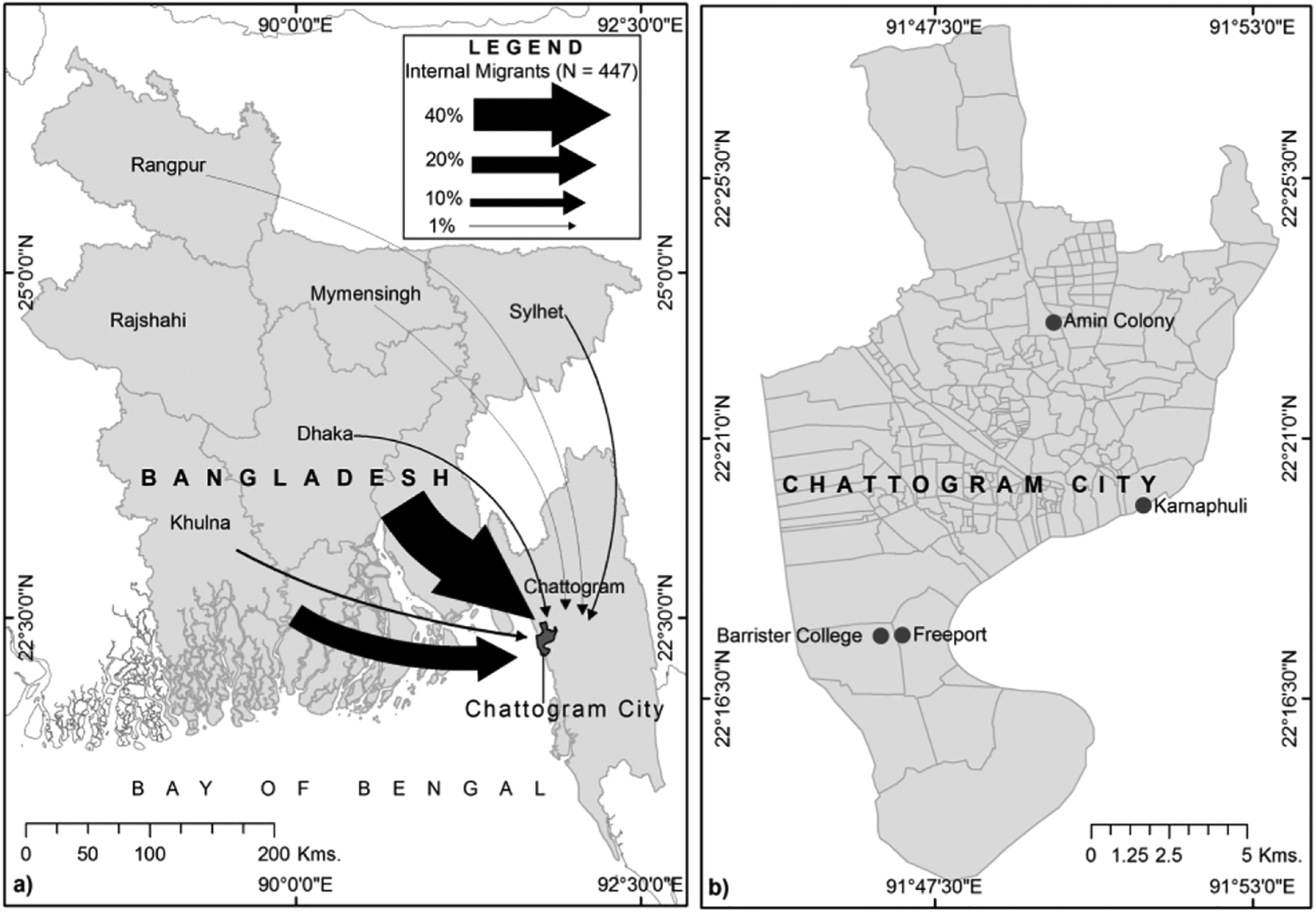
The two-stage sampling strategy first involved a household listing to identify migrants according to different lengths of time since arrival in Chattogram in four enumeration areas (Amin Colony, Barrister College, Freeport and Karnaphuli) which have a long history as migrant destination areas of Chattogram (Figure 1(b)). Second, a balanced number of male and female migrants were interviewed by a team of enumerators. Purposive sampling was employed to reach hidden populations such as recently arrived migrants that may be systematically excluded from probability sampling frames used in household surveys. The survey intended to capture maximum variation of time living in Chattogram among migrants in line with the specific research questions.
The survey included questions on indicators of human security and self-reported mental health, perceptions of environmental, socio-economic and political issues faced by migrant populations in Chattogram. Survey questions capturing each of these elements were derived from standard empirical approaches. Questions on mental health combine the questions contained in both the Generalized Anxiety Disorder 2 item test (GAD-2) and the Patient Health Questionnaire 2-item test (PHQ-2) both widely used in health sciences (Kroenke, Spitzer & Williams, 2003). Similarly, questions on perception of insecurity associated with lack of stable income or food access, or threat involving levels of exposure to crime and harassment build on previous work by Inglehart & Norris (2012). Questions on tenure and housing condition were based on research findings by Reerink & Van Gelder (2010) and Hove, Ngwerume & Muchemwa (2013) to elicit information on tenure security in its role in human security. Questions on perceived fear of crime and personal security were designed to elicit how migrants perceive those social risks.
The order of survey questions and response options may influence the likelihood of respondents selecting certain sets of answers. To counter potential response bias, questions on human security were not directly linked to perceptions of well-being and exposure to environmental and socio-economic issues and were in separate sections of the survey. Similarly, the design of the questionnaire sought to minimize cognitive bias (Lundh, Wikström & Westerlund, 2001) by focusing on memorable and significant climatic events and environmental hazards which brought about impact on survey participants’ health, and material and subjective well-being, without the need to provide exact dates, frequency or magnitudes.
Using the survey data, we calculate a Human Security Index (HSI) consisting of economic, social and environmental dimensions, which are composed of two, four and three elements, respectively. Survey questions capturing these elements are shown in Online appendix 1. Given that the variables included in the HSI are measured in different scales, they were standardized to have mean 0 and standard deviation 1. For those elements that contain more than one variable, first we calculated the Cronbach Alpha to check if they are indeed measuring the same construct. If internal consistency was greater than 0.7, we calculated the average of the relevant items and used it as a measure of the element, as in the case of mental health. If it was below this threshold, we used a single variable instead, as in the case of job security. Once a measure for each element was obtained, we averaged them to obtain the mean of each of the economic, social and environmental dimensions. For the final step of the construction of the HSI, we calculated the average of the three dimensions. Descriptive statistics of the HSI, as well as of each of its dimensions, are reported in Online appendix 2. For illustrative purposes, we present the non-standardized elements disaggregated by gender, age (using the sample average of 28 years as a cut-off point), education level and length of residence. We observe that longer-term migrants fare worse than recently arrived migrants, except in indicators of mental health. As a robustness check, the index was calculated using principal component analysis instead and the main results remain unchanged.
Summary statistics of variables included in the regression analysis
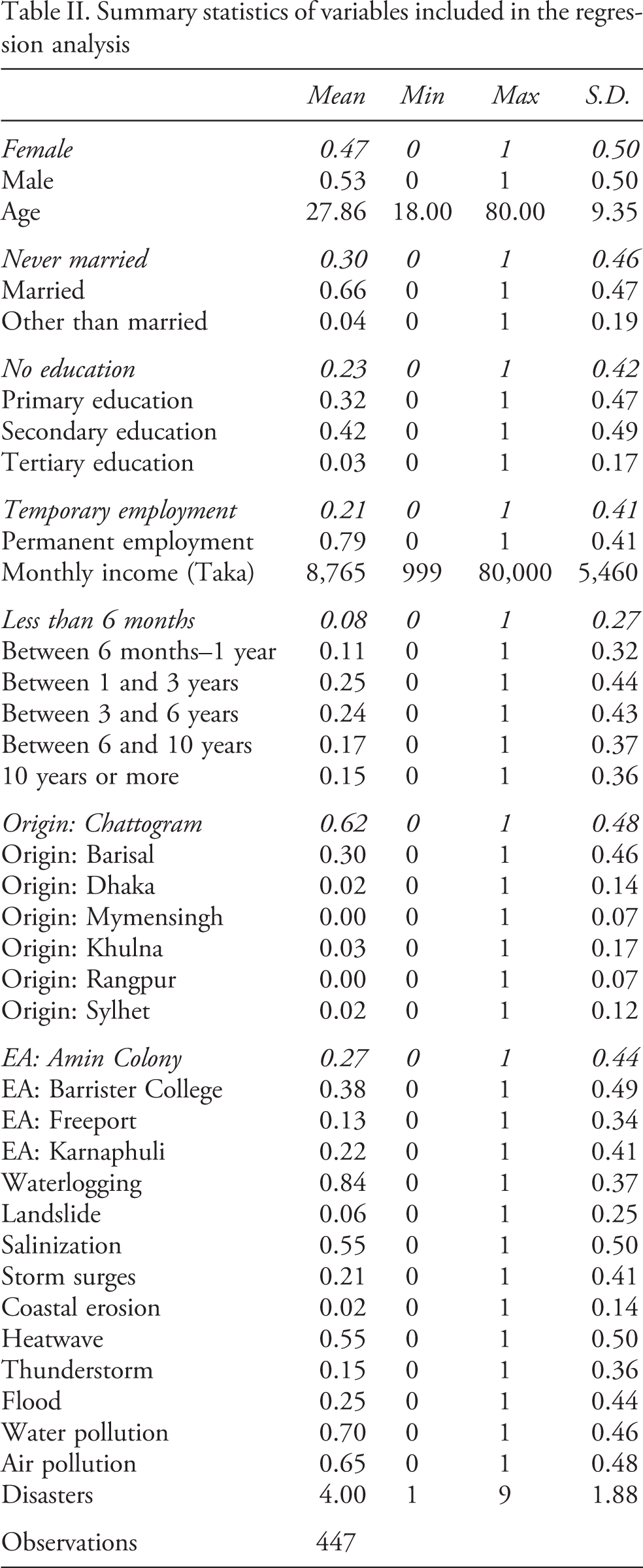
In the first specification, the dependent variable is the HSI and the independent variable of interest is length of residence, and we control for gender, age, marital status, education level, type of employment, the natural logarithm of monthly income, and division of origin. In order to understand the mechanism behind this association, we carry out mediation analysis. In particular, we estimate a second specification that examines if exposure to environmental stressors is a mediator between human security and length of residence. We estimated a model where the dependent variable is the number of hazards reported and the main explanatory variable is length of residence, controlling for the same set of variables as in the previous step. Given that the former is a count variable, we also estimated this model using Poisson regression and our results remain unchanged. Then, in a third specification, we estimate the full model, where the dependent variable is the HSI and this time we include both length of residence and exposure to each hazard as regressors to examine how the coefficients of the former change, when the latter are included. The same set of control variables included in the previous two specifications are also included in this one. Lastly, we replicate the first three specifications with destination fixed effects (i.e. binary variables for each enumeration area, where the base category is Amin Colony) in order to account for variation in the index within survey enumeration areas in Chattogram.
The survey data are complemented by analysis of meaning and causal pathways through in-depth qualitative data on migrants’ experience of human security and well-being. The study engaged ten migrants and seven city planners in an in-depth visual ethnographic empirical process. The approach involved photovoice, in which participants take photographs that depict aspects of their everyday experience and explain the meaning through narratives that elicit meaning and causal relationships between elements. A second stage involved dialogue between migrant populations and urban planners. The sample of migrants included ethnic minority migrants from the Chattogram Hill Tracts (CHT) area, and across the four enumeration districts sampled in the survey. Participants were recruited through research partners’ discrete networks whose contacts enabled access to migrants and city planners (Creswell & Clark, 2011). The purposive sampling was designed to capture a diversity of gender, age, ethnicity, length of residence and occupation types among migrants. City planners were also recruited following a purposive sampling rationale to include representatives of key urban planning and governance organizations (e.g. Chattogram City Corporation, which includes the mayor’s office, and Chattogram Development Authority).
Following a two-week period where participants generated the images, in-depth photo-elicitation interviews used these photographs to elicit narratives of lived experiences of places and events (Ortega-Alcázar & Dyck, 2012). Participants were invited to reflect on what human security means in the context of migration and rapid urbanization, and what can migrants’ insights and personal experiences mean for developing sustainable and resilient cities. Photo-based approaches allow for multiple meanings of experiences, the settings that give rise to them, and the social domains or forces that shape meanings to emerge (Stedman et al., 2004). Both the survey and photovoice activities received ethical approval for human subject research from the University of Exeter, and informed consent was obtained from all participants.
The photovoice exercise was followed up with meetings of migrants and city planners in a facilitated dialogue about their lived experiences of the city. Visual images generated for the photovoice were used as catalysts for building empathy through taking others’ perspectives. Empathy, or the emotional and cognitive engagement with others’ experiences and emotional responses to these, can motivate actions that foster sustainability (Brown et al., 2019) and in the context of policymaking, it has the potential to promote socially just outcomes that address poverty and inequality. The meetings involved participants deliberating ways to address multiple policy and practical challenges of urban economic and social insecurity. The process of taking each other’s perspective with the help of photographs and facilitated discussions, enabled participants to propose solutions that incorporate the lived experiences of diverse stakeholders.
Results
Social exclusion and economic exploitation are the most frequently reported elements of insecurity from the in-depth Housing tenure and economic exploitation as elements of insecurity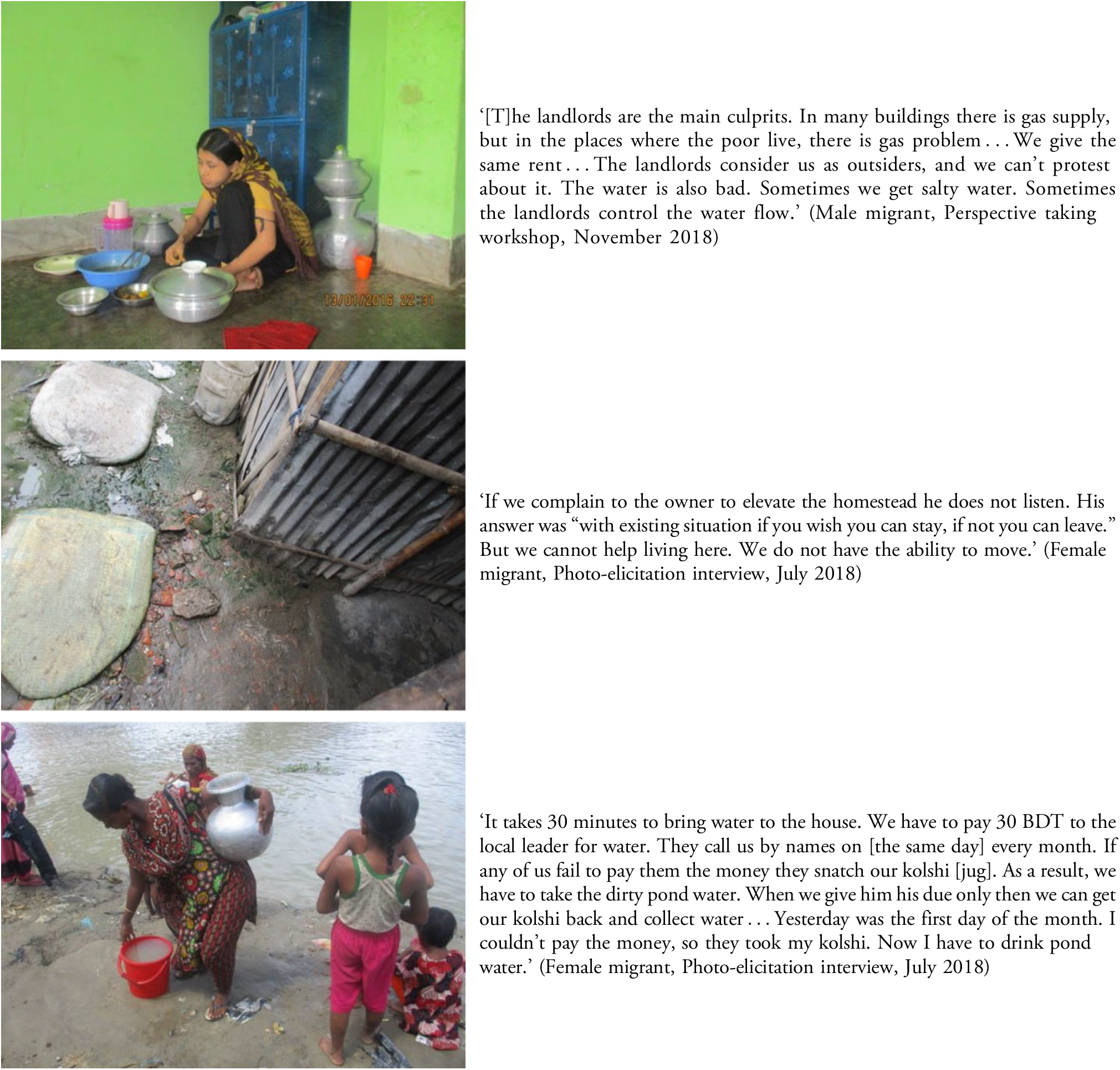
Human Security Index and length of residence
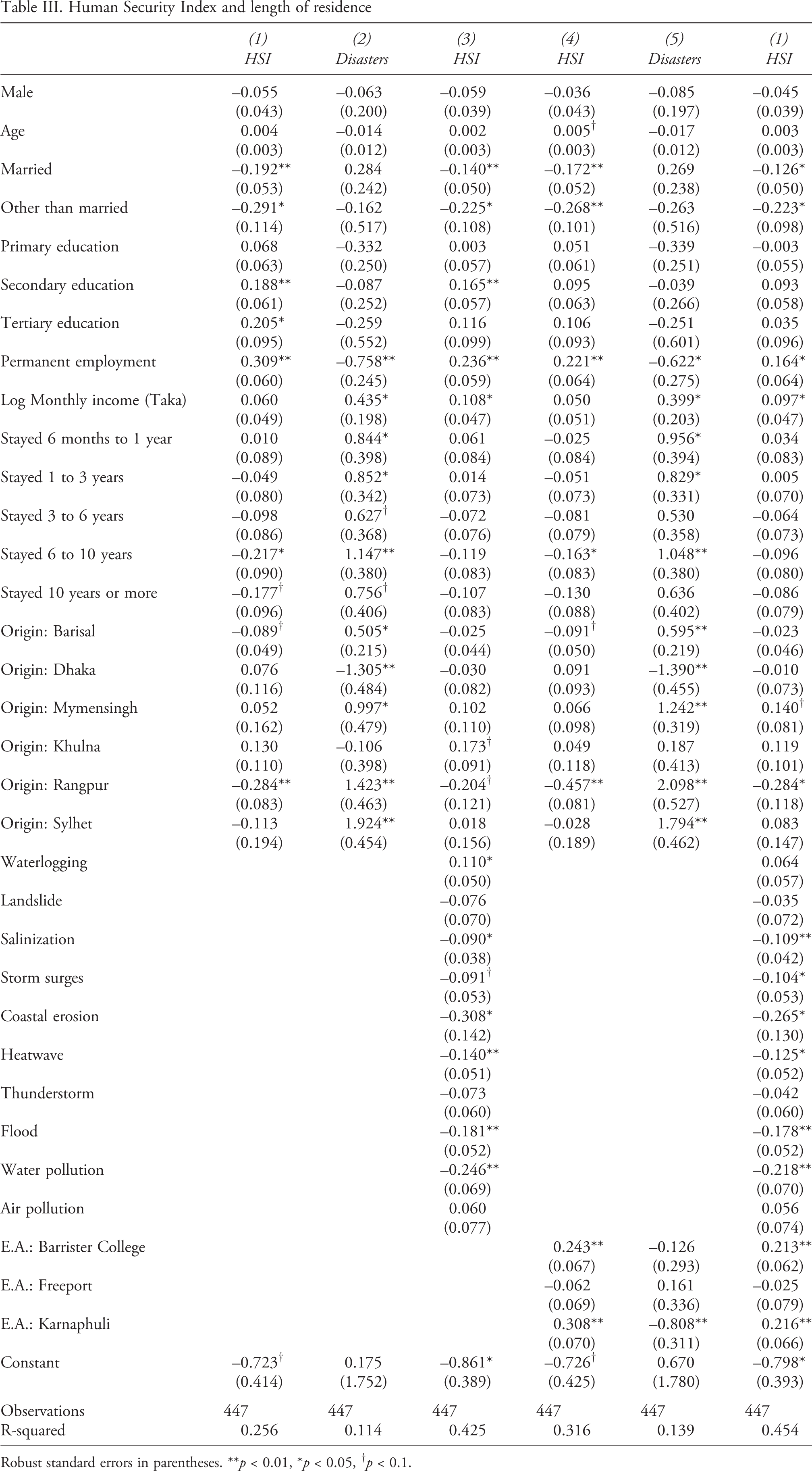
Robust standard errors in parentheses. **p < 0.01, *p < 0.05, †p < 0.1.
The photovoice narratives confirm this finding and echo earlier observations regarding limited social mobility in urban informal settlements (e.g. Banks, 2016; Rains & Krishna, 2020). Migrants’ and city planners’ accounts highlight a number of constraints that limit upward social mobility among migrants; namely that they become trapped in informal and precarious work due to low levels of education and skills, which then reinforce their concentration in urban informal settlements where rents are affordable (Figure 3). This resonates with observations that migrants’ overall capabilities remain low over time and they continue to work as manual labourers and in other unskilled jobs (Rains & Krishna, 2020). While migrants face the double risk of eviction by city officials and exposure to environmental hazards during the monsoon season, their ability to move or indeed return to their rural homes is constrained by their precarious livelihoods and caring obligations, which mediate migrants’ multidimensional well-being and human security. Thus, lack of security and limited social mobility are symptomatic of informal settlements where improvements over time are usually small, incremental and vulnerable to reversal.
Is the lower human security of longer-term migrants driven by greater exposure to environmental risks? It is well established that low-income populations and involuntary migrants tend to settle on cities’ margins that are more prone to disasters, and that migrants tend to suffer disproportionally (Ezeh et al., 2017). Thus, we posit that the exposure to environmental stressors may mediate the relationship between length of stay and human security. Therefore, we test the association between exposure to weather shocks and length of residence (Column 2 in Limited upward social mobility of migrants in Chattogram Flood risk and water quality affect perceived health risks and livelihoods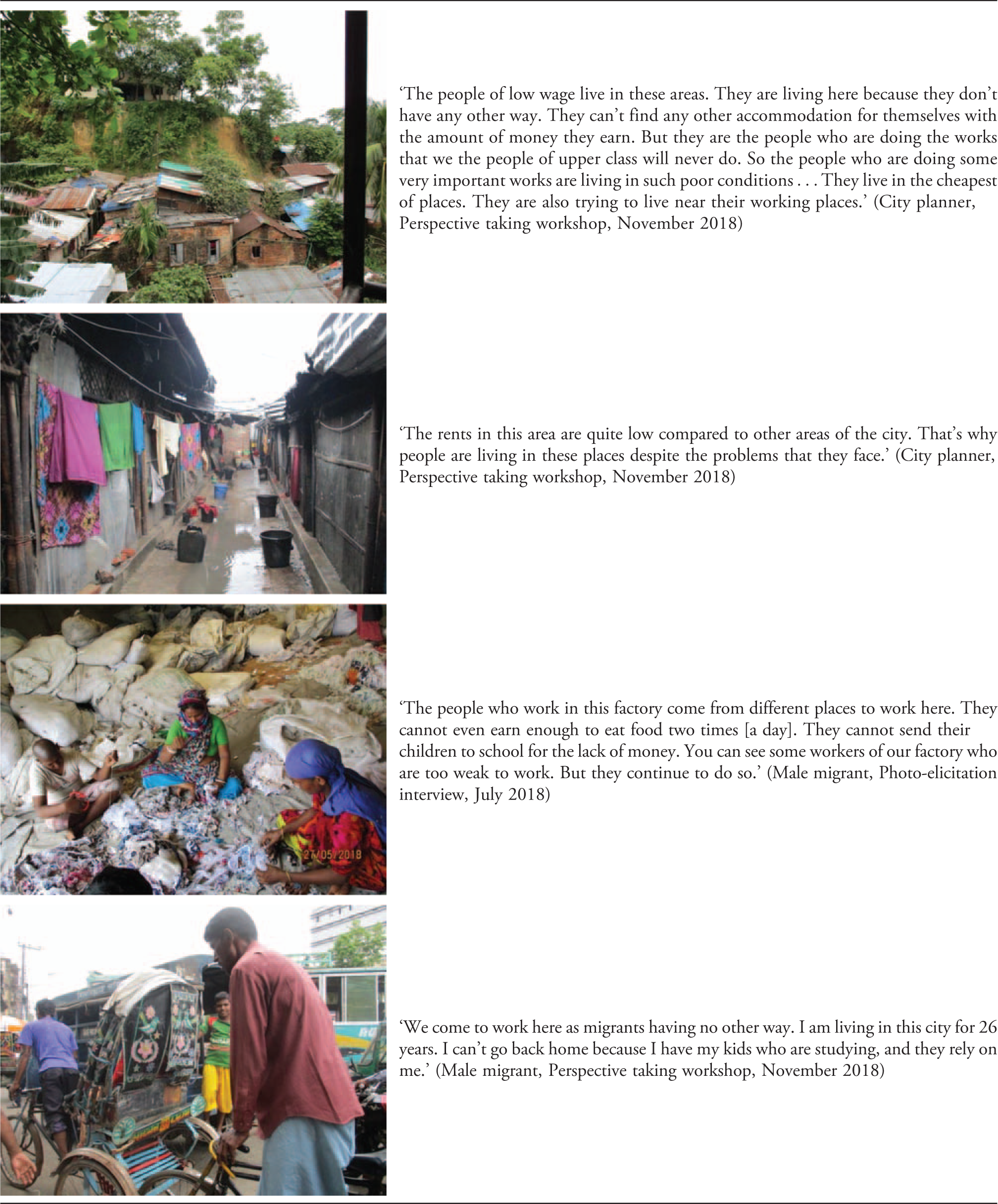
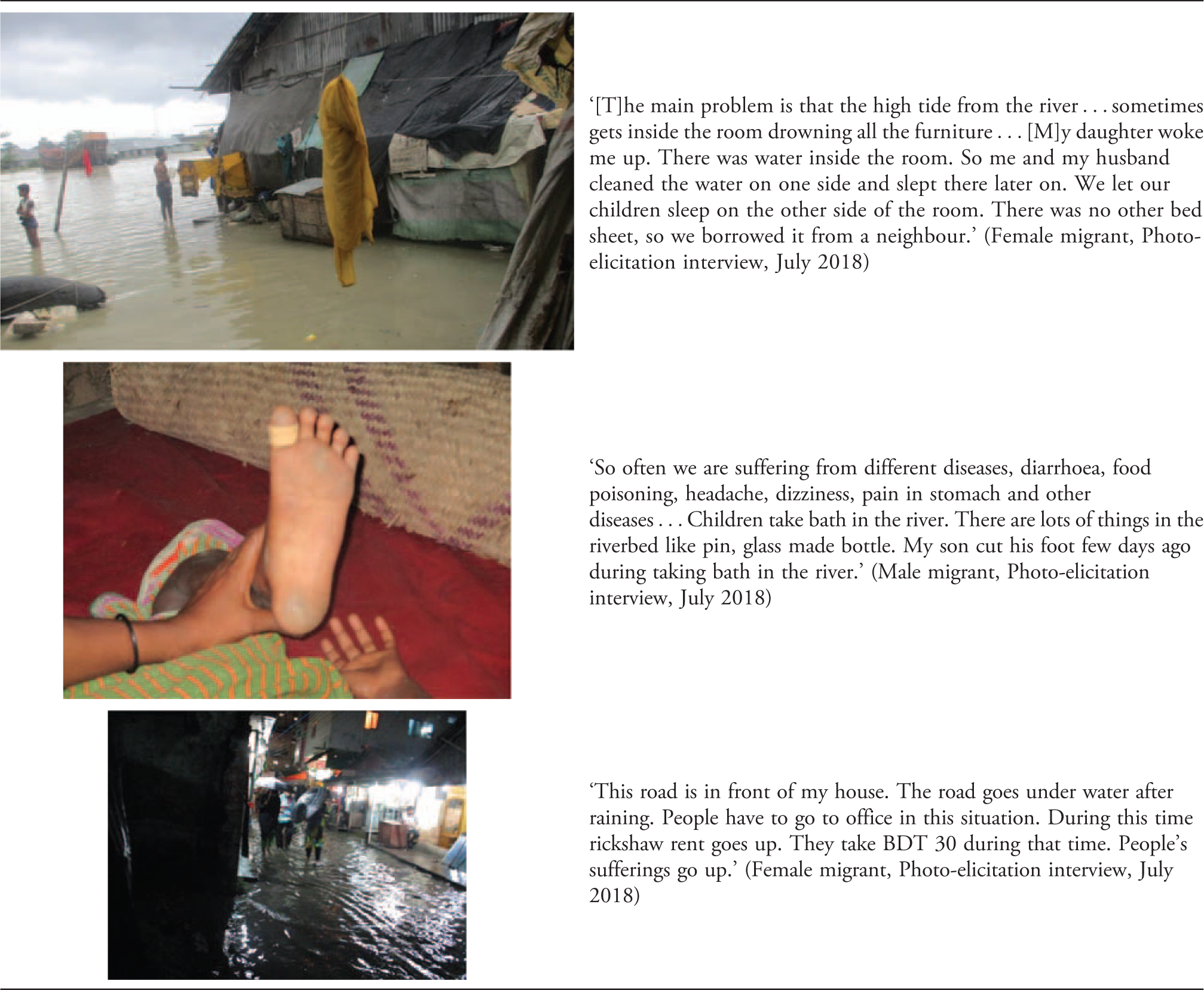
These results are supported by the photovoice data, which indicate that migrants continue to experience exposure to environmental risks, even after long-term residence in the city. Respondents elaborated on the destabilizing role of environmental hazards in amplifying social and livelihood issues and their impact on their multidimensional well-being. Direct quotations, explaining the context of their specific photographs are shown in Figure 4. Across all enumeration areas, periodic flooding and waterlogging disrupted life (upper panel), led to major concerns about health and children’s health (middle panel), and added to economic costs and disrupted the ability to gain income and employment (lower panel). Many respondents reported how the environmental risks exacerbated a perceived absence of agency and ability to challenge exploitative practices.
These findings may have two interpretations. First, longer-term migrants are more likely to experience more weather shocks compared to newer migrants across localities (namely, the former choose locations where there is less security). Alternatively, longer-term migrants experienced more weather shocks than newer migrants within the same locality (namely, the former have experienced more shocks as a result of having lived in a given locality for a longer period). To distinguish between the cross-locality and greater-exposure explanations, we include controls for each enumeration area at destination in the previous three specifications (Columns 4 to 6 in Table III). We find that the association between length of residence and human security remains statistically significant, although the coefficient has increased (Column 4), which suggests that longer-term migrants tend to settle in less secure areas of the city. This result is consistent with previous research that finds that migrants often settle in hazardous areas, leading to a compounding of vulnerability. Furthermore, the positive relationship between length of stay and exposure to environmental stressors remains significant (Column 5), although the size of the coefficient decreases, confirming the sorting of longer-term migrants into areas that are affected by more hazards. Finally, the full model under Column 6 shows similar results to Column 3: migrants exposed to more environmental stressors also have lower human security.
These results in Table III provide evidence that supports both interpretations and addresses our second research question: longer-term migrants sort themselves into less secure areas, and they are also more exposed to environmental risks as a result of their longer residence. These findings are consistent with the likely consequences of climate change on urban populations living in informal settlements projected by Mitlin & Satterthwaite (2013). These types of risks are often concentrated in slums where the inhabitants are more exposed to climate events with limited risk-reduction infrastructure and little capacity to cope. We argue, therefore, that prolonged exposure to these environments is likely to exacerbate already existing poverty traps in these areas (Ezeh et al., 2017), which in turn leads to lower human security.
With the aim of verifying the robustness of these results, we removed from the HSI the element related to hazards (Column 1 in Online appendix 3). Consequently, the indicators of length of residence remain statistically significant, suggesting that this element still plays an important role in explaining the relationship between length of stay and overall human security. More importantly, the coefficients of the variables indicating exposure to environmental stressors remain negative and statistically significant (Column 2 in Online appendix 3). This suggests that the associations reported previously are not due to the construction of the index, and they indeed reflect that migrants that are more exposed to hazards are less likely to experience human security across the other elements included in the index.
In order to disentangle which of the elements of the HSI are more affected by length of residence, we take separately each element and replicate the analysis (Online appendix 4). We find a negative association between length of stay and hazards, housing, crime and political voice. Only the association between length of residence and mental health has a positive sign (but not significant), although it is dominated by the negative effect of the four elements mentioned above. These results complement the previous analysis, suggesting that longer-term migrants experience less human security across different aspects such as hazards, housing, crime and political voice, and this effect may be partly (but not entirely) mediated by the exposure to more environmental stressors.
Finally, we explore whether sample selection may be an issue in our analysis, whereby successful longer-term migrants may move out of our enumeration areas, given that these are mainly low-income areas. We investigate this by examining the correlation between three measures of success (income, education and type of employment) and length of residence. If this argument holds, we would expect them to be negatively correlated in our sample since we would mainly be observing unsuccessful longer-term migrants. In order to implement this test, we look at how the coefficient of the indicator for migrants that stayed between six and ten years changes when we sequentially include each measure of success in the model. Given that each of them is positively correlated with perceived human security, the direction of these changes will signal the correlation between being a longer-term migrant and each indicator of success, holding everything else constant.
Column 1 in Online appendix 5 shows the baseline specification without any predictor of success, where the coefficient of interest is –0.161 and is marginally significant. In Column 2, we include income and this coefficient decreases (becomes more negative), resembling a positive correlation between being a long-term migrant and income – if anything, this means that longer-term migrants are actually better off in terms of income. However, in Columns 3 and 4 we include education and type of employment, respectively, and we find the opposite results with the former and no change with the latter. Column 5 then shows the full specification where the three indicators of success are included and we observe that our coefficient of interest has barely changed in comparison to the baseline specification. Lastly, we check if each of these changes in the coefficient is statistically significant (p-values of the T-test expressed in square brackets) and we find that none of them is. Therefore, we fail to find evidence that supports the case that longer-term migrants are unsuccessful in our sample, implying that sample selection may not be an issue. This finding is consistent with previous research in India where social immobility is recorded for four or more generations (Krishna, 2013).
Discussion
The results show that human insecurity is multifaceted in low-income settings in Chattogram, and includes elements of insecurity. The migrant photovoice participants explained how environmental dimensions of insecurity are amplified in perceived health outcomes and in making livelihoods more precarious. The social dimensions of insecurity are dominated by fear of eviction and absence of agency of control of one’s own future. The survey analysis reveals that longer length of residence by migrant populations exacerbates insecurity, suggesting that human insecurity is pervasive and a major constraint on upward social mobility in this context.
These results confirm how social inequality in growing cities becomes hard-wired in neighbourhoods and informal settlements (Sampson, 2017). And it demonstrates how human security incorporates elements of human flourishing, and its absence, well beyond the threat of organized violence, as originally promoted by Alkire (2003) and others. The results also point to the centrality of environmental risks themselves, and their interaction with other elements of precarious lives and health outcomes. There are projections of increasing multiple hazards due to climate change in urban settings showing impacts on mortality and health outcomes (Rosenzweig et al., 2018). The results here suggest that those potential climatic changes will have disproportionate impacts on low-income settlements that tend to be dominated by migrant populations who experience insecurity through environmental dimensions throughout their periods of residence.
The Human Security Index presented here retains the same constraints as existing measures of human security at the individual level. The index is developed for the urban low-income context and while there are theoretical justifications for each element, it deviates from the simplified material well-being focus of King & Murray (2001) or the focus on threats of violence in Ingelhart & Norris’s (2012) index. Nevertheless, the index proposed here seeks to incorporate the lived experience of human security in urban contexts and seeks to incorporate health, particularly the anxiety and symptoms of mental ill-health that come from separation from networks and are corrosive over long periods of insecure living. The mixed methods of this study seek to validate reported responses to surveys through testimony and sense-making. But a complex picture of human security does not provide simple solutions for planners to act, any more than sustainability or growth objectives. It is undeniable that there are value judgements in the inclusion of elements of human security: our contribution here involves prioritizing those that are systematic, consequential and open to positive interventions.
Conclusion
This study makes the case for the broadening of climate and conflict research to capture the multiple dimensions of human security. There are standard and emerging survey and research methods to capture the elements of insecurity, and indeed the outcomes of such insecurity in terms of absence of well-being or stress and mental health burdens. The mixed-methods study reported here shows that migrants to cities in Bangladesh report multiple dimensions of insecurity in their lives. Environment and mediated categories of insecurity are important: these represent major challenges for urban planning under climate change, even in the absence of violent conflict. We therefore assert that the inclusion of environmental aspects in the analysis of human security is crucial to understand the main sources of insecurity among migrants. From the policy viewpoint, our study highlights the importance of fighting climate change as a way to also address human security concerns.
Climate change has the potential to disrupt migration flows in a non-linear manner, increasing the accelerated rate of urbanization worldwide. In rapidly urbanizing countries, planning is at the front line of dealing with environmental challenges to the safety and sustainability of cities, including through creating equitable access to urban transport, health and education and other systems of social infrastructure. Cities, however, remain highly unequal and this fragmentation results in persisting conditions of exposure to social and institutional insecurity, amplified by a lack of upward social mobility, with populations being trapped in slums for many years or even generations. Climate risks can amplify the set of adversities to which migrants are exposed, with direct implications to their well-being and perceived experience of human security. The challenge for urban governance is to integrate solutions to persisting inequalities in order to minimize future disruptions to the social fabric and security of city dwellers.
We argue that adopting a human security lens to climate-security research suggests both the change of emphasis and an opportunity to examine social stressors that create conditions of social unrest and of threats to social sustainability. The frontiers of such human security research are twofold. First, there is a need to use both extensive and intensive research designs to uncover the lived experience of insecurity. A full array of observational, experimental and interactive methods are emerging to rigorously document dimensions that may be suggested in theory and emerging dimensions of insecurity in novel situations of employment, globalized economic systems and surveillance. A further methodological challenge is to integrate human security measures with new understandings of both relational well-being and absences of well-being through measures of mental health and psychological distress. Adopting human security also challenges models and normative discourses of responsibility for interventions to adapt to risk. Human security approaches re-ignite debates about the social contract of states to provide protection for citizens from emerging and new threats to life and livelihood.
Footnotes
Replication data
The dataset, codebook, and do-files for the analysis in this article, along with the Online appendix, are available at https://www.prio.org/jpr/datasets/. Full datasets are available at  . Quantitative analyses were conducted using Stata 16.
Acknowledgements
We thank the editors and reviewers and participants at presentations at Uppsala University, Lund University, Dhaka University and International Centre for Climate Change and Development, Dhaka for helpful comments. This version remains our sole responsibility.
Funding
Funding is acknowledged from the UK Economic and Social Research Council and Department for International Development under the Development Frontiers research programme (Grant ES/R002371/1); from Migration, Transformation and Sustainability project under the Belmont Forum Transformation to Sustainability programme – funded by the UK Economic and Social Research Council (Grant ES/S007687/1); and from the International Development Research Centre, Ottowa and UK Foreign Commonwealth and Development Office (Grant 109223-002).